



 Claim Ownership
Austroads: Transport Research and Trends
Subscribed: 81Played: 1,751
Subscribe

© Copyright 2024. All rights reserved.
Description
Austroads latest webinars. Sharing transport research and trends.
311 Episodes
Reverse
The Austroads 2025 Environment and Sustainability Initiatives Stocktake examines how member agencies are developing and embedding sustainable practices across their organisations. The Stocktake included reviews of environment and sustainability strategies, policies, and practices related to transport assets, systems, and services, focusing on three key themes: overarching sustainability, biodiversity, and heritage.
Building on the 2023 and 2024 Stocktakes, the 2025 analysis offers deeper insights into the progress member organisations are making in integrating sustainability into their operations. Data was collected through a comprehensive survey and validated through focus group sessions. Agencies also completed a maturity self-assessment to reflect on their sustainability integration journey, helping inform the development of case studies showcasing best practice across Australia and New Zealand. Maturity indicators were created for each theme to support organisations in evaluating their current position and identifying opportunities for improvement.
The Stocktake also includes an international scan, reviewing policies and strategies from global counterparts, along with a detailed assessment of the policy, regulatory, and procedural landscape in Australia and New Zealand. This provides a clearer understanding of the complex environment influencing agencies’ ability to shape and implement sustainable outcomes.
During the webinar, we share the key findings from the 2025 Stocktake, highlight major trends and challenges, and explore the initiatives member organisations are undertaking to advance sustainability across the transport sector.
As electric vehicle (EV) uptake increases across Australia and New Zealand, there are new risks and operational impacts of EV incidents, and amended incident response practices are needed.
This webinar presents the Austroads framework from the project NEG6523 on EV incident response.
Watch to gain the evidence, tools and coordination insights to support forward planning and implementation for EV incident response, to reduce risk and improve safety and network resilience, including:
A clear view of how EV fires differ from combustion engine vehicle fires, including thermal runaway and hazards, including off-gassing and secondary ignition.
Practical steps in a 5-stage incident response process, from planning to recovery, aligned with Austroads’ traffic incident management guidance.
Lessons from international case studies showing effective on-road responses and their local relevance.
17 practical recommendations to reduce risk and improve safety and network resilience from consistent EV incident management across jurisdictions.
This webinar is presented by Dr Eleanor Short, Emma Sutcliffe and Will Fooks.
Road agencies on behalf of governments in Australia and New Zealand are increasingly supporting the use of Large Freight Vehicles (LFVs) to deliver the growing freight task more productively, sustainably and safely.
The Austroads project Design for Large Freight Vehicles (NEF6394) aims to develop harmonised, best-practice road design requirements for modern and emerging LFVs for all new road and road upgrade projects along heavy vehicle routes.
This webinar discusses the first component required for this project: helping develop support for updating the guidelines and providing recommendations on where the Austroads Guidelines may need updating. It also details the potential next steps required in this process.
This webinar is presented by Sam Potts, Steve McKenna and Ryan Miller.
A recent Austroads research project has examined opportunities to improve the design guidelines for thin asphalt–surfaced unbound granular pavements, with a focus on their susceptibility to asphalt fatigue distress.
This webinar presents the key outcomes of the project, including insights drawn from the analysis of road network data to assess the relative performance of thin asphalt surfacing treatments. It will also discuss the methodology and findings of a shift‑factor calibration approach developed, highlighting its implications for pavement design and the prediction of thin asphalt surfacing performance.
In addition, the session introduces a practical framework for establishing project-level curvature limits to mitigate the risk of premature fatigue cracking.
Overall, the project findings provide improved guidance for material selection, design, and construction of thin asphalt-surfaced granular pavements. This webinar will be of particular interest to pavement engineers, asset managers, designers, and professionals involved in planning and delivering road rehabilitation programs.

Road safety is a team sport – a marathon, not a sprint. The greatest gains occur when many elements synthesise and successes are shared. This webinar draws on experience across more than 140 countries, working alongside partners from every road safety ‘walk of life’ – including governments, development banks, industry, mobility clubs, and NGOs – united by an ambitious goal: a world free of high-risk roads, despite a crisis that claims more than 3,000 lives each day.
From advocacy at the United Nations, to aligning diverse stakeholders around common objectives, to collaborating with communities at the roadside in low- and middle-income countries, the International Road Assessment Programme (iRAP) and its partners are helping make safer journeys a reality.
In this session, Judy Williams, winner of the ACRS Women in Road Safety Award presented by Austroads at the 2025 Australasian Road Safety Conference, examined how a clear vision, strategic partnerships, and active community engagement create the conditions for meaningful and lasting road safety progress, and why communicating success matters as much as delivering it. It explored how connection brings clarity and impact: bringing the right people together at the right time with leadership and evidence; building capacity to deliver strategic implementation plans; unlocking investment and partnership opportunities; and learning through evaluation.
Using practical tools such as the Elements Wheel and SWOT thinking, Judy showed how progress doesn’t require doing everything at once, but through understanding which levers to pull and when, harnessing the power of many through community-building, mentoring, and partnerships.
Finally, the webinar highlighted the importance of making success visible. By sharing outcomes through human stories, compelling narratives, data, imagery, and effective communication, we can inform, persuade, inspire, and accelerate change. Progress comes from showing up, staying connected, learning from setbacks, and never giving up.

Discover the latest findings from the Austroads Review of Pedestrian Planning Guidance. Join moderator Mary Haverland (Avandra) and presenters Tim Judd (PJA) and Prue Oswin (Sidelines Traffic) as they share practical strategies for safer, more inclusive pedestrian infrastructure. Learn about a Universal Design and the Safe System approach to ensuring a safe pedestrian environment that accommodates all ages and abilities, with real-world case studies and actionable recommendations. We’ll foreshadow updates to the Austroads Guides and provide clear steps you can apply now. You’ll see how Safe System–aligned crossing treatments and Universal Design translate into practical decisions across suburban and regional contexts. The session includes a live Q&A and links to take-away resources you can use on your next project.
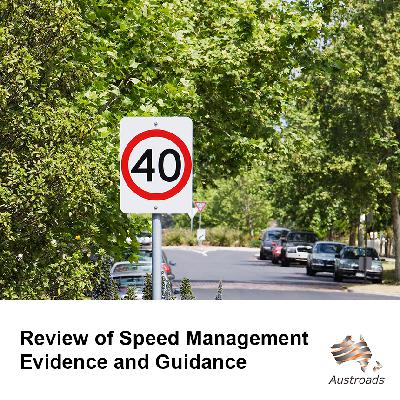
Speed is a significant contributor to road trauma, influencing both the likelihood of a crash, and also the severity of crash outcomes, regardless of the cause. Austroads is updating the Guide to Road Safety Part 3: Safe Speeds (AGRS Part 3) with the latest evidence and best practice in speed management. This webinar provides an overview of the new content in this interim Guide update.
Speed management is a rapidly evolving policy area, and Austroads continues to conduct research and assess the latest approaches to the topic. Work has already commenced to identify gaps in knowledge for the next update of the Guide, expected for release in 2026. This includes the recent publication of a new report titled ‘Review of Speed Management Evidence and Guidance’ (AP-T385-25). This report presents the findings of a literature review and engagement with stakeholders to identify and address key gaps in current guidance. The findings from this review are discussed in this webinar, including how these will inform the updated structure and content of AGRS Part 3.
This project involved the development of a guideline for bridge owners on managing the risk of bridge flooding, scour and resilience due to floods and an update to the Austroads Guide to Bridge Technology Part 8: Hydraulic Design of Waterway Structures (AGBT08) .
The guideline provides a framework for managing risks to bridge infrastructure caused by floods, focusing on improving resilience, operational performance safety. It aims to equip engineers, asset managers, and decision-makers with strategies to address flood-related challenges, particularly those associated with scour and structural vulnerability. The guideline highlights proactive measures such as pre-flood inspections, prioritising critical bridges, and real-time monitoring during floods. Post-flood recovery focuses on condition assessments, load testing, and criteria for safe reopening.
AGBT08 was updated to incorporate updated design related knowledge and guidance on hydrology and hydraulics in alignment with Australian Rainfall and Runoff 2019.
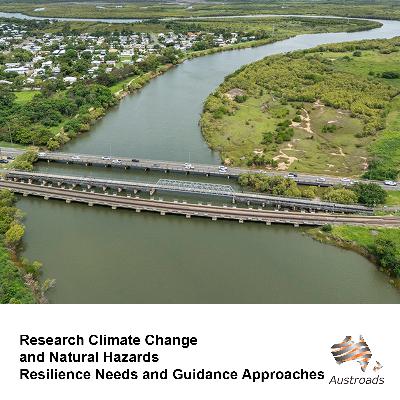
Extreme weather events including torrential rain, flooding, landslides, heat waves and bushfires, as well as longer term changes such as increasing temperatures and sea level rise, take a dramatic toll on our transport infrastructure and the functioning of our road infrastructure networks.
This webinar introduced the findings of the Austroads research project ESC6516 Research Climate Change and Natural Hazards Resilience Needs and Guidance Approaches. The project considered resilience across the full transport system lifecycle – Policy, Strategy and Planning, Business Case & Investment, Design and Construction, Network Operations, Maintenance and Renewals, and Monitoring and Evaluation.
Through stakeholder consultation and a global literature review, the report sets out a series of recommendations for the strategic development of Austroads guidance to holistically improve the resilience of the land transport system to climate change and natural hazards (CCNH).
The webinar shared the projects recommendations on:
the definition of a resilient transport system
foundational gaps to achieving transport system resilience
the model and roadmap for Austroads’ guidance development to address these gaps.
Whether you’re new to CCNH resilience or working to embed it within any part of the transport system lifecycle, this webinar will help you understand how Austroads approach to guidance development will support the development of a resilient transport system.
Austroads Guide to Pavement Technology Part 2: Pavement Structural Design is the primary reference for designing new sealed road pavements in Australia and New Zealand and has recently been updated. Since its last major update in 2017, Austroads has completed several research projects. The latest edition of Part 2 incorporates new research findings and provides a general update.
This Austroads project has investigated methods for engineers to design more efficient and cost-effective road rehabilitation treatments by estimating the remaining fatigue life of existing asphalt.
Current design practice assumes existing asphalt layers have no remaining life, even when uncracked. Lower rehabilitation costs will result if design methods are improved to utilise the remaining life of existing uncracked asphalt.
In this webinar, the presenters:
outline the outcomes of the project, including field and laboratory investigations on the Western Freeway in Victoria
discuss the methods tested to estimate the remaining fatigue life of asphalt
present the new framework for rehabilitation design to validate with future research.
This approach supports more targeted treatments, improved road performance, and long-term savings. The session is relevant for pavement engineers, asset managers, designers, and those involved in planning and delivering road rehabilitation programs.
The Austroads Guide to Pavement Technology provides informative guidance on different pavement types and the optimal conditions they are suited to throughout Australia and New Zealand. In addition, the Guide provides in-depth analysis and technical advice on the construction, maintenance, and performance of road pavement surfaces.
A project has been conducted to update the following Guides to achieve consistency with the various other parts of the Guide and other Austroads publications, such as Austroads Test Methods and Work Tips, that have been subject to changes in their most recent editions. These parts provide informative guidance regarding pavement technology, selection of pavement surfacing and an overview of the criteria by which pavement materials are used:
Guide to Pavement Technology Part 1: Introduction to Pavement Technology
Guide to Pavement Technology Part 3: Pavement Surfacings
Guide to Pavement Technology Part 4: Pavement Materials
This webinar described the review process and stakeholder consultations undertaken to update the Guides, and discussed the major changes that have been made to the Guides. This update process ensures the Guides are maintained as a relevant and contemporary source of knowledge, which provide quality information and guidance to all those working with pavements across Australia and New Zealand.
The Austroads Guide to Pavement Technology Part 4B: Asphalt provides comprehensive guidance for the selection of constituent materials, mix design, testing, manufacture and placement of commonly used asphalt mix types in Australia and New Zealand. The Guide was first published by Austroads in 2007, followed by a major revision in 2014. The most recent edition presented in this webinar captures the major advancements in asphalt technology over the past decade.
This webinar goes through the major changes to the Guide, including any new content not previously included in Part 4B: Asphalt. It will be especially relevant to anyone involved in the asphalt industry, including designers, road managers, asphalt suppliers and contractors.

How are Australians walking and cycling in 2025? The National Walking and Cycling Participation Survey is Australia’s most comprehensive source of data on how people move through their communities. Conducted every two years since 2011 and commissioned by Cycling and Walking Australia and New Zealand (CWANZ), the 2025 survey was delivered by Painted Dog Research and captures a nationally representative view of walking, cycling, and emerging micromobility behaviours.
This year’s study engaged over 12,000 Australians through a dual-mode approach (online and phone) and included several methodological enhancements. It sheds light on how often people walk or cycle, for what purposes, and how this is evolving - including increased use of e-bikes, e-scooters, and other rideables.
In this webinar, the Painted Dog team walks through the key findings from the 2025 survey across Australia and each state/territory.
Calvin Lim from Painted Dog Research presents the results from the research, alongside representatives from CWANZ. The session also includes a Q&A Panel discussion featuring Michelle Prior, Chair of CWANZ, Kirsty Kelly, CEO of Transport Professionals Association and Dr Ingrid Johnston, CEO of Australasian College of Road Safety.
As transport systems grow more complex and interconnected, the ability to manage both planned and unplanned Intelligent Transport System (ITS) outages is essential to keeping people and goods moving safely. This webinar presents findings from an Austroads project focused on strengthening the resilience of Transport Management Centres (TMCs) in the face of ITS disruptions.
The research involved consultation with transport agencies across Australia and New Zealand, and a review of local and international practices. Drawing on operational insights, shared challenges, and real-world examples, the project developed the TMC Response to ITS Outages Framework, which is a practical tool to support structured planning, response, and recovery for ITS disruptions.
This session covers:
key themes from agency consultation and operational research
real-world case studies highlighting how agencies have responded to ITS outages
the Framework and its components, from business continuity to recovery
how it supports readiness for both planned (e.g. maintenance) and unplanned (e.g. system failure, cyberattack) outages
tools including risk matrices, training approaches, and standards alignment.
This webinar is relevant for a range of road/transport agency staff, including TMC managers and operators, ITS and IT managers, along with resilience planners and those involved in responding to ITS outages.

Austroads' Bridge Assessment Guideline: Heavy Vehicles emphasises risk-informed decision-making for the asset management of road bridges and the management of heavy vehicle access. The emphasis on decision-making, rather than focussing only on the calculation of rating factors or assessment ratios, reflects the multitude of considerations faced by road agencies when making decisions concerning bridges.
The Guideline provides assessors and road agencies with a framework to reduce conservatism in the assessment of road bridges for heavy vehicle access, particularly for bridges that do not meet the requirements of AS 5100:2017 or the NZ bridge manual. Where assessments indicate unsatisfactory performance despite in-field evidence to the contrary, the Guideline offers bridge-specific advice for explaining the plausibility check prescribed in ISO 13822:2010 consistent with fundamental engineering principles.
In line with its focus on heavy vehicles, the Guideline provides advice and techniques for managing access by these vehicles over bridges. It distinguishes between bridge assessment, which is focused on structural performance, and heavy vehicle access management as related but distinct activities.
The webinar outlined the decision making framework as well as provided an overview of the Guideline’s contents.
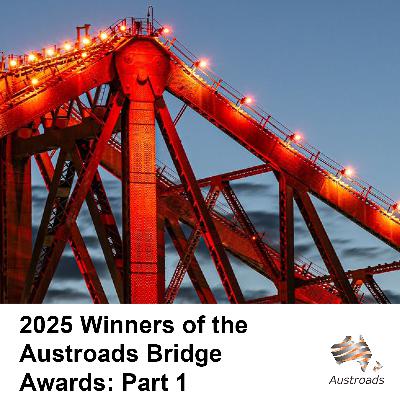
The Austroads Bridge Awards celebrate outstanding achievement in bridge design, management and delivery across Australia and New Zealand. Recognising innovation, technical excellence and collaboration, the Awards highlight projects that address complex engineering challenges while contributing to safer, stronger and more connected communities.
This was the first of two webinars showcasing the 2025 Award winners. Presenters shared insights into the design, delivery and outcomes of their projects and answered audience questions.
This session covered:
Excellence in Sustainability – Victoria Bridge Refurbishment QLD, submitted by Arup, Brisbane City Council, Nick Stevens Consulting, ACCIONA and Freyssinet Australia
Excellence in Innovation – Kangaroo Point Bridge, submitted by BESIX Watpac and Brisbane City Council
Excellence in Asset Management and Maintenance – Manganuku Bridge Strengthening, submitted by Beca, NZ Transport Agency Waka Kotahi, Contech, Optimech International Ltd and Eastbridge Ltd.
This practical webinar unpacks the new cycling and micromobility planning tools from Austroads' recent report ‘Improving Austroads Guidance for Cycling and Micromobility Planning’ (AP-R724-25). This session is designed for transport practitioners looking to apply best practice principles in real-world projects.
Presenters explore the updated Cycling Level of Service (CLoS) tool, the All Ages and Abilities Facility Selection tool, and discuss practical approaches to road space reallocation, intersection design, and micromobility integration. Whether you're working in planning, design, or delivery, this webinar will help you navigate the tools and apply them confidently to uplift cycling outcomes across your network.

Governments around the world have set sustainability targets in areas such as greenhouse gas emissions , climate resilience and the circular economy. Meeting these sustainability targets will challenge Austroads member agencies and the infrastructure sector to identify and adopt new and changed approaches.
This webinar presented the findings of the Austroads research report, Sustainability Review of Austroads Technical Specifications and Test Methods. Drawing from lessons learned from preparing the report, presenters explored the research that examined Austroads Technical Specifications to identify specific opportunities for improvement and how to addresses barriers that hinder progress.
Movement and Place is a cross-cutting planning principle that that recognises streets and roads as both transport corridors and public spaces; supporting the flow of people and goods while also shaping the activity, built form and identity of places.
This webinar introduces the findings of the Austroads research project NEG6384 Movement and Place Guidance, which provides the foundation for updated and more unified Movement and Place content across the Austroads Guide to Traffic Management and related resources.
Through extensive stakeholder consultation and a review of leading national and international frameworks, the project identified gaps in current Austroads guidance. It also revealed the varied maturity levels of implementation across transport agencies in Australia and New Zealand, highlighting a critical opportunity to strengthen consistency, collaboration and innovation.
The report sets out a series of recommendations designed to update and streamline Movement and Place guidance, focusing on:
Consistency: A shared language and core concepts across Austroads publications.
Best Practice: Identification of proven tools and frameworks already in use.
Clarity: Practical direction through case studies and real-world examples.
Whether you’re new to Movement and Place or working to embed it within policy, planning or project delivery, this webinar will help you understand how updated guidance can support more balanced, people-focused transport networks across the region.


Download from Google Play

Download from App Store
 United States
Just found this podcast. My interests are in the supply chain in particular transportation of freight on roads.