


 Claim Ownership
The Art Angle
Subscribed: 933Played: 33,210
Subscribe

2019 ©
Description
A weekly podcast that brings the biggest stories in the art world down to earth. Go inside the newsroom of the art industry's most-read media outlet, Artnet News, for an in-depth view of what matters most in museums, the market, and much more.
350 Episodes
Reverse
The Whitney Biennial is here. That would be the Whitney Museum’s big curated show which every two years brings together dozens of artists, always closely watched by critics and public as a statement about what is important now in art.
Hot on its heels, next month, MoMA PS1 is staging "Greater New York." That event happens every five years, bringing together dozens more artists to take the temperature of art in New York.
Taína H. Cruz, my guest today, is featured in both these shows at once.
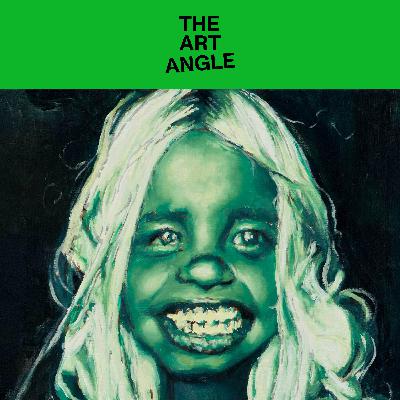
For the Whitney, she is even, in a way, the face of the show: a work by Cruz, a green-tinged close-up painting of a grinning child, called I Saw the Future and It Smiled Back, is blown up on a billboard outside the museum in the Meatpacking District.
This is a lot of attention for an artist who is relatively young, born in 1998, and just getting her MFA from the famed Yale School of Painting last year. She’s worked in a variety of media, but is known now for paintings, often featuring images of Black female figures with a moody, woozy, sometimes unsettled or unsettling atmosphere. Sometimes Cruz works in suggestions of African American and Caribbean folklore, or intimations of horror and fantasy. Sometimes, she’s played on the images of celebrities like Halle Berry or Tyra Banks. Sometimes she reworks her own personal photos of neighbors from New York.
Since Cruz is an artist that the curators of these big shows are looking to, art critic, Ben Davis, wanted to get a sense of the influences—from art and otherwise— that are shaping her approach to art, and what she makes of all the attention.
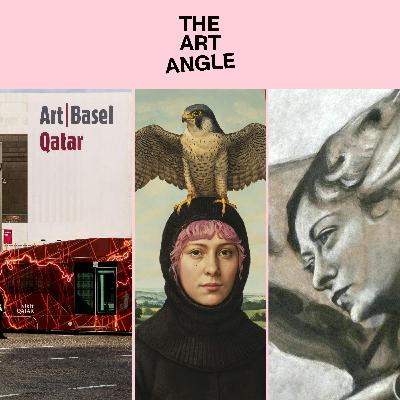
It’s time for our monthly news roundup where we discuss some of the biggest stories emerging in the art world. On the heels of the first-ever Art Basel Qatar, we will be discussing the Middle Eastern art market and the regional art scenes. Is this simply another fair on the global circuit, or something more structural—an attempt to recalibrate where cultural power sits?
We will doing a vibe check on the Ultra-Contemporary art scene’s current obsession with Old Masters, art history, and dead artists. As market pressures mount and institutions increasingly turn toward estates and historical figures, we’ll ask whether this is a genuine intellectual reckoning or a marketing strategy dressed up as scholarship. Maybe it is both?
Finally, we will rove over to Rome, Italy, where where a church fresco featuring an angel that bore a striking resemblance to Italian Prime Minister Giorgia Meloni was abruptly removed, sparking debate within and well beyond the church about restoration, iconography, and the politics of sacred imagery. We reminisce about the great many botched art restorations of years past.
To discuss these topics, Ben Davis and Kate Brown are joined this month by London-based Artnet News editor Margaret Carrigan. Carrigan is the host of our sister podcast, the Art Market Minute, and co-author of our weekly Artnet Pro market newsletter, The Back Room.
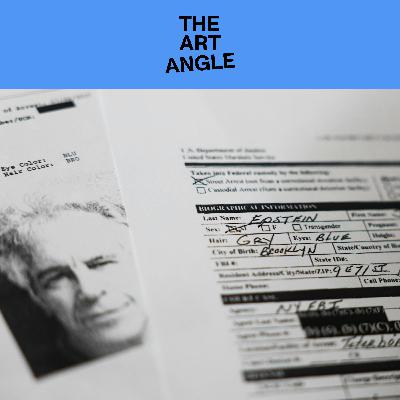
There are many ways to read the vast trove of documents tied to the convicted sex offender and financier Jeffrey Epstein, who died by suicide in prison in 2019. The Epstein files offer a window into the rarefied, power-brokering circles he inhabited. But the latest tranche—released by the U.S. Department of Justice in late January and comprising some three million pages, 2,000 videos, and 180,000 images—also provides a behind-the-scenes view of high-level financial maneuvering, including Epstein’s connections to the art and cultural worlds.
Revelations in the latest files have already had consequences: former French culture minister Jack Lang resigned as president of the Arab World Institute after disclosures connecting him to Epstein, and French financial-crimes prosecutors have opened a preliminary investigation into him and his daughter for alleged “aggravated tax-fraud laundering.” Art collector and film producer Steve Tisch is also facing scrutiny over email correspondence with Epstein in 2013 concerning multiple women. In early February, David A. Ross, chair of the Master of Fine Arts in Art Practice at New York’s School of Visual Arts, resigned after documents showed ties to Epstein.
The files also shed additional light on the art holdings of the billionaire Leon Black and his dealings with Epstein. Black, who served as chairman of the board of trustees of the Museum of Modern Art in New York from 2018 to 2021, stepped down from that role after backlash over his financial ties to Epstein, though he remained on the board as a trustee. Black has faced civil lawsuits and allegations that he sexually assaulted women introduced to him through Epstein. Black has denied the claims, and no criminal charges have been filed.
So we knew about Black and Epstein, to an extent. But my colleague, senior reporter Katya Kazakina, recently focused on how the latest documents illuminate Epstein’s sophisticated use of financial structures to enhance the value of Black’s vast art holdings—and just how much of his wealth was effectively stored in art.
This enormous release is wide-ranging, touching people and industries far beyond the criminal sexual activity in which Epstein was involved. Because of its sheer breadth, it bears emphasizing that inclusion in the files does not imply criminal wrongdoing. More will come to light as journalists and the public sift through the documents.
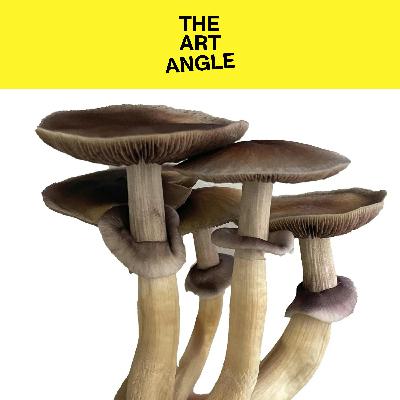
There is an enduring association with creative experiment and psychedelic experiences. Recently, psychedelics have become more mainstream, explored not just for their far-out spiritual associations but as medicine, as therapy, and even just to make you more productive. How should we think about psychedelics and how they relate to art and art-making now?
Ryan McGinness has had a long and well-known career as an artist. His densely layered, colorful abstract paintings have been shown at museums and galleries around the world. He’s also long explored world-building through his art, expanding his designs to maze-like environments and staging sprawling events and parties.
Recently, however, McGinness has showed a new side of his creative journey. He has just published an art book, Trip Advisor: Notes From over 25 Years of Psychedelic Voyages, from Blurring Books. The colorful tome collages together images of McGinness's paintings and photos of his studio and life with the raw diaries he kept beginning in 1999, as he chronicled his own mind’s voyages on psilocybin mushrooms, alongside essays reflecting on what they have meant and continue to mean to him.
So, what insight do these trips offer about art and life? What might you gain creatively and what are the pitfalls? Ryan McGinness is our guide into the world of psychedelics and art today.
If you had to pick two conversations that defined the last 10 years in art, one would certainly be about digital culture and online life. The other would be about race, racism, and representation. The critic and artist Aria Dean has been at the center of both these conversations.
As a theorist, her essays on these topics are much cited. You can find them gathered in the recent collection Bad Infinity, from Sternberg Press. She also worked for some years at Rhizome.org, one of the most important venues advocating for digital art.
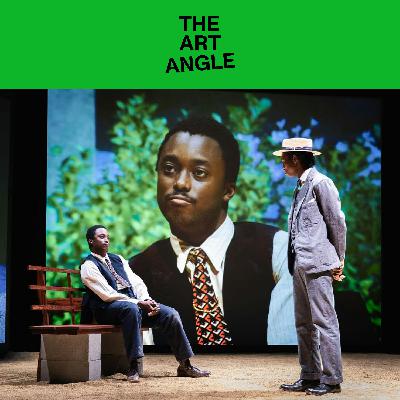
As as an artist, Dean has been in many important shows, from the Hammer Museum’s Made in L.A. Biennial to the Whitney Biennial here in New York. Recently, for the Performa biennial of performance art, Dean staged The Color Scheme, a two-person theatrical work, which is also set to tour to Berlin later this year.
The Color Scheme focuses on an imagined meeting in the 1920s in Berlin, between two Black intellectuals, one called The Poet and the other called The Philosopher. It may be as close as Dean has come to totally fusing her work as a thinker with her work as an art maker. It literally stages a conversation about Black culture, politics, and art. Yet The Color Scheme also plunges us a century back in time, very much away from the world of digital culture she has written so much about.
It felt to me like a continuation of the important debates Dean has been a part of, but also an attempt to find new perspective. And that seemed a good cue to talk with her about how she’s viewing art now, why she’s looking to art history, and how her views have evolved over a tumultuous decade.
Here we are, already at the end of the first month of the new year. That means it’s time to do the first Art Angle Round-Up of 2026, where, as is custom, we’ll review some of the art news stories that people are talking about, and what they might tell us something about the forces shaping the year to come.
Today art critic Ben Davis, senior editor Kate Brown and editor in chief Naomi Rea talk about three stories:
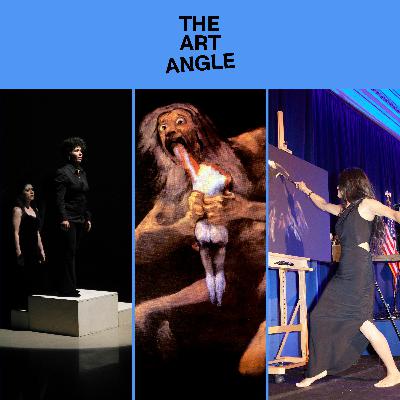
—The big controversy over the South Africa pavilion at the Venice Biennale, which Artnet News has had multiple pieces about.
—The Prado Museum in Madrid, which has a good problem: it has too many visitors. It also has a plan to deal with overcrowding.
—The mini-genre of "speed painting," specifically the painter Vanessa Horabuena. She sold a painting of Jesus for almost $3 million dollars that she made in 10 minutes at a Mar-a-Lago fundraiser—a sign of the world out of control, though perhaps a slightly more fun one to talk about than some of the other things in the news. Or maybe not.
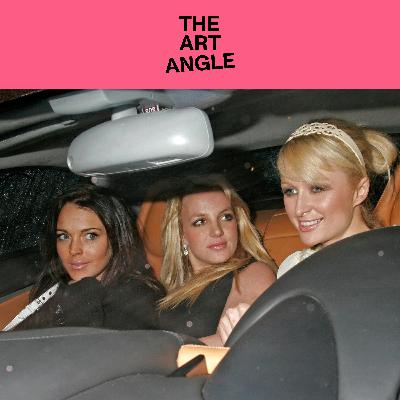
The first quarter of the 21st century is now behind us. Yet a pervasive sense of cultural stagnation persists: many observers and participants feel that creativity across the arts, media, and popular culture has slowed, leaving society with a muted sense of innovation and excitement.
David Marx’s new book, Blank Space: A Cultural History of the Twenty-First Century, provides an incisive guide through the cultural touchstones that have defined the last twenty-five years. Marx examines how commercialization gradually came to dominate contemporary culture, propelled by rapid technological advancements and a shifting cultural mindset that favors profit-driven formulas over experimentation. He argues that these dynamics—spanning art, literature, music, film, and fashion—have stymied radical innovation, making the opening decades of the new century some of the least transformative since the invention of the printing press. As Marx observes, there is now “a conspicuous blank space where art and creativity used to be.”
In Blank Space, Marx also proposes five strategies to help restore a society that values and nurtures cultural inventiveness. He joins the Art Angle to discuss the pressures and developments that slowed the emergence of radical new formats in art and broader culture over the last 25 years, and he outlines potential paths forward. Topics explored include the rise of kitsch, nostalgia, cultural omnivorism, and poptimism, all of which, he suggests, have contributed to the current climate of creative inertia.
Marx is a Tokyo-based American critic and writer whose work has appeared in The Atlantic and The New Yorker. He is also the author of several previous books, including Status and Culture: How Our Desire for Social Rank Creates Taste, Identity, Art, Fashion, and Constant Change and Ametora: How Japan Saved American Style. Blank Space: A Cultural History of the Twenty-First Century was published in November 2025 by Penguin Random House.
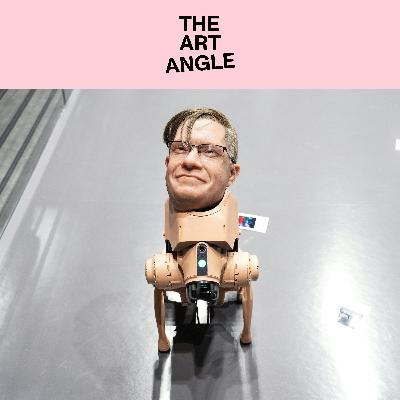

In art right now, it's hard to avoid talking about Beeple. That, of course, is the alias of Charleston-based Mike Winkelmann, known to millions of followers for digital images that he makes and posts daily. These works give off the sense of a brain overdosing on memes—we're talking pictures of giant emojis and pop culture junk being worshiped in dystopian techno hellscapes, or melted versions of celebrities and politicians turned into grotesque monsters and killer robots.
Beeple first burst into the center of the art world conversation in early 2021 when his work Everydays, The First 5,000 Days hit the block at Christie's Auction House. Sold as an NFT, it was essentially a high-resolution digital image that compiled everything he had made in his first decade-plus of daily posting. It sold for a shocking $69 million, still one of the biggest prices ever for a work by a living artist, and it made Beeple a symbol of both the new respect and opportunity for digital artists and of critics' worst fears about a blockchain-fueled art bubble and the meltdown of taste.
While that digital art bubble did crash, Beeple survived and experimented with new media. One of his interactive video sculptures has only just closed at LACMA in Los Angeles, while a set of robot dogs with human heads that he created was the talk of the recent Art Basel Miami Beach art fair in December. His work inspires a lot of commentary, positive and negative, including from national critic, Ben Davis. But there is no doubt that his influence seems to be growing as both museums and galleries try to figure out how to court a new generation of digital natives.
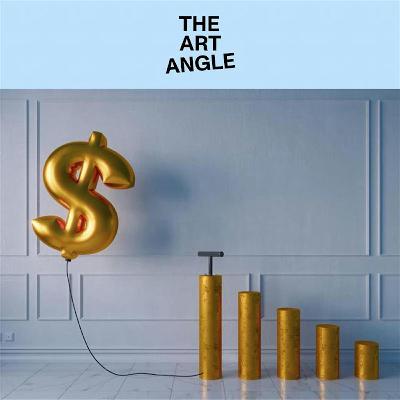
At the top of 2025, the outlook for the art industry was pretty bleak, and art insiders' worst fears were, in some cases, more than realized. By now, if you're paying any attention to the movements in the art market you have been hearing the drumbeat of bad news: Galleries shuttering, a lot of the buying energy drying up, some fairs shriking operations, and the secondary market stuttering.
But the picture is, as usual, quite nuanced depending on how you look at it. There were some upsides to the slowdown in the hype and the speculation gamification of art seems to be over, which some art insiders say is not the worst thing. Things seemed to turn a corner in the closing months of 2025, which included a successful fall New York auction week and a stronger-than-expected edition of Art Basel Miami Beach.
Following two years of a down market and declining sales, the world’s two leading auction houses Christie’s and Sotheby’s reported at the close of the year, upticks in total projected revenue for 2025. So is the wind back in the sails? After years of downturn, has the art market changed in permanent ways? What major shifts can we expect in 2026?
Senior editor Kate Brown is joined by Marc Spiegler to consider these questions.
For those who don’t already know, Spiegler led Art Basel from 2007 to 2022, and the brand saw a major expansion under his tenure. Currently, he works on a portfolio of cultural strategy projects with major foundations, private corporation, including digital and experiential endeavors. Spiegler has long been a visiting professor in cultural management at Università Bocconi in Milan and launched the Art Market Minds Academy.
As we close out another bumpy year in the art market, we are revisiting a recent episode that looks at one of the factors in play: the erosion of logic when it comes to the price of works of art. Our editor-in-chief was on the podcast sharing what she learned about how the rules of art pricing were made and broken—and what may come next.
What’s a painting worth? For art world professionals, that question of price has never been easy—but lately, it’s gotten harder than ever.
As we’ve discussed on this podcast before, the art market has cooled off. But this isn’t just a downturn—it’s a disruption. The system that once supported pricing logic is now in disarray, and dealers and advisors are feeling the strain.
In a recent report for Artnet News Pro, our editor-in-chief Naomi Rea explored how the traditional rules of art pricing have stopped making sense. With confidence waning and speculation drying up, dealers are quietly recalibrating. What we’re seeing may be more than a correction—as Naomi reports, it could be the unraveling of an entire logic.
Naomi joins senior editor Kate Brown to unpack what’s going on in the “danger zone” of the market and how different players—from mega-galleries, emerging dealers, to advisors and collectors—are adapting. They also discuss whether we might be heading toward a more sustainable and meaningful art market.

We love to do deep dives into trends that we are noticing in painting and the trend of “Bordercore” was one of our best-loved from the year, so we decided to revisit it this holiday season. We take a look at the emergent trend in art which is wild and inventive takes on frames, suddenly front and center for many painters of the moment as a way to push new boundaries in painting.
Almost by definition, the frame of a picture is something that you are not supposed to notice.
But if you go to the art galleries to look at paintings now, you might get a very different sense of what a frame can or even should do. Weird and wild frames that very much draw attention to themselves seem to be having a moment.
Recently, Artnet writer and editor Katie White penned a piece titled “Bordercore: Why Frames Became the New Frontier in Contemporary Art,” in it, she writes:
A new wave of contemporary art is reconsidering the frame as a central character, one that is surreal, sculptural, and symbolic. Artists are using the border not just to contain, but to comment, disrupt, or extend the work beyond itself. This is driven by an embrace of more bespoke, historic artistic processes, but also, as a rebuttal to the superflat virtual age.
More and more, paintings have been appearing at fairs and in exhibitions with statement frames, after a long era of often-frameless display. If for previous generations, the frame was a liability that could detract from the cerebral, intellectual, and aesthetic experience of the canvas, artists today are creating frames that attempt to pull us back into bodily reality, a haptic experience of art.
In her essay, she looks both at the history of framing styles, and talks to a number of contemporary painters to figure out what is causing so many to treat something that was literally considered peripheral to what they do as very much part of the main attraction. This week she joins art critic Ben Davis on the podcast to discuss this new frontier in art.
Chris Kraus is one of the most well-known contemporary art writers. She is also an important taste-maker, co-editor of independent publisher Semiotext(e), which played a key role in introducing French theory to U.S. audiences.
But Kraus is probably best known today as a novelist. Her 1997 autobiographical novel I Love Dick became a buzzy literary reference in the 2010s, and a model for autofiction. It was even made into an Amazon show.
This fall, Kraus put out a new novel, titled The Four Spent the Day Together. It has a cryptic three-part structure that I think I should set up.
The first part focuses on a young woman named Catt Greene. Drawing heavily on Kraus’s own life, it describes a childhood growing up in Connecticut, being bullied, and dreaming of leaving the hardships of her depressing lower-class life behind through experiments with drugs and sex, activism and art.
The second part focuses on Catt many decades later, now an art critic and novelist who has found unexpected success with a novel called I Love Dick, which is being made into an Amazon show. But it also focuses on the character of Paul, Catt’s husband, an addiction councilor who struggles with addiction himself, which slowly tears the two apart.
Like the real-life Kraus, the character Catt Greene owns properties in Albuquerque, New Mexico, which she rents out. Like Kraus, Greene is attacked by online critics in the late 2010s for being a landlord.
This leads to Part 3 of the book. Feeling demonized, and that her own life is running out of raw material to turn into literature, Catt Greene finds herself drawn to investigating a real-life murder in bleak rural Minnesota. The character of Catt Greene, and Kraus through her, attempt to reconstruct the grisly facts of the case, and try to make sense of it.
That’s probably enough set-up. Chris Kraus joins national critic Ben Davis to talk about her writing, her life, and her new book.

We are back this week with our monthly edition of the Art Angle Round-up, where co-hosts Kate Brown and Ben Davis are joined by a guest to parse some of the biggest headlines in the art world. As we close out a busy calendar year—and for the last roundup of the year—we are reviewing all of 2025 and the trends, themes, and stories that defined it with Andrew Russeth, Artnet Pro editor and art critic.
It's been a whirlwind of a year. We take a look at the art market, where slumped sales, gallery closures, and existential dread dominated the business up until November, when New York’s fall auctions saw the narrative take a turn, something that seemed to sustain across the primary market at Art Basel Miami Beach. We discuss what this could mean for 2026.
In the realm of politics, Trump 2.0 began, which ushered in a wave of policy shifts, cultural tensions, and uncertainty that reverberated across the art world, from federal arts funding to museum governance and international cultural exchange. We also ask whether the art world did finally go post-woke, a question Davis posed at the top of the year, the return of digital art, and the ongoing power of red chip art.
And it was a year of profound transformation for institutions, which are facing a multi-front crisis due to the changing expectations from the public, exploding costs, and a shifting political landscape. And, of course, there are also some fun stories in the mix, because this is the art world, a place that is known to be rather unusual.
Millions of people know The Artist's Way. First published in 1992, the book began as notes for a class that its author, Julia Cameron, taught on creative self-discovery or, as she sometimes prefers to call it, “creative recovery.” It found a huge audience, and today you can find Artist’s Way groups all over the world.
Cameron’s original The Artist’s Way offered a 12-week path towards overcoming artistic blocks. The book was subtitled “A Spiritual Path to Higher Creativity,” and it spoke of plugging into a current of what she called “spiritual electricity.” But her techniques were practical and easy to grasp. Rituals from The Artist’s Way such as starting your day by writing out three pages of unedited text, known as "doing your Morning Pages," have become part of the creative process of many, many artists, musicians, and writers.
More than three decades after its publication, The Artist’s Way continues to find new followers, and even got a new bump of popularity during the 2020s. And Julia Cameron herself has returned this year with The Daily Artist’s Way, offering a new way in for fans. Cameron agreed to speak to national critic Ben Davis to revisit the origins of her famous method and how she’s tweaking it now in this new book.
You've been hearing a lot about the Louvre lately. Last month, thieves broke into the Paris Museum in broad daylight when the museum had just opened and made off with eight pieces of royal jewelry. The spectacular heist captured the world news cycle and the imagination of the internet. But why are people so obsessed with the Louvre in general? What is it about this museum in particular? We decided to re-air a recent episode where we look at the enigmatic institution and dive into the many secrets and stories that it holds.
The Louvre is among the largest, most-visited, and best-known museums in the world, and for nearly too many reasons to count. It’s home to some of the most celebrated works of art, from the Venus de Milo to the Mona Lisa. Its blended contemporary and historic architecture is astounding. And it also has a truly formidable past, stretching back through time, well before the building became a museum in 1793.
An institution and collection that has been a quiet witness to so much history and change is bound to have stories to tell. Elaine Sciolino, contributing writer and former Paris bureau chief for the New York Times, has captured many of these stories in her newest book, Adventures in the Louvre: How to Fall in Love with the World’s Greatest Museum, which came out in April with Norton & Company. Sciolino is acclaimed for her chronicles of French history, and she’s the author of the New York Times bestseller The Only Street in Paris, The Seine, and La Seduction. And at the Louvre, she spoke to everyone, from the guards to the lead curators, and received unprecedented access to rooms I didn’t even know existed.
Senior editor Kate Brown caught up with Elaine, who is based in Paris, to discuss the enigmatic and ever-enchanting Louvre, and what she learned from her exploration of its many halls, backrooms, and basements.
Last year, Jack Hanley—one of New York’s most beloved and idiosyncratic gallerists— announced he would close his gallery after 37 years in business. The news landed with both surprise and sadness: Hanley has always been a disruptor, a dealer with a sharp eye for fresh talent, who followed instinct over market logic. A gem of the New York art scene and beyond.
Over the decades, Hanley gave early shows to artists like Günther Förg, Christopher Wool, Sophie Calle, and Christian Marclay—and all of that was long before they became art-world names they are now. He helped define the San Francisco scene of the 1990s, championed artists who blurred lines between high and low and made challenging work; and more recently, even gave the digital artist Beeple his first-ever gallery show. As a former Grateful Dead roadie, avid orchid grower, art fair founder, and having run galleries in several cities, he’s seen a lot. And played music with more than a few art dealers.
Hanley joins senior editor Kate Brown to discuss transformation and continuity in the art world and art industry. We talk about what’s changed, what hasn’t, and what keeps art interesting, even as the market has grown more absurd.
Before the idea of feminism took shape, there was what writers once called “the woman question.” The phrase comes from the querelle des femmes—a centuries-long debate in Europe about women’s rights, intellect, and place in society. One of the first to take it up was Christine de Pizan, the Italian-French court writer who, in 1405, published The Book of the City of Ladies. At a time when most women were excluded from education and public life, de Pizan challenged misogyny head-on, laying some of the earliest groundwork for what we now understand as feminist thought.
That question—what is a woman’s place in culture and history?—has echoed ever since. In 1971, the art historian Linda Nochlin famously reframed it by asking: “Why Have There Been No Great Women Artists?” We have a clear answer: there had been great women artists all along, but their stories were often overlooked, dismissed, or erased.
A new exhibition at the recently opened Museum of Modern Art in Warsaw hones in on that conversation. "The Woman Question: 1550–2025," curated by Alison M. Gingeras, gathers nearly five hundred years of women’s creative production—from Renaissance pioneers like Sofonisba Anguissola and Lavinia Fontana, to Baroque heroines such as Elisabetta Sirani and Artemisia Gentileschi, and contemporary artists including Betty Tompkins and Lisa Brice. With more than 200 artworks, the exhibition focuses on how women saw and depicted themselves and the world, and how the represented power, resistance, desire, and violence. Through portraits, allegories, and bold depictions of female experience, these artists reveal how women have long claimed creative agency despite the structures built to contain them.
On this episode of The Art Angle, Gingeras joins senior editor Kate Brown from Warsaw, Poland, to talk about early women art stars, recent rediscoveries, and why, after all this time, we still need all-women exhibitions.
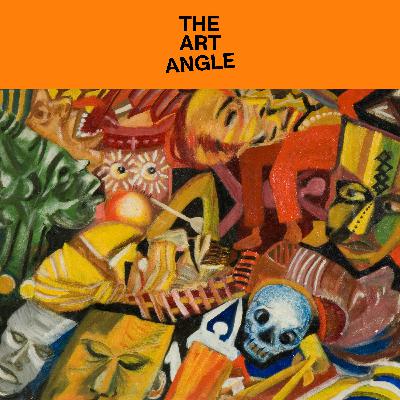
Nigerian modern art is having a moment. In London, the Tate has opened a critically acclaimed exhibition, called “Nigerian Modernism,” featuring more than 50 artists who experimented with vibrant new styles in the mid 20th century in the giant and influential West African nation. More generally, the artists of this era have become more recognized outside of their home country in recent decades, from early figures who laid the groundwork like Aina Onabolu to a towering figure of the 1950s like Ben Enwonwu to younger innovators of the 1950s and 1960s such as Uche Okeke and Demas Nwoko, with many more important names to know and bodies of work to discover.
This was an earth-shaking time in Nigerian history, when a near-century of British colonial domination was shed and the many problems of a fragile new independent nation had to be faced. These artists were part of figuring out how to express that new sense of identity in images. But their art was not always so celebrated, sometimes dismissed as derivative of European art.
The scholar and curator Chika Okeke-Agulu has been important to the recent re-estimation of Nigeria’s art history. He teaches at Princeton, and is the author of, among many other things, of Postcolonial Modernism: Art and Decolonization in Twentieth-Century Nigeria, a book that personally excited me very much when I first found it. With the Tate show drawing a fresh wave of interest, art critic Ben Davis thought Okeke-Agulu would be an excellent guide to what this art was, what it meant, and why it still demands attention today.
 1
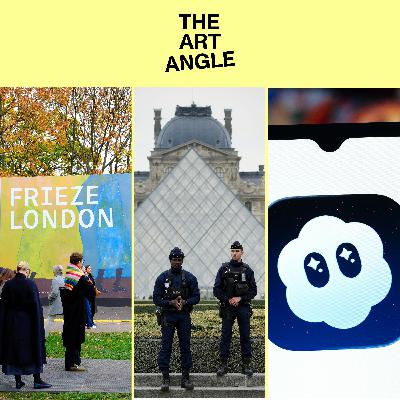
1It’s been a really dizzyingly busy October, and as is customary, we are ending the month by talking about three of the biggest topics. We have a palette of stories that gives a sense of how head-spinning it was.
First, we are going to talk about one of the biggest stories in the world, the $102 million jewel heist at France’s Louvre museum, which has transfixed the public.
Second, it’s been a busy few weeks in the European art world on top the Louvre heist, with both Art Basel Paris and Frieze London. Our reporters were there so we are going to check in on what the news from the art biz is.
And third, we’ll talk about the new Sora 2 app, an all-A.I. TikTok clone that isn’t public yet but is at the top of the app charts. I got a chance to try it out and looked at it. An artist I know called it “the death of video art.” Is it that bad or that good? What does it mean for art? We’ll talk about that too.
Ben Davis is joined as is custom by Artnet’s senior editor and Art Angle co-host Kate Brown, in Berlin, alongside European news reporter Jo Lawson-Tancred.

One of the things Ben Davis likes about contemporary art is that he is always learning new things, because art spaces are always bringing new ways of making and thinking into the mix. Recently, unexpectedly, this has included magic. Specifically, Jeanette Andrews.
Andrews began her career as a professional magician, but now works mainly in museums, creating a body of work that’s something new, exploring magic as an expressive medium. Her works usually bring together the science of perception, the intrigue of coded messages, and the history of illusion as a craft.
Andrews has performed parlor tricks dreamed up by an algorithm to investigate human versus machine creativity; re-performed the earliest documented magic trick from 1584; and made art inspired by the use of sleight of hand in actual CIA espionage in the 1950s. And her explorations of this unusual creative space are actually getting their first dedicated museum exhibition soon, at the Elmhurst Art Museum in Illinois—that’s a little bit of news we’re breaking on the Art Angle, as a matter of fact.
Earlier this month, Ben went to see one of Jeanette Andrews’s most recent commissions in Boston, "The Attestation," at the MIT Center for Art, Science, and Technology. He describes it as a hybrid of stage magic and social experiment.
The questions of why, if, and how magic fits in in the museum seem fascinating to me, so he was happy that Andrews agreed to talk about how she pulled off her biggest trick of all: making magic art.


Download from Google Play

Download from App Store
 United States
thank you