


 Claim Ownership
COURTESY OF
Subscribed: 2Played: 57
Subscribe

© AdamArtGallery 2021
Description
The official Te Pātaka Toi Adam Art Gallery podcast! This podcast channel is for material outside the exhibition space, be it recorded public programme, random series, occasional ponderings or curated content. If it is heard it may well end up here. Te Pātaka Toi Adam Art Gallery is the purpose-built gallery of Te Herenga Waka—Victoria University of Wellington. It initiates, produces and presents a highly-regarded programme of exhibitions, events and publications; manages and develops Ngā Puhipuhi o Te Herenga Waka—Victoria University of Wellington Art Collection, and provides a vital platform for critical thinking across media, disciplines, cultures and contexts.
36 Episodes
Reverse
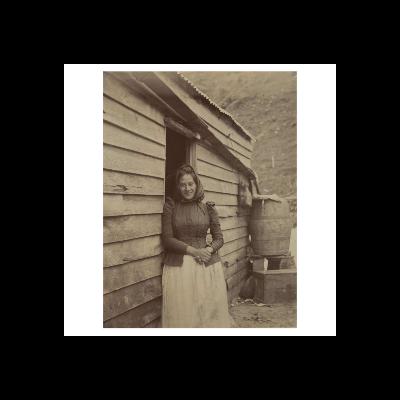
The final episode of the series features new poetry in response to photographs of 19th Century Aotearoa from the exhibition A Different Light: First Photographs of Aotearoa.In this recording of the evening event called ‘Long exposure’, we hear the 13th Poet Laureate Chris Tse and fellow poets Mary Macpherson, Arihia Latham, Margo Montes de Oca, Ada Duffy, Simon Sweetman, and Jackson McCarthy move around the gallery reading new work alongside photographs of their choosing.This event was developed in collaboration with the Alexander Turnbull Library and The National Library of New Zealand Te Puna Mātauranga o Aotearoa and recorded on 07 May 2025.
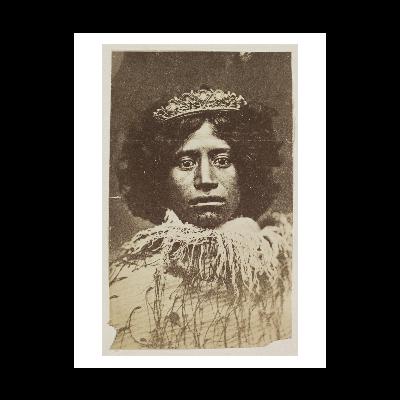
In this episode, we hear artist Maija Stephens responding to three images of wahine Māori: In Mrs Karetai’s House by John H Scott; Wahine Māori wearing a tiara by John McGarrigle; and an image of an unidentified wahine attributed to the American Photographic Company. When looking at these photographs Stephens asks herself, is the person behind the camera a photographer or a kaiwhakaahua? This is a question of positionality for Stephens. In this talk, she considers what it might mean to decolonize the lens, how the language of photography might need to shift, and the impact this has on her own practice.On the occasion of the exhibition A Different Light: First Photographs of Aotearoa, at Te Pātaka Toi Adam Art Gallery (1 February to 15 June 2025), this lunchtime talk was part of the series ‘Through a Contemporary Lens: Artists in Response’ developed in collaboration with artist and educator Caroline McQuarrie, and was recorded on 05 June 2025.
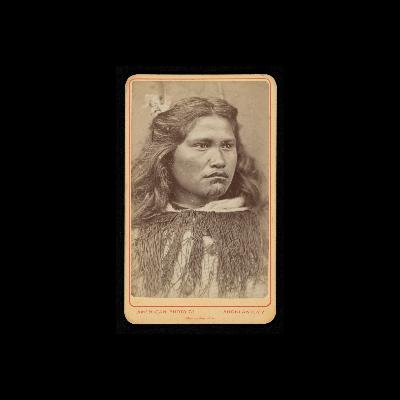
The relationship of Māori with photography is a complex one. On one hand, it has been used as a colonising tool to ‘other’, feeding into harmful and reductive colonial stereotypes to appease a colonising gaze. In contrast, it has also been adopted as a symbol of mana and re/claimed to maintain whakapapa connections in a visual form other than the customary whakairo.In the second episode of ‘In Response’, artist Matt Tini discusses the complex histories of tangata whenua in relation to photography, and recontextualises the ways we view such images – historic, present and future – through a te ao Māori perspective.Tini asks such questions as, who were these images intended for? Who keeps the mauri alive of the tipuna represented in the early photographs? How are their stories being presented?This episode is part of a series of recorded talks in response to the exhibition A Different Light: First Photographs of Aotearoa, at Te Pātaka Toi Adam Art Gallery, from 1 February to 15 June 2025. The series ‘Through a Contemporary Lens: Artists in Response’ invited local artists to offer their response to particular photographs and was developed in collaboration with artist and educator Caroline McQuarrie. Recorded 17 April 2025.
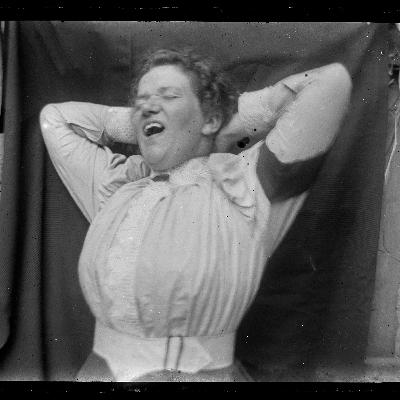
This is the first episode in a series of talks recorded alongside the exhibition A Different Light: First Photographs of Aotearoa. The series was titled ‘Through a Contemporary Lens: Artists in Response’ and featured local artists who were invited to share their response to particular photographs in the exhibition.In this episode, artist and educator Caroline McQuarrie, who helped develop the talk series, looks at Robina Nichol’s portrait of Amy Kirk yawning and considers what it might have meant to be an amateur female photographer in the late 19th century.In the 21st century we have understanding of the gendered gaze in photography, and with this in mind McQuarrie explores what we can ask of these images, and of this photographer and how do we might locate her photographic practice now.Recorded at Te Pātaka Toi Adam Art Gallery, on 13 March 2025.
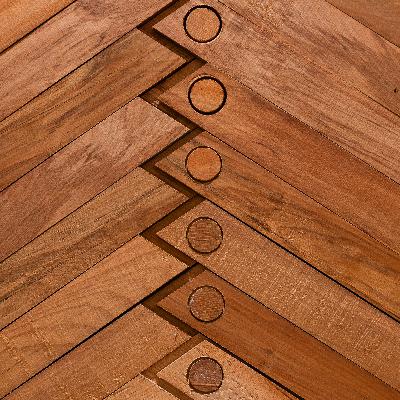
Hanging on the wall in the Upper Chartwell, Brook Konia’s work Tūrangahakoa connects twelve paired bars pointing upward. A zagged manawa-line is revealed in the middle, signifying the journey one goes on in life. Altogether the artwork is a tohu of belonging, joy and aspiration. In this conversation with Rosalie Koko the 2024 Pia Nahanaha Taonga Curatorial Intern, Konia shares the kōrero informing Tūrangahakoa which navigates around the places, people, objects, customs and ways of relating to each other that transition someone from wandering and wondering to being welcome.This episode is a recording of the public programme eventTūrangahakoa, Brook Konia in conversation with Rosalie Koko, 1.00pm, Saturday 24 August, Te Pātaka Toi Adam Art Gallery, as part of the exhibition The buildings notice me, Te Pātaka Toi Adam Art Gallery, 13.07.24–22.09.24.
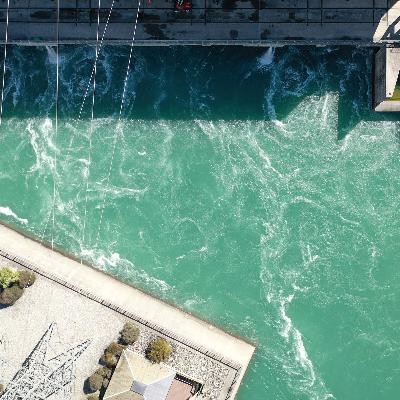
The same week the exhibition ‘Infrastructure: power, politics and imagination’ opened at Te Pātaka Toi Adam Art Gallery, select committee submissions closed for the National Government’s Fast-track Approvals Bill. This controversial Bill, which aims to speed up approvals for infrastructure and development projects, has been identified as having implications for iwi and environmental protection.In this political context and sitting amongst artist Matthew Galloway’s immersive project titled ‘The Power That Flows Through Us’, Galloway sat down with Professor of Politics and Māori Studies at Te Herenga Waka—Victoria University of Wellington Maria Bargh, to explore contemporary perspectives on the politics of resource use, with an eye on the past, present and future.This episode is an edited recording of the lunchtime talk titled ‘Finding Ways Forward’ that took place on Wednesday 5th June 2024, in conjunction with the exhibition ‘Infrastructure: power, politics and imagination’, 20 April - 30 June 2024.
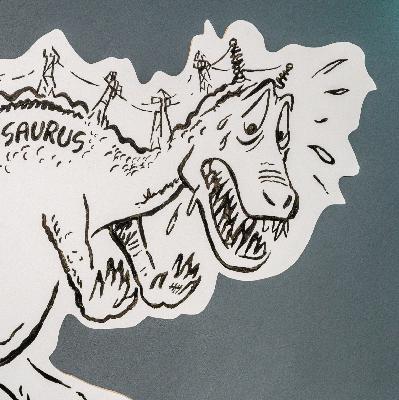
In the project The Power That Flows Through Us artist Matthew Galloway revisits cartoons from the 1970s/80s by Robert Brockie, Sid Scales, Gordon Minhinnik and Daryl Crimp. This historical era of cartooning is the starting point for this podcast episode, which is a recording of a panel discussion that took place on 14 May 2024 in conjunction with the exhibition Infrastructure: power, politics and imagination ,Sitting amongst Galloway's project - and in particular, next to historical cartoons enlarged as life-sized sculptures - are the panelists: Sharon Murdoch, the first woman political cartoonist in the Aotearoa mainstream media; Sam Orchard, Assistant Curator for the Cartoon and Comics Archive at the Alexander Turnbull Library; and, cartoonist and researcher, Dylan Horrocks. In this wide-ranging conversation, the panel explore such themes as: the importance of cartoons to the political imaginary; cartoons’ influence on public opinion; the politics of the 70s/80s generation of cartoonists; what political cartooning looks like now; and what it might be in the future.
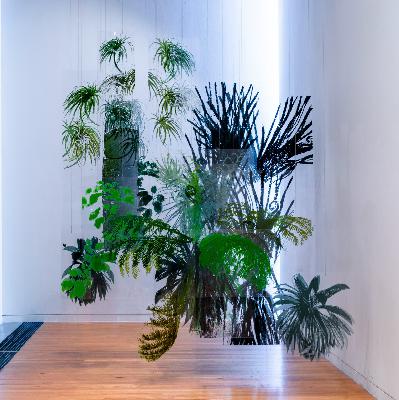
A forest consists of many timescales. Through a constant process of renewal and decay, the ecosystem becomes a record of time passing. Similarly, human memory folds together new and old. Every moment that something is remembered material traces are reshaped and reconstructed. This episode is a recording from a panel discussion featuring artists Taarn Scott and Raewyn Martyn in conversation with exhibition co-curator Su Ballard, which took place on 23 March 2024 as part of the closing weekend event for 'Folded Memory' titled 'Ki te Ngāhere: Conversations about time material and memory', Tracing an ongoing thread begun in a previous exhibition — Listening Stones Jumping Rocks (2021) — this conversation considers the way narratives and materials are interchangeable containers of ecological memory. In Invasive Weeds Taarn Scott has rendered Hana Pera Aoake’s poetry material. In Greywacke love poems: returns Raewyn Martyn explored how mutable material can dislodge skewed histories. In this conversation with exhibition curator Su Ballard, Scott and Martyn brought their practices together to reflect on the transformational potential of material as stories and stories as material. Together we imagined new old ways to create survivable futures.
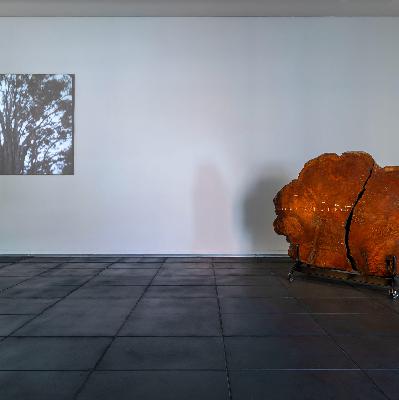
On the occasion of the exhibition Folded Memory (18 November 2023 - 28 March 2024) this podcast episode is a recording of a poetry reading in the Gallery on Wednesday 13 March 2024, titled Spoken Ecologies.For Spoken Ecologies 2023/24 Tāhuhu Kōrero Toi Summer Scholar in Art History at Te Herenga Waka—Victoria University of Wellington, Margo Montes de Oca brought together poets to share work in response to Folded Memory. Using their poetry to bear witness to the kaleidoscopic stories of geology and ecology of Aotearoa, these readers guide us through shifting landscapes of time, extending the tendrils of human language out towards the more-than-human. Featuring Joan Fleming, Ash Davida Jane, Ruben Mita, Niamh Hollis-Locke, Loretta Riach, and Hana Pera Aoake.
In this episode, you’ll hear a mastered recording of Is This Meta Enough For You? an improvised live electronic music performance by sonic artist Thomas Voyce. During the exhibition installation period for Back of House, Voyce collected field recordings by attaching binaural microphones to individual Adam Art Gallery staff members. Is This Meta Enough For You? is the culmination of these recordings amplified by Te Kōkī Soundsystem and mixed live in the gallery on the evening of Wednesday 18 October 2023.Thomas Voyce is a sound artist from Te Whanganui-a-Tara, who works primarily with field recordings and live diffusion. He has a particular interest in multi-element soundsystems, spatial audio and dub production techniques. Voyce has participated in sound art residencies in Aotearoa and South Africa, with fixed media work exhibited as part of Audiosphere: Sound Experimentation 1980-2020, Museo Reina Sofia, Madrid (2020-21). With an enduring fascination with vintage audio technology, Voyce often performs with analog mixing consoles and electromechanical effects, creating work that highlights the marriage of source materials and the production methodologies employed.Back of House, 12 August – 29 October 2023, Te Pātaka Toi Adam Art Gallery.
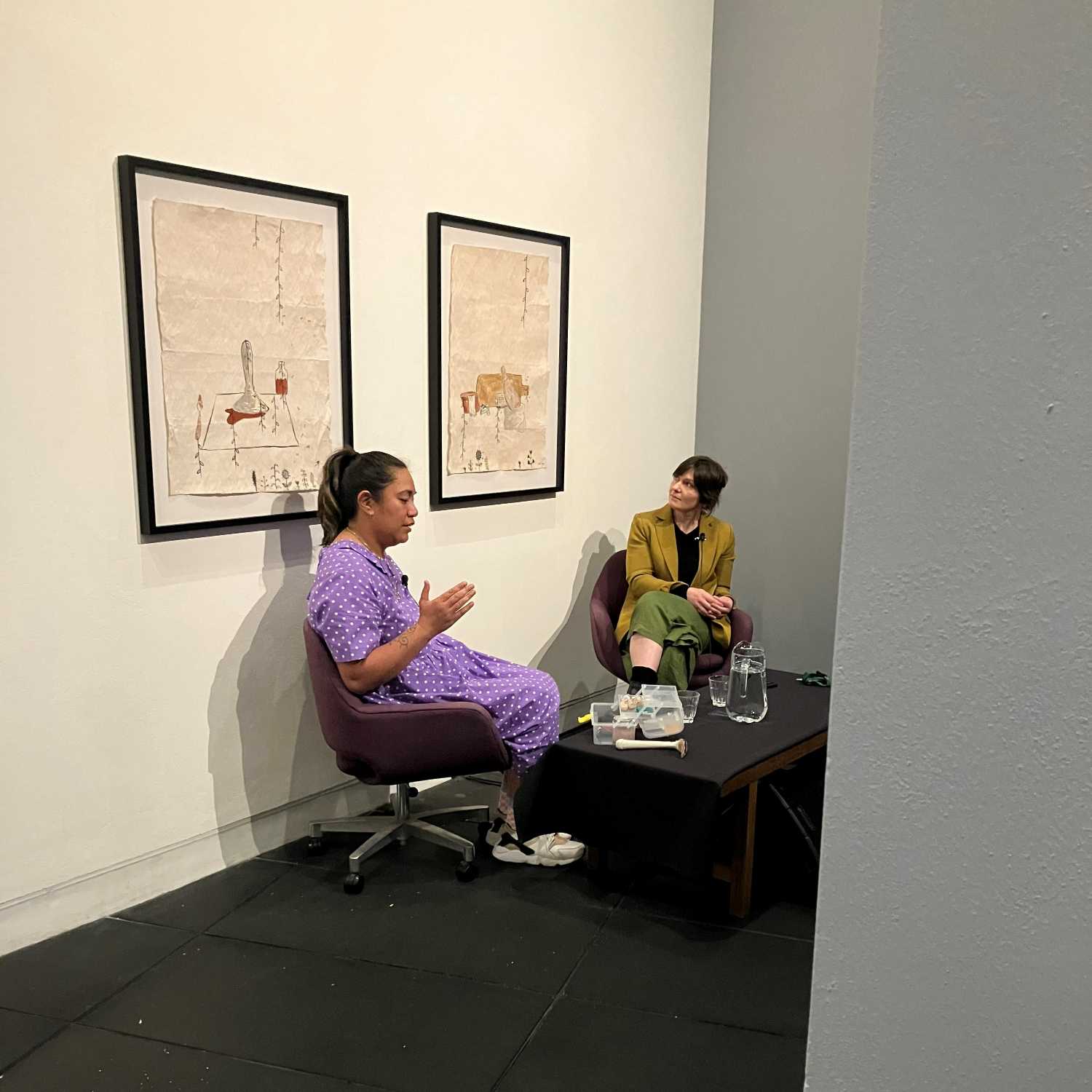
This episode features 'Aro Toi/ Art Collection in Focus' curator Sophie Thorn speaking with artist Cora-Allan on Saturday 16 September 2023, in a floor-talk associated with the exhibition 'Back of House'.Cora-Allan is of Māori (Ngāpuhi, Ngātitumutumu) and Niue descent. A contemporary practitioner of the Niue tradition of barkcloth known as hiapo, Cora-Allan is credited with reviving the ‘sleeping artform’ which has not been practised in Niue for several generations.In this conversation Sophie and Cora-Allan discuss the material processes of harvesting whenua paint and the materials science of producing natural dyes as they relate to Cora-Allan’s three works on hiapo, on display in ‘Aro Toi /Art Collection in Focus: A Gift, A Celebration, An Invitation’.
Every second Tuesday lunchtime, Christina Barton, Director of the Adam Art Gallery and co-curator of In Relation: Performance Works by Peter Roche & Linda Buis 1979–1985, selects a performance in the exhibition and reads the relevant original notes drafted by the artists or compiled by their most assiduous audience member, the critic and curator Wystan Curnow. Her idea is to bring a live dimension into the gallery as a way of animating the documentation on display and sharing first-hand insights in their unedited form. Each reading is between 15 and 30 minutes in duration with some comments before and after.In this final session Tina reads an extract from the raw notes Wystan Curnow compiled about the performance by Peter Roche & Linda Buis in October 1982 in which they sit opposite each other raising their arms in a form of unrequited greeting at RKS Art in Auckland. She follows this by reading the published text, ‘A Fine How Do You Do’ Curnow wrote for the New Zealand Listener that gave a fuller account of the performance and was published on 26 February 1983. With grateful thanks to the author for allowing this reading.
Every second Tuesday lunchtime, Christina Barton, Director of the Adam Art Gallery and co-curator of In Relation: Performance Works by Peter Roche & Linda Buis 1979–1985, selects a performance in the exhibition and reads the relevant original notes drafted by the artists or compiled by their most assiduous audience member, the critic and curator Wystan Curnow. Her idea is to bring a live dimension into the gallery as a way of animating the documentation on display and sharing first-hand insights in their unedited form. Each reading is between 15 and 30 minutes in duration with some comments before and after.In this session Tina reads three texts by Peter Roche & Linda Buis that describe performances at Auckland City Art Gallery (December 1981), Auckland Museum (March 1982), and Manawatu Art Gallery (August 1982), documentation of which is displayed in one vitrine in the Upper Chartwell Gallery. These three texts share a focus on the role of the audience in the unfolding of each work, proving how contingent each performance was on the actions and reactions of the people who happened upon or came to watch each piece.
Every second Tuesday lunchtime, Christina Barton, Director of the Adam Art Gallery and co-curator of In Relation: Performance Works by Peter Roche & Linda Buis 1979–1985, selects a performance in the exhibition and reads the relevant original notes drafted by the artists or compiled by their most assiduous audience member, the critic and curator Wystan Curnow. Her idea is to bring a live dimension into the gallery as a way of animating the documentation on display and sharing first-hand insights in their unedited form. Each reading will be between 15 and 20 minutes with time for questions after.In this reading Tina sat in the Lower Stairwell Gallery, the dimmest area of the exhibition where several works by Roche & Buis that played with light and dark, visibility and blindness were presented. She read Peter Roche & Linda Buis’s account of their performance at 100m2 which started at 10pm on 14 April 1981 and was illuminated only by candles and the ambient street lighting that entered the space once they had opened the doors to the old building in Federal Street. She also read accounts by two audience members, Wystan Curnow and Tony Green to give different perspectives on the occasion. She finished by reading an extract from a letter written by Wystan Curnow to Tony Green describing their performance at Space in Auckland on 27 January 1983. We are grateful to the authors for allowing us to share these direct thoughts with our audience.
A conversation with writers Tina Makereti, Gregory Kan, and Gwynneth Porter, chaired by Thomasin Sleigh.Writers are inspired and challenged by the visual arts, whether it be for its politics, its abstraction, its humour, or through creative and productive friendships with the artists themselves. But what does ‘responding’ to an artwork really mean? What are a writer’s specific considerations for different commissions and publications? Beyond the essay, what is the potential of fiction, poetry, and other literary forms to respond to a work of visual art? And what is the role of the reader, as the third party in a collaboration between a writer and artist?This episode was recorded at Te Pātaka Toi Adam Art Gallery on 24 May 2023, in conjunction with the CIRCUIT exhibition ‘Legacies: Five Short Films for Cinema’ by Edith Amituanai, Martin Sagadin, Ukrit Sa-nguanhai, Pati Tyrell, and Sriwhana Spong, 13 May - 30 July 2023.A starting point for this kōrero is the accompanying Legacies reader edited by CIRCUIT’s 2022 Writer in Residence, Thomasin Sleigh. The conversation begins with Thomasin Sleigh inviting Tina Makereti to read an excerpt from her short story, Black Milk (2016), which is republished in the reader. This story was written in response to a photograph by Fiona Pardington and went on to be the Pacific Regional Winner of the Commonwealth Short Story Prize in 2016.Tina is joined in conversation by writers Gregory Kan and Gwynneth Porter to discuss their writing and its dynamic and evolving relationship to the visual arts.Please note there is a brief microphone malfunction from 36-39 minutes.
Every second Tuesday lunchtime, Christina Barton, Director of the Adam Art Gallery and co-curator of In Relation: Performance Works by Peter Roche & Linda Buis 1979–1985, selects a performance in the exhibition and reads the relevant original notes drafted by the artists or compiled by their most assiduous audience member, the critic and curator Wystan Curnow. Her idea is to bring a live dimension into the gallery as a way of animating the documentation on display and sharing first-hand insights in their unedited form. Each reading will be between 15 and 20 minutes with time for questions after.In this reading Tina reads both Peter Roche’s and Wystan Curnow’s original notes written soon after the Night Piece performance, executed in the Old Gasworks in Freemans Bay in Auckland. This was undertaken in the dark without the permission of the site’s owners and entailed Linda crawling along the length of a 60-foot wall, a surviving fragment of a much larger structure, while Peter lit candles at points along the wall’s base. Wystan was the only audience member. The two accounts were later integrated and published in 1983 in the first issue of Parallax, a new journal dedicated to postmodern art and literature. We are grateful to both authors for allowing us to share these direct thoughts with our audience.
Every second Tuesday lunchtime, Christina Barton, Director of the Adam Art Gallery and co-curator of In Relation: Performance Works by Peter Roche & Linda Buis 1979–1985, selects a performance in the exhibition and reads the relevant original notes drafted by the artists or compiled by their most assiduous audience member, the critic and curator Wystan Curnow. Her idea is to bring a live dimension into the gallery as a way of animating the documentation on display and sharing first-hand insights in their unedited form. Each reading will be between 15 and 20 minutes with time for questions after.In this reading Tina reads Wystan Curnow’s original notes written soon after attending Peter Roche & Linda Buis’s Liaison performances at Real Pictures in Auckland in March 1980. This was the first time the pair performed together in public as an acknowledged duo. Tina uses the occasion to track the shift from live action to historical event by then reading the notes prepared for the exhibition as a foil to Curnow’s raw report. We are grateful to the author for allowing us to share these direct thoughts with our audience
Every second Tuesday lunchtime, Christina Barton, Director of the Adam Art Gallery and co-curator of In Relation: Performance Works by Peter Roche & Linda Buis 1979–1985, will select a performance in the exhibition and read the relevant original notes drafted by the artists or compiled by their most assiduous audience member, the critic and curator Wystan Curnow. Her idea is to bring a live dimension into the gallery as a way of animating the documentation on display and sharing first-hand insights in their unedited form. Each reading will be between 10 and 20 minutes with time for questions after.In this reading Tina delivers artist Peter Roche's notes around the performances of Oh Shit No, On the Contrary, and offers insights into this part of the timeline, which is at the point where Linda Buis starts to play an active role that will lead eventually into a shared practice.Please note that Peter Roche's use of expletives in his writing have not been censored in this recording.
Welcome to the first episode of ‘Walking, Talking, Reading, Writing’ Te Pātaka Toi Adam Art Gallery’s podcast series exploring themes running through the exhibitions ‘Nick Austin: Life Puzzle’ and ‘Aro Toi / Art Collection in Focus: Ana Iti, A dusty handrail on the track’. The common point of departure is a push-pull approach to language and physical structure, referencing different approaches to narrative sequencing and spanning physical or temporal distances.This episode features Rachel O’Neill, a Pākehā queer filmmaker, writer and artist living and working between the Kāpiti Coast and Te Whanganui-a-Tara, Aotearoa. Rachel develops screen-based projects, writes books and collaborates on cross-disciplinary projects, seeking out fresh ways to see and understand the human condition and to unearth the humour and strangeness that underlie experience.On the 8th of March 2023 Rachel presented a playful and poetic discussion exploring the interpersonal tones and shifting arrays of voices that shape our day. During this talk, participants were invited to spend some time ‘listening to the voice’ of an artwork of their choice, exploring it in relation to self, moment and situation. It was hoped that these personal ‘found sounds’ might generate curious ‘chords’ of experience for private or group reflection.The talk was an intriguing undertaking that provoked a unique reading of the exhibition. This episode is Rachel’s adaption for podcast, opening the experience to anyone, anywhere, anytime.
Lunchtime talk12pm 08 December 2022Join us to explore some recent poems by writers who identify with or respond to the mermaid as a figure who slips between categories. Ōtepoti artist and poet, Jessica Hinerangi Thompson- Carr aka the Māori Mermaid, joins curator Megan Dunn to discuss their individual resonance with mermaid symbology. The Māori mermaid reads her own work and talks about the work of others from poetry to popular culture, shining light on the imaginative potential of the mermaid and its relevance to contemporary Aotearoa.Jessica Hinerangi Thompson-Carr is Ngāruahine, Ngāti Ruanui, Ngāpuhi, and Pākehā. She is 26 years old and currently works as an artist, poet, and writer, often under the name Māori Mermaid (@maori_mermaid on instagram). Her inspiration comes from her whakapapa and she is constantly seeking more information about herself and her future through her poetry and art.This is the third and final in our lunchtime talk series Bridging Worlds that ran alongside Te Pātaka Toi Adam Art Gallery’s exhibitions Lucien Rizo's 'Everything' and Megan Dunn's 'The Mermaid Chronicles'. These talks explore private obsessions in real world contexts and the ways imaginative personas enable slippage between identity categories.

Comments

Download from Google Play

Download from App Store
 United States