


 Claim Ownership
Practical for Your Practice
Subscribed: 10Played: 94
Subscribe

© CDP 2021
Description
Three clinical psychologists and trainers at CDP come together to talk about the good, the bad, and the ugly of actually implementing Evidence-Based Psychotherapies (EBP’s). Practical for your Practice is a bi-weekly podcast featuring stories, ideas, support, and actionable intel to empower providers to keep working toward implementing EBP’s with fidelity and effectiveness. This project is sponsored by the Uniformed Services University (USU); however, the information or content and conclusions do not necessarily represent the official position or policy of, nor should any official endorsement be inferred on the part of, USU, the Department of Defense, or the U.S. Government.
82 Episodes
Reverse
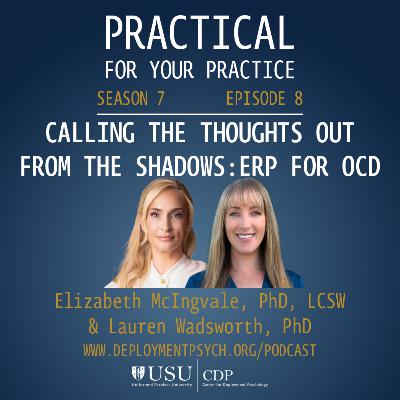
Obsessive-Compulsive Disorder (OCD) is common, disabling and frequently misunderstood in clinical practice. In this episode of Practical for Your Practice, hosts Dr. Jenna Ermold and Kevin Holloway are joined by Dr. Elizabeth McIngvale and Dr. Lauren Wadsworth, two nationally recognized leaders in OCD treatment and training, for a deep dive into Exposure and Response Prevention (ERP), the gold-standard treatment for OCD.Together, they unpack why OCD is so often misdiagnosed, mistreated, or unintentionally reinforced, even by well-intentioned clinicians, and how ERP works to interrupt the obsession–compulsion cycle by targeting avoidance, ritualizing, and intolerance of uncertainty.Be sure to listen in and remember, we want to hear from you! Have thoughts about this episode? A “clinical sin” you’ve encountered? Ideas for future topics or guests?Leave us a voicemail via SpeakPipe https://www.speakpipe.com/cdpp4p Or send us an email cdp-podcast-ggg@usuhs.edu . We love hearing from our listeners. As always, until next time, stay curious, and mind your EBPs.Elizabeth McIngvale, Ph.D., LCSW, is the Director of the OCD Institute of Texas, Co-Founder of MHNTI, and faculty at Baylor College of Medicine. A renowned OCD expert, she has published 35+ peer-reviewed works and delivered 250+ lectures. She founded the Peace of Mind Foundation and OCDChallenge.org, now part of the IOCDF, where she serves as a Board Member and former national spokesperson. Diagnosed with OCD at age 12, Dr. McIngvale brings a unique dual perspective as both a clinician and advocate. She has advised NIH and SAMHSA and serves as a faculty instructor for the Behavioral Therapy Training Institute. She remains dedicated to advancing research and expanding access to high-quality care for OCD and anxiety disorders.Dr. Lauren Wadsworth is a board-certified clinical psychologist and Clinical Senior Instructor at the University of Rochester Medical Center. She is the founding director of Genesee Valley Psychology (GVP), providing accessible evidence-based care in Western NY, and Meridian Psychology Practice, serving NY, MA, and GA. As a leader in mental health education, she co-founded the Mental Health National Training Institute (MHNTI) and Twin Stars Diversity Trainers. An expert in diversity and inclusion, she co-authored Did That Just Happen?! Beyond "Diversity" — Creating Sustainable and Inclusive Organizations. Dr. Wadsworth is dedicated to expanding access to evidence-based treatment and fostering inclusive environments through app-based training and organizational consultation.Resources mentioned in this episode: Mental Health Network & Training Institute (MHNTI) Evidence-based training and consultation for OCD and related disorders https://mhnti.comInternational OCD Foundation (IOCDF) Clinician training, resources, and treatment referrals https://iocdf.org Calls-to-action: Subscribe to the Practical for Your Practice PodcastSubmit your comments or questions on our social media pages or via SpeakpipeSubscribe to The Center for Deployment Psychology Monthly Email
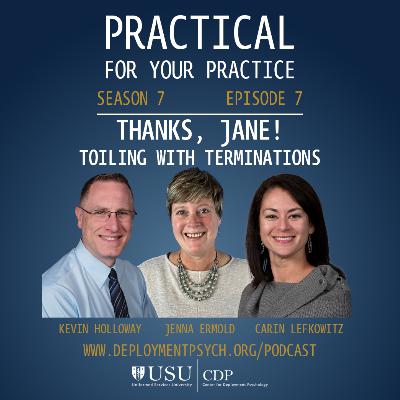
Terminations in therapy should be expected, but they often catch us – patients and providers – off-guard. What is the best way to talk about termination? What if it’s unexpected? Is “termination” even the right word? This episode finds your hosts inspired by two listeners, one of whom asked us to muse on the topic of ending the therapy relationship. And what better way to terminate 2025 than by exploring this topic? Thanks, Jane!Resources mentioned in this episode: CDP’s consultation services: https://deploymentpsych.org/resources/consultation-servicesCalls-to-action: Make use of consultation when facing a challenging terminationConsider using a psychotherapy plan to articulate the treatment and termination process from the beginningIncorporate ongoing assessment throughout to inform treatment and terminationSubscribe to the Practical for Your Practice PodcastSubmit your comments or questions on our social media pages or via SpeakpipeSubscribe to The Center for Deployment Psychology Monthly Email
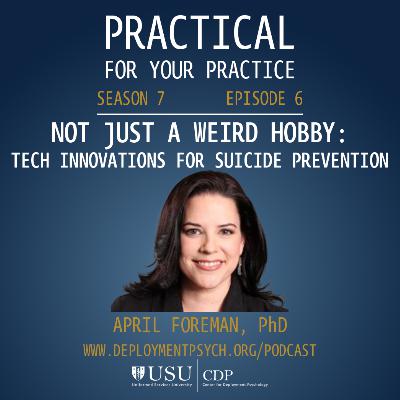
Stop dodging those complex questions about AI and mental health! Join Drs. Kevin Holloway and Jenna Ermold as they engage with the brilliant Dr. April Foreman, Director of Technology and Innovation at the Veterans Crisis Line, for a conversation that proves tech is no longer optional—it's essential. Dr. Foreman pulls back the curtain on the sobering reality: the demand for evidence-based suicide prevention care is simply too vast for traditional methods to meet. Discover the shocking "sin" of EBP practice we might all be committing, learn how simple AI tools (like automated scribing) can boost your clinical fidelity, and find out what happens when a clinical expert "red-teams" popular chatbots for suicidality. Get the insights you need to confidently apply your ethical framework to the future of care and conquer your fear of the algorithmic boogeyman!April C. Foreman, Ph.D., is a Licensed Psychologist serving Veterans as Director of Technology and Innovations for the Veterans Crisis Line. She is a member of the team that launched OurDataHelps.org, a recognized innovation in data donation for ground-breaking suicide research. She is passionate about helping people with severe (sometimes lethal) emotional pain, and in particular advocates for people with Borderline Personality Disorder, which has one of the highest mortality rates of all mental illnesses. She is known for her work at the intersection of technology, social media, and mental health, with nationally recognized implementations of innovations in the use of technology and mood tracking. She is the 2015 recipient of the Roger J. Tierney Award for her work as a founder and moderator of the first sponsored regular mental health chat on Twitter, the weekly Suicide Prevention Social Media chat (#SPSM, sponsored by the American Association of Suicidology, AAS). Her dream is to use her unique skills and vision to build a mental health system effectively and elegantly designed to serve the people who need it.Resources mentioned in this episode: CDP’s 2025 EBP Conference Archive including presentations by Dr. April Foreman, Dr. Vaile Wright, Dr. Matt Price, and Drs. Vaile Write and David Cooper’s PMI.Therapists in Tech: therapistsintech.com 988 (press 1) Veteran’s Crisis Lineveteranscrisisline.net - Call, text, or chat for 24/7 confidential crisis support for Veterans and their loved ones Calls-to-action: Spend time with new technology–learn about it experientiallyGet involved! Be part of the solution with emerging technologies rather than willfully avoiding them.Subscribe to the Practical for Your Practice PodcastSubscribe to The Center for Deployment Psychology Monthly Email Leave us a question or comment on Speakpipe
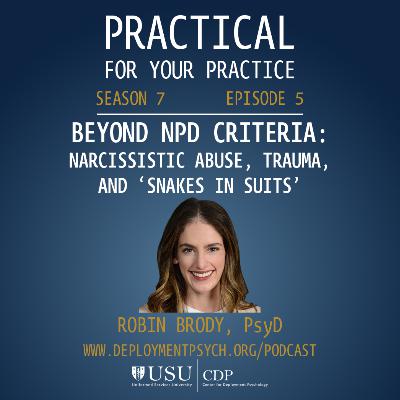
Dr. Robin Brody is back to tackle a critical gap in clinical training: narcissism and its devastating impact. We cut straight to the core, defining narcissism by its signature trait, entitlement, and exploring the clinical distinctions between grandiose, vulnerable, and malignant subtypes. The episode then dives into the flip side: narcissistic abuse. Learn to spot the confusing dynamics clients face, including performative empathy, denial of reality (often called gaslighting), trauma bonding through intermittent reinforcement, and the predictable cycle of idealization, devaluing, discard, and hoovering. Most crucially, we discuss the "sin" of inadequate provider training and the risk of how applying standard components of evidence-based treatment, like assertiveness skills, can tragically fail or even place survivors in danger.Dr. Robin Brody is an Assistant Professor of Psychiatry (Voluntary) at Weill Cornell Medicine and the founder of Dr. Robin Brody Psychological Services, a private practice specializing in the treatment of occupational trauma, PTSD, and couples therapy, and gender and sexually diverse individuals. Her work is driven by a deep commitment to helping trauma survivors, particularly those facing PTSD and moral injury.Her expertise and demonstrated passion center on treating trauma survivors, particularly those with PTSD and moral injury. In doing so, Dr. Brody has worked with diverse populations of civilians, veterans of all branches and eras, first responders, healthcare workers, and 9/11 survivors and responders across the diagnostic and demographic spectrum. Dr. Brody started and ran an EBP for PTSD program within the World Trade Center Mental Health Program, where she trained and supervised providers in PE and CPT. Before joining Mount Sinai's World Trade Center Mental Health Program, Dr. Brody served on the faculty at Weill Cornell Medicine. In that capacity, Dr. Brody oversaw Weill Cornell's Military Families Wellness Center and worked within the Program for Anxiety and Traumatic Stress Studies (PATSS), where she was a co-investigator on numerous clinical research studies involving the treatment of PTSD, particularly among frontline healthcare workers amidst the COVID-19 pandemic. In all her efforts, Dr. Brody is committed to increasing access to, and training, in evidence-based treatments, especially for PTSD. Dr. Brody's research interests include PTSD treatment innovation and the role of shame, stigma, and identity in trauma recovery.Resources mentioned in this episode: DSM-5 Alternative Model of Personality Disorders It’s Not You, Dr. Ramani Durvasula Calls-to-action: Utilize Diagnostic Frameworks: Look into the DSM-5 Alternative Model of Personality Disorders as a useful framework for understanding healthy personality functioning and personality disorders, including narcissism.Obtain additional training on NPD and narcissistic abuseSubscribe to the Practical for Your Practice PodcastSubscribe to The Center for Deployment Psychology Monthly Email Leave us a question or comment on Speakpipe
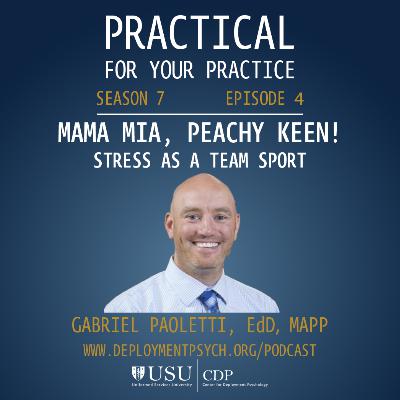
Feeling stressed? You’re not alone! And that’s exactly the point of this lively episode of Practical for Your Practice! Hosts Jenna Ermold and Carin Lefkowitz welcome back the always-animated (and self-proclaimed “gesturing Italian”) Dr. Gabriel Paoletti for a refreshingly human take on stress.From cheesesteaks to “mamma mia” stress cues, this conversation dives into how we can rethink stress, not as something to eliminate, but as a signal that something meaningful is at stake. Dr. Paoletti breaks down how stress can actually help performance, especially when we approach it as a shared experience, a “team sport”, instead of a solo battle.Tune in for practical strategies (and a few laughs) on how to build your “stress team,” use humor to stay grounded, and create simple cues that help you, and those around you, catch stress before it catches you.Bonus: Find out why “halloumi” might be the most unexpectedly perfect stress word ever.You can leave us a voice mail message at speakpipe.com/cdpp4p, or send us an email at cdp-podcast-ggg@usuhs.edu. Your message could be featured in an upcoming episode!Dr. Gabriel Paoletti is the Director of Human Performance Optimization (HPO) Integration and HPRC in support of the Advanced Research for Military Optimization, Readiness, and Rehabilitation (ARMORR) – Consortium for Health and Military Performance (CHAMP), a center at the Uniformed Services University in Bethesda, Maryland. He oversees the strategic and operational components of delivering comprehensive health and performance education on Total Force Fitness and Human Performance Optimization to the DoD and national security community. Over the past 15+ years, Dr. Paoletti has applied the latest human performance research to create and lead over 400 distinct human performance optimization and leadership development programs for audiences throughout the world, ranging from leaders at the Pentagon, Army, Marine, Air Force, Navy, Coast Guard service members to Fortune 500 companies, professional athletes, CEO’s and government leaders. Under his leadership, his team has been officially selected to develop holistic human performance curricula for half of the U.S. Armed Forces. Dr. Gabriel Paoletti graduated from Saint Joseph’s University with a double major in economics and philosophy, graduating first in his class in both majors. He received his Master of Applied Positive Psychology from the University of Pennsylvania and his Doctor of Education in Leadership from Creighton University.Resources mentioned in this episode: https://www.hprc-online.org/mental-fitness/stress/unlock-your-full-potential-hprcs-personal-stress-toolkithttps://www.hprc-online.org/mental-fitness/mental-health/build-your-stress-team Calls-to-action: For example:Identify who is on YOUR stress teamReview the resources from HPRCSubscribe to the Practical for Your Practice PodcastSubscribe to The Center for Deployment Psychology Monthly Email Leave us a question or comment on Speakpipe
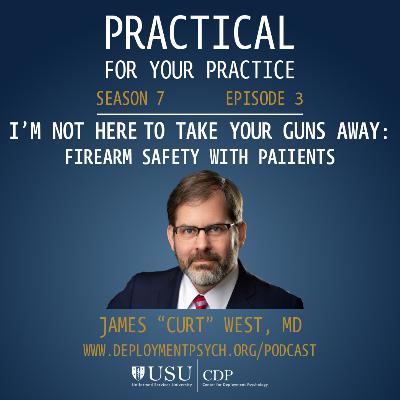
Suicide prevention isn’t only about assessing current risk for self-harm. It’s also about recognizing that we can’t predict if and when that risk will increase. Patients spend most of their lives outside of our office, and an unexpected crisis can increase their risk of self-directed violence exponentially. The risk may be especially heightened for firearm owners, who have immediate access to a highly lethal method of injury. Fortunately, that risk can be reduced if we simply put a few moments’ delay between impulse and action in the form of secure firearm storage. Yet many clinicians, including our hosts, shy away from that conversation, especially with military-connected patients. Our guest today, Dr. Curt West, offers common sense and clinically sound advice for how to engage in this important discussion. Dr. James “Curt” West is an Associate Professor of Psychiatry and a Scientist at the Center for the Study of Traumatic Stress, Uniformed Services University of the Health Sciences (USUHS). He is a Distinguished Fellow of the American Psychiatric Association (APA) and has presented to the APA on physician and patient conversations on firearm safety. In addition, he has participated in the forum on health and family firearm safety and created an online course for the APA on firearm safety. Dr. West is the host of the podcast “Let’s Talk About Your Guns.” Prior to his work at USUHS, he worked as a military psychiatrist and deployed to Iraq and Afghanistan as an Operational Stress Control and Readiness psychiatrist, and later served as the Deputy Commander of Behavioral Health at Walter Reed Army Medical Center.Resources mentioned in this episode: An article from the APA Monitor, “Navigating Firearm Safety Discussions in Clinical Settings.” https://www.apa.org/monitor/2025/07-08/firearm-safety-clinical-settingsThe BulletPoints Project, a clinical resource for preventing firearm injury www.bulletpointsproject.orgFact sheets published by the Center for the Study of Traumatic Stress: www.cstsonline.orgLet’s Talk About Your Guns podcast: https://www.cstsonline.org/suicide-prevention-program/projects/talk-about-gunsPause To Protect, a resource for safely storing firearms: www.pausetoprotect.org Calls-to-action: For example:Explore the resources mentioned in this podcast to learn more about firearm safety and its connection to suicide preventionListen to the “Let’s Talk About Your Guns” podcast to empower yourself to engage in conversations about firearm safety with your patients.Subscribe to the Practical for Your Practice PodcastSubscribe to The Center for Deployment Psychology Monthly Email Leave us a question or comment on Speakpipe
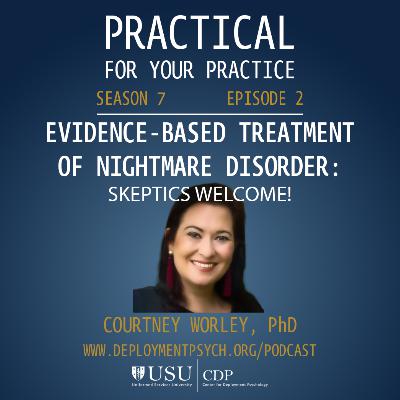
We often think of nightmares as a symptom that occurs as part of another condition, like PTSD or depression. But nightmares can be frequent and disruptive enough that they require their own clinical focus. We currently have 3 gold standard options for treatment: Imagery Rehearsal Therapy; Exposure, Relaxation, and Rescription Therapy; and Lucid Dreaming. Our guest today, Dr. Courtney Worley, introduces us to the diagnosis of Nightmare Disorder, explains why it deserves its own attention, and gives us an overview of the most effective treatments. Join us for a discussion that appeals to sleep nerds and healthy skeptics alike. Dr. Courtney Worley is a Diplomate In Behavioral Sleep Medicine and Board-Certified Clinical Psychologist. She completed her Ph.D. in clinical psychology in 2012 at The University of Alabama with specialized coursework in health and geropsychology. Dr. Worley specializes in providing Evidence Based Psychotherapies for PTSD, Insomnia, Nightmares and Depression. She has an active clinical practice in the Department of Veterans Affairs, at Upward Behavioral Health, and with NOCTEM Health. She is the co-author of The nightmare and sleep disorder toolkit: A workbook to help you get some rest using imagery rehearsal therapy and other evidence based approaches from New Harbinger Publications.Resources mentioned in this episode: The Nightmare and Sleep Disorder Toolkit: A Workbook to Help You Get Some Rest Using Imagery Rehearsal Therapy and Other Evidence-Based Approaches by Courtney Worley and Michael Nadorff.Geoffroy, P. A., Borand, R., Ambar Akkaoui, M., Yung, S., Atoui, Y., Fontenoy, E., Maruani, J., & Lejoyeux, M. (2022). Bad Dreams and Nightmares Preceding Suicidal Behaviors. The Journal of clinical psychiatry, 84(1), 22m14448. https://doi.org/10.4088/JCP.22m14448 Calls-to-action: For example: Routinely ask about nightmares and dreams as part of your clinical assessmentObtain training in at least one of the evidence-based treatments for nightmare disorderSubscribe to the Practical for Your Practice PodcastSubscribe to The Center for Deployment Psychology Monthly Email Leave us a question or comment on Speakpipe or our social media channels
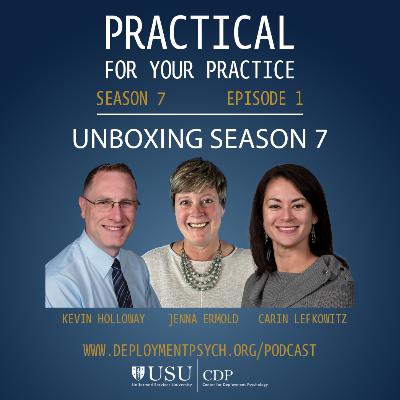
Welcome back to Practical for Your Practice! In our Season 7 kickoff, hosts Drs. Jenna Ermold, Kevin Holloway, and Carin Lefkowitz set the stage for a new theme: The Seven Sins of Evidence-Based Practice. Inspired by Carin’s favorite film Seven, this season dives into the common pitfalls clinicians face when delivering EBPs and how we can learn, grow, and support each other through them.In this episode, our hosts get candid about their own “sins”:Kevin reflects on the dangers of “EBP stew” – straying from validated protocols without consultation.Carin admits to the “sexy assessment sin” – neglecting routine and thorough assessment, both at intake and throughout treatment.Jenna opens up about perfectionism – the belief that you must be flawless before implementing EBPs, which can hold clinicians back from valuable learning experiences.Together, they emphasize that these “sins” aren’t failings, they’re part of being human and growing as providers. With humor, food analogies, and lots of honesty, the team models how to normalize mistakes, seek consultation, and embrace imperfection on the path to better care.Actionable Intel:Stick close to validated EBP protocols and get consultation to avoid drift.Invest in both initial and ongoing assessment to guide treatment decisions and track progress.Don’t let perfectionism keep you from starting – growth happens in the doing.Join the Conversation: Have your own “EBP sin” to confess? Share your stories with us! Email, leave a voicemail on SpeakPipe, or connect with us on social media. Stay tuned for more episodes this season as our guests share their own challenges, lessons learned, and strategies for avoiding (or recovering from) the Seven Sins of EBP.Until next time—stay curious, and mind your EBPs.Calls-to-action: Share your "EBP sin" via SpeakPipe, email (cdp-podcast-ggg@usuhs.edu) or on social media Subscribe to the Practical for Your Practice PodcastSubscribe to The Center for Deployment Psychology Monthly Email: https://deploymentpsych.org/CDP-MED-Opt-In
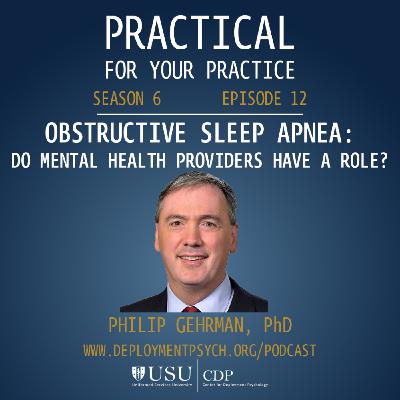
Obstructive sleep apnea (OSA) is an increasingly common diagnosis. Yet most behavioral health providers are unaware that they can play a role in both the assessment and treatment of OSA in their patients. Today we’re joined by an expert in the subfield of sleep psychology, Dr. Phil Gehrman. He shares basic information about what OSA is, how providers can effectively screen for it, and how they can facilitate treatment for this dangerous condition. Despite what you might have heard before, Dr. Gehrman posits that behavioral health providers can play “a huge potential role that really is untapped.” Dr. Phil Gehrman is Professor of Psychology in the Department of Psychiatry of the University of Pennsylvania School of Medicine. He directs the Sleep, Neurobiology and Psychopathology lab at Penn. He has an active research program exploring the mechanisms and treatment of sleep and circadian dysregulation in the context of mental health disorders. Dr. Gehrman’s clinical specialization is on the delivery of cognitive behavioral and chronotherapeutic interventions for insomnia, circadian rhythm disorders, and other sleep disorders. The overarching goal of his work is to advance the understanding of the links between sleep and mental illness through translational research that spans biology to therapeutics.Resources mentioned in this episode: STOP Screening tool for Obstructive Sleep Apnea: https://deploymentpsych.org/content/insomnia-toolsMotivational Interviewing for CPAP Adherence: Rapelli G, Pietrabissa G, Manzoni GM, Bastoni I, Scarpina F, Tovaglieri I, Perger E, Garbarino S, Fanari P, Lombardi C and Castelnuovo G (2021) Improving CPAP Adherence in Adults With Obstructive Sleep Apnea Syndrome: A Scoping Review of Motivational Interventions. Front. Psychol. 12:705364. doi: 10.3389/fpsyg.2021.705364Motivational Interviewing resources: https://deploymentpsych.org/Clinical-Skills-ResourcesSystematic desensitization: https://www.veterantraining.va.gov/insomnia/docs/PAP_Desensitization.pdfPractical for Your Practice voice mail: speakpipe.com/cdpp4pPractical for Your Practice email: cdp-podcast-ggg@usuhs.edu Calls-to-action: Incorporate the STOP into your practiceBecome familiar with behavioral and motivational approaches listed aboveConnect with your local sleep medicine clinicReach out to us via Speakpipe with your questions and commentsSubscribe to the Practical for Your Practice PodcastSubscribe to The Center for Deployment Psychology Monthly Email at https://deploymentpsych.org/CDP-MED-Opt-In
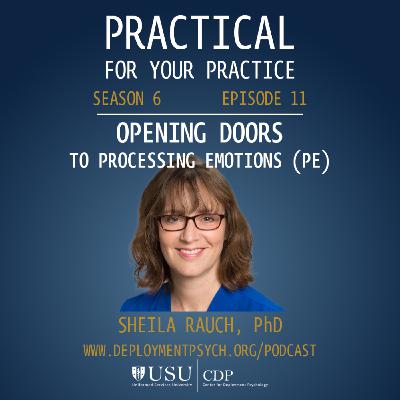
Evidence-based psychotherapies for post-traumatic stress disorder (PTSD), such as Prolonged Exposure and Cognitive Processing Therapy, are the best tools we have to treat PTSD for most people–at least as long as those in need are able to access these therapies. A number of barriers may exist, such as availability of trained therapists, insurance coverage (or lack thereof), or even life stressors standing in the way. During the COVID-19 pandemic, trauma exposure exploded exponentially while at the same time access to care due to lockdowns and social distancing was severely diminished. In this episode of Practical for Your Practice, we chat with Dr. Sheila Rauch, one of the authors of the Prolonged Exposure Therapist Guide, about her many exciting projects to expand access to effective care for PTSD. As she explains, “the more doors that we have for people with PTSD to enter and get effective treatment, the more people are going to actually do that.” Join us for one of our new favorite episodes to hear about self-help approaches, PE in primary care, immediate interventions in emergency departments, and shifting the name of PE to “Processing Emotions.”Sheila A.M. Rauch, Ph.D., ABPP, co-led design and now serves as Deputy Director of the Emory Healthcare Veterans Program and Director of Mental Health Research and Program Evaluation at the Joseph Maxwell Cleland Atlanta VA Medical Center. For over 20 years, Dr. Rauch’s work in VA and Academic Medical settings focuses on developing programs, conducting research, and providing PTSD and Anxiety Disorders treatment with the goal to improve access to effective mental health treatment. Her research focuses on examination of mechanisms involved in the development and treatment of PTSD and improving access to effective interventions. She has led several PTSD treatment outcome and mechanisms trials including pharmaceutical and therapy trials focused on moving interventions for PTSD into medical and primary care settings. She has published over 220 peer-reviewed scholarly articles as well as many chapters and six books on anxiety disorders and posttraumatic stress disorder (PTSD). She developed an effective primary care based PTSD intervention that is in use across VA and many civilian settings and has also worked to get treatment out of the clinic and into the hands of those who need it with apps, self-guided workbooks, and web-based interventions. Her work examines neurobiology and factors involved in the development, maintenance, and treatment of anxiety disorders, psychosocial factors in medical settings, and the relation between physical health and anxiety. Her recent books include Retraining the Brain and Making Meaning of Difficult Experiences.Resources mentioned in this episode:Rauch, S. A. M., & Rothbaum, B. O. (2023). Making Meaning of Difficult Experiences: A Self-Guided Program. Oxford University Press.Virtually Better. (2024). Messy Memories [Mobile app]. Available on Google Play and Apple App StorePE in Primary Care training: VA and military providers can reach out to Margaret.venners@va.gov for training, and civilian providers can reach out to jgarlick@med.umich.eduPractical for Your Practice voice mail: speakpipe.com/cdpp4pPractical for Your Practice email: cdp-podcast-ggg@usuhs.eduCalls-to-action:Remember that emotions aren’t dangerousGet training in brief treatment models (e.g. PCPE. see above)Subscribe to the Practical for Your Practice PodcastSubscribe to The Center for Deployment Psychology Monthly Email at https://deploymentpsych.org/CDP-MED-Opt-In
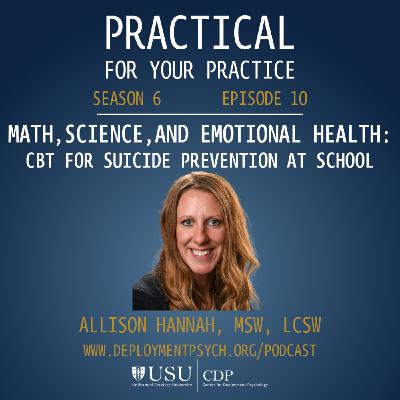
Suicide is currently the second leading cause of death for youth aged 10 through 14. It’s a horrifying fact that has spurred providers into action. One of those providers is our guest on today’s episode. Allison Hannah, MSW, LCSW, has delivered evidence-based suicide prevention interventions to youth, from elementary school-aged children to teens. Listen in as she provides us with the basics of CBT for Suicide Prevention and ways to adapt it effectively for youth. Her experiences inspire hope for providers, clients and families. Allison Hannah, MSW, LCSW, is a Military Behavioral Health Social Worker for the Center for Deployment Psychology (CDP). She assists in the implementation and expansion of the Star Behavioral Health Providers Program (SBHP). SBHP trains civilian behavioral health providers to work with service members, veterans, and their families. Allison is a veteran of the United States Army and United States Army Reserves and provided clinical services within the Child and Family Behavioral Health Services section at an active-duty Army base. She is trained in Trauma-Focused Cognitive Behavioral Therapy (TF-CBT) and is a Registered Play Therapist specializing in using evidence-based approaches to address trauma, adjustment and attachment related disorders.Resources mentioned in this episode: CBT for Suicide Prevention Training and Consultation at CDP. Visit our website to register: https://deploymentpsych.org/trainingAsynchronous trainings through the DoD Child Collaboration Study. Complete the courses here: https://deploymentpsych.org/DoDKidsStudyThe 988 Lifeline website includes resources for youth in crisis. https://988lifeline.org/Practical for Your Practice voice mail: speakpipe.com/cdpp4pPractical for Your Practice email: cdp-podcast-ggg@usuhs.edu Calls-to-action: For example: Get training and consultation in CBT for Suicide PreventionIncrease your knowledge in adapting evidence-based treatments for youthSubscribe to the Practical for Your Practice PodcastSubscribe to The Center for Deployment Psychology Monthly Email at https://deploymentpsych.org/CDP-MED-Opt-In
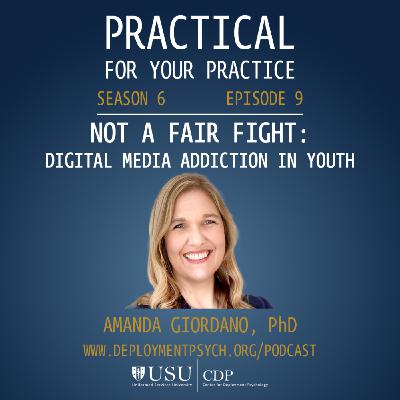
Most digital media is designed to be addictive, and young brains are especially susceptible. Successful digital media content is stimulating, engaging, and targets the brain’s natural reward centers. This creates an unfair advantage over young brains, which have not yet fully developed their executive functioning. In today’s episode, Dr. Amanda Giordano introduces us to the “Four C’s” model of addiction, healthy vs unhealthy engagement with digital media, and interventions for youth and their families. She also shares who has her “six” and Actionable Intel to hone your skills.Amanda L. Giordano, PhD, LPC is an associate professor at the University of Georgia who specializes in addictions counseling. She is the sole author of a clinical reference book titled, A Clinical Guide to Treating Behavioral Addictions and co-author of a textbook titled, Addiction Counseling: A Practical Approach. Dr. Giordano works to advance the counseling field with rigorous research and has published over 65 peer-reviewed articles and book chapters. In 2024 she was awarded the Garry R. Walz Trailblazer award from American Counseling Association in recognition of her innovative work in the field of behavioral addictions.Resources mentioned in this episode: Register now for Dr. Giordano’s pre-meeting institute at the 2025 EBP Conference! https://deploymentpsych.org/EBPConferencePractical for Your Practice voice mail: speakpipe.com/cdpp4pPractical for Your Practice email: cdp-podcast-ggg@usuhs.edu Calls-to-action: For example: Register now for Dr. Giordano’s pre-meeting institute at the 2025 EBP Conference! https://deploymentpsych.org/EBPConferenceIncorporate a few questions about addictions (besides substances) in your intake assessment.Create a family digital media plan. Many templates exist.Subscribe to the Practical for Your Practice PodcastSubscribe to The Center for Deployment Psychology Monthly Email at https://deploymentpsych.org/CDP-MED-Opt-In
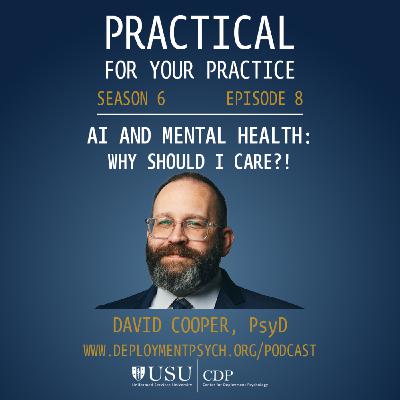
If you’ve been side-eyeing the rise of AI in mental health, this episode of Practical for Your Practice is one you don’t want to miss. Dr. David Cooper, Executive Director of Therapists in Tech and member of the APA's Mobile Health Tech Advisory Committee (AND one of our EBP Conference 2025 PMI workshop presenters), joins us for a down-to-earth and engaging deep dive into what AI actually means for therapists. Spoiler: it’s not Skynet. Dr. Cooper breaks down the basics of generative AI, including what GPT really stands for and why therapists shouldn’t fear it—but should understand it. He explains how AI is being used in the behavioral health field with a focus on doing so ethically. This episode is your permission slip to play. Whether you’re AI-curious or totally intimidated, you’ll walk away with practical tips, reassuring insights, and a renewed sense of purpose. So go ahead—press play, stay curious, and start exploring how AI can actually help you do your job better. David Cooper, PsyD. is a digital health expert who is currently the Executive Director of Therapists in Tech, the largest organization of clinicians in digital mental health. He has worked with organizations like the US Department of Defense, the AMA and FDA, Teladoc and many top hospitals in the US on their digital health strategies and portfolios.Resources mentioned in this episode: Therapists in TechDr. Cooper’s PMI workshop: Ethics in Digital Health: A Guide on How to Approach the New Way We Practice Pre-Meeting Institute (May 6th, 1pm - 4pm ET)Practical for Your Practice voice mail: speakpipe.com/cdpp4pPractical for Your Practice email: cdp-podcast-ggg@usuhs.edu Calls-to-action: Check out Therapists in TechRegister for Ethics in Digital Health: A Guide on How to Approach the New Way We Practice Pre-Meeting Institute (May 6th, 1pm - 4pm ET)Subscribe to the Practical for Your Practice PodcastSubscribe to The Center for Deployment Psychology Monthly Email at https://deploymentpsych.org/CDP-MED-Opt-In
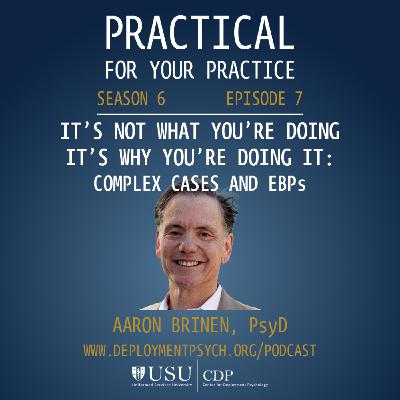
Complex cases… The rule? Or the exception? In this episode of Practical for Your Practice, we sit down with Dr. Aaron Brinen, who argues that complexity is often the norm when it comes to client cases. Dr. Brinen shares valuable insights on how to effectively serve clients with complex issues, emphasizing the importance of a thorough case formulation. We dive deep into how this process can lead to more effective strategies for change. Tune in to learn why taking the time to understand a client’s “perpetual motion machine” can enhance your evidence-based practice and lead to better outcomes.Aaron P. Brinen, PsyD, is a primary developer of recovery-oriented cognitive therapy (CT-R) along with Aaron T. Beck, MD. Under the guidance of Dr. Beck, Dr. Brinen has worked to formalize and standardize the CT-R protocol for individual and group therapy settings, as well as for use in team-based psychiatric care and during inpatient treatment. He is a co-author of the manual of CT-R for serious mental health conditions, and has been active in the training of community therapists from around the world.Resources mentioned in this episode: Living Well with Psychosis Practical Strategies for Improving Your Daily Life (PROMO CODE: AU2E)Dr. Brinen’s presentation in CDP’s 2024 EBP Conference: Strategy for Change: Using Conceptualization to Drive Evidence Based Treatment Choices in Complex Cases Practical for Your Practice voice mail: speakpipe.com/cdpp4pPractical for Your Practice email: cdp-podcast-ggg@usuhs.edu Calls-to-action: Watch Strategy for Change: Using Conceptualization to Drive Evidence Based Treatment Choices in Complex CasesGet a dry erase board or have plenty of paper on hand for case formulationSubscribe to the Practical for Your Practice PodcastSubscribe to The Center for Deployment Psychology Monthly Email at https://deploymentpsych.org/CDP-MED-Opt-In
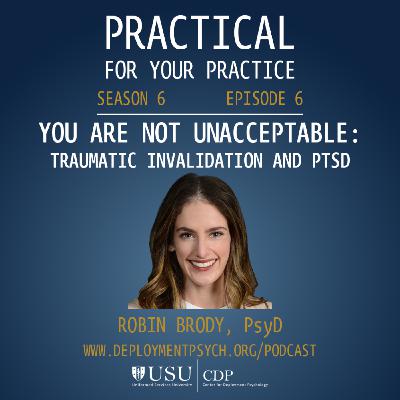
Traumatic invalidation, a powerful and often misunderstood concept, occurs when a person’s emotions, behaviors, or identity are repeatedly dismissed, belittled, or rejected by important people in their lives. It can manifest as emotional neglect, severe criticism, unequal treatment, or outright denial of one’s reality. In this P4P episode, we sit down with Dr. Robin Brody who shares her insights on how traumatic invalidation can directly challenge a person’s sense of self-worth and belonging in the world and can play a significant role in the development and maintenance of PTSD. If you are interested in learning more about traumatic invalidation, and specifically what YOU can do to better assess and address it directly in your practice, take a listen to this episode. Helping individuals understand and name their experience of traumatic invalidation can be a profound step in their recovery!Dr. Robin Brody is an Assistant Professor of Psychiatry (Voluntary) at Weill Cornell Medicine and the founder of Dr. Robin Brody Psychological Services, a private practice specializing in the treatment of occupational trauma, PTSD, and couples therapy, and gender and sexually diverse individuals. Her work is driven by a deep commitment to helping trauma survivors, particularly those facing PTSD and moral injury.Her expertise and demonstrated passion center on treating trauma survivors, particularly those with PTSD and moral injury. Dr. Brody has worked with diverse populations of civilians, veterans of all branches and eras, first responders, healthcare workers, and 9/11 survivors and responders across the diagnostic and demographic spectrum. Dr. Brody started and ran an EBP for PTSD program within the World Trade Center Mental Health Program, where she trained and supervised providers in PE and CPT. Before joining Mount Sinai's World Trade Center Mental Health Program, Dr. Brody served on the faculty at Weill Cornell Medicine. In that capacity, Dr. Brody oversaw Weill Cornell's Military Families Wellness Center and worked within the Program for Anxiety and Traumatic Stress Studies (PATSS), where she was a co-investigator on numerous clinical research studies involving the treatment of PTSD, particularly among frontline healthcare workers amidst the COVID-19 pandemic. In all her efforts, Dr. Brody is committed to increasing access to, and training, in evidence-based treatments, especially for PTSD. Dr. Brody's research interests include PTSD treatment innovation and the role of shame, stigma, and identity in trauma recovery.Resources mentioned in this episode: https://dbtpe.org/Treating Trauma in Dialectical Behavior Therapy: The DBT Prolonged Exposure Protocol (DBT PE)Invalidating Childhood Environment ScalePractical for Your Practice voice mail: speakpipe.com/cdpp4pPractical for Your Practice email: cdp-podcast-ggg@usuhs.edu Calls-to-action: Take one of CDP’s PTSD EBP trainings (PE, CPT). More info at: https://deploymentpsych.org/training Subscribe to The Center for Deployment Psychology Monthly Email at: https://deploymentpsych.org/CDP-MED-Opt-In
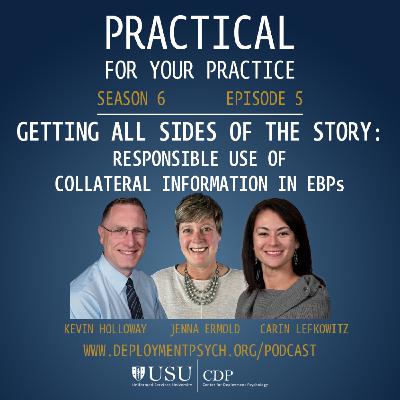
No one knows better than our clients what is going on in their world - their stressors, symptoms, triumphs, values, goals… but sometimes it can also be helpful to hear additional perspectives from others in our client’s world. In this episode the P4P hosts discuss the potential relevance of collateral information in assessment, case conceptualization and treatment planning. We talk about how collateral information can sometimes enhance our understanding of our client’s environment, behaviors, and experiences as well as some of the pitfalls to avoid when involving others in the therapeutic process. Listen in for some great examples of when collateral information saved the day AND when we experienced collateral conundrums. As always we leave you with actionable intel to help support how YOU use collaterals in your EBP work.Bios:Drs. Ermold, Holloway and Lefkowitz are clinical psychologists who provide training and consultation at the Center for Deployment Psychology. Their specialties include military psychology, the assessment and treatment of trauma (PE and CPT), sleep disorders and more. They are passionate about delivering EBP’s effectively and creating a supportive community for providers to learn and grow in their EBP work.Calls-to-action:Always follow the laws and ethical guidelines of your state and disciplineRemember that the goal of gathering collateral information is to facilitate your client’s treatment. Always clarify the goals of a consultation and remember to prioritize the therapeutic relationship.Utilize consultationSubscribe to the Practical for Your Practice PodcastSubscribe to The Center for Deployment Psychology Monthly Email - https://deploymentpsych.org/CDP-MED-Opt-InSend us your questions, comments, stories, and/or topic/guest suggestions! We’d love to hear from you!Practical for Your Practice voice mail: speakpipe.com/cdpp4pPractical for Your Practice email: cdp-podcast-ggg@usuhs.edu
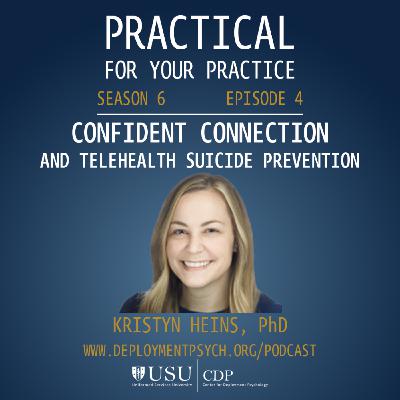
For many of us, the idea of assessing and responding to suicide risk via telehealth seems overwhelming. As Jenna says, “the stakes are just a little higher.” But that’s all the more reason to become confident in the process; our patients deserve access to the best possible care, after all. In this episode, Dr. Kristyn Heins addresses common provider concerns about treating high risk patients over telehealth. Her common sense suggestions can reduce our collective anxiety and help us build our confidence in suicide prevention strategies.Kristyn Heins, Ph.D., is a Licensed Professional Counselor serving as a Military Behavioral Health Counselor for the Center for Deployment Psychology (CDP) at the Uniformed Services University of the Health Sciences. In this role, she supports the CDP’s efforts of training clinicians in evidenced-based practice focused on suicide prevention. Prior to joining the CDP, Dr. Heins worked at the Department of Veteran Affairs in various roles including primary care mental health, and suicide prevention telehealth. Dr. Heins is trained in Cognitive Behavioral Therapy- Suicide Prevention, and Problem Solving Therapy- Suicide Prevention. She also has worked in a Federally Qualified Health Center and in a non-profit setting.Resources mentioned in this episode:The Columbia Suicide Severity Rating Scale (C-SSRS). A validated and short self-report measure that can be utilized in a variety of settings. https://cssrs.columbia.edu/The Patient Health Questionnaire (PHQ-9). A validated and short self-report measure used for depression screening. https://tinyurl.com/5n6u7p6jSuicide Cognitions Scale. A self-report measure to assess thoughts, perceptions, and beliefs that are commonly experienced by people who have attempted suicide. https://osf.io/bf8uy/CBT for Suicide Prevention Workshops presented by CDP. View our training calendar here to register for a workshop, then follow up with consultation. https://deploymentpsych.org/trainingCalls-to-action:Get familiar with validated self-report measuresTake a CBT-SP courseUtilize your support and consultation resourcesSubscribe to the Practical for Your Practice PodcastSubscribe to The Center for Deployment Psychology Monthly Email - https://deploymentpsych.org/CDP-MED-Opt-InSend us your questions, comments, stories, and/or topic/guest suggestions! We’d love to hear from you!Practical for Your Practice voice mail: https://www.speakpipe.com/cdpp4pPractical for Your Practice email: cdp-podcast-ggg@usuhs.edu
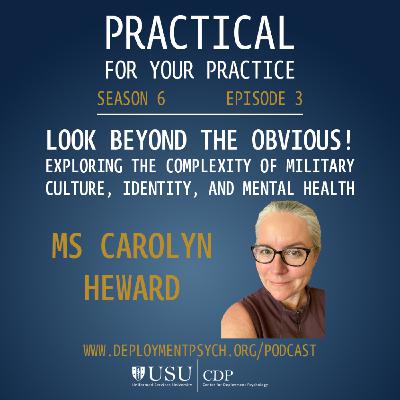
In this episode we have the honor of sitting down with Australian researcher, Ms. Carolyn Heward, lead author of “A Scoping Review of Military Culture, Military Identity, and Mental Health Outcomes in Military Personnel”. Listen in as we discuss the complexity of military culture's impact on military identity and its effect on mental health. We’ll dig into the Military Identity Model (MIM) and types of identities such as loyal, warrior, hidden and disrupted. But most importantly we’ll consider the clinical benefits of including military identity into case formulation, treatment planning and EBP work. As Heward says “identity work is clinical work” and we couldn’t agree more. Carolyn Heward is a Senior Lecturer in Clinical Psychology at James Cook University in Townsville, Queensland, Australia, where she teaches in the Master of Psychology (Clinical) program while conducting research on military identity construction and its implications for psychological wellbeing. As a Clinical Psychologist with extensive experience working with the Australian Defence Force (ADF), she brings valuable insights to the intersection of military culture and mental health, particularly through her perspective that identity work is fundamental to clinical practice. Her recent scoping review on military culture, identity, and mental health has contributed to understanding the unique challenges faced by service members, while her current doctoral research explores the construction of military identity within the ADF and its clinical implications. Drawing from her clinical experience, Carolyn’s work focuses on developing integrated approaches to clinical psychology that move beyond cultural formulations to address individual identity construction. She has also contributed to public discourse on military mental health through The Conversation, publishing articles on military identity and providing analysis of the Australian Government’s response to the Royal Commission into Defence and Veteran Suicide.Resources mentioned in this episode: Carolyn Heward, Wendy Li, Ylona Chun Tie, Pippa Waterworth, A Scoping Review of Military Culture, Military Identity, and Mental Health Outcomes in Military Personnel, Military Medicine, Volume 189, Issue 11-12, November/December 2024, Pages e2382–e2393, https://doi.org/10.1093/milmed/usae276Practical for Your Practice voice mail: speakpipe.com/cdpp4pPractical for Your Practice email: cdp-podcast-ggg@usuhs.edu
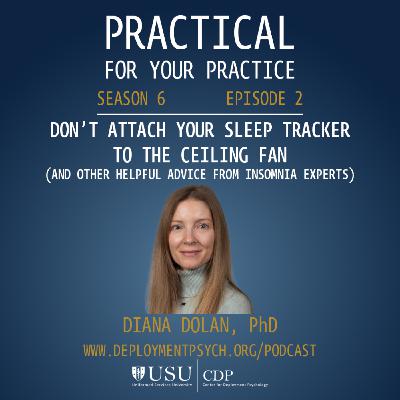
Sleep trackers - what are they good for? While they may give you an entertaining look at your sleep health, they can complicate treatment of sleep disorders. Our guest today, Dr. Diana Dolan, returns to P4P to provide a balanced view on consumer wearables and their impact on sleep assessment and treatment. Technology has evolved in the past few years, and so have our suggestions for how to work with patients who love their sleep trackers. How can we capitalize on our patients’ enthusiasm for better sleep? Tune in to find out.Diana Dolan, Ph.D., CBSM, DBSM, is a clinical psychologist serving as an Associate Director of Training & Education with the Center for Deployment Psychology (CDP) at the Uniformed Services University of the Health Sciences in Bethesda, Maryland. She currently oversees programs that provide evidence-based training for military-connected patients on a variety of topics. She is certified in Behavioral Sleep Medicine by the American Board of Sleep Medicine. She is also a diplomate in Behavioral Sleep Medicine from the Board of Behavioral Sleep Medicine.Resources mentioned in this episode: de Zambotti, M., Goldstein, C., Cook, J., Menghini, L., Altini, M., Cheng, P., & Robillard, R. (2024). State of the science and recommendations for using wearable technology in sleep and circadian research. SLEEP 47: 1-31. https://doi.org/10.1093/sleep/zsad325Khosla S, Deak MC, Gault D, Goldstein CA, Hwang D, Kwon Y, O'Hearn D, Schutte-Rodin S, Yurcheshen M, Rosen IM, Kirsch DB, Chervin RD, Carden KA, Ramar K, Aurora RN, Kristo DA, Malhotra RK, Martin JL, Olson EJ, Rosen CL, Rowley JA; American Academy of Sleep Medicine Board of Directors. Consumer sleep technology: an American Academy of Sleep Medicine position statement. J Clin Sleep Med. 2018;14(5):877–880.CBT-I Coach app. Includes a sleep diary that may appeal to patients who prefer to use apps and other technology. https://mobile.va.gov/app/cbt-i-coach Calls-to-action: For example: Become familiar with the American Academy of Sleep Medicine’s position on consumer wearables: “It is the position of the AASM that CST must be FDA cleared and rigorously tested against current gold standards if it is intended to render a diagnosis and/or treatment. Given the unknown potential of CST to measure sleep or assess for sleep disorders, these tools are not substitutes for medical evaluation. However, CSTs may be utilized to enhance the patient-clinician interaction when presented in the context of an appropriate clinical evaluation.”Subscribe to the Practical for Your Practice PodcastSubscribe to The Center for Deployment Psychology Monthly Email Send us your questions and feedback! Voicemail: speakpipe.com/cdpp4pEmail: cdp-podcast-ggg@usuhs.edu
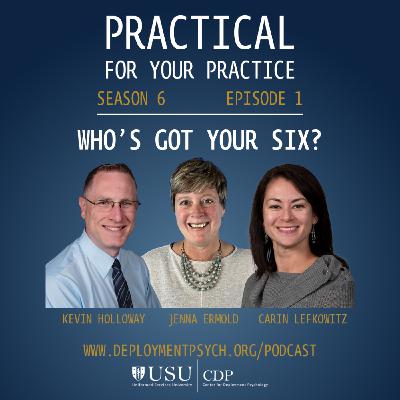
New year! New season! New look! AND new theme! Our hosts kick off season six of the P4P podcast introducing the theme, “Who’s Got Your Six?” (see what we did there?), and talk about the importance of cultivating our own support systems and people. Each host shares a story about someone who has (and has had) their “six”. As mental health providers, we all need and deserve someone to have our backs. So how do we cultivate these supportive relationships? Check out this episode! And as always, thank you listeners for having OUR six. We LOVE hearing from our listeners. If you have a question, comment, topic suggestion for a future episode, or even a guest recommendation, let us know! We also welcome listeners to share your “EBP Confession” story (season 4 theme), your “What’s Your Why?” story (season 5 theme), or your “Who’s Got Your Six” story (season 6 theme). You can leave us a voice mail message at speakpipe.com/cdpp4p, or send us an email at cdp-podcast-ggg@usuhs.edu. Your message could be featured in an upcoming episode!Drs. Carin Lefkowitz, Jenna Ermold, and Kevin Holloway are all psychologists, trainers, and subject matter experts at the Center for Deployment Psychology (CDP) at the Uniformed Services University of the Health Sciences (USUHS).Resources mentioned in this episode: Practical for Your Practice voice mail: speakpipe.com/cdpp4pPractical for Your Practice email: cdp-podcast-ggg@usuhs.edu Calls-to-action: Don’t take “no” for an answer when you want to be part of a group or work with an individual you can learn from.Know your value. Don’t waste your energy on someone else or an organization that doesn’t recognize your value.It’s ok to ask for help. It’s ok to be real. Deep relationships thrive on authenticity. GIve yourself permission to acknowledge your limits and vulnerabilities. Code: KJZH0ALNBI5O3UXX

Comments

Download from Google Play

Download from App Store
 United States