


 Claim Ownership
Renaissance English History Podcast: A Show About the Tudors
Subscribed: 1,799Played: 66,270
Subscribe

© Heather Teysko
Description
Renaissance England was a bustling and exciting place...new religion! break with rome! wars with Scotland! And France! And Spain! The birth of the modern world! In this weekly podcast I'll explore one aspect of life in 16th century England that will give you a deeper understanding of this most exciting time.
539 Episodes
Reverse
Elizabeth I’s decision not to marry shaped the entire character of her reign. But what if she had chosen differently, early on, when the pressure was highest and the risks were lowest?
In this Thought Experiment, we explore how an early marriage might have changed the succession, court politics, religion, and England’s place in Europe, and what Elizabeth gained, and gave up, by refusing to say yes.
Learn more about your ad choices. Visit megaphone.fm/adchoices

As a major winter storm is hitting much of the United States, it’s hard not to think about how dependent we are on forecasts, alerts, and advance warnings. We know when snow will start, how bad it might get, and when it should be over.
The Tudors had none of that.
In this episode, we explore how people in Tudor England understood the weather, what “forecasting” meant in a world without instruments or data, and how households prepared for winter when storms arrived without warning. We’ll look at seasonal preparation, food storage, fuel shortages, and what happened when cold lasted longer than anyone expected.
We’ll also examine real historical examples of severe winters from the Tudor period and just beyond it, including prolonged frosts that froze rivers, stalled trade, and tested the limits of everyday life.
This isn’t a story about cozy snowfalls. It’s about uncertainty, preparation, and what winter meant in a world where no one could say how long the storm would last.
Learn more about your ad choices. Visit megaphone.fm/adchoices
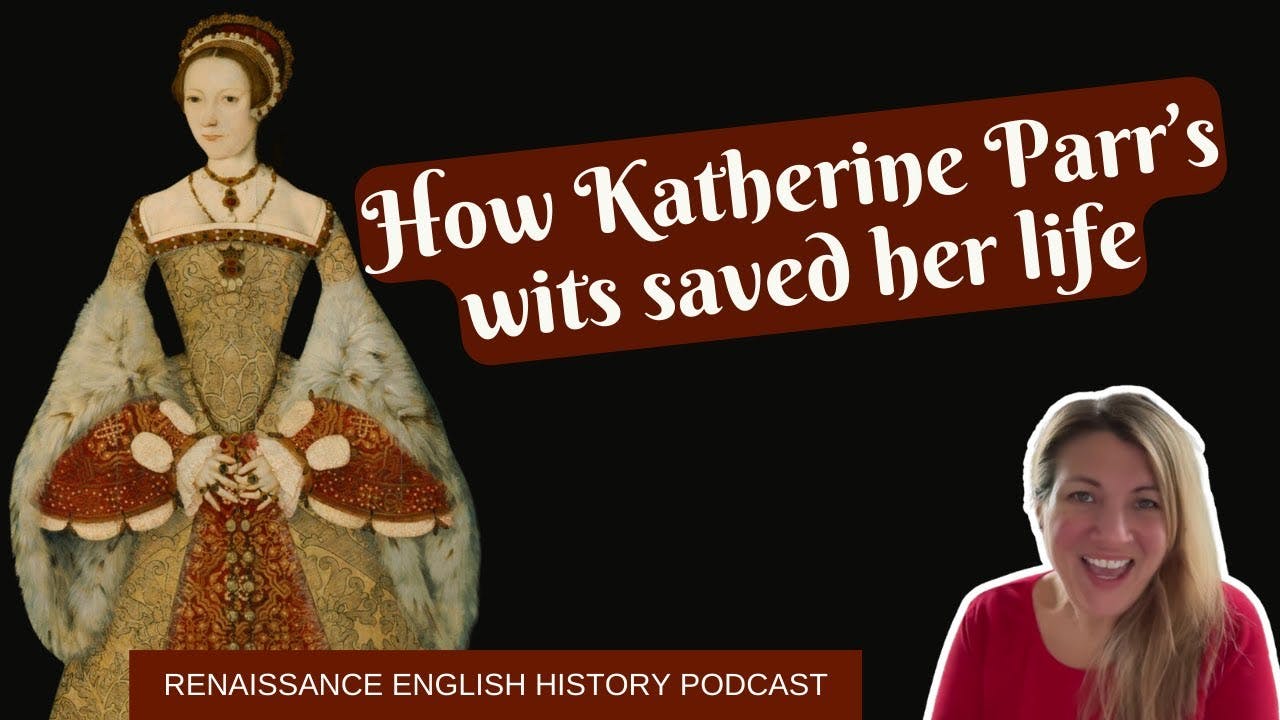
In the final years of Henry VIII’s reign, even conversation could be dangerous.
Katharine Parr was not simply a dutiful queen consort. She was highly educated, deeply interested in theology, and unusually willing to debate religion with the king. At first, Henry encouraged these exchanges. He enjoyed having a companion who could follow his arguments and respond thoughtfully.
By 1546, however, those same conversations were being reported very differently.
An arrest warrant was prepared. Bishops took notice. Courtiers repeated her words. Katharine found herself in the same position that had destroyed others before her.
This video explores:
Why Katharine felt secure enough to debate theology with Henry
How court politics turned her speech into a risk
What she understood about Henry’s need for control at the crucial moment
And how a carefully chosen conversation stopped the arrest from going forward
This is not a story about luck or silence. It is about timing, perception, and knowing when the safest move was to change the way the story was being told.
📌Join my newsletter for exclusive Tudor news and updates: https://www.englandcast.com/newsletter
Learn more about your ad choices. Visit megaphone.fm/adchoices
When we think about death in Tudor England, we usually picture executions, plague, or war. But for most people living in 16th-century England, death came much closer to home.
In this episode, we explore accidental deaths recorded in coroners’ inquests: drownings while fetching water, fatal after-work swims, farm accidents, falls, fires, and moments of ordinary life that went catastrophically wrong. Drawing on recent research by historian Steven Gunn, these cases reveal what people were actually doing all day, the risks they lived with, and how unforgiving the physical world of Tudor England could be.
This isn’t a story about kings or court politics. It’s about laborers, women, children, and families navigating daily work, domestic chores, and leisure in a landscape with very little margin for error.
If you’ve ever wondered what Tudor life really looked like beyond the palace walls, this episode offers a stark and fascinating answer.
Learn more about your ad choices. Visit megaphone.fm/adchoices

In early 1540, Thomas Cromwell was still powerful, but he knew something had shifted.
Today we look at the final year before Cromwell’s fall, not as a sudden collapse, but as a slow recognition that his influence was draining away. As the court reoriented itself, allies fell silent, old enemies returned, and the systems Cromwell built no longer protected him.
Hosted on Acast. See acast.com/privacy for more information.
Learn more about your ad choices. Visit megaphone.fm/adchoices
What if Catherine of Aragon had agreed to an annulment in 1527?
Today we explore a Tudor what-if with enormous consequences. If Catherine had stepped aside quietly, Henry VIII might never have broken with Rome, Anne Boleyn might have had time to secure her position, Mary Tudor’s future could have been settled early, and England might have remained a far quieter place.
A meditation on how one refusal, rooted in conscience, reshaped a kingdom.
Check out the Vday collection:
https://tudorfair.com/collections/valentines-day-2026
Learn more about your ad choices. Visit megaphone.fm/adchoices
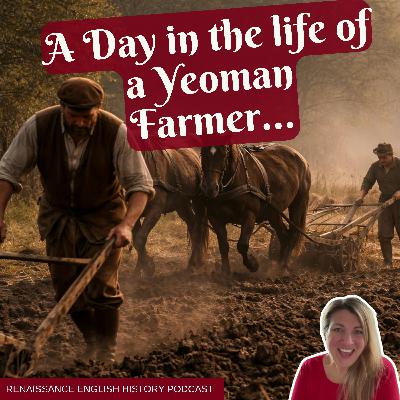
In this minicast, we spend twenty-four hours with a yeoman farmer and his family, the solid middle of Tudor society. From waking before dawn to fieldwork, food, spinning, neighborly chatter, and falling asleep by firelight, this is an ordinary working day in rural England. No court, no kings, just the daily rhythm that fed the country and kept Tudor England running.
Learn more about your ad choices. Visit megaphone.fm/adchoices

This talk was recorded live at Tudorcon 2025.
In this lecture, Mallory Jackson explores the work of Hans Holbein the Younger, the artist whose portraits defined how we visualize the Tudor court. Focusing on key paintings from Holbein’s years in England, she looks at how symbolism, material culture, and political change shaped portraits of figures such as Henry VIII, Thomas More, and Thomas Cromwell.
This is a detailed, art-driven discussion of Holbein’s most famous works, including The Ambassadors, and what they reveal about power, belief, and uncertainty in Tudor England.
Hosted on Acast. See acast.com/privacy for more information.
Learn more about your ad choices. Visit megaphone.fm/adchoices
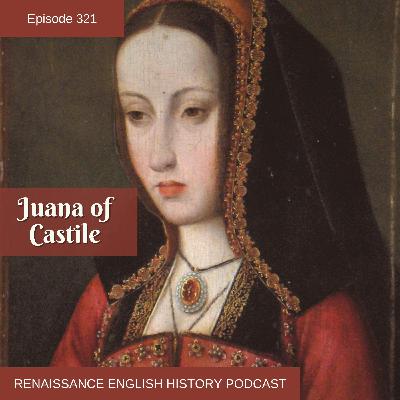
Juana of Castile is remembered by history as “Juana the Mad,” but that label explains far less than it hides. In this episode, we step away from biography and diagnosis to look instead at power: who held it, who wanted it, and who benefited when Juana was declared unfit to rule. Drawing on recent scholarship and the comparison with her sister Catherine of Aragon, this is a closer look at how a reigning queen was sidelined, confined, and ultimately erased without ever being formally deposed. Juana’s story isn’t just tragic. It’s a case study in how authority can be neutralized not by force, but by containment.
Read the book Sister Queens - available on Amazon
Learn more about your ad choices. Visit megaphone.fm/adchoices

Henry Beaufort is rarely the most famous Beaufort, but he may have been the most influential.
A son of John of Gaunt and Katherine Swynford, Beaufort took a different path from his more rebellious relatives. As Bishop of Winchester and later a cardinal, he became the wealthiest churchman in England and a crucial financial backer of the Lancastrian crown.
This minicast explores how Henry Beaufort shaped English politics through money and influence rather than titles or armies. From underwriting royal government to clashing with Humphrey, Duke of Gloucester during Henry VI’s minority, Beaufort’s power came from being indispensable, even when he was unpopular.
Hosted on Acast. See acast.com/privacy for more information.
Learn more about your ad choices. Visit megaphone.fm/adchoices
![[YouTube Drop] Three Twelfth Nights at the Tudor Court (1512–1582)](https://s3.castbox.fm/3d/4a/dd/aba48323654fb673c62a97019c7dcaa695_scaled_v1_400.jpg "[YouTube Drop] Three Twelfth Nights at the Tudor Court (1512–1582)")
At the Tudor court, Twelfth Night was more than the end of Christmas. Using specific recorded celebrations from across the sixteenth century, this minicast explores how plays, masques, tournaments, dancing, and banquets were used to perform power at court.
Learn more about your ad choices. Visit megaphone.fm/adchoices

Henry VIII is famous for executions, but he did issue pardons; rarely, strategically, and always on his own terms. Starting with the pardon of Geoffrey Pole in 1539, this minicast explores who Henry spared, who he didn’t, and what mercy really meant under the Tudors.
Learn more about your ad choices. Visit megaphone.fm/adchoices
![[YouTube Drop] Henry's Abraham Tapestries](https://megaphone.imgix.net/podcasts/770ffada-f14c-11f0-a062-7b956322340e/image/23a7cf66cafc641f7f6aa2e3c3a4769b.jpeg?ixlib=rails-4.3.1&max-w=3000&max-h=3000&fit=crop&auto=format,compress "[YouTube Drop] Henry's Abraham Tapestries")
When you step into the Great Hall at Hampton Court Palace, the walls tell a story. In this minicast, we explore Henry VIII’s Abraham tapestries: vast, expensive works of art that doubled as political messaging.
Woven in the 1540s, these biblical scenes weren’t just decoration. They reinforced Henry’s claims to religious authority, dynastic legitimacy, and the future of the Tudor line, all at a moment when succession anxiety and church reform loomed large. Five hundred years later, the tapestries are still hanging—and still saying exactly what Henry wanted them to say.
Read more here: https://www.amazon.com/Henry-VIII-Art-Majesty-Tapestries/dp/0300122349
Learn more about your ad choices. Visit megaphone.fm/adchoices

This tour of Tudor York was originally a Members Only video from two years ago. I’m making it public today so everyone can explore it. Patrons and channel members still get the good stuff first, including extra episodes, and content that never appears on the public channel.
Learn more about your ad choices. Visit megaphone.fm/adchoices

Because it’s Christmas Eve, I’m taking the day to be with family. In place of something new, this episode brings together several Christmas and wintertime Tudor stories from past years in one long, easy listen. These episodes explore how Christmas was celebrated in Tudor England - the traditions, food, faith, music, and rhythms of the season. Perfect for listening while you cook, travel, or enjoy a quiet Christmas Eve. I’ll be back with new episodes soon. Until then, happy Christmas.
Learn more about your ad choices. Visit megaphone.fm/adchoices
![[YouTube Drop] Terms of Adornment with Terry Jones](https://megaphone.imgix.net/podcasts/78b2e104-f14c-11f0-a062-631c530126b6/image/6178c0a57cbde35b9ebfb62895b2b3a4.jpeg?ixlib=rails-4.3.1&max-w=3000&max-h=3000&fit=crop&auto=format,compress "[YouTube Drop] Terms of Adornment with Terry Jones")
This episode features a live Tudorcon talk by Terry Jones, longtime docent at Agecroft Hall, exploring how jewelry functioned in Tudor and early Stuart England.
From pearls and signet rings to portrait jewels and the Order of the Garter, this talk looks at how men and women used jewelry to signal power, identity, loyalty, and belief. Recorded live, the episode includes audience questions and the informal rhythm of an in-person lecture.
Learn more about your ad choices. Visit megaphone.fm/adchoices
![[YouTube Drop] The Letter That Took 383 Years](https://megaphone.imgix.net/podcasts/7938e4a2-f14c-11f0-a062-97ed721b8d8a/image/f4b9a36ace986c60272c700c76e9c746.jpeg?ixlib=rails-4.3.1&max-w=3000&max-h=3000&fit=crop&auto=format,compress "[YouTube Drop] The Letter That Took 383 Years")
In 1602, Elizabeth I wrote a formal letter to the Emperor of China, hoping to open peaceful trade between their two realms. The letter was sent with an English explorer attempting to reach China via the Northwest Passage. He never made it. The minicast stayed in England for centuries, was once used to line a farm’s bran bin, and was not finally delivered to China until 1984. This episode tells the story of that extraordinary diplomatic misfire, and what it reveals about Elizabethan ambition, global trade, and how history sometimes survives by accident.
Learn more about your ad choices. Visit megaphone.fm/adchoices
![[YouTube Drop] Tudor Justice After the Verdict](https://megaphone.imgix.net/podcasts/79cbe8c4-f14c-11f0-a062-8b00ebff0cfc/image/998a215a5408f280888a800953b8e909.jpeg?ixlib=rails-4.3.1&max-w=3000&max-h=3000&fit=crop&auto=format,compress "[YouTube Drop] Tudor Justice After the Verdict")
Yesterday we chatted about how crimes were solved. Today, we look at convictions.
What happened after conviction in Tudor England? This minicast looks at how punishment worked through shame, visibility, and public order, from the stocks and church penance to execution and royal mercy.
Hosted on Acast. See acast.com/privacy for more information.
Learn more about your ad choices. Visit megaphone.fm/adchoices
![[YouTube Drop] Who Solved Crimes in Tudor England?](https://megaphone.imgix.net/podcasts/7a4dfdb4-f14c-11f0-a062-87506b2a7470/image/158d3fee7ebedbf488175fb424d5f199.jpeg?ixlib=rails-4.3.1&max-w=3000&max-h=3000&fit=crop&auto=format,compress "[YouTube Drop] Who Solved Crimes in Tudor England?")
How did Tudor England solve crimes without police or forensic science? This episode explores how murder and suspicion were investigated through community testimony, coroners’ inquests, confession, and local justice, and why the world of Matthew Shardlake feels surprisingly accurate. Hosted on Acast. See acast.com/privacy for more information.
Learn more about your ad choices. Visit megaphone.fm/adchoices
The Christmas Character quiz is here: https://www.englandcast.com/christmas-character-quiz/ - I'd love to see what you got!
And the ecard site is here: https://www.englandcast.com/tudor-tidings/
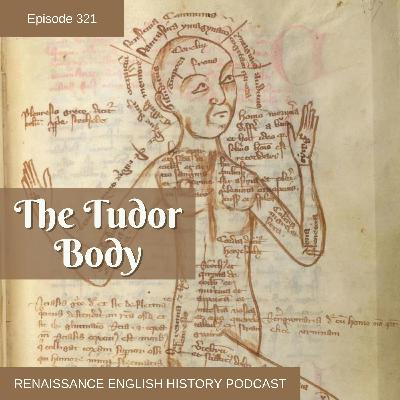
How did the Tudors understand the human body, and why does their approach feel so strange to us today? In this episode, I explore how people in Tudor England thought about health, illness, emotion, and balance, and how the body was believed to be shaped by air, weather, and even feelings themselves. We’ll also look at where Tudor medicine overlaps with our own, and why their way of living in the body wasn’t as unscientific as it’s often assumed.
Hosted on Acast. See acast.com/privacy for more information.
Learn more about your ad choices. Visit megaphone.fm/adchoices


Download from Google Play

Download from App Store
 United States
I like your voice 😍
Please can you post the title and authors of the book you mentioned in this episode? Thanks
so glad I found this podcast. Thank you.
looove this show!
could this be an unedited version?
every other word is um very hard to listen to