


 Claim Ownership
The World of Watercolor Painting with Birgit O’Connor
Subscribed: 92Played: 1,198
Subscribe

© Copyright 2017 . All rights reserved.
Description
Learn about the World of Watercolor Painting tips, techniques, interviews and student meetings.
76 Episodes
Reverse
 1
1In Part 3 of The Creative Seasons of an Artist, we explore the season many artists quietly fear — the plateau.
This is the stage where growth slows.
Ideas feel distant.
Momentum fades.
You sit down to paint and nothing feels new.
The plateau can feel discouraging. You may wonder if you’ve lost inspiration, reached your limit, or stalled in your progress.
But what if the plateau isn’t stagnation?
What if it’s consolidation?
In this episode, we talk about:
• Why growth often becomes invisible before it becomes permanent
• The frustrating gap between seeing better and painting better
• Why many artists quit during this season
• How repetition and refinement quietly build mastery
• What to do when you feel creatively stuck
The plateau is not a failure.
It’s a quiet strengthening.
It’s where endurance forms, where perception sharpens, and where artistry deepens beyond excitement.
If you’re feeling stuck, uncertain, or uninspired — this episode is for you.
Stay.
The season will shift.
In Part 2 of The Creative Seasons of an Artist, we step into the Growth Season — the stage where things begin to click.
This is the season of momentum.
Your washes start behaving the way you hoped they would.
Composition begins to make more sense.
You see improvement — and you feel it.
But growth isn’t just about getting better.
It’s about developing rhythm.
In this episode, we talk about:
• What creative momentum really feels like
• Why mistakes increase as you grow — and why that’s a good sign
• The shift from “Can I paint?” to “What kind of painter am I becoming?”
• Avoiding creative overload and too many influences
• Recognizing your instincts and artistic preferences
• Building strength through repetition
The Growth Season is exciting, messy, and expansive.
It’s the time when you experiment more boldly, notice color and form everywhere, and begin trusting your eye.
This isn’t the season for shrinking.
It’s the season for building muscle — creatively and mentally.
If you’re feeling energized, curious, and slightly overwhelmed all at once, you may be exactly where you need to be.
Growth isn’t linear.
But it is powerful.
View Online Courses
Youtube
The Creative Seasons of an Artist – A 4-Part Watercolor Podcast Series
What season are you in as an artist?
In this four-part podcast series from The World of Watercolor, we explore the creative stages every artist experiences — from beginner hesitation to long-term reinvention.
This season covers:
• The courage to begin painting
• Overcoming comparison and self-doubt
• Building momentum and artistic rhythm
• Working through creative plateaus
• Rediscovering joy and redefining success
Whether you are new to watercolor or have been painting for years, understanding your creative season can help you move forward with clarity and confidence.
Artistic growth is not a straight line.
It’s seasonal.
Join Birgit O’Connor as she reflects on the emotional and practical realities of developing as a watercolor artist — and why every stage matters.
Online courses
Join the mailing list
In Part 4 of The Lonely Artist series, we ask the big questions.
Are all artists a little crazy?
Can you really be successful as an artist?
Can you support yourself doing this?
And perhaps most importantly — do you actually want to?
In this episode, we talk about:
• The myth of the “crazy artist”
• The emotional highs and lows of creative life
• Art as healing and mental health support
• The difference between loving to paint and choosing the life of an artist
• Financial sustainability and realistic expectations
• What success truly means in a creative career
Being an artist is not just about talent.
It’s about resilience.
It’s about clarity.
It’s about deciding what kind of life you want.
You don’t have to starve.
You don’t have to suffer.
And you don’t have to fit someone else’s definition of success.
This conversation closes the series by asking one honest question:
What does being an artist mean to you?
In Part 3 of The Lonely Artist series, we talk about something practical — but deeply emotional.
Do you even have a place to paint?
What if your “studio” is the corner of the laundry room?
What if your supplies are tucked away in a closet and hard to reach?
What if you feel isolated not just emotionally — but physically?
In this episode, we explore:
• Feeling stifled when you don’t have a dedicated art space
• Painting in shared or temporary environments
• The emotional weight of not having room for your creativity
• Creating a portable or flexible home studio
• Overcoming the belief that you “can’t really be an artist”
• Giving yourself permission to claim space — even if it’s small
Being an artist doesn’t require a perfect studio.
It requires intention.
Sometimes it begins at the kitchen table.
Sometimes in the laundry room.
Sometimes in a quiet corner no one else notices.
But the act of making space — physically and emotionally — is where identity begins.
If you’ve ever felt like you don’t quite have room to be an artist, this conversation is for you.
Online courses
In Part 2 of The Lonely Artist series, we move from isolation into connection.
We talk about what it really means to grow as an artist — not just technically, but emotionally and professionally. How do you find your tribe? What if workshops aren’t for you? How do you continue learning when you feel unsure or stuck?
We explore:
• How to grow as an artist at your own pace
• Finding and building creative community
• Imposter syndrome and how it quietly shapes our confidence
• Why workshops aren’t the only path forward
• Pursuing your creative journey in a way that feels sustainable
• Looking for meaningful creative support
• Women in watercolor and shared experience
• The realities of marketing yourself as an artist
If you’ve ever felt like you’re doing this alone, this conversation is for you.
You don’t have to stop painting just because you feel unsure. You don’t have to follow someone else’s path. And you don’t have to grow alone.
In today’s episode (Part 1), I sat down with several of my artist members for a heartfelt conversation about something many creatives quietly experience — the life of a lonely artist.
We spoke openly about imposter syndrome (because it keeps resurfacing), painting by yourself, and what it truly means to call yourself an artist — even if it’s “just” a hobby.
We explored:
• How to get started when you feel stuck
• What to do when life feels grey
• Why live workshops may not work for everyone
• Starting your own art group
• Finding a safe creative community
• How to rise up and paint when confidence is low
This conversation only scratches the surface. In future episodes, we’ll continue unpacking what it means to pursue art in a way that feels authentic, sustainable, and supportive.
If you’ve ever questioned whether you belong as a watercolor artist — this conversation is for you.
Online courses
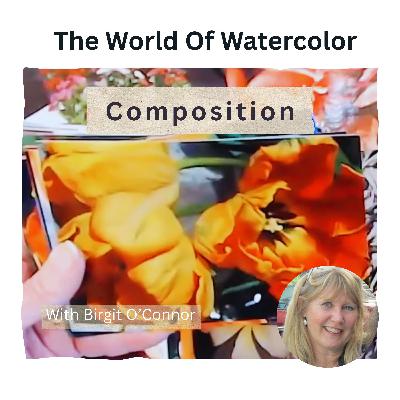
In this episode, I share a short segment from my Nature’s Abstraction exploring how intuition can guide composition in floral abstraction.
Rather than planning or arranging elements in advance, we look at how to listen for what the painting needs — noticing movement, balance, and where the energy wants to settle. This approach allows composition to emerge naturally, through awareness and response rather than rules.
If you’ve ever felt unsure about where to place forms, when to stop adjusting, or how to trust your instincts, this episode offers a gentler way forward — one that values curiosity, observation, and letting go of control.
A link to learn more about the full Nature’s Abstraction course is included for those who’d like to continue exploring this way of painting.
See the video on YouTube
Yellow Rose & Calla Lily online course

Feeling stuck can make even the smallest step feel overwhelming. In this episode, we talk about why getting started feels so hard—and how to gently remove the obstacles that keep you frozen in place. This isn’t about pushing harder or forcing motivation. It’s about understanding what’s in the way, softening the resistance, and finding a simple, honest way forward.
White Gardenia – Workshop
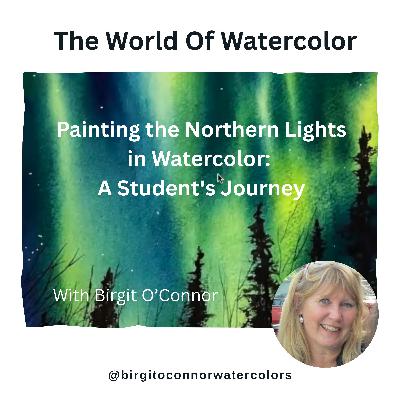
In this conversation, I sit down with student Gloria Andison to talk about her journey painting the Northern Lights in watercolor. Gloria shares how she transitioned from acrylic to watercolor, what it took to let go of control, and how learning to paint with atmosphere helped her express light, mood, and movement more freely.
We talk about trusting water, embracing softness, and finding confidence through an expressive approach to landscape painting. This is a thoughtful, inspiring conversation for artists interested in atmosphere, emotion, and growth in watercolor. This conversation reflects ideas explored in my Atmospheric Landscapes course, which focuses on light, mood, and expressive simplicity in watercolor.
Website Facebook Page
First get rid of the expecations of what you do in the studio, and be willing to learn a lot about creativity, focus and a get ready to have some fun, consider Plein air painting.
Here easle I used is a Traveler Series Watercolor Package click here
View the Beach painting demo on Youtube
Online courses
Join the mailing list on my Home website
Instagram
Based on my "Fearless flowers" courses, in this episode, we explore when painting how to get out of your comfort zone, and grow to be more bold and dynamic.
In the Fearless Flowers series, both the interactive and independent study options are available. For immediate access to any of the lessons I suggest the independent study option, full courses
Single lessons
Schedule of interactive courses
Join my mailing list, courses, brushes and more at www.birgitoconnor.com
Today were talking about what if you’re doing a painting and use photos that someone else took as your reference material, can you use it for a show, can you sell it, can you claim it as your own?
Are you using your artistic vision or copying an image?
What if you took a class and are inspired by the instructor, and use their lesson and reference material, is it now yours?
Is there a subject matter that you would like to hear about? Drop us a line and let us know
Online courses
Join the mailing list
Pushing through the fear.
Do you feel the need to always be perfect?
What kind of artist do you want to be?
Do you want to have the control you want over your brushstrokes, and if you don’t it can depend on the brush and the amount of water it’s holding?
Are your paintings to weak and wimpy, and are you afraid of the darks? Try to relax and think of every painting as an experiment.
We will be looking at a few white flower paintings and talking about the brushstrokestrokes, background and where do you want to direct the viewers eye?
How to get the wobble out of the paper, try ironing it.
Framing options
When painting on a half sheet size painting 15"x22" the standard size frame I usually use is a standard 22"x28".
The standard mat never seems to work as well so I have mine custom.
You can go to your local craft store or framer for more information or custom frames, which can be pricy.
I was looking online for online frame options, and the standard frame size can work but again, I'm not sure if the online mat option is as good as custom cut.
I like Cheap Pete's but they don't ship the larger size frames
Here are some online companies you can try, but you may want to call them before ordering.
ArtoFrame
Picture Frames
Website www.birgitoconnor.com
Online courses Watercolor courses
The course we reviewed today was from the interactive 6-week course
Interactive white flower (runs in sessions)
Independent study
Sometimes it’s difficult to get started and paint again, it can be because of some life circumstance, the holidays, or we're just not inspired. Not everyone enjoys the isolation of the studio or is a self-motivated artist, some enjoy painting with other artists, especially watercolor.
With the pandemic, many people haven’t felt creative and have been absolutely paralyzed, so what are some of the things you can do, let’s talk about it.
If you’re interested in taking an online course, or joining “Watercolor in Motion” take a look at my upcoming schedule on my website or go directly to my school
In this episode, we discuss the approach of painting a cluster of Monarch Butterflies.
We will be covering what you might think might be a failure could be an incredible abstraction, along with paper surfaces and color mingling.
Online Courses
Website
Monarch Butterfly Mug
Monarch Tote bag
Values help to invite the viewer into the painting, so in today's episode we are having a discussion about why they are important, to help create a push pull effect and prevent paintings from looking flat.
In today's meeting will talk a little bit about how to get that fine spray in a painting by using an atomizer, a Kemper tool or a toothbrush.
We will also discuss a value study app and talk about some of the challenges you can face when doing a plein air competition, and how all these challenges can help you grow in your creativity.
Value study app
Kemper spatter tool
Monarch garden online course all levels
Monarch Migration Full course
Shop
Home website
In this episode will be having a conversation about where your inspiration come from?
Have you ever thought of where you painting from in your body? Is it your head, your heart, your fingertips, wrist, arm, full body and what kind of experience is it for you?
What about commissions, do you enjoy doing them or is it a chore, and how can you move away from realism into something more painterly.
These are just some of the things that will be talking about in today's episode we're going to be talking
Today Ann told us today about Ranger inks, and how much she is enjoying them, especially the distressed inks. Then our conversation took a turn into what's the difference of inks, alcohol inks and water color pigments and can alcohol inks be used in watercolor competitions. Personally, I found this fascinating information, I hope you will too.
www.birgitoconnor.com
Birgit's online watercolor courses
Ranger inks

Comments

Download from Google Play

Download from App Store
 United States