


 Claim Ownership
Environmental Leadership Chronicles
Subscribed: 6Played: 33
Subscribe

© Copyright 2021 All rights reserved.
Description
Environmental Leadership Chronicles is brought to you by the California Association of Environmental Professionals. We interview leaders in the environmental industry to share information about their career development beyond the technical work. This podcast is for anyone who is interested in any and all things within the environmental profession and leadership.
66 Episodes
Reverse
California's state parks belong to all of us, and protecting them, funding them, and making sure everyone feels welcome in them takes intentional leadership. In this episode we're speaking with Kindley Walsh Lawlor, the inaugural President and CEO of Parks California, the nonprofit partner to California State Parks. Since joining in 2018, Kindley has built an organization focused on designing innovative partnerships, scaling sustainable solutions, and fostering inclusive experiences for underserved communities and younger generations.
Before Parks California, Kindley spent over 25 years in sustainability, social justice, and equity leadership — including leading human rights and ESG efforts at Gap Inc. She also serves on the board of the Western National Parks Association.
In this episode, we have a panel of environmental policy and planning experts joining to discuss the CEQA fair argument standard.
Corinne Lytle Bonine has over 18 years of environmental permitting experience and serves as the Director of Environmental Permitting for the Western Region and Wind nationwide at AES. She also serves as the Administrative Vice President for AEP's State Board of Directors.
Kristin Blackson has extensive knowledge as an environmental planner - with 25 years of experience, she is a CEQA practitioner, educator, and active participant in California's environmental policy conversations. Kristin is also the Director-At-Large on AEP's State Board of Directors
And Matt Klopfenstein is Co-Founder and Partner at Summit Advocacy, a lobbyist specializing in CEQA, energy, and environmental policy who works extensively with the California legislature.
Together, they'll share their perspectives on the fair argument standard including what it means, how it's applied, and why it matters for environmental professionals across California.
Florentina Craciun is an urban planner with over 16 years of experience in environmental compliance. As a Senior Planner at LSA , she guides agencies and private clients through CEQA for projects like housing and commercial developments, historic building adaptive reuse, and public infrastructure.
Florentina earned her Master's in Urban Planning from UCLA with an emphasis on environmental planning. Since then, she's worked to bridge graduate school ideals with real-world practice—making environmental planning more accessible through teaching CEQA courses, mentorship, and championing streamlined processes. And for over a decade, Florentina served on the APA Northern Section Board, with roles from Membership Director to Awards Co-Director.
Florentina has done this while pursuing her vision of transforming environmental planning from a "can't do" barrier into a "can-do" tool for building more just communities.
Senator Catherine Blakespear represents California's 38th Senate District, covering northern San Diego County and southern Orange County. Senator Blakespear is a lawyer and former journalist with local government experience and elected the State Senate 2022. She currently chairs the Senate Environmental Quality Committee— a committee that covers legislation related to environmental quality, air quality, water quality, climate change, and California Environmental Quality Act (CEQA).
Before entering state politics, Senator Blakespear served eight years in Encinitas city government, including six years as mayor. As a fourth-generation San Diegan, she's witnessed California's environmental challenges evolve firsthand—from local coastal access issues to regional air quality concerns to the transboundary environmental crisis at the Tijuana River.
In just three years in the Senate, she's authored 24 bills signed into law, tackling issues from plastic bag bans to gun violence prevention to solar energy tax protections.
Senator Blakespear has navigated the complex intersections of housing, transportation, climate action, and environmental protection—learning how policy decisions play out at different scales and how to balance competing priorities while advancing California's environmental leadership.
Thanks for listening, we hope you enjoy!

We're honored to welcome Assemblymember Tasha Burner, who represents California's 77th Assembly District, encompassing coastal communities from Carlsbad and Encinitas south through La Jolla to Coronado.
Assemblymember Boerner has served in the State Assembly since 2018 and currently chairs both the Assembly Communications and Conveyance Committee and the Assembly Select Committee on Sea Level Rise and the California Economy—a committee to address the urgent threats facing California's coastline.
Her environmental leadership is evident in her successful legislation, including AB 823, which unanimously passed to ban plastic microbeads in leave-on personal care and cleaning products, and groundbreaking work to address plastic glitter pollution. Before her legislative career, she served on the Encinitas City Council and Planning Commission, where her advocacy began with a simple goal: getting a stop sign installed near her children's school.
Assemblymember Boerner holds a Master's degree in International Studies from Claremont Graduate University and a Bachelor's in Political Science from UC Berkeley. She brings a blend of local government experience, business acumen, and passionate advocacy for coastal resilience, environmental protection, and community-centered policy to her work in Sacramento.
Join us as we discuss her approach to environmental leadership, coastal adaptation, and shaping California's environmental future.
And to learn more about the work the Assemblymember is doing, check the video series, Tea Time with Tasha.
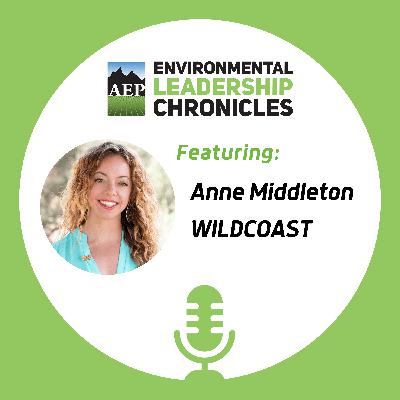
In this episode, we feature Anne Middleton, a conservation professional whose career has taken her from Montana to Cameroon and now to California, bridging the nonprofit, public, and private sectors. From investigating international wildlife crime with the Environmental Investigation Agency to procuring sustainable ebony wood in Cameroon for Taylor Guitars, Anne's journey reflects her commitment to collaborative environmental solutions. In the fall of 2025, Anne was invited to present at TEDx – check out her talk on wildfire prevention, which is linked in the show notes.
Currently with WILDCOAST, Anne previously served as Executive Director at ECOLIFE Conservation and held positions with the San Diego County Water Authority and Sustainability Matters. With degrees in biology from Oberlin College and Environmental Science and Management from UC Santa Barbara's Bren School, Anne believes that business can be a powerful instrument for positive change.
We explore her perspective on coastal and marine conservation, public-private partnerships, and what it takes to create lasting solutions to our planet's most pressing environmental challenges.
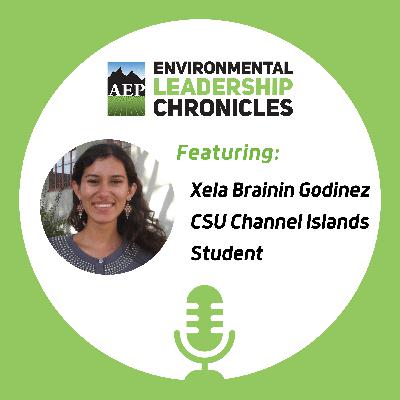
In this episode, we feature Xela Brainin Godinez, a student at CSU Channel Islands studying Environmental Science and Resource Management with a marine and coastal emphasis. Having served as a AEP Student Council Member and participant on the People & Culture Committee, Xela brings a fresh perspective on entering the environmental profession.
From hands-on conservation work with white abalone at the Aquarium of the Pacific to presenting before California's Lieutenant Governor about the Santa Rosa Island Research Station, Xela has already made meaningful contributions to marine science and student outreach. Her journey from studying horticulture at Long Beach City College to specializing in marine and coastal science reflects both personal growth and an evolving passion for environmental stewardship.
As an advocate for diversity in environmental spaces, Xela is passionate about expanding representation in our profession. Join us as she shares her experiences working alongside seasoned professionals on AEP's People & Culture Committee, what draws her to marine conservation, and what gives her hope as she prepares to launch her career.
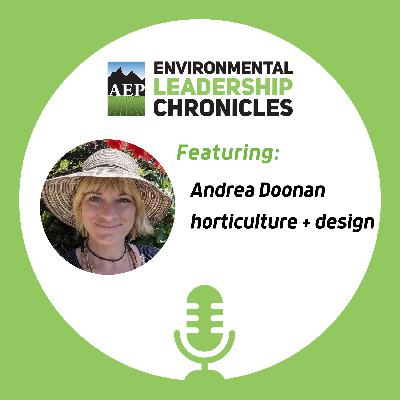
In this episode, we're excited to feature Andrea Doonan, an ecological landscape designer based in San Diego who is transforming how we think about residential landscapes. Andrea specializes in designing spaces that connect people with nature while incorporating regenerative and sustainable practices.
Her award-winning landscapes have been featured on garden tours and in publications throughout California. Beyond her design work, Andrea is deeply committed to education—teaching sustainable gardening practices through the G3 Green Gardens Group in partnership with the Metropolitan Water District, and mentoring emerging professionals through the Association of Professional Landscape Designers, where she also serves on the board.
Andrea's approach combines ecological function with artistic beauty, creating habitat gardens and implementing watershed-wise methodologies that address California's water challenges. She's passionate about collaboration and giving back to her community through involvement in food, garden, placemaking, and art initiatives.
Join us as we explore Andrea's journey, her design philosophy, and her vision for creating landscapes that truly sustain both people and planet.

In this episode, we welcome Josh Metz, Executive Director and Co-Founder of the Monterey Bay DART Initiative. Josh shares his winding career path from environmental biology and landscape architecture to leading regional economic development at the Fort Ord Reuse Authority and co-founding Monterey Bay DART.
Topics covered include the origins of MB DART (Drones, Automation, and Robotics Technology), partnerships with universities and industry, the FAA's UAS Integration Pilot Program, and the role of Joby Aviation in establishing a regional advanced air mobility cluster. Josh discusses workforce development programs, apprenticeship initiatives supported by the James Irvine Foundation, and real-world applications of drones and eVTOLs for public safety, environmental monitoring, and infrastructure inspection.
Tune in for insights on technology’s intersection with environmental stewardship, community development, and the 2026 Monterey Bay DART Live Summit (March 31–April 2, 2026) — plus personal stories from Josh’s fieldwork, lessons learned from Fort Ord’s reuse, and what innovation could look like over the next decade.
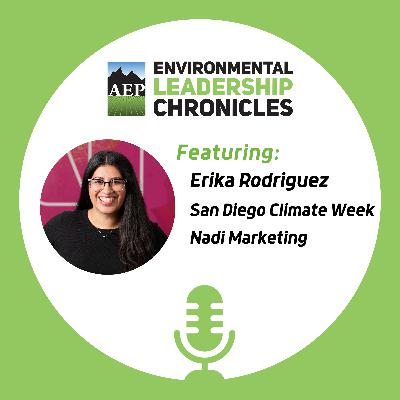
In this episode, we meet with Erika Rodriguez, Founder and CEO of Nadi Marketing and Chair of the first-ever San Diego Climate Week. Erika shares her life-changing experience surviving a Category 4 cyclone in Fiji, how that moment shifted her career toward climate advocacy, and the story behind launching a partnership-focused marketing agency that serves sustainable and purpose-driven organizations.
Listeners will hear how San Diego Climate Week (October 1–8, 2025) was created as a grassroots, community-powered week of events emphasizing resilience, accessibility, and collaboration — from bike and transit rides to virtual panels and local art installations. Erika outlines practical partnership-marketing strategies, examples of community-centered campaigns, and the importance of storytelling, mentorship, and aligning values in purpose-driven businesses.
Expect actionable advice for professionals who want to apply skills like marketing, design, and finance to environmental work, plus information on how to get involved with San Diego Climate Week and support inclusive, year-round climate action.

In this episode, we explore the landscape of solid waste management and CEQA compliance with Lisa Wood, Environmental Planner with TRC Companies, and Steve Weihe, Recycling Specialist II at the County of San Diego.
Lisa brings decades of experience and was instrumental in updating CEQA guidelines for solid waste impacts – moving beyond the outdated "is there landfill capacity?" question to comprehensive impact analysis that considers state mandates and local infrastructure capacity.
Steve, a certified Master Composter and TRUE Zero Waste Advisor, has developed innovative programs including mattress recycling at Miramar Landfill. He discusses the County's approaches to organic waste diversion and meeting SB 1383's requirement for 75% reduction in organic waste disposal.
Together, they discuss how do we analyze solid waste impacts under CEQA when state diversion mandates increase but infrastructure capacity falls short? What happens when local agencies must balance ambitious waste reduction goals with limited processing capacity?
This conversation offers insights for environmental professionals working at the intersection of CEQA compliance and sustainable waste management, from source reduction strategies to cumulative impact analysis.
In this episode, we’re joined by Leslie Moulton-Post, President and CEO of Environmental Science Associates (ESA). A recognized leader in the environmental industry, Leslie has spent over 40 years at ESA, guiding some of California’s most complex infrastructure and water projects and helping shape the firm’s growth as a leading employee-owned environmental planning and science company.
In her role, Leslie leads with a clear commitment to ESA’s core values—aligning business decisions with long-term vision, resource stewardship, and meaningful partnerships. She’s been recognized as one of the Most Influential Women in Business by the San Francisco Business Times, and continues to serve on numerous boards and associations focused on water, sustainability, and environmental progress.
We’re excited to explore her path, her perspective on leadership, and the future of environmental practice.
In this episode, we’re joined by Taylor Morgan, a key member of the People Resources team at Ascent. With over six years of experience in human resources, Taylor brings a thoughtful and strategic approach to building more inclusive workplaces—focusing on DEI programming, employee resource groups, equitable recruiting, and professional development.
Taylor shares her journey into working with environmental professionals, her evolving perspective on the role of HR, and how organizations can reimagine hiring, internships, and culture to support equity and belonging.
This conversation offers honest insights into the work still ahead and the opportunity to transform how environmental organizations include, support, and lead with intention.
Welcome to the Environmental Leadership Chronicles podcast, a podcast series from the California Association of Environmental Professionals. In this episode, we are joined by John Dietler, Ph.D., Senior Vice President of Operations for the West at SWCA Environmental Consultants. John shares his career journey from starting as a field archaeologist to becoming a key leader in overseeing operations across ten Western states.
With vast expertise in cultural resources and environmental compliance, John offers an insightful discussion on bridging technical work with business development. He also sheds light on SWCA's employee ownership model, emphasizing its impact on the company's growth and operation. Through engaging anecdotes, John explores navigating unique cultural landscapes in states like California, Hawaii, and Alaska, and the importance of understanding diverse Indigenous communities.
This episode is a deep dive into the evolving landscape of environmental consulting, as John elaborates on how disciplines like archaeology can heavily influence and guide modern developmental practices while respecting the voices of native tribes. Whether you're an aspiring environmental professional or simply curious about bridging past and present landscapes, this episode is sure to captivate and inform.
In this episode, we meet with Megan Musolf (she/her), Assistant Long-Range Planner for the City of Carpinteria. Megan shares her journey from studying Environmental Studies at UC Santa Barbara to building a career as a planner in the public sector, where she works to implement the City's Housing Element programs through zoning code amendments. We discuss how student advocacy shaped her housing policy perspective, and what it means to grow a network early in your career. She also serves as the Social Media Officer for the Central Coast Section of the American Planning Association (APA). Megan offers thoughtful insights for emerging professionals and a fresh take on the evolving role of young planners today.
Megan also walks us through her involvement in the controversial Munger Hall project at UCSB, illustrating a real-world application of environmental planning and policy advocacy. The episode explores the evolving role of young planners in shaping urban environments, the importance of professional organizations in career development, and the unexpected challenges and learning curves in transitioning from academic life to full-time employment. Tune in to hear Megan's fresh insights and why the fight for sustainable and community-centered housing remains crucial in today's urban landscape.
The opinions Megan shares today are her own and don't represent the official views of the City of Carpinteria. She's here sharing her personal experiences and perspectives.
Thanks for listening and we hope you enjoy.
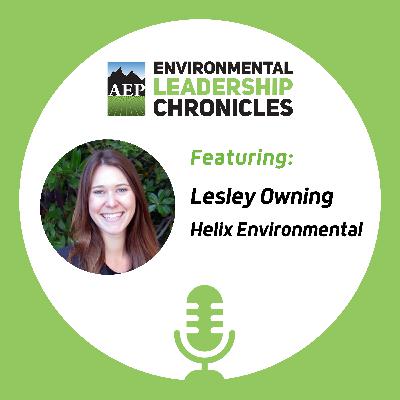
In this episode, we meet in person with Lesley Owning, a seasoned Principal Planner and Environmental Planning Group Manager at Helix Environmental Planning. With over 13 years of experience, Lesley manages CEQA and NEPA requirements for diverse projects, from infrastructure to renewable energy.
Lesley highlights her career journey and key transitions that led her to her current leadership role. She emphasizes the importance of mentorship and flexibility in nurturing her team, sharing her approach to career development and project management.
Listeners will be inspired by Lesley's enthusiasm for projects like aquifer storage and groundwater recharge. She also discusses the evolving nature of the environmental industry and how leaders can support their teams in balancing personal and professional growth.
This episode is a brief 2025 AEP Conference Recap for our podcast listeners and viewers! This year’s gathering brought environmental professionals together at Zachari Dunes in Oxnard, California, in early April. Centered around the theme “Seeds of Change, Waves of Progress,” the conference offered a blend of insightful keynotes, dynamic breakout sessions, and meaningful networking opportunities. Attendees explored everything from emerging CEQA trends and climate resilience to cutting-edge tools and AI in environmental planning. To capture the spirit of the event, we spoke with attendees from across the profession—here’s what they had to say about their experience at this year’s conference.
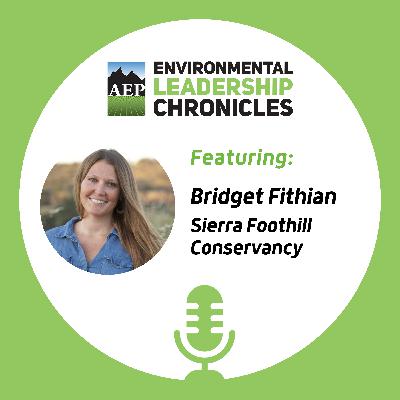
We’re joined by Bridget Fithian, Executive Director of the Sierra Foothill Conservancy and a leader in land conservation across the Central Sierra. Born and raised in Mariposa, Bridget’s deep connection to open spaces has shaped her career in conservation, where she has helped protect over 30,000 acres of land through innovative partnerships and creative solutions.
Under her leadership, the Sierra Foothill Conservancy has expanded public access to nature, preserved critical landscapes, and played a key role in conservation planning, fire resilience, and environmental stewardship. Bridget also serves as Board Chair of the California Council of Land Trusts and holds leadership roles with the Sierra Cascade Land Trust Council and the California Conservation Action Fund.
In this episode, we’ll explore how land trusts shape conservation, the role of environmental planning, and what it takes to protect and restore California’s landscapes for future generations.
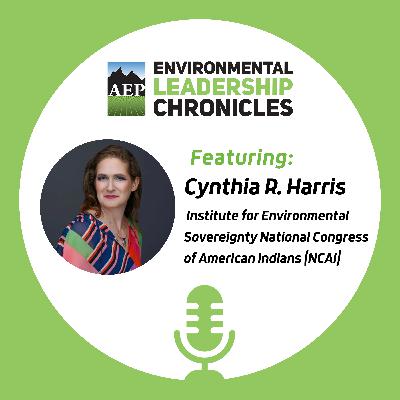
In this episode, we're joined by Cynthia R. Harris, Director of the Institute for Environmental Sovereignty at the National Congress of American Indians. A respected leader in environmental law and tribal sovereignty, Cynthia brings deep expertise in climate adaptation, water conservation, and green infrastructure, all while advocating for tribal self-determination.
Before joining NCAI, she led tribal consultation research in California as Director of Tribal Programs at the Environmental Law Institute. With experience in local government, national policy, and leadership roles at the American Bar Association and the National Academies of Sciences, Cynthia offers a unique perspective on the intersection of tribal sovereignty and environmental policy.
At NCAI, the nation’s oldest and largest American Indian and Alaska Native organization, she continues to advance tribal governance and environmental justice. Join us as we explore her insights on Indigenous leadership in environmental stewardship. Thanks for listening, we hope you enjoy!
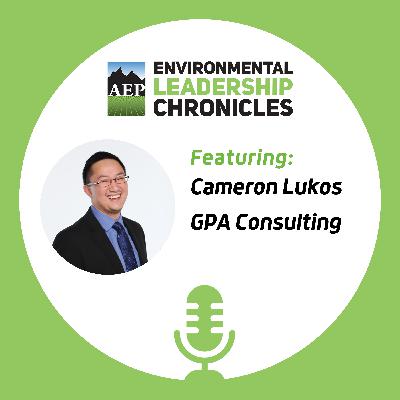
Welcome to the Environmental Leadership Chronicles, brought to you by the California Association of Environmental Professionals. In this episode, we are thrilled to feature Cameron Lukos, a GIS analyst and biologist at GPA Consulting, who is pioneering the integration of technology and biology in environmental science.
Cameron discusses his dual role in providing GIS support across various departments, including biology, architectural history, and CEQA compliance, while also engaging in fieldwork such as biological surveys and habitat assessments. He shares insights into how his family's legacy in the environmental industry has shaped his career path, drawing inspiration from his father's work as an aquatic biologist.
As the student liaison for AEP's Orange County chapter, Cameron is passionate about mentoring the next generation of environmental leaders. He offers valuable advice to students on networking, gaining industry experience, and the importance of internships.
Join hosts Jessa and Corinne as they delve into Cameron's journey, exploring the intersection of GIS technology and biology, and how Cameron's dedication is creating a positive ripple effect in the environmental sector.
Listen in to discover how Cameron navigates the challenges of a rapidly changing industry, his vision for the future, and his commitment to fostering new talent in environmental science.

Comments

Download from Google Play

Download from App Store
 United States