


 Claim Ownership
Smarty Pants
Subscribed: 413Played: 10,579
Subscribe

© The American Scholar
Description
Tune in every other week to catch interviews with the liveliest voices from literature, the arts, sciences, history, and public affairs; reports on cutting-edge works in progress; long-form narratives; and compelling excerpts from new books. A podcast from The American Scholar magazine. Hosted by Stephanie Bastek.
Hosted on Acast. See acast.com/privacy for more information.
337 Episodes
Reverse

In his award-winning 2003 graphic novel Blankets, Craig Thompson depicted his teenage love and his fall from faith in rural Wisconsin. Now he returns to the story of his life with Ginseng Roots, which focuses on a minor detail that Blankets omitted: namely, 10 summers he spent as a boy weeding and harvesting American ginseng for a dollar an hour. Thompson maps the roots of the 300-year-old global ginseng trade from China and Korea to Marathon, Wisconsin, and profiles the other people tangled in the industry’s whiskers: Hmong harvesters who migrated from Laos, American workers and industrial farmers caught up in the vicissitudes of global agriculture, and wild ginseng hunters the world over.Go beyond the episode:Craig Thompson’s Ginseng Roots: A MemoirRead Matthew Denton-Edmunson’s essay about wild ginseng hunters, “The Root Problem”Also mentioned: Scout McCloud’s Understanding Comics: The Invisiible Art, Ted J. Kaptchuk’s The Orb That Has No Weaver: Understanding Chinese Medicine, Joe Sacco’s breakthrough works of graphic journalismMore about the United States’s “Secret War” in LaosTune in every (other) week to catch interviews with the liveliest voices from literature, the arts, sciences, history, and public affairs; reports on cutting-edge works in progress; long-form narratives; and compelling excerpts from new books. Hosted by Stephanie Bastek and sponsored by the Phi Beta Kappa Society.Subscribe: iTunes/Apple • Amazon • Google • Acast • Pandora • RSS FeedHave suggestions for projects you’d like us to catch up on, or writers you want to hear from? Send us a note: podcast [at] theamericanscholar [dot] org. And rate us on iTunes! Hosted on Acast. See acast.com/privacy for more information.

We take our muscles for granted: every time we step or stand—or even fall asleep!—we are experiencing a complex system of muscles moving in concert. And yet our notion of strength is still bogged down in stereotypes and preconceptions, some of them holdovers from 2,000 years ago. In our Spring 2025 issue, Michael Joseph Gross wrote about how the ancient Greeks perceived strength—and muscles themselves—in an entirely different way than we do. This week, Gross joins us to talk about his new book, Stronger: The Untold Story of Muscle in Our Lives, which looks at weight training through historical, social, and medical lenses to show its transformative power over time. His guides are leading scholars in the intersecting fields of kinesiology, classics, gender studies, and medicine, whose work has been shifting the narrative about strength for more than half a century.Go beyond the episode:Michael Joseph Gross’s Stronger: The Untold Story of Muscle in Our LivesRead an excerpt, “Mr. Olympia,” from our Spring 2025 IssueExplore the Stark Center for Physical Culture and Sports at the University of Texas at AustinTune in every (other) week to catch interviews with the liveliest voices from literature, the arts, sciences, history, and public affairs; reports on cutting-edge works in progress; long-form narratives; and compelling excerpts from new books. Hosted by Stephanie Bastek and sponsored by the Phi Beta Kappa Society.Subscribe: iTunes/Apple • Amazon • Google • Acast • Pandora • RSS FeedHave suggestions for projects you’d like us to catch up on, or writers you want to hear from? Send us a note: podcast [at] theamericanscholar [dot] org. And rate us on iTunes! Hosted on Acast. See acast.com/privacy for more information.

Yoko Ono is arguably the most famous Japanese person outside of Japan, and easily the most maligned. She’s spoken of (falsely) as the woman who broke up the Beatles—not the woman who co-wrote “Imagine.” She’s known as a woman who can’t sing—not as a woman who used years of classical music training to subvert norms on more than a dozen experimental albums. Why don’t more people know about her mischievous One Woman Show at MOMA, a performance piece staged outside the museum, without its permission, that slyly railed against its exclusion of female and Asian artists? Or about the clever all-white chess set she once sent to Reagan and Gorbachev at the height of the Cold War in 1987, simply titled Play It By Trust? “Everybody knows her name,” her Beatle husband once said, “but no one knows what she does.” Now, thanks to David Sheff’s new biography, simply titled Yoko, no one has an excuse not to know anymore: about her art, her activism, her music, and her astonishing journey from war-torn Tokyo to the avant-garde art scenes of London and New York. Go beyond the episode:David Sheff’s Yoko: A BiographyThe artist's official websiteWatch Cut Piece in its 1965 or 1966 incarnations Visitors to the Kunsthaus Zürich reactivated Bag Piece, originally performed in 1966, in 2022 Traveling to Berlin before August 31, 2025? See Yoko Ono: Music of the Mind at Gropius BauRead the original Playboy interviews that Sheff conducted with Yoko Ono and John Lennon in September 1980Tune in every (other) week to catch interviews with the liveliest voices from literature, the arts, sciences, history, and public affairs; reports on cutting-edge works in progress; long-form narratives; and compelling excerpts from new books. Hosted by Stephanie Bastek and sponsored by the Phi Beta Kappa Society.Subscribe: iTunes/Apple • Amazon • Google • Acast • Pandora • RSS FeedHave suggestions for projects you’d like us to catch up on, or writers you want to hear from? Send us a note: podcast [at] theamericanscholar [dot] org. And rate us on iTunes! Hosted on Acast. See acast.com/privacy for more information.

The Irish Potato Famine, which began in 1845, looms large not only in the imagination of that country, but also here in the United States, where so many Irish migrants arrived in desperation. Phytophthora infestans caused blight across Europe—but only in Ireland did crop failures result in devastation so vast that the period is known in that country simply as the “Great Hunger.” Why did the blight strike Ireland, newly part of the United Kingdom, so much harder than it did elsewhere in Europe? In Rot: An Imperial History of the Irish Famine, historian Padraic X. Scanlan identifies the policies of the British Empire as the primary reason for the deaths of roughly a million people and the exodus of two million more. But Britain didn’t perpetuate a genocide, Scanlan argues—its choices reflected deep political beliefs in market forces that would reveal themselves to be anything but natural.Go beyond the episode:Padraic X. Scanlan’s Rot: An Imperial History of the Irish FamineFor more on the famines that struck the rest of the British Empire, check out Mike Davis’s Late Victorian Holocausts: El Niño Famines and the Making of the Third WorldCATU Ireland organizes around housing and community issues across the islandIt’s true: Tana French’s Dublin Murder Squad series is all about the Irish housing marketTune in every (other) week to catch interviews with the liveliest voices from literature, the arts, sciences, history, and public affairs; reports on cutting-edge works in progress; long-form narratives; and compelling excerpts from new books. Hosted by Stephanie Bastek and sponsored by the Phi Beta Kappa Society.Subscribe: iTunes/Apple • Amazon • Google • Acast • Pandora • RSS FeedHave suggestions for projects you’d like us to catch up on, or writers you want to hear from? Send us a note: podcast [at] theamericanscholar [dot] org. And rate us on iTunes! Hosted on Acast. See acast.com/privacy for more information.
Lists of canonical works of fiction should inspire skepticism—we all bring our own notions of quality to the books we read. But every so often, we encounter an acknowledged classic that so captures our imagination as to make us wonder why we didn’t come to it earlier. Smarty Pants host Stephanie Bastek, for example, recently read Erich Maria Remarque’s All Quiet on the Western Front, originally published in 1929, for the first time. And she’s glad she waited: Kurt Beals’s new translation faithfully mirrors the original German. Beals brings an immediacy to what has been called the greatest war novel of all time, refreshing the text for a new generation of readers who might have only seen the Netflix version of Paul Bäumer and his comrades navigating the trenches of the First World War. Reworking a classic is challenging, but, as Beals writes in his introduction, the greater ordeal was “to spend months with these young soldiers, in the trenches and in their heads, to know them intimately enough to give them new voices in a new language, and then to watch them die.”Go beyond the episode:Kurt Beals’s new translation of All Quiet on the Western Front by Erich Maria RemarqueWatch the original 1930 American adaptation of the novelWar poets who wrote in the trenches: August Stramm, Wilfred Owen, Rupert BrookeTune in every (other) week to catch interviews with the liveliest voices from literature, the arts, sciences, history, and public affairs; reports on cutting-edge works in progress; long-form narratives; and compelling excerpts from new books. Hosted by Stephanie Bastek and sponsored by the Phi Beta Kappa Society.Subscribe: iTunes/Apple • Amazon • Google • Acast • Pandora • RSS FeedHave suggestions for projects you’d like us to catch up on, or writers you want to hear from? Send us a note: podcast [at] theamericanscholar [dot] org. And rate us on iTunes! Hosted on Acast. See acast.com/privacy for more information.

Since the publication of King: A Biography in 1970, the historian David Levering Lewis has been chronicling the lives of Black Americans in award-winning volumes that tell the American story from an African-American perspective. Now, for the first time, Lewis turns his attention to his own family history in a new book,The Stained Glass Window, inspired by a moment of reflection in the Atlanta church where his family has prayed for generations—and where, in the archives, he began a search that led to the discovery of a previously unknown forbear. Lewis's lineage reveals the tortuous and tortured racial history of our nation, as he follows the historical trail to two prominent white slaveholding families in Georgia, and a family of free persons of color who themselves owned slaves in South Carolina. Twice the winner of the Pulitzer Prize, one for each volume of his biography of W. E. B. Du Bois, David Levering Lewis joins us from New York City to tell his own family's story.Go beyond the episode:David Levering Lewis’s The Stained Glass Window: A Family History as the American Story, 1790-1958Read his 2021 essay on why Black biography matters ( “A Prophet and a President”) and “The Autobiography of Biography” Tune in every (other) week to catch interviews with the liveliest voices from literature, the arts, sciences, history, and public affairs; reports on cutting-edge works in progress; long-form narratives; and compelling excerpts from new books. Hosted by Stephanie Bastek and sponsored by the Phi Beta Kappa Society.Subscribe: iTunes/Apple • Amazon • Google • Acast • Pandora • RSS FeedHave suggestions for projects you’d like us to catch up on, or writers you want to hear from? Send us a note: podcast [at] theamericanscholar [dot] org. And rate us on iTunes! Hosted on Acast. See acast.com/privacy for more information.
Vikings and Valkyries have captivated our imaginations for centuries, with greater and lesser degrees of historical accuracy. But as so often happens, the very people reading Snorri Sturluson or the Sagas of Icelanders today are the ones who were left out of history to begin with—the ordinary people doing the quietly heroic work of farming, midwifing, blacksmithing, and any number of difficult daily tasks. In her new book, Embers of the Hands: Hidden Histories of the Viking Age, the historian Eleanor Barraclough puts ordinary people at the center of the story. The sagas may tell of “warriors scrubbing beer kegs and Valkyries pouring glasses of wine in the afterlife,” but the exploits of the everyday Viking were just as interesting. Their stories bring to life a world of “wood, wool, flax, bone, stone, leather and antler, hand-wrought and fashioned”—a world that remains endlessly captivating, from the runes women carved to fetch their lovers home from the pub to the scribblings of a wee child.Go beyond the episode:Eleanor Barraclough’s Embers of the Hands: Hidden Histories of the Viking AgeVisit our episode page for primary source links and historical fiction we loveTune in every (other) week to catch interviews with the liveliest voices from literature, the arts, sciences, history, and public affairs; reports on cutting-edge works in progress; long-form narratives; and compelling excerpts from new books. Hosted by Stephanie Bastek and sponsored by the Phi Beta Kappa Society.Subscribe: iTunes/Apple • Amazon • Google • Acast • Pandora • RSS FeedHave suggestions for projects you’d like us to catch up on, or writers you want to hear from? Send us a note: podcast [at] theamericanscholar [dot] org. And rate us on iTunes! Hosted on Acast. See acast.com/privacy for more information.
It's the summer after graduation, and Munir and his friends G, Ernesto, and Álex leave Madrid for an idyllic summer picking grapes in the French countryside—because, as Munir writes in the sixth edict of his “decalogue of decalogues about experience as literary capital”: “What sets a novelist apart is having a unique worldview as well as something to say about it. So try living a little first. Not just in books or in bars, but out there, in real life. Wait until you've been scarred by the world, until it has left its mark.” But the scars end up a little deeper than Munir anticipated. There's no grape harvest—thanks to climate change—and the four friends end up working alongside the “etcetera of Europe” at a series of nightmarish factory farms where they do everything from injecting monstrous chickens with mysterious vaccines to artificially inseminating genetically modified corn. At least, that's the premise of Munir Hachemi's 2018 novel, Living Things, published earlier this year in an English translation by Julia Sanches. But how much of this tale is really fiction? And what’s the point of fiction in an inhumane world anyway? Hachemi joins us in the studio to talk about storytelling, machismo, and going vegan.Go beyond the episode: Living Things by Munir HachemiSome of Hachemi’s inspirations include Artificial Respiration by Ricardo Piglia, Tomás Downey, María Sonia Cristoff, Pablo Katchadjian, Emiliano Monge, and, of course, Borges Tune in every (other) week to catch interviews with the liveliest voices from literature, the arts, sciences, history, and public affairs; reports on cutting-edge works in progress; long-form narratives; and compelling excerpts from new books. Hosted by Stephanie Bastek and sponsored by the Phi Beta Kappa Society.Subscribe: iTunes/Apple • Amazon • Google • Acast • Pandora • RSS FeedHave suggestions for projects you’d like us to catch up on, or writers you want to hear from? Send us a note: podcast [at] theamericanscholar [dot] org. And rate us on iTunes! Hosted on Acast. See acast.com/privacy for more information.

Americans can’t look away from horror stories, whether it’s slasher films on the big screen, true crime on the TV screen, or viral videos on the small screens of our phones. And in a lot of ways, as the historian Jeremy Dauber argues, American history is one horror story after another—from the terror the Puritans felt and wrought in the dark of New England, through the atrocities of Native American genocide and enslavement, down to modern fears of nuclear war. Dauber’s new book, American Scary: A History of Horror, from Salem to Stephen King and Beyond, plumbs the depths of the nation’s past to draw unexpected parallels between contemporary terrors and older ones, whether Frankenstein’s connection to Black history or Charlotte Perkins Gilman’s veiled xenophobia. Dauber, a professor of Jewish literature and American studies at Columbia University, joins the podcast to talk about old standbys, forgotten gems, and new classics of the horror genre.Go beyond the episode:Jeremy Dauber’s American Scary: A History of Horror, from Salem to Stephen King and Beyond Read Charles W. Chestnutt’s story about a white master’s worst fear, “Mars Jeems’s Nightmare,” from the collection The Conjure Woman (1899)Watch The Night of the Hunter (1955), Charles Laughton’s only feature and arguably the most American horror filmRead Alice Sheldon’s story “The Screwfly Solution,” first published under the pseudonym Raccoona Sheldon in 1977You know we love horror—visit our website for a list of our spookiest episodesSubscribe: iTunes/Apple • Amazon • Google • Acast • Pandora • RSS FeedHave suggestions for projects you’d like us to catch up on, or writers you want to hear from? Send us a note: podcast [at] theamericanscholar [dot] org. And rate us on iTunes! Hosted on Acast. See acast.com/privacy for more information.
Henry David Thoreau is known for Walden Pond, his writings on solitude and nature, and his staunch, even strident, abolitionism. He is not known for his pencils. But it’s his pencils, writes the historian Augustine Sedgewick in our Autumn issue, that have been overlooked by scholars for so many years, along with one particularly damning detail that Sedgewick discovered for the first time: the cedar in those pencils, which the Thoreau family manufactured to great success, was logged by enslaved laborers. That a connection to slavery was “discovered” in the unlikeliest of places—on the desk of an iconic American abolitionist—speaks to how limiting this idea of discovery is. Connections to slavery in 19th-century America, after all, were everywhere and rarely hidden. Sedgewick's essay has already been making waves in Thoreauvian circles, and it has the real potential to change the narrative not only about Thoreau, but also about how we talk about racial justice and reparations in this country.Go beyond the episode:Augustine Sedgewick’s essay “Thoreau’s Pencils”Henry David Thoreau’s “Civil Disobedience”Ralph Waldo Emerson’s “Self-Reliance”Tune in every (other) week to catch interviews with the liveliest voices from literature, the arts, sciences, history, and public affairs; reports on cutting-edge works in progress; long-form narratives; and compelling excerpts from new books. Hosted by Stephanie Bastek and sponsored by the Phi Beta Kappa Society.Subscribe: iTunes/Apple • Amazon • Google • Acast • Pandora • RSS FeedHave suggestions for projects you’d like us to catch up on, or writers you want to hear from? Send us a note: podcast [at] theamericanscholar [dot] org. And rate us on iTunes! Hosted on Acast. See acast.com/privacy for more information.

In 1748, Lord Chesterfield told his son not to expect much from women: they “are only children of a larger growth; they have an entertaining tattle, and sometimes wit; but for solid, reasoning good sense, I never knew in my life one who had it, or who reasoned and acted consequentially for four-and-twenty hours together.” In 1739, an anonymous pamphleteer laid out the case for Man Superior to Woman; or, a Vindication of Man’s Natural Right of Sovereign Authority over the Woman, writing that even if a woman was educated, “if this Lady is a scholar she is a very sluttish one; and the much she reads is to very little Purpose.” This was the terrain, writes the Irish historian Susannah Gibson in her new book, The Bluestockings, in which Elizabeth Montagu dared to host weekly salons about the intellectual debates of the moment—among the hottest of which was whether or not women should even be engaging in such discussions in the company of men. At Montagu’s table, Samuel Johnson rubbed elbows with the likes of the classicist Elizabeth Carter, the historian Catharine Macauley, and the novelist Frances Burney. Gibson’s new book paints a group portrait of these varied women, the polite challenge they posed to the patriarchy, and the forces that would eventually lead to the unraveling of their power.Go beyond the episode:Susannah Gibson’s The Bluestockings: A History of the First Women’s MovementWe have too many links to the Bluestockings’ own books, so visit our episode page for the full list!Tune in every (other) week to catch interviews with the liveliest voices from literature, the arts, sciences, history, and public affairs; reports on cutting-edge works in progress; long-form narratives; and compelling excerpts from new books. Hosted by Stephanie Bastek and sponsored by the Phi Beta Kappa Society.Subscribe: iTunes/Apple • Amazon • Google • Acast • Pandora • RSS FeedHave suggestions for projects you’d like us to catch up on, or writers you want to hear from? Send us a note: podcast [at] theamericanscholar [dot] org. And rate us on iTunes! Hosted on Acast. See acast.com/privacy for more information.

We’re often reminded of the splendors of the night sky—lunar eclipses, blood moons, meteors, stars—but what of the nighttime splendors of the earth? In her Autumn 2024 cover story for The American Scholar, nature writer Leigh Ann Henion keeps her eyes closer to the ground, on the night-blooming tobacco at a North Carolina farm. As these white flowers slowly unfurl, their blossoms attract nocturnal hawk moths so large that they are often mistaken for hummingbirds. But jasmine tobacco isn’t the only attraction of the dark: in her new book, Night Magic, Henion witnesses the electric squirming of glowworms, the dance of fireflies, and the phosphorescence of foxfire. Henion, who begins her exploration just outside her front door in Boone, North Carolina, soon devotes her evenings to Appalachian adventures further afield—bats in Alabama, a moth festival in Ohio, lightning bugs in Tennessee—but returns to the wonders lurking in her back yard.Go beyond the episode: Read Leigh Ann Henion’s cover story for us, “Moondance,” adapted from her new book, Night Magic: Adventures Among Glowworms, Moon Gardens, and Other Marvels of the DarkExplore Foxfire Books, a series of anthologies about Appalachian culture (and cookery!)DarkSky International works to protect the night around the worldKeep an eye out for these annual nighttime events: Mothapalooza, Grandfather Glows, Glowworms in the DismalitesTune in every (other) week to catch interviews with the liveliest voices from literature, the arts, sciences, history, and public affairs; reports on cutting-edge works in progress; long-form narratives; and compelling excerpts from new books. Hosted by Stephanie Bastek and sponsored by the Phi Beta Kappa Society.Subscribe: iTunes/Apple • Amazon • Google • Acast • Pandora • RSS FeedHave suggestions for projects you’d like us to catch up on, or writers you want to hear from? Send us a note: podcast [at] theamericanscholar [dot] org. And rate us on iTunes! Hosted on Acast. See acast.com/privacy for more information.

A tooth is not simply a tooth, as zoologist Bill Schutt writes in his new book, Bite: An Incisive History of Teeth, from Hagfish to Humans. Teeth first showed up among vertebrates some 500 million years ago, and ever since, they’ve had much to do with the survival of many species. There are teeth that sharpen themselves with every snap (as with dogs and wolves), teeth that grow forever (as the poor babirusa knows all too well), and teeth that grow in a conveyer belt (ask a crocodile, but don’t get too close). The shape and appearance of teeth can tell us a lot about how animals evolved—and in the case of humans, where we stand on the social ladder. And there’s much more still to be learned, both about past life on this planet and future innovations in dentistry. Bill Schutt, a vertebrate zoologist and retired biology preofssor, is a research associate at the American Museum of Natural history, and he joins us today from New York. Go beyond the episode:Bill Schutt’s Bite: An Incisive History of Teeth, from Hagfish to HumansVisit our episode page to see some of Patricia J. Wynne's original illustrations for the bookTune in every (other) week to catch interviews with the liveliest voices from literature, the arts, sciences, history, and public affairs; reports on cutting-edge works in progress; long-form narratives; and compelling excerpts from new books. Hosted by Stephanie Bastek and sponsored by the Phi Beta Kappa Society.Subscribe: iTunes/Apple • Amazon • Google • Acast • Pandora • RSS FeedHave suggestions for projects you’d like us to catch up on, or writers you want to hear from? Send us a note: podcast [at] theamericanscholar [dot] org. And rate us on iTunes! Hosted on Acast. See acast.com/privacy for more information.
On August 22 1831, Nat Turner led a group of enslaved people in a rebellion that resulted in the deaths of more than a hundred people, Black and white, in Virginia’s Southampton County, near the border with North Carolina. Though the conflict only lasted a few days, Nat himself evaded capture for two months, until he surrendered on October 30. Before his execution on November 11, he spoke at length about his thoughts and deeds, which were written down by the lawyer Thomas Gray as The Confessions of Nat Turner. In a new book, the late historian Anthony E. Kaye and his collaborator Gregory P. Downs make the case that the religious dimension of Nat’s uprising has been underplayed or overlooked in popular accounts of his work—despite the prevalence of divine vision both in the Confessions and in prior rebellions. Nat Turner, Black Prophet aims to tell the full story of this “uniquely troublesome historical figure, too dangerous for some, too strange for others.”Go beyond the episode:Nat Turner, Black Prophet: A Visionary History by Anthony E. Kaye with Gregory P. DownsNat’s bible is on view at the National Museum of African American History and CultureFor more on how the place of religion has changed in modern society—and how religious men like Nat saw themselves in theirs—see Charles Taylor, A Secular Age Historians increasingly write about the Civil War as the largest (and most successful) slave rebellion in history—but W. E. B. DuBois said it firstTune in every (other) week to catch interviews with the liveliest voices from literature, the arts, sciences, history, and public affairs; reports on cutting-edge works in progress; long-form narratives; and compelling excerpts from new books. Hosted by Stephanie Bastek and sponsored by the Phi Beta Kappa Society.Subscribe: iTunes/Apple • Amazon • Google • Acast • Pandora • RSS FeedHave suggestions for projects you’d like us to catch up on, or writers you want to hear from? Send us a note: podcast [at] theamericanscholar [dot] org. And rate us on iTunes! Hosted on Acast. See acast.com/privacy for more information.

At this year’s Olympics, the men’s gymnastics team made it onto the podium for the first time since 2008, winning bronze thanks to stunning overall performances and a perfect routine from Stephen Nederoscik, the Pommel Horse Guy. Team USA’s stars have, for many years now, been on the women’s team, with Simone Biles the most decorated American gymnast in history. But there’s one record Biles hasn’t beaten yet: the six medals that George Eyser won on a single day in October 1904—which he managed to do on one leg. How this incredible athlete accomplished his feat—and how much else has been forgotten about him besides his disability—is the subject of Joshua Prager’s Summer cover story for The American Scholar, “A Forgotten Turner Classic.” Prager, himself disabled, traces what little we know about George Eyser, from his troubled childhood in Germany to his new home in Denver, Colorado, from his incredible 1904 wins to his devastating 1919 suicide.Go beyond the episode:Read Joshua Prager’s cover story, “A Forgotten Turner Classic” Meet the Team USA’s 2024 bronze winnersTune in every (other) week to catch interviews with the liveliest voices from literature, the arts, sciences, history, and public affairs; reports on cutting-edge works in progress; long-form narratives; and compelling excerpts from new books. Hosted by Stephanie Bastek and sponsored by the Phi Beta Kappa Society.Subscribe: iTunes/Apple • Amazon • Google • Acast • Pandora • RSS FeedHave suggestions for projects you’d like us to catch up on, or writers you want to hear from? Send us a note: podcast [at] theamericanscholar [dot] org. And rate us on iTunes! Hosted on Acast. See acast.com/privacy for more information.

Who defines paradise, and who gets to live in its verdant incarnation on Earth? This is the question animating Olivia Laing’s new book, The Garden Against Time, which ranges across the history of the English landscape, from John Milton’s writing of Paradise Lost to Laing’s own restoration of a walled garden. Alighting on the heartbreaking pastorals of 19th-century poet John Clare and the queer visions of 20th-century artist and filmmaker Derek Jarman, Laing pulls strands of history, literature, and resistance from the green blur that, for now, still surrounds us, even as it deceives us. Landscape architects like Capability Brown—so named for his capability to impose his will on any vista—were, as Laing writes, able “to fake nature so insidiously that even now those landscapes and the power relations they embody are mistaken for being just the way things are, natural, eternal, blandly reassuring, though what has actually taken place is the seizure of once common ground.” The author of five books of nonfiction and a novel, Olivia Laing joins Smarty Pants this week to explore both the powers that shaped the garden as we know it, and the power it has to change how we treat the earth, and ourselves. Go beyond the episode:Olivia Laing’s The Garden Against Time: In Search of a Common ParadiseListen to John Clare’s “I Love to See the Summer Beaming Forth” on our sister podcast, Read Me a PoemIn the essay “Jane Austen’s Ivory Cage,” Mikita Brottman looks over the ha-has of Mansfield Park to see who else might be enclosed alongside the gardenWe have visited stately houses and their grounds twice before on Smarty Pants: with Adrian Tinniswood, who discussed the history of the country house after World War II, and with Hopwood DePree, who was attempting to restore his crumbling ancestral pile Tune in every (other) week to catch interviews with the liveliest voices from literature, the arts, sciences, history, and public affairs; reports on cutting-edge works in progress; long-form narratives; and compelling excerpts from new books. Hosted by Stephanie Bastek and sponsored by the Phi Beta Kappa Society.Subscribe: iTunes/Apple • Amazon • Google • Acast • RSS FeedHave suggestions for projects you’d like us to catch up on, or writers you want to hear from? Send us a note: podcast [at] theamericanscholar [dot] org. And rate us on iTunes! Hosted on Acast. See acast.com/privacy for more information.

Synchronized, scientific, ornamental, fancy, pretty: so many adjectives have been attached over the years to performative swimming, especially when done by women. Now known at the highest level as “artistic swimming,” it was for decades one of the few athletic activities women could pursue, albeit in uncomfortable, baggy, and not exactly aerodynamic attire. Despite—or perhaps because of—its popularity, synchronized swimming's status as a legitimate, elite sport would be contested for just as long—until 1984, in fact, when it finally debuted at the Los Angeles Olympics in all its sparkly glory. In her new book, Swimming Pretty, Scholar contributor Vicki Valosik dives into “the untold story of women in water,” from Victorian starlets like Lurline the Water Queen to Annette Kellerman, the godmother of synchronized swimming and the woman we can all thank for not having to wear petticoats in the water. Go beyond the episode:Vicki Valosik’s Swimming Pretty: The Untold Story of Women in WaterRead all about the aquatic theater that Wilbert E. Longfellow devised in the name of safetyLearn some killer moves from Everard Digby’s 1587 manual The Art of Swimming Dip your toes into the films of Esther Williams with this iconic scene from Million Dollar Mermaid, about the life of swimming Annette KellermanVisit our episode page to view more imagesTune in every (other) week to catch interviews with the liveliest voices from literature, the arts, sciences, history, and public affairs; reports on cutting-edge works in progress; long-form narratives; and compelling excerpts from new books. Hosted by Stephanie Bastek and sponsored by the Phi Beta Kappa Society.Subscribe: iTunes/Apple • Amazon • Google • Acast • Pandora • RSS FeedHave suggestions for projects you’d like us to catch up on, or writers you want to hear from? Send us a note: podcast [at] theamericanscholar [dot] org. And rate us on iTunes! Hosted on Acast. See acast.com/privacy for more information.

Our lives are filled with dust: on our desks, under our couches, and in the air we breathe. If we’re very unlucky—like the residents of Laguna Pueblo, New Mexico—it includes uranium blowing off heaps of mining waste. Or the carbon particles carried along by the wood smoke of forest fires. Or microplastics rubbing off car brakes and tires as we screech across the 120 million miles of road in the world. Or a sandy cloud from the Sahara Desert, blowing across the ocean. You get the picture: dust coats the planet, and for the past few centuries, we've been the progenitors of increasing amounts of it. In her book Dust: The Modern World in a Trillion Particles, the London-based writer and researcher Jay Owens argues that we ignore these tiniest byproducts at our own peril, and she demonstrates their consequences in a variety of places: a California lake drained to service LA in the 1930s, the cracked bed of the Aral Sea, icy Greenland, and smog-choked Tudor England.Go beyond the episode:Jay Owens’s Dust: The Modern World in a Trillion ParticlesSand is a kind of dust—and we’re running out of itJorge Otero-Pailos’s series The Ethics of Dust uses the latex sheets that conservationists use to clean grimy stoneworkJohn Evelyn’s extraordinary 1661 treatise on air pollution, Fumifugium: or, The inconveniencie of the aer and smoak of London dissipated together with some remedies humbly proposed by J.E. esq. to His Sacred Majestie, and to the Parliament now assembledOwens Lake returnsTune in every (other) week to catch interviews with the liveliest voices from literature, the arts, sciences, history, and public affairs; reports on cutting-edge works in progress; long-form narratives; and compelling excerpts from new books. Hosted by Stephanie Bastek and sponsored by the Phi Beta Kappa Society.Subscribe: iTunes/Apple • Amazon • Google • Acast • Pandora • RSS FeedHave suggestions for projects you’d like us to catch up on, or writers you want to hear from? Send us a note: podcast [at] theamericanscholar [dot] org. And rate us on iTunes! Hosted on Acast. See acast.com/privacy for more information.
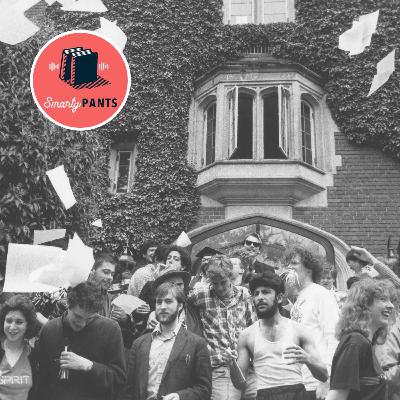
Over the course of our miniseries Exploding the Canon, Smarty Pants host Stephanie Bastek has examined Reed College students’ efforts in 2016–2017 to fundamentally transform a mandatory freshman humanities course. Now, in the final episode, Bastek looks at how much has really changed since that time. The protestors were ostensibly successful—the Humanities 110 syllabus underwent significant revision. But though the college has bolstered several support programs for students of color, in the last decade Black, Latino, and Indigenous student enrollment at Reed has not increased. Some professors are satisfied with the current humanities program; others would like to see more change. Perhaps the fundamental lesson to be gained from Reed’s upheaval is that the work is hardly finished—and a way forward might be found in how classicists have radically reimagined their discipline in recent years. Please visit our episode page for a full list of linksReed College Office of Institutional Research data on historical enrollment by ethnicity (2002–2024)The 2023–24 Hum 110 syllabus, with timelines and mapsFeatured voices in this episode: Salim Moore, Brittany Wideman, Paul Marthers, Mary James, Nigel Nicholson, Kritish Rajbhandari, Pancho Savery, Milyon Trulove, alea adigweme, Mary Frankie McFarland Forte, Dan-el Padilla Peralta, T. H. M. Gellar-Goad, Sasha-Mae Eccleston, Jan Mieszkowski, Colin Drumm, Albert Kerelis, Peter Steinberger, Kambiz GhaneaBassiri, and Addison Bates. Thanks to the Reed staff, faculty, and students—past and present—who made this series possible.Produced and hosted by Stephanie Bastek. Original music by Rhae Royal. Audio storytelling consulting by Mickey Capper.Subscribe: iTunes/Apple • Amazon • Google • Acast • Pandora • RSS Feed Hosted on Acast. See acast.com/privacy for more information.
 1
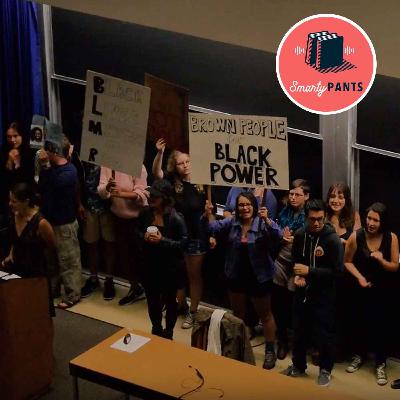
1Reedies Against Racism’s protest of the Humanities 110 curriculum at Reed College reached a turning point in the 2017–2018 school year. After a year and a half of debate, dozens of faculty members voted on a revised syllabus, the second semester of which introduced brand new material from Mexico City and the Harlem Renaissance. But in September 2018, an entire department voted not to teach the spring syllabus—and as the years passed, discontent with the syllabus grew, among both faculty and students.Visit our website for a transcript and links to documents and articles mentioned in the episode.Featured voices in this episode: Addison Bates, Eden Daniel, Mary James, Libby Drumm, Roger Porter, Jan Mieszkowski, Pancho Savery, Kambiz GhaneaBassiri, Peter Steinberger, Nathalia King, Kritish Rajbhandari, Nigel Nicholson, and Albert Kerelis.Produced and hosted by Stephanie Bastek. Original music by Rhae Royal. Audio storytelling consulting by Mickey Capper.Subscribe: iTunes/Apple • Amazon • Google • Acast • Pandora • RSS FeedCorrection: The original episode misrepresented the faculty composition of the Religion department after it stopped teaching in Humanities 110; when the tenured faculty member in question retired, the relevant committee approved a visiting position rather than a tenure-track appointment. Hosted on Acast. See acast.com/privacy for more information.

Comments

Download from Google Play

Download from App Store
 United States