


 Claim Ownership
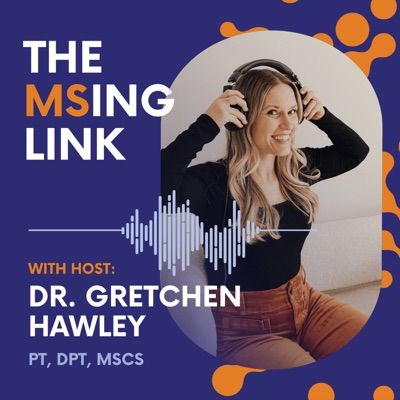
The MSing Link
Subscribed: 122Played: 3,024
Subscribe

Description
Do you have Multiple Sclerosis and have goals of improving your mobility, energy, and motivation? On this show, you’ll learn MS-specific exercises and symptom management strategies to help you gain control over your life with MS. I also bring in other MS Experts in the healthcare industry to share their insights and advice so you’ll be armed with research-driven education. You’ll leave each episode feeling empowered and ready to take action!
313 Episodes
Reverse

If you’re the type of person with MS who’s fallen off your exercise routine more times than you can count… I see you. And I’ve been there too.
In this solo episode, I’m opening up about my own setback with exercise and what helped me get back into a routine. Because when you’re living with multiple sclerosis (MS), getting back on track isn’t starting over. Every time you return, you’re building on what’s already there.
Here’s what we cover 🔑:
Why staying consistent with MS can feel so hard. MS fatigue, relapses, and busy seasons of life can all interrupt a routine. Falling off track doesn’t always mean you did something wrong. Often, it means your plan needs to flex with you.
My personal setback story. What pulled me away from my own routine, what made it hard to restart, and the mindset shifts that helped me find my groove again.
Redefining your version of consistency. Consistency doesn’t have to mean an hour of exercise every day. It might look like 10 minutes a few days a week, or a handful of seated exercises on a high-fatigue day. The best routine is the one you can actually keep doing.
Why consistency matters more than intensity. Your brain strengthens its connection to your muscles (that wifi connection between your brain and your body) through repetition. This is neuroplasticity. Short, regular practice gives that connection more chances to get stronger than an occasional hard workout.
Adapting your exercise plan during fatigue or a relapse. How to scale back without stopping completely, so getting started again feels less like starting over. And a reminder to check in with your healthcare provider before returning to exercise after a relapse.
Celebrating small wins. Standing a little longer while brushing your teeth. Walking to the mailbox with less effort. Tracking these small wins builds momentum and helps you notice progress that’s easy to miss.
Why MS-specific support makes a difference. Generic exercise plans don’t always account for MS symptoms. Guidance from an MS-specialized physical therapist, plus a community that keeps you accountable, can make it easier to keep going when progress feels slow.
This episode is for you if: ✅ You’ve fallen off your exercise routine and aren’t sure how to start again ✅ MS fatigue or a relapse has interrupted your progress ✅ You feel like it has to be all or nothing ✅ You’re frustrated that progress feels slow ✅ You want a routine that fits your real life with MS
Setbacks are part of the process, not the end of it. Progress is possible at every stage, and your movement still counts. You’ve got this! 🧡
Additional Resources: https://www.doctorgretchenhawley.com/insider
Reach out to Me: [email protected]
Website: www.MSingLink.com
Social:
★ Facebook: https://www.facebook.com/groups/mswellness
★ Instagram: https://www.instagram.com/doctor.gretchen
★ YouTube: https://www.youtube.com/c/doctorgretchenhawley?sub_confirmation=1
→ The Progress Method for MS: https://www.doctorgretchenhawley.com/the-progress-method-for-ms
→ Total Core Program: https://www.doctorgretchenhawley.com/TotalCoreProgram
→ The MSing Link: https://www.doctorgretchenhawley.com/TheMSingLink
The MS Holiday Gift Guide 2026 🎁https://www.doctorgretchenhawley.com/the-ms-holiday-gift-guide-opt-in
Looking for MS gift ideas that actually make daily life with multiple sclerosis easier? Welcome to my 2026 MS Holiday Gift Guide… our sixth year!
This year, almost every gift does the same job: it gives you energy back. With MS, your nervous system often has to work harder to send signals around damaged areas of your brain and spinal cord. So everyday tasks can cost more energy than they used to. When a tool makes one of those tasks easier, you have more energy left for what you actually want to do.
Here’s what’s in this year’s guide 🔑:
1️⃣ HEETA Silicone Scalp Massager → wash your hair with almost zero grip, so hand weakness or numbness doesn't make showering harder → https://amzn.to/4cXHe7I
2️⃣ T-Grip Rocker Knife → rock the curved blade instead of sawing, so cutting takes much less grip and wrist strength → https://amzn.to/3VbgoCW
3️⃣ Smart Plug → turn lamps, fans, or tree lights on and off by phone or voice and skip the extra trips across the room → https://amzn.to/4cmKbi4
UNDER $100
4️⃣ Movable Household Cart → roll laundry or groceries instead of carrying them, with something steady to hold and a clear view of your feet → https://amzn.to/4Aar4SC
5️⃣ Oral-B iO2 Electric Toothbrush → the brush does the repetitive motion for you, and the pressure sensor helps when numbness makes pressure hard to feel → https://amzn.to/4iM6O3e
$100 AND UP
6️⃣ Roomba Robot Vacuum → vacuuming is walking, pushing, turning, and balancing all at once… this one cleans on a schedule for you → https://amzn.to/4xyNRWj
7️⃣ Embr Wave 2 → a wristband with on-demand cooling or warming that helps you feel more comfortable (a comfort tool, not a replacement for a cooling vest) → https://amzn.to/47retNs
8️⃣ The MSing Link Membership → physical therapy-based programs that strengthen the Wi-Fi connection between your brain and your muscles, so daily tasks can start to feel easier over time → https://www.doctorgretchenhawley.com/offers/EuiWtKv6
BONUS: Meal & Grocery Delivery Gift Cards (any amount) → DoorDash, Uber Eats, Instacart, and more for high-fatigue or heat-sensitive days → https://amzn.to/4gN6Fdb
Shopping for someone you love with MS? Stay until the end for 3 ways to give these gifts with love… so it feels like a gift, not a spotlight.
Prices are in USD at the time of recording and may change. Some links are affiliate links, which means I may earn a small commission at no extra cost to you.
Resources mentioned in the episode:
The MSing Link Podcast, Episode 177, Conserving Your Energy in MS 101 - Apple Podcast | Spotify
Additional Resources: https://www.doctorgretchenhawley.com/insider
Reach out to Me: [email protected]
Website: www.MSingLink.com
Social:
★ Facebook: https://www.facebook.com/groups/mswellness
★ Instagram: https://www.instagram.com/doctor.gretchen
★ YouTube: https://www.youtube.com/c/doctorgretchenhawley?sub_confirmation=1
→ The Progress Method for MS: https://www.doctorgretchenhawley.com/the-progress-method-for-ms
→ Total Core Program: https://www.doctorgretchenhawley.com/TotalCoreProgram
→ The MSing Link: https://www.doctorgretchenhawley.com/TheMSingLink

In this episode, I’m talking with Alexis Kaplan, strategic marketing consultant for Home Infusion Options (HIO), about at-home infusions for people with multiple sclerosis (MS). Alexis isn’t only on the business side. Her own daughter gets her infusions at home through HIO, so she knows this process as a parent, too.
Here’s what we cover 🔑:
What is home infusion therapy? An infusion is when medication is given through an IV, directly into your vein. With home infusion, a nurse brings the medication and supplies to you, whether that’s at home, at work, even in a college dorm room. Same treatment, without the drive.
Which MS infusions can be given at home? Alexis shares the MS medications HIO administers, including Ocrevus, Briumvi, Tysabri, and Lemtrada, and why your insurance plan plays a big role in what’s possible.
Why the same nurse every time matters. A familiar nurse already knows your history, so there’s less starting over and often less anxiety. HIO nurses also have at least seven years of ICU or hospital experience and stay with you through the full infusion. We talk about why walking into an infusion center (or a support group) can feel scary, and why that fear makes so much sense.
How to get started. Your first step is a conversation with your neurologist. From there, the HIO team checks your benefits and handles pre-authorization (aka getting your insurance’s approval before treatment starts).
How your doctor stays in the loop. Nurses can draw labs during your infusion (one poke instead of two!) and send the results straight to your provider.
What about cost? We talk about how insurance, copays, and copay assistance work with home infusion, plus the biggest roadblock Alexis sees.
Where is it available? Home infusion through HIO is offered across the United States.
This episode is for you if: ✅ You get IV infusions for MS and dread the trip to the infusion center ✅ Fatigue makes a full day of driving and waiting feel exhausting ✅ You feel anxious in clinical settings or around other patients ✅ You’ve wondered whether home infusion is an option for you ✅ You care for someone with MS and want to make treatment days easier
Your treatment should fit your life, not the other way around. Bring this episode to your next neurology appointment and ask whether home infusion could work for you. You’ve got this 🧡
Resources mentioned in this video:
Home Infusions Options Website: https://www.homeinfusionoptions.net/
Instagram for HIO: https://www.instagram.com/homeinfusionoptions
Instagram for College Connect: https://www.instagram.com/collegeconnect.hio/
About Alexis Kaplan
Alexis Kaplan is a Strategic Marketing Consultant for HIO.
Home Infusion Options (HIO) is a patient-centered organization providing expert, personalized in-home medically prescribed IV nursing care for pediatric and adult patients. Unlike traditional infusion providers, HIO combines highly skilled nursing with its own in-house specialty pharmacy, creating a seamless, one-stop resource for physicians, patients, and caregivers managing complex IV medication needs. HIO is committed to continuity of care, ensuring patients see the same trusted providers whenever possible to build lasting relationships, improve communication, and enhance the overall care experience. With extensive hospital and medical center experience, HIO nurses serve as a reliable extension of each patient’s medical team while easing the coordination burden on families and healthcare providers.
Additional Resources: https://www.doctorgretchenhawley.com/insider
Reach out to Me: [email protected]
Website: www.MSingLink.com
Social:
★ Facebook: https://www.facebook.com/groups/mswellness
★ Instagram: https://www.instagram.com/doctor.gretchen
★ YouTube: https://www.youtube.com/c/doctorgretchenhawley?sub_confirmation=1
→ The Progress Method for MS: https://www.doctorgretchenhawley.com/the-progress-method-for-ms
→ Total Core Program: https://www.doctorgretchenhawley.com/TotalCoreProgram
→ The MSing Link: https://www.doctorgretchenhawley.com/TheMSingLink
Thinking about a vibration plate for MS? Maybe it's sitting in your online cart… or it's already in your living room and you're not sure how to use it. This episode is for you.
In this episode, I'm sharing my own take on vibration plates and vibration therapy for multiple sclerosis (MS). As an MS-specialized physical therapist (and a vibration plate owner myself!), I'm walking you through how they work, what MSing Link members are noticing, and how to get started safely.
Here's what we cover 🔑:
How does a vibration plate work? A fast, repeated vibration acts like quick tapping on your muscles. That signal travels to your spinal cord and brain, and your muscles contract back automatically, like a reflex. It's your own body responding… which makes it a wake-up call for muscles that have gotten quiet, not a replacement for exercise.
Vibration therapy vs. electrical stimulation. They can feel similar, but they work very differently. Vibration is like someone knocking on your door until you get up and open it yourself. E-stim is more like asking Alexa to open the door for you. Knowing the difference helps you set the right expectations.
What MSing Link members are noticing. Less spasticity and stiffness (some time it for mornings), calmer restless legs, fewer pins and needles in their feet, and better strength and balance. These are individual experiences, not guarantees… everyone's MS is different.
Is a vibration plate safe for MS? How to start: → Check with your healthcare provider first → Start with 2-3 minutes (even 1 minute counts) → Sit with your feet on it, or stand with support → Keep your feet closer to the center for a gentler vibration → Hold off on exercises until you know how it feels → Watch for fatigue that shows up later, not during
Your questions, answered. How long until you notice a difference, what vibration plates cost (around $150 to $800+), the LifePro plate and Pulse device I use, and why weight matters if you'll be moving it yourself.
This episode is for you if: ✅ You've been eyeing a vibration plate and want an MS-specific take ✅ You have one and aren't sure how long or how often to use it ✅ Spasticity, foot numbness, or balance are part of your daily life ✅ You want to understand why it works, not just that it does
Resources mentioned in this episode:
The MSing Link Podcast, Episode 201, Improving Foot Sensation in MS: Vibration Therapy and Exercises with Dr. Splichal - Apple | Spotify
The MSing Link Podcast, Episode 252, Pulse Device: Vibration Therapy for MS Symptoms with Ethan Pollak - Apple | Spotify
The MSing Link Podcast, Episode 299, MS & Vibration Plates: Benefits, Risks, and How to Use Them Safely with Debby Pelletier - Apple | Spotify
LifePro: https://lifeprofitness.com/DEBBYLP
Additional Resources: https://www.doctorgretchenhawley.com/insider
Reach out to Me: [email protected]
Website: www.MSingLink.com
Social:
★ Facebook: https://www.facebook.com/groups/mswellness
★ Instagram: https://www.instagram.com/doctor.gretchen
★ YouTube: https://www.youtube.com/c/doctorgretchenhawley?sub_confirmation=1
→ The Progress Method for MS: https://www.doctorgretchenhawley.com/the-progress-method-for-ms
→ Total Core Program: https://www.doctorgretchenhawley.com/TotalCoreProgram
→ The MSing Link: https://www.doctorgretchenhawley.com/TheMSingLink

Your MRIs look stable… your neurologist says everything looks good… but your walking feels harder and fatigue hits sooner. If that sounds like your multiple sclerosis (MS), this episode is for you.
I’m joined by Dr. Jiwon Oh, MD, PhD, neurologist, MS researcher, and Medical Director of the Barlo MS Program at St. Michael’s Hospital in Toronto, where her team cares for over 12,000 people living with MS. We talk about BTK inhibitors, a new class of MS medications, and what the latest fenebrutinib clinical trial results could mean for people with relapsing MS and primary progressive MS (PPMS).
Here’s what we cover 🔑:
What are BTK inhibitors? BTK (Bruton’s tyrosine kinase) is an enzyme that helps B cells, a type of immune cell involved in MS, mature and multiply. BTK inhibitors are small molecules that can cross the blood-brain barrier (the protective filter around your brain and spinal cord). That means they may reach immune cells inside the central nervous system, like microglia (the brain’s own immune cells), which researchers believe help drive slow progression.
Why “stable” MRIs don’t always tell the whole story. Many current disease-modifying therapies (DMTs) do a great job controlling relapses and new lesions. But some people with MS still notice slow changes in walking, energy, or daily function. Dr. Oh explains why this is real and why researchers are so focused on it.
Fenebrutinib trial results. In two relapsing MS trials, fenebrutinib reduced relapses by over 50% compared to teriflunomide. In a PPMS trial, it was non-inferior to (meaning not worse than) ocrelizumab, currently the only approved treatment for PPMS.
How fenebrutinib compares to other BTK inhibitors. Why evobrutinib, tolebrutinib, and fenebrutinib have shown different results, even though they’re in the same drug family.
When might fenebrutinib be available? What the regulatory approval process looks like, plus what liver enzyme monitoring may involve.
Should you join an MS clinical trial? Who Dr. Oh would consider for a BTK inhibitor, and how to weigh joining a trial (like one for remibrutinib) versus waiting.
This episode is for you if: ✅ Your MRIs are stable, but you feel like your MS is slowly progressing ✅ You have primary progressive MS and want to know what treatments may be on the horizon ✅ Your neurologist mentioned a BTK inhibitor clinical trial and you’re not sure what to do ✅ You want to understand the latest MS research in plain language
This episode was recorded in August 2026. As of October 19, 2026, additional information is available:• At 14:55, Dr. Oh discusses ARR findings from clinical trials of BTK inhibitors versus teriflunomide. This discussion reflects the available evidence at the time of recording.• At 20:35, Dr. Oh notes that approval typically takes at least a year after filing. Fenebrutinib has received priority review designation, which carries a six-month review timeline.
Research can feel confusing… especially when it’s about medications and clinical trials. My hope is that this episode helps you walk into your next neurology appointment with clearer questions and a little more hope. 🧡
Resources mentioned in this episode:
Full Study on fenebrutinib - https://www.biospace.com/press-releases/roches-fenebrutinib-significantly-reduced-relapses-versus-standard-of-care-to-approximately-one-every-17-years-in-rms
About Dr. Jiwon Oh
Dr. Jiwon Oh, a medical director at the Barlo MS Program in Toronto, Canada, where her team cares for over 12,000 people living with multiple sclerosis. She's also a leading MS researcher, running clinical trials and MRI research studies aimed at understanding MS progression.
Where to reach Dr. Jiwon Oh:
MS Canada - https://mscanada.ca/ms-research/our-research-program/dr-jiwon-oh
Genetech - https://www.instagram.com/genentech/?hl=en
This episode is for educational purposes only. Always talk with your neurologist before making any changes to your MS treatment.
Additional Resources: https://www.doctorgretchenhawley.com/insider
Reach out to Me: [email protected]
Website: www.MSingLink.com
Social:
★ Facebook: https://www.facebook.com/groups/mswellness
★ Instagram: https://www.instagram.com/doctor.gretchen
★ YouTube: https://www.youtube.com/c/doctorgretchenhawley?sub_confirmation=1
→ The Progress Method for MS: https://www.doctorgretchenhawley.com/the-progress-method-for-ms
→ Total Core Program: https://www.doctorgretchenhawley.com/TotalCoreProgram
→ The MSing Link: https://www.doctorgretchenhawley.com/TheMSingLink
This episode is for educational purposes only and is not a recommendation for any specific treatment. Please talk with your healthcare provider about what's right for you.

Comments

Download from Google Play

Download from App Store
 United States