


 Claim Ownership
The Gilded Age and Progressive Era
Subscribed: 112Played: 2,130
Subscribe

© Michael Patrick Cullinane
Description
The Gilded Age and Progressive Era is a free podcast about the seismic transitions that took place in the United States from the 1870s to 1920s. It's for students, teachers, researchers, history buffs, and anyone who wants to learn more about how our past connects us to the present. It is hosted by Boyd Cothran, professor of U.S. and Global history at York University, and Cathleen D. Cahill, Walter L. Ferree and Helen P. Ferree Professor in Middle-American History at Penn State University.
Hosted on Acast. See acast.com/privacy for more information.
125 Episodes
Reverse
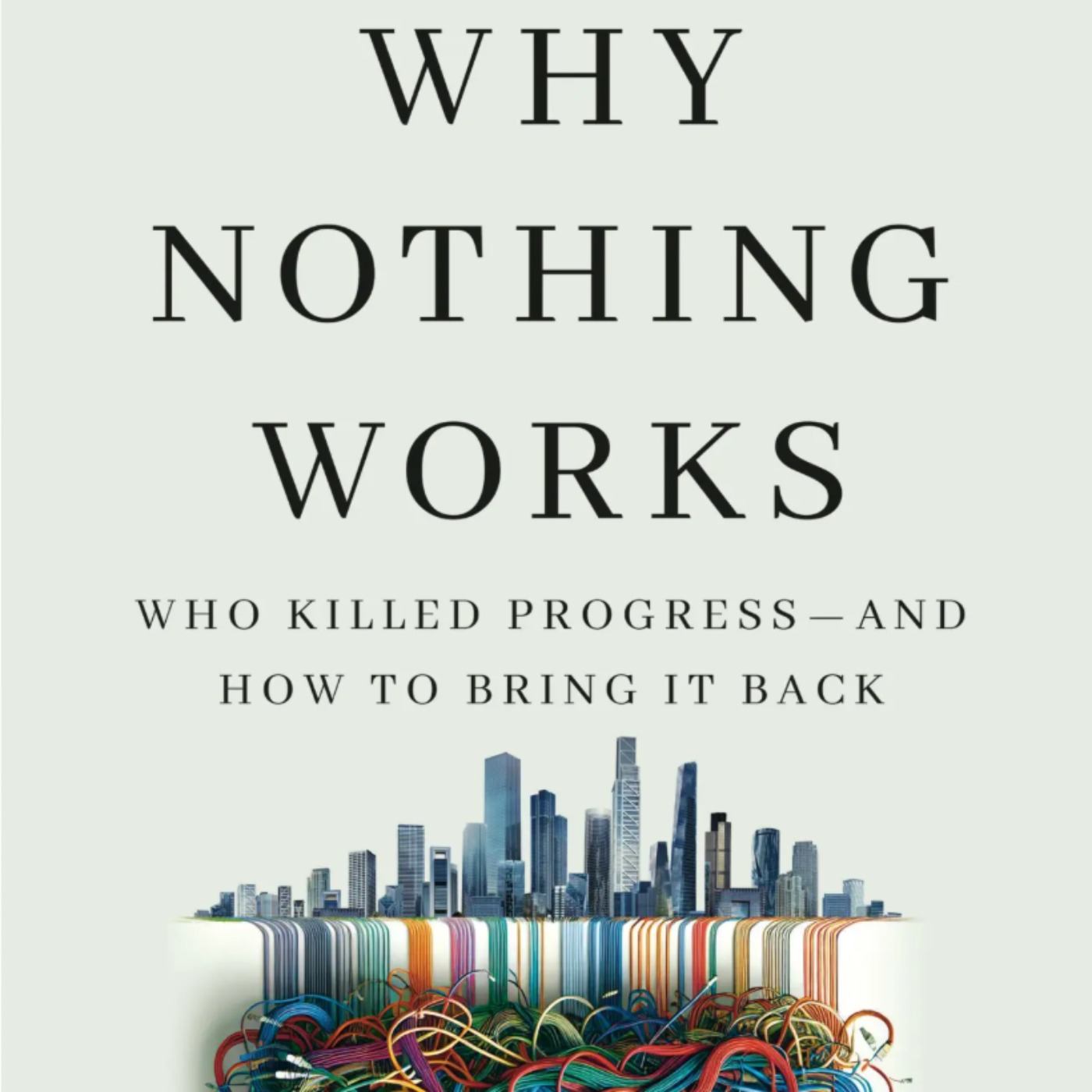
Why does it feel like government can’t get things done? From housing to infrastructure to climate, even widely supported policies often stall. In this episode, Boyd Cothran speaks with Marc J. Dunkelman about his new book, Why Nothing Works: Who Killed Progress—and How to Bring It Back. At the center of Dunkelman’s argument is a tension inside progressivism itself. Since the late nineteenth century, reformers have oscillated between two competing impulses: a Hamiltonian desire to build strong, capable institutions that can solve large-scale problems, and a Jeffersonian instinct to restrain power, disperse authority, and guard against coercion. The Progressive Era did not resolve this tension—it institutionalized it. In this episode, we explore the Progressive Era origins of this tension, the idea of a “Second Gilded Age,” and what it might mean to build a more effective state today.Further Reading:Marc J. Dunkelman, Why Nothing Works: Who Killed Progress—and How to Bring It BackDaniel Wortel-London and Boyd Cothran, “A Second Gilded Age? The Promises and Perils of an Analogy: Introduction” The Journal of the Gilded Age and Progressive Era 19, no. 2 (2020): 191–96.About the Guest:Marc J. Dunkelman is a fellow at Brown University’s Watson Institute for International and Public Affairs and a contributing writer at The Atlantic. His work focuses on American political development, governance, and the history of reform. Hosted on Acast. See acast.com/privacy for more information.
Today we are delighted to welcome a guest host, Dr. Chelsea Gibson of SUNY Binghampton, and the co-editor of the SHGAPE Blog. who is interviewing three of the 2026 SHGAPE prize winners:Carlotta Wright de la Cal, winner of the SHGAPE research grant for her project “Rule of Rail: Railroad Labor and Cross-Border Mobility in the U.S.-Mexico Borderlands, 1880-1930.”Nicole Martin winner of the Fischer -Calhoun article prize for “The Indian, Chinese, and Mormon Questions: The American Home and Reconstruction Politics in the West”, Pacific Historical Review 93, no. 3 (Summer 2024): 445–474.Manisha Sinha winner of the 2026 Presidents’ Book Prize for The Rise and Fall of the Second American Republic: Reconstruction, 1860-1920 (Liveright, 2024)As many of you may know, our podcast’s sponsoring organization, Society for Historians of the GAPE or (SHGAPE) is an affiliated society of the Organization of American Historians (or OAH. This means that we are quite engaged in the OAH’s annual conference, which is being held this year in Philadelphia on April 16-19, 2026.SHGAPE sponsors panels at the conference, and also offers workshops, lectures, a luncheon, a reception, and mentoring opportunities for emerging scholars at the annual meeting. The Society also offers a variety of awards, including book and article prizes, a graduate student essay prize, a distinguished historian award, and travel grants to the OAH for graduate students and contingent faculty.You can find out more information about these prizes and our other opportunities on the SHGAPE.org and more about the Organization of American Historians at oah.orgA big congratulations to the winners and thanks to Dr. Chelsea Gibson for joining us as a guest host! Hosted on Acast. See acast.com/privacy for more information.
 1
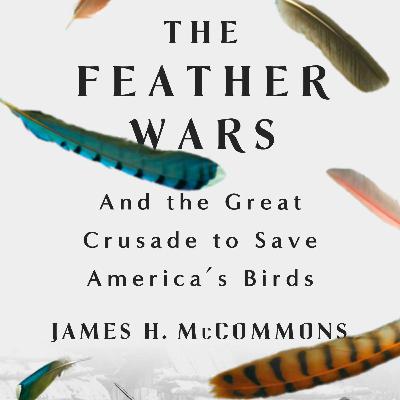
1In this episode, Boyd Cothran and Cathleen Cahill sit down with James H. McCommons to discuss his sweeping new book, The Feather Wars: And the Great Crusade to Save America’s Birds — publishing March 17, 2026.📘 Pre-order now:https://us.macmillan.com/books/9781250286895/thefeatherwars/At a moment when conservation feels both urgent and politically contested, McCommons takes us back to the late nineteenth and early twentieth centuries, when Americans nearly drove some of their most iconic bird species to extinction — not primarily for food, but for fashion. Millions of birds were killed to supply the booming plume trade. Entire rookeries were destroyed so feathers could adorn women’s hats.But The Feather Wars is about far more than birds. It is a story about how societies change.McCommons shows that reform required not only outrage, but organization; not only persuasion, but law. The eventual passage of federal wildlife protections reshaped American culture and preserved species that might otherwise have vanished.As we confront our own era of environmental crisis, this story raises enduring questions: How does a society move from normalization to moral reckoning? When does law follow culture — and when must it lead? What does it take to create durable change? Hosted on Acast. See acast.com/privacy for more information.
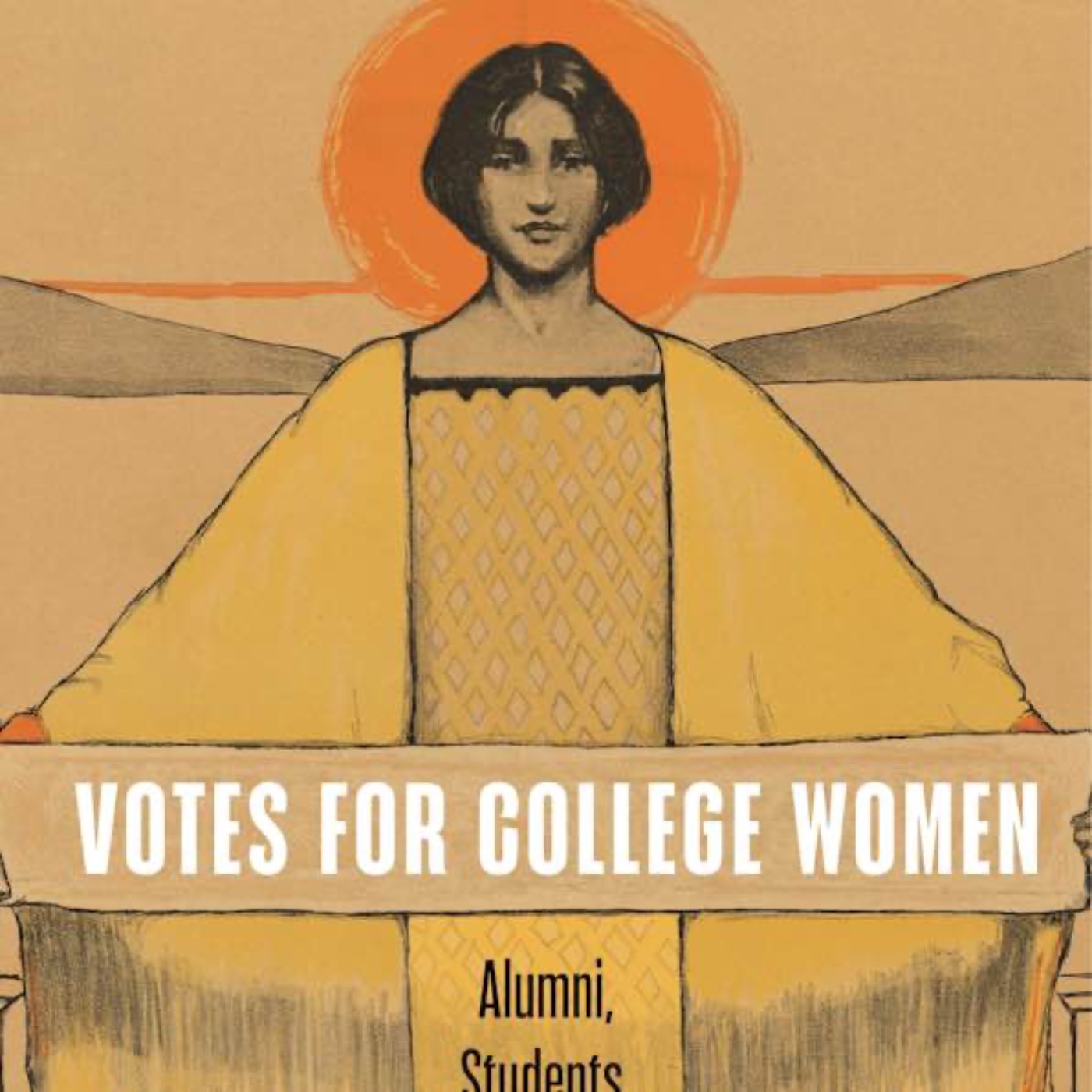
There’s a lot in the news these days about politics on college campuses with discussions of student protests, curriculum debates, and faculty engagement serving as hot button issues. This sudden and intense focus makes it seem as if this may be a new phenomenon, though anyone who lived through the 1960s and 70s would beg to differ. Our guest today, Dr. Kelly L. Marino’s recent book, Votes for College Women: Alumni, Students, and the Woman Suffrage Campaign, (NYU Press, 2024) https://nyupress.org/9781479825196/votes-for-college-women/ pushes that chronology back even further by exploring the role that female college students and alumni played in the suffrage movement as well as in shaping college activism moving into the future. Hosted on Acast. See acast.com/privacy for more information.
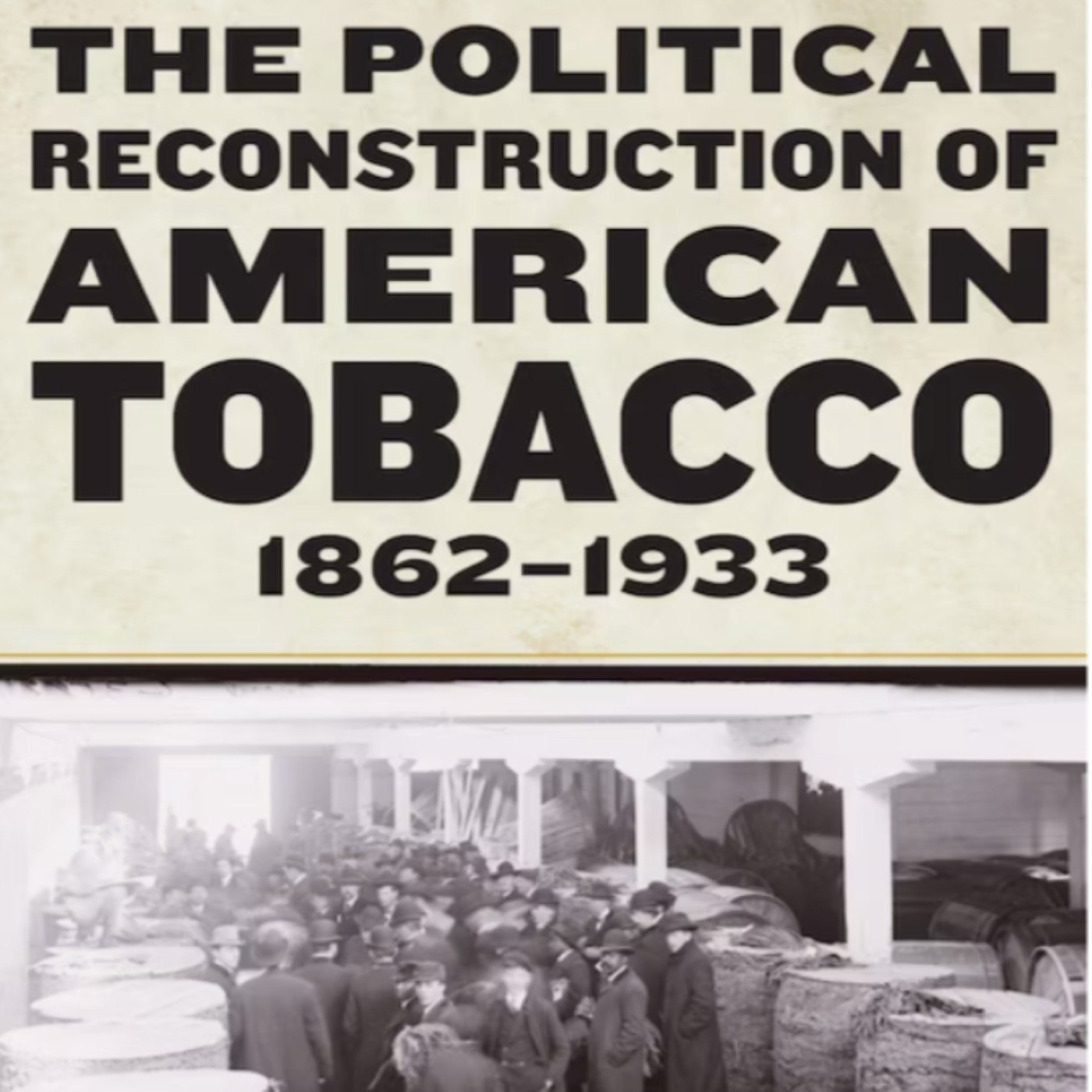
In this episode of the Gilded Age and Progressive Era Podcast, Boyd Cothran talks with historian Patrick O’Connor about his new book, The Political Reconstruction of American Tobacco, 1862–1933.Rather than treating tobacco primarily as a moral problem or a corporate success story, O’Connor approaches it as a window onto the making of the modern American state. Beginning with Civil War–era taxation and moving through the Gilded Age and Progressive Era, the conversation traces how tobacco became deeply embedded in federal governance—through revenue collection, market regulation, inspection and classification regimes, agricultural science, and expert bureaucracy.Along the way, we discuss how taxation helped create national markets, how “quality” and knowledge functioned as forms of power, how growers were disciplined through debt and market institutions, and how Progressive Era expertise reshaped both agriculture and state capacity. The episode also reflects on why tobacco proved so difficult to regulate or dismantle in the early twentieth century—and what this history can tell us about the long-standing challenges of governing harmful but profitable commodities. Hosted on Acast. See acast.com/privacy for more information.
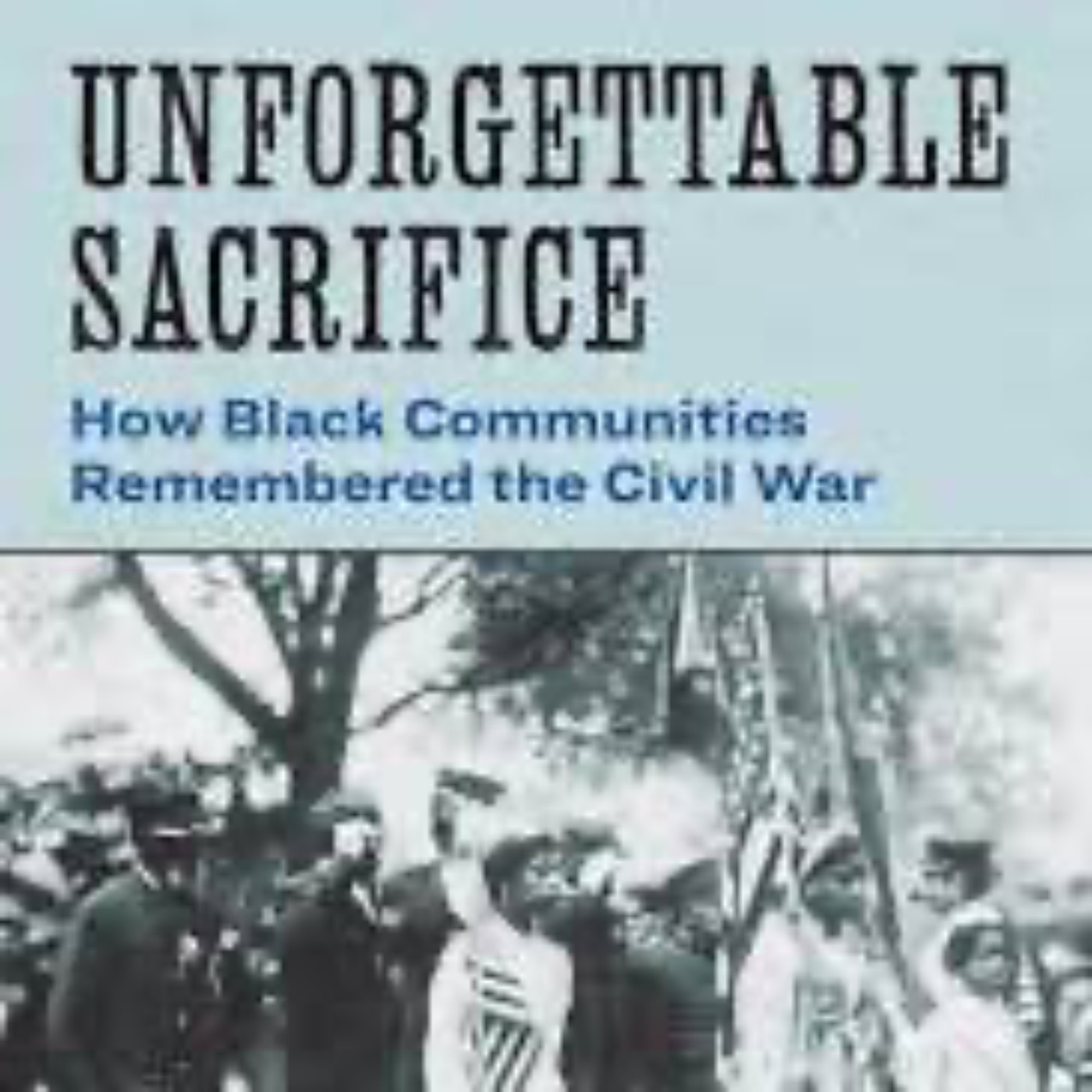
Cathleen talks with Dr. Hilary N. Green, whose most recent book, Unforgettable Sacrifice: How Black Communities Remembered the Civil War, was published by Fordham University Press in 2025. https://fordhampress.com/unforgettable-sacrifice-hb-9781531508531.htmlAn exciting addition to scholarship on Civil War memory with its focus on African American traditions of memorialization, the book also offers historians important methodological tools.For Dr. Green's public history projects, seeWith Their Hands: https://www.davidson.edu/news/2025/10/21/memorial-brings-unacknowledged-into-storyHallowed Grounds https://www.hngreenphd.com/the-hallowed-grounds-project.htmlWe also mentioned Dr. Martha Jones' Hard History project at Johns Hopkins University:https://hardhistory.jhu.edu/We mentioned a number of books in our conversation including:David Blight, Race and Reunion: The Civil War in American Memory (Harvard UP 2001)Barbara A. Gannon, The Won Cause: Black and White Comradeship in the Grand Army of the Republic (The University of North Carolina Press, 2011)Caroline Janney, Remembering the Civil War: Reunion and the Limits of Reconciliation (University of North Carolina Press, 2013)David Silkenat, Raising the White Flag: How Surrender Defined the American Civil War (University of North Carolina Press, 2019)Contact the host: Cathleen Cahillcdcahill@psu.edu Hosted on Acast. See acast.com/privacy for more information.
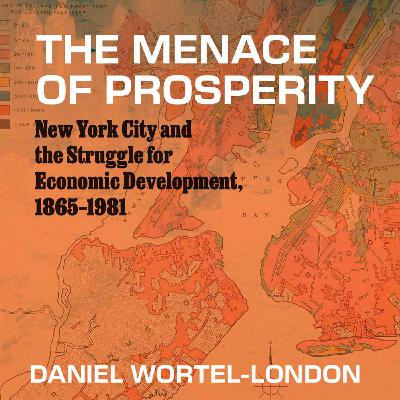
In this episode of The Gilded Age and Progressive Era Podcast, Boyd Cothran speaks with historian Daniel Wortel-London about his new book, The Menace of Prosperity, a sweeping history of New York City and the political economy of urban growth from the aftermath of the Civil War through the late twentieth century.The conversation centres on the Gilded Age and Progressive Era, when New York’s leaders increasingly tied the city’s finances to real estate development, municipal debt, and rising property values. Wortel-London introduces two key concepts—social costs and fiscal imaginaries—to explain how elite-driven prosperity repeatedly generated fiscal crises, inequality, and instability, even as critics advanced alternative visions rooted in cooperation, public ownership, and democratic control of urban resources.Along the way, Boyd and Daniel discuss the 1870s fiscal crisis and fears of “monstrous growth,” Gilded Age fiscal radicals and the cooperative commonwealth, Henry George and the single tax, Progressive Era debates over municipal ownership and planning, and interwar struggles over housing and economic stabilization. The episode concludes by tracing how these late nineteenth- and early twentieth-century choices shaped the New Deal, the 1970s fiscal crisis, and contemporary debates over housing, development, and inequality in New York.The Menace of Prosperity is available from the University of Chicago PressContact the host:Boyd Cothran can be reached at cothran@yorku.ca Hosted on Acast. See acast.com/privacy for more information.
There are a few people that embody a period. Isabella Stewart Gardner knew many of the the movers and shakers of the Gilded Age and lived from 1840-1924. Her story, and her compulsion to buy the art of the age, makes her a great lens through which to understand the Gilded Age. Dr. Natalie Dykstra joins the show to discuss her latest biography of Bella.Natalie Dykstra, Chasing Beauty: The Life of Isabella Stewart Gardner (2024).The webpage for Clara Endicott Sear's Fruitland Museum can be found at https://thetrustees.org/place/fruitlands-museum/ Hosted on Acast. See acast.com/privacy for more information.
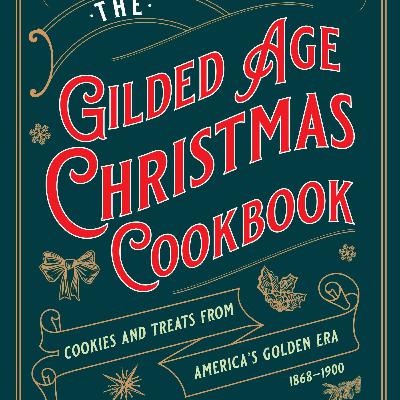
In this festive episode of the Gilded Age & Progressive Era podcast, we welcome back food historian Becky L. Diamond to discuss her latest book, The Gilded Age Christmas Cookbook. Using recipes as historical evidence, Becky takes us into nineteenth-century kitchens to explore how Christmas took shape during the Gilded Age—an era defined by inequality, immigration, and the rise of modern consumer culture.We talk about forgotten holiday treats like sugar plums, German and Central European influences on the American Christmas table, the labor behind seasonal abundance, and the challenges of translating nineteenth-century recipes for modern kitchens. Along the way, Becky shows how food opens a powerful window onto aspiration, memory, and domestic life in the Gilded Age.This episode builds on Becky’s earlier appearance on the podcast for The Gilded Age Cookbook and reminds us why food history belongs at the centre of Gilded Age and Progressive Era scholarship.----Becky L. Diamond, The Gilded Age Christmas Cookbook (Lyons Press)Becky L. Diamond, The Gilded Age Cookbook Hosted on Acast. See acast.com/privacy for more information.
While Cathleen and I are working on new content for the podcast—lots of great episodes are on the way—we’re also taking time to revisit some of Michael’s excellent past interviews.For my second “best of” pick, I chose Episode 54, The Allure of Empire, which first aired on July 4, 2023. In this episode, Michael talks with historian Chris Suh about his award-winning book The Allure of Empire: American Encounters with Asians in the Age of Transpacific Expansion and Exclusion. Suh’s work invites us to rethink the Gilded Age and Progressive Era through the lens of empire—tracing how U.S. expansion in the Pacific intertwined with racial exclusion and the politics of belonging at home.It’s a rich, thought-provoking conversation that shows how the legacies of the Gilded Age still shape America’s place in the world today.We hope you’ll enjoy (re)listening as much as we did—and, as always, we’d love to hear which past episodes have been your favourites!Essential Reading:Chris Suh, The Allure of Empire: American Encounters with Asians in the Age of Transpacific Expansion and Exclusion (2023).Recommended Reading:David C. Atkinson, The Burden of White Supremacy: Containing Asian Migration in the British Empire and the United States (2016).Eiichiro Azuma, Between Two Empires: Race, History, and Transnationalism in Japanese America (2005).Thomas Bender, A Nation among Nations: America’s Place in World History (2006).Akira Iriye, Pacific Estrangement: Japanese and American Expansion, 1897– 1911 (1972).Richard S. Kim, The Quest for Sovereignty: Korean Immigration Nationalism and U.S. Sovereignty, 1905– 1945 (2011). Hosted on Acast. See acast.com/privacy for more information.
While Cathleen and I are working on new content for the podcast—stay tuned, there’s lots of exciting stuff coming—we wanted to take a moment to revisit some of Michael’s excellent past episodes.For my first “best of” pick, I chose Episode 17, Oceans of Grain, which originally aired on March 2, 2022. In this episode, Michael talks with historian Scott Reynolds Nelson about how the global trade in wheat reshaped the modern world. It’s a fascinating look at how the Gilded Age and Progressive Era fit into a much larger story of empire, capitalism, and global connection.When the episode first aired, Russia had just invaded Ukraine, and Nelson’s discussion of the Black Sea grain routes suddenly felt eerily relevant. Listening again now, it’s striking how powerfully this conversation links nineteenth-century global trade to the world we live in today.We hope you’ll enjoy (re)listening as much as we did—and we’d love to know which episodes stand out as your favourites!Essential Reading:Scott Reynolds Nelson, Oceans of Grain: How American Wheat Remade the World (2022).Recommended Reading:Neal Ascherson, The Black Sea (1996).Bettany Hughes, Istanbul: A Tale of Three Cities (2017).Avner Offer, The First World War: An Agrarian Interpretation (1989).Vaclav Smil, Creating the Twentieth Century: Technical Innovations of 1867-1914 and their Lasting Impact (2004). Hosted on Acast. See acast.com/privacy for more information.
Boyd and I are working on new content for the podcast-we have lots of good stuff planned for the future.But in the meantime, we wanted to take a moment to revisit some of Michael’s excellent content.We each picked two of the previous episodes as our “best of” but we totally acknowledge that we could have picked many more than two; this was a very tough choice, but we hope you enjoy (re)listening as much as we did. And we'd love to know which are your favorite episodes!Christopher McKnight Nichols and Nancy Unger, A Companion to the Gilded Age and Progressive Era. (John Wiley & Sons, 2017)https://onlinelibrary.wiley.com/doi/book/10.1002/9781118913994For a nice short introduction to historical thinking with some more definitions, check out Flannery Burke and Thomas Andrews' Perspectives essay, "What Does it Mean to Think Historically": https://www.historians.org/perspectives-article/what-does-it-mean-to-think-historically-january-2007/ Hosted on Acast. See acast.com/privacy for more information.
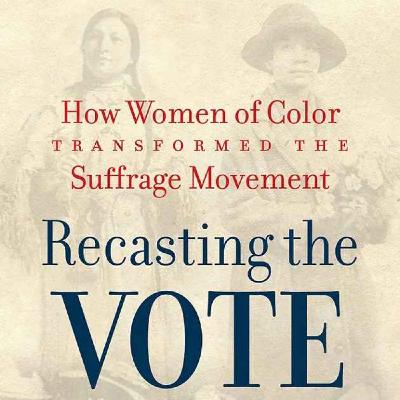
Think you know the story of women’s suffrage? Think again. In this episode of The Gilded Age and Progressive Era Podcast, Boyd sits down with co-host Cathleen D. Cahill to discuss her groundbreaking book Recasting the Vote: How Women of Color Transformed the Suffrage Movement (UNC Press, 2020). Cahill’s book challenges the traditional narrative of women’s suffrage by centring the Indigenous, African American, Latina, and Asian American women who organized, mobilized, and redefined the fight for political rights.Cahill introduces us to a cast of remarkable women—Zitkála-Šá, Mabel Ping-Hua Lee, Carrie Williams Clifford, and Adelina “Nina” Otero-Warren—who pushed the fight for the vote beyond white, middle-class reformers. Their activism linked suffrage to sovereignty, citizenship, immigration, and racial justice, recasting the movement as part of a much bigger struggle for equality.Along the way, we explore why the story doesn’t end in 1920 with the Nineteenth Amendment—and why it still matters for today’s fights over voting rights.Further Reading:Leila J. Rupp, Worlds of Women: The Making of an International Women’s Movement (1997)Martha S. Jones, Vanguard: How Black Women Broke Barriers, Won the Vote, and Insisted on Equality for All (2020)Michelle Duster, Ida B. the Queen: The Extraordinary Life and Legacy of Ida B. Wells (2021)Alison M. Parker, Unceasing Militant: The Life of Mary Church Terrell (2020)Jad Adams, Women and the Vote: A World History (2014) Hosted on Acast. See acast.com/privacy for more information.
Today Cathleen interviews Elizabeth Garner Masarik, about her book, The Sentimental State: How Women-Led Reform Created the American Welfare State (University of Georgia Press, 2024), which is the 2025 winner of SHGAPE's H. Wayne Morgan Book Prize. For more information about the Society's three book awards (deadlines in October) see https://www.shgape.org/prizes-awards/Books mentioned by Dr. Masarik in today's interview:Katherine G. Aiken, Harnessing the Power of Motherhood: The National Florence Crittenton Mission, 1883-1925 (University of Tennessee Press, 1998)Brian Balogh, The Associational State: American Governance in the Twentieth Century (University of Pennsylvania Press, 2015)Regina Kunzel, Fallen Women, Problem Girls: Unmarried Mothers and the Professionalization of Social Work, 1890-1945 (Yale UP, 1993)Rickie Solinger, Wake up Little Susie: Single Pregnancy and Race Before Roe v. Wade (Routledge, 1992)Molly Ladd Taylor, Raising a Baby the Government Way: Mothers’ Letters to the Children’s Bureau, 1915-1932 (Rutgers University Press, 1986)Jane Tomkins, Sensational Designs: The Cultural Work of American Fiction, 1790-1860 (Oxford UP, 1985) Hosted on Acast. See acast.com/privacy for more information.
Hello listeners! Boyd and Cathleen are back and looking forward to giving you more regular content this fall. This week, Cathleen interviews Boyd about his recent book, The Voyage of the Edwin Fox: How An Ordinary Sailing Ship Connected the World in the Age of Globalization (UNC 2023). In this sweeping story of globalization seen from the deck of an ordinary ship, the small details, individual people, and multiple connections that made up this tumultuous moment in history become clear. Hosted on Acast. See acast.com/privacy for more information.
In this episode, Boyd and Cathleen talk to Leslie Jones, Director of Museum Affairs and Chief Curator at The Preservation Society of Newport County, about the society's new exhibit: Richard Morris Hunt: In A New Light. Through the conversation we learned more about this important Gilded Age architect and his vision for American national identity that visible through his architectural projects, the organizations he helped found, and the large collection of his papers, many of which are on display here. The exhibit will run from May 30 – November 2, 2025 at Rosecliff Mansion in Newport.For more information, follow this link: https://www.newportmansions.org/events/richard-morris-hunt-in-a-new-light/One book that Leslie Jones mentioned, was Sam Waters's The Gilded Life of Richard Morris Hunt, which can be found here: https://gilesltd.com/product/gilded-life-richard-morris-hunt Hosted on Acast. See acast.com/privacy for more information.
Cathleen Cahill and Boyd Cothran introduce themselves and lay out their plans for the Gilded Age & Progressive Era podcast over the next few months, including an upcoming interview with Leslie Jones, curator of the Newport Preservation Society's new exhibit about Gilded Age architect Richard Morris Hunt. Cathleen and Boyd also offer their gratitude to podcast creator and former host, Michael Cullinane, for trusting them with the podcast. They also thank former podcast intern Michael Connolly from Loyola University in Chicago; H-SHGAPE List Editor and host of another great podcast, Dig History, Elizabeth Masarik; and SHGAPE president ,Stacy Cordery, for their advice. Finally, they give their new contact information and invite feedback about the podcast and future episodes. Cathleen can be reached at cdcahill@psu.edu and is active on LinkedIn (Cathleen Cahill) and BlueSky (cathleendcahill.bsky.social) while Boyd can be reached at cothran@yorku.ca. Finally, the podcast's website can be found at https://www.shgape.org/the-gilded-age-and-progressive-era-podcast/ Hosted on Acast. See acast.com/privacy for more information.
Hosted on Acast. See acast.com/privacy for more information.
This episode marks the show's anniversary and after nearly five years of production, host Michael Patrick Cullinane explains where the show might go from here. Hosted on Acast. See acast.com/privacy for more information.
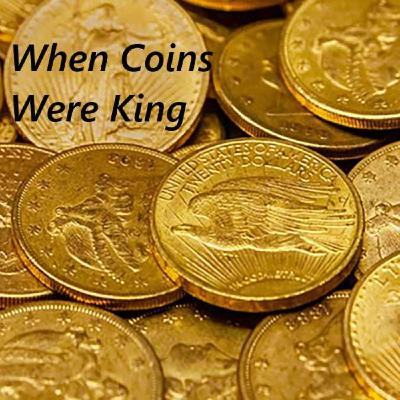
In the Gilded Age, the coinage of gold and silver had real implications for the economy. Mike Moran joins the show to discuss his latest book When Coins Were King and how the bonanza in mines had a reaction in the Treasury. Essential Reading:Michael Moran, When Coins Were King (2025). Hosted on Acast. See acast.com/privacy for more information.

Comments

Download from Google Play

Download from App Store
 United States