



 Claim Ownership
The Valley Today
Subscribed: 2Played: 101
Subscribe

© 2025 The Valley Today
Description
The Valley Today is a radio show and podcast dedicated to shining a light on the vibrant community leaders and local events that make the Shenandoah Valley of Virginia truly special. Insightful conversations, engaging stories, and event details connect listeners with the heart and soul of the valley, showcasing its unique culture, initiatives, and people.
Guests are recorded (mostly) in advance in local coffee shops, at local businesses, and during local events. The radio program airs just a few minutes after noon every weekday on The River 95.3 and Sports Radio 1450.
Guests are recorded (mostly) in advance in local coffee shops, at local businesses, and during local events. The radio program airs just a few minutes after noon every weekday on The River 95.3 and Sports Radio 1450.
2471 Episodes
Reverse

In this episode, host Janet Michael talks with Guy Curtis - Director of Marketing, Laurel Ridge Community College, Christine Kriz - Director of Corporate Training, Laurel Ridge Workforce Solutions, and Professor Corinne Hoisington - Professor, Central Virginia Community College; AI educator, international speaker, and author of AI: A Business Perspective, to discuss the Laurel Ridge AI Summit — a half-day event designed to bring practical AI education to workers, business owners, and community members across the Shenandoah Valley. Key Topics Covered Laurel Ridge's year-long participation in the American Association of Colleges and Universities AI initiative How local companies are asking for guidance on AI policies and employee training Why AI isn't as scary as it seems — and why most of us are already using it Real-world AI examples: car inspections, mammogram cancer detection, smart vacuums, autocorrect The three AI-proof job types: Imagination Workers, Skilled Workers, and Emotional Workers How AI is leveling the playing field across every industry Free AI tools beyond ChatGPT — and how to use them responsibly The importance of verifying AI output and keeping humanity in the loop Summit Session Breakdown Time Session 8–9 AM In the Blink of AI – Charting a Course for Virginia's AI-Powered Future 9:15–10:15 AM Navigating the AI Revolution – Adapting Your Career Path for the Future of Work 10:30–11:30 AM Creativity in the Workplace and Classroom – Supercharging Skills with AI Tools Event Details Date: April 1st Time: 8:00 AM – 12:00 PM Location: Corron Community Development Center, Middletown Campus, Laurel Ridge Community College Cost: $225 per person Register: laurelridgeworkforce.com/aisummit Questions: Call 540-868-7021
In this episode, host Janet Michael visits the Capon Valley Bank branch in Stephens City to discuss the value of community banking in today's digital age. Melba Thorne shares insights on personalized banking, financial literacy, and how a century-old institution maintains its commitment to local communities. About Capon Valley Bank History: Serving communities since 1918, starting in Wardensville, West Virginia Locations: Five branches across Hardy County (WV) and Frederick County (VA) New expansion: Sixth branch opening May 2026 on Winchester's north side (across from Texas Roadhouse on Ezra's Lane) Parent company: Highland Bank Shares (sister bank to Grant County Bank) Banking Philosophy "Big bank products with hometown service" Focus on personal relationships over sales quotas Loan decisions made locally (no waiting weeks for out-of-state approval) Treating customers as individuals, not numbers Goal: "The Chick-fil-A of banking" - knowing customers by name Services Offered Personal Banking: Checking and savings accounts Home equity lines of credit Auto loans Rewards checking with "UChoose Rewards" program Roundup savings program (automatically rounds purchases to nearest dollar and saves the difference) Business & Commercial Banking: New construction lending (residential and commercial) Commercial lines of credit Small business startup loans SBA loans Agricultural loans Investment property financing (including Airbnb properties) Land loans Renovation loans Financial Tips Credit Score Protection: Limit credit inquiries when car shopping (no more than 2 pulls from dealerships) Multiple credit pulls can dramatically drop your credit score Get pre-approved from your bank before visiting dealerships Target credit score: 680+ (many banks require 700+) Credit Score Factors: Too many credit cards can hurt your score Maxed out credit cards negatively impact your score even if paid on time One missed payment can drop you below 700 Medical issues, divorce, and life events are considered with context Smart Money Habits: Build emergency savings for "rainy days" Use roundup savings programs to save without thinking about it Monitor your credit score regularly through banking apps Don't spend everything left over after paying bills Community Involvement Cram the Cruiser: Annual toy drive in December for Toys for Tots (collects 300+ toys per branch) Partnership with local police and fire departments School volunteer programs and event support Sponsorship of local fairs and festivals (Newtown Heritage Weekend, etc.) Active chamber of commerce participation Community Leadership Program graduate Technology & Convenience Full online banking platform Mobile banking apps Online account applications available Educational learning center on website with product videos Still encourages in-person visits for personalized service Contact Information Website: caponvalleybank.com Phone: 540-868-1140 Direct line to local branch (no call centers!) Commercial Lending: Fred Brooks, Commercial Loan Officer Resources Mentioned Educational videos and learning center at caponvalleybank.com Credit score monitoring apps SBA loan programs

Episode Summary Host Janet Michael visits Winchester Little Theatre to preview their upcoming production "Decision Height," opening March 13th. This powerful play tells the overlooked story of the Women Airforce Service Pilots (WASPs) of World War II—courageous women who left everything to fly military planes and free up male pilots for combat. Director Theresa Apple and cast members share insights into bringing these real historical figures to life during Women's History Month, discussing their research process, military training exercises, and the bonds they've formed as an all-female ensemble. Guests: Tim Bambera (Publicity Director), Theresa Apple (Director), Ella Drury, Lyla Samet, Shelby Brown, Ash James (Cast Members) Production Details & Ticket Information Show dates: March 13-28, 2025 Ticket prices: Adults $25, Seniors $23, Students $18 IMPORTANT: Only purchase tickets from winchesterlittletheatre.org Warning about third-party ticket resellers The Story Behind Decision Height Who were the WASPs? 25,000 applied, only 1,100 accepted 38 killed during service 40 years to receive military recognition Director Theresa Apple on the Production Research at the National WASP Museum in Sweetwater, Texas Authentic set design with replica WWII cockpits Drill sergeant training on audition day Teaching young actors about 1940s women's comportment Meet the Cast: Ella Drury (Alice Hawkins) Playing a maternal figure in the group First all-female cast experience Watching documentaries and video interviews with real WASPs The pressure and honor of portraying real historical figures Lyla Samet (Carol Henderson) Playing the youngest, most energetic character How she and Ella met at the theater doing "Alice in Wonderland" Carol's backstory: Oklahoma farm girl whose mother left First main stage audition experience Shelby Brown (Mildred Simmons) Creating a distinctive voice for her character Coming from a military family and being a history buff Knowledge of the British Spitfires (precursor to WASPs) Building character depth beyond the script Ash James (Edith "Eddie" Harknell) Playing a tomboy character who grew up with all men Personal connection: grew up with brothers, played sports The rarity of non-feminine female roles Emotional reflection on female service members' discrimination Cast Bonding & Ensemble Building Deliberately spending time together outside rehearsals Mirroring the real WASPs' journey from strangers to family How relationships evolve throughout the show The importance of authentic connections on stage Special Events & Upcoming Productions March 15th: Special talkback with author Patricia O'Connell Pearson ("Fly Girls: The Daring American Women Pilots Who Helped Win WWII") April 3rd: Illusionist Ryan Schaffer (family-friendly, 50/50 door split) May 15-30: "Calendar Girls" (auditions March 22-23) WLT Kids 2026: "Three Musketeers" (June 20-27) & "James and the Giant Peach Jr." (July 18-25) Resources & Links Winchester Little Theatre: Website: winchesterlittletheatre.org Phone: 540-662-3331 Box Office Hours: Mondays & Wednesdays, 4-6 PM Facebook: https://www.facebook.com/winlit Instagram: https://www.instagram.com/winchesterlittletheatre Production Information: "Decision Height" runs March 13-28, 2025 93% sold out as of recording Opening night sold out Join waiting list for sold-out shows by calling the box office About the WASPs The Women Airforce Service Pilots (WASPs) served from 1942-1944, flying every type of military aircraft to free male pilots for combat duty. Despite their service: They were not recognized as military until 1977 (President Jimmy Carter) Full military benefits not granted until 2009 (President Barack Obama) Congressional Medal of Honor awarded in 2010 Museum located in Sweetwater, Texas at the original Avenger Field training site

Host Janet Michael welcomes Deb Fleming, Executive Director of the Greater Shenandoah Valley Chapter of the American Red Cross, for a comprehensive discussion on flood preparedness. As spring approaches and snow begins to melt, flooding becomes a real threat to communities across the Shenandoah Valley. Learn how to prepare your home and family before disaster strikes, what to do when floodwaters rise, and the critical steps for recovery and cleanup afterward. Key Topics Covered Before a Flood Understanding your flood risk and checking flood zones The importance of proper flood insurance (vs. homeowner's and hurricane insurance) Building a two-week emergency preparedness kit Essential supplies: water, food, medications, pet supplies, and infant needs Downloading emergency apps and monitoring weather alerts Creating a family emergency plan and establishing safe meeting locations Knowing where your gas shutoff valve and electric panel are located During a Flood Turn Around, Don't Drown: Why you should never drive through standing water How much water it takes to move a vehicle (just 12 inches!) When to shelter in place vs. evacuate to higher ground Shutting off gas and electricity to prevent explosions and fires Hidden dangers in floodwater: chemicals, sewage, wildlife, downed power lines After a Flood Waiting for official clearance before returning home Critical: Documenting damage BEFORE cleanup for insurance and FEMA Proper protective gear for cleanup (rubber gloves, boots) Avoiding contaminated water for drinking, cooking, and cleaning What to throw away vs. what can be salvaged How to access Multi-Agency Resource Centers (MARCs) for recovery assistance Reporting damage to emergency management (call 911) Important Safety Facts 6 inches of water can knock you off balance 12 inches of water can carry your vehicle away Flood insurance can cost as little as $400 per year Emergency kits should contain 1 gallon of water per person per day Most flood-related deaths occur in vehicles, not homes Items in basements are typically not covered by FEMA assistance Resources Mentioned American Red Cross Website: RedCross.org/get-help Emergency preparedness checklists Mobile emergency apps Videos for kids on disaster preparedness Cleanup kits available Phone: 1-800-RED-CROSS Government Resources Ready.gov Disaster preparedness information Water.noaa.gov Real-time flooding data and forecasts Enter your zip code to check flood risk in your area Emergency Services Call 911 to report flood damage and request disaster assessment About the Show Valley Today is your source for community conversations across the Shenandoah Valley. Host Janet Michael brings you important discussions on topics that matter to Valley residents. Connect For more information about disaster preparedness or to get help during an emergency, contact the American Red Cross at 1-800-RED-CROSS or visit RedCross.org. This episode is part of a year-long series on disaster preparedness, helping communities prepare for disasters both large and small.

Supporting Parents and Young Children: The Yellow Schoolhouse On this United Way segment of The Valley Today, host Janet Michael spoke with Pam Haefner, executive director of the Yellow School House, about how the nonprofit is helping parents of young children find connection, resources, and support in the Northern Shenandoah Valley. Haefner explained that the organization began after she and a friend recognized how overwhelming parenting can be—especially when parents often receive conflicting advice and little preparation for the role. In response, the Yellow School House was created to offer families a welcoming place to connect with other parents, access expert guidance, and build a supportive community. Today, the nonprofit provides several free programs for families with children age five and under. These include a weekly moms group in Winchester, interactive playgroups where parents can talk while children play, and the organization's signature annual event, Baby Buzz—a parenting conference designed to connect families with local experts and resources. This year's Baby Buzz will take place March 28 from 9:30 a.m. to 2 p.m. at the Douglas Community Learning Center in Winchester. The free event will feature speakers, family-friendly vendors, a barbecue lunch, and activities for children, including visits from local first responders. Following the interview, United Way Northern Shenandoah Valley CEO Andy Gail discussed how organizations like the Yellow School House support United Way's Youth Opportunity pillar by helping parents build strong foundations for children during the critical birth-to-five years. Families can learn more about upcoming programs and events at yellowschoolhouse.org.

The Numbers Tell a Startling Story Frederick County Sheriff's Office Captain Warren Gosnell sits down with Valley Today host Janet Michael to discuss a reality check for local drivers: the county's newly activated school zone speed cameras caught nearly 3,000 violators in just four days. Even more concerning, some drivers were caught speeding through the same school zone every single day, with speeds reaching up to 32 mph over the posted limit. "We weren't expecting that high," Gosnell admits, though he anticipated significant numbers given that one camera monitors Route 7, a heavily traveled corridor. The system tracks three school zones across the county, with each violation processed through multiple layers of human review before any warning or citation is issued. How the System Actually Works Unlike what critics might assume, this isn't an AI-driven "Big Brother" operation. Instead, every single violation passes through human hands multiple times before reaching a driver's mailbox. First, employees in Chattanooga, Tennessee review each potential violation individually. They verify the date, time, location, flashing lights, license plate number, and vehicle match. Then, the data travels back to Frederick County, where one of three sworn officers—including Gosnell himself—reviews everything again. They check whether school was in session, confirm the lights were actually flashing, and ensure the license plate matches the vehicle in the photograph. "This is all by human hand," Gosnell emphasizes. "We don't scan tags. We have a violator, now we run the tag." The system includes video clips showing four seconds before and after each violation, proving the school zone lights were actively flashing when drivers exceeded the speed limit by more than 9 mph—the threshold Frederick County established to allow for reasonable margin of error. The Warning Period and What Comes Next Currently, drivers receive only warnings through March 12th. After that date, however, violators face $100 civil penalties per offense. The flat fee applies regardless of how much drivers exceed the limit, though Gosnell warns that habitual speeders might find themselves facing something more serious than an automated ticket. "What I'm gonna do is I'm gonna set a live deputy up," he explains, "'cause I know what time you come through, I know what you're driving." A live traffic stop opens the door to additional charges beyond speeding—reckless driving, expired inspections, or even DUI arrests. Repeat Offenders and Changing Behavior Perhaps most troubling are the repeat offenders caught before they received their first warnings. One driver accumulated violations on four consecutive days, traveling 63, 69, 71, and 77 mph in a 45 mph school zone. Because warnings hadn't yet arrived in mailboxes, the driver had no idea they were being caught. "He hadn't gotten his first warning yet," Gosnell notes. Officials hope that once these initial warnings land, at least a third of violators will modify their behavior immediately. Interestingly, a significant number of drivers were caught at exactly the threshold—45 mph in a 35 mph zone. Some critics questioned why the county would enforce at such a low margin, but Gosnell counters that the threshold discussion misses the point entirely. "You're forgetting that 45 in a 35 is still 10 miles an hour over the limit," he states firmly. "It's still illegal." Proactive Rather Than Reactive When critics demand to know how many children have been injured or killed at these specific locations, Gosnell pushes back against reactive thinking. He points out that the stretch in front of Stonewall Elementary has already seen two fatal crashes—not during school hours, but crashes nonetheless involving school staff. "We're not gonna be reactive when it comes to this," he insists. "We wanna be proactive." Frederick County has already recorded its second traffic fatality of 2026 despite only being in February. Last year's total was nine fatalities for the entire year, with months passing between incidents. The current trajectory concerns officials who see technology as a force multiplier when deputies can't be everywhere simultaneously. "Even then our deputies can't be there the whole time," Gosnell explains. "The moment I start dealing with someone who came through at 48 in the 35, here comes 62 in the 35, and I don't know it because I'm dealing with 48." Broader Safety Concerns as Weather Warms As temperatures climb and motorcycle season begins, Gosnell shifts the conversation to road safety beyond school zones. He acknowledges the unique vulnerabilities motorcyclists face while also calling out dangerous riding behaviors like weaving through traffic or "lane splitting," which remains illegal in Virginia. "I'm a realistic traffic cop," Gosnell says, explaining that he understands why riders want to create distance from larger vehicles at traffic lights. Accelerating quickly to establish space makes sense, but there's a right way and a wrong way to do it. Riders need to reach the speed limit without excessive displays of power, then maintain safe speeds while other vehicles catch up. Simultaneously, he reminds passenger vehicle drivers of their responsibilities. "You have an obligation to every other driver to be as safe as you can be," he states. Whether drivers accept it or not, everyone shares the road and bears responsibility for protecting one another. The Privilege of Driving Throughout the conversation, Gosnell returns repeatedly to a fundamental principle that some drivers seem to forget: driving is not a constitutional right. It's a state-granted privilege that comes with legal obligations. "I know my rights—driving isn't one of them, people," he declares. "You get a license granted to you from whatever DMV of the jurisdiction in which you live." He dismisses sovereign citizen arguments about traveling without licenses or registration, noting that such claims consistently fail in court and lead to arrests. Scams and Final Warnings Before wrapping up, Gosnell addresses a surge in scams where criminals impersonate law enforcement officers to extort money from residents. Someone even created fake recordings using Gosnell's own name and rank, though the voice bore no resemblance to the real captain. His advice remains simple: hang up immediately if anyone claiming to be law enforcement asks for money, gift cards, or cryptocurrency related to tickets, warrants, or jury duty. "Ten times outta 10, they're gonna tell you it wasn't a member of their agency," he assures listeners who call back through official channels to verify. The Bottom Line As Frederick County's 30-day warning period winds down, Gosnell makes his position clear. Drivers who accumulate multiple warnings and still refuse to slow down will find little sympathy when the $100 citations begin arriving. The technology exists not to generate revenue but to change driving behavior around schools where children concentrate in vehicles, buses, and crosswalks. "All you need to do is slow down to at least nine or less over the limit," Gosnell emphasizes. "We prefer you to be at the limit, but all you gotta do is slow down a little bit once you hit the 10." For those who continue ignoring the warnings, the message is simple: the cameras will keep watching, humans will keep reviewing, and consequences will follow. The goal remains unchanged—preventing the next tragedy before it happens rather than responding to one that already has.
A Thriving Indoor Farm Operation In this episode of The Valley Today, host Janet Michael and cohost Niki Foster from the Front Royal/Warren County Chamber of Commerce talk with chamber member & community advocate Rob Demariano about his growing business Robby Ds Lil Greens, an indoor vertical microgreen farm that has been quietly revolutionizing local food access in Front Royal, Virginia for nearly three years. Operating as a one-man enterprise, Rob has managed to expand his delivery footprint from Front Royal to encompass the region between Martinsburg and Luray, reaching as far east as The Plains. Remarkably, he's even scheduling meetings with Northern Virginia restaurants to further extend his reach. Unlike traditional outdoor farming, Rob's indoor operation allows him to control every environmental variable year-round. "I can dial in weather, humidity, everything," he explains, noting that while he admittedly has "a bit of a brown thumb" when it comes to outdoor gardening, the controlled indoor environment lets him perfect his growing methods and lock them in consistently. Understanding the Microgreen Advantage For those unfamiliar with microgreens, Rob offers a clear distinction from their better-known cousin, the sprout. While sprouts consist simply of seeds with small stems emerging—think mung beans—microgreens advance to the leafing stage, similar to seedlings. This developmental sweet spot delivers maximum flavor intensity and nutritional density. "The sweets are sweeter. The radishes have more bite," Rob notes, adding that microgreens are legitimately certified superfoods with significantly higher nutrition levels than their full-grown counterparts. Innovative Product Development Beyond fresh microgreens, Rob has channeled his inner "mad scientist" to create an impressive array of value-added products. His freeze-dried broccoli microgreen mango drink cleverly disguises the superfood within a bright yellow beverage that looks and tastes like ordinary mango juice. After depleting his first production run from fall through early March, he's preparing another batch for late March. Meanwhile, his collaboration with Wuuds Coffee—a Smithsonian-recommended, bird-friendly coffee roaster—and Hawksbill Mountain Mushroom has yielded a microgreen and mushroom coffee blend. The pre-ground mixture requires no additional preparation, brewing just like regular coffee without any grittiness. Customers can purchase it locally or order online with free Friday delivery throughout the Winchester and Front Royal areas. Rob's partnerships extend into the dessert realm as well. Working with Uncle Beehive in Winchester, he developed a Genovese basil ice cream using their lemon cream base. After a successful soft launch late last year, he's now dedicating two full growing racks exclusively to basil production to meet demand. The ice cream will soon appear permanently on the menu at an unnamed Winchester restaurant. Most recently, Rob partnered with Bethlehem Farms to create microgreen-topped wood-fired personal pan pizzas. Priced at just $14, these pizzas feature top-quality ingredients and sold out almost immediately upon their launch last week. The Farm to Fam Initiative However, Rob's most ambitious project represents the culmination of his original business vision. Launching March 28th, the "Farm to Fam" program partners with the Hike Kidz Foundation, a local 501(c)(3) organization, to address food insecurity while supporting small-scale farmers. "I have so many partners that I've gotten through the years," Rob explains. "I said, why aren't we putting together a CSA-style box utilizing all local farmers and producers and look to those in our community who are suffering from food insecurity?" The program will initially deliver 50 boxes to 50 Warren County families experiencing food insecurity, providing them with premium local products including fresh superfoods, milk, eggs, and meats. Funded through a recently approved grant and private donations, the initiative aims to grow from monthly or biweekly deliveries to weekly distribution. Importantly, the program serves a dual purpose. By paying small-scale farms for their products through grant funding, Farm to Fam creates stable income streams that help these operations grow. Rob envisions families eventually participating through volunteering with box packing and even farming activities, creating a sustainable ecosystem that benefits both food-insecure families and local agricultural businesses. A Community Leader Rob's commitment extends beyond his business ventures. He serves on multiple boards including the Front Royal Warren County Chamber of Commerce, Downtown Front Royal, Hike Kidz Foundation, and Front Royal Soccer Association. Niki emphasizes his community involvement: "He is one of those people who you heard him talk about all the business stuff that he is doing. He also gives of his time for organizations and the folks in the community as well." Connecting with the Community Customers can order from Robby Ds Lil Greens through robbydslilgreens.com, with free Friday deliveries for local orders. The business also maintains active Facebook and Instagram presences. For those interested in volunteering with the Farm to Fam project, information is available through the Hike Kidz Foundation website at hikekidzfoundation.org. As Rob continues experimenting with new products and expanding his community impact, his story illustrates how innovative agriculture can address both nutritional needs and food system sustainability simultaneously. With each new partnership and product launch, this one-man operation proves that thinking creatively about local food systems can yield benefits far beyond the farm itself.
From Dream to Reality Winchester's dining scene welcomes a fresh voice as Bistro Sojo opens its doors, bringing Mediterranean and tropical flavors to downtown Winchester. Host of The Valley Today, Janet Michael and cohost Justin Kerns from VisitWinchesterVA.com sit down with owners Felix and Martha Addison to uncover the story behind Winchester's most talked-about new restaurant. The Addisons didn't rush into this venture. After moving to the area from Reston, Virginia in 2006, they harbored dreams of opening a restaurant but recognized the timing wasn't right. Instead, they built their reputation gradually, launching their first food truck, Roaming Bistro, in 2016. Two years later, they added Three Fires Pizza, a mobile wood-fired operation serving Neapolitan-style pizza. For years, loyal customers asked the inevitable question: "When are you getting a storefront?" "You don't get a storefront because people want to see a storefront," Felix explains. "You get a storefront when everything is sustainable." That moment finally arrived in late 2024. The Space That Feels Like Home Walking into Bistro Sojo reveals an immediate transformation from its previous incarnation as La Nicoise. Martha knew exactly what she wanted the moment she saw the space, though Felix admits he had no vision at first. Working with architect Kyle Hopkins of Four Square Architects, they turned Martha's dream into reality. The building's age dictated the design approach. "I couldn't make the ceilings higher," Martha notes. "So I couldn't do the modern stuff. But I could do the cozy." The result feels welcoming rather than imposing, with artwork playing a central role in the atmosphere. Local nonprofit Arte Libre created stunning murals throughout the space, while Zach Anderson painted the striking Royal Birds mural at the reception area and bar. The artwork serves a deeply personal purpose—the little girl in one mural reminds Martha of her daughter, while ocean scenes transport diners to distant shores. Meanwhile, vibrant orange flowers beneath the bar captivate visitors, with Janet confessing she's been contemplating recreating the design on a wall at home. Despite the spacious feel, the restaurant actually seats fewer guests than the previous establishment. The building's occupancy limit, which had been grandfathered in for years, came under scrutiny when the Addisons applied for permits. What was once zoned for 65 now accommodates about 50, including staff. Yet clever design makes the space feel larger and more open than before. A Name Rooted in Family The restaurant's name carries profound meaning. Sojo combines the first syllables of Sophia (Felix's mother) and Jonathan (his father), while also honoring the couple's two children, who bear those same names. "It's a hard J," Felix emphasizes. "It's not Soho. It's Sojo." This family connection extends beyond the name into every aspect of the operation, from the recipes tested at home on dinner guests to the warm hospitality that greets every visitor. The Menu: A Culinary Passport Bistro Sojo takes diners on what Felix calls "a culinary journey from the Mediterranean to the tropics." The menu draws inspiration from Southern Mediterranean and North African cuisines, incorporating warm spices that create depth without heat. Cardamom, nutmeg, star anise, and cloves meld together in unexpected combinations, each dish featuring three or four carefully selected spices that complement the main ingredients. The philosophy borrows from Blue Zone regions, areas where populations reportedly live the longest based on their diets. "We try to make sure we are cognizant of the food that we serve," Felix explains. The kitchen doesn't even have a microwave—everything arrives freshly cooked and freshly sauced. Seasonal ingredients drive the menu, with the Addisons partnering with Chilly Hollow Farm in Berryville for produce. "Whatever they have is what I would make sure I have in here," Martha says. This commitment to seasonality means the menu evolves, with hearty oxtail dishes giving way to spring peas and fresh greens as the weather warms. Current standouts include the surprisingly popular chicken and couscous, the beloved squash and burrata salad, and an unexpected hit—grilled romaine with house-made blue cheese dressing. Meanwhile, Martha's personal favorites lean toward the vegetable-forward dishes, particularly the fried plantains with beans. Remarkably, 98-99% of everything comes from scratch, made in-house. The commitment to quality and transparency stems from knowing exactly what goes into every dish. The Drink That Won Hearts Before even discussing the food, Justin finds himself captivated by a house specialty drink. What he initially assumes came from a container in the back turns out to be Sobolo, a popular West African beverage made from fresh ingredients. The recipe calls for dried hibiscus leaves, freshly grated ginger, freshly squeezed lemons, handfuls of cloves, and star anise. After steeping and straining, the mixture chills before being poured over ice. The result serves as both a palate cleanser and thirst quencher, while also forming the base for all house cocktails. One particular cocktail, the Muddy Waters, earned recognition at Winchester on the Rocks. Initially, the drink's sandy, grainy appearance seemed problematic, but attempts to refine it diminished the flavor Felix loved. The solution? Own it. The name became a tribute to blues icon Muddy Waters, who happened to be a bourbon drinker himself—the cocktail's key spirit. Welcoming Everyone to the Table Personal experience shapes the restaurant's inclusive approach to dining. When Martha's son was young, he had borderline celiac disease. Twenty years ago, finding restaurants that understood gluten-free needs proved nearly impossible. "Most people didn't even know they had allergies," Martha recalls. "They just lived sick." The family started cooking at home, making meals special despite the restrictions. That experience now informs every menu decision at Bistro Sojo. Guests can find gluten-free, dairy-free, and vegan options throughout the menu. "You can come with any of your sensitivities and intolerances and know that there's an option for you," Martha promises. Justin emphasizes the tourism significance of this commitment. Travelers with allergies often feel anxious about dining away from their safe home restaurants. When Winchester's tourism office works with travel writers and groups, dietary accommodations consistently rank as a top concern. Having restaurants that take sensitivities seriously makes Winchester a safer, more welcoming destination. Standing Out in Winchester's Dining Scene The Addisons deliberately chose a menu unlike anything else in Winchester. "We would not want to do what most of the restaurants were doing because they were doing it so well," Felix explains. "We weren't gonna compete with them doing what they do so well." Instead, they turned to what they naturally cooked at home—Mediterranean and tropical cuisines that reflected their heritage and passion. Most dishes on the menu underwent testing with dinner guests at home before ever reaching the restaurant, ensuring each one met their exacting standards. This uniqueness serves Winchester's tourism mission perfectly. Visitors seek locally owned establishments offering flavors they can't find at home. They want stories to share when they return—tales of discovering a restaurant named after the owner's parents, sipping an award-winning hibiscus cocktail, or experiencing cuisine inspired by the world's healthiest populations. "That's what people are looking for," Justin notes. "Unique stories. So they can go home and say, 'I went to this restaurant that was named after his mom and his dad, they have the best drink, this is a unique thing.'" Bistro Sojo delivers exactly that experience. The Brunch Experience Beyond dinner service Wednesday through Saturday (4:00 PM to 9:00 PM, last reservation at 8:30), Bistro Sojo offers Sunday brunch from 10:30 AM to 3:00 PM. While brunch is still building momentum since launching in late November, the Addisons welcome walk-ins during this time. Janet, admittedly not a morning person, celebrates the timing. "I don't believe that eight, nine o'clock should exist ever, especially not on a weekend," she jokes. "A brunch at 10 or 10:30, particularly on a Sunday, is right up my alley." Planning Your Visit The intimate 40-seat space means reservations become essential on busy nights. While two-person walk-ins usually find accommodation, larger parties should book ahead, especially on Fridays and Saturdays. Wednesday and Thursday evenings offer the best chance for spontaneous visits. When First Fridays returns to downtown Winchester's pedestrian mall, the restaurant expects even higher demand. Guests can make reservations online through bistrosojo.com or via Google, embracing the convenience modern diners appreciate. As for whether the restaurant welcomes families with children, Martha offers an honest assessment. While they've accommodated kids, the adventurous menu might challenge picky eaters. However, the kitchen keeps some "American-friendly" emergency backup options for children who won't eat anything on the regular menu. Janet appreciates this candor, noting she's reached the stage of life where dining without children appeals to her. The intimate setting naturally encourages conversation between neighboring tables, with guests sometimes exchanging phone numbers after bonding over the food and experience. A Labor of Love From food trucks to fine dining, the Addisons' journey spans nearly two decades of preparation. Their brick-and-mortar dream required patience, planning, and the help of skilled local partners—from architect Kyle Hopkins to the artists who brought the space to life, to the farmers who supply fresh ingredients. "We asked for this, we wanted this, and we've been waiting for this," Felix reflects. The resul

A Vision Born from Compassion Fifty-two years ago, educator Bill Moyers looked around his classroom and asked a simple but profound question: where will these students go after graduation? In 1974, opportunities for individuals with disabilities were virtually nonexistent. Rather than accepting this reality, Moyers and his colleagues founded Shen-Paco, an organization that would transform the lives of hundreds of individuals across Shenandoah and Page Counties. Today, Moyers remains the chairman of the board, still passionately committed to the mission he started over half a century ago. His vision has grown from a small workshop on Route 11 in New Market to a comprehensive network serving approximately 100 individuals across two facilities and three group homes. From Workshops to Day Programs The organization has evolved dramatically since its early days. Initially, Shen-Paco operated as a workshop where individuals performed sub-minimum wage work. However, as Ingrid Thompson, the organization's outreach coordinator, explains, the word "workshop" has been removed from their dictionary entirely. This shift represents far more than semantic change—it reflects a fundamental transformation in how society views and serves people with disabilities. Instead of focusing on work, Shen-Paco now operates as a day program where individuals come to enjoy camaraderie with their peers, participate in crafts, and engage with their community. The change, Ingrid emphasizes, isn't a step backward—it's actually progress. The individuals served by Shen-Paco are living their best lives, free from the pressure of productivity metrics and workplace demands. More Than Activities: Building Community On any given day at Shen-Paco's facilities in Quicksburg or Luray, you'll find individuals participating in bingo tournaments, showing off their karaoke skills, or working on craft projects. Visitors regularly stop by to share their talents—from musicians performing concerts to woodworkers demonstrating their craft. The Sheetz organization makes an annual visit with their tanker truck, bringing treats that delight everyone. Yet the most critical component of Shen-Paco's program happens beyond their bright blue building's walls. Every single day, staff members take individuals out into the community. Sometimes it's just a quick trip to 7-Eleven for a drink. Other times, they visit coffee shops, restaurants, or stores throughout the valley. These outings serve a dual purpose that extends far beyond simple recreation. Changing Perceptions, One Interaction at a Time Ingrid passionately believes these community interactions are essential for breaking down decades of stigma. Historically, individuals with disabilities were hidden away in institutions or kept at home, invisible to the general public. Consequently, many people developed unfounded fears and misconceptions about interacting with disabled individuals. "They're just human beings like you or me," Ingrid explains. "They just may need a little bit of help here or there." She recounts a memorable trip to Chick-fil-A in Harrisonburg where a couple not only paid for the group's meals but also gave them a gift card, moved by witnessing Shen-Paco's work firsthand. These moments of connection are precisely what the organization aims to create. Furthermore, Thompson notes that individuals with disabilities are always accompanied by staff members or family, ensuring safe and supported interactions. They're non-judgmental, incredibly complimentary, and often surprisingly knowledgeable about specific subjects that capture their interest. The Brain Works Differently, Not Less One of the most important points Ingrid emphasizes is that individuals with disabilities possess remarkable intelligence—their brains simply work differently. Many excel at mathematics, others play piano beautifully, and some become experts on topics that fascinate them. When given the opportunity, they demonstrate depth of knowledge that often surprises people encountering them for the first time. Moreover, Thompson suggests that everyone has some form of disability. The difference is that most people have learned to adapt, while some individuals need additional support to navigate those challenges. This reframing helps normalize disability as part of the human experience rather than something separate or "other." Beyond Day Programs: A Home Away from Home While many people know Shen-Paco from its day program facilities, the organization also operates three group homes—two in New Market and one in Stanley. These homes house approximately twelve individuals who need residential support. As caregivers age, they often reach a point where they can no longer provide the physical care their loved ones require. Shen-Paco's group homes offer a solution, and the organization is already exploring the purchase of another home to meet growing demand. Ingrid jokes that she wants to live in these homes herself—they're beautifully maintained spaces where residents receive excellent care while maintaining as much independence as possible. The Reality of Funding Despite its vital role in the community, Shen-Paco faces significant financial challenges. The organization operates as a 501(c)(3) nonprofit, and most individuals attend through Medicaid waiver programs funded by their Social Security Disability benefits. While self-pay options exist, the reality is that Shen-Paco relies heavily on grants, fundraising, and community donations to bridge funding gaps. Currently, the organization's most pressing need involves its fleet of twenty-one vehicles. With an average age of twelve years, these vehicles require constant maintenance. A single set of tires costs around $1,000—multiply that by twenty-one vehicles, and the numbers become staggering. Add in brake replacements, oil changes, and general wear and tear, and transportation costs quickly spiral. Meanwhile, obtaining new buses through the grant process takes two to three years. Therefore, Shen-Paco must maintain its aging fleet while waiting for replacements. Shen-Paco has launched a fundraising campaign specifically targeting vehicle maintenance costs, recognizing that transportation is absolutely essential to the community integration that lies at the heart of their mission. How the Community Can Help Ingrid offers several ways community members can support Shen-Paco's work. Financial donations help fund outings—a simple coffee shop visit for five people costs $30, while zoo trips and other excursions require even more resources. Donations can be made through the organization's newly redesigned website at www.shen-paco.org or mailed directly to their Quicksburg facility. Additionally, the organization welcomes invitations from local businesses. Whether it's a coffee roaster showing how beans are ground or a manufacturer demonstrating production processes, these behind-the-scenes experiences provide invaluable learning opportunities. Shen-Paco typically brings small groups of five or six individuals, making visits manageable for host businesses. Mechanics and automotive businesses can also make a tremendous impact by offering discounted or pro bono services for the vehicle fleet. Every oil change, tire rotation, or brake job donated directly supports the mission of community integration. An Open Invitation Ingrid extends a warm invitation to anyone curious about Shen-Paco's work: visit the bright blue building in Quicksburg or the Luray facility anytime. See firsthand how individuals participate in activities, interact with staff, and prepare for community outings. Witness the hugs Ingrid receives each morning from people living their best lives, starting each day with genuine joy and affection. As March's Disability Awareness Month draws attention to these issues, Ingrid hopes the conversation continues long beyond the calendar page turns. Changing perceptions requires ongoing effort, consistent community presence, and countless individual interactions that gradually erode outdated stigmas. Looking Forward After fifty-two years, Shen-Paco continues adapting to meet evolving needs. The transition from workshops to day programs reflects broader societal shifts in understanding disability services. The expansion into group homes addresses aging caregivers' concerns. The emphasis on community integration actively combats isolation and stigma. Through it all, Bill Moyers' original question remains relevant: where will these individuals go? Thanks to Shen-Paco, the answer is everywhere—coffee shops, stores, restaurants, zoos, and countless other places throughout the Shenandoah Valley. They're not hidden away or segregated. Instead, they're living full, engaged lives as valued community members. As Ingrid reminds us, these individuals don't judge. They offer unconditional acceptance, genuine compliments, and pure joy. Perhaps the real question isn't how we can help them, but rather what we can learn from their approach to life. In a world often characterized by criticism and division, their non-judgmental kindness offers a powerful alternative. For more information or to support Shen-Paco's mission, visit www.shen-paco.org or contact Ingrid Thompson at 540-325-7597.
Mountain Trails sits nestled on Winchester's Old Town walking mall at 115 North Loudoun Street, where owner Garry Green has cultivated something rare in retail: a store that feels like a community. After 34 years in business—the last 13 at this location—Garry has discovered what he calls "the Loudoun Street Magic," especially on Saturday evenings when the mall comes alive. He shares his passion during this episode of The Valley Today, with host Janet Michael and cohost Brady Cloven, executive director of Friends of Old Town. Mountain Trails' move from its original Cork Street location transformed the business entirely. "The demographic literally went from climbers, backpackers, and travelers to just everyone," Garry explains. The visibility proved phenomenal, and the store has become an integral part of Winchester's identity, appearing regularly in social media posts and drawing visitors from states away. Education Over Sales: A Revolutionary Approach What sets Mountain Trails apart isn't just their inventory—it's their philosophy. Garry's mission statement centers on creating "a safer, more enjoyable wilderness or travel experience," which means the staff focuses on qualifying customer needs rather than pushing products. "We are not here to sell things to you," Garry emphasizes. "We try to qualify your needs and provide for those needs." This approach resonates deeply in a business where equipment failures can have serious consequences. Whether customers are paddling the Shenandoah River for the first time or heading to Mount Everest base camp, their concerns receive equal validation. Garry recalls outfitting a gentleman for climbing Kilimanjaro, Africa's highest peak at nearly 20,000 feet. When the climber returned, he shared a remarkable moment: "I was at 16,000 feet and I heard you talking to me." The boots and backpack performed exactly as Garry had promised—the ultimate validation for the staff. Curating the Right Gear for Every Adventure Every single item in Mountain Trails serves a purpose. "Everything in Mountain Trails other than, let's just say a t-shirt, needs to function," Garry explains. "It has a job. And it needs to do that when you need it to do it." From rain gear to sock structure—yes, even socks matter—the curation process ensures customers receive appropriate equipment for their specific adventures. The store's tagline captures this breadth: "hiking, climbing, trekking, travel." However, their secondary motto, "Quality Outdoor Outfitters," opens the door wider. International travelers heading to Peru or around the world find the education and experience they need. Summer canoeists discover dry bags and quick-drying clothing. Skiers find bibs and cross-country equipment. Technical rock climbers locate harnesses and safety gear. Meeting Customers Where They Are Understanding the customer's experience level proves crucial to Garry's approach. The outdoor industry's biggest emerging demographic is what he calls "the casual adventurer"—people who want to hike two miles to a waterfall with trail runners, trekking poles, and a day pack, then return to town for lunch. These customers have vastly different needs from long-distance trekkers carrying their "house on their back" for multiple days. "Not everybody needs a $400 three-layer Gore-Tex rain jacket," Garry points out. While climbers heading to Mount Everest might need that level of protection, an $80 waterproof jacket works perfectly for someone's golf bag. This honesty builds trust. Moreover, the relationship continues as customers grow in their outdoor pursuits, returning to upgrade their gear as they tackle more challenging adventures. The Power of Kindness and Experience When hiring staff, Garry's number one criterion isn't outdoor expertise—it's kindness. "You have to put that customer's best interest at heart above anything else," he insists. This philosophy creates what international visitors have called "the feel" of Mountain Trails, something that distinguishes it from sterile big-box retailers. The staff's personal experience matters tremendously. "They've been wet, cold, hungry, tired," Garry notes. "They're here to help you suffer better." Garry himself spent years guiding in Alaska and running outdoor adventure programs for the U.S. Air Force, helping service members decompress after deployment. He recalls a winter camping trip where a participant thought she wouldn't survive the night because her "butt was cold"—she hadn't inflated her sleeping pad. After inflating it and adding hand warmers, she proclaimed he'd saved her life. "You passed through a window," he told her, referring to those challenging moments all outdoor enthusiasts eventually face. Beyond the Hardcore: Everyday Customers Welcome While Mountain Trails caters to serious adventurers, everyday shoppers find unexpected value. Janet shares how the store helps her buy gifts for her mother-in-law who bikes the C&O Canal—despite Janet's self-proclaimed lack of outdoor interests. "I can come in here and just say, she does this and you can help me find the perfect gift for her," she explains. The store even welcomes those who simply want to look the part. "I love this store even though I am not an outdoors person," Janet admits. Garry laughs, acknowledging that sometimes "it's all about the look." This inclusive approach means everyone feels welcome, whether they're heading into the wilderness or just want quality gear for weekend activities. A Global Reputation Built on Local Service The store's reputation extends far beyond Winchester. Visitors from Syracuse, Cleveland, and even international locations make Mountain Trails a regular stop. Garry recalls a family from Israel who declared it their favorite outdoor store globally. "We go into these stores all over the world, and this one is our favorite so far," they told him. What impressed them? The feel of the place—something intangible that staff members hear about regularly. This atmosphere stems from Garry's operating principle: "Everybody's welcome until they're not." The staff genuinely cares, creating an environment that feels more like a community gathering space than a transaction-focused retail outlet. Social media serves not primarily as a sales tool but as "an instrument of familiarity," sharing articles about climbing, skiing, and outdoor adventures that customers want to read over their morning coffee. Connecting with Mountain Trails In mid-March, Mountain Trails will transition from their winter hours into regular hours: Monday through Thursday 10 AM to 7 PM, Fridays and Saturdays 10 AM to 8 PM, and Sundays noon to 5 PM. Customers can find them on Facebook and Instagram or visit mountain-trails.com for basic information, though the real experience requires stepping through their door on the walking mall. Old Town Winchester: Building Community Through Events Chocolate Escape Perseveres Through Arctic Conditions The second half of the conversation shifts focus to Brady Claven, executive director of Friends of Old Town Winchester, who shares updates on recent events and upcoming attractions. February's Chocolate Escape faced brutal weather—17-degree temperatures with windchill predictions of negative 10 degrees—yet determined participants still filled the walking mall with their maps, hitting every participating location. Approximately 30 merchants participated in the event, which aims not just to distribute chocolate but to drive foot traffic into stores during cold months. The strategy worked. Faire Isles, for instance, welcomed numerous first-time visitors, and overall feedback indicated people discovered stores they'd never visited before. "The point of it is to get people into stores," Brady explains, noting that participants might not linger outside as long in freezing weather, but they spent more time browsing inside. Celebrating Black History Month Through Partnership Friends of Old Town partnered with NAACP Winchester and secured generous sponsorship from Valley Health to present three Black History Month events. Typewriter Studio hosted a spoken word and art gallery night featuring Monica James and representatives from Selah Theater. Bright Box presented "History and Cocktails" with Nick Powers from the MSV delivering an outstanding historical talk about the Valley's Black history, tying into the upcoming VA250 celebration. Finally, Bistro Sojo offered a small plates and jazz night with a $35-per-person special menu and live performance by SU. Spin to Winchester: Pedaling for Progress Friends of Old Town's second annual Spin to Winchester fundraiser brought participants together inside Valley Health for a 45-minute stationary bike class. Each rider crowd-funded their participation, raising a minimum of $250, with prizes awarded for most funds raised, sweatiest rider, and highest mileage. The event exceeded expectations, hitting 120% of its goal and attracting 20 more individual donors than the previous year. "It's very apparent by the end of this 45-minute class, certain people are, myself included, just dripping with sweat," Brady admits, describing the intense workout led by instructor Pam from Valley Health. Despite the physical challenge—including what seemed like endless "last hills"—the fundraiser's success directly supports Old Town programs and events throughout the year. Taylor Pavilion: A Transformation Underway Ground has broken on the Taylor Pavilion renovation, with completion targeted for before WineFest during Apple Blossom season. The transformation will create a social gathering space that addresses a common community need. "We do hear a lot from people that say, well, you know, there's really not a space if I don't wanna drink or if I don't want to eat," Brady notes. The new pavilion will offer a place where people can grab a bagel and sit, play chess, listen to music, or simply enjoy being on the mall. It will serve as a meeting point before art classes at Typewriter Studio or
A Growing Crisis Hidden in Plain Sight Winchester's family homelessness crisis looks nothing like what most people imagine. There are no tent encampments or visible street corners occupied by children. Instead, the crisis unfolds quietly in motel rooms, backseats of cars, and overcrowded apartments where families double up with relatives, desperately hoping their situation will improve. Chris Briganti, Executive Director of Family Promise Winchester Area, sits down with Janet Michael on The Valley Today to reveal a startling reality: 539 students in Winchester, Frederick, Warren, and Clarke County schools self-identified as homeless during the 2024-2025 school year. Since self-identification means the actual number is likely much higher, the scope of the problem becomes clear—family homelessness is Winchester's invisible emergency. "These families are not people you see on the street corner," Chris explains. "The families we are helping are your neighbor next door. They are your friends who you probably don't know about because they've gotten very good at hiding and covering it up. You would have no idea that it's your bank teller or the person checking you out at Walmart." From Growth to Impact: A Year of Transformation Family Promise Winchester Area has undergone significant changes since its inception in 2022. After beginning to serve families in 2023, the organization hired Chris as their first executive director in July 2025. Furthermore, they recently updated their name from Family Promise of Northern Shenandoah Valley to avoid confusion with their neighboring affiliate in Shenandoah County. However, the most remarkable transformation has been in their impact numbers. During all of 2025, Family Promise moved 28 families into new homes and prevented 13 evictions, serving approximately 80 children total. In contrast, by mid-February 2026—just six weeks into the new year—they had already moved seven families into housing and prevented 11 evictions, helping 45 children. That's more than half of their entire previous year's impact. "Data is everything," Chris emphasizes. "Not only is it important for advocacy, but I think one of the basic things we owe our donors and society as a nonprofit organization is to let them know where that money is going." The Help Us Move In Fund: Small Investments, Enormous Returns At the heart of Family Promise's success lies their "Help Us Move In" (HUME) fund, which provides direct financial assistance to families teetering on the edge of homelessness. The program's efficiency is staggering: it costs approximately $500 per child to secure stable housing. "Maybe they need help making the first month's rent, or maybe there's back rent and they've done everything," Chris explains. "Sometimes all we have to do is help with $500. Give that to the landlord for rental arrears, and then that family will never need assistance again." The fund recently received a transformative boost when Opequon Presbyterian Church donated $20,000 as part of their capital campaign. Chris admits he "almost fell out of his chair" when he opened the envelope. Every penny of that donation goes directly to landlords or utility providers—never into families' pockets—eliminating concerns about misuse of funds. Moreover, the organization carefully vets applicants, reviewing rent ledgers from the past year and analyzing family finances. They ask critical questions: Are families missing rent every month, or is this truly a one-time crisis? Are they spending responsibly? This scrutiny ensures limited resources go to families who will succeed with just a bit of help. The Invisible Population: Who Needs Help and Why Contrary to stereotypes about chronically homeless populations, Family Promise increasingly serves families who have never needed assistance before. These are federal contractors laid off from their jobs, workers who fell ill and couldn't maintain employment, or families facing the cascading effects of a government shutdown. "These are families that have worked a good job for a long time, who have never had to ask for assistance in any way, shape, or form," Chris notes. "But they lose their job—a lot of federal contractors have been laid off—or they get ill and can't work." Janet adds an important clarification: "I think that's a big misconception. The general public thinks these federal contractors are making multimillion dollars a year, and that is not the case. They are not making much more above minimum wage than the rest of us. They're living paycheck to paycheck, especially with cost of living going up so much." Additionally, these families often fall into a frustrating gap. They make too much money to qualify for traditional social services, yet not enough to escape the motel cycle, where families pay $2,000 monthly for temporary housing while being unable to save for first month's rent and security deposits on permanent apartments. The Devastating Impact on Children The conversation takes a sobering turn when Chris discusses the research on childhood homelessness. The statistics paint a grim picture of generational trauma and lost potential. Recent studies reveal that housing instability—even when families are "doubled up" with relatives rather than literally on the streets—produces effects on children comparable to outright homelessness. Meanwhile, a 2018 Minnesota study found that 36% of adults experiencing homelessness first became homeless at or before age 18. The physiological impacts are equally alarming. Infants born the year before or after their mother enters an emergency shelter show higher rates of low birth weight, hospitalization, and emergency room visits compared to other low-income infants. These children face increased risks of asthma, chronic illnesses, and developmental delays. When homelessness lasts more than six months, children from infancy to age four experience significantly higher risks of developmental delays and hospitalization. "How do you pay attention when you're hungry?" Chris asks. "How do you pay attention when you don't know where you're going to do your homework tonight? How do you pay attention when you're sitting in class wearing the same clothes you wore the day before?" Furthermore, emerging research in epigenetics suggests that environmental trauma can literally alter gene expression—changes that can then be inherited by the next generation. Childhood poverty costs the nation upwards of a trillion dollars annually, yet early interventions like Family Promise's programs deliver a four-to-nine-dollar return on every dollar invested. "When we invest early in these childhood interventions, which is what Family Promise is all about, we help stop a cycle," Chris emphasizes. "We all do better when children have a safe place to live." The Housing Crisis and Creative Solutions Winchester's affordable housing shortage presents one of Family Promise's biggest challenges. Nevertheless, the organization has built strategic partnerships with landlords and apartment complexes who understand their mission. These partnerships prove mutually beneficial. Landlords allow Family Promise families to move to the front of the waiting list, knowing the organization carefully vets applicants and provides ongoing case management. Some landlords even reduce rent slightly for families working with Family Promise, recognizing the reduced risk. "Landlords, that's huge for us," Chris says. "We're working with these families. We're keeping a tight eye on them, and so it limits risk for landlords." Looking ahead, Family Promise is conducting a feasibility study for a standalone shelter facility, though that goal remains years away. In the meantime, they're exploring leasing apartments directly to families to create a more immediate shelter program. Currently, families living in cars receive limited emergency assistance while the organization rushes to secure permanent housing. Beyond Housing: Comprehensive Support Services While housing assistance forms the core of their work, Family Promise offers additional support to address the secondary crises that often push families into housing instability. The organization provides up to $500 for vehicle repairs, recognizing that transportation access often determines whether families can maintain employment. They offer up to $250 for back property taxes and supply bus passes when needed. Additionally, they provide up to $300 per family for afterschool childcare, removing another barrier to employment stability. "All of this is designed to figure out what's that bump, get them over that hill, and then let them live smoothly," Chris explains. Faith-Rooted, Universally Welcoming Family Promise Winchester Area's relationship with faith communities reflects a thoughtful balance. The national Family Promise network originated in 1988 with founder Karen Olsen's rotating shelter model, where families moved between different church host sites—similar to how Winchester Area Temporary Thermal Shelter (WATTS) operates today for individuals. Church partners remain essential to the organization's funding and volunteer base, with Opequon Presbyterian's recent $20,000 donation exemplifying this support. However, while Family Promise is driven by interfaith values like compassion, love, and empathy, their programming itself remains secular. "We believe in compassion, love, empathy, helping the meek, but our programming itself is not faith-based," Chris clarifies. "We serve all families of all compositions. It doesn't matter what religion you are. There is no expectation that you'll have to go to church on Sunday in order for us to cover your rent." The organization defines family through the child's perspective: whoever the child sees as family is their family, regardless of composition. Any family with a minor child or expecting a child who lives in Winchester, Frederick, Warren, or Clarke County qualifies for services. How the Community Can Help As the convers
A Community Comes Together to Honor Local Excellence Fresh off a Parisian adventure, Kaleigh Fincham returns to the Top of Virginia region with renewed energy and a mission: to orchestrate one of the Chamber's most meaningful events of the year. As Director of Events for the Top of Virginia Regional Chamber, Kaleigh joins host Janet Michael on "The Valley Business Today" to unveil the details of the 2026 Greater Good Awards, presented by Valley Health. More Than Just an Awards Ceremony The Greater Good Awards stand apart from typical business recognition events. Rather than simply celebrating success, this gathering honors the individuals and organizations whose vision, leadership, and dedication actively strengthen the region's quality of life. "This event is a little different," Kaleigh explains. "It really shows the community at its finest and celebrates the outstanding individuals and businesses whose vision, leadership and hard work strengthened the quality of life in our region." Scheduled for March 12th at Shenandoah Valley Golf Club, the semi-formal evening event runs from 5:30 to 9:00 p.m. However, prospective attendees need to act quickly—tickets sell out rapidly, and Kaleigh warns that availability may be extremely limited by the time listeners tune in. The Theme: Gathering Gratitude This year's theme, "Gathering Gratitude," reflects the heart of what makes this event special. Kaleigh crafted the concept around the idea of pausing amid busy schedules, growing businesses, and packed calendars to recognize those making genuine differences in the community. "It's about taking that pause in the middle of busy schedules, growing businesses, and full calendars," Kaleigh shares. "Overall, just basically coming together as a community to recognize the people and organizations who are making a real difference here in the top of Virginia region." The theme resonates particularly well with presenting sponsor Valley Health, whose daily work embodies the spirit of community service. Kaleigh draws parallels between the healthcare provider's mission and the awards' purpose: "I think about the hands of doctors and nurses in our communities, the way they show up every single day for our families, our neighbors, and our businesses. It's a powerful example of how people come together in service of something bigger than themselves." Valley Health: A Partner in Community Excellence Chris Rucker, Chief Administrative Officer for Valley Health, joins the conversation to discuss why his organization continues to serve as the presenting sponsor year after year. His perspective reveals the deeper connection between healthcare and community prosperity. "Healthcare is an essential part of every community," Chris emphasizes. "It's an essential part of what determines the success and the livability and the trajectory of growth, the prosperity in every community." As the region's largest employer, Valley Health views its role as extending beyond patient care to include being a positive role model for other organizations. Moreover, Chris highlights Valley Health's extensive community involvement, which often happens behind the scenes. "We have some relationship and some involvement with just about every nonprofit organization in the community," he notes. The organization's mission of serving the community by improving health requires partnerships, collaboration, and avoiding redundancy—values that align perfectly with the Greater Good Awards' celebration of community impact. Eight Categories of Excellence The 2026 Greater Good Awards recognize achievement across eight distinct categories, each highlighting different aspects of community contribution: Small Business of the Year nominees include Capon Valley Bank and Summit Events, representing entrepreneurial spirit and local economic vitality. Large Business of the Year features First Bank, Shenandoah University, and Timber Ridge School - organizations whose scale allows them to make substantial community investments through volunteering, product donations, and strategic partnerships. Nonprofit of the Year acknowledges Access Independence, Winchester CCAP, and NW Works for their dedication to serving community needs. With nine to ten initial nominations, this category demonstrates the region's robust nonprofit sector. Entrepreneur of the Year celebrates Kelly Botta with Smartypants Medicine and Will Sparrow with Blue Bay Tech/Shallow Creek Electrical for their innovative business ventures. Citizen of the Year honors Kimberly Wilt with United Way of Northern Shenandoah Valley, Tamara Green from Frederick County Department of Social Services, and Tracy Fitzsimmons of Shenandoah University for their individual community contributions. Emerging Leader Award recognizes rising stars Emily Windle from Winchester City Council Ward Two, Lauren Clouse from Winchester Rescue Mission, and Mario Wisdom with Crystal Clear Business Solutions—individuals just beginning their careers but already making significant impacts. Career Pathways Impact Award, recently renamed from the CTE Award, broadens its scope to include educators, CTE instructors, workforce development professionals, training providers, and community partners. This year's nominees are Devon Smith with Frederick County Public Schools, Michael Diaz with Virginia Works, and Sarah Weinstein with Winchester Public Schools. Finally, the Lifetime Community Impact Award remains shrouded in mystery. Unlike other categories, this recipient's identity stays secret until the evening of the event, creating an element of surprise and anticipation. "You've had to put your time in," Kaleigh notes. "Absolute dedication at its finest." The Selection Process: Rigorous and Fair The path to nomination involves more than popularity. Kaleigh receives nominations from various sources—Chamber members, community members, and even self-nominations from businesses and individuals. However, getting nominated represents just the first step. A committee composed of past Chairs of the Top of Virginia Regional Chamber Board reviews all submissions against specific criteria. These include community involvement, ethics and character, leadership, creativity, growth, and for businesses, economic impact. Additionally, nominees must maintain good standing as Chamber members for at least three years. "We want the meat, not just, 'Oh, this person or this business is great to work for, work with,'" Kaleigh emphasizes. "We want the details." She encourages nominators to provide facts, numbers, and supporting documentation to help the committee make informed decisions. The rigorous process ensures the awards maintain their significance. "They're trying to bring the significance of the award ceremony back," Kaleigh explains, noting that without clear criteria, recognition risks becoming merely a popularity contest. Community Participation Opportunities While sponsorship opportunities have closed, community members can still contribute to the event's success through silent auction donations. Kaleigh welcomes creative contributions beyond standard gift cards—themed baskets, experience packages, travel opportunities, or unique local offerings that will capture bidders' attention. Janet herself offers to create an auction package featuring a guest appearance on "The Valley Today," complete with an orange microphone. Interested donors can contact Kaleigh at kfincham@regionalchamber.biz or call the office at 540-662-4118 extension 16. The deadline for auction item donations is Monday, March 9th, and Kaleigh offers to pick up items directly from businesses. A Partnership That Extends Beyond One Night The conversation reveals that Valley Health's relationship with the Chamber extends far beyond the Greater Good Awards. Kaleigh notes their involvement in Business at the Bloom, the Community Leadership Program, and the recently added Arising Leadership Program for high school juniors and seniors. "We greatly appreciate our partnership with Valley Health because it's not just this event that I've worked with individuals from Valley Health," Kaleigh shares. This ongoing collaboration demonstrates how meaningful partnerships strengthen the entire community ecosystem. Chris acknowledges the value of these diverse connections: "The number of nonprofits demonstrates, in my mind, and I'm sure to your listeners, just how many people are out there that really have care and passion to serve their community and whatever their particular area of interest is." Additional Sponsors Make It Possible While Valley Health serves as presenting sponsor, the event requires support from multiple community partners. Kaleigh gives special recognition to First Citizens Bank, YHB, Zwiesel Fortessa Tableware Solutions, City National Bank, and CNB Bank for their sponsorship commitments. Many of these organizations return year after year, demonstrating their belief in the event's community impact. The Bigger Picture Throughout the conversation, a central theme emerges: recognition matters. Being nominated alone represents a significant honor, as it means someone in the community values your contributions enough to put your name forward. Winning amplifies that recognition, but participation in the evening creates something equally valuable—a collective pause to appreciate the good work happening throughout the region. "Simply showing up is important," Kaleigh reflects. "So the night is about gratitude, but for work being done, for the partnerships being formed, for the impact that happens when we gather together as a community. It's not just an award ceremony. We all come together in gratitude and we, at the end of the day, strengthen as an entire region." As tickets dwindle and the March 12th date approaches, the Top of Virginia region prepares to gather in gratitude, celebrating not just individual achievements but the collective spirit that makes the community thrive. In a world that often rushes past moments of
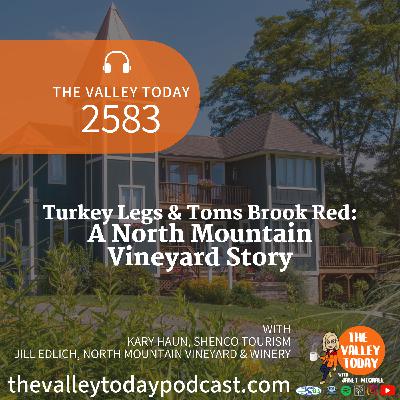
During a recent episode of The Valley Today, host Janet Michael sits down with Jill Edlich and Kary Haun for Tourism Tuesday — Shenandoah County Edition — to talk about an exciting new chapter unfolding at North Mountain Vineyard and Winery. What begins as a conversation about events and community quickly reveals something much bigger: a Renaissance fair founder has just stepped into life as a vineyard owner. As part of the ongoing Tourism Tuesday series highlighting destinations and experiences in Shenandoah County, the conversation explores how Jill's purchase of North Mountain is reshaping both the winery and the future home of the Ravenwood Faire. As listeners quickly learn, this isn't just a business transaction. It's a story about legacy, land, and local connection. The Perfect Match When Krista, the former owner of North Mountain Vineyard and Winery, decided to sell her beloved property, she wasn't just looking for any buyer. She wanted someone who would cherish the land and preserve its legacy. After waiting patiently for the right person, she found exactly what she was looking for in Jill Edlich—though the match came with an unexpected twist. Jill didn't set out to become a winemaker. Instead, she was searching for a permanent home for the Ravenwood Faire, the Renaissance-style festival she founded in 2019. For years, she had been hosting the fundraising event at the Frederick County Fairgrounds in Clear Brook, but the logistics were exhausting. Setting up and breaking down the event took nearly a week each time, and Jill dreamed of finding land where the fair could put down roots. From Fairgrounds to Vineyards When Jill discovered the 47-acre North Mountain property—with 15 acres planted in grapevines—she realized she'd found more than just a home for her event. She'd stumbled into an entirely new venture. "It's like those TV shows where someone says, 'Honey, I bought a zoo,'" Janet jokes. "And those people are like, 'I've never run a zoo before, but hey, we're gonna give this a shot.'" Jill laughs in agreement. Suddenly, she wasn't just an event organizer—she was a farmer and a vintner. "A lot of people say, 'So how does it feel to be a farmer now?'" Jill reflects. "And I'm like, wow. Yeah. I'm a farmer besides owning the winery." A Wine Lover's Journey Fortunately, Jill's leap into the wine business wasn't entirely blind. Years earlier, she founded the Wine Club for Women, organizing tastings and educational events throughout Frederick County, Winchester, and even Shenandoah County. She loved learning about wine pairings and vineyard operations, but eventually, the demands of the Ravenwood Faire consumed her time. Still, she never abandoned her dream of returning to the wine world someday. "It's kind of like a full circle," Jill explains. "Everything happens for a reason. That's always been one of my things for sure." Preserving Tradition One of Jill's biggest concerns when taking over the winery was maintaining the quality and character that loyal customers had come to expect. Thankfully, she inherited an invaluable asset: the winemaking team. Krista's son, John Jackson, stayed on as head winemaker, along with assistant winemaker Andrew Bender. Together, they're Jill's "wine-making gurus," patiently teaching her the craft while ensuring beloved wines like Toms Brook Red remain unchanged. "Rest assured, we've got Toms Brook Red and that's definitely not going anywhere," Jill promises. Beyond preserving existing wines, she's also excited to experiment with new blends and explore whether certain grapes can stand on their own rather than being blended. A Diverse Portfolio Currently, North Mountain offers an impressive selection. The white wines include Riesling, Oktoberfest, a standout Virginia Apple wine, Gruner Veltliner, Chardonnay, and Gewürztraminer Rosé. Meanwhile, the red lineup features Zweigel Red, Cabernet Franc (Jill's personal favorite), Petite Verdot, Chambourcin Foster's Reserve, Mountain Midnight (a port-style wine), the famous Toms Brook Red, a spiced holiday wine that can be served cold or warmed, and Clairet—a Bordeaux-style blend that's grandfathered in under a now-restricted name. Renovations and Accessibility Since closing on the property on October 31, 2025, Jill has wasted no time making improvements. She opened for business the very next day and immediately began renovations to make the winery more welcoming. The tasting room has been transformed into a clean, inviting space where large groups or dozens of small parties can gather comfortably. Most importantly, Jill prioritizes accessibility. She's adding a ramp to eliminate steps at the entrance, designating handicap parking spots, and extending the parking lot. Additionally, she's constructing a road, making it easier for visitors to access events—especially the Ravenwood Faire—without overwhelming the neighborhood. The Ravenwood Connection While the winery and the Ravenwood Faire are separate entities, they now share the same home. The Ravenwood Foundation will rent space on the property to host the fundraising event, happening in October: the 16th through 18th and the 23rd through 25th. The fair has grown significantly since its inception, particularly in its offerings for children. Last year, the kids' area was constantly packed, which thrills Jill and her team. "Every time I looked over in that area, it was just a constant," she recalls. "It made us feel really good." Beyond the fair, the foundation runs a week-long day camp for children ages 12 to 17, teaching outdoor skills like archery, bread making, and cooking over open fires. Last year's inaugural camp served 16 kids—a number that initially seemed small but proved perfect for working out the kinks. Moving forward, Jill hopes to eventually bring the camp to the vineyard property and possibly expand to overnight sessions, though logistical challenges like insurance and sleeping arrangements remain. Building Community Jill's vision extends beyond wine and fairs. She's actively partnering with local farms and artisans to host events like homesteading workshops, sourdough-making classes, canning demonstrations, and floral arrangement sessions. Every Saturday features live music, and the winery has already hosted trivia nights, bridal showers, and even a 35-person wedding in the great room. "It's really important for us to be working with our local community," Jill emphasizes. "Meeting other farmers now has been amazing." She's also been warmly welcomed by the Shenandoah Valley Wine Trail, a tight-knit group of winemakers who meet every other month at different vineyards. "I walked in there and everybody had open arms," Jill says. "It was an amazing feeling. I'm feeling the love for sure." Looking Ahead As spring approaches, Jill plans to extend the winery's hours beyond the current Wednesday through Sunday, 11 a.m. to 5 p.m. schedule. She's also reviving Oktoberfest—a tradition Krista maintained even in her final years—and giving it "a little more love." Perhaps most excitingly, Jill is exploring expanding wine production and potentially enlarging the cellar. With stunning sunset views, ample outdoor space, and a growing calendar of events, North Mountain Vineyard and Winery is poised to become a cornerstone of Shenandoah County's tourism scene. For Jill, the journey from Renaissance fair organizer to winery owner has been unexpected but deeply fulfilling. "I know how to drink wine," she jokes. "But to make it, that was a whole different ball of wax." Three months in, she's learning something new every day—and loving every minute of it. North Mountain Vineyard and Winery is located in Shenandoah County at 4374 Swartz Road, Maurertown. For more information, visit northmountainvineyard.com or follow them on Facebook and Instagram. Learn more about the Ravenwood Foundation at ravenwoodfoundation.org.
Record Numbers Shatter Post-Pandemic Expectations Six years after the pandemic first disrupted American life, a troubling trend emerges across rural Virginia. The Blue Ridge Area Food Bank now serves approximately 180,000 people every month—a staggering 39,000 more than the pandemic's peak. Les Sinclair, the organization's Communications and PR Manager, reveals this sobering reality during a recent conversation on The Valley Today with host Janet Michael. Initially, food bank officials believed the pandemic would represent the worst crisis they'd ever face. When government assistance programs temporarily lifted many families out of poverty, demand dropped slightly to around 141,000 monthly visits. However, this optimism proved short-lived. "We thought the numbers would never go up beyond the pandemic max," Les explains. "That just didn't pan out." Instead, inflation took hold with devastating consequences. While prices soared across every sector, wages failed to keep pace. Consequently, more working families find themselves unable to afford basic necessities, forcing them to seek food assistance for the first time in their lives. A Massive Rural Footprint The Blue Ridge Area Food Bank operates across an impressive territory that spans 25 counties and eight cities throughout Virginia. Stretching from Winchester and Frederick County in the north to beyond Lynchburg and Bedford County in the south, the organization covers approximately 12,000 square miles—roughly the size of Maryland or one-third of Virginia's total area. To manage this vast region effectively, the food bank maintains four strategic warehouse locations. Their headquarters sits in Verona, just outside Staunton, while additional distribution centers operate in Winchester, Charlottesville, and Lynchburg. Notably, the Winchester facility alone serves Frederick, Clarke, Fauquier, Warren, Shenandoah, Page, and Rappahannock Counties, including the densely populated Loudoun County. Moreover, the organization represents a groundbreaking experiment in food banking. When founded in 1981, most food banks concentrated on urban areas where dense populations made distribution easier. The Blue Ridge Area Food Bank, however, pioneered rural food distribution—a critical distinction since nine out of ten food-insecure Americans live in rural communities rather than urban centers. The Partnership Model That Makes It Work The food bank functions as a sophisticated logistics operation, partnering with Feeding America nationally and hundreds of local food pantries regionally. Les compares their role to a Walmart warehouse, buying food by the truckload and storing massive quantities. Meanwhile, local pantries like Winchester CCAP serve as the "customer-facing" locations, directly distributing food to families in need. This partnership proves essential for reaching scattered rural populations. "We couldn't do what we do without them," Les emphasizes. "They couldn't do what they do without us." Furthermore, the organization sources food from diverse channels. Retail grocers contribute 36% of donations through partner pickup programs, where pantries collect excess inventory directly from stores like Food Lion, Kroger, and Giant. Additionally, the USDA provides government-purchased food from American farmers, while large manufacturers donate products with misprinted labels or excess inventory. Local and regional farmers also contribute fresh produce to the network. The Grocery Store Challenge Recently, however, the retail partnership faced unexpected pressure. During October and November, and again during winter snowstorms, consumers cleared grocery store shelves completely. When stores have no excess inventory, they have nothing left to donate. Compounding this challenge, grocery chains have become remarkably efficient at predicting demand. Using AI technology, they now anticipate that shoppers will buy strawberry Pop-Tarts before storms and adjust inventory accordingly. While this efficiency benefits retailers and consumers, it reduces the surplus available for food banks. Simultaneously, USDA food supplies have dropped 30% year-over-year, forcing the food bank to purchase more food directly. Although they cannot fully replace the high-quality proteins and vegetables the government typically provides, they continue prioritizing nutritious options for their partner pantries. Shattering Misconceptions About Food Pantry Users Perhaps the most persistent myth surrounding food insecurity involves who actually needs assistance. Many people assume food pantry visitors are simply lazy and should "get a job." The reality, however, tells a dramatically different story. Most people seeking food assistance are working. They're trying to improve their lives but living on financial margins so thin that a single unexpected expense creates crisis. In fact, more than a quarter of the food bank's guests visit only once per year—they simply need help getting over a temporary hump. Les shares the story of a convenience store worker who injured her wrist on the job. Unable to work while waiting for workers' compensation, she has zero income and cares for a paralyzed son. She's not lazy—she's injured, uninsured temporarily, and desperately trying to survive until she can return to work. Even when workers' compensation arrives, it typically covers only 70% of regular wages and takes considerable time to process. For families living paycheck to paycheck, missing even one payment creates cascading financial disasters. The Government Shutdown Ripple Effect Currently, partial government shutdowns compound these challenges. Federal workers, particularly TSA agents, continue reporting to work without paychecks. They still pay for childcare, gas, and other necessities, but many receive payment only monthly—making it extraordinarily difficult to stretch resources from one paycheck to the next. Contrary to popular belief, landlords cannot always wait patiently for delayed rent payments. Many landlords depend on rental income to pay their own mortgages. When a tenant misses a $2,000 rent payment, the landlord must still cover their mortgage. Moreover, the economic impact extends far beyond government employees. When federal workers stop dining out, restaurants lose business. Wait staff lose tips. Restaurant owners order less food from suppliers like Sysco. Truck drivers haul fewer loads. The entire economic system suffers. Sarah Cohen of Route 11 Chips experienced this firsthand. During COVID and government shutdowns, her sales to DC cafes plummeted because federal workers weren't coming to the office for lunch. These ripple effects reach deep into Virginia's economy, affecting businesses and workers far from the capital. The Impossible Choice: Heat or Eat Winter brings particularly cruel dilemmas for struggling families. Les recently spoke with William, a roofer injured on the job who lives in a mobile home with his dog, Cocoa. Unable to afford heating, William and Cocoa "just sort of curl up" together while he waits for surgeries that will allow him to return to work. Another woman caring for three disabled grandchildren faces $400 monthly electric bills. With both she and her husband experiencing serious health issues and the children's parents out of the picture, they constantly struggle with the impossible choice between heating their home and feeding their family. These aren't isolated cases. Across the food bank's service area, families regularly face this devastating decision. When $600 heating bills arrive after cold snaps, many choose to keep the lights on and visit food pantries to feed their families. Food as Medicine: A Holistic Approach The Blue Ridge Area Food Bank takes a progressive stance on nutrition, viewing food as medicine rather than mere sustenance. They prioritize fresh produce, which comprised 30% of their distribution last year, because they understand that proper nutrition helps people thrive. Nutritious food keeps medical bills down across entire communities. Children pay better attention in school when properly nourished. People can manage chronic illnesses and diseases through better nutrition. Conversely, when families can only afford high-calorie processed foods, they face increased health risks despite consuming adequate calories—debunking the myth that overweight individuals cannot be food insecure. Additionally, access to food reduces stress, which itself functions as a health intervention. When people live on the edge of a financial cliff, they cannot make good long-term decisions. They're too focused on simply not falling. However, when food security removes one major stressor, families can step back from that precipice and begin making better choices for their futures. Quality Food for Everyone Another common misconception suggests that food bank offerings are somehow subpar. In reality, the food distributed through this network maintains high-quality standards. While well-meaning donors sometimes contribute items like ramen noodles during food drives, the bulk of distributed food comes from retail grocers, USDA programs, and direct purchases of nutritious items. The food bank specifically prioritizes produce because people crave fresh fruits and vegetables. Although produce represents one of the most expensive food categories—often making it a luxury for families on tight budgets—the organization believes everyone deserves access to healthy, nutritious food regardless of their economic circumstances. How Communities Can Help Fortunately, community members have multiple ways to support this critical mission. Volunteering provides valuable assistance, and notably, many food bank guests themselves volunteer, giving back to the community that supported them during difficult times. Financial donations prove particularly effective. Just $1 helps provide more than three meals, meaning $10 supplies a month of meals for someone in need, while $100 provides 300 meals. The f
A Homecoming to the Shenandoah Valley Candace DeLong is settling into her new role as Frederick County's consumer horticulture extension agent, and she's already discovering the perks of the position, she explains to host Janet Michael on this episode of The Valley Today. Just three weeks into the job, she's found herself surrounded by enthusiastic Master Gardeners, chocolate Valentine's Day cake, and a team of 150 volunteers ready to tackle any gardening question that comes their way. However, this isn't Candace's first rodeo in the world of extension work. For the past six years, she served as an extension agent in neighboring Hampshire County, West Virginia, where she covered all areas of agriculture. Now, she's narrowing her focus to home gardening, green industry questions, and working closely with the Master Gardener program—a shift she welcomes after years of juggling everything from livestock to orchards. From Indiana to Apple Country Candace's journey to Frederick County began 13 years ago when she left her hometown of Anderson, Indiana, to pursue a master's degree at Virginia Tech. Unlike most graduate students, she didn't spend her time on the Blacksburg campus. Instead, she conducted research at the Alson H. Smith research lab outside Winchester, diving deep into crop load management in apple orchards. Following her graduate work, Candace spent three years working directly in Frederick County's apple industry, gaining hands-on experience that would prove invaluable. "I was out in the field figuring out diseases and insects and bugs and all of those weed issues and how to deal with them," she explains. Moreover, those years spent driving between orchards gave her an intimate knowledge of Frederick County's geography—a bonus that's already paying dividends in her new role. The Power of Problem-Solving Throughout her career, Candace has witnessed the extension system from multiple angles. She's been a graduate student, a grower who benefited from extension services, and now an extension agent herself. This well-rounded perspective shapes her approach to the job, particularly when it comes to science-based problem-solving. "Through that master's degree, I learned a lot of horticulture, but I also learned how to be a scientist, really how to go through the scientific method," Candace reflects. This analytical mindset proves essential in extension work, where home remedies and folklore often clash with research-based solutions. A Team Approach to Community Service Unlike her previous position in rural Hampshire County, where she handled most questions solo, Candace now works alongside a robust Master Gardener program. These trained volunteers staff help desks across five counties—Frederick, Clarke, Warren, Page, and Shenandoah, plus the city of Winchester—answering gardening questions and providing research-based advice to the community. The Master Gardeners maintain a green helpline every Wednesday from 10 a.m. to noon at the Frederick County office, where Candace can often be found. Additionally, each county operates its own helpline with specific hours and email addresses, ensuring residents can access expertise close to home. Furthermore, the Master Gardeners take their knowledge on the road, setting up booths at farmers' markets and community events throughout the growing season. They're already planning an elaborate "Ask a Master Gardener" booth for the June GardenFest at Belle Grove, complete with a prize wheel to reward curious visitors. Spring Events on the Horizon As spring approaches, Candace and the Master Gardener teams are gearing up for a busy season. Earth Day celebrations will bring the volunteers to multiple locations, including a new Stephens City Earth Day festival, the Clarke County Fairgrounds event, and the Red Bud Festival in Browntown. Seven Bends Nursery will also host a celebration featuring Master Gardener expertise. "The two weekends surrounding Earth Day are gonna be—that group will be out and about with their information for sure," Candace notes enthusiastically. Balancing Work and Family Despite her horticultural expertise, Candace admits her home garden has seen better days. With a 1-year-old daughter who puts everything in her mouth, maintaining raised beds and unique apple tree cultivars has become challenging. Nevertheless, she's optimistic about the upcoming season and has developed a practical solution: the "snack garden." "We plant a snack garden that can be trampled on and the vines can be pulled down and they get excited about it," she explains with a laugh. "You have to strategically plan the garden for the children." A Perfect Time to Start Candace joins two other new agents—Cynthia Fairbanks, based in Warren County, and Liz Rohrer, based in Clarke County—creating what Janet calls "a new crop of extension agents." This timing couldn't be better, as the trio can attend professional development trainings together and support one another through farm visits and community events. Meanwhile, her colleague Mark Sutphin, who has been covering both commercial and consumer horticulture, can now focus more on his specialty: working with tree fruit growers and commercial vegetable operations. Looking Ahead As Candace settles into her role, she's energized by the constant learning opportunities. "I get to learn along with them," she says of the Master Gardeners. "I get to learn through their educational hours that they get to do. And taking in all that information is really exciting for me." For residents across the five-county region, Candace's arrival means renewed focus on consumer horticulture and strengthened support for the already impressive Master Gardener program. Whether you're dealing with tomato pests, wondering about tree diseases, or simply curious about starting your first vegetable garden, help is just a Wednesday morning visit—or an email—away.
The Silent Threat Women Face Heart disease remains the number one killer of women in America, yet nearly half of all women fail to recognize it as their greatest health threat. During a recent Community Health episode of The Valley Today, host Janet Michael talks with Dr. April Shewmake, a board-certified interventional cardiologist at Winchester Cardiology and Vascular Medicine I Valley Health, to uncover the truth about cardiovascular health. What emerged was a compelling conversation that challenges common misconceptions and empowers listeners to take control of their heart health. Understanding the Specialist's Perspective Dr. Shewmake brings a unique dual expertise to her practice. As an interventional cardiologist, she treats heart attack emergencies in the catheterization lab using minimally invasive procedures to open blocked arteries. However, she emphasizes that general cardiology—the preventive side of her work—plays an equally vital role. "Before things become an emergency or a heart attack," she explains, "that's the general cardiology piece." This preventive approach focuses on long-term care, diagnostic imaging, and medication management to stop heart disease before it starts. The Prevention Paradox Perhaps the most striking revelation from the conversation centers on prevention. According to Dr. Shewmake, between 70 and 90 percent of heart disease is entirely preventable. This statistic transforms heart health from a matter of fate into one of choice. The key lies in daily habits that many people overlook: maintaining a healthy diet, exercising regularly, controlling blood pressure, managing stress, getting adequate sleep, and remaining tobacco-free. Nevertheless, Dr. Shewmake acknowledges that genetics do play a role. Some patients develop heart disease despite doing everything right. This reality underscores why awareness and early detection remain crucial, even for those who maintain healthy lifestyles. Recognizing the Warning Signs When it comes to identifying potential heart problems, Dr. Shewmake urges people to pay attention to specific symptoms. The major warning signs include chest pressure, shortness of breath, fatigue, dizziness, nausea, and pain radiating to the jaw, arms, or back. Critically, symptoms that appear during physical exertion and improve with rest signal early-stage heart disease. Furthermore, Dr. Shewmake dispels the Hollywood myth that distinguishes heart attacks from indigestion. In reality, many people—particularly young adults and women—delay seeking treatment because they assume their symptoms indicate simple indigestion. Women especially tend to experience atypical presentations, manifesting nausea and shortness of breath rather than classic chest pain. "Don't delay," she insists. "If you think something's wrong, come to the hospital." The 911 Rule Dr. Shewmake reinforces a critical safety message: never drive yourself to the hospital if you suspect a heart attack. Instead, call 911 immediately. Emergency medical services can begin life-saving treatment en route, significantly improving outcomes. This advice echoes the guidance of other cardiologists and represents a consensus among heart specialists. Women's Unique Risk Profile The conversation takes a deeper dive into the specific challenges women face regarding heart disease. Dr. Shewmake reveals that nearly 45 percent of women over age 20 have cardiovascular disease, yet less than half recognize this reality. Heart disease kills more women than all cancers—including breast cancer—combined, claiming one in three female lives. Moreover, women face distinct risk factors that men do not encounter. Hormonal changes during menopause, pregnancy-related complications, and autoimmune conditions all contribute to cardiovascular risk. Additionally, women often present with symptoms later in life but develop more complex disease. The medical community sometimes dismisses women's symptoms, compounding the problem. The Caregiver's Dilemma Janet raises an important point about women's tendency to prioritize others' health over their own. Women rush their husbands and children to the doctor at the first sign of trouble, yet they dismiss their own symptoms as minor inconveniences. Dr. Shewmake validates this observation and emphasizes the need to close the gap in how heart disease gets recognized and treated in women. She advocates for reframing primary care visits as self-care—an hour dedicated to one's own wellbeing. Using the airplane oxygen mask analogy, she reminds women that they must take care of themselves first to remain available for their families. The Rising Threat to Young Adults Alarmingly, cardiovascular disease increasingly affects younger populations. Dr. Shewmake shares that her youngest female heart attack patient was 38, while her youngest male patient was just 30. Janet recounts the tragic story of her son's two high school friends—both in their early thirties—who died from heart attacks within three months. This trend stems from rising cardiovascular risk factors among young people, including diabetes, high blood pressure, and high cholesterol appearing at earlier ages. Additionally, genetics likely play a stronger role in these younger cases. Young adults often assume they're invincible, delaying treatment when symptoms appear. This dangerous mindset can prove fatal. Know Your Numbers Throughout the conversation, Dr. Shewmake repeatedly emphasizes the importance of knowing four critical numbers: cholesterol, blood pressure, BMI, and blood sugar. These metrics serve as early warning indicators for heart disease risk. She encourages everyone to discuss these numbers with their primary care physician and take action when they fall outside healthy ranges. Importantly, all these risk factors respond to treatment. Modern medicine offers excellent options for managing weight, cholesterol, and blood sugar. Some newer weight-loss medications not only help patients shed pounds and lower A1C levels but also provide cardiovascular benefits. These treatments represent powerful tools in the fight against heart disease. The Technology Trap When Janet mentions the false sense of security that fitness trackers provide, Dr. Shewmake agrees wholeheartedly. While devices like the Apple Watch offer some benefits, they cannot replace a comprehensive medical evaluation. No wearable technology can measure cholesterol levels, assess blood glucose, or provide the nuanced analysis that comes from a conversation with a healthcare provider. The Path Forward Dr. Shewmake welcomes referrals from primary care physicians when patients need specialized cardiovascular assessment. She sees many patients who request consultations even when their primary care doctors deem it unnecessary, and she views these visits as valuable opportunities for in-depth risk evaluation. Cardiologists can order specialized tests and provide individualized guidance that goes beyond population-level statistics. Breaking the Biggest Myth As the conversation concludes, Dr. Shewmake tackles the most dangerous misconception about heart disease: that it primarily affects men. While society recognizes heart attacks as the leading killer of men, this awareness doesn't extend to women. This gap in understanding costs lives. Her final message centers on empowerment. She urges everyone—especially women—to listen to their bodies, take symptoms seriously, and advocate for themselves when they know something feels wrong. Heart disease may be common, but it remains both preventable and treatable. Early action saves lives, and awareness changes everything. The Simple Truth Ultimately, Dr. Shewmake's message boils down to simple, actionable steps: eat well, move more, manage stress, get enough sleep, know your numbers, and remain tobacco-free. These everyday habits make a profound difference in cardiovascular health. Combined with regular medical care and self-advocacy, they form a powerful defense against America's leading cause of death. The conversation serves as both a wake-up call and a roadmap. Heart disease doesn't discriminate, but knowledge and action provide protection. By recognizing symptoms early, understanding personal risk factors, and prioritizing preventive care, individuals can take control of their heart health and potentially add years to their lives.
A Return Visit Reveals Restaurant Reality Just months after opening their doors, Amanda and Bill Whitson welcome back Valley Today host, Janet Michael, and SBA Virginia District Director, Carl Knoblock to share the unvarnished truth about launching Clem's Kitchen at Middletown's historic Wayside Inn. While the couple anticipated challenges, the reality of restaurant ownership has delivered surprises at every turn. Nevertheless, their commitment to quality, community, and scratch-made comfort food keeps them moving forward. Click here to listen to the September conversation. The Best-Laid Plans Meet Reality Originally, the Whitsons planned a cautious rollout—breakfast service only, with dinner introduced gradually over several months. However, customer demand quickly rewrote that script. Within just one week of opening in September, they expanded to full dinner service. "It's definitely not what we thought," Amanda admits, though she emphasizes the fun amid the exhaustion. This rapid expansion tested their team immediately, yet it also validated their concept faster than expected. Staffing: The Universal Challenge Throughout the conversation, both Amanda and Bill identify staffing as their biggest ongoing challenge. Unlike Amanda's early days working at the Wayside Inn for Leo Bernstein, today's workforce operates with different expectations and motivations. Consequently, the couple has built their culture around a simple principle: everyone does everything. Bill proudly notes that he washes more dishes than anyone else, not because he must, but because it frees his team to focus on food preparation and guest service. Meanwhile, Amanda reinforces this philosophy during every interview, making it clear that hierarchies don't exist at Clem's Kitchen—only teamwork. Furthermore, the Whitsons recognize that attracting quality staff requires competitive wages. They deliberately pay above minimum wage, understanding that employees who can cover their bills become invested team members. This strategy has paid dividends, creating a staff that genuinely cares about guest experiences rather than simply collecting paychecks. The Social Media Tightrope In addition to staffing challenges, the couple navigates the precarious world of online reviews. As Carl observes, one negative review can significantly impact a new restaurant, and responding requires finesse that's difficult to muster when you're "in the weeds" with cooking and service. Therefore, Amanda and Bill's decision to open slowly—despite the eventual rapid expansion—gave them crucial time to train their team thoroughly before facing the unforgiving court of public opinion. Scratch-Made with a Twist What sets Clem's Kitchen apart, however, isn't just their operational philosophy—it's the food itself. Amanda, who describes herself as someone who "doesn't measure anything," creates dishes that honor classic comfort food while adding unexpected elements. For instance, her twice-baked potatoes feature a crispy tater-tot exterior that Janet still raves about. Similarly, the restaurant's fresh-baked biscuits—which disappeared in just 28 minutes during a recent sausage gravy contest—come with house-made flavored butters and preserves that change regularly. Moreover, the couple prioritizes sourcing raw ingredients over pre-processed products, despite the additional labor involved. Bill emphasizes that while it's easy to source food, finding quality raw product proves much harder. Nevertheless, guests can taste the difference between hand-cut vegetables and frozen alternatives, making the extra effort worthwhile. A Menu That Evolves Initially unplanned, Clem's Kitchen now changes its dinner menu monthly—a practice that emerged from necessity but has become a strategic advantage. This rotation keeps regular customers engaged while allowing Amanda creative freedom to experiment. At the same time, certain favorites remain constant: burgers, wings, and the popular roasted chicken ensure that creatures of habit can always find something familiar. Additionally, the monthly changes help manage food costs, especially when catering events require specific ingredients that can then appear on the restaurant menu. Events: The Economic Engine Speaking of catering, Bill candidly acknowledges that special events "kept us afloat" during January's slow season. The couple brought their established catering clientele from their food truck, and now these clients enjoy the full-service venue with its bar and multiple event spaces. From corporate gatherings to weddings, these events provide crucial revenue that allows the restaurant to maintain quality ingredients and competitive wages during slower periods. In fact, Bill notes that in today's restaurant landscape, "you gotta do two, three things at once" to remain profitable. Building Community, Not Just Serving Food Beyond the business metrics, Amanda and Bill focus relentlessly on creating genuine connections. Bill regularly sits with guests, sharing coffee and conversation regardless of whether he knows them personally. Amanda has introduced personal touches like allowing regular customers to have designated coffee mugs and accepting family heirloom salt and pepper shakers from neighbors who eat there weekly. These gestures transform transactions into relationships. As Carl astutely observes, "Nine times out of ten, people come back for the relationship versus coming back for the food." This philosophy drives everything at Clem's Kitchen, from the warm greeting guests receive upon entering to the tableside chocolate milk service that makes children feel special. Looking Ahead: Spring and Beyond Looking forward, the Whitsons plan to leverage the four-acre property more fully. They're launching Friday night live music, opening their expansive patio (which adds 40% more seating capacity), and actively pursuing a farmer's market partnership. Additionally, they're exploring ways to highlight the Wayside Inn's historical significance, particularly as Virginia celebrates its 250th anniversary. Carl enthusiastically suggests that local economic development could help showcase this pre-Civil War landmark as a destination for history-focused tourism. Furthermore, Amanda dreams of eventually adding a small retail shop where guests could purchase house-made sauces, pickles, and Tricia's celebrated desserts—particularly that coconut cake that has customers asking to take whole cakes home. The Superpower of Execution When asked about their approach, Bill identifies their "superpower" simply: "We figure it out." While they acknowledge that preparation reveals blind spots, their ability to execute under pressure has carried them through every unexpected challenge. From the rapid dinner expansion to managing a 400-biscuit order that disappeared in under half an hour, the couple consistently delivers. Yet beneath this execution-focused mindset lies something deeper. As one longtime community member told Bill while shaking his hand: "It's back. Nice job. It's back." After years of the Wayside Inn lacking its heartbeat, Clem's Kitchen has restored what was missing—not through financial investment alone, but through genuine care, quality ingredients, and unwavering commitment to community. The Bottom Line Ultimately, Amanda and Bill Whitson aren't just running a restaurant—they're rebuilding a community gathering place. While the work exhausts them and challenges emerge daily, their focus remains clear: create experiences that make guests feel welcomed, valued, and eager to return. In an industry where many cut corners to maximize profits, Clem's Kitchen takes the opposite approach, betting that quality, authenticity, and human connection will sustain them through the difficult early years and beyond. As spring approaches and the patio opens, Middletown's historic Wayside Inn stands ready to reclaim its place as the heart of the community—one scratch-made meal, one warm greeting, and one genuine relationship at a time.

How One Virginia Town is Reinventing Community Commerce During Its Bicentennial Mount Jackson, Virginia, is having a moment. During a recent Tourism Tuesday episode of The Valley Today, Town Manager Olivia Hilton sat down with host Janet Michael to share an ambitious slate of initiatives transforming this small Shenandoah County community. From quirky farmers markets to business incubators, Mount Jackson is proving that small towns can think big—and get a little weird while doing it. Honoring History First Before diving into future plans, Olivia highlights the town's commitment to preserving its past. On February 28th, Mount Jackson will host "Roots and Resilience," the finale event for Shenandoah County's Black History Month programming. The event features historian Rosemary Wallinger, who will discuss the CCC camp at Wolf Gap and her work revitalizing the Mount Jackson Colored Cemetery, which was recently added to Virginia's historic registry. Notably, the town plans to record Wallinger's presentation so descendants living in other states can participate virtually, demonstrating how Mount Jackson balances heritage preservation with modern accessibility. Junk and Jams: When Markets Get Funky Starting in April, Mount Jackson launches what might be the region's most creative take on the traditional farmers market. "Junk and Jams" reimagines the second Saturday market experience by pairing music genres with seasonal themes, creating what Olivia describes as a "funky" alternative to larger regional markets. The concept emerged from a brainstorming session—or perhaps a dream—by Assistant Town Manager, Greg Beam, who texted Olivia a flurry of ideas one morning. Rather than competing with established markets in Harrisonburg or Winchester, Mount Jackson decided to embrace its quirky side. Each month features a distinct theme: April kicks off with "Retro and Roots," a 1950s greaser aesthetic meets spring cleaning, complete with retro kitchen kitsch, greenhouse starts, and farm-fresh eggs. May transitions to "Floral and Fiddles," while August brings "Sunflowers and Southern Rock" during the town's yard crawl weekend. Beyond the alliterative themes, Junk and Jams incorporates interactive elements that set it apart. A Model T club will demonstrate disassembling and reassembling vintage cars. The local museum plans a "Price is Right" style game featuring historical products. Vendors will demonstrate kombucha brewing and tea making. Meanwhile, the town is developing a digital cookbook to tie into the bicentennial celebration, weaving history into every program. Importantly, vendors don't need to match the monthly theme—the music and decor create the vibe while crafters, farmers, and vintage sellers bring whatever handmade, homemade, or antique goods they offer. At just $10 per market or $60 for all six events, the barrier to entry remains intentionally low. As Olivia jokes, even if only she and Greg show up, "we're gonna have the time of our lives." The Nest: Incubating Main Street's Future Perhaps Mount Jackson's most ambitious project is The Nest, a retail incubator opening this spring in a renovated 1930s hardware store on Main Street. The concept addresses a common small business challenge: entrepreneurs who aren't quite ready for their own brick-and-mortar location due to full-time jobs, health insurance needs, family obligations, or simple uncertainty about whether their hobby can become a viable business. Thanks to two years of grant funding from the Virginia Department of Housing and Community Development totaling $125,000 distributed among 11 businesses, Mount Jackson created this shared retail space. Four "nesters" from the Mount Jackson Five business program will anchor the location: Joyce Kelly with Two Turtle Doves, Ryan Peters with Home Revival & Decor, Mike with Poppy's Dust, and Alex and Abby with Sunbliss, a healthy prepackaged meal service. However, The Nest won't resemble typical booth-style antique malls. Instead, Olivia envisions one cohesive boutique experience where established businesses like Jon Henry's, Clementine Vintage, and Nana's Blue Greenhouse occupy corners alongside the newer entrepreneurs. The space will even incorporate display pieces from other downtown businesses like Mount Jackson Thrift & Gift and Search, with commission-based sales creating a truly collaborative downtown ecosystem. Currently, the town's public works team is renovating the space, leaving Olivia with what she calls "the most stressful choice of my life"—picking paint colors. Meanwhile, Alex from Sunbliss, who happens to be a talented artist, will create a 2.5-by-25-foot mural inside, possibly featuring a woodpecker doing woodwork. As Olivia puts it, "Whatever you wanna do, you're the artist." The nesters will contribute volunteer hours as part of their learning experience, while the town navigates various business models including consignment, wholesale, and commission arrangements. The goal remains clear: give entrepreneurs one to two years to test their concepts before they "fly the nest" into their own storefronts. Nights at the Nest: Midweek Main Street To launch The Nest and activate downtown during typically quiet evenings, Mount Jackson introduces "Nights at the Nest" beginning in May. Every second Tuesday from 4 to 8 PM, the retail space stays open late while a food truck parks in the grassy pocket park between Search Thrift and The Nest. The town plans to string bistro lights between buildings, book live music, and transform an underutilized green space into a gathering spot. As Olivia notes, "Nothing to do on a Tuesday? Come on out and shop a little bit, maybe do some live demonstrations." It's another example of Mount Jackson creating its own social scene while supporting local businesses. The Vintage in the Valley Question The conversation took a bittersweet turn when discussing Vintage in the Valley, Strasburg's beloved festival that was canceled for 2025. Olivia expressed frustration that a community with such dedicated volunteers—including Cath from Lydia's, Sue at Clementine, and the Emporium team—couldn't secure municipal support to continue the event. While she quickly dispelled rumors that Mount Jackson would simply absorb the festival (she clarified that the heart of Vintage lies with its volunteer committee, not just a location), she revealed that discussions are underway for a potential "Vintage Through the Valley" concept that would spread the event countywide. This approach would preserve the Emporium's central role while preventing the complete loss of a cherished regional tradition. Janet admitted she may have started the Mount Jackson rumor herself, though Olivia acknowledged the temptation was real. Instead, she's been reaching out to former Vintage in the Valley vendors, inviting them to try Junk and Jams as an alternative. A Town Creating Its Own Social Life Throughout the conversation, Olivia's enthusiasm and self-awareness shine through. She jokes about "creating my own social life in Mount Jackson," acknowledges when she loses naming debates (she advocated for "Citrus and Soul" in September but conceded to "Apples and Americana" for proper alliteration), and celebrates the "you're changing the world" text messages she receives from Rosemary Wallinger. This personal investment reflects a broader truth about small-town revitalization: it requires passionate individuals willing to take risks, embrace quirkiness, and build community one event at a time. Mount Jackson isn't trying to become Harrisonburg or Winchester. Instead, it's carving out its own identity as a place where vintage meets vegetables, where business incubators share space with established retailers, and where a Tuesday night can become a destination. Looking Ahead As Mount Jackson celebrates its bicentennial, the town demonstrates that honoring 200 years of history doesn't mean living in the past. By supporting entrepreneurs, creating unique market experiences, preserving important heritage sites, and fostering collaboration across the downtown business community, this small Shenandoah County town offers a blueprint for rural revitalization that other communities might study. Whether you're interested in retro kitchen kitsch, healthy meal prep, vintage treasures, or simply supporting a town that's willing to get funky with its farmers market, Mount Jackson invites you to be part of its story. Just follow Town of Mount Jackson on Facebook and Instagram, or check out The Nest's new social media managed by Black Valley Creative. And if you see Olivia recording a podcast from her parked car before class, know that she got there early just to share Mount Jackson's good news. That's the kind of dedication that's making this small town's big year possible.
An Unexpected Path to Baking Chef Chuck Arnaud didn't follow a traditional route to becoming one of Luray's most beloved bakers. For over two decades, he worked in stagecraft, starting as a junior high school stagehand and eventually country music artists in Nashville. However, his career took a dramatic turn when he traded stage lights for bread ovens, opening Main Street Bakery and Catering in the heart of Page County. During this episode of The Valley Today with host Janet Michael and Gina Hilliard, president of the Luray Page Chamber of Commerce, Chef Chuck revealed what drew him to this picturesque Virginia community. "I've lots of kin in the area," he explains, describing his deep family roots on the other side of the ridge in Shenandoah County. This connection made the transition feel natural rather than terrifying. Moreover, Page County's stunning landscape—featuring Shenandoah National Park, the Shenandoah River, and George Washington National Forest—provided the perfect backdrop for his new venture. The Aroma of Home Walking into Main Street Bakery triggers something profound in visitors. "The number one thing people say is, 'Wow, it smells wonderful in here,'" Chef Chuck shares. This reaction isn't accidental. He believes people have become disconnected from their grandmother's kitchens, where families gathered around tables filled with home-baked bread and the aroma of love filled the air. Furthermore, Chef Chuck sees his bakery as more than a business—it's a bridge to lost traditions. "That magical aroma of family and love has just become lost to us," he reflects. "So people reconnect with that when they come in because that aroma—pow—it's front and center right there when you walk into the bakery." What's on the Menu Currently, Main Street Bakery operates with a skeleton crew of three people, plus dedicated volunteers like Mike Salvino. The team focuses primarily on artisan breads, muffins, scones, and quiche. Chef Chuck personally handles everything that goes into the oven, while Emma has moved into savory work, tackling knife work, soups, and salads. The bakery's soup program has become particularly popular. Two standouts fly off the shelves: the Senegalese peanut soup, which customers request repeatedly because of its unique, original flavor, and the classic potato leek soup, which sells by the quart. Customers can enjoy soup in the bakery or take it home in half-pint, pint, or quart containers, either hot or cold. Meanwhile, the sweet treats maintain their own devoted following. Chocolate chip cookies disappear so quickly that they rarely make it to closing time. Brownies and blondies also prove to be "good problems to have," as Chef Chuck puts it, consistently selling out. The Art of Bread Making Unlike many modern bakeries that focus exclusively on cakes and cupcakes, Main Street Bakery champions the nearly lost art of bread baking. Chef Chuck approaches bread with seasonal creativity rather than rigid schedules. On cold, chilly days, he gravitates toward dark, rustic loaves. Recently, he crafted a buttered honey oat multigrain bread that toasts beautifully, as well as a traditional pumpernickel—chocolatey and coffee-forward with generous amounts of caraway and fennel seeds. Additionally, Chef Chuck emphasizes that customers shouldn't hesitate to make special requests. Want a bread bowl for your soup? Just call ahead. "If you want a bowl, call us," he insists. "We'll make you a bowl and we'll put soup in it and sit you down and make you happy. That's just what we do and who we are right now." Building Community Through Collaboration Chef Chuck's philosophy extends beyond his own storefront. He actively seeks collaborations with other local businesses, understanding that a rising tide lifts all boats. His strongest partnerships include Hawksbill Brewing Company and Wisteria Vineyard, where food naturally pairs with beer and wine. These collaborations take various forms. For Mardi Gras, he brings king cake to Hawksbill Brewing Company, complete with the traditional baby hidden inside—whoever finds it wins a free beer. For St. Patrick's Day, he plans to serve cottage pies with ground beef, gravy, mashed potatoes, and caramelized cheese. At Wisteria Vineyard, he creates seasonal popups that showcase wine pairings with his culinary creations. Nevertheless, Chef Chuck remains open to new partnerships. He specifically mentions The Vintage Barrel and Coal Ridge Brewery as businesses he'd love to work with, encouraging anyone interested to reach out directly. The Power of Food Memories Throughout the conversation, Chef Chuck returns repeatedly to the concept of food memories—those powerful moments when a simple dish transports you to another time and place. "It can be a simple moment where you have a dish in front of you," he explains. "It could be in Tuscany. It could be at the top of a mountainside just having a ham and cheese sandwich, but that moment, that exhilaration of you just climbed up Old Rag Mountain and you have a cheese sandwich, and by God that is the best cheese sandwich because you are sitting on top of the known world at that point." These memories stick with people forever, whether they're teenagers or ninety years old. Consequently, Janet believes parents need to create more of these moments for their children, exposing them to the aromas and experiences that will become their own cherished food memories. Catering with Intention While COVID devastated the bakery's large-scale catering operations, Chef Chuck has found his sweet spot in wedding brunches. His pitch to couples is simple but compelling: at a wedding reception with 175 guests, newlyweds won't get quality time with Aunt Maggie. However, a brunch the next day allows them to sit, have coffee, and actually hear about her whale-watching trip. "Isn't that what weddings are about?" he asks. "It's just a unification of two people who have, against all odds, found love." Brunches also unite two families who may have nothing in common, giving them time to discover shared interests—like realizing they both golf and should play together sometime. For these events, Main Street Bakery arrives with coffee, creamer, quiche, muffins, scones, and seasonal pastries. Importantly, Chef Chuck sources as much as possible from local farmers, which sets his offerings apart from generic catering options. "You can tell a muffin from Costco," he notes. "It might as well have a red light that's flashing on it." The Kindness Economy One of the most touching stories Chef Chuck shares involves Tommy and Hannah Chang, who became regular customers after Main Street Bakery made them feel welcome in the community. When they noticed his outdated website, they brought in a videographer from DC with drones, track cameras, and steady cams. They spent an entire day filming and creating a professional website. When Chef Chuck reached for his checkbook, expecting a bill in the thousands, they refused payment. "You showed us kindness and here's kindness repaid," they told him. This exchange perfectly illustrates the reciprocal nature of community building that Chef Chuck champions. Similarly, regular customer Noel now works at the bakery and has become an exceptional salesperson. "People are like, 'Dude, I just wanted a cookie,'" Chef Chuck laughs, "and they walk out of there with three quiches, four bread puddings, and six breads. And they're feeling good about it." Looking Toward Retirement As Chef Chuck enters his sixties, retirement looms on the horizon. His plans? "I'm gonna smoke stuff and ferment things," he declares with a smile. This includes smoked meats, smoked fish, fermenting ales, wines, and exploring breads from different cultures around the world. More importantly, he hopes to find a venue where he can help people recapture the lost moments of generational knowledge transfer. "It used to be the grandmothers would teach the young ladies sewing and needlepoint and crafting," he reflects. "Guys would show their sons and grandsons how to hunt, how to fish, how to tie a lure on." These traditions are disappearing, and Chef Chuck worries that Page County's agrarian roots are being forgotten in the rush toward progress. Practical Information Main Street Bakery operates Tuesday through Friday from 8:00 AM to 5:00 PM, and Saturdays from 8:00 AM to 3:00 PM. Located at 127 East Main Street in Luray, the bakery sits right at the top of the hill with flags out front—you can't miss it. While the bakery doesn't post menus online because offerings change frequently based on season and availability, customers can visit mainstreetbakery-catering.com/ for more information. The bakery maintains an active presence on Facebook and Instagram, where Chef Chuck's wife Janet showcases her exceptional food photography skills. Finally, Chef Chuck encourages customers to call ahead, especially near closing time. "If it's 4:45 and we close at five, call ahead and say, 'Hey, do you have three cookies that would really make my day?' I will stay open till you get there," he promises. "What's the worst thing that's gonna happen? I'm gonna say I just don't have that, but maybe tomorrow." The Bigger Picture As the conversation winds down, it becomes clear that Main Street Bakery represents something larger than artisan bread and chocolate chip cookies. It embodies a philosophy of community, collaboration, and connection—values that Chef Chuck believes are essential to preserving what makes small-town life special. In an era when people increasingly feel disconnected from their food sources and family traditions, Chef Chuck offers a simple remedy: walk through his door, breathe in the aroma of fresh-baked bread, and remember what it felt like when someone who loved you baked with care. That memory, that feeling, that moment of connection—that's what Main Street Bakery serves alongside every loaf, every muffin, every bowl of soup. And perhaps that's the most important recipe of all.
A Hidden Gem Takes Flight Winchester Regional Airport has quietly transformed from a modest local airfield into a major economic driver for the Shenandoah Valley. In a recent episode of The Valley Today, Executive Director Nick Sabo talks with host Janet Michael to unveil stunning new data that reveals just how significant this transformation has been. The Numbers Tell a Compelling Story The Virginia Department of Aviation recently released its 2025 economic impact study, and the results are nothing short of remarkable. Winchester Regional Airport now supports 610 jobs—a dramatic leap from the 179 jobs reported in the 2017 study. Moreover, the airport generates $28.5 million in annual wages for the local workforce and contributes an impressive $46.9 million in gross state product to the Commonwealth's economy. These figures represent more than just statistics. They reflect over $40 million in capital investment made over the past six years, including the construction of a stunning new terminal building that now serves as a community hub. As Nick jokingly noted, the project took so long that he went from having "long hair like Fabio" to his current look by the time it was completed. More Than Just Recreational Flying Many residents assume Winchester Regional Airport primarily serves hobbyist pilots storing planes in hangars. However, this perception couldn't be further from reality. In fact, recreational aviation represents only a minority of the airport's activity. Instead, the airport serves as a critical gateway for business aviation. CEOs from major retailers who regularly fly into Winchester for meetings and site visits. This capability allows executives to bypass the congestion of major commercial airports like Dulles and arrive within minutes of their actual destination. Furthermore, the airport supports essential services that many residents never consider. Medical evacuation flights, law enforcement operations, agricultural surveying, and flight training all happen regularly at the facility. These diverse operations would create significant congestion at larger airports, demonstrating the value of the nation's extensive network of regional airports. Why You Won't See Southwest Airlines Here One question Nick fields constantly is why Winchester doesn't offer commercial airline service. The answer, he explains, comes down to economics and regulation. To accommodate commercial airlines, the airport would need to meet FAR Part 139 Airport Certification standards—a regulatory hurdle requiring tens of millions of dollars in infrastructure investment. Additionally, Winchester's proximity to Dulles International Airport makes competing for airline service economically unfeasible. Rather than viewing this as a limitation, Nick emphasizes the tremendous value the airport already provides through its current operations. He also hints at exciting possibilities on the horizon, including smaller air taxis that could operate under existing regulations. A Community Asset by Design Winchester Regional Airport benefits from exceptional planning that has made it a good neighbor. Unlike many airports surrounded by residential development, Winchester's facility sits in an area with compatible land use. This thoughtful approach by Frederick County Planning ensures that noise complaints remain minimal and the airport can operate effectively without disrupting nearby communities. The new terminal building exemplifies this community-focused approach. Designed intentionally to connect with residents in meaningful ways, the facility has hosted the Apple Blossom Air Show, Wings and Wheels events, Girls in Aviation Day, and numerous business center gatherings. The building even features a public art display from the Shenandoah Arts Council on its second floor. Nick enthusiastically invites community members to visit anytime—no special reason required. Visitors can enjoy lunch while watching aircraft operations, tour the facility, or simply experience aviation up close in ways impossible at major commercial airports. Building Tomorrow's Aerospace Workforce Winchester Regional Airport plays a crucial role in developing the region's aerospace workforce. Two flight schools—Aviation Adventures and Aero Elite—operate from the main terminal, offering pathways for both professional pilots and recreational enthusiasts. However, Nick emphasizes that aviation careers extend far beyond piloting. The industry needs aircraft maintenance technicians, air traffic controllers, meteorologists, engineers, architects, and avionics specialists. Many of these careers don't require four-year degrees, making them accessible through apprenticeships, credentials, or associate degree programs. The airport partners extensively with local educational institutions, including public school CTE programs, Laurel Ridge Community College, and Shenandoah University. Notably, Laurel Ridge offers a comprehensive drone program that teaches students about commercial drone operation—a field requiring FAA licensing for any commercial use, from real estate photography to agricultural surveying. Interestingly, the pathway to becoming a commercial pilot has shifted dramatically. Twenty or thirty years ago, military service was virtually the only route. Today, private flight schools like those at Winchester have become the primary training ground for commercial airline pilots, fundamentally changing how the industry develops talent. Economic Development's Secret Weapon Patrick Barker and the Frederick County Economic Development Authority understand what many residents don't: having a capable regional airport is crucial for attracting new industry and retail development. Nearly every major company operating in the region has utilized the airport at some point. The airport's value extends beyond simply moving executives around. It opens the region to aerospace-related economic development—opportunities that can only exist where capable airport infrastructure is present. This sector diversification strengthens the local economy and creates high-quality jobs across various skill levels. Looking Toward the Future As Winchester Regional Airport approaches its centennial in 2037, Nick envisions continued smart planning and adaptation to transformational forces reshaping aviation. Advanced Air Mobility—encompassing drones, unmanned systems, and new aircraft technologies—promises to lower operating costs and create new business opportunities. While the airport monitors these emerging technologies closely, Nick emphasizes that the facility's primary responsibility remains meeting the region's current needs. The airport will continue investing strategically while positioning itself to capitalize on future opportunities like air taxis and other innovative aviation services. The role of general aviation airports in their communities is evolving rapidly. Winchester Regional Airport stands ready to embrace this evolution, continuing to serve as an economic engine, workforce development hub, and community asset for the Shenandoah Valley. An Invitation to Explore For residents who haven't visited the new terminal at 491 Airport Road, Nick extends a warm invitation. The facility stands as a testament to what thoughtful investment and community partnership can achieve. Whether you're interested in aviation careers, curious about the industry, or simply want to watch planes while enjoying lunch, Winchester Regional Airport welcomes you. As the economic impact study clearly demonstrates, this isn't just "our little airport" anymore—it's a sophisticated transportation asset driving regional prosperity and opening doors to opportunity for generations to come.

Comments

Download from Google Play

Download from App Store
 United States