


 Claim Ownership
"Prayer Changes Everything"
Devotion for Today
Subscribed: 11Played: 156
Subscribe

© Y.E.S. Jesus Youth Encountering Savior Jesus
Description
Listen to Daily Devotion Podcast by Y.E.S. Jesus of Jesus Christ 1God 1Gospel Church Youth Ministry. It is a daily prayer devotion to start your day. It's purpose is to spread Scripture reading in a daily basis to begin your day.
Join us every morning and let us all be the light and salt in today's Christian generation.
Follow us on our public Podcast Platforms
Join us every morning and let us all be the light and salt in today's Christian generation.
Follow us on our public Podcast Platforms
1504 Episodes
Reverse
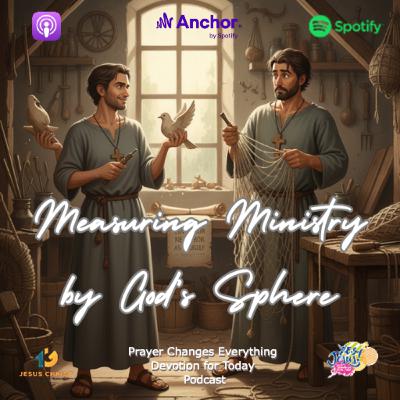
13 September 2025 Daily Devotion: "Measuring Ministry by God's Sphere" 2 Corinthians 10:13 New Living Translation 13 We will not boast about things done outside our area of authority. We will boast only about what has happened within the boundaries of the work God has given us, which includes our working with you. Some troubles and trials come our way simply because we live in a fallen world. Certain people will stand against us when we stand firm on the truths of Scripture. Then there are the hardships that, if we're honest, we bring upon ourselves. God has assigned an area of influence to each of us. We'll find joy in faithfully tending what has been entrusted to us, whether family, finances, or a specific ministry. The easiest way to lose joy and gain stress is to begin worrying about another person's area of influence or to begin comparing areas. Solomon advised his people to “know the condition of your flocks, give careful attention to your herds” (Proverbs 27:23, emphasis added).To live joyfully, we must learn to stay in our own lane, to focus on our area of influence, and to know well the condition of our own “flocks.”
This is our Podcast Trailer for you to know that we will be providing our Daily Devotion Podcast, from our Prayer Ministry!
We want you to know that, you are love by our Heavenly Father. Starting our day with the Word of God is the best way to guard our lives.
May we all be bless everyday from the Word of God!
God bless everyone!
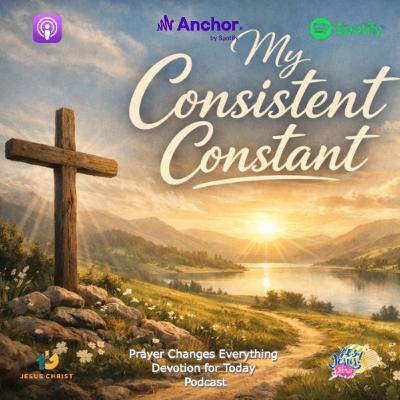
April 12, 2026 Daily Devotional: “My Consistent Constant”Malachi 3:6 "For I am the Lord, I do not change; therefore you are not consumed, O sons of Jacob." We live in a world defined by "the next big thing" wherein technology swiftly updates overnight, trends shift with a swipe, and even the people we rely on most can change their minds, their moods, or their commitments. Constant change can feel like treading water in a restless sea and eventually, you get tired of trying to stay afloat. In the middle of this instability, God makes a bold, comforting declaration: "I do not change." In Biblical truth, this is known as the immutability of God. It means He doesn't evolve, He doesn't have "off days," and His character doesn't fluctuate based on our performance. He isn't a "better version" of Himself today than He was yesterday, because He is already perfect. The second half of the verse is where the relief really sets in: "Therefore you are not consumed." Malachi was writing to a people who had been unfaithful, cynical, and weary. If God changed His mind like we do, He might have given up on them, and us, long ago. We aren't "consumed" by our mistakes orthe chaos of life because God’s covenant-keeping nature is the ultimate safety net. His mercy is a fixed point. When we fail, we don't fall into a void; we fall onto the bedrock of His unchanging grace. God is the only constant security in an inconstant world. Your safety isn't based on your ability to hold onto God, but on His unchanging decision to holdonto you. Because His nature doesn't change, His promises from thousands of years ago are just as valid for you this morning as they were the day they werespoken. This is a reminder that God is the ultimate constant. Unlike humans, who are often fickle or influenced by moods and circumstances, God isentirely consistent. This is the truth to carry when everything else is in flux, let this thought sink in today that the Character of God is your guide. Whether you feel it or not, He is the same yesterday, today, and forever. You are safe in His hands because He never let go.

April 11, 2026 Daily Devotional: “Seek and Find”Jeremiah 29:13 "You will seek me and find me when you seek me with all your heart." We often see the context of the promise from this verse on coffee mugs or graduation cards, framed as a cheery promise of discovery. However, the backdrop is much grittier. Jeremiah wrote these words to Israelites living in exile. They were displaced, discouraged, and surrounded by a culture that didn't honor their God. God wasn't telling them that life would suddenly become easy; He was telling them that His presence isn't tied to a location or a perfect set of circumstances. It is tied to the posture of the soul. To understand the meaning, you have to look at where the listeners were. The Israelites weren't in a place of peace; they were in Babylonian exile. They had lost their temple, their homes, and their sense of identity. The meaning here is that God is accessible even in "exile." You don't need a specific building or a perfect situation to find Him. He was telling them that physicaldisplacement didn't mean spiritual abandonment. The "whole heart" condition in this verse contains a beautiful promise "you will find me" but it also includes a specific condition: "with all your heart." In the biblical sense, the "heart" isn't just the seat of emotions—it’s the center of your will, your intellect, and your choices. Seeking God with a "whole heart" means prioritization by not fitting God into the gaps of a busy schedule,but making Him the center. Seeking God with a whole heart means honesty by bringing your doubts, frustrations, and exhaustion to Him rather than hidingbehind religious "politeness." Seeking God with whole heart means persistence by continuing to look for His hand in your life even when the "exile" doesn't end immediately. Often, we feel like God is distant. We might say, "I've prayed, but I don't feel anything." But are we seeking Him, or are we just seeking a solution to our problems? There is a profound difference. God promises that when the primary object of our pursuit is Him not just His blessings or His help; He will be found. How has your perspective on "seeking" changed during seasons when life felt like an "exile"? At its core, Jeremiah 29:13 is a verse about intentionality and reciprocity in a relationship with God. While it sounds like a simple "hide and seek" promise, the historical and linguistic context gives it a much deeper meaning. This verse means that God is not hiding. He is not playing games or trying to be elusive. However, the experience of His presence is reservedfor those who move past a surface-level interest and pursue Him with their entire being.
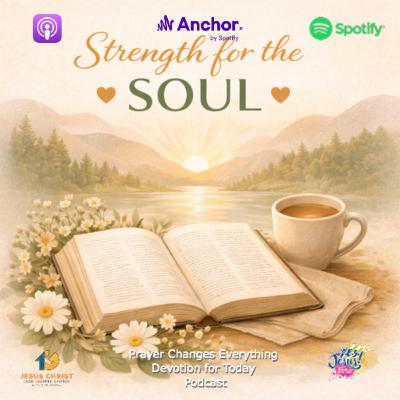
April 10, 2026 Daily Devotional: “Strength for the Soul”Psalm 73:26 "My flesh and my heart may fail, but God is the strength of my heart and my portion forever." In the ancient world, a portion is referred to as an inheritance; a piece of land that sustained a family. To call God our portion means that even if everything elseis taken away- possessions, status, or health, we still have the only thing that truly matters. Life has a way of wearing us down. Whether it’s the slow grind of daily responsibilities, the sudden shock of a health crisis, or the quiet ache of emotional exhaustion, we all eventually hit a wall. The Psalmist, Asaph, doesn't sugarcoat this. He uses the word fail, it suggests being"consumed" or "spent." It is a brave thing to admit thatyou are not infinite. Your physical body has limits, and your emotional "heart" can run dry. The beauty of this verse lies in the word "but." It marks the transition from our finite resources to God’s infinite supply. There is a shift in the perspective from the reality of the fail. The strength of our hearts when our inner resolve crumbles, God isn't just giving us strength; He is our strength. He becomes the steady beat when our own hearts skip with anxiety. Where in your life today do you feel your "flesh and heart" failing? What does it look like to lean on God as a "portion" rather than just a "helper"? Whenever you feel overwhelmed today, take a deep breath and whisper the phrase: "God is the strength of my heart." Let it be aphysical reminder that you are held by something much larger than yourself. Today's verse serves as a powerful reminder for life’s hardest moments. It means that when you reach the end of yourself, you haven't reached the end. Instead,you’ve reached the point where God’s strength takes over. It’s a move from self-reliance to God-reliance. In essence, Psalm 73:26 is a declaration of trust that shifts the focus from human frailty to divine consistency. Itacknowledges that while our physical and emotional resources are finite, God's presence is inexhaustible.
April 9, 2026 Daily Devotional: “A Heart of Gratitude”1 Chronicles 29:13 "Now therefore, our God, we thank you, and praise your glorious name." We often think of gratitude as a reaction to getting what we want. But in this passage, David models a deeper kind of praise: Gratitude as an acknowledgment of God’s character. David doesn't just thank God for the stuff; he praises God’s "glorious name." He recognizes that everything they just "gave" to God actually belonged to God in the first place. This shifts our perspective from "Look what I did for God" to "Look what God did through me." Context is everything. This isn’t just a polite "thank you" card sent after a celebration. This verse comes from the heart of King David at the end of his life. He had just watched his people give an overwhelming amount of gold, silver, and precious stones to build the Temple—a project he wouldn't even live to see completed. At its core, our verse today is the climax of King David’s final public prayer; a declaration that everything good in our lives originates from God. This prayer occurred after a massive fundraising effort for the Temple. The leaders and the people had given a staggering amount of wealth. It’s human nature to feel proud after a big sacrifice. However, David uses verse 13 to pivot thespotlight away from the donors and back onto God. He is saying, "We aren't the heroes for giving; You are the hero for providing us with something to give and the heart to give it." Instead of taking credit for inspiring the people, or feeling bitter that he couldn't build the Temple himself, David pauses. He looks at the mountain of resourcesand the willing hearts of the people and directs every ounce of credit back to the Source. This verse serves as a "perspective reset." It teaches that: Gratitude is a weapon against ego. It reminds us that our successesaren't self-made. Worship is communal, showing that collective gratitude strengthens a community's faith. We are simply returning a dedicated portion of what God has already placed in our hands. In your life today, are you holding onto your successes as if you created them, or can you see the "glorious name" behind the provision? When we praise God’s name, we move from a mindset of scarcity in the fear of losing what we have into a mindset of abundance in trusting the One who owns it all. In summary; 1 Chronicles 29:13 is a declaration of radical dependence. It means recognizing that we are "poor" recipients of a King’s staggering generosity, and our only logical response is a life of "thank you." Today, find one thing you’re proud of; a project at work, a cleanhouse, or a personal achievement and intentionally "give it back" to God in prayer. Use the words of verse 13: "God, I thank You and praise Your glorious name for this."
April 8, 2026 Daily Devotional: “Peace in the Promise”2 Timothy 4:18 "The Lord will rescue me from every evil attack and will bring me safely to his heavenly kingdom. To him be glory for ever and ever. Amen." The context of courage when Paul wrote these words, he wasn't sitting in a comfortable study with a cup of tea. He was in a cold Roman prison, facing the end of his life. Many of his friends had deserted him, and the "evilattacks" he mentions weren't just metaphorical—they were literal threats to his life. Yet, notice the tone. There isn't a hint of panic. There’s no "I hope I make it." There is only a settled, gritty confidence. Despite the chains, the cold, and the abandonment by his friends, Paul’s focus remains upward. He concludes that if God is faithful tosave his soul, God deserves all the credit, regardless of the circumstances. It was a doxology, as an expression of praise. There are two types of deliverance as Paul’s faith highlights a profound truth about how God rescues us. Often, we want God to rescue us from the fire. Sometimes, however, God rescues us through it. First, in the present rescue; Paul knew that even if his physical body was harmed, his soul was untouchable. God rescues us from "every evil attack" by preserving our faith, our integrity, and our spirit, even when circumstances go wrong. Second, in the ultimate rescue; The "safe delivery" Paul talks about isn't an escape from death, but a passage through it into the heavenly kingdom. For the believer, the worst-case scenario is death actually leads to the best-case scenario is presence with God. We all face "evil attacks"—whether they come in the form of anxiety, unfair criticism, financial instability, or health struggles. It is easy to feel like these things have the final word. But 2 Timothy 4:18 reminds us thatthe Lord is not a passive observer. He is a Deliverer. He is actively working to bring you home. When you realize that your ultimate destination is secure, the "attacks" of today lose their power to paralyze you. What "evil attack" (a fear, a person, or a circumstance) is currently stealing your peace? How does shifting your focus from "earthly safety" to "heavenly security" change your perspective on that struggle? The verse is a declaration of sovereign protection. It teaches us that God’s rescue doesn’t always mean the absence of trouble, True safety is found in one'srelationship with God, which no earthly power can sever. It’s a verse of grit and hope, meant to encourage us that while we will face opposition, the Lord is the one who carries us across the finish line.
April 7, 2026 Daily Devotional: “The Strength in the Sabbatical”Isaiah 30:15 "In repentance and rest is your salvation, in quietness and trust is your strength." In a world that equates business with worth, choosing to pause can feel like a radical and sometimes unnerving act. We often measure our value by the technical problems we solve, the systems we maintain, or the support we provide to others. However, the soul was not designed for constant output. Today marks a moment to recognize that "rest" is not merely the absence of work; it is the presence of preparation. Just as a field must lie fallow to regain its nutrients, our minds and spirits require intentional seasons of quiet to prepare for the next harvest. If you find yourself in a season of transition or a scheduled break, do not view it as "lost time." View it as the vital maintenance required for a high-performance life. Trust that the skills you have honed over the years are not fading while you rest; they are settling, integrating, and making room for a new kind of wisdom to emerge. We live in a culture that treats "doing" as the ultimatevirtue. We are conditioned to believe that if we aren't moving, troubleshooting, or producing, we are falling behind. Yet, Isaiah 30:15 offers a counter-intuitive divine strategy: Strength is found in stillness. At the time these words were written, the people of Israel were tempted to look for security in political alliances and military might. They wanted to dosomething to ensure their safety. But God pointed them in a different direction; this is about recalibration. It’s the act of turning away from the frantic noise of the world and "returning" to the foundation of your faith.Rest here isn't just physical sleep; it is the cessation of striving. When we stop talking and start listening, we create space for God to work. Trust is the bridge between our current uncertainty and God’s proven faithfulness. True resilience doesn't come from a high-pressure output; it comes from a deep-rooted connection to the Source. When you feel the pressure to "figure it all out" today, remember that your greatest advantage isn't found in your hustle, but in your ability to be still before the One who holds the blueprint.Sometime today, step away from all screens and notifications. Spend at least five minutes in total silence, acknowledging that God is in control of your career, your family, and your future. Audit your words and notice if your speech is frantic or anxious. Practice speaking with "quietness," reflecting a heart that trusts the outcome is already handled. Release the "shoulds" in identifying one task you feel pressured to do outof guilt or fear, and intentionally set it aside to prioritize mental and spiritual rest. Make a powerful and meaningful declaration today; I am not behind; I am being prepared. My rest is productive, and my peace is a priority. I do not haveto strain to be sustained. In quietness and trust, I find the strength for everything ahead of me.
April 6, 2026 Daily Devotional: “The Burning Heart”Luke 24:32 "They asked each other, 'Were not our hearts burning within us while he talked with us on the road and opened the Scriptures to us?'" This moment occurs on the road to Emmaus, just hours after the Resurrection. Two disciples are walking away from Jerusalem, downcast and dejected. Jesus joinsthem, but they are "kept from recognizing him." He doesn't immediately reveal His face; instead, He reveals the Truth. He walks them through the Law and the Prophets, explaining why the Messiah had to suffer andrise. It is only after He breaks bread with them that their eyes are opened. But looking back, they realize the transformation started long before the meal, it started with a feeling in their chests. On the first Monday after the Resurrection, the disciples weren't in a cathedral; they were on a dusty road to a village called Emmaus. They were confused,grieving, and trying to make sense of everything that had just happened in Jerusalem. Notice that Jesus didn’t wait for them to "get it right" before showing up. He met them in their disappointment and their ordinarycommute. Often, we feel a "post-holiday slump" after a big celebration like Easter. The Monday morning alarm rings, the laundry is piled up, and the world looks exactly as it did on Friday. But the message of Emmausis that the Risen Christ is now a constant companion in the mundane. He is the "burning heart" in the middle of a regular Monday. He doesn't just exist in the "Hallelujah" of Sunday morning; He walks with youthrough the "What now?" of Monday afternoon. We often seek "signs" from God that are external; in a closed door, an open opportunity, or a literal voice from the clouds. But Luke 24:32 points us to the Internal Witness. The "burning" the disciples felt wasn'theartburn or anxiety; it was the resonance of Truth. When the Holy Spirit illuminates the Word of God, it creates a spiritual heat. Have you ever read a verse you’ve seen a hundred times, but suddenly it felt alive? That is the "Emmaus Heat." It is the Spirit testifying that God’s promises are real. Notice that their hearts were burning while they were still confused. They didn't have all the answers yet, and they didn't even know it was Jesus walking with them. You don't need to have your life perfectly figured out to experience the presence of God. He is often doing His most profound work in your heart while you are still "on the road," wondering what happens next. The fire wasignited by the Scriptures. If you feel like your faith is lukewarm or "room temperature," the remedy is found in the Word. Jesus "opened the Scriptures" to them, and that was the fuel for the fire. To know the heart of God, we must stay close to the breath of God in His Word. For faith is not the absence of doubt, but the presence of a'burning heart' that persists through it. When was the last time a passage of Scripture or a truth about God made your "heart burn" with hope or conviction? Are you waiting for a physical sign while God is trying to speak to you through the quiet resonance of His Spirit in your heart? How can you "set the wood" today by spending time in the Bible, allowing Jesus to explain the Truth to you?
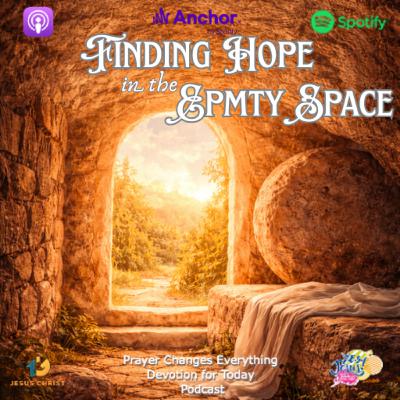
April 5, 2026 Daily Devotional: “Finding Hope in the Empty Space”Luke 24:5-6 "Why do you look for the living among the dead? He is not here; he has risen!"The empty tomb is a profound symbol of unfinished stories being rewritten. We often find ourselves standing in the "gardens" of our lives—places where weexpected growth but encountered loss, or where we planned for one path but were re-routed by circumstance. Easter is more than a historical marker; it is the ultimate narrative of transformation. It reminds us that no matter how long the "Saturday" of waiting feels, the dawn is inevitable. The angels’ question to the women at the tomb is a gentle challenge for us today: Are we looking for life in the places where it used to be? We often spend a lot of our emotional energy excavating the past. We revisit old failures, linger in "what ifs," or stay parked in seasons of grief, much like the women who approached Jesus’ tomb that Sunday morning. They weren't beingfaithless; they were being practical. They had spices in hand, ready to perform the last act of love for a dead friend. Sometimes, we look for our purpose in past roles, or our joy in old rhythms that no longer serve us. Easter invites us to lift our eyes. It tells us that silence is not absence in the quiet of the tomb was not the end; it was the preparation for the greatest breakthrough in history. It tells us that scars have purpose, even the risen Christ kept his scars. They didn't represent defeat; they represented a victory that had been through the fire. It tells us that new life is adaptive, just as the seasons shift, our lives have cycles of pruning and blooming. Easter is the promise that the "blooming" is a certaintyfor those who wait with hope. Where in my life am I looking for "the living among the dead", clinging to a past version of myself rather than embracing the new growth ahead? How can I view my current "waiting period" as a preparation for a renewal Icannot yet see? Today, identify one "dead thing" you’ve been dwelling on; a past mistake, a grudge, or a disappointment. Intentionally hand it over to God and ask Him to show you where He is working in your present instead. May you find peace in the promise of the empty tomb today. May your burdens feel lighter knowing that restoration is always possible, and may you walk into this new season with the confidence that the best parts of yourstory are still being written.
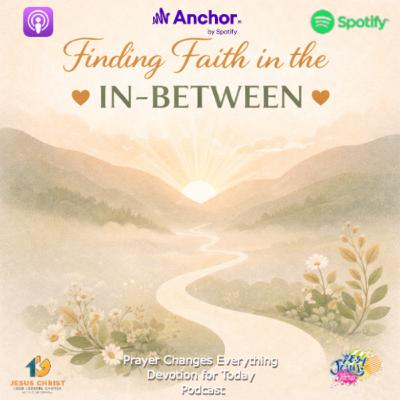
April 4, 2026 Daily Devotional: Finding Faith in the "In-Between"Psalm 33:20-22 "We wait in hope for the Lord; he is our help and our shield. In him our hearts rejoice, for we trust in his holy name. May your unfailing love be with us, Lord, even as we put our hope in you." Holy Saturday is often described as the "Great Sabbath." It is the day between the agony of the cross and the triumph of the resurrection—a space defined by waiting, uncertainty, and profound silence. On the first Black Saturday, the disciples were in a state of spiritual and emotional limbo. Their teacher was gone, their expectations were shattered, and the future was a dark room. They didn't know that Sunday was coming; they only knew the weight of the silence. Many of us live in a "Saturday" season. It’s the gap between a prayer and an answer, between a career transition and a new beginning, or between a lossand the healing that follows. Rest is not wasted time, because even in the tomb, there was a divine purpose at work. Silence does not mean God is inactive. Often, the most significant internal shifts happen when we are forced to be still. There is strength in the "Even If", because faith is easy when the tomb is empty, but it is forged when the tomb is sealed. It is the choice to trust in God’s character even when His hand isn't visible. It isan opportunity to let go of old identities and false securities so that we have room to receive the "newness" that Sunday brings. Waiting is rarely our favorite activity. Whether it’s waiting for a medical report, a career breakthrough, or a change in a difficult relationship, the "in-between" space often feels like wasted time. However, Psalm 33reminds us that waiting isn’t passive—it’s an act of profound spiritual courage. It seems counterintuitive to rejoice while you’re still waiting, but verse 21 tells us our hearts rejoice because we trust His name. Our joy isn't tethered to the outcome; it’s tethered to the Character of the one holding the outcome. What "sealed door" in my life is causing me the most anxiety right now, and can I surrender the timing of its opening to a higher power? How can I use this day of stillness to listen for the "still, small voice" rather thanfilling the silence with noise or distraction?

April 3, 2026 Daily Devotional: “Resting in the Ultimate Reality”1 John 4:16 "And so we know and rely on the love God has for us. God is love. Whoever lives in love lives in God, and God in them." Most of us treat love like a transaction or a fluctuating emotion. We feel "loved" when things go well or when we perform at our best. But John’s letter strips away the complexity to reveal a profound, foundational truth; God is love. Notice that the verse doesn't say God acts loving or feels love—it says He is love. It is His very essence. If God ceased to love, He would cease to be God. John highlights specific responses we should have for this reality: In knowing it, this isn't just head knowledge or memorizing a verse. It’s a deep, personal recognitionof His character. In relying on it; this is where the rubber meets the road. To rely on His love means to lean your entire weight on it, especially when your circumstances or your own feelings tell you otherwise. When you "live in love," you aren't just being a "nice person." You are taking up residence in the heart of God. You are choosing to view the world, your struggles, and your neighbors through the lens of a Father who sacrificed everything to bring you close. At its core, 1 John 4:16 is a definitive statement about the nature of God and the nature of a believer's relationship with Him. It moves beyond describing what God does and defines who God is. The verse teaches that God's love isn't a reward to be earned, but a reality to be lived in. To understand 1 John 4:16 is to realize that your security doesn't depend on how much you love God, but on how much He loves you.It’s easy to believe God loves the world, but do you believe He loves you right now at this moment, in your current state? Today, practice "relying" on that love. When a moment of anxiety hits or a mistake makes you feel unworthy, stop and tell yourself: "I am stepping out of my own effort and resting in the fact that God is love, and He is in me."

April 2, 2026 Daily Devotional: “The Beauty of the Blank Page”Isaiah 43:18-19 "Forget the former things; do not dwell on the past. See, I am doing a new thing! Now it springs up; do you not perceive it? I am making a way in the wilderness and streams in the wasteland." We often get stuck in "The Way Things Were." Sometimes we dwell on the past because of regret, wishing we could undo a mistake. Other times, we dwell there because of nostalgia, clinging to a season where we felt safe, successful, or happy, fearing that our best days are behind us. But in these verses for today's devotional, God gives us a gentle but firm command; Forget the former things. He isn't telling us to have amnesia. He’s telling us to stop letting the past define our present potential. If youare constantly looking backward, you’ll miss the "sprout" breaking through the soil right at your feet. Notice the phrasing: "Now it springs up; do you not perceive it?" This suggests that God’s "new thing"isn't always a finished skyscraper; often, it’s a tiny seed. It requires a shift in our perception to see God’s hand in the middle of our wilderness or wasteland. He doesn't wait for the desert to disappear before He starts thework; He brings the water into the dry place. Release the anchor and begin asking yourself; what "former thing" are you dragging into today? Whether it’s an old hurt or an old glory, give it to God so your hands are free to receive what’s next. Look for the"sprout" and ask God to open your eyes to the small blessings. It might be a new connection, a moment of peace, or a fresh idea. Trust the Waymaker because even if your life feels like a desert right now, remember that God specializes in "wasteland irrigation." He provides exactly what is needed to sustain the new growth. God is already working, but our focus on "the way things used to be" or our current "desert" environment can blind us to it. The core meaning is a call to spiritual alertness. It’s an invitation to shift your gaze from the dry sand of your current struggle to the small "springs" of grace God is starting to bubble up for you.
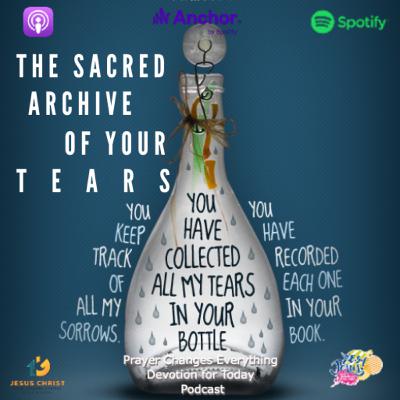
April 1, 2026 Daily Devotional: “The Sacred Archive of Your Tears”Psalm 56:8 "You keep track of all my sorrows. You have collected all my tears in your bottle. You have recorded each one in your book." When you are in the depths of despair, it feels like your grief is invisible. You cry in the car, or late at night when the house is silent, and it feels as though those tears simply evaporate into nothing; wasted and forgotten. This verse tells a different story. It suggests that God is so intimately attentive to your broken heart that not a single tear goes unnoticed. The imagery of a "bottle" and a "book" is powerful. It means that your pain is documented, your loss isn't a footnote; it is significant enough to be recorded by the Divine. Your sorrow is precious; you don't bottle things that are worthless. In God's eyes, the tears you shed for what you have lost are sacred evidence of the love you carried. You are seen in private, even the "invisible" grief; the kind you don't show the world is being tracked and held by a God who stays close. Psalm 56:8 offers a startling,beautiful answer: God is a meticulous record-keeper of your pain. Today's devotional is for the moments when you feel like your grief is a secret you are carrying alone; when the world sees a smile, but the silence of your own room knows the truth. You don't have to explain your despair or justify why you're still hurting. He’s already counting the tears. He knows the tally of your sorrow, and He holds it with infinite tenderness. Now, let go of the pressure to put your loss into words for others to understand. Release the need to explain, remind yourself; “God has the book open. He knows the count.” In this silent release, if you feel tears coming, don't rush to wipe them away. Let them be a physical prayer, knowing they are being "collected" and honored. Psalm 56:8 is a deeply personal verse that highlights God’s intimate awareness of our suffering. In the original Hebrew context, David is writing this while being pursued by enemies, feeling exhausted and overlooked.
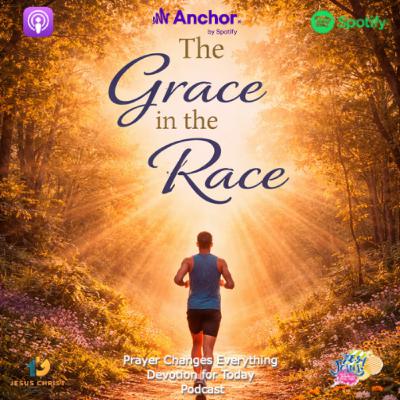
March 31, 2026 Daily Devotional:“The Grace in the Race”Ecclesiastes 9:11 "I returned, and saw under the sun, that the race is not to the swift, nor the battle to the strong, neither yet bread to the wise, nor yet riches to men of understanding, nor yet favour to men of skill; but time and chance happeneth to them all." We live in a world obsessed with meritocracy. We are told from a young age that if you run the fastest, you’ll win the gold; if you study the hardest, you’ll get the job; if you are the most skilled, you’ll earn the favor. We find comfort in these "rules" because they give us a sense of control. But Solomon, the wisest man to live, stops us in our tracks. He looks at life "under the sun"—the raw, often unpredictable human experience—and observes a jarring truth: The math doesn’t always add up. Sometimes the fastest runner trips. Sometimes the strongest army loses to a freak storm. Sometimes the most brilliant mind is overlooked while someone less capable is promoted. Solomon calls this "time and chance," but for the believer, we recognize this as the limitation of human effort and the sovereignty of God.This verse isn't meant to make us cynical or lazy. Rather, it is meant to humble us, if we have succeeded, it is not solely because of our "swiftness" or "skill." It is because God allowed the "time and chance" to align in our favor. It is meant to relieve us, if you feel like you’ve doneeverything right but are still "losing" the race, this verse is a reminder that life isn't a vending machine. Your current struggle isn't necessarily a reflection of your worth or your effort. Release the illusion of control, and stop carrying the weight of the world on your shoulders. Do your best, but trust God with the outcome. If you are currentlyenjoying "bread," "riches," or "favour," recognize it as a gift of grace rather than a trophy of your own making.Therefore, practice gratitude. Find Peace in the "Unexpected" when "chance" seems to go against you, remember that nothing catches God by surprise. He is the Lord over both the "race" and the "time." On the surface, Ecclesiastes 9:11 can feel a bit cynical, but it is actually one of the most grounding observations in the entire Bible. This is a profoundobservation on the unpredictability of life. In this verse, Solomon, traditionally considered the author, challenges the common human assumption that effort always equals outcome. It means that human ability is no guarantee of success. While we should still strive to be wise and skillful, we must ultimately trust in God's providence rather than our own performance.
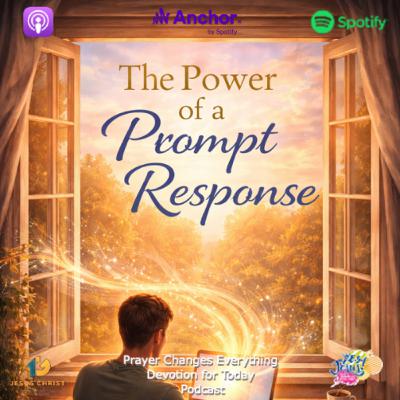
March 30, 2026 Daily Devotional:“The Power of a Prompt Response”James 5:13 “Is anyone among you suffering? Let him pray. Is anyone cheerful? Let him sing psalms.” Life is rarely a flat line; it’s a series of peaks and valleys. Sometimes we’re standing on the mountaintop with the wind at our backs, and other times we’re trudging through a dark ravine where every step feels like a struggle. In James 5:13, we get a surprisingly simple two-part "operating manual" for the human soul. James doesn't suggest we ignore our emotions or "fake it 'till we make it." Instead, he invites us to take our current realitywhatever it is and immediately turn it toward God. In the valley; Pray! When we suffer, our instinct is often to retreat, complain, or try to fix things in our own strength. But James gives a direct command: Pray. This isn't a call for a formal, poetic prayer. It’s a call to honestcommunication. Prayer in the midst of suffering is an act of trust. It’s saying, "I can’t carry this, so I’m handing it to the One who can." It turns a solitary struggle into a shared journey with the Creator. On the peak; Praise! On the flip side, when things are going well, we often forget the Source of our joy. We take the credit or simply get distracted by the "good life." James suggests a different rhythm: Sing. Cheerfulness is the perfect fuel for worship. Singing psalms or songs of praise anchors our happiness in something deeper than just good luck—it anchors it in God’s character. It turns our "good mood" into a "goodtestimony." Check your current "weather": Are you in a season of suffering or a season of cheer? How can you turn your current emotion whether it’s heavy or light into a conversation with God right now? James 5:13 is a foundational verse in the New Testament that provides a simple framework for how a believer should respond to the shifting circumstances of life. It acts as a spiritual internal compass, directing the heart toward God regardless of the external environment. It is our constant communion that there is no secular or ignored emotion in the life of a person of faith.
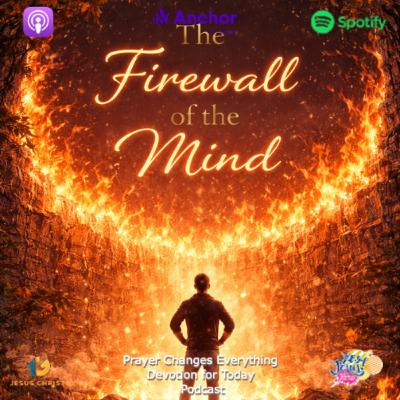
March 29, 2026 Daily Devotional: “The Firewall of the Mind”2 Corinthians 10:5 "We demolish arguments and every pretension that sets itself up against the knowledge of God, and we take captive every thought to make it obedient toChrist." The battlefield is in the mind, where our minds are rarely quiet. On any given day, we are bombarded by a chaotic mix of worries, self-criticism, "what-if" scenarios, and cultural narratives that tell us we aren'tenough. Paul, writing to the Corinthians, uses military language—demolish, captive, obedient—because he knows that the mind isn't just a playground; it’s a battlefield. The "arguments" and "pretensions" Paul mentions aren't just intellectual debates; they are the internal strongholds we build. These are the patterns of thinking that whisper, "God isn't actually in control," or "You’ll never be forgiven for that." These thoughts set themselves up as tall walls between us and the truth of God's character. Notice that Paul doesn’t suggest we simply "ignore" bad thoughts. He says we must take them captive. Imagine a security guard at a gate. When a thoughtapproaches, the guard doesn't just let it walk in. He stops it, checks its ID, and asks, "Do you align with the King?" Taking a thought captive means there is awareness in recognizing a thought is harmful or untrue before it takes root. We asses by comparing that thought to the Word of God and aligning it to Force that thought to submit to the reality of who Jesus is. If a thought says, "I am alone," you arrest it with the truth: "No, He promised never to leave me." If a thought says, "I am defined by my failure," you make it obedient to the cross: "No, I am a new creation in Christ." Victory doesn't mean you’ll never have a negative thought again. It means those thoughts no longer have the authority to run your life. When we bring our mental world into obedience to Christ, we find a peace that doesn't depend on our circumstances, but on the unwavering truth of the One who holds us. What is one "argument" or recurring negative thought that has been loud in your head lately? What specific truth from Scripture can you use to "arrest" that thought today? When a thought enters your mind that says your years of sacrifice were "lost time," or that your passion is "useless," that is an argument setting itself up against the truth. The truth is those years weren't a detour;they were a training ground. This verse is an invitation to reclaim your mental space.
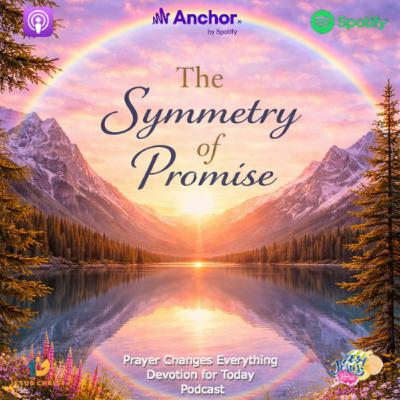
March 28, 2026 Daily Devotional: “The Symmetry of Promise” Jeremiah 32:42 "For this is what the Lord says: 'As I have brought all this great calamity on this people, so I will give them all the prosperity I have promised them.'" The weight of the word "As" in this verse, God uses a powerful comparison. He points to the "great calamity"; the very real, very painful exile and destruction the Israelites were facing and uses it as a measuring stick. The word "As" acts as a fulcrum. God is saying that His capacity to restore is equal to, and will eventually surpass, the season of suffering. If He was "faithful" to uphold the consequences of the covenant when the people turned away, He is infinitely more committed toupholding the blessings of the covenant now that He is drawing them back. From siege to security! When Jeremiah received this word, he was actually in prison, and the Babylonian army was at the gates. It was the least "prosperous" moment imaginable. Yet, God commanded Jeremiah to buy a field in the middle of a war zone from the previous verses in this chapter. Buying that land was an act of "prophetic math." It was a statement that the current math of the world translated as "Addition of sorrow + Subtraction of land = Hopelessness"; definitely does not apply to the Kingdom of God. We often find it easy to believe in the reality of our "calamity." We feel the weight of the debt, the sting of the breakup, or the fog of the depression. We see those things as "solid." Jeremiah 32:42 challenges us to view God’s promised prosperity with the same level of concrete reality. If you can see the struggle, you must also train your eyes to see the coming restoration. For today's application, let's continue in finding balance with our ever changing circumstances What is a "calamity" from your past that God eventually turned into a source of growth or restoration? What "field" is God asking you to "buy" and invest in with hope even while the circumstances look difficult? Which specific promise of God do you need to hold onto as "just as real" as your current problem? The verse establishes a symmetry in mathematical balance. In Hebrew thought, God’s justice and His mercy are two sides of the same coin. God is using ourcurrent misery as evidence of His reliability. He is saying: "If I was consistent enough to follow through on the warnings and discipline I promised from ancient centuries ago, you can be 100% certain I am consistent enough to follow through on the restoration I am promising now!" Trust Him Today!
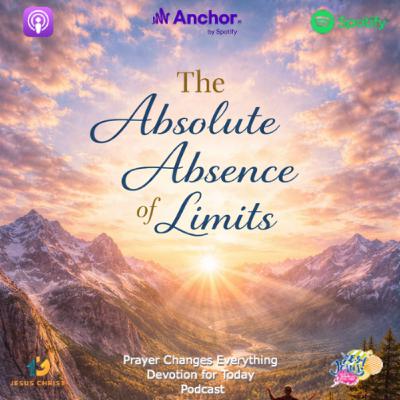
March 27, 2026 Daily Devotional: “The Absolute Absence of Limits” Jeremiah 32:17 "Ah, Sovereign Lord, you have made the heavens and the earth by your great power and outstretched arm. Nothing is too hard for you." Context is almost everything, when Jeremiah prayed these words, he wasn't sitting in a peaceful garden; he was in prison, and the Babylonian army was literally at the doorstep of Jerusalem. To make matters weirder, God had just told him to buy a field in a territory that was about to be conquered. Jeremiah starts byanchoring his perspective in Creation. He’s essentially saying, "God, if You are powerful enough to speak the entire universe into existence out of nothing, then a city under siege is not a problem for You." Jeremiah isn'tjust saying God is strong; he’s saying that nothing is beyond God’s capacity to innovate a solution. Even when a situation is logically "dead" or "impossible" by human standards, it remains "extraordinary" in God’s hands. It’s a reminder that the God who manages galaxies is not intimidated by earthly crises. From a human perspective, buying that land was a financial disaster. But Jeremiah’s prayer reminds us of a fundamental truth: Our "impossible" is God's "easy." He points to the biggest display of power imaginable; thecreation of the universe. The logic is simple yet profound: If God had the strength to speak galaxies into existence and stretch out the heavens, why would a piece of real estate, a broken relationship, or a daunting career hurdle be too difficult for Him? We often spend our energy trying to "help" God figure out a solution, treating Him like a consultant rather than the Creator. Jeremiah 32:17 invites us to stop measuring the problem against our own strength and start measuring it against the "outstretched arm" of the Sovereign Lord. Let this shift our perspective today; When the world feels like it's closing in like a siege, look up at the "heavens and the earth" to remember the scale of God's power. Sometimes God asks us to "buy the field" or to invest in hope or take a step of faith even when the current circumstances look bleak, this is our obedience over human logic. Identify one "impossible" situation you are facing right now. Instead of praying for a specific outcome, spend five minutes today simply praising God for His role as Creator, acknowledging that this situation is well within His capacity to handle. There is no fine print in this verse. "Nothing" means exactly that. No debt, no disease, and no dilemma sits outside His jurisdiction. This verse isn't just a polite compliment to God; it’s a prayer of protest against despair. Jeremiah was looking at a war zone, but he chose to speak about the Heavens. The meaning for us today is that our current "siege", whether it's a professional setback, a family crisis, or a personal failure, these do not define the final outcome. God’s character as the Creator has the final word, for He is beyond limitless!

March 26, 2026 Daily Devotional: “The Powerful Pivot” Psalm 34:19 "Many are the afflictions of the righteous, but the Lord delivers him out of them all." There’s a common misconception that a life of faith acts as a "spiritual bubble wrap," protecting us from the bumps and bruises of the world. This Psalm was written by David during one of the lowest points of his life. He was pretending to be insane to escape a Philistine king while being hunted by his own King (Saul). When David writes that God delivers us out of "all" afflictions, he isn't speaking from a place of comfort; he’s speaking as a man who was hiding in caves and fearing for his life. It’s a "battle-tested" hope, while fleeing for his life doesn't sugarcoat the human experience. He uses the word many. The "many afflictions" aren't a sign that you’ve wandered off the path or that you’re being punished. Often, they are simply a byproduct of living in abroken world. The "righteous" are not those who are perfect, but those whose hearts are oriented toward God. Even for them, the rain falls. The turning point in the power of this verse lies in the word but. The word "but" acts as a structural pivot. It acknowledges the weight of the first half of the verse but immediately introduces a superior force. It tellsus that while the troubles are "many," they are not the final word. The afflictions have a limit, but God’s power to deliver does not. The afflictions are many, but the deliverance is total. Notice that God doesn't always deliver us from the trouble nor preventing it, but He consistently delivers us out of it by walking us through to the other side. Deliverance might look like a miracle that removes the problem, or it might look like the supernatural peace that sustains you while the storm is still howling. Either way, the Lord is not a distant observer; He is an active participant in your rescue. Identify the "Many"; What are the specific afflictions or stressors weighing on you today? Name them honestly before God. Look back and think of a time in the past when you felt overwhelmed, but can now see how the Lord "delivered" you out of it? How would your perspective change today if you focused more on the Lord's promise to deliver than the weight of theaffliction? Psalm 34:19 means that trouble is inevitable, but defeat is not. It promises that while the righteous will face numerous trials, God is committed to seeing themthrough to the other side of every single one. It is a verse that offers a beautiful, gritty kind of hope. It doesn't promise a life free of gravity; it promises a hand to catch you when you fall.

Comments

Download from Google Play

Download from App Store
 United States