


Heal Nourish Grow Podcast
Subscribed: 12Played: 322
Subscribe

© Heal Nourish Grow LLC 2025
Description
Ultimate Wellness, Healthy Lifestyle and Advanced Nutition
112 Episodes
Reverse

In this episode, Cheryl McColgan discusses strategies for maintaining wellness during the holiday season. She emphasizes the importance of setting realistic intentions, managing weight, coping with stress, making mindful eating and drinking choices, and balancing social obligations with self-care. Cheryl provides practical tips for navigating holiday challenges, including travel and family dynamics, while encouraging listeners to be intentional and mindful throughout the season.
You can find Cheryl’s previous episodes about avoiding holiday weight gain here.
Disclaimer: Links may contain affiliate links, which means we may get paid a commission at no additional cost to you if you purchase through this page. Read our full disclosure here.
Takeaways
The holidays can be stressful, and it’s important to plan ahead for wellness.
Setting intentions rather than big goals can help maintain focus during the holidays.
Protein intake is crucial for satiety and managing weight.
Eating to 80% fullness can prevent discomfort after meals.
Cortisol levels can rise due to holiday stress; managing stress is key.
Alcohol consumption should be mindful, as it can cloud judgment and lead to poor food choices.
The holidays should focus on nurturing relationships rather than just food and drink.
It’s okay to say no to social obligations to prioritize self-care.
Post-holiday, it’s important to return to normal routines quickly to avoid weight gain.
Mindfulness and intention are essential for a balanced holiday experience.
Watch on YouTube
https://youtu.be/1lgmn__CCgs
Episode Transcript
Cheryl McColgan (00:01.038)Hey everyone, I’m Cheryl McColgan, founder of Peel Nourish Row, and it has been a little while since I’ve been on the mic. I took an unexpected longer hiatus than I thought I would, and I’m just now getting around to starting to record again. And I really wanted to get on here and do this episode because the holidays are such a stressful time for everyone. It’s a time where people could use extra support, could use extra ideas about how to
de-stress, not gain weight during the holidays, and just find ways to support your wellness in this busy time of the season. So I’ve done another episode like this in the past, and I’ll be sure to link that in the show notes, but for this one I did map out a few bullet points to keep me on track. I’ve got my laptop here with that on it so that I can glance over there occasionally and remind myself of what I wanted to share with you today. But the first thing is this why this, what does holiday mean?
wellness even mean or why does it matter? Again, it’s a stressful time. We’re around family for some times that’s very exciting and sometimes it can be very stressful and there’s a lot of travel involved typically and a lot of extra events and cooking and things like that. So it can be just a time where there’s so much going on that you forget to actually take care of yourself. So planning ahead now so that you don’t have to recover from everything at the beginning of the year is a good plan.
And usually what I like to say during the holidays, I mean, if you’re a lot of people that listen to this podcast are interested in weight loss or fitness or health and wellness. If you’re trying to lose weight during the holidays, that can be particularly challenging. I think what would be a better goal for most people is to just maintain during the holidays and not gain extra weight that you then have to kind of backtrack from the progress that you’ve made throughout the year. So all that being said,
I think the good way to start with this is just to set some intentions around the holidays. So for example, just to be really mindful every time that you eat or, consistent movement or practicing on your sleep during the holidays to make sure that you stay on track with your wellness. So whatever that intention is, just making something specific enough that you know what it is that you’re trying to accomplish, but generally it’s not going to be any big goals during this time of the year.
Cheryl McColgan (02:24.606)Just because it’s like I said a lot of extra stress a lot of extra things going on and so Setting really big goals around health and wellness this time of year can just be a way that sets you up for failure Which is not what we want want to go into the new year Thinking positive feeling positive and having every intention that way when we get to the new year We’re kind of set up in this place.
been mindful, we’ve been practicing taking care of ourselves and then once we get to the new year we can really focus on those bigger goals that you want for yourself and your wellness in 2026. So after you’ve set the intentions let’s address the first thing is weight. I actually looked this up before I got on here and most people gain anywhere between a pound to five pounds during the time period from Thanksgiving to the end of the year.
And while that can be also if your intention is to say enjoy time with family, eat really good foods, just nourish yourself and not to worry too much about weight gain, that is a perfectly acceptable intention as well. But if you want to think about, you know, maintaining your weight or not gaining weight during the holidays, then it’s important to kind of have a plan when you go into this. So the first thing, you know, I’m going to say is what we’re always very focused on here is the importance of protein.
Protein is a very satiating nutrient. There’s a lot of theories around about how your body will keep seeking out food if you’re not getting a proper protein intake. So that’s the first thing. So every time you sit down to a meal, plan on getting your protein in first, and then you can have a little bit more flexibility with the rest of your meal because you know that you’ve gotten your protein requirements out of the way. And then you can fill in after that with fats and carbohydrates. If you’re a carbohydrate eater, if you’re still trying to practice keto during the holidays, it is a time.
perhaps be just a little more flexible with that only because there’s going to be a lot of temptations there’s going to be a lot of things you want to try so again having that intention around that whether it’s taking a bite here or there or allowing yourself certain days of the week or a party or something like that to enjoy a few more carbs again just being really mindful and setting that intention so that you don’t kind of go off the rails with that stuff because some people one of the reasons they do a lower carb lifestyle is because they don’t have
Cheryl McColgan (04:40.728)They don’t either feel good when they eat carbs or they have a relationship with them where when they eat too many carbs, it makes them hungrier and eat more. So if you know that you’re that person, you certainly don’t want to set yourself on this crazy path of that during the holidays by eating a lot of extra cookies or potatoes or candy or whatever it is you’re normally avoiding for the most part. So being really mindful about those choices and allowing them in in the quantities that make sense for you and your personal goals.
So the other thing is eating to 80 % fullness. Now this is something that we should be practicing pretty much all of the time if you’re doing an eating program where you’re doing just more of an intuitive eating kind of style. If you want to give yourself time for your brain to get the feeling of whether you’re actually full or not. So eating slowly, eating mindfully, chewing your food and stopping.
when you’re already starting to feel full because it takes a little while for your brain to catch up with your body. So if you’re already starting to feel full, chances are 20 minutes later, 30 minutes later, you’re gonna be, you might have that stuffed feeling, which a lot of people have after Thanksgiving meals. So just being really mindful of why you’re adjusting to take note of how you’re feeling if you’re starting to get full and shooting for that 80 % mark in that way.
If you go a little over, you’re not going to end up on the couch with your holding your stomach and just being miserable. You’ll probably end up in a much better place. Also, I have two thoughts on this. And again, it’s about knowing the kind of person you are. So there’s this idea of saving your calories for certain big meals and everything. And I think that that can work for some people, especially if you’re tracking your macros and you’re eating a meal that maybe you made or that it’s a simple meal like tracking a certain quantity of turkey, for example.
that’s very easy to track. So you can either save some calories for later, so not eating as much throughout the day so that you know when you have a big meal that you’re not going to go over your calorie allotment for the day. But again, it’s about knowing yourself. If in the past you’ve experienced that, for example, on Thanksgiving, you don’t eat most of the day or you just eat a very small breakfast and then you go totally overboard, you feel sick the rest of the night,
Cheryl McColgan (06:52.886)You might be better off having two smaller meals earlier in the day, again, very protein forward. And maybe yes, okay, saving a little bit of your calories for that last final bigger meal, but not allowing yourself to get so ravenous that you just go off the rails when the meal comes. So again, knowing yourself here is the key to practicing this and to knowing which one will work best for you. So just give that some consideration before you go into those days where you know it’s going to be a bigger food day.
knowing your plan also is a big key here. So don’t wait until the last minute to kind of mentally prepare yourself for what’s going to happen. Have a plan when you go in at this point, you know, you’re listening to this, you’re not a five year old, you’re an adult, you’ve had many holiday meals, you know what your tendencies are. And so just again, set some inte
In this episode of the Heal Nourish Grow podcast, host Cheryl McColgan speaks with holistic nutritionist Meg Gage about her personal journey with acne and how it led her to help others. Meg discusses the multifaceted nature of acne, emphasizing the importance of mindset, gut health, and customized skincare approaches. She shares insights on how stress and limiting beliefs can impact skin health and offers practical tips for listeners to start their healing journey. The conversation highlights the need for a holistic approach to acne treatment, integrating mental, physical, and emotional well-being.
Connect with Meg to learn more at her website.
Takeaways
Everyone has the potential to heal acne, regardless of their past experiences.
Mindset is crucial in the healing process; negative beliefs can exacerbate skin issues.
The body communicates through symptoms, and understanding this can aid healing.
Gut health plays a significant role in skin conditions like acne.
Customized skincare is essential for effective acne treatment.
Stress management is vital for overall health and skin clarity.
Disclaimer: Links may contain affiliate links, which means we may get paid a commission at no additional cost to you if you purchase through this page. Read our full disclosure here.
CONNECT WITH CHERYL
Shop all my healthy lifestyle favorites, lots of discounts!
21 Day Fat Loss Kickstart: Make Keto Easy, Take Diet Breaks and Still Lose Weight
Dry Farm Wines, extra bottle for a penny
Drinking Ketones
Wild Pastures, Clean Meat to Your Doorstep 20% off for life
Clean Beauty 20% off first order
DIY Lashes 10% off
NIRA at Home Laser for Wrinkles 10% off or current promo with code HealNourishGrow
Instagram for daily stories with recipes, what I eat in a day and what’s going on in life
Facebook
YouTube
Pinterest
TikTok
Amazon Store
The Shoe Fairy Competition Gear
Getting Started with Keto Resources
The Complete Beginners Guide to Keto
Getting Started with Keto Podcast Episode
Getting Started with Keto Resource Guide
Watch on YouTube
https://youtu.be/Hv7zOyux71E
Episode Transcript
Cheryl McColgan (00:01)Hello everyone, welcome to the Heal Nourish Grow podcast. Today I am joined by Meg Gage. I hope I got that right, it’s spelled a little differently. And she has a really interesting health history. She’s a holistic nutritionist. She specializes actually in acne, I guess, prevention and treatment. And as you can see by her skin, I mean, it looks amazing here if you’re watching on video. So if you can’t see it, maybe pop over to YouTube.
Meg (00:08)You did.
Cheryl McColgan (00:30)But it wasn’t always this way Meg, right? So I’d love it if you could just start by sharing a little bit of your history, your health journey, and then we’ll eventually get into how you came to figure out like how to get rid of acne. So welcome.
Meg (00:45)Thank you. Yeah, it’s quite the journey. feel anyone who becomes a healer always has quite their own story as to how they got there. But yeah, ever since I was five, I just dealt with multiple traumas and that kind of stress of living in prolonged kind of fight flight breathe since I was little showed up very physically for me in a lot of symptoms, one of which was long standing acne.
since I was 12 and others were chronic pain, chronic fatigue, a lot of misdiagnosed disease of like fibromyalgia and chronic fatigue syndrome. All the while at that point when I was 12 being put on hormonal birth control without any kind of questions asked, that’s just what we did back in those days. So, you without having many cycles of my own, I was just put on these synthetic hormones as well.
And kind of throughout dealing with major health issues over the years and a couple of car accidents and whiplash and PTSD and concussions, my acne was always such a consistent thing in the background. And when I came off hormonal birth control without any prep work or understanding that after a decade, this might have crazy impacts on my hormones when they try to kind of rebalance themselves, my acne exploded into very cystic hormonal
me all over my face, all over my back, all over my bum, very painful. And it really just started my quest in kind of the natural healing world. And for the next five years, I tried everything from, you know, naturopaths to nutritionists to Chinese medicine practitioners to herbalists to acupuncture, all in a quest kind of to heal my skin and nothing worked.
And it was a very frustrating journey. I was spending upwards of $30,000 on this. It felt like a full-time job, distress when you’re kind of putting 100 % of your effort into healing something for it not to work. And then just seeing so many practitioners that were telling you so many, so many varying things. And I just…
got to a point where I was like, need to do this myself. I need to listen to my own intuition. I need to take my power back. I feel like everyone’s just pulling me in 50 different directions and taking my money. So that’s when I became a holistic nutritionist and my mind was just blown. Once I actually learned about the body and how much could be impacting my skin, it just basically led me to my own healing journey of multiple root causes that I had lived with for my entire life.
And Geklo was kind of born very organically after that once I graduated because I was like, my gosh, if I can do this for myself, I want to do this for others and never have them go through what I went through. And also just becoming the practitioner I wanted throughout that journey, which was a really hard thing to find anyone who had been through debilitating acne or health issues and had that like understanding and validation component of what’s needed out of a practitioner at that time.
So yeah, I’ve been doing it nine years now and helped over 2,500 clients.
Cheryl McColgan (04:00)That’s amazing. you know, I’m sure a lot of people can really relate to this story, because especially people that are in their teens and then into their early 20s, a lot of people really struggle with acne. you know, there’s so many, there’s so many things out there that people think are the reason and, you know, nutrition, think is certainly part of it. But, you know, as you know, and as you’ve come to find out, that’s not the whole story. So when you were originally being put on
hormonal birth control, which I think is really common and really unfortunate because it can have a lot of long term impacts on your future fertility and things like that. So I think people should really be digging into that further. And a lot of practitioners that’s still kind of their go to today. But after the hormonal birth control, were there any things where you thought, you know, that was helping a little or that seemed promising initially to you and then didn’t end up panning out?
Were there any of those things in there that did turn out to be a piece of the puzzle once you finally got it figured out?
Meg (05:02)But the issue always is when you’re taking an either or approach, it never works, right? And that’s what was happening. So, okay, fine. I was seeing an atropath who was running Dutch tests and, obviously my results were coming back with cortisol and very, very common indications of living in fight flight breeze. So sure, that’s an answer. But if you’re giving a very stressed out person a million supplements that are super expensive and not getting to the root of the stress, and then
I’m going, they’re telling me nothing about skincare or they’re not doing anything from a support perspective. Of course it’s not going to work. Right? So by the same token, you’re seeing an aesthetician, people always go right to skincare, right? When they’re breaking out and they go see an aesthetician and they do chemical peels and lasers and all that. I was doing that on and off too. But again, there was no communication.
between the three modalities that I now do and have an understanding of the three things you need. You need mindset, you need rewiring of all the negative belief patterns, limiting beliefs, fears, to get yourself out of fight, flight, freeze and get your cortisol regulated. You need proper skincare, yes. And then you also need the internal root cause of like, what is your body trying to communicate with you? So without those, it just wasn’t a complete picture. So you would never really know what was working or not because you didn’t have all the pieces.
Do you know what mean? Like it just, never worked. So to me, it’s like, in either approach is just wasting a lot of money for someone with acne because those protocols are extremely expensive. But if you don’t have all three, you’re going to think it’s not working, right?
Cheryl McColgan (06:40)So it sounds like from what you’re saying, I mean, it’s a multifactorial problem that we’re dealing with here, usually with acne. But would you say that the first thing, you mentioned mindset and you mentioned getting yourself out of stress. Would that be, for example, maybe one of the first things that you would address when you start working with somebody? Because I think stress affects so many things, not just acne, of course, but so many health problems, seems like, even if it didn’t clear your acne, that’d be an amazing place to start. So could you talk a little bit more
about that and how you start to help people get out of that fight flight mode.
Meg (07:15)The root of the root of the root of everything for acne is your mindset. Like I stand by that 100%. It is always where I start with people because if you are telling yourself, I’ll always have acne, nothing works for me, that’s a script you’re printing out and your body’s gonna be like, okay, I’m gonna have more acne. I’m gonna get stuck in this state. So until we actually rewire that kind of subconscious pattern that people are having and you make your body feel
safe to heal. I don’t care how perfect your diet is. I don’t care how many supplements you’re taking. I don’t care h
In this conversation, Cheryl McColgan shares her journey of preparing for a NPC Fit Model bodybuilding competition at the age of 52. This episode is in vlog format and best viewed on YouTube although it’s still being released as an audio podcast. She discusses her training regimen, nutritional strategies, and the mental challenges she faces throughout the process.
Cheryl emphasizes the importance of protein intake, understanding ketosis, and the role of supplements in her routine. She also reflects on her daily activities, meal preparations, and the significance of maintaining a healthy body fat percentage while training for the fit model competition.
Takeaways
Challenging oneself can lead to personal growth.
Nutrition plays a crucial role in competition prep.
Understanding individual carbohydrate needs is essential.
Daily routines can help manage energy levels during prep.
Supplementation can enhance performance and recovery.
Protein intake should be prioritized for muscle synthesis.
Meal prep can simplify tracking macros.
Finding enjoyable foods can make dieting easier.
Maintaining a healthy body fat percentage is important for women.
It’s important to listen to your body during training.
Disclaimer: Links may contain affiliate links, which means we may get paid a commission at no additional cost to you if you purchase through this page. Read our full disclosure here.
CONNECT WITH CHERYL
Shop all my healthy lifestyle favorites, lots of discounts!
21 Day Fat Loss Kickstart: Make Keto Easy, Take Diet Breaks and Still Lose Weight
Dry Farm Wines, extra bottle for a penny
Drinking Ketones
Wild Pastures, Clean Meat to Your Doorstep 20% off for life
Clean Beauty 20% off first order
DIY Lashes 10% off
NIRA at Home Laser for Wrinkles 10% off or current promo with code HealNourishGrow
Instagram for daily stories with recipes, what I eat in a day and what’s going on in life
Facebook
YouTube
Pinterest
TikTok
Amazon Store
The Shoe Fairy Competition Gear
Getting Started with Keto Resources
The Complete Beginners Guide to Keto
Getting Started with Keto Podcast Episode
Getting Started with Keto Resource Guide
https://www.youtube.com/watch?v=IWat2qgDcsE
Episode Transcript
New NPC Fit Model Division
Cheryl McColgan (00:00.504)So I’m back a little later in the day here getting ready to make my dinner, but I realized when I started editing the video that I did not really set this up very well. So I wanna put this at the beginning. I am sharing with you a day in what I’ve been doing for the last almost 10 weeks now. And that is training, eating, losing fat for possibly competing in the fit model category in the NPC.
When I thought about this in the, well first of all, thinking about doing this at age 52 is quite daunting, never having been stepped on stage before in a bodybuilding competition. But if you wanna learn more about that thought process, I have another podcast that I did on that and I’ll link that down below. But basically, I’m still not 100 % certain that I’m.
to do it, but I’ve been training, eating, doing fat loss for last 10 weeks as if I am definitely going to do it. So it’s just a little scary and that’s the only reason I’m thinking about not doing it. I think it’ll be fun in a lot of ways. I think it would be a great experience and I’m all about
challenging myself and putting myself out of my comfort zone. So that’s why I started it. anyway, so this is kind of just my day, how I’ve been training, how I’ve been eating, bio hacks that I do, supplements that I use, all that kind of good stuff that will all be here in the video.
Yeah, I don’t normally do vlogs, so this is totally new format for me, but hopefully you’ll find it helpful or somewhat entertaining or maybe while you’re trying to get through your cardio, you’ll be watching this video, which is how I’ve been getting through a lot of my things that I’ve been doing over the last several weeks, listening to podcasts, watching videos, watching other people talk about their preps and things like that.
Cheryl McColgan (01:55.946)So without further ado, let’s move on to my day. Hey everyone, good morning. This is going to be a totally different kind of video for me. I’ve never done one of these before, but I thought I would take you through a day in the life of prep. So you can see a little bit what it’s more about, get some of my feelings on it. Yesterday was a particularly difficult day. So we made it through, woke up this morning. Actually, the first thing I do in the morning that I did not video is get on the scale because that’s what you do
you’re tracking and I…
this morning, so despite yesterday being an awful day, we did have progress, at least in the sense of what the goal is right now, is moving that body fat down. So now, I’m just going to make some coffee, do some fasting cardio, which by the way, there’s still no great evidence that that’s that much better, but I have been doing that right now just to go ahead and push my first meal off a little bit, because when you’re in a cow
deficit especially for this long it gets to be quite monotonous a little challenging so the later I can eat that first meal the better so but first coffee and I do a pour over every morning so I’ll show you that. So here is my little coffee setup I’ve got I this is the Breville it’s actually a tea maker which I’ve had this for I don’t know 15 years now or something I’m obsessed with it it has a basket that goes in here to make the tea that actually
the handle in there like brings it up and down so that it puts it into the water and you can change the temperature for the different types of teas. You can see all the different ones. I just put it on custom to heat water. anyway, when it makes the tea, it heats it at the proper temperature. So if you have black tea is a different temperature than green tea. And then when it’s done brewing the handle here, it brings the basket back up so that it doesn’t steep too long. But anyway, delicious tea. But in the morning I use it to heat up the water for
Cheryl McColgan (03:57.072)I have my burger grinder and then I have the pour-over so that’s what’s coming next.
Cheryl McColgan (04:13.646)So ideally you’d be taking more creatine just before a workout and I do have a lift today but I find that sometimes I forget doing it pre-workout so I like to just do it in the morning first thing. Also, I’m very interested in creatine for its cognitive benefits other than just muscle building. So for me, I feel like just getting it during the day is more important than the exact timing so I’ll often just take it.
Right here in the morning just so I get it in and then I occasionally will also Right now my protocol is to take it before and after this so I will take it after for some reason I don’t have as much trouble remembering that but then I also put a little Taurine and hyaluronic acid in my coffee in the morning I haven’t been doing the collagen just because of extra calories, which you do have to be a little bit concerned about while you’re on a calorie
because it is getting plenty of protein right now, so I’m not doing that at the moment.
Okay, before coffee, just thought I’d share this with you because if you came to this channel for its original content, you may have been here because you wanted to try keto or had curiosity about the keto diet or being in ketosis. And so what I wanted to share is since I’ve been training more and doing this contest prep, I’ve actually been eating 100 carbs a day, which has been very different than what I’ve done in the past. But what I want to show you about that is that
truly being in ketosis if that’s your goal or
Cheryl McColgan (05:49.44)eating what amount of carbs will allow you to get in that metabolic state is really different for everyone depending on your activity level and a variety of other factors. How long you’ve been doing it, that kind of thing, how easily your body goes in and out of ketosis if that’s truly your goal. So I just want to show you I have my ketone meter here and I thought we would check this this morning so that I can show you what that’s like now that I am in fact eating more carbs and for some people that want to have the benefits of ketosis but like having more carbs or miss their
This can be really useful information for you. So this will just be a really quick thing. Get the strip out here and put it into the meter and then we’ll go ahead and test it this morning.
meter and putting in the strip and breaking the feeder. I done this in quite a while but you know I always test I used to test all these things quite a lot so I have all of them so let’s go ahead and get this in here. So it takes a countdown of 10 to get the number and like I said I had about
yesterday. I’m waking up fast this morning.
and my ketone is reading at 0.9, which is a very therapeutic level of ketosis, despite the fact of eating plenty of carbs. Anyway, this is just a point of data to share with you. And then I’ve also been using my lumen. I test a lot of these things for my job, obviously. So I have the lumen. I’ve been using it occasionally. I actually used it the last three mornings, again, just out of curiosity. And what this tool does is it allows you, if you are a person that wants to check on your metabolic health, but be more flexible with the amount
Cheryl McColgan (07:34.547)of carbs you have, actually directs you on a day-to-day basis of if you’re in fat burning mode, so kind of waking up in ketosis or not, and then how many carbs and different macronutrients you should plan for the rest of the day, depending on your goals. And so I’ve used that the last three mornings. It’s come up with fat burning every single morning. And it’s just an interesting tool again, especially if you’re looking for more flexibility in your diet. And like I said, I test some of these for my job, so it’s just kind of a curious thing for me. But definitely it’d be…
You know, being in ketosis despite eatin
In this episode, Cheryl McColgan shares her personal journey in health and wellness, focusing on the importance of muscle mass, protein intake, and the development of consistent habits. She discusses her experience with weightlifting, the potential of competitive bodybuilding, and the role of coaching in achieving fitness goals. Cheryl also addresses the challenges of fat loss and the daily commitment required to maintain a healthy lifestyle, emphasizing that it’s never too late to start lifting and pursue personal goals.
Episode mentioned: Motivation is Overrated: How to Crush Your Goals Without It
Takeaways
Every meal is an opportunity to stimulate muscle growth.
Optimal protein intake is crucial for muscle maintenance.
Building habits is more important than motivation.
It’s never too late to start lifting weights.
Diet fatigue can impact your commitment to goals.
Having a coach can provide accountability and guidance.
Setting specific goals helps maintain focus in fitness.
Muscle mass is vital for longevity and quality of life.
Transitioning to a new gym can reinvigorate your fitness journey.
Daily commitment is key to achieving health and wellness goals.
Disclaimer: Links may contain affiliate links, which means we may get paid a commission at no additional cost to you if you purchase through this page. Read our full disclosure here.
CONNECT WITH CHERYL
Shop all my healthy lifestyle favorites, lots of discounts!
21 Day Fat Loss Kickstart: Make Keto Easy, Take Diet Breaks and Still Lose Weight
Dry Farm Wines, extra bottle for a penny
Drinking Ketones
Wild Pastures, Clean Meat to Your Doorstep 20% off for life
Clean Beauty 20% off first order
DIY Lashes 10% off
NIRA at Home Laser for Wrinkles 10% off or current promo with code HealNourishGrow
Instagram for daily stories with recipes, what I eat in a day and what’s going on in life
Facebook
YouTube
Pinterest
TikTok
Amazon Store
The Shoe Fairy Competition Gear
Getting Started with Keto Resources
The Complete Beginners Guide to Keto
Getting Started with Keto Podcast Episode
Getting Started with Keto Resource Guide
Episode transcript:
Cheryl McColgan (00:01.806)Hey everyone, welcome to the Heal Nourish Row podcast. I am Cheryl McColgan, your host and founder of Heal Nourish Row. And my apologies for showing up on here looking a bit disheveled, but I just finished my basement workout. And so while this is on my mind, I thought I would get this recorded for you. So it’s something I’ve been wanting to share for a little while. And I actually started to record it yesterday, but it was such a weird day. I had gotten some crazy news and
It was just, I was not in good head space. So thought I’d revisit it today and try to put together my thoughts for you a little bit more coherently. But anyway, just in case you haven’t listened to previous episodes, I will give you some background here. So, you know, the whole channel and the whole podcast is focused on health and wellness, and that’s probably how you found it if you’re listening to this. But pretty much my whole life I’ve been involved in health and wellness in some way.
And over the years I have dabbled in lifting kind of on and off, but I’ve never gotten to stick until the last couple years here. I finally I’m over 50 now and I’m like, well, this whole push in social media and in education for older people about maintaining their muscle mass and how it really relates to longevity and just overall.
you know, however long you are going to live, living your life well, because you can function on your own when you have muscle. And it’s really an epidemic right now of sarcopenia, which is the lack of muscle mass as you get older, as well as obesity and many other things, but a lot of things that are just really preventing people from living well into their older years. And so having seen, you know,
various people over my life and having been blessed with still being healthy at this point after watching my dad battle cancer and things like that. I’m like, owe it to myself to really take this on and finally commit to maintaining my muscle. So that is what I’ve been working on the last several years. And it started with really just
Cheryl McColgan (02:10.913)getting optimal protein and making that a big focus. And so if you’ve followed my content for a while, I’ve been talking about that just in case you have not heard this before. I want to make sure I put this out there. Every meal that you eat is an opportunity to stimulate muscle protein synthesis, which is the process by which your body maintains and builds muscle mass. And in order to stimulate that, you need about 30 grams at least of protein at each meal.
is that will include about three grams of leucine, which is thought to be the amino acid that really stimulates muscle building. And then as you get older, your body does not process protein as well. So you actually need a little bit more protein to stimulate that process. really as anyone over 35 to 40 years old, you should really be shooting for 35 to 40 grams of protein.
in each and every meal. Each time you eat protein, it’s really an opportunity to stimulate that, so don’t miss out. So that being said about protein, I really started getting onto that for myself about five years ago and really worked to get the optimal protein because I had been following some people and listening to people that even if you’re not lifting weights, that getting optimal protein really can help this process of maintaining your muscle and possibly even building some, depending on how long.
your body has maybe been without protein. So for example, I had a period in my life of about eight years where I was a vegetarian, which was probably a huge mistake. But during that time, I’m sure I was not getting enough protein. And so if you’ve had a period of your life where you haven’t been getting enough, then you might take some more time in building up this process of finally getting more optimal protein.
and your body will be like, I finally have the building blocks and maybe replace some of that muscle. So there’s a thought there, but really the best way to stimulate muscle is to lift heavy things. And like I said, it’s something I have dabbled with over the years on and off. I actually, when I was playing eighth grade basketball, we had a weight stack thing in my garage at home that my dad had always used. And when I was doing basketball, I lifted. And then when I played college golf, I was lifting and…
Cheryl McColgan (04:24.535)at various points over the years. I remember even the pandemic, was still when the gyms were open, I was going to Planet Fitness then. And what happened, like always happened, was at some point I’d get injured. And then instead of keep on lifting and doing what I could do, I would just quit it. And I’ve always been, you know, hiking, walking, running. I was a runner for 17 years. So I’ve always been very active, but I’ve just never enjoyed being at the gym. I always would rather be outside or hiking or doing something like that or playing golf.
And so that’s kind of what I always relied on. But now that I, again, like I said, it’s such a priority now and it’s something that you have to be focused on if you don’t want to lose your muscle. And so about, it’s been about a year and nine months ago now that this is April of 2025, that I started going to the gym and really committed and I really have not missed anything since then. I’ve been very consistent. That is one of my…
gifts and as you know if you’ve listened to my previous content one of the things that I really focus on is creating new habits and once I personally get a habit kind of ingrained in me it’s it’s really then very easy for me to maintain it and that is one reason I always put out all these tips and information about creating habits because really you will and there’s a whole another podcast episode I’ll link it in the comments if I can remember that but
about discipline over motivation or just habits over motivation. You won’t always be motivated to work out or to do these things. So it’s really a matter of just making it become something that you do that’s integrated into your life. That’s a habit that you just do like brushing your teeth. You don’t skip it. So it’s not that I’m always motivated. And that’s actually why today was a great day to get on here and talk about this, because I am so
tired friends. I really just, I did not sleep well last night. I had so many wake ups. Like if I look at my aura thing, it’s like so many white spots where I was awake throughout the night. And I really just did not have the energy to do my workout today, but I did it anyway. So, so that’s the thing about being a habit is it just becomes something that you do. And so it was a struggle to get through it. It’s, not as fun when you have days like that and you go to do your workout.
Cheryl McColgan (06:46.607)But it’s done, now it’s finished. And then I hopped right on here. So that’s why I’m looking a little disheveled, as I mentioned. But the thing I wanted to talk about is I’ve been kind of keeping this from, I haven’t been talking about it anywhere outside of my own house. And it’s something that has to do with being a competitive person. So I mentioned that I played college golf and I played sports in high school and I was a runner for 17 years.
So the point to all of that is to say that I’ve always had something that I was very competitive in and that I did as kind of a thing that kept me accountable. You even when I was a runner, I was never very fast or anything like that, but I would register for races and I would train for them and it would give me something to focus on. So sometimes if it was a 5K, maybe I’d be working on getting faster, doing some interval training, that sort of thing. Or if I was running a half marathon or a marathon, would…
be training to work on building up my distance and increasing my mileage over the week. So t
In this episode, host Cheryl McColgan interviews mental health professional Celeste Rains-Turk. She specializes in helping individuals improve their relationship with food and body image. Celeste shares her personal journey of overcoming disordered eating and how it inspired her to help others.
The conversation delves into the complexities of disordered eating, the impact of body positivity movements, and the importance of mindfulness in achieving a healthy relationship with food. Celeste emphasizes the need for a balanced approach to health and fitness, advocating for self-love while also recognizing the importance of caring for one’s body.
The episode concludes with practical strategies for changing food associations and fostering a healthier mindset around eating. Celeste shares insights on diet breaks, the impact of choices on long-term health, and offers resources for improving food relationships, including coaching programs and an upcoming wellness retreat.
Connect with Celeste and learn more about the upcoming retreat at celestial.fit and follow her on Instagram.
Takeaways
Many individuals struggle with their relationship with food and body image.
Disordered eating can often go undiagnosed due to its complex nature.
Mindfulness can significantly improve self-esteem and body image.
The body positivity movement has both positive and negative implications.
It’s essential to focus on health and longevity rather than just aesthetics.
Self-love should not lead to self-destructive behaviors.
A balanced approach to nutrition is key for long-term health. Understanding food relationships is crucial for emotional well-being.
The cycle of restriction and bingeing can be interrupted by trust in oneself.
The power of choice allows for healthier eating habits without guilt.
Diet breaks can provide mental relief and improve long-term results.
Disclaimer: Links may contain affiliate links, which means we may get paid a commission at no additional cost to you if you purchase through this page. Read our full disclosure here.
CONNECT WITH CHERYL
Shop all my healthy lifestyle favorites, lots of discounts!
21 Day Fat Loss Kickstart: Make Keto Easy, Take Diet Breaks and Still Lose Weight
Dry Farm Wines, extra bottle for a penny
Drinking Ketones
Wild Pastures, Clean Meat to Your Doorstep 20% off for life
Clean Beauty 20% off first order
DIY Lashes 10% off
NIRA at Home Laser for Wrinkles 10% off or current promo with code HealNourishGrow
Instagram for daily stories with recipes, what I eat in a day and what’s going on in life
Facebook
YouTube
Pinterest
TikTok
Amazon Store
The Shoe Fairy Competition Gear
Getting Started with Keto Resources
The Complete Beginners Guide to Keto
Getting Started with Keto Podcast Episode
Getting Started with Keto Resource Guide
Watch on YouTube
https://youtu.be/vcAQRWNmSbs
Episode Transcript
Cheryl McColgan (00:00.494)Hi everyone. Welcome to the Heal Nourish Grow podcast. Today I am joined by the lovely and very smiley Celeste Rains-Turk and I am really excited to chat with her today because she is a mental health professional. She specifically deals a lot with helping people with their relationship with food, has so many free resources for that and so many programs. And in addition to that, she is a prolific podcaster and I’ve basically been pod-stalking her for the last two or three months.
Celeste Rains-Turk (00:07.45)You
Cheryl McColgan (00:30.294)I know a lot about Celeste, but now I’m going to share that with you guys, because I just think she is a really amazing source of information and really a light in the world of health and fitness. So Celeste, all that being said, welcome to the show. And could you just share with people a little bit about yourself? How did you become attracted to this mental health work and what lights you up about doing this kind of work?
Celeste Rains-Turk (00:53.403)Well, first of all, thank you for having me. I like your vocabulary usage. It’s great. So what I’ll start with what lights me up about this work because I think that lends insight into what got me into it. So what lights me up most about the work that I do is seeing people achieve something they didn’t think was possible. So a lot of the people that I work with, they come to me almost on a last hope, a last resort.
thinking is there any way I can actually heal my relationship with food and my body without sacrificing my fitness and physique goals? Because so many of them have been told by fitness professionals or mental health professionals that they cannot do both and I want them to know that they can. So it is incredibly rewarding for me to see them actually achieve that goal. That is amazing because they don’t expect to do that. Now, as far as what got me into it was I personally
Cheryl McColgan (01:32.974)been pulled by.
Cheryl McColgan (01:37.998)you
Cheryl McColgan (01:43.982)That is amazing because they don’t expect to do that.
get to it was my first day of school in 2015 and prior to that I struggled with my relationship with food.
Celeste Rains-Turk (01:52.923)started competing in 2015. And prior to that, I had struggled with my relationship with food and my body image. A lot of disordered eating pathways for me where I would force myself to work out after anything that I ate. I would restrict heavily if I ate off off plan. I would have like a free meal or cheat meal, but that was really more like a cheat day. And I would literally wake up from
Cheryl McColgan (02:02.426)or needing pathways for me where I would force myself to work out after anything that I hate. I would restrict heavily if I hate office.
of free meal or cheap meal, but that was really more like a cheap day and I went to the grocery store.
Celeste Rains-Turk (02:22.647)I would wake up at midnight just to eat until the midnight the next day. Like it was my all out binge fast. And I feel awful the next day to the point where I’d be doing things like drainage massages and then restricting food and trying to drink as much water as I couldn’t. My skin would feel like it was bruised. So I had seriously struggled with binge eating and
Cheryl McColgan (02:24.686)just to eat until the midnight the next day like it was an all out binge fast. And I feel like on a diet where I’d be doing things like a drainage massage with my hands and then just drinking food and trying to drink as much water as I could and my skin would feel like it was bruised. So I had so much period from binge eating and arguing with pulling the other roast up because I engaged in compensatory behaviors.
Celeste Rains-Turk (02:48.121)You could argue, believe me, a nervosa because I engaged in compensatory behaviors. And when I started the podcast in 2018, Confessions of a Bikini Pro, and I started talking to bikini competitors, I realized, my gosh, my message of build more than just a body is for bodybuilders. Why am I not serving this niche? And I launched my first program, which was a post-show blues program. I still have it. And I remember I got two people signed up and I was like, that’s it.
Cheryl McColgan (03:08.8)And I.
Cheryl McColgan (03:13.806)that we’re out to people’s like, that’s it.
Celeste Rains-Turk (03:16.091)I’m gonna do it, it’s gonna be successful. Now granted, I had been running a business at that point three years as an online fitness coach, but I was so fascinated by the mindset behind things that I changed my degree from dietetics to psychology. And then in working on building my own psychology up and then having the podcast, I’m like, there’s so much more here that I can do that I’m not doing. And in 2018, I graduated with my bachelor’s in psychology.
Cheryl McColgan (03:21.422)I’ve graduate three years as an online fitness coach, but I’m so excited to try the mindset behind things that I changed my degree from dietetics to psychology and then working on building my own psychology after this. There’s so much more here that I do that I’m not doing and it’s disgusting that I graduated from a bachelor’s in psychology. So I decided let’s apply this.
Celeste Rains-Turk (03:45.371)So I decided let’s apply this because I put so much of my research efforts and so much of the work that I did in school to these concepts. And I started serving people in this niche and it really just took off. And I’m really glad that it did because now I’ve helped competitors globally to achieve a relationship with food that they’re happy with without actually giving up their competition goals. Or for those of them who did give up competing,
Cheryl McColgan (03:50.23)I did.
And I started serving people at this stage and it really just took off and I’m really glad that it did because now I’ve helped competitors locally to achieve the relationships that they’re happy with without actually giving up their competition goals. most important thing about competing is that it was huge real change because they were forced to or felt that they had to because they were fighting at least with letting that go. So, that’s it.
Celeste Rains-Turk (04:11.707)It was because they chose to not because they were forced to or felt that they had to it was because they were finally at peace with letting that go. So that’s the that’s the kind of stuff that lights me up and that’s what got me there really.
Cheryl McColgan (04:24.174)Yeah, thank you so much for sharing your personal background, number one, because I think I quite often when I talk to people on here, I find most of the people that got into a certain kind of work has to do with some personal either struggle or passion that they had. And so that matches really well with what everything that you just said. And then the second thing that people might be thinking about listening to this interview, they’re maybe like, well, why are you talking to somebody that just works with competitors, you know, or bikini pros?
And it’s because I think the information that you have, like you mentioned your struggle when you were a young wo
In this episode of the Heal Nourish Grow podcast, Dr. Chris Rhodes, a nutrition scientist, discusses his journey into the fields of longevity and fasting. He explains the significance of autophagy and shares his personal experiences with fasting.
Dr. Rhodes also introduces Mimio, a product designed to mimic the benefits of fasting at the molecular level, and discusses the clinical studies that support its efficacy. The conversation delves into the science behind Mimeo’s ingredients and their roles in promoting healthspan and longevity.
Visit Mimio to learn more and get an awesome discount!
Disclaimer: Links may contain affiliate links, which means we may get paid a commission at no additional cost to you if you purchase through this page. Read our full disclosure here.
CONNECT WITH CHERYL
Shop all my healthy lifestyle favorites, lots of discounts!
21 Day Fat Loss Kickstart: Make Keto Easy, Take Diet Breaks and Still Lose Weight
Dry Farm Wines, extra bottle for a penny
Drinking Ketones
Wild Pastures, Clean Meat to Your Doorstep 20% off for life
Clean Beauty 20% off first order
DIY Lashes 10% off
NIRA at Home Laser for Wrinkles 10% off or current promo with code HealNourishGrow
Instagram for daily stories with recipes, what I eat in a day and what’s going on in life
Facebook
YouTube
Pinterest
TikTok
Amazon Store
The Shoe Fairy Competition Gear
Getting Started with Keto Resources
The Complete Beginners Guide to Keto
Getting Started with Keto Podcast Episode
Getting Started with Keto Resource Guide
Takeaways
Fasting can activate longevity bio programs within our cells.
Autophagy is a crucial process for cellular health and longevity.
GLP-1 drugs like Ozembic may positively impact longevity pathways.
Mimeo is designed to mimic the benefits of fasting without actual fasting.
Clinical studies show Mimeo can improve metabolic health markers.
The formulation of Mimeo includes powerful anti-aging molecules.
Nicotinamide plays a key role in cellular energy and metabolism.
Using Mimeo can enhance the benefits of shorter fasting periods.
Maintaining a balance between mTOR activation and fasting pathways is essential for health.
https://youtu.be/CidbXEJcj3k
Episode transcript
Cheryl McColgan (00:00.834)Hey everyone. Welcome to the Heal Nourish Grow Podcast. I don’t even know the name of my own podcast. It’s loving my words today. But anyway, I’m really excited about today’s guest. I’m here with Dr. Chris Rhodes and he is a nutrition scientist. I’ll let him better describe himself, but you will have heard his full bio, of course, before this, but I always like to start out, Dr. Rhodes, with just having you kind of share in your own words, what brought you into this space? What made you passionate about
working with Mimeo Health and the technology there. Like what led you to this point?
Dr. Chris Rhodes (00:32.962)Yeah, great question. Really happy to be here, Cheryl. Thanks for having me on.
really got me interested into the longevity space, the healthy aging space, and eventually the fasting space was coming out of college. I got my BS in biochemistry from Leroy LaMaria Mount University, but like a lot of college kids didn’t really know what I wanted to do there. So to try and figure that out, took an immunology fellowship at Stanford, just kind of pouring through all the research I could get my hands on going to all these seminars, and eventually came across the longevity research.
And I thought that was so fascinating because it was this thing that used to be relegated to myth and legend, right? It was like Ponce de Leon and the Fountain of Youth. And now it’s this very active, very rigorous area of scientific research with a ton of funding and a ton of companies and a ton of government and scientific attention on it. And it’s one of those things that helps with everything, right? If you can solve aging, then you can pretty much
also solve disease because by and large, most young folks don’t get disease. really see that aging is something that’s an underlying factor in every disease that happens. So if you can tackle these fundamental issues of aging at the cellular level and really slow that process down, then you can not only potentially enhance lifespan but also healthspan at the same time, which I think is what we’re all really going for, living our lives as well as possible and as best health as possible for as long
long as we can. When you’re in the healthy aging and longevity space, eventually you come across fasting because fasting is one of the only ways that we know of to reliably extend lifespan and health span helps to treat, prevent, or delay most major diseases. And the reason why that was so fascinating to me is because it does all of that without actually adding anything into the system, right? So it’s not this superfood or this wonder drug that’s doing all the work, but somehow fasting is
Dr. Chris Rhodes (02:36.742)activating these dormant longevity bio programs that we already have inside of us at the cellular level, but just aren’t being activated on a daily basis, just aren’t turned on. And when that clicked for me, it actually made me mad because I was like, great, my body knows how to live to be 120 years old and in perfect health, but it’s just not doing it. And that’s what kind of catapulted me into the fasting research space. And what I was
doing for my PhD, which eventually became Mimeo.
Cheryl McColgan (03:11.586)That’s a great background. Before we get into some of the science behind it and some of those other things, what’s going through my mind is knowing the timing from your bio and knowing a little bit about when you were in school. I would imagine that you probably had to be making some of these decisions about this when the Nobel Prize for autophagy was awarded. I believe that was 2016. That’s actually when I first ran across it. I had just found out that my dad had cancer.
And I started digging around and doing all this research and came across that, you know, the fact that this had been awarded the Nobel Prize and then just started reading more about autophagy and got, went down this whole rabbit hole. But I would love it if you could share with people from a more scientific perspective, you know, autophagy kind of means self-eating. And I think most people at this point have heard that term before. But if you can maybe describe some of the mechanisms there and
just to give people background before we kind of launch into the tech.
Dr. Chris Rhodes (04:09.56)Yeah, yeah, absolutely. yeah, autophagy does mean self-eating. And what that’s actually referring to is essentially our cellular cleanup and recycling mechanisms. So cells initiate autophagy, which is this process of these little what it’s called autophagosomes, these little tiny lysosome encapsulation particle things that go around and they’ll selectively absorb and digest and break down into their component parts.
these dysfunctional proteins, dysfunctional organelles, what I like to call cell junk. They’ll take that up, they’ll break it down, and then once it’s in, it’s like considerate of parts, it’s amino acids, it’s carbohydrates, it’s fats, it’s lipids. Then your cells will take all of that and then utilize it to create new functional organelles and new proteins. So it is this process of breaking down the damaged elements of a cell and then recycling them into
new nutrients into new energy sources into new organelles and proteins. So you kind of have a refreshed new cell on the inside anyway. So that’s kind of the process of autophagy at the cellular level. What that usually ends up meaning for an organismal level is that when you have enhanced autophagy, you typically have extended lifespan and health span as well. Because if you think about it from that context of a cell is constantly cleaning itself up, it’s recycling.
its parts, it’s got a lot of metabolic efficiency that’s happening, then that allows them to function better and then that leads to overall organismal health, which then of course leads to overall organismal longevity.
Cheryl McColgan (05:53.996)Yeah, and I think originally, of course, like most research starts, usually starts in rodents or rats, is not always totally transferable to humans. But at the time when I was digging into it, there were definitely some human studies at that point. Since this is kind of what is in your day to day, I would love to hear kind of any new things that are going on in this space as far as longevity as it relates to fasting and…
Dr. Chris Rhodes (05:58.798)course,
Cheryl McColgan (06:19.022)I think I’m one of the previous interviews I heard with you, I think you were actually describing a study that you guys were doing on people to kind of test out some of these theories. But anyway, just anything new and exciting in the research world that you’re seeing that kind of is informing what you’re doing now with your research.
Dr. Chris Rhodes (06:38.124)Yeah, it’s not necessarily informing what we do now with our research, although it kind of is because it’s unavoidable, right? But like the really big thing that’s happening in the health and longevity space right now is kind of how Ozembic is impacting everything and like the other GLP-1 drugs and agonists, right? Because yes, they have great effects on weight loss, but when you’re tackling things from a metabolic perspective, metabolism and longevity are super duper linked together, right? Usually when you’re looking at the cellular
pathways that impact longevity, they are also very much related to metabolism. Whether that’s mTOR, which is like, you know, pro-growth, pro-protein kind of pathway that leads to decreased lifespan and these pro-aging effects versus like AMP kinase, which is really, really associated with anti-aging properties, but is also kind of like your body’s lipid pathway.
modifier, you get to see how Ozembic is impacting not only the weight loss portion of it, but because it’s impacting things at
In this episode, Cheryl McColgan interviews Vitalijus, co-founder of Pulsetto, discussing the importance of sleep, stress resilience, and the role of the vagus nerve in health optimization. Vitalijus shares his personal journey into biohacking, including a 200-night sleep experiment that revealed key insights into improving sleep quality. The conversation delves into the science behind stress resilience, the vagus nerve’s function, and how devices like Pulsetto can aid in relaxation and recovery. Vitalijus emphasizes the significance of personal experimentation in health and the growing importance of mental health in today’s world.
Read more about Pulsetto and purchase with our 15% off discount here or use code HEALNOURISHGROW15.
Takeaways
Vitalijus conducted a 200-night sleep experiment to improve his sleep.
Key factors for better sleep include darkness, temperature, and minimizing disturbances.
Stress is a major factor affecting sleep quality and melatonin production.
The vagus nerve plays a crucial role in connecting the brain to internal organs.
HRV (Heart Rate Variability) is a key metric for measuring stress resilience.
Biohacking allows for personal experimentation to find what works best for individual health.
Mental health is increasingly important in managing stress and overall well-being.
Using devices like Pulsetto can help activate the vagus nerve for relaxation.
Athletes can benefit from vagus nerve stimulation for recovery and performance.
Small changes in sleep habits can lead to significant improvements over time.
Disclaimer: Links may contain affiliate links, which means we may get paid a commission at no additional cost to you if you purchase through this page. Read our full disclosure here.
CONNECT WITH CHERYL
Shop all my healthy lifestyle favorites, lots of discounts!
21 Day Fat Loss Kickstart: Make Keto Easy, Take Diet Breaks and Still Lose Weight
Dry Farm Wines, extra bottle for a penny
Drinking Ketones
Wild Pastures, Clean Meat to Your Doorstep 20% off for life
Clean Beauty 20% off first order
DIY Lashes 10% off
NIRA at Home Laser for Wrinkles 10% off or current promo with code HealNourishGrow
Instagram for daily stories with recipes, what I eat in a day and what’s going on in life
Facebook
YouTube
Pinterest
TikTok
Amazon Store
The Shoe Fairy Competition Gear
Getting Started with Keto Resources
The Complete Beginners Guide to Keto
Getting Started with Keto Podcast Episode
Getting Started with Keto Resource Guide
Watch on YouTube
https://youtu.be/YGxZvO67bLM
Episode transcript
Cheryl McColgan (00:01.07)Hi everyone. Welcome to the Heal Nourish Grow podcast. Today I’m joined by Vitalius and I got the first name going pretty good. I’m not even going to attempt the last name, so I’ll let him share that. And of course you will have heard it in the bio here prior to the recording. But welcome to the show today. We’re going to talk about all things kind of Vegas nerve, what that even is, why it’s relevant to you as a person out there listening to this. And Vitalius has a big interest in sleep and kind of a past with some
things where he was super into biohacking. this is really pretty interesting. So, Vitalius, all that being said, we start by you just sharing a little bit about yourself and your background in the biohacking? And I would love to really chat about that sleep experiment you did, because that was quite impressive what you did with that.
Vitalijus (00:45.603)Yeah, so before I created Pulsetto, am one of the co-founders of this company. I was working in corporate world and basically in the sleep industry. I was working in different countries, in different locations and I was responsible for sleep products.
So naturally, sleep topic was always somewhere near, you know, but you know, one day I decided to go deeper to this topic. I had some issues with sleep also. So it was like, I was working in sleep industry, but at the same time I was sleeping bad, you know, I was working like a crazy for 16 hours and etc. And then when I was 29, I got panic attacks and Xanax and it was terrible experience.
Cheryl McColgan (01:10.178)Yeah.
Vitalijus (01:34.605)that I remember that I said, okay, I need to change something. And the starting point was sleep, yeah, because I was near this field and topic and etc. So what I did basically at that moment, I just took around 70 factors, which has some kind of scientific
publications, know, and etc. 70 things. I will explain what those things mean. And I took those things I just listed. And then, you know, I started this kind of 100 night experiment, which means that I took one thing from those 70 lists. Yeah. And then three evenings in a row, I consume this thing. And I was imagining my aura at that moment, was like, what users
It was not like a scientific study, but you know I saw some trends and how it’s affecting my trends and etc So the first thing what I tested it was kiwi as a fruit Don’t ask me why but there are some scientific studies which show that if you will eat kiwi before sleep You will sleep better
Cheryl McColgan (02:22.83)It wasn’t bad.
Vitalijus (02:39.855)Yeah, so I ate kiwi for three evenings in a row and I just wanted to understand is it really somehow improving my like sleep, friends and etc. So this was like a starting point. So this kind of things like a 70 things I tested during 200 nights basically. It was a lot of bullshit, sort of to say a lot of
To some point my wife in the beginning looked at me very crazy, for example because I turned the bulbs to the red light bulbs in the bedroom. Then I was surrounded by some specific flowers because there are some studies about some specific flowers that are cleaning the air etc. I was consuming
caffeine, three evenings in row, huge amount of caffeine. I just wanted to see how badly it’s affecting my sleep. I was consuming alcohol for three nights in a row. I was doing a lot of supplements, a lot of food things, a lot of bedroom changes, a lot of body changes, know, and et cetera. So from those 70 things, some of them was really nonsense, but some of them was really big game changers, you know, and…
And after this experiment, I realized that, you know, how better I can sleep. You know, because before I thought that, you know, okay, my sleep is like normal, something like that, you know, I have some issues. In general, I am sleeping better. But only when I started to test, you know, myself and I saw what kind of changes can make a big difference, you know, then I realized that it’s a big gap between normal and good. From good to great, you know.
And after those 200 nights, I really understand that you can improve your sleep very much and then it’s completely affecting your productivity. It’s completely affecting your energy levels, your sharper mind, etc. So this is how I went to biohacking. After sleep, was more topics. It was stress topics, was food topics, was physical activities. But sleep was the starting point of my journey to the biohacking.
Cheryl McColgan (04:45.166)I absolutely love that you did. That sounds like something I would do. I haven’t done it yet, but that’s very interesting. When you were doing the 200 nights of the different things and doing three nights in a row, was there any specific thing that you tried that you could see like on your aura ring that it had a really big impact on either your HRV or your REM or your deep sleep? What was the thing that you found that was like, of like, whoa, this might be the thing?
Vitalijus (05:08.059)So it was something like five big conclusions from my side. The first, I mean, let’s start from that there are game changes and there are nice to have things. A very good example of this is that, for example, you can read on Google somewhere that, for example, you need to eat pistachios, yeah, as a nut, because in pistachios you can find melatonin and melatonin is good for the sleep and et cetera. But I calculated.
You need to eat 400 grams of Piscata, 400 grams, which is already seems impossible in order that you will accumulate around 25 % of melatonin. What you can do naturally. So for example, two hours before sleep to reduce the light.
Cheryl McColgan (05:38.766)Cheers.
Vitalijus (05:54.477)makes the bigger difference on melatonin than 400 grams of pistachios. So this was one of the first conclusions that there are game changers like those two hours before sleep to maintain the darkness and etc. And there are nice things like
I don’t know, flowers, kiwi and etc. but they are not changing your sleep area. And basically I’m always saying to my friends or those people who are asking about sleep, so there are five things. First of all, the bedroom must be…
Good. So it means the darkness and the cooling effect is very important. Temperature around 18, 19 degrees and I saw a lot on my data. So whenever I dropped the temperature or whenever I was sleeping in the cooler room, know, automatically let’s say the level of deep sleep was increasing, you know. The darkness of the bedroom is also very, very important. So if you have some kind of light coming from the outside, you need to, I mean…
to cover completely the first is bedroom the second is the disturbances you need to minimize the bad things or maybe you don’t need to create new things but you just need to minimize bad things so one bad thing is the light very big game changer huge game changer even now for example in winter time with my wife we have tradition one day per week we are completely dark mode completely dark mode I mean
We have candles and then some kind of this real light, I mean, no lads, no nothing. Once per week, it’s a perfect, perfect, let’s say, day for the relaxation, for the switching off your mind completely and et cetera. So this is the one disturbance, caffeine and alcohol are two other disturbance. So you can reach a lot of improvement of sleep just…
Cheryl McColgan (07:27.342)that.
Vitalijus (07:46.587)Yes, cutting those disturbance just if you w
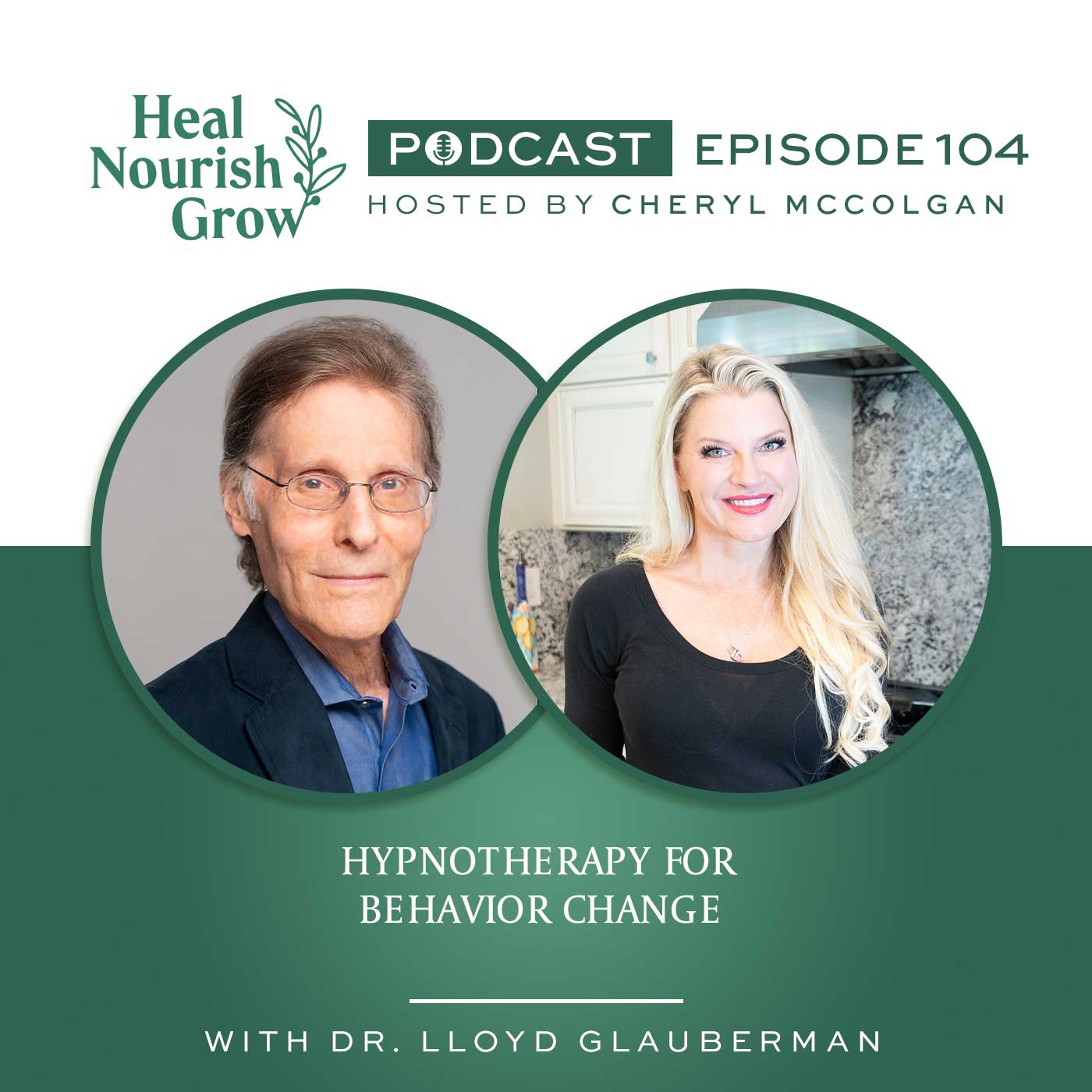
In this episode, Dr. Lloyd Glauberman shares his journey into psychology and hypnotherapy, discussing the importance of sleep, the obesity epidemic, and introduces the concept of lifestyle intelligence. He emphasizes the need for tailored approaches to behavior change and the innovative tools available for personal development, including his app that combines storytelling and hypnosis.
Connect with Dr. Glauberman through his website and you can download his app on the Apple store with a free 30 day trial.
Watch on YouTube
https://https://youtu.be/QO3fjKBAnyc
Disclaimer: Links may contain affiliate links, which means we may get paid a commission at no additional cost to you if you purchase through this page. Read our full disclosure here.
CONNECT WITH CHERYL
Shop all my healthy lifestyle favorites, lots of discounts!
21 Day Fat Loss Kickstart: Make Keto Easy, Take Diet Breaks and Still Lose Weight
Dry Farm Wines, extra bottle for a penny
Drinking Ketones
Wild Pastures, Clean Meat to Your Doorstep 20% off for life
Clean Beauty 20% off first order
DIY Lashes 10% off
NIRA at Home Laser for Wrinkles 10% off or current promo with code HealNourishGrow
Instagram for daily stories with recipes, what I eat in a day and what’s going on in life
Facebook
YouTube
Pinterest
TikTok
Amazon Store
The Shoe Fairy Competition Gear
Getting Started with Keto Resources
The Complete Beginners Guide to Keto
Getting Started with Keto Podcast Episode
Getting Started with Keto Resource Guide
Takeaways
Hypnosis is a common state we experience daily, often without realizing it.
Sleep is crucial for cognitive function and emotional regulation.
The obesity epidemic is influenced by lifestyle choices and sleep deprivation.
Lifestyle intelligence is about understanding and improving our health behaviors.
Self-esteem has shifted from real-life interactions to social media validation.
Hypnosis can be effective when tailored to individual needs.
The brain cleans itself during sleep, highlighting its importance for health.
Healthy behavior skills should be integrated into early education.
Show Transcript
Cheryl McColgan (00:01.038)Hi everyone, welcome to the Heal and Nourish Grow podcast. Today I am joined by Dr. Lloyd Globberman, but he has generously said that I should call him Lloyd during the show. but just so you know, he is a doctor. Of course you heard that in his official bio, but Lloyd, I’d really love if you could share with the audience now, just in your own words, what got you into this line of work and what got you interested in helping people with their health and wellness?
Lloyd Glauberman (00:25.712)I stumbled into the profession of psychology after I graduated from college. And at the time, in addition to being in college, I played drums in a rock and roll band. And like everybody else, I wanted to be a rock star. However, as the fact that we’re talking right now just lets everybody know that never happened. So I had to figure out something else. And it was during that time when Vietnam War was still in.
Cheryl McColgan (00:39.82)Of course!
Cheryl McColgan (00:46.606)you
Lloyd Glauberman (00:55.322)in play and the only way to avoid being involved with that in an appropriate fashion was to work for the government in the health professions in some kind of way. And I stumbled across a job at the Massachusetts Mental Health Center, which was a psychiatric facility for residents of Harvard. So it was an up-tempo, really smart bunch of folks kind of thing. And so I walked in, off the street,
went upstairs to the person who was in charge of personnel and I said, you by chance don’t have any jobs available, do you? For people who might want to begin a career. And they said, did you graduate college? And I said, yeah, seven days ago. They said, fine. When can you start? What? do mean, when can I start? I’m not even sitting down in your office. I said, are you actually hiring me right now? She said,
Yeah, you look like you can do the job. Monday. Okay. That started my career, that bizarre set of circumstances. So I get there and I am now a psychiatric aid helping deal with and support people who have severe emotional problems, obviously, because they’ve been hospitalized. And I was getting very nice feedback from the staff, from the nurses who had been there for decades, from the psychiatric residents. said, you know, you should go into the business. Hence.
I did. I started applying to graduate school. I got married early. My wife and I moved to California and I bumbled and stumbled through the whole process and finally got my doctorate from Syracuse in 1976. Came to New York, took the licensing exam and here we are decades later and I’m still involved in the business and it’s still enjoyable even though I’m a new
Cheryl McColgan (02:48.13)That’s an amazing story. it’s funny actually how much we have in common because people that have listened to the podcast before might know that my background is in psychology. And I did go to graduate school for psychology as well, but I did not finish, unlike you. And also wanted to be a rock star, played the saxophone for many years.
Lloyd Glauberman (03:06.132)Well, we have a lot in common. Welcome to those who didn’t make it.
Cheryl McColgan (03:14.478)What a wild and wonderful world of health and wellness. But I think obviously the fact that you’re still excited about it and still coming out with new things even further along in your career is really amazing. And one of the things that caught my eye when your team reached out was that you also work with hypnotherapy. And that’s something, a topic that I’ve never covered on the show before. It’s not something that I’ve ever really looked deeply into.
Lloyd Glauberman (03:35.529)Yes.
Cheryl McColgan (03:42.07)other than the old movies where the guys wavin’ the clock in front of the face or something. That is about the extent of my knowledge. So I’d love it if you would just share with me and the audience what exactly is hypnotherapy and then how have you been using it to help people change their behaviors?
Lloyd Glauberman (03:58.226)In a variety of different ways, I’ll go through my own understanding of it. mean, hypnosis is one of those magical terms, right? I mean, when you say somebody is in hypnotherapy as opposed to psychotherapy, like I’m doing CBT, you know, I’m doing hypnosis, ooh, you get that kind of thing. People don’t realize that trance is something that we are in and out of all day long.
But because it’s so commonplace and we’re so used to it, we don’t call it hypnosis. We just call it, for instance, daydreaming. Have you ever been in a really deep daydream when somebody’s calling your name one, two, three times and you finally hear it and go, realize they had called you by your name three times and you didn’t hear it? That’s a hypnotic trance state, but it’s not called that.
Cheryl McColgan (04:50.348)Absolutely.
Lloyd Glauberman (04:56.018)Then, because nobody’s talking to you to go deeper and deeper, you’re just doing it on your own, right? People don’t realize how much life is in and out of trance. Another commonplace experience, you’re listening to music and suddenly a tune pops up from your high school years, one of your favorite years, right? And suddenly your mind kind of goes back in time and is beginning to relive that moment. In hypnosis,
That’s called age regression. But when you’re listening to it by yourself, you don’t call it anything, you’re just in the past and enjoying that moment of thinking about something that occurred back. All of those experiences that occur in hypnosis are wired into us and occur all the time. We’re little bits and pieces of audio voices in our head floating in and out of consciousness. And sometimes we don’t realize that it’s happening. The next thing…
We’re feeling kind of strange because we didn’t notice that we started talking to ourselves and denigrating ourselves because other things are going on. You didn’t pay much attention. All of that is a self hypnotic thing. So, so much of hypnosis is experiences that we’re having, but because it doesn’t have the aura of somebody on stage telling somebody to bark like a dog, you know what I mean? And then doing it, right? Cause we think about it, mind control, power and that kind of thing. It’s not like hypnosis.
can’t be useful, of course it can be, but it has to be understood in the context of everything else that goes on in our minds. These are skills that we all have, but we don’t know that. So the whole idea is to generate ways to introduce information to people so they will somehow store it and use it. One of the more interesting ways of doing hypnosis is called conversational hypnosis.
Cheryl McColgan (06:37.23)Yeah.
Lloyd Glauberman (06:53.936)It’s you’re talking to somebody and you’ll be talking at a certain pace like I’m talking right now. And then you’ll pause and speak a little bit slower and say a few words about how wouldn’t it be interesting to be able to solve that problem that you’re having. And maybe some point you got that change in pace and noticing how words get marked out. Anybody who does hypnosis really well knows how to mark out words to the listener.
in a way that tends not to bring attention to them. Because the whole idea is get around the conscious mind so you can hear things without knowing it, so you can respond in a positive way at the right times, in the right places, and with the right people. So some people who are hearing people. Yeah, yeah, we know more than we realize.
Cheryl McColgan (07:40.248)Yeah, that makes a lot of sense. And it’s a description that’s not as woo woo as I would have expected. And one question to clarify something that you said earlier before we kind of move on with, you know, how you use that to help people. Cause I do have a couple of questions around that, but the thing that came to mind when you were describing how we all may have experienced this before or have this skill. it,
I’ve been planning to do this Hume Health review for a while, but I wanted to wait until I’d used it for six months. During this time, I got three DEXA scans to compare the results to the Hume Health Body Pod scale. According to the manufacturer, the Body Pod correlates within three percent of a DEXA scan. For this Hume Health vs DEXA review, I thought it would be easier to present my thoughts in a video/audio form so I can share it with my podcast audience as well. If you prefer to read it the transcript is below and I’ll be updating this page shortly with a written review.
If you decide to try the Hume Body Pod (or the Hume Band), use code HEALNOURISHGROW at checkout to receive an extra discount that stacks on top of their sales (even for Black Friday)!
In this episode I discusses the importance of daily weigh-ins and how they can be a valuable tool for tracking body composition over time. However, just knowing your weigh isn’t enough, especially when you’re actively working to build muscle and lose fat. I share my thoughts on various body fat scales I’ve used in the past as well as most recent experience with the Hume Health Scale. Using the three DEXA scans I got during the same time, I compare the accuracy and utility of using a home body composition scale. I also share tips and tricks on how to get the most accurate readings from your Hume Body Pod.
I also provide practical tips for maintaining muscle mass while managing weight, highlighting the significance of protein intake and consistent tracking. Since recording this episode, I also started using the Hume band to track other health metrics. You can read my review of the Hume band vs Whoop here.
How Accurate is the Hume Health Scale?
The company reports that this scale is the only one approved for medical clinics/ It uses 8 sensors, including a hand held piece to gauge weight, body composition and heart rate each time you step on.
After using this scale well over 6 months now as of April 2025, I can report that it’s very accurate when used under the same daily hydration conditions. Ideally, you use the scale right after you wake up and use the bathroom, before consuming any food or liquid. This is the way to get the most consistent results that show your body composition changes over time.
Takeaways
Daily weigh-ins can help maintain consistency in weight management.
Daily weight fluctuations are often due to hydration and diet, not fat gain.
Tracking weight over time reveals trends rather than daily changes.
Body fat scales can provide insights into muscle and fat composition.
The Hume Health Scale offers improved accuracy over traditional scales.
DEXA scans and body fat scales have their own variances in accuracy.
Consistency in measurement conditions is crucial for reliable data.
Prioritizing protein intake is essential for muscle preservation during weight loss.
Regular strength training helps protect muscle mass during calorie deficits.
The Hume Health Scale is a valuable tool for at-home body composition tracking.
Disclaimer: Links may contain affiliate links, which means we may get paid a commission at no additional cost to you if you purchase through this page. Read our full disclosure here.
https://youtu.be/gb4NKuS–ek
Link to Document
My Rating
4.6 / 5
Based on my hands-on testing of the Hume Body Pod, including setup, accuracy, usability, and long-term performance.
Podcast Transcript
Cheryl McColgan (00:01.262)Hey everyone, welcome to the Heal Nourish Grow podcast. Today I am going to discuss a product that I’ve been using for a while and this will be a little bit different of a podcast episode, although it will weave in some of the tools that I’ve used over the years to be consistent. And one of those things is the simple body scale. So I’m one of those weirdos that I weigh every single day. I just look at it as data.
And I really feel like over the years, this is what’s helped me be really consistent and not gain or lose too much weight in any one given time. I know a lot of people are not very excited about using a scale or having daily weigh-ins, but I really do think it’s a valuable tool if you’re a person that can just treat it as data and not allow whatever the number on the scale says to wreck your day, basically.
Because body weight is so dependent really on just day-to-day hydration, whether or not you had a salty meal the night before, that sort of thing. And so what I’ve noticed over the years is that literally my weight can fluctuate within a week of anywhere from a pound or almost the same every day all the way up to a five pound difference, just depending again, mainly on hydration. if you can look at it that you know,
People will often say this and it drives me nuts. I gained three pounds this week or I gained three pounds yesterday and it’s like you really didn’t. You didn’t gain three pounds of fat overnight. You probably just ate something really salty the day before. So what’s really important is more the idea of tracking your weight over time and looking for trends and having the ability to have a weekly average or something like that with your weight.
So you really just want to look at it as data and not let whatever that number is on any given day rule your world. The other reason that we need to be concerned about body weight and why just a regular scale is not all that useful is because there’s never been a really great way to track your body composition using a regular scale. So your regular scale just tells you your weight. It doesn’t tell you anything about how much percent fat you have or how much muscle you have.
Cheryl McColgan (02:22.606)or anything like that. as I’ve been going through my little weightlifting consistency thing over the last 18 months, you know, it’s been a big goal of mine to put on more muscle. so oftentimes what has happened on the scale, and I can track this because I’ve gotten several decks of scans over time when I was making this a new goal of mine, is that, for example, in a six month period, even though I’d been working out really consistently and
doing a lot of things that should have affected my weight. If I was looking at my weight as just the number on the scale, after six months, my weight was exactly the same. It was crazy. And if you didn’t have some kind of tool like a dexter or whatever, you might’ve thought, I didn’t make any progress at all. And it would really be easy to get discouraged. But what actually happened in that amount of time is that I had put on three pounds of muscle and lost three pounds of fat at the same time.
which is really amazing. Yet with a traditional scale, all you’d get on the scale is that you were exactly the same. And so that can be really defeating. And so one of the tools, and I’ve talked about this over before, that I’ve used over the years is a body fat scale. And they use bioelectrical impedance to send electrical current through your body. And basically the way that it works is that your muscle holds a lot more water than fat. it,
the electrical signal passes through it. I always get this little confused, but it’s either it passes through it more quickly or less quickly than that. And that’s how they tell the difference. And so then using some kind of calculation and algorithm, they’re able to predict your body fat and your muscle mass based on that electrical signal. Now, when these first came out, they were not very consistent at all, but I’ve always been an early adopter and I’ve always been involved in the health and wellness space for a really long time.
So I had one of the first ones that came out, a bioelectrical impedance scale. based on, know, I think I had my first, like I had a hydrostatic, which is where you actually immerse yourself in water. And this used to be the gold standard of body composition, you get immersed in water to do your body fat. And I had had the scale at the same time. So I knew.
Cheryl McColgan (04:43.286)that the scale was really off. But what has always been good for is trends because what it will do relatively well is track over time, are you losing fat, gaining fat, losing muscle, gaining muscle. So in that way, it was kind of useful. then it still is just acts like a regular scale and tells you you’re right every day. So the first one I had probably 15 years ago or whenever those first came out, not that great, but had it for years. And then probably about
five years ago, I’d say I invested in a new one. was a withings and it was definitely better and had some other little features that I really liked. Like it had a cardiovascular health number that was based on, there’s this other thing that it can measure with the electrical current and kind of tell you the ideas if your vessels are flowing more openly or more closed and kind of just give you some indicator of cardiovascular health. So I really liked the withings scale for that.
had that for several years. Also knew that based on DEXA that it wasn’t really very accurate in comparison what the body fat actually was. And so then I had the opportunity to try the Hume Health Field. I’m just going to show it to you. Here it is. And if you’ll notice my background in the room right now, I’m in a different spot because I’m actually out in Utah snowboarding for two months. And so I actually brought this with me. So that should tell you something. Number one, I did want to finally
do this review. But number two, like I said, it’s really important for me to stand track. have some other body composition goals this year that I’m working on and I didn’t want to go for like nine weeks without this tool. So the fact that I carried it with me in my luggage should tell you that I at least think it is pretty good. that is the, you know, this is the upshot of the review is that
 1
1In this episode of the Heal Nourish Grow podcast, Cheryl McColgan discusses how to stay on track with your 2025 goals, emphasizing the importance of consistency over motivation. She shares strategies for creating manageable goals, habit stacking, and balancing commitments to ensure success.
Cheryl also highlights the significance of time management, mental tricks for habit formation and the value of rewarding progress. Personal reflections and life updates provide a relatable context for her insights. I
She also shares her experiences and insights from a recent vacation, focusing on travel challenges, dietary choices, and fitness management. She discusses the importance of maintaining an active lifestyle while traveling, the balance between indulgence and health and the significance of consistency in fitness routines.
Takeaways
Motivation can fluctuate; focus on building habits instead.
Consistency and commitment are key to achieving goals.
Start with small, manageable goals to avoid overwhelm.
Habit stacking can help integrate new habits into your routine.
Evaluate your goals to ensure they are realistic and achievable.
Balance your commitments to avoid setting yourself up for failure.
Investing in time-saving solutions can enhance your wellness journey.
Sleep is crucial for recovery and overall health.
Use mental tricks to overcome resistance to starting workouts.
Reward yourself for progress to maintain motivation. Baggage capacity issues can disrupt travel plans.
Consistency in diet and exercise is key to health.
Listening to your body is crucial for injury management.
Aging affects fitness goals and recovery time.
Balance indulgence with healthy choices while traveling.
https://youtu.be/PJxtI424Rhw
Episode Transcript
Cheryl McColgan (00:01.134)Hello everyone, welcome to the Heal Nourish Grow podcast. And also happy 2025. I don’t think I’ve gotten to officially say that even though there has been an episode out this year. Anyway, today I just wanted to chat with you about how to stay on track with your 2025 goals. A lot of people set New Year’s resolutions or even if you don’t set a strict resolution, there might be some things that you are trying to work on in the new year and
this is one of my favorite topics because I feel like everybody thinks they want to wait until they get motivated to do something. motivation waxes and wanes. And I speak to this 100 % from experience because over the years, my motivation in area of health and wellness has been lacking. But that doesn’t prevent me from doing the things I know I need to do and that I should do.
And that’s because I think motivation is really overrated. It’s more about creating your habits and then having just consistency and commitment over motivation. And that’s really what will help get you to your goals. And one of the things that I find and I haven’t been doing much coaching lately. I’m actually thinking about opening that up again. So if that’s something that you’re interested in, please get in touch and let me know. You can just email me at
info at heelnourishrow.com. But one of the things that I’ve noticed in the past, and I’ve heard many, many other coaches and people in the wellness space say this, that the thing that people kind of get hung up on the most, particularly with New Year’s resolutions, is that they try to bite off way more than they can chew. And so what happens is for maybe the first couple weeks of the year, you stick with whatever your new routine is. I’m going to eat right, I’m going to exercise four times a week, I’m going to
drink more water, all this. And so you might stay with it for a couple of weeks, but it all becomes very overwhelming. And so instead of moving forward, you just feel overwhelmed and you kind of quit altogether and not taking any of those habits where if you do some things like habit stacking, and I’ll talk more about what that is shortly, habit stacking, starting really small, making small manageable goals, taking one goal at a time. instead of
Cheryl McColgan (02:23.318)exercise, eat different, drink water, maybe it’s just pick one of those to start with, not all at the same time, because time, time goes on. You have weeks, you know, if we’re all lucky, we have weeks and weeks and months and months and years and years of time to create these new habits. And what happens is getting the first one solidified or getting one in your routine where you’re committed and you’re, you know, doing that one again, and it becomes just a routine to you. don’t even think about it like brushing your teeth.
those are the best habits because then that goes on autopilot and then that’s the perfect time to then start another small habit that you can do over time. if your commitment and your goals have already waned, I’d like to invite you right now, know, the New Year’s a great time, of course, because it’s just kind of what’s traditional and what people are used to. But really any day, not a Monday, can be a Tuesday, can be a Wednesday, it can be a Thursday, any day, any week, any month.
is a time to start something new. And so if you’re already starting to wane on some of your New Year’s resolutions and you hadn’t given them this much thought before, maybe evaluate, did you take on too much at once? Maybe that’s really what’s preventing you from being consistent in these new habits. Or did you set a goal that’s just very unrealistic? That’s a thing too. I mean, starting to go from a diet where, say you’re eating the standard American diet, you’re eating out a lot, you’re eating a lot of fast food.
And then your goal for the new year was, well, I’m just gonna eat all whole foods. Well, that’s a very daunting task. They’re very different from one another. So it might be best to just start with, okay, most days I’m going to make better choices. And you do want it to be measurable. So for example, maybe it’s if you’re eating a lot of fast food, you might set your goal to, I’m only gonna eat fast food four days a week, if you’re at five days a week now. So starting small like that. And then do that for a week or two.
and then take it down even more and make this transition more gradual over time. Because especially with food too, if food or a different way of eating is one of your goals, if you’ve eaten a lot of highly palatable processed food, the food scientists are smart. They design the food, they engineer the food to make you want more and crave more of it. And there’s this perfect combination of salt and sugar.
Cheryl McColgan (04:42.624)and fat and things that make it just so stimulating to your brain. It’s a big dopamine hit. And so if you go from having that every single day of the week, going to what’s going to seem in your mind, maybe bland food if you’re eating whole foods and you maybe you’re not the best or maybe you’re not used to making things at home. And so the taste difference is going to be so significantly different that not only are you going to, you’re going to lose out on some of those hits. So that’s going to make you feel not as good in making these good choices.
And it’s also just going to be such difference in taste that initially that it might be just a challenge. If you slowly over time, you’ll have a lot more success hitting that goal. And then also keep in mind kind of the 80-20 rule. So in many things, maybe it’s your diet, maybe 80 % of the time as whole foods, maybe 20%, you get some treats or have some things that are more processed 80-20 in that way. Also 80-20 in your consistency. None of this can be perfect.
100 % of the time every day of the week. And so give yourself some grace. If you make a little mistake or something didn’t go as you planned on one day, or even in one hour, the next hour, the next day, the next week is a chance to do it. The only thing I would say about that is don’t wait. Just recognize that, okay, that wasn’t the best choice I made for lunch there. I had fast food. I said I wasn’t going to do that. But now for dinner, I’m going to make a better choice. I’m going to eat more healthy food for tonight.
And then tomorrow I’ll honor my commitment to whatever that goal was for that day. So don’t let it get away from you just because one meal, one time, one week, one day, one hour you messed up, that doesn’t give you license to just ditch it all, right? So it’s okay. Just give yourself grace and then reset your intention to make it better in the next choice, in the next choice. And so in that way, if you can make those good choices about 80 % of the time,
or better, you’re going to be so much better off than where you are now. So let go of perfection, let good enough be good enough, and just move forward with your goals that way. So think that’s one way to really start thinking that will allow you some breathing room so that you can create one new habit at a time. You you can work on more than one thing at once. You’ve just, you’ve got to know yourself and you’ve got to know your level of overwhelm.
Cheryl McColgan (07:03.822)And you’ve got to know how difficult the thing is that you are changing. So for example, if you’re rehauling your diet overall, that’s a pretty big goal that might take a lot of your decision making capacity and willpower and things like that. So that might mean that other goals need to be put on hold. As an alternative, if one of your main goals is you’re already working out three days a week and you’ve committed to do four days a week now, that’s not as big of a jump.
that’s probably going to be a relatively easy goal in terms of, you know, keeping your commitment and actually being successful with that. So taking on another goal on top of that one might not be as taxing. So not only do you want to create balance within each individual goal, you want to try to create balance within your overall goals and your life goals and also matching it to, you know, what’s realistic in your life. Maybe the reason you’ve been successful and consiste
In this episode of the Heal Nourish Grow podcast, Cheryl interviews Kerry Mann, who shares his transformative journey of losing 100 pounds and overcoming severe health issues through dietary changes.
Kerry discusses his struggles with depression, anxiety, and various health conditions, and how he discovered the ketogenic and later the carnivore diet, which significantly improved his mental and physical health.
Kerry also shares his documentary that aims to highlight the healing power of a proper human diet and the stories of others who have experienced similar transformations.
Find Kerry at https://healinghumanity.movie/ and @homesteadhow on social media and YouTube.
Takeaways
Kerry lost 100 pounds and overcame depression and anxiety.
The ketogenic diet and later carnivore, was life-changing for Kerry.
Kerry is passionate about sharing his story through a documentary.
He emphasizes the importance of diet in mental health.
Kerry’s documentary features real stories of transformation and benefits of the “proper human diet.”
Watch on YouTube
https://youtu.be/PUwAE9wIz5s
Episode Transcript
Cheryl McColgan (00:00.952)Hi everyone, welcome to the Heal Nourish Grow podcast. Today I am joined by Carrie Mann and he has a really amazing story that includes a hundred pounds of weight loss and he is now working on a documentary and I just think he has a really interesting background so I was really excited to share his story with you. So welcome Carrie and if we could get started by you just sharing. First of all, don’t think I said in that like how you ended up.
losing the weight and it’s kind of a thing that is very popular right now. I think that a lot of people have heard about. So when it gets to that point, I would love to have you share how you found that and why that ended up working for you. So welcome, Carrie.
Kerry (00:42.586)Thank you so much Cheryl, I appreciate it. Yeah, I’m down 100 pounds since my heaviest, overcame all sorts of health issues. For me, I actually, found the ketogenic diet maybe 10 or 15 years ago and it was kind of life changing for me back then. It was the only thing that had really worked for me. I had depression, I had anxiety, I was diagnosed with IBS.
I sleep apnea. I went in for a sleep study and I had to get a CPAP machine. My stomach was just always hurting. No matter what I would eat, I tried many different types of diets, low FODMAP, plant-based diet, and my stomach was always bothering me. I ended up having a couple of kidney stones a few years ago. had my gallbladder was kind of borderline and the doctor was like, you could take it out or you could leave it. And I said, I have so many stomach issues. Let’s take the gallbladder out.
And then like two years after that, I lost my appendix. It burst on the operating room table. Could have killed me. Like, thankfully I went in for the hospital. I was actually thinking I was having another kidney stone, but I went in just before they were going to do surgery on the appendix, it burst. And just had a whole bunch of health issues. I had arthritis in my foot. They said it was gout and it hurt so bad I could barely walk on it.
And then amongst all that my weight just kept going up the biggest issue for me was mental health depression and anxiety for 10 or 15 years. I tried every antidepressant anti-anxiety medicine and Just never got better for me the medication Sort of made me feel like a zombie I kind of felt numb to it But I I just didn’t feel like myself and the really deep dark depression kind of never went away
But when I found keto, which was 10 or 15 years ago, I was watching a documentary on Netflix and I learned about keto for the first time and I tried it. It was the only thing that ever touched my depression. I noticed like, I feel a little better. I feel different. It was a whoa moment. I’m like, I feel different than I have with any of this other medication. And I started losing some weight and I probably lost more weight on a
Kerry (02:54.106)decent ketogenic diet than I have doing any other sort of dieting my entire life and I’ve literally tried every diet. I just couldn’t maintain it with keto. I remember at one point I lost about 60 pounds and my wife did too and I started exercising and we’re feeling so good. We have a picture of my wife and myself and I remember saying, I will never gain this weight back. Like I’ve figured it out now. And I think it was like three or four months later I gained all the weight back and then some.
I would do keto and then I would try to go back to eating in moderation which for me is like moderating an addiction to carbohydrates and I could never do it and I would end up gaining the weight back but long story short I found carnivore diet which is sounds crazy I know it sounded crazy to me it sounds crazy to a lot of people really what it is is just a very strict ketogenic diet I heard about it from a YouTube video from this guy he said I’m gonna do this carnivore diet for 90 days
and my wife and I were watching him on YouTube and I’m like that’s crazy like you can’t eat only meat you’re gonna have a heart attack you’re gonna clog your arteries
But on the flip side, the guy’s story, he was overweight. He had depression. He had IBS. He had all of the issues that I had. And I knew when he was talking about it, I knew the science of a ketogenic diet. I’m like, that will work. That’s just a strict ketogenic diet, but there’s no way you could just eat meat and sustain it. long story short, I noticed that the video was two years old on YouTube. And so I was watching with my wife. said kind of cynically, I’m like, there’s no way this guy is still eating meat. Like let’s fast forward. Let’s go watch his most
most recent video and I did that you couldn’t even recognize him he lost all of his weight he had a big smile on his face he was talking like his IBS was gone his mood had improved his depression had gone away and that was really what opened my eyes I still in my brain I’m like this guy’s an outlier he’s crazy that’s not gonna work for everyone and then I did a ton of research I found Dr. Ken Berry on YouTube
Kerry (04:56.928)Talking about carnivore diet. I probably watched a thousand of his videos and Then I found dr. Philip Ovedia who’s a heart surgeon that’s been eating carnivore for about ten years He’s performed like 4,000 heart surgeries. I’m like, wow a heart surgeons doing carnivore and then I found Dr. Anthony Chaffee who’s a neurosurgeon. He’s literally done brain surgery on people I heard Jordan Peterson on Joe Rogan and he had done the lion diet, which is a stricter version of carnivore
and he said he was off all of his antidepressant medication and he stopped snoring the first week and I was snoring and I was on antidepressant medications and I’m like all of these really smart people I’m like I shouldn’t do carnivore because these smart people are doing it but it is worth further investigation it would be foolish of me to just be like that’s just crazy I can’t do it when all these other people are doing it and
one other thing I forgot to mention. The biggest issue besides my depression was about seven years ago. I was at home and I got really dizzy. I stood up and my face was numb. My fingers were tingling. I was confused. My wife was asking me what was going on. I couldn’t tell her what was happening. She called 911.
and I spent the next five days in the stroke unit. had a TIA mini stroke in my late 30s and they did all these tests on me. Thankfully, I had a couple of symptoms that lasted a while like vertigo and numbness and I went to physical therapy for that, but it wasn’t like a full blown stroke. So I didn’t have anything like permanent paralysis, but they did all these tests. They’re like, you’re 37. Like, why do you have all of these health issues? What’s wrong with you? And they tested my heart and they said you have
congestive heart failure. Your ejection fraction is 44. Your heart, what that means is for those that don’t know, your heart doesn’t keep up with the needs of your body. It’s not pumping enough blood. That’s why you’re getting fatigued and tired. They said it’s probably a downstream effect of my sleep apnea. That puts a lot of pressure on the heart. It probably didn’t help that I was a hundred pounds heavier than I should have been. That puts a lot of extra pressure on the heart too. So all of those things were what was happening.
Kerry (07:07.576)So when I saw Dr. Ovedia, a heart surgeon, that was one of my biggest concerns. like, I can’t, I can’t eat meat. Even after seeing Dr. Barry and some of these other ones, that’s going to clog my arteries. That’s going to give me a heart attack. And then I heard Dr. Philip Ovedia talking about it. And I really started digging into some more research around.
the heart and cholesterol and a lot of stuff that I have learned we have been misled on that even like major institutions have reversed but sort of the mainstream narrative is you eat meat you clog your arteries There’s a lot of misconceptions there. So long story short or maybe a little too long. Sorry. I tend to rant a little I Decided I what else do I have to lose? I’m I’m so sick. I have all of these issues I said I’m gonna just do an elimination diet. I didn’t tell myself I’m gonna eat meat only I said I’m gonna
Cheryl McColgan (07:41.988)Bye.
Kerry (07:54.722)I’m just gonna eat meat. Like that was all that was left. Some people would argue, what about vegetables? And I actually did that for about a year. I did a strict ketogenic plant-based diet. I had just a tiny bit of protein, but it was salad for lunch, salad for dinner, all low carb. It didn’t help me for a year. I still had IBS. I still had depression. And now everybody’s different, so I’m not saying this forever.
But for me that did not help me So yeah, I decided I’m gonna do this elimination diet for 30 days. I’m gonna do carnivore diet I went out I went shopping I bought a bunch of meat and I
In this episode of the Heal Nourish Grow podcast, host Cheryl McColgan interviews Ian Anderson, founder of the Sunnyside app, which focuses on alcohol moderation and mindfulness. Ian shares his personal journey, including his family’s struggles with alcohol, and discusses the impact of the pandemic on drinking habits.
The conversation highlights the importance of harm reduction and the shift in understanding alcohol use and recovery. Ian explains how Sunnyside works as a tool for individuals looking to build healthier relationships with alcohol. Ian discusses the evolution of Sunnyside, an app designed to help users moderate their alcohol consumption. He emphasizes the importance of personalization, gradual change, and the power of tracking drinking habits.
The discussion also covers the upcoming Dry January initiative, which aims to provide inclusive challenges for users looking to cut back on alcohol. Ian highlights the benefits of using Sunnyside, including improved mental health, better sleep, and financial savings, while encouraging listeners to join the community for support and guidance.
Go to HealNourishGrow.com/sunnyside to join the free Dryish/Dry January Challenge. You can choose to go fully dry, dry on weekdays or any number of other custom options! Follow Sunnyside on Instagram here.
Takeaways
The pandemic increased awareness of alcohol health issues.
Harm reduction is a crucial approach to alcohol use.
AA has a low success rate for long-term recovery.
The definition of recovery has evolved to include moderation.
Many people want to drink less but don’t know how.
Tracking alcohol consumption can lead to healthier habits.
Sunnyside aims to be a supportive tool for change.
Understanding alcohol’s health effects can empower better choices.
Personalization is key; users set their own goals and track progress.
Gradual reduction in alcohol consumption is more effective than immediate cessation.
Tracking drinks helps create conscious interference and awareness.
Dry January offers various challenges to accommodate different user preferences.
Community support enhances the experience of moderating alcohol consumption.
Sunnyside provides a safe, anonymous space for users to seek help.
The app encourages users to reflect on their drinking patterns and triggers.
Sunnyside aims to create lasting behavior change, not just temporary fixes.
Watch on YouTube:
https://youtu.be/R_bx-oTAY7E
Episode Transcript:
Cheryl McColgan (00:00.814)Hi everyone, welcome to the Heal and Nourish Grow podcast. Today I am joined by Ian Anderson and this conversation has been a long time coming. He is the founder of Sunnyside, which is a really awesome app that I’ve been checking out for the last couple of years, because you know I like to bring you guys all the things that will help you in your health and wellness journey. But we’re going to save that for little while because Ian has a really interesting backstory and an interesting, I think, perspective on how he created this product to really help people.
And so Ian, I’d love for you to share some of that now, maybe first talk a little bit about your professional background and then like what led you to create this product.
Ian Andersen (00:37.766)Yeah, absolutely. Well, Cheryl, thanks for having me on the podcast. Like you said, it’s been a long time coming. I’m glad we finally got to make this happen. And it’s always a pleasure just to be able to meet new audiences and offer, you know, my personal story and whatever wisdom I can offer around alcohol health. It’s something that’s really important to me. So.
The product is Sunnyside and it’s an alcohol moderation and mindfulness app. So we will get to that, but I’ll tell you a little bit about my story and how it led me to create this product that tens of thousands of people are using. So professional background, I was born and raised in California.
And I went to school at UC Santa Cruz and studied sort of information systems management. So like kind of the blend of technology and business. I started my career out in web development, which isn’t that exciting. This was many years ago, but I was having a blast at the time. And I kind of weaseled my way into marketing and learned how to help position products to help keep consumers find what they needed.
Fast forward many years later, I started working, I had the opportunity to work at a mobile app company called Mile IQ, which did mileage tracking for people that drove for work, which was pretty neat because we were helping people get their biggest tax deductions. I met some people there that were really instrumental in helping me kind of navigate the business world at that point. They were startup founders and that sort of gave me some of the early.
skills or at least confidence that I needed to branch out and start Sunnyside. So I call myself a sort of marketing generalist by trade and at Sunnyside I lead marketing and growth along with many other things. We wear a lot of hats because we’re still a small company where I call us like a medium-sized startup at this point. We’re based in California technically but we have employees all over the world.
Cheryl McColgan (02:45.166)Yeah, and it’s such a, you’ve done a great job with the marketing part because I’ll just share, I came across this. I think during, I think it might’ve been my first thought during the pandemic. I don’t know what year you started, but I think there was a little push during that time because especially in my health and wellness space, you know, it really started to blow up on social media, how much additional trouble people were having with their drinking habits during the pandemic and how that really increased during that time. And then fast forward kind of to today.
Ian Andersen (02:49.127)Thank you.
Cheryl McColgan (03:14.882)the last year or two years, mean, Andrew Huberman, he’s a huge podcast and a lot of other people have really been bringing this idea about alcohol health to the forefront. And I think it’s caused a lot of people to really start looking at their behaviors and just noticing, you know, if it’s really serving them and kind of looking for tools to help them along, to make them either more mindful, which is, think is one of the great things about your app. It’s not necessarily like quit it all together.
But it might just be like, hey, you’re going out for the night and normally you might go a little crazy with your friends and have five or six drinks, but it’s kind of just touching base with you to remind you to just be more mindful and be in the moment and make good choices. So I think it’s a very interesting product in that regard and really useful for this new push into the wellness space about alcohol is a poison. The previous episode I had on alcohol, we mentioned that it’s a neurotoxin. There’s really
Ian Andersen (03:46.609)Yeah.
Cheryl McColgan (04:10.87)not a lot going for it other than the social aspects that a lot of people do find relaxation in those things in it. But I do think it’s just great that you’re bringing this idea to be more mindful about it to the forefront and just offering more education in the space about drinking habits. Just so if you make the you know what you’re getting into, I guess, is kind of part of the point.
Ian Andersen (04:31.632)Yeah, absolutely. You said a lot of great stuff there. I first want to recognize that the Andrew Huberman podcast on alcohol was, I had already been digging into alcohol for two years before that came out and I was still blown away. So I think I like to think of Sunnyside as an essential tool in your toolkit for building healthier habits around alcohol. But I think it’s best when used in a combination with something else in your life, whether it’s an additional
piece of education, like a really great podcast or a therapist, or maybe even just connecting with a friend on the idea. Because alcohol is the way that it integrates into our lives is very personal and sometimes feels complex. So Sunnyside, we like to think of ourselves as the front door for anyone looking to make a change when it comes to alcohol, whether they plan to eventually quit, or maybe just try to find
moderation with alcohol in their lives. We want to be the place where tens of thousands and eventually millions of people start making that change on their alcohol health journey. And we will provide all the tools and sort of programming to help you build that healthy relationship. I’d love to get into more detail when the time is right, but we can talk about like how we actually make that happen.
Yeah, I just wanted to recognize Huberman was a great podcast for me as well. I was pretty blown away and I would I’m still a mindful drinker myself Or rather a drink I still drink alcohol way less now especially since starting Sunnyside and one of the main things for me aside from all the things that we built within Sunnyside is Simply educating myself more about how alcohol actually works. You mentioned that it’s a poison, but it’s also true that it has these sort of
tendencies and addictive qualities that make you seek out more after you start. And one of the biggest learnings for me was to understand that I wasn’t sort of going to be an exception to the rule when it came to alcohol, that because when I drank, I wanted to drink more, that that was actually alcohol doing exactly what it was supposed to do on me. And it almost made me feel like I had more power understanding that knowledge when it came to moderating my own alcohol use.
Ian Andersen (06:47.95)I should also say, Cheryl, that we did actually start in 2020 right at beginning of the pandemic. And it absolutely was not because we were trying to take advantage of that moment. It was totally coincidental. My co-
Cheryl McColgan (06:52.59)You
Cheryl McColgan (07:00.358)You don’t just suddenly magically have a company go live in three days, right? mean, this was a long time in the works, I’m sure.
Ian
In this episode of the Heal Nourish Grow podcast, Cheryl McColgan speaks with Guy Odishaw about the challenges faced by children in the school system. They discuss the impact of technology on children’s behavior, the rising incidence of ADHD, and the importance of regulating the brain to improve outcomes.
Guy shares insights into innovative approaches to brain health, including the use of neuromodulation devices that help solve dysregulation in the brain, ultimately aiming to enhance focus and learning in children. Guy discusses the importance of moderating dysregulation in children to improve their learning outcomes. He highlights the positive effects of audio visual entrainment in educational settings, sharing success stories from schools that have implemented this technology.
The conversation also addresses the challenges of sustaining such programs and the need for passionate advocates to drive change. Additionally, Guy explains how families can access this technology for home use and emphasizes the importance of integrating it into daily routines for maximum benefit.
Find Guy at Cerebralfit.com
Takeaways
The school system is facing overwhelming challenges post-pandemic.
Teachers are often left without adequate resources to manage classroom behavior.
The rise in ADHD diagnoses is linked to various factors, including technology.
Dopamine regulation is crucial for children’s behavior and learning.
Neuromodulation devices can help regulate brain function effectively.
Parents and teachers can benefit from brain regulation techniques.
Simple interventions can lead to significant improvements in children’s focus and learning. Regulating dysregulation can significantly enhance learning outcomes.
Audio visual entrainment has shown positive results in educational settings.
Anxiety reduction leads to improved self-esteem and performance in students.
Integrating technology into daily life can enhance its effectiveness.
The rental program allows families to try the technology before purchasing.
Positive changes in schools can lead to a more engaged classroom environment.
Teachers’ stress levels decrease when students are well-regulated.
The device can benefit multiple users in a household.
Watch on YouTube
https://youtu.be/aaV_NqUNGmo
Episode Transcript
Cheryl McColgan (00:00.826)Hi everyone, welcome to the Heal and Nourish Grow podcast. Today I am joined by Guy Otishaw. Easy for me to say, right? It should be easy to say because this is the third time that you’ve been on this show and happy to have you back. Before we get into the topic of the day, Guy, can you just share with everybody, I’ve read your official bio of course, like always, but could you just share a little bit of your background and how you got into this work and what makes you so passionate about helping people in the way that you do?
Guy Odishaw, CerebralFit (00:30.23)Well, it’s great to be back. Thank you. So my background is primarily in integrative medicine and kind of two main tracks for me, my private practice as a practitioner, but then in some ways really my more full-time job, which is building clinics. My biggest clinic was a large integrative medicine clinic with 30 providers kind of across the spectrum of care from allopathic MDs all the way to
energy work of various kinds and everything in between. And then my own private practice has been primarily kind of on the orthopedic side, pain, trauma, working on the body. But then over time, I got interested in bioelectric medicine. And then that led me down the path of bioelectric medicine. And then that led me to brains in particular. And now I spend most of my time working directly on the brain with neuroimaging.
neurofeedback, neurostimulation, neuromodulation. so, so now my private practice and my clinic life are much more similar as I’ve kind of dropped the big integrative clinic and moved to a more focused, you know, kind of brain centric bioelectric medicine specific approach for brain health.
Cheryl McColgan (01:49.168)Yeah, love that. the fact that you’ve done so much work with these clinics and have that background, I think makes you really uniquely positioned to have a lot of knowledge across various subjects. And when we chatted before about what we wanted to talk about today, because you are such a wealth of knowledge, but I thought that the topic that you proposed was really good because it has to, almost everybody has a child in their life in some way, whether it’s a niece, a nephew, their own child.
something like that, somebody they know is probably in school in some capacity. And one of the programs that you’ve been working on has been with children specifically. And certainly since the pandemic, there has been a lot of changes in schools, a lot more stress in schools in a lot of ways. And the teachers are fighting a lot of this too. So I’d it if you could just share some of the things just more broadly now in the school system. What are their challenges?
what kinds of things are children experiencing, and then we’ll get into obviously kind of the ways that you deliver the brain health part, how you can actually help them with some of these methods that you have.
Guy Odishaw, CerebralFit (02:57.304)Yeah, it’s a favorite topic of mine and program that we’re developing at the clinic. So I’ll, you know, go back. I don’t know. You know, I have a mantra, don’t do the math, right? I’ll go back about 40 years. But when I was first in college, I went in for education and I got, I don’t know, about three years into the program. So far enough where I was doing internships, so was out in the schools.
And I learned very early on that I was not wired to be in the elementary school setting. Like, it was just clear, like, hey, nope, this isn’t gonna go for me, it’s not gonna go well for the children. So I moved on to then post-secondary or secondary and then had a similar realization there that, nope, still, this is not a good match. Eventually…
into adult education and then that’s where I was like, okay, this is my place. I can have a reasoned conversation with my students and that worked for me personally. So what that gives me is an immense respect for the people who can be in the classroom, know, K through 12 really, but we tend to focus a lot on K to eight.
Cheryl McColgan (03:56.614)You
Guy Odishaw, CerebralFit (04:21.302)And so I’ve always had that, right? The thing that I couldn’t do, immense respect for the people who do it. But now when I listen to my clients who are teachers and friends and neighbors, but mostly the detailed stories I hear from my clients and what an average teacher puts up with today is so far removed.
from my worst day in the classroom, which today any of the teachers would beg to have that be like their best day isn’t that good. And so again, hard for me to imagine that these folks get up and go back to work every day and do what they do with what they have to deal with in a classroom in terms of behavior and.
And not that any of it is considered acceptable. It’s just the ability to try and manage it. And what are the resources that a teacher can call on, whether that’s parental involvement, administrative involvement. The problem has outscaled the available resources. that’s what we hear over and over and over again from teachers is the overwhelm.
Cheryl McColgan (05:45.166)And I mean, I’m sure people can imagine that there’s any number of things from behavior, but the reasons for behavior I think might be a little bit interesting to go into because one of the things that I’ve heard from previous guests and that I have seen data on it myself is that the incidence of ADHD is climbing as is people that are on the autism spectrum. And all of those things kind of come along with behavioral
challenges for sure and sometimes severe enough that it puts them in a Individualized education program kind of situation. So that’s a little different They might be in a classroom with other kids Are there other things outside of those two things that I just mentioned that teachers are experiencing? Is it? That the parents are involved in a different way or the kids are acting a different way or is they’re on their phones all the time What’s what’s the thing that you kind of hear the most that makes it more challenging for them?
Guy Odishaw, CerebralFit (06:41.974)Yeah, yeah, I mean it’s it’s so multifactorial with sometimes small but sometimes large shifts across many different points in the average child’s life and and so everything you just said But there’s so many variables within that, you know, so it’s I think it’s too easy
to simply shift towards the parents and just say, all of this lands at you. Or as maybe certainly teachers would say, or anybody in the school system would say, too often it’s the other way. It’s oriented towards the school and to the teacher and saying, this is all on you. And you’re the origin of the problem and you need to be the origin of the solution, figure it out.
And so we tend to have this kind of back and forth teachers pointing to the family and the families pointing to the teacher. And there’s truth in all of that. So, I mean, there’s just so much research we could go through around what seems to be the explanation for the changes we’re seeing. As you mentioned, the increase in kind of diagnoses of various conditions.
So on one hand, yes, I want to hold that as valid. But on the other hand, I think we have to look at this is too much of a common approach in our culture is to put a diagnostic code on something, make it a pathology, make it a condition, and then want to treat it. for the cases where that’s true,
Absolutely. But we need to, you know, really be able to pull apart the places where, you know, a child doesn’t need a diagnostic label. They need something else. But so some of the great the research, Jonathan Hayes research on the impact of the smartphone. So social media and that. mean, I think the the research there, the
In this episode of the Heal Nourish Grow podcast, I share my journey of returning to strength training after a long hiatus. The importance of strength training for longevity and health span, the benefits of starting at any age, and how to overcome common barriers to consistency are topics in this solo episode.
I provide practical tips for getting started, understanding progressive overload, and the significance of workout frequency in gaining muscle. I discuss the role of nutrition in supporting strength training goals and resources to find reliable resources for effective training.
Science Backed YouTube Channels: Renaissance Periodization with Dr. Mike Israetel, Dr. Menno Henselmans, Dr. Milo Wolfe and Jeff Nippard.
Newbie Gains: https://youtu.be/om7ow5PFhSE
How to Maximize Muscle Growth: https://youtu.be/55nfFfWXSTM
Hume Body Composition Scale, Big Black Friday Discount Plus Code HEALNOURISHGROW stacks on top!
Takeaways
Strength training is crucial for maintaining bone density as we age.
Starting strength training early in life can have long-term benefits.
Progressive overload is essential for muscle growth.
You can achieve significant results with just two workouts a week.
Body weight exercises are a great way to begin strength training at home.
Nutrition, including carb intake (GASP), supports muscle growth and recovery.
Finding reliable sources of information can enhance your training effectiveness.
Strength training is more effective for fat loss than cardio alone.
Tracking body composition can provide motivation and insight into progress.
Disclaimer: Links may contain affiliate links, which means we may get paid a commission at no additional cost to you if you purchase through this page. Read our full disclosure here.
CONNECT WITH CHERYL
Shop all my healthy lifestyle favorites, lots of discounts!
21 Day Fat Loss Kickstart: Make Keto Easy, Take Diet Breaks and Still Lose Weight
Dry Farm Wines, extra bottle for a penny
Drinking Ketones
Wild Pastures, Clean Meat to Your Doorstep 20% off for life
Clean Beauty 20% off first order
DIY Lashes 10% off
NIRA at Home Laser for Wrinkles 10% off or current promo with code HealNourishGrow
Instagram for daily stories with recipes, what I eat in a day and what’s going on in life
Facebook
YouTube
Pinterest
TikTok
Amazon Store
The Shoe Fairy Competition Gear
Getting Started with Keto Resources
The Complete Beginners Guide to Keto
Getting Started with Keto Podcast Episode
Getting Started with Keto Resource Guide
Watch on YouTube
https://youtu.be/HWPLHXs_s8A?si=vU43KmL5qVrkWMsF
Episode Transcript
Cheryl McColgan (00:01.346)Hi everyone, welcome to the Heal Nourish Grow podcast. Today I want to share with you some things I’ve learned when going back to gym over the last 16 months. I guess what I really wanted to share is that I know a lot of people are going to start thinking about New Year’s resolutions here soon and you know that I usually do some content towards the end of the year and the beginning of the new year around diet, around exercise, about…
tips and tricks and things that you can do to make these things easier if you are adding these into your life. And so this has been a lot on my mind lately because I just made a change at the gym and I’ll kind of go a little backwards and share with you just some of the things that I’ve been learning, what has helped me stay consistent and if you’re going to start doing this in the new year, some things that you can do to hopefully make it easier for yourself and not make some of the same mistakes that I did going back. So,
Just to give a little bit of background for those of you that may be new here, I’ve talked about this and shared this a bit in the past. I’ve been super active my whole life. I was a runner for 17 years, had to quit that because of my knees and I love hiking and anything outdoors. I am very excited to do and love doing. I walk almost every day outside. But what I haven’t done consistently over the years is lift weights. And there’s just been more and more
content and research coming out lately around the benefits of lifting and strength training as far as longevity and just better daily life and the ability to live a better life into your old age. And I know if you’re out there and you’re younger and you’re listening to this, you might not think that you need to start thinking about this now, but the sooner that you can implement this in your life and get it started, the better. There’s actually research showing that.
Children in particular and young adults like building as much muscle as you can when you’re younger can actually help you when you get older because if you even take time off from those things from strength training and stuff at some point in your life and you come back to it if you had built a lot of muscle at a much younger age, then it’s so much easier to get it back. So there’s that. So even if you’re younger and then also there’s just, you know, being the ability to
Cheryl McColgan (02:16.492)be fit and do more things when you’re young before you have all these aches and pains and issues that you tend to have when you get older. So caring for your body when you’re young as much as possible is a really good practice to do no matter what your goals are. And then if you are already older though, it is never too late to make some changes to help your joints, to help you feel better, to help you feel stronger and ultimately help you have a better quality of life.
So the history with lifting is I actually first started lifting when I was playing basketball in the eighth grade. This is going way back here into the eighties and we had a weight bench in our garage. My dad had always lifted weights. So it wasn’t foreign to me, even though this was not a thing at a time. It wasn’t like the women’s sports teams were like they are now where I think just about every sports team, men or women in high school do some sort of strength training in the gym. And I think that is so amazing and something that I wish
had been more prevalent when I was younger. If I had my teammates to do it and stuff, maybe I would have stuck with it longer. But so I did that sporadically. And then as an adult, when I was married the first time around, we also had a weight bench in our basement. And I would go through phases where I would do that fairly consistently for a few weeks. Usually what would happen is I’d get injured because I probably wasn’t doing it right or I was doing it too much or I was running in addition to that at the time.
I’m playing a ton of golf. So I would quit for extended periods of time. So it’s not like I’m totally foreign to lifting, but I’ve never done it consistently through my whole life. And then over the last several years, as I’ve become more focused on Heal, Nourish, Grow, and producing this content all around health and wellness and writing articles and doing research and more and more research about how to live better, how to feel better, all those sorts of things, what has been coming more to the forefront and what is
particularly in the forefront in social media these days is strength training and particularly in women in perimenopause or menopausal age because they’re just finding that bone density in that age group is really poor. And the problem is once you get to be that age, it’s not impossible to reverse it, but we’d be so much better off if we were paying attention to this earlier in the process so that people never got osteopenia or osteoporosis.
Cheryl McColgan (04:40.344)If you’ve never heard of, most people have heard of osteoporosis at this point, which is basically weak, brittle bones, but osteopenia is what happens as a precursor to that. So it’s like you’re on your way to osteoporosis and they’re just finding that this is super prevalent in the population. And one of the best ways to prevent it is actually strength training. I actually recently became aware of a study that they did over in Australia with people that were post-menopausal that had osteoporosis.
and they had them start strength training and they were able to get some of their bone mass back, which is something that they had never, nobody really thought that you can do that beyond taking some drugs that they have to prevent it from getting worse. But the idea that you can get more bone mass even in your older age just by strength training is pretty amazing. And then outside of that, it’s just about living better and longer, right? So even,
if you live a long life and you can’t get out of your chair when you get to that long life, then that’s not gonna feel very good in your body. You’re going to be dependent on other people. So the longer that you can maintain the ability to pick up and bring in your groceries, get yourself in and out of a chair easily, safely get yourself in and out of a tub. It just will make you more independent and have a better quality of life as you get older. So all that being said, I finally…
was able to flip the switch in my head that I really needed to start strength training. And when I first started thinking of this, I think I’ve talked about getting my DEXA scan in the past. And thankfully for me, a history of being active my whole life, I have really good bone density, like very high, like 75th percentile, maybe 90th percentile for somebody my age. So I don’t have to worry about those things, but it’s because I’ve been active so much up to this point. But really what I was struggling with is, you know, because of all the years of running, my knees are bone on bone osteoarthritis.
arthritis so I have some pain there and I have a tendency every once in while for my knees to just kind of give out. I don’t know if you’re familiar with this term or why and nobody really knows exactly why. Thankfully I don’t have any meniscus tears. Sometimes when this is cropped up I’ve had to get an MRI in the past and basically it just involves a period you know months and months and m
In this conversation, Dr. Victoria Williamson discusses the profound impact of music on the brain, exploring its role in memory, emotional connection, and cognitive enhancement. She highlights the significance of music from infancy through adulthood and introduces the concept of binaural beats as a tool for sound therapy.
The discussion also covers her company, Audicin, which aims to provide sound solutions for wellbeing and productivity, backed by scientific research.
Stay in touch with Dr. Victoria and get a free trial of Audicin at this link.
Takeaways
Music has been a part of human life for millennia.
Newborns can remember melodies they heard in utero.
Music is deeply tied to our emotional experiences.
The brain processes music in a unique way that enhances memory.
Binaural beats can help synchronize brain waves for various states of mind.
Music can be used as a mnemonic device for better memory retention.
The right kind of background music can enhance focus and productivity.
Nature sounds in music can significantly reduce stress levels.
Research is ongoing to explore the benefits of music therapy for various conditions.
Watch on YouTube
Disclaimer: Links may contain affiliate links, which means we may get paid a commission at no additional cost to you if you purchase through this page. Read our full disclosure here.
CONNECT WITH CHERYL
Shop all my healthy lifestyle favorites, lots of discounts!
21 Day Fat Loss Kickstart: Make Keto Easy, Take Diet Breaks and Still Lose Weight
Dry Farm Wines, extra bottle for a penny
Drinking Ketones
Wild Pastures, Clean Meat to Your Doorstep 20% off for life
Clean Beauty 20% off first order
DIY Lashes 10% off
NIRA at Home Laser for Wrinkles 10% off or current promo with code HealNourishGrow
Instagram for daily stories with recipes, what I eat in a day and what’s going on in life
Facebook
YouTube
Pinterest
TikTok
Amazon Store
The Shoe Fairy Competition Gear
Getting Started with Keto Resources
The Complete Beginners Guide to Keto
Getting Started with Keto Podcast Episode
Getting Started with Keto Resource Guide
Episode transcript
Cheryl McColgan (00:00.868)Hey everyone, welcome to the Heal and Rosh Ro podcast. I am so excited. I I think I say this when I’m talking to every guest, but that’s because I only choose people that I really want to talk to for the most part. So today I have with me Dr. Victoria Williamson, and she is basically her life’s work is all about music in the brain. And this is a topic that really gets me excited because I was a musician most of my time throughout school. I played saxophone for many years, also sang.
and then my interest in psychology and the brain. And at the time, even way back when, when I was in school at this point, there was a lot of research on the really positive effects in a child’s developing brain with using music. So I know that that research is out here, but what I’m really excited to talk to Dr. Williamson about is how they’re finding that music also works wonders on the adult brain. So very long introduction there, Dr. Victoria, but I kind of wanted to let you know where I’m coming from as well.
So welcome and could you just give people some background on how you got into this work? What sparked your interest in music?
Dr Victoria Williamson (01:04.371)Well, thank you so much for inviting me. It’s my absolute pleasure to be with you today. We share a lot in our background, you and me. So I paid for school teaching music. I’m a guitarist, classical guitarist, but I love all instruments. I love all forms of music, impossible to name a favorite. But I studied psychology. That’s what I was drawn towards was understanding human behavior and
I was going to school in the sort of late 90s, early 2000s, where neuroscience was blowing up. And we were getting all these cool studies where you could see actual pictures of the brain working. And that was just magnetic to me. when I found out I could combine my two loves, I could combine psychology and music. That was it. That was my pathway right there. And it mattered not that I had to study for so many years and have this kind of uncertain academic life.
Cheryl McColgan (01:57.112)haha
Dr Victoria Williamson (02:01.587)because you follow your passion, right? And that’s what you’re all about. So we absolutely share that as well. So my pathway through research always clung to this idea that music is transformative in human life. And we’ve been making music as a species for as long as records exist. The oldest musical instruments we’ve ever found on planet Earth are 40 ,000 years old.
And these are very intricate bone flutes. They’re carved from the bone of a vulture wing, and they use the same musical scale that we use in modern folk music.
Cheryl McColgan (02:42.082)That’s absolutely amazing. I never heard that before and I’m totally going to go look this up after we finish chatting.
Dr Victoria Williamson (02:47.887)You will find it. It’s a National Geographic and all kinds of things that were discovered in caves in the south of Germany. And it’s absolutely transformative in our understanding of the importance of music in human life, because not only have we been making music for millennia, we’ve been making the same kind of music. So humans have intuitively developed with music, but music has been an agent of massive change in the human brain and body.
And there’s a professor called Annie Patel. He’s at Tufts in Boston. And he’s talked about the impact of music on the human brain, mind, and body as being akin to that of the invention of fire. And what that allowed us to do was to cook our food. And once you’re able to cook food, you change completely the aspects of nutrition you’re getting, the job of consuming the food, the jaw changes, because we don’t have to chew so much.
The gut microbiome changes because of the different kind of food compounds and structures that we’re getting. And the invention of music and the use of music in human culture, there has never been a human society on earth found that hasn’t used music of some kind. So it’s universal. So the impact on the human brain and body has been this transformative. There isn’t a special musical box in the brain anymore that there’s a special area for cooked food. The evolution.
of our brain and body is one which takes best advantage of what we have. So what you find with music is something that stimulates multiple areas of our brain, all at the same time, visual area, auditory area, memory, pleasure centers, the thinking frontal planning areas of our brain are all studying music. So it’s the perfect medium for our brain to engage. The brain loves music. And so there’s so much power in there to do good.
And my whole career has been about firstly trying to understand that and then thinking about what’s the little way that I can make a message of transformation through music because people do it in all kinds of wonderful ways. Music therapists, music healers, doctors using medicine and intensive care and stroke recovery, neonatal units. I see myself as part of a massive community and I’m here with my message, getting really excited about one kind of music, one aspect of music.
Dr Victoria Williamson (05:12.147)that can make a difference in the world we live in today.
Cheryl McColgan (05:15.404)Yeah, and I really am excited to get into that towards the end because I went to your website and listened to a couple of the clips of the music before we got on the interview. And it’s really, really different, but I kind of want to save that for a little bit later when we get to that. In the meantime, though, you mentioned a couple of things there as far as the music’s effects on the brain. And one of the two things come to mind when you were saying those things, the first was
Dr Victoria Williamson (05:30.898)Yeah.
Cheryl McColgan (05:43.832)I think one thing that people focus on and as we get older becomes more of an issue is memory. And I think in your work, reading your bio that that’s something. I think that would be really interesting to chat about because maybe there’s some actionable things that people can find their ways to use music to improve their memory. And then the second thing that you mentioned, you said there’s a lot of power of music to do good. And I think like 99 .99 % of the time music just…
makes me feel good in so many ways. But in your bio, it mentioned something about earworms, which I think is such an interesting phenomena. So I don’t know which one of those you want to take on first, but music and memory would be an awesome thing with some actionable tips. And then I really need to know about this earworm thing because that happens to me sometimes and it drives me crazy.
Dr Victoria Williamson (06:16.615)Right.
Dr Victoria Williamson (06:32.221)you’re not the only one. And actually they’re beautifully linked because ear webs are a music memory phenomenon. So they’re kind of part of what comes with the gift of how beneficial music can be for the memory is that means music is powerful in memory. And if it’s powerful in memory, it’s going to go awry occasionally. And that’s the kind of earworm side of things when it gets stuck on repeat. But let’s go to the general.
Cheryl McColgan (06:33.652)I… Good.
Cheryl McColgan (06:54.306)You
Dr Victoria Williamson (07:01.139)memory area first. So we know that music marks human life. So I wrote a book about 10 years ago called You Are the Music. And the way I set up the narrative of that book was to look at human life from cradle to grave, and how important music is throughout each of our journeys, how it’s woven into the life course, the human life course, even if you tried and avoided music, I don’t think you could manage it.
especially these days. But right from when we are born, there’s crazy evidence. Did you know that newborns are already remembering music?
Cheryl McColgan (07:42.06)Wow, that’s great. I didn’t know that.
Dr Victoria Williamson (07:45.085)So
In this episode, Dr. Malaika Woods discusses her journey from traditional obstetrics to functional medicine. She is now focused on the importance of understanding hormones for optimal health. She shares insights on personal weight loss journey, the mental aspects of maintaining a healthy lifestyle, and the common hormonal issues women face, particularly during menopause.
Dr. Woods also explains the significance of hormone replacement therapy, different methods of administration, and the importance of testosterone for both women and men.
You can find Dr. Woods at her website, https://drwoodswellness.com/
Takeaways
Weight loss is easier than maintenance; mental aspects are crucial.
Nutrition, stress management, and inflammation are key pillars of health.
Women often experience hormonal changes in their 40s and 50s.
Hormone replacement therapy can reduce risks of various diseases.
Bioidentical hormones are preferred for their safety and efficacy.
Testosterone is vital for women’s health and often overlooked.
Men also experience low testosterone, impacting their health significantly
Watch on YouTube
https://youtu.be/6STrr4xFR8A
Disclaimer: Links may contain affiliate links, which means we may get paid a commission at no additional cost to you if you purchase through this page. Read our full disclosure here.
CONNECT WITH CHERYL
Shop all my healthy lifestyle favorites, lots of discounts!
21 Day Fat Loss Kickstart: Make Keto Easy, Take Diet Breaks and Still Lose Weight
Dry Farm Wines, extra bottle for a penny
Drinking Ketones
Wild Pastures, Clean Meat to Your Doorstep 20% off for life
Clean Beauty 20% off first order
DIY Lashes 10% off
NIRA at Home Laser for Wrinkles 10% off or current promo with code HealNourishGrow
Instagram for daily stories with recipes, what I eat in a day and what’s going on in life
Facebook
YouTube
Pinterest
TikTok
Amazon Store
The Shoe Fairy Competition Gear
Getting Started with Keto Resources
The Complete Beginners Guide to Keto
Getting Started with Keto Podcast Episode
Getting Started with Keto Resource Guide
Episode Transcript
Cheryl McColgan (00:01.111)Hi everyone, welcome to the Heal Nourish Grow podcast. Today I have Dr. Malekah Woods and she is a specialist in women’s health. She talks a lot about hormones and she also sees men patients. So if you’re a man, don’t click away. Plus you need to know this stuff about women’s health as well. So all that being said.
Dr. Malaika Woods (00:17.592)Bye.
Cheryl McColgan (00:19.428)Welcome Dr. Woods. I would love if you could share with people a little bit about your background. How did you come to this line of work and any personal health and wellness thing that speaks to why you’re so passionate about this now.
Dr. Malaika Woods (00:32.175)Absolutely. Thanks for having me, Cheryl. So just to give you kind of a brief synopsis of my background, I actually wanted to deliver babies back in eighth grade. So that’s how it all started. ended up being fast forward to 2011. I was a full -time OB -GYN and a very busy practice. I was a year out from having my second kid and seeing 30, 40 people a day. It was supposed to be the ideal job, but I was stressed out. I was a mother with, you know, a five -year -old and a one -year -old.
And I was overweight. I was about 240 pounds and I knew I needed to do something different with my own health. And so that was my first step into looking at something other than traditional obstetrics and gynecology, which is what I’m board certified in. So my first journey was weight loss and I actually got board certified in obesity medicine. And over the course of 2011 to 2013, I lost 60 pounds. I tried a lot of different things and we may get into some of that down the road.
And then I learned about bioidentical hormones. And I thought, wow, I’m an OB -GYN, but I don’t really know anything about bioidentical hormones. And so I got certified in BHRT, bioidentical hormones for short. And then I learned about functional medicine. And all of this happened in a short span of time, probably around 2011 to 2014. And when I learned that functional medicine was about root cause approaches and natural solutions, I was like, okay, wow, this is what I’ve been missing all along.
And so functional medicine is now what I do. It is the umbrella under which I offer those other services, whether it’s hormone optimization, weight loss, thyroid support, a lot of different things, but that’s kind of what brought me to where I am today.
Cheryl McColgan (02:11.612)my gosh, I get so excited when I talk to health professionals like yourself that are really going away from sort of the traditional paradigm of just, you know, fix it with a pill or something and where it’s really like a whole systems approach and, you know, getting to the root cause with functional medicine. Do you think that, you know, you mentioned that you had a weight loss journey, which I think is a really amazing background for you to have as an obesity medicine specialist now.
Can you maybe share a little bit with people, you know, what were your frustrations with that process? What did you learn along the way? Just speaking from not as a doctor, but just as a person who had success losing a great amount of weight. I’m sure everybody would love to hear how you did that. What were your struggles? What were your triumphs and you know, any tips and tricks you may have.
Dr. Malaika Woods (03:00.463)Yeah, absolutely. I would say one thing for sure that everyone really needs to tap into is the mental aspect of weight loss. And so one of the things that I say to people all the time, and I found it to be true with myself, in a lot of cases is easy to lose weight, but it’s harder to keep it off. So it’s kind of that idea that you can jump on a bandwagon for a short period of time, but it’s hard to sustain something. And something that was a game changer for me, and I actually have, think the workbook behind me, kind of that pink book.
It’s called, train your brain to think like a thin person. And it’s actually using the concepts of cognitive behavioral therapy to help you with weight loss. And it is written by Dr. Beck, who is the daughter of the original Dr. Beck who came up with CBT to begin with. But I found that what I was doing as a heavy person is that I was looking for excuses, honestly. And I was thinking like,
life is unfair, like it’s unfair that this other person is so thin. I’ll take, for example, I had a medical assistant in my office who was very fit. And when I really analyze it, it’s not like, it’s not fair that she’s so thin. She brought her workout clothes to work every day. And she went to work out after work. And when the drug reps, before I went all functional medicine, when they would bring us lunch, she would have a salad and I would have a sandwich and a cookie. So you start to really say, hmm, what am I doing?
Cheryl McColgan (04:25.049)You
Dr. Malaika Woods (04:28.612)So one of the things that I learned is that I have to take responsibility. The other thing I learned is that, you know, it’s important to have a community and to have support. So one of my phases of weight loss is that I got into P90X back when that was popular and I did it with my husband and he was a great support. And we did all those, you know, crazy videos together. I’ll say crazy because, you know, there were stories that people were hurting themselves and kind of doing a little too much.
Cheryl McColgan (04:43.642)Yes.
Dr. Malaika Woods (04:54.95)but we did that together. And so I think the community and having support is important too. And I think what I’ve realized working with patients is that the traditional advice of eat less and exercise more is not enough for most people. That is a first step, but you have to take into account how are the hormones affecting your ability to lose weight? How’s your metabolism and all the things that impact your metabolism, how is that affecting your ability to lose weight?
So you really wanna take a more comprehensive approach. So those are some of the things that I learned along.
Cheryl McColgan (05:28.654)Yeah, and those are awesome, really good, just succinct, take away things that people can look at, taking personal responsibility, having a, I always call them accountability buddies, which the first time I heard that phrase was, it’s from South Park. I don’t know if it was somewhere else before that, but that’s actually where I first heard it. But anyway, so I think those are awesome tips. And I love that you mentioned P90X also, because that was such a thing in that timeframe that was very, yes, in fact, my husband just.
Dr. Malaika Woods (05:39.792)Love that.
Dr. Malaika Woods (05:44.26)Okay
Dr. Malaika Woods (05:53.083)It was a big deal back then.
Cheryl McColgan (05:56.592)brought it up the other day, we were talking about something and he said, yeah, I used to do the P90X yoga. anyway, all that being said, so you mentioned hormones and thyroid and a few things. if people are say, you know, whether they’re just not feeling optimized, or they do have some extra weight that they’re carrying around that they’d like to lose, what are the sorts of things that patients come in and say to you like how they’re feeling and things? And then how do you move forward with identifying
Dr. Malaika Woods (06:01.681)Mm -hmm.
Cheryl McColgan (06:25.882)what their hormones might be doing or how you might be able to shift that to help them feel better basically.
Dr. Malaika Woods (06:32.051)Yeah, absolutely. So a lot of times when I see women, usually they’re in their mid 40s, early 50s. That’s probably the most common age group that I see. And they’re coming in and they’re telling me, and I see virtual. So when I say coming in, I’m using that figuratively speaking, coming into the video room, if you will. And what they’re telling me is they’re like, doc, I’m having hot flashes, nice sweats. Even on video, they stand up and grab around the middle and sa
In this episode, Dr. Elizabeth Sharp discusses various aspects of health and wellness. She emphasizes the importance of diet, lifestyle and stress management. She shares about her journey into functional medicine, which led her to the the significance of gut health and hormonal balance.
Dr. Sharp also highlights practical strategies for stress management, the impact of food sensitivities, and the role of habit stacking in creating sustainable health routines.
You can find Dr. Sharp at Health Meets Wellness.
Takeaways
Diet and lifestyle are crucial for overall health.
Daily movement, like walking, is essential for stress management.
Mindful eating can improve digestion and reduce stress.
Food sensitivities can significantly impact gut health.
Gut health is interconnected with hormonal balance.
Chronic stress can lead to various health issues.
Habit stacking simplifies health routines and reduces decision fatigue.
Maintaining muscle mass is important during weight loss.
Watch on YouTube
https://youtu.be/PjnqETV5X2Q
Disclaimer: Links may contain affiliate links, which means we may get paid a commission at no additional cost to you if you purchase through this page. Read our full disclosure here.
CONNECT WITH CHERYL
Shop all my healthy lifestyle favorites, lots of discounts!
21 Day Fat Loss Kickstart: Make Keto Easy, Take Diet Breaks and Still Lose Weight
Dry Farm Wines, extra bottle for a penny
Drinking Ketones
Wild Pastures, Clean Meat to Your Doorstep 20% off for life
Clean Beauty 20% off first order
DIY Lashes 10% off
NIRA at Home Laser for Wrinkles 10% off or current promo with code HealNourishGrow
Instagram for daily stories with recipes, what I eat in a day and what’s going on in life
Facebook
YouTube
Pinterest
TikTok
Amazon Store
The Shoe Fairy Competition Gear
Getting Started with Keto Resources
The Complete Beginners Guide to Keto
Getting Started with Keto Podcast Episode
Getting Started with Keto Resource Guide
Episode Transcript
Cheryl McColgan (00:00.908)Hi everyone, welcome to the Heal Nourish Grow podcast. Today I am joined by Dr. Elizabeth Sharp and we are going to talk about all different kinds of aspects of health, but a couple of things I think you guys will really appreciate, especially since we’re coming in to this busy time of year with the holidays and stuff coming up, a lot of stress, so we’re going to talk about that. But before we get into all that, Dr. Sharp, I’d just love if you would share with people, kind of a little bit about your personal…
background because you have lot of interesting things that you’ve done. You’ve done some amazing hiking. You’re also a yoga instructor. So you’re obviously really passionate as am I about health and wellness. I’d love to just hear some of that background so that people can get to know you a little bit and understand why you’ve become so passionate about helping people on their personal health journey.
Elizabeth (00:44.559)Yeah, so I would say I’ve always been interested in primary care and that’s why I did the internal medicine training that I did and I knew that I wanted to go into primary care in residency. But as I started to practice, really started to appreciate the importance of diet and lifestyle and also the impact overall and kind of wellness and a general feeling of well -being in terms of the mind -body connection. And I think also that ties in with the gut -brain axis.
And so I try to tie in all of those things with my practice because I’ve noticed the difference in my own personal health. When I’m active, when I’m eating a healthy diet, it makes a big difference. Right. And so that’s kind of part of what got me into functional medicine is GI related conditions. Generally, I had a lot of patients coming to me with some kind of symptoms that were all very similar. So, you know, gas and bloating, abdominal discomfort that were really explained by the traditional medical work.
And so I just thought, you there has to be more that I can do for these patients, more that I can offer. And so once I opened up that door, I really started to explore a bit more in terms of lifestyle medicine, a little bit more with expanded testing and understanding how you can incorporate general internal medicine with, you know, botanicals, nutraceuticals, supplements, that kind of thing. And ultimately how you can create a healthy lifestyle.
which is really what sustains people for the rest of their lives with their health as opposed to just treating symptoms.
Cheryl McColgan (02:21.56)Yeah, love that. And it’s definitely a paradigm that this audience is used to hearing about kind of this functional health approach where it’s not just, okay, take this pill is more like, hey, you’re gonna probably have to do a little more work than that to move on and really have an optimally healthy life. So before we get into that, because you said you were noticing that your patients had a lot of similar things going on. I definitely want to chat about that. But did you, I’m just kind of curious, did you find yoga?
during medical school, before medical school, or is this something that you kind of took on after as you realized that this overall wellness thing was really something that was gonna help your overall practice?
Elizabeth (03:01.415)Yeah, so I actually I’ve had a yoga practice for a long time, like through college and before med school. And then I would say it was something that I was really doing, you know, I would say more and more consistently as I got older. But I noticed that it helped in all aspects of my health. So it made me a better runner and I like to run. It helped keep me grounded. It really helped with mobility and flexibility. And I liked the meditative component of it. And so I actually didn’t become a certified yoga instructor until COVID.
had some time to do it. And, and then I really wanted to incorporate it into my practice. Even when I was in residency, I had initially had this dream of like having a medical practice attached to a yoga studio. But you know, I would say ultimately, I think now being able to incorporate exercise into your daily life in a way that’s sustainable and easy is really the best way for most people and myself included. I used to go to classes all the time. And now I, I practice mainly on my own or with a yoga instructor.
And so I just kind of do it like when I can fit it into my schedule. And so I really wanted to be able to bring that to my patients. And that’s part of the reason I wanted to get certified so I could design classes for them that they could use as a way to not only treat symptoms, but also invite daily movement into their life.
Cheryl McColgan (04:19.638)Yeah, that’s awesome. And that’s what I’ve always loved about it too, is that you can do it anywhere. And I also found it during college, which was a really important time because we’re talking about stress going to the and stuff. mean, students are a ton of stress, medical school is a ton of stress, grad school is a ton of stress. It’s like, you’ve got to find some outlet for that. And I’m so glad that you kind of found, because over the years, I’ve just thought that that’s one of the easiest things to go back to. You can do it anywhere and it’s just so accessible really for everyone.
Elizabeth (04:29.825)Yeah.
Elizabeth (04:47.03)Yeah.
Cheryl McColgan (04:48.536)All that being said, I’m sure other than yoga and meditation, that you probably have some other practices and ideas around stress. And since we kind of just led into that with the yoga discussion, maybe let’s focus on that first. So I would love it you’d share with people what you’ve been imparting to your patients as far as daily lifestyle practices that they can do to kind of mitigate some of the stress. And I’m assuming that that helps them relieve some of these hormonal symptoms that you mentioned and also the gut symptoms that you mentioned.
That’s a big questionnaire.
Elizabeth (05:18.231)it.
Yeah, yeah, I would say, know, generally daily movement is one of the easiest and simplest things that people can start to incorporate for stress management. I always say walking is the most underrated form of exercise and just, you know, even getting 10 or 15 minutes of walking in every day will add up to a lot over the course of the week. And then that really moves the needle over the course of the month and then the year. So I kind of start there. And then I would say yoga is another thing that I typically do like to recommend if people are open to it because it has that meditative component so it can really help
with stress and help with people feeling grounded. And then also taking some time where they’re not on their phones and they can kind of just really focus on themselves. So time for self care is another thing that I really try to focus on. And then in addition, would say having wellness routines. So in the morning or at night, you know, it may be getting up, taking a minute just to kind of get centered, then have your coffee, you know, kind of habit stacking is one of the things I recommend. But I also think that having a routine helps you
people stay grounded when they get stressed. Because oftentimes what happens is people get stressed and then things start to fall off because you’re focused so much on all the other stuff that you have to get done during the day. So carving out a little bit of time for yourself and to keep that consistency and routine, I think helps a lot in terms of reducing cortisol levels, helping people feel more in control because stress can, you know, and anxiety can make people feel a little bit out of control and then help to prioritize things for the day. those are just a few
kind of like lifestyle things that I typically do like to recommend and then as much exercise as possible in terms of getting at least that 150 to 300 minutes that a week that the American Heart Association recommends really actually helps with reducing cortisol levels, reduc
In this episode, Cheryl interviews Michael Byrne, CEO of BIA Neuroscience about their new biofeedback sleep mask. Michael shares his background in psychology and how he got interested in sleep. He explains the connection between stress and sleep issues and the importance of accurate data collection for neurofeedback.
The sleep mask uses conduction drivers to provide audio stimulation to encourage the brain to enter desired sleep stages. The mask also mimics sunlight to wake users up gently and offers features like meditation and affirmations. The wake up experience Michael describes is amazing and we’re looking forward to sharing more about it when it finally arrives!
Order now at an insanely discounted price with a lifetime subscription to the software.
This article is a great resource for more better sleep tips and strategies.
Disclaimer: Links may contain affiliate links, which means we may get paid a commission at no additional cost to you if you purchase through this page. Read our full disclosure here.
CONNECT WITH CHERYL
Shop all my healthy lifestyle favorites, lots of discounts!
21 Day Fat Loss Kickstart: Make Keto Easy, Take Diet Breaks and Still Lose Weight
Dry Farm Wines, extra bottle for a penny
Drinking Ketones
Wild Pastures, Clean Meat to Your Doorstep 20% off for life
Clean Beauty 20% off first order
DIY Lashes 10% off
NIRA at Home Laser for Wrinkles 10% off or current promo with code HealNourishGrow
Instagram for daily stories with recipes, what I eat in a day and what’s going on in life
Facebook
YouTube
Pinterest
TikTok
Amazon Store
The Shoe Fairy Competition Gear
Getting Started with Keto Resources
The Complete Beginners Guide to Keto
Getting Started with Keto Podcast Episode
Getting Started with Keto Resource Guide
Takeaways:
Stress is a major factor impacting sleep, and accurate data collection is crucial for effective neurofeedback.
The sleep mask uses conduction drivers to provide audio stimulation and encourage the brain to enter desired sleep stages.
The mask mimics sunlight to wake users up gently and offers features like meditation and affirmations.
Watch on YouTube:
https://youtu.be/V7KhtqU6f0M
Episode Transcript:
Cheryl McColgan (00:01.068)Hey everyone, welcome to the Heal and Nourish Grow podcast. Today I am joined by Michael Byrne and he is with BIA Neuroscience. And just me saying the word neuroscience, know that that’s one of my things just to remind you about my previous content. I have a background in psychology and actually went to graduate school for a bit for clinical neuropsychology. So the brain is definitely something I’m always interested in. So I’m excited for you to share more about your company today. Michael, welcome. before we…
get into all that and how this is going to help people with sleep, which is another one of my favorite topics. I’d love for you to just share how is it you got interested in this kind of work and kind of what inspired you to, you know, make a sleep product? Were you having personal trouble with sleep? Like what’s the scoop?
Michael (00:44.354)I’m excited to be here. Thanks for having me. I’ll give a long -winded story and edit it as you feel. I went into biopsychology myself. I was very interested in the why behind people’s behavior. Why do we do anything? And originally that led me to psychology. And then more I studied it, more I realized the brain was behind it. So I went towards biopsychology. And I ended up doing an internship with a group in paranoid schizophrenia.
Cheryl McColgan (00:51.84)you
Michael (01:14.38)Very quickly learned studying and working are two vastly different things in the field of psychology. So, you know, I was expecting something like a little bit more exciting and fast pace. And instead it’s really quite upsetting and requires a significant amount of empathy and, you know, emotional backing behind it that can be quite draining. So I decided to just get into the working world and see what I liked. So I ended up getting a position at a neurofeedback clinic.
I became a certified neurofeedback technician and just saw everything under the sun. And one of the things I noticed and one of the things that we emphasize every single time was when someone came in for a session, we asked them, how was your sleep? And big reason why we did that is it’s a more objective way to get an understanding of someone’s current cognitive state, so to speak. When you ask someone who’s, for example, going through depression and you ask them, how are you doing today?
it’s one a negative trigger and two you might not get as direct of a response in terms of their current state of mind then if you ask something along the lines of how was your sleep? How was your energy? How are you feeling? It gets you a bit more of a rounded understanding and we asked that no matter the reason someone came in to the neurofeedback clinic so that was kind of my first touch point on the sleep side.
ended up moving on to a sleep supplement company. So that’s where I met my co -founder. My co -founder was the very first hire there. I was the second hire. He was handling everything front end of the business. I was handling everything back end of the business. So we kind of got to grow that together. And we were selling a natural sleep aid, just a health supplement, little bit melatonin, lemon balm, chamomile, so on and so forth. That we did quite well. We were selling over 500 bottles a day, you know, over a million customer who serves and
We got to see a ton of feedback and understand the issues around sleep in a much more holistic manner. We both ended up moving on, wanted to keep working together. I wanted to get back into neurotech. His background is actually IBM software. So he was looking to get back into that side. So we started researching the neurotech space in general and surveyed thousands of people, went through hundreds of companies and analysis and ended up actually right back at.
Michael (03:35.36)sleep as the most opportune area for us to build and work towards and sleep and neurofeedback actually. it’s kind of a came full circle for us there.
Cheryl McColgan (03:49.492)Yeah, that’s a great backstory because I find that there’s so many, generally, I feel like people making products of this type that are in, a lot of them that are in the health and wellness space, they like genuinely see an issue or a problem that’s not being addressed and they wanna help people. And so I always think it’s great to have that background because it’s like a lot of companies are a lot of these kinds of things that really help people. It’s not something that might make them a million dollars. Like for example, this is what I bought from one of my,
previous guest, it’s like a, I’m not going to say it right, but it’s a neuro stimulation kind of thing that you work with with your feet that helps you with your balance and proprioception and stuff like that. I mean, this little ball is probably not going to make her million dollars, but it’s serving an amazing purpose. And I think that this sleep mask that you guys have created is going to do the same thing. And, you know, I think first to say people also know how focused I am on sleep. think it’s one of the most
underappreciated aspects of your health. So when you were working in these clinics and hearing about people’s problems with sleep, what was it that you were hearing that made you realize, okay, I think there’s a way to connect this to neurofeedback. And then also, was there like a common theme, like people just weren’t getting enough sleep, enough restorative sleep, like just maybe talk a little bit about what you were seeing that led you to this product.
Michael (05:06.38)Yeah, so I’ll kind of separate the two in terms of like the consistency of issues and then how neurofeedback connects to that. So on the sleep side, what I saw a lot of was generally speaking, the impact of stress. That was like by far the number one impact on sleep, where even it was falling asleep, waking up frequently, not getting enough of that deep restorative sleep.
that seemed to be like the number one connection was how stressed people were. There was everything under the sun. It does generally impact women more. The more you dig into it, the more you see that things are in many cases getting worse. So for one amazing finding was the number of people that are sleep deprived, getting six hours or less of sleep is four times, I believe it’s four times as high as it was
in the middle of World War II. So the problem has gotten worse. It’s a lot of over -stimulation. Our brains are just firing a mile a minute and being able to shut it off is very important. So that kind of brings me to the neurofeedback piece. So essentially what you’re doing with neurofeedback is you look at where the brain currently is, you look at where it wants to go, and then you provide some sort of simulation, audio, light, haptic, it all varies. We focus
mainly on audio, to guide you towards that desired state. It’s a lot more complicated when you’re looking at something like, let’s say, a concussion. One, it has a wider range of how that looks when it’s in its current state, and two, what that desired state is a lot more personalized. A big reason why we looked at neurofeedback for sleep is that sleep is, generally speaking, standard across, like in terms of what the brain looks like, like sleep stage one for me and sleep stage one for you.
are quite similar. determining what that desired state actually looks like and getting to it is quite similar person to person. How long you need to spend in that stage and how many cycles would have you, that is also incredibly personalized and unique to each individual. But in terms of the brain patterns of stage one, stage two, the four different stages, depending on three, depending on who you ask that you cycle through are generally speaking the same person to person.
Michael (07:31.65)So that makes the neurofeedbac
Dr. Emily Spichal, a functional podiatrist and human movement specialist, discusses the importance of foot health and the role of functional medicine and movement in podiatry. She shares her journey into this field and the development of her sensory-based product line, Naboso.
Dr. Emily emphasizes the need for a holistic approach to foot health and the impact of footwear on foot function. She also explores the connection between foot posture, movement patterns, and overall body alignment, as well as the importance of foot health and its impact on overall posture and movement.
She explains the benefits of using toe spacers to reset the feet and improve conditions such as bunions, hammer toes, and plantar fasciitis. Dr. Emily also emphasizes the role of sensory perception in foot movement and the importance of reconnecting with the sensory side of ourselves.
Her new book is called Sensory Sapiens, which explores how modern movement is aging us and the need to prioritize movement longevity. She advises releasing the feet daily to reduce foot stress and pain.
Connect with Dr. Splichal at her website and if you check out Naboso products here, use code HEALNOURISHGROW for 10 percent off. Kineon red light therapy for body pain was the other tool mentioned in this episode.
After chatting with Dr. Emily, I bought the toe spacers as well as the sensory ball, I’m obsessed!
Takeaways
Foot health is an important aspect of overall well-being, and a holistic approach that considers factors like movement, stress, sleep, and diet is crucial.
Functional podiatry focuses on treating feet in an integrated way, considering complex human movement and the sensory side of the foot.
Footwear trends, such as the current maximalist shoe trend, can impact foot function and movement accuracy.
Understanding foot posture and its effect on body alignment is essential for addressing movement patterns and preventing injuries.
Setting a stable base by activating the foot tripod, externally rotating the hips, and connecting with the toes can improve foot function and overall body alignment.
Toe spacers are an effective tool for resetting the feet and improving conditions such as bunions, hammer toes, and plantar fasciitis.
Sensory perception plays a crucial role in foot movement and overall posture.
Reconnecting with the sensory side of ourselves can unlock proper movement and support longevity.
Dr. Emily’s upcoming book, ‘Sensory Sapiens,’ explores how modern movement is aging us and the importance of prioritizing movement longevity.
Releasing the feet daily can reduce foot stress and pain.
Watch on YouTube:
https://youtu.be/LMvMop1P71U
Show Transcript:
Cheryl McColgan (00:01.026)Hey everyone, welcome back to the Here and Learn, Grow podcast. Today, I’m already tongue twisting myself, because I’m already thinking about Dr. Emily’s name, it’s Dr. Emily Slickle. And we were just chatting before the podcast, I was hoping not to butcher that, but I think I got it right. So Dr. Emily, welcome. I am so excited to chat with you today about all things foot, because we have not had that subject on the podcast yet. And I think…
what you’re doing with the way that you treat people virtually and the products that you have brought to market to really help people with their foot health is pretty incredible. So all that being said, I would love for you to just kind of introduce yourself and tell us how you got into this line of work.
Dr Emily (00:39.508)Of course, well, thank you for having me on Dr. Emily. I am a functional podiatrist. that’s, to me, that’s very important to have that distinction. So that means that I treat feet, but I treat feet in a very integrated way. think very much about complex human movement, but also stress, sleep, inflammation, diets, how do people breathe? So a lot of stuff that I bring into it, almost like functional medicine, functional movement into my podiatry.
Cheryl McColgan (00:43.031)Hey.
Dr Emily (01:08.576)And then I’m also a human movement specialist where I focus primarily out of my practice on chronic patients. Maybe it’s chronic pain, chronic movement disorders, chronic movement dysfunction. And I’m trying to look at them from an outside of the box perspective. I teach people how to empower themselves by understanding their body and how they move and their feet. And then finally, in addition to that, I’m the founder of Noboso, which is a sensory based product line.
I’m very much into the sensory side of the foot versus thinking of it very biomechanical. I’m fascinated on how our feet are the gateway into our brain and that’s how we control our movements. And then my final passion is movement longevity.
Cheryl McColgan (01:51.564)I love that you just covered all of that because everybody that hears that is gonna know exactly why I wanted to have you on, because I love having people on that really take a whole body perspective and a functional perspective, because I think so much of medicine, as you well know these days, is putting a bandaid on something without getting to the root cause. And I think it’s really amazing what you’ve done to try to promote this idea of a very holistic.
thing with your feet because there’s something that are so important to us and you usually don’t think about them too much and still you have a problem with them, right? So you mentioned your functional products. I’m guessing that this became kind of a thing because you kept seeing people and were maybe seeing some consistent issues that you were thinking, how can I better help these people? And maybe it’s like a little tool or something to help get their foot stronger or
Dr Emily (02:23.19)Not like yes.
Cheryl McColgan (02:44.406)you know, all those sorts of things. I’m guessing you were just seeing a lack in the market. So I’d love if you could just talk about what you were seeing in your practice that then led you to produce these certain tools and products that you have now.
Dr Emily (02:57.588)Absolutely. So I will share first, let me find what I can show you. So this is an example of the texture. So all of the products at Noboso, which is my products company, features this texture to stimulate the nerves in the bottom of the feet. And we have a patent around the texture. Now, what I was
Starting to see a really avoid in the market. This was back in 2008, nine, 10. If you remember the barefoot running boom and the five finger shoes and that whole time is that it was bringing an awareness to the feet, to foot health, to movement and how the shoes that we wear might actually be doing more harm than good. That there’s a lot of cushion, lot of structure that just naturally our feet probably don’t need. So people were moving more minimal.
Cheryl McColgan (03:26.808)Yes.
Dr Emily (03:49.442)which is great. Similar around that whole thing is that people then started also saying like, what if I take my shoes off entirely and I work out barefoot, I run barefoot, I go around my house and there’s just this attention around the bare foot. One thing I didn’t mention in the beginning is that I’ve been in the fitness industry for over 23 years. So being intertwined in…
coaching and athletic training and strength and conditioning. That’s another big part of what I was doing. So I would speak and educate about the feet, minimal shoes, getting out of your shoes. And then I started to realize, well, that’s not the end of the story. It’s not just if we take off our shoes, therefore we are optimizing the sensory side of the human foot. There’s more because there’s special nerves in the bottom of the feet.
that are sensitive to very specific stimuli and texture. This is actually two point discrimination. Texture is like a consumer word, but it’s two point discrimination like braille. There’s a very specific nerve in the bottom of their feet that reads two point discrimination. So I started to get into research of that. One of the other nerves in the bottom of the feet is sensitive to vibration. So I started to get into vibration and really understanding how do we target these nerves
to get a little bit more out of our foot function besides just take off your shoes and that’s all you need to do. And now you’re optimizing your foot activation, awareness, strength, circulation. How do we get even further into that? And that’s really what led to Noboso and then just my specialty in the neurosensory side of the foot.
Cheryl McColgan (05:29.816)That’s so interesting. So I’ve never heard about those specific receptors in the bottom of the foot that you described. So that’s really cool. And for those of you that were listening and not watching on video, she was holding up a yellow cylinder that you could basically like put under your foot to kind of, I’m guessing, like roll back and forth on it. But before we move on with the technology, because I know you have some other things and I want to get into that part where you talked about the vibration, but you mentioned shoes and I have to go there because I was a runner for 17 years and the shoes kept getting more and more.
And this is what we thought before I read, you you mentioned the book, The Barefoot Running, that was such a great book. I’ll put a link for that in the show notes, because I think even if you don’t run, it’s a really just a good, great read. But for years, and I have like really bad knee problems and stuff now, and I really think it was a factor of I kept wearing more and more padded and padded shoes. And now I see this trend right now. Have you seen the Hoka’s shoes? like, they look like three inch heels on tennis shoes, running shoes. I would love to hear your perspective.
Dr Emily (06:24.898)very much.
Cheryl McColgan (06:29.497)I’m guessing there’s a balance because then I think running barefoot or running in very minimalist shoes kind of creates its own problems, especially when our bodies have been used to a certain other way for 50 years. So could you just talk about that a littl
In this episode, Cheryl McColgan shares her journey of strength training and body composition changes over the course of a year. She emphasizes the importance of tracking body composition, not just scale weight, and highlights the benefits of consistent strength training. She discusses her approach to strength training, including progressive overload and full-body workouts.
She also mentions the use of supplements like creatine and the importance of proper nutrition. Throughout the year, Cheryl gained 6.5 pounds of lean mass and lost 2 pounds of fat, demonstrating the effectiveness of her approach.
Takeaways:
Consistency is key in strength training and body composition changes.
Tracking body composition, not just scale weight, is important to understand progress.
Progressive overload and full-body workouts can be effective in building muscle and losing fat.
Proper nutrition, including adequate protein intake, is crucial for muscle growth.
Supplements like creatine can support muscle growth.
Gains in lean mass and fat loss can occur simultaneously with the right approach.
Addressing foot health can improve overall strength training performance and reduce pain.
Creatine and aminos I use
Foot health tools from Dr. Emily
New Sleep Technology Bia
Body Pod at home body composition, 98% Correlated to DEXA
Study on full body workout vs split training for fat loss
https://youtu.be/T_ANk5OEF_g
Disclaimer: Links may contain affiliate links, which means we may get paid a commission at no additional cost to you if you purchase through this page. Read our full disclosure here.
CONNECT WITH CHERYL
Shop all my healthy lifestyle favorites, lots of discounts!
21 Day Fat Loss Kickstart: Make Keto Easy, Take Diet Breaks and Still Lose Weight
Dry Farm Wines, extra bottle for a penny
Drinking Ketones
Wild Pastures, Clean Meat to Your Doorstep 20% off for life
Clean Beauty 20% off first order
DIY Lashes 10% off
NIRA at Home Laser for Wrinkles 10% off or current promo with code HealNourishGrow
Instagram for daily stories with recipes, what I eat in a day and what’s going on in life
Facebook
YouTube
Pinterest
TikTok
Amazon Store
The Shoe Fairy Competition Gear
Getting Started with Keto Resources
The Complete Beginners Guide to Keto
Getting Started with Keto Podcast Episode
Getting Started with Keto Resource Guide
Show Transcript
Cheryl McColgan (00:00.748)Well, hello friends, welcome back. It has been a little bit, but I am excited to be back on the mic and have several interviews scheduled coming up over the next.
few weeks, so it should be back to a more regular schedule going here into fall. I promise if I’m ever going to peace out for an extended amount of time again, I will definitely let you know. So don’t worry if occasionally there’s a week skipped or something like that. I used to put this out religiously every single week on Wednesday and it was a lot easier when I had some interns helping me produce the podcast. But now it’s just little me again, all by myself.
So and a few things have been going on in not only my life, but in the business. And so that has made things not as regular. But anyway, I have no intention of going away at least not right now. So I will let you know if that ever happens. But anyway, for today’s solo episode, I have something to update you on that I’ve wanting to share for a while. And I’ve mentioned this before in the past. And that is my Dexa body scan.
that I was keeping track of since I started lifting again. And so I’ve talked about this a little bit in the past, but I might as well share the history again with you before I get into what I’ve been doing over the last year to increase my strength.
and how that’s been going and what I’ve been doing and some lessons that you may want to take away from that process. But anyway, how it all started is that I’ve been active pretty much my whole life, was a runner for 17 years, played sports in both high school and college. so my first experience with weightlifting was way back in the eighth grade basketball, which at my age is kind of shocking that it
Cheryl McColgan (01:58.306)even in my mind to lift some weights to have better sports performance because it definitely, especially in high schools then, you maybe the boys were in the weight room, but it was definitely not a thing for the girls teams. And I think the only reason that I had it in my head was just because I’ve always had such this personal interest in health and wellness and because I had watched my dad my whole life. He was a runner and he had always lifted weights. He’s basically like Jack LaLanne. If you don’t know that name at the younger people listening here, go Google Jack LaLanne, but he’s very
inspirational, was very ahead of his time in terms of being into health and wellness and lifting weights and being very fit. So anyway, I think it was basically just my exposure to all that and my own personal interest that made it so that even at that young of an age and a time where it was definitely not as known as it is today, think girls teams in high school today do get in the weight room and I think it is, you know, all over social media and more normal for women to be lifting. But anyway, way back in the eighth grade, that was my first thing.
pretty consistent there for a while while I was playing.
And somehow got off of that. And then when I had my first big girl job in downtown Cincinnati, I belonged to Gold’s Gym and I would lift weights there. I was mostly cardio because I was a runner then and that is what at the time I believed was the very best thing to do for fitness and for health. And so it was primarily cardio, but I did do some lifting. And then all over the many years since then, I have been involved or joined a gym.
I was a yoga instructor for a very long time, have been practicing yoga for, my God, embarrassing to say, but like 30 years now. On and off with the asana, it’s always like part of my paradigm to follow kind of the yoga principles of living. But the asana part, which is the poses that that kind of has come and gone over the years, but I definitely always have stints with it where I’m super consistent and then go away. So that was a very power based yoga. So I did get a lot of body weight exercise.
Cheryl McColgan (04:01.204)in through that. So strength training, like I said, basically on and off my whole life. And what has generally happened in the past is that whenever I get injured, I just quit going to the gym for that amount of time, quit lifting weights, I’ll still always do my walks and my hikes to the extent I’m able depending on what the injury is. But something would happen, and I would just quit because I ended up having in the past, I’ve had surgery on each one of my shoulders.
Long story, I a genetic anomaly with the shape of my bone and because I did a lot of repetitive motion with golf over the years and also the times I probably lifted weights repetitively that that hurt my rotator cuff, so I had a lot of pain. So I had a surgery on each one of the shoulders. And so obviously I did my rehab at the time, which involved…
certain types of movements and some weights. So that was also mixed in there. So I’ve certainly had plenty of experience doing it. I’ve just never been long -term consistent. And so now as I turned 50 in 2023, it’s definitely been in my mind. And it’s also something that’s talked a lot about on social media nowadays is just the importance of muscle as we get older. It is really highly related to strong functioning in older age.
quality of life and the ability to live independently and to you know do simple things like lift your grandkids or go to the grocery store or and be able to hang bring in groceries and go upstairs. So it’s a lot of things like I think younger people don’t always think of it they just think they’re always going to be young and healthy and not have to worry too much about that stuff but the more muscle that you can build early on in life the better and this is something that I wish I had taken more to heart way back then in eighth grade and if I just
only been consistent with it this whole time because now they’re discovering that muscle is actually an endocrine system. It is an organ of longevity. There’s so many people out there that really push this idea forward and have made it much more popular. It’s Dr. Peter Atiyah and Dr. Gabrielle Lyon, her book, Forever Strong. I’ve mentioned that in a previous podcast, but just really the importance of having muscle and especially as a woman. But basically,
Cheryl McColgan (06:17.75)you just continue to lose muscle over your life. And what was really interesting that I heard Peter Atiyah talk about one time was that it’s not, doesn’t, muscle loss as you age is not inevitable if you keep it up, but it mostly happens in these chunks, which can be really devastating to your health. So for example, if you go through a period of time where you’re very sick and bedridden, that is a time where people lose a lot of muscle mass. And I certainly saw this when my dad was battling cancer, even though
between every treatment and whenever he was, you know, healthy in between the treatments, he would go back to weightlifting immediately and really try to maintain that muscle mass. And honestly, I think that is a huge part of the reason that he did well for so long and was able to keep, you know, doing these treatments and doing these things was because outside of that, he kept building himself back up. And so these times that he would go into the hospital and lose a little muscle mass because he was bedridden for an amount of time, it didn’t affect him long term.
because he still had that reserve of muscle if that makes sense and then he would build it back up and then he’d be able to you know do another treatment down the road. So that’s that’s not anything that’s necessarily fact it’s just my opinion of probably why he continued to do so well with so many treat

Comments

Download from Google Play

Download from App Store
 United States