


 Claim Ownership
The InForm Fitness Podcast
Subscribed: 149Played: 1,633
Subscribe

© 2024 The Acme Podcasting Company
Description
Now listened to in 100 countries, The InForm Fitness Podcast with Adam Zickerman is a presentation of InForm Fitness Studios, specializing in safe, efficient, High Intensity strength training.
Adam discusses the latest findings in the areas of exercise, nutrition and recovery with leading experts and scientists. We aim to debunk the popular misconceptions and urban myths that are so prevalent in the fields of health and fitness and to replace those sacred cows with scientific-based, up-to-the-minute information on a variety of subjects. The topics covered include exercise protocols and techniques, nutrition, sleep, recovery, the role of genetics in the response to exercise, and much more.
Adam discusses the latest findings in the areas of exercise, nutrition and recovery with leading experts and scientists. We aim to debunk the popular misconceptions and urban myths that are so prevalent in the fields of health and fitness and to replace those sacred cows with scientific-based, up-to-the-minute information on a variety of subjects. The topics covered include exercise protocols and techniques, nutrition, sleep, recovery, the role of genetics in the response to exercise, and much more.
77 Episodes
Reverse
Welcome to the InForm Fitness Podcast series REWIND, a listen back to the classic interviews we’ve had with the high intensity gurus & master trainers… names like Martin Gibala, Bill DeSimone, Simon Shawcross, Jay Vincent, Ryan Hall & Doug McGuff.This is the 3rd of 3 parts with veteran competitive bodybuilder, “biomechanics” expert, author and public speaker Doug Brignole. On his website Doug describes himself as “Bodybuilder on the outside & science nerd on the inside.”In part 3, Doug & Adam talk about Balance & Core training, intensity, reciprocal innervation. Enjoy!For more info about Doug Brignole:www.dougbrignole.com/www.greatestphysiques.com/doug-brignole/ For Doug Brignole’s books, visit Amazon: www.amazon.com/Books-Doug-Brignole/s?rh=n%3A283155%2Cp_27%3ADoug+BrignoleAs always, your feedback and suggestions are always welcome.Adam Zickerman – Power of 10: The Once-A-Week Slow Motion Fitness Revolution:http://bit.ly/ThePowerofTenWe would love to hear from you with your questions, comments & show ideas…Our email address is podcast@informfitness.com77: REWIND / Doug Brignole Part 3 TranscriptArlene 0:01 The Inform fitness podcast with Adam Zickerman is a presentation of inform fitness studios specializing in safe, efficient, personal high intensity strength training, in each episode Adam discusses the latest findings in the areas of exercise nutrition and recovery, the three pillars of his New York Times best selling book, The Power of 10. He aims to debunk the popular misconceptions and urban myths that are so prevalent in the fields of health and fitness. And with the opinions of leading experts and scientists, you'll hear scientific based up to the minute information on a variety of subjects. We cover the exercise protocols and techniques of Adoms 20 minute once a week workout, as well as sleep recovery, nutrition, the role of genetics in the response to exercise, and much more.Adam 0:56 Greetings, Adam here. Welcome back to the inform fitness podcast rewind. It's our listen back to classic interviews with some of the best high intensity gurus, master trainers, researchers and doctors in the business. This is part three with Doug Brignole, on his website, Doug aptly describes himself as a bodybuilder on the outside, and a science nerd on the inside. In this episode, we discuss balance and core training intensity and something called reciprocal intervention. Enjoy. You know, we started this whole talk, you know, talking about myths and belief systems. And here, here's another topic where that's fraught with a lot of different belief systems. So I think you'd agree that many physical therapists and trainers misuse the word balance when they refer to doing specific type of exercises that improve balance, aren't they really referring to improving proprioception rather than balance? And isn't proprioception and balance two different things?Doug Brignole 1:53 Yes, absolutely balances equilibrium. Balance has an inner ear. Also, the bottoms of your feet, and your eyes are the sensors that basically inform you, whether you're standing upright, or leaning to the right are about to fall, whether the ground you're standing on is flat or not the that is actually balanced. And as people get older, their senses start to deteriorate their eyes, they're there, they have neuropathy, so they don't feel their feet as much, right. So when someone says, you know, I lose my balance, well, they could have inner ear problems, he could have visual problems, they could have, you know, neuropathy problems, and those things are contributing to them. Not understanding not being informed as to whether or not they're upright or not, but if you put that person on a BOSU ball, which is basically proprioceptive training, it's not helping their sensors, they need to see a specialist and ear, nose and throat specialist, an eye doctor, you know, someone that's going to address that neuropathy, in order to really fix their equilibrium issue. But what bothers me about the fitness industry is that it has sold proprioception as balance, because balance seems to have more value as a buzzword than proprioception. And so people don't want to argue with fixing their balance, they might argue with improving their proprioception, which is basically a skill, right is coordination at a particular skill. They might say, well, that's fine, but you know, if it's going to compromise, and it always does, by the way, if it's going to compromise, the resistance exercise portion of that, when I'm combining it, then I'd rather not trade it off.Adam 3:34 So so doing unstable exercises, you know, doing let's say a set of squats on on a on a BOSU ball or wobble board or something like that. You don't feel that that improves balance, for someDoug Brignole 3:46 No, what it what it improves, it improves your ability to coordinate yourself on that Bosu ball. Right? You will eventually get very good at that once you get off of that Bosu ball. You're no longer in that environment to which you have adapted. Right. So it's essentially worthless. Right now, I had a client who said You know, I had a trainer who had me standing on BOSU balls, and I didn't find myself any any more easy to stand on one leg when I'm washing one foot in the shower. Well, that's because when you're standing in the shower, that's not the same thing as standing on a BOSU ball. You got good at the bosu ball coordination trick. What happens is as we get older, we narrow our movements down to straightforward when we're young and we're playful, and we're playing in the in the beach on the sand. We're playing volleyball, we're doing lateral movement, we're doing backward movement. We're jumping up and down. And as we get older, we pretty much move straightforward, right? So we lose our ability to move laterally, we lose our ability to coordinate our brain with these automatic leg movements, right. So let's just say that you are at a party and somebody has put their purse down right next to your right foot. And all of a sudden you realize that as you started to move to your right, something blocked your foot. By this point, you've already leaned your bodyweight, so far over to the right, that you are going to fall. Having stood on one leg will not help you. What will help you is having practiced lateral movement, repositioning that foot. So if I were training you, I would say, Okay, here's what we're going to do, I'm going to throw this basketball to you, you're going to shuffle to three stops to the right, you're going to catch it, throw it back, you're going to shuffle it to the right, and maybe I won't tell you where it's gonna go, it won't be right left, you'll have to think with and then all of a sudden, your feet will start to become automatic. Again, preventing falling is more about coordination. It's more about having your legs work in autopilot. Literally, when you're standing on one leg, you will not prevent a fall. But a fall happens when you've leaned your body way too far over and the one that will save you is lifting that leg and moving it somewhere else. And that has to ...
 1
1Welcome to the InForm Fitness Podcast series REWIND, a listen back to the classic interviews we’ve had with the high intensity gurus & master trainers… names like Martin Gibala, Bill DeSimone, Simon Shawcross, Jay Vincent, Ryan Hall & Doug McGuff.This is the 2nd of 3 parts with veteran competitive bodybuilder, “biomechanics” expert, author and public speaker Doug Brignole. On his website Doug describes himself as “Bodybuilder on the outside & science nerd on the inside.”In part 2, Doug & Adam talk about Static vs dynamic exercise, along with speed movement and sports training. They start off the discussion with the old saying… “less is more!”For more info about Doug Brignole:www.dougbrignole.com/www.greatestphysiques.com/doug-brignole/ For Doug Brignole’s books, visit Amazon: www.amazon.com/Books-Doug-Brignole/s?rh=n%3A283155%2Cp_27%3ADoug+BrignoleAs always, your feedback and suggestions are always welcome.Adam Zickerman – Power of 10: The Once-A-Week Slow Motion Fitness Revolution:http://bit.ly/ThePowerofTenWe would love to hear from you with your questions, comments & show ideas…Our email address is podcast@informfitness.com76: REWIND / Doug Brignole Part 2 TranscriptArlene 0:01 The Inform fitness podcast with Adam Zickerman is a presentation of inform fitness studios specializing in safe, efficient, personal high intensity strength training, in each episode Adam discusses the latest findings in the areas of exercise nutrition and recovery, the three pillars of his New York Times best selling book, The Power of 10. He aims to debunk the popular misconceptions and urban myths that are so prevalent in the fields of health and fitness. And with the opinions of leading experts and scientists, you'll hear scientific based up to the minute information on a variety of subjects. We cover the exercise protocols and techniques of Adoms 20 minute once a week workout, as well as sleep recovery, nutrition, the role of genetics in the response to exercise, and much more.Adam 0:56 Hi welcome back Adam here. Welcome to the inform fitness podcast rewind. Once again, it's our listen back to classic interviews with high intensity gurus and master trainers, doctors and researchers. This is part two of three with veteran competitive bodybuilder, biomechanics expert and author Doug Brignole. Doug and I are going to talk about static versus dynamic exercise. Along with the proper speeds of movement and sports training. You start the discussion of the old saying less is more. I read something that you wrote that reminded me of something that we also always talk about, you know, we say there's a big difference between what we say Ken Hutchins came up with this, you know, are you familiar with Ken Hutchins, his work is super slow technique, right? All right. So So Ken Hutchins came up with what I consider one of the seminal articles and exercise history, which is the exercise versus recreation. And I know you agree with this, because I, you know, I'm gonna, I'm gonna quote something you wrote, actually, if you don't mind, it is important to understand the difference between the goal of muscular development bodybuilding in general fitness, and the goals, which also involve the use of weights but are not intended for the purpose of muscular development of general fitness, for example, powerlifting and Olympic lifting are sports that incorporate the use of weights but are fundamentally different from the goals of getting stronger. The goal of a power lifter is to lift maximum amount of weight in specific lifts. The goal of the bodybuilder or the person that's generally trying to get into good shape and get really strong is to develop the physique to gain a reasonable amount of useful strength to improve one's health and remain injury free. So you're right there. So it's kind of reminds me of all the things that the brands CrossFit is doing and trying to make those sport and recreational activities into some kind of fitness program.Doug Brignole 2:41 Well, and then what I tell people is, it is very naive to assume that the heavier weight you're moving, the more you're loading a muscle,Adam 2:49 rightDoug Brignole 2:50 you can actually load a muscle more with less weight based on the kind of physics you're using. So if you're using a longer lever, you're Magnum, magnifying the weight that you're using much more, if you have better align, you're magnifying the weight much more,Adam 3:05 which means you don't have to use as much weight if you're if you're taking those things into account. Doug Brignole 3:08 And, in fact, in fact, let's go one step further, I'll go so far to say that if you are able to use a lot of weight, it means that you're using an efficient mechanics, it means basically, you're lifting something up with a crowbar. Right? The heavier the weight feels, the more efficient the mechanics is, if you can load your site deltoid maximally with 30 or 40 pounds, and you think it might be better to overhead press 150 pounds, then you're just missing the point. The point is, it's overload the muscle, a lot of weightAdam 3:40 again, now you're involving rotator cuff muscles, they just can't handle that kind of strain, we add all that extra weight. All right, good. Another question for you. static versus dynamic, dynamic exercises. Some people add static contractions into the routine to increase strength and break plateaus. That's the thought process. Do you see static exercise as a viable technique? Or is this is its application limited stat? Doug Brignole 3:41 I think it's extremely limited. Look, there have been a number of studies that have shown that isometric exercise is far less productive, both from the perspective of developing a muscle enlarging the muscle. And from the perspective of gaining strength through a muscles entire range of motion, it gains strength, right where you're holding it. It does it gains a little strength and the other parts of the range of motion, but not nearly as much. So if you want strength, you want what let's use the word functional strength, strength through a muscles entire range of motion, you're better off using range of motion. Right? So is there a place for isometric? Sure, if you have an injured joint rehab, then you use as part of your rehabilitation. But this idea that we're going to do planks, as the best exercise for the ABS would be like saying, well, let's just do static everything then. Let's just do static wall squat where you just hold the squat position. Let's just do A static barbell hold that just aesthetic pectoral hold. I mean, if it's good for one, it's good for all if it's not good for one, it's not good for all people liked the idea of doing planks because they think that, you know, if you're a, if you're a boxer, and you're trying to improve the rigidity of your spine against an opposing boxer hitting you in the gut, okay, fine. That's a very specific application. But dynamic tension, the abdominal muscle is going to be more productive for the same reason...
Welcome to the InForm Fitness Podcast series REWIND, a listen back to the classic interviews we’ve had with the high intensity gurus & master trainers… names like Martin Gibala, Bill DeSimone, Simon Shawcross, Jay Vincent, Ryan Hall & Doug McGuff.This is the 1st of 3 parts with Doug Brignole. On his website Doug describes himself as “Bodybuilder on the outside & science nerd on the inside.” His competitive career spans over 40 years & he has won numerous bodybuilding titles. His most recent book—“The Physics of Fitness”—is endorsed by nine PhD professors!!! Here in part 1, Doug & Adam talk about Compound vs isolation & natural movements.For more info about Doug Brignole:www.dougbrignole.com/www.greatestphysiques.com/doug-brignole/ For Doug Brignole’s books, visit Amazon: www.amazon.com/Books-Doug-Brignole/s?rh=n%3A283155%2Cp_27%3ADoug+BrignoleAs always, your feedback and suggestions are always welcome.Adam Zickerman – Power of 10: The Once-A-Week Slow Motion Fitness Revolution:http://bit.ly/ThePowerofTenWe would love to hear from you with your questions, comments & show ideas…Our email address is podcast@informfitness.com75: REWIND / Doug Brignole Part 1 TranscriptArlene 0:01 The Inform fitness podcast with Adam Zickerman is a presentation of inform fitness studios specializing in safe, efficient, personal high intensity strength training, in each episode Adam discusses the latest findings in the areas of exercise nutrition and recovery, the three pillars of his New York Times best selling book, The Power of 10. He aims to debunk the popular misconceptions and urban myths that are so prevalent in the fields of health and fitness. And with the opinions of leading experts and scientists, you'll hear scientific based up to the minute information on a variety of subjects. We cover the exercise protocols and techniques of Adoms 20 minute once a week workout, as well as sleep recovery, nutrition, the role of genetics in the response to exercise, and much more.Adam 0:50 Hi everyone, Adam here welcome to an inform fitness podcast rewind,it's a listen back to our past interviews with some of our great high intensity gurus, master trainers, doctors PhDs names like Martin Gibala from McMaster University biomechanics expert, Bill De Simone, genetics expert Ryan Hall, Dr. Doug McGuff, author of body by science, and for this rewind, today, we have Doug Brignole. On his website, Doug describes himself as a bodybuilder on the outside, and a science nerd on the inside. His competitive career spans over 40 years and he has won numerous bodybuilding titles. His most recent book, the physics of fitness, is endorsed by nine PhD professors, and is a must read if you're going to dig deep into the science and physics of strength training. So here in part one, Doug and I are going to talk about compound movements versus isolation movements. Always a controversial subject. We don't always agree on everything. But it's a great discussion. Enjoy. So glad to have you with us.Doug Brignole 2:02 Thank you. It's great to be here.Adam 2:03 It's a real honor to talk to somebody with your experience and expertise in this field. So Doug is a bodybuilder right Doug?Doug Brignole 2:14 Yes, I say that, although that's sort of like a small piece of what I do. Because a lot of bodybuilders that don't do what I do.Adam 2:21 So what makes doug so unique is that doug is an intellectual bodybuilder, I guess you can call it and he hasn't really fallen prey to all the cultural and mythological aspects of bodybuilding that have existed for, I don't know, 50 years, 60 years, seventy years and beyondDoug Brignole 2:40 100 years, actually. Yeah,Adam 2:42 there you go. What I like about your doug is as a bodybuilder, you debunk a lot of the myths that people have had about bodybuilding. Like, for example, we're gonna get into a lot of things about this. But like, for example, you say, which is unusual for the bodybuilding community, you say that varying exercises for the same body part is really not essential for muscle growth. So many popular exercises in bodybuilding are just downright dangerous, and at the very least inefficient. He talks about why it's impossible that to isolate your lower abs, for example, and the myths go on and on that you talk about, that we've been talking about, too. So it's nice, but but no one listens to me really sometimes because, you know, I'm not big and muscular and whatDoug Brignole 3:26 you're not a titleholder ends up getting more attention than a PhD.Adam 3:29 This is why I like talking to guys like you because you are not following the culture and still you've been a competitive and very successful bodybuilder. So can you just give us a little brief synopsis of your bodybuilding history and some of your accomplishments not just the bodybuilding, but also, as simply as possible? Talk about your career as well. Doug Brignole 3:51 All right, well, I started weight training when I was 14, because I was very skinny. And I just wanted to gain some muscle and I was fortunate enough to be living about five blocks away from a gym that was owned by 5 time Mr. Universe winner, Bill Pearl. And I went there, I had no money essentially, and we struck a deal and I would go into every Saturday and scrub the showers and do janitorial work in exchange for membership. And I started competing within a year 16 years old was my first contest. By the time I was 19. I won teenage California and teenage America. At 22. I won Mr. California at 26. I won my division of Mr. American Mr. Universe, and I continue to competing on and off until I was 56, which is a 40 year span of competitions longer than most people for sure who've been in that sport. So along the way of all these years of competing, I was very analytical about you know what it is that constitutes a good exercise or a bad exercise. There has to be mechanical components. And whatever those mechanical components are, that could be deemed Good or bad, would naturally be consistent across the board. If incomplete range of motion is bad in one exercise, it'd be better than all of them, for example, and benchpress is one example of that, right? When you finish a bench press, your hands are far away from the center of your body. So if that's an incomplete range of motion anywhere else, why wouldn't it be there? So a lot of the things that I was realizing were very profound, and have names, technical names, and I would later discover them as I would go to cadaver dissections, and read University textbooks and, and then just sort of ponder sort of the correlation between the physics, the anatomy, the sociology, the brainwashing that has, you know, been happening through all these years that have led people to believe that certain things are just to be not questioned, like compound movements, and people will say, Oh, you need a foundation in the powerless to bodybuild? Well, there's just no logic in that, really, I mean, a ...

Welcome to the InForm Fitness Podcast series REWIND, a listen back to the classic interviews we’ve had with the high intensity gurus & master trainers… names like Martin Gibala, Doug Brignole, Simon Shawcross, Jay Vincent, Ryan Hall & Doug McGuff.Adam kicks off the series with biomechanics expert, author, weight lifter, and personal trainer Bill DeSimone. Bill penned the book Congruent Exercise: How To Make Weight Training Easier On Your Joints. Bill is well known for his approach to weight lifting which focuses on correct biomechanics to build strength without undue collateral damage to connective tissue and the rest of the body.In part 4 Adam & Bill discuss past & present trends in training, along with a quick chat about posture, mobility & feel in exercise.Bill DeSimone WebsiteOptimalexercisenj.comBill DeSimone - Congruent Exercisehttps://www.facebook.com/CongruentExerciseAs always, your feedback and suggestions are always welcome.Adam Zickerman – Power of 10: The Once-A-Week Slow Motion Fitness Revolution:http://bit.ly/ThePowerofTenWe would love to hear from you with your questions, comments & show ideas…Our email address is podcast@informfitness.com74: REWIND / Bill DeSimone Part 4 TranscriptArlene 0:01 The Inform fitness podcast with Adam Zickerman is a presentation of inform fitness studios specializing in safe, efficient, personal high intensity strength training, in each episode Adam discusses the latest findings in the areas of exercise nutrition and recovery, the three pillars of his New York Times best selling book, The Power of 10. He aims to debunk the popular misconceptions and urban myths that are so prevalent in the fields of health and fitness. And with the opinions of leading experts and scientists, you'll hear scientific based up to the minute information on a variety of subjects. We cover the exercise protocols and techniques of Adoms 20 minute once a week workout, as well as sleep recovery, nutrition, the role of genetics in the response to exercise, and much more.Adam 0:56 Hello, everybody, greetings, Adam here. Welcome to the Inform fitness podcast rewind. It's our listen back to classic interviews with high intensity gurus, master trainers, scientists and authors. This is part four of our interview with author, personal trainer and biomechanics expert, Bill De Simone. Conversations with Bill are always enjoyable, always enlightening, because of his experience, being in the business for over 40 years, he really knows his stuff. There's absolutely no one better than discuss the past and present trends and training. But first, a quick chat about posture, mobility and feel in exercise.Bill DeSimone 1:35 Some people work at a desk, their postures fine. Maybe they just intuitively stretch during the day. Like maybe maybe the postural issue. No, I don't think we're postural issues. If you get them on the person's young, you might be able to correct them. You guys got a person, you know, 60 70, it may have settled into the actual joints, the joints actually may have changed shape.Adam 1:54 Yeah, we got people with kyphosis. So all the time, we were like, We're not gonna, we're not gonna. I mean, you know, you have these women that I find that a lot with tall women, right? They grow up. So taller than everyone else. And there is and they're shy. So they end up being kyphotic. Because they're shy to stand up to it. You can, I've never been able to, I mean, you can prevent further degeneration,Bill DeSimone 2:16 20 or 25. If you catch that, maybe you can train, they can train out of it. But if you get it when it's already locked in, that's all you can do is not do more damage. The way we train people takes a half hour twice a week, maybe that leaves plenty of time for this person to do mobility work or flexibility work. If they have a specific activity that they think they need the work in. If you're training for strength once or twice a week, that leaves a lot of time that you can do some of these mobility things if the person needs. Yeah, I think feel is very overrated. In our line of work. The guy can get you to feel something, but it's not a you can do a concentration curl, a tricep kickback, or, you know, Donkey Kicks with a cuff. And you'll feel something because you're not because you're making the muscle about to cramp, but that's not necessarily a positive. As far as activating the glutes, glutes go, if they don't feel on leg press, I would go to the abductor machine. If you put somebody on the abductor machine, and they feel the sides of the glutes burn, in that case, the feel matches what you're trying to do. If you have somebody doing these glute bridging exercises where their shoulders are on a chair and the hips are on the ground, and knees are bent, and they're kind of just driving their hips up. You feel that, but it's it's it's irrelevant, you know, you're feeling it, because you're trying to get the glutes to contract at the end of where they are away from their strongest point. You're not taxing the glutes, you're getting a feeling. But it's not really challenging the strength of the glutes. One thing that was better in the early 80s is because we had all these Nautilus fitness centers around with the the one right way to work out. Even though that didn't catch I noticed the trainers who came through that system, you had a common vocabulary that you could work off of. So at Sports Training Institute, which was around the time, we would get trainers from those types of Nautilus fitness centers. And it was like that was sort of like the default workout one set to failure, full range of motion on this machine. But if the client didn't like go into failure, or if the machine didn't agree with them, it would take us you know, we had the option of doing what we do now. Trainers today, people coming out of school today or even with multiple certifications. There's a definite to me. There's like a lack of it's like the anything goes School of Exercise, right? If I call it an exercise, it's an exercise. There's no common vocabulary. So a young trainer will come into the studio and see that I have a kettlebell he's Oh great. I'm gonna do that. No, you're not Oh, no, no, no, no, no, but kettlebells whole door open. That was for experimentation. That was for experimentation only and I was the guinea pig. Now, we do not do that with clients. There's too much of an anything goes mentality, like, you know, just because some physical labor you did makes you breathless and makes you sweat makes your muscles burn, and pumps you up, doesn't necessarily make it a good idea. And that I think is very common among newer trainers, the exercise industry has created this. They've created this structure that I don't think I kind of think is a house of cards. Like it appears to have a lot of substance to it. But if you can't apply it to most people who walk in your door, what good is. And that's kind of why I got away from NSCA type stuff and heavy industry stuff.Adam 5:52 And let me say but you ...

Welcome to the InForm Fitness Podcast series REWIND, a listen back to the classic interviews we’ve had with the high intensity gurus & master trainers… names like Martin Gibala, Doug Brignole, Simon Shawcross, Jay Vincent, Ryan Hall & Doug McGuff.Adam kicks off the series with biomechanics expert, author, weight lifter, and personal trainer Bill DeSimone. Bill penned the book Congruent Exercise: How To Make Weight Training Easier On Your Joints. Bill is well known for his approach to weight lifting which focuses on correct biomechanics to build strength without undue collateral damage to connective tissue and the rest of the body. In part 3 of 4, Adam gets Bill’s opinion on the machines vs. free weights debate. Then Adam asks the question, just what is functional training today?Bill DeSimone WebsiteOptimalexercisenj.comBill DeSimone - Congruent Exercisehttps://www.facebook.com/CongruentExerciseAs always, your feedback and suggestions are always welcome.Adam Zickerman – Power of 10: The Once-A-Week Slow Motion Fitness Revolution:http://bit.ly/ThePowerofTenWe would love to hear from you with your questions, comments & show ideas…Our email address is podcast@informfitness.com73: REWIND / Bill DeSimone Part 3 TranscriptArlene 0:01 The Inform fitness podcast with Adam Zickerman is a presentation of inform fitness studios specializing in safe, efficient, personal high intensity strength training, in each episode Adam discusses the latest findings in the areas of exercise nutrition and recovery, the three pillars of his New York Times best selling book, The Power of 10. He aims to debunk the popular misconceptions and urban myths that are so prevalent in the fields of health and fitness. And with the opinions of leading experts and scientists, you'll hear scientific based up to the minute information on a variety of subjects. We cover the exercise protocols and techniques of Adoms 20 minute once a week workout, as well as sleep recovery, nutrition, the role of genetics in the response to exercise, and much more.Adam 0:55 Hello, everyone, Adam here, welcome back to the inform fitness podcast rewind. It's our listen back to classic interviews with high intensity gurus, master trainers, authors and scientists. This is part three of four with author and weightlifter and personal trainer, Bill De Simone. In this episode, I thought I would get Bill's opinion on the old debate on whether machines or free weights are better. But before we got into that, I asked Bill, what exactly is functional training today? A lot of people feel and argue that machines are great, if you want to just do really high intensity, get really deep and go to failure. But if you want to really learn how to use your body and space, then then free weights and bodyweight movements need to be incorporated. And both are important, going to failure within the same machines in a safe manner that may be cammed properly. But that in of itself is not enough that a lot of people feel for full fitness or conditioning, if you will, you need to use free weights or bodyweight movements. So if you have an opinion about whether one is better than the other, they both serve different purposes. And they're both important. Or if you just use either one of them correctly. You're good.Bill DeSimone 2:19 Well, I mean, let's talk about the the idea that free weights are more functional than machines. I personally think it's what you do with your body that makes it functional or not. And by functional. That's it.Adam 2:32 Let's talk about that. Alright, so what? Alright, so let's, before we even go into the question I just asked, maybe we can talk about this idea of what because even people were throwing around the expression functional training nowadays. So CrossFit is apparently functional training. So what exactly was functional training? Well, see, I don't know what it has, what has it become?Bill DeSimone 2:54 I don't know, I don't know what they're talking about. Because frankly, if I gotta move a tire from point A to point B, I'm rolling it, I'm not flipping it.Adam 3:03 That'd be more functional wouldn't it.Bill DeSimone 3:07 If I have a child or a bag of groceries, I have to lift I'm not going to lift the kettlebell or a dumbbell awkwardly to prepare for that awkward lift. In other words, I would rather train train my muscles safely. And then if I have to do something awkward, hopefully I'm strong enough to get through it to extend it. My thought was like when I started in 1982, or so, 84 83, somewhere in the early 80s, I started to struggle. Most of us at the time were very influenced by the muscle magazines. It was either muscle magazines, or the Nautilus one set to failure type training. But the people we were training in the early 80s, especially in Manhattan, they weren't bodybuilders and they weren't. They weren't necessarily athletes. So to train, business people, and celebrities and actors, etc. Like you would train athletes seemed like a bad idea. Plus, you know, how many times that I hear, Oh, I don't want to get big. Or you know, I'm not going out for the Olympics. Okay, fine. If someone has a hunched over shoulder or whatever, now you're tailoring the training to what the person is in front of you right to what's relevant to their life. You know, if 20 inch arms didn't fascinate them while you're training them to get 20 inch arms, right? Maybe, maybe a trimmer waist was more their priority. So to my functional training and personal training, back in the 80s was synonymous somewhere through since the 80s functional training turned into this anti machine approach. And, you know, functional training for sport was a book written by a guy named Mike Boyle. His his main point in there is, and I'm paraphrasing, so if I get it wrong, don't blame. Don't blame him. But his point was as an athlete, you don't necessarily need to bench heavier squat, heavier deadlift, heavy, although might be helpful, but you do need the muscles that hold your joints together to be in better shape. So all of his exercises were designed around rotator cuff around the muscles around the spine and muscles around the hips, muscles around the ankles. So in his eye, it was functional for sport, he was training people doing exercises, so that it would hold their posture together. So that that wouldn't cause a problem on the field. You know, that material was pretty good went a little overboard, I think in some ways, but generally is pretty good. But then it got kind of bastardized as it got caught into the commercial fitness industry. And it just became an excuse for sequencing like a lunge with a curl with a row with a push up to another lunge to a squat. It just became sort of a random collection of movements justified as being functional, functional, for what, right at least Boyle said it was functional for sport. His point was to cut injuries down in sport, where's the function and stringing together? Again, a curl to a press to a push up to a squat back to the curl like one rep of each. Those ar...

Welcome to the InForm Fitness Podcast series REWIND, a listen back to the classic interviews we’ve had with the high intensity gurus & master trainers… names like Martin Gibala, Doug Brignole, Simon Shawcross, Jay Vincent, Ryan Hall & Doug McGuff.Adam kicks off the series with biomechanics expert, author, weight lifter, and personal trainer Bill DeSimone. Bill penned the book Congruent Exercise: How To Make Weight Training Easier On Your Joints. Bill is well known for his approach to weight lifting which focuses on correct biomechanics to build strength without undue collateral damage to connective tissue and the rest of the body. In part 2 of 4, Bill talks about the importance of always using a safe limited range of motion.Bill DeSimone WebsiteOptimalexercisenj.comBill DeSimone - Congruent Exercisehttps://www.facebook.com/CongruentExerciseAs always, your feedback and suggestions are always welcome.Adam Zickerman – Power of 10: The Once-A-Week Slow Motion Fitness Revolution:http://bit.ly/ThePowerofTenWe would love to hear from you with your questions, comments & show ideas…Our email address is podcast@informfitness.com72: REWIND / Bill DeSimone Part 2 TranscriptArlene 0:01 The Inform fitness podcast with Adam Zickerman is a presentation of inform fitness studios specializing in safe, efficient, personal high intensity strength training, in each episode Adam discusses the latest findings in the areas of exercise nutrition and recovery, the three pillars of his New York Times best selling book, The Power of 10. He aims to debunk the popular misconceptions and urban myths that are so prevalent in the fields of health and fitness. And with the opinions of leading experts and scientists, you'll hear scientific based up to the minute information on a variety of subjects. We cover the exercise protocols and techniques of Adoms 20 minute once a week workout, as well as sleep recovery, nutrition, the role of genetics in the response to exercise, and much more.Adam 0:56 Greetings again, Adam here. Welcome to the inform fitness podcast rewind, our listen back to classic interviews with high intensity gurus, scientists, and authors. This is part two of four with author and personal trainer, and biomechanics expert Bill De Simone. Bill is certainly known for a sensible biomechanics approach to exercise and training, and that it should always be joint friendly. Bill and I are going to be talking about the importance of always using a safe and limited range of motion. Bill and I both agree that everyday life tests us and can in some cases, certainly push and extend our safe limits of range of motion, especially in sports. So later in the episode, we will be talking about should you be working out to extreme ranges of motion if your life or your sport asked forBill DeSimone 1:43 it. I'm saying limit range of motion because that might be the verbiage that we understand and maybe listeners would understand, it's really a lot more complicated than just saying use this range of motion. So for instance, in a low back exercise, a stiff legged deadlift, when I used to misinterpret that by using a full range of motion, I'd be standing on a bench with a barbell, and the barbell would be at shoe level, my knees would be locked, my lower back would be rounded, my shoulders would be up by my ears as I'm trying to get the bar off the ground. And so yes, I was using a full range of motion.Adam 2:20 And I go to a chiropractor just listening to that. Exactly,Bill DeSimone 2:23 yeah, but you still see it all the time. You see it all the time when people are using kettlebells. You see that exact posture, right? The kettlebells between their legs and knees are locked, the low back is rounded. And then now they're doing a speed lead, at least I was doing I'm slow. They're doing speed deadlifts. So if I was going to use it, if I was going to do an exercise like that, it would be a extreme range of motion, I would be looking use a correct range of motion. So for instance, I wouldn't lock the knees. And I would only lower the person's torso so that they could keep the curve in the lower back, which might require a rep or two to see where that is. But once you see where that is, that's what I would limit them to. So for instance, the chest press machine I have in the studio, so nitro andAdam 3:05 Nautilus, nitroBill DeSimone 3:05 Nautilus Nitro, the seat doesn't adjust enough for my preference. So the bed hurt the person's elbows come too far back. So first is to get the first rep off the ground, the person's elbows have to come way by way behind the plane of their back. So what So what I'll do is like, you know, I'll help the person out of the first repetition help out of the bottom, and then I'll have you the my hand or the clipboard where I want their elbow to stop. So as soon as I touch my hand on my elbow, they begin the other way. So that's another thing we tend to do is we tend to think of everything in terms of the big superficial muscles, right? Because those are the ones that rarely get hurt, rightIt's those are the ones that don't get hurt. It's it's the joint set. That was one thing of all the stuff I read whether it was CSCS, or Darden stuff or Jones's stuff. There was always a little murkiness between what was the joint and what was the muscle, and then that stuff was always written from the point of view of the muscle, right? ItAdam 3:59 was a joint capsule. For those that don't know what a joint capsule is a shoulder capsule,Bill DeSimone 4:04 it's part of the structure of what holds your shoulder together. If the old Nautilus machines, you know, 1980 vintage, that bragged about getting such an extreme range of motion. Some of them it really took your shoulder to the limit of where it could go to start the exercise. And we were encouraged to go that far. But the real problem is unnecessarily adding to life's wear and tear on your joints. So it's not just what we do in the gym that accounts for somebody who plays tennis or somebody has a desk job or a manual labor job and it constantly say, you know, a plumber or some other manual labor guy has to go over his head with his arms a lot that wear and tear on his shoulder counts. And just because they walk into your gym, and yes, my health history of any orthopedic problems, I say no. Yes, I'm on the verge of an orthopedic problem that I don't know about. And I've worn this joint out because of work. But no, I have no problems at the moment. You know, my thing is, my the exercise I'm prescribing isn't going to make that worse.Adam 5:08 Well, you don't want it to make it worse. And well, and that's why you're limiting range of motion. That's why you're matching the strength curve of the muscle with resistance curve of the tool you're using, whether you're free weight or a machine where the camBill DeSimone 5:21 right there was supposed to be doing this for the benefits of exerc...

Welcome to the InForm Fitness Podcast series REWIND, a listen back to the classic interviews we’ve had with the high intensity gurus & master trainers… names like Martin Gibala, Doug Brignole, Simon Shawcross, Jay Vincent, Ryan Hall & Doug McGuff.Adam kicks off the series with biomechanics expert, author, weight lifter, and personal trainer Bill DeSimone. Bill penned the book Congruent Exercise: How To Make Weight Training Easier On Your Joints. Bill is well known for his approach to weight lifting which focuses on correct biomechanics to build strength without undue collateral damage to connective tissue and the rest of the body.In part 1 of 4, Bill explains all about being “Joint Friendly”.Bill DeSimone WebsiteOptimalexercisenj.comBill DeSimone - Congruent Exercisehttps://www.facebook.com/CongruentExerciseAdam Zickerman – Power of 10: The Once-A-Week Slow Motion Fitness Revolution:http://bit.ly/ThePowerofTenWe would love to hear from you with your questions, comments & show ideas…Our email address is podcast@informfitness.com71: REWIND / Bill DeSimone Part 1 TranscriptArlene 0:01 The inform fitness podcast with Adam Zickerman is a presentation of inform fitness studios specializing in safe, efficient, personal high intensity strength training, and each episode Adam discusses the latest findings in the areas of exercise nutrition and recovery, the three pillars of his New York Times best selling book, The Power of 10. He aims to debunk the popular misconceptions and urban myths that are so prevalent in the fields of health and fitness. And with the opinions of leading experts and scientists, you'll hear scientific based up to the minute information on a variety of subjects. We cover the exercise protocols and techniques of Adoms 20 minute once a week workout, as well as sleep recovery, nutrition, the role of genetics in the response to exercise, and much more.Adam 0:56 Greetings everyone, Adam here. Welcome to our first Inform Fitness Podcast Rewind, it's a listen back to the classic interviews that we've had with high intensity gurus, scientists, and master trainers. Names like Martin Gibala, Doug Brignole, Simon Shawcross, Ryan Hall, Dr. Doug McGuff. And of course, Gary Taubes. This is part one of four with author, personal trainer and biomechanics expert, Bill De Simone. In 2012. Bill penned the book congruent exercise, how to make weight training easier on your joints. Bill is well known for his approach to weightlifting which focuses on correct biomechanics to build strength without undue collateral damage to the connective tissue and the rest of the body. So here's part one, where Bill will explain all about being joint friendly.Let's explain first and foremost, you wrote something called moment arm exercise. Yeah, so the name itself shows you how technical it probably is inside. Right. So moment am is a very technical term, very specific term in physics, but then you now you're calling a joint friendly exercise. And you will recall that also congruent exercise at 1.0, all synonymous with each other. So please explain what is joint friendly, exercise or fitness Bill DeSimone 2:14 Its based more on anatomy and biomechanics than sports performance. Unlike, you know, a lot of the fitness fads that the attitude and the verbiage comes out of say, you know, football practice or a competitive sport, what I'm doing is I'm filtering all my exercise instruction through the anatomy and biomechanics books, to try to avoid the vulnerable, putting the joints in vulnerable positions. And that's so complicated, which is why I struggled so much to make it clear. So I started with moment arm exercise. And then I wrote congruent exercise, which was a little broader. But obviously, the title still requires some explanation. Now, as it happened, in my personal training in the studio, I would use all this stuff, but I wouldn't explain it because I was only dealing with clients, I wasn't dealing with peers. Since it's a private studio, not a big gym, I don't have to explain the differences between what I'm doing and what somebody else is doing. But in effect, I do. I've been doing this every day for 15 yearsAdam 3:13 You know, I have to say, when you say that, that you didn't explain to clients, I actually use this information as a selling point, I actually explain to my clients, why we're doing it this way, as opposed to the conventional way, because this is joint friendly. I don't get too technical, necessarily, but I let them know there is a difference of why we're doing it this way versus the conventional way. So they understand that we actually are cut above everybody else and how we apply exercise so they don't feel you know, they feel very secure in the fact that they're doing what they're supposed to be doing butBill DeSimone 3:47 but you know, what I do is Oh, is any any signage, I have business card, website, Facebook presence, all lays out joint friendly and defines it and kind of explains itself, I would say most of the clients I have aren't coming from being heavily engaged in another form of fitness. There are people who started and drop out of programs or, you know, they joined a health club in January in a drop out. It's not like I'm getting somebody who is like really intensely into CrossFit or intensely intoZumba or bodybuilding. And now they're banged up, and now they need to do something different. The joint friendly phrasing is what connects me with people that need that. I just find they don't need to. They don't need a technical explanation as to why we're not over stretching the joint capsule in the shoulder.Adam 4:37 Of courseBill DeSimone 4:37 why we're not getting that extra range of motion on the benchpress because because again, there's nobody they haven't seen anybody doing otherwise. So I don't have to explain it this one.Adam 4:48 Yeah, but they might have had experience doing it themselves. It just take an overhead press for example. Having your arms externally rotated and abducted versus having him in front of you. Yeah, there's an easy explanation right to a clientWhy we won't do one versus the other.Bill DeSimone 5:02 But I have to say, I do not get people who even know what behind the neck presses now in Manhattan was a little different, you know, I guess more dense.Adam 5:09 So so for this conversation, let's assume some people know what an overhead press Okay, they they understand in a way what the conventional is, but we can kind of get into it what is conventional, what's not conventional? So as join friendly, so how was it join friendly? What are you actually doing to make it joint friendly?Bill DeSimone 5:23 Well, the short answer is I use a lot less range of motion than we got accustomed to, when we used to use an extreme range of motion. You know, if bodybuilders in the 60s were doing pumping motions, and then you want to expand that range of motion, for good reason. And then that gets bastardized. And now we take more of a range of...

The idea to include physical education as part of a child’s core curriculum is as uniquely American as Edison’s light bulb and the Blues. As early as the mid 1800’s American educators argued that, from kindergarten through to 12th grade, schools should provide children with the knowledge and activities necessary to maintain a high level of physical fitness for a lifetime. In the mid 1950’s, President Eisenhower established the President’s Council on Youth Fitness (PCYF) urging schools to offer ‘15 minutes of daily, vigorous activity’. And America’s Physical education system was born.President Kennedy continued to address the issue of physical education, and although the PCYF did not have the authority to impose a national program, it developed and promoted a curriculum to improve fitness. Two hundred thousand copies were distributed in a sweeping drive to achieve widespread participation in the program for the 1961–1962 school year. The program produced a measurable improvement in fitness nationwide as well as a shift in public attitudes and wider participation. Today, however, Fitness classes are disappearing from the nation's public schools at an alarming rate, vanquished by ever-tightening budgets and time constraints. Only about half of students in grades K-12 have physical education classes every day, and even less for high school students. All at a time when there is a growing body of evidence showing exercise to be fertilizer for the brain. Exercise fosters brain development and growth, and physical activity prepares children to learn. If you are a parent with young children you must listen to our most recent episode, “Bad Education” with Robert Francis. Robert explains how important exercise is for our children and details the fascinating, yet sobering history of the Physical Education system in American schools; from its roots, its original mission, how we diverged and what, as parents, we can do about it.As always, your feedback and suggestions are always welcome.Adam Zickerman – Power of 10: The Once-A-Week Slow Motion Fitness Revolution:http://bit.ly/ThePowerofTenWe would love to hear from you with your questions, comments & show ideas…Our email address is podcast@informfitness.comInform_R FRANCIS Ep 70 TranscriptSUMMARY KEYWORDSphysical education, exercise, sports, people, fitness, school, called, problems, education, athletics, early, teaching, educators, kids, gymnastics, plato, naperville, games, obesity, recreationArlene 00:01The Inform fitness podcast with Adam Zickerman is a presentation of Inform fitness studios, a small family of personal training facilities specializing in safe, efficient high intensity strength training. On our BI monthly podcast, Adam discusses the latest findings in the area of exercise nutrition and recovery with leading experts and scientists, we aim to debunk the popular misconceptions and urban myths that are so prevalent in the fields of health and fitness. And to replace those sacred cows with scientific based up to the minute information on a variety of subjects will cover exercise protocols and techniques, nutrition, sleep, recovery, the role of genetics in the response to exercise, and much more. For this episode, Adam welcomes back Robert Francis, exercise historian and instructor at informed fitness. If you're a parent with young children, you must listen to bad education. Robert explains how important exercise is for our children and details the fascinating yet sobering history of the physical education system in American schools, from its roots, its original mission, how we diverged. And what as parents can we do about for the first time in American history, there is likely to be a generation dental are going to have a shorter lifespan than their pounds. Adam 01:38Well, I am so happy to bring back Robert Francis, once again, my mentor, so for so many years, who now have the honor of working with him for fitness. He has a fount of information, when I asked him about all the subjects that we should talk about, one subject that he likes to talk about, and he's well versed on is something that you don't normally hear me talking about, because I don't really know that much about it at all. Although Robert says I do no more than I think about it. So we're going to find out. And that is the subject of your original intent of our physical education system in the United States. You know, gym class and school, and how it compares to the actual present reality is how Robert likes to put it. So, Robert, I guess we'll start with this question. Why do you think this is an important subject for this podcast? Because you know, we normally talk about, you know, exercise fitness nutrition. So here, we're talking about the physical education system, the United States. So why do you think this is an important subject? Robert 02:48Well, we train hundreds of people a day in our studios. And I can see and you can see that people ask questions that they really ought to know the answers to people come in with problems that when we talk, we talk about how preventable so many of these problems are. And it's very clear that people have had an inadequate education for 12 years in the public school and kindergarten, on how to maintain their physical bodies. And in my view, a lot of what comes into our doors are not people wanting to optimize an already well moving body, but they're reconstructing a body that is falling apart from maladies and from conditions that are completely preventable, and that they ought to have been adequately educated in order to prevent they're coming in with problems that have to be dealt with. First, sometimes their injuries very often, it's obesity, and diabetes, there's a lot of makeup work that has to be done before we can put them on a course of really robust physical health. Well, you're Adam 04:13right. I mean, are you? Are you including a lot of orthopedic issues as well? Yes, sometimes? Yeah. But it's not just orthopedic issues. You're saying things like, you know, metabolic syndrome type stuff, you know, just obesity, high blood pressure, just just bad health, Robert 04:27and a lot of the problems that those things bring on mental distress, anxiety, depression, and all the rest of these things that had they been maintaining had they've been taught, according to original intent for physical education, the so Adam 04:45you're saying the original intent of our physical education system, you'll have to tell us when that started, actually, is that the 40s? Is that the 30s but the original intent whenever that was in our physical education system, United States, it was a good intent. They had good intentions and they did it well. Robert 05:00Well, physical education has been something that's always been in flux in this country. And it says some of it has to do with customs. And some of it has to do with cultural changes. But the original intent was so intelligent that it would apply today and top physical educators today are trying to get back to t...

There are times, if you’re lucky, when you meet someone who challenges and reshapes how you think about a closely held belief. Twenty-five years ago, meeting Robert Francis was such a time for me--a true mentor, he taught me to look at exercise in a completely new way. Robert Francis—exercise historian, spinal rehabilitation specialist, machine designer and master exercise instructor--has been working in the field of exercise since 1981. A milestone of my career was when, eighteen years after I met him, Robert agreed to be an instructor at InForm Fitness, the company I founded due to his influence. And now, Robert, a fount of information, joins me for the first of a series of podcast episodes where I pick his brain on a variety of interesting topics. Our first episode, Touching on a Sore(ness) Subject, we delve into the misunderstood and controversial topic of muscle soreness. Is soreness necessary for strength gains? And if so, do you need constant variation and routine changes to consistently get sore and see progress? What is, ‘The motor learning mirage’What causes muscle soreness?Why some muscle groups get sore and others don’t.How sore is sore enough--Macro trauma vs. micro trauma.We digress into a discussion on the knee extension machine and if going to full extension is safe? And we touch on why, in many cases, there is no substitute for a well-designed machine.While it’s understood that muscle soreness is, generally, a good thing, we wrap up this episode discussing ways you can mitigate muscle soreness such as getting good sleep, staying hydrated, taking contrast baths, and eating well.We would love to hear from you with your questions, comments & show ideas…Our email address is podcast@informfitness.comAs always, your feedback and suggestions are always welcome.Adam Zickerman – Power of 10: The Once-A-Week Slow Motion Fitness Revolution:http://bit.ly/ThePowerofTenInform_R FRANCIS Ep 69 TranscriptSUMMARY KEYWORDSsore, exercise, muscles, muscle soreness, soreness, people, machine, extension, robert, stimulus, workout, nautilus, knee, weight, degree, lowering, enigmas, contraction, resistance, negativeArlene 00:01The Inform fitness podcast with Adam Zickerman and co host Mike Rogers is a presentation of informed fitness studios, a small family of personal training facilities specializing in safe, efficient high intensity strength training. On our BI monthly podcast, Adam and Mike discuss the latest findings in the areas of exercise nutrition and recovery with leading experts and scientists, we aim to debunk the popular misconceptions in the urban myths that are so prevalent in the fields of health and fitness, and to replace those sacred cows with scientific base. up to the minute information on a variety of subjects will cover exercise protocols and techniques, nutrition, sleep recovery, the role of genetics in the response to exercise, and much more. For this episode, Adam welcomes his mentor, Robert Francis, exercise historian, spinal rehabilitation specialist, machine designer, Master exercise instructor, and instructor at informed fitness. On the first of a series of episodes, Adam and Robert will delve into the misunderstood and controversial topic of muscle soreness. Robert 01:22I can remember a day in the 11th grade when I couldn't walk up the stairs in school. And I got in a lot of trouble because I missed a couple of classes. I'd never had soreness like that again. Adam 01:36Hello, everybody. Welcome back. This is a very special episode for me. Because I'm here with Robert Francis. Robert Francis and I go back over 20 years. He's one of the reasons one of the main reasons one of maybe five people I can probably say that got me into this business, I wouldn't be where I am right now, if it wasn't for Robert and a handful of other people. Ken Hutchins, Ken leissner, Rob Cirino, Robert Francis, Arthur Jones, of course, truth be told, I wouldn't have met Robert Francis, if it wasn't for big drew Israel. So Robert now works with inform fitness. So to have my mentor working with me, is really special. It's one of the most special aspects of my career, to be honest with you being able to work side by side with this guy in my Port Washington location. He is a font of information. He has been at this business. He has been doing this as an exercise instructor since 1981. And just to give you an idea, I've been doing this for 23 years, and I started in 97. All right, he's a real pro. He knows everything about the iron game weight training, he is he has special interest in bodybuilding, the strongman competitions of old, all the Scottish games and all those crazy strongman competitions. You know, it's about the original dumbbells and all the pioneers in 1800s, about this. He just is a true true historian when it comes to exercise. And he's probably trained 1000s and 1000s of people. Of course, he's certified as an instructor. He has a degree in Exercise Science. He's also certified as a medical testing and rehabilitation technician. And that's a special designation because those medics testing machines are really special, and very technical. And you have to know what you're doing. He's using a rehab setting for a long time as well. So today, we're going to talk about, I mean, first of all, I can talk to him about a million subjects, and we're going to do a whole series of videos with him. I don't know why haven't done this before. But today's topic is going to be on muscle soreness. muscle soreness is a bit of an enigma. We all have our impressions of it. And there's a lot of misunderstanding about muscle soreness. So we're gonna get into that for the next 20 minutes or so. Maybe half an hour, I might run a little bit over. He's a little long winded, so forgive him. But he's so so informative. So gonna give him a little. He's my mentor. So I got to give him a little little leeway. So welcome, Robert Francis. Hi. Robert 04:22Well, thank you, Adam. That is very, very generous of you. I have got to do more of these. In fact, I'd like to listen to you a lot longer. Adam 04:32Especially when I compliment you like, Oh, that was better. It ends though. Robert 04:36That was a very, very short nap. So now I gotta earn my money. No more Adam 04:39asked kissing. So muscle soreness, Robert, we're gonna get deep into that. But before we go into exactly what exercise induced muscle soreness is, you've been at this a long time as I just mentioned, so why don't you share your experiences since 1981 on muscle soreness Robert 05:00I have a fairly long and very intimate relationship with muscle soreness. And I can remember the day after the first workout I took my coach who gave me my workout program asked me about, are you sore? And I remember saying, No, I didn't seem to feel sore, maybe I didn't know what I was looking for. But I told him, No, I wasn't sore, and he had a look on his face like, well, you're gonna have to get better at this, we're gonna, we'r...

Shayla McGrady, GM and personal trainer, at InForm Fitness, has been training people virtually long before the Covid-19 pandemic made it popular. And she was kind enough to take time out of her busy schedule to share her experience and expertise with us.We discuss the three most challenging aspects of virtual training:Technology issues – is the fear of using technology for the not-so-tech-savvy warranted?Equipment issues – Is a workout with no equipment possible, particularly if you have orthopedic issues that limit mobility?Intensity- is it possible to workout hard enough with limited or no equipment?We also cover the type of routines that can meet the challenges and with links to several videos. It is important to understand that without access to well-designed machines that solve many safety and efficiency issues, it becomes super important to work with a trainer that knows how to properly use conventional, free-weights and exercise bands. We discuss some simple and subtle changes to commonly used movements that are more protective of your joints.Here's a glimpse of Virtual Training w/ Shayla... https://www.youtube.com/watch?v=yAohKOwsAdA&feature=youtu.beAs always, your feedback and suggestions are always welcome.Adam Zickerman – Power of 10: The Once-A-Week Slow Motion Fitness Revolution:http://bit.ly/ThePowerofTenWe would love to hear from you with your questions, comments & show ideas…Our email address is podcast@informfitness.comInform_McGrady Ep 68 TranscriptSUMMARY KEYWORDSworkouts, shayla, equipment, people, virtual, exercise, wall, fitness, great, virtually, lateral raise, clients, stand, training, podcast, trainers, gym, intensity, distancing, challengesArlene 00:01The Inform Fitness podcast with Adam Zickerman and co host Mike Rogers is a presentation of informed fitness studios, a small family of personal training facilities specializing in safe, efficient high intensity strength training. On our BI monthly podcast, Adam and Mike discuss the latest findings in the areas of exercise nutrition and recovery with leading experts and scientists, we aim to debunk the popular misconceptions in the urban myths that are so prevalent in the fields of health and fitness, and to replace those sacred cows with scientific base. up to the minute information on a variety of subjects will cover exercise protocols and techniques, nutrition, sleep recovery, the role of genetics in the response to exercise, and much more. In this episode, Adam welcomes Shayla McGrady GM and personal trainer at Inform Fitness. Shayla has been training people virtually long before the COVID 19 pandemic made it popular they'll discuss the three most challenging aspects of virtual training, technology, equipment and intensity. Shayla 01:18We understand that everyone is different. So what will be intense for one person may not be for another we know how to adjust that accordingly. That is what is important about us and how we work with our time. Adam 01:33Hello, everybody. Welcome back to the Inform fitness podcast. This is Adam Zickerman I'm here today with a special friend and guest Shayla McGrady Shayla has been a trainer in foreign fitness now for five years. And she runs the Port Washington location on Long Island. She's fantastic. Great personality one of the most authentic people I know. Welcome to the show Shayla. Shayla 01:57Hi, Adam, thank you so much for having me. Adam 01:59Let me just read off your credentials here. Shayla has earned her master's in Human Service Administration and her bachelor's degree in psychology from SUNY Buffalo up in upstate New York. She is a certified personal trainer by the National Academy of Sports Medicine. And she has the of course the power of 10 certification from me. Shayla jumped from another career right into personal training. She took the plunge joining in foreign fitness five years ago. She resigned from a full time career as a what what was your What were you doing? Shayla 02:33I was the Director of Residence Life at SUNY Downstate. Adam 02:38That's certainly downstate and is now enjoying her position as general manager in poor Washington Long Island. Shayla truly, truly understands the pressure society places on men and women when it comes to body image. And she once upon a time for to keep up with those demands. She now places an even greater emphasis on the importance of health lifestyle, both for herself and all that she meets. Like I said before, she's probably one of the most authentic people I know. So what you see is what you get with Shayla. And we're going to talk about something that's kind of relevant today. Given the COVID 19 pandemic and shutdowns and how it's changed the fitness world turned it pretty much upside down on its head. And we've been doing these virtual workouts and it's been for me it's been about eight weeks give or take but for Shayla and reason I wanted her on the show to talk about this, because she's been doing a lot longer than that she's been, you can say she's one of the pioneers in this virtual workout stuff. And training people virtually. So it's great to get her insights on this stuff. We're going to be talking about the challenges of virtual workouts are you going to get same workout as you would get using machines? Alright, Shayla virtual training, it's been a journey, you know, it's been a real learning experience for me, training people virtually. And I like it. I don't like it, to be honest with you. There are challenges, right? There are lots of challenges. Let's talk about those challenges. First of all, I don't wanna I don't wanna make it sound like I'm already kind of Debbie downer, right? Just put, I just said like, I actually love it in the sense that it enables us to do we have a lot of flexibility with this, and you are getting good workouts, but there are challenges, particularly with people that don't have any equipment. So that's one of the things so when we try to convert our clients to, to working out virtually when the shutdowns occurred, people very skeptical because he said, I don't have any equipment. And the other thing is I want to talk about specifically, are older people that don't have equipment, so they have their own set of challenges. Number one, being older having the arthritis and all the irises and not having equipment. So let's talk about how do you meet those challenges and how can you assure somebody that it's okay. Shayla 04:55Well, you're absolutely correct. Those are The challenges a lot of people face old and young, I wouldn't even say it is specific only to the elderly. But my way of encouraging clients who are skeptical, or who are nervous about how this works, and it will work well is by explaining it to them. So first equipment, right, all that they need is a telephone, a cell phone, an iPad or computer, they...
Simply put, Thermography measures the temperature of a particular area of the body using a high-resolution, infrared camera, and is able to pinpoint “hot spots” without the use of radiation When you have chronic inflammation, your body's inflammatory response can eventually start damaging healthy cells, tissues, and organs. Over time, this can lead to DNA damage, tissue death, internal scarring and the development of several diseases, including, heart disease cancer.Tammy eloquently explains:What is thermography and how it works?What is a thermography session like?Who should get thermography?Is thermography a substitute for mammography?What is neoangiogenesis?Who analyzes the thermography imagery?Is thermography safe and how often should one get a scan?Breast ‘hot spots’ and the surprising causes. As always, your feedback and suggestions are always welcome.Adam Zickerman – Power of 10: The Once-A-Week Slow Motion Fitness Revolution:http://bit.ly/ThePowerofTenWe would love to hear from you with your questions, comments & show ideas…Our email address is podcast@informfitness.comInform_Kohlschmidt Ep 67 TranscriptSUMMARY KEYWORDSthermography, body, test, inflammation, breast, disease, people, cancer, mammography, women, tammy, stagnation, health, bra, radiation, infection, doctor, demography, mammogram, adamArlene 00:01The Inform Fitness podcast with Adam Zickerman and co host Mike Rogers is a presentation of Inform Fitness studios, a small family of personal training facilities specializing in safe, efficient high intensity strength training. On our BI monthly podcast, Adam and Mike discuss the latest findings in the areas of exercise nutrition and recovery with leading experts and scientists, we aim to debunk the popular misconceptions in the urban myths that are so prevalent in the fields of health and fitness, and to replace those sacred cows with scientific base. up to the minute information on a variety of subjects will cover exercise protocols and techniques, nutrition, sleep recovery, the role of genetics in the response to exercise, and much more. On this episode, Adam welcomes Tammy Kohlschmidt, who explains how the use of thermography detects early inflammation throughout the body for seeing health problems years before symptoms may manifest. Tammy 01:13Here's what people really need to understand about thermography. It allows you to see what you cannot yet feel. It's the start of early disease detection, which will let you be preventative. Adam 01:28Hello, everybody. Welcome back to the show. Today is going to be a very interesting topic. Something I don't know very much about. It's called thermography. And today I have with us, Tammy Kohlschmidt. Hello, Tammy. Tammy 01:40Hi Adam. Thank you for having me. Adam 01:43Thank you. Welcome. Welcome. I just got to read a little bit about Tammy's CV if you will. Tammy is a well rounded practitioner and multiple healing disciplines. She's a Certified Clinical demographer, which is what we're going to be talking about today. She's also a licensed dental hygienist. She's a Certified BodyTalk Practitioner, which we'll delve into on another podcast if you come back if you want to come back. Tami believes that health and well being are a reflection of many different things including energy, spiritual healing, nutrition, anti inflammatory, staying anti inflamed. Tammy is a founding member of the American Academy of oral systemic health. She is a past member of dentistry for diabetics and centers of Dental Medicine. She's a current member of demography unlimited, and the American Academy of anti aging medicine. She is also co host of the national radio show on sustainable dentistry. She teaches and lectures on thermography and has been interviewed on the oral health summit with Jonathan Landsman. She is currently co hosting the show sustainable dentistry a better way with Dr. Reed Winnick, another friend of mine client, who is her colleague and business on the Manhattan cable channel. 57. So, Tammy, yes. tomography. Yes. What the hell is thermography? Well, Tammy 03:05before I open into that, I do want to give just some acknowledgement to you, Adam, because your ingenuity and what you do has been a godsend into my life. So thank you for that. You definitely disrupted the way that I see exercise and working out. So thank you. Kudos to you. Adam 03:24Thank you. Yeah. And I did not pay her to say that. Tammy 03:27No, no. And also, I do want to acknowledge your listeners, because if they're following you, then I have a feeling that they're also disruptors to anything mainstream. So Adam 03:38is tomography a disrupter? Is that your total Tammy 03:41Disrupt? Yes. So you asked what is demography? It's called Digital infrared thermal imaging, and it measures your body's temperature using an infrared camera. The reason this is important, is because we can screen for inflammation. And there's no other test out there that can really do that with a visual. Number one, your body temperature doesn't lie. It tells us everything we need to know. There's no pain, there's no radiation, there's no body contact, and it was approved for use in 1982 by the FDA. So it's not new. However, it's just not well known. And it's not used by mainstream medicine, mainly because it's not taught in universities. Adam 04:30So when you say it was approved by the FDA approved for walk for use in Tammy 04:35health screening, and in cancer detection for the breasts, Adam 04:39okay, and does it how exactly? Well, Tammy 04:43so Well, let me just kind of walk you through what an appointment would be like so that we get an idea of how it does. The patient comes in, it's a temperature controlled room at about 68 degrees, because the body has to acclimate to that cool temperature. So that Your true inflammation comes out. And not just all of your body heat, let's say from walking to the appointment, climbing stairs, things like that. So as the body acclimates to the temperature, you're actually in a gown. You're not wearing clothing, because we are Adam 05:16you say the room is 60 degrees 68. So you're freezing your ass. Oh, Tammy 05:20you're cold. Yeah. But we don't cool for too long. It's like a 10 minute cooldown. And then it's a dark room. So for those of you who are modest, it's cool. It's a very dark room. You take off your gown, and then we do images. It's like getting your picture taken. But again, there's no body contact. There's no pain, no ...
Since the early 1900’s, scientists have been debating the question, “Does exercise increase or decrease our risk of catching passing infections, and the question has never been more salient than now, thanks to the coronavirus pandemic. For some, self-isolation has ended their usual exercise habits; for others, a sudden excess of free time is allowing them to train longer and more frequently than ever before. Neither approach, it turns out, is ideal.The immune system is very responsive to exercise, the extent of which depends on the duration, intensity and volume of the physiological stress imposed by the workload. Mounting evidence indicates that regular, physical activity and structured exercise reduces the incidence of many chronic diseases in older age, including communicable diseases such as viral and bacterial infections, as well as non-communicable diseases such as cancer and chronic inflammatory disorders.This is a lively and encouraging episode as Adam and Mike discuss how they determine the ‘correct’ dosage of exercise. This discussion also provides new insights on the interactions between exercise, nutrition, and our immunity. As always, your feedback and suggestions are always welcome. Power of 10: The Once-A-Week Slow Motion Fitness Revolution:http://bit.ly/ThePowerofTenWe would love to hear from you with your questions, comments & show ideas…Our email address is podcast@informfitness.com66 Inform_Corona 2_April 27 Transcript Arlene [00:00:01] The Inform Fitness Podcast with Adam Zickerman man and co-host Mike Rogers is a presentation of Inform Fitness Studios, a small family of personal training facilites specializing in safe, efficient, high intensity strength training. On our bi monthly podcast, Adam and Mike discussed the latest findings in the areas of exercise, nutrition and recovery with leading experts and scientists. We aim to debunk the popular misconceptions and the urban myths that are so prevalent in the fields of health and fitness and to replace those sacred cows with scientific based up to the minute information on a variety of subjects. We'll cover exercise protocols and techniques. Nutrition, sleep, recovery. The role of genetics in the response to exercise and much more. On this episode, Adam and Mike discuss today's science specifically in the relatively new field of exercise immunology and whether it supports the idea of remaining active and exercising even as the incidence of new virus cases continue to grow. Adam [00:01:17] We've been saying it all along about exercise and how it can affect our immune system and stuff like that. Too much, too little, kind of like Goldilocks and the three Bears, we gotta find what's just right. That's what the research has shown. There is this sweet spot and I have to kind of find a balance each individual. Adam [00:01:33] Hello, everybody. Mike and I are back for another episode of this Covid 19 podcast. It's been about two weeks since we recorded that first one and it seems like two years, quite honestly, so much has happened in that time. Mike [00:01:44] You know, Adam, remember, we weren't. It was a little debate over whether we were going to stay open a little bit in the beginning because we're not actually classified as a gym. And I could be wrong about this. But I heard anecdotally that the first phase of the roll back to normalcy, I think gyms are included with that. I think that they see that it's very, very important for people to be getting their body moving. It's for their for their overall health. But I've talked to all the clients all week, and they are finding incredible value in what we're figuring out how to do with them in this setting. But a lot of them, they can't wait to get back on some of the machines, people say they want those machines back, you know, and that's just the way it is. Adam [00:02:32] And I do I spend a lot of time doing spine exercise with our client, with the neck extension machines, our lower back machines. These are tools that it's very, very hard to replicate, especially when you're not with somebody to tell somebody over the phone, over the Internet, how to do an esoteric and somewhat riskier type of exercise, such as the neck or the lower back, it becomes problematic. We're missing that. I mean, the whole reason I started Inform Fitness in the first place is because I thought we'd be able to apply exercise a lot better than the conventional ways. You know, everything we're doing over there over the Internet are conventional ways of exercise, using conventional tools. And used properly you can have a very good workout, but that wasn't enough for me in the long run. For me, I wanted to just do something that that you can't get anywhere else. But that's another topic. I am finding that, Mike, that, you know, this is this is a good even better than good. It's a very good stimulus for exercise. But like you said, they're they're missing some of the cool stuff that we have, which kind of brings us to the topic about why are we imploring that our clients continue their exercise program? Well, you know, when I started the business back in '97, very soon thereafter, I wrote a book called The E Myth. I don't know how many people remember that. It was a very popular book, major, major best seller by Gerber. When I read that, I realized that what we sell is not necessarily exercise. I mean, that's our product. The E Myth made me ask this question. If you'd asked me before I read the E myth, what we sell as Inform Fitness. I would say exercise, personal training, exercise. That's our product. What we really actually sell is freedom, freedom from injury, freedom from too much time spent exercising. And that also includes freedom from illness as a result of overtraining or not training enough. That's what we're going to talk about today. Exercise and its effect on our immunity. I couldn't think of a more salient conversation about immunity during this time of the Covid 19 pandemic. Not to say that we're giving medical advice for sure. But it is an interesting subject to find out what we know now about exercise and its effect on our immunity. To be fair, let me start by saying it's not conclusive. There's a lot of evidence pointing towards the benefits of certain amounts of exercise. But it's certainly not conclusive. There are a lot of confounders and a lot more research that has to be done. Speaking of research, immunology has been really catching up the last 10, 20 years. Immunology and and how it relates to exercise is a relatively new field and we're learning a lot on a regular basis. Why I think it's so salient right now is because now that people are basically home, not able to go to the gym, not able to do even go to a park. At this point, a lot of places, even parks are being closed, although recently I heard we're recording this podcast today on the 20th of April. And I'm hearing now that certain states, certain areas are actually opening up parks. However, most parks are still closed and people are either doing one or two things as a result of just being home or not working. They're either not working at all eating like crazy, going back to the comfort foods. Then you have those types that are just like bored as can be and they're just exercising, exercising, exercising, even if it's right in their house. Jumping jacks, going crazy treadmills, w...
Returning from a short hiatus, Mike and Adam dive right into some of the challenges, lessons learned, and surprises they’ve encountered when the world changed overnight and were thrust into the world of virtual personal training. During the first third of this episode they talk about the 180 degree turn our lives have taken: How isolation has affected our personal relationships, and how the virtual workouts are going, especially as compared to in-person workouts with access to high-end machines and tools. The rest of the episode deals with the logistics, helpful hints and in-home routines with minimal equipment. If you’re having your doubts that virtual workouts can be effective or if you are looking for some solid ideas how to workout at home until the world opens again, give this a listen. As always, your feedback and suggestions are always welcome.Check out these Alternate Home Workout videos on our YouTube channel...Robert https://www.youtube.com/watch?v=GhAeciCU3OcShayla https://www.youtube.com/watch?v=rDKIZNRvoLY&t=142sMike https://www.youtube.com/watch?v=uaT93vw8EgYPower of 10: The Once-A-Week Slow Motion Fitness Revolution: http://bit.ly/ThePowerofTenFor a FREE 20-Minute strength training full-body workout & to find a location nearest you:http://bit.ly/Podcast_FreeWorkout65 Inform_Corona 1_April 6 Transcript Arlene [00:00:01] The Inform Fitness Podcast with Adam Zickerman and co-host Mike Rogers is a presentation of Inform Fitness Studios, a small family, of personal training facilities specializing in safe, efficient, high intensity strength training. On our bi monthly podcast, Adam and Mike discuss the latest findings in the areas of exercise, nutrition and recovery with leading experts and scientists. We aim to debunk the popular misconceptions and the urban myths that are so prevalent in the fields of health and fitness and to replace those sacred cows with scientific based up to the minute information on a variety of subjects. We'll cover exercise protocols and techniques, nutrition, sleep, recovery, the role of genetics in the response to exercise and much more. Arlene [00:01:00] On this episode, Adam and Mike have an informative, plus also a heartwarming conversation about their experiences training their clients in this new way... Virtually, during the Covid virus pandemic. Adam [00:01:13] I've had sessions with people, we did three exercises. And they were like, that's good enough. Let's just have a cup of coffee together, and I'll see you next week. Mike [00:01:21] That's always the problem. The first time everybody sets up their iPad, I'm looking at the ceiling. They said are you sure? I'm like yeah, I see like, your head! So, I can't train you really now... Adam [00:01:33] Hello, everybody. Mike [00:01:35] Hi, Adam. Adam [00:01:35] Hey, Mike. How you doing over there? [00:01:38] We are for the first time, actually maybe we've done it before, but we're ahh...I'm was about to say it's the first time we're doing our podcast away from each other because everybody's away from each other right now. Adam [00:01:49] Yes, we are in the middle of the Corona epidemic. Pandemic. We haven't been around for a couple of months doing this, but if there's anything to get us back into it. Well, this crisis is gonna do it. And here we are, from our respective homes. So now we're gonna hopefully do more of these over the course of the next few months as it relates to how we're all dealing with the coronavirus. Today I wanna, I guess we'll start at the beginning and talk about in home workouts, virtual training, how it's going, how our business is changed and how we're coping with it. And how our clients are coping with that. Mike [00:02:25] So it's a new world. I mean, I almost can't believe how things have changed around us. I mean, forget exercise just the world around us and how we have to behave around each other. I have two kids, Adam's got two kids. And it's interesting how we have to relate to our friends incorporating homeschooling. Adam [00:02:41] Virtual cocktail parties. Mike [00:02:42] I mean, the thing is like I'm just. Those are the things that I guess we have to do all of those as well. But I'm thinking about this like how we're all trying to continue providing our services to our clients at a level that is exceptional, because I like to think that we always do. And I think nobody has right answers yet. But we just gotta, like, we have to go with what feels right. But we have to keep moving. And I think we have to stay very confident. I want to see if we can really keep our business going. Keep our clients trained. And thus far I've gotten very aggressive at just keeping our relations going and organizing workouts and making connections. And so far, it's it hasn't been bad. Adam [00:03:20] No, it hasn't, you've done a great job with that. And I get asked all the time about, you know, how are we gonna maintain? You talk about maintaining the quality that they're used to at the gym, how we maintain that virtually when you only have a ball and a rubber band and a chair, maybe a light pair of dumbbells, if you're lucky. Mike [00:03:37] And a jockstrap. Adam [00:03:38] Maybe a jockstrap. Well, you know, the principles still apply. We know how to use whatever tools are available to us. And whenever you have somebody watching you pushing you, it's always better, especially when that person pushing you understands how to use whatever tools it is that's available to you. Even if it is just a dumbbell. But before we get into some of those techniques, I want to kind of also add to what you said about maintaining relationships and staying in touch with our clients. We're all well aware of the stresses that we're all under right now. Everyone's going through the same thing with kids being home and and not working and social distancing, not being able see your friends. But I've got to tell you, you know, if there was a silver lining to this and there are several silver linings to this, I have to say that the connection that I'm making with my clients and even my long term friends through all this. Even the clients of mine that aren't actually doing the virtual workouts. We're still talking we're still checking in with each other. It's really heartwarming. You really find out who your friends are. And even though I'm in isolation, I almost feel in some ways closer to the way my family and my friends and my clients and than than I've ever been before. Mike [00:04:47] We're very we're very fortunate to have a very nice family at Inform among that the trainers as well as t...

Blood Flow Restriction (BFR) training… this technique, which hit the scene in the 1990's, restricts blood flow to our limbs while exercising. It has some interesting and promising applications, particularly for people rehabilitating from certain injuries such as tendonitis. Dr. Loenneke provides a brief historical overview, the latest findings and insights as to how BFR training can be applied. Enjoy! Adam Zickerman – Power of 10: The Once-A-Week Slow Motion Fitness Revolution:http://bit.ly/ThePowerofTenFor a FREE 20-Minute strength training full-body workout & to find a location nearest you:http://bit.ly/Podcast_FreeWorkout64 Inform_Loenneke 2_Dec 10 Transcript Arlene [00:00:01] The Inform Fitness podcast with Adam Zickerman and co-host Mike Rogers is a presentation of Inform Fitness Studios, a small family of personal training facilities specializing in safe, efficient, high intensity strength training. On our bi monthly podcast, Adam and Mike discuss the latest findings in the areas of exercise, nutrition and recovery with leading experts and scientists. We aim to debunk the popular misconceptions and the urban myths that are so prevalent in the fields of health and fitness and to replace those sacred cows with scientific based up to the minute information on a variety of subjects. We'll cover exercise, protocols and techniques, nutrition, sleep recovery, the role of genetics in the response to exercise, and much more. On this episode, Adam welcomes back Dr. Jeremy Loenneke, assistant professor at Ole Miss. They're going to discuss a most interesting exercise protocol... BFR, Blood Flow Restriction training. Jeremy [00:01:15] It could be useful for really anyone who can benefit from exercise, which is probably a lot of people. But it comes down to is it something that they want to do? Is it's something they want to do all the time. Whatever you can think of applying normal exercise, you could do the same thing with blood flow restriction. Adam [00:01:32] Today we have with us Dr. Jeremy Loenneke. He is the assistant professor at the University of Mississippi, Ole Miss. Dr. Loenneke graduated with a Phd in exercise physiology from the University of Oklahoma. He had previously earned his master's degree in nutrition and exercise science from Southeast Missouri State University. Dr. Loenneke is a member of the American College of Sports Medicine, and the American physiological society. He also serves as a peer reviewer for several journals, including The Sports Medicine, AJE, Medicine & Science in Sports & Exercise and the Journal of Applied Physiology. Hi Jeremy, welcome back to the show. Jeremy [00:02:10] Thanks for having me back. Adam [00:02:11] Another interesting thing that your group works on is blood flow restriction training. And I've been hearing a lot about this recently. I've had clients come in asking about it and I've done some cursory research on blood flow restriction training. And it makes sense to me and I'm so glad that I met you that you're doing this kind of work. So I'm basically a novice with this technique. And I'm curious whether I should be incorporating it with some of my clients, if any of them, let's start at the beginning. What is blood flow restriction training? Jeremy [00:02:44] Yeah. And this is a topic that's really becoming popular, especially in the clinical setting in the United States. It took a while to get here and the clinical world that now it's arrived. Adam [00:02:54] Yeah, didn't it start in Japan, I think. Jeremy [00:02:57] Yeah. People have been placing cuffs on limbs for a long time. But how we currently use it with respect to blood flow restriction and muscle seemingly originated in Japan. The first published paper on it was in 1998, at least how we use it. So it's been around for a good while. But just to answer your question, what it is, we're essentially applying a cuff or a wrap to the proximal portion of a limb that we're gonna train and we inflate it to a pressure that reduces blood flow into the limb. Adam [00:03:29] So when you say cuff, you're talking a blood pressure type of cuff. Jeremy [00:03:32] Yeah, something very similar to that. So we inflate it to a pressure that makes sure that blood flow is going in, but it's not completely cut off. And when we combine that with low load exercise, we're able to see changes, at least with muscle growth similar to that of high load exercise. We're also able to see changes in strength and function. A lot of time, that's a little bit that the strength combines a little bit less than high load exercise. But again, that goes to what we've talked about the previous episode of principal specificity. But it does seem like it has some benefits there and the mechanisms behind it are probably very similar to that of traditional high load exercise. It's just probably way making that muscle work a lot harder than it normally would with that low load. Adam [00:04:13] But why is this interesting to do? I mean, do you see it having applications once you if you haven't figured out already? You know, a good application for this or why we should be doing it? Jeremy [00:04:23] Yeah, I think a lot of the applications, it's certainly going to be with elderly people or in a clinical setting. And that's where a lot of the research is starting to move now. It's not to say that it can't work for regular people. It certainly does. That's the population that my lab primarily studies. But I think it has the biggest benefit in those who may not be able to train with a heavyweight and maybe it's a kind of a form of exercise that can get them back to doing normal activities. So I think that it does have a lot of utility. But I think there's a lot of training modalities that have a lot of utility. And I think that this may just be another option for individuals and particularly enticing option for those who are in a clinical setting where they maybe they have an injured limb and they just cannot maintain high levels of stress on that limb, because there is some preliminary data in clinical populations that shows that it's doing some good things. Adam [00:05:20] So in other words you're basically mimicking, by cutting off the blood flow partially, of course, it's like almost like putting a tourniquet out on an arm or a leg. You're cutting off the blood flow. And because you you're cutting off blood flow, you can't do as much work. You can't lift as heavy weight. You're not getting enough of the oxidative. You're not getting oxygen delivered, as much oxygen delivered. So you're not going to get as much metabolic action going on in the mitochondria. Therefore, you have to use less weight in order to do any kind of exercise because you have less blood. So it's mimicking what would happen if you had full circulation with heavier weights, that's the basic idea behind it? Jeremy [00:06:07] Yeah, I think that when we reduced blood flow into a muscle, one of the things that it does is it's reducing blood flow, going into the muscle, but it's also preventing...

Researchers have recently uncovered that ‘those who are strong, live longer.’ Moreover, people who exercise get stronger. Therefore, as logic would dictate, people who exercise should live longer. Right? Well, maybe not.On our last episode, #62- The Cardio Myth, we attempted to reframe common thinking about Aerobics. On this episode, with Dr. Jeremy Loenneke, Asst. Professor at Ole’ Miss, we discuss his recent findings that challenge long held beliefs about strength training. Does getting stronger help you live longer? And if not, what’s the point of it all?Here’s another common belief: Developing bigger muscles causes them to become stronger. In other words, you can’t get stronger unless your muscles are also getting bigger. Obviously, true? Not according to Dr. Lonekke’s observations. He and his research team, have uncovered some interesting data that gets you saying, “Wait, what?”You don’t want to miss this fascinating discussion between Adam and Jeremy on the influence strength training has on our strength, muscle size, health, and lifespan. Adam Zickerman – Power of 10: The Once-A-Week Slow Motion Fitness Revolution:http://bit.ly/ThePowerofTenFor a FREE 20-Minute strength training full-body workout & to find a location nearest you:http://bit.ly/Podcast_FreeWorkoutInform_Loenneke1_Sept30 Transcript Arlene [00:00:01] The Inform Fitness podcast with Adam Zickerman and co-host Mike Rogers is a presentation of Inform Fitness Studios, a small family of personal training facilities specializing in safe efficient high intensity strength training. On our bi monthly podcast Adam and Mike discuss the latest findings in the areas of exercise nutrition and recovery with leading experts and scientists. We aim to debunk the popular misconceptions and the urban myths that are so prevalent in the fields of health and fitness. And to replace those sacred cows with scientific based up to the minute information on a variety of subjects. We'll cover exercise protocols and techniques nutrition sleep recovery the role of genetics in the response to exercise and much more. Arlene [00:01:00] On this episode Adam welcomes Dr. Jeremy Loenneke, assistant professor at Ole Miss. They discuss his recent findings that challenge long held beliefs about strength training. Does getting stronger help you live longer and if not what's the point of it all? Jeremy [00:01:15] If doing resistance exercise isn't really associated with all cause mortality, then being strong is. How do we reconcile those two things? Because they seem very related and they are very related. But that analysis is actually quite different. Adam [00:01:32] Today we have with us Dr. Jeremy Loenneke assistant professor at the University of Mississippi Ole Miss. Dr. Loenneke graduated with a PHD in exercise physiology from the University of Oklahoma. He had previously earned his master's degree in nutrition and exercise science from Southeast Missouri State University. Dr. Loenneke is a member of the American College of Sports Medicine and American Physiological Society. He also serves as a peer reviewer for several journals including the Sports Medicine AGE, Medicine & Science and Sports and Exercise and the Journal of Applied Physiology. On this episode we are going to go into strength and all cause mortality and we're going to be getting into also is muscle hypertrophy or increase in muscle size leading to or causing muscle strength. Jeremy welcome. Jeremy [00:02:25] Thanks for having me. Adam [00:02:26] I was really intrigued by your talk that you gave at the Rec Conference and you titled it Only the Strong Survive... Fact or Fiction. And as scientists, I was a former scientist. You're a current scientist and you know we are always questioning our dogma and you're not doing your job if you're not constantly questioning your current belief system. This talk, Only the Strong Survive certainly did that and that's why one of the reasons to have you on. I want you to talk about this thing you talked about which was it had to do with strength and all cause mortality. What prompted this conversation and this talk. Jeremy [00:03:06] Yeah I think that we've done a little bit of cross sectional population level statistics on some of these studies. There's a database in the United States called InHains. And it's freely accessible to anyone and it's useful if you have some population level questions and we and others have been interested in this idea of strength and its relationship with all forms of different types of health as well as all cause mortality. And if you look at the literature some of the things that you see, there's relationships in other words the stronger you are the less likely you are to die. I think that's an interesting topic and I think it means different things than what a lot people think it means. So I thought it would be a useful kind of topic to discuss for people who are interested in strength training because I think that resistance exercise and exercise in general is very useful but I don't know that that literature necessarily can substantiate the importance of resistance exercise. But if you look at some of the data particularly the ones the study that we did we found just as other people have found that those who are strong tend to be less likely to die prematurely. The other thing that we found though is that most of the people who are strong aren't participating in exercise. So that's why I don't think that you can use that as a reason why people should exercise because those two things aren't really the same thing the analysis is a little bit different. And I think that one of the things that we've thrown around is trying to figure out how to explain some of that data. So if doing resistance exercise isn't really associated with all cause mortality but being strong is. How do we reconcile those two things because they seem very related and they are very related but that analysis is actually quite different. Adam [00:05:02] Well doesn't resistance training make you stronger. Jeremy [00:05:05] Yeah exactly. And that's why we spent several hours trying to figure out how to make sense of that. In other words if you look at those studies those who are strong are less likely to die. And we know that lifting weights gets you stronger. So it would seem intuitive that you could just connect those two dots. I guess the point is is that when you look at the people included in that study as well as other studies the majority of them are not actually lifting weights. The majority of them are not actually exercising. Meaning that those who are the strongest seem like they have something innately different about them. And in fact it's not necessarily those who are the strongest. If you look at a lot of those studies a lot of it comes down to just not being the weakest. So as long as you're not the weakest category you tend to have a similar risk. Adam [00:05:57] Wow. So we are exercising I mean you not obviously saying don't exercise or maybe you are I don't know. I mean are you looking at maybe as a group of people that are exercising and they're...
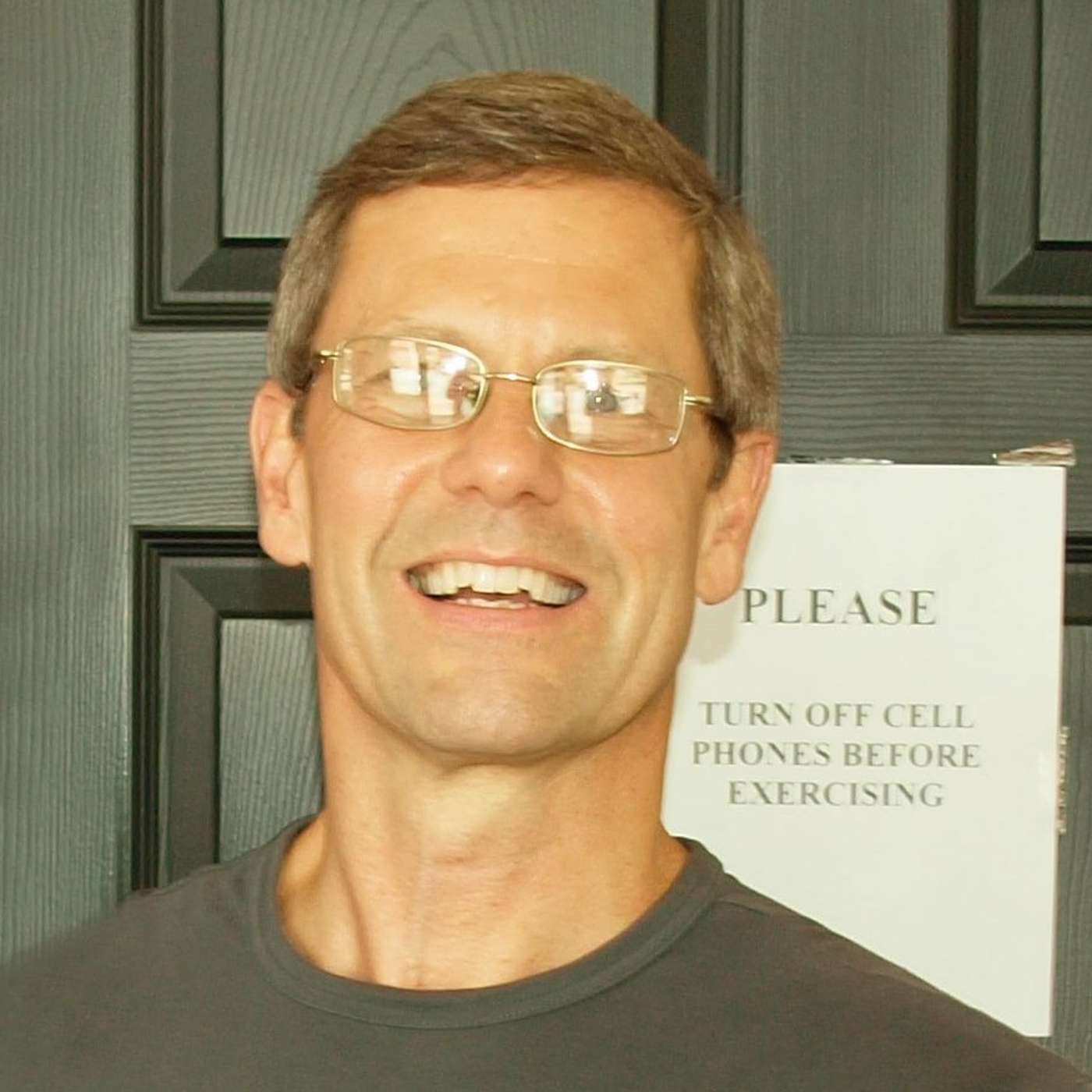
Since the 1960’s, common belief is that two types of exercise exist -- Cardio and Strength training -- each having separate and distinct purposes. But is this an idea whose time has come and gone? Is there a new, emerging exercise paradigm?Mike Rogers leads an enlightening discussion with returning guest, Dr. Doug McGuff, a full-time emergency room physician and owner of Ultimate Exercise, a high intensity, personal training facility in South Carolina. They examine the history of Cardio and how it became such a widely misunderstood concept. We learn how the cardio movement, aka aerobics, began and why many believe Cardio is more beneficial to the heart, lungs and blood vessels than other types of exercise.What is the actual definition of aerobic and anaerobic pathways and how are they linked? Can a certain type of exercise be more ‘aerobic’ than another? Does strength training improve the cardiovascular system? Dr. McGuff answers these questions with such elegance and clarity that even a caveman would understand.Enjoy, Adam.In 2008, Doug released the ground-breaking book, Body By Science, and is considered one of the top high-intensity training experts in the world.You can follow Doug via DrMcGuff.com and on his YouTube channel.Adam Zickerman – Power of 10: The Once-A-Week Slow Motion Fitness Revolution:http://bit.ly/ThePowerofTenFor a FREE 20-Minute strength training full-body workout & to find a location nearest you:http://bit.ly/Podcast_FreeWorkoutInform_McGuff 2_September 10 Transcript Arlene [00:00:01] The Inform Fitness podcast with Adam Zickerman and co-host Mike Rogers is a presentation of Inform Fitness studios a small family of personal training facilities specializing in safe efficient high intensity strength training. On our bi monthly podcast Adam and Mike discuss the latest findings in the areas of exercise nutrition and recovery with leading experts and scientists. We aim to debunk the popular misconceptions and the urban myths that are so prevalent in the fields of health and fitness. And to replace those sacred cows with scientific based up to the minute information on a variety of subjects. We'll cover exercise protocols and techniques nutrition sleep recovery the role of genetics in the response to exercise and much more... On this episode Adam and Mike welcome back Dr. Doug McDuff one of today's leading high intensity experts and author of the bestseller Body by Science. Together they ask can a certain type of exercise be more aerobics than another and is there a new emerging exercise paradigm? Doug [00:01:18] The only way to get at the cardiac or vascular system is to do mechanical work with muscle and it turns out that the higher the quality of that mechanical work, the higher intensity of that mechanical work. The greater the benefit to the cardiovascular system. Adam [00:01:37] I've known today's guest Dr. Doug McGuff now for over 20 years. He's a doctor he's a practicing E.R. doctor in South Carolina and Doug is one of those few doctors who actually happens to run his own gym. It's called Ultimate Exercise and it's in Seneca, South Carolina. In 2008 Doug co-wrote the groundbreaking book Body by Science. It was and really is a really important book because it comes from a theoretical understanding of basic physiology and for the first time properly applies it to high intensity exercise. I can't emphasize enough what his book has done to our industry and bringing high intensity excise to the mainstream. Doug thanks for joining us again for a second episode with Mike and I. I'm going to let Mike drive this session. Doug [00:02:24] OK. Adam [00:02:24] So Mike please... Mike [00:02:27] Hey Doug... Doug [00:02:27] Hey Mike, good to see you! Mike [00:02:27] You know, at Inform Fitness you know we say that we are a high intensity strength training program for 20 minutes once a week. And of course in almost every consultation from every new client we get the question 20 minutes once a week. That's it. Don't I need to be doing some cardio. And even in the last decades with all the research and scientific studies available there's still so much confusion about cardio. The word cardio the concept of cardio. What people think it is what it actually is. You know how cardio is still interchangeable with the word aerobic. It's still thought to be very necessary for achieving fat loss cardio exercise what's necessary for a healthy heart. And Adam and I love getting into the weeds of the biochemistry but we also want to communicate clearly with the lay person who just wants to be healthy and doesn't want to doesn't have the time to read all the scientific footnotes. So in the simplest terms what is cardio. How should we be thinking about cardio. What should we be thinking about when we use the word cardio. Doug [00:03:32] You know the honest answer is I don't even know what the hell to do with that term because it's been so distorted and it's in our zeitgeist. But I don't think anyone can actually define what they mean by it. I think they have some sense that there are certain types of exercise that are more beneficial to the heart and blood vessels than other types of exercise. And that's built upon a huge pyramid of mistaken premises that go all the way back to the 1960s. So when exercise was first researched the only measuring tool you had to see about anything the quantitate and exercise effect was to measure oxygen uptake or to do vo2 max testing. And basically you're measuring the amount of oxygen consumed relative to the exercise that's being done that involves wearing a tight fitting mask that connects to some hoses and a box that measures oxygen going in carbon dioxide going out and trying to correlate that with a specific amount of mechanical work that was being done on an apparatus. But you know like the old vacuum tube computers that occupied a whole room this was a big box and the big machine that required the subject being tested to be kind of tethered to it. So as a consequence the only thing you could really do was to have this thing set up next to a treadmill or a bicycle odometer. And because it was set up to measure oxygen uptake it tend to perform better at lower intensities. So the exercise that happened to be tested at that time was a relatively low intensity for long durations that would produce measurable results within the measuring capability of the tool that was cataloging how much oxygen you were using over a span of time. So that became the testing tool to quantitate exercise with and then over time research was done and they showed that people who exercised had fewer cardiovascular events than people who did not. So the type of exercise that was done on this apparatus was measuring predominantly the aerobic or oxygen using subsegment of metabolism because we had a machine measuring oxygen uptake. So we're measuring the aerobic subsegment of metabolism. So that type of exercise became known as aerobics. Because that exercise was linked in studies to ...
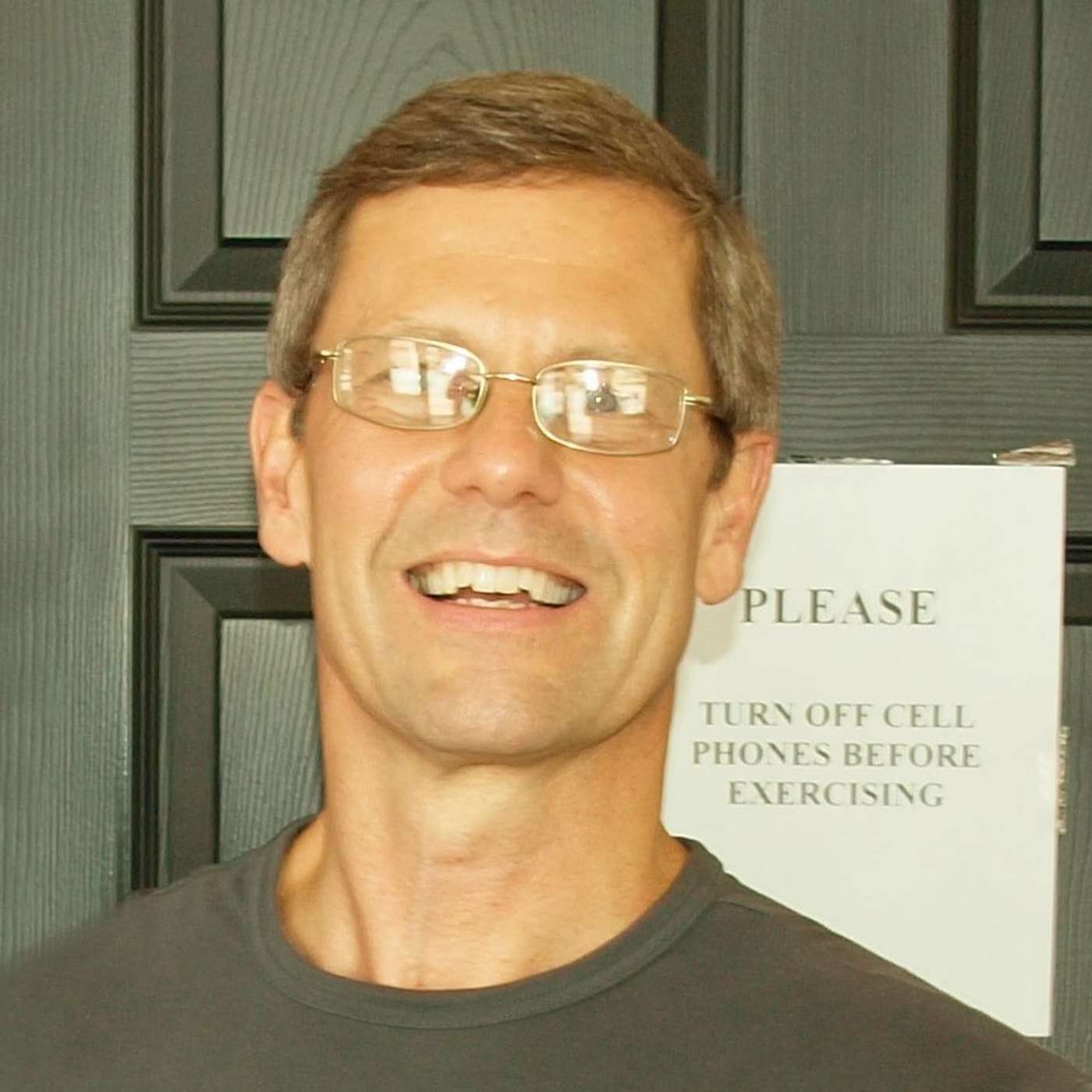
This is one of our most important episodes. A must listen!Dr. Doug McGuff and I met back in 1995 at an exercise conference and we have stayed in touch ever since. He is such a brilliant thinker and teacher. I cannot emphasize enough how important Dr. McGuff has been to our understanding of the mechanisms and benefits of high intensity exercise Dr McGuff is a full-time emergency room physician and owns, Ultimate Exercise, a high intensity, personal training facility in South Carolina. In 2008, Doug released the ground-breaking book, Body By Science, and is considered one of the top high-intensity training experts in the world. I highly recommend that you follow Doug for his incredible insights and findings via DrMcGuff.com and his YouTube channel.We kick off this episode discussing that the measurement of an individual’s muscle mass should be included as an important vital sign, similar to one’s blood pressure and hemoglobin A1-c. Strength, we are learning, is a great indicator of overall health; including being a good predictor of system inflammation and physiologic reserves.Doug does a fantastic job explaining the concept of S-O-R (Stimulus – Organism – Response), helping us to understand the relationship between exercise, genetics and our expected (and unexpected) results. Did you know that muscle is the most powerful endocrine organ in the body? High intensity exercise and healthy muscle mass dictates and signals for: the reversal of the aging processhow energy is utilized in the bodythe conversion of white fat to brown fat (a good thing). the partitioning of nutrientshow glucose is regulatedIt will be practically impossible for you to listen to this episode and not feel compelled to hit the weight room ASAP. Enjoy!Adam Zickerman – Power of 10: The Once-A-Week Slow Motion Fitness Revolution:http://bit.ly/ThePowerofTenFor a FREE 20-Minute strength training full-body workout & to find a location nearest you:http://bit.ly/Podcast_FreeWorkoutInform_McGuff 1_August 9 Transcript Arlene [00:00:01] The Inform fitness podcast with Adam Zickerman and co-host Mike Rogers is a presentation of Inform fitness studios a small family of personal training facility specializing in safe efficient high intensity strength training. On our bi monthly podcast Adam and Mike discuss the latest findings in the areas of exercise nutrition and recovery with leading experts and scientists. We aim to debunk the popular misconceptions and the urban myths that are so prevalent in the fields of health and fitness. And to replace those sacred cows with scientific based up to the minute information on a variety of subjects. We will cover exercise protocols and techniques nutrition sleep recovery the role of genetics in the response to exercise and much more. On this episode Adam and Mike welcome Dr. Doug McGuff, one of today's leading high intensity experts. This is a must listen as they discuss that there's a lot more than meets the eye when it comes to all the benefits we reap from high intensity training. If you're still looking for some more motivation to stick to your exercise program well this episode is for you. Doug [00:01:21] If you want everything bad that can happen to a human to happen immobilize them and overfeed them. Movement is life. And I believe that movement against resistance is life elevated. Adam [00:01:36] Hello. Welcome to the show. Adam and Mike here I have known today's guest Dr. Doug McGuff now for over 20 years. We both caught the weight training bug as young men in our teens, we are about the same age. And we've been geeking out on it ever since. He's a doctor he's a practicing E.R. doctor in South Carolina and Doug is one of those few doctors who actually happens to run his own gym. It's called Ultimate exercise and it's in Seneca South Carolina. In 2008 Doug co-wrote the groundbreaking book Body by science along with John Little and let me tell you it is required reading for all my staff and even many of our clients. Why. Well honestly it was and really is a really important book because it comes from a theoretical understanding of basic physiology and for the first time properly applies it to high intensity exercise. I can't emphasize enough what his book has done to our industry and bringing high intensity exercise to the mainstream. So anyway it's my great pleasure to introduce a guy who I really consider a mentor. Welcome to show Doug. Doug [00:02:45] Yeah Adam it's my pleasure. I've been looking forward to it. Adam [00:02:47] I just saw you recently at the conference, what was it... a resistance exercise conference in Minnesota. Doug [00:02:53] Yeah. Adam [00:02:54] And your keynote speech was fantastic by the way. Doug [00:02:57] Thanks. Appreciate it. Doug [00:02:59] You said something I really rang true in me because we come from similar backgrounds experiences and the timing because we're similar ages and we got introduced to high intensity training the nautilus principles relatively around the same times. We we go back a few years with this high intensity training at this point and you end you said that for the last 20 30 years that we've been lifting weights primarily to get big and strong, swoll as they say you know maybe to give us an edge in sports and if we were on an unusually perceptive day we might have actually also thought that it might protect us from injury but really is about getting big and strong. Now we're finding out so much more that we were getting from these workouts than we ever thought. You know the health benefits of exercise that go beyond just getting strong which quite honestly if you told me that just getting strong is all we got from strength training I'd be happy with that. Doug [00:03:53] That would be awesome. Yeah. Adam [00:03:54] I mean that's why we were doing we didn't think we were getting anything more from it. But, so Doug this is what I want to speak to you about the health benefits of strength training beyond just getting really strong. So Doug the paper you brought up was titled muscle should be the new vital sign. Something like that right. Doug [00:04:11] Yeah. Yeah I think that that's probably accurate. I mean at least it should be you know not on a visit by visit vital sign but in terms of someone's health history I think that ought to be recorded as a health parameter body mass index is being used a lot now. But that's not truly accurate. But I think if there was some sort of measure of muscle mass or strength that could be included as ...

On this episode, we bring back biomechanics’ expert, Bill DeSimone, to discuss an exercise technique called ‘Negative’ Training. Negatives are performed by substantially slowing down the lowering phase (negative phase) of the repetition, thereby, increasing the intensity of the exercise you are performing. Bill starts off addressing the recent surge in popularity of Negative training and its subcategories; Negative Only training, Forced Negatives, Static Contractions and Negative Emphasized training. We cover:Can Negatives build bigger muscles compared to conventional high intensity protocols? Thoughts on when to use negatives as a good tool. Different types of negative protocols.A novel way of looking at ‘plateaus’ – the point where the trainee doesn’t seem to be getting any stronger. The potential dangers of negative training and how to avoid the big mistakes? Listen to this episode and get positively InFormed on negative training. Enjoy!Negative Push-up video: https://youtu.be/65JduvWc8AENegative Chin-up video: https://youtu.be/B44dYlm5H_8Failed Squat video: https://youtu.be/8NAEEeqVragBill DeSimone Website: Optimalexercisenj.comBill DeSimone - Congruent Exercise: https://www.facebook.com/CongruentExerciseAdam Zickerman – Power of 10: The Once-A-Week Slow Motion Fitness Revolution:http://bit.ly/ThePowerofTenFor a FREE 20-Minute strength training full-body workout & to find a location nearest you:http://bit.ly/Podcast_FreeWorkoutInform_DeSimone 2_July 14 Transcript Arlene [00:00:01] The Inform Fitness podcast with Adam Zickerman and co-host Mike Rogers is a presentation of Inform Fitness studios a small family of personal training facilities specializing in safe efficient high intensity strength training. On our bi monthly podcast Adam and Mike discuss the latest findings in the areas of exercise nutrition and recovery with leading experts and scientists. We aim to debunk the popular misconceptions and the urban myths that are so prevalent in the fields of health and fitness. And to replace those sacred cows with scientific based up to the minute information on a variety of subjects. We'll cover exercise protocols and techniques nutrition sleep recovery the role of genetics in the response to exercise and much more. Arlene [00:00:59] On this episode Adam and Mike welcome back biomechanics expert Bill DeSimone to discuss an exercise technique called negative training. Bill [00:01:08] You're not proving that negative only training or positive negative or no negative is no better or worse. They all work. I think the real value of playing with the negative is it helps you get a little extra mileage out of a given weight. Adam [00:01:23] We're back with Bill DiSimone again biomechanics expert from Cranberry New Jersey. Mike [00:01:34] This show we're going to talk about something very very very negative. Adam [00:01:37] Yes negative. Want to stay positive but we have to get negative. All right. So again current events and you know they've been some books out recently touting the negative portion of weight lifting. Those of you don't know that negative is the lowering of the weight when you're when your weight training and the positive motion is when you're lifting the weight. So there is a school of thought out there been there for a long time but it's becoming popular again and that is that the negative portion of the repetition is actually more beneficial than the positive portion or if you emphasize negative only type training that you get better results meaning to a lot of people bigger muscles and we're going to talk about what's being shown out there what the truth is what the science is if there is any validity to the fact that negatives have some kind of magical benefit or should we just be doing nice normal slow reps positive and negative and you know leaving it at that. So what would you like to say about that Bill? Bill [00:02:37] Funny you should ask Adam. Just off the top of my head I feel like Sam Kennison with my rant. Adam [00:02:47] Hopefully not as loud as, or as dead. Bill [00:02:51] Beginning of the year roaming right. Yeah he's kind of dead. Think of a more recent comic who yells a lot. I don't know. It was tragic my car crash. I just get that I deserve a cheap joke I wasn't. I don't really know the guy. Anyway where were we. Where was it. So where was I. After the new year in a bookstore looking at the brand new crop of diet and fitness books I stumble onto one that I won't name we can put it we can put the information in links I don't I'm not looking to make enemies here. So it's predominately a diet book with a couple of chapters on exercise. The gist of his exercise program is to work as a week to 20 second sprints with recovery sort of like Martin Kibala type protocols and the other work out a week is supposed to be a Doug McGuff type protocol like a Big Five routine only negative only advocating just negative negative contractions in the workout. With the justification that it's more intense so you have to do a briefer so it ties into the whole just twice a week for 20 minutes in addition to that Sprint workout. I didn't buy the book and I went to look at look it up online and sure enough there is a Web site so looking through exercise information on the Web site and it's more negative emphasized exercise but almost reckless like lifting one dumbbell heavy dumbbell over your head lowering it with one arm for a press one a TRICEP EXTENSION we're doing a one legged squat you know to negative failure and then switching legs. So it it's really a cursory look really really superficial look at negative training and then since I signed up for my free report in the following month I got 30 emails text messages and voicemails from the website calling me to buy stuff. And when I poked around a little bit deeper in the store is where they have the nutraceutical sales that you can get on auto renew. The point of the book wasn't to convey information in a package. The point of the book was to get you hooked into this auto renew of the nutraceuticals, otherwise we use to call them supplements. Mike [00:05:06] Like Infowars. Adam [00:05:08] Yeah I was sensing a thousand times a ten second left ten seconds lowering. Bill [00:05:12] So I would not regard that as a good source of negative training information that's pretty negative. Yeah. Wasn't I get a 30 second negative a 30 second positive 30 second negative thread and so according to this study a little eccentric little eccentric. Thanks. Adam [00:05:30] Well having our friends Dr. James Fisher and Steele...

We continue our conversation with Gary Taubes, journalist and author of the bestseller Why We Get Fat. In this episode Gary reveals a pet peeve of his: the establishment still considers Ketogenic and Low Carbohydrate/High Fat (LCHF) diets very unhealthy ways to eat, even though the recent resurgence of those diets has generated scores of clinical trials that appear to support the safety and effectiveness of this way of eating. Exasperated, he wrote an article on the subject, which was published in Canada’s, The Globe and Mail. Gary gets emotional when he relates a story a doctor told him about a patient, newly diagnosed with type-2 diabetes, whose health improved dramatically by following a LCHF diet. We discuss President Clinton’s success on a vegan diet. Gary has a strong response for those who think that such success stories are just anecdotes, not science. We then consider what to do when your doctor tells you to get off the LCHF diet regardless of your success. The episode ends with speculation on whether LCHF diets will ever be endorsed by the American Dietary Association (ADA) and the American Heart Association (AHA). http://garytaubes.com/ Gary’s books:http://garytaubes.com/works/books/good-calories-bad-calories/http://garytaubes.com/works/books/why-we-get-fat/http://garytaubes.com/works/books/the-case-against-sugar-2016/Gary’s Globe And Mail article:https://www.theglobeandmail.com/opinion/minimal-carbs-lots-of-fat-incredible-results-but-no-science/article37402123/ Adam Zickerman – Power of 10: The Once-A-Week Slow Motion Fitness Revolution:http://bit.ly/ThePowerofTenFor a FREE 20-Minute strength training full-body workout & to find a location nearest you:http://bit.ly/Podcast_FreeWorkoutInform_Taubes 2_June 11 Transcript Arlene [00:00:01] The Inform Fitness podcast with Adam Zickerman and co-host Mike Rogers is a presentation of Inform Fitness studios, a small family of personal training facilities specializing in safe efficient high intensity strength training. On our bi monthly podcast Adam and Mike discuss the latest findings in the areas of exercise nutrition and recovery with leading experts and scientists. We aim to debunk the popular misconceptions and the urban myths that are so prevalent in the fields of health and fitness. And to replace those sacred cows with scientific based up to the minute information on a variety of subjects. We'll cover exercise protocols and techniques nutrition sleep recovery the role of genetics in the response to exercise and much more. Arlene [00:00:59] On this episode Why We Get Fat. Part two. We welcome back national best selling author Gary Taubess. Gary [00:01:06] If it's a physician who is overweight. I say Why don't you try it yourself. An experiment. Not going to kill you to go without carbs for two months. You know if at the end of two months you haven't don't feel healthier you haven't lost weight your blood pressure hasn't come down your waist size hasn't gotten smaller. Go back to eating potato chips. Adam [00:01:27] Well we're back with Gary Taubes. He is the co-founder of Nutrition Science Initiative and author of The Case Against sugar Why We Get Fat and the tome Good Calories Bad Calories. And I'm here again with Mike Rogers and Neil Holland to continue our conversation. I would like to talk about a recent article that you wrote in Canada's The Globe and Mail. You make so many good points and I hope we get to cover most of them. And we'll put a link to it in our show notes. Totally worth the read. And correct me if I'm wrong Gary but I believe it's a response to the recent resurgence in popularity of the low carbohydrate high fat diets particularly the ketogenic diet. Or like we mentioned in the last episode Keto for short and while you admit that much more research needs to be done you take exception to calling Ketogenic Diets a fad, correct?. Gary [00:02:17] Well yeah. Well again the reason I wrote that is there's this dichotomy that emerge. So when I look back I got into this right around the year 2000 and since then when I first started doing this research there were I figured there are maybe a dozen physicians in America who were pushing low carb high fat ketogenic diet you know and half of them had written books about them. So you know you had. The Atkins and they the Eades Mike and Mary Nan Eades and the sugar Buster people and at the time if you want to lose weight they accepted the idea was you had to eat less basically that you had to eat a calorie restricted diet maybe cut 500 calories or a thousand calories day. And it had to be a low fat diet and these ketogenic diet would kill people you know Atkins was a quack and he was a con man and a shyster and that's it. So now you come 19 years or 18 years into the future and we've now got thousands maybe a few tens of thousands of physicians around the world who have decided like you guys that these low carb high fat ketogenic diet just make their patients healthier. So if you can get people with obesity and diabetes who eat this way it's a way of eating the short term diet. You can put their obesity in remission and then one way to think about it you get significant weight loss you can put their diabetes in remission and get them out their diabetes drugs and their hypertension drugs and they have chronic pain that tends to get better and. A few years ago 2017 there was a letter to the Huffington Post co-authored by a hundred plus physicians in Canada saying look. Not only do we. Low carb high fat ketogenic diet. But that's what we prescribe our patients. We see these remarkable results and we can't unsee them. That's a phrase these Canadians like Can't unsee what we're seeing and we're not changing we're not going back to the you know we were we used to eat the conventional diets are the healthy conventional healthy way of eating our patients. Did you know some of us were vegetarians and most were vegan some of them were world class athletes and they were getting fatter or they were getting diabetic they had become pre diabetic anyway and when they shifted to this low carb high fat Atkins like eating they got healthy and when they prescribed it to their patients and then the flip side is you still have organizations like every year U.S. News and World Report has a committee of you know quote expert nutritionists and authorities who decide on what the healthiest diets are. And they always say the same thing. And the low carb high fat ketogenic diet come in the least healthy diets imaginable. I think they included 39 or 40 diet and these ketogenic diet were 35 to 40 and really basing a they're basing it on the assessment of the expert and the experts are the people who for the last 50 years have been telling us we should eat less and not too much and mostly plans you know a Mediterranean diet all the things we've been doing and getting fatter anyway doing so. I wanted to sort of explore this conflict. And. You've got physicians more and more every year saying if I can get my patients to eat this way I can get them healthy. Get them off th...

Biomechanics expert Bill DeSimone is back by popular demand for the 3rd time! In this episode, a deep look and discussion into the latest internet sensation—the barbell hip-thrust and related movements. What is a barbell hip-thrust? What are the benefits? Does it work as advertised? Is it worth the risk?DeSimone, together with Adam and Mike go on to offer critical insight into potentially better alternatives, answer the most commonly asked questions, and moreover, remind us that not all exercises are created equal and each needs to be analyzed objectively for safety and efficacy. Listen and learn how we set apart the popular exercise crazes from those worth doing BodyBuilding.com – Barbell Hip Thrusthttps://www.bodybuilding.com/exercises/barbell-hip-thrustBill DeSimone WebsiteOptimalexercisenj.comBill DeSimone - Congruent Exercisehttps://www.facebook.com/CongruentExerciseAdam Zickerman – Power of 10: The Once-A-Week Slow Motion Fitness Revolution:http://bit.ly/ThePowerofTenFor a FREE 20-Minute strength training full-body workout & to find a location nearest you:http://bit.ly/Podcast_FreeWorkoutInform_DeSimone 1_May 23 Transcript Arlene [00:00:01] The Inform Fitness podcast with Adam Zickerman and co-host Mike Rogers is a presentation of informed fitness studios a small family of personal training facilities specializing in safe efficient high intensity strength training. On our bi monthly podcast Adam and Mike discuss the latest findings in the areas of exercise nutrition and recovery with leading experts and scientists. We aim to debunk the popular misconceptions and the urban myths that are so prevalent in the fields of health and fitness. And to replace those sacred cows with scientific based up to the minute information on a variety of subjects. We'll cover exercise protocols and techniques nutrition sleep recovery the role of genetics in the response to exercise and much more. Adam [00:00:53] Greetings everybody. This is Adam Zickerman. Just wanted to let you know that we're going to be talking about for this episode an exercise called the barbell hip thrust and we're also going to be talking about related exercises such as the glute bridge. If you're not familiar with these exercises I recommend you going to our show notes and clicking on the link there to see what these exercises look like. You'll have a better idea of what we're talking about as we discuss this. Enjoy the show and thanks for listening. Arlene [00:01:31] On this episode the barbell hip thrust and other exercise crazes. We welcome back biomechanics expert Bill DeSimone. Bill [00:01:41] People's glutes burn and they get pumped up and clients may find that gratifying and you feel muscle get pumped. And again as a trainer with experience sometimes you do want to do something that registers on the client whether it has a kind of long term result or not because really the secret to a good butt is to be born with it then have the trainer take credit for it that's really the secret. Adam [00:02:04] Bill DeSimone is a personal trainer specializing in joint friendly fitness as he likes to say he has over 30 years experience. Is a A certified health coach an orthopedic exercise specialist and he has his own studio called Optimal Exercise in Cranberry New Jersey. Where is that? His book Congruent Exercise which is basically my Bible subtitled How to make weight training easier on your joints is available in print and on Kindle. Joint friendly fitness emphasizes protecting your joints and spine as you get into shape and it applies material from anatomy biomechanics and rehabilitation to fitness goals. The result is you get more fit toned and flexible without the injuries associated with the more extreme approaches. [00:02:51] Now Bill and I go back quite a while. How many years I don't know anymore. And I have to say and you know I don't really kiss your butt too often. But I have to say you really have changed my whole approach to exercise. When I read your material for the first time I mean I always knew that exercise had to think about safety but you really gave me the ins and outs of that. It wasn't just surface talk it was it was deep learning on on biomechanics that that I. I cannot look at a machine now without those numbers going through my head and levers and and strength curves. It's great. And the best part about is you've broken it down for somebody that doesn't have a degree in mechanical mechanics mechanical engineering and you able to just have the typical layperson actually understand this stuff. So kudos to you and that's why I have you on the show. Mike [00:03:49] All the trainers feel that way and like not to kiss your butt also, Bill... We always learn something from you every time we have a conversation. I was very happy to have you back. Bill [00:04:02] Well thanks. So injuring myself didn't go for nothing. Adam [00:04:05] Exactly. So today we're gonna talk about something that's a kind of a pet peeve of yours and you actually asked me to talk about this with you. So I'm all for it because it's true. And what we're gonna be talking about is the barbell hip thrust or. And also glute bridges and something called a machine based glute bridge called the glute drive station. I think by Nautilus and companies is like that. So we're talking about the efficacy of basically glute bridges what they do for you. The barbell hip thrust so apparently the last dozen or so years the barbell hip thrust has become an Internet favorite. You have videos of attractive young ladies in skin tight clothes thrusting a barbell and it's really almost become a cliche on an Instagram more recently right Bill the Hollywood superheroes and really you see a lot of these barbell thrusts being done by NFL players. So let me ask you a question are we as trainers. In facilities such as ours where safety is of utmost importance though are we shortchanging our clients by not jumping on or shall I say thrusting on the bandwagon. Are we as trains passing of a passing up on some magical benefits by not you know dry humping a barbell. Bill [00:05:29] So the short answer is no we're not missing anything. Okay. And what what set me off was a video of the Nautilus glute drive station which apparently came out in the spring of last year. Popped up on my LinkedIn feed and I saw all the fawning comments about it. I kind of snapped. So if you're determined to do this exercise the glute drive station is marginally safer than using a barbell for it. Adam [00:06:03] All right. First of all I want to describe what a barbell hip thrust actually is and what it's for. Bill [00:06:09] Well so what it looks like is the exerciser has a shoulder blades on a bench. Their feet are on the floor with the knees and their hips bent. And there's a barbell lying across the ...


Download from Google Play

Download from App Store
 United States
I thought you would talk about the book "Essentialism", rather than promote your business...