


 Claim Ownership
Talk to Al Jazeera
Subscribed: 2,016Played: 20,188
Subscribe

© 2026 Al Jazeera Media Network. All rights reserved.
Description
Al Jazeera journalists sit down with top newsmakers from around the world.
206 Episodes
Reverse
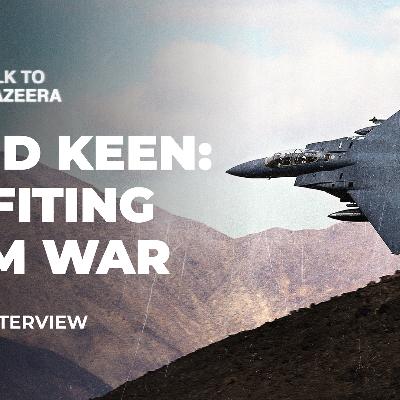
As the United States-Israel war on Iran deepens, conflict scholar David Keen examines why some wars persist without a clear victory. He argues that war can serve political control, economic interests and systems of power that outlive the battlefield. From sanctions and smuggling to military spending and useful enemies, Keen explains how conflict can become functional and why making peace more attractive than war is often the real challenge.
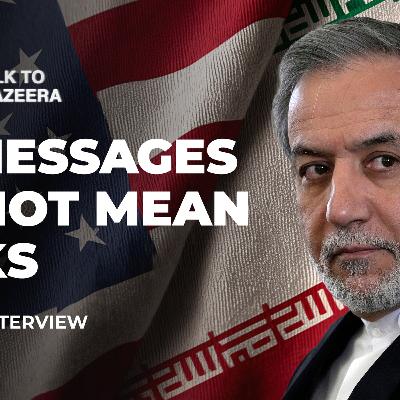
Iran's Foreign Minister Abbas Araghchi tells Talk to Al Jazeera that Iran is not negotiating with the United States, despite ongoing exchanges of messages, including direct communication from US envoy Steve Witkoff. Araghchi says talks lack trust, adding that no response has been given to US proposals, and that there is no basis for negotiations. Araghchi outlines Iran's conditions for ending the war, warns against threats and deadlines, and signals a readiness to continue defending the country as regional tensions escalate. Subscribe to our channel: http://bit.ly/AJSubscribe Follow us on X : https://twitter.com/AJEnglish Find us on Facebook: https://www.facebook.com/aljazeera Check our website: http://www.aljazeera.com/ Check out our Instagram page: https://www.instagram.com/aljazeeraenglish/ Download AJE Mobile App: https://aje.news/AJEMobile
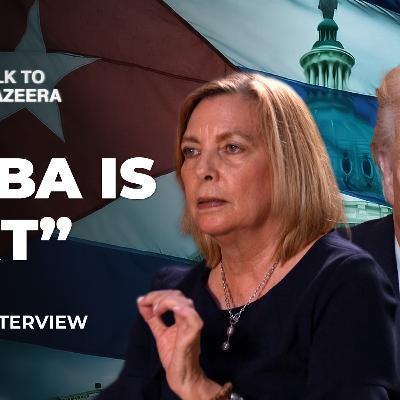
Cuba is facing widespread blackouts as United States sanctions restrict fuel supplies, crippling the island's energy system and economy. In this episode of Talk to Al Jazeera, Deputy Foreign Minister Josefina Vidal Ferreiro defends Cuba's position, rejects US pressure, and warns of growing humanitarian consequences. She also responds to US President Donald Trump's remarks suggesting Cuba could be targeted next after Iran. As tensions rise, Vidal insists that Cuba will resist while calling for dialogue, raising questions about how far this confrontation could go.
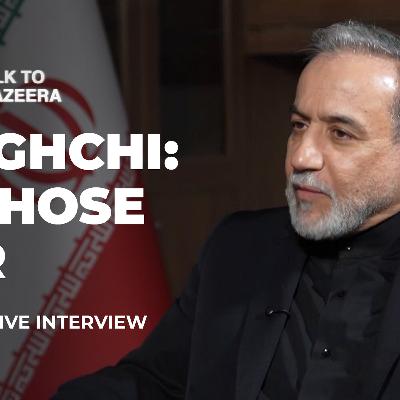
Iranian Foreign Minister Abbas Araghchi tells Talk to Al Jazeera that the United States is responsible for the war engulfing the region. He denies targeting civilians, defends Iran’s retaliation, and warns that the US military presence across the Gulf makes escalation unavoidable. Araghchi also signals possible new rules for navigation through the Strait of Hormuz, while rejecting a ceasefire in favour of a permanent end to the war.
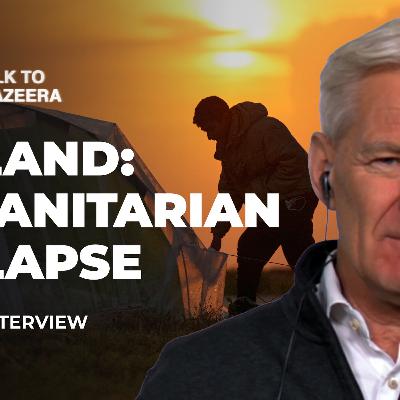
Jan Egeland, secretary-general of the Norwegian Refugee Council, warns that the United States-Israel war on Iran is driving mass displacement and pushing humanitarian systems towards collapse. Speaking to Talk to Al Jazeera, he says that civilians across Iran, Lebanon, Gaza and Sudan are paying the price of escalating conflict, that aid is dangerously overstretched, and that international humanitarian law is being eroded as the region faces an expanding crisis.
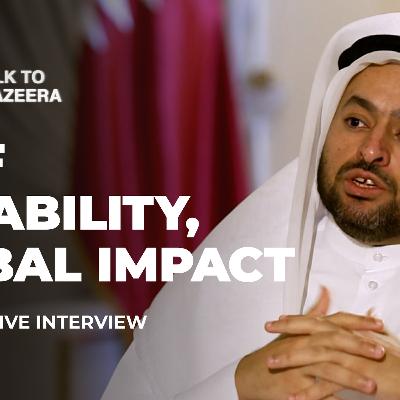
Qatar’s Minister of State for Foreign Affairs, Mohammed bin Abdulaziz Al Khulaifi, speaks to Talk to Al Jazeera as the Gulf faces its most dangerous escalation in years. After Qatar itself came under drone and missile attacks, Al Khulaifi condemns Iran’s aggression, warns that attacks on energy infrastructure threaten global markets, and argues that Gulf security is inseparable from global stability. Despite rising tensions, he insists diplomacy remains the only path to a lasting solution and says Qatar will continue pushing for negotiations to prevent a wider war.
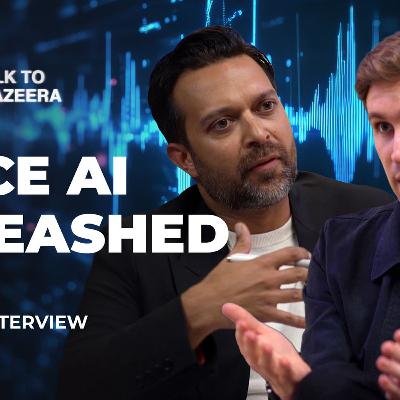
ElevenLabs can generate lifelike voices from a short sample, including a clone of Al Jazeera anchor Neave Barker. CEO and cofounder Mati Staniszewski tells Talk to Al Jazeera how voice AI could transform dubbing, education and accessibility, helping people who have lost speech. But the technology can be abused: for fraud, disinformation and psychological operations. From safety measures and detection to partnerships with governments, including Ukraine’s push towards an “agentic state”, the interview asks the core question: when your voice becomes software, who controls it, and what rights are left?
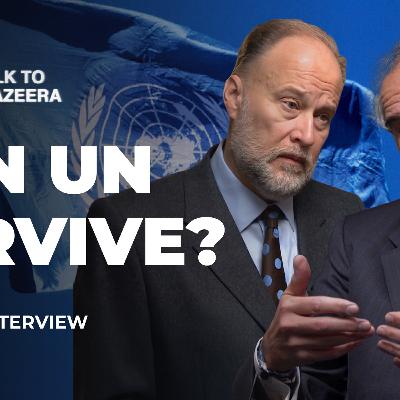
As nuclear tensions rise worldwide and the war in Ukraine reshapes global security, Rafael Grossi stands at the centre of the world’s most dangerous calculations. The director general of the International Atomic Energy Agency discusses the risks of escalation, the limits of diplomacy and the credibility of nuclear oversight. Now a declared candidate for United Nations secretary-general, Grossi also addresses calls to reform what critics describe as a weakened institution. Can the UN still prevent conflict, or is the global order fragmenting beyond repair?
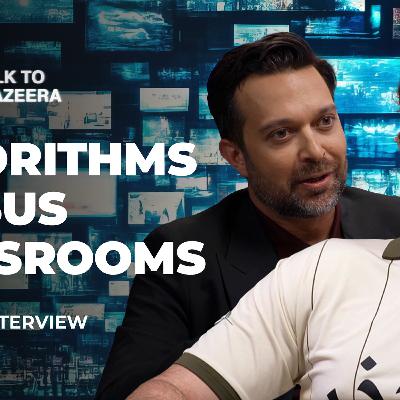
Hasan Piker has built one of the largest online political audiences, reaching millions without newsroom oversight or traditional editorial constraints. In this episode of Talk to Al Jazeera, the influential streamer reflects on bias, accountability, wealth, bans and the blurred line between journalism and digital influence. As algorithms replace editors and engagement supplants verification, we examine who shapes political narratives in the age of streaming and what responsibilities accompany that power.
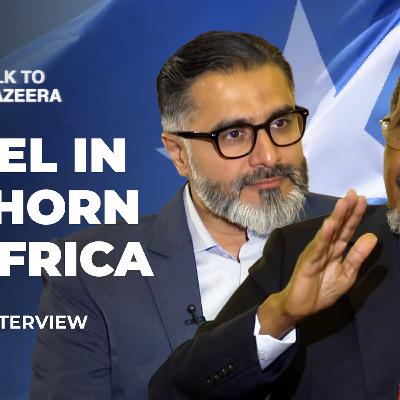
President Hassan Sheikh Mohamud responds to Israel’s recognition of Somaliland - a self-governing Somali territory, allegations of a possible Israeli military presence near the Red Sea and shifting power dynamics in the Horn of Africa. He addresses criticism by the United States as well as President Donald Trump’s remarks on Somalia, growing ties with regional allies and fears of wider instability as tensions rise between Israel, Iran and their rivals. At home, Mohamud faces pressing questions over security, human rights, media freedom and whether he will seek a third term ahead of crucial elections.
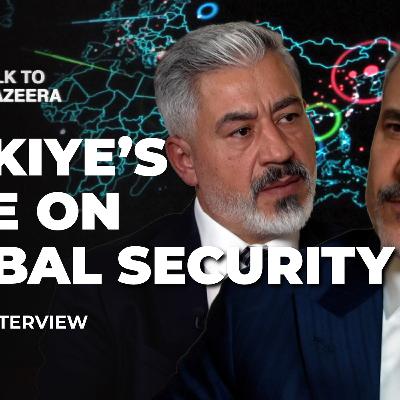
Turkish Foreign Minister Hakan Fidan warns that attacking Iran would be wrong and says Tehran is ready to return to negotiations. He urges a step-by-step diplomatic approach and cautions against escalation. Fidan also discusses Turkiye’s position on the future of regional and global security cooperation and the role it can play as the post-World War II order fractures and trust between states erodes.
In this episode of Talk to Al Jazeera, American philosopher and activist Cornel West delivers a searing critique of the United States, describing what he sees as moral collapse, democratic decay and spiritual bankruptcy. Drawing on the Black freedom struggle and his own run in the 2024 presidential election, West argues that both major parties serve entrenched power while inequality deepens at home and war crimes are enabled abroad. From Gaza to Harlem, he asks whether love, dignity and justice can still form the basis of meaningful political resistance.
As wars intensify and donor funding dries up, the global humanitarian system is under unprecedented strain. Jagan Chapagain, secretary-general of the International Federation of Red Cross and Red Crescent Societies, warns that life-saving operations are being scaled back just as needs explode from Gaza and Sudan to Ukraine and climate-driven disasters worldwide. He addresses United States and European aid cuts, attacks on humanitarian workers, the erosion of international law, and whether neutrality and protection still mean anything in today’s conflicts.
Since the United States abducted Venezuelan President Nicolas Maduro, accusing him of "narcoterrorism", Colombia has found itself under growing pressure from Washington. President Gustavo Petro responds to President Donald Trump’s accusations. The Colombian leader also addresses diplomacy vs confrontation, regional sovereignty and whether Latin America is entering a dangerous new chapter.
The United States is reviving a policy first set out in the 1800s that treats Latin America as its strategic sphere of influence. As Washington expands maritime operations in the Caribbean and eastern Pacific, critics warn of legal violations and rising regional instability. Uruguay’s Foreign Minister Mario Lubetkin joins Talk to Al Jazeera to discuss US strikes, Venezuela, migration pressures, and China’s growing role in the region — and whether diplomacy can still prevent escalation in a hemisphere shaped once again by power politics.
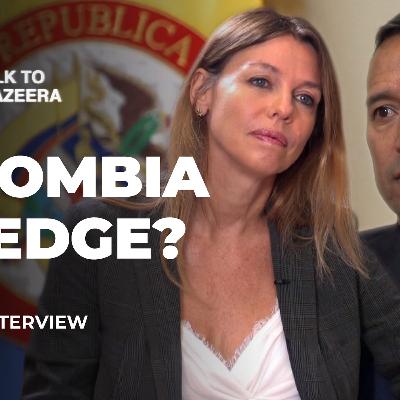
Colombia’s Defence Minister Pedro Sanchez speaks to Talk to Al Jazeera as tensions between the United States and Venezuela escalate. With Washington deploying additional military assets to the Caribbean, Colombia finds itself on the front line of a widening regional standoff. Sanchez discusses the pressure this places on President Gustavo Petro’s “Total Peace” strategy, the surge in armed groups, and the country’s fight against drug trafficking. He warns that any further confrontation could trigger new migration flows, empower criminal networks, and jeopardise Colombia’s fragile security gains.
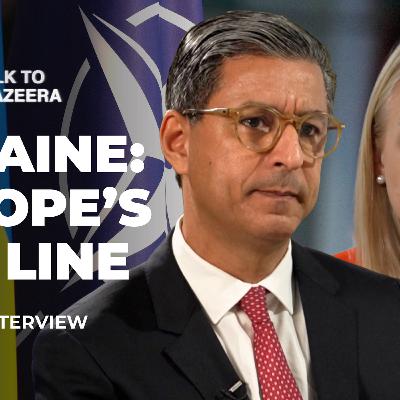
Finland’s Foreign Minister Elina Valtonen speaks to Talk to Al Jazeera about the prospects for a Russia-Ukraine peace deal, whether Trump can bring Putin and Zelenskyy to the negotiating table, and why Europe insists on clear red lines. From frozen Russian assets to NATO deterrence and Finland’s unique position as a NATO member sharing a long border with Russia, Valtonen explains what a realistic settlement would require, and why she believes Moscow is still not interested in genuine peace.
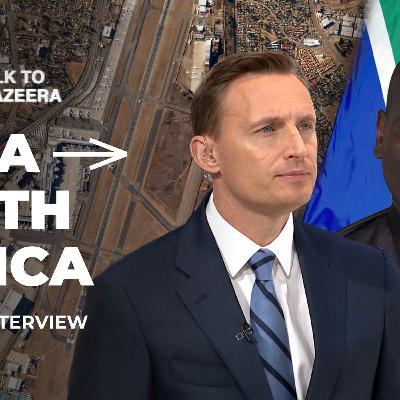
South Africa’s foreign minister Ronald Lamola speaks to Talk to Al Jazeera about the mysterious arrival of a flight carrying Palestinians, why authorities were blindsided, and what the incident reveals about the networks moving people out of Gaza. He also discusses South Africa’s genocide case against Israel at the International Court of Justice, the country’s G20 summit, and how Pretoria sees its role in a rapidly shifting global order shaped by conflict, diplomatic pressure and competing visions of justice.
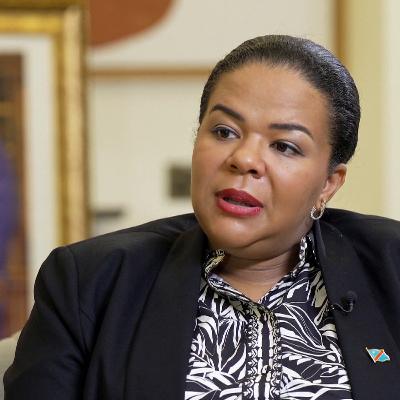
The Democratic Republic of the Congo’s foreign minister tells Al Jazeera that Rwanda’s actions on the ground cast doubt on its commitment to a peace process aimed at ending decades of conflict in eastern Congo. Therese Kayikwamba Wagner says a planned presidential meeting remains stalled, with foreign troops still on Congolese territory and abuses continuing despite diplomatic efforts. She argues that meaningful progress depends on real leverage from international facilitators, the United States, Qatar and regional partners, to hold both sides accountable and push the process toward a credible, lasting agreement.
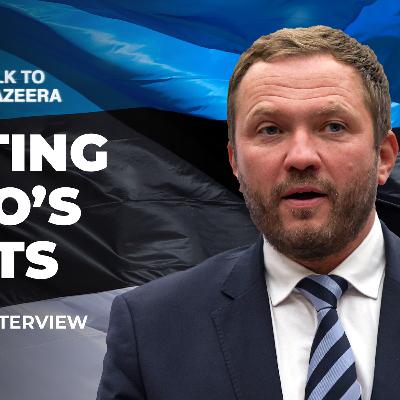
For the first time since Russia’s full-scale invasion of Ukraine, a NATO member has formally invoked Article 4 of the alliance's founding treaty after a major airspace breach. Estonian Foreign Minister Margus Tsahkna tells Talk to Al Jazeera why repeated Russian provocations are more than isolated incidents - they’re a test of NATO’s credibility. As United States President Donald Trump questions the value of collective defence, Tsahkna warns that Europe’s security consensus is fraying and hesitation could invite danger.

Comments

Download from Google Play

Download from App Store
 United States