


 Claim Ownership
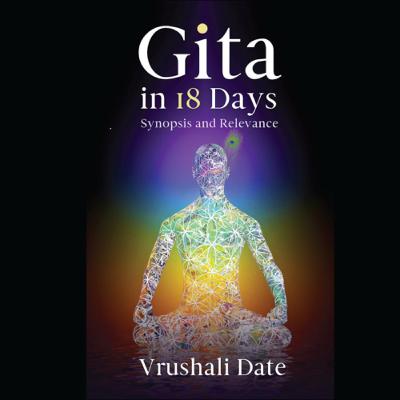
Gita in 18 Days
Subscribed: 11Played: 130
Subscribe

© Vrushali Date
Description
Gita in 18 days is a collection of synopsis derived from the 18 chapters of the greatest philosophy told to mankind by Shri Krishna—The Bhagwat Gita.
The Bhagwat Gita is a lifestyle guide for a happy and content life. It is said that you will find all answers in The Bhagwat Gita.
The book attempts to simplify the teachings in the Gita for a quicker understanding and implementation of the same in our day-to-day lives.
The Bhagwat Gita is a lifestyle guide for a happy and content life. It is said that you will find all answers in The Bhagwat Gita.
The book attempts to simplify the teachings in the Gita for a quicker understanding and implementation of the same in our day-to-day lives.
19 Episodes
Reverse
“Ananyāś cintayanto māḿ ye janāḥ paryupāsate teṣāḿ nityābhiyuktānāḿ Yogakshemam Vahamyaham.” “I, Shri Krishna, take upon myself the full responsibility of protecting you forever,” which means that your inner self is eternal and will be with you to guide and take care of your welfare. Shut the noise outside and listen inside. Thank you, dear readers, for the encouragement and support in this small endeavor. Thank you and look after yourselves.
Synopsis Shri Krishna noted his most divine and the utmost secret knowledge that is recited in Gita in this chapter. He describes the three natures (satvik, rajasik, and tamasik) of sacrifice, knowledge, duties, performance, intellect, determination and happiness. He also describes a sankhya yogi and a karma yogi and their lifestyles. He presents the realistic view of caste categories (brahman, kshatriya, vaishya and shudra). Finally, Krishna asks Arjuna, “Have you understood the Gita?” Arjuna replies that his dilemma has ended and he no longer had any doubts in his mind. He is ready to shed his inhibitions and is prepared to fight. His attachments vanish, the dust on the mirror is cleared and Arjuna is ready for the war.
Synopsis In this chapter, Krishna explains what is faith and its different types: saatvik, rajasik, and tamasik He explains the three types of yagna (offerings), daan (donations), and tap (penance) linked to satvik, rajasik, and tamasik nature of beings.
Synopsis In this chapter, Krishna explains how different people react in the same situation. At times, when one needs help, some reach out to help while some keep away. Why do people behave differently?
Synopsis In this chapter, Krishna answers the questions: Who are we? Where have we come from?
Synopsis Everything that happens in this universe is because of the following three natures: Satvik nature is the vision of equality and selfless duties. Tamasik nature is ignorance and madness. Rajasik nature is the never-ending desire and greed. Krishna explains the influences of these three natures on us and how our behavior depends on the above characters. He also describes these natures as bonds between the soul and the body. The body and the mind follow the character and act accordingly.
Synopsis In this chapter, Krishna talks about the kshetra (our body) and kshetrajna (us). Our body is our territory. To know oneself is kshetrajna.
Synopsis Arjuna asks, ‘Who is an excellent devotee? The one devoted to the formless one or the one dedicated to the physical form of god?’ To answer this, Krishna explains different types of devotions in this chapter.
Synopsis In this chapter, Arjuna desires to see Krishna’s vishwaroop (divine form). Krishna displays his vishwaroopa to Arjuna in this chapter. Arjuna could see the entire universe in Krishna’s form, which ascertains Krishna’s omnipresence. This divine form is the most kept secret that is unknown to anyone until Krishna decides to display it to Arjuna on the battlefield.
Synopsis Arjuna is still not convinced by Krishna’s explanations in the past few chapters that Krishna is the Divine Force behind everything. Arjuna wants to know the exact form of Krishna to whom he can offer his devotion. To answer this, Krishna repeats his philosophy in this chapter. He reiterates that he is omnipresent and found in every being. To be specific, Krishna illustrates few forms so that Arjuna can relate to them. The pinnacle of any form (good or bad) is Krishna.
Synopsis In this chapter, Krishna describes the secret of science and knowledge that frees one of karm bondage.
Synopsis Krishna describes brahma, karma, spirituality and death in this chapter. How does Krishna appear to a man in his last moments?
Synopsis In this chapter, god talks about himself. He exposes his true self to Arjuna. Krishna then answers the question, “What is god?” and “Who understands god?” Here the words ‘god’ and ‘Krishna’ are interchangeable with ‘Supreme Divine Power.’ It is not limited to Krishna or one particular god. It can be an energy, an idol, a prophet or guru, or any other divine force that one has faith in. It is up to you to read it as you wish.
Synopsis In this chapter, Krishna talks about the art of mastering meditation through practice and tenacity. Krishna also answers Arjuna’s queries about what happens if one gives up yog and cannot completely control the mind in this birth.
Synopsis In this chapter, Krishna describes karma yoga (fulfillment of duties) and sanyas yog (renunciation). Both paths lead to the same destination of wisdom. However, karma yoga is more comfortable than sanyas yog. You just have to fulfill your duties in this world without thinking or having an “I have done it” attitude to attain karma yog.
Synopsis In this chapter, Shri Krishna talks about the wisdom gained through performing the right actions (karma yoga) and the liberation achieved through seeing beyond the illusionary world of the senses.
Synopsis In this chapter, Shri Krishna describes the importance of performing our duties and responsibilities selflessly without thinking about the results.
Synopsis Chapter 2 is the most crucial chapter in the Gita where Shri Krishna imparts the knowledge from the Vedas to Arjuna. The entire essence of Gita is present in Chapter 2. It primarily talks about two philosophies: Sankhya yoga – the philosophy of de-attachment and pure consciousness. Karma yoga – the philosophy of actions and intentions.
Synopsis This chapter is essentially a conversation between Dhritarashtra and his minister, Sanjay, who had a vision of the war from within the palace. Sanjay describes the ongoing battle to Dhritarashtra.
Comments


Download from Google Play

Download from App Store
 United States