DiscoverBooks & Writers · The Creative Process: Novelists, Screenwriters, Playwrights, Poets, Non-fiction Writers & Journalists Talk Writing, Life & Creativity
Books & Writers · The Creative Process: Novelists, Screenwriters, Playwrights, Poets, Non-fiction Writers & Journalists Talk Writing, Life & Creativity

Books & Writers · The Creative Process: Novelists, Screenwriters, Playwrights, Poets, Non-fiction Writers & Journalists Talk Writing, Life & Creativity

Author: Novelists, Screenwriters, Playwrights, Poets, Non-fiction Writers & Journalists Talk Writing · Creative Process Original Series

Subscribed: 61Played: 3,037
Share

Description

Books & Writing episodes of the popular The Creative Process podcast. To listen to ALL arts & creativity episodes of “The Creative Process · Arts, Culture & Society”, you’ll find our main podcast on Apple: tinyurl.com/thecreativepod, Spotify: tinyurl.com/thecreativespotify, or wherever you get your podcasts!


Exploring the fascinating minds of creative people. Conversations with writers, artists & creative thinkers across the Arts & STEM. We discuss their life, work & artistic practice. Winners of Pulitzer, Oscar, Emmy, Tony, leaders & public figures share real experiences & offer valuable insights. Notable guests include: Neil Gaiman, Roxane Gay, George Pelecanos, George Saunders, Viet Thanh Nguyen, Jericho Brown, Joyce Carol Oates, Hilary Mantel, Daniel Handler a.k.a. Lemony Snicket, Siri Hustvedt, Jeffrey Sachs, Jeffrey Rosen (National Constitution Center), Tom Perrotta, Ioannis Trohopoulos (UNESCO World Book Capital), Ana Castillo, David Tomas Martinez, Rebecca Walker, Isabel Allende, Ian Buruma, Aimee Nezhukumatathil, Ada Limon, John d’Agata, Rick Moody, Paul Auster, Robert Olen Butler, Yiyun Li, Rob Nixon, Tobias Wolff, Yann Martel, Junot Díaz, Edna O’Brien, Eimear McBride, Jung Chang, Jane Smiley, Marge Piercy, Maxine Hong Kingston, Sara Paretsky, Carmen Maria Machado, Neil Patrick Harris, Jay McInerney, Etgar Keret, DBC Pierre, Adam Alter, Janet Burroway, Geoff Dyer, Jenny Bhatt, Hala Alyan, E.J. Koh, Jeannie Vanasco, Lan Samantha Chang (Iowa Writers Workshop), Alice Fulton, Alice Notley, McKenzie Funk, Emma Walton Hamilton, Krys Lee, Douglas Kennedy, Sam Lipsyte, Charles Baxter, Azby Brown, G. Samantha Rosenthal, Ashley Dawson, Douglas Wolk, Suzanne Simard, Seth Siegel, Richard Wolff, Todd Miller, Giulio Boccaletti, Amy Aniobi, among others.


The interviews are hosted by founder and creative educator Mia Funk with the participation of students, universities, and collaborators from around the world. These conversations are also part of our traveling exhibition.
 www.creativeprocess.info


For The Creative Process podcasts from Seasons 1 & 2, visit: tinyurl.com/creativepod or creativeprocess.info/interviews-page-1, which has our complete directory of interviews, transcripts, artworks, and details about ways to get involved.
699 Episodes
Reverse
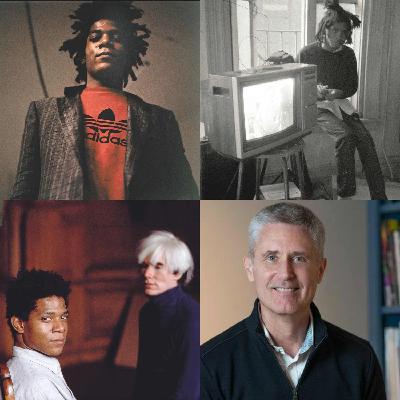
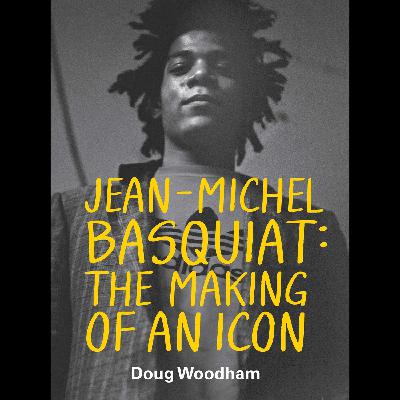
“People today are so used to Basquiat's prices being extraordinarily high and rising that it's almost hard for people to understand that wasn't always the case. In the year he died, 1988, a terrific painting by Basquiat might have sold for $30,000. Relative to his other artistic peers, like a great Julian Schnabel painting that cost $800,000. After Basquiat died, some speculative capital entered his market, and his prices did pop, but in the early 1990s, his prices fell apart, and for much of the first half of the 1990s, his work was selling for 80% off what it had been selling before. Auction houses didn't want to include him in their auctions. There was a really good chance he was going to be remembered, but certainly not become a great star. Three key figures believed in him and proceeded to buy almost every available Basquiat in the first half of the 1990s. They were also just passionate believers in his work. But for those three people, it would have taken much longer for Basquiat to achieve acclaim, if ever.”Today, we’re joined by someone uniquely positioned to unpack the art world’s inner workings and to help us understand one of its most mythic figures — Jean-Michel Basquiat. Doug Woodham is the author of the new biography, Jean-Michel Basquiat: The Making of an Icon, the first major life study of Basquiat in over twenty-five years. Drawing on more than a hundred interviews — from family and friends to collectors and curators — Doug traces the rise, fall, and resurrection of an artist who redefined what it means to be a cultural icon. Before turning to writing, Doug served as President of the Americas for Christie’s, one of the world’s leading auction houses. That role gave him an insider’s perspective on how value is created — and mythologized — in the modern art market. In this conversation, we’ll explore not just the man behind the legend, but the powerful machinery that turned Jean-Michel Basquiat into one of the most recognized and commercially successful artists in the world.Episode Websitewww.creativeprocess.info/podInstagram:@creativeprocesspodcastImages courtesy of Doug Woodham and Thames & Hudson. For image credits, see Episode Website.
“All of the great artists are there for a reason: because they rebelled in some way. They created a visual vocabulary that felt fresh and new, which excited people. So, the great artists are not built on sort of anthills of sand. They're built on things of substance and of meaning. Though this is not a sufficient condition to become an icon, it's a necessary but not sufficient condition. I think you have to have an interesting and vivid personality or personal narrative that makes you interesting for people to talk about and want to learn about. I think you also have to have a support network of galleries, curators, and collectors who are excited about your work and want to push it forward, not wanting it to be forgotten. Basquiat's visual vocabulary is distinctive and stands out relative to what was being done in the 1980s. That's the sort of strong hill on which his reputation is built. Basquiat benefited from being the first black artist of note who got pushed forward. As in many things, the first benefits.”Today, we’re joined by someone uniquely positioned to unpack the art world’s inner workings and to help us understand one of its most mythic figures — Jean-Michel Basquiat. Doug Woodham is the author of the new biography, Jean-Michel Basquiat: The Making of an Icon, the first major life study of Basquiat in over twenty-five years. Drawing on more than a hundred interviews — from family and friends to collectors and curators — Doug traces the rise, fall, and resurrection of an artist who redefined what it means to be a cultural icon. Before turning to writing, Doug served as President of the Americas for Christie’s, one of the world’s leading auction houses. That role gave him an insider’s perspective on how value is created — and mythologized — in the modern art market. In this conversation, we’ll explore not just the man behind the legend, but the powerful machinery that turned Jean-Michel Basquiat into one of the most recognized and commercially successful artists in the world.Episode Websitewww.creativeprocess.info/podInstagram:@creativeprocesspodcast
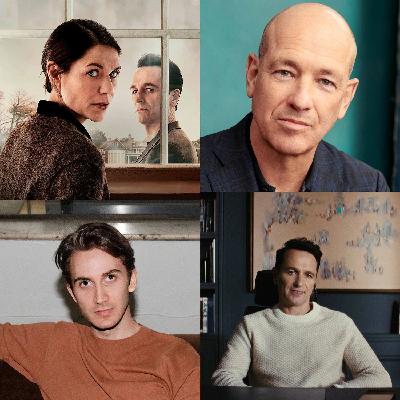
“How do you render something interior filmically? How do you communicate the details of the lost child, of the amount of time of the stuck creative process, and even the exterior, or the externalization of the house as a kind of hellish thing that's barely staying together—literally flooding with waste—and that you can't afford? So those are the details that we had to carefully figure out how to weave. But, you know, when you look at the first 10 minutes, it could be a horror movie. From that moment, a lot can happen. But what's important about it is that it sets the table for what does happen.” -Howard GordonToday, we explore the dark psychology of obsession, guilt, and the thin line between predator and victim. Our guests are two of television's most accomplished architects of high-stakes drama and moral ambiguity: Howard Gordon, the showrunner and executive producer whose work defined a generation of thrillers with 24 and the multi-award-winning Homeland; and Daniel Pearle, an executive producer and writer who brings a distinct, penetrating depth from his background as a celebrated playwright and his work on series like Accused and American Crime Story.Episode Websitewww.creativeprocess.info/podInstagram:@creativeprocesspodcast
“And I think there's also just something about an unfettered or uncensored id that is so captivating. We all have that fantasy of doing exactly what we want with no consequences and sort of letting that go. I think when you see an athlete at the peak of their game, doing that embodied thing and living that dream, or when someone has actually done horrible things that you would never allow yourself to do, there is a fascination there. I had one teacher who said, "Anyone who drives you crazy or that you just cannot stand in life, put them in a play or put them in a scene, and the audience will love them." If someone has really gotten under your skin and you just cannot stand them, and you have a visceral reaction—like, "I just hate this person"—make them a character, and the audience will make them everyone's favorite character. There is something to that.” - Daniel PearleToday, we explore the dark psychology of obsession, guilt, and the thin line between predator and victim. Our guests are two of television's most accomplished architects of high-stakes drama and moral ambiguity: Howard Gordon, the showrunner and executive producer whose work defined a generation of thrillers with 24 and the multi-award-winning Homeland; and Daniel Pearle, an executive producer and writer who brings a distinct, penetrating depth from his background as a celebrated playwright and his work on series like Accused and American Crime Story..Episode Websitewww.creativeprocess.info/podInstagram:@creativeprocesspodcast
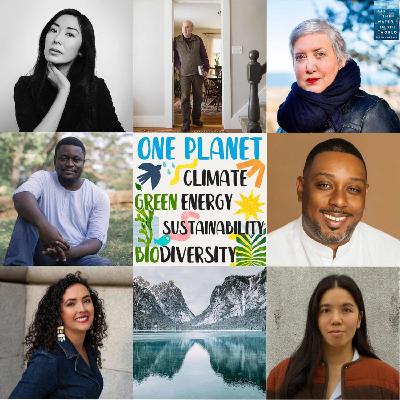
How do our environments shape who we are and how we care for the world and each other? There are many solutions to climate change, inequality, and poverty around the world. How can we learn from them and transform our society?Eiren Caffall (All the Water in the World) discusses the importance of embracing complexity and emotional flexibility in facing ecological grief.Irvin Weathersby Jr. (In Open Contempt) discusses the transformative power of meditation and nature, drawing inspiration from Emerson and Thoreau.Jay Parini (Biographies of Steinbeck, Frost, Faulkner…) on the significance of place in literature and life.Natasha Hakimi Zapata (Another World Is Possible) explores the generosity and hope in people’s efforts to build better societies.Audrea Lim (Free The Land) on how personal experiences with public lands influence our views on conservation.Katie Kitamura (Audition, Intimacies) reflects on the role of landscape and memory in her novels.Dr. Bayo Akomolafe (Philosopher, Founder of Emergence Network) discusses his awe for mountains, using them as a metaphor for humility and the search for meaning beyond oneself.For more from each guest, listen to their full interviews.Episode Websitewww.creativeprocess.info/podIG @creativeprocesspodcast
“There are many ways in which I think human exceptionalism has seeped into the sciences, but one of the many ways is through the methodologies we use when we compare the intelligence of humans and other species. In particular, in my field, I’m a primatologist by training, comparing the cognitive abilities of humans with the abilities of our closest living relatives, the great apes. Many times, those studies compare the intelligence of captive chimpanzees who are living in highly restricted, manmade environments. Often, these chimpanzees have been separated from their biological mothers at birth. They're often separated from the group during testing. They're subjected to very human-centric experimental paradigms, like playing with plastic puzzle boxes or computer touchscreens, and we're measuring how they perform on these tasks.”In this episode of Speaking Out of Place podcast, Professor David Palumbo-Liu talks with primatologist Christine Webb about her new book, The Arrogant Ape: The Myth of Human Exceptionalism and Why it Matters. The title of the book itself is a concise and precise description of its two constituent halves. First, Webb tells us how science itself, from premodern times onward, has operated with an assumption it keeps reconfirming constantly--that humans are not only exceptional, but also superior to other forms of life. Webb convincingly debunks this science over and over again. And most importantly, she explains how this myth has devastating political, cultural, and environmental consequences. Combining scientific and humanistic studies, we go into some detail about what this arrogance produces, and why we desperately need a much more humble sense of ourselves.Christine Webb is an Assistant Professor in the Department of Environmental Studies at New York University, where she is part of the Animal Studies program. Her research is driven by growing awareness that the ecological crisis demands a profound shift in how we understand other animals and our place among them, leading to two intersecting lines of inquiry. First, her work seeks to elucidate the complex dynamics of animal social life and to apply this knowledge to foundational questions in animal ethics and conservation. Second, she is interested in how prevailing societal norms, values, and institutions shape contemporary scientific knowledge of other animals and the environment, with a critical emphasis on human exceptionalism. Her debut book, The Arrogant Ape: The Myth of Human Exceptionalism and Why it Matters, was recently published with Avery (Penguin Random House) and is being translated into 17 languages.www.palumbo-liu.comhttps://speakingoutofplace.comBluesky @palumboliu.bsky.socialInstagram @speaking_out_of_place
“Poetry is like one of the great loves of my life, and I think it's probably the longest relationship I'll ever have. I read a lot of poetry. I also wrote these short stories even when I was pretty young, like in second grade, and the stories kept getting shorter and shorter. My family used to go to Damascus in Syria and Lebanon every summer for three months until 2011, when the Civil War broke out in Syria. In 2015, we made our first return after that gap, and my father and I went to Lebanon for two weeks. It's the first time I felt that I belong. To the extent that was true or not, I'm obviously irrevocably American. I speak broken Arabic. I don't think I could ever live in Lebanon or Syria. But for what it was worth at 15 years old, it was a life-changing trip. I wrote my first official poem on the plane back to San Diego from that trip, and I feel that was a formative moment for me. I felt that I had a story to tell and wanted to put it to paper in the form of poetry.”In this episode of the Speaking Out of Place podcast, Professor David Palumbo-Liutalks with poet Maya Salameh about her poetry collection, How to Make an Algorithm in the Microwave, which won the prestigious Etel Adnan Poetry Prize in 2022. The judges remarked, “Maya Salameh’s poetry stood out for its inventiveness in cracking the code of life ‘between system and culture'…The turns and swerves the poems make are astonishing; the expectations they upend are remarkable… It’s a testament to the aesthetic boundaries and intellectual revolt poets of Arab heritage are pushing, breaking, and reinventing.” We talk about what led her to both technology and poetry, language and story-telling, and the challenges and joys of representing life in the diaspora. In a time of war and genocide, Salameh’s poetry shows how patterns of life and reproduction and desire persist. In her readings and discussions of three poems, we find a new lexicon and a new grammar.Maya Salameh is the author of MERMAID THEORY (Haymarket Books, 2026), HOW TO MAKE AN ALGORITHM IN THE MICROWAVE (University of Arkansas Press, 2022), winner of the Etel Adnan Poetry Prize, and the chapbook rooh (Paper Nautilus Press, 2020). She has received fellowships from the National Endowment for the Arts, Sewanee Writers’ Conference, Bread Loaf Environmental Writers’ Conference, and the President’s Committee for the Arts and Humanities, and served as a National Student Poet, America’s highest honor for youth poets. Her work has appeared in The Offing, Poetry, Gulf Coast, The Rumpus, AGNI, Mizna, and the LA Times, among others. @mayaslmhhttps://speakingoutofplace.comBluesky @palumboliu.bsky.socialInstagram @speaking_out_of_place
“My book is called Empire of AI because I'm trying to articulate this argument and illustrate that these companies operate exactly like empires of old. I highlight four features that essentially encapsulate the three things you read. However, I started talking about it in a different way after writing the book.The four features are: they lay claim to resources that are not their own, which is the centralization of resources; they exploit an extraordinary amount of labor, both in the development of the technology and the fact that they're producing labor-automating technologies that then suppress workers' ability to bargain for better rights; they monopolize knowledge production, which comes when they centralize talent.”In this episode of the Speaking Out of Place podcast, Professor David Palumbo-Liu talks with investigative journalist Karen Hao. She explains that OpenAI is anything but “open”—very early on, it left behind that marketing tag to become increasingly closed and elitist. Her massive study, Empire of AI: Dreams and Nightmares in Sam Altman’s OpenAI had a rather different subtitle in its UK edition: Inside the reckless race of total domination. She fleshes out the overlap between these two points of emphasis. Hao argues that in general, the AI mission “centralizes talent around a grand ambition” and “centralizes capital and other resources while eliminating roadblocks, regulation, and dissent.” All the while, “the mission remains so vague that it can be interpreted and reinterpreted to direct the centralization of talent, capital, resources, however the centralizer wants.”  Karen explains that she chose the word “empire” precisely to indicate the colonial nature of AI’s domination: the tremendous damage this enterprise does to the poor, to racial and ethnic minorities, and to the Global South in general in terms of minds, bodies, the environment, natural resources, and any notion of democracy.  This is a discussion everyone should be part of.Karen Hao is a bestselling author and award-winning reporter covering the impacts of artificial intelligence on society. She was the first journalist to profile OpenAI and wrote a book, Empire of AI, about the company and its global implications, which became an instant New York Times bestseller. She writes for publications including The Atlantic and leads the Pulitzer Center's AI Spotlight Series, a program that trains thousands of journalists worldwide on how to cover AI. She was formerly a reporter for the Wall Street Journal, covering American and Chinese tech companies, and a senior editor for AI at MIT Technology Review. Her work is regularly taught in universities and cited by governments. She has received numerous accolades for her coverage, including an American Humanist Media Award, an American National Magazine Award for Journalists Under 30, and the TIME100 AI. She received her Bachelor of Science in mechanical engineering from MIT.www.palumbo-liu.comhttps://speakingoutofplace.comBluesky @palumboliu.bsky.socialInstagram @speaking_out_of_place
“I feel that when you don't tell your story, it's as if you have a limited existence. We can always have some kind of choice, but I'm saying that the story we choose may be the most crucial choice that we make, because this story will affect all the other choices.”Etgar Keret is one of the most inventive and celebrated short story writers of his generation, a voice that captures the absurdities and profound loneliness of modern life with a deceptive, almost casual wit. His work, translated into dozens of languages, uses fantastical premises—from alien visitations to parallel universes—to illuminate the most human of truths. His new collection, Autocorrect, explores a world grappling with technology, loss, and the aftershocks of a global pandemic and, more recently, war. His awards include the Cannes Film Festival’s Caméra d’Or (2007), the Charles Bronfman Prize (2016), and the pres­tigious Sapir Prize (2018). Over a hundred short films and several feature films have been based on his stories. Keret teaches creative writing at Ben-Gurion University of the Negev. He now has a weekly newsletter on Substack called Alphabet Soup. He's also the new MFA Director of the Jewish Theological Seminary, where he's pioneering a new approach to storytelling. Joining me today from Tel Aviv is the great Israeli writer and filmmaker Etgar Keret.“When I write my stories, I don't want to solve things in life. I just want to persuade myself that there is a way out. Maybe I am in a cell, maybe I'm trapped. Maybe I won't make it, but if I can imagine a plan for escape, then I'll be less trapped because at least in my mind, there is a way. I think that my parents are survivors. They always talked about this idea of humanity. My parents always said to me, when you look at people, don't look at their political views; that's not important. Look at the way that they look at you. If they see you, if they listen to you, if they can understand your intention, even if it's a failing one, they're your people. And if they can't, it doesn't matter.I think that when I came with my mother and father, they thought there are people, there are human beings, and there are people who want to be human beings but are still struggling. And you go with humanity; you go with the person who can go against his ideology if his heart tells him something.”Episode Websitewww.creativeprocess.info/podInstagram:@creativeprocesspodcast
“When I write my stories, I don't want to solve things in life. I just want to persuade myself that there is a way out. Maybe I am in a cell, maybe I'm trapped. Maybe I won't make it, but if I can imagine a plan for escape, then I'll be less trapped because at least in my mind, there is a way. I think that my parents are survivors. They always talked about this idea of humanity. My parents always said to me, when you look at people, don't look at their political views; that's not important. Look at the way that they look at you. If they see you, if they listen to you, if they can understand your intention, even if it's a failing one, they're your people. And if they can't, it doesn't matter.I think that when I came with my mother and father, they thought there are people, there are human beings, and there are people who want to be human beings but are still struggling. And you go with humanity; you go with the person who can go against his ideology if his heart tells him something.”Etgar Keret is one of the most inventive and celebrated short story writers of his generation, a voice that captures the absurdities and profound loneliness of modern life with a deceptive, almost casual wit. His work, translated into dozens of languages, uses fantastical premises—from alien visitations to parallel universes—to illuminate the most human of truths. His new collection, Autocorrect, explores a world grappling with technology, loss, and the aftershocks of a global pandemic and, more recently, war. His awards include the Cannes Film Festival’s Caméra d’Or (2007), the Charles Bronfman Prize (2016), and the pres­tigious Sapir Prize (2018). Over a hundred short films and several feature films have been based on his stories. Keret teaches creative writing at Ben-Gurion University of the Negev. He now has a weekly newsletter on Substack called Alphabet Soup. He's also the new MFA Director of the Jewish Theological Seminary, where he's pioneering a new approach to storytelling. Joining me today from Tel Aviv is the great Israeli writer and filmmaker Etgar Keret.Episode Websitewww.creativeprocess.info/podInstagram:@creativeprocesspodcast
“I'm Lebanese. I grew up in Lebanon during the Civil War, and I came to the United States as a graduate student with the intention of going back. I never wanted to stay here. I really thought that my life would happen in Beirut, in a city that I loved and hated in the healthiest of ways. My investments, both literary and intellectual, were rooted there. I came here as a graduate student and joined the PhD program, and then the events continued to unfold there, making life more and more of a risk, building a life in a place like Lebanon. The most important counterpoint in my life was meeting my partner, Ahmad Almallah, who is Palestinian. So immediately, my life became the life of a Palestinian by association.Of course, the past two years—almost two years—have been surreal. I sometimes don't believe that we're going through what we're going through because, as security concerns have become something we think about at home, when we walk from home to campus or my office, I'm constantly anxious to open my mail because often there are things that will require a lot of energy, time, emotion, and are emotionally taxing. There’s a lot of rage now in many aspects of my life, but all that aside, my personal experience—both professional and personal, and at home, familial—are not exceptional. Many other people are experiencing intimidation, silencing, and feeling cornered, censored, and oppressed just because they took a stand—a very decent, normal, basic human stand against genocide.”In this episode on Speaking Out of Place podcast Professor David Palumbo-Liu talks with Huda Fakhreddine, writer, translator, and scholar of Arabic literature. Among the many topics they touch upon are the challenges of teaching Arabic literature, especially Palestinian literature, in a time of genocide, when universities, professional organizations, and political groups militate against any honest discussion of these topics, and punish those who do. They talk about the notion of belonging and the importance of being able to choose what to belong to, and what not to. Huda speaks of the freedom found in living in Arabic, and explains what that means to her. She also reads in Arabic and English Nima Hasan’s stunning and wrenchingly beautiful poem, “Old Song.”Huda J. Fakhreddine is a writer, translator, and Associate Professor of Arabic Literature at the University of Pennsylvania. She is the author of Metapoesis in the Arabic Tradition (Brill, 2015) and The Arabic Prose Poem: Poetic Theory and Practice (Edinburgh University Press, 2021), and the co-editor of The Routledge Handbook of Arabic Poetry (Routledge, 2023). Among her translations are The Sky That Denied Me: Selections from Jawdat Fakhreddine (University of Texas Press, 2020), The Universe, All at Once: Selections from Salim Barakat (Seagull Books, 2024), and Palestinian: Four Poems by Ibrahim Nasrallah (World Poetry Books, 2024). Her creative work includes a book of creative non-fiction titled Zaman saghīr taḥt shams thāniya (A Brief Time under a Different Sun), Dar al-Nahda, Beirut, 2019 and the forthcoming Wa min thamma al-ālam (And then the World), Manshūrāt Marfa’, Beirut, 2025. Her translations of Arabic poems have appeared in Protean, Lithub, Words Without Borders, Nimrod, ArabLit Quarterly, Asymptote, and Middle Eastern Literatures, among many others.  She is co-editor of Middle Eastern Literatures and section editor of the Encyclopedia of Islam.www.palumbo-liu.comhttps://speakingoutofplace.comBluesky @palumboliu.bsky.socialInstagram @speaking_out_of_place
“One day, I woke up with this concept of oil being tied up in our lives in ways that we don't talk about. It’s sort of a value-theoretical approach to climate change and the climate crisis. Something that's impersonal and goes to the root of our entire social metabolic structure.”In this episode of the Speaking Out of Place podcast, Professor David Palumbo-Liuwelcomes Malcolm Harris back to the show. Previously, he talked with us about his mammoth study, Palo Alto: A History of California, Capitalism, and the World. This time, we are looking not at a history of Capitalism and the World, but our possible futures under the threat of catastrophic climate change. We talk about not only failed policies, but failed perspectives on society, politics, and culture, and focus on a deadly form of Value that has led us to the abyss precisely because it has emanated from a basic rift between humans and the world. It is a rift that Capital has always both fed and exploited, but will end up exhausting a finite resource—the Planet. We talk about what is needed to heal this, what we are up against, and his latest book, What's Left: Three Paths Through the Planetary Crisis.Malcolm Harris is the author of the national bestseller Palo Alto: A History of California, Capitalism, and the World, a finalist for the Los Angeles Times Book Prize; Kids These Days: The Making of Millennials; and Shit is Fucked Up and Bullshit: History Since the End of History. He was born in Santa Cruz, CA and graduated from the University of Maryland.www.palumbo-liu.comhttps://speakingoutofplace.comBluesky @palumboliu.bsky.socialInstagram @speaking_out_of_place
“As I was reading Hooks and Freire, a colleague recommended Adrian Rich's essay "Teaching Language in Open Admissions." It was in that essay that I first read about her experiences teaching at CUNY during open admissions, learning that she taught alongside June Jordan, Audre Lorde, and Toni Cade Bambara. Eventually, that essay led me to their archival teaching materials. I was really excited because I found in those materials concrete teaching methods, things they were doing in their own classrooms that I then started trying in my classrooms as well. I also really liked their educational philosophies, thinking about what it means for college to be free and the fact that they were teaching during this revolutionary era. What would that look like today? What would it mean? What could free college bring to our society? What does free college make possible? All of those things coming together led me to the project.”In this episode of the Speaking Out of Place podcast, Professor David Palumbo-Liu talks with Danica Savonick about her marvelous book entitled Open Admissions: The Poetics and Pedagogy of Toni Cade Bambara, June Jordan, Audre Lorde, and Adrienne Rich in the Era of Free College. This is a riveting and deeply inspiring story of how each of these luminaries in the fields of literature and feminism found their way into the City University of New York in the 1960s, when community activists had forced open what was called the Harvard for the proletariat to admit new classes of Black, brown, and other people of color.  Savonick shows through copious archival research how Bambara, Jordan, Lorde, and Rich each came to find radical teaching methods in collaboration with these new students, and how their experiences with this new pedagogy affected their creative and other writing in profound and lasting ways. This is a critical history we can and must learn from today, when federal and state governments have added to the damage and violence done by the neoliberal university. We find exactly the tools and models we need to create spaces for education for liberation both within, but also outside, the Academy.Danica Savonick is an Associate Professor of English at SUNY Cortland. Her current project focuses on the radical writers and artists who taught at the experimental Livingston College (part of Rutgers University) in the 1970s. Her research has appeared in MELUS, American Literature, Modern Fiction Studies, Radical Teacher, Keywords for Digital Pedagogy in the Humanities, Public Books, and The Chronicle of Higher Ed.https://speakingoutofplace.comBluesky @palumboliu.bsky.socialInstagram @speaking_out_of_place
In this time of rapid technological change, how do we hold onto our humanity? How do stories, traditions, and community help us find meaning in loss and face an uncertain future? How can science, art, and spirituality open new pathways to understanding ourselves and the human experience?PAUL SHRIVASTAVA (Co-President of The Club of Rome) discusses the need for a holistic, eco-civilizational future, emphasizing that science, technology, and economics are important but not the whole picture. He urges us to design our own lives and livelihoods to meet diverse ecological futures, and later highlights the importance of embodied, emotional, and spiritual learning as essential to evolving human consciousness in a technologically dominated world.BAYO AKOMOLAFE (Philosopher, Psychologist, Writer & Founder of the Emergence Network) shares a deeply personal story about the loss of his father, describing how it forced him to mature quickly and become the breadwinner for his family. He reflects on the lessons learned from his children, especially his autistic son, who teaches him about grace, possibility, and futurity.MICHEL FORST (Human Rights Advocate & the UN Special Rapporteur on Environmental Defenders) explores how theology and meditation serve as ongoing sources of inspiration, shaping his values and career choices in human rights advocacy.DR. GUY LESCHZINER(Neurologist & Author of The Nocturnal Brain, The Man Who Tasted Words  & other books; Consultant Neurologist & Professor at King's College London) analyzes the concept of free will, suggesting that much of what we do is influenced by factors beyond our control. He also discusses the importance of striving to make the world better, the role of sleep and dreams in memory and emotional processing, and the changing nature of mentorship and education.EIREN CAFFALL (Musician & Author of All the Water in the World) highlights the importance of preserving knowledge and human history, imagining how future generations might rebuild society after catastrophe by holding onto stories, traditions, and the hope of repair.DR. FERNANDO GARCÍA-MORENO (Neuroscientist, Ikerbasque Research Associate at the Achucarro Basque Centre for Neuroscience) explains that while our brains have not changed biologically for thousands of years, cultural evolution has accelerated. He emphasizes the unique human roles of generating and transmitting knowledge across generations.NATASHA HAKIMI ZAPATA (Journalist, Author of Another World Is Possible: Lessons for America From Around the Globe) shares her inspiration from the generosity and hope she encounters in others, and describes how connecting with nature—especially bodies of water—reinforces the importance of conservation policies that integrate human communities into ecosystems.IRVIN WEATHERSBY JR. (Author of In Open Contempt) reflects on the influence of his church upbringing and family, especially his grandmother, on his writing and creative expression. He discusses the impact of music, particularly hip hop, and the importance of lyricism and cultural heritage in shaping his literary voice.To hear more from each guest, listen to their full interviews.Episode Websitewww.creativeprocess.info/podInstagram:@creativeprocesspodcast
“I work in between archeology and anthropology in this field called either historical archeology or contemporary archeology. At the heart of that is the relationship between objects and humans. How do we write about the past or the present in terms of listening to human voices or evidence from things where maybe human voices have been erased or haven't left as much of a mark on the written records as others? Wrapped up with that, though, is always the risk of dehumanization, of the treatment of human lives as if the boundary between a subject and an object is one that is permeable, not in a sort of positive way, but in a more sinister way. There is a long history of people being treated as things.”In this episode of Speaking Out of Place podcast Professor David Palumbo-Liu talks with Dan Hicks about the present’s responsibility to itself. How do not only monuments, but also the very idea of monumentality, serve to mystify and perpetuate beliefs that maintain social orders that deserve to be strenuously re-evaluated? Archaeologist and anthropologist Dan Hicks traces the development of a particularly virulent strain of monument-worship, that which emerges out of what he calls “militarist realism,” which harnesses technologies of war, particularly colonial, white supremacist war, to build institutions, disciplines, museums in its image in order to permanently maintain a border between those deemed human subjects and the object-worlds of the non-human—which includes racial others. Rather than grant the past immunity, Hicks argues that we need to decide for ourselves what we chose to remember, and what deserves to be forgotten.Dan Hicks is Professor of Contemporary Archaeology at Oxford University, Curator at the Pitt Rivers Museum, and a Fellow of St Cross College. He has written widely on art, heritage, museums, colonialism, and the material culture of the recent past and the near-present. Dan's books include The Brutish Museums: the Benin Bronzes, colonial violence and cultural restitution (Pluto 2020) and Every Monument Will Fall: a story of remembering and forgetting (Hutchinson Heinemann 2025). Bluesky/Insta: @ProfDanHicks www.palumbo-liu.comhttps://speakingoutofplace.comBluesky @palumboliu.bsky.socialInstagram @speaking_out_of_place
“If we look at the entire history of the human experience, if you saw some text or you heard some spoken language, you could 100 percent reliably infer that there was a human who created that. Our experience of having that text or that image generated for us is very akin to the experience of a magic trick, and we sort of pre-subconsciously want to attribute some kind of intelligence to what's going on on the other side.At the core of the work is that sense of curiosity, that sense of joy, that sense of beauty, and that sense of learning. I've been fortunate to have all kinds of strange and interesting experiences, whether that's seeing weird things in the sky over secret military bases in the middle of the Nevada desert, going scuba diving and finding internet cables on the bottom of the ocean, or tracking spy satellites in the sky and being able to predict when they'll appear in a flash against the backdrop of stars. The world around us is extraordinary and embodied, right? It is not on screens, and I’m very privileged to have that be so much a part of my process.”Trevor Paglen is an artist whose work makes the invisible visible, whether he's photographing secret government sites from miles away or revealing the hidden infrastructures of mass surveillance. He's a geographer by training, and he combines investigative journalism with his art practice to explore the hidden power structures of our time, including military technology and artificial intelligence. His work has been exhibited in major museums around the world, and he's also an award-winning author. His exhibitions, like 'The Black Sites' and 'Limit Tele-photography,’ have earned him critical acclaim, including a MacArthur Fellowship. He's recently opened a new exhibition at Pace Gallery in New York called Cardinals (Jun 26–Aug 15) which delves into the intriguing connections between UFO sightings, AI, and the spread of disinformation.Episode Websitewww.creativeprocess.info/podInstagram:@creativeprocesspodcast
“There's a word for this brain rot, right? I think that's very real. There are studies coming out now that are showing that the more and more of our cognitive labor we offload to AI systems, the less creative we become, the less critical we become, and the less of our human faculties for reason we use. There's something sad about that, but there’s also something dangerous about it because that leaves us very open to being manipulated. The surveillance capitalism kind of economy of extracting data from every possible moment of everyday life in order to extract value. The sensor systems that we're surrounded with are not simply passive devices that are recording us; they are increasingly becoming active sculptors of our experience of reality. Playing dirty.If we look at the entire history of the human experience, if you saw some text or you heard some spoken language, you could 100 percent reliably infer that there was a human who created that. Our experience of having that text or that image generated for us is very akin to the experience of a magic trick, and we sort of pre-subconsciously want to attribute some kind of intelligence to what's going on on the other side.I’m trying to think about these other media strategies, whether that's UFO photography, psychological operations, magic, or neuroscience, and take them seriously as contributing factors to the changing visual culture. With the collection at Pace Gallery, (New York, Jun 26–Aug 15) it was really just to put those images together and show them. They’re all photographed on film. A lot of them are photographed on instant film. They’re not images that are made with AI; they're not images that are photoshopped. What I really wanted to get at was thinking about the ways in which what we see in an image is very often what we're predisposed to see. I am playing with these mechanics of perception and proposing that as a way of thinking about images now.At the core of the work is that sense of curiosity, that sense of joy, that sense of beauty, and that sense of learning. I've been fortunate to have all kinds of strange and interesting experiences, whether that's seeing weird things in the sky over secret military bases in the middle of the Nevada desert, going scuba diving and finding internet cables on the bottom of the ocean, or tracking spy satellites in the sky and being able to predict when they'll appear in a flash against the backdrop of stars. The world around us is extraordinary and embodied, right? It is not on screens, and I’m very privileged to have that be so much a part of my process.”Trevor Paglen is an artist whose work makes the invisible visible, whether he's photographing secret government sites from miles away or revealing the hidden infrastructures of mass surveillance. He's a geographer by training, and he combines investigative journalism with his art practice to explore the hidden power structures of our time, including military technology and artificial intelligence. His work has been exhibited in major museums around the world, and he's also an award-winning author. His exhibitions, like 'The Black Sites' and 'Limit Tele-photography,’ have earned him critical acclaim, including a MacArthur Fellowship. He's recently opened a new exhibition at Pace Gallery in New York called Cardinals, which delves into the intriguing connections between UFO sightings, AI, and the spread of disinformation.Episode Websitewww.creativeprocess.info/podInstagram:@creativeprocesspodcast
“I had to become the father of my family very young because my parents divorced when I was 12. My situation was a little bit unusual in that my father kind of disappeared, and I had been making a fair amount of money as a kid, doing commercials and television and film. We needed money, and I kind of became the breadwinner. But I had this amazing world that I had access to, which was the world of the entertainment industry. My mom was supportive of my taking over and saying, "This is, I think, what we need to do." She liked the idea of moving to New York, so we moved to New York when I was 17 with a play that I had gotten. Then she got cancer and became really sick, so I had to take care of her full time. That lasted for about eight years, and then she died when I was 25. That was a rough go. At the same time, I had an amazing other world, and my other world was the world of make-believe and pretend, which I got to participate in on the soaps, with happy families and Christmases, Easters, miracles, love, weddings, and children. The pretend world that I spent a large amount of time in became a great way to balance what was sort of tragic in my real life.”Our guest today is Cady McClain. You probably know her from her long and celebrated career in daytime television. She is a three-time Emmy® Award-winning actress. She plays Pamela Curtis on CBS’ Beyond the Gates, and is the Artistic Director of Axial Theatre, and her directorial work includes the documentary, Seeing is Believing: Women Direct, a fascinating look at the challenges and triumphs of women behind the camera. Her memoir, Murdering My Youth, is an honest and sometimes difficult book about growing up as a child actor in the spotlight. Her work across all these different art forms—acting, directing, writing, art, and music—all seems to be connected by a commitment to telling true stories, no matter how complicated. www.creativeprocess.info/podInstagram:@creativeprocesspodcast
“I won my first Emmy when I was 21, which was the result of absolutely devoting myself day and night for two years to doing all the scene work. I attended classes simultaneously and did plays until my mother died. I studied with Michael Howard for eight years. Even when I was so tired I couldn't get up to do a scene, he would say, "Get up and do a poem." It helped me enormously; it saved me.The way I was trained and how I train others is that you know when you’re in the zone. Oh God, it feels so good. It feels like flying. And that's what you want. You want to be so unselfaware that you're on liftoff?I had to become the father of my family very young because my parents divorced when I was 12. My situation was a little bit unusual in that my father kind of disappeared, and I had been making a fair amount of money as a kid, doing commercials and television and film. We needed money, and I kind of became the breadwinner. But I had this amazing world that I had access to, which was the world of the entertainment industry. My mom was supportive of my taking over and saying, "This is, I think, what we need to do." She liked the idea of moving to New York, so we moved to New York when I was 17 with a play that I had gotten. Then she got cancer and became really sick, so I had to take care of her full time. That lasted for about eight years, and then she died when I was 25. That was a rough go. At the same time, I had an amazing other world, and my other world was the world of make-believe and pretend, which I got to participate in on the soaps, with happy families and Christmases, Easters, miracles, love, weddings, and children. The pretend world that I spent a large amount of time in became a great way to balance what was sort of tragic in my real life.”Our guest today is Cady McClain. You probably know her from her long and celebrated career in daytime television. She is a three-time Emmy® Award-winning actress. She plays Pamela Curtis on CBS’ Beyond the Gates, and is the Artistic Director of Axial Theatre, and her directorial work includes the documentary, Seeing is Believing: Women Direct, a fascinating look at the challenges and triumphs of women behind the camera. Her memoir, Murdering My Youth, is an honest and sometimes difficult book about growing up as a child actor in the spotlight. Her work across all these different art forms—acting, directing, writing, art, and music—all seems to be connected by a commitment to telling true stories, no matter how complicated. Episode Websitewww.creativeprocess.info/podInstagram:@creativeprocesspodcast
“We as humans can destroy things in a couple of years that have taken thousands or even millions of years to form. So in the snap of a finger, we can destroy so much work. That's an observation I’ve seen in all biomes, and it's pretty scary. On the other hand, nature regenerates pretty fast. It heals itself. If humans help this healing process, it can go even faster.”Louis De Jaeger has spent years traveling the world, witnessing firsthand the decline of nature. He is an eco-entrepreneur, a landscape designer, co-founder of the Food Forest Institute, and a leading voice in the regenerative agriculture and food forest movements. He’s founded numerous ventures aimed at creating positive impact and has created over 100 food forest sites around the world. His new book, SOS: Save Our Soils: How regenerative food and farming will save your health and the planet, asks us to consider every meal as a vote for either destruction or regeneration.Episode Websitewww.creativeprocess.info/podInstagram:@creativeprocesspodcast
loading
Comments 
loading