DiscoverSocial Justice & Activism - The Creative Process - Activists, Environmental, Indigenous Groups, Artists and Writers Talk Diversity, Equity and inclusion
Social Justice & Activism - The Creative Process - Activists, Environmental, Indigenous Groups, Artists and Writers Talk Diversity, Equity and inclusion

Social Justice & Activism - The Creative Process - Activists, Environmental, Indigenous Groups, Artists and Writers Talk Diversity, Equity and inclusion

Author: Creative Process Original Series

Subscribed: 21Played: 340
Share

Description

Social Justice & Activism episodes of the popular The Creative Process podcast. We speak to activists, environmental organizations, indigenous groups, artists, writers & others who have devoted their life to making a difference.


Exploring the fascinating minds of creative people. Conversations with writers, artists & creative thinkers across the Arts & STEM. We discuss their life, work & artistic practice. Winners of Oscar, Emmy, Tony, Pulitzer, leaders & public figures share real experiences & offer valuable insights. Notable guests and participating museums and organizations include: Academy of Motion Picture Arts & Sciences, Neil Patrick Harris, Smithsonian, Roxane Gay, Musée Picasso, EARTHDAY.ORG, Neil Gaiman, UNESCO, Joyce Carol Oates, Mark Seliger, Acropolis Museum, Hilary Mantel, Songwriters Hall of Fame, George Saunders, The New Museum, Lemony Snicket, Pritzker Architecture Prize, Hans-Ulrich Obrist, Serpentine Galleries, Joe Mantegna, PETA, Greenpeace, EPA, Morgan Library & Museum, and many others.


The interviews are hosted by founder and creative educator Mia Funk with the participation of students, universities, and collaborators from around the world. These conversations are also part of our traveling exhibition.
541 Episodes
Reverse
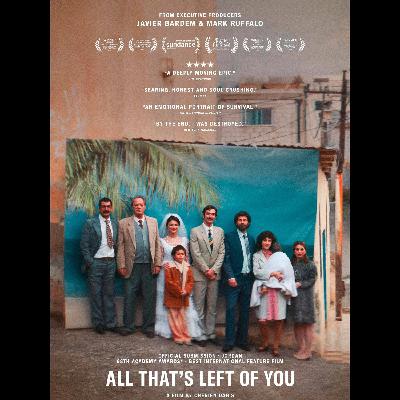
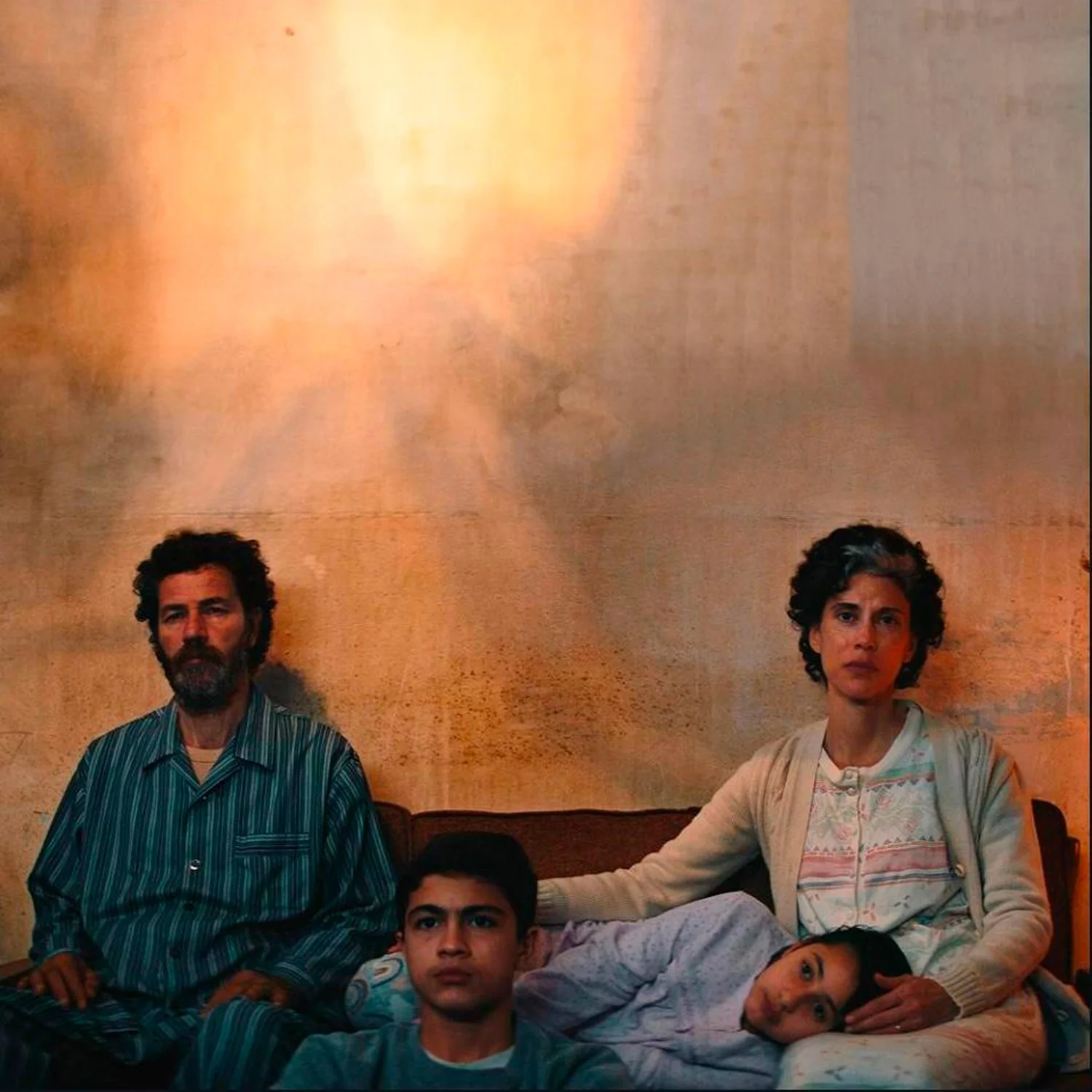
Two weeks away from filming her most ambitious film to date, Cherien Dabis and her crew were forced to evacuate Palestine as the devastating events of October 2023 began. Instead of abandoning the project, they adapted, filming across Cyprus, Jordan, and Greece, creating a cinematic love letter to the resilience, joy, and humanity of the Palestinian people.My guest today is Cherien Dabis. She’s a filmmaker and actress who has spent much of her career trying to fill the silences in the American narrative. In 2022, she became the first Palestinian to receive an Emmy nomination. She has worked on everything from The L Word to Ozark, Only Murders in the Building to the hit Netflix series Mo, always with an eye toward breaking the one-dimensional mold that has historically defined Arab representation in the West. But her latest project is perhaps her most ambitious yet. It’s a film called All That’s Left of You. It follows one Palestinian family across three generations, beginning in 1948 and ending in 2022. It is a story of exile and memory, and it’s Jordan’s official submission for this year’s Academy Awards.(0:00) The Inheritance of TraumaCherien Dabis discusses how collective trauma is passed down and the importance of showing Palestinian resilience and humanity(1:50) Inherited Trauma: Identity And History The passage of trauma requires a multi-generational lens to truly understand how history and political events shape people(2:37) The Bakri Acting Dynasty: Collaborative Lineage Collaborating with four generations of the Bakri Family brought immense authenticity to the screen(4:02) Filming The Nakba: Art Imitating Crisis Evacuating Palestine weeks before shooting forced the crew to adapt amidst devastating, ongoing events(7:09) The Moment Of Activation: Racism In Ohio Experiencing severe racism during the first Gulf War ignited a lifelong drive to challenge dangerous media stereotypes(9:34) Psychological Violence: Impact Of Humiliation The film explores how non-physical harassment and humiliation leave devastating, long-term relational scars(10:48) Broken Distribution: Industry Gatekeepers Navigating systemic fear and gatekeeping in Hollywood distribution remains a profound challenge for Palestinian cinema(11:37) Previous Films, Television And Craft Directing television hones the craft and expands the creative capacity needed for ambitious feature films(12:28) Truth Seekers: The Next Generation Hope lies with young people who refuse to accept the broken systems and hidden truths of previous generationsEpisode Websitewww.creativeprocess.info/podInstagram:@creativeprocesspodcast
“These oppressive structures are built to strip us of our humanity. One of the ways they do that is by filling us with anger and hatred. If we allow ourselves to stay there, we're doing the job of the oppressor for them by slowly killing ourselves. I wanted to make a movie that would remind people that we can't allow them to win by giving up our humanity. We have to hold onto our humanity and try in these impossible circumstances.”My guest today is Cherien Dabis. She’s a filmmaker and actress who has spent much of her career trying to fill the silences in the American narrative. In 2022, she became the first Palestinian to receive an Emmy nomination. She has worked on everything from The L Word to Ozark, Only Murders in the Building to the hit Netflix series Mo, always with an eye toward breaking the one-dimensional mold that has historically defined Arab representation in the West. But her latest project is perhaps her most ambitious yet. It’s a film called All That’s Left of You. It follows one Palestinian family across three generations, beginning in 1948 and ending in 2022. It is a story of exile and memory, and it’s Jordan’s official submission for this year’s Academy Awards.(0:00) The Inheritance of TraumaCherien Dabis discusses showing the multifaceted humanity of Palestinians beyond just pain and suffering(3:41) Inherited Trauma: Identity And History The film explores how collective trauma is passed down across generations and shapes individual identities(5:52) The Bakri Dynasty: Collaborative Lineage Working with the legendary Bakri Family brought deep, authentic relational dynamics to the screen(9:25) Filming The Nakba: Art Imitating Crisis The crew faced severe challenges and had to evacuate Palestine during the October 2023 escalation(16:10) Representation Gap: Dehumanization In Media Growing up in Ohio, Cherien Dabis witnessed the dangerous misrepresentation of Arabs in Western media(21:24) The Moment Of Activation: Racism In Ohio The stark racism experienced during the first Gulf War ignited her passion to become a filmmaker(33:40) Psychological Violence: Impact Of Humiliation The film depicts how psychological harassment under occupation leaves devastating, long-term impacts on families(38:23) Broken Distribution: Industry Gatekeepers Despite international success, systemic fear and gatekeeping in the US distribution market remain significant obstacles(45:28) Previous Films, Television And Craft Directing television shows like Only Murders in the Building expanded her creative capacity and adaptability(51:45) Truth Seekers: The Next GenerationCherien Dabis shares her profound hope for young people who refuse to accept the broken systems of the pastEpisode Websitewww.creativeprocess.info/podInstagram:@creativeprocesspodcast
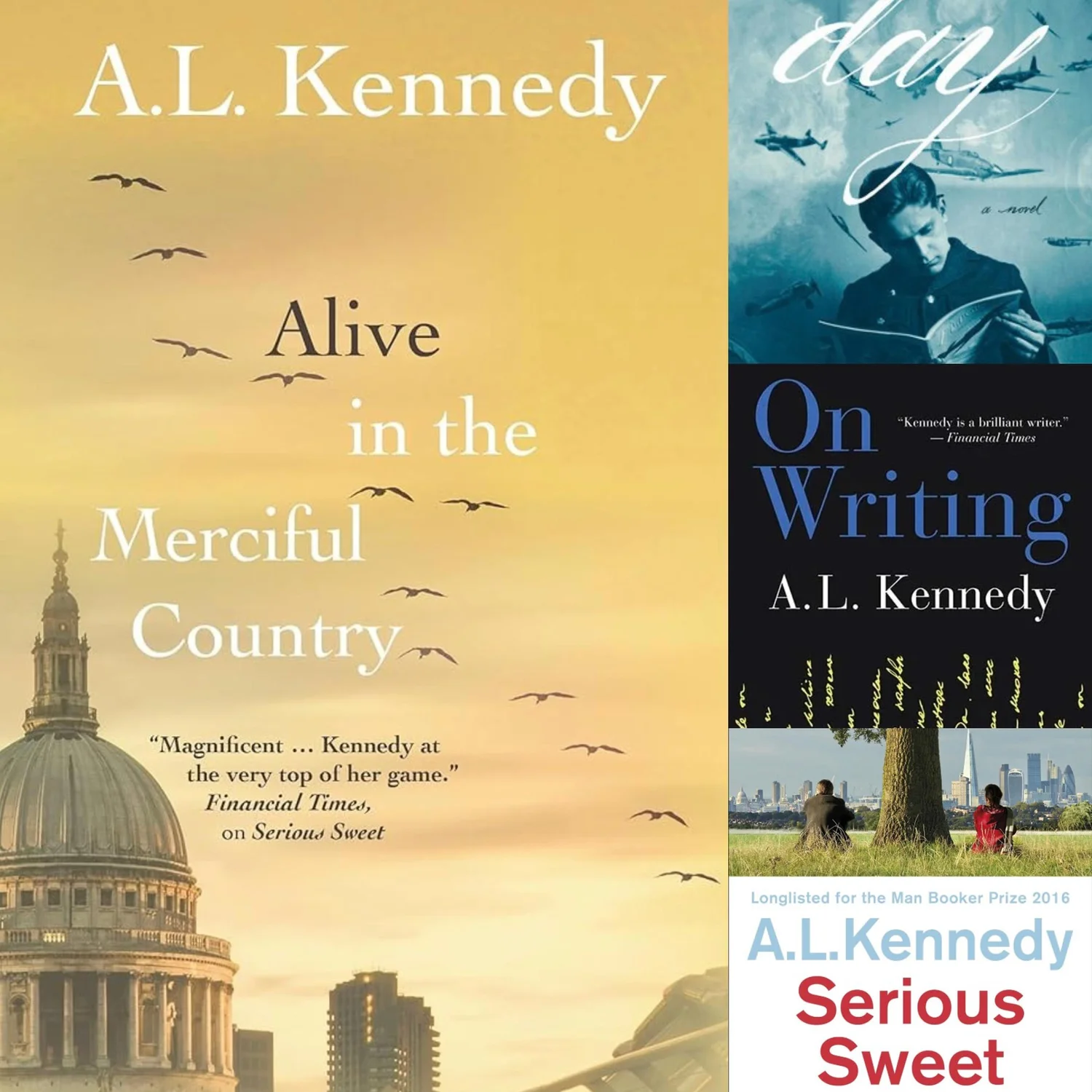
"The thing that puzzled him was why people don't agree to be fully expressed while they're alive. Why does it only happen in their last moment? Why wouldn't you live being fully expressed?"My guest today is AL Kennedy. She is one of Britain’s most acclaimed and versatile literary voices, a writer who can inhabit the internal life of a soldier in a POW camp, as she did in her Costa Book Award-winning novel Day, as easily as she can navigate the "professional lying" of a modern civil servant.Her latest novel, Alive in the Merciful Country, takes place during the 2020 lockdown. It tells the story of a primary school teacher who receives a confession from an undercover police officer who infiltrated her life decades earlier. It’s a provocative investigation into state power, the "Spy Cops" scandal and the search for mercy in an age of surveillance. It’s a book about the breakdown of trust. We talk about her life, her activism, and why she believes fiction is the only way to tell the truth when the facts are forbidden and how she balances the truth of her novels with the relief of stand-up comedy.(0:00) Finding Your VoiceOn the Alfred Wolfsohn voice method and the power of being fully expressed(2:30) Reading from Alive in the Merciful CountryKennedy shares a passage from her latest novel, exploring hope and resilience in dark times.(4:43) The Myth of Shrinking Attention SpansChallenging the narrative that modern audiences cannot focus, and the importance of engaging storytelling.(6:22) Education and the Foundation of DemocracyThe dangers of dismantling education and how critical thinking protects us from fascism.(10:26) The Spy Cop Scandal and State SurveillanceUnpacking the reality of undercover police infiltrating peaceful protests and intimate lives.(13:59) Lockdown: A Global Pause and the Inrush of EmpathyThe fleeting moment of unified humanity during the pandemic and how it was ultimately betrayed.(17:34) Writing Without Theft: The Ethics of Character CreationKennedy explains her imaginative process and why she refuses to steal details from real people's lives.(28:16) AI, Digital Slop, and the Loss of TrustReflections on artificial intelligence as an unstable plagiarism machine and its impact on truth.(30:03) Nature, Spirituality, and the Merciful CountryFinding healing in the natural world and navigating the future with love and awareness.Episode Websitewww.creativeprocess.info/podInstagram:@creativeprocesspodcast
What happens when the state infiltrates your most intimate relationships? How do we protect the innocence and imagination of children in an increasingly authoritarian world? “"If you have love, eventually you're going to win. It's not that people aren't going to die. It's not terrible things aren't going to happen. But if you stay with that and you stay centered in that, you'll get through and you will not have turned into a monster in order to overcome monsters.”My guest today is AL Kennedy. She is one of Britain’s most acclaimed and versatile literary voices, a writer who can inhabit the internal life of a soldier in a POW camp, as she did in her Costa Book Award-winning novel Day, as easily as she can navigate the "professional lying" of a modern civil servant.Her latest novel, Alive in the Merciful Country, takes place during the 2020 lockdown. It tells the story of a primary school teacher who receives a confession from an undercover police officer who infiltrated her life decades earlier. It’s a provocative investigation into state power, the "Spy Cops" scandal and the search for mercy in an age of surveillance. It’s a book about the breakdown of trust. We talk about her life, her activism, and why she believes fiction is the only way to tell the truth when the facts are forbidden and how she balances the truth of her novels with  the relief of stand-up comedy.(0:00) Finding Your VoiceOn the Alfred Wolfsohn voice method and the power of being fully expressed(2:17) Education and the Foundation of DemocracyThe dangers of dismantling education and how critical thinking protects us from fascism.(5:14) The Myth of Shrinking Attention SpansChallenging the narrative that modern audiences cannot focus, and the importance of engaging storytelling.(8:23) Reading from Alive in the Merciful CountryKennedy shares a passage from her latest novel, exploring hope and resilience in dark times.(17:45) The Spy Cop Scandal and State SurveillanceUnpacking the reality of undercover police infiltrating peaceful protests and intimate lives.(22:07) AI, Digital Slop, and the Loss of TrustReflections on artificial intelligence as an unstable plagiarism machine and its impact on truth.(28:29) The Power of the Powerless: Radical WhimsyHow absurdity, humor, and inflatable costumes can disrupt authoritarian mindsets and potential violence.(33:13) Lockdown: A Global Pause and the Inrush of EmpathyThe fleeting moment of unified humanity during the pandemic and how it was ultimately betrayed.(42:53) Writing Without Theft: The Ethics of Character CreationKennedy explains her imaginative process and why she refuses to steal details from real people's lives.(1:29:40) Nature, Spirituality, and the Merciful CountryFinding healing in the natural world and navigating the future with love and awareness.Episode Websitewww.creativeprocess.info/podInstagram:@creativeprocesspodcast
“Grief happens because you don't stop loving the person who died. The person doesn't exist in your reality anymore. The everyday is not colored and shaped by this other human being, but you don't stop loving the person. So grief is a particular kind of unrequited love. And probably without that dynamic relationship with this person, I would be someone else. And he would've been someone else. I mean, Paul died before me. But we were, I think, hugely important to the drama of becoming in our own lives.”Today, we are honored to welcome a writer whose work has long explored the intimate landscapes of the mind, memory and the heart. Siri Hustvedt’s writing moves between the personal and the philosophical, the literary and the deeply human. Her work bridges collections of essays, non-fiction, poetry, and seven novels, including the international bestsellers What I Loved and The Summer Without Men. Recipient of the Princess of Asturias Award for Literature and the Gabarron Prize for Thought, her work has been translated into over thirty languages. Her new memoir, Ghost Stories, is a reflection on forty-three years shared with her late husband, the writer and filmmaker Paul Auster. In its pages, we encounter not only love and loss, but the quiet persistence of presence, memory, and language itself.(0:00) Grief as Unrequited LoveSiri explores the emotional reality of living without Paul Auster, noting that grief occurs because love does not stop when a person dies.(4:00) Facing Death with CourageThe importance of not hiding from mortality and how discussing end-of-life wishes offered a necessary perspective.(12:37) Reading from Ghost StoriesSiri reads the opening passage of her memoir, detailing how the loss of her husband deranged her sense of time and bodily rhythms.(18:41) The Phantom Limb: ” The beloved is taken away and it feels as if you're amputated or gutted.”(21:50)  Grandfather, Father and Son: Generational Traumas Behind Paul Auster's Writing(24:11)  How Powerful Emotions and a Person's Life Can Play a Role in Illness(30:09) Feeding the Earth "Paul very pointedly told me that he wanted to be buried in the Jewish mode. And the phrase he used was, “I want my body to feed the earth.”(44:23) Physical Love in MarriageOn the importance of physical intimacy in long-term marriages, a reality often left out of grief memoirs.(54:00) The Philosophy of the BetweenHow relational existence is foundational to life.(1:00:16) The Hubris of Controlling Nature(1:12:00) The Dark History of Statistics(1:32:12) The Art of Learning vs. AI and Automated Outcomes“I think we have to ask ourselves, what is education? What do we want from it? How do we want people to learn?Episode Websitewww.creativeprocess.info/podInstagram:@creativeprocesspodcast
Can curiosity and empathy be taught? How can we expand our sense of solidarity through stories? In this episode, we explore the internal dialogues of artists, actors and writers to ask what it means to step into someone else's shoes.(0:00) Novelist  Jim Shepard discusses Literature as a Tool for Emotional Education and Exploring History(2:05) Tony Award-winning Actor Neil Patrick Harris on Being Moved by Theater and its Ability to Bridge Worlds(3:55) Novelist Katie Kitamura on How a Book is Made in Collaboration with the Reader(5:00) Screenwriter, Playwright Laura Eason on Inhabiting the Hearts of Characters Different from Ourselves(6:03) Academy Award-winning Director Sharmeen Obaid-Chinoy on the Art of Visual Storytelling(6:37) Cinematographer, Director Benoit Delhomme on the Freedom of Handheld Cinematography(7:19) Author Etgar Keret on Looking for Humanity through Shared Intention(8:18) Viet Thanh Nguyen – Opposing Power through Expansive Solidarity(9:27) Adam Moss – Author, Fmr. Editor New York magazine on “The Work of Art”(10:29) John Patrick Shanley – Tony & Academy Award-winning Writer, Director on Finding Value in Ordinary Experiences and the Creative Power of Daydreaming(11:56) Pulitzer Prize-winning Journalist Nicholas Kristof on Why Individual Stories are Necessary to Generate ConnectionTo hear more from each guest, listen to their full interviews.Episode Websitewww.creativeprocess.info/podInstagram:@creativeprocesspodcast
In this special edition, we hear from our guests from across the arts and sciences. From composers and poets to forest ecologists and climate envoys, they tell the story of our planet. Moving beyond the data of destruction, we explore the intelligence of nature, the ethics of what we eat, and the empathy required to save our future.MAX RICHTER, Composer, Sleep, The Blue NotebooksCARL SAFINA, Author, Becoming WildADA LIMÓN, 24th US Poet LaureateCYNTHIA DANIELS, Grammy Award-winning Sound Eng.SUZANNE SIMARD, Finding the Mother TreeJOELLE GERGIS, Lead Author, IPCC 6th Assessment RptNOAH WILSON-RICH, CEO, Best Bees CompanyINGRID NEWKIRK, PETA FounderBERTRAND PICCARD, Solar Impulse FoundationDAVID FARRIER, Author, FootprintsKATHLEEN ROGERS, Pres, Earth Day NetworkODED GALOR, Unified Growth TheoryPETER SINGER, PhilosopherGEOFF MULGAN, Another World Is PossibleCLAIRE POTTER, Welcome to the Circular EconomyCHRIS FUNK, Dir. Climate Hazards Car.JENNIFER MORGAN, Special Envoy, International Climate ActionTo hear more from each guest, listen to their full interviews.Episode Website
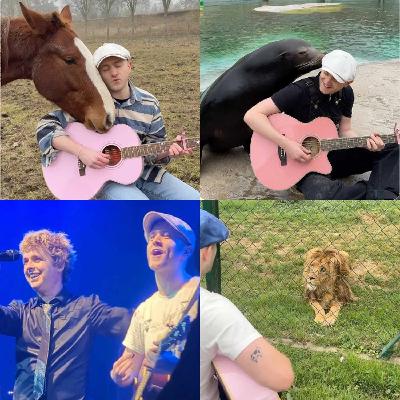
On Music, Trust and Connection with the Animal World“Mostly I’ll play in a minor key, something sad, which I think can work for an animal because they can sense the sadness, and they try to reassure me and comfort me. I chose love songs because I'm convinced they are very intuitive and they can sense what I am trying to say to them, and profess my love in a way. I think there's always a way to connect, and if you're being cautious and don't threaten the animals, something beautiful can happen.”Musician Plumes takes his guitar to the world's most unlikely concert halls—farms, sanctuaries, and wild habitats. A passionate advocate for veganism and animal welfare, we discuss what animals hear, how trust forms, and what music can reveal when it enters a world not made for humans alone.Episode Websitewww.creativeprocess.info/podInstagram:@creativeprocesspodcast
How is music a pathway to understanding animals?Musician Plumes‍ takes his guitar to the world's most unlikely concert halls—farms, sanctuaries, and wild habitats. A passionate advocate for veganism and animal welfare, we discuss what animals hear, how trust forms, and what music can reveal when it enters a world not made for humans alone.“Mostly I’ll play in a minor key, something sad, which I think can work for an animal because they can sense the sadness, and they try to reassure me and comfort me. I chose love songs because I'm convinced they are very intuitive and they can sense what I am trying to say to them, and profess my love in a way. I think there's always a way to connect, and if you're being cautious and don't threaten the animals, something beautiful can happen.”Episode Websitewww.creativeprocess.info/podInstagram:@creativeprocesspodcast
On the urgent need to reclaim our political voices, the forces that silence dissent, and how art and poetry are crucial tools for survivalOur guest today is an activist scholar who believes the classroom is inseparable from the public square. David Palumbo-Liu is the Louise Hewlett Nixon Professor of Comparative Literature at Stanford University and a founding faculty member of Stanford’s Program in Comparative Studies in Race and Ethnicity. But his work has long reached beyond the academy. Through his book, Speaking Out of Place: Getting Our Political Voices Back, and his podcast of the same name, he insists that the great global crises of our time—from escalating wars and democratic failures to environmental collapse—are fundamentally crises of value and voice. His recent work has put him on the front lines of campus activism, challenging institutions, resigning his membership from the MLA, a move that highlights the ethical cost of speaking truth to power. We’ll talk about what he calls the "carceral logic" of the modern university, why art and poetry are crucial tools for survival in times of war, and what he tells his students about preparing for a future defined by uncertainty. His perspective is rooted in literature, but his urgency is all about the world we live in now. We will discuss the forces that silence dissent, the "imperial logic" of AI, and what it means to be a moral, active citizen when the systems we rely on are failing.“There is a dispute about what the American Dream is or how it would play out in different circumstances. The American dream has essentially been narrowed into a white Christian nationalist notion of things so that everything that falls outside what they imagine that to be is not only undesirable, but should be the subject of extermination, deportation, and detention. I am heartened by the fact that more of our 'better angels' are emerging with a more capacious and expansive notion of what the American dream could be.”Episode Websitewww.creativeprocess.info/podInstagram:@creativeprocesspodcast
On the urgent need to reclaim our political voices, the forces that silence dissent, and how art and poetry are crucial tools for survival“There is a dispute about what the American Dream is or how it would play out in different circumstances. The American dream has essentially been narrowed into a white Christian nationalist notion of things so that everything that falls outside what they imagine that to be is not only undesirable, but should be the subject of extermination, deportation, and detention. I am heartened by the fact that more of our 'better angels' are emerging with a more capacious and expansive notion of what the American dream could be.”Our guest today is an activist scholar who believes the classroom is inseparable from the public square. David Palumbo-Liu is the Louise Hewlett Nixon Professor of Comparative Literature at Stanford University and a founding faculty member of Stanford’s Program in Comparative Studies in Race and Ethnicity. But his work has long reached beyond the academy. Through his book, Speaking Out of Place: Getting Our Political Voices Back, and his podcast of the same name, he insists that the great global crises of our time—from escalating wars and democratic failures to environmental collapse—are fundamentally crises of value and voice.His recent work has put him on the front lines of campus activism, challenging institutions, resigning his membership from the MLA, a move that highlights the ethical cost of speaking truth to power. We’ll talk about what he calls the "carceral logic" of the modern university, why art and poetry are crucial tools for survival in times of war, and what he tells his students about preparing for a future defined by uncertainty. His perspective is rooted in literature, but his urgency is all about the world we live in now. We will discuss the forces that silence dissent, the "imperial logic" of AI, and what it means to be a moral, active citizen when the systems we rely on are failing.Episode Websitewww.creativeprocess.info/podInstagram:@creativeprocesspodcast
How do writers develop their voice, showing us what is important in life?ADA LIMÓN (24th U.S. Poet Laureate, Startlement, The Carrying) explains that her poetry begins with a bodily sensation or curiosity, not an idea. She values the space and breath poetry offers for unknowing and mystery, finding solace in the making and the mess, not in answers. She discusses being free on the page to be her whole, authentic, complicated self.JAY PARINI (Author, Filmmaker, Borges and Me) calls poetry the prince of literary arts—language refined to its apex of memorability. He recounts how his road trip with Borges around Scotland restored him from depression and anxiety following the Vietnam War death of his friend.JERICHO BROWN (Pulitzer Prize-winning Poet, The Tradition, How We Do It: Black Writers on Craft, Practice, and Skill) discusses the rhythm of black vernacular and capturing "symphonic complexity of black life". He shares how he’s found a way not to think about personal risk as he’s writing.ADAM MOSS (Fmr. Editor, New York Magazine; Author, The Work of Art) relates David Simon’s concept of the bounce, in which creativity gains momentum as it is passed between people.VIET THANH NGUYEN (Pulitzer Prize-winning Author, The Sympathizer; To Save and to Destroy) discusses his path to expansive solidarity and capacious grief and how it works against the state's power to divide and conquer. He emphasizes that literature is crucial because authoritarian regimes abuse language; a commitment to the beauty of language is a commitment to truth, and fear is often an indicator of a truth that needs to be spoken.To hear more from each guest, listen to their full interviews.Episode Websitewww.creativeprocess.info/podInstagram:@creativeprocesspodcast
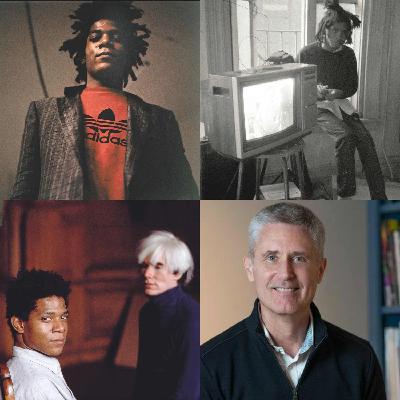
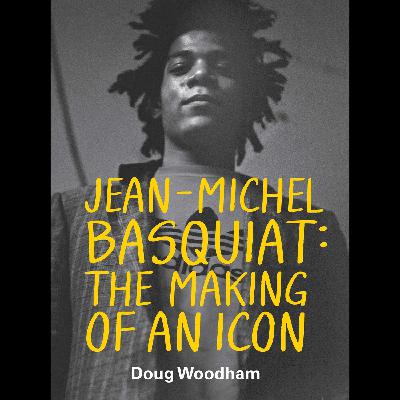
“People today are so used to Basquiat's prices being extraordinarily high and rising that it's almost hard for people to understand that wasn't always the case. In the year he died, 1988, a terrific painting by Basquiat might have sold for $30,000. Relative to his other artistic peers, like a great Julian Schnabel painting that cost $800,000. After Basquiat died, some speculative capital entered his market, and his prices did pop, but in the early 1990s, his prices fell apart, and for much of the first half of the 1990s, his work was selling for 80% off what it had been selling before. Auction houses didn't want to include him in their auctions. There was a really good chance he was going to be remembered, but certainly not become a great star. Three key figures believed in him and proceeded to buy almost every available Basquiat in the first half of the 1990s. They were also just passionate believers in his work. But for those three people, it would have taken much longer for Basquiat to achieve acclaim, if ever.”Today, we’re joined by someone uniquely positioned to unpack the art world’s inner workings and to help us understand one of its most mythic figures — Jean-Michel Basquiat. Doug Woodham is the author of the new biography, Jean-Michel Basquiat: The Making of an Icon, the first major life study of Basquiat in over twenty-five years. Drawing on more than a hundred interviews — from family and friends to collectors and curators — Doug traces the rise, fall, and resurrection of an artist who redefined what it means to be a cultural icon. Before turning to writing, Doug served as President of the Americas for Christie’s, one of the world’s leading auction houses. That role gave him an insider’s perspective on how value is created — and mythologized — in the modern art market. In this conversation, we’ll explore not just the man behind the legend, but the powerful machinery that turned Jean-Michel Basquiat into one of the most recognized and commercially successful artists in the world.Episode Websitewww.creativeprocess.info/podInstagram:@creativeprocesspodcastImages courtesy of Doug Woodham and Thames & Hudson. For image credits, see Episode Website.
“All of the great artists are there for a reason: because they rebelled in some way. They created a visual vocabulary that felt fresh and new, which excited people. So, the great artists are not built on sort of anthills of sand. They're built on things of substance and of meaning. Though this is not a sufficient condition to become an icon, it's a necessary but not sufficient condition. I think you have to have an interesting and vivid personality or personal narrative that makes you interesting for people to talk about and want to learn about. I think you also have to have a support network of galleries, curators, and collectors who are excited about your work and want to push it forward, not wanting it to be forgotten. Basquiat's visual vocabulary is distinctive and stands out relative to what was being done in the 1980s. That's the sort of strong hill on which his reputation is built. Basquiat benefited from being the first black artist of note who got pushed forward. As in many things, the first benefits.”Today, we’re joined by someone uniquely positioned to unpack the art world’s inner workings and to help us understand one of its most mythic figures — Jean-Michel Basquiat. Doug Woodham is the author of the new biography, Jean-Michel Basquiat: The Making of an Icon, the first major life study of Basquiat in over twenty-five years. Drawing on more than a hundred interviews — from family and friends to collectors and curators — Doug traces the rise, fall, and resurrection of an artist who redefined what it means to be a cultural icon. Before turning to writing, Doug served as President of the Americas for Christie’s, one of the world’s leading auction houses. That role gave him an insider’s perspective on how value is created — and mythologized — in the modern art market. In this conversation, we’ll explore not just the man behind the legend, but the powerful machinery that turned Jean-Michel Basquiat into one of the most recognized and commercially successful artists in the world.Episode Websitewww.creativeprocess.info/podInstagram:@creativeprocesspodcast
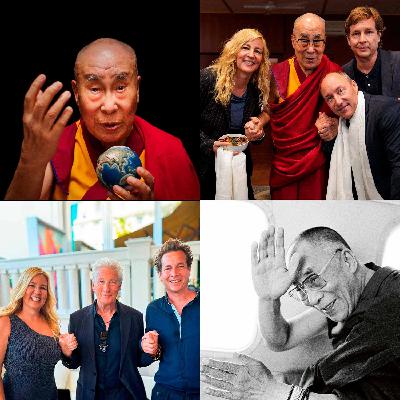
“I can change my mind. I can reduce anger, hatred. Nothing to do with religion. All religions carry the message of love, loving kindness, and tolerance. With different views, there is a possibility to synthesize new ideas. If majority of the world leaders become female, world become safer. I feel that. Compassion is the key factor. Non-violence, compassion and self-confidence, these are key factors for happy individual, happy community, peaceful world. This century should be century of compassion, century of peace. No more bloodshed. We should develop a big “we,” rather than “we” or “they.” With these wings, you can fly.” -DALAI LAMAFor decades, the Dalai Lama has been a global symbol of peace, compassion, and resilience, a spiritual leader living in exile from his home in Tibet. But how do you capture the essence of his wisdom—the kind that can truly change a life—in a way that feels intimate and personal? My guest today, documentary filmmaker Barbara Miller, has managed to do just that in her new film, Wisdom of Happiness. It’s a beautiful film that feels less like a documentary and more like a private, heart-to-heart conversation, where he invites us into his thoughts and shares practical steps for finding inner peace in a chaotic world.  She's dealt with anti-globalization, domestic violence, and the fight for female pleasure in her previous works. We’ll talk about how she shifted from exposing systemic pain to focusing on radical hope and her collaboration with Executive Producer Richard Gere and Manuel Bauer, the Dalai Lama’s personal photographer for the last thirty-five years, who made his cinematography debut with this film. She shares what the Dalai Lama taught her about living in harmony with our body, nature, and the world.Episode Website www.creativeprocess.info/podInstagram:@creativeprocesspodcast
“ Everybody wants happiness, joyfulness, peaceful world. Our 21st century will not be easy century. Fear, anger, hatred. In our mind we created distinctions. Different nationality, different color, different religion. Strong concept of “we” and “they”. Brothers and sisters of this small planet, we are same human beings. Meanwhile, global warming is a serious problem. Destruction of this planet is actually destruction of yourself. Our common responsibility should be work together, to save our world. We all have this marvelous human brain. The problem is, when negative emotions develop, our whole mind is taken over. So, we must deal with emotions.I can change my mind. I can reduce anger, hatred. Nothing to do with religion. All religions carry the message of love, loving kindness, and tolerance. With different views, there is a possibility to synthesize new ideas. If majority of the world leaders become female, world become safer. I feel that. Compassion is the key factor. Non-violence, compassion and self-confidence, these are key factors for happy individual, happy community, peaceful world. This century should be century of compassion, century of peace. No more bloodshed. We should develop a big “we,” rather than “we” or “they.” With these wings, you can fly.” -DALAI LAMAFor decades, the Dalai Lama has been a global symbol of peace, compassion, and resilience, a spiritual leader living in exile from his home in Tibet. But how do you capture the essence of his wisdom—the kind that can truly change a life—in a way that feels intimate and personal? My guest today, documentary filmmaker Barbara Miller, has managed to do just that in her new film, Wisdom of Happiness. It’s a beautiful film that feels less like a documentary and more like a private, heart-to-heart conversation, where he invites us into his thoughts and shares practical steps for finding inner peace in a chaotic world.  She's dealt with anti-globalization, domestic violence, and the fight for female pleasure in her previous works. We’ll talk about how she shifted from exposing systemic pain to focusing on radical hope and her collaboration with Executive Producer Richard Gere and Manuel Bauer, the Dalai Lama’s personal photographer for the last thirty-five years, who made his cinematography debut with this film. She shares what the Dalai Lama taught her about living in harmony with our body, nature, and the world.Episode Website www.creativeprocess.info/podInstagram:@creativeprocesspodcast
“So when we decided to do a documentary to follow Ai Weiwei, we knew, of course, it wouldn't be just a simple opera, and we knew he would bring his own very special and original vision. Because, of course, he is not an opera director. From his point of view, it's a challenge, but from another perspective, it’s probably an enrichment for the opera audience because he doesn't follow the rules of opera. And, of course, once you decide to do a documentary about Ai Weiwei, it's in his DNA to be political. Once I started to follow him, the political issues and topics came into the documentary by themselves.”The renowned artist and activist Ai Weiwei has used sculpture, photography, documentaries, and large-scale installations to challenge authoritarian power for decades. But his project at the Rome Opera House, directing Puccini’s final opera, Turandot, may be his most powerful fusion of art and politics yet. Puccini’s original is a fairy tale set in ancient China about a princess whose riddle game costs failed suitors their lives. But Ai Weiwei transformed this story into a stark reflection of the present, weaving in footage of refugee crises, COVID hospitals, and the Ukraine war—a production that became an urgent act of resistance for its Ukrainian conductor and cast. The opera and documentary are a living document of our turbulent times, embodying Ai Weiwei’s belief that 'Everything is Art. Everything is Politics.'The new documentary, Ai Weiwei's Turandot, goes behind the curtain to capture the artistic struggle and emotional weight of making this work—a process that began with one vision and was fundamentally changed by a global pandemic and a major war.My guest is the documentary’s director, Maxim Derevianko. He grew up in a family with deep ties to the Rome Opera House, and he offers a deeply personal, intimate look at how in Ai Weiwei’s words, “art competes with reality, but art will have the last word.”Episode Websitewww.creativeprocess.info/podInstagram:@creativeprocesspodcast
AI WEIWEI'S TURANDOT

AI WEIWEI'S TURANDOT

2025-10-2259:36

“Everything is Art. Everything is Politics.I think art competes with reality. And art will give you the last words.” –Ai WeiweiThe renowned artist and activist Ai Weiwei has used sculpture, photography, documentaries, and large-scale installations to challenge authoritarian power for decades. But his project at the Rome Opera House, directing Puccini’s final opera, Turandot, may be his most powerful fusion of art and politics yet. Puccini’s original is a fairy tale set in ancient China about a princess whose riddle game costs failed suitors their lives. But Ai Weiwei transformed this story into a stark reflection of the present, weaving in footage of refugee crises, COVID hospitals, and the Ukraine war—a production that became an urgent act of resistance for its Ukrainian conductor and cast. The opera and documentary are a living document of our turbulent times, embodying Ai Weiwei’s belief that 'Everything is Art. Everything is Politics.'The new documentary, Ai Weiwei's Turandot, goes behind the curtain to capture the artistic struggle and emotional weight of making this work—a process that began with one vision and was fundamentally changed by a global pandemic and a major war.My guest is the documentary’s director, Maxim Derevianko. He grew up in a family with deep ties to the Rome Opera House, and he offers a deeply personal, intimate look at how in Ai Weiwei’s words, “art competes with reality, but art will have the last word.”Episode Websitewww.creativeprocess.info/podInstagram:@creativeprocesspodcast
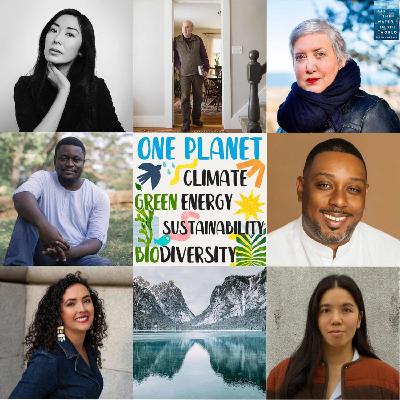
How do our environments shape who we are and how we care for the world and each other? There are many solutions to climate change, inequality, and poverty around the world. How can we learn from them and transform our society?Eiren Caffall (All the Water in the World) discusses the importance of embracing complexity and emotional flexibility in facing ecological grief.Irvin Weathersby Jr. (In Open Contempt) discusses the transformative power of meditation and nature, drawing inspiration from Emerson and Thoreau.Jay Parini (Biographies of Steinbeck, Frost, Faulkner…) on the significance of place in literature and life.Natasha Hakimi Zapata (Another World Is Possible) explores the generosity and hope in people’s efforts to build better societies.Audrea Lim (Free The Land) on how personal experiences with public lands influence our views on conservation.Katie Kitamura (Audition, Intimacies) reflects on the role of landscape and memory in her novels.Dr. Bayo Akomolafe (Philosopher, Founder of Emergence Network) discusses his awe for mountains, using them as a metaphor for humility and the search for meaning beyond oneself.For more from each guest, listen to their full interviews.Episode Websitewww.creativeprocess.info/podIG @creativeprocesspodcast
“There are many ways in which I think human exceptionalism has seeped into the sciences, but one of the many ways is through the methodologies we use when we compare the intelligence of humans and other species. In particular, in my field, I’m a primatologist by training, comparing the cognitive abilities of humans with the abilities of our closest living relatives, the great apes. Many times, those studies compare the intelligence of captive chimpanzees who are living in highly restricted, manmade environments. Often, these chimpanzees have been separated from their biological mothers at birth. They're often separated from the group during testing. They're subjected to very human-centric experimental paradigms, like playing with plastic puzzle boxes or computer touchscreens, and we're measuring how they perform on these tasks.”In this episode of Speaking Out of Place podcast, Professor David Palumbo-Liu talks with primatologist Christine Webb about her new book, The Arrogant Ape: The Myth of Human Exceptionalism and Why it Matters. The title of the book itself is a concise and precise description of its two constituent halves. First, Webb tells us how science itself, from premodern times onward, has operated with an assumption it keeps reconfirming constantly--that humans are not only exceptional, but also superior to other forms of life. Webb convincingly debunks this science over and over again. And most importantly, she explains how this myth has devastating political, cultural, and environmental consequences. Combining scientific and humanistic studies, we go into some detail about what this arrogance produces, and why we desperately need a much more humble sense of ourselves.Christine Webb is an Assistant Professor in the Department of Environmental Studies at New York University, where she is part of the Animal Studies program. Her research is driven by growing awareness that the ecological crisis demands a profound shift in how we understand other animals and our place among them, leading to two intersecting lines of inquiry. First, her work seeks to elucidate the complex dynamics of animal social life and to apply this knowledge to foundational questions in animal ethics and conservation. Second, she is interested in how prevailing societal norms, values, and institutions shape contemporary scientific knowledge of other animals and the environment, with a critical emphasis on human exceptionalism. Her debut book, The Arrogant Ape: The Myth of Human Exceptionalism and Why it Matters, was recently published with Avery (Penguin Random House) and is being translated into 17 languages.www.palumbo-liu.comhttps://speakingoutofplace.comBluesky @palumboliu.bsky.socialInstagram @speaking_out_of_place
loading
Comments