


The Gentle Art of Crushing It!
Subscribed: 9Played: 619
Subscribe

© The Gentle Art of Crushing It
Description
Hello, and thank you for joining us today on "The Gentle Art of Crushing It!" podcast, where we focus on learning and sharing with our listeners all there is to know about how to create success in our lives. This show stands on the shoulders of Giants. Our mission is to empower and inspire our listeners to create the life of their dreams whilst having a blast in the process. Let's celebrate life together! Welcome to the show.
308 Episodes
Reverse
Discover the power of continuous improvement in life, business, and mindset. Each episode explores simple, actionable steps you can take today — the Japanese philosophy of Kaizen — to make progress, crush limits, and turn small daily wins into massive long-term success.
One of the most underrated edges to success is the combination of goals and humility. When you know exactly what you’re aiming for—but stay humble enough to learn, adapt, and grow—you move faster, smarter, and further. Goals give you direction. Humility keeps you teachable. Together, they dramatically increase your chances of creating a life that actually feels like your dream, not just one that looks good on paper.
John Wooden wasn’t just a winning coach — he was a builder of men.He led UCLA to 10 national championships, including 7 straight, an 88-game winning streak, and 4 perfect seasons. His teams played with such discipline that no player ever fouled out, and he remains the only person inducted into the Basketball Hall of Fame as both a player and a coach.But Wooden measured success differently — not by banners, but by effort, character, and faithfulness. He obsessed over fundamentals, taught excellence in the smallest details, and believed true success was doing your best to become who you’re capable of becoming.This episode dives into the principles behind the dominance — and why Wooden’s standard still matters far beyond the court.
Success isn’t built through hype or burnout—it’s built through quiet, consistent action. In this episode of The Gentle Art of Crushing It, we break down why consistency beats motivation, how systems create real results, and what it looks like to apply steady pressure without panic. If you’re tired of starting over and ready to start winning, this one’s for you.
Proverbs 23:7 (KJV)“For as he thinketh in his heart, so is he…”Book: As a Man Thinketh — James AllenQuote:“You become what you think about all day long.” — Ralph Waldo EmersonWhy it works: Thoughts become actions. Actions become habits. Habits quietly build (or destroy) empires.
Most people are sabotaging their own progress every single day—and they don’t even realize it.In this episode, I share a simple life hack that doesn’t require discipline, motivation, or grinding harder. It’s a habit replacement, not a habit addition. You remove one common behavior and replace it with something small but powerful.Do this consistently and your focus improves, your stress drops, and momentum becomes easier. This is one of those changes that feels almost too simple… until you try it.Implement it today. Feel the difference immediately.
In this episode, we dive into the wild, wonderful world of hacking your first marathon — not just the 26.2 miles under your feet, but the massive goals and gritty challenges life throws at you. A marathon is the perfect metaphor for any big obstacle: the kind that looks impossible from the starting line, but becomes doable step-by-step, mile-by-mile, with the right mindset and a little stubborn faith. We break down how to train smarter, push past the mental walls, and turn the “I don’t know if I can do this” moments into “I can’t believe I just did that.” If you’ve got a giant goal staring you down, this episode gives you the tools to chase it with confidence — and finish strong. Let’s run. 🏃♂️🔥
🍎 The Real FormulaOnce I committed to tracking, the rest started falling into place:Dialing in my diet — eating intentionally instead of accidentally.Consistent exercise — nothing crazy, just showing up daily.Momentum — when I saw progress, I wanted more progress.Identity shift — I wasn’t “trying to lose weight” anymore…I was becoming a healthier man — a stronger husband, father, athlete, and leader.And over time…85 pounds disappeared.
🔥 What Is the 4% Rule?Alright, let’s kick it off super simple.The 4% Rule says this:If you withdraw 4% of your investment portfolio each year, adjusted for inflation, your money should last 30+ years.That’s it.Not fancy.Not complicated.Just gloriously simple.So if you’ve got $1,000,000 invested, 4% means you can take out $40,000 a year.If you’ve got $500,000, that’s $20,000 a year.If you’ve got $2.5M, that’s $100K a year.It gives you a target.It gives you a plan.It gives you hope—like a flashlight in the dark of financial overwhelm.And more importantly… it gives you a path.
Blurb:In a world where traditional retirement once meant waiting until your 60s to finally enjoy freedom, the FIRE movement—Financial Independence, Retire Early— has completely redefined the game. FIRE isn’t just about quitting work; it’s about reclaiming control of your time, energy, and purpose. By prioritizing intentional living, aggressive saving, smart investing, and mindful spending, FIRE empowers people to design a life centered on freedom rather than obligation. It challenges the old narrative that financial security must come after decades of grind, proving instead that independence is achievable far earlier—and that retirement is no longer an age, but a mindset.
Why Debt Freedom Is One of the Most Powerful Tools for Personal GrowthIn a world where credit cards, car loans, and “buy now, pay later” options are everywhere, living debt-free can feel almost impossible—or even unnecessary. But the truth is, achieving freedom from personal debt can be one of the most empowering and life-changing financial goals you can reach.When you’re burdened by debt, your income is already spoken for before you even earn it. Every paycheck is partly claimed by lenders, which limits your choices, adds stress, and can delay your dreams—whether that’s starting a business, buying a home, or simply enjoying life without financial worry.Becoming debt-free, however, flips the script. Suddenly, your money is yours. Instead of paying interest, you can invest it. Instead of living paycheck to paycheck, you can save for your goals. Debt freedom creates a powerful sense of control—both financially and emotionally. It brings peace of mind, reduces anxiety, and builds confidence in your ability to manage your future.Even more, being debt-free gives you flexibility. You can change careers, travel, or handle emergencies without fear of financial collapse. It’s not just about the numbers—it’s about reclaiming your time, choices, and independence.In short, debt freedom isn’t just a financial milestone—it’s a mindset shift. It’s about building a life where you control your money, not the other way around.
The Power of Location Independence: Freedom in the Modern AgeIn today’s digital world, location independence isn’t just a dream — it’s a movement reshaping how we live and work. The idea is simple yet revolutionary: being able to earn a living and build a fulfilling life without being tied to one place. Whether you’re freelancing from a beach café in Bali, running a business from a mountain cabin, or collaborating remotely with a global team, location independence offers freedom like never before.The power of this lifestyle lies in choice. You choose where to live, when to work, and how to design your days. This flexibility can lead to greater creativity, better mental health, and stronger connections with people across cultures. It breaks down barriers — professional, geographic, and even personal — allowing you to focus on what truly matters: experiences, growth, and balance.Technology has made it possible, but mindset makes it powerful. Location independence challenges old definitions of success and replaces them with freedom, purpose, and connection. It’s not about escaping the world — it’s about expanding it.
Dreams as Your Inner GPSYour dreams—the goals and visions that light you up—are like a built-in GPS guiding you through life. They give you direction when you feel lost, motivation when the road gets rough, and purpose when choices feel unclear. When you tune in to what truly inspires you, your dreams become more than distant wishes—they become signposts, steering you step by step toward the life you’re meant to live.
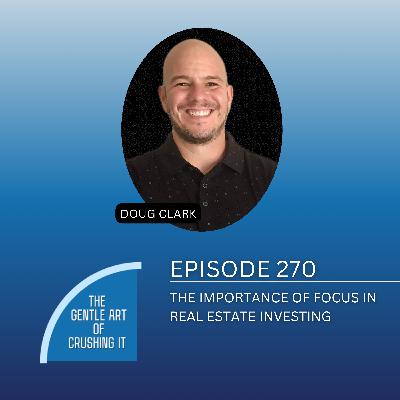
In this episode of The Gentle Art of Crushing It, host Doug Clark explores why focus is the most underrated skill in real estate investing. Using the journey of Brandon Turner as a case study, Doug breaks down how intentional focus helped Brandon scale from small rental properties to building a multi-million-dollar portfolio and thriving businesses. Listeners will learn how clarity, discipline, and saying “no” to distractions can create momentum in their own investing journey. Whether you’re a beginner or seasoned investor, this conversation will inspire you to sharpen your focus and crush your goals in real estate.
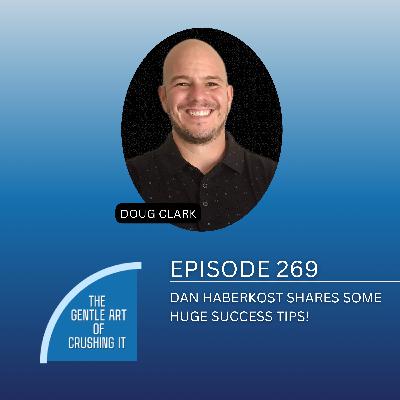
The Gentle Art of Crushing It – with Doug Clark & Guest Dan HaberkostIn this inspiring episode of The Gentle Art of Crushing It, host Doug Clark sits down with real estate investor and entrepreneur Dan Haberkost to share some HUGE success tips you won’t want to miss. From mindset shifts to actionable strategies, Dan dives into what it really takes to build momentum, stay focused, and crush your goals—gently, but powerfully. Whether you're just starting out or looking to take your journey to the next level, this conversation is packed with insight and motivation.
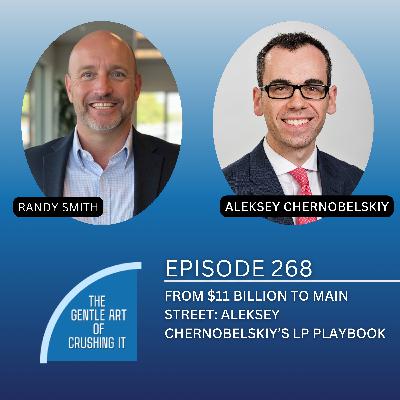
Aleksey Chernobelskiy advises limited partners (“LPs”) on existing and future investments. He’s also the founder of www.gplpmatch.com, a platform which allows LPs to see deals that match their specific investment criteria right in their inbox immediately after a GP submission. Aleksey writes weekly to 8,000 investors at www.LPlessons.co to explain how to properly vet and think about LP investments in the grand scheme of their portfolios. Aleksey also helps General Partners on matters relating to LPs, such as capital calls or feedback on investment decks. Prior to advising LPs, Aleksey ran STORE Capital’s $10 billion commercial real estate portfolio and oversaw the firm’s underwriting team. Aleksey graduated from University of Arizona with a quadruple major – Finance, Mathematics, Economics, and Accounting.Recommended articles:Top 15 syndication mistakes - www.lplessons.co/p/top-15-syndication-mistakes26 questions to ask your GP - www.lplessons.co/p/26-questions-to-ask-your-gpDo sunk costs matter in capital calls? - www.lplessons.co/p/do-sunk-costs-matter-in-capital-callsRANDY SMITHConnect with our host, Randy Smith, for more educational content or to discuss investment opportunities in the real estate syndication space at www.impactequity.net, https://www.linkedin.com/in/randallsmith or on Instagram at @randysmithinvestor00:00 Intro01:40 Current Market03:29 Aleksey's Background09:19 LP's in Investing15:35 Due Diligence18:10 Deal Structure23:32 GPLP Match28:26 Fundraising30:40 Education and Resources36:00 Bucket List38:48 Outro
SummaryIn this episode of The Gentle Art of Crushing It, Doug Clark discusses the concept of multiplying efforts through strategic partnerships in real estate and business. He emphasizes the importance of collaboration, setting criteria for choosing partners, and the benefits of working with others to achieve greater success. Doug shares personal experiences and insights on how partnerships can lead to personal growth, accountability, and faster business expansion.Chapters00:00 Multiplying Your Efforts08:36 The Power of Partnerships14:52 Building a Team for Success18:27 outro Keywordsreal estate, partnerships, personal development, investing, business growth, team building, accountability, abundance mindset, solopreneur, asset management
David Hrizak is the co-founder and CEO of The Streamline Companies, a vertically integrated real estate investment firm specializing in medical office and Class B office buildings. With nearly 30 years in commercial real estate, David has done it all—from brokerage and development to construction and investing.After retiring at 49, David quickly realized his purpose wasn’t in stepping away—it was in coming back. He returned to the industry not for the money, but for the mission: to help others build lasting wealth and create meaningful legacies through real estate.David leads with grit, patience, and integrity. Raised by a tough grandmother in Chicago, he learned early on the value of discipline and loyalty. Today, he brings that same no-nonsense, heart-first mentality into every conversation, investment, and mentorship relationship.He also serves as Board Chairman for Oakwood Creative Care, a nonprofit serving individuals with Alzheimer’s and dementia—a cause close to his heart.Chapters00:00Introduction to Passive Investing and Market Volatility02:57David Hrizak's Journey and Background06:06The Structure and Focus of Streamline Companies10:45Exploring Medical Office Investments15:05Details on Current Fund and Investment Strategy18:51Tax Advantages and Investor Education20:44Track Record and Lessons from Past Experiences22:07Navigating Financial Challenges in Real Estate25:52Current Projects and Asset Management27:38Impact of Tariffs and Material Costs30:06Investment Opportunities for Passive Investors32:37Educational Resources for New Investors35:14Due Diligence in Real Estate Investing37:01Personal Growth and Bucket List Adventures38:22Investment Strategies in Emerging MarketsRANDY SMITHConnect with our host, Randy Smith, for more educational content or to discuss investment opportunities in the real estate syndication space at www.impactequity.net, https://www.linkedin.com/in/randallsmith or on Instagram at @randysmithinvestorKeywordspassive investing, real estate, medical office, market volatility, investment opportunities, Streamline Companies, David Hrizak, financial education, wealth creation, community banks
Gene has been in the commercial and investment real estate business continuously since 1972 and in the legal profession since 1996.Awarded the CCIM designation in 1977, Gene continues to serve as a member of the CCIM faculty and achieved Senior Emeritus Instructor status, upon 40 years of teaching. In 2002, he was selected as the Robert L. Ward Instructor of the Year in the Institute. In 2005, Gene was awarded the Victor L. Lyon Distinguished Service Award for his many years of outstanding contribution to the Institute’s education program.He is a member of the California Bar. The founding partner of Trowbridge Nieh LLP, Gene’s law practice concentrates on the syndication of commercial and investment real estate, through both debt and equity. As a former syndicator, who for ten years raised investor capital; he served as the sponsor of sixteen investment groups, by raising equity from investors, through registered representatives in the broker dealer community, once sending out 1,676 K1s in a single year.He was responsible for the organization of those investment groups; the acquisition, management, and disposition of the real estate; and communications with the investors.Because of his hands-on syndication experience, Gene can communicate with his clients on both the technical and practical aspects of state and federal securities laws. Between Gene’s individual syndication background and the firm’s legal practice, the partners in the firm have written offerings of more than $5 Billion in monies raised. The median offering size is $2. 5 million. His practice writes offerings under Rule 506(b) and 506(c) of Regulation D, Regulation CF, and Regulation A+.He has trained and mentored three different law partners, in syndication and crowdfunding, since 2008. He has delivered more than 250 live seminars on group ownership, exchanges, and taxation audiences across the country; his articles have been published in various real estate media outlets and he is a highly sought-after speaker on the topic of real estate group ownership.He authored his first book It’s A Whole New Business in 2005. The Fourth Edition was released in 2021 and is available now at tnllp.com and Amazon.He and Kay have been married for 50 years and have two daughters, Amy, and Emily. He enjoys music, travel and has run 37 half marathons since turning 60!Chapters00:00 Introduction to Gene Trowbridge01:05 Current Market Insights for Passive Investors03:51 Diverse Investment Opportunities Beyond Real Estate05:53 Understanding Private Placements and Regulation D09:09 The Evolution of Securities Regulation14:56 Impact of Economic Crises on Investment Regulations19:52 Future of Accredited Investor Definitions21:44 Guidance for New Syndicators22:22 Understanding Syndication and Securities24:48 Control and Decision-Making in Partnerships27:20 Investment Contracts and SEC Regulations30:04 Key Questions for Passive Investors33:27 The Importance of Relationships in Real Estate37:17 Investing Strategies and Debt Funds39:04 outroRANDY SMITHConnect with our host, Randy Smith, for more educational content or to discuss investment opportunities in the real estate syndication space at www.impactequity.net, https://www.linkedin.com/in/randallsmith or on Instagram at @randysmithinvestorKeywordssyndication, private equity, accredited investors, real estate, securities regulation, Jobs Act, passive investing, market trends, due diligence, investment strategiesSummaryIn this conversation, Randy Smith and Gene Trowbridge discuss the current state of the syndication market, the evolution of securities regulation, and the importance of due diligence for passive investors. Gene shares insights on the role of accredited investors, the impact of the Jobs Act, and key considerations for new syndicators. The discussion emphasizes the significance of relationships in the investment space and provides practical advice for both syndicators and passive investors.
In this episode of the Gentle Art of Crushing It podcast, host Randy Smith interviews Drew Breneman, founder of Brennan, who has achieved significant success in real estate investment with a focus on multifamily properties. Drew shares insights on the current state of the real estate market, particularly contrasting the performance of the Sunbelt and Midwest regions. He discusses his early investments, the challenges faced in Phoenix, and the opportunities available in Chicago, including tax abatement strategies. The conversation emphasizes the importance of cash flow in investments and provides valuable resources for new passive investors.Drew's Bio-Started an internet business in high school. He saved all the money from it and acquired his first rental property at age 19 back in 2005.-Founder of Breneman Capital-Breneman Capital specializes in multifamily investing with a data-driven approach. The firm only invests in the best markets and submarkets within those markets. -Invested in a variety of geographies and asset classes: Multifamily in Madison, WI (2005-2007). Then industrial, office, and retail in Minneapolis St. Paul (2008-2012). Multifamily and mixed-use in Chicago (2013-today) before focusing on only multifamily in select submarkets in the Midwest (Chicago, Milwaukee, Madison).-Acquired $250MM+ of investment property as key/sole GP.-24%+ average realized IRR on investments sold-14 deals have executed full cash-out refinances of all our initial equity-Host of the Breneman Blueprint podcast-Started out with a duplex and have worked my way up to $30MM+ deals. All self-made starting from scratch - my parents are public school teachers, so didn't start with any capital of theirs or connections.Breneman Capital: https://www.breneman.com/Podcast: https://www.breneman.com/podcastLinkedIn: https://www.linkedin.com/in/drewbreneman/Chapters00:00 Market Overview and Current Trends05:09 Drew's Journey into Real Estate11:24 Exploring the Sunbelt and Its Opportunities16:04 Performance of Phoenix Assets and Future Outlook21:39 Chicago Projects and Tax Abatement Opportunities22:01 Chicago's Real Estate Appeal24:04 Investment Strategies in Chicago27:58 Understanding Cash Flow vs. Equity Multiples31:49 Educational Resources for New Investors35:26 Personal Insights and Future Aspirations37:53 outro RANDY SMITHConnect with our host, Randy Smith, for more educational content or to discuss investment opportunities in the real estate syndication space at www.impactequity.net, https://www.linkedin.com/in/randallsmith or on Instagram at @randysmithinvestorKeywordsreal estate, multifamily, investment strategies, passive investing, market analysis, tax abatement, cash flow, Chicago, Phoenix, Drew Breneman

Comments

Download from Google Play

Download from App Store
 United States