


 Claim Ownership
#English Tenses
Subscribed: 35Played: 777
Subscribe

© F. Dave Whassom
Description
Become a Paid Subscriber: https://podcasters.spotify.com/pod/show/felix-devalois-whassom-d/subscribe
In this class, we'll walk you though English Tenses, show you how and when to use them and the difference mistakes to avoid when using them. We'll also take some practical examples to helping you using those tenses correctly!
In this class, we'll walk you though English Tenses, show you how and when to use them and the difference mistakes to avoid when using them. We'll also take some practical examples to helping you using those tenses correctly!
27 Episodes
Reverse
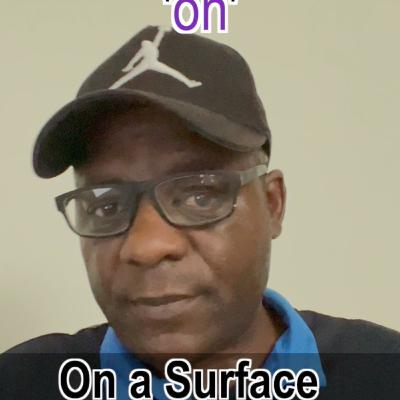
On a Surface
On tells us that the following noun is located on a surface. Use on when one thing is attatched to or touching somthing.
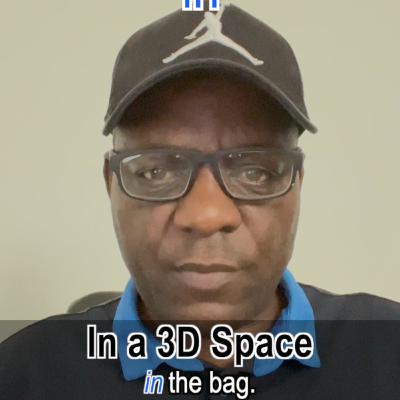
In an Enclosed Space
In tells us the noun is in an enclosed space (surround or closed off on all sides). Basically, when something is inside something.

We use at in many common phrases, especially when we are talking about a place for a specific activity.
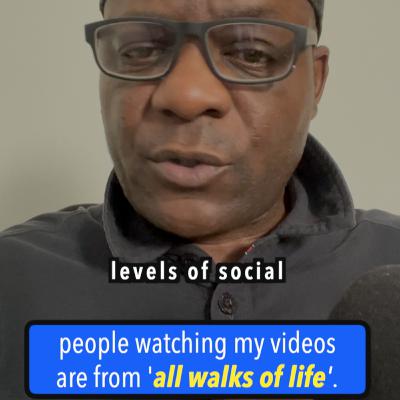
'All walks of life means' = people from all layers of the society, rich, poor, with various levels of social position or achievement, as a matter of fact, from everywhere!
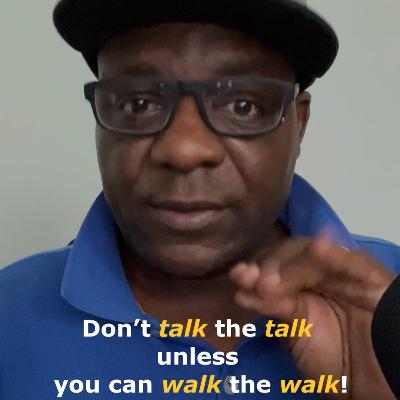
If you say that someone talks the talk but does not walk the walk, you mean that they do not act in a way that agrees with the things they say.
This video work you through Basic English and Phrasal Verbs with examples to sustain the various definitions.
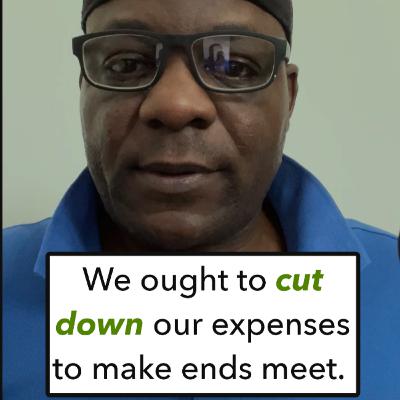
This video work you through Basic English and Phrasal Verbs with examples to sustain the various definitions.
This video work you through Basic English an Phrasal Verbs with examples to sustain the various definitions.
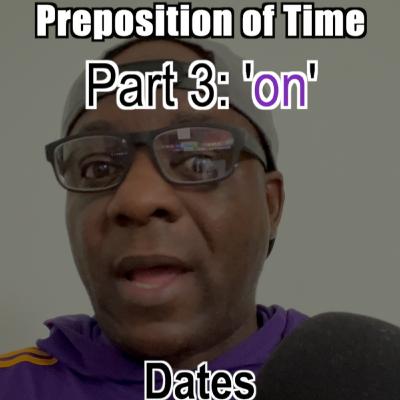
We use 'on' to talk about:
- Days: on Christmas, on Easter, on Halloween;
- Dates: on 2nd May, on our anniversary, on July 1st;
- Parts of Specific day: on Tuesday morning, on Saturday night.
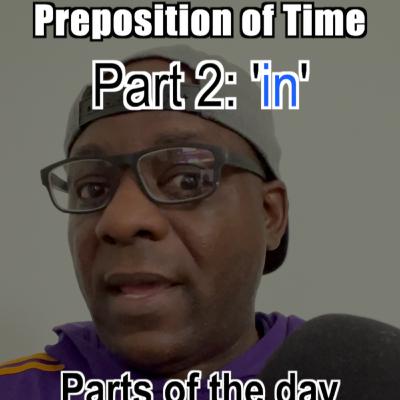
We use 'in' to talk about:
- Months / Seasons: in April, in (the) summer, in (the) spring;
- Years / Decade / Centuries: in 2020, in the 70s, in the 21th century;
- Long periods: in the present, in the past, in the future, in the ice (middle) age(s);
- Parts of the day: in the morning, in the afternoon, in the evening.
Future Progressive
Use:
* to talk about actions that'll be in progress at a certain time in the future.
It helps to express the future as a matter of course.
Couple of words are for instance: next week, tonight, later on Jan. 6th.
..., just about every action having its course in the future.
Example: We'll be boarding the flight at 2 pm.
* to underline overlapping actions.
Example: They'll be waiting when we arrive.
used with: when + Present simple + at (time)
Form: Personal pronouns + will be + Verb-ing
Examples:
- She will be taking a nap at this very time tomorrow.
- They will be celebrating their diamond wedding anniversary in September.
- will be talking to my mom in an hour.
- We will be working on the project tomorrow.
- Will you be going to her by bus?
The past perfect continuous is also known as Past Perfect Progressive Tense, and is used for an action that began before a certain point in the past and continued up to that time.
Time reference is found in these sentences which gives an idea that action has continued from some time.
Examples:
At that time he had been writing a book for two months.
When she came to the university in last summer, her biology Lecturer had already been teaching there for five years.
The will-future expresses future events that the speaker cannot influence.
Example: It will rain tomorrow.
The going-to-future is used to express a logical conclusion.
Example:
The sky is covered with dark clouds. I It's going to rain.
Must vs. have to
Both Must and have to express obligation or necessity, but there are some small differences:
- We use must when the speaker thinks it is necessary or important to do an action:
Must you go? ~ Yes, I must.
You must go. (= It is important that you go.)
- We use have to to talk about an action that is necessary because of rules or laws, or because someone obliges us to do it:
Doctors sometimes have to work on Sunday.
(It is in the rules of their work.)
Test Your English Vocabulary and Grammar - Practice and Improve your English with Useful Phrases and Expressions.
The simple present tense is one of several forms of present tense in English. It is used to describe: - habits; - unchanging situations; - general truths; - and fixed arrangements. The simple present tense is simple to form: - Just use the base form of the verb: (I take, you take, we take, they take) - The 3rd person singular takes an -s at the end. (he takes, she takes)
https://anchor.fm/felix-devalois-whassom-d/subscribe

In this audio, we're going to take a look at different phrases and expressions that are used in business and work context. Not only in Business or Work places, those phrases are used on a daily basis in different context, whenever we meet english speaking people.
In this audio, we're going to take a look at different phrases and expressions that are used in business and work context. Not only in Business or Work places, those phrases are used on a daily basis in different context, whenever we meet english speaking people.
In this video, we break down the Difference between TO and FOR, while giving some practical and case related examples.
As a general rule, we use:
- 'some' for affirmative sentences;
- 'any' for questions or negative sentences.
Usually, both 'some' and 'any' can only be used with countable plural nouns or uncountable nouns.

Comments

Download from Google Play

Download from App Store
 United States