DiscoverThe Creative Process in 10 minutes or less · Arts, Culture & Society: Books, Film, Music, TV, Art, Writing, Creativity, Education, Environment, Theatre, Dance, LGBTQ, Climate Change, Sustainability, Social Justice, Spirituality, Feminism, Technology
The Creative Process in 10 minutes or less · Arts, Culture & Society: Books, Film, Music, TV, Art, Writing, Creativity, Education, Environment, Theatre, Dance, LGBTQ, Climate Change, Sustainability, Social Justice, Spirituality, Feminism, Technology

The Creative Process in 10 minutes or less · Arts, Culture & Society: Books, Film, Music, TV, Art, Writing, Creativity, Education, Environment, Theatre, Dance, LGBTQ, Climate Change, Sustainability, Social Justice, Spirituality, Feminism, Technology

Author: The Creative Process · Books, Film, Music, TV, Art, Writing, Creativity, Education, Environment, Theatre, Dance, LGBTQ, Social Justice, Spirituality, Feminism, Technology...

Subscribed: 52Played: 530
Share

Description

Ten minute highlights of the popular The Creative Process & One Planet podcasts. Exploring the fascinating minds of creative people. Conversations with writers, artists & creative thinkers across the Arts & STEM. We discuss their life, work & artistic practice. Winners of Oscar, Emmy, Tony, Pulitzer, leaders & public figures share real experiences & offer valuable insights. Notable guests and participating museums and organizations include: Academy of Motion Picture Arts & Sciences, Neil Patrick Harris, Smithsonian, Roxane Gay, Musée Picasso, EARTHDAY-ORG, Neil Gaiman, UNESCO, Joyce Carol Oates, Mark Seliger, Acropolis Museum, Hilary Mantel, Songwriters Hall of Fame, George Saunders, The New Museum, Lemony Snicket, Pritzker Architecture Prize, Hans-Ulrich Obrist, Serpentine Galleries, Joe Mantegna, PETA, Greenpeace, EPA, Morgan Library & Museum, and many others.


The interviews are hosted by founder and creative educator Mia Funk with the participation of students, universities, and collaborators from around the world. These conversations are also part of our traveling exhibition.
 www.creativeprocess.info


For full episodes, follow The Creative Process - Arts Culture & Society.

471 Episodes
Reverse
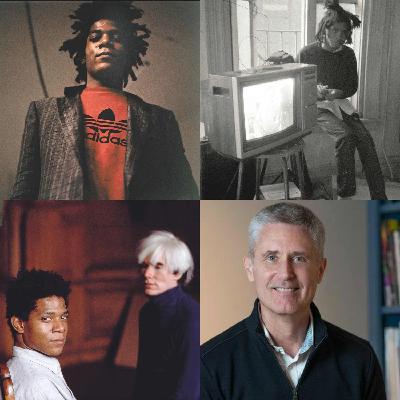
“People today are so used to Basquiat's prices being extraordinarily high and rising that it's almost hard for people to understand that wasn't always the case. In the year he died, 1988, a terrific painting by Basquiat might have sold for $30,000. Relative to his other artistic peers, like a great Julian Schnabel painting that cost $800,000. After Basquiat died, some speculative capital entered his market, and his prices did pop, but in the early 1990s, his prices fell apart, and for much of the first half of the 1990s, his work was selling for 80% off what it had been selling before. Auction houses didn't want to include him in their auctions. There was a really good chance he was going to be remembered, but certainly not become a great star. Three key figures believed in him and proceeded to buy almost every available Basquiat in the first half of the 1990s. They were also just passionate believers in his work. But for those three people, it would have taken much longer for Basquiat to achieve acclaim, if ever.”Today, we’re joined by someone uniquely positioned to unpack the art world’s inner workings and to help us understand one of its most mythic figures — Jean-Michel Basquiat. Doug Woodham is the author of the new biography, Jean-Michel Basquiat: The Making of an Icon, the first major life study of Basquiat in over twenty-five years. Drawing on more than a hundred interviews — from family and friends to collectors and curators — Doug traces the rise, fall, and resurrection of an artist who redefined what it means to be a cultural icon. Before turning to writing, Doug served as President of the Americas for Christie’s, one of the world’s leading auction houses. That role gave him an insider’s perspective on how value is created — and mythologized — in the modern art market. In this conversation, we’ll explore not just the man behind the legend, but the powerful machinery that turned Jean-Michel Basquiat into one of the most recognized and commercially successful artists in the world.Episode Websitewww.creativeprocess.info/podInstagram:@creativeprocesspodcastImages courtesy of Doug Woodham and Thames & Hudson. For image credits, see Episode Website.
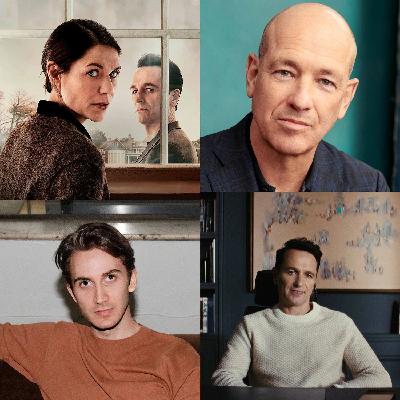
“How do you render something interior filmically? How do you communicate the details of the lost child, of the amount of time of the stuck creative process, and even the exterior, or the externalization of the house as a kind of hellish thing that's barely staying together—literally flooding with waste—and that you can't afford? So those are the details that we had to carefully figure out how to weave. But, you know, when you look at the first 10 minutes, it could be a horror movie. From that moment, a lot can happen. But what's important about it is that it sets the table for what does happen.” -Howard GordonToday, we explore the dark psychology of obsession, guilt, and the thin line between predator and victim. Our guests are two of television's most accomplished architects of high-stakes drama and moral ambiguity: Howard Gordon, the showrunner and executive producer whose work defined a generation of thrillers with 24 and the multi-award-winning Homeland; and Daniel Pearle, an executive producer and writer who brings a distinct, penetrating depth from his background as a celebrated playwright and his work on series like Accused and American Crime Story.Episode Websitewww.creativeprocess.info/podInstagram:@creativeprocesspodcast
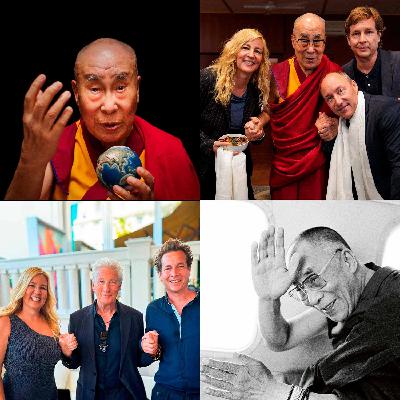
“I can change my mind. I can reduce anger, hatred. Nothing to do with religion. All religions carry the message of love, loving kindness, and tolerance. With different views, there is a possibility to synthesize new ideas. If majority of the world leaders become female, world become safer. I feel that. Compassion is the key factor. Non-violence, compassion and self-confidence, these are key factors for happy individual, happy community, peaceful world. This century should be century of compassion, century of peace. No more bloodshed. We should develop a big “we,” rather than “we” or “they.” With these wings, you can fly.” -DALAI LAMAFor decades, the Dalai Lama has been a global symbol of peace, compassion, and resilience, a spiritual leader living in exile from his home in Tibet. But how do you capture the essence of his wisdom—the kind that can truly change a life—in a way that feels intimate and personal? My guest today, documentary filmmaker Barbara Miller, has managed to do just that in her new film, Wisdom of Happiness. It’s a beautiful film that feels less like a documentary and more like a private, heart-to-heart conversation, where he invites us into his thoughts and shares practical steps for finding inner peace in a chaotic world.  She's dealt with anti-globalization, domestic violence, and the fight for female pleasure in her previous works. We’ll talk about how she shifted from exposing systemic pain to focusing on radical hope and her collaboration with Executive Producer Richard Gere and Manuel Bauer, the Dalai Lama’s personal photographer for the last thirty-five years, who made his cinematography debut with this film. She shares what the Dalai Lama taught her about living in harmony with our body, nature, and the world.Episode Website www.creativeprocess.info/podInstagram:@creativeprocesspodcast
AI WEIWEI'S TURANDOT

AI WEIWEI'S TURANDOT

2025-10-22--:--

“So when we decided to do a documentary to follow Ai Weiwei, we knew, of course, it wouldn't be just a simple opera, and we knew he would bring his own very special and original vision. Because, of course, he is not an opera director. From his point of view, it's a challenge, but from another perspective, it’s probably an enrichment for the opera audience because he doesn't follow the rules of opera. And, of course, once you decide to do a documentary about Ai Weiwei, it's in his DNA to be political. Once I started to follow him, the political issues and topics came into the documentary by themselves.”The renowned artist and activist Ai Weiwei has used sculpture, photography, documentaries, and large-scale installations to challenge authoritarian power for decades. But his project at the Rome Opera House, directing Puccini’s final opera, Turandot, may be his most powerful fusion of art and politics yet. Puccini’s original is a fairy tale set in ancient China about a princess whose riddle game costs failed suitors their lives. But Ai Weiwei transformed this story into a stark reflection of the present, weaving in footage of refugee crises, COVID hospitals, and the Ukraine war—a production that became an urgent act of resistance for its Ukrainian conductor and cast. The opera and documentary are a living document of our turbulent times, embodying Ai Weiwei’s belief that 'Everything is Art. Everything is Politics.'The new documentary, Ai Weiwei's Turandot, goes behind the curtain to capture the artistic struggle and emotional weight of making this work—a process that began with one vision and was fundamentally changed by a global pandemic and a major war.My guest is the documentary’s director, Maxim Derevianko. He grew up in a family with deep ties to the Rome Opera House, and he offers a deeply personal, intimate look at how in Ai Weiwei’s words, “art competes with reality, but art will have the last word.”Episode Websitewww.creativeprocess.info/podInstagram:@creativeprocesspodcast
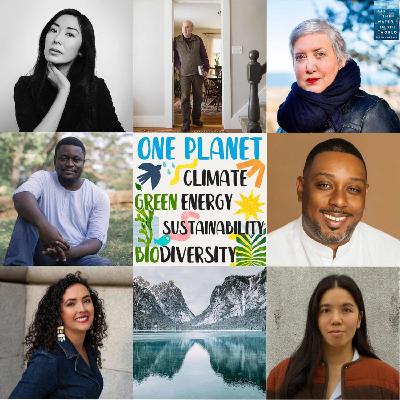
How do our environments shape who we are and how we care for the world and each other? There are many solutions to climate change, inequality, and poverty around the world. How can we learn from them and transform our society?Eiren Caffall (All the Water in the World) discusses the importance of embracing complexity and emotional flexibility in facing ecological grief.Irvin Weathersby Jr. (In Open Contempt) discusses the transformative power of meditation and nature, drawing inspiration from Emerson and Thoreau.Jay Parini (Biographies of Steinbeck, Frost, Faulkner…) on the significance of place in literature and life.Natasha Hakimi Zapata (Another World Is Possible) explores the generosity and hope in people’s efforts to build better societies.Audrea Lim (Free The Land) on how personal experiences with public lands influence our views on conservation.Katie Kitamura (Audition, Intimacies) reflects on the role of landscape and memory in her novels.Dr. Bayo Akomolafe (Philosopher, Founder of Emergence Network) discusses his awe for mountains, using them as a metaphor for humility and the search for meaning beyond oneself.For more from each guest, listen to their full interviews.Episode Websitewww.creativeprocess.info/podIG @creativeprocesspodcast
“At Guggenheim Abu Dhabi, I work with a very international team—people from all over the world, around 50 nationalities in this museum. I’ve never worked in such an environment, and it’s inspiring. When you talk to someone from a different country, you can’t help but be inspired. The most important thing for me is to feel fulfilled, and I find fulfillment in learning something new and being inspired every day. Of course, it doesn’t have to be the same for everyone. People can find fulfillment in charity or teaching kids. Everyone chooses what makes them feel fulfilled, as long as it’s meaningful.”Art museums have long been pillars of culture, but they are now at a critical juncture, navigating a new era defined by artificial intelligence, immersive technology, and the shifting habits of a global audience. The challenge is immense: how do you honor artistic tradition while building a museum for the future? On Saadiyat Island, Abu Dhabi is answering this question in a dramatic way, with the Guggenheim Abu Dhabi. Designed by the visionary architect Frank Gehry, this $1 billion project is more than just a new museum; it’s a statement—a new cultural superpower announcing itself on the world stage. It will be the largest contemporary art museum in the world, several times the size of the Guggenheim in New York, and a key part of their constellation of museums that is expected to contribute an estimated $200 million annually to the local economy. In the lead-up to its 2027 opening, the Guggenheim Abu Dhabi is embracing a new vision: moving from an "exhibition economy" to an "experience economy," where art becomes a conversation, a laboratory for ideas at the intersection of creativity and technology. Amr Hussein is the Digital Media Manager for the Guggenheim Abu Dhabi, and with a background in major sports broadcasting—from the FIFA World Cup to the Olympic Games—he’s bringing a unique perspective to digital storytelling in the arts. We talk to him about his journey and how he’s helping shape the digital narrative for this landmark museum.Episode Websitewww.creativeprocess.info/podInstagram:@creativeprocesspodcast
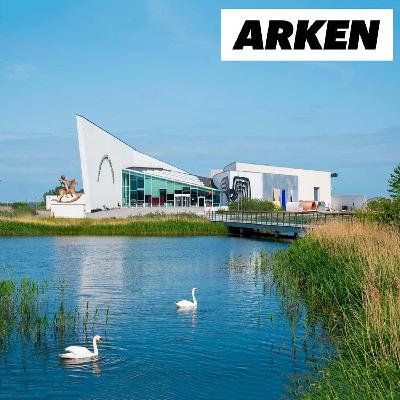
“This awe that I feel every time I meet an artist who has the courage to deal with what it means to be in the world as a human being and to tackle it from different ways and through different media. I always feel that through the collaborations I have with artists, I learn a little bit more about the world, myself, my feelings or emotions, and how I reflect on things. Getting another person's perspective and taking that in is extremely generous. What we can take with us from the artistic practices we encounter is significant. Again, I think one of the fundamental aspects of art is that it doesn't require agreement, consensus, or rules. It's a place where we can speculate, imagine, and, hopefully, re-courage ourselves in a way, if that's a word. I've always been motivated by working with artists; that personal meeting is always extremely fruitful.”In the ever-evolving world of contemporary art, some voices rise to shape the conversation in truly profound ways. Marie Nipper has spent her career at the nexus of institutional leadership, curatorial innovation, and artistic collaboration. As the director of the ARKEN Museum of Contemporary Art in Denmark, she is not just leading a museum; she's rethinking its very purpose—from an artistic lab to a public town square. Her journey has taken her from the hallowed halls of the TATE and ARoS to the forward-thinking spaces of Copenhagen Contemporary, all while championing the freedom of artists and the civic role of the museum.“I think that is one of the places where we are really challenged, especially when we speak to kids and young people, as they often feel they have little agency in creating a better future for themselves. So, I believe we can really give that space to our audiences by showcasing some of these groundbreaking practices that are out there right now in contemporary art.”Episode Websitewww.creativeprocess.info/podInstagram:@creativeprocesspodcast
“I feel that when you don't tell your story, it's as if you have a limited existence. We can always have some kind of choice, but I'm saying that the story we choose may be the most crucial choice that we make, because this story will affect all the other choices.”Etgar Keret is one of the most inventive and celebrated short story writers of his generation, a voice that captures the absurdities and profound loneliness of modern life with a deceptive, almost casual wit. His work, translated into dozens of languages, uses fantastical premises—from alien visitations to parallel universes—to illuminate the most human of truths. His new collection, Autocorrect, explores a world grappling with technology, loss, and the aftershocks of a global pandemic and, more recently, war. His awards include the Cannes Film Festival’s Caméra d’Or (2007), the Charles Bronfman Prize (2016), and the pres­tigious Sapir Prize (2018). Over a hundred short films and several feature films have been based on his stories. Keret teaches creative writing at Ben-Gurion University of the Negev. He now has a weekly newsletter on Substack called Alphabet Soup. He's also the new MFA Director of the Jewish Theological Seminary, where he's pioneering a new approach to storytelling. Joining me today from Tel Aviv is the great Israeli writer and filmmaker Etgar Keret.“When I write my stories, I don't want to solve things in life. I just want to persuade myself that there is a way out. Maybe I am in a cell, maybe I'm trapped. Maybe I won't make it, but if I can imagine a plan for escape, then I'll be less trapped because at least in my mind, there is a way. I think that my parents are survivors. They always talked about this idea of humanity. My parents always said to me, when you look at people, don't look at their political views; that's not important. Look at the way that they look at you. If they see you, if they listen to you, if they can understand your intention, even if it's a failing one, they're your people. And if they can't, it doesn't matter.I think that when I came with my mother and father, they thought there are people, there are human beings, and there are people who want to be human beings but are still struggling. And you go with humanity; you go with the person who can go against his ideology if his heart tells him something.”Episode Websitewww.creativeprocess.info/podInstagram:@creativeprocesspodcast
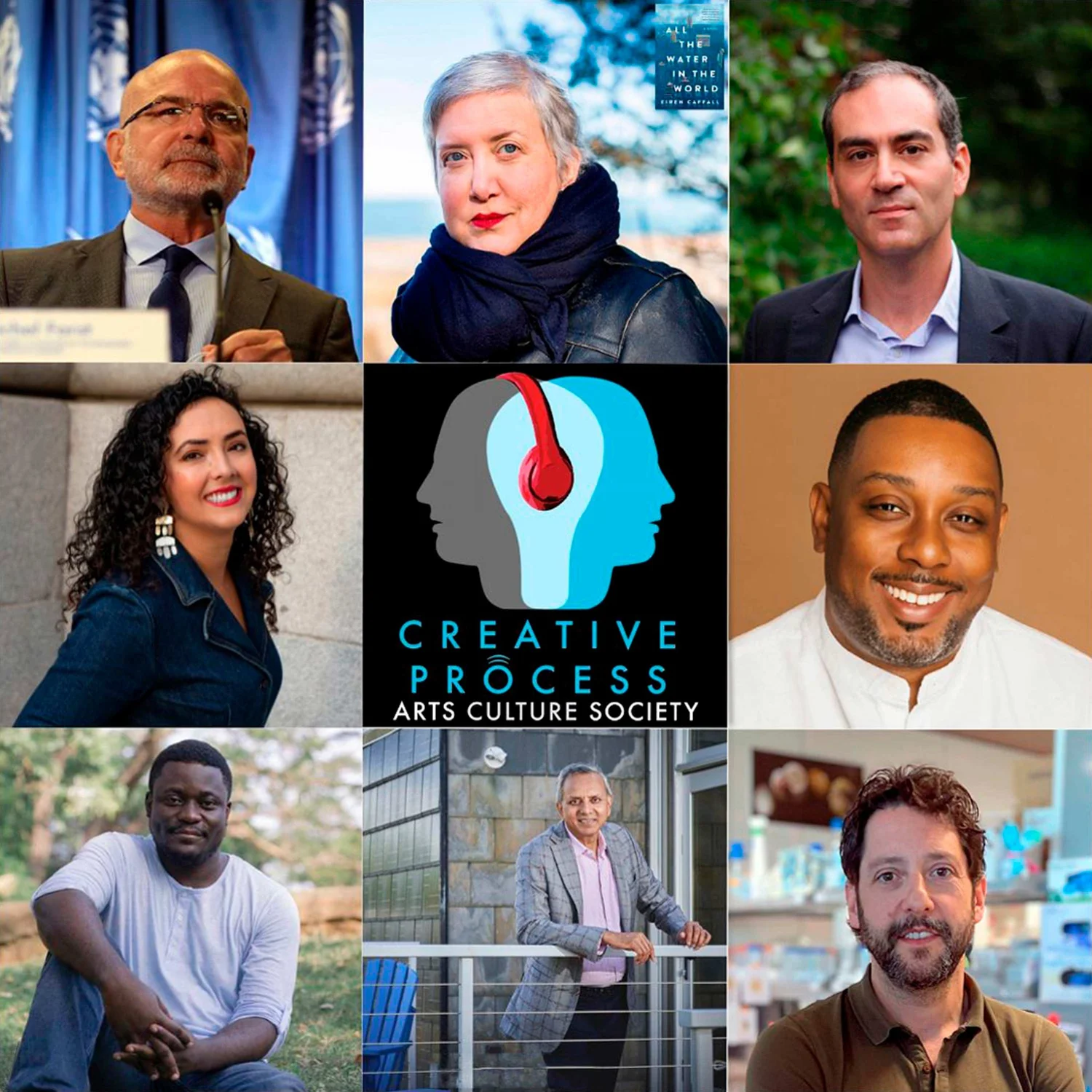
In this time of rapid technological change, how do we hold onto our humanity? How do stories, traditions, and community help us find meaning in loss and face an uncertain future? How can science, art, and spirituality open new pathways to understanding ourselves and the human experience?PAUL SHRIVASTAVA (Co-President of The Club of Rome) discusses the need for a holistic, eco-civilizational future, emphasizing that science, technology, and economics are important but not the whole picture. He urges us to design our own lives and livelihoods to meet diverse ecological futures, and later highlights the importance of embodied, emotional, and spiritual learning as essential to evolving human consciousness in a technologically dominated world.BAYO AKOMOLAFE (Philosopher, Psychologist, Writer & Founder of the Emergence Network) shares a deeply personal story about the loss of his father, describing how it forced him to mature quickly and become the breadwinner for his family. He reflects on the lessons learned from his children, especially his autistic son, who teaches him about grace, possibility, and futurity.MICHEL FORST (Human Rights Advocate & the UN Special Rapporteur on Environmental Defenders) explores how theology and meditation serve as ongoing sources of inspiration, shaping his values and career choices in human rights advocacy.DR. GUY LESCHZINER(Neurologist & Author of The Nocturnal Brain, The Man Who Tasted Words  & other books; Consultant Neurologist & Professor at King's College London) analyzes the concept of free will, suggesting that much of what we do is influenced by factors beyond our control. He also discusses the importance of striving to make the world better, the role of sleep and dreams in memory and emotional processing, and the changing nature of mentorship and education.EIREN CAFFALL (Musician & Author of All the Water in the World) highlights the importance of preserving knowledge and human history, imagining how future generations might rebuild society after catastrophe by holding onto stories, traditions, and the hope of repair.DR. FERNANDO GARCÍA-MORENO (Neuroscientist, Ikerbasque Research Associate at the Achucarro Basque Centre for Neuroscience) explains that while our brains have not changed biologically for thousands of years, cultural evolution has accelerated. He emphasizes the unique human roles of generating and transmitting knowledge across generations.NATASHA HAKIMI ZAPATA (Journalist, Author of Another World Is Possible: Lessons for America From Around the Globe) shares her inspiration from the generosity and hope she encounters in others, and describes how connecting with nature—especially bodies of water—reinforces the importance of conservation policies that integrate human communities into ecosystems.IRVIN WEATHERSBY JR. (Author of In Open Contempt) reflects on the influence of his church upbringing and family, especially his grandmother, on his writing and creative expression. He discusses the impact of music, particularly hip hop, and the importance of lyricism and cultural heritage in shaping his literary voice.To hear more from each guest, listen to their full interviews.Episode Websitewww.creativeprocess.info/podInstagram:@creativeprocesspodcast
"For the last two decades, I've made over 20 films about the environment, starting with oil and carbon emissions. Those films, Kiss the Ground and now Common Ground, talk about how we can stabilize the climate, reverse climate change, grow nutrient-dense food, and help farmers make a profit through biodiversity and regenerative practices and principles.There's incredible intelligence in nature; it knows how to be resilient. We thought we could do it better, and in trying to mechanize and industrialize the entire system, we created a linear system that doesn’t make sense. We’re growing animals to produce food that we can’t eat so that we can ship it halfway around the world. It’s a system that doesn’t work.The way to heal, regenerate, stabilize the climate, and reverse climate change is literally one inch and one acre at a time—through communities waking up to the power of soil and biodiversity to sequester carbon for all of us. The oceans can’t handle any more carbon absorption; they’re acidifying and heating up. We need to take the carbon we’ve emitted and put it back into the soil. When we do that, we create thriving ecosystems, biodiversity, and water infiltration, which massively reduces the risks from flooding. It helps reverse desertification and staves off droughts by retaining water like a sponge. Resiliency comes from having genetic diversity rather than just one of everything."Today, we explore the work of a filmmaker whose lens is consistently turned toward the most critical issues facing our planet. Rebecca Tickell, in collaboration with her husband Josh Tickell, has created a powerful cinematic catalog of films that are not merely observations, but catalysts for change. They've taken on the complexities of our energy systems, the deep-seated problems within our food supply, and now, with her latest work, Bee: Wild, they explore the essential, fragile, and often unseen world of pollinators.Their film Kiss the Ground sparked a global conversation about regenerative agriculture, leading to tangible shifts in policy and public understanding. Common Ground continued this exploration, unraveling the intricate web of our food systems. Now, with Bee: Wild, narrated by Ellie Goulding and executive produced by Angelina Jolie,Rebecca brings her characteristic blend of journalistic rigor, personal narrative, and solutions-driven storytelling to the urgent plight of bees, asking us to reconsider our relationship with the natural world.Episode Websitewww.creativeprocess.info/podInstagram:@creativeprocesspodcast
“If we look at the entire history of the human experience, if you saw some text or you heard some spoken language, you could 100 percent reliably infer that there was a human who created that. Our experience of having that text or that image generated for us is very akin to the experience of a magic trick, and we sort of pre-subconsciously want to attribute some kind of intelligence to what's going on on the other side.At the core of the work is that sense of curiosity, that sense of joy, that sense of beauty, and that sense of learning. I've been fortunate to have all kinds of strange and interesting experiences, whether that's seeing weird things in the sky over secret military bases in the middle of the Nevada desert, going scuba diving and finding internet cables on the bottom of the ocean, or tracking spy satellites in the sky and being able to predict when they'll appear in a flash against the backdrop of stars. The world around us is extraordinary and embodied, right? It is not on screens, and I’m very privileged to have that be so much a part of my process.”Trevor Paglen is an artist whose work makes the invisible visible, whether he's photographing secret government sites from miles away or revealing the hidden infrastructures of mass surveillance. He's a geographer by training, and he combines investigative journalism with his art practice to explore the hidden power structures of our time, including military technology and artificial intelligence. His work has been exhibited in major museums around the world, and he's also an award-winning author. His exhibitions, like 'The Black Sites' and 'Limit Tele-photography,’ have earned him critical acclaim, including a MacArthur Fellowship. He's recently opened a new exhibition at Pace Gallery in New York called Cardinals (Jun 26–Aug 15) which delves into the intriguing connections between UFO sightings, AI, and the spread of disinformation.Episode Websitewww.creativeprocess.info/podInstagram:@creativeprocesspodcast
“I had to become the father of my family very young because my parents divorced when I was 12. My situation was a little bit unusual in that my father kind of disappeared, and I had been making a fair amount of money as a kid, doing commercials and television and film. We needed money, and I kind of became the breadwinner. But I had this amazing world that I had access to, which was the world of the entertainment industry. My mom was supportive of my taking over and saying, "This is, I think, what we need to do." She liked the idea of moving to New York, so we moved to New York when I was 17 with a play that I had gotten. Then she got cancer and became really sick, so I had to take care of her full time. That lasted for about eight years, and then she died when I was 25. That was a rough go. At the same time, I had an amazing other world, and my other world was the world of make-believe and pretend, which I got to participate in on the soaps, with happy families and Christmases, Easters, miracles, love, weddings, and children. The pretend world that I spent a large amount of time in became a great way to balance what was sort of tragic in my real life.”Our guest today is Cady McClain. You probably know her from her long and celebrated career in daytime television. She is a three-time Emmy® Award-winning actress. She plays Pamela Curtis on CBS’ Beyond the Gates, and is the Artistic Director of Axial Theatre, and her directorial work includes the documentary, Seeing is Believing: Women Direct, a fascinating look at the challenges and triumphs of women behind the camera. Her memoir, Murdering My Youth, is an honest and sometimes difficult book about growing up as a child actor in the spotlight. Her work across all these different art forms—acting, directing, writing, art, and music—all seems to be connected by a commitment to telling true stories, no matter how complicated. www.creativeprocess.info/podInstagram:@creativeprocesspodcast
“We're living in a fascinating time, and unfortunately, to an extent, Europe and, very much so, North America are trying to hold onto the past while other parts of the world, like China, Taiwan, Korea, and Japan, are looking to the future. As an Italian citizen and an English citizen, I feel that we’ve left ourselves behind and that others are taking leaps forward. This isn't just about climate science; it’s about big geopolitics. It's about who wins the power battle over the dominant economy, economic thinking, and currencies. Do we have a reserve currency in the petrodollar? All these things are now being questioned in 2025. We're in an extraordinary period of history.”For decades, the conversation around climate change often felt abstract, a distant threat. But what happens when that threat collides with the very concrete world of finance, with investments, and with the bottom line? Mark Campanale has been at the forefront of this critical intersection for over two decades. He's a veteran of sustainable finance, having helped launch some of the earliest responsible investment funds. But it's his work with the Carbon Tracker Initiative that has truly reshaped how we understand the economic risks of a fossil fuel-dependent future. Carbon Tracker, an independent financial think tank, introduced concepts like the "carbon bubble" and "stranded assets"—terms that have not only become central to the divestment movement but are now indispensable for investors and regulators trying to navigate the path to decarbonization. Mark Campanale and the Carbon Tracker Initiative have made it impossible to ignore the financial implications of a warming planet.Episode Websitewww.creativeprocess.info/podInstagram:@creativeprocesspodcast
“We as humans can destroy things in a couple of years that have taken thousands or even millions of years to form. So in the snap of a finger, we can destroy so much work. That's an observation I’ve seen in all biomes, and it's pretty scary. On the other hand, nature regenerates pretty fast. It heals itself. If humans help this healing process, it can go even faster.”Louis De Jaeger has spent years traveling the world, witnessing firsthand the decline of nature. He is an eco-entrepreneur, a landscape designer, co-founder of the Food Forest Institute, and a leading voice in the regenerative agriculture and food forest movements. He’s founded numerous ventures aimed at creating positive impact and has created over 100 food forest sites around the world. His new book, SOS: Save Our Soils: How regenerative food and farming will save your health and the planet, asks us to consider every meal as a vote for either destruction or regeneration.Episode Websitewww.creativeprocess.info/podInstagram:@creativeprocesspodcast
“For us, I think it really is about trust and commitments, and I don't think that has necessarily changed over the years. As we work on that, obviously, we are very much invested in how we can engage an audience and spark the curiosity that people are looking for. The most important thing often is how we can spark that curiosity in ourselves. As a way of working, which I think is the most important framework for an institution, the institution should constantly want to learn and evolve, and it isn't a static place. Particularly coming from the opportunity of not being a collecting institution, we are ever-evolving and ever-changing.”Nicola Lees is truly pushing the boundaries of what a museum can be. Since 2020, she has been director of the Aspen Art Museum, a non-collecting, artist-founded institution dedicated to experimentation and supporting the most innovative voices in contemporary art. Under her direction, the AAM has just unveiled an ambitious, decade-long initiative called AIR Aspen. From July 26–August 1, 2025, AIR isn't just another program; it's the first artist-led global summit, a bold undertaking that will bring together artists, cultural leaders, policymakers, and influencers for yearly talks, performances, workshops, and an annual retreat. It’s designed to explore the profound role of art in addressing the big questions of our time, from AI to how we relate to one another. The inaugural theme, "Life As No One Knows It," promises to be a deeply engaging exploration of what it means to be alive in an era of rapid technological and environmental change, and it will feature an extraordinary roster of creatives whose work transcends traditional disciplines, including Francis Kéré, Paul Chan, Aria Dean, Glenn Ligon, and Maya Lin.Before her tenure in Aspen, Nicola Lees made her mark as the director and curator of New York University’s 80WSE and as a curator for Frieze Projects at Frieze London. Today, we’ll delve into her philosophy of art, leadership, and the transformative power of this new initiative.Episode Websitewww.creativeprocess.info/podInstagram:@creativeprocesspodcast
“As a writer, I do believe that art and literature in and of themselves are important. I'm going to keep on writing novels, and one of the most important reasons why is because, as you mentioned, language is crucial. Part of the way that states and authoritarian regimes exercise their power is not just through physical violence and intimidation, but through a maltreatment of language itself. Trump is a perfect example of this. Everything that comes out of his mouth in terms of language is horrifying for anybody with any sensitivity to language. The excesses of his language in terms of insults and hyperbolic praise for his fans are perfect examples of how language is used by an authoritarian and by the state to obfuscate reality and intimidate people. That language is ugly from my perspective, and there is something about being committed to literature and to art that awakens us to the importance of beauty.I think about what John Keats, the poet, said: beauty is truth, truth beauty. You can't separate these kinds of things. If you're committed to the beauty of language, you're also committed to the idea that language has a relationship to truth. You can see that authoritarians don't have a relationship to truth. They have a relationship to the abuse of truth and to lying, not only in content but in the form of their language as well. There is a crucial role for writers here in our relationship to language because language is one of the most crucial ways that authoritarianism extends its power. What I've discovered as a writer is that fear is a good indicator that there is a truth. To speak the truth in a society is oftentimes an act that requires some courage.”Viet Thanh Nguyen has spent much of his life exploring the stories we tell—and the stories we erase—about war, migration, and memory. His 2015 debut novel The Sympathizer, about a communist double agent in the aftermath of the Vietnam War, won the Pulitzer Prize and a long list of other major literary awards. In 2024, The Sympathizer was adapted into a critically acclaimed HBO series directed by Park Chan-wook.He followed it with The Committed, and his latest work, To Save and to Destroy: Writing as an Other, a meditation on writing, power, and the politics of representation.Nguyen is also the author of Nothing Ever Dies, a finalist for the National Book Award in nonfiction, and the short story collection The Refugees. He’s edited collections like The Displaced: Refugee Writers on Refugee Lives, and most recently the Library of America volume for Maxine Hong Kingston, who was once his teacher.He was born in Vietnam, came to the U.S. as a refugee, and is now a professor at the University of Southern California. He’s received Guggenheim and MacArthur fellowships, honorary doctorates, and has been named a Chevalier by the French Ministry of Culture. Today, we’ll talk about his books, America’s forever wars, and how the act of writing—across fiction, memoir, and scholarship—can become both a form of resistance and a way of making sense of being, as he puts it in his memoir “A Man of Two Faces.”Episode Websitewww.creativeprocess.info/podInstagram:@creativeprocesspodcast
“I guess the book was about giving hope because I realized how much we could do together. I believe that ordinary people are the ones bringing changes here. I believe that the communities gathering together – for example, I am seeing that in this country around the protection of rivers – are the ones that will mark the change. It's not going to come from above; it's going to come from below, up. We all have a role. Working for the protection of what we love the most will make you happy. So get into a positive mindset. Learn all you can. Be part of things that make you feel positive. You will see how you will find your way, and there is no place for feeling disempowered. This is the moment where you should feel very powerful because it is us who are going to make the future of this Earth.”Monica Feria-Tinta is a British-Peruvian barrister specialising in Public International Law. She has been called one of ‘the most daring, innovative and creative lawyers’ in the United Kingdom, and was shortlisted for “Barrister of the Year” at The Lawyers’ Awards 2020 and at Chambers and Partners UK Bar Awards 2023 for her work in addressing climate change and environmental degradation. In 2020, she acted before the Constitutional Court of Ecuador in Los Cedros case, the first ‘Rights of Nature’ case in the world. In September 2022 her work as Counsel secured a win in the Torres Strait Islanders case, a landmark moment in which the UN Human Rights Committee found a Sovereign state responsible, for the first time in history, for lack of action in addressing climate change. She is the author of A Barrister for the Earth: Ten Cases of Hope for Our Future.Episode Websitewww.creativeprocess.info/podInstagram:@creativeprocesspodcast
“I'm hopeful for revolution. I'm optimistic. I want radical change. I think there's such a disinterest in education in America that it is sickening. I think we are repeating history. We are going through a cycle of fascism and greed, and I think we're going to see a lot of states collapse. As a result of that, I think people are going to be forced back to their primal needs and concerns, but I think they're going to be forced to think about what makes us human. How do we become more human? Because we've lost that. We've given it up to technology. How can we figure out what makes us a really powerful species again?”Irvin Weathersby Jr. is a Brooklyn-based writer and professor from New Orleans. He is the author of In Open Contempt: Confronting White Supremacy in Art and Public Space. His writing has been featured in LitHub, Guernica, Esquire, The Atlantic, EBONY, and elsewhere. He has earned an MFA from The New School, an MA from Morgan State University, and a BA from Morehouse College. He has received fellowships and awards from the Voices of Our Nations Arts Foundation, the Research Foundation of CUNY, the Bread Loaf Writers' Conference, the American Council of Learned Societies, and the Mellon Foundation.Episode Websitewww.creativeprocess.info/podInstagram:@creativeprocesspodcast
“I would encourage you, as I do if you're an actor, to know your own equipment, know your own psychology, and use the great teachers that are synthesized in my favorite teacher's book, Moss, who I studied with later. There is a book called Intent to Live that distills down Uta Hagen, Stella Adler, Bobby Lewis, and Stanislavski. The great teachers at the Group Theatre believed that the method needed to be altered to be constructive rather than destructive to artists.David Milch's mind is so singular because he uses language in a way that defines character. That's what all good writers do: use language to get to the heart of something. He would use malapropisms to make up words, and Milch loved playing with that. As someone who played the love interest of such a unique character as Andy Sipowicz, I found it fascinating.Through Sylvia and David Milch's understanding, his wife humanized him. Sipowicz was portrayed as an addict, a very flawed human who had many addictions. David Milch is now suffering from Alzheimer's, so we won't get his words again. However, the words that he has to offer are timeless because he studied Robert Penn Warren and had many mentors throughout his vast literary education. That is key. I love speaking Noël Coward’s words. As a bon vivant, he wrote musically, to charm us and amuse us. So going and reading Noël Coward is important for actors to learn those cadences and the musicality of a certain era. Of course, Shakespeare comes to mind. I also think of the female playwrights who delight me now, whether it's Caryl Churchill. She has that singular mind and plays with gender so well, challenging gender norms. Seeing ‘Cloud Nine’ when I was in college blew my mind open because men were playing women and women were playing men. Of course, Shakespeare was doing it too, but her work felt more intimate; it was in a small theater. That’s another thing I encourage actors and audiences to do: go see things in small theaters. See it up close because that will excite you and help you learn the craft.”Sharon Lawrence is an acclaimed actress best known for her Emmy-nominated, SAG Award-winning role as ADA Sylvia Costas on NYPD Blue. She has delivered memorable performances in Desperate Housewives, Monk, Law & Order: SVU, Criminal Minds, Shameless, and Queen Sugar. On stage, she’s earned praise for roles in The Shot (a one-woman play about the owner/publisher of the Washington Post, Katharine Graham), Orson’s Shadow, and A Song at Twilight. Shestarred in Broadway revivals of Cabaret, Chicago, and Fiddler on the Roof. Her recent work includes the neo-Western series Joe Pickett, opposite Michael Dorman, and the films Solace with Anthony Hopkins and The Bridge Partner. Lawrence is also a dedicated advocate, serving on the boards of the SAG-AFTRA Foundation, WeForShe, and Heal the Bay, and is a former Chair of the Women In Film Foundation.Episode Websitewww.creativeprocess.info/podInstagram@sharonelawrence@creativeprocesspodcast
loading
Comments