DiscoverPoetry: The Creative Process: Poets discuss Poems & Creativity
Poetry: The Creative Process: Poets discuss Poems & Creativity

Poetry: The Creative Process: Poets discuss Poems & Creativity

Author: Writing: Creative Process Original Series

Subscribed: 17Played: 168
Share

Description

Poetry episodes of the popular The Creative Process podcast. Listen to poets reading their poetry & discuss their lives, work & creative process. Includes environmental poetry, humanities & activism. To listen to ALL arts & creativity episodes of “The Creative Process · Arts, Culture & Society”, you’ll find our main podcast on Apple: tinyurl.com/thecreativepod, Spotify: tinyurl.com/thecreativespotify, or wherever you get your podcasts!


Exploring the fascinating minds of creative people. Conversations with writers, artists & creative thinkers across the Arts & STEM. We discuss their life, work & artistic practice. Winners of Oscar, Emmy, Tony, Pulitzer, leaders & public figures share real experiences & offer valuable insights. Notable guests and participating museums and organizations include: Academy of Motion Picture Arts & Sciences, Neil Patrick Harris, Smithsonian, Roxane Gay, Musée Picasso, EARTHDAY.ORG, Neil Gaiman, UNESCO, Joyce Carol Oates, Mark Seliger, Acropolis Museum, Hilary Mantel, Songwriters Hall of Fame, George Saunders, The New Museum, Lemony Snicket, Pritzker Architecture Prize, Hans-Ulrich Obrist, Serpentine Galleries, Joe Mantegna, PETA, Greenpeace, EPA, Morgan Library & Museum, and many others.


The interviews are hosted by founder and creative educator Mia Funk with the participation of students, universities, and collaborators from around the world. These conversations are also part of our traveling exhibition.
 www.creativeprocess.info


For The Creative Process podcasts from Seasons 1 & 2, visit: tinyurl.com/creativepod or creativeprocess.info/interviews-page-1, which has our complete directory of interviews, transcripts, artworks, and details about ways to get involved.


INSTAGRAM @creativeprocesspodcast

85 Episodes
Reverse
“Poetry is like one of the great loves of my life, and I think it's probably the longest relationship I'll ever have. I read a lot of poetry. I also wrote these short stories even when I was pretty young, like in second grade, and the stories kept getting shorter and shorter. My family used to go to Damascus in Syria and Lebanon every summer for three months until 2011, when the Civil War broke out in Syria. In 2015, we made our first return after that gap, and my father and I went to Lebanon for two weeks. It's the first time I felt that I belong. To the extent that was true or not, I'm obviously irrevocably American. I speak broken Arabic. I don't think I could ever live in Lebanon or Syria. But for what it was worth at 15 years old, it was a life-changing trip. I wrote my first official poem on the plane back to San Diego from that trip, and I feel that was a formative moment for me. I felt that I had a story to tell and wanted to put it to paper in the form of poetry.”In this episode of the Speaking Out of Place podcast, Professor David Palumbo-Liutalks with poet Maya Salameh about her poetry collection, How to Make an Algorithm in the Microwave, which won the prestigious Etel Adnan Poetry Prize in 2022. The judges remarked, “Maya Salameh’s poetry stood out for its inventiveness in cracking the code of life ‘between system and culture'…The turns and swerves the poems make are astonishing; the expectations they upend are remarkable… It’s a testament to the aesthetic boundaries and intellectual revolt poets of Arab heritage are pushing, breaking, and reinventing.” We talk about what led her to both technology and poetry, language and story-telling, and the challenges and joys of representing life in the diaspora. In a time of war and genocide, Salameh’s poetry shows how patterns of life and reproduction and desire persist. In her readings and discussions of three poems, we find a new lexicon and a new grammar.Maya Salameh is the author of MERMAID THEORY (Haymarket Books, 2026), HOW TO MAKE AN ALGORITHM IN THE MICROWAVE (University of Arkansas Press, 2022), winner of the Etel Adnan Poetry Prize, and the chapbook rooh (Paper Nautilus Press, 2020). She has received fellowships from the National Endowment for the Arts, Sewanee Writers’ Conference, Bread Loaf Environmental Writers’ Conference, and the President’s Committee for the Arts and Humanities, and served as a National Student Poet, America’s highest honor for youth poets. Her work has appeared in The Offing, Poetry, Gulf Coast, The Rumpus, AGNI, Mizna, and the LA Times, among others. @mayaslmhhttps://speakingoutofplace.comBluesky @palumboliu.bsky.socialInstagram @speaking_out_of_place
“I'm Lebanese. I grew up in Lebanon during the Civil War, and I came to the United States as a graduate student with the intention of going back. I never wanted to stay here. I really thought that my life would happen in Beirut, in a city that I loved and hated in the healthiest of ways. My investments, both literary and intellectual, were rooted there. I came here as a graduate student and joined the PhD program, and then the events continued to unfold there, making life more and more of a risk, building a life in a place like Lebanon. The most important counterpoint in my life was meeting my partner, Ahmad Almallah, who is Palestinian. So immediately, my life became the life of a Palestinian by association.Of course, the past two years—almost two years—have been surreal. I sometimes don't believe that we're going through what we're going through because, as security concerns have become something we think about at home, when we walk from home to campus or my office, I'm constantly anxious to open my mail because often there are things that will require a lot of energy, time, emotion, and are emotionally taxing. There’s a lot of rage now in many aspects of my life, but all that aside, my personal experience—both professional and personal, and at home, familial—are not exceptional. Many other people are experiencing intimidation, silencing, and feeling cornered, censored, and oppressed just because they took a stand—a very decent, normal, basic human stand against genocide.”In this episode on Speaking Out of Place podcast Professor David Palumbo-Liu talks with Huda Fakhreddine, writer, translator, and scholar of Arabic literature. Among the many topics they touch upon are the challenges of teaching Arabic literature, especially Palestinian literature, in a time of genocide, when universities, professional organizations, and political groups militate against any honest discussion of these topics, and punish those who do. They talk about the notion of belonging and the importance of being able to choose what to belong to, and what not to. Huda speaks of the freedom found in living in Arabic, and explains what that means to her. She also reads in Arabic and English Nima Hasan’s stunning and wrenchingly beautiful poem, “Old Song.”Huda J. Fakhreddine is a writer, translator, and Associate Professor of Arabic Literature at the University of Pennsylvania. She is the author of Metapoesis in the Arabic Tradition (Brill, 2015) and The Arabic Prose Poem: Poetic Theory and Practice (Edinburgh University Press, 2021), and the co-editor of The Routledge Handbook of Arabic Poetry (Routledge, 2023). Among her translations are The Sky That Denied Me: Selections from Jawdat Fakhreddine (University of Texas Press, 2020), The Universe, All at Once: Selections from Salim Barakat (Seagull Books, 2024), and Palestinian: Four Poems by Ibrahim Nasrallah (World Poetry Books, 2024). Her creative work includes a book of creative non-fiction titled Zaman saghīr taḥt shams thāniya (A Brief Time under a Different Sun), Dar al-Nahda, Beirut, 2019 and the forthcoming Wa min thamma al-ālam (And then the World), Manshūrāt Marfa’, Beirut, 2025. Her translations of Arabic poems have appeared in Protean, Lithub, Words Without Borders, Nimrod, ArabLit Quarterly, Asymptote, and Middle Eastern Literatures, among many others.  She is co-editor of Middle Eastern Literatures and section editor of the Encyclopedia of Islam.www.palumbo-liu.comhttps://speakingoutofplace.comBluesky @palumboliu.bsky.socialInstagram @speaking_out_of_place
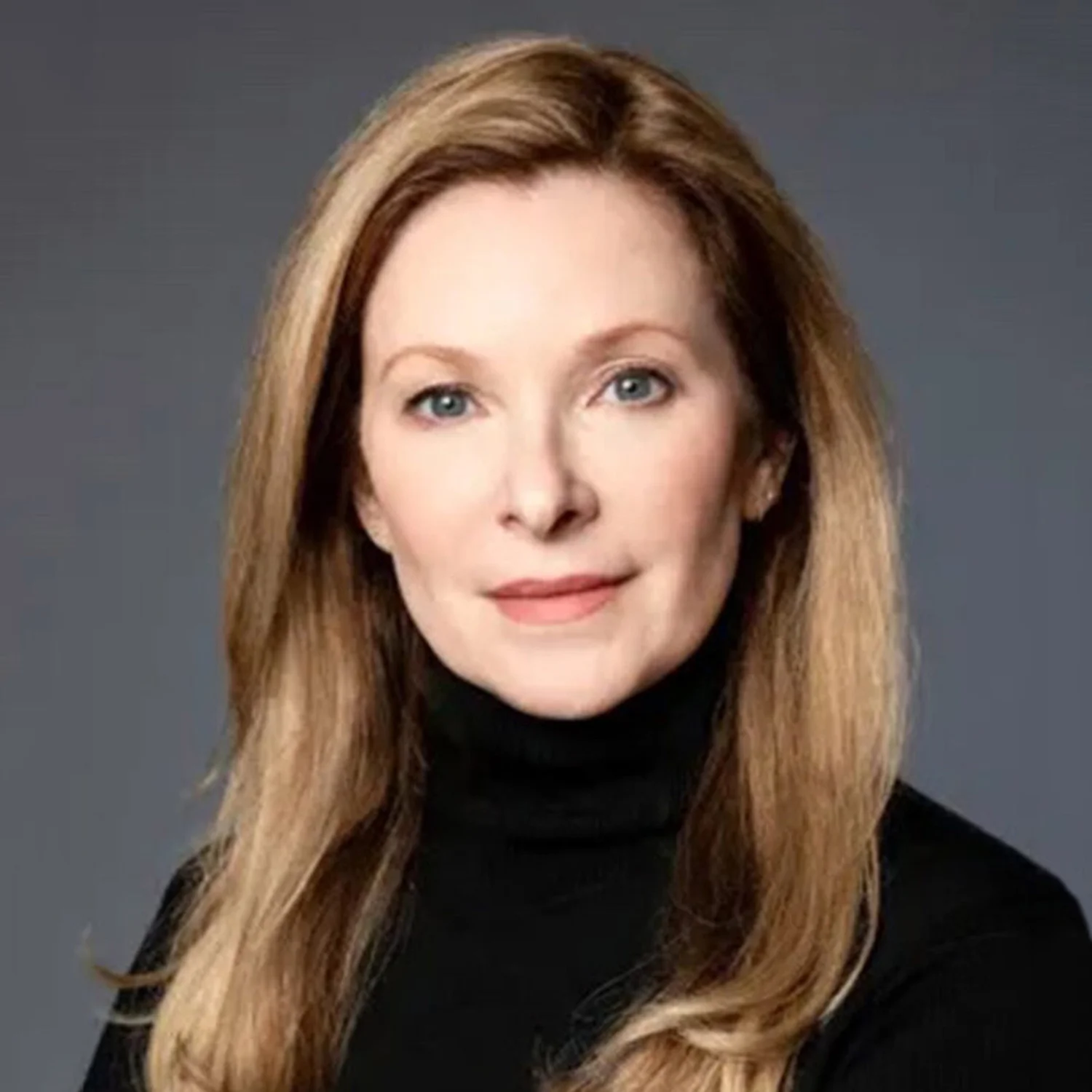
“I had to become the father of my family very young because my parents divorced when I was 12. My situation was a little bit unusual in that my father kind of disappeared, and I had been making a fair amount of money as a kid, doing commercials and television and film. We needed money, and I kind of became the breadwinner. But I had this amazing world that I had access to, which was the world of the entertainment industry. My mom was supportive of my taking over and saying, "This is, I think, what we need to do." She liked the idea of moving to New York, so we moved to New York when I was 17 with a play that I had gotten. Then she got cancer and became really sick, so I had to take care of her full time. That lasted for about eight years, and then she died when I was 25. That was a rough go. At the same time, I had an amazing other world, and my other world was the world of make-believe and pretend, which I got to participate in on the soaps, with happy families and Christmases, Easters, miracles, love, weddings, and children. The pretend world that I spent a large amount of time in became a great way to balance what was sort of tragic in my real life.”Our guest today is Cady McClain. You probably know her from her long and celebrated career in daytime television. She is a three-time Emmy® Award-winning actress. She plays Pamela Curtis on CBS’ Beyond the Gates, and is the Artistic Director of Axial Theatre, and her directorial work includes the documentary, Seeing is Believing: Women Direct, a fascinating look at the challenges and triumphs of women behind the camera. Her memoir, Murdering My Youth, is an honest and sometimes difficult book about growing up as a child actor in the spotlight. Her work across all these different art forms—acting, directing, writing, art, and music—all seems to be connected by a commitment to telling true stories, no matter how complicated. www.creativeprocess.info/podInstagram:@creativeprocesspodcast
“I won my first Emmy when I was 21, which was the result of absolutely devoting myself day and night for two years to doing all the scene work. I attended classes simultaneously and did plays until my mother died. I studied with Michael Howard for eight years. Even when I was so tired I couldn't get up to do a scene, he would say, "Get up and do a poem." It helped me enormously; it saved me.The way I was trained and how I train others is that you know when you’re in the zone. Oh God, it feels so good. It feels like flying. And that's what you want. You want to be so unselfaware that you're on liftoff?I had to become the father of my family very young because my parents divorced when I was 12. My situation was a little bit unusual in that my father kind of disappeared, and I had been making a fair amount of money as a kid, doing commercials and television and film. We needed money, and I kind of became the breadwinner. But I had this amazing world that I had access to, which was the world of the entertainment industry. My mom was supportive of my taking over and saying, "This is, I think, what we need to do." She liked the idea of moving to New York, so we moved to New York when I was 17 with a play that I had gotten. Then she got cancer and became really sick, so I had to take care of her full time. That lasted for about eight years, and then she died when I was 25. That was a rough go. At the same time, I had an amazing other world, and my other world was the world of make-believe and pretend, which I got to participate in on the soaps, with happy families and Christmases, Easters, miracles, love, weddings, and children. The pretend world that I spent a large amount of time in became a great way to balance what was sort of tragic in my real life.”Our guest today is Cady McClain. You probably know her from her long and celebrated career in daytime television. She is a three-time Emmy® Award-winning actress. She plays Pamela Curtis on CBS’ Beyond the Gates, and is the Artistic Director of Axial Theatre, and her directorial work includes the documentary, Seeing is Believing: Women Direct, a fascinating look at the challenges and triumphs of women behind the camera. Her memoir, Murdering My Youth, is an honest and sometimes difficult book about growing up as a child actor in the spotlight. Her work across all these different art forms—acting, directing, writing, art, and music—all seems to be connected by a commitment to telling true stories, no matter how complicated. Episode Websitewww.creativeprocess.info/podInstagram:@creativeprocesspodcast
“Poetry is the prince of the literary arts to me. It's at the very top because it's language refined to its apex of memorability. I am interested in poetry as memorability and poetry as something you live by. These are the words you live by. These words stay in your brain and guide your life. That's what I am interested in. My memoir slash autofiction is called Borges and Me, and as you know, it's a story of my time in 1970 when my best friend Billy was drafted for the Vietnam War, and so was I. He went to Vietnam, and I went to Scotland to hide out and do my graduate work. I spent nearly seven years in Scotland, but I certainly spent the next five years definitely in Scotland. I was there before as an undergraduate for a bit, too. During that time, Billy was killed in Vietnam, and I was a nervous wreck. My memoir talks about my depression, my anxieties, and then, through my friend Alastair Reid, I met Borges, the great Argentine writer. We went on a little road trip through the Highlands, and this conversation with Borges really restored me back to myself and what was important in life. I felt that I owed a huge amount to that contact with Borges… I was lucky that suddenly, out of nowhere, came a wonderful director-producer named Mark Turtletaub. He had read my book and loved it, and he approached me. We had a conversation, and he said, ‘Look, I want to make this movie.’ So off we went.”It’s a real pleasure today to welcome a writer whose voice has been a guiding force in American letters for decades. Jay Pariniis the author of acclaimed biographies of literary giants like John Steinbeck, Robert Frost, William Faulkner, and Gore Vidal—as well as an illuminating portrait of Jesus in The Human Face of God. He’s also a celebrated poet, novelist, essayist, and teacher whose work reflects a lifelong devotion to the arts, the humanities, and the power of language to tell the truth, gently. From his poetry to his prose, Jay's writing brings rare insight and deep compassion to the page. He doesn’t just study his subjects—he inhabits them, helps us hear their voices, and see the world through their eyes. And of course, he’s one of the few people who can say they've gotten into the heads of both Jesus and Gore Vidal...and lived to tell the tale.Episode Websitewww.creativeprocess.info/podInstagram:@creativeprocesspodcast
“I'm hopeful for revolution. I'm optimistic. I want radical change. I think there's such a disinterest in education in America that it is sickening. I think we are repeating history. We are going through a cycle of fascism and greed, and I think we're going to see a lot of states collapse. As a result of that, I think people are going to be forced back to their primal needs and concerns, but I think they're going to be forced to think about what makes us human. How do we become more human? Because we've lost that. We've given it up to technology. How can we figure out what makes us a really powerful species again?”Irvin Weathersby Jr. is a Brooklyn-based writer and professor from New Orleans. He is the author of In Open Contempt: Confronting White Supremacy in Art and Public Space. His writing has been featured in LitHub, Guernica, Esquire, The Atlantic, EBONY, and elsewhere. He has earned an MFA from The New School, an MA from Morgan State University, and a BA from Morehouse College. He has received fellowships and awards from the Voices of Our Nations Arts Foundation, the Research Foundation of CUNY, the Bread Loaf Writers' Conference, the American Council of Learned Societies, and the Mellon Foundation.Episode Websitewww.creativeprocess.info/podInstagram:@creativeprocesspodcast
“One of the biggest symbols of America is Mount Rushmore. This monument, right? But I think most people fail to realize where it's located and why it's located there. Even more importantly, who did it? It's on a sacred Native American mountain, a place that was central to their creation stories. But then you think about who did it, and it was a Klansman. The guy who sculpted Mount Rushmore was a Klansman. People were like, "Wait, really?" Like, how is that a thing? But it seeps into our understanding and our embrace of white supremacy. This whole notion of us using Mount Rushmore as a metric of excellence is really sad. We are honoring slave owners and people who viciously killed natives, and those who pillage other lands in the name of capitalism. That's what America is, I guess.I think there's such a disinterest in education in America that it is sickening. We can't even agree on facts. It's up to states' rights to decide. Really? States can say that this is true in one state, but it's not true in another? Although these states are united, it's very bizarre. I'm hopeful for revolution. I'm optimistic. I want radical change. I think we are repeating history. We are going through a cycle of fascism and greed, and I think we're going to see a lot of states collapse. As a result of that, I think people are going to be forced back to their primal needs and concerns, but I think they're going to be forced to think about what makes us human. How do we become more human? Because we've lost that. We've given it up to technology. How can we figure out what makes us a really powerful species again?”Irvin Weathersby Jr. is a Brooklyn-based writer and professor from New Orleans. He is the author of In Open Contempt: Confronting White Supremacy in Art and Public Space. His writing has been featured in LitHub, Guernica, Esquire, The Atlantic, EBONY, and elsewhere. He has earned an MFA from The New School, an MA from Morgan State University, and a BA from Morehouse College. He has received fellowships and awards from the Voices of Our Nations Arts Foundation, the Research Foundation of CUNY, the Bread Loaf Writers' Conference, the American Council of Learned Societies, and the Mellon Foundation.Episode Websitewww.creativeprocess.info/podInstagram:@creativeprocesspodcast
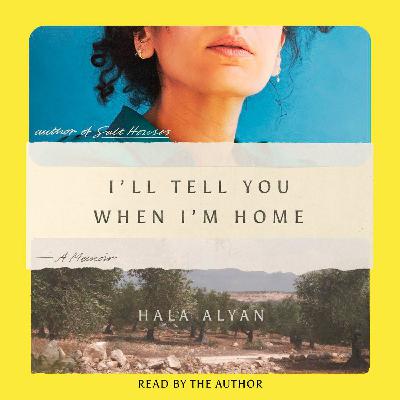
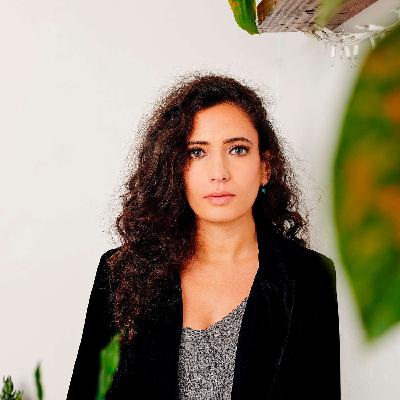
“I think that it's almost like in some ways the specificity of Palestine also becomes kind of a universality, where you can stay in this specific example because there is something about this experience that makes it specific, right? It's happening because it's been sanctioned to happen in this way. Right? Because you can't slaughter tens of thousands of people without consequence unless you have made those people less than people. Unless there has been a very effective project of dehumanization that's been carried out against the people that are being killed.I think, in some ways, this memoir was a project of sifting through and excavating the darkest hours, both for me and for the lineage and ancestry that I came from. I think the darkest hours were experienced by so many people I come from who have had to leave places they didn't want to leave. I live in exile and have been forced to leave behind houses, land, cities, and people. Oftentimes, this has happened more than once in a lifetime, so they have carried that trauma. Of course, it plays out intergenerationally in many different ways.”Hala Alyan is the author of the memoir I'll Tell You When I'm Home, the novels Salt Houses—winner of the Dayton Literary Peace Prize and the Arab American Book Award, and a finalist for the Chautauqua Prize—and The Arsonists’ City, a finalist for the Aspen Words Literary Prize. She is also the author of five highly acclaimed collections of poetry, including The Twenty-Ninth Year and The Moon That Turns You Back. Her work has been published by The New Yorker, The Academy of American Poets, The New York Times, The Guardian, and Guernica. She lives in Brooklyn with her family, where she works as a clinical psychologist and professor at New York University.Episode Websitewww.creativeprocess.info/podInstagram:@creativeprocesspodcast
“I want to live a life of consequence, and I want to live a life that has stakes in it because that means that things matter to you. I think, in some ways, this memoir was a project of sifting through and excavating the darkest hours, both for me and for the lineage and ancestry that I came from. I think the darkest hours were experienced by so many people I come from who have had to leave places they didn't want to leave. I live in exile and have been forced to leave behind houses, land, cities, and people. Oftentimes, this has happened more than once in a lifetime, so they have carried that trauma. Of course, it plays out intergenerationally in many different ways.I think it's a time of fear. I don't think I'm alone in that. I am scared for people that I love. I am scared for people who are quite vulnerable. I worry for my students. I am concerned for the places that I feel are engaging in complicity because that will be such a heavy legacy to endure later on, how people, places, and entities comport themselves in moments like this. They will be remembered. There will always be people who remember it.”Hala Alyan is the author of the memoir I'll Tell You When I'm Home, the novels Salt Houses—winner of the Dayton Literary Peace Prize and the Arab American Book Award, and a finalist for the Chautauqua Prize—and The Arsonists’ City, a finalist for the Aspen Words Literary Prize. She is also the author of five highly acclaimed collections of poetry, including The Twenty-Ninth Year and The Moon That Turns You Back. Her work has been published by The New Yorker, The Academy of American Poets, The New York Times, The Guardian, and Guernica. She lives in Brooklyn with her family, where she works as a clinical psychologist and professor at New York University.Episode Websitewww.creativeprocess.info/podInstagram:@creativeprocesspodcast
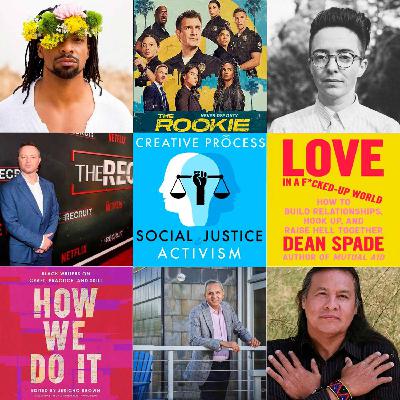
How do our personal relationships affect political movements and activism? What can we learn from Native American tradition to restore ecological balance? How can transforming capitalism help address global inequality and the environmental crisis?DEAN SPADE (Author of Love in a F*cked-Up World: How to Build Relationships, Hook Up, and Raise Hell Together) shares his reflections on the importance of understanding common relational patterns within activist movements. He emphasizes the need for solidarity and collective action in response to global crises like the conflict in Gaza and ecological disasters. Spade argues for resilience and mutual support within activist communities as essential for sustained efforts toward systemic change.TIOKASIN GHOSTHORSE (Founder · Host · Exec. Director of First Voices Radio · Founder of Akantu Intelligence · Master Musician of the Ancient Lakota Flute) discusses the often-overlooked Native history and the Western historical domination that has shaped contemporary educational perspectives. He highlights the need for reconnection to Native perspectives and calls for an acknowledgment of the spiritual and cultural richness lost through historical and ongoing colonial practices.ALEXI HAWLEY (Showrunner · Writer · Creator of The Rookie · The Recruit) explores the complexities and challenges of depicting policing on television. Reflecting on the creation of his show "The Rookie" in the aftermath of Philando Castile's murder, Hawley discusses the show's evolution in addressing injustice in the justice system and the effort to portray an aspirational version of policing that acknowledges real-world issues.JERICHO BROWN (Pulitzer Prize-winning Poet · Director of Creative Writing Program · Emory University · Editor of How We Do It: Black Writers on Craft, Practice, and Skill) delves into the complexities of being a Black writer, emphasizing the importance of embracing one's identity rather than trying to transcend it. He discusses how blackness enriches his craft and argues that the power of writing comes from its capacity to create new ways of seeing and understanding the world.PAUL SHRIVASTAVA (Co-President of THE CLUB OF ROME) analyzes the need for collaborative efforts across various sectors—businesses, governments, and individuals—to address global inequalities and environmental challenges. He underscores the imperative to reshape capitalist principles to reduce extreme inequalities and to foster a sustainable and equitable global system.To hear more from each guest, listen to their full interviews.Episode Websitewww.creativeprocess.info/podInstagram: @creativeprocesspodcast
We are privileged to present the voices of individuals dedicated to effecting change and mitigating the harm inflicted upon our precious planet. These are individuals deeply committed to the core values that drive positive transformation. Thank you for tuning in to our episodes and for your ongoing dedication to stewarding our planet, not just on Earth Day but throughout the year. We can’t save the planet overnight, but by acting mindfully, we can create a better future. Let’s make Every Day, Earth Day!Composer MAX  RICHTER on Nature's Sonic LandscapeFounder of PETA INGRID NEWKIRK on the Shared Traits  between Humans and AnimalsJULIAN LENNON (Musician and Founder of  White Feather Foundation) on Balancing Our Relationship with Mother Earth BERTRAND PICCARD (Explorer, Aviator of 1st Round-the-World  Solar-Powered Flight) discusses his adventures and how climate change will change our quality of lifeCARL SAFINA (Author and environmentalist)  on the Miracle of Life on Earth NAN HAUSER (Whale Researcher, President, Center for Cetacean  Research & Conservation) on How a Whale Saved her LifeU.S. Poet Laureate ADA LIMÓN on Embracing  Hope Amid Environmental UncertaintyEnvironmental Writer DAVID FARRIER on Evaluating Our Environmental LegacyGrammy & Emmy Award-winning Sound Engineer CYNTHIA DANIELS  on The Role of Art and Compassion in Transforming SocietyEconomist ODED GALOR on Education's Role in Addressing Climate Change President of EarthDay.ORG KATHLEEN ROGERS  on Advocating for Global Environmental Education Lead Author of IPCC 6th Assessment Report JOELLE GERGIS  on Learning from Historical Climate DataFmr. Prime Minister’s Strategy Unit Director SIR GEOFF MULGAN  on Imagining a Circular Future for SocietyFree Solo Climber of 200+ of the World’s Tallest Skyscrapers ALAIN   ROBERT on The Consequences of   Overproduction on the  PlanetDirector of Climate Hazards Center, UC Santa Barbara  CHRIS FUNK on Adapting to a Two-Degree WorldEnvironmental Writer DAVID FARRIER Stretching Time and Empathy for Future GenerationsAuthor of Finding the Mother Tree DR. SUZANNE SIMARD on  Trees: Advanced Communicators of the Natural World“Most Influential Living Philosopher” PETER SINGER on the Ethical Imperative to Respect Animal LifeFmr. Exec. Director, Greenpeace Int'l, Special Envoy for Int'l Climate Action,  German Foreign Ministry JENNIFER MORGAN on the   Importance of Resilience  in AdvocacyTo hear more from each guest, listen to their full interviews.Episode Websitewww.creativeprocess.info/podInstagram:@creativeprocesspodcast
“When I was working at the Times and the Times Magazine, on one Tuesday morning, the towers fell. September 11, 2001. The magazine had a 10-day lead time, so it was a weekly that was essentially 10 days old by the time it came out. We came to work and realized the world had changed, and the entire process, the magazine had been made for over a hundred years, had to be thrown out the window. We had to create a new magazine in 36 hours that would in some way speak to this very different, scary, and interesting world we were now in. In those 36 hours, we usually would take months to produce a magazine. If you take all of its aspects, it’s a long journey. However, we made a magazine in 36 hours that, in some ways, was the best magazine I ever made because of the urgency of the moment.”Adam Moss was the editor of New York magazine, The New York Times Magazine, and 7 Days. As editor of New York, he also oversaw the creation of five digital magazines: Vulture, The Cut, Daily Intelligencer, Grub Street, and The Strategist. During his tenure, New York won forty-one National Magazine Awards, including Magazine of the Year. He was an assistant managing editor of The New York Times with oversight of the Magazine, the Book Review, and the Culture, and Style sections, as well as managing editor of Esquire. He was elected to the Magazine Editors’ Hall of Fame in 2019. He is the Author of The Work of Art: How Something Comes from Nothing.Episode Websitewww.creativeprocess.info/podInstagram:@creativeprocesspodcast
In this episode on the Speaking Out of Place podcast, Professor David Palumbo-Liutalks with Tao Leigh Goffe about her new, magisterial Dark Laboratory: On Columbus, the Caribbean, and the Origins of the Climate Crisis. Spanning many fields and disciplines in the natural sciences, social sciences, the humanities, and the arts, Professor Goffe weaves together a historically rich and geographically complex picture of how capitalism and racism undergird the climate crisis in ways made invisible or benign via the work of the west’s “dark laboratory.” Writing back through accounts of indigenous bird watching and Black provisional grounds, we talk about things as seemingly different as the massive guano industry built on Chinese and Indian labor in the 19th century to Malcolm X’s boyhood vegetable garden in Michigan. We talk in particular about one of the key passages of Dark Laboratory, where Tao writes:“Still, we manage to create a poetics out of that which wishes to destroy us and the planet.  How else will we be able to live in ‘the after’? We must reassess what a problem is.  Living is not a problem, as Audrey Lorde reminds us. I would add that dying is not a problem either. Decomposing is essential to the natural order and cycle of life. Living at the expense of others is a problem.”Tao Leigh Goffe is a writer, theorist, and interdisciplinary artist who grew up between the UK and New York City. For the past fifteen years she has specialized in colonial histories of race, geology, climate, and media technologies. Dr. Goffe lives and works in Manhattan where she is an Associate Professor at CUNY in Black Studies. She teaches classes on literary theory and cultural history. Dr. Goffe’s book on how the climate crisis is a racial crisis is called DARK LABORATORY (Doubleday and Hamish Hamilton (Penguin UK, 2025). Her second book BLACK CAPITAL, CHINESE DEBT, under contract with Duke University Press, presents a long history of racialization, modern finance, and indebtedness. It brings together subjects of the Atlantic and Pacific markets from 1806 to the present under European colonialism. Dr. Goffe is a fellow at the Harvard University Kennedy School in racial justice. Her research explores Black diasporic intellectual histories, political, and ecological life. She studied English literature at Princeton University before earning her PhD at Yale University. Dr. Goffe’s research and curatorial work is rooted in literatures and theories of labor that center Black feminist engagements with Indigeneity and Asian diasporic racial formations. Committed to building intellectual communities beyond institutions, she is the founder of the Dark Laboratory, an engine for the study of race, technology, and ecology through digital storytelling. Dr. Goffe is also the Executive Director of the Afro-Asia Group, an organization that centers the intersections of African and Asian diasporas, futurity, and radical coalition towards sovereignty. www.palumbo-liu.comhttps://speakingoutofplace.comBluesky @palumboliu.bsky.socialInstagram @speaking_out_of_place
“You have all the different languages interplaying with each other. Little scraps of Irish languages and idioms have stories that have been told, but how Ireland actually comes about as an idea, as to where the Irish come from. A lot of these kinds of debates are just placed, you know, in day-to-day conversation, and then they trail off. People start something; they trail off and might come back to it later. That phenomenon of speaking over each other, tales that are known and not known, I always found very interesting. It was literally like a radio that was kept on all day in the kitchen.You would come in and out, and you would hear certain things, and you'd have to work out the context and the conversation and the speakers. In some way, one of the big personalities in the book is just a radio that’s playing, and some of these conversations are not actually taking place between characters in real-time. They're just snippets that have been overheard on radios.”Patrick Healy was born in Dublin in 1955. He studied philosophy and Semitic languages at St. Columbans Dalgan Park, Pontifical University Maynooth, and University College Dublin. He has published over 20 books on topics around artists, aesthetic theory, philosophy of science, architecture, art criticism and innumerable essays. He has been a Professor of Interdisciplinary Research at Free International University Amsterdam, 1997-present, and was a Senior Research Fellow at the Faculty of Architecture from 2020-2022. He is currently completing a new work of fiction entitled Fatal Fragments, a loose follow-up to his novel Beyond the Pale.Episode Websitewww.creativeprocess.info/podInstagram:@creativeprocesspodcast
Patrick Healy’s novel Beyond the Pale explores memory, time, childhood, and how language shapes our world. Set in rural Ireland, starting in the 1950s, the book follows a young boy’s early memories through a series of expressionistic soundscapes. The expression from which the book takes its name has come to mean beyond what is considered acceptable behavior, but the origins of the phrase referred to land within Ireland that was “beyond the control of the English government.” Healy’s book examines social class, stigma, village, family life, identity, and the nature of consciousness. Rooted in the oral tradition, the book is a celebration of place, the Irish idiom, music, and memory.Patrick Healy was born in Dublin in 1955. He studied philosophy and Semitic languages at St. Columbans Dalgan Park, Pontifical University Maynooth, and University College Dublin. He has published over 20 books on topics around artists, aesthetic theory, philosophy of science, architecture, art criticism and innumerable essays. He has been a Professor of Interdisciplinary Research at Free International University Amsterdam, 1997-present, and was a Senior Research Fellow at the Faculty of Architecture from 2020-2022. He is currently completing a new work of fiction entitled Fatal Fragments, a loose follow-up to his novel Beyond the Pale.“You have all the different languages interplaying with each other. Little scraps of Irish languages and idioms have stories that have been told, but how Ireland actually comes about as an idea, as to where the Irish come from. A lot of these kinds of debates are just placed, you know, in day-to-day conversation, and then they trail off. People start something; they trail off and might come back to it later. That phenomenon of speaking over each other, tales that are known and not known, I always found very interesting. It was literally like a radio that was kept on all day in the kitchen.You would come in and out, and you would hear certain things, and you'd have to work out the context and the conversation and the speakers. In some way, one of the big personalities in the book is just a radio that’s playing, and some of these conversations are not actually taking place between characters in real-time. They're just snippets that have been overheard on radios.”Episode Websitewww.creativeprocess.info/podInstagram:@creativeprocesspodcastPhoto credit: Marc Damri
In this episode on Speaking Out of Place podcast Professor David Palumbo-Liu is delighted and privileged to be in conversation with Azucena Castro and Malcom Ferdinand. They start with a discussion of what Ferdinand calls the “double fracture”—the environmental division of humans from their connection to the biosphere, and the colonial division instantiated by white supremacism and patriarchy. He insists that we not see these two phenomena as separate, rather as intimately connected. This double fracture makes any attempts to solve either environmental violence or colonial violence ineffective. In her foreword to Ferdinand’s Decolonial Ecologies, Angela Y. Davis writes that as she read the book, she “recognized how perfectly his conceptualizations illuminate the frameworks we need for both philosophical and popular understandings of our planetary conditions today.” The conversation covers how art, film, and poetry can manifest some of those frameworks, and Azucena takes us into a deep discussion of this and reads two poems in Spanish and then in English translation and has Malcom gloss them for us.Azucena Castro is assistant professor at Rice University in Houston. Currently, she is a Swedish Research Council Postdoctoral Researcher at the Stockholm Resilience Center, Faculty of Science, Stockholm University. She held positions as a Postdoctoral Researcher in Latin American and Caribbean cultures at Stanford University and cultural geography at the Institute of Geography, University of Buenos Aires. Her scholarly work focuses on 20th and 21st-century Latin American cultural products through the lens of climate and energy justice, multispecies resistance, and anti-extractivist critique in the artivist scenes of South America, particularly, Southern Cone and Brazil. Azucena is the author of the book Poetic Postnatures. Ecological Thinking and Politics of Strangeness in Contemporary Latin American Poetry, Series SubAtlantic at De Gruyter (2025). She has edited the volume Futuros multiespecie. Prácticas vinculantes para un planeta en emergencia (Bartlebooth. Critical Spaces, 2023), and co-edited the Essay Cluster “GeoSemantics: Earthly Memories and Inhuman Becomings in the Global South” at ASAP/Journal. As part of her engagement with community-based research and collaborative filmmaking, she has co-developed the energy justice project “No aire, no te vendas” (Penn Environmental Humanities, University of Pennsylvania) focusing on winds in ancient cosmologies and human communities in the Afro-Wayúu territories of La Guajira, Colombia in the intersection of old and green extractivism.Malcom Ferdinand is an environmental engineer from University College London and doctor in political philosophy from Université Paris Diderot. He is now a researcher at the CNRS (IRISSO/University Paris Dauphine). At the crossroad of political philosophy, postcolonial theory and political ecology, his research focuses on the Black Atlantic and particularly the Caribbean. He explores the relations between current ecological crises and the colonial history of modernity. He published a book based on his PhD dissertation entitled Decolonial Ecology: Thinking of Ecology from the Caribbean World.( Polity 2021) that challenges classical environmental thoughts. He recently published  an in-depth study of the pesticide contamination of martinique and Guadeloupe entitled  S'aimer la Terre: défaire  l'habiter colonial ( Seuil 2024).www.palumbo-liu.comhttps://speakingoutofplace.comBluesky @palumboliu.bsky.socialInstagram @speaking_out_of_place
In this episode on Speaking Out of Place podcast Professor David Palumbo-Liu talks with Professor Christen A Smith on a new book she has co-edited entitled, The Dialectic is in the Sea: The Black Radical Thought of Beatrix Nascimento. Smith explains that “Beatriz Nascimento was a critical figure in Brazil’s Black Movement until her untimely death in 1995. Although she published only a handful of articles before she died and left only a few other recorded thoughts, her ideas about the symbolic relationship between quilombos (Afro-Brazilian maroon societies) and black subjectivity encourage us to re-imagine the meaning of Black liberation from a transnational, Black feminist perspective.”The conversation delves into Nascimento’s rich and complex cultural and intellectual productions, taking in everything from her films and essays to her student papers, which Smith and her co-editors include in their volume. Nascimento was also a poet, and we are grateful that Christen graces us with reading two poems in Portuguese and then in English translation.Christen A. Smith is Associate Professor of African American Studies and of Anthropology a Yale University. Before arriving at Yale, Smith was Associate Professor of Anthropology and African and African Diaspora Studies and Director of the Center for Women’s and Gender Studies at the University of Texas at Austin. She is the author of the book, Afro-Paradise: Blackness, Violence and Performance in Brazil (University of Illinois Press, 2016), co-author of the book The Dialectic is in the Sea: The Black Radical Thought of Beatriz Nascimento (Princeton University Press, 2023) and co-editor of Black Feminist Constellations: Black Women in Dialogue and Translation (University of Texas Press, 2023). In 2017, she started Cite Black Women.—a transnational initiative that brings awareness to society’s gross tendency to ignore Black women’s intellectual contributions and not to cite Black women inside and outside of the academy.www.palumbo-liu.comhttps://speakingoutofplace.comBluesky @palumboliu.bsky.socialInstagram @speaking_out_of_place
How do the arts help us find purpose and meaning? What role do stories play in helping us preserve memories, connect us to each other, and answer life’s big questions?MAX RICHTER(Award-winning Composer & Pianist · His album Sleep is the most streamed classical album of all time) reflects on the importance of creativity and how literature, music, and visual art offer windows into other people’s perceptions and experiences, fostering understanding and connection.ETGAR KERET (Cannes Film Festival Award-winning Director · Author of Fly Already · Suddenly a Knock on the Door · The Seven Good Years) shares insights from his upbringing and how his mother's storytelling shaped his perception of creativity and authenticity.ANTHONY JOSEPH (T.S. Eliot Prize-winning Poet, Novelist & Singer-songwriter · Author of Sonnets for Albert) discusses the fragmented documentation of Caribbean life and how his poetry attempts to piece together these fragments.CLAUDIA FORESTIERI (Emmy Award-winning Writer · Creator of HBOMax’s Gordita Chronicles) talks about the crucial role of immigrants in building and revitalizing America, portraying them as "Born Again Americans."BRIGITTE MUNOZ-LIEBOWITZ (Showrunner Gordita Chronicles · One Day at a Time) highlights the inevitability of adversity in life and its role in fostering growth. She underscores the importance of a positive outlook in overcoming the challenges of immigration.JOHNJOE McFADDEN (Author of Life is Simple: How Occam’s Razor Set Science Free and Shapes the Universe · Professor of Molecular Genetics at University of Surrey) explores the communicative power of art, detailing how complex ideas and feelings can be conveyed holistically.SHEHAN KARUNATILAKA (Booker Prize-winning Author of The Seven Moons of Maali Almeida) discusses his choice of writing in the second person to explore the spiritual dimension.CATHERINE CURTIN (Actress · Stranger Things · Orange Is the New Black · Homeland) reflects on creative freedom, experimental theater and her work in film and television.KATE MUETH (Founder/Artistic Director of the award-winning dance theater company The Neo-Political Cowgirls) emphasizes the importance of connecting stories to meaning and how her creative process prioritizes authenticity and personal fulfillment over industry expectations.To hear more from each guest, listen to their full interviews.Episode Websitewww.creativeprocess.info/podInstagram:@creativeprocesspodcast
In this episode on Speaking Out of Place podcast Professor David Palumbo-Liu talks with Huda Fakhreddine and Anthony Alessandrini about the unique manners in which literature can disclose the human significance of the historical and ongoing genocide in Palestine. Such revelation has to fight at least two things—the sheer brutality and inhumanity of this violence, and the active silencing of Palestinian voices by institutions that, ironically, profess to champion the humanities. Here, once again, we find a pernicious instantiation of the Palestine Exception. Despite these efforts to censor and silence, Huda and Tony delve deeply into the power of Palestinian poetry through translations and readings of some of the most remarkable literature in the world.Anthony Alessandrini teaches English at Kingsborough Community College in Brooklyn and Middle Eastern Studies at the CUNY Graduate Center, where he is also a member of the Committee on Globalization and Social Change. He is the author of Decolonize Multiculturalism and of Frantz Fanon and the Future of Cultural Politics; the editor of Frantz Fanon: Critical Perspectives; and the co-editor of “Resistance Everywhere”: The Gezi Protests and Dissident Visions of Turkey. He has also published a poetry chapbook, Children Imitating Cormorants. He is a Co-Editor of Jadaliyya, is on the Board of Directors of the Middle East Studies Association, is on the faculty of the Brooklyn Institute for Social Research, is a co-convener of the International Solidarity Action Research Network, serves as chair of his union’s Academic Freedom Committee, and is a proud member of CUNY Faculty and Staff for Justice in Palestine.  Huda J. Fakhreddine is a writer, translator, and Associate Professor of Arabic Literature at the University of Pennsylvania. She is the author of Metapoesis in the Arabic Tradition (Brill, 2015) and The Arabic Prose Poem: Poetic Theory and Practice (Edinburgh University Press, 2021), as well as the co-editor of The Routledge Handbook of Arabic Poetry (Routledge, 2023). Her creative writings include a work of creative nonfiction, Zaman Ṣaghīr Taḥt Shams Thāniya (A Brief Time Under a Different Sun), published by Dar al-Nahda, Beirut, in 2019, and a forthcoming collection Wa Min Thammata al-‘Ālam… (And Then, the World…), to be published by Manshurat Marfa’, Beirut, in 2025. She serves as co-editor of Middle Eastern Literatures and as an editor for the Library of Arabic Literature.www.palumbo-liu.comhttps://speakingoutofplace.comBluesky @palumboliu.bsky.socialInstagram @speaking_out_of_place
How does art change the way we see and experience the world? Art has the power to offer transformative experiences, but what about the lives of artists who give so much of themselves? How can we balance creativity and personal well-being while still making work that is true and meaningful?David Rubin (President of the Academy of Motion Picture Arts & Sciences 2019-2022 · Casting Director) discusses the importance of fostering an international presence for the Motion Picture Academy. He highlights how inviting filmmakers from around the world has enriched the community and emphasizes the power of collaboration in the filmmaking industry.Later, he reflects on his journey in casting, the challenges younger people face in finding their niche, and the importance of patience and open-mindedness in discovering one's career path. Rubin highlights how negative experiences can also be valuable learning points.Jericho Brown (Pulitzer Prize-winning Poet: The Tradition · Editor of How We Do It: Black Writers on Craft, Practice, and Skill) shares his process of writing poetry, emphasizing the element of discovery and the unexpected directions a poem can take. He shares his advice to young poets, how they should aim to create original works that could become lasting cultural touchstones.Julian Lennon (Singer-songwriter · Documentary Filmmaker · Founder of The White Feather Foundation · Photographer/Author of Life’s Fragile Moments) reflects on the emotional highs and lows experienced by creatives. He discusses the significance of finding balance and happiness through artistic and charitable expression.Sam Levy (Award-winning Cinematographer of Lady Bird · Frances Ha · While We’re Young) explores the art of cinematography. Levy underscores the importance of intention in every scene, whether it’s to highlight a character’s emotions or to convey the unspoken elements of the story.Julia F. Christensen (Neuroscientist - Author of The Pathway To Flow: The New Science of Harnessing Creativity to Heal and Unwind the Body & Mind) discusses transformative experiences through art and literature. She explains how aesthetic emotions can lead to profound changes in perception and understanding, drawing from both personal and scientific insights.To hear more from each guest, listen to their full interviews.Episode Websitewww.creativeprocess.info/podInstagram:@creativeprocesspodcast
loading
Comments