


 Claim Ownership
End of Law Podcast
Subscribed: 0Played: 8
Subscribe

© CC BY-SA
Description
The End of Law Podcast.
8 Episodes
Reverse

In this sixth episode Leila Brännström and Tormod Johansen are talking to Bas Schotel, assistant professor at the University of Amsterdam. We take our cue from two very interesting texts written by Bas:The first one is a text from 2018, a chapter with the title “Immediacy, Potentia and Constraining Emergency Powers”. And the other one is a more recent article from 2021 with the title “Administrative Law as a Dual State, Authoritarian Elements of Administrative Law”.Our discussion explores the dynamics of administrative law, focusing on legal protection, emergency powers, and the concept of the dual state. We examine how administrative discretion and judicial oversight intersect, particularly when factual power (‘potentia’) is exercised directly. Through concrete examples, we consider how the practice of administrative law raises broader questions about legality and democratic integrity in liberal states.This podcast is produced by the End of Law research project in collaboration with the At the End of the World research programme. Producer is Joel Kuhlin and the music is by Simon Hansson.If you would like to contact the podcast, you’re welcome to send an email to tormod.otter.johansen@law.gu.se

In this fifth episode of the End of Law podcast Julia Dahlqvist from Stockholm University and Tormod Johansen had a conversation with Cosmin Cercel, professor at Ghent University, about his newly started ERC project, Rethinking Emergency from a Legal Historical Perspective: Contexts, Law, Actors (EMERGE). The discussion covered a wide range of issues, including the history of emergency and exception, the role of constitutions, authoritarian liberalism, situations of war, democracy, the concept of law and its limits, and not least continuities and discontinuities in the history. This podcast is produced by the End of Law research project in collaboration with the At the End of the World research programme. Producer is Joel Kuhlin and the music is by Simon Hansson. The cover photo for this episode is by Mihai Claudiu Dragomirescu.If you would like to contact the podcast, you’re welcome to send an email to tormod.otter.johansen@law.gu.se

This is the fourth episode of the End of law podcast and consist of a lecture by professor Jeff Love. It was recorded on 1 June 2021 as part of the Law, Theology and Culture seminar in Lund.Jeff Love is Research Professor of German and Russian at Clemson University and the author of several books including The Black Circle: A Life of Alexandre Kojève (Columbia University Press, 2018) and translations of among other authors Kojéve and Schelling.The epsisode starts with a short introduction by Mårten Björk and then professor Love's lecture on Alexandre Kojève. In his lecture Love focuses on the Kantian and Hegelian aspects of Kojève's work, especially in relation to his posthumously published treatise Outline of a Phenomenology of Right. In this work Kojève expounds a comprehensive theory of justice and the universal homogeneous state that promises to usher in the end of history and perhaps of law itself. Love examines some of the central legal features of Kojève's universal and homogeneous state and consider whether Kojève actually affirms that history can be brought to an end through a final legal regime or not.This podcast is produced by the End of Law research project in collaboration with the At the End of the World research programme. Producer is Joel Kuhlin and the music is by Simon Hansson. If you would like to contact the podcast, you’re welcome to send an email to tormod.otter.johansen@law.gu.se
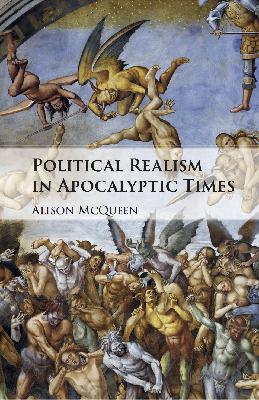
This is the third episode of the End of law podcast. In this episode Tormod Johansen and Jayne Svenungsson talks to Alison McQueen, political scientist working at Stanford University. We discussed her 2018 book Political Realism in Apocalyptic Times. In the book McQueen discusses three important political realists – Niccolò Machiavelli, Thomas Hobbes, and Hans Morgenthau – who all in their respective eras engaged with and in different ways reacted to and used apocalypticism.The first part of the episode is a short introduction by Aaron Goldman of the At the End of the World research programme organising this talk. After that the discussion between McQueen, Svenungsson and Johansen follow, which ranged from the concept of apocalypticism, the dangers and potentials of apocalyptic imaginaries, and different aspects of the relation between religious and secular understandings of politics and apocalypse.A couple of books mentioned in the episode:Hobbes, Thomas Leviathan or The Matter, Forme and Power of a Commonwealth Ecclesiasticall and Civil (1651)McQueen, Alison Political Realism in Apocalyptic Times (Cambridge University Press, 2018)Svenungsson, Jayne Divining History: Prophetism, Messianism and the Development of the Spirit (Berghahn Books, 2016)This podcast is produced by the End of Law research project in collaboration with the At the End of the World research programme. Producer is Joel Kuhlin and the music is by Simon Hansson. If you would like to contact the podcast, you’re welcome to send an email to tormod.otter.johansen@law.gu.se
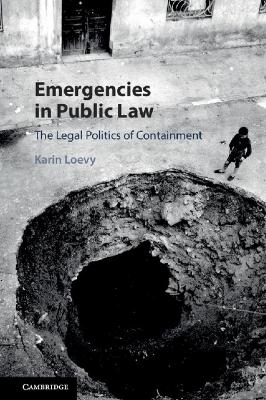
This is the second episode of the End of Law-podcast. In this episode I talked to Karin Loevy about her 2016 book Emergency Powers in Public Law: The Legal Politics of Containment. Karin Loevy is a legal scholar working at the NYU School of Law and a researcher at the Institute for International Law and Justice. She also teaches international law at The New School, New York. Following the themes of her book she works on the theory and history of emergency powers and related topics in comparative and global public law. Lately she has focused on the history of international law in the Middle East in the period leading to the mandate system, focusing on territoriality. I was joined by friend of the show, Przemysław Tacik, assistant professor at the Jagiellonian University in Kraków, Poland and director of the Nomos: Centre for International Research on Law, Culture and Power. Przemek is a philosopher and legal scholar, who has among other topics worked on sovereignty, self-determination and human rights.Our discussion ranged from fundamental theoretical issues to concrete cases and historical events, in the Americas, Europe and Asia. An important issue was the tension between a juridical and a political understanding of emergencies and the interplay between them. This tied into the role of courts and the tendency of deference towards the executive branches. We also covered the potential for theories of emergency in general, the development since the book was published, as well as looking into the future in this time of continued crises and emergencies.Works mentioned or referenced in the episode:Bandopadhyay, S., All is Well: Catastrophe and the Making of the Normal State (Oxford University Press, 2022)Stacey, J., The Constitution of the Environmental Emergency (Hart Publishing, 2018)Dyzenhaus, D. ‘The Politics of the Question of Constituent Power’, in Loughlin M. and Walker, N. ed., The Paradox of Constitutionalism: Constituent Power and Constitutional Form (OUP, 2007) 129-45; Dyzenhaus, D.,‘The Compulsion of Legality’ in Ramraj V.V. ed., Emergencies and the Limits of Legality (Cambridge University Press, 2008).Agamben, G. State of exception. (University of Chicago Press, 2008)This episode was produced by Joel Kuhlin and the music is by Simon Hansson. This podcast is produced by the End of Law research project in collaboration with the At the End of the World research programme.

This is the inaugural episode of the relaunched End of Law-podcast. Tormod Johansen spoke with Mårten Björk about his newly published book The Politics of Immortality in Rosenzweig, Barth and Goldberg : Theology and Resistance Between 1914-1945. Mårten is a theologian and scholar of religion, at the Newman institute in Uppsala, researcher at CTR in Lund, and an associate fellow at Campion Hall in Oxford.Two friends of the podcast joined:Gian Giacomo Fusco who is a lecturer in law at Kent Law School, working on continental philosophy, legal and political theory with a specific emphasis on sovereignty, state of emergency and biopolitics. And Kelsi Ray, who is a PhD candidate at Notre Dame's Medieval Institute, with a project on how Christians in the fourth and fifth centuries coped with bereavment through beliefs about death, resurrection as well as ritual practices. Mårten started out in the episode describing his ownbackground and how it led to the project of the book, as well as its central argument. The discussion then ranged from the meaning of life and immortality to the relation between theology and politics. This podcast is produced by the End of Law research project in collaboration with the At the End of the World research programme. Producer: Joel KuhlinVignette music: Simon Hansson

Our guest on 30 September 2021 was Bruce Rosenstock, professor and director of graduate studies at University of Illinois at Urbana-Champaign, who works in the field of philosophy and religion.
Rosenstocks’s talk is centered around the notion of kinship and slavery in Leviticus and its Nachleben in Black Studies and how it can be used to confront George Bataille’s discussion of sovereignity and law.
Alexandre Kojève is best known for the influential lectures he gave on Hegel to an enthralled audience of French intellectuals including Raymond Aron, Henry Corbin, Jacques Lacan, and Maurice Merleau-Ponty. Aside from these lectures, published in 1947 as Introduction to the Reading of Hegel, Kojéve published relatively little before his death in 1968. Yet, he left over 26 boxes of unpublished material on a variety of topics, from quantum physics and the continuum hypothesis to a major treatise on law called Outline of a Phenomenology of Right (Esquisse d'une phénoménologie du droit). Kojève wrote this treatise (586 pages in the French book edition) in 1943 while living in Vichy France. He expounds in it a comprehensive theory of justice and the universal homogeneous state that promises to usher in the end of history and perhaps of law itself. In my talk, I shall examine some of the central legal features of Kojève's universal and homogeneous state and consider whether Kojève actually affirms that history can be brought to an end through a final legal regime or not. In this respect, Kojève reprises his end of history thesis from the Hegel lectures as well as putting it in question, opposing Hegelian finality to what Kojeve terms Kantian "skepticism" about final ends.Jeff Love is Research Professor of German and Russian at Clemson University. He is the author of The Black Circle: A Life of Alexandre Kojève (Columbia University Press, 2018), Tolstoy: A Guide for the Perplexed (Continuum, 2008), and The Overcoming of History in War and Peace (Brill, 2004). He has also published a translation of Alexandre Kojève’s Atheism (Columbia University Press, 2018), an annotated translation (with Johannes Schmidt) of F.W. J. Schelling’s Philosophical Investigations into the Essence of Human Freedom (State University of New York Press, 2006), and recently a translation of António Lobo Antunes’s novel Until Stones Become Lighter Than Water (Yale University Press, 2019).
Comments

Download from Google Play

Download from App Store
 United States