


 Claim Ownership
Web3 with Sam Kamani
Subscribed: 22Played: 693
Subscribe

© Sam Kamani
Description
"Web 3.0 with Sam Kamani" is all about Web 3 and how it is going to change the world.
If you are interested in learning more about the 4th Industrial revolution then this podcast is for you.
Web 3.0 or Web 3 is often hailed as the technology that will usher in the 4th industrial revolution.
This revolution is going to affect every industry, business, government and person on this planet. Web 3.0 is a collection of technologies that are going to change how we collaborate with each other and interact with our environment.
Let's uncover the opportunities and risks of the new version of Web.
If you are interested in learning more about the 4th Industrial revolution then this podcast is for you.
Web 3.0 or Web 3 is often hailed as the technology that will usher in the 4th industrial revolution.
This revolution is going to affect every industry, business, government and person on this planet. Web 3.0 is a collection of technologies that are going to change how we collaborate with each other and interact with our environment.
Let's uncover the opportunities and risks of the new version of Web.
380 Episodes
Reverse
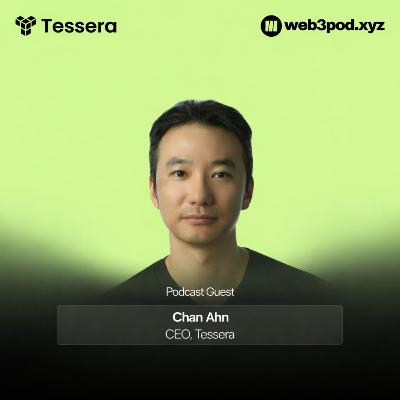
sat down with Chan, founder of Tessera Labs, to explore how they are tearing down the walls around private equity investing. Chan spent over a decade at Goldman Sachs, JP Morgan, and Credit Suisse before doing a PhD in computational finance at Imperial College London. He saw first hand that the best returns in private markets were locked behind accreditation requirements, massive minimum tickets, and years of illiquidity. Tessera is his answer to that. We talk about how they tokenized SpaceX participation rights on Solana, why they chose Chainlink for proof of reserve, how $75 million in trading volume happened in just a few months, and what their next product T-Kalshi means for everyday investors who want exposure to one of the hottest prediction market companies in the US right now. We also get into the legal architecture behind the Cayman SPC structure, why no KYC is intentional and not an oversight, the challenges of building in a regulatory gray zone, and what Chan would tell any founder building in the RWA space today. Nothing mentioned in this podcast is investment advice and please do your own research. It would mean a lot if you can leave a review of this podcast on Apple Podcasts or Spotify and share this podcast with a friend. Be a guest on the podcast or contact us - https://www.web3pod.xyz/--- CONNECT ---Tessera Website: https://tessera.peTwitter/X: https://twitter.com/tesseralabsWeb3 with Sam Kamani: https://www.web3pod.xyz/--- KEY POINTS WITH TIMESTAMPS ---• [00:00] Sam introduces Chan from Tessera Labs and the goal of disrupting the multi-trillion dollar private equity market• [01:03] Chan shares his background across Goldman Sachs, JP Morgan, and Credit Suisse plus his PhD in computational finance at Imperial College• [02:28] The three interlocking problems Tessera solves: access, liquidity, and transparency in private equity• [04:25] A step-by-step walkthrough of how an investor gets exposure to Kalshi private shares through tessera.pe with no KYC and no minimum• [06:34] Why Kalshi's US regulatory access gave it a major revenue advantage over Polymarket• [08:13] Four advantages of tokenized private equity over traditional VC and PE funds including $75 million in T-SpaceX trading volume• [11:13] The two early user groups: crypto-native retail investors and trade professionals in Asia and MENA• [12:34] The hardest parts of bringing real world assets on chain: legal structure, Oracle design, and MPC custody• [14:31] How Tessera uses Chainlink proof of reserve, Cayman SPC legal isolation, and Fireblocks MPC to build trust• [16:29] Why Tessera chose Solana over Ethereum, BASE, and Arbitrum including Token 22 transfer hooks• [18:56] Advice for RWA founders: design for retail-native access first, get legal architecture right before product, and choose your Oracle carefully• [21:53] What Chan would do differently if starting Tessera Labs again today• [24:06] The biggest challenge ahead: navigating a regulatory landscape that recognises the space but has not yet legislated it• [26:25] Plans for staking and using T-tokens as collateral for borrowing and lending yield• [27:58] Why Tessera will stay focused on late-stage pre-IPO names for now and the opportunity around IPO lockup periods• [30:12] Chan's three asks: users to try tessera.pe, secondary liquidity partners to get in touch, and strategic investors who share the vision
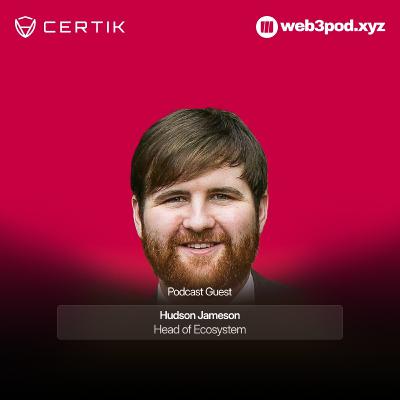
I sat down with Hudson Jameson, Head of Ecosystem at CertiK, to talk about the future of blockchain security. We covered everything from his early days mining Bitcoin in his dorm room to coordinating Ethereum upgrades and now leading ecosystem growth at the world's largest blockchain security audit firm. Hudson dropped an exclusive announcement about CertiK's upcoming AI Auditor tool that could change how developers approach smart contract security. We also discussed why institutional adoption feels boring, what makes great developer communities, and why he thinks Arbitrum is doing things right. If you're building in Web3 or just curious about where this space is headed, this conversation is packed with insights you won't want to miss. --- CONNECT ---CertiK Website: https://www.certik.comCertiK Twitter: https://x.com/CertiK--- KEY POINTS WITH TIMESTAMPS ---• [01:06] Hudson's origin story mining Bitcoin in college and falling down the Ethereum rabbit hole• [02:15] What makes CertiK different - focusing on small builders and first-time developers, not just high-profile clients• [05:07] EXCLUSIVE: CertiK announces AI Auditor tool for automated code security scanning• [08:02] Lessons from coordinating Ethereum upgrades and building governance frameworks from 2016-2021• [09:45] Why Arbitrum is winning the L2 wars with strong governance and community focus• [11:09] The tension between institutional adoption (boring but inevitable) and the original Web3 ethos• [14:31] What great developer communities do differently - they don't take themselves too seriously• [18:26] Practical security tips: 100% test coverage and documentation are non-negotiable• [21:30] How decentralized blockchains handle security incidents without a pause button• [24:34] The quantum computing debate - why experts can't agree on timeline or solutions• [28:13] AI Auditor will focus on Web3 apps and smart contracts, making security accessible• [29:50] What's next for Web3 - agents, agentic payments, and waiting for the third big thing after DeFi and NFTsDisclaimer:Nothing mentioned in this podcast is investment advice and please do your own research. It would mean a lot if you can leave a review of this podcast on Apple Podcasts or Spotify and share this podcast with a friend. Be a guest on the podcast or contact us - https://www.web3pod.xyz/
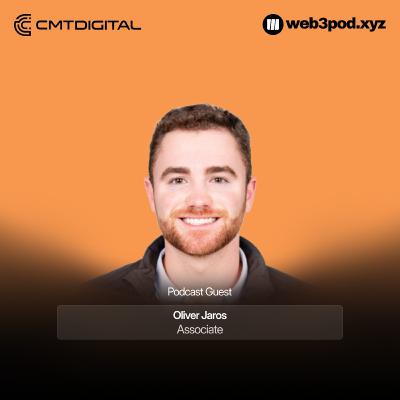
I sat down with Oliver from CMT Digital to discuss what they look for in crypto founders before investing. We covered their unique approach as both a trading firm and VC, the intersection of AI and blockchain, why stablecoins will win for micropayments, and Oliver's contrarian take that crypto DApps will become invisible. CMT has been in crypto for nearly a decade and manages four funds focused on pre-seed to Series A investments. If you're building in stablecoins, agentic payments, tokenization, or crypto infrastructure, this episode is packed with insights on what VCs actually want to see. Key Points with timestamps• [00:00] Introduction to CMT Digital and Oliver's role• [00:04:25] What sets CMT Digital apart from other Web3 VCs• [00:06:00] CMT's three pillars: trading, private equity, and venture• [00:10:34] CMT focuses on pre-seed to Series A stage investments• [00:11:10] What outlier founders do differently when approaching VCs• [00:13:33] The intersection of AI agents and blockchain payments• [00:16:00] Why agents will use both credit cards and stablecoins• [00:17:07] Micropayments use case: paying fractions of a cent with stablecoins• [00:20:00] Sam breaks down the 6% cost of Stripe vs. <0.03% with stablecoins• [00:22:08] Trends in stablecoin adoption and tokenization of real world assets• [00:25:44] Using blockchains in boring but inefficient industries• [00:26:55] Founder anxiety about the fast pace of AI and crypto• [00:29:26] Why SaaS moats are distribution and network effects, not tech• [00:32:00] How CMT uses AI internally for deal sourcing and analysis• [00:36:16] Oliver's contrarian opinion: crypto DApps will become invisible• [00:39:26] Not every project needs a token - when tokens make senseConnect CMT Digital Website: https://cmtdigital.com https://x.com/CMT_Digitalhttps://www.linkedin.com/company/cmt-digital-ltd Be a guest on the podcast or contact us - https://www.web3pod.xyz/DisclaimerNothing mentioned in this podcast is investment advice and please do your own research. It would mean a lot if you can leave a review of this podcast on Apple Podcasts or Spotify and share this podcast with a friend.

I sat down with Mehdi Lebbar, founder of yo.xyz (Yo Labs), to talk about how they're revolutionizing yield in DeFi. After raising over $10 million, Mehdi and his team built the Exponential Risk Framework—the best predictor of DeFi pool safety in the world. Pools rated A or B have a 0% probability of losing your money. We dive into how they assess risk across protocols, chains, and assets, why AI agents aren't ready for serious financial products, and why crypto offers freedom that AI never will. Mehdi shares his journey from traditional finance at Credit Suisse and the World Bank to discovering Bitcoin as the ultimate inflation hedge. We also discuss how DeFi is giving the unbanked access to savings, why Dubai's 'bubble' moments create opportunity, and what's next for multi-chain vaults. If you care about making DeFi accessible, safe, and truly decentralized, this episode is for you. Key Points with timestamps• [01:31] How Mehdi discovered Bitcoin in 2017 as a levered inflation hedge for his portfolio• [05:03] The gap in DeFi yield: too complicated and too risky for most people• [06:22] Exponential Risk Framework: A and B rated pools have 0% probability of loss• [07:04] Mapping DeFi as a risk graph with 100+ questions per protocol• [10:05] Building protocol-agnostic, chain-agnostic vaults for seamless yield• [14:30] Why algorithms beat curators and AI black boxes in financial products• [19:42] Founder lesson: take the ego out, sustain pain, stay optimistic• [21:43] Why crypto empowers the many while AI empowers the powerful• [24:14] Crypto is freedom—AI is control• [26:23] Real stories: how crypto enabled financial freedom during Dubai tensions• [30:26] Yo.xyz roadmap: ubiquitous multi-chain vaults and vaults-as-a-serviceConnect with YOhttps://www.yo.xyz/https://x.com/yieldhttps://t.me/yo_protocolDisclaimerNothing mentioned in this podcast is investment advice and please do your own research. It would mean a lot if you can leave a review of this podcast on Apple Podcasts or Spotify and share this podcast with a friend. Be a guest on the podcast or contact us - https://www.web3pod.xyz/
In this episode, I sit down with Renee Davis from OpenMatter to explore the intersection of AI agents and blockchain infrastructure. We discuss why 51% of internet traffic is already agents, the critical security vulnerabilities in tools like OpenClaw, and how multi-party computation (MPC) enables privacy-preserving machine learning. Renee explains why crypto is essential for the agent economy—hint: credit cards can't handle micro-transactions like a two-cent payment. We also dive into OpenMatter's three pillars: masked computing, MatterML, and DataVisor, plus what's coming in the next 12 months. If you're building with AI agents or curious about the convergence of Web3 and AI, this conversation is packed with insights. --- CONNECT ---OpenMatter: https://onboard.openmatter.network--- KEY POINTS WITH TIMESTAMPS ---• [01:42] Renee's journey from enterprise analytics to DAOs and AI• [03:11] AI and NLP have been around for decades—longer than most realize• [04:42] OpenMatter solves agent hosting, ZK safety checks, and output compliance• [08:17] Multi-party computation (MPC) explained: collaborative computing without sharing raw data• [10:08] 51% of internet traffic is already agents or bots• [14:42] Why agents need crypto: credit cards can't do micro-transactions like X402 can• [16:29] DataVisor: one-click agent deployment with OpenClaw, IronClaw, ZeroClaw templates• [19:17] Security guardrails for agents are still underdeveloped• [21:52] OpenMatter is built on lattice-based cryptography—post-quantum safe• [24:35] AI startups are in a bubble; many hinge on token prices from Claude or OpenAI• [28:03] Roadmap: mainnet launch, MPC updates, MatterML SDK release, and hackathons---DISCLAIMER---Nothing mentioned in this podcast is investment advice and please do your own research. It would mean a lot if you can leave a review of this podcast on Apple Podcasts or Spotify and share this podcast with a friend. Be a guest on the podcast or contact us - https://www.web3pod.xyz/
In this episode, I sit down with Tony from Sumex, an OG who's been in crypto since 2016. He shares how they're tackling one of crypto's biggest problems: fragmentation. From managing 20 browser tabs to trade across exchanges, to juggling wallets across different chains, crypto is a mess for most users. Tony walks through how Sumex aggregates CEXs, DEXs, DeFi protocols, and analytics into one intuitive platform. He shares lessons from raising seven figures, hitting $100M in trading volume in just four weeks, and why simplicity beats feature bloat every time. We also dive into what's happening in 2026, why this cycle topped on apathy, and what trends like RWAs and prediction markets mean for retail adoption. --- CONNECT ---Sumex Website: https://sumex.io/Sumex Platform: https://app.sumex.io/Sumex on Twitter/X: https://twitter.com/sumex--- KEY POINTS WITH TIMESTAMPS ---• [01:21] How Tony went from TradFi CFD and forex brokers into crypto in 2017• [04:33] Running an ICO roadshow in 2018 and raising $12M during the boom• [06:16] The core problem Sumex solves: crypto tribalism, fragmentation, and steep learning curves• [07:17] Who Sumex is for: active crypto users across trading, investing, and DeFi• [10:51] How they focused on building the best trading terminal first before expanding• [15:25] Biggest technical challenge: every CEX and DEX has different APIs and documentation• [18:45] Key trends in 2026: RWAs finally have institutional support and legal frameworks• [22:35] Why this cycle topped on apathy and didn't bring in fresh retail blood like NFTs did• [28:56] The feature Tony is most hyped about: the connection manager that aggregates everything• [32:36] Four weeks in: 30,000 users, $100M in futures volume, and what's next• [34:37] Sumex raised seven figures in pre-seed and is looking for strategic investorsDisclaimerNothing mentioned in this podcast is investment advice and please do your own research. It would mean a lot if you can leave a review of this podcast on Apple Podcasts or Spotify and share this podcast with a friend. Be a guest on the podcast or contact us - https://www.web3pod.xyz/

I sat down with Jonathan Claudius from Asymmetric Research to talk about the security landscape in Web3. We covered the new vulnerabilities emerging from LLMs and AI agents, the easy wins every founder should implement today, and why security can't be confined to a two-week audit window. Jonathan shares real examples from their work with the Interchain Foundation, explains how to balance shipping speed with security rigor, and gives practical advice on building defense in depth. If you're building in this space, this conversation will change how you think about security. • [01:03] How Asymmetric Research started from Jump Crypto and their shift to commercial engagements• [04:52] Real incident: Preventing a DPRK hacking group infiltration at Interchain Foundation• [08:18] New security threats from LLMs and AI agents - the offense vs defense arms race• [10:08] Bug bounty programs seeing high-quality submissions from LLM-enabled attackers• [13:46] Easy wins: Branch protection, security keys, linting, and static analysis tools• [16:24] Balancing speed and security through defense in depth strategies• [18:35] OpenClaw and AI agents creating new attack vectors like prompt injection• [22:14] Laptop security basics: MDM and EDR solutions every team needs• [25:19] Why Asymmetric focuses on human connection over productization• [29:14] Founder lessons: Building finance and BD systems earlyAsymmetric Research Website: https://asymmetric.reAsymmetric Research Careers: https://asymmetric.re/careerTwitter/X: https://x.com/asymmetric_reNothing mentioned in this podcast is investment advice and please do your own research. It would mean a lot if you can leave a review of this podcast on Apple Podcasts or Spotify and share this podcast with a friend. Be a guest on the podcast or contact us - https://www.web3pod.xyz/
In this episode, I sit down with William Quigley, co-founder of WAX and co-founder of Tether. We go deep into what is actually happening in crypto right now. We talk about stablecoins, gaming, startup strategy, market cycles, and why founders need insight more than hype. William shares hard-earned lessons from building early crypto products and explains where real value may come from next.This is a must-listen for founders, builders, and anyone trying to understand where Web3 is heading. We unpack why stablecoins matter, why most internal innovation fails, why altcoin speculation looks weaker this cycle, and what kinds of businesses still have a real shot at winning.Key points00:00 — Intro to the episode and why this conversation matters for founders01:24 — William’s path into crypto through virtual item trading in gaming04:23 — Why gaming platforms resist asset portability and user ownership05:26 — Why blockchain gaming adoption has been slower than expected07:26 — Prediction markets, speculation, and why they are still niche10:31 — How Tether started and the problem stablecoins were built to solve13:28 — Why Tether’s model worked and why algorithmic stablecoins failed17:07 — The future of stablecoins and the three models William sees winning20:30 — Will non-USD stablecoins grow over time?23:35 — Why FX fees are massive and how stablecoins can reduce that pain27:06 — What recent crypto events reveal about institutional vs retail interest29:14 — Why this cycle feels different and why altcoin season never fully arrived34:32 — Sam’s view on AI helping chains build actual apps, not just more infra37:42 — Why most internal innovation fails without real market insight44:28 — How to think about fear, greed, and crypto sentiment46:38 — If William started again today, what kind of business would he build?50:26 — Sam on AI, quantum computing, and selling tools in the next tech wave54:22 — Why timing matters as much as the idea itself56:09 — Institutional capital, long-term adoption, and what may come nextDisclaimerNothing mentioned in this podcast is investment advice and please do your own research.It would mean a lot if you can leave a review of this podcast on ApplePodcasts or Spotify and share this podcast with a friend.Be a guest on the podcast or contact us - https://www.web3pod.xyz/
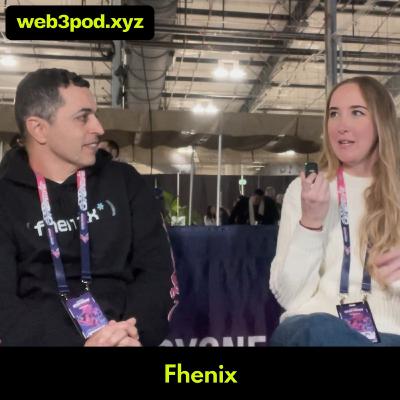
I sat down with Guy and Kate from Fhenix to talk about something that's been missing from crypto since day one: real privacy. They're building a privacy co-processor using Fully Homomorphic Encryption (FHE) that lets you compute over encrypted data without ever exposing it. We covered why privacy is finally getting product-market fit, how institutions need confidentiality for payments and DeFi, and why AI agents will need private transactions. Guy shared his journey from Intel's Trusted Execution Environments to building Fhenix, and Kate explained why encryption should be the default, not an afterthought. We also talked about their shift from L2 to co-processor, their integration with Ethereum, Arbitrum, and Base, and what's next for confidential smart contracts. If you've ever wondered why everything in crypto is public by default and how that's about to change, this episode is for you. CONNECTFhenix Website: https://fhenix.ioFhenix Twitter/X: https://twitter.com/fhenixioWeb3 with Sam Kamani - Be a Guest: https://www.web3pod.xyz/KEY POINTS Guy's background at Intel building Trusted Execution Environments and his transition to founding FhenixKate's journey from cybersecurity engineering to crypto and why she sees it as the new Wild WestWhy Fhenix pivoted from building an L2 to a privacy co-processorWhat Fully Homomorphic Encryption (FHE) is and how it enables computation over encrypted dataPrivacy use cases in payments, DeFi, dark pools, and sealed-bid auctionsWhy institutional adoption requires confidentiality, not just anonymityHow AI is improving FHE performance and lowering barriers to entry for builders• [00:00] The importance of private agent-to-agent payments in the AI era• [00:00] Why developers should learn fundamentals even in the age of AI coding tools• [00:00] Fhenix's roadmap: faster cryptography, more chain integrations, and enterprise partnerships• [00:00] Their incubator program and call for builders to experiment with privacy-first smart contractsDisclaimer:Nothing mentioned in this podcast is investment advice and please do your own research. It would mean a lot if you can leave a review of this podcast on Apple Podcasts or Spotify and share this podcast with a friend. Be a guest on the podcast or contact us - https://www.web3pod.xyz/
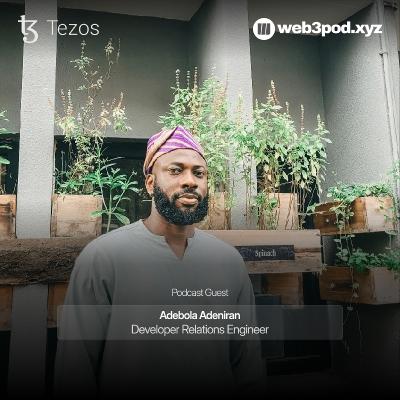
I sat down with Adebola from the Tezos Foundation at ETH Denver to explore what's new in the Tezos ecosystem. We covered Etherlink, their EVM Layer 2 rollup that brings Solidity developers into the Tezos world. We talked about Uranium.io, their tokenized uranium project that gives retail investors access to alternative assets. And we went deep on AI agents, how they're changing development, and why now is the perfect time to be a builder. If you're interested in Layer 2s, real-world assets, or AI-powered development, this conversation is packed with insights. CONNECTUranium.io: https://uranium.io Tezos Foundation: https://tezos.foundation Etherlink: https://etherlink.com Web3 with Sam Kamani: https://www.web3pod.xyz/ Tezos Twitter/X: https://twitter.com/tezos KEY POINTSIntroduction to Tezos and Adebola's work at the FoundationEtherlink: Tezos's EVM Layer 2 rollup for Solidity developersUranium.io: Tokenizing uranium as an alternative asset class for retail investorsWhy RWA adoption beyond stablecoins has been limited (liquidity, understanding, accessibility)What makes Etherlink unique and why EVM compatibility mattersDeveloper adoption in crypto and the constant developer count problemHow AI agents are changing software development and blockchain buildingAgent-to-agent payments and the future of autonomous transactionsBuilding an AI asset manager using n8n, Claude, and workflow automationThe future of apps is chats: AI agents managing your entire financial lifeWhat Tezos is looking for: builders, institutions, and family officesDisclaimerNothing mentioned in this podcast is investment advice and please do your own research. It would mean a lot if you can leave a review of this podcast on Apple Podcasts or Spotify and share this podcast with a friend. Be a guest on the podcast or contact us - https://www.web3pod.xyz/
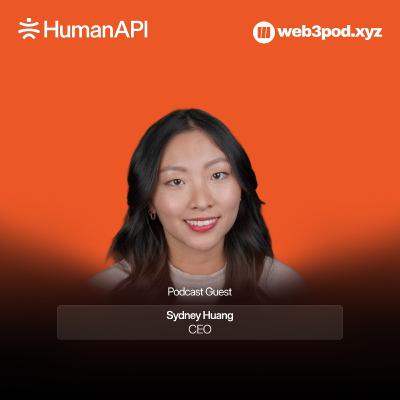
I sat down with Sydney Huang from Human API to explore a completely novel concept—AI agents hiring humans, not the other way around. We dive into how they're solving the last mile problem for AI agents, why data collection is their first focus, and how you can actually get paid for contributing voice data and other tasks. Sydney shares her journey from buying Ethereum in 2017 to building Eclipse (a Solana VM L2 on Ethereum) to now creating an agent-native marketplace. We discuss the challenges of building a two-sided marketplace, the growing demand for AI training data, and why now is the perfect time to build in this space. KEY POINTS WITH TIMESTAMPS• [00:00] Introduction to Human API and the concept of AI agents hiring humans• [02:30] Sydney's journey from buying ETH in 2017 to working in VC to building in crypto full-time• [04:15] Eclipse explained: Building a Solana VM L2 on Ethereum and the modular blockchain thesis• [06:45] The last mile problem for AI agents and why human tasks are still needed• [09:20] How Human API differs from traditional workflow automation tools• [11:00] Current use cases: Conversational audio data collection for training voice AI• [14:30] Future expansion into health wearables data and other data types• [18:45] Why people are willing to work for AI agents and contribute data• [21:00] Building a better UX than Fiverr and Upwork with reputation systems• [25:15] The chicken-and-egg challenge of balancing supply and demand• [28:30] Why now is the perfect time to build in the AI data space• [31:00] Roadmap: App launch and making the agent experience seamless• [32:45] How to become a contributor at thehumanapi.comCONNECTHuman API Website: https://thehumanapi.comSydney Huang LinkedIn: https://linkedin.com/in/sydney-huangEclipse Website: https://eclipse.xyzWeb3 with Sam Kamani: https://www.linkedin.com/in/samkamani/DisclaimerNothing mentioned in this podcast is investment advice and please do your own research. It would mean a lot if you can leave a review of this podcast on Apple Podcasts or Spotify and share this podcast with a friend. Be a guest on the podcast or contact us - https://www.web3pod.xyz/
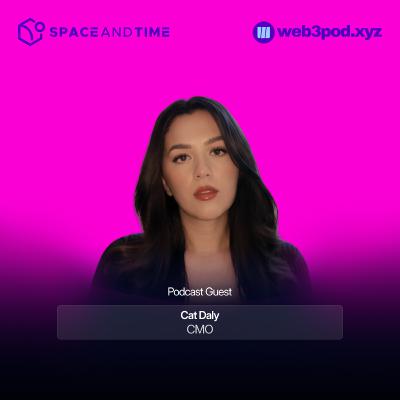
I sat down with Kat from Space and Time to talk about what real institutional adoption actually looks like. While crypto Twitter feels bearish, banks like JP Morgan and Goldman Sachs are hiring entire teams focused on digital assets. Space and Time has already onboarded over 100,000 students in Southeast Asia for verifiable education credentials, shipped a zero-knowledge proof for databases, and is working with major institutions on tokenized assets and compliant stablecoin reward distribution. We dive into AI-powered vibe coding, why surviving the bear market matters more than anything else, and why the next wave of builders will have access to on-chain data like never before. --- CONNECT ---Space and Time: https://spaceandtime.io/https://www.linkedin.com/company/space-and-time-db/https://discord.com/invite/spaceandtimeDBTwitter/X - Space and Time: https://twitter.com/SpaceandTimeDB--- KEY POINTS WITH TIMESTAMPS ---• [00:00:00] Space and Time has onboarded over 100,000 students in Southeast Asia for verifiable education credentials• [00:02:00] Major university partnerships expanding in both Southeast Asia and the US• [00:03:00] Dream Space - AI vibe coding platform allowing non-developers to build apps and smart contracts• [00:04:00] Institutional adoption is the biggest growth area - stablecoin issuers, tokenized assets, major banks• [00:06:00] Despite bearish sentiment on crypto Twitter, institutions like JP Morgan, US Bank, Fidelity, and Goldman Sachs are more bullish than ever• [00:07:00] Banks are hiring entire teams of digital asset specialists, not just single roles• [00:09:00] 98% of stablecoin market is USDT/USDC, but new categories will emerge as adoption expands• [00:11:00] Marketing in crypto changes dramatically between bull and bear markets - focus on real value proposition and real customers• [00:14:00] Space and Time invented a patented zero-knowledge proof specifically for databases, making data computations fast and efficient• [00:18:00] Nearly $2 trillion of institutional capital waiting on the sidelines to enter crypto over next 2-5 yearsDisclaimerNothing mentioned in this podcast is investment advice and please do your own research. It would mean a lot if you can leave a review of this podcast on Apple Podcasts or Spotify and share this podcast with a friend. Be a guest on the podcast or contact us - https://www.web3pod.xyz/

I sat down with Dewey and Igor from Function Space at ETHDenver to discuss how they're building something fundamentally different in prediction markets. They're not creating another venue like Polymarket or Kalshi. Instead, they're building the primitive layer underneath - enabling developers to create numerical range forecasting markets for anything from Tesla's quarterly revenue to Apple's iPhone sales. We explore why they believe prediction markets can become a superset of all financial instruments, the challenges of building in such a competitive space, and why being at the protocol level might be the smartest play. If you're interested in the infrastructure powering the next generation of prediction markets, this conversation reveals what's happening beneath the surface. • [00:00] Function Space is building the primitive layer for prediction markets, not another venue• [02:00] The team's background from BankSA and their transition into prediction markets• [03:00] Function Space enables numerical range forecasting vs binary yes/no contracts• [06:00] The business model centers on native token demand for market resolution• [09:00] Emerging trends: Pre-ICO TGE markets and yield hedging for DeFi protocols• [13:00] Why building at the protocol level consolidates liquidity better than fragmented venues• [18:00] Prediction markets becoming primitives themselves - like Condo Finance using positions as collateral• [21:00] The challenge of being novel: communicating concepts that don't exist yet• [23:00] Prediction markets divorced from crypto cycles - volumes up even when crypto's down• [26:00] Actively seeking builders and advanced traders for their private trial programConnect with FunctionSpace:https://www.functionspace.dev/ https://x.com/functionspaceHQhttps://t.me/+pUEOlfRhHspiNmRlDisclaimer:Nothing mentioned in this podcast is investment advice and please do your own research. It would mean a lot if you can leave a review of this podcast on Apple Podcasts or Spotify and share this podcast with a friend. Be a guest on the podcast or contact us - https://www.web3pod.xyz/

In this episode, I speak with Phil from Augur about why prediction markets still matter and why decentralization in crypto still matters even more. We unpack Augur’s long history as one of the earliest projects in crypto, why it lost momentum during high-fee Ethereum days, and why the team believes now is the right time to return. Phil explains how Augur is rebuilding around a modular oracle, how prediction market resolution really works, and why security at the oracle layer is the real game.We also dive into Augur’s new white paper, the idea of making truth profitable, and how their escalation game and algorithmic fork are designed to make manipulation expensive. This is a deep but important conversation for anyone building in Web3, following prediction markets, or thinking about the future of decentralized infrastructure.Key points00:01:00 — Augur’s early historyAugus explains that Augur was one of the earliest crypto projects, the first ICO, and the first ERC20 token. He also shares how it helped bring prediction markets and decentralized oracles into crypto.00:02:00 — Why Augur lost momentumAugus talks about how DeFi summer and high Ethereum L1 gas fees made Augur harder to use, especially for smaller wagers.00:03:30 — What crypto got wrong about decentralizationWe discuss how many projects promised to decentralize later, but often never followed through. Augus explains why Augur’s original design stood apart.00:04:30 — The revival of AugurAugus explains how leftover treasury funds were used to restart development and how the new foundation was formed in 2025 to continue Augur’s mission.00:06:30 — What prediction market users are really betting onAugus explains that users are not only betting on an outcome. They are also trusting how that outcome will be resolved.00:08:30 — Why resolution design mattersWe break down why trusting a multisig or centralized team becomes risky when prediction markets get large.00:09:30 — Augur’s oracle designAugus explains that Augur’s core innovation is a decentralized oracle that allows open participation in market resolution.00:12:00 — Making truth profitableAugus explains Augur’s core design principle: align incentives so honest participants make money by supporting the truth.00:15:30 — The limit of escalation gamesAugus explains that escalation alone is not enough because a very large attacker could still outspend everyone else.00:16:00 — Augur’s algorithmic forkAugus introduces Augur’s key innovation: an algorithmic fork that forces dishonest attackers into the wrong universe.00:17:00 — How the fork works in practiceAugus explains how REP holders migrate into the universe they believe will retain economic value, which pushes honest users toward the truthful outcome.00:19:30 — How attackers lose moneyWe discuss how attackers may win a specific market but still lose overall because their tokens become worthless in the false universe.00:21:15 — How Augur makes moneySam asks about the business model, and Augus explains that Augur is not run for profit. Fees stay inside the protocol to pay for research and participation.00:24:00 — The next 12 months for AugurAugus shares that Augur is separating the oracle from the prediction market front end and focusing on oracle-as-a-service.00:26:00 — What Augur is looking forAugus says they are not fundraising. Instead, they want strong developers, aligned talent, and partnerships with prediction market platforms.Connect with Augurhttps://augur.net/ https://augur.net/blog/the-augur-lituus-whitepaper/https://x.com/AugurProjectDisclaimerNothing mentioned in this podcast is investment advice and please do your own research.It would mean a lot if you can leave a review of this podcast on ApplePodcasts or Spotify and share this podcast with a friend.Be a guest on the podcast or contact us - https://www.web3pod.xyz/
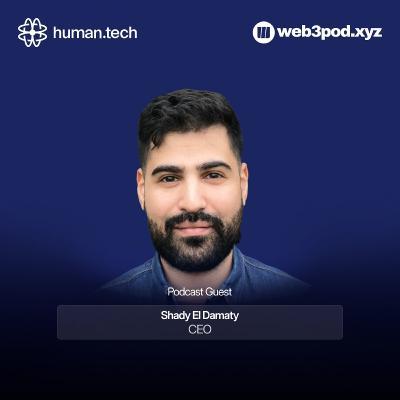
I sat down with Shady from HUMAN.TECH during Consensus Week in Hong Kong. We talked about how he entered Web3 through neuroscience, why HUMAN.TECH is focused on putting humans at the center of technology, and what digital rights should look like in an AI-driven world. This episode goes deep into self custody, decentralized identity, wallet infrastructure, sustainable token economies, and why timing matters so much when building in Web3.We also explored what it takes to build products that last. Shady shared how HUMAN.TECH thinks about revenue, long-term incentives, and real utility beyond hype. We also discussed AI agents, identity delegation, and why founders need to answer one simple question: why does what they are building actually matter for the world?Key pointsIntro from Consensus Week in Hong Kong and welcome to Shady from HUMAN.TECHHow Shady entered Web3 through a neuroscience data-sharing problemDiscovering IPFS and the path into decentralizationWhy Holonym evolved and how HUMAN.TECH was bornBuilding technology with digital rights embedded by designWhy sustainability is still one of Web3’s biggest problemsThe gap between crypto hype and real-world utilityHow HUMAN.TECH plans to monetize identity proofs and wallet infrastructureCreating sustainable economic loops through node staking and network demandWhy self custody is the guiding star for HUMAN.TECHHow AI changes the conversation around ownership, identity, and private keysA future where AI agents may need delegated human identityWhy timing matters in startups and how to tell if a market is readyWhy crypto is still early, especially for self custodyThe next 12 months for HUMAN.TECH and the upcoming token launchWhat developers can build today with HUMAN.TECH and WAPThe vision for easier multichain wallet experiencesThe one question every Web3 founder should be askedConnect https://www.linkedin.com/in/shadyeldamaty/ https://human.tech/https://x.com/humntech https://linktr.ee/human.tech DisclaimerNothing mentioned in this podcast is investment advice and please do your own research.It would mean a lot if you can leave a review of this podcast on ApplePodcasts or Spotify and share this podcast with a friend.Be a guest on the podcast or contact us - https://www.web3pod.xyz/
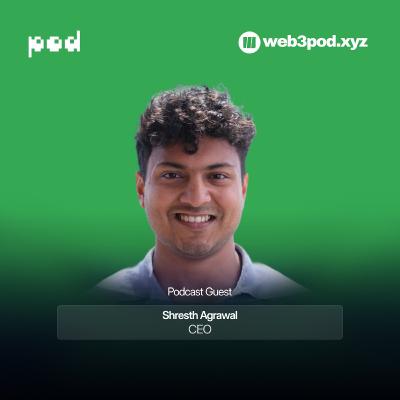
In this episode, I sit down with Shresth Agrawal, co-founder of Pod Network, to unpack why the world needs yet another Layer 1.We go deep into MEV, front-running, and why today’s blockchain markets are still unfair. Shresth explains how Pod is building a purpose-built L1 designed for high-performance, MEV-free markets. We break down how auctions replace traditional transaction ordering, how Pod can process 300,000 orders per second, and why sub-second settlement changes everything.We also talk about product-market fit in Web3. Are payments and markets the only real use cases? What can founders learn from Ethereum, Hyperliquid, and newer L1s? And what’s Pod’s go-to-market plan?If you care about fair markets, decentralized finance, or the future of on-chain trading, this episode is for you.🔑 Key Learnings (with timestamps)00:57 – Shresth’s crypto journey. From Bitcoin whitepaper to building consensus systems.02:01 – Why consensus innovation still matters in 2026.04:23 – What is Pod Network? A purpose-built L1 for MEV-free markets.06:16 – What is MEV? Simple explanation with real trading examples.11:32 – How Pod removes ordering where it doesn’t matter.14:36 – 300,000 orders per second. Sub-second confirmations explained.16:51 – Why Pod focused only on markets. The power of niche L1s.18:21 – Trade-offs: Less general-purpose, more performance.22:36 – Go-to-market strategy for a new L1.24:25 – Users vs builders: The real growth engine.27:21 – The biggest ask: Early user feedback.28:20 – Do only payments and markets have real product-market fit in Web3?32:18 – Why instant settlement will disrupt traditional finance.Connect with POD Networkhttps://pod.network/ https://x.com/poddotnetwork https://discord.com/invite/ZTFERarfnm⚠️ DisclaimerNothing mentioned in this podcast is investment advice and please do your own research.It would mean a lot if you can leave a review of this podcast on ApplePodcasts or Spotify and share this podcast with a friend.Be a guest on the podcast or contact us - https://www.web3pod.xyz/
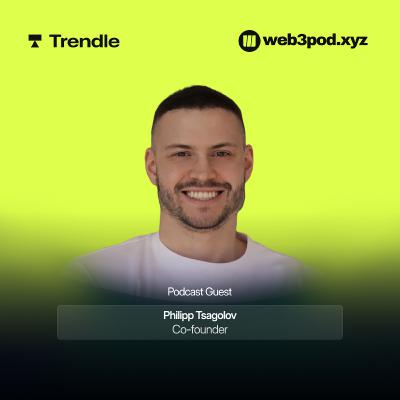
Prediction markets are having a big moment. Platforms like Polymarket and Kalshi have brought them into the spotlight. But most prediction markets still follow a simple format: a binary outcome. Yes or no. Win or lose.In this episode, I sit down with Philip from Trendle.fi to explore a new approach. What if prediction markets were not just about outcomes? What if you could actually trade attention around topics, trends, and people?Philip explains how Trendle measures conversations across platforms like Reddit, YouTube, and X to create an attention index. Traders can then long or short that index depending on whether they think the topic will gain or lose traction.We also talk about how the 2024 U.S. elections boosted prediction markets, why peer-to-peer models may outperform traditional bookmakers, and why the next wave of innovation will come from new market mechanics rather than copying existing models.If you’re interested in Web3 innovation, market design, or the future of prediction markets, this episode is for you.Key LearningsPrediction markets are entering the mainstreamPlatforms like Polymarket and Kalshi have introduced thousands of users to prediction markets, especially during major political events like the 2024 U.S. elections.Prediction markets have existed for decadesBetting on future outcomes is not new. From horse racing to sports betting, humans have always tried to predict the future and place bets on it.Peer-to-peer markets may outperform bookmakersTraditional bookmakers take on risk when setting odds. Peer-to-peer markets allow users to trade directly with each other, often resulting in better pricing and reduced risk for the platform.Trendle introduces a new concept: the attention indexInstead of predicting outcomes, Trendle measures how much attention a topic receives online and turns that attention into a tradable asset.Social media data powers the attention indexTrendle gathers data from Reddit, YouTube, and X to measure how often people discuss specific topics and updates the index frequently.Attention itself can become a marketUsers can long or short topics depending on whether they think the conversation around them will grow or fade.AI agents are already trading prediction marketsSome traders are building bots that detect price discrepancies across platforms and use arbitrage strategies.Trendle’s strategy starts with crypto communitiesThe initial go-to-market strategy focuses on crypto traders and communities before expanding to broader cultural topics like celebrities and major trends.Education will be a major challengeBecause the attention index is a new concept, helping users understand how it works will be a key focus.Trendle is currently fundraising and exploring partnershipsThe team is looking to collaborate with communities, builders, and investors as they scale the platform.Connect with Trendlehttps://trendle.fi/https://x.com/trendlefi DisclaimerNothing mentioned in this podcast is investment advice and please do your own research.Finally, it would mean a lot if you can leave a review of this podcast on ApplePodcasts or Spotify and share this podcast with a friend.Be a guest on the podcast or contact us - https://www.web3pod.xyz/
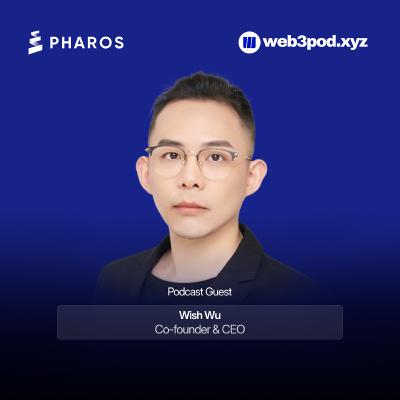
I recorded this episode live in Hong Kong with Wish Wu, Co-Founder and CEO of Pharos Network.We dive deep into what it really takes to build next-generation blockchain infrastructure.Pharos is an EVM-compatible Layer 1 hitting 20,000 TPS on testnet. But speed is not the real story. The real story is their focus on connecting Web2 and Web3. Not just users. But capital. Assets. Institutions.Wish shares his journey from building AntChain at Ant Group to launching Pharos. We talk about tokenizing real-world assets, institutional adoption, product-market fit, and why new Layer 1s must stop copying Ethereum.If you're a founder building in Web3, this episode is essential listening.Key LearningsWhy Hong Kong is regaining momentum as a crypto hub.What Pharos Network is building and why 20K TPS matters.Wish’s background at Ant Group and building AntChain at scale.Tokenizing new energy assets and institutional funds.Why most new Layer 1s fail without product-market fit.The rise of purpose-built chains and niche-focused infrastructure.Why speculative crypto alone cannot sustain adoption.The vision for Pharos over the next five years.Launching a VC fund and incubator to grow the ecosystem.Fundraising advice: Stop copying. Find real product-market fit.Connecthttps://www.linkedin.com/in/wishlonger/https://www.pharos.xyz/https://www.linkedin.com/company/pharosnetwork/https://x.com/pharos_network DisclaimerNothing mentioned in this podcast is investment advice and please do your own research.It would mean a lot if you can leave a review of this podcast on Apple Podcasts or Spotify and share this podcast with a friend.Be a guest on the podcast or contact us - https://www.web3pod.xyz/

In this episode, I sit down with Kenneth Shek from Animoca during Consensus Week in Hong Kong.We talk about what it really takes to drive mass adoption in Web3. Not hype. Not narratives. Real users.Kenneth shares how Moca Network is building the identity layer for the future of programmable money. We go deep into AI-native infrastructure, stablecoins, loyalty systems, and why distribution is the real moat.We also discuss why most Web3 projects struggle with adoption, what Web2 got right, and how AI agents will reshape commerce by 2026.If you care about identity, payments, AI, or building the next killer app in crypto, this episode is for you.Key LearningsKenneth’s journey from startups, AI, and Accenture to AnimocaWhy identity is the missing layer for stablecoins and AI agentsWhy blockchain hasn’t hit mass adoption yetThe biggest lesson from talking to enterprise customersAIR: Account, Identity, Reputation explainedWhy one-click UX matters more than decentralizationAI agents replacing front-ends and changing product designRegulatory fragmentation and global crypto challengesWhy distribution beats building another “killer app”Stablecoins, RWA, and the future of programmable loansIf starting today: build AI-agent native from day oneHiring engineers, fintech builders & strategic partnersConnect with Mocahttps://moca.network/enhttps://x.com/Moca_Networkhttps://t.me/MocaverseCommunityhttps://www.linkedin.com/in/ks20/ DisclaimerNothing mentioned in this podcast is investment advice and please do your own research.It would mean a lot if you can leave a review of this podcast on Apple Podcasts or Spotify and share this podcast with a friend.Be a guest on the podcast or contact us - https://www.web3pod.xyz/
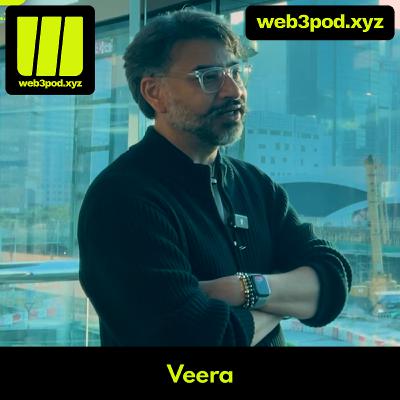
I recorded this episode live at ConsenSys in Hong Kong with Sukdeep Bhogal, Founder of Veera.We dive deep into how Veera is building a full-service Web3 neobank. Their goal is simple. Make crypto easy enough for anyone to use. Even your mom.Sukdeep shares how they raised over $10M. How they plan to onboard the next 100 million users. And why user experience matters more than flashy infrastructure.We talk about tokenized equities, gold and silver on-chain, credit scores in crypto, and why community beats paid marketing.If you are building in fintech, DeFi, or thinking about banking the unbanked, this episode is for you.Key Learnings 00:00 – Live from ConsenSys Hong Kong Why Veera is focused on banking the unbanked.The Problem with Crypto UX Why fragmented wallets, seed phrases, and complex bridges stop adoption.30-Second Onboarding How Veera simplifies account setup using passkeys.Lessons from Web2 Neobanks What projects like Revolut and Nubank got right about user experience.Tokenized Equities & Accessibility How anyone globally could buy fractional US equities on-chain.The Four Pillars of Veera Spend. Earn. Invest. Borrow.Multi-Chain Yield Vaults 40+ yield aggregators across Ethereum, Solana, Base, and BNB.Gold, Silver & US Equities On-Chain Real-world assets made accessible through tokenization.Financial Identity Score (FIS) Building credit scores for crypto users.Biggest Challenges Ahead Credibility and regulation.Go-To-Market Strategy Why community and partnerships beat marketing spend.Retention in Web3 Why rewards alone don’t keep users. Experience does.What Sukdeep Would Do Differently Community first. Launch faster. Iterate sooner.Connect with Veerahttps://veera.com/https://discord.com/invite/veerahttps://x.com/On_Veera https://t.me/Veera_Browser_chathttps://www.linkedin.com/company/onveera/ DisclaimerNothing mentioned in this podcast is investment advice and please do your own research.It would mean a lot if you can leave a review of this podcast on Apple Podcasts or Spotify and share this podcast with a friend.Be a guest on the podcast or contact us - https://www.web3pod.xyz/

Comments

Download from Google Play

Download from App Store
 United States