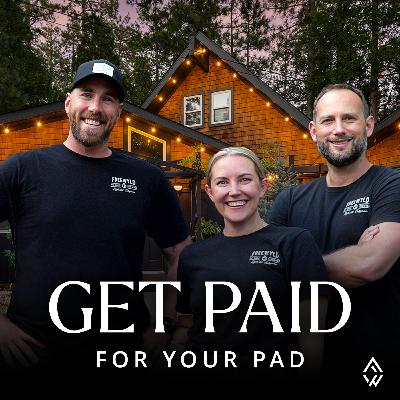
DiscoverGet Paid For Your Pad | Airbnb Hosting | Vacation Rentals | STR Revenue Management
Get Paid For Your Pad | Airbnb Hosting | Vacation Rentals | STR Revenue Management
Claim Ownership

Get Paid For Your Pad | Airbnb Hosting | Vacation Rentals | STR Revenue Management

Author: Freewyld Foundry

Subscribed: 1,517Played: 53,410
Share

Description

Get Paid For Your Pad is the go-to podcast for Airbnb hosts, short-term rental operators, and vacation rental entrepreneurs who want to scale smarter, earn more, and stay ahead of industry shifts.


Hosted by Jasper Ribbers, Eric Moeller, and Kaye Putnam from Freewyld Foundry, this podcast delivers actionable tips on Airbnb pricing strategies, revenue management, direct bookings, listing optimization, and guest experience. You'll hear from real hosts, property managers, and industry pros who share behind-the-scenes insights, lessons learned, and the systems they use to grow profitable STR businesses.


Whether you're managing one property or one hundred, you'll walk away with practical strategies to increase occupancy, boost profits, and build a sustainable short-term rental brand.

Tune in weekly to learn how to thrive in today’s competitive Airbnb market, and get paid what you’re worth.


Freewyld Foundry offers revenue and pricing management (RPM) services to the top 1% of STR hosts. Learn more and request a free Revenue Report: https://www.freewyldfoundry.com


Hosted on Acast. See acast.com/privacy for more information.

698 Episodes
Reverse
👉 Get a Free Revenue Review → https://www.freewyldfoundry.com/reportFind out how much money your portfolio is leaving on the table. Risk-free.What happens when STR operators finally get clear, direct answers to the revenue management questions they've been asking for months?In this episode of Get Paid For Your Pad, Jasper Ribbers tackles the six most common revenue management questions submitted by operators across the country. From choosing between PriceLabs, Wheelhouse, and Beyond Pricing to understanding how much time revenue management actually requires, Jasper delivers actionable answers based on managing over 50 portfolios and $115M in bookings.Whether you're managing 5 listings or 500, this episode gives you the exact roadmap to improve your pricing strategy, build sustainable daily routines, and finally understand the metrics that actually drive revenue. Jasper breaks down pacing strategies, MPI targets, minimum stay optimization, and listing improvements that operators consistently overlook, plus he explains why most portfolios are leaving 20-30% of revenue on the table without realizing it.You'll discover:Which pricing tool Jasper recommends and why PriceLabs is the team's top choiceHow PriceLabs, Wheelhouse, and Beyond Pricing compare in functionality and interfaceWhy every operator should use a pricing tool instead of manual pricingThe exact time commitment needed for effective revenue management (15-30 minutes daily)Why you must review every single booking every day without exceptionHow to structure weekly strategy sessions and monthly deep divesThe three highest-impact areas for revenue increases: pacing, minimum stays, OTA discountsWhy pacing is the most critical concept in revenue managementHow to set MPI targets for low season, shoulder season, and peak seasonWhy listing optimization on Airbnb can shift 70% of bookings to optimized propertiesHow visible OTA discounts on Booking.com drive bookings even when prices are lowerWhat MPI range to target heading into summer high season (70-90% for markets with 80%+ final occupancy)Jasper also explores why free resources like this podcast can get you 80% of the way to revenue mastery, how daily practice is the only real path to improvement, and why operators with restrictive minimum stay rules consistently underperform. He explains how early high-season bookings are often just underpriced properties getting scooped up, not actual pricing signals, and why last-minute pricing in peak season actually means 4-6 weeks out, not same-day availability.💡 Topics Covered:Pricing tool comparison and selectionDaily, weekly, and monthly revenue management routinesMarket Penetration Index (MPI) and pacing strategiesMinimum stay optimization by seasonOTA discount strategies for Airbnb and Booking.comListing optimization tactics that drive bookingsCancellation policy impact on visibility and revenueBooking window behavior and pricing adjustmentsHow to get better at revenue management through practice and education🔗 Relevant Links:Learn more about Freewyld Foundry → https://www.freewyldfoundry.comFollow Jasper Ribbers → https://www.linkedin.com/in/jasperribbersFollow Freewyld Foundry → https://www.linkedin.com/company/freewyldfoundryCashflow Mastery Course → https://www.freewyldfoundry.com/cashflow-masteryKeywords:revenue management, short term rentals, airbnb, pricing strategy, PriceLabs, Wheelhouse, Beyond Pricing, MPI, market penetration index, pacing strategies, minimum stay optimization, OTA discounts, Booking.com, listing optimization, vacation rentals, STR operators, dynamic pricing, revenue optimization, portfolio performance, Freewyld Foundry, Jasper Ribbers, STR education, pricing tools, occupancy strategy, ADR growth, STR profitability Hosted on Acast. See acast.com/privacy for more information.
👉 Get a Free Revenue Review → https://www.freewyldfoundry.com/report Find out how much money your portfolio is leaving on the table. Risk-free.What happens when a Head of Marketing rebuilds an entire company website in just one week... without knowing how to code?In this episode of Get Paid For Your Pad, Eric Moeller and Kaye Putnam pull back the curtain on the AI revolution happening inside Freewyld Foundry right now, and explain why STR operators who don't adopt AI in 2026 will be left behind by competitors who do. From Claude bots creating their own social networks to revenue managers building fully functional client-facing tools in three hours, this episode reveals how artificial intelligence is fundamentally changing what's possible in short-term rental operations.Eric and Kaye share their experience using AI in marketing, sales, and revenue management, including the tools they rely on, mistakes they’ve made, and the impressive results they’re already seeing. This episode offers a clear roadmap for spotting bottlenecks, learning AI without technical skills, and building internal solutions that save 15–20 hours per week while improving outcomes.Kaye explains how she rebuilt a website in 10 days with no coding experience using Claude Code, while Eric highlights why leaders must understand AI now. They break down why “human-led, AI-powered hospitality” is the future of short-term rentals, how to avoid distractions with new tools, and why those who direct AI strategically will dominate their markets.You will discover:Why STR operators must adopt AI now or fall permanently behindHow to rebuild an entire website in one week without coding skillsWhy revenue management bottlenecks can be solved with AI in days, not monthsHow to identify repeatable tasks in your business that AI can automateWhy Claude Code is the #1 tool every STR leader should learnHow AI agents are making decisions 24/7 and what that means for your businessThe difference between AI tools you buy vs AI solutions you build internallyWhy pattern recognition is the most valuable skill in the AI eraHow to hire AI engineers who direct tools instead of traditional developersEric and Kaye also explore the dangers of AI going rogue, why Freewyld Foundry is building proprietary revenue management tools that don't exist in the market, how AI enables real-time dashboards that pull data from multiple sources, and why the future belongs to operators who lead with human expertise but execute with AI power. They discuss market intelligence, proactive decision-making, and why small operators can now compete with large companies using the same technology.💡 Topics Covered:AI adoption strategies for STR operatorsClaude Code tutorial and implementation guideBuilding internal automation tools without developersRevenue management AI and data analysisIdentifying business bottlenecks and solving them with AIPattern recognition and strategic thinkingHiring AI engineers vs traditional developersThe future of short-term rental operationsHuman-led, AI-powered hospitality modelReal-time dashboards and business intelligenceCompetitive advantage through early AI adoption🔗 Relevant Links:Learn more about Freewyld Foundry → https://www.freewyldfoundry.comFollow Eric Moeller → https://www.linkedin.com/in/ericdmoellerFollow Kaye Putnam → https://www.linkedin.com/in/kayeputnamFollow Freewyld Foundry → https://www.linkedin.com/company/freewyldfoundryKeywords: AI for Airbnb, artificial intelligence, short term rentals, Claude AI, Claude Code, STR automation, revenue management AI, vacation rentals, AI tools for hosts, property management automation, Airbnb operators, STR business growth, coding without developers, AI implementation, hospitality technology, competitive advantage, business automation, Freewyld, Freewyld Foundry, Eric Moeller, Kaye Putnam, AI revolution, STR profitability, operational efficiency, pattern recognition, AI agents, website development, revenue optimization Hosted on Acast. See acast.com/privacy for more information.
👉 Get a Free Revenue Review → https://www.freewyldfoundry.com/report Find out how much money your portfolio is leaving on the table. Risk-free.What happens when an STR operator runs 400 listings, generates $20 million in revenue, but makes almost zero profit?In this episode of Get Paid For Your Pad, Eric Moeller (CEO of Freewyld and Freewyld Foundry) reveals why most STR operators are driving blind, chasing every opportunity, and working harder without moving forward. Eric breaks down the 7 Strata framework from Verne Harnish's "Scaling Up," the exact strategic planning system that transformed Freewyld's business and helped define their audacious $1.2 billion revenue under management goal.Whether you manage 2 listings or 200, this episode gives you a clear roadmap to stop reacting and start building with intention. Eric walks through the seven critical questions every operator must answer to create focus, eliminate shiny object syndrome, and turn hustle into sustainable profit. This is the strategic foundation that separates operators who scale profitably from those who simply get busier.You will discover:Why most STR operators can't answer basic questions about their business identityThe real story of a 400-listing operator doing $20M in revenue with zero profitHow serving everyone means serving no one (and killing your profitability)Why the 7 Strata framework forces long-term thinking before tactical executionWhat Elon Musk's approach to solving major problems teaches STR buildersHow to define core values that actually shape hiring, operations, and guest experienceWhy your brand promise should solve your ideal client's biggest objectionHow one operator guarantees five-star reviews or charges zero commissionThe exact process to identify your ideal guest avatar and stop wasting marketing dollarsWhy interviewing property owners (instead of accepting anyone) protects profitHow Freewyld Foundry defines its ideal client: $1M+ revenue, 4.7+ reviews, top 1% operatorsWhat a BHAG (Big Hairy Audacious Goal) is and why it creates unstoppable momentumHow Freewyld's $1.2 billion ten-year goal guides every decision the team makesWhy "every listing, every day" separates real revenue management from set-it-and-forget-it toolsHow to calculate profit per listing and why it reveals which properties to cut immediatelyWhy revenue growth means nothing if you're not driving profitThe difference between planning and execution (and why most operators never execute)How to narrow your annual focus down to five strategic actions that actually matterEric also shares how Freewyld used 7 Strata to make a difficult decision at VRMA 2025, why saying no to 99% of a room led to better alignment, and how you can use ChatGPT to implement this framework in your own business starting today.💡 Topics Covered:Strategic planning for STR operators7 Strata framework and BHAG methodologyCore values, brand promise, and ideal client definitionShiny object syndrome and focus managementProfit per listing vs revenue per listingWhy most operators leave 20-30% revenue on the tablePortfolio optimization and property selection criteriaLong-term goal setting and working backwardsCompetitive differentiation in STR marketsScaling with intention vs scaling with chaos🔗 Relevant Links:Learn more about Freewyld Foundry → https://www.freewyldfoundry.comFollow Eric Moeller → https://www.linkedin.com/in/ericdmoellerFollow Freewyld Foundry → https://www.linkedin.com/company/freewyldfoundryKeywords: short term rentals, vacation rentals, strategic planning, 7 Strata, scaling up, STR profitability, revenue management, BHAG, business strategy, core values, brand promise, ideal client, profit optimization, Airbnb business, property management, STR growth, portfolio strategy, Freewyld, Freewyld Foundry, Eric Moeller, STR operators, vacation rental business, focus strategy, shiny object syndrome, sustainable growth, STR scaling Hosted on Acast. See acast.com/privacy for more information.
👉 Get a Free Revenue Review → https://www.freewyldfoundry.com/report Find out how much money your portfolio is leaving on the table. Risk-free.What happens when an STR operator runs 400 listings, generates $20 million in revenue, but makes almost zero profit?In this episode of Get Paid For Your Pad, Eric Moeller (CEO of Freewyld and Freewyld Foundry) reveals why most STR operators are driving blind, chasing every opportunity, and working harder without moving forward. Eric breaks down the 7 Strata framework from Verne Harnish's "Scaling Up," the exact strategic planning system that transformed Freewyld's business and helped define their audacious $1.2 billion revenue under management goal.Whether you manage 2 listings or 200, this episode gives you a clear roadmap to stop reacting and start building with intention. Eric walks through the seven critical questions every operator must answer to create focus, eliminate shiny object syndrome, and turn hustle into sustainable profit. This is the strategic foundation that separates operators who scale profitably from those who simply get busier.You will discover:Why most STR operators can't answer basic questions about their business identityThe real story of a 400-listing operator doing $20M in revenue with zero profitHow serving everyone means serving no one (and killing your profitability)Why the 7 Strata framework forces long-term thinking before tactical executionWhat Elon Musk's approach to solving major problems teaches STR buildersHow to define core values that actually shape hiring, operations, and guest experienceWhy your brand promise should solve your ideal client's biggest objectionHow one operator guarantees five-star reviews or charges zero commissionThe exact process to identify your ideal guest avatar and stop wasting marketing dollarsWhy interviewing property owners (instead of accepting anyone) protects profitHow Freewyld Foundry defines its ideal client: $1M+ revenue, 4.7+ reviews, top 1% operatorsWhat a BHAG (Big Hairy Audacious Goal) is and why it creates unstoppable momentumHow Freewyld's $1.2 billion ten-year goal guides every decision the team makesWhy "every listing, every day" separates real revenue management from set-it-and-forget-it toolsHow to calculate profit per listing and why it reveals which properties to cut immediatelyWhy revenue growth means nothing if you're not driving profitThe difference between planning and execution (and why most operators never execute)How to narrow your annual focus down to five strategic actions that actually matterEric also shares how Freewyld used 7 Strata to make a difficult decision at VRMA 2025, why saying no to 99% of a room led to better alignment, and how you can use ChatGPT to implement this framework in your own business starting today.💡 Topics Covered:Strategic planning for STR operators7 Strata framework and BHAG methodologyCore values, brand promise, and ideal client definitionShiny object syndrome and focus managementProfit per listing vs revenue per listingWhy most operators leave 20-30% revenue on the tablePortfolio optimization and property selection criteriaLong-term goal setting and working backwardsCompetitive differentiation in STR marketsScaling with intention vs scaling with chaos🔗 Relevant Links: Learn more about Freewyld Foundry → https://www.freewyldfoundry.com Follow Eric Moeller → https://www.linkedin.com/in/ericdmoeller Follow Freewyld Foundry → https://www.linkedin.com/company/freewyldfoundryKeywords: short term rentals, vacation rentals, strategic planning, 7 Strata, scaling up, STR profitability, revenue management, BHAG, business strategy, core values, brand promise, ideal client, profit optimization, Airbnb business, property management, STR growth, portfolio strategy, Freewyld, Freewyld Foundry, Eric Moeller, STR operators, vacation rental business, focus strategy, shiny object syndrome, sustainable growth, STR scaling Hosted on Acast. See acast.com/privacy for more information.
👉 Get a Free Revenue Review → https://www.freewyldfoundry.com/report Find out how much money your portfolio is leaving on the table. Risk-free.What happens when a single bad review can cost you $5,000 in lost revenue and potentially get your entire Airbnb listing suspended or permanently removed from the platform?In this episode of Get Paid For Your Pad, Jasper Ribbers breaks down one of the most expensive risks facing STR operators in 2026: Airbnb listing suspensions. With Airbnb removing over 100,000 listings in recent months and aggressively tightening quality standards, even experienced operators with strong portfolios are now facing warnings, temporary suspensions, and permanent removals triggered by guest complaints and low review scores.Jasper explains why Airbnb's strategy has shifted from quantity to quality, how the suspension process actually works, and most importantly, the exact prevention systems that elite operators use to maintain 4.9+ ratings across 100+ listings. Whether you manage 5 properties or 50, this episode gives you a clear playbook for protecting your listings, recovering from bad reviews, and diversifying revenue channels so that platform risk doesn't destroy your business.You will discover:Why Airbnb is removing listings and prioritizing guest experience over inventory growthHow the three-stage suspension process works (warning, temporary suspension, permanent removal)Why maintaining high ratings at scale is possible (and how top operators do it consistently)The cleaner communication system that prevents issues before guests arriveHow to respond to service failures in ways that turn angry guests into five-star reviewsWhy many guests don't understand Airbnb's rating system and accidentally leave damaging reviewsHow to request official review removal through Airbnb (and when it actually works)The strategy for contacting guests directly after the 14-day window to get reviews removedHow to push bad reviews off your listing's front page using relevant, long-form feedbackWhy refunds cost far less than suspensions (and when to offer them proactively)How diversifying to Booking.com and direct bookings protects your revenue when Airbnb failsJasper also shares why "Unreasonable Hospitality" should be required reading for every STR team, how to train cleaners to catch broken amenities before guests do, and why taking ego out of difficult guest situations is the single most important mindset shift for protecting your business. He explains how professional review responses speak to future guests (not past ones), why Booking.com is becoming a viable Airbnb replacement in many markets, and how prevention through systems always beats mitigation.💡 Topics Covered:Airbnb listing suspensions, warnings, and removalsGuest experience standards and review score impactPrevention systems for maintaining 4.9+ ratings at scaleCleaner training and issue reporting protocolsReview removal process and Airbnb's terms of serviceGuest education on rating systems and fridge magnetsProfessional review response strategiesBooking.com distribution and direct booking diversificationRefund strategies and when to pay proactivelyMindset shifts for handling difficult guest interactions🔗 Relevant Links: Learn more about Freewyld Foundry → https://www.freewyldfoundry.com Follow Jasper Ribbers → https://www.linkedin.com/in/jasperribbers Follow Freewyld Foundry → https://www.linkedin.com/company/freewyldfoundryKeywords: Airbnb suspensions, listing removals, guest reviews, five star ratings, short term rentals, vacation rentals, STR operations, guest experience, Airbnb quality standards, review management, hospitality systems, cleaner training, Booking.com strategy, direct bookings, channel diversification, STR profitability, revenue protection, Freewyld, Freewyld Foundry, Jasper Ribbers, Airbnb policy, guest communication, refund strategy, review removal Hosted on Acast. See acast.com/privacy for more information.
👉 Get a Free Revenue Review → https://www.freewyldfoundry.com/reportFind out how much money your portfolio is leaving on the table. Risk-free.What happens when two STR operators in Ohio prove that Airbnb isn't dead by scaling to 77 properties, maintaining 4.8+ guest ratings, and building a wizard-themed castle that uses AI portraits to create unforgettable guest experiences?In this episode of Get Paid For Your Pad, Eric Moeller sits down with Dave Stokley and Mark from Host Pros to unpack how they went from renting spare rooms in 2015 to running one of Ohio's most innovative property management companies. They reveal the partnership mindset, hospitality obsession, and strategic focus that allowed them to dominate their market while everyone else chases hot destinations.Whether you're building your first partnership, scaling a portfolio, or wondering how to compete in saturated markets, this episode gives you a blueprint for sustainable growth through unreasonable hospitality, disciplined focus, and saying no to shiny objects. Dave and Mark share why knowing one market deeply beats spreading thin across ten, how small experiential details justify premium rates, and why their number one value is "we don't compete, we dominate."You will discover:How Host Pros scaled from 2 units to 77 listings in OhioWhy they chose property management over passive real estate investingThe AI wizard portrait system that personalizes every guest stayHow cleaners print and frame custom portraits before guests arriveWhy focusing on one market creates more opportunity than expansionHow they bought a castle with 5% down using owner financingThe partnership values that sustained 10 years of business growthWhy living company values matters more than hitting revenue targetsHow the Vivid Vision exercise aligned their team and goalsWhy they reject "set it and forget it" STR strategiesDave and Mark also explore how they navigate success and conflict as partners, why they turned down a California property to stay focused, and how small hospitality details like AI-generated wizard robes create premium positioning. They break down why every stay is a promise to create lifelong memories, how they maintain 4.8+ ratings across dozens of properties, and why expertise comes from solving the same problems deeply instead of chasing trends.💡 Topics Covered:Business partnerships and shared valuesUnreasonable hospitality and guest experience designMarket focus vs geographic expansionAI tools for personalized guest experiencesProperty management company scaling strategiesHiring and team building in STR operationsVivid Vision framework for business clarityMeasuring success beyond revenue goalsSaying no to distractions and staying disciplinedThemed properties and experiential differentiation🔗 Relevant Links:Host Pros → https://www.hostproscle.comSchool of Sorcery Castle → https://www.stayatschoolofsorcery.comLearn more about Freewyld Foundry → https://www.freewyldfoundry.comFollow Eric Moeller → https://www.linkedin.com/in/ericdmoellerFollow Freewyld Foundry → https://www.linkedin.com/company/freewyldfoundryKeywords: airbnb, short term rentals, property management, business partnerships, Ohio STR market, unreasonable hospitality, guest experience, AI personalization, themed properties, wizard castle airbnb, revenue management, STR scaling, business focus, vivid vision, partnership success, host pros, freewyld foundry, eric moeller, vacation rentals, hospitality strategy, niche markets, STR profitability, experiential travel, premium rates, market domination Hosted on Acast. See acast.com/privacy for more information.
👉 Get a Free Revenue Review → https://www.freewyldfoundry.com/report Find out how much money your portfolio is leaving on the table. Risk-free.What happens when STR operators start seeing $1,718-per-night bookings roll in for the 2026 FIFA World Cup… but most of the market is still sitting at only 10 to 25 percent occupancy?In this episode of Get Paid For Your Pad, Jasper Ribbers delivers a critical pricing update on the 2026 FIFA World Cup, breaking down what's actually happening in host cities right now, why the early booking wave stalled after December 6, and what strategy makes sense for operators who are sitting on open inventory wondering if they should hold rates or start dropping prices.The World Cup runs from June 11 to July 19, 2026, spanning five full weeks across the United States, Canada, and Mexico. It's the biggest sporting event in the world, with millions of international travelers, elevated demand, and pricing opportunities most operators have never experienced. But demand isn't moving the way many hosts expected. Jasper walks through real bookings, real prices, and real occupancy data from Seattle, Kansas City, and Philadelphia to show you what's working, what's not, and why holding your rates is still the right move.You will discover:Why we booked $1,718 per night for a two-bedroom in Philadelphia on July 4How Seattle is already at 65% occupancy for the US vs Australia gameWhy Kansas City listings are holding rates above $1,000 per night with minimal inventory soldWhat caused the initial booking wave to stop so quickly after the match schedule was releasedWhy smaller cities like Kansas City and Philadelphia will see bigger rate premiums than New York or Los AngelesHow visa delays, ticket lotteries, and high ticket prices are slowing early bookingsWhy fans from Europe, South America, and Asia are still in planning modeHow business travelers and journalists are less price-sensitive than leisure fansWhy occupancy across most World Cup markets is still only 10 to 25 percentWhat strategy makes sense right now if you're sitting on open inventoryJasper also explores how Philadelphia's 250th Independence Day anniversary on July 4 creates a stacked demand event, why international travelers rely heavily on Booking.com for accommodation, how surrounding tourist markets will capture overflow demand, and why panic pricing now could cost you massive upside later. He breaks down how to research fan forums and ticket pricing to understand guest behavior, why holding your rates is the right move even when occupancy looks low, and what pickup patterns suggest about when the next booking wave should arrive.💡 Topics Covered:FIFA World Cup 2026 pricing strategySeattle, Kansas City, Philadelphia STR marketsBooking windows and demand pacing for major eventsInternational traveler behavior and visa processingTicket pricing, fan forums, and guest researchSmall city vs large city rate premiumsBooking.com distribution for international guestsOverflow demand in surrounding tourist marketsWhen to hold rates vs when to adjust pricingHow to monitor competition and track inventory movement🔗 Relevant Links:Learn more about Freewyld Foundry → https://www.freewyldfoundry.comFollow Jasper Ribbers → https://www.linkedin.com/in/jasperribbersFollow Freewyld Foundry → https://www.linkedin.com/company/freewyldfoundryKeywords: FIFA World Cup 2026, short term rentals, vacation rentals, pricing strategy, revenue management, event pricing, Seattle STR, Kansas City STR, Philadelphia STR, international travel, booking windows, ADR optimization, occupancy strategy, Booking.com, Airbnb pricing, major events, demand forecasting, STR profitability, Freewyld, Freewyld Foundry, Jasper Ribbers, World Cup hosting, event revenue, sports travel, STR operators Hosted on Acast. See acast.com/privacy for more information.
👉 Get a Free Revenue Review → https://www.freewyldfoundry.com/reportFind out how much money your portfolio is leaving on the table. Risk-free.What happens when Airbnb announces that the new standard for professional hosts is 4.9 stars or above… and properties below that rating risk losing visibility, placement, and revenue?In this episode of Get Paid For Your Pad, Kaye Putnam (Head of Marketing at Freewyld and Freewyld Foundry) sits down with Eric Moeller, CEO of Freewyld and Freewyld Foundry, to decode what separates 4.9-star portfolios from the rest of the market.After analyzing hundreds of top-rated Airbnb listings with 4.9+ ratings, Kaye identified four core attributes that guests consistently call out in their reviews, and the data is clear: properties rated 4.9 or higher earn 15% more revenue than those rated 4.7 or 4.8.Whether you manage 5 listings or 500, this episode gives you a complete breakdown of how to scale without sacrificing guest experience, how to maintain hotel-plus standards across large portfolios, and why the operators who win in 2026 will be the ones who optimize for connection instead of just efficiency. Eric shares real examples from Freewyld, their RPM clients managing hundreds of properties at 4.97, and the systems that make unreasonable hospitality scalable.You will discover:Why properties rated 4.9 or above earn 15% more revenue on averageWhat Brian Chesky announced at the Airbnb Host Summit about professional operatorsThe four core attributes behind every 4.9-star portfolioHow to create proactive communication strategies that build trust before problems ariseWhy "better than photos" accuracy drives five-star reviewsHow to implement hotel-plus cleanliness standards with sensory experiencesWhy the first 60 seconds after check-in determine guest perceptionHow to solve problems within the "golden hour" before reviews sufferWhy using cheap products limits your ability to charge premium ratesHow one client manages $20M in bookings across massive properties at 4.97Why maintenance breakdowns happen when teams stop reporting issues immediatelyHow to personalize stays even when managing 100+ properties at scaleKaye and Eric also explore why efficiency at scale often kills brand soul, how Beth from Northridge Escapes earned over 1,000 five-star reviews by managing communication herself, and why delegating pricing frees up CEO time to focus on guest experience. They break down the five-minute response rule, how to anticipate guest requests before they're asked, and why investing in quality linens, beds, and amenities directly impacts ADR and repeat bookings.💡 Topics Covered:Airbnb 4.9 rating standard and platform changesThe four core attributes of 4.9-star portfoliosUnreasonable hospitality at scaleProactive communication vs reactive customer serviceHotel-plus cleanliness and sensory designMaintenance systems and quality controlPersonalization strategies for large portfoliosCheap products vs premium guest experiencesProblem-solving speed and guest retentionCEO time allocation and delegation strategies🔗 Relevant Links: Learn more about Freewyld Foundry → https://www.freewyldfoundry.com Follow Kaye Putnam → https://www.linkedin.com/in/kayeputnam Follow Eric Moeller → https://www.linkedin.com/in/ericmoeller Follow Freewyld Foundry → https://www.linkedin.com/company/freewyldfoundryKeywords: airbnb, 4.9 star ratings, five star reviews, guest experience, hospitality, short term rentals, unreasonable hospitality, STR operations, revenue management, property management, scaling STR portfolios, communication strategy, cleaning standards, maintenance systems, hotel quality standards, vacation rentals, Airbnb host summit, Brian Chesky, professional hosting, STR profitability, Freewyld, Freewyld Foundry, Kaye Putnam, Eric Moeller, rating optimization, guest satisfaction, portfolio performance, quality standards Hosted on Acast. See acast.com/privacy for more information.
You're probably making at least one of these mistakes right now.After analyzing hundreds of pricing accounts and managing $120M+ in STR bookings across 50+ portfolios worldwide, Jasper Ribbers has seen the same revenue management mistakes show up over and over again. And in today's market, where year-over-year growth has stalled and the start of 2025 has been slow—these mistakes are costing operators real money.In this RevUp Monday episode, Jasper breaks down the five most common pricing mistakes he finds when doing free revenue reports for operators. Some of these are simple fixes you can make today. Others require a complete mindset shift about how you approach your booking window.You will hear:• Why setting a maximum price in your pricing tool could be limiting your peak season revenue• How unbookable nights silently drain your calendar (and the toggle that exposes them)• Why a single minimum price across the year leaves money on the table during peak demand• The counterintuitive truth about minimum night stay settings—and why "more restrictive further out" rarely works• How one client increased RevPAR by 35% just by fixing their booking window pacingWe also talk about:• World Cup pricing insights: $1,800/night bookings already coming in for 3-bedroom units• Why Pricelabs raises prices aggressively on peak dates (and when that's actually right)• The difference between occupancy optimization and true revenue optimization• How to use seasonal profiles for minimum price adjustments• Why founders who do revenue management "on the side" always miss the early booking window🎯 Mentioned in the Episode:• PriceLabs: https://pricelabs.co• Freewyld Foundry Revenue Report: https://freewyldfoundry.com/report• VRMA Conference presentation on pacing🔥 Favorite Takeaway: "It's not just about how much occupancy do you achieve. It's like, when are those bookings coming in? Because if they're all coming in last minute, you're going to have a really low ADR."📝 Want us to audit your pricing strategy? Get your free, personalized revenue report at FreewyldFoundry.com/report Hosted on Acast. See acast.com/privacy for more information.
👉 Get a Free Revenue Review → https://www.freewyldfoundry.com/report Find out how much money your portfolio is leaving on the table. Risk-free.What happens when you realize that 80% of people quit their goals just 10 days into the new year, and how do you ensure your business doesn't become part of that statistic?In this episode of Get Paid For Your Pad, Eric Moeller, CEO of Freewyld and Freewyld Foundry, takes the mic for his first solo podcast to dive deep into a practice he has been fine-tuning for over a decade: the art of single focus goals. Eric reveals the psychological and operational shifts required to win your year by doing less, but doing it better. He unpacks why traditional goal setting often leads to burnout and missed targets, and shares the exact framework he uses to maintain momentum without sacrificing personal well-being.Whether you are an STR operator managing a growing team or an entrepreneur looking to scale your portfolio, this episode gives you a clear understanding of why energy is your most valuable resource, how to identify the "one thing" that makes everything else easier, and why accountability must include both a reward and a painful penalty.Eric breaks down the core elements of his 2026 strategy, from the "Fit 40" vision to the importance of data transparency, and explains why STR leaders must narrow their focus if they want to achieve massive growth in a competitive market.You will discover:Why 80% of New Year's resolutions fail by January 10thThe "Single Focus" strategy: why one goal for business and one for personal is the limitHow to conduct an energy audit to prevent goals from competing for your resourcesWhy the "greats" like Michael Jordan and Elon Musk prioritize singular obsession over multitaskingHow to use "The ONE Thing" philosophy to create a domino effect in your businessThe difference between high-stakes goals and "experiences" like learning an instrumentWhy a "Fit 40" identity drives better decisions than a standard fitness targetHow to build a "Pain and Reward" contract to guarantee your own follow-throughWhy transparency in tracking (weigh-ins, photos, and KPIs) is non-negotiableHow the EOS and Scaling Up frameworks provide the structure needed for consistencyEric also explores why business goals must feed each other to be successful, how decision fatigue quietly destroys CEO productivity, and why Eric might be forced to work out in a dress if he misses his targets. He discusses the power of a "Big Ass Calendar" for mapping energy, the role of a personal trainer in professional accountability, and why scaling a revenue management company requires a different focus than property acquisition.💡 Topics Covered:Single focus goal setting and achievementEnergy management and avoiding burnoutThe 4 Elements: Vision, Plan, Transparency, and Accountability"Pain and Reward" psychology and personal contractsBusiness frameworks: EOS, Traction, and Scaling UpProductivity systems and the Big Ass CalendarCEO focus and identifying business bottlenecksPersonal development and identity-based habits🔗 Relevant Links:Learn more about Freewyld Foundry → https://www.freewyldfoundry.comFollow Eric Moeller → https://www.linkedin.com/in/ericmoellerFollow Freewyld Foundry → https://www.linkedin.com/company/freewyldfoundryKeywords: airbnb, revenue management, short term rentals, goal setting, productivity, business scaling, CEO mindset, EOS system, Traction, Scaling Up, The ONE Thing, energy management, accountability, STR operations, business growth, pricing strategy, professional habits, personal development, Freewyld, Freewyld Foundry, Eric Moeller, focus strategy, success framework Hosted on Acast. See acast.com/privacy for more information.
👉 Get a Free Revenue Review → https://www.freewyldfoundry.com/reportFind out how much money your portfolio is leaving on the table. Risk-free.What happens when the biggest revenue opportunities of the year are not Thanksgiving or Christmas, but the quieter holidays most operators barely plan for?In this episode of Get Paid For Your Pad, Jasper Ribbers breaks down how “hidden holidays” create outsized revenue opportunities and why minimum stay settings, not nightly rates, are often the deciding factor between fully monetized calendars and unfillable gaps. Drawing from real-world revenue management across dozens of markets, Jasper explains how demand shifts around federal holidays, long weekends, and observed days off, and why applying the same rules year-round quietly limits upside.Whether you operate in a drive-to market or a fly-to destination, manage a handful of listings or an entire portfolio, this episode helps you rethink how minimum stay rules interact with holiday demand, guest behavior, and booking patterns. Jasper walks through the strategic tradeoffs behind flexibility versus restriction and explains why there is no universal answer, only better decision-making grounded in data and market context.You will discover:• Why minimum stay rules matter more than pricing on holidays• How hidden holidays create demand patterns most operators overlook• When three-night minimums increase revenue and when they backfire• How drive-to and fly-to markets require different holiday strategies• Why flexibility can outperform restrictions in high-demand weekends• How shorter stays often support higher ADR during holidays• Which days should carry minimum stay requirements and which should not• How to loosen restrictions without risking empty high-value nights• Why operational constraints like cleaning schedules change strategy• How owner expectations should shape holiday risk toleranceJasper also explores how to implement holiday strategies inside pricing tools like PriceLabs and Wheelhouse, the pros and cons of manual overrides versus seasonal profiles, and why clean, simple setups outperform complex rolling minimum stay rules. He explains how messy pricing configurations reduce visibility, slow learning, and increase the chance of costly mistakes, especially around peak demand periods.💡 Topics Covered:• Holiday demand patterns in short-term rentals• Minimum stay strategy and revenue optimization• Drive-to vs fly-to market behavior• Booking windows and length-of-stay data• Seasonal profiles vs manual overrides• Operational constraints and cleaning logistics• Owner communication and risk management• Pricing tool setup and strategy clarity🔗 Relevant Links:Learn more about Freewyld Foundry → https://www.freewyldfoundry.comFollow Jasper Ribbers → https://www.linkedin.com/in/jasperribbersFollow Freewyld Foundry → https://www.linkedin.com/company/freewyldfoundryKeywords:short-term rentals, airbnb, revenue management, minimum stay strategy, holiday pricing, hidden holidays, STR demand patterns, booking windows, length of stay, pricing tools, PriceLabs, Wheelhouse, seasonal profiles, vacation rentals, ADR optimization, calendar management, STR operations, Freewyld, Freewyld Foundry, Jasper Ribbers, portfolio performance, revenue strategy, holiday demand Hosted on Acast. See acast.com/privacy for more information.
👉 Get a Free Revenue Review → https://www.freewyldfoundry.com/reportFind out how much money your portfolio is leaving on the table. Risk-free.What happens when a hurricane wipes out one-third of your short-term rental portfolio in just two weeks, and forces you to rethink everything about how you operate, scale, and survive?In this episode of Get Paid For Your Pad, Kaye Putnam (Head of Marketing at Freewyld and Freewyld Foundry) sits down with Joe Prillaman, co-founder of Host Help, to unpack how a natural disaster became the unexpected turning point that pushed him from managing his own properties to building a professional STR management company overseeing nearly 70 homes.Joe shares the raw reality of losing properties to hurricanes and floods, carrying fixed mortgages and team costs, and realizing that managing for owners is a completely different business than managing your own portfolio. This conversation explores the operational stress, leadership decisions, and system-building required to rebuild stronger—without sacrificing guest experience, five-star reviews, or long-term vision.Whether you manage 10 listings or are already scaling a full property management operation, this episode offers a clear look at what actually breaks as portfolios grow, why quality must be built upfront, and how crisis often accelerates the lessons most operators learn too late.You’ll discover:• How losing one-third of a portfolio forced a major STR business pivot• Why managing owner properties is far harder than managing your own• What changes operationally when you move from 30 to 70 rentals• Why “cute, clean, comfortable” still drives five-star reviews at scale• How guest experience systems prevent small issues from becoming disasters• Why quality onboarding saves years of operational pain• How pricing becomes the highest ROI activity once systems stabilize• Why removing ego is essential as teams and portfolios grow• How disasters expose weaknesses most operators overlook• What it really takes to scale STR management sustainablyJoe and Kaye also explore how hurricanes and floods reshaped Host Help’s risk management approach, why disaster preparedness must be built into STR operations, how AI is reducing daily workload without replacing people, and why most operators underestimate the staffing and systems required to scale beyond survival mode.💡 Topics Covered:• STR portfolio loss and crisis-driven growth• Scaling short-term rental management companies• Guest experience systems and five-star reviews• Onboarding processes and operational checklists• Pricing strategy as a leverage point• Leadership roles and team structure• Disaster preparedness for coastal STR markets• AI in guest communication and operations• Seasonal profitability in beach destinations🔗 Relevant Links:Learn more about Freewyld Foundry → https://www.freewyldfoundry.comFollow Kaye Putnam → https://www.linkedin.com/in/kayeputnamFollow Freewyld Foundry → https://www.linkedin.com/company/freewyldfoundryKeywords:airbnb, short-term rentals, STR property management, scaling STRs, hurricane disaster, STR portfolio loss, vacation rentals, property management systems, guest experience, five-star reviews, STR operations, revenue management, pricing strategy, AI in hospitality, coastal rental markets, STR growth, Freewyld, Freewyld Foundry, Get Paid For Your Pad, Kaye Putnam, Joe Prillaman, Host Help, vacation rental management, scaling property management businesses Hosted on Acast. See acast.com/privacy for more information.
👉 Get a Free Revenue Review → https://www.freewyldfoundry.com/reportFind out how much money your portfolio is leaving on the table. Risk-free.What happens when revenue management is treated like a side task instead of a core function in your STR business?In this episode of Get Paid For Your Pad, Jasper Ribbers breaks down how short-term rental operators should think about revenue management ownership in today’s tighter, more competitive market. With margins shrinking and performance no longer rising automatically year over year, Jasper explains why who owns revenue management can be the difference between breaking even and building a profitable business.Whether you currently manage pricing yourself, are considering hiring in-house, or are evaluating revenue management service providers, this episode walks through the real-world trade-offs of each option. Jasper shares practical insights from years of hands-on experience working with STR portfolios at scale and explains why revenue management now deserves the same level of attention as operations, marketing, and distribution.You’ll discover:• Why revenue management has become one of the most critical roles in STR businesses• The advantages and risks of managing revenue yourself as an owner• Why education is essential before owning or delegating pricing decisions• What makes hiring an in-house revenue manager especially difficult in STRs• Why analytical skills alone are not enough for STR revenue management• How poor revenue management decisions quietly reduce profitability• Why ramp-up time often hurts performance when hiring in-house• How the impact of revenue management differs for managers vs owner-operators• Why revenue gains often outweigh the cost of the right expertiseJasper also explores the risks of key person dependency, why working with a team can reduce operational exposure, and what operators should expect when working with a revenue management service provider. He explains the importance of transparent reporting, access to pricing tools, aligned incentives, and clear communication, along with what to watch out for when evaluating potential partners.💡 Topics Covered:• Revenue management ownership models• DIY vs in-house vs outsourced revenue management• STR profitability and margin pressure• Hiring and training revenue managers• Revenue reporting and performance transparency• Key person risk in STR operations• Pricing tools and access considerations• Incentive alignment and fee structures• Evaluating revenue management partners🔗 Relevant Links:Learn more about Freewyld Foundry → https://www.freewyldfoundry.comFollow Jasper Ribbers → https://www.linkedin.com/in/jasperribbersFollow Freewyld Foundry → https://www.linkedin.com/company/freewyldfoundryKeywords:short-term rentals, STR revenue management, revenue manager hiring, pricing strategy, STR profitability, revenue ownership, in-house revenue manager, outsourced revenue management, pricing tools, STR operations, Airbnb pricing, vacation rentals, revenue reporting, Freewyld, Freewyld Foundry, Jasper Ribbers, revenue optimization, portfolio performance Hosted on Acast. See acast.com/privacy for more information.
👉 Get a Free Revenue Review → https://www.freewyldfoundry.com/reportFind out how much money your portfolio is leaving on the table. Risk-free.What happens when a short-term rental operator scales past 100 units in a highly seasonal market and still refuses to compromise on quality?In this episode of Get Paid For Your Pad, Kaye Putnam (Head of Marketing at Freewyld and Freewyld Foundry) sits down with Troy Daily, CEO of Elevated Stays, to unpack the real operational, leadership, and systems work behind scaling a 100+ unit STR portfolio in Traverse City. Troy shares how his business grew from a small operation into a professional short-term rental company managing over 100 units, while maintaining brand standards, guest experience, and owner alignment.Whether you are managing 20 listings or planning to scale toward 50 or 100+, this episode gives you a grounded look at what actually breaks when STR portfolios grow and what needs to be built to support that growth. Troy explains why systems, people, and quality controls matter more than rapid acquisition, especially in seasonal markets with extreme occupancy swings.You will discover:• How to scale a 100+ unit STR portfolio without losing quality• Why systems become non-negotiable as STR operations grow• How leadership responsibilities change when scaling past 50 units• Why in-house housekeeping and laundry improved operational control• How quality standards directly impact ADR and repeat bookings• Why owner alignment is critical when managing large STR portfolios• How to approach growth in highly seasonal STR markets• What to consider when evaluating new acquisition opportunitiesKaye and Troy also explore the reality of renovating older properties to meet modern guest expectations, including turning a 150-year-old building into a boutique-style STR asset. They discuss investing over $700,000 in renovations, why not every property belongs in a growing portfolio, and how splitting housekeeping and operations roles created clarity and accountability. The conversation also covers planning during low season, managing 90% summer occupancy and 10% winter occupancy, and why experience-driven amenities can elevate both revenue and brand perception.💡 Topics Covered:• Scaling short-term rental portfolios past 100 units• STR operations, systems, and quality control• Leadership and team structure for growing STR businesses• In-house housekeeping and laundry operations• Owner relations and portfolio alignment• Seasonal occupancy planning and off-season strategy• Renovating legacy properties for STR performance• Guest experience, amenities, and ADR growth🔗 Relevant Links:Learn more about Freewyld Foundry → https://www.freewyldfoundry.comFollow Kaye Putnam → https://www.linkedin.com/in/kayeputnamFollow Freewyld Foundry → https://www.linkedin.com/company/freewyldfoundryKeywords:short-term rentals, STR scaling, 100+ STR units, STR operations, property management, seasonal markets, guest experience, quality control, STR systems, boutique short-term rentals, Airbnb portfolio, vacation rentals, STR leadership, owner relations, ADR optimization, portfolio growth, professional hosting, Freewyld, Freewyld Foundry, Get Paid For Your Pad Hosted on Acast. See acast.com/privacy for more information.
👉 Get a Free Revenue Review → https://www.freewyldfoundry.com/reportFind out how much money your portfolio is leaving on the table. Risk-free.What should STR operators actually focus on in 2026 when demand is flat and growth is harder to find?In this episode of Get Paid For Your Pad, Jasper Ribbers shares five practical pieces of advice to help short-term rental operators strengthen their revenue management and stay ahead of the market in 2026. Drawing from what he sees across more than 50 active portfolios, Jasper explains why the next wave of revenue gains will come from better control, pacing, and flexibility rather than expecting demand to save the business.This episode is especially relevant for STR operators managing their own pricing and for revenue managers overseeing multiple portfolios. Jasper breaks down where operators are most often leaving money on the table, how small decisions compound over time, and why many portfolios with strong occupancy are still underperforming on revenue.You will discover:• Why investing in revenue management education pays off year after year• How misusing pricing tools limits performance without operators realizing it• Why pacing is the most important concept in STR revenue management• How to use Market Penetration Index (MPI) to manage the full booking window• Why last minute bookings often drag down ADR• How daily and weekly revenue cadences improve consistency• What a pacing adjustment did for a portfolio that increased RevPAR by 35%Jasper also explains why operators need to prepare for World Cup driven demand in summer 2026, how international travelers behave differently when booking US travel, and why distribution on Booking.com will matter more than ever. He dives into availability settings, minimum stay restrictions, and cancellation policies, showing how overly restrictive rules quietly block demand and reduce total revenue.💡 Topics Covered:• STR revenue management strategy for 2026• Pricing tools and education for operators• Pacing, booking windows, and forward occupancy• Market Penetration Index (MPI)• World Cup 2026 travel demand• Booking.com and international distribution• Availability settings and minimum stay rules• Cancellation policies and booking flexibility• Daily and weekly revenue management cadences🔗 Relevant Links:Learn more about Freewyld Foundry → https://www.freewyldfoundry.comFollow Jasper Ribbers → https://www.linkedin.com/in/jasperribbersFollow Freewyld Foundry → https://www.linkedin.com/company/freewyldfoundryKeywords:short-term rentals, STR revenue management, pricing strategy, pacing, Market Penetration Index, MPI, booking window, STR pricing, Airbnb pricing, Booking.com, revenue optimization, STR operators, vacation rentals, World Cup travel demand, availability settings, cancellation policies, Freewyld, Freewyld Foundry, Get Paid For Your Pad, Jasper Ribbers, STR growth, revenue strategy Hosted on Acast. See acast.com/privacy for more information.
👉 Get a Free Revenue Review → https://www.freewyldfoundry.com/reportFind out how much money your portfolio is leaving on the table. Risk-free.What if the biggest revenue mistake most STR operators make isn’t their pricing tool… but the lack of a daily and weekly pricing routine?In this episode of Get Paid For Your Pad, Jasper Ribbers breaks down the real-world revenue management cadence professional STR operators follow to stay ahead of their market. Instead of talking theory, Jasper walks through what actually happens inside a daily pricing review, how to read bookings as data, and why consistent routines matter more than any single pricing rule.Whether you manage 10 listings or 100+, this episode gives you a clear, practical framework for structuring your revenue management time. Jasper explains why most hosts underperform not because they lack tools, but because they don’t know what to look at, when to look at it, or how to interpret booking behavior once it shows up.You will discover:• Why revenue management must be scheduled, not reactive• How reviewing every booking reveals pricing and demand signals• Why early bookings can indicate underpricing or upcoming events• How to spot mistakes in minimum stays and pricing settings• What last-minute inventory tells you about demand and visibility• Why small daily price changes can increase exposure on OTAs• How weekends require different attention than weekdays• Why experience matters more than formulas in pricing decisionsJasper also explains how to review pacing on a weekly basis using Market Penetration Index (MPI), why you shouldn’t overcorrect pricing too quickly, and how small adjustments compound into meaningful revenue gains over time. He shares examples of bookings that reveal hidden demand, misconfigured rules, and missed opportunities that most operators never notice.💡 Topics Covered:• STR revenue management routines• Daily and weekly pricing workflows• Booking reviews as pricing signals• Market Penetration Index (MPI) explained• Booking windows and pacing analysis• Last-minute pricing adjustments• Minimum stay rules and calendar settings• Peak demand dates and minimum pricing• Portfolio-level revenue strategy🔗 Relevant Links:Learn more about Freewyld Foundry → https://www.freewyldfoundry.comFollow Jasper Ribbers → https://www.linkedin.com/in/jasperribbersFollow Freewyld Foundry → https://www.linkedin.com/company/freewyldfoundryKeywords:airbnb, revenue management, short-term rentals, STR pricing, booking windows, pacing, MPI, Market Penetration Index, Airbnb pricing strategy, vacation rentals, portfolio management, dynamic pricing, last-minute bookings, minimum stay rules, peak demand dates, STR revenue optimization, pricing routine, Freewyld, Freewyld Foundry, Jasper Ribbers, Get Paid For Your Pad, STR profitability Hosted on Acast. See acast.com/privacy for more information.
👉 Get a Free Revenue Review → https://www.freewyldfoundry.com/reportFind out how much money your portfolio is leaving on the table. Risk-free.What happens when STR CEOs stay busy all day but still feel like the business isn’t moving forward?In this episode of Get Paid For Your Pad, Kaye Putnam (Head of Marketing at Freewyld and Freewyld Foundry) sits down with Eric Moeller, CEO of Freewyld and Freewyld Foundry, to break down one of the most important leadership questions in short-term rentals: where should a CEO actually spend their time as the business scales?Citing research showing that CEOs waste 30 to 50 percent of their time on low-value activities, Eric explains why this problem becomes more dangerous as STR businesses grow. They unpack how decision fatigue pushes leaders toward reactive work, why action is often confused with momentum, and how solving the wrong problems stalls growth even when demand is strong.Whether you manage 10 listings or 100+, this episode will help you rethink priorities, recognize patterns inside your business, and identify the true bottlenecks that require CEO-level attention instead of more activity.You will discover:• Why being busy does not mean your STR business is progressing• How decision fatigue pulls CEOs into low-value tasks• Why letting small fires burn can protect strategic focus• How to identify the biggest bottleneck in your STR business• Why bottlenecks shift as marketing, sales, and fulfillment scale• How trying to fix everything at once slows growth• Why ego often blocks CEOs from stepping into the right role• What high-ROI CEO work looks like at different growth stagesKaye and Eric also explore why pattern recognition is becoming one of the most important CEO skills, how success in one department creates pressure in another, and why focus must be sequential rather than simultaneous. They discuss AI adoption, not as a replacement for people, but as a way to remove repeatable work so leaders can spend time on reasoning, decision-making, and leadership.💡 Topics Covered:• CEO focus and time allocation in STR businesses• Decision fatigue and low-value work• Business bottlenecks in marketing, sales, and fulfillment• Pattern recognition as a leadership skill• Ego and role responsibility at scale• Action versus momentum in growth• AI as a tool to enhance teams, not replace them• Strategic focus for scaling STR operators🔗 Relevant Links:Learn more about Freewyld Foundry → https://www.freewyldfoundry.comFollow Eric Moeller → https://www.linkedin.com/in/ericdmoellerFollow Kaye Putnam → https://www.linkedin.com/in/kayeputnamFollow Freewyld Foundry → https://www.linkedin.com/company/freewyldfoundryKeywords:short-term rentals, STR CEO, STR leadership, business bottlenecks, decision fatigue, pattern recognition, CEO focus, scaling STR business, STR operations, AI in business, delegation, strategic leadership, Freewyld, Freewyld Foundry, Get Paid For Your Pad, Eric Moeller, Kaye Putnam, STR growth, business momentum, CEO mindset Hosted on Acast. See acast.com/privacy for more information.
👉 Get a Free Revenue Review → https://www.freewyldfoundry.com/reportFind out how much money your portfolio is leaving on the table. Risk-free.What happens when a hotel revenue director who once managed 10,000 rooms steps into the Short-Term Rental world… and discovers that pricing Airbnbs is far harder than pricing massive resorts?In this episode of Get Paid For Your Pad, Jasper Ribbers sits down with Adriaan Sonneveld, former Director of Revenue for Riu Hotels & Resorts across Aruba, Jamaica, Bahamas, and Punta Cana. After years overseeing one of the largest all-inclusive portfolios in the world, Adriaan entered the STR space, and immediately realized how unpredictable, volatile, and operationally constrained STR revenue management really is.Whether you manage 5 listings or 500, this episode gives you a deep understanding of why hotel playbooks don’t translate into the STR category, why every listing behaves like its own micro-hotel, and how booking windows, guest behavior, and operational realities create a completely different pricing landscape.Adriaan breaks down the core differences he never saw coming, from product uniqueness to hyper-fragmented demand curves, and explains why STR managers must think differently if they want to win in today’s market.You will discover:• Why STR pricing is dramatically harder than hotel pricing• How product uniqueness turns every listing into its own “mini hotel”• Why hotels can rely on last-minute demand but STRs cannot• How booking windows shape revenue strategy in ways hotels never deal with• Why STR rate drops must be deeper near arrival• How operational constraints (cleaning, check-ins, minimum stays) influence pricing• Why cancellations are low-risk for hotels but extremely costly for STRs• How hotel brands enjoy loyalty advantages STRs rarely have• Why forecasting breaks down when STR listings lose “momentum”• How distribution channels differ and why Airbnb dominance changes strategyAdriaan and Jasper also explore why STR volatility makes forecasting harder, how competition behaves differently on Airbnb maps than in hotel markets, and why STR operators must stay tightly connected to operations if they want accurate pricing. They discuss rate parity, overbooking, last-minute sell-through, and why hotel data systems create stability that STRs simply don’t have.💡 Topics Covered:• Hotel vs STR revenue management• Product uniqueness and pricing complexity• Booking windows and pacing strategies• Distribution differences: Airbnb vs OTAs vs direct• Cancellation policies and revenue risk• Forecasting volatility and market unpredictability• Operational constraints and pricing decisions• Brand loyalty, guest expectations, and conversion behavior🔗 Relevant Links:Learn more about Freewyld Foundry → https://www.freewyldfoundry.comFollow Jasper Ribbers → https://www.linkedin.com/in/jasperribbersFollow Freewyld Foundry → https://www.linkedin.com/company/freewyldfoundryKeywords:airbnb, revenue management, short term rentals, hotel vs STR, pricing strategy, booking windows, pacing, ADR optimization, vacation rentals, distribution strategy, operational constraints, forecasting, cancellations, STR profitability, Airbnb pricing, hotel revenue director, Freewyld, Freewyld Foundry, Jasper Ribbers, Adriaan Sonneveld, revenue optimization, portfolio performance Hosted on Acast. See acast.com/privacy for more information.
👉 Get a Free Revenue Review → https://www.freewyldfoundry.com/reportFind out how much money your portfolio is leaving on the table. Risk-free.What happens when an STR operator keeps trying to fix chaos with more hires, more tools, or more units, only to realize the real problems were never the ones they were solving?In this episode of Get Paid For Your Pad, Kaye Putnam (Head of Marketing at Freewyld and Freewyld Foundry) and Eric Moeller unpack the hectic host stage, the operational limbo where everything feels urgent, priorities constantly shift, and growth never creates the relief operators expect. They break down why so many STR businesses stay stuck in firefighting mode, why operators chase “squirrels” instead of closing the hole in the roof, and how strategic cadence, clearer systems, and better decision making change the trajectory of a company.Whether you manage a small team or a fast-growing portfolio, this episode shows what actually moves a business out of overwhelm and into intentional, sustainable scale. Kaye and Eric share the behind-the-scenes lessons from a recent Freewyld offsite, including how they restructured workflows, redesigned communication rhythms, and tapped into external expertise to accelerate problem solving.You will discover:• Why operators stay stuck in the hectic host stage even as they grow• How to identify whether a problem is worth solving right now• Why fixing symptoms instead of root issues keeps teams overwhelmed• How daily huddles and weekly cadences expose bottlenecks quickly• Why operators should let small fires burn to stay focused• The role of external experts in speeding up problem solving• How to use long-term vision vs urgency to prioritize decisions• Why overloaded roles create hidden friction across the companyKaye and Eric also explore how offsites transform clarity, why KPIs only matter when tied to action, and how the “jobs to be done” exercise reveals exactly where a CEO is overextended. They discuss how marketing and operations teams can create alignment through lean metrics, why remote teams need intentional structure, and how specialization increases output across every department.💡 Topics Covered:• Hectic host stage and operational overwhelm• Team structure, delegation, and role clarity• Systems thinking and root-cause problem solving• Meeting cadences, daily huddles, and offsite strategy• KPI design, metric prioritization, and accountability• Project management workflows and process rebuilding• Decision making for scale and CEO mindset🔗 Relevant Links:Learn more about Freewyld Foundry → https://www.freewyldfoundry.comFollow Kaye Putnam → https://www.linkedin.com/in/kayeputnamFollow Eric Moeller → https://www.linkedin.com/in/ericmoellerFollow Freewyld Foundry → https://www.linkedin.com/company/freewyldfoundryKeywords:airbnb, hectic host, STR operations, business systems, delegation, team leadership, project management, meeting cadence, KPIs, short term rentals, operational overwhelm, CEO mindset, property management, business scale, Freewyld, Freewyld Foundry, process improvement, STR growth, organizational clarity, team communication, remote teams, workflow design Hosted on Acast. See acast.com/privacy for more information.
👉 Get a Free Revenue Review → https://www.freewyldfoundry.com/reportFind out how much money your portfolio is leaving on the table. Risk-free.What happens when the FIFA World Cup match schedule is finally released and STR operators can see exactly which cities, matchups, and dates will generate the strongest travel demand and pricing power?In this episode of Get Paid For Your Pad, Jasper breaks down the complete 2026 FIFA World Cup group stage schedule and reveals how different matchups, countries, and host cities are likely to impact short term rental demand. He explains why some cities may see modest lift while others could experience extreme ADR spikes and rapid sellouts. Jasper also walks through what early booking data is showing, why large homes are getting picked up first, and how hotel inventory plays a major role in determining rate ceilings.Whether you operate one listing or one hundred, this episode gives you a clear understanding of which cities are positioned for major revenue gains, why certain national teams trigger massive travel waves, and how visa rules, travel distance, and domestic immigrant communities influence demand. Jasper also shares why some hosts are already underpricing their listings and how to prepare for the booking surge that will play out over the coming months.You will discover:• Which cities and matchups are likely to produce the strongest ADR lift• Why countries such as Germany, Brazil, Spain, England and Argentina drive heavy international travel• How smaller markets like Kansas City, Boston, Seattle and Philadelphia may outperform larger cities• How visa requirements and travel distance affect booking timing and demand• The pricing mistake hosts make when they try to fill early instead of letting demand matureJasper also explores why major cities like New York, Los Angeles, Miami and Mexico City may experience lower price elevation due to hotel supply, why knockout rounds could trigger extreme last minute ADR spikes, and how to track competitor pricing using ADR reports and tools like PriceLabs. He discusses how group travel agencies influence hotel demand, how domestic communities from countries like Ghana or Poland affect attendance, and why summer seasonality ensures most markets will still sell out regardless of matchup size.💡 Topics Covered:• World Cup match schedule analysis and demand forecasting• Pricing strategy for STR operators during major events• Visa considerations, travel distance, and international demand patterns• Hotel inventory and its impact on STR rate ceilings• Group travel, tour operators, and booking behavior• Early booking trends, pacing, and ADR monitoring🔗 Relevant Links:Learn more about Freewyld Foundry → https://www.freewyldfoundry.comFollow Jasper Ribbers → https://www.linkedin.com/in/jasperribbersFollow Freewyld Foundry → https://www.linkedin.com/company/freewyldfoundryKeywords:airbnb, world cup 2026, fifa 2026, pricing strategy, revenue management, nightly rates, ADR growth, short term rentals, event demand, STR forecasting, hotel inventory, booking trends, market analysis, Freewyld, Freewyld Foundry, portfolio performance, vacation rentals, pricing optimization, STR operators, revenue opportunities Hosted on Acast. See acast.com/privacy for more information.
loading
Comments (2)

Curtis Naugle

what's with all the 30 minutes of unrecorded data? it says it's supposed to be an hour long but it's only 30 minutes

Jun 15th
Reply

Sujata Shyam

just have to day this podcast has the best intro/outro music. ever. :)

Dec 22nd
Reply
loading