


 Claim Ownership
Rambam's Sefer ha-Mitzvot
Subscribed: 0Played: 45
Subscribe

© Marc Herman
Description
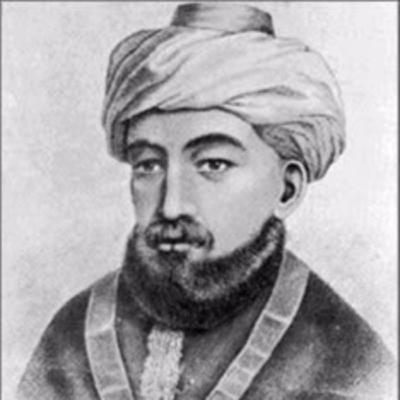
This series of classes addresses the theoretical introduction to the Sefer ha-Mitzvot (Book of Commandments) of the Rambam (Maimonides). Sefer ha-Mitzvot begins with fourteen methodological principles, known in Hebrew as shorashim, that present a uniquely comprensive view of Jewish law. All classes were offered at Congregation Israel in Springfield, NJ by Marc Herman.
23 Episodes
Reverse

This closing class reviews some of the principles and explores how Maimonides counted negative and positive commandments. Sources are available here: https://bit.ly/ShM23.
A special thanks to all listeners and to Congregation Israel of Springfield for hosting. Please be in touch with any comments, questions, and suggestions: hermanm@yorku.ca.
This class deals with the question of how to count the punishments as distinct commandments. Sources are available here: https://bit.ly/ShM22.
This class looks at some of the ways that Maimonides identifies "parts" and "whole" commandments. Sources are available here: https://bit.ly/ShM21.
This class begins the discussion of how Maimonides distinguished between whole commandments and parts of commandments. Sources are available here: https://bit.ly/SHm20.
This class evaluates two distinct complications of the lav shebe-khlalot prohibitions in the second half of Principle Nine. Sources are available here: https://bit.ly/ShM19.
This class introduces the second half of Principle 9 and the various ways that Maimonides defines the talmudic term lav shebe-khlalot (loosely, overly broad prohibitive language) . Sources are available here: https://bit.ly/Shm18.
This class focuses on the first half of Principle 9 and investigates the ramifications of Maimonides's claims that repeated verses teach a single commandment and the violation of each negative incurs just one punishment. Sources are available here: https://bit.ly/ShM17.
This class introduces Principle #9 and outlines some evidence that Maimonides uses for identifying distinct "concepts" that constitute distinct commandments. Sources are available here: https://bit.ly/Shm16.
This class considers the scope of Maimonides's insistence to count only prohibitions ("do not") and not negations ("is not). Sources are available here: https://bit.ly/ShM15
This class explores Maimonides's attempts to identify different "manifestations" or "expressions" of a single commandment. Sources are available here: https://bit.ly/Shm14
This class investigates one aspect reducing Jewish law to precisely 613 commandments, Maimonides's claims about the "manifestations" of larger commandments. Sources are available here: https://bit.ly/shm13
This class explores the how Maimonides and Saadia Gaon treat overlapping positive and negative commandments. Sources are available here: https://bit.ly/shm_12.
This class explores the complications of Maimonides's claim that verses formulated as "reasons" do not count as commandments. Sources are available here: https://bit.ly/ShM11.
This class investigates Maimonides's understanding of biblical verses that cover all of the commandments. Sources are available here: https://bit.ly/Seferhm10.
This class turns to some of the ways that the Rambam navigated ambiguities that pertain to permanent and temporary commandments. Sources are available here: https://bit.ly/shm09.
This class addresses Maimonides's claim that the list of the 613 commandments contains only eternal laws. Sources are available here: https://bit.ly/SHM08.
This class explores Maimonides's categories for unwritten law, such as mi-pi ha-shemu'ah, divre kabbalah, and divre sofrim.
Sources are available here: bit.ly/ShM07.
This class identifies some of Maimonides's guidelines for the determination of whether or not a midrash contains a Sinaitic tradition.
Sources are available here: bit.ly/SeferhaMitzvot06
This class proposes that the second shoresh (principle) addresses only the enumeration of a small number ("three or four") of commandments.
Sources available here: https://bit.ly/ShM05 (PDF file)
This class begins treating the second shoresh (principle) and examines the Rambam's view of laws found in midrash.
Sources available here: https://bit.ly/ShM04 (PDF file)

Comments

Download from Google Play

Download from App Store
 United States