


 Claim Ownership
Daily Creative with Todd Henry
Subscribed: 9,750Played: 133,443
Subscribe


© 2005-2025 Accidental Creative
Description
Formerly The Accidental Creative.
Being a creative professional should be the greatest job in the world. You get to solve problems, express yourself, bring something new into the world and you get paid to do it. What's not to love. Yet every day, creative pros face, tremendous pressure and uncertainty. The temptation is just to play it safe, surrender to distraction and settle for less than your best daily creative is about making sure that's not your story.
Each episode focuses on a topic relevant to creative pros, like how to come up with ideas under pressure, or how the collaborate when you're overwhelmed, or how to lead your team and help them discover motivation.
It's time to fall back in love with your work.
Listen to Daily Creative wherever you get your podcasts or subscribe in the Daily Creative app at dailycreative.app.
Being a creative professional should be the greatest job in the world. You get to solve problems, express yourself, bring something new into the world and you get paid to do it. What's not to love. Yet every day, creative pros face, tremendous pressure and uncertainty. The temptation is just to play it safe, surrender to distraction and settle for less than your best daily creative is about making sure that's not your story.
Each episode focuses on a topic relevant to creative pros, like how to come up with ideas under pressure, or how the collaborate when you're overwhelmed, or how to lead your team and help them discover motivation.
It's time to fall back in love with your work.
Listen to Daily Creative wherever you get your podcasts or subscribe in the Daily Creative app at dailycreative.app.
513 Episodes
Reverse
In this episode, we explore what to do when the weight of uncertainty and overwhelm makes it hard to think, create, or move forward. We open with the legendary survival story of Ernest Shackleton’s Endurance expedition, drawing practical lessons about leadership, adaptability, and creative resilience. When everything spins out of control, it’s not about getting back to what we’ve lost—it’s about reframing the mission and determining the next right move.We dig deep into how overwhelm isn’t just a productivity hiccup, but a genuine threat to creativity and motivation. Drawing on personal experiences and years working with creative leaders, we share three actionable moves for anyone feeling stuck, anxious, or creatively compressed. These aren’t quick fixes; they’re mental models and practices to help talented professionals regain clarity and get unstuck, even when the path ahead is anything but clear.Five Key Learnings from This Episode:Redefine Success in the Moment: When circumstances change, don’t cling to old goals. Instead, ask, “What does winning look like now, with what I have?”Shrink the Target: Limit your field of view. Focus on the one thing you can accomplish today that will make everything else easier or less necessary.Name What’s Actually Wrong: Overwhelm is often a symptom of unrecognized fear or unresolved tension. Identify and write down the specific issue that's weighing on you.Protect a Pocket of Presence: Carve out uninterrupted time—just 20 minutes—to be alone with your thoughts. This helps your mind recover, make connections, and surface what really matters.Remember, Overwhelm Means You Care: Feeling overwhelmed isn’t failing; it’s a sign that you’re carrying meaningful responsibility. You don’t need to solve everything at once. Clarity and small wins create the momentum to move forward.Get full interviews and bonus content for free! Just join the list at DailyCreativePlus.com.
This week, we kicked things off with a story that’s almost too good to be true—the Great Emu War of 1932—and used it to highlight what happens when we try to solve modern problems with old, top-down thinking. As organizations confront complexity and change, we’re not up against simple, centralized challenges anymore; we're facing adaptive, distributed ones.We sat down with Emily Tedards and Jason Wild, co-authors of Genius at Scale. They challenged the myth of the lone genius and shared how true innovation emerges from activating the collective genius within and beyond organizational boundaries. Drawing from research and real-world experience, they revealed why democratizing creativity isn’t just a buzzword—it’s a leadership imperative. We explored their ABC framework: Architect, Bridger, Catalyst, and discussed how leaders can become wayfinders in uncertain times.Then, we brought in Susan Riley, founder of the Institute for Arts Integration and STEAM, to talk about her book Creativity’s Edge. She reframed human creativity as the unique capacity that AI can’t touch—because real creativity isn’t just about finding the right answer; it’s about seeing what doesn’t exist yet and bringing it to life. Susan shared her Four Branches of Creativity, the “three I’s” that set humans apart, and actionable strategies to foster creativity—especially as friction in the process becomes more important in an AI-driven world.This episode is for leaders and creatives who know that having the “best idea” isn’t enough. Instead, the future belongs to those who can unleash genius in themselves and others, build resilient systems, and lead with adaptability and purpose.Five Key Learnings:The Lone Genius is a Myth: Innovation doesn’t depend on one visionary. It thrives in marketplaces of diverse perspectives and constructive conflict.Leadership is Social Architecture: Effective leaders are architects, bridgers, and catalysts—cultivating culture, building partnerships, and activating large-scale innovation movements.Conflict Fuels Innovation: Too little conflict, not too much, is often what impedes progress. Healthy, respectful disagreement leads to better solutions.Wayfinding Over Pathfinding: In uncertain environments, leaders can’t always provide a clear path. Instead, they must clarify purpose and values, creating space for collective exploration and learning.Creativity is Our Edge: AI can’t replicate the generative, integrative process of true creativity. Mastering integration, intention, and innovation allows us to express what only humans can.Get full interviews and bonus content for free! Just join the list at DailyCreativePlus.com.Mentioned in this episode:The Brave Habit is available nowMy new book will help you make bravery a habit in your life, your leadership, and your work. Discover how to develop the two qualities that lead to brave action: Optimistic Vision and Agency.
Buy The Brave Habit wherever books are sold, or learn more at TheBraveHabit.com.Apply for Creative Leader Roundtable What if you had a space every month to sharpen your leadership edge without the fluff? The Creative Leader Roundtable is where smart, driven, creative leaders gather to exchange ideas, solve real challenges, and grow together. So if you lead a team of thinkers, makers, or dreamers, this is your lab.
We're launching soon with a new group of leaders. So, if you're interested, check it out and apply at CreativeLeader.net.
In this episode, we explore a new dimension of intelligence for navigating our rapidly-changing world. We start with the story of Hiroo Onoda, a soldier whose unwavering commitment to a mission long after its context had vanished becomes a powerful metaphor for how rigidity can keep us stuck. We dive deep into "AQ"—Agility Quotient—with Liz Tran, founder of AQ Learning Lab and author of AQ: A New Kind of Intelligence for a World That's Always Changing.Liz breaks down why AQ matters now more than ever, as change, disappointment, and uncertainty become the hallmarks of modern life, exceeding the rates of just decades ago. We unpack the origins and limitations of IQ and EQ, and highlight how AQ is the urgent intelligence we all need to cultivate. Liz shares the four archetypes for handling change—Astronaut, Neurosurgeon, Novelist, and Firefighter—each representing different strengths and pitfalls. We discuss practical strategies for creative leaders to grow their AQ, especially those ahead of the curve who struggle to bring others with them.This episode is a must-listen for anyone committed to staying agile, relevant, and creative as the world evolves beneath our feet.Key Learnings:AQ – Agility Quotient: AQ is our capacity to handle change, disappointment, and uncertainty. It's the essential intelligence for today’s world, complementing IQ and EQ.Rigidity vs. Agility: Sticking to obsolete missions or skillsets—like Hiroo Onoda—illustrates how lack of agility can prevent us from recalibrating when reality shifts. Agility is a mindset, not just a skill.Four Change Archetypes: We all respond to change as either Astronauts, Neurosurgeons, Novelists, or Firefighters, each with unique strengths and blindspots. Awareness of your archetype can help you adapt more skillfully.Durable vs. Technical Skills: Technical skills lose value quickly; it's our durable, transferrable skills—like communication, problem-solving, and reflection—that build true agility and staying power.Bringing Others Along: Especially for creative “astronauts,” practical tools like “giving turn signals” in communication and learning to value the insights of other archetypes are essential for inspiring and leading change.Get full interviews and bonus content for free! Just join the list at DailyCreativePlus.com.Mentioned in this episode:Apply for Creative Leader Roundtable Leading creative people is rewarding, but it can also feel isolating. That's why I've started Creative Leader Roundtable, a private community where leaders like you connect monthly to get practical insights, honest feedback, and real encouragement. You'll leave every round table with fresh perspective and tactical ideas.
You can apply right away. So if you lead a team of talented people, go check us out at CreativeLeader.net, because creative work deserves brave leadership. The Brave Habit is available nowMy new book will help you make bravery a habit in your life, your leadership, and your work. Discover how to develop the two qualities that lead to brave action: Optimistic Vision and Agency.
Buy The Brave Habit wherever books are sold, or learn more at TheBraveHabit.com.
 1
1In this episode, we explore the rarely recognized power of “seeing the here and now.” Using a memorable scene from Spielberg’s Lincoln as a launchpad, we dig into what it really means to rise to those unique, decisive moments that have the potential to alter the trajectory of our organizations, teams, and lives. While it’s easy (and comfortable) to stick to established plans and long-term strategies, the real challenge—and opportunity—lies in perceiving the pressing realities and fleeting openings right in front of us.We break down why leaders often miss out: from the tendency to seek only confirming data, to deferring action until it's "more convenient," or sticking with yesterday's plan at the expense of today's opportunities. We discuss how recognizing and responding to converging tensions, personal convictions, and unexpected resources can set you apart as a brave leader who changes the game. Because, as we remind ourselves, the hardest thing isn't to plan, but to see what’s possible now—and act on it while the window is open.Five Key Learnings:Not all moments are equal. Some situations are true inflection points that demand we notice and act, not simply follow the plan.Comfort can be a blindfold. We naturally avoid disconfirming evidence and delay hard choices, risking missed opportunities.Look for signs. Tensions you’re wrestling with, persistent convictions of conscience, and aligning resources are often signals that something important is at stake.Success can lead to failure. Achieving the wrong goals—because we’re ignoring reality—means we can “succeed our way into failure.”Bravery is seeing and contending with reality. The leaders who change things aren’t always the ones with the best laid plans; they’re the ones who respond bravely to what’s real and present.Get full interviews and bonus content for free! Just join the list at DailyCreativePlus.com.Mentioned in this episode:The Brave Habit is available nowMy new book will help you make bravery a habit in your life, your leadership, and your work. Discover how to develop the two qualities that lead to brave action: Optimistic Vision and Agency.
Buy The Brave Habit wherever books are sold, or learn more at TheBraveHabit.com.
In this episode, we dive deep into the real value of creative work—what we truly get paid for, beyond our time and output. We bring together two insightful thinkers, Rebecca Hinds and Jen Fisher, whose perspectives on meetings and hope transform how we structure our work days and support our teams.We explore why most meetings sabotage productivity and how “visibility bias” tricks us into equating a full calendar with actual progress. Rebecca Hinds (author of Your Best Meeting Ever) challenges us to rethink meetings as products: expensive, important, yet often poorly optimized. She shares actionable strategies like "meeting doomsday" and the "rule of halves" to declutter calendars and refocus collaboration.Shifting gears, we unpack the often-overlooked topic of hope in organizational culture. Jen Fisher (author of Hope Is The Strategy) reframes hope as a strategic, action-oriented process, not just a feel-good slogan. We discuss Gallup’s finding that hope ranks higher than trust as what people want most from leaders, and how misaligned incentives erode both hope and well-being, leading to disengagement and burnout.Throughout, we challenge creative pros to rethink their real value—insight, intuition, and emotional logic—and encourage leaders to create environments where these qualities flourish.Five Key Learnings:Insight is Indispensable: Our unique perspectives, intuition, and courage—not just our time or output—are what make us valuable in creative roles.Meetings Need a Reset: Meetings often serve as a status symbol rather than a tool for progress. Treating meetings as products and regularly auditing their purpose and effectiveness can dramatically improve collaboration.Subtract to Add Value: Applying the “rule of halves”—cutting meeting length, attendees, agenda items, or frequency—forces us to focus on what’s truly essential and breaks the cycle of addition sickness.Hope Is Strategic, Not Sentimental: Hope is a cognitive, actionable process that drives teams forward. Organizations must foster strategic hope to encourage risk-taking and innovation.Alignment Drives Well-being: Stated values must match incentives and systems. Misalignment between what leaders say and reward creates dissonance, burnout, and disengagement.Get full interviews and bonus content for free! Just join the list at DailyCreativePlus.com.Mentioned in this episode:The Brave Habit is available nowMy new book will help you make bravery a habit in your life, your leadership, and your work. Discover how to develop the two qualities that lead to brave action: Optimistic Vision and Agency.
Buy The Brave Habit wherever books are sold, or learn more at TheBraveHabit.com.
On this episode of Daily Creative, we explore the myth of the lone genius and make the case for why sustainable creative brilliance happens when we grow and nurture real relationships. We’re joined by Daniel Coyle, bestselling author and researcher, whose new book Flourish examines how true growth emerges not through competition, but through intentional connection and community.We discuss why relationships sit at the heart of creativity, what it means to build a meaningful circle, and how to design environments where both individuals and groups can grow. Daniel shares practical insights on “making meaning” and “group flow,” illustrating how small acts—like telling stories or organizing joyful gatherings—can catalyze shared energy and transformation. We reflect on why the most profound creative work, and indeed the solutions to our most complex problems, are more likely to be found at the neighborhood level than through grand top-down initiatives.This conversation isn’t just about feeling less alone; it’s a blueprint for intentional action in your creative life. We leave you with a challenge: take one step this week to strengthen your creative community, whether that’s reaching out to a peer, convening a group, or simply asking deeper questions.Five Key Learnings from the Episode:Community Is Creative Infrastructure: Creativity doesn’t thrive in isolation. The most resilient, sustainable creative work is built on relationships that provide stability, challenge, and honest feedback.Cultivate, Don’t Compete: Flourishing is about shared, meaningful growth—think gardens, not games. Real creative communities are spaces for nurturing, not just winning or accumulating.Design for ‘Beautiful Messes’: Innovation and group flow emerge when we intentionally create environments where people can experiment, collaborate, and bring out new facets in each other—even if things get a little messy.Deep Questions Build Trust: Asking ambiguous, personal “deep questions” unlocks vulnerability, connection, and trust far more quickly than waiting for trust to appear before opening up.Power With, Not Power Over: Leaders unleash real growth when they support, ask great questions, and give power away—moving from controlling outcomes to facilitating collective brilliance.Get full interviews and bonus content for free! Just join the list at DailyCreativePlus.com.Mentioned in this episode:The Brave Habit is available nowMy new book will help you make bravery a habit in your life, your leadership, and your work. Discover how to develop the two qualities that lead to brave action: Optimistic Vision and Agency.
Buy The Brave Habit wherever books are sold, or learn more at TheBraveHabit.com.Apply for Creative Leader Roundtable What if you had a space every month to sharpen your leadership edge without the fluff? The Creative Leader Roundtable is where smart, driven, creative leaders gather to exchange ideas, solve real challenges, and grow together. So if you lead a team of thinkers, makers, or dreamers, this is your lab.
We're launching soon with a new group of leaders. So, if you're interested, check it out and apply at CreativeLeader.net.
In this episode, we dive deep into the evolving relationship between human creativity and artificial intelligence. Inspired by Ada Lovelace's early vision of creative machines, we explore how the boundaries between expertise and common sense have been reshaped by modern AI, from expert systems to today's generative models. We sit down with pioneers and practitioners—Vasant Dhar, a longtime AI researcher and author of Thinking With Machines; Christopher Mims, technology journalist and author of How To AI; and the creators of Tachi AI, Aden Bahadori and Brett Granstaff—to discover how AI is shifting not only what we make but how we make it.We unpack the promise and the pitfalls of treating AI as a true thinking partner, not just a tool for automation. Our guests share practical strategies for using AI to augment creative work, streamline tedious tasks, and enhance idea generation—while emphasizing the necessity of human framing, expertise, and judgment. Whether you're a leader, designer, marketer, or filmmaker, we reveal why using AI thoughtfully is the real competitive edge in creative fields and business.Five Key Learnings:AI’s Compounding Edge: Utilizing AI consistently and benchmarking progress gives creatives and teams a multiplying advantage—not by replacing human originality, but by amplifying it through incremental improvements.Framing Questions Matter: The ability to ask the right, nuanced questions remains fundamentally human, and is essential when using AI as a partner in ideation, research, and strategy.Context and Expertise Are Critical: Experts benefit most from AI—leveraging their knowledge to dig deeper, validate outputs, and push beyond generic solutions, while ensuring originality in their work.AI as Scaffolding, Not a Substitute: The greatest value of AI today is in reducing friction and clearing time for creativity—whether it’s summarizing information, managing knowledge, or prepping film edits—so humans can focus on what matters.Human-Centric, Supportive AI: Tools like Tachi AI demonstrate that supporting creativity is more transformative than automating it; AI as infrastructure enables faster iteration and more creative decision-making, not just higher productivity.Get full interviews and bonus content for free! Just join the list at DailyCreativePlus.com.Mentioned in this episode:To listen to the full interviews from today's episode, as well as receive bonus content and deep dive insights from the episode, visit DailyCreativePlus.com and join Daily Creative+.The Brave Habit is available nowMy new book will help you make bravery a habit in your life, your leadership, and your work. Discover how to develop the two qualities that lead to brave action: Optimistic Vision and Agency.
Buy The Brave Habit wherever books are sold, or learn more at TheBraveHabit.com.
Episode 92: OwnershipDaily CreativeIn this episode, we dive into the nuanced meaning of ownership in creative work and leadership. As the landscape is rapidly transformed by AI and powerful new tools, we explore the temptation to offload not just labor but also the very thinking that gives our work its unique signature. We unpack what it means to retain genuine ownership of process, relationships, and output—moving beyond merely curating machine-generated results and instead staying empathetically engaged in the creative process.Our guest, Greg Hawks, joins us to challenge the difference between “owners”, “renters”, and “vandals” in organizations. He brings fresh perspective on why many disengage, how environments subtly encourage or discourage ownership, and what teams and leaders can do to foster a climate where true creative engagement thrives.Some of the themes we touch on include:The fine balance between leveraging technology for efficiency and maintaining our emotional logic in creative decisionsWhy struggle and friction are the crucibles of meaningful, resonant workHow organizations inadvertently suppress ownership—and how to change that dynamicConcrete strategies for shifting from a renter to an owner mindsetThe powerful impact of reducing toxic “vandal” behavior on overall team engagementFive Key Learnings:Offloading too much of the creative process—especially decision-making—can hollow out our unique voice and intuition.Emotional logic, shaped by lived experience and intuition, is irreplaceable and differentiates meaningful work from mere output.Vandals—self-centered, divisive team members—can demotivate large segments of an organization, and removing them often unlocks higher engagement.True ownership requires us to understand the personal “returns” we seek (emotional, financial, relational, opportunity, growth) and articulate them courageously.Struggle and friction aren’t just obstacles—they’re where creative insight emerges and individual judgment is strengthened.Get full interviews and bonus content for free! Just join the list at DailyCreativePlus.com.Mentioned in this episode:The Brave Habit is available nowMy new book will help you make bravery a habit in your life, your leadership, and your work. Discover how to develop the two qualities that lead to brave action: Optimistic Vision and Agency.
Buy The Brave Habit wherever books are sold, or learn more at TheBraveHabit.com.
In this episode, we dive deep into the human urge to create—what fuels it, why it feels so essential, and how we can harness it more intelligently in our work. We are joined by psychologist George Newman (author of How Great Ideas Happen) and philosopher Rebecca Newberger Goldstein (author of The Mattering Instinct), who guide us through both the mechanics and meaning of creativity.We explore why creativity is not just a talent or an act, but a fundamental human response that pushes back against chaos and entropy. George Newman unpacks the myths of the "lone genius," showing us that real creative breakthroughs emerge from collaboration, exploration, and persistent engagement—not isolation. He introduces smart frameworks for idea development, including gridding, transplanting, and overcoming the “originality ostrich effect” and the “creative cliff illusion.”Rebecca Newberger Goldstein takes us a level deeper, exploring why our drive to create is intimately tied to our need for meaning and validation. She discusses the “mattering instinct”—the pursuit of significance—and explains why conflict, resistance, and friction in organizations are often expressions of this core human need. Together, these conversations reveal how creativity is both an existential response and a practical tool for leadership and team health.Five Key Learnings:Great ideas aren’t conjured in isolation. Creative breakthroughs come from ongoing engagement, trial and error, and exposure to new perspectives—not from waiting for inspiration alone.Originality is often misunderstood. Striving to be radically original can backfire; the most resonant ideas have personal freshness but build on approachable, recognizable foundations.Guiding questions and iterative refinement matter. Defining and regularly reframing your creative questions ensures you’re solving the right problems and making meaningful progress.Discomfort signals opportunity, not failure. The “creative cliff illusion” means our best ideas may arrive late in the process, and discomfort is often a sign that transformation is near.Creativity is deeply connected to our need to matter. According to Rebecca Newberger Goldstein, our drive to create stems from our longing for meaning and significance—making every act of creation a resistance to insignificance and entropy.Get full interviews and bonus content for free! Just join the list at DailyCreativePlus.com.Mentioned in this episode:The Brave Habit is available nowMy new book will help you make bravery a habit in your life, your leadership, and your work. Discover how to develop the two qualities that lead to brave action: Optimistic Vision and Agency.
Buy The Brave Habit wherever books are sold, or learn more at TheBraveHabit.com.

In today’s episode, we explore what it means to create work that lasts not just for the next trend cycle, but for generations. We dive deep into the interplay of intuition, identity, and intentionality that underpins creative longevity, and how these often-invisible forces guide great design, resilient businesses, and enduring cultural impact.We sit down with two very different thinkers whose experiences mirror this theme. First, we hear from Robert Brunner, renowned industrial designer and founder of Ammunition Design Group, whose work includes designing Beats by Dre headphones and pioneering shifts at Apple. He shares stories of working with some of the world’s most creative—and opinionated—collaborators, and how intuition fused with empathy leads to breakthrough products.Next, we talk with Neri Karra Sillaman, a scholar and author of Pioneers: Eight Principles of Business Longevity from Immigrant Entrepreneurs. Her research unpacks why immigrant-founded companies tend to outlast their peers—not simply due to external market factors, but because of internal clarity, community orientation, and the reframing of adversity.We broaden the lens from iconic objects to enduring enterprises, discovering through-lines that shape both remarkable products and resilient organizations.Five Key Learnings from the Episode:Intuition is Earned, Not Mystical: We learn that intuition isn’t some innate gift—it’s the result of deep attention, lived experience, and empathy, brought to bear at critical moments of creation.Identity Drives Longevity: Durable work starts internally, rooted in a clear understanding of who we are and what matters to us. This self-knowledge—tempered by adversity or migration—shapes everything from product design to business models.Collaboration Requires Respect and Empathy: Great breakthroughs often emerge from teams with diverse perspectives. Navigating strong personalities and creative differences means honoring others’ ideas and creating environments where bold work can thrive.Community and Shared Value Matter: We see how leaders build enterprises to last by weaving strong communities and ecosystems, deliberately involving employees and stakeholders, and focusing on shared value over short-term profit.Resilience is Built Through Reframing Rejection: Successful creators and entrepreneurs don’t see setbacks as verdicts on their worth—instead, rejection is information and an invitation to try again, often with even more clarity and resolve.Get full interviews and bonus content for free! Just join the list at DailyCreativePlus.com.Mentioned in this episode:The Brave Habit is available nowMy new book will help you make bravery a habit in your life, your leadership, and your work. Discover how to develop the two qualities that lead to brave action: Optimistic Vision and Agency.
Buy The Brave Habit wherever books are sold, or learn more at TheBraveHabit.com.Apply for Creative Leader Roundtable Leading creative people is rewarding, but it can also feel isolating. That's why I've started Creative Leader Roundtable, a private community where leaders like you connect monthly to get practical insights, honest feedback, and real encouragement. You'll leave every round table with fresh perspective and tactical ideas.
You can apply right away. So if you lead a team of talented people, go check us out at CreativeLeader.net, because creative work deserves brave leadership.
What happens when the chase is over and the dream is finally caught? In this episode, we sit down with Lionel Cartwright—whose career soared to the top of the country music charts—to explore the rarely discussed crossroads of success. After years of relentless pursuit, Lionel achieved all the milestones he’d imagined: record deals, number one hits, and recognition. Yet, in those quiet moments away from the spotlight, he was confronted with the unexpected question: Is this it?We follow Lionel’s journey from cover band beginnings and publishing deals, to Nashville stardom and the unexpected tug to redesign his life. Along the way, we unpack the paradox of ambition, the need for alignment over applause, and the courage required to leave "success" behind for something more sustainable.Together, we challenge leaders and creative pros to pause, reassess whether momentum is driving their choices, and listen for the subtle signs that realignment might be overdue.Five Key Learnings from the Episode:Chasing the Dream Isn’t the Finish Line: Pursuing success provides meaning and adrenaline, but catching it brings new questions about fulfillment and sustainability.Beware of Momentum’s Seduction: Success often leads to expectations and obligations that can detach us from what truly sustains us.Alignment Beats Applause: True creative bravery lies in pursuing work that fits who we are, rather than playing roles imposed by past ambitions or industry pressures.Listen to Your Inner Voice: Quiet whispers of misalignment are worth investigating, no matter how much time or energy you’ve invested in the chase.Redirection Isn’t Failure: Leaving a high-profile path to redesign your work around life—rather than vice versa—is one of the bravest moves a creative professional can make.Get full interviews and bonus content for free! Just join the list at DailyCreativePlus.com.Listen to Todd's interview on Lionel's podcast Off The Charts: Spotify - Apple Podcasts
This week, we celebrate a major milestone... 20 years of the podcast! The first episode of The Accidental Creative launched in December 2005. While this is episode 88 of the re-branded version, Daily Creative, this is something like episode 1,398 of the podcast. We take a reflective journey back to where it all began, unpacking the origin story of the show and the creative work that continues to shape everything we do.Todd shares the challenges of being a young creative director attempting to help a team thrive under relentless pressure, while also confronting his own ambitions and the ever-present risk of burnout. He digs into the early days of creative community-building (over coffee in Cincinnati), the revelation that healthy, productive creativity was possible, and the pivotal experiments that inspired him to share our ideas through the newly emerging medium of podcasting.We revisit the genesis of “The Accidental Creative,” recounting the surprise of discovering a growing audience, and how the podcast became a launching pad—not just for a community, but for books, company invitations, and interviews with creativity legends.Todd also breaks down crucial moments behind his most influential books, including how a single candid conversation with a publisher unlocked the process for Die Empty, and why Louder Than Words remains a favorite despite modest sales. Through it all, Todd highlights the non-obvious lessons that define a creative career: trusting the work, letting your audience find you, and embracing friction as an ally rather than an obstacle.To the listeners, supporters, and creative pros who have joined us week after week—thank you. Here’s to the past 20 years, and the decades to come.Five Key Learnings from This Episode:Success Is Layered, Not Linear: The “big deal”—whether it’s a book contract or viral moment—is only the true starting line. Real creative progress builds in stages and unexpected iterations.Experimentation Unlocks Opportunity: Sharing what we were learning (even when unsure or new) was the secret to resonance and growth. Community comes from honest experimentation.Outside Perspective Is Essential: Creative pros often get stuck in their own heads. Inviting editors, mentors, or collaborators can break patterns and unlock genuine progress.Let the Work Find Its Audience: Not every project will land where we expect, and that’s okay. Sometimes our work will deeply impact people we never predicted—and that’s its own success.Friction Fuels Growth: Instead of removing all obstacles, thoughtful creators learn to leverage friction—slow down, synthesize, and let intuition do its work.Get full interviews and bonus content for free! Just join the list at DailyCreativePlus.com.
In December 2025, we celebrate something special—twenty years of this podcast, which first launched as Accidental Creative in December 2005. We reflect on how starting, even with imperfect beginnings, is an essential part of a creative journey. In this episode, we draw insights from the book Daily Creative, sharing a series of thought-provoking essays designed for creative professionals navigating the end of the year.We explore themes from balance and priorities (Rubber and Glass Balls), beginner’s mindset (Just One Song), the power of working from what’s known (The Edge Pieces), and the importance of knowing what “actual work” is (When You’re Working). Each essay comes with a practical application question to help leaders and creative pros pause, reflect, and reset for the coming year.If you’re looking for a ritual or rhythm to keep your creative juices flowing and your mindset sharp, this episode is packed with reminders and prompts to help you refocus and get ready for fresh challenges ahead.Five Key Learnings:Starting Imperfectly Is Essential: Early creative work will rarely be polished, but the act of beginning is what opens the door to growth and excellence.Protect the Fragile Elements of Life: Not everything rebounds after a setback; relationships, health, friendships, and spirit deserve proactive care and attention.Approach Work Like a Beginner: Tackling each project with fresh enthusiasm and curiosity ignites new insights, regardless of past experience.Solve Problems Starting With What You Know: Like edge pieces in a puzzle, letting your certainties frame the unknowns brings clarity to complex creative challenges.Distinguish Busyness from True Work: Knowing which activities actually create value helps redirect energy away from distraction and toward your core genius.Get full interviews and bonus content for free! Just join the list at DailyCreativePlus.com.Mentioned in this episode:Apply for Creative Leader Roundtable Every creative team needs a leader who's brave, focused, and brilliant, but none of us get there alone. The Creative Leader Roundtable is your place to connect with peers, sharpen your leadership craft, and stay inspired for the long haul. We're about to launch with a brand new group of leaders.
So, if you're interested, visit CreativeLeader.net to learn more and to apply. Great leadership is a practice, not an accident.
In this episode of Daily Creative, Todd Henry explores the subtle ways in which we avoid true commitment to our creative and professional ambitions. Todd discusses the concept of "escape hatches"—the backup plans, excuses, and rationalizations that prevent us from risking real vulnerability and discovering what we’re truly capable of. Drawing from personal stories and practical frameworks, we unpack three common escape hatches that undermine creative and leadership excellence: procrastination and last-minute work, dilution and divided attention, and backward rationalization of success.Todd also digs into actionable strategies to help you spot these patterns in your work, close escape hatches, and move forward with greater intentionality. Whether you lead teams, dream of launching a business, or simply want your creative efforts to have more impact, this episode offers practical, non-obvious guidance for getting braver, more focused, and brilliant every day.Five Key Learnings from the Episode:Escape hatches often feel like wisdom, but are usually just disguised fear. We tend to rationalize delay or avoid commitment under the guise of being "prudent," when in reality it is keeping us from meaningful progress.Procrastination and last-minute work protect us from knowing what our best effort truly looks like. Setting step goals and using time blocking can counter the urge to push everything to the last minute and drive more consistent creative output.Dilution and divided attention dilute impact. By focusing on your "Big Three" priorities and carving out protected space to pursue them, you ensure that your energy is devoted to what matters most—and can actually achieve excellence.Backward rationalization undermines growth. Defining what success looks like in advance and creating external accountability removes the temptation to justify poor outcomes, fostering honest self-assessment and improvement.Real creative progress requires closing escape hatches, even though they seem safe. The real safety comes from confidence in your ability to adapt, not from having endless backup plans.Get full interviews and bonus content for free! Just join the list at DailyCreativePlus.com.Mentioned in this episode:Apply for Creative Leader Roundtable What if you had a space every month to sharpen your leadership edge without the fluff? The Creative Leader Roundtable is where smart, driven, creative leaders gather to exchange ideas, solve real challenges, and grow together. So if you lead a team of thinkers, makers, or dreamers, this is your lab.
We're launching soon with a new group of leaders. So, if you're interested, check it out and apply at CreativeLeader.net.
In this episode, we take a step back from our typical interview format to reflect on something many creative leaders are feeling right now: a subtle but persistent sense of drift amidst uncertainty. Drawing from recent conversations with leaders worldwide, Todd Henry digs into the changing dynamics of organizations, shifting marketplaces, and the unique challenges and numbness that come with these times.Instead of providing easy answers, Todd shares five uncomfortable—but essential—questions designed to provoke deep reflection for anyone with influence, whether you lead a team, guide clients, or simply shape decisions in your organization. He explores how apparent success can mask underlying misalignment, the dangers of leading from within an echo chamber, the paralyzing fear of looking foolish, the temptation of ego-driven systems, and the fine line between creating stability and fostering complacency in teams.This episode is an invitation to wrestle with the deeper work of leadership, sense-check our motives, and create environments where honest conversations and breakthrough ideas can flourish.Five Key Learnings:Success Can Be a Trap: Achieving goals and hitting metrics doesn’t always equate to true progress if we lose sight of our original purpose. We must vigilantly check what we’re really optimizing for.Truth-Telling is Essential: Leadership naturally creates distance. If we don’t intentionally invite honest feedback (even if it stings), we risk operating in a false sense of alignment.Risking Embarrassment Fosters Innovation: Many great ideas die because we’re afraid to look foolish. Innovation demands courage, and that courage is strengthened by sharing bold ideas in safe, trusted circles.Ego vs. Mission: It’s easy to unconsciously build systems that feed our ego under the guise of excellence or mission. The real test: Would we do the work if nobody noticed?Stability Isn’t Safety: Teams crave both challenge and stability, but protecting them too much can lead to complacency. The goal is to create security so that bold, meaningful risks—and growth—are possible.Get full interviews and bonus content for free! Just join the list at DailyCreativePlus.com.Mentioned in this episode:The Brave Habit is available nowMy new book will help you make bravery a habit in your life, your leadership, and your work. Discover how to develop the two qualities that lead to brave action: Optimistic Vision and Agency.
Buy The Brave Habit wherever books are sold, or learn more at TheBraveHabit.com.Apply for Creative Leader Roundtable Leading creative people is rewarding, but it can also feel isolating. That's why I've started Creative Leader Roundtable, a private community where leaders like you connect monthly to get practical insights, honest feedback, and real encouragement. You'll leave every round table with fresh perspective and tactical ideas.
You can apply right away. So if you lead a team of talented people, go check us out at CreativeLeader.net, because creative work deserves brave leadership.
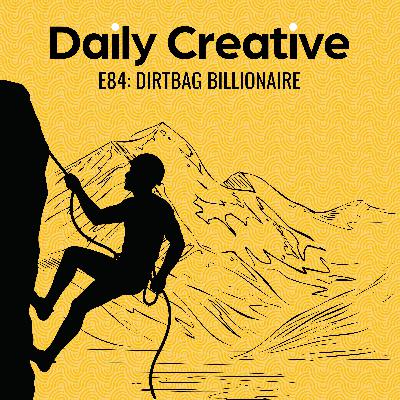
In this episode, we explore the unconventional story of Yvon Chouinard, the “dirtbag” climber who became the founder of Patagonia and ultimately gave away his billion-dollar company to protect its mission. In conversation with David Gelles—New York Times journalist and author of Dirtbag Billionaire—we dig into the paradoxes of success, the power of awareness, and the ongoing tension between principle and profit. We discuss how Chouinard’s love for the outdoors led him to create climbing gear out of necessity, and how his refusal to ignore the negative impact of his products shaped Patagonia’s legacy of environmental stewardship and values-driven leadership.We reflect on how meaningful work often reveals itself not through grand visions, but through paying attention to the patterns and tensions within our everyday actions. The episode challenges leaders and creatives to reconsider what it means to act with integrity and to recognize the marks—both good and bad—we leave through our work. Chouinard’s story offers a blueprint for leading with conviction, making hard calls in service of a greater purpose, and understanding that values build momentum over time.Five Key Learnings from the Episode:Calling is Revealed, Not Found: Purpose often unfolds through the work we’re already doing, showing itself in the problems we care about and the frustrations we can’t ignore.Principle Over Profit: True leadership is measured not by stated values, but by the sacrifices made when those values clash with financial incentives—as shown when Patagonia prioritized environmental impact over sales.Awareness Precedes Change: Staying attentive to the second- and third-order effects of our decisions is essential for creating lasting positive impact and avoiding unintended harm.Success Requires Restraint: Responsible growth means not chasing expansion at all costs, but deliberately throttling progress to ensure alignment with core mission and sustainable practices.Legacy is Built Through Consistent Integrity: Values-driven decisions compound over time, creating an enduring legacy that outlasts individual achievements or wealth.Get full interviews and bonus content for free! Just join the list at DailyCreativePlus.com.Mentioned in this episode:Apply for Creative Leader Roundtable Leading creative people is rewarding, but it can also feel isolating. That's why I've started Creative Leader Roundtable, a private community where leaders like you connect monthly to get practical insights, honest feedback, and real encouragement. You'll leave every round table with fresh perspective and tactical ideas.
You can apply right away. So if you lead a team of talented people, go check us out at CreativeLeader.net, because creative work deserves brave leadership.
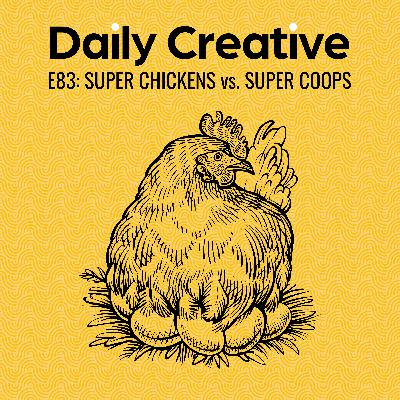
For decades, we've been told that high performance is about gathering the brightest stars—the so-called “super chickens”—onto one team and watching the magic happen. But what if this approach is exactly what’s holding us back? In this episode, we challenge the myth of the lone genius and superstar culture, inspired by the research of evolutionary biologist William Muir and our guest, Jon Levy, author of Team Intelligence.We dig into why the true driver of organizational excellence isn’t the brilliance of any one leader or individual, but the collective effectiveness of the team. Jon shares surprising findings from research on team dynamics, showing that stellar individual credentials often don’t correlate with high-performing teams—and sometimes even torpedo them. Together, we explore what makes teams “intelligent,” the concept of bursty communication, and the underappreciated power of “glue players”—team members who multiply the effectiveness of everyone around them, often quietly and behind the scenes.If you’ve ever found yourself thinking, “We have the right people, so why aren’t we clicking?”, this conversation gives you an entirely new framework for team effectiveness. It’s not about outshining one another; it’s about amplifying each other.Five Key Learnings:The Super Chicken Fallacy: Prioritizing only high-performing individuals can lead to toxic rivalry and stifle collaboration, ultimately reducing the team’s overall output.Fluid Leadership: Effective teams allow leadership to flow based on expertise, not title—leadership shifts to those best suited to solve the problem at hand.Emotional Intelligence Matters Most: The best predictor for team effectiveness is the group’s collective emotional intelligence, not the average or highest IQ.Glue Players Are Multipliers: Certain team members—rarely the stars—can significantly raise the performance of those around them by prioritizing team success, facilitating communication, and demonstrating forward-thinking.Aligned Incentives Create Real Teamwork: Misaligned incentives that reward only individual performance sow competition; when incentives support team outcomes, collective intelligence and output flourish.Get full interviews and bonus content for free! Just join the list at DailyCreativePlus.com.Mentioned in this episode:Apply for Creative Leader Roundtable What if you had a space every month to sharpen your leadership edge without the fluff? The Creative Leader Roundtable is where smart, driven, creative leaders gather to exchange ideas, solve real challenges, and grow together. So if you lead a team of thinkers, makers, or dreamers, this is your lab.
We're launching soon with a new group of leaders. So, if you're interested, check it out and apply at CreativeLeader.net.
In this episode, we dive deep into what it truly means to sustain high performance—without losing ourselves along the way. We explore why the relentless pursuit of optimization can leave us exhausted, disconnected, and ultimately unsatisfied, even as our productivity dashboards look more impressive than ever.We sit down with Dr. James Hewitt, a human performance scientist and author of Regenerative Performance, who challenges the contemporary obsession with “optimization.” Instead, he offers a fresh perspective: success is about rhythm, not balance. We discuss how alternating between periods of intense focus and intentional renewal is not just effective, but necessary.Also joining us is Jim Murphy, author of Inner Excellence, whose coaching of elite athletes and leaders centers on training not just the mind, but the heart. Jim’s journey—including a literal desert retreat—led him to believe that excellence is grown from within, through the cultivation of peace, confidence, and love, especially under pressure.Together, we examine why greatness isn’t something you manufacture through sheer effort. It’s something that arises when you let go, reconnect, and cultivate an inner life that is in sync with your values and goals.Five Key Learnings from the Episode:Optimization Fatigue Is Real: Tracking and optimizing every aspect of life can actually diminish well-being and life satisfaction rather than increase it.Rhythm Beats Balance: Sustained high performance depends on deliberate alternation between deep engagement and meaningful renewal, not on chasing a mythical state of balance.Recovery Requires Intention: Proactive, scheduled breaks—including exposure to nature and engaging in supportive social interactions—are critical for true restoration and creativity.Excellence Comes from the Heart: Training your heart—clarifying your life purpose, embracing vulnerability, and mastering the ego—is more impactful than simply mastering skills.Self-Centeredness Is the Core Obstacle: Overcoming the default setting of self-focus opens the door to authentic creativity and connection, but it requires the courage to face discomfort and uncertainty.Get full interviews and bonus content for free! Just join the list at DailyCreativePlus.com.Mentioned in this episode:Apply for Creative Leader Roundtable What if you had a space every month to sharpen your leadership edge without the fluff? The Creative Leader Roundtable is where smart, driven, creative leaders gather to exchange ideas, solve real challenges, and grow together. So if you lead a team of thinkers, makers, or dreamers, this is your lab.
We're launching soon with a new group of leaders. So, if you're interested, check it out and apply at CreativeLeader.net.Apply for Creative Leader Roundtable Leading creative people is rewarding, but it can also feel isolating. That's why I've started Creative Leader Roundtable, a private community where leaders like you connect monthly to get practical insights, honest feedback, and real encouragement. You'll leave every round table with fresh perspective and tactical ideas.
You can apply right away. So if you lead a team of talented people, go check us out at CreativeLeader.net, because creative work deserves brave leadership.

In this episode, we dive deep into the paradoxical space where creativity thrives: the intersection of safety and danger. Drawing inspiration from IDEO’s iconic reinvention of the shopping cart, we explore how play, risk, and psychological safety fuel real innovation. We’re joined by Ben Swire—author of “Safe Danger” and former IDEO design lead—and Cas Holman, designer and author of “Playful,” to rethink the role of play and trust in work, leadership, and life.Ben shares why “safe danger” is the sweet spot creative teams need: an environment where people feel secure enough to step outside their comfort zones, challenge the norm, and speak candidly. We unpack why “comfort” is often mistaken for true safety—and why suppressing tension or chasing certainty kills innovation. Through real-world anecdotes, Ben reveals how play isn’t just childish fun; it’s a training ground for courage, trust, curiosity, and honest collaboration.Cas invites us to rediscover the lost art of playful exploration in adulthood. She challenges the myth that creative people crave boundless freedom—showing instead how constraints and a bit of friction spark our best ideas. We discuss how reframing success and experimenting with “what if” moments in daily life cultivates the resilience and curiosity critical for growth. The real challenge? Overcoming our aversion to looking foolish, letting go of performative pressures, and making the unknown a place of opportunity rather than fear.Five Key Learnings:True safety isn’t comfort—it’s the courage to challenge, take risks, and show up authentically.Play is not an escape from work; it’s the work. The most innovative teams use play as a safe way to experiment and lower the perceived risk of failure.Constraints are generative, not restrictive. Boundaries and rules give creative minds something to push against, sparking deeper engagement and originality.Psychological safety consistently drives team performance, innovation, and retention—not carrot-and-stick incentives or relentless productivity.Embracing challenge, reframing success, and maintaining curiosity in the face of uncertainty build resilience, satisfaction, and lasting creative growth.Get full interviews and bonus content for free! Just join the list at DailyCreativePlus.com.Mentioned in this episode:Apply for Creative Leader Roundtable Every creative team needs a leader who's brave, focused, and brilliant, but none of us get there alone. The Creative Leader Roundtable is your place to connect with peers, sharpen your leadership craft, and stay inspired for the long haul. We're about to launch with a brand new group of leaders.
So, if you're interested, visit CreativeLeader.net to learn more and to apply. Great leadership is a practice, not an accident. Apply for Creative Leader Roundtable Leading creative people is rewarding, but it can also feel isolating. That's why I've started Creative Leader Roundtable, a private community where leaders like you connect monthly to get practical insights, honest feedback, and real encouragement. You'll leave every round table with fresh perspective and tactical ideas.
You can apply right away. So if you lead a team of talented people, go check us out at CreativeLeader.net, because creative work deserves brave leadership.
Episode 80: Lucky By Design – Show NotesIs luck really just random, or can we engineer it? In this episode, we explore how “luck” is often the result of preparation, pattern recognition, and a deep understanding of hidden systems that shape opportunity. Drawing from the unlikely success story of Gary Dahl’s Pet Rock and the groundbreaking research of Wharton economist Judd Kessler and his new book Lucky By Design, we dig into the ways luck is built, not found.Judd Kessler introduces his framework of “hidden markets,” where things like tickets, jobs, and creative opportunities aren’t always allocated by price or obvious mechanisms. Instead, they’re shaped by invisible rules that govern access and advantage. We discuss the “three E’s”—efficiency, equity, and ease—as the building blocks of these markets, and examine real strategies to decode the signals and systems at play.Along the way, we unpack how showing up prepared, making it easy for others to work with us, and understanding the actual rules of the game can help leaders and creative professionals tilt the odds in their favor. We also take on the coming wave of AI-driven speed and automation, and ask what it means for authentic signaling in a world where bots are getting faster and smarter.Five Key Learnings from the Episode:Luck favors the prepared. What looks like serendipity is often the outgrowth of discipline, awareness, and the willingness to build a “door” for opportunity to knock on.Hidden markets have hidden rules. Whether it’s a ticket lottery or landing a client, outcomes are shaped by underlying systems—not just price or “fairness.” Learn the rules, and you can play the game more strategically.The three E’s—Efficiency, Equity, and Ease—are metrics for opportunity. Whether trying to get noticed, land a deal, or hire the right people, balancing these three helps you become the option others choose.Reducing friction creates value. In creative and business relationships, being easy to work with and removing obstacles can be a more powerful signal than raw talent alone.Signals matter more than ever in the age of AI. As automation makes it cheap and easy to fake enthusiasm or speed, genuine signals—like real relationships and proven follow-through—become even more vital.Get full interviews and bonus content for free! Just join the list at DailyCreativePlus.com.Mentioned in this episode:Apply for Creative Leader Roundtable Leading creative people is rewarding, but it can also feel isolating. That's why I've started Creative Leader Roundtable, a private community where leaders like you connect monthly to get practical insights, honest feedback, and real encouragement. You'll leave every round table with fresh perspective and tactical ideas.
You can apply right away. So if you lead a team of talented people, go check us out at CreativeLeader.net, because creative work deserves brave leadership.


Download from Google Play

Download from App Store
 United States
This episode really resonated with me. Thank you Todd and the team. I have long thought I am just not motivated enough but I think it will be worth exploring what my motivations are.
really insightful podcast. Thanks. I'm going to source the book to understand the ideas better.
The job of a leader is to remove emotional waste in their people so they can think more clearly about their world (and their work). 👌🏾
Engagement - Accountability = Entitlement 👊🏾🤟🏾
You guys have created one of the best podcasts for creatives. I absolutely love the content you all create with pinpoint topics. Keep creating great work!
is that enneagram tho?
Amazing episode, thank you for sharing your story.
I was quite disappointed to hear video games referred to as mindless activities, having worked several years in this industry full of outstanding creative talents (and probably a few listeners of this podcast). They can be tremendously stimulating too, both intellectually and creatively. Hoping your point of view will change :).
Enjoyed this episode, thanks. The index is the key, right? I'm curious what you do with all of your past journals? I fill maybe 2 or 3 a year and they are just collecting like so much clutter! do you keep them in chronological order and look back? toss them after a certain time? thanks.
ggggggggggvgff ffggftvffvgbffffbttfggf vfgffggvtvfgfgggg gggggn u. I b. n
Thank you so much for this episode! I needed to hear this and be reminded.
very good
very inspirational
awesome and inspiring! keep it up TH!