


 Claim Ownership
Agency Blueprint
Subscribed: 11Played: 724
Subscribe

© Copyright 2021 All rights reserved.
Description
The Agency Blueprint Podcast is for Agency Owners looking to explore strategies for scaling a truly profitably agency, reducing stress and getting your personal life back. Hosted by Robert Patin International Best Selling Author, Business Coach and Contract CFO for Creative Agencies.
218 Episodes
Reverse
How often do you pause to examine whether growth is actually strengthening the business or simply stretching it thinner? Is your agency growing in size but shrinking in strength because of external pressures, or because your internal systems were never built to sustain real scale? In this episode of The Agency Blueprint podcast, I’m joined by Nick Avaria to discuss why so many agencies become less profitable as they grow. Nick is a serial agency entrepreneur who has scaled multiple agencies past seven and eight figures, buying and selling seven along the way. He has merged leadership teams and cultures and now helps agency owners escape burnout and build highly profitable, scalable businesses. Listen in to learn why agencies churn clients, not because of poor results, but because of poor service leadership. You will also learn how operational clarity directly shapes performance, accountability, and long-term scalability. Key Questions: [01:00] How could your agency grow its revenue year after year yet still see shrinking margins and increased chaos? [04:36] Are you defining “service” too narrowly, focusing on creative output instead of client leadership, communication, and insight? [19:50] Are you truly facing a lead-generation problem, or is a deeper systems issue creating bottlenecks that you’re misdiagnosing? [27:34] Is your agency tracking the right amount of data, or have you crossed into the zone of information overload where metrics no longer drive behavior? What You’ll Discover: [01:32] The three core levers that determine pricing power, client retention, and long-term profitability: brand, price, and service. [05:00] How exceptional performance can still result in client loss if communication and responsiveness fail. [06:13] The three tiers of insights (marketing, business, and industry) and why they are essential to client leadership. [09:25] The three pillars of service (education, experience, and expectation-setting) that shape a client’s long-term loyalty. [12:24] The key dashboards agencies must maintain, including revenue forecasting, capacity management, and business development projections. [18:15] Why many agencies are data-averse, and how creative leaders can become more confident with metrics. [20:40] A clear ranking system for diagnosing agency issues: data first, people second, client lifetime value third. [22:21] The importance of shared language within teams, aligning expectations so performance becomes measurable and objective. [25:06] How to differentiate between employee performance issues and management failures caused by a lack of clear direction, tools, or training. [27:58] How data should be used to adjust behavior and decision-making, not to overwhelm teams with endless numbers. Connect with Nick: LinkedIn5-Hour Training8-Figure Agency Operations
How much of your agency’s “positivity” is actually hiding unspoken frustration or declining performance? How would your culture change if every team member received honest feedback delivered with clarity and care? In this episode of The Agency Blueprint podcast, we discuss how agencies often swing between two extremes: brutal, demoralizing negativity on one end and sugar-coated, avoidant positivity on the other. We further explain how agencies that avoid direct conversations end up with chaos, resentment, and poor output disguised behind smiles and praise. Listen in to learn more about how to create a feedback culture rooted in honesty, transparency, and ownership. Key Questions: [02:27] What do you feel like causes agencies to start spiraling into the position of toxic positivity? [05:38] Where does it become a problem to give too much positive or negative feedback, and where can that balance be found? [16:24] Are agency owners afraid of losing team members from being too direct? [21:44] Are you holding onto outdated methods simply because they’ve worked before, even though your market has evolved past them? What You’ll Discover: [01:27] How leaders often overcorrect, becoming either too direct or overly gentle, and the importance of finding the healthy middle. [03:10] How different people respond to positive vs. negative feedback and how this impacts agency leadership. [06:22] Why the balance between positive reinforcement and corrective feedback is rooted in honest communication. [08:02] Why avoidance destroys performance and how leaders can shift toward acknowledgement without sugarcoating. [11:19] How true A-players crave candid critique and reject coddling, helping leaders identify who belongs on their team. [13:31] The importance of setting the right environment, private, contextual, and intentional, before giving constructive critique. [15:36] How withholding “the why” behind decisions limits your team’s ability to grow independently and think creatively. [16:31] The fear of turnover – why protecting culture and quality outweighs keeping the wrong people. [18:20] A real-world agency example showing how toxic positivity breeds entitlement, resistance to change, and cultural instability. [21:44] The discomfort teams feel when asked to grow beyond their comfort zone and how to navigate that tension with clarity and consistency. [23:09] How industries advance and why agencies must avoid getting stuck in outdated creative or operational standards. [25:32] How agencies must shift from outdated, tedious processes to modernized systems that enhance both client and employee experiences. [28:01] The importance of psychological safety, where team members feel safe to grow, without removing accountability.
Have you considered that your agency’s biggest growth opportunity might be hiding in the simplest place, the moment a prospect reads your reviews? Could the most powerful conversion lever be the one almost every business overlooks? In this episode of The Agency Blueprint Podcast, I’m joined by George Sweatlitz to explore how AI can transform one of the most overlooked conversion levers in modern business: review responses. George is an operator-turned-builder who knows what it takes to solve problems at scale. He led strategy at Sarah Lee, earned his MBA from Harvard, and later ran a 220-location business where he saw firsthand how challenging it is to deliver consistent results across hundreds of touchpoints. Listen in to learn how traditional review-management tools fail by producing repetitive, shallow, or inauthentic replies that actually lower consumer trust. You will also learn how the right AI systems can raise conversion rates, strengthen brand trust, and allow teams to focus on high-ROI creative work rather than repetitive tasks.Key Questions: [08:55] What makes a problem a good fit for AI? [11:06] Are you missing out on creative opportunities inside “boring” tasks like review management? [14:18] How did you think about utilizing AI to actually deliver a better output than what humans would have been able to do consistently? [18:57] What guardrails do you need to set so AI enhances your brand instead of creating the uncanny-valley effect? What You’ll Discover: [01:48] George on why most businesses lose customers at the review stage, even when all their other marketing touchpoints are strong. [04:39] The evolution of review responses, plus the “fact library” system — a structured, brand-controlled way to make AI responses authentic, relevant, and deeply useful. [07:30] Why reviews matter more than websites and why brands must actively engage instead of letting two strangers talk. [09:13] Why breaking big problems into solvable micro-components enables AI to outperform humans in specific tasks. [12:08] How review responses can become a creative conversion tool and not just an administrative task. [14:37] The ‘uncanny valley’ problem of AI – why overly emotional or human-like AI responses often feel disingenuous. [19:31] How the fact-library model evolved from simple if-then logic to multi-layered reasoning as models improved. [22:28] He explains the importance of repeatability and predictable performance before scaling. [23:59] Exploring new innovations, such as using AI to personalize review-request messages and improve conversion rates. Connect with George: Website
What if the real competitive edge in the AI era isn’t the tools you adopt, but the intelligence you already possess? And what if the agencies that win are the ones that stop chasing novelty and start refining their own IP instead? In this episode of The Agency Blueprint Podcast, I break down what’s hype, what’s real, and what truly matters for agencies seeking long-term relevance, higher profitability, and sharper differentiation in an AI-driven era. I also explain how the real power emerges when we combine logic, frameworks, and unique agency IP with AI’s ability to process massive amounts of information. Don’t miss this episode if you’re an agency owner ready to move beyond AI overwhelm and into true implementation.Key Questions: [01:34] Are you chasing AI tools because of FOMO, or are you building real impact into your workflow? [04:18] What parts of your agency’s process rely on human thinking, and what parts could AI reliably synthesize? [10:45] What would a lean, meaningful AI stack look like for your agency specifically? [12:30] Are you fully leveraging your own data to build a powerful agency-specific knowledge layer? What You’ll Discover: [01:34] The rapid churn of AI tools and why chasing novelty over strategy keeps agencies stuck in low-impact adoption cycles. [03:48] How agencies can break their expertise into micro-components that AI can support without taking over human thinking. [05:32] How AI becomes powerful when layered beneath your agency’s IP, helping designers, strategists, and writers gather insights faster. [06:52] The specific ways AI can accelerate desktop research, creative prototyping, brand storytelling, and persona testing. [08:12] The crucial difference between short-term efficiency and long-term differentiation, and why agencies must think on both timelines. [09:22] How saved hours can be pocketed, used to reduce price, or reinvested to produce more valuable and higher-fidelity client work. [10:45] How to build lean AI stacks that integrate directly into your workflow rather than disrupt it. [12:30] Understanding that you’re sitting on massive pools of undervalued data that could become powerful differentiators with the right AI tools. [13:04] Why the real frontier is not tools, but embedding AI into your unique process in a way that makes your value irreplaceable.
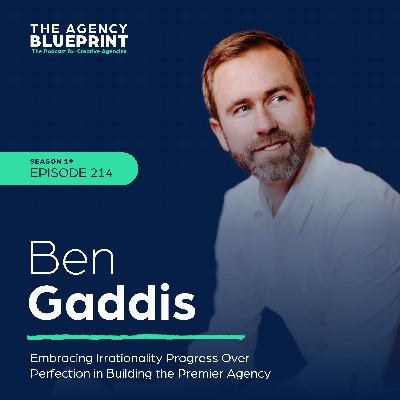
What if the real path to agency growth isn’t working harder, but thinking more irrationally? And what if your biggest breakthroughs are hiding inside the constraints you’ve been trying to avoid? In this episode of The Agency Blueprint, I’m joined by Ben Gaddis to explore why agency growth depends less on heroic effort and more on systematic, scalable thinking. Ben is the former CEO of T3, co-founder of SuperStep Capital, and co-author of Embracing Irrationality. He took his agency from a boutique creative shop to a $50M powerhouse before merging with a $350M firm and eventually transacting with Blackstone. Listen in to learn how small one-degree shifts in pricing, productization, positioning, and delivery can alter an agency’s trajectory without the instability of a massive overhaul. You will also learn about team dynamics, creative culture, psychological safety, and the importance of creating space for unconventional thinkers inside your agency. Key Questions: [05:22] Are you empowering your most innovative team members, or accidentally pushing them toward starting their own competing firm? [07:29] What are your thoughts on the risk factors and opportunities of letting something go live without fully thinking through every single potential nuance of it? [13:37] Can you define what a premier agency is and why most firms today lack the traits of a premier agency? [25:43] What outcome is your creativity aiming to deliver, and have you defined it well enough for a client to trust it? [32:03] If you treated an innovative project differently from day one, how would that reshape your team’s engagement and the quality of the work? What You’ll Discover: [01:39] Ben explains why large organizations struggle to innovate and how this applies to agencies of all sizes. [03:42] The “one-degree decisions” concept — how small shifts can accumulate into massive business transformation over time. [06:05] Why rejecting innovative team members causes them to leave and potentially become stronger competitors, and how to prevent this. [08:05] How to clearly define what tiny piece of your delivery model is changing so teams don’t feel overwhelmed or threatened. [11:47] How leaders can frame meetings to encourage big ideas by stepping back and allowing others to think freely without constraints. [13:48] The traits of a premier agency: point of view, methodology, and the ability to attract top talent and elite clients. [14:57] Why agencies resist specialization and how fear of losing opportunities often leads to a watered-down, generic market presence. [17:19] How most agencies present the same pitch, and clients can instantly tell when a firm lacks true differentiation. [19:58] How small teams can win massive enterprise clients if they have unmatched expertise in a narrow domain. [22:56] The power of clarity and repeatability – why clients prefer agencies with proven systems rather than teams who “figure it out” as they go. [24:54] Debunking the myth of creativity as personal art and reframing it as a service tool. [28:17] Why bold innovation projects often lead to significantly higher long-term revenue, even when they initially look risky on paper. [32:30] How agencies can define outcomes in ways that command attention, even from the most disengaged person in the pitch room. [35:11] Ben on how a 5% innovation investment became a powerful marketing engine that attracted attention, created standout case studies, and accelerated inbound demand. Connect with...
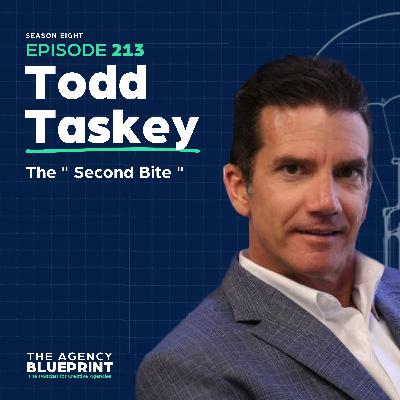
How can you maximize the value of your business through mergers, acquisitions, and the “second bite” opportunity? Most agency owners today are seeking an opportunity to cash out some equity while continuing to play an active role in scaling their business.In this episode of The Agency Blueprint podcast, I’m joined by Todd Taskey to discuss how deals are structured, why private equity loves specialized agencies, and how “the second bite” often ends up being larger than the first payday. Todd is a seasoned M&A advisor and investment banker who has spent over two decades guiding agency founders through lucrative exits and growth-focused partnerships.Listen in to learn how smaller agencies can attract the right buyers with specialization, strong client retention, and scalable sales systems. You will also learn how AI is reshaping agency margins and valuations, eliminating low-level tasks, and allowing agencies to scale profitably.Key Questions:[01:12] What exactly is the second bite, and how can agency owners benefit from it beyond their first sale?[03:45] What types of deals are most common for agencies today—strategic, private equity, or conglomerate roll-ups?[08:25] Which types of agencies are most attractive to private equity firms right now, and which ones are struggling?[15:16] How is AI changing agency valuations? Is it just hype, or does it create lasting value?[23:07] What areas should agency owners strengthen in the next 2–3 years to maximize valuation?What You’ll Discover: [01:30] Todd explains the concept of the second bite, where selling equity today can lead to a bigger payday in the future.[04:15] The difference between selling to large holding companies versus partnering with private equity-backed strategic buyers.[06:59] Why many agency founders end up enjoying their businesses more after a partial sale.[08:50] The verticals private equity firms are most eager to acquire, and why niche specialization wins.[11:38] How agencies are using vertical focus to create irresistible acquisition stories.[15:40] How AI is reshaping agency operations, cutting costs, and boosting margins without replacing strategic thinking.[19:46] How agency owners should weigh the choice between pursuing higher margins or lowering prices to gain market share.[23:34] The three pillars of maximizing agency value: strong sales, high retention, and healthy margins.[26:13] Todd warns against assuming you can hire a CEO and exit cleanly—buyers see that as a red flag.Connect with Todd:LinkedInPodcast: Second Bite
Do you leverage emotional, client-centered storytelling to transform your sales process? Stories resonate more than stats, and you, as an agency owner, can use them as a strategic sales tool rather than just a creative tactic.In this episode of The Agency Blueprint podcast, we discuss how to leverage stories that build trust, spark excitement, and make your agency unforgettable. We explain how by framing sales conversations around transformation stories, case studies, and third-party proof, you can help potential clients see themselves in the narrative.Listen in to learn the difference between pitching and storytelling, why context matters, and how to strategically curate stories in advance so they feel authentic and memorable.Key Questions:[01:52] Why is storytelling more impactful than just listing results or stats?[03:23] What’s the difference between pitching and telling a strategic story?[05:02] How do you use third-party stories to connect with a prospect’s pain points?[12:27] What types of proof (beyond testimonials) can you use to make clients feel confident in their decision?[14:26] What does it take to tailor a story so the prospect feels invited into your world?What You’ll Discover: [02:06] Why emotions are the real drivers of memory and decision-making, not dry statistics.[03:23] Why bragging about yourself in a pitch pushes prospects away, while telling a client’s story draws them in.[05:02] The importance of focusing on transformation and connecting client pain points to powerful success stories.[07:31] Third-party selling framework: start with the negative emotion, explain the challenge, describe your process, and end with the positive result.[09:25] Understand why numbers alone make you forgettable, but stories make you memorable and trustworthy.[10:36] An airplane analogy illustrating how clients first need belief that success is possible before they trust you to deliver it.[12:40] Why convincing rarely works and how to use social proof, testimonials, and case studies to let prospects persuade themselves.[15:01] How testimonial videos and real client stories can provide the final validation prospects need before committing.[19:48] How to curate stories strategically so they feel natural in the moment but are actually carefully designed for maximum impact.
Are you one of those agencies that spend impulsively, based on gut feeling, or delay investments out of fear and uncertainty?In this episode of the Agency Blueprint podcast, I explain how agency owners can use operational budgets as a growth tool instead of just a tracking sheet. I further explain how to structure budgets around multiple outcomes—flat (if nothing changes), trend-based (aligned with current growth trajectory), and goal or stretch budgets (aimed at ambitious targets). Don't miss this episode to learn how to weigh investments using a risk-to-value calculus, prioritize based on ROI, and know when to greenlight or cut an initiative.Key Questions:[00:33] Are you spending intentionally to grow your agency or just burning through cash without a clear ROI?[03:43] Are your budgets simply tracking expenses, or are they guiding your strategic decisions?[08:15] How do you prioritize which investments to make first when several opportunities compete for your resources?What You’ll Discover: [01:20] The concept of using multiple budget scenarios—flat, operational, goal, and stretch—to create a growth-ready plan.[02:02] The importance of aligning budgets with business trends rather than relying solely on past performance.[03:43] Understanding that budgets are not just for tracking, they are tools to guide decision-making and strategy.[04:50] The “risk-to-value calculus” to evaluate investments in people, tools, or new services.[06:40] The importance of setting clear timelines to measure whether an investment is working or if it should be cut.[08:15] How to prioritize competing investment opportunities by weighing ROI, time cost, and likelihood of success.[10:47] How to reverse-engineer growth goals into budgets by mapping revenue sources, retention rates, and hiring needs.
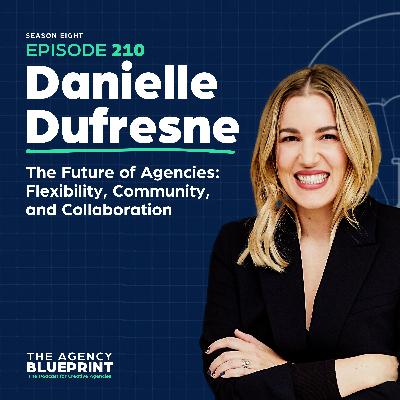
Is your smaller agency well-positioned to take bold creative risks, pitch innovative ideas, and form collaborative partnerships? The traditional full-service agency model is crumbling under the weight of overhead, fragmented expertise, and a lack of collaboration.In this episode of The Agency Blueprint podcast, I’m joined by Danielle Dufresne to discuss the changing landscape of creative agencies and how agencies can break free from outdated overhead-heavy structures. Dani is an Emmy Award–winning executive producer and The Aux Co founder. She has over 20 years of experience producing high-stakes campaigns for global brands like Nike and Hulu. She launched the Aux Co in 2017 to champion a new agency model, helping small and midsize shops grow smaller, collaborate better, and deliver bold, creative work without the overhead and burnout of the old huge conglomerate agency system. Listen in to learn why the future of agencies lies in specialization, honesty, and early collaboration with production and strategy teams. You will also learn how agencies can thrive together, access bigger opportunities, and create lasting client relationships by embracing community over competition.Key Questions:(05:23) Why do smaller agencies feel pressured to fake expertise, and what’s the smarter alternative?(08:06) Do you see other agencies as competitors or potential collaborators in your network?(14:00) If you can only deliver part of a client’s RFP, do you white-label partnerships or present them openly?[17:14] How can agencies leverage community and collaboration as a competitive advantage?What You’ll Discover:(01:37) How low overhead enables small agencies to launch big ideas at a fraction of the cost of legacy holding companies.(03:47) The shift from the Mad Men era of limited media to today’s fragmented landscape of thousands of channels.(06:01) How small agencies can win bigger projects without faking expertise by being transparent and collaborative.(08:55) Why most agencies overestimate competition, when in fact collaboration can unlock greater opportunities.(09:54) Why agencies should stop competing for the same pie and instead lean into their unique strengths.(12:03) Why agencies should specialize instead of pretending to be experts in everything.(14:42) Dani on when to white-label partnerships versus openly presenting them as part of a network.(17:36) How bringing production into creative development earlier leads to stronger campaigns across every medium.[21:42] The power of community and collaboration as a competitive advantage in agency growth.[24:40] The importance of setting aside ego and instead focusing on making sure both clients and creatives are satisfied.[27:30] Why curiosity-driven questioning is essential for innovation, while “just get it to yes” feedback adds little value.Connect with Danielle:WebsiteLinkedIn
Do you treat profit as “what’s left over” after expenses instead of prioritizing it from the start? Having a profit-first mindset is the cornerstone of building a sustainable, scalable, and stress-free agency. In this episode of the Agency Blueprint podcast, we dive deep into the profit-first mindset—a revolutionary approach for agency owners who want to generate consistent profitability. We discuss how to reverse engineer a profitable business model by focusing on intentional pricing, cost constraints, and smart resource allocation.Listen in to learn more about how to stop running your agency like an exhausting job instead of a thriving business.Key Questions:[01:22] How is “profit-first mindset” different from the way most agency owners view money?[05:17] What are the key elements of having a profitable agency model? [09:53] If you had to replace yourself in all the roles you currently cover, would your pricing model still hold up?[13:53] If a big client makes up 70% of your revenue, how do you protect your agency if they suddenly leave?[16:01] How long should you run at a deficit before making the hard decision to restructure or let team members go?What You’ll Discover: [01:45] Profit-first mindset – why setting aside profit immediately—not as an afterthought—is a game changer.[02:37] How most agencies operate without real financial constraints, leading to overspending and poor decision-making.[05:22] Why blended rates don’t accurately capture the true cost of delivery and why agencies miss key overhead factors.[07:52] A simple benchmark: if your agency isn’t hitting 25% profitability, your model is broken. [10:01] The hidden cost of agency owners filling different roles but only paying themselves for one.[13:17] The risks of scaling before fixing profitability, from debt to losing entire businesses when a big client leaves.[14:18] Two primary financial benchmarks every agency owner must track—gross profit and operational costs.[16:53] How to personally balance loyalty to your team with the financial realities of running a profitable business.
Are you aware that client retention is not just about doing great work or delivering projects on time? While those are the basics, real loyalty comes from how clients feel when working with your agency. In this episode of The Agency Blueprint podcast, I share practical strategies for agency owners who want to intentionally build relationships that surprise, delight, and strengthen loyalty. I also explain how personal touches, thoughtful gestures, and genuine human connections separate thriving agencies from those struggling with churn.Don’t miss this episode to learn how little, meaningful moments can build emotional equity and transform business relationships into trusted, long-term collaborations.Key Questions:[01:15] Do your clients feel truly seen, heard, and appreciated, or do they just see you as another vendor?[05:56] Are you taking the time to surprise clients with personal gestures that actually matter?[11:35] What small, unexpected “surprise and delight” moments could you add to strengthen client loyalty right now?What You’ll Discover: [01:15] Why great work is expected, but true loyalty comes from making clients feel seen, heard, and valued.[02:36] How agency owners often get pulled back into client work to save accounts when teams can’t maintain those relationships.[03:50] A story of an agency that built such strong relationships that their client work became award-winning.[04:50] Why creative professionals produce their best work when they genuinely enjoy their client relationships.[05:56] The importance of focusing on personal, thoughtful gestures that show clients they’re valued instead of generic gifts. [08:54] How to create personalized gifts tied to client interests, milestones, or inside jokes.[11:35] Why building emotional equity makes clients more forgiving when small mistakes or delays occur.[12:28] How to create SOPs for consistent relationship-building while keeping room for spontaneity and personalization.
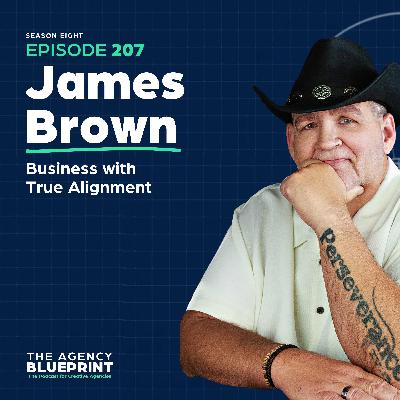
What does it really mean to have a strong “why” as an entrepreneur? What’s driving you as a business owner, money, or something deeper that fuels your resilience?In this episode of The Agency Blueprint podcast, I’m joined by James Brown to discuss the deeper “why” behind entrepreneurship and to share his incredibly inspiring journey. James is the CEO and founder of Business Accelerator Institute and Perseverance Squared. He has had a fascinating journey from starting his law firm in 1994 and scaling it to over $8 million annually across multiple cities, and selling it before the age of 50, then dedicating himself to helping other business owners break free from being trapped in their own businesses. Listen in to learn why money alone isn’t a sustainable motivator, why personal sacrifice doesn’t have to equal success, and how to create systems that allow a business to serve your life. You will also learn the seven essential parts every business has and how to shift from working in the business to working on it.Key Questions:[06:33] Do you believe money should be the main motivation in your business, or is there a deeper purpose guiding you?[11:30] When setbacks pile up, how do you reconnect to your “why” and push through difficult seasons?[15:50] Are you buying into the “doctrine of sacrifice,” working endless hours at the expense of your life and health?[21:50] As an agency owner feeling burnt out, how can you rediscover your why and build a business that serves you instead of trapping you?What You’ll Discover: [02:03] James shares his journey and how childhood criticism fueled his perseverance, shaping his entrepreneurial grit and determination.[07:32] A pivotal lesson from his wife: “Do what’s right, help people, and the money will follow”—a principle he still applies today.[09:33] How reaching financial stability allowed him to shift his focus from making money to helping as many people as possible.[11:40] How removing emotional labels from setbacks freed him to stay creative and solve problems in tough times.[16:03] The “doctrine of sacrifice” and why believing you must work 80-hour weeks is one of the biggest entrepreneurial traps.[21:14] How James gained the freedom to volunteer, travel, and serve his community without his business missing a beat.[22:16] How agency owners can rediscover their why, reframe their story, and reconnect passion to daily operations.Get A Free Gift from James
How do you win clients without being reduced to competing on price? To consistently land the right clients, you must position yourself as the obvious choice long before pricing even enters the conversation.In this episode of The Agency Blueprint Podcast, we discuss how agencies can stand out in a crowded market without relying on price as the deciding factor. We explore how confidence, consultation, and insight consistently outperform relationship-based selling, drawing inspiration from The Challenger Sale. Listen in to learn why simply agreeing with a prospect’s assumptions is a losing strategy, and how real value comes from reframing the conversation. Key Questions:[02:40] Are you defaulting to agreement with your clients instead of bringing your own perspective?[08:51] When clients push back on your pricing, do you reflect on your value articulation or immediately assume you’re charging too much?[15:51] Do your clients feel safer with you than without you?What You’ll Discover: [01:24] Insights from The Challenger Sale book and how confident, consultative sellers outperformed traditional relationship-based sellers.[02:40] The importance of offering your own expert perspective instead of simply echoing clients’ ideas. [04:49] The importance of asking the right questions to uncover the real business problems clients are facing.[07:56] Why being compared solely on price means you’ve already lost the positioning battle.[10:28] How reframing conversations has helped agencies triple prices while maintaining strong close rates.[12:26] How clients evaluate risk and why showing how you mitigate that risk is essential to winning projects.[14:36] Why even a small percentage lift in results can dramatically multiply a client’s investment.[16:00] Understand that the best agencies make clients feel safer saying yes than risking a no.
Do you feel like your inbox is overflowing with AI-generated messages that all sound the same? While AI tools have made it easier than ever to send messages, they’ve also flooded inboxes with automated, impersonal communication.In this episode of The Agency Blueprint podcast, I dive deep into the evolving world of outreach in an AI-driven age. I describe the shift agency owners need to make, from relying on high-volume outreach tactics to focusing on high-intent, authentic relationships that truly connect.Don't miss this episode to learn more about why real competitive advantage comes from personalization, relevance, and human-to-human connection. Key Questions:[01:21] Are you focusing on building genuine, high-quality relationships or chasing volume with “spray and pray” outreach?[05:02] How can you make cold outreach feel warm and human without immediately asking for something in return?[10:31] Are you gathering the right information before reaching out, or are you still treating outreach as purely transactional?[14:26] What would your business look like if you slowed down, showed more intentionality, and treated people as people first?What You’ll Discover: [01:21] How faux personalization has created skepticism and fatigue among prospects, making true authenticity a competitive edge.[02:52] Why “spray and pray” campaigns no longer work and why most agency owners only need a handful of the right clients.[04:01] How the post-pandemic human craving for connection relates to the rise of in-person events and experiential marketing.[05:02] Tactical strategies like voice notes, Loom videos, and handwritten notes that stand out because of effort and authenticity.[06:15] A personal example of building connections by engaging genuinely on social media without immediately asking for anything.[08:25] How AI can support personalization by doing research faster while leaving the human element to you.[09:28] The importance of engaging where you have genuine common ground, instead of pretending to care about something you don’t.[10:31] Clay – a platform that helps agency owners enrich data and filter large lists into meaningful prospect pools.[12:20] Why you should avoid forsaking future revenue by focusing only on clients ready to buy today.[14:26] Connection doesn’t scale in the traditional sense—but intentional, authentic connection will always win.
Do you often find yourself giving strategy away for free, burying it inside larger scopes, or treating it as a one-off exercise rather than the foundational work it truly is?In this episode of The Agency Blueprint, I’m joined by Anastasia Laskey to discuss one of the biggest challenges agency owners face: selling the value of strategy. Anastasia is the founder and president of Ground Control Research. She has helped agencies transform how they deliver pitch and price strategy by bringing insights, structure, and clarity to what can often feel like a fuzzy, abstract-oriented process. Listen in to learn how to price, pitch, and communicate strategy more effectively to command premium fees while also differentiating from competitors. You will also learn how to slow down and diagnose the client’s real problems, quantifying the business impact, and tying strategy to revenue, growth, or risk mitigation. Key Questions:[01:19] How can you reframe the strategy conversation so clients see it as a business essential, not a “nice-to-have”?[03:34] Are you spending enough time diagnosing your client’s problem before pitching solutions?[17:26] Do you have scalable options for strategy to match different types of clients, or are you reinventing the wheel every time?[21:37] Where does AI fit into your agency’s strategy process—are you using it to replace critical thinking or to enhance workflows?[24:51] Do your clients “not get strategy,” or are you failing to illuminate its value in their language?What You’ll Discover: [01:44] Why framing strategy around problem-solving resonates more with clients than simply positioning it as a first step in a process.[03:44] Why skipping problem diagnosis undermines agency confidence and creates client objections later in the process.[06:47] How asking smart discovery questions reveals blind spots, which immediately shows clients the importance of strategy.[09:17] How to act from abundance, not scarcity, and be willing to walk away from clients who won’t align on the value of strategy.[11:48] The three phases of strategy: gathering insights, turning them into a strategic POV, and delivering tangible outputs that guide implementation.[14:36] The importance of tailoring strategy to client context; what works for a multimillion-dollar campaign won’t fit a small launch.[17:47] How to decouple the core process from the size of execution, offering tiered options to standardize and scale strategy delivery.[22:19] Why AI should be a workflow accelerator, not a replacement for human insight, curiosity, and precision.[25:01] Debunking the myth that “clients don’t get strategy”—the real issue is agencies failing to illuminate their value in the client’s language.Connect with Anastasia
How do you transform sales conversations into a client’s self-discovery journey? Selling agency services doesn’t have to be pushy, complicated, or overwhelming; it simply needs to be intentional. In this episode of The Agency Blueprint podcast, we share a repeatable four-step sales playbook that any agency owner can use to win more clients without relying on high-pressure tactics. We show you how to create excitement during the qualification call, build deep trust during the discovery call, rationalize the emotional decision during the proposal stage, and confidently manage objections in the follow-up.Don't miss this episode to equip yourself with actionable strategies to simplify sales, close higher-value deals, and stop competing solely on price.Key Questions:[01:35] What’s the real purpose of your first sales conversation: selling or qualifying?[04:05] How do you avoid letting prospects take control of the call and turn it into an interview?[12:28] Are you sending proposals by email instead of presenting them live (and losing deals because of it)?[18:11] Is every step of your sales process intentional, with a clear purpose, or are you treating all calls the same?What You’ll Discover: [01:35] Why the purpose of the qualification call is not to sell but to create excitement, gauge fit, and leave prospects wanting more.[02:17] The importance of asking smart questions to show authority without overwhelming or overexplaining too early.[04:05] Why agency owners must stay in charge to avoid turning a sales conversation into an interview.[06:03] Understanding sales as a trust-building process where each step deepens the relationship with the prospect.[07:42] How to allow prospects to articulate their failed past attempts so you can validate their struggles and position your agency as the solution.[10:34] Why the proposal call is a chance to rationalize an emotional decision, not start selling from scratch.[12:28] Why live presentations are crucial for maintaining context and momentum as opposed to emailing proposals. [16:09] How to ask prospects directly if they feel comfortable giving a yes or no during the call, plus the importance of doing follow-ups.
Does running your agency feel like an endless cycle of choices? The constant weight of decision-making can drain your energy, slow down your team, and ultimately put a ceiling on your agency’s growth. In this episode of The Agency Blueprint, I discuss the real cost of decision fatigue and the dangerous habit of training your team to rely on you for every answer. I also explain how to categorize risk into low, medium, and high levels, allowing you to determine which decisions to delegate, collaborate on, or retain personally. Don’t miss this episode to learn why, when you stop holding onto every decision and start trusting your team, your agency becomes more agile, scalable, and resilient.Key Questions:[00:31] How often do you feel overwhelmed by the sheer number of choices you need to make each week as an agency owner?[04:18] Are you unintentionally training your team to depend on you for every answer instead of empowering them to think for themselves?[09:53] What areas of your business could you vacate (not abdicate) to allow your team to step up and grow into ownership?[12:25] When delegating, are you clear about whether you want research, recommendations, or full implementation?What You’ll Discover: [01:21] How decision fatigue creates bottlenecks that slow your team down and drain your energy as a leader.[04:18] How agency owners unintentionally train their teams to rely on them for every decision, and how to break the cycle.[05:05] The 1-3-1 framework – a simple but powerful method to retrain your team to bring solutions instead of problems.[06:40] How to categorize decisions into low, medium, and high risk to guide your delegation process.[08:49] How fostering a solution-oriented culture encourages your team to explore ideas, test solutions, and bring ownership to the table.[11:06] How to delegate outcomes rather than just tasks, giving your leadership team the autonomy to think and act strategically.[12:25] The different levels of delegation and how to decide which approach is right in each scenario.[13:17] The importance of creating a safe space for your team to try, fail, and learn without fear of harsh reactions.

How do you approach hiring even when you’re not ready and it feels financially uncomfortable? How do you know you’re making a calculated investment in your agency’s future versus just taking a reckless risk? In this episode of The Agency Blueprint, I discuss how hiring before you're ready can actually be a strategic growth move, not a reckless one. I explain whether your hiring decision is solving yesterday’s backlog, today’s bottlenecks, or tomorrow’s strategic gaps. Don’t miss this episode to learn how to determine whether your hiring need is temporary or ongoing, and how to quantify the associated risk. Key Questions: [00:52] Is your hire solving for a real bottleneck that’s holding back future growth? [04:05] Are you hiring to fix yesterday’s overload, today’s bandwidth, or tomorrow’s opportunity? [07:32] Is the risk you're considering actually a smart one that leads to measurable ROI? What You’ll Discover: [01:50] The importance of building a fiscal framework to remove any hiring fear and uncertainty. [03:11] Practical tools for calculating the worst-case scenario of a hire and how to frame the financial loss vs. opportunity cost. [04:05] Three hiring motivations buckets—yesterday’s problem, today’s need, and tomorrow’s growth. [05:43] How strategic hires can directly impact long-term growth by solving deeper client retention or upsell issues. [07:32] How to evaluate whether your hiring decision solves a meaningful strategic need and has direct revenue potential. [10:41] Why you should have at least two months of operational expenses in reserve, beyond the cost of the new hire. [11:25] The importance of defining what success looks like and deciding now how you’ll evaluate ROI. [12:29] Why the hire should know exactly what they're walking into and what success means from day one. [14:04] Why hiring with a clear plan and intention can be exactly what your agency needs even before you’re fully ready.
How do you move from taking whatever business you can get to building a purpose-driven, aligned client base? The right-fit client base fuels not only revenue but also passion and long-term fulfilment. In this episode of The Agency Blueprint, we discuss how agency owners can stop chasing clients and start choosing them. We also explain why it’s time to stop being a generalist trying to appeal to everyone and take a bold positioning, even if it means turning some people away. Don’t miss this episode to learn about the power of authentic storytelling to your audience, which builds connection and trust! Key Questions: [02:14] Who is your true Ideal Client Profile, and what do they really care about? [04:20] Can you name a client you didn’t enjoy working with? Why? [05:36] Are you afraid of repelling potential clients by taking a clear stand in your messaging? [11:44] Where does your ideal client actually spend their time, and are you showing up there? [17:40] Can your story of failure help someone avoid the same mistake? What You’ll Discover: [02:14] Defining your Ideal Client Profile (ICP): demographics, psychographics, buying triggers, and decision-making structures. [04:20] Why defining who you don’t like working with can often be more revealing than listing who you do. [05:36] Why taking a strong position in your messaging, even at a cost, makes you magnetic to the right clients. [06:55] Understanding how your ideal client makes buying decisions helps you mirror their process and build trust faster. [08:24] Why tailored positioning isn’t a marketing tactic but how you build seamless, mutual trust and fit. [09:44] How choosing the right clients allows you to enjoy your work without the dread of toxic interactions. [11:47] How to map your client's professional environment so you can market more strategically. [13:00] How a small niche craft business scaled massively by starting in one Facebook group and expanding consistently. [15:04] How being more human and vulnerable in your content helps build authentic connections and trust. [17:40] The power of authentic storytelling in increasing audience trust and helping potential clients feel more connected. [19:44] When you stop chasing and start choosing your clients, your business becomes more impactful and joyful.
Have you learned to differentiate between keeping a team motivated and keeping them engaged without burnout? If your default is more meetings and perks without building the foundations of real alignment, consistent communication, and sustainable systems, you will lose great people. In this episode of The Agency Blueprint, I discuss how to build a thriving, purpose-driven team that doesn't just work for you but grows with you. I also explain how to create sustainable, high-performing teams through clarity, communication, and trust-building systems. Don’t miss this episode to learn more about how feedback loops, transparency, and a culture of fast failure and experimentation can drive massive innovation! Key Questions: [01:00] What does it look like to reduce headcount, increase freedom, and still grow your business? [02:20] Are you brave enough to let your team opt in or out of your vision? [03:26] Could a lack of transparency be costing you trust and true buy-in from your team? [08:24] Are you creating intentional spaces for your team to give you feedback, and do you actually want to hear it? [09:37] Have you normalized failure in your company culture, or do your people feel punished when things don’t go perfectly? What You’ll Discover: [02:20] Alignment over control. How to align your team with your vision and with transparency to build trust. [04:58] The importance of consistent communication as the key to keeping your team aligned, informed, and motivated. [07:41] Why sharing your struggles and wins can help your team feel seen, inspired, and aligned. [08:24] The power of not only requesting feedback but wanting it, even when it stings, because it’s the fastest path to growth. [09:37] Build a culture of quick iteration and open dialogue around failure to help teams grow and innovate effectively. [11:32] How a multi-tiered incentive system creates powerful alignment and peer-driven accountability. [12:45] The systems we have implemented to reduce redundancy, increase asynchronous communication, and automate work. [14:50] The trial process that helped implement a permanent four-day workweek and how the team policed itself. [16:47] Understand that your team needs clear goals, autonomy, and meaningful systems to thrive, not more pressure.

Comments

Download from Google Play

Download from App Store
 United States