


The Good Sight Podcast
Subscribed: 0Played: 1
Subscribe

© The Good Sight Podcast
Description
Hello, we’re The Good Sight Podcast, a platform where we interact with change makers and innovators dedicated towards social development. If you are part of any development journey and wish to engage with us, please email us at contact@thegoodsight.org, or Whatsapp on +91 9696399931.
160 Episodes
Reverse
To educate a girl is to educate a nation." This powerful saying encapsulates the essence of today’s conversation on The Good Sight Podcast.
Join us as we explore Project Nanhi Kali, an inspiring initiative launched byAnand Mahindra, dedicated to transforming the lives of underprivileged girls across India.
This initiative goes beyond academics, empowering girls with essential life skills, financial literacy, digital proficiency, and sports leadership training. Starting this academic year, Project Nanhi Kali aligns with the National Education Policy 2020 to prepare girls for a future where they can thrive.
In this episode, we are thrilled to host Sheetal Mehta, Trustee and Executive Director of K.C. Mahindra Education Trust, who spearheads this flagship initiative. Under her leadership, Project Nanhi Kali has become a beacon of hope, breaking down barriers and creating opportunities for countless girls.
The importance of life skills and sports leadership programs in shaping empowered futures.
Challenges faced in implementing Project Nanhi Kali and innovative solutions to overcome them.
Heartwarming stories of transformation through the project’s impact on individual lives.
The future vision for Project Nanhi Kali and how it plans to evolve in the years to come.
If your organisation is dedicated to driving positive social change, we want to hear from you. Reach out to us at The Good Sight by emailing us at contact@thegoodsight.org with a brief description of your work and achievements, or give us a call at 9696399931.

India faces a critical challenge: providing quality education to its massive youth population—the largest in the world, with 356 million young people eager to learn and contribute. However, outdated teaching methods, limited resources, and a lack of support for teachers and school leaders lead to low learning outcomes, high dropout rates, and a generation struggling to meet 21st-century demands.
In this episode, we welcome Khushboo Awasthi, Co-founder of Mantra4Change, an organization transforming India’s education landscape. By empowering school leaders with essential skills, knowledge, and resources, Mantra4Change is creating environments where children are excited to learn, teachers are supportive, and parents are engaged.
Discussion Highlights
Inspiration and Mission
Building Leadership in Schools
Scaling for Impact
Championing Women's Leadership
Future Vision
If your organisation is dedicated to driving positive social change, we want to hear from you. Reach out to us at The Good Sight by emailing us at contact@thegoodsight.org with a brief description of your work and achievements, or give us a call at 9696399931.
India faces a critical hunger crisis, with millions suffering from malnutrition, especially children. Ranked 105th on the Global Hunger Index 2024, the need for solutions is urgent.
In today’s episode of The Good Sight Podcast, Vishal Kumar, Head of Feeding India by Zomato, shares how the organization is bridging this gap, providing nourishment to vulnerable communities and inspiring change across the country.
Discussion Highlights:
The origin story of Feeding India: vision, challenges, and growth.
Key hurdles in the fight against hunger and areas most in need.
Practical steps listeners can take to combat hunger in their communities.
An inspiring story of impact from Feeding India’s work.
Vishal’s future goals for Feeding India and vision for lasting change.
If you or your organisation are dedicated to driving positive social change, we want to hear from you. Reach out to us at The Good Sight by emailing us at contact@thegoodsight.org with a brief description of your work and achievements, or give us a call at 9696399931.
In this episode, we are joined by Dr. Kamalakar Arjun Lashkare, National Professional Officer for Lymphatic Filariasis at the World Health Organization Country Office for India.We explore the global fight against lymphatic filariasis—commonly known as filaria—and unpack the World Health Organization’s strategy to eliminate it as a public health problem.Dr. Lashkare explains why WHO views filariasis not merely as a disease, but as a broader public health challenge with deep social and economic consequences. We discuss the organization’s technical framework, its overall global elimination roadmap, and the central role of Mass Drug Administration (MDA) in interrupting transmission.The conversation also dives into India’s efforts, one of the countries bearing a high burden of the disease, and how national strategies are shaped, implemented, and monitored. Finally, we examine what happens after elimination: the critical steps needed to prevent resurgence and ensure that filariasis does not return as a public health threat.CreditsGuest: Dr. Kamalakar Arjun LashkareHost: Shreya MResearch: Alisha Concept: Piramal FoundationProduced by: The Good SightFor feedback or to participate, write to us at contact@thegoodsight.org#DefeatFilaria #WHO #PublicHealth #CommunityLedChange
Filaria, commonly known as elephantiasis, continues to affect the health and livelihoods of hardworking rural communities. Yet, with the right awareness, timely medication, and strong community participation, this preventable disease can be eliminated.In this episode, we are joined by Manmohan Singh, CEO, Aspirational Bharat Collaborative, Piramal Foundation, who shares insights on how Piramal Foundation approaches filaria elimination, how this effort aligns with its larger vision, and what meaningful change looks like when communities lead the way.The conversation explores why eliminating filaria is not just a public health priority but also essential for social and economic development; how community-driven program design transforms outcomes on the ground; what impact looks like beyond numbers and coverage; and how leadership support strengthens long-term public health initiatives.CreditsGuest: Manmohan Singh, CEO, Aspirational Bharat CollaborativeHost: Sanjay Research: Alisha Concept: Piramal FoundationProduced by: The Good SightFor feedback or to participate, write to us at contact@thegoodsight.org#DefeatFilaria #FilariaFreeIndia #PublicHealth #CommunityLedChange
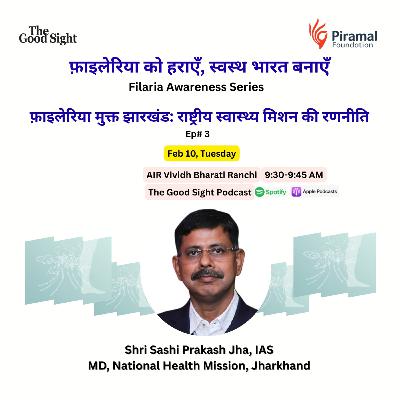
This episode focuses on the fight against lymphatic filariasis (filaria) — commonly known as “elephantiasis” — a preventable yet deeply debilitating disease that continues to affect rural communities across India.Our guest is Shri Shashi Prakash Jha, Managing Director of the National Health Mission, Jharkhand. In this conversation, we explore how Jharkhand is planning and implementing large-scale efforts to eliminate filaria and protect vulnerable rural populations whose livelihoods depend on daily physical work.The discussion explains why eliminating filaria requires far more than distributing medicines. Shri Jha shares how the health system plans, coordinates, and executes prevention efforts — from strategy and logistics to last-mile delivery in villages.A major focus of the episode is Mass Drug Administration (MDA), a nationwide public health effort that ensures preventive medicines reach every eligible person. While the concept sounds simple, implementing it across geographically diverse and remote areas comes with significant operational challenges. Shri Jha discusses the realities on the ground and how teams work to overcome them.The episode also highlights the critical role of frontline health workers — ASHA workers, ANMs, and field teams — who form the backbone of filaria elimination efforts. Through training, support systems, and constant community engagement, the health mission works to ensure these workers remain motivated, protected, and effective in reaching households across the state.Another important theme is addressing fear, myths, and misinformation around taking preventive medicines. We conclude with insights into how public health teams measure progress — the indicators, field data, and community feedback that help determine whether elimination efforts are truly making an impact on the ground.CreditsGuest: Shri Shashi Prakash Jha, MD, National Health Mission, JharkhandHost: Sanjay PResearch: Alisha CConcept: Piramal FoundationProduced by: The Good SightFor feedback or to participate, write to us at contact@thegoodsight.org#Filaria #LymphaticFilariasis #PublicHealth #Jharkhand #CommunityHealth #MDA #PiramalFoundation #TheGoodSight
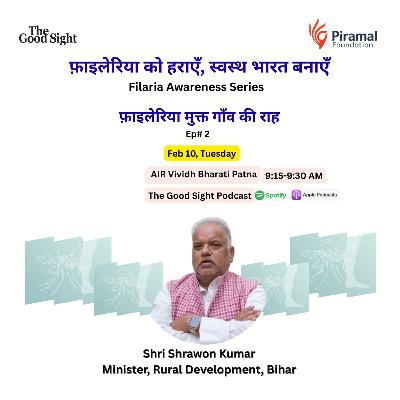
This episode focuses on the fight against lymphatic filariasis (filaria) — commonly known as “elephantiasis” — a preventable yet deeply debilitating disease that continues to affect rural communities across India.Our guest is Shrawon Kumar, Hon’ble Rural Development Minister of Bihar. In this conversation, we explore how filaria disproportionately impacts working populations in villages — farmers, daily wage earners, and workers engaged in rural employment schemes — and how the disease affects not just individual health, but household incomes and the broader rural economy.The discussion highlights why eliminating filaria is not solely the responsibility of the health department. Minister Kumar explains how the Rural Development Department is working in convergence with the health system to strengthen awareness, outreach, and mass drug administration efforts at the grassroots level.A key focus of this episode is the powerful role of Self Help Groups (SHGs) and rural women. With SHGs deeply embedded across Bihar’s villages, they serve as trusted community platforms for spreading awareness, mobilizing families, and ensuring medicine uptake. The episode underscores why community participation — especially women-led engagement — is central to defeating filaria.We conclude with practical guidance on simple yet critical steps that families, SHG members, and local communities can take to prevent filaria and build healthier villages.CreditsGuest: Shrawon Kumar, Rural Development Minsiter, BiharHost: Sanjay PResearch: Alisha CConcept: Piramal FoundationProduced by: The Good SightFor feedback or to participate, write to us at contact@thegoodsight.org#Filaria #LymphaticFilariasis #PublicHealth #RuralDevelopment #CommunityHealth #SHGs #PiramalFoundation #TheGoodSight

In this episode, we are joined by Ramesh Chandra, Director – Academics at the Language Learning Foundation (LLF). LLF is a leading non-profit organization working closely with government primary schools to strengthen FLN outcomes for children across India.Over the course of this 15-minute discussion, we explore the key barriers and practical solutions in implementing FLN at scale. The conversation delves into on-ground challenges, differences in learning levels between rural and urban settings, effective remedial strategies for slow learners, and real-life examples where focused FLN interventions have delivered measurable improvements.CreditsGuest: Ramesh ChandraHost: Shreya MResearch: Alisha CProduced by: The Good SightConcept: The Good SightFor feedback or to participate, write to us at contact@thegoodsight.org#FoundationalLiteracy #FoundationalNumeracy #FLN#EducationInIndia
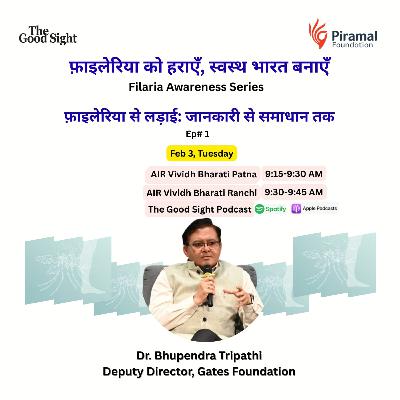
This special episode podcast series, presented by Piramal Foundation in collaboration with The Good Sight, focuses on the fight against lymphatic filariasis (filaria), a neglected yet debilitating public health challenge.Our guest is Dr. Bhupendra Tripathi, Deputy Director at the Gates Foundation, who has been working extensively to support the elimination of filaria and other infectious diseases in India. His work spans strengthening vaccine delivery systems, expanding equitable immunization coverage, and ensuring that no community is left behind in public health efforts.In this episode, Dr. Tripathi explains what filaria is, how it affects the human body, and who is most at risk—using simple, accessible language. We discuss the early warning signs that should never be ignored, even when symptoms appear mild. The conversation also goes beyond medical aspects to explore how filaria impacts a person’s livelihood, daily life, and social dignity, and the broader economic burden such diseases place on communities and countries, as highlighted by the World Health Organization.The episode concludes with an on-ground perspective on how India and the global community are working together to eliminate filaria, highlighting coordinated efforts by governments, institutions, and development partners to turn awareness into action and solutions.This episode reinforces a powerful message: with the right knowledge, strong systems, and collective commitment, filaria can be prevented and eliminated.CreditsGuest: Dr. Bhupendra TripathiHost: Sanjay PrasadResearch: Alisha CConcept: Piramal Foundation Produced by: The Good SightFor feedback or to participate, write to us at contact@thegoodsight.org#Filaria #LymphaticFilariasis #PublicHealth #DiseaseElimination #Immunization #HealthEquity #PiramalFoundation #TheGoodSight

In this episode of Akshar Se Avsar Tak, we focus on the future of FLN and NEP 2020 Implementation. Our guest, Simmi Sikka, Director – Literacy at Room to Read India, brings deep insights from her work in early grade literacy and girls’ education across India.The conversation reflects on the most significant shifts in the FLN landscape since the rollout of NEP 2020, and what these changes mean on the ground. We discuss what it will take to turn the ambitious goals of FLN Mission 2026–27 into reality, identifying areas that need sharper focus and faster action.The episode also explores the role of technology and digital tools in strengthening FLN in early classrooms, and how innovation can support teachers and learners alike. Looking ahead, Simmi shares thoughtful recommendations for government, schools, and society, outlining how collective effort is essential to build strong foundations for every child.At its heart, this episode is about envisioning a future where policy, practice, and purpose come together to make foundational learning meaningful, inclusive, and sustainable.CreditsGuest: Simmi SikkaHost: Shreya MProduced by: The Good SightConcept: The Good SightFor feedback or to participate, write to us at contact@thegoodsight.org#FLN #AksharSeAvsarTak #FoundationalLiteracy #NEP2020 #EarlyGradeLiteracy #GirlsEducation #RoomToReadIndia

Welcome to Akshar Se Avsar Tak, a podcast by The Good Sight, where we explore critical questions around Foundational Literacy and Numeracy (FLN).In this episode, we focus on “Assessing Learning Right and Respecting Children’s Pace.” Our guest, Sanjay Tiwari, State Manager (Uttar Pradesh) at Language and Learning Foundation (LLF), shares insights from his work with government primary schools to strengthen FLN at the foundational level.The conversation challenges our reliance on exam results to judge children’s learning and examines whether current assessment practices truly capture how children learn. We also discuss the vision of NEP 2020, especially its emphasis on allowing children to learn at their own pace, and how much space today’s school systems give to this approach.Drawing from on-ground experience, the episode highlights how strong foundational learning shapes children’s thinking, curiosity, and independence, while also reflecting on the strengths and challenges of NEP 2020 in the context of FLN.At its core, this episode reinforces a simple idea: meaningful learning begins when we assess children thoughtfully and respect their pace.CreditsGuest: Sanjay TiwariHost: Shreya MResearch: Alisha CProduced by: The Good SightConcept: The Good SightFor feedback or to participate, write to us at contact@thegoodsight.org#FLN #AksharSeAvsarTak #FoundationalLearning #NEP2020 #EarlyLearning #LanguageLearningFoundation

Welcome to Akshar Se Avsar Tak, a podcast by The Good Sight.In Episode 2, we turn our focus to घर और स्कूल की भूमिका (The Role of Parents & Teachers) in strengthening Foundational Literacy and Numeracy (FLN).Our guest, Poornima Garg, Country Director, Room to Read India, shares practical insights on how parents and teachers together can build strong early learning foundations for children. The conversation explores the critical role parents play in supporting FLN at home, even when time or formal teaching methods feel out of reach. We also discuss how early-grade teachers can use simple, engaging classroom activities to nurture reading, numeracy, and comprehension skills.The episode reflects on a common concern raised by many parents—that they want to help but don’t always know how. Poornima Garg offers easy, realistic ways families can integrate FLN into everyday routines, without pressure or rote methods. The discussion further highlights the importance of a shared school–family approach, where both work in partnership to create consistent, meaningful learning experiences for children.At its core, this episode reinforces a simple idea: when homes and schools work together, children gain not just academic skills, but also confidence, curiosity, and a love for learning that lasts beyond the classroom.CreditsGuest: Poornima GargHost: Shreya MResearch: Alisha CProduced by: The Good SightConcept: The Good SightFor feedback or to participate, write to us at contact@thegoodsight.org#FLN #AksharSeAvsarTak #EarlyLearning #ParentsAndTeachers #RoomToRead #FoundationalLearning

Welcome to Akshar Se Avsar Tak, a podcast by The Good Sight.In this episode, we explore the basics of Foundational Literacy and Numeracy (FLN) and why it matters so much in a child’s learning journey.Our guest, Professor Indrani Bhaduri, CEO of PARAKH and Head, Educational Survey Division, NCERT (Ministry of Education), explains FLN in simple terms. We discuss why NEP 2020 calls FLN a national priority, what happens when this foundation is weak, and why meaningful learning is more important than rote learning.The conversation also looks beyond subjects to show how FLN shapes a child’s confidence, communication, and future opportunities.CreditsGuest: Prof Indrani BhaduriHost: Shreya MResearch: Alisha CProduced by: The Good SightConcept: The Good SightFor feedback or to participate, write to us at contact@thegoodsight.org#FLN #NEP2020 #AksharSeAvsarTak #EarlyLearning
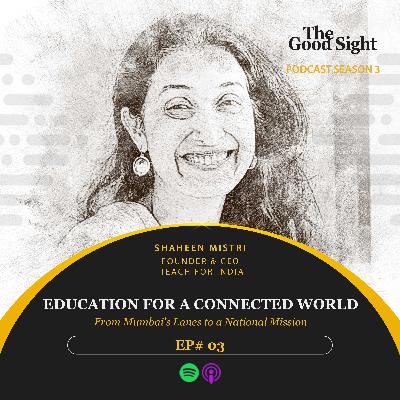
Education has the power to transform lives.Yet across the world, millions of children still grow up without access to learning that truly unlocks their potential.While every country faces its own realities, the aspiration remains universal: that no child’s future should be limited by where they are born. From overcrowded classrooms to systemic inequities, the challenge of educational access is global—and so must be the response.This is where movements like Teach For All step in—bringing together Teach For India and more than 60 partner organizations worldwide, united by a shared commitment to educational equity.In Episode 3 of The Education Revolution—the final chapter of our special three-part series—we return to our conversation with Shaheen Mistri, Founder and CEO of Teach For India.In this episode, we widen the lens—looking beyond borders to understand what education can become when the world learns together.We explore:What challenges children face that are universal—and what remains deeply localWhat India can learn from global education systems, and what the world can learn from IndiaHow education must evolve if it is to prepare young people not just to succeed, but to lead changeWhat true global collaboration in education could look likeAnd what the classroom of the future might tell us about whether this education revolution has truly arrivedThis is a conversation about reimagining learning as a shared human responsibility—one that transcends geography, systems, and silos.CreditsHost: Shreya MGuest: Shaheen MistriResearch: Alisha CArtwork: Rajnikant SProduced by: The Good SightConcept: The Good SightFor feedback or to participate, write to us at contact@thegoodsight.org#EducationRevolution #TeachForAll #TeachForIndia #GlobalEducation #EdEquity #EducationForAll #TheGoodSight
Education can change a child’s life.But in India, access to quality education is still far from equal.Millions of children are locked out of classrooms—not because they lack talent or ambition, but because opportunity never reaches them. According to the 2011 Census, 8.4 crore children between the ages of 5 and 17 are out of school. And for many, that absence shapes the rest of their lives.This is where movements like Teach For India emerge—stepping into the gaps where systems fall short, and working to ensure that where a child is born does not determine how far they can go.In Episode 2 of The Education Revolution, our special three-part series, we continue the conversation with Shaheen Mistri, Founder and CEO of Teach For India.In the previous episode, we traced Shaheen’s personal journey. In this episode, we shift focus to what came next: the making of Teach For India.We explore:What “educational equity” truly means in a country as unequal as IndiaThe moment Shaheen realised Teach For India could grow beyond a small initiativeThe challenge of balancing scale with quality in education reformWhether India is moving fast enough to bring every child into schoolThe role—and limits—of technology in addressing educational inequityThis is a conversation about building systems that serve children better, the courage required to think big, and the hard, often invisible work of sustaining change over time.CreditsHost: Shreya MGuest: Shaheen MistriResearch: Alisha CArtwork: Rajnikant SProduced by: The Good SightConcept: The Good SightFor feedback or to participate, write to us at contact@thegoodsight.org#TeachForIndia #EducationReform #EducationForAll #EdEquity #TFIMovement #TheGoodSight #EducationRevolution
We often speak about cities through the lens of development—smart infrastructure, growth, progress.But our conversations rarely reach the places where most urban residents actually live—informal settlements, low-income communities, bastiyaan.Here, water is not a basic service.It’s a daily struggle.A toilet is not just infrastructure.It’s about dignity.And a home is more than a roof—it is safety, stability, and resilience.Climate change, extreme heat, water scarcity, sanitation—in reports, these are numbers.On the ground, they are lived realities.And yet, some of the most practical solutions to these challenges come from the very people whose voices are least heard—local communities, and especially women.In this episode, we bring those voices to the centre.We sit down with Bharati Bhonsale, who has spent over 25 years working on housing, water, and sanitation in urban poor settlements, leading large-scale initiatives with Mahila Housing Trust across Gujarat, Madhya Pradesh, and Maharashtra.Joining her is Pratibha Sunil Choudhary, a resident of Amalner’s Bengali File slum, a Community Action Group (CAG) leader, and a Vikasini and Paryavaran Sakhi with MHT—turning lived experience into collective action.This conversation explores how climate resilience is built from the ground up, how women emerge as city-makers, and why the future of our cities depends on listening to those who have long been unheard.Because real urban transformation doesn’t begin in policy papers—it begins in communities that refuse to be invisible.CreditsHost: Shreya MGuests: Bharati Bhonsale, Pratibha Sunil ChoudharyResearch: Alisha CArtwork: Rajnikant SProduced by: The Good SightConcept: The Good SightFor feedback or to participate, write to us at contact@thegoodsight.org#UrbanResilience #ClimateJustice #WomenLead #InclusiveCities #MahilaHousingTrust #TheGoodSight #GroundUpChange
Education in India isn’t just about schools, classrooms, or textbooks.It’s about possibility.It’s about whether a child is seen, heard, and given the chance to imagine a different future.And yet, for millions of children across the country, quality education still slips through the cracks—not because they lack talent or potential, but because the systems around them fail to create opportunity. It’s a gap we’ve lived with for far too long. But every once in a while, someone chooses to challenge that gap.In this special three-part series, The Education Revolution, we sit down with Shaheen Mistri—Founder and CEO of Teach For India, and one of the most influential voices shaping the future of learning in India.What began as a young woman’s decision to return to Mumbai at 18 has since grown into one of the country’s most powerful education movements. From the early days of Akanksha to building Teach For India into a nationwide force, Shaheen’s work reminds us that real change begins with empathy, courage, and an unwavering belief in every child’s potential.In this first episode, we trace her journey back to where it all began.We explore:What inspired her to work with children in low-income communitiesThe stark realities of education she witnessed in Mumbai’s slumsThe early struggles and defining moments that shaped AkankshaThe lessons she learned from children that transformed her approach to leadershipWhat continues to motivate her after more than three decades in the sectorThis is a story about purpose, persistence, and the quiet power of showing up—day after day—for children who deserve every opportunity to thrive.CreditsHost: Shreya MGuest: Shaheen MistriResearch: Alisha CArtwork: Rajnikant SProduced by: The Good SightConcept: The Good SightFor feedback or to participate, write to us at contact@thegoodsight.org#TeachForIndia #EducationReform #EducationForAll #EdEquity #TFIMovement #TheGoodSight #EducationRevolution
Hunger in India isn’t just a problem of empty plates.It’s a problem of broken systems.Every single day, cities discard tonnes of perfectly edible surplus food—while families in the same neighbourhood skip meals, stretch rations, or head to work on an empty stomach. It’s a contradiction we’ve normalised.And perhaps the most heartbreaking part?Hunger is invisible.People who need help rarely ask.People who want to help often don’t know where to begin.In this episode, we bring you a story that cuts through the noise with a solution that’s simple, dignified, and quietly transformative.We’re joined by Dr. Issa Fathima Jasmine—dentist-turned-changemaker and the founder of The Public Foundation, the force behind India’s community fridge movement, Ayyamittu Unn.What began as a single fridge placed in a public space has grown into a nationwide ecosystem rooted in dignity, sharing, and collective responsibility. Dr. Issa’s work proves that fighting hunger doesn’t always require grand infrastructure—it just needs systems that bring people together.We explore:Why hunger in India is less about food scarcity and more about systemic gapsThe early fears, resistance, and social perceptions she battled while installing the first fridgeHow community fridges are kept safe, accountable, and running every dayHow stereotypes—like judging a woman by her saree—shape leadership, courage, and public perceptionHer vision for a “kindness curriculum” in schools, and what she believes every 10-year-old should learn about giving and receivingWhy dignity must be at the heart of any solution to hungerCreditsHost: Shreya MGuest: Dr. Issa Fathima JasmineResearch: Alisha CArtwork: Rajnikant SProduced by: The Good SightConcept: The Good SightFor feedback or to participate, write to us at contact@thegoodsight.org#CommunityFridges #AyyamittuUnn #HungerFreeIndia #FoodWaste #UrbanCompassion #SocialInnovation #TheGoodSight
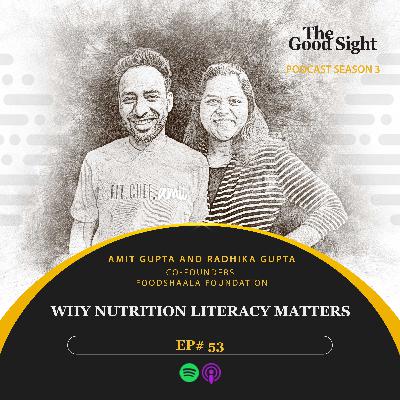
We often talk about health through the lens of gyms, workouts, diets, and trends. But beneath all of this lies a simple, powerful truth:Good health begins with what we know about the food we eat.And that’s where nutrition literacy steps in.Nutrition literacy isn’t about memorising nutrients or counting calories.It’s about understanding food in a way that helps families make informed choices every single day—choices that influence how children grow, how communities stay healthy, and how we break cycles of poor nutrition at the grassroots.In this episode, we’re joined by two changemakers who are reimagining the way India understands food: Radhika Gupta and Amit Gupta, co-founders of the Foodshaala Foundation.Radhika brings deep experience in food, nutrition, and community access. Amit offers the lens of a teacher who has worked in low-income schools, witnessing how nutrition shapes learning, energy, and potential. Together, they’re building a movement that makes healthy eating simple, affordable, and empowering.We explore:• What nutrition literacy really means—and why India urgently needs it• The everyday barriers children face in schools when it comes to food and awareness• How myths around “healthy food is expensive” can be dismantled• The role schools and teachers can play in shaping lifelong eating habits• How junk food marketing is changing childhood diets—and what we can do about it• Why building a nutrition-aware generation is one of India’s strongest public health toolsIf you care about community health, child well-being, and how simple knowledge can transform the way we eat—this conversation is for you.CreditsHost: Shreya MGuests: Radhika Gupta & Amit GuptaResearch: Alisha CArtwork: Rajnikant SProduced by: The Good SightConcept: The Good SightFor feedback or to participate, write to us at contact@thegoodsight.org#NutritionLiteracy #FoodshaalaFoundation #PublicHealth #ChildNutrition #HealthyCommunities #GrassrootsChange #SocialImpact #TheGoodSight
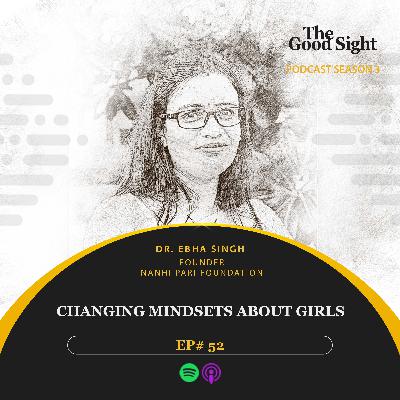
When we talk about a nation’s progress, one question reveals everything: How do we treat our daughters?Because the story of a girl child is often the story of society itself—its beliefs, its biases, and its hopes for the future.Across India, many families still hesitate to celebrate the birth of a daughter. Educational opportunities are uneven. Women’s financial independence is seen as optional, not essential.Yet, change is unfolding quietly—and powerfully—through individuals who believe that every girl deserves to be welcomed, educated, and empowered.This episode brings you the inspiring journey of Dr. Ebha Singh, founder of Nanhi Pari Foundation, an initiative that began with a simple yet profound act: celebrating the birth of a girl child.What started as a gesture of love has grown into a movement that supports mothers, nurtures daughters, strengthens education, and builds pathways for women’s financial independence—one family, one village, one girl at a time.We explore:The personal moment that inspired Dr. Ebha to start Nanhi Pari in 2021How celebrating newborn daughters can shift traditions, mindsets, and community cultureThe recognition from the Honourable Governor of Uttar Pradesh—and what it means for the movementThe biggest barriers to girls’ education today and how Nanhi Pari works to dismantle themHow income-generation tools like dairy support, mulching machines, and sewing machines are transforming women’s confidence and agencyA message of hope for parents and young listeners about embracing daughters as catalysts of progressCreditsHost: Shreya MGuest: Dr. Ebha SinghResearch: Alisha CArtwork: Rajnikant SProduced by: The Good SightConcept: The Good SightFor feedback or to participate, write to us at contact@thegoodsight.org#NanhiPari #GirlChildEmpowerment #WomenFirst #GenderEquality #EducateGirls #FinancialIndependence #SocialImpact #TheGoodSight

Comments

Download from Google Play

Download from App Store
 United States