


 Claim Ownership
The Personal Practice Guide
Subscribed: 2Played: 10
Subscribe

© Joya Ewy
Description
6 Episodes
Reverse
This is a public episode. If you would like to discuss this with other subscribers or get access to bonus episodes, visit personalpracticeguide.substack.com
The bells guide your breath, bringing you into a state of coherence, while the subliminal affirmations, concealed within the waves, work to reshape your subconscious mind beyond your conscious awareness. This is a public episode. If you would like to discuss this with other subscribers or get access to bonus episodes, visit personalpracticeguide.substack.com
“Sometimes the most productive thing you can do is relax." ~Mark Black When stress builds up, it creates tension in your muscles. One way to relax is through progressive muscle relaxation (PMR).This technique involves tightening and relaxing different areas of your body in a specific sequence.It helps you become more aware of what tension feels like so you can then release it.With regular practice you may:* sleep better* feel more energetic * reduce pain * ease anxiety Try it next time you're feeling upset or unable to fall asleep. PMR activates your body’s parasympathetic rest and digest response. When your muscles are fully relaxed, it’s easy for your body to drift into deep restorative sleep.All the best,Joya xx This is a public episode. If you would like to discuss this with other subscribers or get access to bonus episodes, visit personalpracticeguide.substack.com
“The person, who is in tune with the universe, becomes like a radio receiver through which the Voice of the universe is transmitted.” ~Hazrat KhanWhen you are inspired, clarity is key to expressing your vision and creative insight. This is possible through Udana Vayu. The ascending flow regulates growth, perception and speech. When your Udana Vayu is balanced, you are able to share your thoughts, feelings and emotions in a meaningful way. You feel connected to your joy and enthusiasm as well as to your inner guidance. When this energy is blocked or weak, you have difficulties sharing your perspective.It seems as if no one listens or understands what you have to say. You may have problems with hearing and swallowing too. Bhamari pranayama, the Humming Bee Breath, is one of the best ways to harmonize Udana Vayu.This powerful technique decreases anxiety, agitation and stress.Humming slows your breath and creates a sound for your mind to focus on. This promotes deep relaxation and interrupts negative thoughts. It also generates 15x more nitric oxide than silent breathing, which provides numerous benefits to your health and well-being. To practice the Humming Bee Breath* Close your eyes and plug your ears with your index fingers.* Close your mouth, relax your jaw and place your tongue against the the roof of your mouth.* Inhale slowly through your nose.* With your mouth closed, exhale “om” slowly through your nose, making a high-pitched hum.Keep your breath smooth and extend your exhalation.You can hum before meditation to increase your peace or before bed for improved sleep.Happy Valentine’s Day,❤️ Joya This is a public episode. If you would like to discuss this with other subscribers or get access to bonus episodes, visit personalpracticeguide.substack.com
“You can’t stop the waves, but you can learn to surf.” ~Jon Kabat-ZinnThis breathing practice is soothing, especially when you find yourself particularly emotional.You can use it throughout the day, whenever you feel stressed or anxious and need to calm down.To drop deep below the surface of your emotional waves, into the depths of your breath and into your core:* Relax your shoulders and observe the natural rhythm of your breath as you breathe in and out through your nose.* Then place your hands along the lower part of your rib cage.* Inhale and feel your two lowest ribs widen. Imagine your lungs as a balloon expanding in every direction.* Continue to inhale, filling your mid-chest with air.* Finally fill your upper-chest.* Exhale slowly, smoothly and completely, drawing your ribs together.To enhance the calming effect, slow your breath and extend your exhalation.If at anytime you feel tension or the need to gasp for air, return to your normal breathing pattern and breathe at your own pace.Breathing diaphragmatically stimulates the vagus nerve and relaxes your nervous system, shifting you out of a fight or flight reaction and into a gentle state of restorative awareness.This simple technique helps you self-regulate so you can respond rather than react to life and focus your attention on what feels good.All the best,Joya This is a public episode. If you would like to discuss this with other subscribers or get access to bonus episodes, visit personalpracticeguide.substack.com
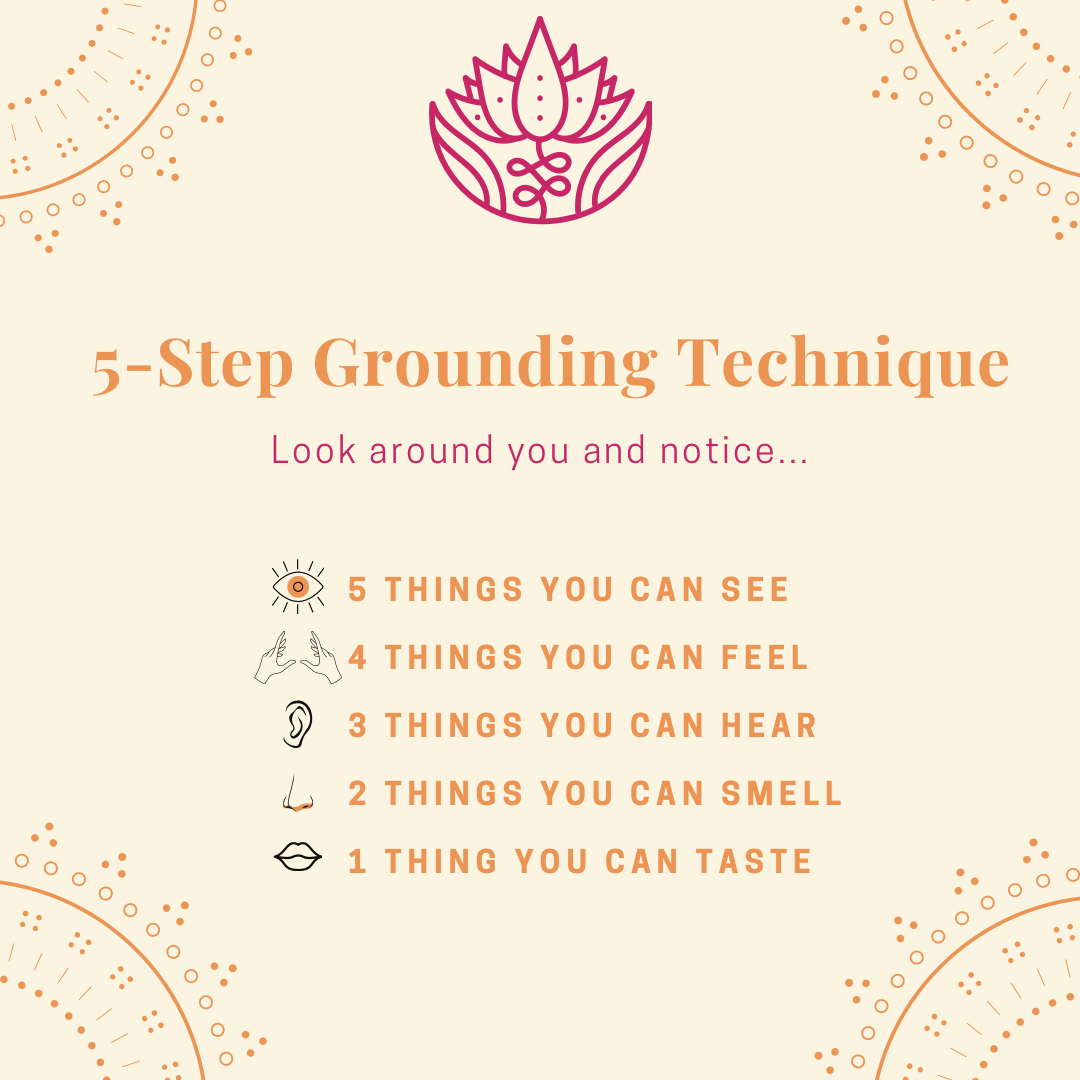
“Everything works out in the end. If it hasn't worked out yet, then it's not the end." This short practice is perfect for anytime that you feel stressed and overwhelmed—even when you are on the go. You can ground yourself by taking a few deep breaths, slowing down and settling into the present moment. Then look around and notice…* 5 things you can see* 4 things you can feel* 3 things you can hear* 2 things you can smell* 1 thing you can tasteYou will finish this exercise feeling calm, centered, grounded and ready to carry on with your day.With love,Joya This is a public episode. If you would like to discuss this with other subscribers or get access to bonus episodes, visit personalpracticeguide.substack.com
Comments


Download from Google Play

Download from App Store
 United States