


 Claim Ownership
Hyosung: Inspired Banking
Subscribed: 1Played: 5
Subscribe

© 2021
Description
From Branch Transformation to Cash Management Solutions, Hyosung offers a variety of ways for businesses to grow and be successful. With the goal of inspiring growth and changing the industry, Hyosung is leading a transformational revolution that will inspire the consumer experience worldwide.
10 Episodes
Reverse
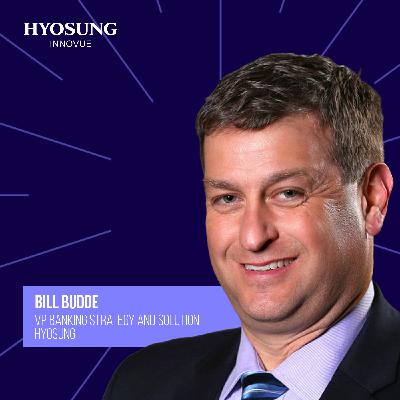
The way automatic teller machines (ATMs) are used has changed for the better, allowing automated processes to make the experience easier for everyone. As a new year dawns, new developments emerge as new technologies help to make these automated processes even easier.Daniel Litwin, host of Banking Experiences (formerly Inspired Banking) sat down with Bill Budde, VP of Banking Strategy and Solutions at Hyosung, to talk about the updates and changes within the company regarding the future of cash automation. This includes cash recycling, which has made it easier for money to change hands reliably and with fewer errors. “Before recycling technology was introduced…it was a pretty onerous process to do all these things” says Budde. He mentions that, even though the process used to be more of a hassle, it’s always been needed. “Sometimes it is to prevent fraud and theft, but also it’s also to make sure you’ve got your books in order and make sure that you’ve got an auditable process that’s repeatable.”With more automated processes, counting and handling money has never been easier, especially as more banks and ATM locations feature teller cash recyclers (TCRs). With these machines, Budde says “we’ve got all the rest of this time for our employees to really engage with customers and really focus on value add for the enterprise.”Budde also talks about what the future of cash automation has to address, such as how the technology can go beyond the machines themselves. “Instead of having to manually pull out money, and manually count it, and then manually enter it into the machine to tell it how much you got, you can pull it out in an automated fashion,” says Budde, “and put it into a secure device that then can kinda be moved from one location to the next.” From here the person moving the device can easily tell the machine the money that has been stored and the money that is being moved. In this way, “the machine knows every single bill that’s come out of it and every single bill that goes into it.”You can catch up on previous episodes of Banking Experiences (under the name Inspired Banking) by visiting https://hyosungamericas.com/podcasts.
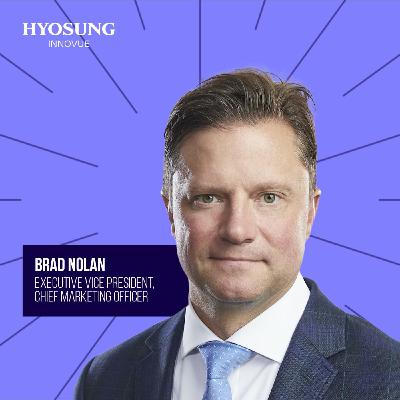
On this special Hyosung Innovue podcast, Daniel Litwin sits down for an interview with Brad Nolan, Executive Vice President and Chief Marketing Officer at Hyosung Innovue, to discuss the power of brand in creating memorable customer experiences. The conversation begins with a discussion of the recent rebranding of Hyosung Innovue and the importance of brand in defining a company's soul, differentiating it in a competitive market, and fostering long-lasting relationships with customers. The discussion then moves to how Hyosung Innovue redefined itself as a global human experience maker bridging the physical and virtual worlds, harnessing its unique combination of a manufacturer's soul and an innovator's mindset to better customers' day-to-day interactions and journeys. This episode also dives into the process of conducting hundreds of internal and external interviews to define the company's core capabilities, as well as its direction and impact on the community. The conversation emphasizes that the rebranding process is all about aligning the company's messaging with the existing perception of its stakeholders, with the challenge of getting the new message out to those unfamiliar with the brand. The podcast concludes with a discussion of brand activation and the importance of getting the fresh message out to the marketplace.
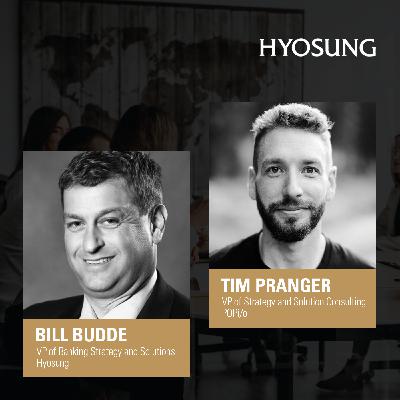
“The start of video banking was on the transactional side with tellers. That was actually my father, Gene Pranger, that pioneered that technology. So, he actually created what was called the personal teller machine, which actually brought tellers to devices and allowed them to take control of that device to enhance the capabilities and transactions that they could do,” said Tim Pranger, VP of Strategy and Solution Consulting for POPi/o. The Utah-based company offers automated chatbot technology, video support from an in-branch specialist, and collaboration tools such as co-browse, video check deposit, identity verification, document sharing, and e-sign.According to The Next Web, video banking refers to any banking services offered with video representations to help customers. What started as transactional has expanded into so much more. Many industries experienced rapid tech growth because of covid, and banking technology is no exception. “The latest evolution is really kind of crossing that bridge out of the transactional and into the relationship-style interactions, where you’re talking about opening a new account or talking about expanding your relationship with the bank that has really started to create a new place for video to play a part,” said Bill Budde, VP of Banking Strategy and Solutions, Hyosung.Video is becoming an essential part of banking. We’re familiar with the “Great Resignation” and shrinking physical locations. Factors like this are driving demand for expanding video banking. “Now the trouble becomes ‘how do I deliver different solutions to those same areas that are a third of the size, and I can’t staff?’” said Pranger. Though the landscape is changing, expectations remain the same. “Customers expect to be able to walk into a bank and have access to the expertise that bank provides. Regardless of the structure they walked into. They expect to be able to get financial advice if they need it,” said Budde.Robust video solutions allow banks to conduct businesses with more efficiency. It offers various solutions and flexibility for customers. “By the nature of it, you have to have a rich set of collaboration tools to go along with that video,” said Budde. As fintech offerings are available more regularly, video banking allows traditional institutions to keep up. “It creates a best of both worlds situation, where we combine that technology and allows the bank to put their best foot forward to their customers in a seamless integrated experience,” said Budde. Visit our website at https://hyosungamericas.com/podcasts. Listen on Spotify, Apple Music, or wherever you get your podcasts.
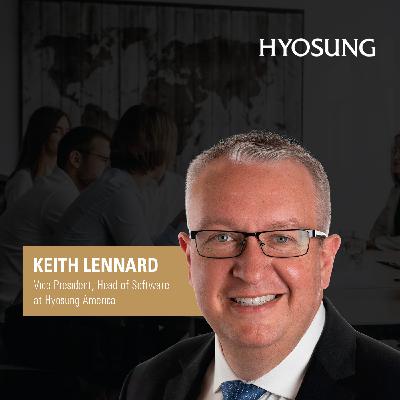
The advent of the pandemic changed a plethora of industries. While some fell behind, others evolved to meet the changes. Keith Lennard, an industry expert for over 12 years and the VP and Head of Software at Hyosung, knows all too well how adverse events might positively impact an industry. Specifically in this case, he know show the pandemic has accelerated movements in banking. Host Tyler Kern has a candid discussion with Lennard about the changes in the banking industry and how self-service banking is evolving the game.Before the pandemic, changes in the industry were slow-going while still moving towards mobile utilities. However, the pandemic rapidly accelerated this growth, “There has been this kind of evolution over the last couple of years of how do you really change access to money? How do you change the banking experience?” said Lennard.Hyosung presents a different but practical solution using evolving self-service technology. The goal isn’t just to share this knowledge but to allow others the ability to connect with their customers through self-service banking.With personal experiences changing and practical convenience becoming an astute need for many, Lennard notes this convenience shouldn’t stop there, “expectations have changed...the consumers want to bank on their terms.”Hyosung moves from physical to digital assets while continuing to meet and exceed customer expectations around the clock. Capitalizing on the “wealth of knowledge built into the self-service device,” self-service banking technology can meet and exceed user experiences, all while providing a solid ROI that ensures customers continue to feel appreciated.And adoption of this technology isn’t difficult when you have the right partners. That’s why Hyosung is here to help you get started. “We’ve had a lot of success doing these integrations with our customers,” said Lennard.To learn more, visit hyosung.com or tune into Hyosung’s Inspired Banking Series.

Drive-up banking has been around for years, and most use it frequently when they need a simple banking transaction fulfilled. Daniel Litwin sits down with Bill Budde, the VP of Banking Strategy and Solutions at Hyosung, to discuss evolving trends and technology in drive-up banking. As technology develops and banking adopts new technologies, we’ll see the banking workforce meet higher efficiency, increasing service hours and improving customer experience. As banks eliminate outdated and hard-to-service technology like VAT, interactions at the banks will become quicker and more enjoyable for individuals. Ideal use cases include expanding automation both on personal devices and at ATMs. Current consumers are already used to a certain amount of automation, including checking their balance online or on a machine, but enhancing that technology will allow consumers to more easily withdraw from an existing line of credit or even open a new line of credit. Simply depositing a check or transferring funds from one account to another has become more convenient, however, Budde expresses “the biggest thing you see is the basic transactional stuff customers are [more and more] choosing to self serve... an in-person interaction is centered around the deeper style of needs for customers like opening a new line of credit or fulfilling a mortgage or getting an auto loan. Those are a bigger impact financially on a person’s life.” The more complex banking interactions require individuals or some fulfillment role. With video calls, an ATM could ultimately be used as a portal to the entire operation of the bank, including more complex financial relationships. A remote individual can check the physical requirements that those transactions would need. Or, if an individual is required for a question, they can be brought into the interaction. The human touchpoint will be more centralized and address more locations. Overall, convenience has to be flexible based on the customers' needs, but it has its benefits for bank tellers too. There is a trend toward digital-first banking. This trend has grown with customer behavior changes during the pandemic. There has been a drive to automate repetitive tasks to allow employees to focus on customer service and relationship building. Automating these tasks lessens stress and caters to a more engaging work environment. Keeping up with technology will help banks attract and retain employees.
ATMs have long been a part of the banking processing, but the pandemic accelerated the use of self-service tools in banking was. Bill Budde, Vice President of Banking Strategy and Solutions for Hyosung, spoke with Inspired Banking host Tyler Kern about the evolution of banking self-service tools and which technology benefits end-user experience and bank efficiency.The prevalence of deposit automation opened the door to drive straightforward transactions to automation instead and bypass administrative tasks employees would otherwise need to complete. Minimization of training, documentation, managing, and auditing of processes created efficiencies and allowed employees to tend to customer needs. “You don’t have to spend so much time reconciling the counting and on purely operational nonvalue tasks. You can really refocus that time on how to relationships, how to ensure that the customers are getting what they need and the best service they can get,” Budde stated.Automated processes depleted the need for space in bank branches, allowing them to shrink. Banks can then target geographic areas with smaller spaces to reach new populations. These spaces can focus more on consultative and customer-oriented services. If the small branches cannot accommodate all services, the main branch would fulfill these.Budde explained the importance of 24-hour bank access: “Access is a form of customer expectation at this point because pretty much every vertical was forced to have some kind of access that didn’t require in-person interaction.” Some services that may soon be available in this 24-hour access include core integration, which allows high-level banking processes such as paying loans to occur through ATMs. Additionally, video tellers may verify IDs for large ATM transactions while the rest of the process is automated so tellers can support 10 to 15 ATMs at once. For more information on Hyosung and to contact Budde, visit hyosungamericas.com.
PART 2Cash recycling has been proving itself to be a worthwhile upgrade to ATMs across the globe, creating domino effects from cost savings to safer cash to more efficient banking services for the end-user.Here to give insights on this episode of Inspired Banking, a Hyosung podcast, is Bill Budde, Vice President of Product Marketing at Hyosung. He talked to Host Daniel Litwin about how to really connect the dots between the economy today, how cash is being used, and why recycling ATMs are a worthwhile investment.Budde previously worked at Chase on their ATM technology. This early work included transaction and deposit automation technology, where he rolled it out across the entire footprint of Chase’s branch network. He moved into incorporating cash recycling into these machines. With this knowledge, Budde understands how cash moves into today’s society. With debit cards, peer-to-peer payments, and other technologies leading the way on how people spend money, it’s essential to understand how end-users use cash in today’s larger ecosystem. “Cash is still a predominantly preferred method of payment for in-person transactions,” Budde said. “What we’ve seen over the last 18 months or so is a lot of that in-person interaction, for retail for purchasing in general, kind of disappeared for a while.”While transactions moved to digital methods during the pandemic, cash remained king. Part of this is that there is still a large population that doesn’t use banks or underutilizes them, according to Budde, and this makes cash the most accessible mechanism to pay.
PART 1Cash recycling has been proving itself to be a worthwhile upgrade to ATMs across the globe, creating domino effects from cost savings to safer cash to more efficient banking services for the end-user.Here to give insights on this episode of Inspired Banking, a Hyosung podcast, is Bill Budde, Vice President of Product Marketing at Hyosung. He talked to Host Daniel Litwin about how to really connect the dots between the economy today, how cash is being used, and why recycling ATMs are a worthwhile investment.Budde previously worked at Chase on their ATM technology. This early work included transaction and deposit automation technology, where he rolled it out across the entire footprint of Chase’s branch network. He moved into incorporating cash recycling into these machines. With this knowledge, Budde understands how cash moves into today’s society. With debit cards, peer-to-peer payments, and other technologies leading the way on how people spend money, it’s essential to understand how end-users use cash in today’s larger ecosystem. “Cash is still a predominantly preferred method of payment for in-person transactions,” Budde said. “What we’ve seen over the last 18 months or so is a lot of that in-person interaction, for retail for purchasing in general, kind of disappeared for a while.”While transactions moved to digital methods during the pandemic, cash remained king. Part of this is that there is still a large population that doesn’t use banks or underutilizes them, according to Budde, and this makes cash the most accessible mechanism to pay.
Cash recycling has been proving itself to be a worthwhile upgrade to ATMs across the globe, creating domino effects from cost savings to safer cash to more efficient banking services for the end-user.Here to give insights on this episode of Inspired Banking, a Hyosung podcast, is Bill Budde, Vice President of Product Marketing at Hyosung. He talked to Host Daniel Litwin about how to really connect the dots between the economy today, how cash is being used, and why recycling ATMs are a worthwhile investment. Budde previously worked at Chase on their ATM technology. This early work included transaction and deposit automation technology, where he rolled it out across the entire footprint of Chase’s branch network. He moved into incorporating cash recycling into these machines. With this knowledge, Budde understands how cash moves into today’s society. With debit cards, peer-to-peer payments, and other technologies leading the way on how people spend money, it’s essential to understand how end-users use cash in today’s larger ecosystem. “Cash is still a predominantly preferred method of payment for in-person transactions,” Budde said. “What we’ve seen over the last 18 months or so is a lot of that in-person interaction, for retail for purchasing in general, kind of disappeared for a while.”While transactions moved to digital methods during the pandemic, cash remained king. Part of this is that there is still a large population that doesn’t use banks or underutilizes them, according to Budde, and this makes cash the most accessible mechanism to pay.
Cash recycling has been proving itself to be a worthwhile upgrade to ATMs across the globe, creating domino effects from cost savings to safer cash to more efficient banking services for the end-user.Here to give insights on this episode of Inspired Banking, a Hyosung podcast, is Bill Budde, Vice President of Product Marketing at Hyosung. He talked to Host Daniel Litwin about how to really connect the dots between the economy today, how cash is being used, and why recycling ATMs are a worthwhile investment.Budde previously worked at Chase on their ATM technology. This early work included transaction and deposit automation technology, where he rolled it out across the entire footprint of Chase’s branch network. He moved into incorporating cash recycling into these machines. With this knowledge, Budde understands how cash moves into today’s society. With debit cards, peer-to-peer payments, and other technologies leading the way on how people spend money, it’s essential to understand how end-users use cash in today’s larger ecosystem. “Cash is still a predominantly preferred method of payment for in-person transactions,” Budde said. “What we’ve seen over the last 18 months or so is a lot of that in-person interaction, for retail for purchasing in general, kind of disappeared for a while.”While transactions moved to digital methods during the pandemic, cash remained king. Part of this is that there is still a large population that doesn’t use banks or underutilizes them, according to Budde, and this makes cash the most accessible mechanism to pay.
Comments

Download from Google Play

Download from App Store
 United States