DiscoverThe Delicious Legacy
The Delicious Legacy

The Delicious Legacy

Author: The Delicious Legacy

Subscribed: 123Played: 4,719
Share

Description

A Greek Gourmand, travels through time...


Imagine yourself dining with Socrates, Plato, or Pythagoras! What tasty morsels of food accompanied the conversations of these most significant minds in Western philosophy?

Now picture yourself as you sat for a symposium with Cicero, or Pliny the Elder or Julius Caesar. The opulent feasts of the decadent Romans!

Maybe, you're following Alexander the Great during his military campaigns in Asia for ten years. Conquering the vast Persian empire, while discovering new foods.

Or try and picture the richness of fruits and vegetables in the lush Hanging Gardens of Babylon.

What foods did our ancestors ate?

How did all begin? Who was the first to write a recipe down and why?

Sauces, ingredients, ways of cooking. Timeless and continuous yet unique and so alien to us now days. Staple ingredients of the Mediterranean world -as we think now- like tomatoes, potatoes, rice, peppers, didn't exist. What did they eat? We will travel far and wide, reconstructing the diet, the feasts, the dishes of a Greek Philosopher in a symposium in Athens, or a Roman Emperor or as a rich merchant in the last night in Pompeii.....Lavish dinners, exotic spices, so-called "barbaric" traditions of beer and milk, all intertwined...

Stay tuned and find out more here, in 'The Delicious Legacy' Podcast!


Support this show http://supporter.acast.com/the-delicious-legacy.


Hosted on Acast. See acast.com/privacy for more information.
203 Episodes
Reverse
Hello my curious archeaogastronomers!Who were the first beer makers? Why did they even made beer in the first place? Can we even find a Civilization to be the clear winner in this "race"? What's the word for beer in ancient Sumerian?What role the priests and kings plaid in this? Who even drunk beer in the ancient Mesopotamian world? All this and many more questions were buzzing through my mind.On today's episode I have as a guest the author of the book In The Land of Ninkasi: A History of Beer in Ancient Mesopotamia, Tate Paulette.Tate’s book has recently won two awards:Felicia A. Holton Book Award, Archaeological Institute of AmericaThis award is given annually to a writer or writers who, through a major work of non-fiction, represents the importance and excitement of archaeology to the general public. The work should have broad public appeal and be written for an adult lay audience in a clear and engaging style. It should convey the excitement of archaeological discovery accurately and responsibly. It should be well-researched and provide new insight for the general public. https://www.archaeological.org/2026-aia-awards-spotlight-felicia-a-holton-book-award/And he also won the Nancy Lapp Popular Book Award, American Society of Overseas Research:This award is presented to the author/editor of a book published in the last two years that offers a new synthesis of archaeological or textual evidence from the Ancient Near East and Eastern Mediterranean intended to reach an audience of scholars as well as students and the broader public.https://www.asor.org/about-asor/honors-awards/previous-award-recipients/Alright! Time for my delightful and interesting I hope recommendations for this week are the following:Disco scallops:Here’s a link:https://www.discoscallops.co.uk/A Spirit Never to Betray” before tequila and mescal there was another: David Lauer investigates the fate of a spiky ancient desert plant called sotol, and its alliance with generations of artisans who distil a fiery spirit from its heart.https://dark-mountain.net/a-spirit-never-to-betray/And finally the website https://www.ukrainer.netA community and organisation that has been researching Ukraine and the Ukrainian context since 2016, telling stories to Ukrainian audiences and broadcasting them to the world in dozens of languages.xEnjoy!Photo credits : Book Tate Paulette, Cuneiform Tablets Justin Kase Conder, Portrait Kathryn GrossmanThom & The Delicious LegacySupport the podcast on Ko-Fi and Patreon for ad-free episodes! https://ko-fi.com/thedeliciouslegacypodcasthttps://www.patreon.com/c/thedeliciouslegacySupport this show http://supporter.acast.com/the-delicious-legacy. Hosted on Acast. See acast.com/privacy for more information.
Hello!New episode is out now for you my delightful Patreon backers! Out early and ad-free!Why England and by extension all of UK is so allotment "obsessed" ? What does it all mean?Firstly, what is an allotment? When did it all started?As someone who moved in UK many years ago, seeing this lovely spaces in cities filled me with a sense of serenity, and an air of quaint old school happiness lets say, they evoked something romantic and from long lost era. Of course over the years I learned a lot about why these exist; what purpose and role fulfil in the society and the soul of the nation.Who has one, who are they owned and maintained by, and crucially why people still insist having? What is the source of their popularity?Importantly, can one person/family feed themselves with produce from an allotment? Is there any point on doing so?Anyway I hope you'll enjoy my little potted allotment history here alongside with the interview with author and gardener Kathy Slack and nature conservationist, environmentalist and wildlife presenter Dr Sean McCormack!Kathy's Substack and Insta:https://kathyslack.substack.com/https://www.instagram.com/gluts_gluttony/Sean's media:https://drseanmccormack.com/https://www.instagram.com/thatvetsean/Get his lovely children's book about rewildinghttps://www.thegreatbritishbookshop.co.uk/products/beaver-believerspos=1&sid=f9e160ecd&_ss=rLinks about allotments and London's city farms and gardens:Calthorpe Community Garden:https://www.calthorpecommunitygarden.org.uk/about-usSitopia Farmhttps://sitopiafarm.com/pages/about-our-farmCommunity veg boxes:https://growingcommunities.org/Love,The Delicious LegacySupport the podcast on Ko-Fi and Patreon for ad-free episodes! https://ko-fi.com/thedeliciouslegacypodcasthttps://www.patreon.com/c/thedeliciouslegacySupport this show http://supporter.acast.com/the-delicious-legacy. Hosted on Acast. See acast.com/privacy for more information.
Hello!This is another episode in Greek, my little parallel series of getting some episodes out for Greek audienceThis time I thought I'll release a part of my conversation with my grandmother- my yiayia- my father's mother.From the mountainous north west Greece, her childhood up in the villages, where bandits and others where making life hard in the 1920's. Only a few years earlier this part of Greece was part of the Ottoman Empire.A fascinating story of a troubled period for Greece, her story takes us from the 1920's to the end of WW2.I recorded this about 17 years ago! It was 2009. EnjoyThomSupport the podcast on Ko-Fi and Patreon for ad-free episodes! https://ko-fi.com/thedeliciouslegacypodcasthttps://www.patreon.com/c/thedeliciouslegacySupport this show http://supporter.acast.com/the-delicious-legacy. Hosted on Acast. See acast.com/privacy for more information.
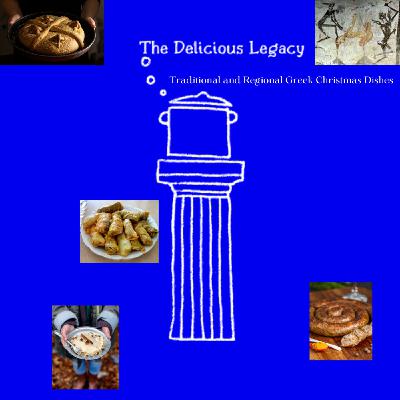
Hello! Christmas is approaching! Time for some recipes to inspire you in your Christmas cooking! (If you do cook of course! Otherwise, psssss, pass it on to your spouse!) It's also the time the ‘Kalikanzaroi’ (goblins that live underground all year according to Greek folklore) are coming up to Earth to annoy humans. How do you distract them? What foods do they like? So I've got a little treat for you, my curious and greedy gastronomers! On this episode of The Delicious Legacy podcast, we are going to Greece, so aside from melomakarona, stuffed chicken with rice and chestnuts, or roast piglet, what else do we Greeks ate at Christmas past? What was on the festive table in Epirus, Crete, Mani, Thrace, or even Kastelorizo? Let's re-discover some of the older, regional, and nearly extinct dishes for all corners of the Hellenic world! What is "Patoudo"? What about the dish called 'baby Jesus's "swaddling clothes"? And "babo"? What is the dish called "Gold" from the remotest Greek island to the East? These and much more on today's episode!Listen now -on all platforms that you get your podcasts from- and share with friends, family, colleagues, and rate and review! Enjoy! x The Delicious LegacySupport the podcast on Ko-Fi and Patreon for ad-free episodes! https://ko-fi.com/thedeliciouslegacypodcasthttps://www.patreon.com/c/thedeliciouslegacySupport this show http://supporter.acast.com/the-delicious-legacy. Hosted on Acast. See acast.com/privacy for more information.
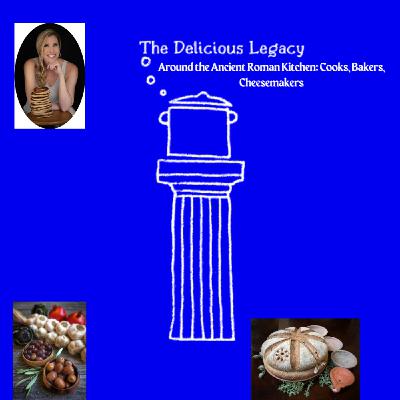
Hello!On this classic episode from the archives of The Delicious Legacy I decided to include some ten minute of extra content from my interview with Farrell and I have remastered the audio as it was a bit dodgy the last time round. Hope it's more pleasant and easier to listen now!I'm very excited about this episode! Farrell Monaco is a culinary & experimental archaeologist, and bread-baking addict! Especially of the ancient Greco-Roman variety...So what better person to chat about the ancient cuisine? And it's a very thought-provoking and thoughtful. Who were the people (and the animals!) who did the hard work?Currently in California -where she was when we spoke online- but mostly researching in Pompeii, Herculaneum and Ostia about ancient Greco-Roman breadways.More info on bread from Pompeii by Farrell Monaco:https://www.bbc.com/travel/article/20230629-adoreum-the-newly-discovered-flatbread-fresco-of-pompeiihttps://www.bbc.com/travel/article/20230406-arculata-the-bread-that-survived-pompeiiApuleius and The Golden Ass:https://en.wikipedia.org/wiki/The_Golden_AssEtruscan Tarquinian Tombs:https://tarquiniaturismo.com/tomb-of-the-triclinium/?lang=en Farrell's website and blog:https://tavolamediterranea.com/Music by Pavlos KapralosEnjoy!Thom & The Delicious LegacySupport the podcast on Ko-Fi and Patreon for ad-free episodes! https://ko-fi.com/thedeliciouslegacypodcasthttps://www.patreon.com/c/thedeliciouslegacySupport this show http://supporter.acast.com/the-delicious-legacy. Hosted on Acast. See acast.com/privacy for more information.
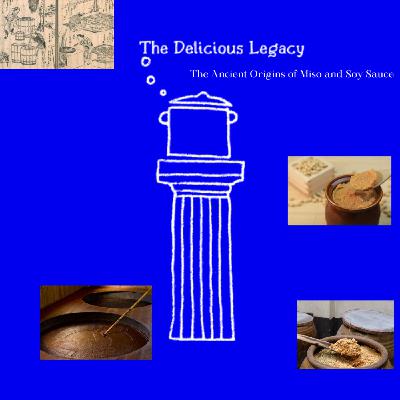
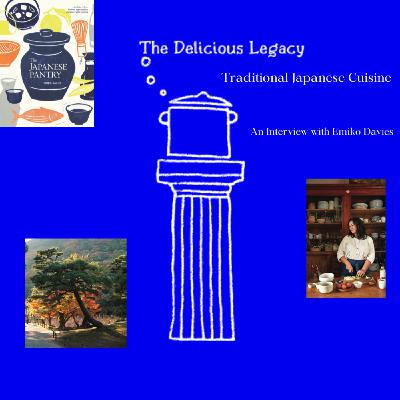
Hello! New episode is out and I couldn’t be more excited about it!I've interviewed cookbook author Emiko Davies about her latest book "The Japanese Pantry" which came out in October this year.Emiko shares stories of her travels off the beaten track to meet the makers and pay homage to ancient traditions that have been around for centuries. Ingredients, dishes and recipes that are lost in the mists of time, and rare foods that might be lost forever!How do you make sake and rice vinegar? What are the sake lees and how do we use it? What is the rare delicacy of Yubeshi?We will explore the key ingredients of Japanese cuisine and on top of this, we will take a deep dive some unknown ingredients and dishes from all over the Japanese archipelago.You can follow the pensioner, mountain tea farmers who farmed at 1000 feet above sea level deep inside a forest, on Instagram at @nakaichamuraiEnjoy!Thom & The Delicious LegacySupport the podcast on Ko-Fi and Patreon for ad-free episodes! https://ko-fi.com/thedeliciouslegacypodcasthttps://www.patreon.com/c/thedeliciouslegacySupport this show http://supporter.acast.com/the-delicious-legacy. Hosted on Acast. See acast.com/privacy for more information.
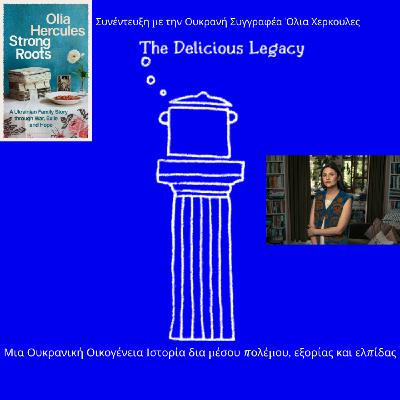
Hello!This episode is in Greek and it's the translation of the episode I recorded a couple of months ago with the food writer Olia Hercules about Ukrainian Food and Culture! The original episode can be found here: https://shows.acast.com/the-delicious-legacy/episodes/ukrainian-food-culture-with-olia-herculesΓεια σας! Το σημερινό επεισόδιο είναι μια συνέντευξη με την Ουκρανη συγγραφέα και σεφ Ολια Χερκουλες, που θα μας πει για την παραδοσιακή κουζίνα της Ουκρανίας, και τα φαγητά αλλά και τιε επιρροές από τους γείτονες λαούς μέσα στον χρόνο.Μιλήσαμε επί της ευκαιρίας του καινούργιου της βιβλίου, με τίτλο Strong Roots: "Μια Ουκρανική Οικογένεια Ιστορία δια μέσου πολέμου, εξορίας και ελπίδας"Μπορείτε να βρείτε αυτό αλλά και όλα τα βιβλία της εδώ: https://oliahercules.com/booksΕυχαριστώ για την ακρόαση. Μέχρι την επόμενη φορά, ας είμαστε δυνατοί γεροί και γεμάτη κουράγιο και ελπίδα.Η μουσική είναι του Παύλου ΚαπράλουΜε εκτίμηση,The Delicious LegacyThom NtinasSupport the podcast on Ko-Fi and Patreon for ad-free episodes! https://ko-fi.com/thedeliciouslegacypodcasthttps://www.patreon.com/c/thedeliciouslegacySupport this show http://supporter.acast.com/the-delicious-legacy. Hosted on Acast. See acast.com/privacy for more information.
Hello!A newly updated episode about Silphium! Or Asafoeitida? I was inspired by History Hit's newly released documentary with Dan Snow called Ancient Adventures: Libya where the team went to explore extraordinary Greek and Roman sites, centred around one of the greatest cities of the ancient world, Cyrene.So I thought it is time to talk again with more updates about silphium and with recipes and tasting by me here!What do we know of the ancient silphium? What do the authors say it tastes? And when was the last time that it was mentioned in texts?Plus the relationship with it's eastern cousin asafoetida and its use in Indian cuisine!Enjoy!With the voice over by Mark Knightand music by Pavlos KapralosLove,Thom & The Delicious LegacySupport the podcast on Ko-Fi and Patreon for ad-free episodes! https://ko-fi.com/thedeliciouslegacypodcasthttps://www.patreon.com/c/thedeliciouslegacySupport this show http://supporter.acast.com/the-delicious-legacy. Hosted on Acast. See acast.com/privacy for more information.
Hello!This episode is in Greek language for Greek audience!It was released on Wednesday in English for the rest of you!Καλημερα!Το καινουργιο επεισοδιο, της εκπομπης μας, στα Ελληνικα για το κοινο στην Ελλαδα!Προβάλλουμε λοιπόν, δίνουμε για λίγο τα φώτα της δημοσιότητας στους Έλληνες Σεφ του εξωτερικού!Να δουμε την εμπειρια τους και την σχεση τους με το Ελληνικο φαγητο και πως εξελίσσεται εκτος Ελλαδος! Τι επιρροές φερνουν στα πιάτα και ποια η ανταποκριση των κατοικων της καθε χωρας στην Ελληνικη κουζινα?Ακουστε λοιπον το πρωτο επεισοδιο της σειρας μας στα Ελληνικα!ΘωμάςThe Delicious LegacySupport the podcast on Ko-Fi and Patreon for ad-free episodes! https://ko-fi.com/thedeliciouslegacypodcasthttps://www.patreon.com/c/thedeliciouslegacySupport this show http://supporter.acast.com/the-delicious-legacy. Hosted on Acast. See acast.com/privacy for more information.
Hello!New episode of the podcast is out. This is part of a little bonus season I'll be occasionally releasing; in between the regular episodes of the podcast!Here we will be talking with Greek chefs abroad,-that's outside Greece- who cook, work and live in different places, and promote the Greek cuisine in their own way.What are their dreams? How's Greek food perceived outside Greece in their perspective countries, and do they feel as ambassadors for Greece and her gastronomy?What are the most embarrassing aspects of Greek food abroad? And how is the national cuisine in the places that they live? Who does what best?Today for the first episode of this series I' m chatting to chef Aino Mavrogiannaki; a Greek-Finnish chef who lives and works in Helsinki, but who's is from Crete as well, and grew in New York too!Let's find out!Love,ThomSupport the podcast on Ko-Fi and Patreon for ad-free episodes! https://ko-fi.com/thedeliciouslegacypodcasthttps://www.patreon.com/c/thedeliciouslegacySupport this show http://supporter.acast.com/the-delicious-legacy. Hosted on Acast. See acast.com/privacy for more information.
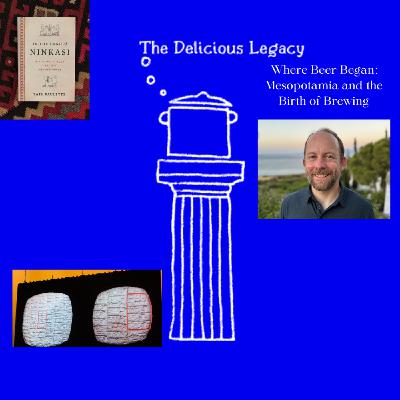
Hello my curious archaeogastronomers!This week's subject is a little bit darker than normal.My reason for doing an episode is that this time of the year, specifically near 28th of October, is that is when traditionally in Greece the commemoration and celebration of liberation from Nazis occupation is celebrated. I wanted to examine the role of the famine in the modern Greek psyche a little.World War 2 was brutal for the Greek people; Greece as country suffered under the triple occupation of Nazi Germany, Fascist Italy and Bulgaria.Roughly 10% of the pre war population perished. A civil war that lasted 4 years ensued after liberation in 1944. Greece lay in ruins. Whoever could, in the 50's immigrated in USA, Australia and Germany to find a better luck.The after effects of the devastation and the great famine of WW2 were felt till recently. The grandmas talk about it, it has passed in the language and in the way people saw food in the subsequent decades.Listen to BBC's Witness History short episode:https://www.bbc.co.uk/sounds/play/w3ct3c59Recommended reading:Famine and death in occupied Greece, 1941-1944: By Violetta Hionidou · 2006The German Occupation Recipes:https://metabook.gr/books/oi-sintaghes-tis-katokhis-natalia-samara-gkaitlikh-20132Much Love,Thom & The Delicious LegacySupport the podcast on Ko-Fi and Patreon for ad-free episodes! https://ko-fi.com/thedeliciouslegacypodcasthttps://www.patreon.com/c/thedeliciouslegacySupport this show http://supporter.acast.com/the-delicious-legacy. Hosted on Acast. See acast.com/privacy for more information.
Hello!New episode is out for your delectable delight!Thessaloniki is located in Northern Greece in the region of Macedonia, and has a long, long history, being established in 315 BCE by king Cassander to honour his wife, the half-sister of Alexander the Great, Thessalonike. Today is the second largest and most important city in Greece.As a major port, with access to the Mediterranean, and half way to Constantinople it thrived for centuries, being an important hub for trade and culture from all over the Balkan peninsula, and beyond.It was also home to a thriving Jewish community for roughly 500 years; the Sephardic Jews.In the beginning of the 20th century they accounted for more than half of the total population of the city.As a result, Thessalonica’s food culture is a heady mix of influences from all across Greece, Balkans, and Turkey with amazing food, and rightly is considered by many the food capital of Greece.On today's episode, I have the honour to have as my guest Meni Valle, Greek-Australian cook and author, all about the best gastronomic destination in Greece, the city of Thessaloniki!!!In Valle’s new book, Thessaloniki: And the Many Kitchens of Northern Greece, published by Hardie Grant, she turns her focus to the diverse and historically rich cuisine of Greece’s second-largest city.Well, enjoy our discussion!https://www.menivalle.com.au/Her new book Thessaloniki is released soon in UK.https://www.amazon.co.uk/Thessaloniki-Many-Kitchens-Northern-Greece/dp/1761450980My food cultural / historical recommendations for the week include:Dr Roderick Bailey: The British Experience of the Great Fire of Thessaloniki of 1917https://www.youtube.com/watch?v=HUMh1RoqKiwCulina vetusFreezing and Salting Pork:https://www.culina-vetus.de/2025/09/30/freezing-and-salting-pork/PopChop - Future Food Culturehttps://popchop.at/Building Blocks: Greek Whole Grain Tahini, and the Artisans Behind Ithttps://culinarybackstreets.com/stories/athens/building-blocks-37Music on this episode -as ever- by Pavlos KapralosEnjoy!Love,Thom & The Delicious LegacySupport the podcast on Ko-Fi and Patreon for ad-free episodes! https://ko-fi.com/thedeliciouslegacypodcasthttps://www.patreon.com/c/thedeliciouslegacySupport this show http://supporter.acast.com/the-delicious-legacy. Hosted on Acast. See acast.com/privacy for more information.
Hello, and welcome to part two of my discussion about Balkan Food with the incredible Irina Janakievska!On this second part of our discussion -we pick up from where we left- we talk about the top five must try dishes of the region, that anyone who loves food should try. Foods from the heart of the Balkans.Such as cevapi, ajvar, dolma/ sarma, bourek, and tres leches revani! Yes....Lets find out why....I'm interviewing the award winning (James Beard awards on the International Category) and writer and recipe developer Irina Janakievska, author of the book "The Balkan Kitchen, Recipes and Stories from the Heart of the Balkans". She has also won the British Library Food Season Narrative Cookery Book Award (2025) and a Special Award at the Gourmand World Cookbook Awards (2024).The book was shortlisted for the Jane Grigson Trust Award (2023) and the Fortnum & Mason Debut Cookery Book Award (2025). She has featured on BBC Woman's Hour, BBC Radio London and Times Radio discussing Balkan cuisine.  She lives in south London with her husband and young son, cooking, researching and writing about Balkan history, food culture and culinary traditions, and where I went to chat about all things Balkan. plus tasting some delicious traditional home made specialities!Photo Credit is The Balkan Kitchen (Quadrille, 2024), Copyright for photos Liz Seabrook.Enjoy!Thom & The Delicious LegacySupport the podcast on Ko-Fi and Patreon for ad-free episodes! https://ko-fi.com/thedeliciouslegacypodcasthttps://www.patreon.com/c/thedeliciouslegacySupport this show http://supporter.acast.com/the-delicious-legacy. Hosted on Acast. See acast.com/privacy for more information.
Hello!New episode is out for all of you my darling archaeogastronomers!This time, I'm going back to my troubled neighbourhood of the Balkans! I'm interviewing the award winning (James Beard awards on the International Category) writer and recipe developer Irina Janakievska, author of the book "The Balkan Kitchen, Recipes and Stories from the Heart of the Balkans". The book was shortlisted for the Jane Grigson Trust Award (2023) and the Fortnum & Mason Debut Cookery Book Award (2025), a British Library Food Season Narrative Cookery Book Award (2025) and a Special Award at the Gourmand World Cookbook Awards (2024). She has featured on BBC Woman's Hour, BBC Radio London and Times Radio discussing Balkan cuisine.  She lives in south London with her husband and young son, cooking, researching and writing about Balkan history, food culture and culinary traditions, and where I went to chat about all things Balkan. plus tasting some delicious traditional home made specialties!We had so much fun and so many things to say, being neighbours and all, that I had to split this episode in to two parts for you! Next week will have Part two!How many people used "Balkanisation" as a negative concept though the ages?Well we are trying today to bring a bit of a balance and talk about about the delightful and delicious common and unique dishes we have throughout this historic, varied and rich part of europe! A crossroad of civilisations for millennia and place with mountains, sea, plateaus and fertile valleys!Irina is the author of the book The Balkan Kitchen (Quadrille, 2024) which you can purchase now here:https://www.foyles.co.uk/book/the-balkan-kitchen/irina-janakievska/9781784886851You can find more about her and her recipes and story here:http://balkankitchen.co.uk/Photo Credit is The Balkan Kitchen (Quadrille, 2024), Copyright for photos Liz Seabrook.Enjoy!Much love,Thom & The Delicious LegacySupport the podcast on Ko-Fi and Patreon for ad-free episodes! https://ko-fi.com/thedeliciouslegacypodcasthttps://www.patreon.com/c/thedeliciouslegacySupport this show http://supporter.acast.com/the-delicious-legacy. Hosted on Acast. See acast.com/privacy for more information.
What is it to lose a paradise? How do you square the feeling of deep loss for a place?Welcome to the newest episode of The Delicious Legacy!Strong Roots, is the memoir of Olia Hercules, food writer, cook, activist amongst many other things.The book is an ode to the land, to ideas of home and belonging, and to family stories and recipes passed down the generations.Here we talk about the land, the produce, the culinary treasures of Ukrainian people and their unique foods, a mixture of many people and religions living in the rich bountiful land of Ukraine. Of course war, dispossession, hunger and exiled are part and parcel of the story of Ukraine. For Ukrainians worry is a national pastime. And fermentation is in their DNA. Preservation, is part and parcel of their survival.Olia is the author of Mamushka, Summer Kitchens, Kaukasis: The Cookbook, Home Food and of course Strong Roots.You can get a copy of Strong Roots here:https://www.waterstones.com/book/strong-roots/olia-hercules/9781526662927Who is Taras Shevchenko:https://shevchenko.ca/taras-shevchenko/biography/https://en.wikipedia.org/wiki/Legacy_of_Taras_ShevchenkoRecommendation of the week:https://ruby-tandoh.medium.com/empire-of-seeds-ee4308a529c4Music by Pavlos KapralosEnjoy!Thom & The Delicious LegacySupport the podcast on Ko-Fi and Patreon for ad-free episodes! https://ko-fi.com/thedeliciouslegacypodcasthttps://www.patreon.com/c/thedeliciouslegacySupport this show http://supporter.acast.com/the-delicious-legacy. Hosted on Acast. See acast.com/privacy for more information.
* * * Reminder: The first ever FOOD HISTORY FESTIVAL is happening on the 18th of October and it's all online! Get your tickets here:https://www.eventbrite.com/e/serve-it-forth-food-history-festival-2025-tickets-1490885802569?utm-campaign=social&utm-content=attendeeshare&utm-medium=discovery&utm-term=listing&utm-source=cp&aff=ebdssIt's going to be a fantastic day with many excellent food historian guests, and of course my fellow Serve It Forth members, food historians, Dr Neil Buttery, Dr Alessandra Pino and Sam Bilton!Join us for a day of historical dishes, cocktails and recipes! * * * Famously, Diodorus Siculus the Greek geographer said for Britain:"It is the home of men who are complete savages and lead a miserable existence because of the cold; and therefore, in my opinion, the northern limit of our inhabited world is to be placed there"But nevertheless the Romans went and conquered it and made it part of the Roman Empire for nearly four hundred years.The stereotypes even then two thousand years abound:"Those near the coast in Kent may be more civilised, but in the interior they do not cultivate the land but share their wives with family members, live on milk and meat, and wear the skins of animals."Horace wrote.Diodorus continues: "The numerous population of natives, he says, live in thatched cottages, store their grain in subterranean caches and bake bread from it. They are "of simple manners" (ēthesin haplous) and are content with plain fare..."But beyond this, there was a thriving Celtic and British Roman culture that existed. The local foods and customs and rich pasture for animals helped the invading Romans create a rich culinary legacy, based on many imported foods from across the empire and introduced numerous plants and animals to Britain that since became native to the land, from humble leek to plums to rabbits and pheasants.So on this episode together with fellow chef and podcaster Lewis Bassett (The Full English) we sat down to chat and explore the legacy of Rome in the British Isles, through food, culinary pathways and how this intertwines with class and politics to our modern age!Join us and let's find out what did the Roman-British table and pantry had to offer!Music by Pavlos Kapralos.Enjoy!Love,The Delicious LegacySupport the podcast on Ko-Fi and Patreon for ad-free episodes! https://ko-fi.com/thedeliciouslegacypodcasthttps://www.patreon.com/c/thedeliciouslegacySupport this show http://supporter.acast.com/the-delicious-legacy. Hosted on Acast. See acast.com/privacy for more information.
Hello!Part two of a catalogue of ingredients that ancient Greeks around the Med ate, how they ate it and what can we learn from it today?Recommendations for this week include:Ruby Tandoh, in the New Yorker: Inside the World of “The Great British Bake Off”https://www.newyorker.com/magazine/2025/09/01/inside-the-world-of-the-great-british-bake-off?utm_brand=tny&utm_mailing=TNY_FoodScene_090625&bxid=64ff2d52fff4462db5008e05&cndid=&hasha=a497a3041ea22b49ac020aa705c07fe1&hashb=9070ee59934b5363ceb4666efcad5b0eff3581b1&hashc=fb91fd7a11300ca6d1ccf6b3ca417c8cbe677ee45325b6d1e26ab60759584734&esrc=subscribe-page&mbid=mbid%3DCRMNYR012019The Food That Made Us HumanA three part story on how biodiversity gave early humans in South Africa the tools to survive extinction.https://newworlder.substack.com/p/the-food-that-made-us-human?r=tjeew&triedRedirect=trueAn immovable feast? How Dalston fishmongers took on the City of London:https://www.the-londoner.co.uk/an-immovable-feast-how-dalston-fishmongers-took-on-the-city-of-london/Enjoy!xThomSupport the podcast on Ko-Fi and Patreon for ad-free episodes! https://ko-fi.com/thedeliciouslegacypodcasthttps://www.patreon.com/c/thedeliciouslegacySupport this show http://supporter.acast.com/the-delicious-legacy. Hosted on Acast. See acast.com/privacy for more information.
Hello,Here’s a quick special bonus episode for you – the lowdown on the Serve it Forth Food History Festival 2025 sponsored by the excellent Netherton Foundry.My fellow festival coordinators Sam Bilton, Thomas Ntinas and Alessandra Pino and I are here to tell you more about it: how the day will work, what the sessions will be like, the topics and the guests – including guest Tom Parker Bowles.We have a brief discussion about our own interests and how we all got into food history. We also talk about our biggest/most embarrassing disasters.Join us for Serve it Forth Food History Festival 2025 for a fantastic day of discussion, chat and learning about food history and traditions.Date and time:Saturday, October 18 · 10:30am - 4:30pm GMT+1Get your tickets with a 25% discount here:https://www.eventbrite.com/e/serve-it-forth-food-history-festival-2025-tickets-1490885802569?utm-campaign=social&utm-content=attendeeshare&utm-medium=discovery&utm-term=listing&utm-source=cp&aff=ebdsshcopyurlLove,Thom & The Delicious LegacySupport the podcast on Ko-Fi and Patreon for ad-free episodes! https://ko-fi.com/thedeliciouslegacypodcasthttps://www.patreon.com/c/thedeliciouslegacySupport this show http://supporter.acast.com/the-delicious-legacy. Hosted on Acast. See acast.com/privacy for more information.
Hellooooo!!!!Today's episode is an elegy for fava beans!Soup, pottage, gruel, mash...Under many guises, pulses, and especially the ones from the genus Lathyrus, such as Pisum sativum have been eaten in the ancient Greek World since time immemorial...From Neolithic remains to modern Greek table, fava beans and peas, all these delicious pods of the genus Lathyrus have been cultivated and eaten in the Hellenic lands for thousands upon thousands of years!What did the ancient Greeks thought of the peas / yellow split peas? Where was the bastions of their cultivation? And how to cook it?Let's find out on today's episode about this amazing legume, that kept the Greeks alive for centuries!And why the Santorini Fava tastes just so so delicious?Also, this week's recommendations are the following:Odeuropa with William Tullett, by Around The Table podcast:https://recipes.hypotheses.org/23317https://odeuropa.eu/The blog cooking in the archives, rarecooking.comBon Appetit, Your Majesty: a talented chef travels to Joseon era korea and meets a tyrant king. Her modern dishes captivate his palate but challenges await her.https://www.imdb.com/title/tt37600136/You can listen to the podcast on YouTube too:https://youtu.be/xlMe4Zm_1nUMusic by Pavlos KapralosEnjoy!Thom & The Delicious LegacySupport the podcast on Ko-Fi and Patreon for ad-free episodes! https://ko-fi.com/thedeliciouslegacypodcasthttps://www.patreon.com/c/thedeliciouslegacySupport this show http://supporter.acast.com/the-delicious-legacy. Hosted on Acast. See acast.com/privacy for more information.
Hello!New episode is out!Firstly, remember my news? Our first and possibly only food history festival is happening this year! October 18th , Saturday all day, and of course online! So you can all attend virtually! Get your tickets at eventbrite at serve it forth food history festival. It’s going to be an amazing day, with some fantastic guests, and of course my three fellow food historians, Alessandra Pino, Sam Bilton and Neil Buttery!Tickets here, with 25% discount!https://www.eventbrite.com/e/serve-it-forth-food-history-festival-2025-tickets-1490885802569?utm-campaign=social&utm-content=attendeeshare&utm-medium=discovery&utm-term=listing&utm-source=cp&aff=ebdsshcopyurlBut let's go back to our adventure!There’s a vast, uninhabited desert, a huge continental mass than no humans colonised…. A desolate, white, freezing cold land mass, with millions of penguins and seals but no human beings, no permanent settlement by our species, not unless one counts the scientific stations established in the mid of the last century or so.The Arctic was inhabited for many centuries before the Vikings ventured to Greenland. These people survived and thrived even on occasion! Of course the Antarctic is so much more extreme than the Arctic. And so far and isolated from any other place. But explorers, navigators, and sailors from European Colonial powers who were brave enough, curious enough and driven by some bizarre desire to be the first to reach the south pole or explore the continent from one end to the other, these humans had to learn how to first survive in these extreme, inhuman conditions! And learn, copy, improvise and improve from societies and nations who lived in similar conditions…These adventurers needed to survive for months, many many months on end on ice! Perhaps without ever reaching for outside help. And of course food is paramount! Some links about stuff on this episode:How does kiviaq taste like?https://www.youtube.com/watch?v=DhPCJOaE4ZM&t=132sIndigenous fish techniques from Canada's First Nations:https://www.youtube.com/watch?v=6li84mjUZT8Kerguelen cabbage:https://www.britannica.com/plant/Kerguelen-cabbageMacquarie Island cabbage:https://en.wikipedia.org/wiki/Azorella_polarisThe Flora, Vegetation, and Soils of Macquarie Island:https://www.google.co.uk/books/edition/The_Flora_Vegetation_and_Soils_of_Macqua/fEtEAAAAYAAJ?hl=enMusic by Pavlos KapralosMuch love,Thom & The Delicious Legacy PodcastSupport the podcast on Ko-Fi and Patreon for ad-free episodes! https://ko-fi.com/thedeliciouslegacypodcasthttps://www.patreon.com/c/thedeliciouslegacySupport this show http://supporter.acast.com/the-delicious-legacy. Hosted on Acast. See acast.com/privacy for more information.
loading
Comments