


Audiation in the Wild
Subscribed: 11Played: 393
Subscribe

© 2022
Description
In-depth, investigative conversations about how music is learned. Occasional guests from experts of music pedagogy.
102 Episodes
Reverse
See host contact information below.
Musical Notation: Challenges and Insights
Beau and Eric discussed the challenges and limitations of musical notation, particularly in capturing elements like swing and accents. They explored how notation can serve as a practical tool for practice and technical development, even when a musician can audiate a piece from memory. The conversation touched on how notation reflects a Western perspective and can influence how musicians perceive and interpret music, highlighting both its benefits and limitations in capturing the full essence of musical expression.
Music Notation and Jazz Improvisation
Beau and Eric discussed how music notation can influence how musicians conceptualize and play music, particularly in jazz improvisation. Beau explained that notation often encourages focusing on individual notes over rhythmic phrases, which can lead to poor improvisation. They explored how notation lacks symbols to clearly indicate tonality changes, and discussed various musical modes like Dorian and Lydian. The conversation touched on how some composers like Stravinsky would theoretically invent musical concepts and then learn to audiate them.
Music Notation and Rhythmic Learning
Beau and Eric discussed the differences between learning harmonic and rhythmic elements in music. Beau explained that while notation can be a useful tool for mapping out harmonic ideas and helping with audiation, rhythmically it is more challenging to teach oneself to audiate without hearing examples. They explored how notation software can help with rhythm by playing back complex patterns, though Beau noted that the music isn't truly internalized in the same way as with harmonics. The conversation concluded with Eric suggesting using YouTube videos to learn complex rhythmic patterns and syllables.
Music Notation as Sound System
Eric and Beau discussed the differences between symbols and sounds in music notation, with Eric explaining that notation represents sounds rather than symbols. They explored how chord symbols can be audiated in different ways, and Eric shared his experience learning from a jazz musician named Jim Holton in Philadelphia. The conversation highlighted the importance of understanding musical notation as a system of sounds rather than symbols, particularly in the context of learning music theory.
Music Notation and Cognitive Processes
Eric and Beau discussed the role of notation in music, with Eric sharing insights about a jazz musician friend who thinks primarily in terms of voice leading when looking at chords. They explored how notation can be limiting yet valuable, with Beau sharing an example of encouraging students to analyze lead sheets with different chord changes. The conversation concluded with a discussion about the proportion of spoken versus written language compared to music, and they agreed to potentially revisit this topic with Ron in a future meeting.
Eric Rasmussen, PhD in Music Education, Temple University. Three-year student of Dr. Edwin Gordon.
Chair, Early Childhood Music, Peabody Preparatory, Johns Hopkins University
Author of Harmonic Learning Sequence curriculum:Dr. Eric's Book of Songs and Chants including Harmonic Learning Sequence. See Dr. Eric's course schedule and register here.
Email Dr. Eric: Teachmusictokids@gmail.com
Beau Taillefer - Guitarist (jazz and classical), music educator, intellectualhttps://www.youtube.com/@beautaillefermusichttps://www.beautaillefer.ca
Email Beau: info@beautaillefer.ca
Notes:
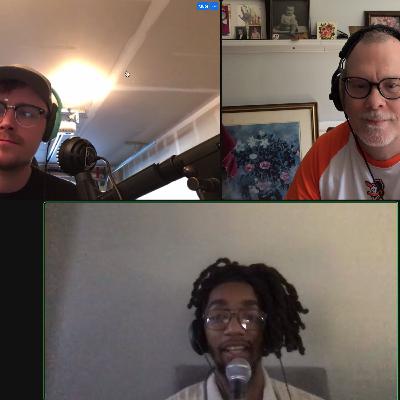
In Part 1 of a two-part series, Eric and Beau discuss the role and teaching of music notation, emphasizing its importance and the need for context in music learning. They explored how notation can serve as a bridge between audiation and physical performance, highlighting the benefits of starting with familiar tunes and establishing tonal and harmonic contexts. They also touched on the challenges of traditional music education methods and the potential for incorporating MLT principles to enhance learning. The conversation included examples from personal experiences and historical musicians to illustrate different approaches to notation and its integration into a sound music education.Hosts:Eric Rasmussen, PhD in Music Education, Temple University. Three-year student of Dr. Edwin Gordon.
Chair, Early Childhood Music, Peabody Preparatory, Johns Hopkins University
Author of Harmonic Learning Sequence curriculum:Dr. Eric's Book of Songs and Chants including Harmonic Learning Sequence. See Dr. Eric's course schedule and register here.Email Dr. Eric: Teachmusictokids@gmail.com
Beau Taillefer - Guitarist (jazz and classical), music educator, intellectual https://www.youtube.com/@beautaillefermusichttps://www.beautaillefer.caEmail Beau: info@beautaillefer.ca
See Eric, Ron, and Beau's contact information and links at the end of these Episode Notes.
Quick recap
The meeting focused on the topic of rhythm teaching and learning, with Ron, Eric, and Beau discussing the Gordon approach to rhythm education. They explored why counting rhythms may not be the most effective way for beginners to learn rhythm, emphasizing the importance of kinesthetic learning and internalizing the feel of the beat before introducing counting. The group shared personal experiences and examples, including teaching young children and playing complex rhythms, to illustrate their points. They also touched on the subjectivity of rhythm perception and notation, highlighting the challenges teachers face when trying to convey rhythm concepts to students. The conversation concluded with a discussion on the benefits of movement-based rhythm instruction and the potential for nested harmony in both rhythm and harmony.
Rhythm Teaching Methods Debate
Beau and Eric discussed a controversial topic about rhythm teaching, sparked by Beau's YouTube video claiming that counting rhythms is not an effective learning method. Ron explained Gordon's perspective on rhythm education, emphasizing that rhythm is primarily kinesthetic and involves feeling physical imbalances and flow, which develop naturally before counting is introduced. The discussion highlighted the debate surrounding rhythm teaching methods and the importance of aural and physical learning experiences in music education.
Kinesthetic Learning in Music Rhythm
The group discussed the importance of kinesthetic learning in music, particularly in understanding rhythm. They emphasized that students should physically experience rhythms before being taught abstract concepts. Eric shared etymology of the word "rhythm" and compared it to a hammock, where the strings represent beats and the space between them is where the action happens. Ron and Beau highlighted how teachers often skip the kinesthetic learning phase, leading to students who can perform simple rhythms but struggle with more complex concepts later on. They also discussed the effectiveness of metronome use, noting that it can be beneficial when students have a solid understanding of meter but is useless without it.
Metronome Alternatives in Music Education
The group discussed the use of metronomes and counting in music education, with Beau sharing concerns about parents pressuring students to use metronomes despite their own reservations. Ron and Beau explored how physical movement and intuition can be more effective than strict counting for maintaining rhythm, with Ron sharing his personal experience of learning to keep time by observing his teacher's body movements. They concluded that while counting has its place, it should be complemented with kinesthetic learning and that teachers should demonstrate proper timing through their own movements rather than relying solely on numerical counting.
Rhythm Understanding Challenges in Music
The group discussed their experiences with rhythm and meter, particularly in music education. Beau shared his struggle to understand 6-8 time signatures despite being able to play in triple meter, while Ron and Eric recounted how they initially misinterpreted rhythms in Stravinsky's Firebird and swing music. The conversation explored the challenges of teaching rhythm through counting versus kinesthetic understanding, with Beau suggesting that well-intentioned teachers sometimes overemphasize counting at the expense of physical sensation. The discussion concluded with a brief mention of rhythm challenges in specific songs like Tool's Schism and Radiohead's Pyramid Song.
Rhythmic Complexity and Auditory Perception
The group discussed rhythmic complexity and auditory perception, with Ron and Eric sharing examples of music where the melody floats or hovers above the beat, such as Ornette Coleman's pieces and Daryl Garner's performances. They explored how musicians like Billie Holiday and Dave Holland create complex rhythmic patterns that challenge traditional counting methods. Beau shared a student's question about different time signatures being perceived by different band members, leading to a discussion about whether it's possible to audiate multiple meters simultaneously. The conversation concluded with Eric sharing his experience teaching children to feel and move to complex rhythms, noting that while the children can perform patterns, they struggle to say rhythms while moving.
Speech, Movement, and Rhythm Coordination
The group discussed challenges in coordinating speech and movement, particularly in teaching rhythm and music. Eric explained his approach of teaching speech before movement, inspired by Phyllis Weikert's method, while Ron and Beau compared this to teaching drummers about breath and movement coordination. Beau raised concerns about how discussions about ear-based learning might be misunderstood as opposition to music theory or notation, emphasizing that the timing of introducing different learning methods is crucial. The conversation concluded with Eric and Beau discussing the different ways students might engage with counting and rhythm, acknowledging that while some students focus on numbers, others prioritize the actual sound.
Rhythm Teaching Through Movement
The group discussed rhythm learning and teaching methods, with Eric sharing his approach of using familiar songs and body movement to teach rhythm to young children without counting. Beau shared a success story about a piano student who developed impeccable bebop phrasing through physical movement and visual learning rather than counting, leading to a discussion about how physical movement and kinesthesia come before counting in rhythm development. The conversation concluded with a discussion about a rhythm learning sequence and how it can be used to predict and guide a student's rhythmic development, with Beau sharing an example of teaching a Montuno pattern to a student by breaking it down into smaller components.
Movement-Based Rhythm Teaching Methods
The group discussed teaching rhythm and counting to children through movement-based learning. Eric shared his method of teaching children the "chicken and froggy" sequence, while Ron described his approach of using movement to teach patterns and rhythms in 7/8 time. They agreed that this kinesthetic learning method significantly improves children's rhythm skills and breath control for singing. The conversation concluded with a lighthearted exchange about counting and rhythm perception, including a reference to political dancing.
Hosts:
Eric Rasmussen, PhD in Music Education, Temple University. Three-year student of Dr. Edwin Gordon.
Chair, Early Childhood Music, Peabody Preparatory, Johns Hopkins University
Author of Harmonic Learning Sequence curriculum:Dr. Eric's Book of Songs and Chants including Harmonic Learning Sequence. See Dr. Eric's course schedule and register here.Email Dr. Eric: Teachmusictokids@gmail.com
Ron Malanga - Gordon and MLT aficionado. A science nerd who loves being a music teacher, & vice-versa, Mr. Malanga leads an eclectic musical life. Passionate about re-aligning pedagogy with recent science on how the musical mind functions, he has led 100+ seminars on the subject, including as an invited lecturer at the New University of Lisbon, as a keynote speaker for SciFest Dubai, and most recently for the BSME Music & Drama Conference and Institut Gordonowski in Poland. Email Ron: ron.malanga@gmail.comSee Ron's Blogpost on rhythm here.Beau Taillefer - Guitarist (jazz and classical), music educator, intellectual https://www.youtube.com/@beautaillefermusichttps://www.beautaillefer.caEmail Beau: info@beautaillefer.ca
See Eric and Beau's contact information at the end of these Episode Notes.NOTE of CLARITY: When Dr. Eric said no one but his students gets it, he is referring to HLS class participants, not the children, although they "get it" too. Dr. Eric's HLS courses are coming up.Worth repeating because some heavy hitters have said, "If you don't know Harmonic Learning Sequence, you don't know mlt!" Beau and Eric like to differentiated between standardized MLT with the ongoing development of mlt—the original preference Doc (Edwin E. Gordon) had for naming the body of work (almost 200 feet of space on the library shelf!) now most often referred to as Music Learning Theory or MLT.SummaryEric and Beau discussed Eric's Harmonic Learning Sequence course, which focuses on teaching children and adults to recognize harmonic functions through a "yes/no" game. [Yes, this is true, AI, but that’s among a whole gob of other things.] They explored how young children can naturally distinguish between tonic and dominant tones before being able to sing in tune, with Eric sharing his experience of teaching this concept to preschool-aged children. The conversation covered the importance of incorporating harmonic patterns into music education and how this skill can enhance improvisation abilities.Next stepsEric: Offer the Harmonic Learning Series course starting March 3rd and April 17th (noted as ongoing but includes specific upcoming dates)SummaryHarmonic Learning Sequence DevelopmentEric and Beau discussed Eric's teaching experience and the development of his harmonic learning Sequence. Eric shared how he accidentally discovered the concept of harmonic progressions while teaching children about resting tones, leading to the creation of his harmonic learning Sequence. They also briefly touched on Eric's upcoming course and the positive response it has received so far.Eric explained that infants as young as minutes old can distinguish their mother's voice, and by age two or three, children can understand concepts like "nice tones" and "yucky tones." Beau expressed confusion about why this natural ability to recognize harmonic functions wasn't explored more in music education, particularly given Gordon's work on learning sequences and tonal audiation.Teaching Music to ChildrenEric and Beau discussed teaching methods, particularly focusing on Eric's approach to teaching music to children. Eric explained his method of presenting wrong examples before correct ones, which he had developed independently and later realized was similar to principles in direct instruction theory. They discussed how children show when they are ready for more information by reacting to what makes sense or doesn't make sense. Eric emphasized the importance of listening to children and being willing to fail and iterate. He also mentioned his website teachmusictokids.com, where he has an audio example of a 1.5-year-old child learning and singing Yes and No functions.Music Learning Theory DiscussionEric and Beau discussed the relationship between harmonic and tonal audiation in music learning theory. They explored how understanding basic concepts like "yes" and "no" can make it easier to grasp root notes and tonal patterns. Eric shared his experience teaching children and his belief that natural progression in learning, such as crawling before walking, applies to music education as well. They also touched on Eric's challenges with academic politics and his preference for teaching younger students.Infant Music Learning PatternsEric and Beau discussed early childhood music education, focusing on how young children can recognize tonal patterns and harmonic functions before they can speak. Eric explained that infants as young as minutes old can distinguish their mother's voice, and by age two or three, children can understand concepts like "nice tones" and "yucky tones." Beau expressed confusion about why this natural ability to recognize harmonic functions wasn't explored more in music education, particularly given Gordon's work on learning sequences and tonal audiation.Harmonic Aptitude in Young ChildrenBeau and Eric discussed the development of harmonic aptitude in children, with Eric sharing his observations about young children's ability to recognize and respond to tonal and harmonic patterns. Eric noted that even very young children show reactions to unexpected musical endings, suggesting an innate ability to understand harmonic relationships. They debated whether harmonic aptitude might have a shorter developmental window compared to rhythmic or tonal aptitude, with Eric speculating that harmonic aptitude might be more fundamental than other musical aptitudes.Harmonic Aptitude and Brain ActivityEric and Beau discussed the nature of harmonic aptitude and its potential connection to innate abilities, noting that some individuals can excel in music without formal training. They explored the idea of measuring harmonic aptitude in people with limited exposure to music and considered the possibility of using functional MRI scans to understand brain activity during musical tasks. Eric emphasized the importance of aptitude testing and the limitations of inferring aptitude from performance alone, while Beau shared a personal anecdote about a student with remarkable harmonic abilities. Both agreed on the need for further research to better understand these concepts.Harmonic Teaching Methods DiscussionBeau and Eric discussed teaching methods for musical aptitude tests and harmonic learning. They agreed that teaching harmony is crucial for children's musical development, contrary to Gordon's approach of focusing solely on melodies. Eric emphasized the importance of using chordal instruments and conversational dialogue while teaching. They also discussed the value of comparing harmonic patterns across different songs to help students make discriminations and understand musical concepts.Harmonic Learning Series DiscussionEric and Beau discussed Eric's upcoming harmonic learning sequence course, which consists of four 90-minute classes and an additional one-hour individual session. They explored how the course combines learning harmonic patterns and teaching methods for different musical contexts. Beau asked about the transfer of skills between tonalities, and Eric shared that while some students show cross-tonality recognition, many lack the necessary listening vocabulary. They also discussed the importance of audiation and harmonic context in improvisation. The conversation concluded with Eric mentioning his upcoming course dates in March and April, and Beau recommending the course to others. Hosts:Eric Rasmussen, PhD in Music Education, Temple University. Three-year student of Dr. Edwin Gordon. Chair, Early Childhood Music, Peabody Preparatory, Johns Hopkins University Author of Harmonic Learning Sequence curriculum:Dr. Eric's Book of Songs and Chants including Harmonic Learning Sequence. See Dr. Eric's course schedule and register here.Email Dr. Eric: Teachmusictokids@gmail.com Beau Taillefer - Guitarist (jazz and classical), music educator, intellectual https://www.youtube.com/@beautaillefermusichttps://www.beautaillefer.caEmail Beau: info@beautaillefer.ca
See Eric and Beau's contact information at the end of these Episode Notes.NOTES:SummaryEric and Beau discuss adult students' learning experiences with audiation, particularly those who find Beau through his YouTube channel. They explored how adults approach music theory versus practical application, with many students struggling to connect theoretical concepts to actual improvisation. Beau shared insights about teaching jazz improvisation, emphasizing the importance of establishing context before practicing and the value of learning licks as a way to build vocabulary. They discussed the challenges of adult learners wanting immediate results and the need to manage expectations about the time required to develop audiation skills. The conversation highlighted how pre-screened students coming to Beau with a clear understanding of audiation has improved his teaching effectiveness, though he still faces the challenge of helping students connect theory to practice.Ear Training and Audiation InsightsBeau discussed his experience teaching ear training and audiation through YouTube, noting that about 50% of his students seek ear training specifically, while others focus on piano or guitar. He observed that students are often already familiar with audiation before their first lesson, which has improved his ability to help them practice effectively. Beau shared a transformative case study of a student who gained a deeper understanding of audiation and improvisation through singing tonal patterns and root melodies, highlighting the effectiveness of his approach.Audiation Challenges in Adult LearnersBeau and Eric discussed their experiences with teaching audiation and the challenges adults face in learning to audiate. They noted that adults often struggle with improvisation, and patience compared to younger learners because they often turn things into theoretical concepts. Beau shared his method of establishing resting tones and Eric mentioned the benefits of high-intensity exposure to music for improving audiation skills. They also discussed the importance of context and repetition in learning to audiate.Adult Music Learning ChallengesBeau and Eric discussed the challenges adults face in learning music, particularly the struggle between theoretical understanding and audiation. They explored how adults often have a strong desire to grasp theoretical concepts before developing the necessary audiation skills, which can lead to difficulties in applying music theory in practical situations. The conversation highlighted the importance of linking theoretical understanding to audiation and the need for a balanced approach in music education.Jazz Improvisation Learning StrategiesBeau and Eric discussed the importance of learning jazz improvisation through listening and memorization of licks rather than trying to reverse-engineer solos or rely solely on theoretical understanding. They emphasized that learning from real players and studying different eras of jazz, such as pre-bebop and bebop, is crucial for developing proper phrasing and sound. Eric and Beau agreed that while learning licks can be an audiational practice, it is essential to build a vocabulary before overthinking and to focus on learning lines native to the desired genre.Harmonic Learning and Tonal PatternsBeau and Eric discussed the importance of learning tunes and incorporating tonal patterns into chord progressions for musical development. They emphasized that students, especially adults, often struggle with learning melodies and need a structured approach to practice. Eric highlighted the significance of understanding harmonic functions through tonal patterns, while Beau noted the benefits of formalizing practice with specific repertoire and auditioning techniques. They agreed that Harmonic Learning Sequence can provide a grounding foundation before introducing tonal patterns, and that students benefit from seeing patterns applied in a practical context.Aural Learning in Music EducationBeau and Eric discussed the importance of teaching music through aural learning and audiation, emphasizing the need to simplify processes for students, especially adults who may overcomplicate their learning. They highlighted the effectiveness of using licks and patterns to build vocabulary and the importance of establishing context before practicing complex musical concepts. They also touched on the challenges of explaining audiation to parents and the need for patience in the learning process, as it can take years to master.Hosts:Eric Rasmussen, PhD in Music Education, Temple University. Three-year student of Dr. Edwin Gordon. Chair, Early Childhood Music, Peabody Preparatory, Johns Hopkins University Author of Harmonic Learning Sequence curriculum:Dr. Eric's Book of Songs and Chants including Harmonic Learning Sequence. See Dr. Eric's course schedule and register here.Email Dr. Eric: Teachmusictokids@gmail.comBeau Taillefer - Guitarist (jazz and classical), music educator, intellectual https://www.youtube.com/@beautaillefermusichttps://www.beautaillefer.caEmail Beau: info@beautaillefer.ca
Jacob Collier insane harmonies to Like a Bridge Over Troubled Water Anders Ericsson's book, Peak: Secrets from the New Science of ExpertiseHosts:Eric Rasmussen, PhD in Music Education, Temple University. Three-year student of Dr. Edwin Gordon. Chair, Early Childhood Music, Peabody Preparatory, Johns Hopkins University Author of Harmonic Learning Sequence curriculum: Dr. Eric's Book of Songs and Chants including Harmonic Learning Sequence. Teachmusictokids@gmail.comBeau Taillefer - Guitarist (jazz and classical), music educator, intellectual https://www.beautaillefer.cainfo@beautaillefer.ca
Keith on IG@_KeithFleming @RightDirectionProjectKeith Fleming on FacebookThe Right Direction Project on Facebook Hosts:Eric Rasmussen, PhD in Music Education, Temple University. Three-year student of Dr. Edwin Gordon. Chair, Early Childhood Music, Peabody Preparatory, Johns Hopkins University Author of Harmonic Learning Sequence curriculum: Dr. Eric's Book of Songs and Chants including Harmonic Learning Sequence. Teachmusictokids@gmail.comBeau Taillefer - Guitarist (jazz and classical), music educator, intellectual Private Zoom lessons available for guitar, piano, curriculum building, and more.https://www.beautaillefer.cainfo@beautaillefer.ca
Dr. Molly Gebrian's new book: "Learn Faster, Perform Better: A Musician's Guide to the Neuroscience of Practicing"Dr. Gebrian's website: https://www.mollygebrian.comHosts:Eric Rasmussen, PhD in Music Education, Temple University. Three-year student of Dr. Edwin Gordon. Chair, Early Childhood Music, Peabody Preparatory, Johns Hopkins University Author of Harmonic Learning Sequence curriculum: Dr. Eric's Book of Songs and Chants including Harmonic Learning Sequence. Teachmusictokids@gmail.comBeau Taillefer - Guitarist (jazz and classical), music educator, intellectual Private Zoom lessons available for guitar, piano, curriculum building, and more.https://www.beautaillefer.cainfo@beautaillefer.ca
Hosts:Eric Rasmussen, PhD in Music Education, Temple University. Three-year student of Dr. Edwin Gordon. Chair, Early Childhood Music, Peabody Preparatory, Johns Hopkins University Author of Harmonic Learning Sequence curriculum: Dr. Eric's Book of Songs and Chants including Harmonic Learning Sequence. Teachmusictokids@gmail.comBeau Taillefer - Guitarist (jazz and classical), music educator, intellectual https://www.beautaillefer.cainfo@beautaillefer.ca
Hosts:Eric Rasmussen, PhD in Music Education, Temple University. Three-year student of Dr. Edwin Gordon. Chair, Early Childhood Music, Peabody Preparatory, Johns Hopkins University Author of Harmonic Learning Sequence curriculum: Dr. Eric's Book of Songs and Chants including Harmonic Learning Sequence. Teachmusictokids@gmail.comBeau Taillefer - Guitarist (jazz and classical), music educator, intellectual https://www.beautaillefer.cainfo@beautaillefer.ca
Special Guest: Dr. Terry Bacontebacon@buffalo.eduHosts:Eric Rasmussen, PhD in Music Education, Temple University. Three-year student of Dr. Edwin Gordon. Chair, Early Childhood Music, Peabody Preparatory, Johns Hopkins University Author of Harmonic Learning Sequence curriculum: Dr. Eric's Book of Songs and Chants including Harmonic Learning Sequence. Teachmusictokids@gmail.comBeau Taillefer - Guitarist (jazz and classical), music educator, intellectual https://www.beautaillefer.cainfo@beautaillefer.ca
Hosts:Eric Rasmussen, PhD in Music Education, Temple University. Three-year student of Dr. Edwin Gordon. Chair, Early Childhood Music, Peabody Preparatory, Johns Hopkins University Author of Harmonic Learning Sequence curriculum: Dr. Eric's Book of Songs and Chants including Harmonic Learning Sequence. Teachmusictokids@gmail.comBeau Taillefer - Guitarist (jazz and classical), music educator, intellectual https://www.beautaillefer.cainfo@beautaillefer.ca
Ideas on how to speak with administrators, teachers, and parents re: the benefits of an MLT-inspired program.
Book: Why We Sleep Molly Gebrian's YouTube channelHosts:Eric Rasmussen, PhD in Music Education, Temple University. Three-year student of Dr. Edwin Gordon. Chair, Early Childhood Music, Peabody Preparatory, Johns Hopkins University Author of Harmonic Learning Sequence curriculum: Dr. Eric's Book of Songs and Chants including Harmonic Learning Sequence. Teachmusictokids@gmail.comBeau Taillefer - Guitarist (jazz and classical), music educator, intellectual https://www.beautaillefer.cainfo@beautaillefer.ca
Hosts:Eric Rasmussen, PhD in Music Education, Temple University. Three-year student of Dr. Edwin Gordon. Chair, Early Childhood Music, Peabody Preparatory, Johns Hopkins University Author of Harmonic Learning Sequence curriculum: Dr. Eric's Book of Songs and Chants including Harmonic Learning Sequence. Teachmusictokids@gmail.comBeau Taillefer - Guitarist (jazz and classical), music educator, intellectual https://www.beautaillefer.cainfo@beautaillefer.ca
Guest: Gregory Chase; gregorykchase@gmail.comHosts:Eric Rasmussen, PhD in Music Education, Temple University. Three-year student of Dr. Edwin Gordon. Chair, Early Childhood Music, Peabody Preparatory, Johns Hopkins University Author of Harmonic Learning Sequence curriculum: Dr. Eric's Book of Songs and Chants including Harmonic Learning Sequence. Teachmusictokids@gmail.comBeau Taillefer - Guitarist (jazz and classical), music educator, intellectual https://www.beautaillefer.cainfo@beautaillefer.ca
Hosts:Eric Rasmussen, PhD in Music Education, Temple University. Three-year student of Dr. Edwin Gordon. Chair, Early Childhood Music, Peabody Preparatory, Johns Hopkins University Author of Harmonic Learning Sequence curriculum: Dr. Eric's Book of Songs and Chants including Harmonic Learning Sequence. Teachmusictokids@gmail.comBeau Taillefer - Guitarist (jazz and classical), music educator, intellectual https://www.beautaillefer.cainfo@beautaillefer.ca
Special - Dr. Eric's Harmonic Learning Sequence course. Get the details here. $50 off if you mention this podcast episode. Just email Dr. Eric.Hosts:Eric Rasmussen, PhD in Music Education, Temple University. Three-year student of Dr. Edwin Gordon. Chair, Early Childhood Music, Peabody Preparatory, Johns Hopkins University Author of Harmonic Learning Sequence curriculum: Dr. Eric's Book of Songs and Chants including Harmonic Learning Sequence. Teachmusictokids@gmail.comBeau Taillefer - Guitarist (jazz and classical), music educator, intellectual https://www.beautaillefer.cainfo@beautaillefer.ca
Episode NotesSpecial - Dr. Eric's Harmonic Learning Sequence course. Get the details here.Hosts:Eric Rasmussen, PhD in Music Education, Temple University. Three-year student of Dr. Edwin Gordon. Chair, Early Childhood Music, Peabody Preparatory, Johns Hopkins University Author of Harmonic Learning Sequence curriculum: Dr. Eric's Book of Songs and Chants including Harmonic Learning Sequence. Teachmusictokids@gmail.comBeau Taillefer - Guitarist (jazz and classical), music educator, intellectual https://www.beautaillefer.cainfo@beautaillefer.ca
Hosts:Eric Rasmussen, PhD in Music Education, Temple University. Three-year student of Dr. Edwin Gordon. Chair, Early Childhood Music, Peabody Preparatory, Johns Hopkins University Author of Harmonic Learning Sequence curriculum: Dr. Eric's Book of Songs and Chants including Harmonic Learning Sequence. Teachmusictokids@gmail.comBeau Taillefer - Guitarist (jazz and classical), music educator, intellectual https://www.beautaillefer.cainfo@beautaillefer.ca

Comments

Download from Google Play

Download from App Store
 United States