


 Claim Ownership
The Maker's Quest
Subscribed: 6Played: 198
Subscribe

© 2026 The Maker's Quest
Description
A Podcast exploring the journey of making things and living a creative life. Hosted by Brian Benham from Benham Design Concepts and Greg Porter from Sky Scraper Guitars
10 Episodes
Reverse
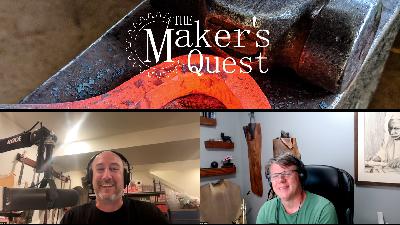
Dive into the latest Maker’s Quest podcast where Brian Benham details his epic root-over-rock chess table build, and Greg Porter reveals his new guitar side-bending machine. A deep dive into custom woodworking and luthiery.
Watch The Podcast
Hosted by
Brian Benham from Benham Design Concepts
https://www.benhamdesignconcepts.com/
Brian’s Blog https://www.briansbenham.com/
Brian Benham on BlueSky: https://bsky.app/profile/benhamdesignconcepts.com
YouTube: https://www.youtube.com/channel/UCXO8f1IIliMKKlu5PgSpodQ
Greg Porter from SkyScraper Guitars
https://skyscraperguitars.com/
Greg On Instagram: https://www.instagram.com/gregsgaragekc/
YouTube: https://www.youtube.com/c/SkyscraperGuitars
YouTube: https://www.youtube.com/c/GregsGarage
Welcome back to the Maker’s Quest podcast! In our latest episode, hosts Brian Benham and Greg Porter reconnect after a short hiatus, diving deep into the projects that have been consuming their time and creative energy. From the intricate challenges of custom furniture to the precise engineering of luthiery tools, this conversation is a masterclass in problem-solving and passion.
Catching Up and a Note from Greg
Greg kicks things off with a heartfelt apology for his voice, which is understandably rough. He’s been battling long Covid for over a year, which has led to lung issues requiring a steroid inhaler. “Whatever steroids are in that inhaler just barbecue my vocal cords,” he explains. It’s a poignant reminder of the very real, human challenges that creators often push through to pursue their craft.
Brian’s Monumental Vegas Project: The Root Over Rock Chess Table
The centerpiece of Brian’s update is a project he’s just wrapped up and delivered: a stunning, one-of-a-kind chess table for a client in Las Vegas.
The concept was a “root over rock” bonsai-inspired base supporting a glass-topped chess table. What sounds like a beautiful idea in a render became one of the most patience-testing projects of Brian’s career.
The Challenge of the Scribe: The entire base consists of sculpted walnut roots and a trunk that had to be meticulously scribed to fit perfectly around an amorphous rock form. The killer detail? It’s visible on all sides.
“There is no really good place to cheat it to the back,” Brian says. “It just took a long time. There is a point halfway through where I was like, I don’t know if this is going to turn out well… did I over-commit my skills?”
He estimates a staggering 40-60 hours were spent on the scribing process alone. The project also required ingenious fixturing to use his CNC machine as a mill to create flat surfaces on the round trunk for the branches to join, battling software safety features along the way.
In the end, the client was thrilled. The final piece, which pairs his walnut and wenge woodwork with a stunning silver-and-copper chessboard sourced from an artist in Mexico City, is a testament to the power of seeing a daunting vision through to completion.
A Lesson in Design Collaboration: Brian also highlighted a small drawer on a accompanying vanity piece. The client insisted on a specific, sleek look that prioritized form over deep function, requiring Brian to modify hardware to fit. It was a perfect example of the collaboration and compromise inherent in custom work.
“If you are just rigid on your own ideas, you’re probably not going to end up with a good design,” Brian notes. “It’ll be very boxed-in.”
Greg’s Luthiery Deep Dive: Engineering the Perfect Guitar Bender
On the other side of the maker spectrum, Greg has been deep in the world of guitar building, specifically focused on solving a complex problem: building a better side-bending machine for acoustic guitar cutaways.
The Cutaway Conundrum: A guitar’s cutaway (the scooped section near the neck) allows for easier access to higher frets but presents a major bending challenge due to its tight, compound curves. Greg’s goal was to create a machine that is not only effective but also a joy to use—a tool that produces repeatable, predictable results for both hobbyists and professionals building guitars worth tens of thousands of dollars.
His new design features a unique hinged ram that bends the wood linearly, capturing it gradually rather than pressing from the center and hoping for the best.
“It starts at one end and it kind of linearly bends it down into the form… it’s the only one that’ll be on the market that has that feature.”
The Tape Trick for Flawless Bends: Greg also shared a fantastic tip for preventing wood from splintering during extreme bends. Instead of using the traditional method of laminating linen and epoxy to the wood’s outer face (which must be scraped off later), he discovered Captain Tape.
This high-temperature tape, used in powder coating, can withstand the 350°F heat of the bending process. It contains the wood fibers perfectly, and when the bend is cool, it simply peels off, leaving a clean surface ready for finishing.
The Maker’s Mindset: Curiosity and Persistence
This episode was a brilliant showcase of the maker mindset:
Embrace the Hard Problems: Whether it’s a multi-dimensional scribe or a complex mechanical pivot, both Brian and Greg lean into the challenges that scare them.
Iterate Until It’s Right: Greg went through four prototypes for his bender, obsessing over bolt lengths and clearances to create a refined, professional tool.
Share Your Knowledge: From CNC software quirks to bending techniques, the drive to share hard-won knowledge with the community is what makes the maker world so rich.
You can find Greg Porter at Skyscraper Guitars and Greg’s Garage on Instagram and YouTube. Find Brian Benham at Benham Design across the web.
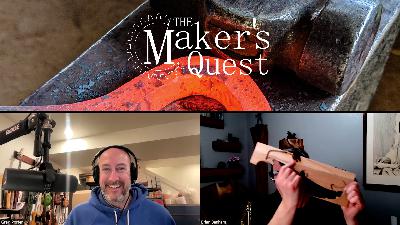
Insights from Makers Brian Benham and Greg Porter”
In this episode of the Maker’s Quest Podcast, hosts Brian Benham from Benham Design Concepts and Greg Porter from Skyscraper Guitars delved into the often-overlooked reality of failure in the creative process—especially when turning ideas into marketable products. Both seasoned makers shared candid stories of their struggles, lessons learned, and how embracing failure is a non-negotiable step toward innovation and profitability.
Watch The Podcast
Hosted by
Brian Benham from Benham Design Concepts
https://www.benhamdesignconcepts.com/
Brian Benham on BlueSky: https://bsky.app/profile/benhamdesignconcepts.com
YouTube: https://www.youtube.com/channel/UCXO8f1IIliMKKlu5PgSpodQ
Greg Porter from SkyScraper Guitars
https://skyscraperguitars.com/
Greg On Instagram: https://www.instagram.com/gregsgaragekc/
YouTube: https://www.youtube.com/c/SkyscraperGuitars
YouTube: https://www.youtube.com/c/GregsGarage
The CNC Learning Curve: Speed Isn’t Always King
Brian Benham, a furniture maker and CNC enthusiast, kicked off the discussion with his early trials on his new Avid CNC machine. His goal? To efficiently produce a yin-yang wine bottle holder. But his initial excitement was tempered by a harsh lesson:
“I watched YouTube videos where people said, ‘Why are you running so slow? Crank it up!’ So I did,” Brian recalled. The result? Broken tabs, a mangled workpiece, and a smoking spindle. The high feed rate and aggressive depth of cut destroyed the part mid-operation.
Greg Porter, a guitar maker and CNC veteran, nodded in agreement. “Dust is bad—you want chips,” he explained, emphasizing that proper chip ejection prevents heat buildup and tool wear. Both makers stressed the importance of balancing speed with precision, especially when working with different materials like cherry (softer) versus walnut (denser).
Workholding Woes and the “Maker’s Dozen”
Brian also shared a mishap where inadequate hold-downs led to a shifting workpiece, ruining a cut. His solution? Nesting parts efficiently and pre-drilling problematic areas to avoid tab failures. But the bigger takeaway was his “Maker’s Dozen” philosophy:
“Make 12 units at a time. Price for 10, because two might fail. By the next dozen, you’ve optimized the process,” Brian said. This approach minimizes waste and allows incremental improvements without massive sunk costs.
Greg added that for high-value materials (like exotic guitar woods), salvaging is worth the effort. But for sheet goods, sometimes tossing a botched piece saves more time than fixing it.
3D Printing: Prototyping’s Best Friend
The duo pivoted to 3D printing, where Greg showcased a gear assembly that took a dozen iterations just to fit a timing belt correctly. “Fail fast,” he advised. “Get the mistakes out early.”
Brian echoed this, describing how he prints small test sections (like threaded parts) before committing to long prints. *”A 30-minute test beats a 3-hour disaster,”* he said. Both praised modern printers for reliability but acknowledged that vibration and material quirks still demand patience.
Scaling Up: Robots and Revenue
Looking ahead, Brian envisions his CNC as a cash-flow generator. Inspired by a photographer who sold everything from keychains to $5,000 prints, he plans to offer small, accessible products (like $25 cribbage boards) alongside high-end furniture. “The $25 items keep the lights on; the big commissions are the dream,” he said.
Greg, who runs multiple machines simultaneously, laughed: “When all three robots—CNC, laser, mill—are humming, I feel like a factory.” But he cautioned that optimization is key. His “RTM” (Ready to Manufacture) files undergo dozens of tweaks to shave seconds off cycle times.
The Bottom Line: Failure = Progress
Both makers agreed: Failure isn’t just inevitable—it’s necessary. Whether it’s dialing in feeds/speeds, salvaging scraps into new products (like Brian’s failed cutting boards becoming trivets), or accepting that some ATMs (products) will stay unplugged, the path to success is paved with missteps.
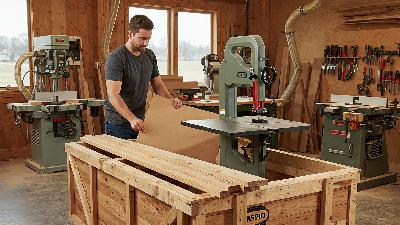
We thought it would be an excellent opportunity to look back at 2024—our favorite shop upgrades, biggest projects, and lessons learned—and then peek ahead at what’s in store for 2025.
Watch on YouTube
Hosted by
Brian Benham
Portfolio: https://www.benhamdesignconcepts.com/
Brian Benham on BlueSky: https://bsky.app/profile/benhamdesignconcepts.com
YouTube: https://www.youtube.com/channel/UCXO8f1IIliMKKlu5PgSpodQ
Greg Porter
https://skyscraperguitars.com/
Greg On Instagram: https://www.instagram.com/gregsgaragekc/
YouTube: https://www.youtube.com/c/SkyscraperGuitars
YouTube: https://www.youtube.com/c/GregsGarage
Show Notes
Reflecting on 2024 and Looking Ahead to 2025: Shop Upgrades, Projects, and Goals
Shop Upgrades That Made a Difference in 2024
Organization & Tool Storage
One of the biggest game-changers for both of us was improving shop organization. A mechanic once said, “Don’t put it down—put it away.” That mindset has helped keep tools in their proper places, eliminating the frustration of searching for misplaced items.
– Brian’s Upgrade: A high-quality toolbox (not just a basic Harbor Freight or Home Depot option) made a massive difference. A well-organized toolbox reflects a well-organized workflow.
– Greg’s Upgrade: Adding Husky cabinets under his table saw extension improved storage and accessibility.
The Incra Miter Gauge
Brian recommended the Incra Miter Gauge, and it quickly became one of Greg’s most-used tools in 2024.
– Why It’s Great:
– Eliminates play in the miter slot for precise, repeatable cuts.
– Features an integrated stop block system (similar to high-end aftermarket options).
– Fine-adjustment capabilities make it perfect for exact angles.
Greg admits he was skeptical at first, preferring crosscut sleds, but after a year of use, he hasn’t touched his sled since.
The Black Box Vacuum Pump for CNC Workholding
Greg’s Black Box vacuum pump transformed his CNC workflow.
– The Problem: Workholding on a CNC can be a nightmare—tabs, screws, and clamps often lead to failed cuts.
– The Solution: The vacuum pump holds sheets firmly in place, reducing material waste and improving efficiency.
– Success rate went from ~75% to 98%.
– Added automation: The CNC now turns the pump on/off automatically via relay control.
The Track Saw Revolution
Greg was a longtime skeptic of track saws, preferring a circular saw and straightedge. But after breaking down hundreds of sheets of MDF, he caved and bought a Ridgid cordless track saw.
– Why It Won Him Over:
– Faster, more accurate breakdown of sheet goods.
– Paired with an MFT-style workbench (from Fred Sexton of Bristol Artisan Co.) and Bora Speed Horses, creating a portable, efficient cutting station.
– No more wrestling full sheets—everything gets broken down outside before entering the shop.
The Festool Debate
Brian and Greg had a fun back-and-forth about Festool.
– Pros:
– Industry-leading dust collection (great for job sites and clean shops).
– The Domino joiner is a game-changer for furniture makers.
– Cons:
– High price tag.
– Some tools may not justify the cost for hobbyists or those who don’t need ultra-portability.
Packout Systems & Tool Storage
Both Brian and Greg explored different modular storage systems (Milwaukee Packout, Klein, etc.).
– Greg’s Pick: Klein Tool Cases—expensive but rugged, with clear lids and customizable bins.
– Brian’s Experience: Packout systems are great for contractors but may be overkill for shop-only use.
Harbor Freight’s Improvement
Greg noted that Harbor Freight’s quality has significantly improved over the years.
– Icon Tools Line: Their ratcheting wrenches and socket sets now rival mid-tier brands like Husky and Craftsman.
– Toolboxes: No longer the flimsy junk of the past—now a solid budget option.
Notable Projects from 2024
Brian’s Big Builds
– Las Vegas Casino Project: A massive, high-profile installation that pushed his team’s limits.
– Red Rocks Amphitheater Work: A challenging but rewarding project (technically late 2023, but close enough!).
Lesson Learned: Installation is just as critical as fabrication. Even the best-built pieces can fail if not installed correctly.
Greg’s Product Expansion
When a competitor in the guitar-making jigs and tools space went out of business, Greg saw an opportunity.
– Redesigned & Released Over 20 New Products, including:
– Side benders (for shaping guitar sides).
– Outside molds & cutaway forms (previously unavailable).
– Mortise & tenon jigs (V3 design, improved from older versions).
– Backward Compatibility: Ensured his new tools worked with older systems, earning gratitude from customers.
Looking Ahead to 2025
Greg’s Goals:
Build His First Commissioned Guitar – Learning from luthier Robbie O’Brien to refine construction techniques.
Expand Skyscraper Guitars – Transition from a one-man operation to a scalable business with employees.
Finish the Porsche 356 Project – After a busy 2024, he’s eager to get back to this passion build.
Brian’s Plans:
– Grow His YouTube Presence – Shifting focus to more educational content for aspiring woodworkers.
– Streamline Production – Finding ways to balance custom work with repeatable, profitable projects.
Final Thoughts
2024 was a year of tool upgrades, shop efficiency, and big projects. For 2025, the focus shifts to growth, refinement, and new challenges.
What were your biggest shop upgrades or projects in 2024? What are you looking forward to in 2025? Let us know in the comments!
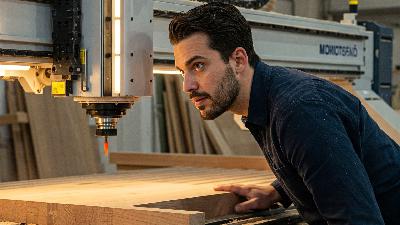
If you’ve ever dabbled in CNC machining or dreamed of turning your garage into a mini manufacturing hub, you’ll know that the journey is equally thrilling and frustrating. In this episode, Brian and Greg take you through their CNC journey—from their first modest machine to new upgrades.
Watch It On YouTube
Hosted by
Brian Benham
Portfolio: https://www.benhamdesignconcepts.com/
Brian On Tiktok: https://www.tiktok.com/@benham_design
Brian On Instagram: https://www.instagram.com/benham_design/
YouTube: https://www.youtube.com/channel/UCXO8f1IIliMKKlu5PgSpodQ
Greg Porter
https://skyscraperguitars.com/
Greg On Instagram: https://www.instagram.com/gregsgaragekc/
YouTube: https://www.youtube.com/c/SkyscraperGuitars
YouTube: https://www.youtube.com/c/GregsGarage
Show Notes
Brian’s First CNC Machine
Brian’s CNC journey began about ten years ago with a small desktop Piranha from Next Wave Automation. At the time, CNC machines were just starting to become accessible to hobbyists and small shop owners. The Piranha was a great introduction to the world of CNC—it was affordable, compact, and perfect for tinkering. He used it to create templates, prototype ideas, and explore the basics of CNC machining.
However, it didn’t take long for him to hit the limits of the Piranha. Its small size and lack of rigidity made it unsuitable for the production work he wanted to do. He quickly realized that if he wanted to turn his ideas into a viable product line, he needed a more robust machine. The Piranha became an occasional tool in his shop, reserved for small projects or quick prototypes while he dreamed of something bigger and better.
—
The Upgrade: Enter the Avid CNC
Fast forward to today, Brian ordered an Avid CNC machine—a 2×4-foot model with a fourth-axis rotary option. This machine will be a game-changer for him.
Why Avid CNC?
He chose the Avid CNC for several reasons:
1. Size and Versatility: The 2×4-foot bed is the perfect size for my shop, offering enough workspace without overwhelming my limited space.
2. Fourth-Axis Rotary: This feature opens up a world of possibilities for creating cylindrical or curved designs, which is something I’ve been eager to explore.
3. Spindle Power: Unlike my old Piranha, which relied on a Bosch palm router, the Avid CNC comes with a 4-horsepower spindle. This upgrade means better precision, smoother cuts, and no more burned-out routers.
While he initially wanted the 8-horsepower spindle, budget constraints led him to opt for the 4-horsepower model. Still, it’s a significant improvement over my previous setup.
—
Lessons Learned from the Piranha
His experience with the Piranha taught him several valuable lessons:
1. Size Matters: A small machine might be great for learning, but it can quickly become limiting if you want to scale up your projects.
2. Rigidity is Key: The Piranha’s lack of rigidity led to inconsistent cuts and frequent breakdowns, especially when I tried to use it for production work.
3. Automation is a Game-Changer: Manually adjusting toolpaths and dealing with burned-out routers was a constant headache. I’m looking forward to the Avid CNC’s automated features, like computer-controlled speed adjustments.
—
Exploring New Possibilities with the Avid CNC
One of the most exciting aspects of the Avid CNC is its potential for automation and precision. Here are a few features I’m particularly excited about:
Fourth-Axis Rotary
The fourth-axis rotary table will allow me to create intricate cylindrical designs, something I’ve always wanted to experiment with. While it does take up a significant amount of space on the machine, I’m confident I can find creative ways to maximize my workspace.
Tool Changer
Although I didn’t initially opt for the tool changer due to budget constraints, it’s definitely on my wish list. The ability to switch tools automatically would save me a ton of time and reduce the risk of errors.
Improved Software Integration
I’ve been using VCarve for toolpath layout and SketchUp for design, and I’m excited to see how these tools integrate with the Avid CNC. One tip I’ve learned is that VCarve can directly import SketchUp files, eliminating the need to export designs as DXF files. This small workflow improvement can save a lot of time and hassle.
—
Challenges and Solutions
No CNC journey is without its challenges, and I’ve had my fair share of frustrations. Here are a few issues I’ve encountered and how I’ve addressed them:
Fixturing and Zeroing
One of the trickiest parts of CNC machining is ensuring that your workpiece is properly fixtured and zeroed. On the Piranha, I often struggled with re-zeroing the machine after removing and replacing a fixture. The Avid CNC’s auto-touch-off feature should make this process much smoother.
Feeds and Speeds
Finding the right feeds and speeds for different materials and tools can be a trial-and-error process. I’ve learned that it’s essential to start with manufacturer recommendations and adjust from there. I’m also looking forward to experimenting with the Avid CNC’s capabilities to find the optimal settings for my projects.
Machine Rigidity
Even with the Avid CNC, I’m aware that the aluminum frame might not be as rigid as I’d like. To address this, I’m planning to add stiffeners and possibly a plywood backer to reduce racking forces.
—
Looking Ahead: The Future of My CNC Journey
As I await the arrival of my Avid CNC, I’m filled with excitement and anticipation. This machine represents a new chapter in my maker journey, one where I can bring my ideas to life with greater precision, efficiency, and creativity.
I’m particularly looking forward to exploring the fourth-axis rotary feature and experimenting with new materials and designs. I’m also eager to connect with other makers and share my experiences, challenges, and successes along the way.
—
Final Thoughts
If there’s one thing I’ve learned from my CNC journey, it’s that the right tools can make all the difference. While the Piranha was a great starting point, the Avid CNC is the machine that will take my work to the next level. Whether you’re a seasoned maker or just starting out, I hope my story inspires you to keep learning, experimenting, and pushing the boundaries of what’s possible.

In this episode, we talk about influential people who shaped us into makers. Brian and Greg reminisce about people from their past who helped guide them and inspired them as they journeyed along the path of becoming makers.
Watch Podcast
Show Notes
Mel’s Influence on Greg’s Curiosity
Greg’s grandfather Mel was an influential figure who taught him to pursue his interests and make things himself. Despite having limited resources, Mel built his own house by learning from books and lived in the basement for years while saving money to complete the top floor. Every year, he would take on a project to make something for his grandchildren, like box kites. When Greg expressed interest in having stilts as a child, Mel immediately dropped what he was doing to make a pair with him, exemplifying his willingness to explore new skills and nurture curiosity.
Embracing Failure in Creative Endeavors
Greg and Brian discussed the importance of allowing children to experience failure in their creative endeavors. Greg shared his childhood experiences of building a skateboard ramp and a pair of stilts, which were not successful but taught him valuable lessons. Brian emphasized the value of spending time with children, even if the projects they work on are not perfect, as it fosters problem-solving and thought processes. They also discussed the concept of failure as a necessary step towards success and the importance of understanding what is acceptable in a project. Both agreed that failure should not be an endpoint but a milestone in the creative process.
Mentors and Teachers’ Lasting Impact
Greg and Brian discussed their experiences with mentors and teachers who had a significant impact on their lives. Brian shared his experiences with his saxophone teacher, James Phillips, who taught him the importance of learning from others and not taking life too seriously. Greg shared his experiences with Mr. Canetto, who taught him about guitar making and the importance of seeing the process of building a guitar from start to finish. Both agreed that these experiences had a profound impact on their lives and shaped their future careers. They also discussed their admiration for guitar makers like Les Godfreed and Lloyd Lohr, who are known for their intricate designs and craftsmanship.
Lessons From Craftsmen and Risks
Greg and Brian discussed their experiences with craftsmen and the lessons they’ve learned from them. Greg shared his experiences with Dan Rockhill, a professor who taught him how to weld well and the importance of modifying tools to suit the purpose. Brian shared his experience with a client who had a decommissioned Boeing 727 compressor. They also discussed the importance of learning from others, taking risks, and not letting roadblocks deter them from realizing their vision. They concluded that sometimes, it’s necessary to compromise on the design to achieve the desired outcome.
Design, Problem-Solving, and Software Evolution
Greg shared his experiences and insights about design and problem-solving, emphasizing the importance of not being limited by tools or others’ opinions. He recounted a story about a challenging ceiling design that was initially dismissed by a contractor, but was successfully executed by a skilled carpenter. Greg also discussed his evaluation of software for architectural design, highlighting the need for tools that don’t hinder creativity. Brian then shared his own experiences of learning from clients and how they pushed him to develop new skills. The conversation ended with a discussion about the software Rhino, which was in its infancy when Greg first encountered it.
Lessons Learned and Knowledge Sharing
Brian and Greg discussed their experiences and lessons learned from various projects and mentors. Brian shared how clients have pushed him out of his comfort zone and helped him develop new skills. Greg talked about the influence of his wife’s family on his construction skills and how they continue to inspire him. They also discussed the importance of learning from others and passing on knowledge to the next generation. Greg shared an example of how he taught a high school student about blacksmithing and machining, hoping to inspire him and potentially change his life trajectory. The conversation ended with Greg expressing his desire to continue teaching and influencing others.
Personal Journeys and Entrepreneurial Passions
Greg and Brian discussed their personal journeys and the impact of influential people on their lives. Greg shared his experiences as a corporate employee and his plans to retire and focus on his passion for making things. He also mentioned his YouTube channel and his desire to leave a legacy through his work. Brian shared his admiration for Sam Maloof and his aspirations to become a furniture maker, teaching apprentices and creating jobs for them. Both expressed their desire to pass on their knowledge and skills to others, and their passion for entrepreneurship and making things. They ended the conversation with plans for their future endeavors.
Hosted by
Brian Benham
Portfolio: https://www.benhamdesignconcepts.com/
Brian’s Woodworking Plans: https://www.digitaldesignconcepts.art/
Brian On Instagram: https://www.instagram.com/benham_design/
YouTube: https://www.youtube.com/channel/UCXO8f1IIliMKKlu5PgSpodQ
Greg Porter
https://skyscraperguitars.com/
Greg On Instagram: https://www.instagram.com/gregsgaragekc/
YouTube: https://www.youtube.com/c/SkyscraperGuitars
YouTube: https://www.youtube.com/c/GregsGarage

Comments

Download from Google Play

Download from App Store
 United States