


 Claim Ownership
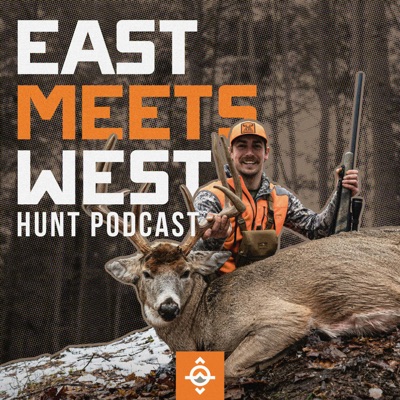
 East Meets West Hunt
East Meets West HuntSubscribed: 547Played: 32,501
Subscribe

© Copyright 2026
Description
The East Meets West Hunt Podcast is your resource for all things adventure hunting. This podcast is for the hunter that loves planning and preparing for the hunt, just as much as the hunt. Whether it's deer hunting for big woods mountain bucks, chasing elk in the Rocky Mountains, and anything in between, we will talk to successful hunters from all over to provide the EMW community with useful knowledge and motivation to continue to live their life through a series of adventures.
516 Episodes
Reverse

Beau Martonik sits down with Dan Infalt of The Hunting Beast at Huntstock, with Johnny Stewart as co-host. Dan has been asked about bedding areas on every podcast there is, so this one skips the tactics and goes after the story behind them.
Dan learned to hunt alone in southern Wisconsin, chasing one buck for three seasons, finding his sheds every year, and figuring out that if he wanted to kill him, he had to be close to where he bedded. On Thanksgiving morning, a rock off the hood of an old junked car finally pushed that buck out. He went on to a 15 year run of giant bucks, and Dan is honest about what that run cost his family, and why he started giving everything away.
In this episode:
Why hate online means you’re doing well
Learning to hunt with no mentor and a dad who couldn’t give a compliment
Finding a buck’s sheds three years running and learning his bedding areas
Crosswinds, a junked car, and his first giant on Thanksgiving Day
Giving away the “secrets” and the kickback that came with it
Making people better hunters and hunters better people
Johnny, Beau, and a wind bump at deer camp that turned into Beau’s biggest buck
Helping his longtime hunting partner kill a 170 inch ten he’d been chasing for years
Timber the raccoon, and why hunters care about animals more than people think
Losing some of the want, and the birthdays and Halloweens it cost
Why you have to earn luck
How putting his spots on film has cost him
Why 5% of hunters kill all the deer, and the confidence nobody can sell you
https://act.wilderness.org/a/26bcpledge-eastwest-1
Dan's YT - https://www.youtube.com/@thehuntingbeast
Dan's FB - https://www.facebook.com/dan.infalt
Instagram:
@eastmeetswesthunt
@beau.martonik
Facebook:
East Meets West Outdoors
Shop Hunting Gear and Apparel:
https://www.eastmeetswesthunt.com/
YouTube:
Beau Martonik - https://www.youtube.com/channel/UCQJon93sYfu9HUMKpCMps3w
Partner Discounts and Affiliate Links:
https://www.eastmeetswesthunt.com/partners
Amazon Influencer Page
https://www.amazon.com/shop/beau.martonik
Learn more about your ad choices. Visit megaphone.fm/adchoices

Bonus episode from Wyoming elk camp. Beau Martonik sits down with his cousin Tyler Martonik and cameraman Derek Testerman at the end of a 10 day archery elk hunt on general tags.
The plan for day one was to take it easy and acclimate. By 4:30 that afternoon, a cow walked to within five yards of Tyler, he looked over and said “bull, Beau, bull,” and Beau had a 6x6 coming around the knob. What followed was a five hour trip out in the dark through blowdowns and a thunderstorm, and another full day to get the rest of him out.
From there it’s Tyler’s hunt. Learning one drainage over most of a week, waiting for thermals to settle before moving on bedded bulls, a wallow found on LiDAR, close calls at 80 yards, and wolves in camp at 3 AM.
In this episode:
Burning seven points on a Wyoming general tag
Acclimating without sitting in camp: camp low, hunt high
The cow at five yards and the bull behind her
Butchering a bull on a slope he kept trying to roll off
Five hours of rain, cliffs, and blowdowns on the first trip out
Why bugles are closer than they sound in thick timber
Waiting for thermals to settle before moving on bedded bulls
A wallow that only showed up on LiDAR
Elk staying low for water in a hot, dry year
Wolves in camp at 3 AM
The herd bull play where everything went right but the bull
Gear that worked, what’s getting replaced, and boiling a skull for Wyoming’s CWD rules
https://act.wilderness.org/a/26bcpledge-eastwest-1
Instagram:
@eastmeetswesthunt
@beau.martonik
Facebook:
East Meets West Outdoors
Shop Hunting Gear and Apparel:
https://www.eastmeetswesthunt.com/
YouTube:
Beau Martonik - https://www.youtube.com/channel/UCQJon93sYfu9HUMKpCMps3w
Partner Discounts and Affiliate Links:
https://www.eastmeetswesthunt.com/partners
Amazon Influencer Page
https://www.amazon.com/shop/beau.martonik
Learn more about your ad choices. Visit megaphone.fm/adchoices

Beau Martonik sits down with Jim Gallagher at Huntstock. Jim is in his 50th year of hunting, has been bow-only for close to 40 years, and has killed 233 deer with a bow, almost all of them in the swamps and thickets of the Northeast.
His system runs the opposite direction from most. Instead of trying to leave nothing on the walk-in, he wants deer to find his trail. Store scents and cover scents didn’t hold up, so for about 35 years his boots have gone in fresh rabbit droppings, later with tarsal gland hair on top, a buck tarsal hangs seven feet up over a mock scrape, and he walks past his tree and hooks back so a deer following him in gives him an angled-away shot. Then he calls, every sit, on a set schedule.
He also gets into why he aims at the very bottom of the deer, going back to around 1986, when he and Gus Park tallied their misses at a picnic table in Pennsylvania, and 30 of 35 had gone over the deer’s back, and a long list of stories from 50 seasons of doing it his way.
In this episode:
Tracking deer in Maine snow and going bow only
39 foot stands and seven busts in 17 years
The calling sequence: one nostril, fawn mew, grunt, rattle
Why store scents failed and rabbit droppings didn’t
Tarsal glands seven feet up over a mock scrape
Shooting out the side of the peep in low light
Why a deer blowing at you can be a good thing
The night bucks fought under his stand in the dark
Straight down shots and where he aims from 39 feet
The J hook that turns a following deer into a quartering away shot
His biggest buck, a 212 pounder that followed him for a week
The Pennsylvania picnic table tally and the barn test on deer ducking the string
Checking the swamps after the first October snow
A broken arrow rest, two lost bucks, and why you shoot your bow after a bad hit
https://act.wilderness.org/a/26bcpledge-eastwest-1
Jim's YT channel - https://www.youtube.com/@jimgallagher4939
Instagram:
@eastmeetswesthunt
@beau.martonik
Facebook:
East Meets West Outdoors
Shop Hunting Gear and Apparel:
https://www.eastmeetswesthunt.com/
YouTube:
Beau Martonik - https://www.youtube.com/channel/UCQJon93sYfu9HUMKpCMps3w
Partner Discounts and Affiliate Links:
https://www.eastmeetswesthunt.com/partners
Amazon Influencer Page
https://www.amazon.com/shop/beau.martonik
Learn more about your ad choices. Visit megaphone.fm/adchoices

Beau Martonik sits down with Dr. Steve Ditchkoff at Auburn University, where he has run the deer lab for about 25 years and has been studying deer for roughly 35.
He did not grow up hunting deer. His father quit about the time he was born, so he grew up fishing outside Detroit, found a fisheries and wildlife degree at Michigan State, studied wintering deer in Maine on snowshoes, and did his PhD in Oklahoma on mating strategy, which was a question deer biologists mostly weren’t asking then.
That question is what this episode is built on. In 2007, he built a 430-acre facility at Auburn, fenced, with about 100 adult deer in it, because hunting shows had spent years telling people which bucks were breeder bucks and nobody had studied which individuals actually breed. His group tries to capture the whole population each year, pulls a tissue sample off every deer, and builds the family tree out of DNA. They can look at one buck and count what he sired at one, two, three and four years old, and see which does he bred with.
The answer is that it isn’t random. It’s partially driven by similarity in body size and age. He also has data showing a doe increases her movement substantially right before she comes into heat. What he flags as belief rather than data, and he flags it himself, is his hunch that a dominant buck is targeting specific does rather than wandering. Then the hunting consequence: if you knew the exact peak of breeding, that’s the worst week to sit, because that’s when the most bucks are locked down.
The other half is pressure. He doesn’t believe gunshots are what deer respond to. He believes they respond to the sign we leave walking in and walking out. Two of his studies sit under that, one in South Carolina where daylight use of a hunted spot dropped the day after a sit and took about a week to recover, and one in Alabama that found the best day of the week to hunt.
In this episode:
Why the Southeast ended up leading deer research
Where AI helps wildlife science and where it goes wrong
How he ended up handing his data to Bill Thompson
What confidence actually does to a hunter in the stand
We train deer to avoid us, and the sign we leave doing it
The South Carolina study, and the week it takes a spot to recover
The best day of the week to hunt, by the data
72 square miles of ammunition plant, and what those deer acted like
Why bucks move more where the deer are thin
Why the peak week is the worst week to sit
The breeder buck question nobody had ever actually studied
Inside the 430 acre facility and the family tree built out of DNA
Whether a dominant buck is choosing which does he breeds
The walkabout a doe goes on before she comes into heat
Bucks that moved two and five miles and never came back
Whether you need to know how many deer you have
The three things 35 years changed about how he hunts
https://act.wilderness.org/a/26bcpledge-eastwest-1
Instagram:
@eastmeetswesthunt
@beau.martonik
Facebook:
East Meets West Outdoors
Shop Hunting Gear and Apparel:
https://www.eastmeetswesthunt.com/
YouTube:
Beau Martonik - https://www.youtube.com/channel/UCQJon93sYfu9HUMKpCMps3w
Partner Discounts and Affiliate Links:
https://www.eastmeetswesthunt.com/partners
Amazon Influencer Page
https://www.amazon.com/shop/beau.martonik
Learn more about your ad choices. Visit megaphone.fm/adchoices

Beau Martonik sits down with Lucas Benoit, a bear houndsman and guide out of central New Hampshire, with Johnny Stewart in the co-host chair. Recorded live at Huntstock.
Lucas got into hounds around fourteen with two accident-litter beagles, bought his first two finished bear dogs off a guy who was quitting, treed about sixteen bears that first season, and has since had a year of just over a hundred. Ask him which he’d rather do and he says deer hunting, a hundred percent.
He has killed mature bucks on September 21st in back to back years. Johnny spends most of the episode refusing to let him call it luck.
The argument underneath it is worth the listen. The first week of the season is the best week of the year to kill a mature buck, because if you can find what they’re feeding on, they aren’t far from it. December gets almost that good, and he’ll tell you he still struggles then. The reason most people never cash that first week is that they go scout it the week before and blow the place out. Lucas does not pre-scout. He finds sign in real time and sets up on it the same day.
Then it gets specific. Ten white oaks on a hilltop spine, three or four of them producing, one or two acorns under each, and bucks routing through to check every one. How to look up into an oak and read whether it has produced in the last couple years. The stand he hung over a pattern he called a slam dunk, then left and came back the wrong morning. Blowing a buck off a hill on opening day, staying out five or six days, then parking a mile away and climbing a steep hemlock face because it was the only way the wind worked. And a 170 inch buck that stood up at fifty yards, crossed a clear cut, looked at six dogs and three men for five minutes, and bedded back down.
In this episode:
Beagles to bear dogs, and why hounds are the honest way to manage a bear population
Why running dogs is the best deer scouting he does all year
The rub line he found on a bear chase, and the buck that walked it in daylight
A 170 inch buck that bedded back down in front of six dogs
Why the first week of season is his best week of the year
Why he doesn’t scout the week before opening day
The slam dunk stand he hung and then didn’t sit
Same spot, same date, years apart
Reading which oaks are producing before you ever look at the ground
A September buck killed in the morning, on a spot he’d already blown out
How long to stay out of a spot once you’ve bumped a buck
Five bucks on the last day of the season, and whether that’s luck
Lucas' IG: @nhbearguide
https://act.wilderness.org/a/26bcpledge-eastwest-1Instagram:
@eastmeetswesthunt
@beau.martonik
Facebook:
East Meets West Outdoors
Shop Hunting Gear and Apparel:
https://www.eastmeetswesthunt.com/
YouTube:
Beau Martonik - https://www.youtube.com/channel/UCQJon93sYfu9HUMKpCMps3w
Partner Discounts and Affiliate Links:
https://www.eastmeetswesthunt.com/partners
Amazon Influencer Page
https://www.amazon.com/shop/beau.martonik
Learn more about your ad choices. Visit megaphone.fm/adchoices

Comments

Download from Google Play

Download from App Store
 United States