Discover
The Untethered Podcast
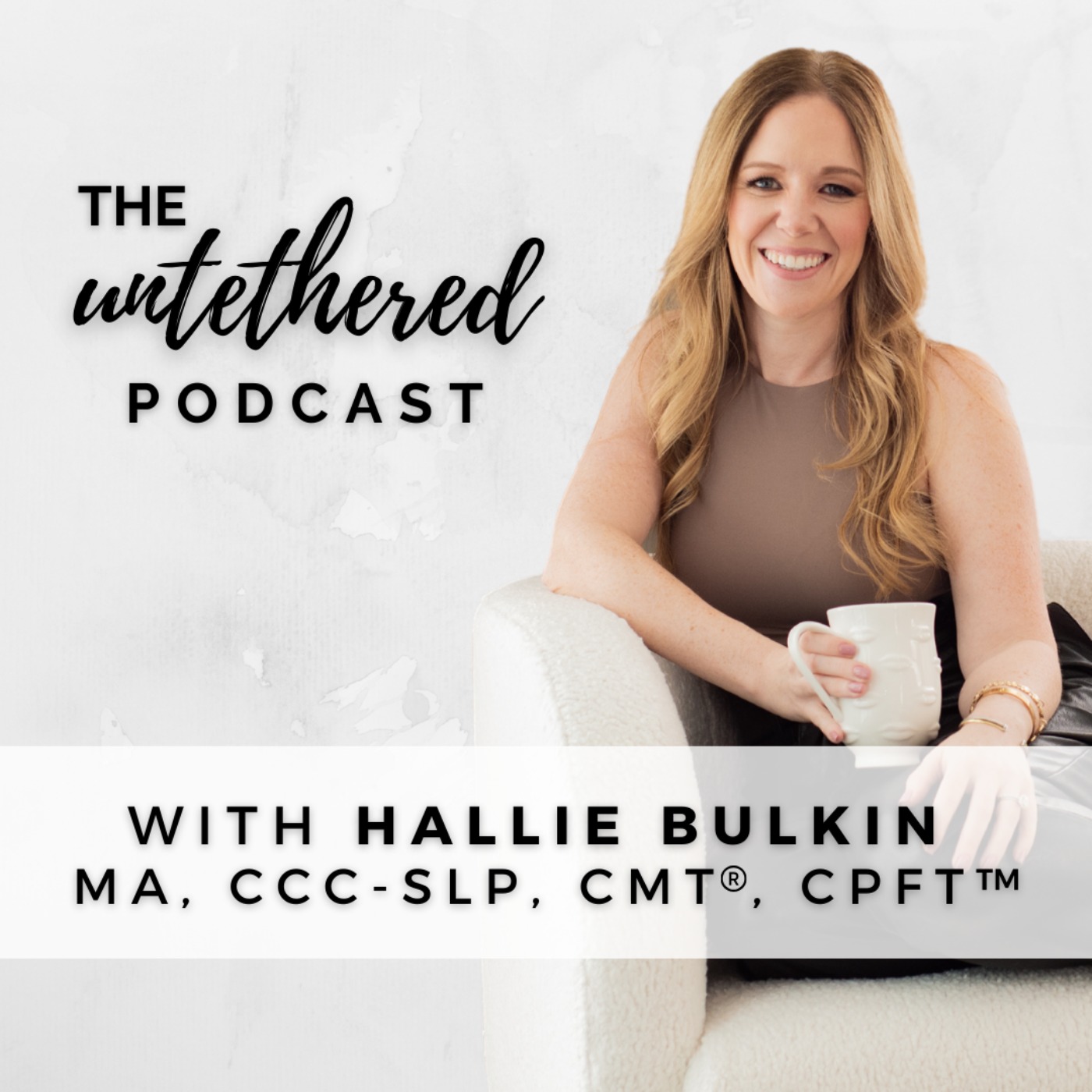
Author: Hallie Bulkin
Subscribed: 213Played: 11,991Subscribe
Share
© Hallie Bulkin
Description
Hosted by Hallie Bulkin, a Certified Myofunctional Therapist™ (CMT®), Feeding Specialist and Speech Therapist, The Untethered Podcast focuses on the latest research and clinical evidence in Myofunctional Therapy, Tethered Oral Tissues (TOTs, AKA Tongue Tie, etc), Airway and Pediatric Feeding. Produced with both providers and parents in mind, episodes include interviews with experts, personal stories from parents, and Q&A from our listeners.
Hosted on Acast. See acast.com/privacy for more information.
359 Episodes
Reverse
In this episode of The Untethered Podcast, Hallie Bulkin exposes the "hidden" red flag that most people dismiss as just a bad habit: mouth breathing. Far from being just a look, it’s a functional crisis that can silently derail a toddler’s feeding development, destroy sleep quality, and even physically reshape their face.Hallie challenges the status quo, urging us to stop relying on standard "testing" and start mastering the art of observation. She introduces her game-changing "Statue and Sniff" test - the essential tool for catching airway issues before they become permanent developmental roadblocks. If your therapy has hit a plateau or a child is struggling to progress at the table, the answer isn’t in their bite - it’s in their breath. This is the deep dive into functional foundations that every therapist and parent needs to hear to secure a child's long-term success.UNPACKING THE EPISODE: WHAT YOU’LL UNCOVER🚩 Decoding the "Functional Cry": Why an open mouth is never "just a phase" but a loud signal that your toddler is struggling to reach their functional baseline.🦴 Architectural Impact: A look at how mouth breathing acts as a "silent sculptor," physically altering craniofacial growth and narrowing the airway over time.👃 The Art of Observation: Master Hallie’s "Statue and Sniff" technique—a precision assessment tool that tells you more than a standardized test ever could.💃 The Neuromuscular "Dance": Why feeding is a high-stakes coordination of nerves and muscles that falls apart when mouth breathing takes over.🛠️ The Restoration Blueprint: Practical, high-impact strategies to pivot a child toward healthy nasal breathing and optimal oral rest posture.🎓 The Clinical Missing Link: Why adding airway expertise to your toolkit is the "secret sauce" for solving your most complex pediatric feeding cases. KEY TAKEAWAYS & SOUND BITES"You don't test, you observe. The 'Statue and the Sniff' test will tell you more than a standardized assessment ever could.""Oral rest posture matters in everybody. If the mouth is open, the foundation for feeding is already crumbling.""Mouth breathing isn't just a habit; it's a signal that the body is struggling to find its functional baseline."WORTH A LISTEN: CONTINUE YOUR JOURNEYEP 349: Myofunctional Therapy Explained: Root Causes, Airway Health & Collaborative CareWhy We Can’t Ignore the AirwaWhy We Can’t Ignore the Airway in Pediatric Feeding TherapySTAY CONNECTED & GROW YOUR PRACTICE💬 Join the Conversation: Catch behind-the-scenes insights and daily clinical tips on Instagram | Facebook | LinkedIn⭐ If this episode shifted your perspective, please Leave a quick review — it means the world to me!Your feedback helps us reach more therapists and families who need these answers!Ready to advance your clinical skills? Learn more here Hosted on Acast. See acast.com/privacy for more information.
In this episode of The Untethered Podcast, Hallie Bulkin is joined by Melanie Peacock Shell to explore the deep shift from being a “therapist” to becoming a Certified Pediatric Feeding Therapist (CPFT). Melanie pulls back the curtain on the "hidden gem" of the Pediatric Feeding Hub, sharing how advanced mentorship and a community of experts can turn clinical overwhelm into streamlined, interdisciplinary success.They dive into the "gut-brain-plate" connection, discussing how gut health, sensory processing, and even sleep are the quiet drivers behind feeding challenges. If you’ve ever felt humbled by a complex case, this episode will show you how to lean into your community and use a holistic lens to finally see the results your families deserve.IN THIS EPISODE, YOU’LL LEARN:✔️ The CPFT Edge: How advanced certification shifts your clinical perspective and improves patient outcomes.✔️ The Gut-Brain Connection: Why understanding a child’s gut health is non-negotiable for solving "sensory" feeding issues.✔️ Power in Numbers: The role of the Pediatric Feeding Hub in providing the mentorship and collaboration needed to survive private practice.✔️ The Holistic Evaluation: Integrating nutrition, sleep, and family dynamics into your therapy plan rather than just focusing on the "bite."✔️ Navigating Referrals: How to build an interdisciplinary "dream team" to support a child’s developmental needs simultaneously.✔️ Overcoming the "Humble" Phase: Dealing with the realization that there is always more to learn—and why that makes you a better therapist.KEY TAKEAWAYS & SOUND BITES"This thing humbled me big time. Pursuing advanced certification isn't about knowing it all; it's about having the tools to figure out the 'why' behind the 'what'.""It all starts with nutrition. If the gut isn't happy and the child isn't sleeping, we are just spinning our wheels at the table."RELATED EPISODES YOU MIGHT LOVEEpisode 251: You’re Worth The Time and Investment with Melanie Peacock Shell, MEd, CCC-SLPWhy Feeding Therapy Needs a Whole-Body LensOTHER WAYS TO CONNECT & LEARN💬 Let’s hang out on social: Instagram | Facebook | LinkedIn⭐ Love the show? Leave a quick review — it means the world to me!Ready to step into certification? Learn more here Hosted on Acast. See acast.com/privacy for more information.
In this episode of The Untethered Podcast, Hallie Bulkin dives deep into the non-negotiable link between how a child breathes and how they eat. This conversation provides the essential clinical "missing link" for pediatric therapy: The Airway.Hallie challenges the idea that mouth breathing is "just a habit," reframing it as a structural adaptation that can stall even the best feeding therapy plans. If you’ve ever had a patient hit a plateau or show signs of "feeding fatigue," this episode will show you why you must look at the nose and the airway before you can fix the plate.IN THIS EPISODE, YOU’LL LEARN:✔️ The Adaptation Myth: Why mouth breathing is a physiological survival mechanism, not a behavioral choice.✔️ Structural Consequences: How chronic open-mouth posture alters dentofacial development and maxillofacial growth over time.✔️ The "Airway Trumps Everything" Rule: Why the body will always prioritize breathing over eating, and how this creates "feeding fatigue."✔️ The Airway Lens: How to integrate airway and sleep screenings into your standard feeding evaluations.✔️ Beyond the Plate: Recognizing when feeding therapy alone isn't enough and when to refer out for airway obstruction.✔️ Efficiency vs. Effort: How open mouth posture impacts a child's ability to coordinate the suck-swallow-breathe sequence.KEY TAKEAWAYS & SOUND BITES"Mouth breathing is not just a habit. It is an adaptation. We have to ask: What is blocking nasal breathing?""Airway trumps everything. If the body is fighting for air, it will never prioritize the complex mechanics of feeding."RELATED EPISODES YOU MIGHT LOVEEp 337: Unlocking Pediatric Feeding: Expert Strategies with Hallie Bulkin, MA, CCC-SLP, CMT®, CPFT™How Pediatric Feeding Changed in 2025—and What It Means for CliniciansOTHER WAYS TO CONNECT & LEARN💬 Let’s hang out on social: Instagram | Facebook | LinkedIn⭐ Love the show? Leave a quick review — it means the world to me! Hosted on Acast. See acast.com/privacy for more information.
In this episode of The Untethered Podcast, Hallie Bulkin sits down with Kelly Wenger to explore the evolution of a pediatric feeding clinician. Kelly shares her raw and relatable journey—from the initial overwhelm of entering private practice as a new mother to finding her voice as a confident feeding specialist.The conversation dives deep into the "confidence gap" many clinicians face when dealing with complex feeding cases. Kelly discusses how shifting to an integrative approach and moving therapy into the home environment has not only improved patient outcomes but has also allowed for a more profound connection with parents. Whether you are a clinician looking to level up your skills or a business owner wanting to build a stronger referral network, this episode offers a roadmap for professional and personal growth.IN THIS EPISODE, YOU’LL LEARN:✔️ The Confidence Catalyst: How specialized training like Feed the Peds transforms clinical uncertainty into expert action. ✔️ The In-Home Advantage: Why the home environment is the "secret sauce" for the generalization of feeding skills. ✔️ Integrative Thinking: How to look at a child holistically to address multiple developmental needs simultaneously. ✔️ Building Your Network: Strategies for creating a robust referral circle that supports your practice growth. ✔️ Empowering Parents: Navigating the shift in parental awareness and how to effectively educate caregivers on their child’s needs. ✔️ The Ripple Effect: Understanding how one clinician’s education creates a wave of positive impact across an entire community.Join me for this free 3-day training, where I’ll show you how to screen feeding cases clearly, confidently, and with intention — so you know exactly what to do next.👉 Join the free 3-day Screen The Peds to Feed The Peds trainingRELATED EPISODES YOU MIGHT LOVEEpisode 314: Navigating Motherhood and Feeding Challenges with Aerica Walsh M.S, CCC-SLPWhen Imposter Syndrome Shows Up in Pediatric Feeding Therapy (and What to Do Next)OTHER WAYS TO CONNECT & LEARN💬 Let’s hang out on social: Instagram | Facebook | LinkedIn⭐ Love the show? Leave a quick review — it means the world to me! Hosted on Acast. See acast.com/privacy for more information.
In this episode of The Untethered Podcast, Hallie Bulkin dives into the intricate world of pediatric eating behaviors, pulling back the curtain on why "picky eating" is often a symptom of a much deeper developmental gap.Many caregivers and clinicians feel stuck when a child refuses certain foods, often labeling it as a behavioral "no." Hallie challenges this perspective, urging us to look at the infrastructure of the mouth. She explores how the transition from a simple vertical munch to a mature circular rotary chew isn't just a milestone—it's the foundation of safe and varied nutrition.This episode dives deep into the reality that clinical excellence requires a keen eye for motor mechanics and sensory processing. From identifying the three distinct chewing patterns to creating supportive environments that reduce mealtime stress, Hallie provides a roadmap for anyone looking to transform a child’s relationship with food.In this episode, you’ll learn: ✔️ Why "surface behaviors" are red flags: How to stop chasing symptoms and start addressing causes.✔️ The 3 Stages of Chewing: Understanding vertical, diagonal, and circular rotary patterns.✔️ Sensory vs. Motor: How to distinguish between a child who won’t eat and a child who can’t eat.✔️ The Role of Textures: Why certain food groups are "safe" and others are "scary" based on mechanical demand.✔️ Observation Skills: How to spot "pocketing" or ineffective grinding during mealtime.✔️ Strengths-Based Intervention: Why building on a child’s current motor abilities is more effective than forcing progress.✔️ Success Redefined: How improving chewing mechanics directly improves the quality of life for the whole family.If you’re ready to stop second-guessing your clinical decisions and start leading with confidence, Screen The Peds to Feed The Peds is your next step.Join me for this free 3-day training, where I’ll show you how to screen feeding cases clearly, confidently, and with intention — so you know exactly what to do next.👉 Join the free 3-day Screen The Peds to Feed The Peds trainingRELATED EPISODES YOU MIGHT LOVEEpisode 276: TOTs, Food Aversions & The Nervous System with Hallie BulkinEp 338: The Missing Link in Pediatric Feeding: Critical Skills Grad Programs SkipOTHER WAYS TO CONNECT & LEARN💬 Let’s hang out on social: Instagram | Facebook | LinkedIn⭐ Love the show? Leave a quick review — it means the world to me! Hosted on Acast. See acast.com/privacy for more information.
In this episode of The Untethered Podcast, Hallie Bulkin sits down with Cheryl Pelletier ,M.S., CCC-SLP to discuss the essential infrastructure of a successful career in feeding therapy: mentorship, community, and the courage to evolve.Many clinicians feel like they are on an island when navigating complex pediatric swallowing and feeding cases. Hallie and Cheryl pull back the curtain on why "gatekeeping" in the profession hinders patient care and how transitioning from a solo mindset to a collaborative one transforms clinical outcomes. They explore how the right tools—combined with structured mentorship—can turn clinical anxiety into confident, life-changing intervention.This episode dives deep into the reality that clinical excellence isn't just about what you know; it’s about who you learn with. From navigating the "imposter" feelings of a new specialty to leveraging innovative tools for safer feeding, Hallie and Cheryl provide a roadmap for clinicians ready to elevate their professional standing and improve their patients' quality of life.In this episode, you’ll learn:✔️ Why mentorship is a constant necessity, not just a "beginner phase" ✔️ How to overcome the obstacles and "gatekeeping" that stall professional growth ✔️ The role of specialized certification in building clinical reasoning and authority ✔️ Why sharing knowledge across disciplines (SLPs and OTs) is the key to reducing waitlists ✔️ How innovative feeding tools can facilitate safer, more effective therapy sessions ✔️ Why building on a child’s strengths is more effective than focusing on deficits ✔️ How to measure success through improved quality of life for the whole familyIf you’re ready to stop second-guessing your clinical decisions and start leading with confidence, Screen The Peds to Feed The Peds is your next step.Join me for this free 3-day training, where I’ll show you how to screen feeding cases clearly, confidently, and with intention — so you know exactly what to do next.👉 Join the free 3-day Screen The Peds to Feed The Peds trainingRELATED EPISODES YOU MIGHT LOVEEpisode 318: Feed The Peds®: The Mission with Hallie Bulkin, MA CCC-SLP, CMT®, CPFT™Ep 337: Unlocking Pediatric Feeding: Expert Strategies with Hallie Bulkin, MA, CCC-SLP, CMT®, CPFT™OTHER WAYS TO CONNECT & LEARN💬 Let’s hang out on social: Instagram | Facebook | LinkedIn⭐ Love the show? Leave a quick review — it means the world to me!🥄 Connect with Cheryl Pelletier HERE Hosted on Acast. See acast.com/privacy for more information.
In this episode of The Untethered Podcast, Hallie Bulkin addresses one of the most common challenges clinicians face when entering pediatric feeding therapy: imposter syndrome.Many speech-language pathologists, occupational therapists, and physical therapists feel unqualified or “not ready” to begin working with pediatric feeding cases. Hallie explains why this feeling is normal, why it doesn’t mean you lack competence, and why waiting for confidence before taking action can keep clinicians stuck for years.This episode explores why confidence in pediatric feeding therapy is not built through endless studying or certifications alone. Instead, confidence is cumulative and develops through real clinical experience, repetition, mentorship, and supported decision-making. Hallie reframes imposter syndrome as a sign of professional growth and stretching into new clinical skills, not a signal to stop.If you’re interested in pediatric feeding therapy but feel unsure where to start, this episode offers clarity, reassurance, and a realistic path forward grounded in action and support.In this episode, you’ll learn:✔️ Why nearly every pediatric feeding therapist starts out feeling unqualified ✔️ How imposter syndrome shows up in feeding therapy and what it really means ✔️ Why studying alone doesn’t build clinical confidence ✔️ How hands-on clinical reps accelerate learning in pediatric feeding ✔️ The role mentorship plays in developing feeding therapy competence ✔️ Why confidence grows through experience, not readinessIf you’re feeling unsure where to start in pediatric feeding, Screen The Peds to Feed The Peds is the perfect next step. Join me for this free 3-day training, where I’ll show you how to screen feeding cases clearly, confidently, and with intention — so you know what to do next.👉 Join the free 3-day Screen The Peds to Feed The Peds trainingRELATED EPISODES YOU MIGHT LOVEEp 336: Feeding Therapy in Schools: Safety, Culture, and Collaboration with Karen HowarthEp 335: The #1 Way to Transform Your Pediatric Feeding Evaluations with Hallie Bulkin, MA CCC-SLP, CMT®, CPFT™OTHER WAYS TO CONNECT & LEARN💬 Let’s hang out on social: Instagram | Facebook | LinkedIn⭐ Love the show? Leave a quick review — it means the world to me! Hosted on Acast. See acast.com/privacy for more information.
In this episode, Hallie Bulkin breaks down one of the biggest shifts in pediatric feeding therapy over the past year: the growing recognition that feeding and airway are inseparable.In 2025, feeding therapy evolved beyond skills at the table. Clinicians are now expected to screen breathing patterns, observe resting mouth posture, and consider sleep symptoms as part of a comprehensive feeding evaluation. These changes reflect a deeper understanding of how airway, function, and feeding intersect and why early identification matters more than ever.Hallie unpacks what changed, why it matters for your clinical decision-making, and how this evolution positions feeding therapists as key collaborators in early airway intervention as we move into 2026.In this episode, you’ll learn:✔️ Why airway can no longer be separated from feeding assessment ✔️ What’s newly expected in modern feeding evaluations ✔️ How breathing, posture, and sleep inform feeding outcomes ✔️ Where feeding therapists fit in early airway identification ✔️ Why collaboration across disciplines is now essentialRelated Episodes You Might LoveEpisode 311: The Future of Dentistry and Rethinking Dental Health with Dr. Hilary Fritsch, DMDEpisode 319: Elevate Your Practice with the Pediatric Feeding Hub, Hallie Bulkin, MA CCC-SLP, CMT®, CPFT™OTHER WAYS TO CONNECT & LEARN💬 Let’s hang out on social: Instagram | Facebook | LinkedIn⭐ Love the show? Leaving a quick review helps more clinicians find the podcast. 📅 Doors to Feed The Peds® open soon | join the waitlist Hosted on Acast. See acast.com/privacy for more information.
In this episode, Hallie Bulkin speaks with Dr. Alyssa Welch, PT, DPT about the vital role of interprofessional collaboration in achieving optimal patient outcomes, particularly for speech-language pathologists (SLPs). Dr. Alyssa Welch, PT, DPT emphasizes that working alongside occupational therapists (OTs), physical therapists (PTs), dentists, and other specialists is not just beneficial—it is now a core competency in modern healthcare.Dr. Alyssa Welch, PT, DPT and Hallie discuss the necessity of recognizing the limits of your own expertise and knowing when to make a referral. Collaboration ensures a whole-person therapeutic approach and prevents the professional burnout that comes from trying to "fix everything" in isolation. They cover key areas where SLPs and other therapists must coordinate care, such as feeding mechanics, positioning for speech, and addressing core stability and motor skills.In this episode, you’ll learn:✔️ ️ Interprofessional collaboration is essential for SLPs, leading to better patient outcomes and reduced medical errors.✔️ Collaboration often involves partnering with Occupational Therapists (OTs) for fine motor skills, positioning, and feeding mechanics, and Physical Therapists (PTs) for gross motor skills, body positioning, and trunk control.✔️ Collaboration shifts the focus from checking off individual treatment boxes to a patient-centered approach that meets the family's actual needs.✔️ Poor communication is responsible for an estimated 70-80% of serious medical errors; collaboration significantly reduces this risk.✔️ Recognizing the limits of your own scope and knowing when to refer is crucial for long-term career sustainability and preventing professional burnout.✔️ Clinical collaboration can take many forms, including email consultations, case conferences, co-treatment sessions, and shared documentation.RELATED EPISODES YOU MIGHT LOVEEpisode 234: The Role of Occupational Therapists in TOTs Care with Anna Dearman MBA, MOT, LOTR, CLCEp 332: The Interconnectedness of Oral and Systemic Health with Amber White RDH, HHPOTHER WAYS TO CONNECT & LEARN💬 Let’s hang out on social: Instagram | Facebook | LinkedIn⭐ Love the show? Leave a quick review — it means the world to me!📅 Doors to Feed The Peds® open soon | join the waitlist Hosted on Acast. See acast.com/privacy for more information.
In this episode, Hallie Bulkin addresses what she calls "one of the most misunderstood topics in our field" : tongue tie diagnosis. She challenges the common clinical practice of relying on visual assessment—hearing clinicians say, "it looks tied" or "it's a mild tie"—and emphatically states that function is what determines a diagnosis, not appearance.Hallie introduces a 4-step framework for making confident, clinically sound decisions : Function, Form, Impact, Decision. She emphasizes that the appearance-based mindset often leads to both over- and under-diagnosis of ties, and that true diagnosis requires observing the tongue's mobility, coordination, and control within the entire system.Hallie also stresses the importance of addressing compensatory movements, which she believes mask true movement and should not be taught as a form of "survival mode". For optimal outcomes, treatment must focus on function and consider the whole connected system—airway, jaw, spine, and nervous system.In this episode, you’ll learn: ✔️Function is the key determinant of a tongue tie diagnosis, not the visual appearance of the tissue✔️ The risk of the "appearance-based mindset" leading to over- and under-diagnosis✔️ A four-step clinical reasoning framework for assessment: Function to Form to Impact to Decision✔️ Why a short or tight-looking frenulum may not restrict movement, while a hidden posterior tie can create major functional restriction✔️ Compensatory strategies often mask the need for a release and take more energy, leading to a "survival mode"✔️ Diagnosis requires a functional limitation PLUS a meaningful impact on the person's life (e.g., feeding, speech, sleep quality)✔️ Why functional readiness must be assessed to determine if and when the body is ready for a lingual release.✔️ The release is not a "magical instant fix"; therapy before and after is crucial for neuromuscular reeducation and success.✔️ Treatment must consider the whole connected system (airway, jaw, cervical spine, nervous system), not just the tongue in isolation.RELATED EPISODES YOU MIGHT LOVEEp 347: Airway First: The Pediatric Dentist's Essential Role in Treating Tongue Ties and Growth IssuesEP 348: Tongue Ties, Sleep Apnea & More: The Patient-Centered Approach to Airway DentistryOTHER WAYS TO CONNECT & LEARN💬 Let’s hang out on social: Instagram | Facebook | LinkedIn⭐ Love the show? Leave a quick review — it means the world to me!• Free F.A.S.T. Myo Screening Packet: https://FastMyoScreening.com• Find a myofunctional therapist: https://www.themyodirectory.com Hosted on Acast. See acast.com/privacy for more information.
In this episode, Hallie Bulkin discusses the complexities surrounding tethered oral tissues, specifically tongue ties, lip ties, and buckle ties. She emphasizes that not all ties require surgical release and that the decision should be based on functional impacts such as speech, feeding, and sleep. Hallie highlights the importance of thorough evaluations and the role of therapy in determining the necessity of a release. She advocates for a patient-centered approach, considering individual goals and the overall impact on health and function.In this episode, you’ll learn: ✔️Not all ties need to be released; it depends on function.✔️Function is the key driver in determining the need for release.✔️Research is often behind clinical practice by about 17 years.✔️Therapy can sometimes eliminate the need for a release.✔️Evaluations should focus on how tethered tissues impact daily life.✔️Compensatory strategies can mask the need for a release.✔️Patient goals should guide treatment decisions.✔️Open mouth posture is a significant indicator for evaluation.✔️Therapy before and after release is crucial for success.✔️Individualized treatment plans are essential for optimal outcomes.RELATED EPISODES YOU MIGHT LOVEEpisode 200: Functional Impact: When A Tongue Tie Is ACTUALLY A Tongue TieEp 348: Airway Dentistry Demystified: Kassi Klein on Tongue Ties, Sleep Apnea & Childhood DevelopmentOTHER WAYS TO CONNECT & LEARN💬 Let’s hang out on social: Instagram | Facebook | LinkedIn⭐ Love the show? Leave a quick review — it means the world to me!• Free F.A.S.T. Myo Screening Packet: https://FastMyoScreening.com• Find a myofunctional therapist: https://www.themyodirectory.com Hosted on Acast. See acast.com/privacy for more information.
In this empowering episode, Hallie Bulkin sits down with Angela Richwine, RDH, BASc, QOM, COM®, to dive deep into the world of myofunctional therapy and collaboration in healthcare. Angela opens up about her personal journey into the field, the pivotal moments that shaped her practice, and how her passion for helping others led her to uncover the root causes behind oral and airway issues.Together, Hallie and Angela explore the importance of interdisciplinary teamwork, patient education, and parent advocacy in achieving better outcomes. They shed light on the growing awareness of myofunctional therapy, the challenges professionals face in bridging knowledge gaps, and the need for continuing education to deliver truly holistic care.This conversation is a powerful reminder that myofunctional therapy is not just about correcting habits - it’s about understanding the “why” behind them, empowering patients, and transforming lives through collaboration and education.In this episode, you’ll learn:✔️ How Angela’s personal journey led her to specialize in myofunctional therapy.✔️ Why collaboration among healthcare professionals enhances patient care.✔️ The critical role of patient education in lasting health outcomes.✔️ How parents can advocate for their children’s oral and airway health.✔️ The importance of addressing the root causes, not just the symptoms.✔️ Why continuing education is essential for myofunctional therapists.✔️ How understanding the mouth as a “gateway to health” changes everything.✔️ The power of listening to patients and setting clear therapy goals.✔️ How to navigate misconceptions and raise awareness about myofunctional therapy.RELATED EPISODES YOU MIGHT LOVEEvidence vs. Pseudoscience in Myofunctional Therapy with Hallie Bulkin & Robyn Merkel-WalshEP 341: From Dental Hygiene to Myofunctional Therapy with Hallie Bulkin & Ashley DoradoOTHER WAYS TO CONNECT & LEARN💬 Let’s hang out on social: Instagram | Facebook | LinkedIn⭐ Love the show? Leave a quick review — it means the world to me!• Become a Certified Myofunctional Therapist™ (CMT®): https://www.themyomethod.com• “Turn on your Myo Eyes” free webinar: https://www.feedthepeds.com/myo-webinar• Free F.A.S.T. Myo Screening Packet: https://FastMyoScreening.com• Find a myofunctional therapist: https://www.themyodirectory.com Hosted on Acast. See acast.com/privacy for more information.
In this engaging conversation, Hallie Bulkin and Kassi Klein explore the intricate world of airway dentistry, discussing Kassi's personal journey into the field, the importance of understanding craniofacial development, and the need for a patient-centered approach that focuses on the underlying reasons for patients' concerns. They emphasize the significance of collaboration among various healthcare providers to ensure comprehensive care, the balance between functional and structural treatment approaches, and the critical role of assessing tongue ties and other oral tissues. The discussion also touches on common myths surrounding airway health, the impact of sleep apnea on children, and Kassi's vision for the future of airway dentistry.In this episode, you’ll learn:✔️Kassi's journey into airway dentistry began with her mother's health issues.✔️Understanding craniofacial development is crucial for effective treatment.✔️Finding the 'why' behind patients' concerns enhances care.✔️Collaboration with other healthcare providers is essential.✔️Functional treatment approaches must complement structural changes.✔️Assessing tongue ties is vital for proper oral development.✔️Symptoms like ear infections can indicate underlying airway issues.✔️Common myths about airway health can mislead parents and providers.RELATED EPISODES YOU MIGHT LOVEEpisode 200: Functional Impact: When A Tongue Tie Is ACTUALLY A Tongue TieEp 347: Airway First: The Pediatric Dentist's Essential Role in Treating Tongue Ties and Growth Issues (with Dr. Anita Gouri)OTHER WAYS TO CONNECT & LEARN💬 Let’s hang out on social: Instagram | Facebook | LinkedIn⭐ Love the show? Leave a quick review — it means the world to me!Free F.A.S.T. Myo Screening Packet: https://FastMyoScreening.comFind a myofunctional therapist: https://www.themyodirectory.comConnect with Kassi Klein, DDS, D.ABDSM: https://www.linkedin.com/in/kassi-klein/overlay/about-this-profile/?trk=people-guest_people_search-cardhttps://www.instagram.com/breathesleepandairway/?hl=enhttps://www.zocdoc.com/dentist/kassi-klein-dds-610392 Hosted on Acast. See acast.com/privacy for more information.
In this episode, Hallie Bulkin welcomes special guest Dr. Anita Gouri, a board-certified pediatric dentist, to dive deep into the critical, often-missed connection between pediatric dentistry and a child's overall airway health and development.Dr. Gouri shares her personal journey into airway and tissue-focused dentistry, motivated by her own daughter's and nephew's feeding and developmental challenges due to undiagnosed tongue ties.They emphasize the absolute necessity of a multidisciplinary approach, stressing that therapy (SLP, OT, IBCLC, etc.) is optimal before and after a tongue tie release for the best outcomes and to avoid reattachment or unresolved symptoms. The conversation extends to older children, discussing the importance of an airway evaluation before prescribing ADHD medications and the dramatic life-changing results of early palatal expansion to open the airway.In this episode, you’ll learn:✔️ Dr. Gouri’s personal experience discovering her daughter's tongue tie at age 7, long after dealing with feeding issues, colic, and difficulty eating non-pureed foods. ✔️ Why pre- and post-operative therapy (like with an SLP, OT, or IBCLC) is 100% crucial for optimal outcomes following a tongue tie release. ✔️ The importance of getting an airway evaluation before putting children on ADHD medication. ✔️ Key signs of pediatric airway issues during sleep, including mouth breathing , tossing/turning/restless sleep , and the often-missed red flag of hyperextension of the neck. ✔️ The dramatic benefits of early palatal expansion (as early as 3 or 4 years old) to open the airway, often resolving issues like chronic infections (like croup) and snoring , even if the child does not have a crossbite. ✔️ How simple strategies like sleep hygiene (removing dust mite harbingers like stuffed animals and blankets) and dietary changes (like kicking gluten) can reduce inflammation and improve breathing. ✔️ Why a "quick snip" of a tongue tie may not address the entire posterior tie, which can lead to later issues like speech problems.RELATED EPISODES YOU MIGHT LOVEEpisode 204: Progressing Through Play and TOTs with Dr. Brita DestefanoEpisode 293: Finding a TOTs Release Provider with Hallie Bulkin, MA CCC-SLP, CMT®, CPFT™OTHER WAYS TO CONNECT & LEARN💬 Let’s hang out on social: Instagram | Facebook | LinkedIn⭐ Love the show? Leave a quick review — it means the world to me!Free F.A.S.T. Myo Screening Packet: https://FastMyoScreening.comFind a myofunctional therapist: https://www.themyodirectory.comConnect with Dr. Anita Gouri: https://nocavitykids.com/meet-dr-gouri/ Hosted on Acast. See acast.com/privacy for more information.
In this episode, Hallie Bulkin dives into a topic we all need to hear as we navigate Thanksgiving, Christmas, and the rest of the holiday season: how our festive food and drink habits directly impact our sleep and breathing.It's about more than just your waistline, what you eat and drink this time of year directly affects your airway health and daily function. Hallie connects the dots between common holiday culprits like sugar and alcohol, and poor sleep quality, snoring, and overall well-being. She emphasizes the importance of moderation, modeling good habits for your kids, and creating simple strategies to thrive through the season.In this episode, you’ll learn: ✔️Why sugar contributes to inflammation throughout the body, which can cause swelling and restrict an already tight airway. ✔️How consuming too much sugar can lead to sleep-disordered breathing, disrupted sleep, and snoring. ✔️The signs of sugar impact in children (hyperness followed by a hard crash, restless sleep) and adults (frequent nighttime waking, morning exhaustion, or a "low-level cloud" feeling). ✔️Why alcohol acts as a muscle relaxer, which can cause airway muscles to be more easily collapsible, leading to more snoring and potentially more apnic events. ✔️The benefit of balancing carbohydrates (sugar) with protein, fiber, and fat to help your body process food with greater ease. ✔️Simple strategies for both adults and families to focus on airway health during the holidays.RELATED EPISODES YOU MIGHT LOVEEp 332: The Interconnectedness of Oral and Systemic Health with Amber White RDH, HHPEp 333: Transforming airway health & smiles with MARPE featuring Dr. Svitlana Koval, DMD, MSc, BDSOTHER WAYS TO CONNECT & LEARN💬 Let’s hang out on social: Instagram | Facebook | LinkedIn⭐ Love the show? Leave a quick review — it means the world to me!• Free F.A.S.T. Myo Screening Packet: https://FastMyoScreening.com• Find a myofunctional therapist: https://www.themyodirectory.com Hosted on Acast. See acast.com/privacy for more information.
In this episode, Hallie Bulkin interviews Meaghan Beames, a craniosacral therapist, discussing the profound impact of craniosacral therapy on infant feeding and development. They explore Meaghan's journey into this field, the connection between craniosacral therapy and oral development, and the importance of addressing tension patterns in infants. The conversation emphasizes the need for more qualified providers in this area and the significance of nervous system regulation for both babies and parents. Meaghan shares insights on the number of therapy sessions needed, the challenges faced by families, and the importance of meeting them where they are. The episode concludes with advice for those looking to build a business in infant therapy, highlighting the ongoing demand for these services.In this episode, you’ll learn:✔️Craniosacral therapy can significantly improve infant feeding issues. ✔️Tension patterns in the body can affect a baby's ability to feed. ✔️It's essential to meet families where they are in their journey. ✔️Nervous system regulation is crucial for both infants and parents. ✔️Craniosacral therapy helps babies feel safe and calm. ✔️The number of therapy sessions needed varies by individual case. ✔️Craniosacral therapy can aid in the recovery post-tongue tie release. ✔️There is a growing need for qualified providers in infant therapy. ✔️Parents often feel overwhelmed and need support in their journey. ✔️Building a business in infant therapy can be rewarding and necessary.RELATED EPISODES YOU MIGHT LOVEEpisode 154: Fascia and Function Throughout The Body with Daniel Lopez, D.O.Episode 231: Gentle Healing with Craniosacral Therapy with Courtney Whitaker LMT, CSTOTHER WAYS TO CONNECT & LEARN💬 Let’s hang out on social: Instagram | Facebook | LinkedIn⭐ Love the show? Leave a quick review — it means the world to me!🥄 Download your Free Pediatric Feeding Screening Packet Hosted on Acast. See acast.com/privacy for more information.
In this episode of the Untethered podcast, Hallie Bulkin and her daughters, Lily and Mia, share their experiences with dental expanders and clear aligners. They discuss the feelings associated with getting and removing expanders, the transition to Invisalign, and the daily challenges and funny moments that arise during their orthodontic journeys. Hallie also provides an update on her own dental treatment, emphasizing the importance of airway health and the overall benefits of these dental appliances for both children and adults.In this episode, you’ll learn:✔️The experience of getting an expander can be uncomfortable but is manageable.✔️Removing the expander can feel liberating and improve speech.✔️Clear aligners offer more flexibility compared to fixed expanders.✔️Daily life with Invisalign includes challenges like remembering to wear them.✔️Kids can adapt well to orthodontic treatments with the right support.✔️Funny stories often arise from the challenges of wearing dental appliances.✔️Maintaining good hygiene and care for aligners is crucial.✔️Airway health is an important aspect of orthodontic treatment.✔️Parents should encourage kids to share their experiences with peers.✔️Open communication about dental treatments can help alleviate fears. RELATED EPISODES YOU MIGHT LOVEEp 331: Inside My MARPE Journey with Hallie Bulkin, MA, CCC-SLP, CMT®, CPFT™Episode 322: Child Expansion Journey: Real Talks with Lily and MiaOTHER WAYS TO CONNECT & LEARN💬 Let’s hang out on social: Instagram | Facebook | LinkedIn⭐ Love the show? Leave a quick review — it means the world to me!• Free F.A.S.T. Myo Screening Packet: https://FastMyoScreening.com• Find a myofunctional therapist: https://www.themyodirectory.com Hosted on Acast. See acast.com/privacy for more information.
In this insightful conversation, Hallie Bulkin sits down with Emily Hussey, M.S., CCC-SLP/L, CLC, founder of Eats and Speaks, to explore the dynamic world of pediatric feeding therapy. Emily shares her journey from speech-language pathology to pediatric feeding, highlighting the importance of early oral health, parent education, and individualized care for every child.They unpack the realities of working with families, the need for collaboration among professionals, and how early intervention can shape lifelong health outcomes. Emily also discusses the challenges of running a private practice, from navigating insurance complexities to building a supportive, mission-driven team.Throughout the episode, Hallie and Emily emphasize that feeding therapy is about more than just food - it’s about connection, confidence, and care.In this episode, you’ll learn: ✔️ Why Emily pivoted from speech therapy to pediatric feeding therapy. ✔️ The role of early intervention in preventing long-term feeding issues. ✔️ How parent education supports children’s feeding and oral development. ✔️ Why every child requires an individualized, flexible care approach. ✔️ The impact of “all-or-nothing” thinking on therapeutic outcomes. ✔️ How teamwork enhances care in feeding and myofunctional therapy. ✔️ What it takes to build and sustain a successful private practice. ✔️ How insurance challenges affect accessibility to therapy services. ✔️ Why community and peer support are vital for therapists and families alike.RELATED EPISODES YOU MIGHT LOVEEpisode 299: Breathing, Bites, and Breakthroughs with Dr. Nora Ghodousi-Zaghi DDSEp 335: The #1 Way to Transform Your Pediatric Feeding EvaluationsOTHER WAYS TO CONNECT & LEARN💬 Let’s hang out on social: Instagram | Facebook | LinkedIn⭐ Love the show? Leave a quick review — it means the world to me!• Learn more about Emily’s work: https://www.eatsandspeaks.com/🍼 Ready to deep-dive into tethered oral tissues? Check out Tongue Tie Bootcamp Hosted on Acast. See acast.com/privacy for more information.
EP 342: The MARPE Experience – Bodywork, Diet, and the Mind-Body Connection in OrthodonticsIn this engaging conversation, Hallie Bulkin and Jeannie Nelson discuss their upcoming Marpe procedures, sharing their personal experiences, expectations, and the challenges they anticipate. They delve into the intricacies of the Marpe process, the importance of bodywork and therapy, dietary considerations post-procedure, and the psychological aspects of pain management. The discussion also touches on the impact of hormonal changes on pain perception, the significance of airway health, and the aesthetic changes they hope to achieve. Throughout the conversation, they emphasize the journey of orthodontics as a holistic process that goes beyond just physical changes, highlighting the interconnectedness of body, mind, and health.In this episode, you’ll learn:✔️Both hosts are undergoing Marpe procedures within 24 hours of each other.✔️The Marpe procedure involves local anesthesia and is not a surgical procedure.✔️Personal goals for the procedure include improved airway health and aesthetics.✔️Orthodontics is more than just straightening teeth; it involves overall health.✔️Bodywork and therapy play a crucial role in the orthodontic journey.✔️Dietary changes will be necessary post-procedure to accommodate healing.✔️Pain management strategies are important for both hosts as they prepare for their procedures.✔️The journey of orthodontics is a holistic process that requires patience and understanding. RELATED EPISODES YOU MIGHT LOVEEp 331: Inside My MARPE Journey with Hallie Bulkin, MA, CCC-SLP, CMT®, CPFT™Ep 333: Transforming airway health & smiles with MARPE featuring Dr. Svitlana Koval, DMD, MSc, BDSOTHER WAYS TO CONNECT & LEARNVisit : https://www.breatheeatsleeptalk.com/💬 Let’s hang out on social: Instagram | Facebook | LinkedIn⭐ Love the show? Leave a quick review — it means the world to me!• Become a Certified Myofunctional Therapist™ (CMT®): https://www.themyomethod.com• “Turn on your myo eyes” free webinar: https://www.feedthepeds.com/myo-webinar• Free F.A.S.T. Myo Screening Packet: https://FastMyoScreening.com• Find a myofunctional therapist: https://www.themyodirectory.com Hosted on Acast. See acast.com/privacy for more information.
In this engaging conversation, Hallie Bulkin and Ashley Dorado explore Ashley's journey from dental hygiene to becoming a myofunctional therapy advocate. They discuss the importance of nutrition, the challenges of private practice, and the significance of building a collaborative care team. Ashley shares her personal experiences and insights on addressing oral habits, the role of family in therapy, and the necessity of listening to patients. The conversation highlights the ongoing need for education and collaboration in the field of myofunctional therapy.In this episode, you’ll learn:✔️Myofunctional therapy provides a bridge between dental hygiene, airway health, and overall well-being.✔️Nutrition plays a critical role in supporting successful myofunctional outcomes.✔️Private practice offers unique challenges but also opportunities for growth and independence.✔️Collaboration across disciplines—dentists, SLPs, ENTs, and nutritionists—creates stronger patient results.✔️Oral habits must be addressed at their root cause, not just treated symptomatically.✔️Family involvement is essential, especially when working with children in therapy.✔️Patient-centered care requires active listening and adapting therapy to individual needs.✔️Professional development and continuing education are vital to staying effective in the field.✔️Advocacy for myofunctional therapy can expand awareness and accessibility to more families.✔️A holistic approach—combining airway, nutrition, oral function, and emotional support—leads to lasting change.RELATED EPISODES YOU MIGHT LOVEEp 327: Understanding Holistic Dentistry & Myofunctional TherapyEp 330: Empowering Children’s Oral Health featuring ‘Ms. Tongue and Friends’ with Tricia Rogers, MS, CCC-SLPOTHER WAYS TO CONNECT & LEARN💬 Let’s hang out on social: Instagram | Facebook | LinkedIn⭐ Love the show? Leave a quick review — it means the world to me!• Become a Certified Myofunctional Therapist™ (CMT®): https://www.themyomethod.com• “Turn on your myo eyes” free webinar: https://www.feedthepeds.com/myo-webinar• Free F.A.S.T. Myo Screening Packet: https://FastMyoScreening.com• Find a myofunctional therapist: https://www.themyodirectory.com Hosted on Acast. See acast.com/privacy for more information.