


 Claim Ownership
Pobsa’s Dharma Lounge
Subscribed: 1Played: 7
Subscribe

© Popsa Sa Frank Jude
Description
Pobsa is one spelling of Poep Sa, a Korean term meaning "Dharma Teacher." Pobsa Frank Jude presents an occasionally irreverent but always sincere take on Buddhism... philosophy, practice, and history. Ordained in the Korean Seon (Zen) tradition, Pobsa presents an approach to Zen Buddhism he calls "Zen Naturalism", a secular religious approach eschewing all forms of supernaturalism. Most episodes will present a teaching or practice. Other episodes will involve conversation with other teachers and practitioners.
32 Episodes
Reverse
In this first episode of 2024, Pobsa shares his vision for the new year and what he wishes to offer here at Pobsa's Dharma Lounge. Among other things, he will offer occasional book and film reviews so this episode presents a mini-review of a collection of essays about Buddhist ethics.
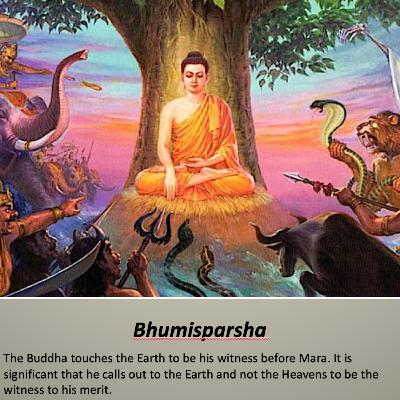
Pobsa takes this opportunity to teach a bit about Mara, sometimes inaccurately referred to as the "Buddhist devil."
If you would like to support this podcast, please subscribe, share, and rate if possible. If you would like to offer dana, you can do so via Pay Pal or Venmo @FrankJude-Boccio
In this wide-ranging conversation with Daniel Simpson we explore questions around how to make use of texts such as The Yoga-Sutra which come from a world-denying, renunciate worldview extolling dis-embodiment and celibacy in a contemporary yoga practice setting which prioritizes embodiment and tends toward body and sex positivity. What elements should be adapted, which should be fully integrated, and what should be rejected as inappropriate for our purposes? Along the way we discuss the ground-breaking work of scholars such as Georg Feurstein, and more recent scholarship from people like Mark Singleton and James Mallinson.
We touch upon the neo-liberal focus on the self that has become such a driving force in both contemporary yoga and mindfulness and use sutra 1.33 regarding the "four immeasurables" (aka 'four brahma-viharas) to distinguish the more isolationist project of Classical Yoga and the pro-social project of Buddhist Yoga. In turning toward a more general discussion on dharma, political concerns arise with examples from Brexit and illiberal so-called "progressive" authoritarianism that lead to ever increasing discord and polarization are touched upon. We end with Daniel's "origin story" filled with at least two of the classic "sex, drugs, and rock and roll."
LINKS:
Our previous discussion on Daniel's podcast: Ancient Futures
My conversation with Scott Johnson on Scott's podcast: Still Points
Daniel's conversation with Scott Johnson on Scott's podcast: Still Points
Daniel's Ancient Futures Website
My review of The Truth of Yoga at Goodreads
The Yoga Tradition by Georg Feurerstein
Roots of Yoga by James Mallinson and Mark Singleton
The Yoga Sutras of Patanjali by Swami Satchidananda
The Yoga-Sutra of Patanjali by Chip Hartranft
Swans
In his first teaching, the Buddha presented his yoga practice as a middle way between sensory deprivation and indulgence, showing that both extremes were caught in notions of the self. The Middle Way is an alternative path between the two extremes, but is one that is made step by step by each practitioner. There is no "one way" to be the Middle Way and in the ever-changing circumstances we find ourselves in life, we are always having to adjust accordingly. This requires constant attention to the changing and unique situations we find ourselves in.
Please support this podcast by subscribing, sharing, and rating where possible.
Dana (financial support) is also gratefully appreciated and accepted here.
I think you will enjoy this wide-ranging conversation with Barrie Risman as much as I did! Prompted by a Facebook post, I reached out to Barrie and she gracefully accepted my invitation to chat about some of the philosophical aspects of the Yoga Tradition(s).
Barrie is an internationally-recognized yoga teacher, public speaker, and author. Her book, Evolving Your Yoga: Ten Principles for Enlightened Practice, is a guide for yoga teachers and continuing students to deepen, expand, and integrate the benefits of yoga in their lives. I'm pretty sure, as I make my way through her book, that I will be inviting Barrie for further exploration.
Barrie’s alignment-oriented approach to postural practice is grounded in principles of healthy, functional movement. Her events weave together the technical precision of alignment-based practice with principles of yoga philosophy distilled from decades of intensive study and made accessible and relevant to practitioners from all walks of life.
She teaches yoga around the globe through her ongoing classes, workshops, mentoring programs, and trainings, both online and in person. Her work has been featured in Yoga Journal, Yoga International, and on CBC Television.
For further information about Barrie and her work: https://www.barrierisman.com/evolvingyouryoga
PLEASE consider supporting this podcast by SUBSCRIBING, COMMENTING, and REVIEWING!
While this podcast is FREE TO ACCESS & DOWNLOAD and ALWAYS WILL BE, ALL DANA is gratefully received and appreciated:
https://paypal.me/poepsafrankjude?country.x=US&locale.x=en_US
There's a major discrepancy between the contemporary definition and understanding of "mindfulness" and how it is described and understood in the Buddhist traditions. In this episode, Pobsa details the difference and why it matters. There are two places where he mis-spoke: when mentioning the ground-breaking work of Willoughby Britton, he says she discovered that only 4 out of 1800 studies on mindfulness had control groups but the number was 40. And the closing analogy correctly stated is: "mindfulness is like the hand that takes a sheaf of grain in its grip and wisdom the hand that holds the scythe that cuts it down."
The episode where Pobsa introduces sila (ethical training) is here.
The episode where Pobsa introduces principles of meditation is here.
To offer dana to Pobsa please click here.
After a discussion about gratitude, Poep Sa shares a practice from the Japanese Pure Land School of Buddhism that helps cultivate an attitude of gratitude and appreciation for the myriad ways our lives our supported by other beings, processes and things.
If you'd like to read more about this profound practice, check out the book by Greg Krech.
If you'd like to support this Podcast, consider offering dana.
When asked what he taught, the Buddha said he taught only one thing: "Suffering and the end of suffering." However, the Pali/Sanskrit word duhkha points to a reality of existence more nuanced than the word "suffering" would lead us to expect. In this short episode, I introduce this concept, and some of the various ways it's been understood as a way to make sense of the statement often made by Buddhist yogis that "life is suffering."
Please consider supporting this podcast by subscribing, sharing, and commenting. Dana is also very gratefully accepted. To learn more about this beautiful practice of sharing or gifting, check out this podcast episode.
To offer Dana, click here.
To read a more in-depth exploration of duhkha in the context of the Four Noble Truths, check out this blog essay.
In this episode of Pobsa's Dharma Lounge, I use the film After.life as a launchpad to discuss the koan-like phrase from Hsu Yun, "Who carries this corpse?" The hwadu or 'live word' distilled from this question is "Who?" It is an invitation to bring "don't know mind" and the great questioning that can lead to great awakening.
After.life is directed by Agnieszka Wojtowicz-Vosloo
Click here to see a trailer for the film.
Click on DANA if you wish to support this podcast. All offerings are greatly appreciated!
The Venerable Samu Sunim, a Korean Seon (Zen) Master who was my teacher, preceptor and who ordained me as a Poep Sa (Dharma Teacher) died this past August 6, 2022. In this episode, I offer a personal reminiscence. If you wish to learn more about Sunim and The Buddhist Society for Compassionate Wisdom, please check out their website.
If you wish to support Pobsa's Dharma Lounge, please subscribe, comment, review, and share the podcast. Another way to help support this podcast is through the practice of dana. If you'd like to learn more about the practice of dana, check out Episode 2 of this podcast.
Be forewarned, there is a ten-second delay in the beginning of the episode...
In the first satipatthana on the body (kaya-sati) the Buddha begins with mindfulness of breathing (See Episode 4 for this aspect of practice). He then goes on to discuss mindfulness of body postures and activities, before offering a contemplation on the various parts of the body. Thich Nhat Hanh created an approach to this that brings in the "Inner Smile" meditation from Chinese Qi Gong that can help heal our relationship to the body, cultivating greater appreciation and gratitude.
If you would like to support Pobsa's Dharma Lounge, please subscribe, review, comment, share and consider offering dana. Know that any amount shared will indeed be gratefully received.

In this first conversation-based episode of Pobsa's Dharma Lounge, recorded on June 2, 2022, I had the delight in reconnecting to my dharma brother, Muhan Jose Palma. We met over 20 years ago when we were both students of the Korean Son (Zen) Master, Samu Sunim. While I was on the Dharma Teacher track, Muhan was on the track to become a priest. After his ordination, he went on to train with Joan Halifax Roshi at Upaya Zen Center where he also received the new dharma name, Shinzan.
Sensei Palma is now based in San Diego where he is the guiding teacher of the Open Gate Zen Collective
Please support this podcast by subscribing, reviewing, and sharing! Also, if you would like to participate, dana is gratefully appreciated. If you offer dana and mention this specific episode: Muhan or Shinzan, half of the dana received will go to Muhan and his sangha.
If you'd like to watch this conversation, you can find the video feed at YouTube by searching for Pobsa's Dharma Lounge

It’s been argued that contemporary mainstream western Buddhism has been co-opted by neo-liberal ideology. In this episode I use the deconstruction of the description of an online course offered by a celebrity Buddhist teacher and hosted by Tricycle, the Buddhist journal as a way to expose and critique the neo-liberal assumptions that permeate so much of contemporary Buddhism and the secularlized mindfulness movement, as well as contemporary yoga and "new-age" spirituality.
As part of this critique, you may wish to watch this short clip of the Google Wisdom 2.0 event that was disrupted by protestors.
If you are enjoying Pobsa's Dharma Lounge, please support this podcast by subscribing, reviewing, and sharing. And any dana offered will be gratefully received and appreciated!

It was his engaging with the realities of aging, illness, and death that led the man who would become known as "the Buddha" to take up Dharma practice. After his awakening, he created the powerful practice of "The Five Remembrances" to help us wake up from complacency and denial in order to embrace reality and to live our life fully and intimately.
After a 17 minute introduction to the practice, I present a 16-minute guided practice of The Five Remembrances.
In the last ten days, I've learned of the death of three folks close to me or others whom I love, and just as I finished recording this episode, I saw the news that the composer Vangelis has died. I dedicate this episode to the memory of Kris Schaefer Rogers, Catherine Chai, and Jane Howard Baker and all those touched by the lives they have lived.
Please remember to subscribe, review, click like, and share! Comments, questions, and suggestions are welcome!
And if you'd like to join those in offering me dana: https://paypal.me/poepsafrankjude?country.x=US&locale.x=en_US
In this episode, Pobsa shares a story heard in both an ashram and a zen monastery with two radically different take-away meanings. If possible, you may wish to have a strawberry or two handy in order to experience the dharma of just this.
Please click the link if you would like to offer dana to support Pobsa's Dharma Lounge, know that all offerings are greatly appreciated and received with deepest gratitude.
For information and to register for MINDFULNESS OF FEELINGS: https://www.mindfulnessyoga.net/mindfulness-of-feelings-the-second-domain.html
This episode begins by reviewing the historical debate as to whether Buddhism is a religion and then goes on to describe the two overarching forms of religion: soteriological and communal. It ends by situating Zen Naturalism within relationship with Zen Buddhism and Yoga.
Please support the Podcast by subscribing, sharing, reviewing, and commenting.
Click on dana if you'd like to offer any financial support, always gratefully received!
People often come to meditation with lots of misconceptions, mostly due to the sectarian instructions given by teachers from particular traditions. In this episode, Poep Sa Frank Jude addresses some of the reasons for these misconceptions and introduces the two faculties and powers necessary for all forms of meditation: concentration and mindfulness. Halfway through the episode, he presents a guided meditation based on the anapanasati and satipatthana suttas.
If you wish to support this podcast, please leave a review, subscribe, like, and share with your friends and family! If you wish to offer dana, either on a one-time basis or on-going, know that all offerings are received with great gratitude and appreciation. Dana can be offered here or here
If you have any suggestions for future episodes, please write to me here.
Buddhist ethical training, like the Yoga path enumerated by Patanjali, involves five precepts or mindfulness trainings.
In Zen, there are three different but interpenetrating ways of approaching the precepts.
In this episode, Pobsa presents an introductory overview centered around the guiding principle of ahimsa, "non-harming" or "non-violence."
If you wish to support this podcast, please subscribe, comment, like, review, and share! Also, dana can be offered at: https://www.mindfulnessyoga.net/dana....OR https://www.paypal.com/paypalme/poeps...
If you've any suggestions or requests for future episode topics: https://www.mindfulnessyoga.net/conta...
In this short talk, Pobsa introduces the beautiful, simple, and profound practice of dana. It is the first of the paramitas or 'perfections' already embodying the highest wisdom teaching, while being accessible to anyone and everyone.
If you wish to practice this sharing, all dana will be gratefully received and appreciated here:
https://www.paypal.com/paypalme/poepsafrankjude?locale.x=en_US

In this episode, Pobsa describes what to expect from this new podcast. He talks frankly about how all teachers present their interpretation of what it is alleged that the Buddha taught and that his perspective is informed by critical thinking, skepticism, the western philosophical traditions, and science. He presents Zen Naturalism as an aspect of the growing Religious Naturalism movement. Dharma Lounge will take a broad view of what counts as 'Dharma' and do so in a relaxed, informal way. Maybe even with a drink in hand....
To support this project, dana is gratefully accepted: https://paypal.me/poepsafrankjude?country.x=US&locale.x=en_US
In this episode, I offer an introduction to the five elements taught throughout traditional Indian yoga teachings, including the basis for Ayurveda: Earth, Water, Fire, Air, and Space.These are not mere substances but principles of matter, including the bodymind. This contemplation is found as part of the First Domain of Mindfulness, The Body, taught in the "Satipatthana-Sutta".After introducing the elements, I offer a short practice. Please support this podcast by subscribing and leaving a review. If you would like to offer financial support as dana, click here.

Comments

Download from Google Play

Download from App Store
 United States