


 Claim Ownership
Newt's World
Subscribed: 5,104Played: 424,701
Subscribe


2025 iHeartMedia, Inc. © Any use of this intellectual property for text and data mining or computational analysis including as training material for artificial intelligence systems is strictly prohibited without express written consent from iHeartMedia
Description
Join former House Speaker, professor, historian, and futurist Newt Gingrich as he shares his lifetime of knowledge and access to the world’s most interesting minds in a new series that covers all aspects of our society. From history to health, national security to science, Newt offers stories, conversations, and context to uncover new perspectives, knowledge and insight. This podcast isn’t about politics; it’s about exploring the past, present, and future to understand where we’ve been and where we’re going. Welcome to Newt’s World, a podcast for independent thinkers.
935 Episodes
Reverse
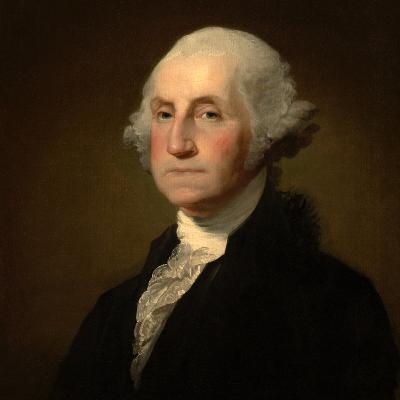
The lives of these men are essential to understanding the American form of government and our ideals of liberty. The Founding Fathers all played key roles in the securing of American independence from Great Britain and in the creation of the government of the United States of America.See omnystudio.com/listener for privacy information.
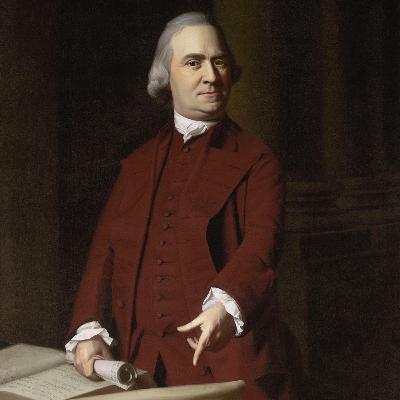
The lives of these men are essential to understanding the American form of government and our ideals of liberty. The Founding Fathers all played key roles in the securing of American independence from Great Britain and in the creation of the government of the United States of America.See omnystudio.com/listener for privacy information.
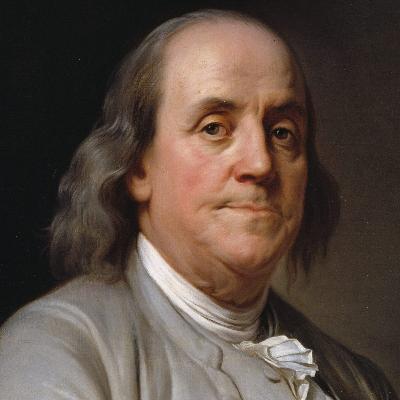
The lives of these men are essential to understanding the American form of government and our ideals of liberty. The Founding Fathers all played key roles in the securing of American independence from Great Britain and in the creation of the government of the United States of America.See omnystudio.com/listener for privacy information.
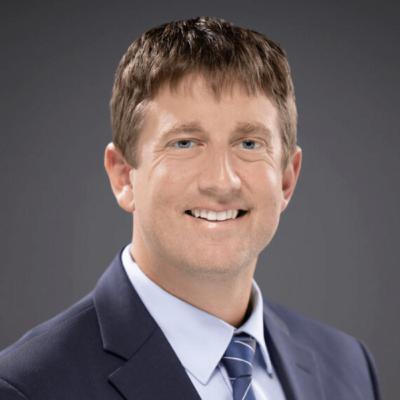
Newt talks with Brian Blase, president of Paragon Health Institute and former special assistant to the President for Economic Policy at the White House's National Economic Council. Their discussion centers on the rising cost of healthcare in the United States, a pressing issue that Blase recently addressed before the Senate Finance Committee. Blase explains the mission of the Paragon Health Institute, which he founded to fill a void in the free market community by analyzing government healthcare programs and developing policy solutions that expand choice and market competition. Their conversation highlights significant issues such as fraud and corruption in government healthcare programs, with examples of the massive fraud in Minnesota and improper enrollments in Obamacare. Blase emphasizes the need for reform in Medicare payment policies and the importance of consumer control over healthcare financing to reduce costs. They conclude their discussion with a call for transparency in healthcare pricing.See omnystudio.com/listener for privacy information.
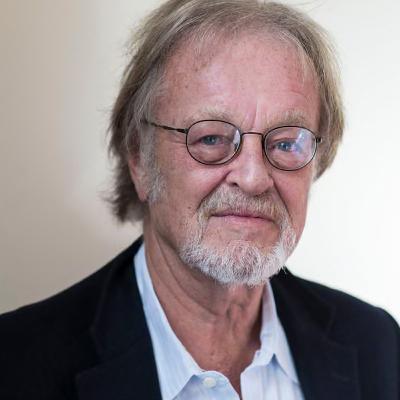
Newt talks with Bernard Cornwell about his latest book, “Sharpe’s Storm: Richard Sharpe and the Invasion of Southern France, 1813.” Cornwell shares the serendipitous start of his writing career, which began when he moved to the United States and decided to write a book due to difficulties in obtaining a work permit. His first novel, "Sharpe’s Eagle," set in 1808, marked the beginning of a series that follows the character Richard Sharpe through various historical battles. Cornwell explains his inspiration for writing about the British Army during the Napoleonic Wars, filling a gap he perceived in historical literature. He also discusses the challenges and intricacies of writing two major series, one about Sharpe and the other about The Saxon Stories, which explore the creation of England. Their conversation touches on historical figures like Wellington, whose military strategies and personal characteristics are vividly brought to life in Cornwell's novels. Cornwell also reflects on his characters, expressing a closer connection to Sharpe due to the character's long-standing presence in his work. He hints at the possibility of future Sharpe novels, though he is currently focused on writing another book in The Saxon Series.See omnystudio.com/listener for privacy information.

Newt talks with Ryan Thorpe, investigative reporter for the City Journal about his article, co-authored with Christopher Rufo, “The Largest Funder of Al-Shabaab Is the Minnesota Taxpayer.” Thorpe and Rufo report on a billion-dollar fraud scheme in Minnesota, primarily involving social service programs. The fraud was orchestrated by a nonprofit, Feeding Our Future, which falsely billed the state for feeding children during the COVID-19 pandemic, while the funds were misappropriated for luxury purchases and real estate. Additionally, the Housing Stabilization Services and autism therapy programs were exploited, with fraudulent claims and kickbacks, leading to a near billion-dollar theft. Thorpe highlights the concentration of fraud within the Somali community and the lack of media coverage and political will to address the issue. The fraud has national security implications, as some funds were allegedly funneled to Al-Shabaab through informal money transfer networks. Their discussion underscores the systemic issues in government oversight and the need for policy changes to prevent such fraud. They also discuss the political influence of the Somali community in Minnesota and the challenges faced by whistleblowers within the state government.See omnystudio.com/listener for privacy information.
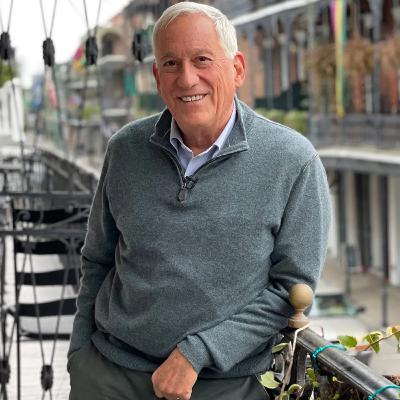
Newt talks with Walter Isaacson, bestselling author and historian, about his new book, "The Greatest Sentence Ever Written," which explores the creation and significance of one of history’s most powerful sentences: “We hold these truths to be self-evident, that all men are created equal, that they are endowed by their Creator with certain unalienable Rights, that among these are Life, Liberty and the pursuit of Happiness” from the Declaration of Independence. Isaacson emphasizes the importance of this sentence as a unifying mission statement for America, especially as the nation approaches its 250th anniversary. The book delves into the historical context and the collaborative efforts of figures like Benjamin Franklin, Thomas Jefferson, and John Adams in crafting this foundational sentence. Isaacson argues that understanding and reflecting on this sentence can help bridge current political divides and foster a renewed sense of patriotism. Their discussion also touches on the broader impact of the Declaration of Independence as a universal document advocating for individual rights and democratic governance. Isaacson's work aims to inspire dialogue and reflection on America's founding principles as the country prepares to celebrate its 250th anniversary.See omnystudio.com/listener for privacy information.
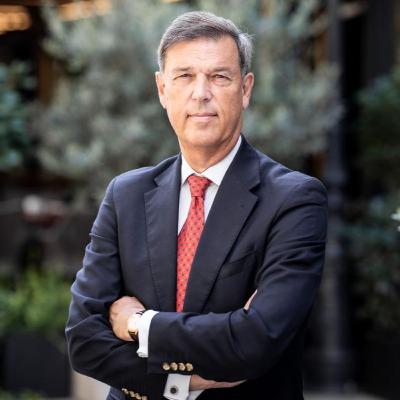
Newt talks with George Beebe, Director of Grand Strategy at Quincy Institute about the Russia-Ukraine war. They discuss the Tuesday meeting between President Putin, U.S. special envoy Steve Witkoff and Jared Kushner, focusing on a potential compromise to end the war in Ukraine. George highlights the necessity for both Ukraine and Russia to make concessions, emphasizing Ukraine's need to secure its sovereignty and rebuild, while Russia seeks assurances against perceived threats from NATO and the United States. The ongoing negotiations aim to address both nations' security concerns, with discussions on military limitations and the status of the Donbas region. The potential for nuclear escalation remains a critical concern, with George asserting that Russia views the conflict as existential, which could lead to nuclear options if pushed into a corner. They conclude their conversation by emphasizing the importance of diplomatic efforts to prevent further escalation and achieve a sustainable peace.See omnystudio.com/listener for privacy information.
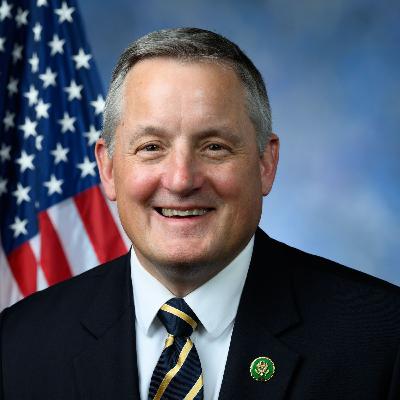
Newt talks with Congressman Bruce Westerman (AR-4th), Chairman of the Committee on Natural Resources, about the importance of the bipartisan legislation known as the SPEED Act, “Standardizing Permitting and Expediting Economic Development Act.” The SPEED Act aims to reform the National Environmental Policy Act (NEPA) to streamline permitting processes and expedite economic development. Westerman highlights the inefficiencies of the current NEPA process, which can delay projects for years, contributing to increased costs and hindering the U.S.'s ability to compete globally. Their discussion emphasizes the need for reform to facilitate infrastructure development, energy projects, and national security initiatives, while also addressing environmental concerns. The SPEED Act proposes a more streamlined permitting process, giving states a better role and reducing bureaucratic obstacles. Westerman has been working on this policy for eight years, aiming for bipartisan support to pass the legislation. Their conversation underscores the potential economic and environmental benefits of the proposed reforms, advocating for a balance between development and environmental protection.See omnystudio.com/listener for privacy information.

Newt talks with Andrew Biggs, senior fellow at the American Enterprise Institute, about the perceived retirement crisis in the United States, arguing that the U.S. retirement system is performing well compared to other developed countries. He highlights that the typical U.S. senior is among the wealthiest globally. Biggs, who has worked on Social Security reform for over 20 years, notes that while surveys indicate a widespread belief in a retirement crisis, actual retirees report financial stability, with only 4% describing their situation as a crisis. Biggs advocates for a reevaluation of Social Security, proposing a shift from focusing solely on solvency to considering structural reforms that better align with current economic realities. He warns that without reform, the Social Security Trust Fund is projected to run out by 2032, necessitating either significant tax increases or benefit cuts. He suggests that a special commission could facilitate necessary reforms, as the regular political process may be inadequate to address the issue effectively.See omnystudio.com/listener for privacy information.
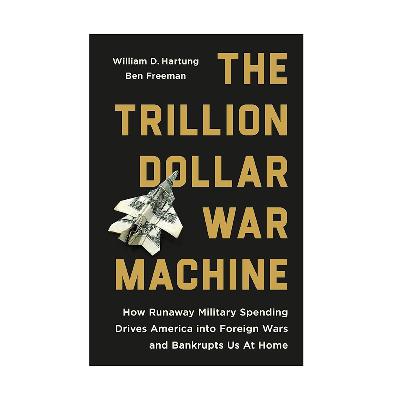
Newt talks with William Hartung and Ben Freeman about their new book, "The Trillion Dollar War Machine.” They discuss the profits of militarism, highlighting the role of traditional Pentagon contractors and high-tech firms in promoting destabilizing technologies. They also examine the influence of politicians, lobbyists, media, and think tanks in perpetuating the war machine, enriching a wealthy elite at the expense of global peace and domestic stability. Their conversation further explores the inefficiencies in the defense acquisition system, where increased spending does not equate to increased security, and they highlight the wasteful nature of current military expenditures. They also discuss the evolving nature of military technology and the challenges posed by new defense tech firms verses traditional defense contractors. They conclude with a call for a national discussion on military strategy and spending, emphasizing the need for a bipartisan effort to address these systemic issues.See omnystudio.com/listener for privacy information.
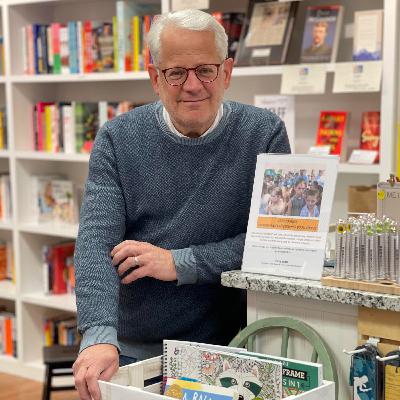
Newt talks with Steve Israel about his new novel, “The Einstein Conspiracy.” Steve is a former congressman for New York's second and third districts. He transitioned from politics to literature and entrepreneurship after retiring from Congress in 2017. He opened Theodore's Books in Oyster Bay, New York, named in tribute to Theodore Roosevelt, whose home was nearby. Israel has authored two political satires, "The Global War on Morris" and "Big Guns," and recently published "The Einstein Conspiracy," a historical mystery centered around Albert Einstein and the Nazi threat during World War II. The novel explores Einstein's pivotal role in alerting the U.S. government to the potential of an atomic bomb and the Nazi efforts to assassinate him, set against the backdrop of pro-Nazi activities in the U.S. Israel's research for the book involved balancing historical accuracy with engaging storytelling. His bookstore, Theodore's Books, actively participates in community events, such as Small Business Saturday, promoting local shopping and civil discourse. Visit Theodore’s Books at theodoresbooks.comSee omnystudio.com/listener for privacy information.
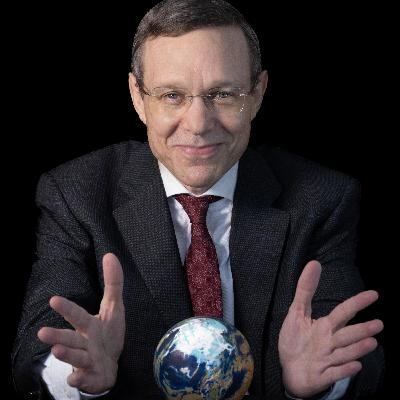
Newt talks with Professor Avi Loeb about the latest news on 3I/ATLAS, the third interstellar object discovered passing through our solar system. Loeb highlights its unusual characteristics and the possibility of it being a technological artifact rather than a natural object. He emphasizes the importance of scientific curiosity and the need for academia to embrace risk-taking and exploration beyond conventional boundaries. He advocates for a broader search for intelligent life in the universe, suggesting that the discovery of alien technology could significantly alter human priorities and investments in space exploration. Their conversation also touches on the cultural and institutional challenges within the scientific community, urging a shift towards a more open-minded and exploratory approach to science. He concludes with a reflection on the potential of science to inspire and engage the public, particularly the younger generation. Avi Loeb is the Frank B. Baird, Jr., Professor of Science at Harvard University. He serves as Director of the Institute for Theory and Computation within the Harvard-Smithsonian Center for Astrophysics and also heads the Galileo Project. His blog about 3I/ATLAS is avi-loeb.medium.comSee omnystudio.com/listener for privacy information.
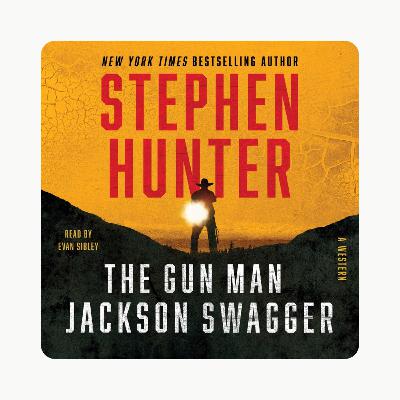
Newt talks with Stephen Hunter, a renowned author and former chief film critic for The Washington Post, about his latest book, "The Gun Man Jackson Swagger." This novel is a prequel set in the 1890s, focusing on Jack Swagger, an ancestor of the famous Bob Lee Swagger character. Hunter, who won the 2003 Pulitzer Prize for distinguished criticism, shares insights into his career, including his transformative experience at The Baltimore Sun during the 1970s, where he was part of a movement to modernize the newspaper. Their conversation explores Hunter's writing style, which is heavily influenced by his extensive background in film, resulting in novels that often read like movies. "The Gun Man Jackson Swagger" is described as a tribute to the American Western, filled with cinematic references and innovative portrayals of gunfights. Hunter also discusses the cultural significance of the gunfighter myth and his intent to restore this figure's place in American culture.See omnystudio.com/listener for privacy information.
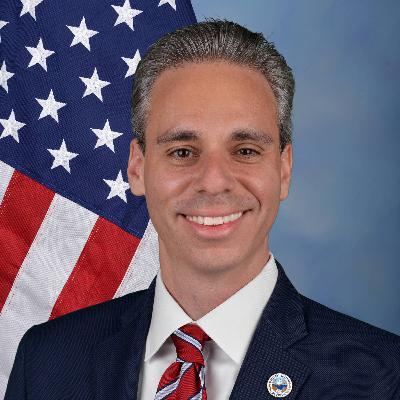
Newt talks with Mayor Scott Singer of Boca Raton, Florida. Boca Raton has a strong business presence, with a focus on attracting businesses from high-tax states like New York, leveraging its low property tax rate and business-friendly environment. Mayor Singer’s leadership style focuses on nonpartisan collaboration, pushing bold ideas, and maintaining a cordial city council environment. Key issues in Boca Raton include development, infrastructure, and affordability. The city is working on introducing affordable housing to ensure accessibility for middle-class families and young professionals. Mayor Singer also chairs the America First Policy Institute's Mayor's Council, aiming to implement common-sense solutions at the local level. The Mayor's Council supports the America First agenda and emphasizes collaboration between federal, state, and local governments to address issues like keeping cities safe and affordable.See omnystudio.com/listener for privacy information.
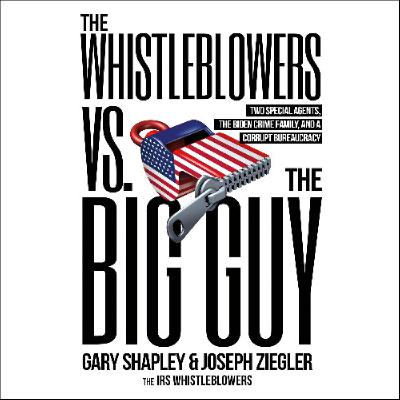
Newt talks with IRS special agents Gary Shapley and Joseph Ziegler about their new book, “The Whistleblowers vs. The Big Guy: Two Special Agents, the Biden Crime Family, and a Corrupt Bureaucracy.” They describe the testimony they gave before Congress about political interference and obstruction in the Hunter Biden criminal case, revealing how the IRS, FBI, and DOJ failed to act independently. Despite overwhelming evidence, they faced retaliation and isolation for exposing corruption. Their investigation led to Hunter Biden's federal conviction, but President Joe Biden later pardoned his son and issued blanket pardons to other family members. Shapley and Ziegler's experiences are detailed in their new book, profits of which will support future whistleblowers. They emphasize the importance of treating all taxpayers equally and ensuring no preferential treatment in investigations. Their actions highlight the potential for citizens to influence government and address corruption, embodying the American tradition of truth and justice.See omnystudio.com/listener for privacy information.
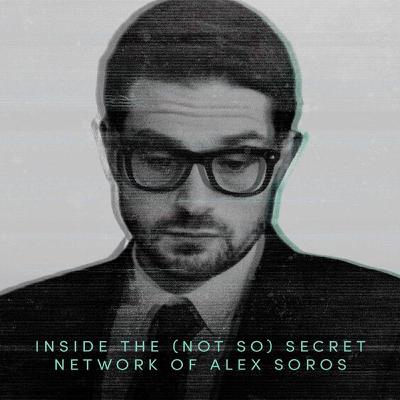
Newt talks with Matt Palumbo about his new book, “The Heir: Inside the (Not So) Secret Network of Alex Soros.” Their discussion centers around the transition of the Soros empire from George Soros to his son, Alex Soros, who is perceived as more radical than his father. Alex Soros officially took over in June 2023, continuing the legacy of contributing billions to left-wing causes. The influence of Soros funding has impacted left-wing movements across the U.S. The Soros network's penetration into political systems is discussed, with significant figures in the Biden administration having ties to Soros-funded organizations. The strategy of electing district attorneys with Soros funding is described as a deliberate move to influence law enforcement and criminal justice policies. They also discuss Alex Soros' involvement in Ukraine, where his influence is seen as potentially shaping post-war social policies.See omnystudio.com/listener for privacy information.

Newt talks with Michael Pack about his PBS documentary, "The Last 600 Meters," which focuses on the two deadliest battles of the Iraq War in 2004: the Battle of Najaf and the Battle of Fallujah. The film presents these battles through the perspectives of those who fought, without political commentary. It highlights the experiences of Marines and soldiers, emphasizing their courage and the challenges of urban warfare. The documentary aims to honor the heroism of veterans, particularly in light of Veterans Day and the Marine Corps' 250th anniversary. Despite initial resistance from PBS due to perceived pro-military content, the film is now recognized for its authentic portrayal of ground combat. Their conversation also touches on the broader implications of storytelling in documentaries and the importance of preserving veterans' stories for future generations. “The Last 600 Meters: The Battles of Najaf and Fallujah,” premieres on PBS on Monday, November 10th at 10pm/9c.See omnystudio.com/listener for privacy information.

Newt talks with Brenda Hafera about the Heritage Foundation's new initiative, the Heritage Guide to Historic Sites, launched ahead of the United States' 250th anniversary. The guide, available at historicsites.heritage.org is an interactive online map designed to help tourists, especially families and educators, rediscover America’s Heritage by exploring significant historic sites across the original 13 colonies, with plans to expand nationwide by 2026. The guide provides detailed information about each site, including historical significance, book recommendations, and considerations for family visits. It also evaluates sites for historical accuracy and ideological bias, addressing concerns about the portrayal of American history. Hafera discusses the challenges of preserving historical accuracy amidst efforts to revise history through a modern ideological lens. The guide aims to foster a deeper understanding of American history and values, encouraging families to plan educational trips that celebrate the nation's heritage.See omnystudio.com/listener for privacy information.
Newt talks with Robert Enlow, president and CEO of EdChoice about the 2025 edition of EdChoice's Schooling in America Survey. The survey examines trends in public opinion on K-12 education, parent experiences and school choice. This year, the survey reveals significant dissatisfaction with K-12 education in the United States, with over two-thirds of Americans believing it is on the wrong track. Now in its 13th year, the survey highlights concerns about school safety, bullying, and the effective use of educational funding. Despite these issues, there has been a notable increase in school choice options, with 19 states now offering universal choice programs. This shift is attributed to a growing demand for educational reform and parental choice, driven by dissatisfaction with traditional public schools. The report suggests that increased awareness and understanding of educational choice options, such as vouchers and education savings accounts, significantly boost public support for these initiatives. The findings indicate a potential renaissance in educational approaches, emphasizing customization and innovation, such as micro schools and competency-based learning, to better meet diverse student needs.See omnystudio.com/listener for privacy information.


Download from Google Play

Download from App Store
 United States
like in the movie Crimson Tide
dstzs a zss s sz, 7 dddzzssxssssssszszszzssszssssssz
That same unjust law hindering free speech still exists today. Only now it prevents the free discussion of the Bible and creation in the same class rooms. I wonder if Clarence Darrow would once again defend free speech and argue against this current injustice?
newt you missed it yellin is an incompetent who only has her job because she's a woman. her meetings with IRS over policy routinely deteriorate into a need to change irs printers because of climate change & other nonsense. a comatose person could do her job better than her.
Superb and very inspiring. The world should learn from Bibi, west and Americans are hypocrites at best. Thanks to the almighty, we are having multi polar World now.
He and his family should go into Mexico and cross the river illegally. Things will be great! 🙄
newt you got to work on your economic guests. These are not normal times.
All U.S. citizens should listen to this podcast.
Great Interview Thanks Newet
excellent
Fantastic analysis. Thank you Newt!
I always thought that Napalm was a product of the Vietnam war. I had seen photos of WWII but never made the connection. As for being developed in a Harvard Chemistry room that blew me away.
I mean no disrespect newt but if you can't read the tea leaves we are NOT happy. noted by the upcoming historical loss thats about to occur and the fact that YOU AND EVERY SINGLE REPUBLICAN IN GOV'T HAVE SAT BACK AND STOID BY AND DONE NITHING BUT EMBOLDEN AND EMPOWER THIS NARCISSIST IS MORALLY DISGRACEFUL AND YOU SHOULD BE ASHAMED ... COWARD!.
Quote by Newt Gingrich a couple of days ago: "The liberal Democrat Governor of Michigan just got knocked down by her Supreme Court, who said she didn't have the power to do all the things she's doing. Everywhere you turn around the country, liberal democrats believe they in government can dictate your life, and I think what President Trump said absolutely draws the line in the sand: ' If this is the land of the free and the home of the brave, you've got to get out of the basement. But if it's the land of the timid and the home of the fearful, then hiding in the basement is perfectly reasonable.' This is a really big choice election."
Newton, love your content, but your audio equipment sucks! Can't make out what you are saying. Sad that this cheap fix wasn't implemented. I give up..
Insightful
Gary Sinise is a class act.
Short episode....
One of Newt's best episodes yet.
EMP is definitely a subject that doesn't get talked about enough.