


 Claim Ownership
Straight Talk for Business
Subscribed: 0Played: 0
Subscribe

© 2025
Description
A periodic podcast for businesses who want the straight goods on what makes businesses work.
12 Episodes
Reverse
Dr. Richard Claydon, Chief Cognitive Office with EQ Labs speaks to the challenges businesses face in dealing with complexity. Complexity affects businesses of every size - small, medium, large and multi-nationals. Surprisingly many of the issues are similar, regardless of business size. Complexity is a key contributor to the challenges businesses face in resolving the problems of yesterday that continue to impact the business effectiveness of today. Expertise is available to you. contact us at: InfoDesk@uvidi.ca
Dave Snowden is the Founder and Director of Cognitive Edge. He is the innovative thinker and creator of the Cynefin Framework. The sense-making framework has been more than two decades in the making. It is more needed now than ever. In this short discussion, we talk about its relevance in the world for strategy execution. The four domains of Cynefin provide the needed context for sense-making. Enjoy the discussion - we welcome questions and feedback. Email us at: Dragica@uvidi.ca
George Elerick is a Behavioral Economist. In this episode, he sheds light on how management behaviours impact the economics of business when the execution of key strategies fails. Fascinating observations on how the mindset impacts behaviours, economics and performance results of companies. We welcome your thoughts, questions and comments at Dragica@uvidi.ca
Too often strategy is disconnected from the organization's capabilities. How can this be? The traditional approach to strategy is not working to address current business uncertainty and turbulence. Executives must create a future-fit culture where sense-making, decision-making and action-taking are tightly aligned and integrated. With prevailing shortages in the talent pool, new approaches are needed. Executives are becoming aware that they must take more time to make considered, data-informed decisions. This requires them to take the time necessary to understand new technology, the environment and the economics of their impact. As change accelerates, planning cycles are shortened - making the traditional 'ways' obsolete. Failing to adapt to new methods will leave them stuck in the past and fall short of effectively executing a 'strategy' that will produce the outcomes they need. This podcast explores the options available to make sense of strategy in the body of the organization, not only at the executive level. For more information contact: Dragica@uvidi.ca https://www.uvidi.ca Phone: +1.416.449.7475

Good day, Business turbulence during 2020 - 2022 has caused many companies to revisit their priorities, expectations and how they achieve results. Resilience has drawn much attention as a means to get past COVID-19. Today we talk about another major contributor to the businesses' ability to get past difficult situations and create value for consumers, for their employees and stakeholders. Dragica and Rebecca talk about the 'Adaptability Factor' - Join us and better understand how adaptability adds value in ways that 'Continuous Improvement' could not. To learn more about Rebecca Sutherns Uvidi Management Group partners and colleagues work with organizations to create value in innovative ways and to support them in navigating the hellfire of business. Uvidi develops programs that help medium and large organizations to build the 'know-how' muscles that power new capabilities.
Recent news stories about 'resignations' and the 'quiet quitting' is cause for pause. Is this really all new? What can be at the root of all this activity? I have some thoughts and views I share with in this podcast. I welcome your thoughts and feedback. You can reach me directly at: Dragica@uvidi.ca or check our website www.uvidi.ca
If there was ever an author who has her finger on the pulse it is B.J. Gallagher. Over more than 40 years B.J. has inspired thousands through her books and speaking engagements. She writes books that educate and empower (as well as entertain) a broad population of the general public. Her message is powerful, positive and most of all, practical. Her international best seller, A Peacock in the Land of Penguins inspired me to have the conversation with her about all we can be. As a former manager of training and development she understands what it takes to develop to a whole new level of 'being'. I hope you enjoy the conversation.

Meet Tony Gareri – He's an entrepreneur leading a family business founded more than 35 years ago – Roma Moulding has become one of the world's leading producers of luxury picture frame moulding companies. Tony is on a journey of self-discovery and transformation. With his practicality, faith, and unwavering belief in limitless possibilities, he empowers others to conquer challenges and unlock their extraordinary potential. Through his presentations and conversations, Tony leaves a lasting mark, inspiring others to break through barriers and create extraordinary lives. He's a visionary leader, who uses the stage to share insights and inspire others to spearhead thriving businesses. Get ready for a life-changing experience as we talk with Tony.
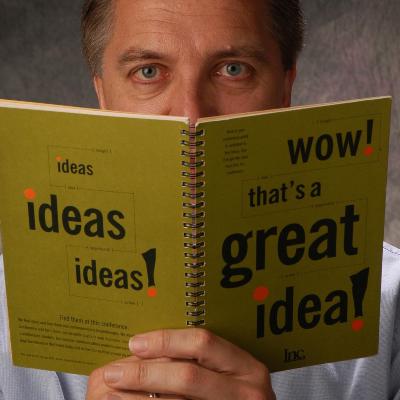
Innovation isn't just about technology, it's about solving real problems in ways that create lasting value. Yet, too many organizations confuse minor improvements with true innovation, missing the deeper mindset shift required to break new ground. Real innovation demands more than just great ideas; it requires adaptability, structured problem-solving, and a willingness to challenge the status quo. Global innovation expert Ed Bernacki has spent his career helping organizations move beyond innovation theater into meaningful action. He shares how companies can stop treating innovation as a one-off initiative and start embedding it into their culture. His Innovation Journal is a tool designed to help people turn insights into action, and it illustrates a simple but powerful truth: innovation isn't about chasing the next big thing; it's about making the right things happen. In this conversation, Ed breaks down the difference between innovation and mere improvement, the role of risk, and the practical steps leaders can take to create environments where ideas flourish. Whether you're in a Fortune 500 boardroom or running a small business, this episode will challenge you to think differently about what innovation really means.

Elite performance coach and author Gareth Morgan joins Dragica to unpack his latest book The Winning Motivation: Turning Pressure into Progress and the mind-set leaders need to thrive in a hyper-volatile world. In this episode, we discuss the key takeaways from his book. Impact Substitute: Why the most valuable players often start on the bench - and how watching, spotting gaps, then stepping in with purpose creates game-changing influence. Observation = Advantage: Leaders who ask more questions than they answer unlock hidden talent, engagement and innovation. The Great Paradox of Change: The real "pain point" isn't a problem itself; it's the inner resistance to changing what created it. Seven Emotional Stages of Change: Dissatisfaction → Indecision → Inadequacy → Surrender (the valley) → Sifting → Stretching → Steadying. Each tough emotion is a signpost to the next positive action. Arrow of Values: Two strategic values form the arrowhead (Gareth's are Clarity & Innovation); supporting values are the fletchings that keep your flight true. Use them as lenses when you feel lost. Surrender & Sifting: Letting go of outdated identities and relationships to make room for the future that's trying to emerge. Stretch & Capacity: "Nine out of ten can'ts are really won'ts." Create margin—time, energy, money—so unexpected opportunities can land. Steadying for the Long Game: Define success as "bringing my best each day to what matters most" and stick with the process when fog rolls in. Quick hits Ask "What do I want?"—but first list what you don't want to surface true motivation. Anchor decision-making to the question: In 500 years, how will the world be thankful that I was alive? Growth without character becomes a curse; build people before profits. About Gareth Morgan Based in Greenwich, London, Gareth has spent 20+ years smashing performance ceilings in pro football, finance, healthcare and faith sectors. He publishes weekly insights on YouTube and is now drafting his third book—a manifesto for grassroots change leaders. Links & Resources The Winning Motivation: Turning Pressure Into Progress (available on Amazon) Gareth on YouTube: http://www.youtube.com/@GarethMorganTV We are all motivated differently, especially when it comes to being successful in business. Discover what gaps you must close in your business to succeed. Run this quick diagnostic for your business to get a 'directional' sense of how to put your business on a path to success. 5 Minute Diagnostic. You'll get the results within 24 hours to take action on.

Straight Talk for Business frequently speaks with entrepreneurs who have evolved their business to new levels. This conversation is no different. Jeff Leitman is the Montréal-born entrepreneur who co-founded Killer Concepts Inc. in 2011 and still serves as its President & CEO from Irvine, California. Before jumping into start-ups, he spent a decade on the big-box retail side as a category buyer, experience he credits with giving him the sourcing, merchandising, and P&L chops that drive the business today. Killer Concepts began with impulse-priced mobile accessories and has since grown into a multi-brand consumer goods house with multiple brands, such as Piggy®, Rocksteady Audio, and now Hell's Kitchen™ cookware. Jeff's is an interesting story . . . the "simple suction cup phone stand shaped like a pig" turned into a runaway hit after Walmart put it at every checkout. More than 20 million units sold in four years, proving that a 50-cent item can bankroll a portfolio strategy if the volumes are there. Through sister company Rocksteady Corp., Killer Concepts released the Rocksteady Stadium 2.0 line in 2025: hifi drivers, 30-hour battery, daisychain to "unlimited" speakers, and an addon portable subwoofer that fills out 150 ft² backyard parties without WiFi or an app. Leitman's newest play is Hell's Kitchen PFAS-Free Hybrid Cookware. It is stainless tri-clad pans with a ceramic non-stick surface that avoids "forever chemicals." The line launched in early 2025 and quickly expanded to knives and pizza ovens, riding consumer and regulatory pressure to clean up non-stick coatings. What makes Jeff interesting Jeff is customer service CEO: He still answers emails and calls customers himself, using feedback loops to tweak products and policy in real time. Bootstrapped resilience: He scaled production to multi-million unit runs, survived pandemic supply chain shocks, and kept ownership rather than take VC money. Cross-industry agility: From $3 checkout trinkets to $400 speaker bundles and premium cookware, the Killer Concepts playbook is to spot a mass market gap, design fast, outsource manufacturing, and leverage retail relationships built during his buyer days. Bottom line Jeff Leitman runs Killer Concepts like a 'consumer goods laboratory': quick to prototype, obsessive about retail presentation, and willing to pivot from piggy-shaped phone stands to PFAS-free pans whenever he senses the next wave of impulse buys. Jeff Leitman JLeitman@killerc.com 714.443.1111 If you want to better understand how — and whether—your capabilities line up with your ambitions, check out this quick diagnostic. The results may surprise you. https://bit.ly/5mindiagnostic

In this episode, I'm joined by Guido Palazzo, co-author of The Dark Pattern, to explore how corporate scandals emerge, not from isolated "bad apples" but from deeper system design flaws. Guido's research unpacks the repeatable patterns that underlie cases like Volkswagen's emissions scandal or Wells Fargo's sales fraud, showing how culture and incentives interact in ways leaders often fail to see until it's too late. We begin with the anatomy of a Dark Pattern. Guido highlights three foundational building blocks: rigid ideology, which narrows the range of acceptable thinking; perceived unfairness, which fuels resentment and rationalization; and the slippery slope, where small compromises accumulate until misconduct becomes normalized. These aren't abstract theories; they are recurring structures that shape decision-making inside organizations across industries and geographies. From there, we move to prevention. Guido contrasts dark patterns with what he calls the "bright pattern" - - structures that reinforce transparency, fairness, and accountability. He shares three non-negotiables leaders should embed in their management systems to keep organizations aligned: create a speak up culture, be open to having moral conversations (no, they are not a sign of weakness), and create integrity goals. We then look at governance across regions. Guido draws lessons from Europe, North America, and Asia, identifying practices that boards would do well to adopt. He emphasizes that while cultural contexts differ, boards need to be prepared to ask more and better questions. Even a brief language audit can help a leadership team spot red flags before they escalate into scandal. Finally, Guido leaves listeners with practical takeaways. You're invited to take three to five quick tests in the coming week to identify whether your own systems are drifting toward a dark pattern. His advice is clear: Leaders don't need more rules; they need sharper habits of noticing and interrupting the signals already in front of them. https://guidopalazzo.com/ If you've wondered how you can identify some of the patterns operating in your business, take this quick diagnostic and get a directional sense of where you're at. https://bit.ly/5mindiagnostic
Comments

Download from Google Play

Download from App Store
 United States