DiscoverThat's What I Call Marketing
That's What I Call Marketing
Claim Ownership

That's What I Call Marketing

Author: Conor Byrne

Subscribed: 15Played: 714
Share

Description

That’s What I Call Marketing is the podcast for marketers who care about brand, B2B, creativity, effectiveness and the future of the profession.


Hosted by Conor Byrne, the show features real conversations with CMOs, marketing leaders, agency leaders, authors, thinkers and practitioners about what good marketing looks like in practice.


Across the episodes, we explore the ideas, decisions and tensions shaping modern marketing: how brands are built, how B2B marketing is changing, how creativity drives effectiveness, how AI is reshaping the profession, and how marketers can earn a stronger role in the business.


The show is for marketers who want more than tactics. It is for people who care about the craft, the evidence, the commercial impact and the human judgement behind great marketing.


If you want marketing conversations with substance, practical insight and a point of view, That’s What I Call Marketing is for you.


Hosted on Acast. See acast.com/privacy for more information.

226 Episodes
Reverse
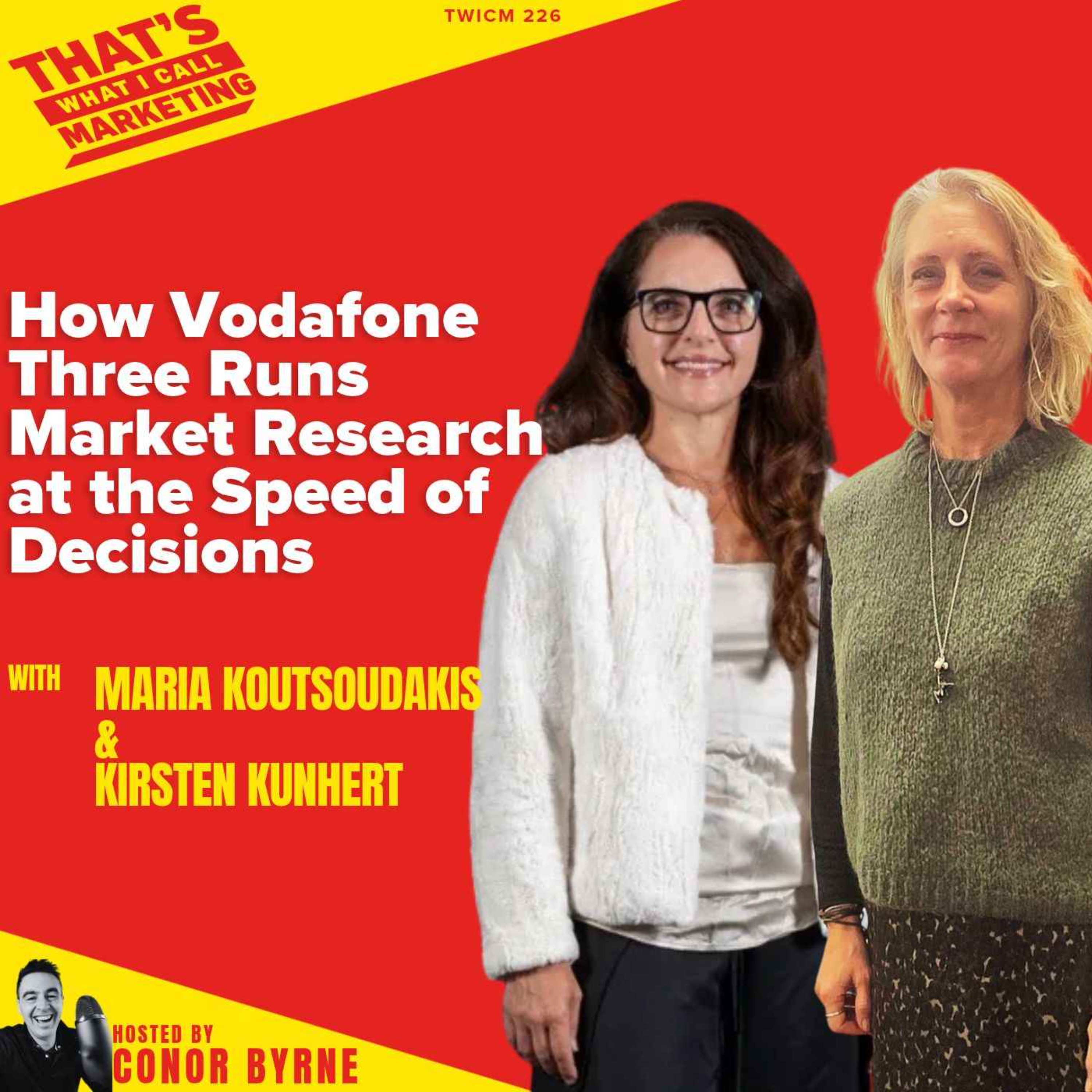
In this episode of That’s What I Call Marketing, Conor Byrne is joined by Maria Koutsoudakis, Chief Brand Officer at Vodafone Three, and Kirsten Kunhert, Head of Insights, to explore how brand and insights teams work together in a UK telecoms category that most people rarely think about until it’s time to switch.When Maria’s team needed to test a name quickly, Kirsten’s team came back within a couple of hours with the pros and cons. That gave Maria’s team evidence they could weigh while the decision was still open. It’s a practical example of how Vodafone Three uses Electric Twin to bring the customer’s perspective into more decisions.The conversation also goes inside the merger. How do you give Vodafone and Three distinct roles when they used to compete for the same customers? And what happens when the research shows that Three has more appeal with younger consumers than the team expected?In this episode, we coverHow Vodafone Three used customer segmentation to give each brand in its portfolio a distinct role.What the team learnt about Three’s appeal to younger customers and how that fed into Let Fun In.How Vodafone Three uses synthetic audiences grounded in its own UK market research to explore ideas and test creative.What the team learnt from testing Christmas advertising and British humour, and how research can help you decide when to keep a campaign running.Where faster research helps, when to validate with real customers, and why the insights team keeps responsibility for interpreting the results.Chapters03:45 – Meet Maria Koutsoudakis and Kirsten Kunhert06:48 – Giving each brand a role after the merger10:19 – Using customer insight to shape the portfolio15:56 – What Three’s youth appeal taught the team20:34 – Building relevance in UK telecoms25:37 – Why Vodafone Three brought in Electric Twin28:11 – Testing a name in a matter of hours31:10 – Testing more ideas earlier36:14 – When to keep a campaign running37:17 – How synthetic audiences differ from a general-purpose chatbot40:53 – When to validate with real customers41:18 – Who should have access to the research tools?44:07 – Where human judgement matters Episode partnerThis episode is in partnership with Electric Twin, which builds synthetic audiences that marketers can use to test ideas, messaging and creative. Explore Electric TwinAbout the showThat’s What I Call Marketing is the podcast for marketers who care about brand, B2B, creativity, effectiveness and the future of the profession. Follow the show for more conversations with CMOs, marketing leaders, agency leaders, professors, authors, thinkers and practitioners. Find more episodesThat’s What I Call Marketing is where marketers come for real conversations about brand, B2B, creativity, effectiveness and the future of the profession.Hosted by Conor Byrne, the show features conversations with CMOs, marketing leaders, agency leaders, authors, thinkers and practitioners about what good marketing looks like in practice.Listen, follow and find more episodes at: https://www.thatswhaticallmarketing.comConnect with Conor on LinkedIn: https://www.linkedin.com/in/conorbyrneirl/If you enjoy the show, please follow, subscribe and leave a review. It helps more marketers find the conversations. Hosted on Acast. See acast.com/privacy for more information.
Kirsty Sharman, founder and CEO of Referral Factory, joins That’s What I Call Marketing to discuss referral marketing, customer acquisition and why your existing customers deserve more attention in your growth plans.You’ll understand how to build a measurable referral programme, assess whether your business is ready for one and compare the cost of referral rewards with what you actually spend acquiring a paying customer.Most marketers recognise the value of word of mouth, but how many treat it as a channel they can actively develop? Kirsty explains the difference between hoping customers recommend you and giving them a reason, a reminder and a simple way to do it.In this episode, we cover:– How referral marketing turns word of mouth into a structured, trackable acquisition channel.– Why an established customer base matters, and when it’s too early to launch a referral programme.– How B2B and B2C programmes differ, from reward values to who receives the incentive.– Why cost per lead can disguise your true acquisition cost, and how to use that calculation to set referral rewards.– How to promote your programme consistently, connect referrals to sales and design qualification criteria that discourage fraud.– Why rewarding both the customer making the recommendation and the person they refer can make sharing easier.A useful listen for marketers interested in customer acquisition, B2B marketing, customer advocacy, demand generation and marketing effectiveness.That’s What I Call Marketing is the podcast for marketers who care about brand, B2B, creativity, effectiveness and the future of the profession.Follow the show for more conversations with CMOs, marketing leaders, agency leaders, professors, authors, thinkers and practitioners.Find more episodes at: thatswhaticallmarketing.comTIMESTAMPS00:00 Why your existing customers deserve more attention03:32 From agencies and influencer marketing to referrals09:21 What is referral marketing?11:34 Why marketers overlook referrals14:00 The problem with chasing quick wins16:59 When is your business ready for a referral programme?21:11 How B2B and B2C referral programmes differ23:48 Setting rewards against your real acquisition cost25:44 When and how often should you ask for referrals?28:18 Getting started: technology, resources and timelines30:22 Where referral programmes work well34:13 Designing qualification criteria to discourage fraud36:18 Why both sides should benefit from a referral38:24 Further resourcesEPISODE PARTNERThis episode is produced in partnership with Referral Factory, a software platform that helps businesses build and run referral programmes, track referred leads through to a sale and automate rewards.Explore Referral Factory.CONNECT WITH KIRSTYFollow Kirsty Sharman on LinkedIn.Subscribe to her weekly newsletter, Referral Programs at Scale.RESOURCES AND CASE STUDIESReferral Factory’s referral marketing resourcesBrowse the referral programme case studiesiKhokha: building a customer referral programme in B2B fintechCBD College: building an automated referral programme in educationThat’s What I Call Marketing is where marketers come for real conversations about brand, B2B, creativity, effectiveness and the future of the profession.Hosted by Conor Byrne, the show features conversations with CMOs, marketing leaders, agency leaders, authors, thinkers and practitioners about what good marketing looks like in practice.Listen, follow and find more episodes at: https://www.thatswhaticallmarketing.comConnect with Conor on LinkedIn: https://www.linkedin.com/in/conorbyrneirl/If you enjoy the show, please follow, subscribe and leave a review. It helps more marketers find the conversations. Hosted on Acast. See acast.com/privacy for more information.
Tesco joins Deliveroo, Subway puts its strangest orders on billboards and a sponsor gets booed at Lionel Messi’s farewell. On the November edition of The Singles, Bella Harrison and Ed Parkin from Tracksuit join Conor Byrne on That’s What I Call Marketing to look back at October’s marketing stories and ask what each brand was trying to change.How do you tell whether a brand partnership makes sense? We use Tracksuit’s brand tracking data to look at what each partner brings, where customers already see a reason to choose them and what you’d want to measure after the campaign.In this episode, we cover– Tesco x Deliveroo. How Pablo London made a grocery delivery announcement worth watching, what Tesco gains from a bigger digital shelf and why trust matters to Deliveroo as it competes with Just Eat and Uber Eats.– Just Eat’s new brand platform. Why change a familiar campaign when you lead on preference? We look at the move away from celebrity-led ads and the decision to keep the familiar sonic cue.– Subway’s “Get Your Own Way”. How requests for more sweetcorn became outdoor ads, and why a brand with 80% awareness and 22% claimed usage is giving people a reason to order again.– Yorkshire Tea x Tony’s Chocolonely. Why a cup of tea and a bar of chocolate make sense together, and what each brand stands to gain from the “Are You a Melt?” collaboration during National Chocolate Week.– “What the Actual?” Why Sancor Seguros opening Lionel Messi’s farewell drone show with its own logo drew boos, and what the reaction to Martha Stewart’s Halloween costume raises for brands working with celebrities.– How to track brand visibility in AI answers. What marketers can learn by comparing how often they appear in ChatGPT and Claude with changes in brand familiarity and consideration.A useful listen for marketers interested in brand partnerships, creative strategy, sports sponsorship, marketing effectiveness and measuring brand visibility in AI search.That’s What I Call Marketing is the podcast for marketers who care about brand, B2B, creativity, effectiveness and the future of the profession.Follow the show for more conversations with CMOs, marketing leaders, agency leaders, professors, authors, thinkers and practitioners.Find more episodes at https://www.thatswhaticallmarketing.comCHAPTERS00:00 The Singles with Conor, Bella and Ed00:54 Tesco x Deliveroo and what drives delivery app preference07:07 Why Just Eat changed its brand platform10:36 Subway’s “Get Your Own Way” campaign14:13 Yorkshire Tea x Tony’s Chocolonely19:56 What the Actual? Messi’s farewell and celebrity Halloween backlash22:54 Tracking brand visibility in ChatGPT and ClaudeTHE SINGLES — IN PARTNERSHIP WITH TRACKSUITThe Singles is our monthly look at the marketing stories that got us talking, using Tracksuit’s brand tracking data to see what’s going on behind the headlines. Thanks to Tracksuit for supporting the series and to Hawksmoor for hosting us in person.Explore Tracksuit’s always-on, affordable brand tracking at https://www.gotracksuit.comThat’s What I Call Marketing is where marketers come for real conversations about brand, B2B, creativity, effectiveness and the future of the profession.Hosted by Conor Byrne, the show features conversations with CMOs, marketing leaders, agency leaders, authors, thinkers and practitioners about what good marketing looks like in practice.Listen, follow and find more episodes at: https://www.thatswhaticallmarketing.comConnect with Conor on LinkedIn: https://www.linkedin.com/in/conorbyrneirl/If you enjoy the show, please follow, subscribe and leave a review. It helps more marketers find the conversations. Hosted on Acast. See acast.com/privacy for more information.
Brent Smart, former CMO of Telstra and IAG, joins That’s What I Call Marketing to discuss how creative conviction builds brands, changes businesses and makes marketing more effective.From rebuilding NRMA Insurance around its heritage of help to changing how Australians felt about Telstra, Brent explains how to get a business behind bold creative work, protect brand investment under pressure and give it time to deliver commercial results.In this episode, we cover:– Why influencing people and protecting ideas are essential skills for a CMO.– How Brent brought NRMA’s “help” positioning back to life and why employee pride matters for customer experience.– How to balance current demand with future demand without sacrificing long-term growth for this quarter’s targets.– How Telstra challenged corporate advertising conventions with 26 short, stop-motion films during the Olympics.– Why craft is a strategic choice and how it can signal a premium brand.– How holdout tests and switching activity off can help reveal what your marketing is contributing.A useful listen for marketers interested in brand building, creativity, marketing effectiveness, CMO leadership, agency relationships and commercial impact.That’s What I Call Marketing is the podcast for marketers who care about brand, B2B, creativity, effectiveness and the future of the profession.Follow the show for more conversations with CMOs, marketing leaders, agency leaders, professors, authors, thinkers and practitioners.Find more episodes at: https://www.thatswhaticallmarketing.comTimestamps03:13 Missing law school by one mark05:41 What agencies teach future CMOs10:05 Protecting creative ideas inside a corporation16:08 Marketing science: Australia, the UK and America18:37 Moving from agency CEO to insurance CMO23:12 Why low-involvement categories need creativity25:35 Rebuilding NRMA around help and heritage30:09 Balancing current demand and future demand35:58 Making the commercial case for brand investment39:55 Telstra’s reputation challenge and customer research43:18 The Olympic campaign: 26 films, one better network46:27 Why craft is a strategic choice48:06 Holdout tests and learning by switching things off50:43 What Brent wants to do nextFurther readingExplore the Telstra Playbook from Future Demand:https://community.futuredemand.com/playbooks/the-telstra-playbookBrent also discusses Future Demand by James Hurman and its practical distinction between converting today’s buyers and building demand among the people who will buy in the future.Episode partner: TracksuitThis episode is brought to you in partnership with Tracksuit, the always-on brand tracking platform. Tracksuit helps marketers understand brand performance over time and bring evidence into conversations about brand investment with business leaders.Find out more: https://www.gotracksuit.comThat’s What I Call Marketing is where marketers come for real conversations about brand, B2B, creativity, effectiveness and the future of the profession.Hosted by Conor Byrne, the show features conversations with CMOs, marketing leaders, agency leaders, authors, thinkers and practitioners about what good marketing looks like in practice.Listen, follow and find more episodes at: https://www.thatswhaticallmarketing.comConnect with Conor on LinkedIn: https://www.linkedin.com/in/conorbyrneirl/If you enjoy the show, please follow, subscribe and leave a review. It helps more marketers find the conversations. Hosted on Acast. See acast.com/privacy for more information.
Georgina Leigh-Pemberton, Managing Director of Turner Duckworth London, joins That’s What I Call Marketing to discuss how design builds unmistakable brands, why restraint matters and how to make the business case for a redesign. You’ll understand how to identify the assets worth protecting, bring stakeholders with you and give a brand room to evolve while keeping what makes it recognisable. From Jim Beam’s porch to McDonald’s golden identity and Maker’s Mark’s red wax, Georgina explains how a brand’s history can provide the foundations for its future. We also explore what newer brands can learn from that approach, even when they have no archive to dig through.In this episode, we cover:– How distinctive brand assets support recognition, attribution and marketing effectiveness.– Why successful redesigns need stakeholder consensus and a clear commercial case.– The confidence it takes for established brands to resist chasing design trends.– How global brand guidelines can protect consistency while giving local teams creative freedom.– Why research means listening to consumers, then applying judgement to what you hear.– Where AI can help the design process and why learning the craft still matters.A vital listen for marketers interested in brand strategy, visual identity, distinctive brand assets, agency relationships and marketing effectiveness.That’s What I Call Marketing is the podcast for marketers who care about brand, B2B, creativity, effectiveness and the future of the profession.Follow the show for more conversations with CMOs, marketing leaders, agency leaders, professors, authors, thinkers and practitioners.Find more episodes at: https://www.thatswhaticallmarketing.comPARTNER: TRACKSUITThis episode is supported by Tracksuit, the always-on brand tracking platform. Understand how your brand is performing, follow changes in awareness and consideration, and see how you compare with competitors.Find out more: https://www.gotracksuit.comCHAPTERS03:34 From medieval history to advertising and design06:27 Jim Beam: finding a brand world on the porch08:22 Packaging, Yorkshire Tea and the move into design10:53 The role of design in marketing effectiveness13:21 Why design takes patience14:32 Managing a redesign across complex organisations15:49 McDonald’s: building consensus around the brand17:46 Making the business case to CEOs and CFOs19:09 Bringing clients into the creative process20:10 Protecting the idea through stakeholder feedback21:28 Why restraint takes confidence23:24 Building a new brand without a long history25:54 Reese’s: global consistency with room to play27:17 Listening to consumers through research28:35 Why the work continues after the guidelines30:03 When brand identities become part of culture31:09 Knowing what to preserve and what to change33:20 AI, human craft and developing young talent38:11 Sharing knowledge and learning from other agenciesThat’s What I Call Marketing is where marketers come for real conversations about brand, B2B, creativity, effectiveness and the future of the profession.Hosted by Conor Byrne, the show features conversations with CMOs, marketing leaders, agency leaders, authors, thinkers and practitioners about what good marketing looks like in practice.Listen, follow and find more episodes at: https://www.thatswhaticallmarketing.comConnect with Conor on LinkedIn: https://www.linkedin.com/in/conorbyrneirl/If you enjoy the show, please follow, subscribe and leave a review. It helps more marketers find the conversations. Hosted on Acast. See acast.com/privacy for more information.
loading
Comments