DiscoverBest of The Steve Harvey Morning Show
Best of The Steve Harvey Morning Show
Claim Ownership

Best of The Steve Harvey Morning Show

Author: iHeartPodcasts

Subscribed: 4,324Played: 346,179
Share

Description

Missed the live show? Catch the best moments every day with Steve Harvey and his crew Shirley StrawberryCarla FerrellNephew Tommy, and Junior in this laugh-out-loud, can’t-miss recap of the #1 syndicated morning radio show in America. Follow and subscribe so you don’t miss the best of the best!


The Best of The Steve Harvey Morning Show brings you the funniest, most uplifting, and most unforgettable moments from Steve’s four-hour morning broadcast... all in a tight, on-demand package you can enjoy anytime. With a perfect blend of humor, heart, and high-energy entertainment, this podcast keeps you in the loop and laughing, even if you missed the full show. Subscribe now, leave a review, and share the love... because your mornings deserve a highlight reel!

4543 Episodes
Reverse
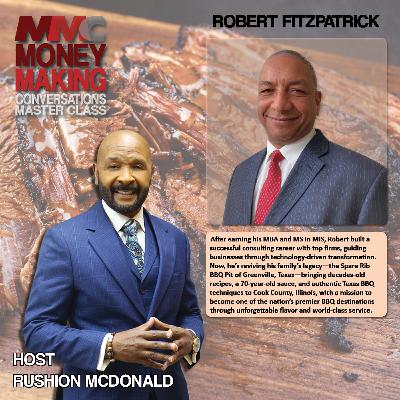
Listen and subscribe to Money Making Conversations on iHeartRadio, Apple Podcasts, Spotify, www.moneymakingconversations.com/subscribe/ or wherever you listen to podcasts. New Money Making Conversations episodes drop daily.  I want to alert you, so you don’t miss out on expert analysis and insider perspectives from my guests who provide tips that can help you uplift the community, improve your financial planning, motivation, or advice on how to be a successful entrepreneur.  Keep winning! Two-time Emmy and Three-time NAACP Image Award-winning, television Executive Producer Rushion McDonald interviewed Robert Fitzpatrick, a Navy veteran, business consultant, fraternity brother (ΩΨΦ), and now the owner reviving his family’s historic Texas barbecue legacy. The conversation dives deeply into Fitzpatrick’s upbringing, his father’s groundbreaking barbecue business in 1950s Texas, his educational and military journey, his corporate career, and his decision to launch Dewey’s Barbecue Market in Skokie, Illinois—honoring his father’s original recipes and values. The interview blends entrepreneurship, legacy, cultural history, and personal transformation, while highlighting the courage of Fitzpatrick’s father and the humility and faith-driven foundation of his family. Purpose of the Interview The interview aims to: 1. Inspire entrepreneurship and legacy-building Fitzpatrick’s story showcases how family heritage and values can shape a business vision across generations. 2. Highlight resilience, faith, and leadership His upbringing in a household rooted in Christian humility, strong expectations, and boundary-breaking courage provides a blueprint for character-driven success. 3. Educate listeners on transitioning careers Fitzpatrick exemplifies pivoting from engineering and corporate consulting to pursuing passion-driven entrepreneurship. 4. Promote Dewey’s Barbecue Market The interview introduces the Chicago-area community—especially the Skokie region—to his upcoming restaurant built on a 70-year-old Texas barbecue tradition. Key Takeaways 1. A powerful family legacy rooted in courage Fitzpatrick’s father, Dewey, opened a barbecue restaurant in 1951—before desegregation—and insisted that Blacks and whites could eat together. He enforced respect and safety in his establishment, even confronting racist patrons. 2. Education was non-negotiable in the Fitzpatrick household Robert is the youngest of seven siblings, all college graduates; five hold master’s degrees. He himself holds an MBA and an MS in Management Information Systems. 3. A bridge between technology and business Fitzpatrick spent decades in consulting with major firms (EDS, Dell, Arthur Andersen, KPMG) focusing on business process improvement. His dual MS/MBA made him a translator between tech and finance. 4. Military discipline shaped his personal and professional life Served in the U.S. Navy from 1986–1990, plus reserve duty (including deployment to Iraq). Balanced military service with graduate studies and advancing his corporate career. 5. A calling to revive his father’s barbecue His wife recognized his talent early, telling him for years he should be barbecuing. A shortage of good Texas barbecue in Virginia pushed him to recreate his father’s recipes. 6. Skokie, Illinois: the ideal launchpad After moving to the Great Lakes Naval Base area for a federal role, Fitzpatrick began scouting locations. Skokie offered: active support from city leadership grants an ideal building community enthusiasm 7. Dewey’s Barbecue Market offerings Meats: brisket, sausage, hot links, smoked boudin (monthly special) Sides: potato salad (egg/mayo base), pineapple vinegar coleslaw, fried okra, smoked pinto beans Desserts: apple cobbler, blueberry cobbler, sweet potato pie, possibly fried pies Bread: sliced “light bread” for dipping—traditional Texas style Experience: dine-in with 60s–80s “feel-good” music 8. A commitment to doing things the right way Fitzpatrick refuses to launch unless he can deliver “the best product on the planet.” Focuses on simplicity, authenticity, and quality. Notable Quotes About his father and legacy “He said anybody who wants to eat here can eat here.”(His father defying segregation laws in the 1950s.) “I can call an undertaker or an ambulance. Which one do you prefer?”(Dewey enforcing respect from a belligerent white customer.) “That was my barbecue.”(On being raised around his father’s legendary pit.) About family and humility “We are firmly rooted in Christ. If you try to get too big, He has a way of humbling you.” “Seven kids, all with degrees… that’s normal to you. But we know that’s not normal.”(McDonald highlighting the family’s extraordinary achievement.) About his calling “If I didn’t think I was bringing the best product on the planet, I wouldn’t even do it.” “My wife tasted the barbecue and said, ‘This is what you need to be doing.’” About launching in Skokie “They really want me to be there… the economic development team didn’t treat it like just another restaurant.” Short 3–5 Sentence Summary (For Quick Use) In his interview with Rushion McDonald, Robert Fitzpatrick shares his journey from Navy veteran and Fortune 500 consultant to entrepreneur reviving his family’s historic Texas barbecue. He describes growing up with a courageous father who defied segregation in 1951 by serving Black and white customers together, and a family culture steeped in education, discipline, and humility. Fitzpatrick’s passion for barbecue and encouragement from his wife led him to bring his father’s 70-year-old recipes to Skokie, Illinois through Dewey’s Barbecue Market. The interview emphasizes legacy, faith, courage, and the pursuit of purpose. #SHMS #STRAW #BESTSteve Harvey Morning Show Online: http://www.steveharveyfm.com/See omnystudio.com/listener for privacy information.
Listen and subscribe to Money Making Conversations on iHeartRadio, Apple Podcasts, Spotify, www.moneymakingconversations.com/subscribe/ or wherever you listen to podcasts. New Money Making Conversations episodes drop daily.  I want to alert you, so you don’t miss out on expert analysis and insider perspectives from my guests who provide tips that can help you uplift the community, improve your financial planning, motivation, or advice on how to be a successful entrepreneur.  Keep winning! Two-time Emmy and Three-time NAACP Image Award-winning, television Executive Producer Rushion McDonald interviewed Sahra S. Halpern. Interview Purpose The purpose of this interview is to educate small business owners—especially entrepreneurs of color—about equitable access to capital, alternative lending pathways, and how to become “capital ready.” Sahra Halpern, President and CEO of the Business Consortium Fund (BCF), explains how mission‑driven lending fills the gap left by traditional banks and helps small businesses survive, grow, and ultimately graduate into mainstream financing. The conversation also aims to demystify lending, reduce fear around capital, and encourage entrepreneurs to build trusted financial relationships before entering moments of crisis. Core Themes Discussed 1. Why Small Businesses Are Turned Down by Banks Halpern explains that many small businesses are rejected by banks not because they lack potential, but because banks operate under strict underwriting and regulatory requirements. These systems often fail to account for resilience, experience, contracts, and future growth. BCF exists to serve as a bridge—supporting businesses where banks cannot and preparing them to eventually return as qualified borrowers. 2. Capital Curious vs. Capital Ready A key distinction introduced in the interview is the difference between businesses that are “capital curious” and those that are “capital ready.” Many entrepreneurs know they need funding but lack: Financial organization Clear projections Proper documentation A capital strategy BCF provides technical assistance to help businesses prepare for financing instead of setting them up to fail. 3. Mission‑Driven Lending and Community Impact Halpern frames lending as an ecosystem, not a transaction. When small businesses succeed: Business owners gain stability Employees gain jobs Communities grow stronger Large corporations benefit from more diverse and capable supply chains BCF focuses on long‑term economic impact, not short‑term profit. 4. CDFIs vs. SBA Loans The interview draws a clear distinction between Community Development Financial Institutions (CDFIs) like BCF and government entities such as the SBA. Key differences highlighted: SBA programs shift based on political administrations SBA underwriting has tightened in recent years CDFIs are nonprofit, mission‑aligned, and relationship‑driven CDFIs look at the whole entrepreneur, not just credit scores 5. The Danger of Merchant Cash Advance Loans Halpern strongly warns against Merchant Cash Advance (MCA) loans, which are often marketed as fast solutions but carry extremely high interest rates and long‑term consequences. She explains that: MCAs disqualify borrowers from future SBA refinancing They often trap business owners in cycles of expensive debt CDFIs like BCF can help refinance and escape these loans A real‑world case study (The Cut Buddy / Shark Tank entrepreneur) illustrates how BCF helped refinance over $1M in predatory debt and save a growing business. 6. Relationships Matter More Than Transactions Both Halpern and McDonald emphasize the importance of building lender relationships early, not only when cash flow is tight. BCF underwrites the entire business and the entrepreneur, rather than seizing control of a contract or revenue stream, as some factoring companies do. Power comes from having options—and informed decision‑making. Key Takeaways Banking rejection is not the end of the road Small businesses must prepare themselves to be capital ready CDFIs serve as critical bridges between entrepreneurs and traditional banks Fast money often leads to expensive, dangerous debt Merchant cash advances should be avoided whenever possible Mission‑driven lenders look at the whole entrepreneur, not just numbers Strong lender relationships protect businesses during uncertainty Capital should empower growth—not take control of your company Notable Quotes “Just because a bank says no doesn’t mean that’s the end of your road.” “We’re not just looking at your credit score—we’re looking at you as a whole entrepreneur.” “Capital readiness is not about desperation; it’s about preparation.” “If you’re sitting on a merchant cash advance loan right now, you are not stuck.” “Nothing makes me happier than seeing clients realize their dreams and grow into multimillion‑dollar businesses.” “You should talk to multiple lenders—but you should always understand the real cost of the money.” Conclusion Sahra Halpern’s interview serves as a practical roadmap and a cautionary lesson for small business owners navigating today’s uncertain economic landscape. It reinforces that access to capital is about strategy, education, and relationships, not just approval or rejection. The conversation encourages entrepreneurs to reclaim power, avoid predatory financing, and partner with institutions that are committed to their long‑term success and community impact. #SHMS #BEST #STRAWSteve Harvey Morning Show Online: http://www.steveharveyfm.com/See omnystudio.com/listener for privacy information.
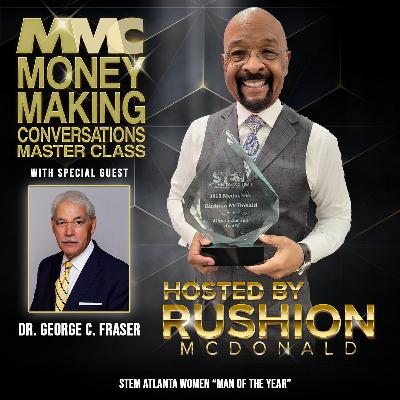
Listen and subscribe to Money Making Conversations on iHeartRadio, Apple Podcasts, Spotify, www.moneymakingconversations.com/subscribe/ or wherever you listen to podcasts. New Money Making Conversations episodes drop daily.  I want to alert you, so you don’t miss out on expert analysis and insider perspectives from my guests who provide tips that can help you uplift the community, improve your financial planning, motivation, or advice on how to be a successful entrepreneur.  Keep winning! Two-time Emmy and Three-time NAACP Image Award-winning, television Executive Producer Rushion McDonald interviewed Dr. George C. Fraser. Interview Purpose The purpose of this interview is to educate, challenge, and mobilize listeners—particularly within the Black community—toward financial literacy, economic empowerment, and generational wealth creation. Dr. Fraser uses his platform to stress that financial freedom is not accidental; it is the result of disciplined habits, strategic thinking, and collective economic action. He also emphasizes the critical role of networking, education, and ownership in shifting long‑standing economic disparities. Core Themes Discussed 1. Financial Literacy as a Survival Skill Dr. Fraser repeatedly emphasizes that financial illiteracy is dangerous and self‑defeating. He notes that many people are never formally taught how money works, leading to avoidable financial hardship. He argues that talking openly about money—in families, churches, and communities—is essential for progress. 2. The Three Rules of Financial Freedom Dr. Fraser outlines three foundational rules that, if consistently followed, lead to financial stability and independence: Housing costs should not exceed one week’s income Only borrow money to make money As income increases, cost of living should stay the same or decrease These rules are positioned as practical guardrails that protect individuals from overextension and debt traps. 3. Habits That Keep People Broke The interview details six destructive financial habits, including impulse buying, misuse of credit cards, paying minimum balances, and failing to build an emergency fund. Dr. Fraser stresses that these habits compound over time and prevent long‑term wealth accumulation.txt).  4. Generational Wealth Requires Structure Dr. Fraser introduces four pillars necessary for intergenerational wealth transfer: Proper management of accumulated wealth Real estate ownership Business ownership Intentional investing He explains that income alone does not create wealth; systems and ownership do.txt). 5. From Consumption to Ownership A recurring message is the need to shift from being a consumer class to becoming a producer and merchant class. Dr. Fraser encourages entrepreneurship at every level—no matter how small—to build ownership and control economic outcomes.txt).  6. Networking and Collective Economics Dr. Fraser highlights the importance of strategic networking and introduces concepts behind FraserNet and virtual economic ecosystems designed to connect Black professionals, businesses, and intellectual capital globally. He frames networking as an economic strategy, not a social activity. Key Takeaways Financial freedom follows rules, discipline, and education, not luck Talking openly about money is essential to breaking cycles of poverty Debt should only be used as a tool to produce returns Living below one’s means creates capital for investing Generational wealth requires planning, ownership, and systems Multiple income streams are no longer optional—they are necessary Networking is a vehicle for wealth creation and scale   Notable Quotes “Your rent or mortgage should be no more than what you make in a week.” “Only borrow money to make money.”. “As your income increases, your cost of living should decrease or stay the same.”. “Stop living above your means. Stop living within your means. Live below your means—and invest the rest.”. “We are at the bottom of every economic statistic that matters. Education is the answer.”. “There should not be a Black person in America with a single stream of income.” “In America, somebody is always buying and somebody is always selling. Stop doing all the buying—sell something.”. Conclusion Dr. George C. Fraser’s interview serves as a call to action. It challenges listeners to confront unhealthy financial habits, embrace education, prioritize ownership, and build networks that support long‑term economic empowerment. The conversation underscores that true wealth is not about income alone, but about control, discipline, and legacy #SHMS #STRAW #BESTSteve Harvey Morning Show Online: http://www.steveharveyfm.com/See omnystudio.com/listener for privacy information.
Steve Harvey Morning Show Online: http://www.steveharveyfm.com/See omnystudio.com/listener for privacy information.
Ask The CLO - 4.7.26

Ask The CLO - 4.7.26

2026-04-0712:06

Steve Harvey Morning Show Online: http://www.steveharveyfm.com/See omnystudio.com/listener for privacy information.
Show Open - 4.7.26

Show Open - 4.7.26

2026-04-0708:16

Steve Harvey Morning Show Online: http://www.steveharveyfm.com/See omnystudio.com/listener for privacy information.
Frogiveness - 4.7.26

Frogiveness - 4.7.26

2026-04-0709:33

Steve Harvey Morning Show Online: http://www.steveharveyfm.com/See omnystudio.com/listener for privacy information.
Dawn Staley - 4.7.26

Dawn Staley - 4.7.26

2026-04-0707:57

Steve Harvey Morning Show Online: http://www.steveharveyfm.com/See omnystudio.com/listener for privacy information.
Ask The CLO - 4.6.26

Ask The CLO - 4.6.26

2026-04-0612:53

Steve Harvey Morning Show Online: http://www.steveharveyfm.com/See omnystudio.com/listener for privacy information.
loading
Comments (6)

jason cole

does the strawberry letter come on here?

Jan 21st
Reply

jason cole

does the strawberry letter come on here?

Jan 21st
Reply

Ronnie Boles

who is Antonio brown

Sep 17th
Reply (1)

HT “HT”

Jay is STRAIGHT STUPID love his Kim Jong VOICE😂😂😂😂

Jul 21st
Reply (1)