


 Claim Ownership
Mad in America: Rethinking Mental Health
Subscribed: 1,135Played: 33,947
Subscribe

© Mad in America 2025
Description
Welcome to the Mad in America podcast, a weekly discussion that searches for the truth about psychiatric prescription drugs and mental health care worldwide.
Hosted by James Moore, this podcast is part of Mad in America's mission to serve as a catalyst for rethinking psychiatric care. We believe that the current drug-based paradigm of care has failed our society and that scientific research, as well as the lived experience of those who have been diagnosed with a psychiatric disorder, calls for profound change.
On the podcast we have interviews with experts and those with lived experience of the psychiatric system. Thank you for joining us as we discuss the many issues around rethinking psychiatric care around the world.
For more information visit madinamerica.com
To contact us email podcasts@madinamerica.com
Hosted by James Moore, this podcast is part of Mad in America's mission to serve as a catalyst for rethinking psychiatric care. We believe that the current drug-based paradigm of care has failed our society and that scientific research, as well as the lived experience of those who have been diagnosed with a psychiatric disorder, calls for profound change.
On the podcast we have interviews with experts and those with lived experience of the psychiatric system. Thank you for joining us as we discuss the many issues around rethinking psychiatric care around the world.
For more information visit madinamerica.com
To contact us email podcasts@madinamerica.com
289 Episodes
Reverse
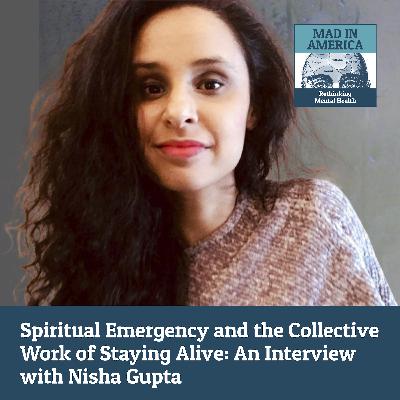
Nisha Gupta is an existential phenomenologist, a depth psychotherapist, a creativity scholar, and an artist. She's an Associate Professor of Psychology at the University of West Georgia and earned her PhD in clinical psychology from Duquesne University in Pittsburgh. She's also, if she doesn't mind me saying, a bit of a rising star as an early career psychologist, having won early career awards from the APA divisions for both humanistic and qualitative psychology. Dr. Gupta's work centers on lived experience and the problems of form and method in the field. She is an advocate of the psychological humanities, disseminating psychology to the public as art, including paintings, film, poetry, and literary memoir, for community healing and social change. Her artwork seeks to raise critical consciousness and empowerment regarding marginalized lived experiences, such as sexual and gender oppression, creative madness, and spiritual emergencies. In psychotherapy practice, she integrates depth and liberation psychotherapy perspectives. In this conversation, we talk about phenomenological filmmaking and what film can capture about distress, identity, time, and relationships that often elude other approaches to psychological research. We also talk about spiritual emergency and the phrase "dark night of the soul," including the difference between those frameworks and the more familiar language of symptoms and disorders. Dr. Gupta also shares her own experience of navigating a spiritual emergency as a clinical psychologist. We discuss what helped, what did not, what clinicians tend to miss in these situations, and what it would mean to build a better set of responses around people going through them. Finally, we discuss liberation psychology and collective resilience, including the question of how to think about suffering when its sources are social and political, and how to avoid reducing resilience to individual "grit." *** Thank you for being with us to listen to the podcast and read our articles this year. MIA is funded entirely by reader donations. If you value MIA, please help us continue to survive and grow. https://www.madinamerica.com/donate/ To find the Mad in America podcast on your preferred podcast player, click here: https://pod.link/1212789850 © Mad in America 2026. Produced by James Moore https://www.jmaudio.org
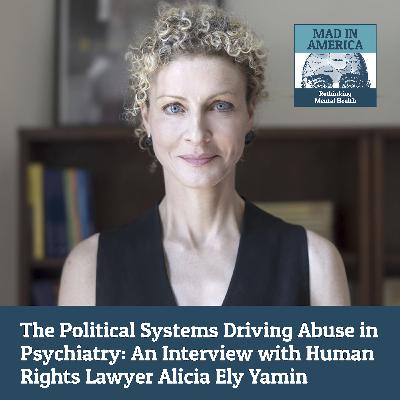
Alicia Ely Yamin is the Director of the Global Health and Rights Project and a lecturer at Harvard Law School. She's also an adjunct senior lecturer on health policy and management at the Harvard T.H. Chan School of Public Health and a Senior Advisor on Human Rights and Health Policy at Partners in Health. Alicia is known globally for her work on the right to health, economic and social rights, and reproductive justice. She has spent much of her professional life in Latin America and East Africa, including co-founding a health and human rights program with the Asociación Pro Derechos Humanos in Lima in 1999. She has served in major UN and global expert roles, including as one of 10 experts appointed by the UN Secretary-General to the Independent Accountability Panel from 2016 to 2021. Alicia has edited and authored over a dozen books and UN reports, and close to 200 articles. Her most recent book, When Misfortune Becomes Injustice: Evolving Human Rights Struggles for Health and Social Equality, was published in a revised and expanded second edition by Stanford University Press in 2023, with a Spanish edition forthcoming in 2026. Today, we're bringing her human rights lens to our international mental health systems, including what she's seeing in debates around accountability, consent, and institutional power. *** Thank you for being with us to listen to the podcast and read our articles this year. MIA is funded entirely by reader donations. If you value MIA, please help us continue to survive and grow. https://www.madinamerica.com/donate/ To find the Mad in America podcast on your preferred podcast player, click here: https://pod.link/1212789850 © Mad in America 2026. Produced by James Moore https://www.jmaudio.org
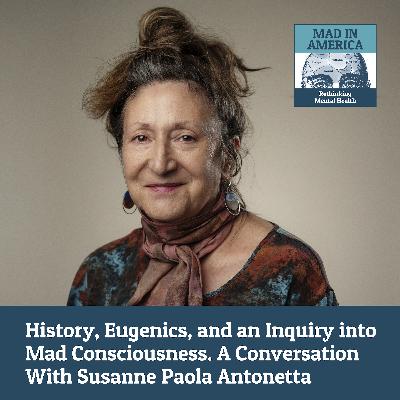
Susanne Paola Antonetta is an accomplished writer and poet, the author of numerous books, and in 2001 her book Body Toxic: An Environmental Memoir, won a prestigious American Book Award. Her latest book is The Devil's Castle, Nazi Eugenics, Euthanasia, and How Psychiatry's Troubled History Reverberates Today. *** Thank you for being with us to listen to the podcast and read our articles this year. MIA is funded entirely by reader donations. If you value MIA, please help us continue to survive and grow. https://www.madinamerica.com/donate/ To find the Mad in America podcast on your preferred podcast player, click here: https://pod.link/1212789850 © Mad in America 2026. Produced by James Moore https://www.jmaudio.org

Kamaldeep Bhui is Professor of Psychiatry at the University of Oxford and Honorary Professor at Queen Mary University of London. He is internationally recognized for his groundbreaking work on cultural psychiatry, ethnic inequalities in mental health, and the social determinants of distress. In recognition of his contributions to mental health research and policy, he was appointed Commander of the Order of the British Empire (CBE). He has written extensively on the grim reality of minorities facing higher rates of psychiatric detention and coercion. In an era of algorithmic checklists and time-pressured care, Bhui argues for reclaiming biographical listening and patients' own stories and understandings. Without cherishing lived experience, clinicians lose meaning in their work and patients lose agency, trust, and hope. In this interview, we will discuss how our contexts and culture reach deep within us to inform our experience of pain, and to indicate what is abnormal, why we feel distress, and what it means to heal. *** Thank you for being with us to listen to the podcast and read our articles this year. MIA is funded entirely by reader donations. If you value MIA, please help us continue to survive and grow. https://www.madinamerica.com/donate/ To find the Mad in America podcast on your preferred podcast player, click here: https://pod.link/1212789850 © Mad in America 2026. Produced by James Moore https://www.jmaudio.org
Elizabeth Cotton is Associate Professor of Responsible Business at the University of Leicester and the founder of Surviving Work, which carries out socially engaged research on mental health and work. She has worked with health teams and trade unions, practiced as a psychotherapist in the NHS, and now runs the Digital Therapy Project, a group of UK and US researchers studying the future of therapy from both sides of the relationship. In her new book, UberTherapy: The New Business of Mental Health, she explores the effects of reorganizing mental health care around the logic of the app store. Therapy is now something you can scroll through on your phone, match with in seconds, and rate like a ride share. Platforms promise frictionless access and personalized care. What is harder to see is how this new "mental health marketplace" is reshaping what therapy is, how it feels, and who it is really built to serve. UberTherapy is part political economy, part insider account of therapy work, part literary exploration of what it actually feels like to bring our most distressed selves to the mental health app ecosystem. In the second part of our conversation, Cotton traces how public austerity and platform capitalism have combined to turn mental health care into a set of digital products, governed by algorithms, data extraction, and dynamic pricing. In this world, qualified human therapists are slowly displaced by AI-driven "solutions," while those who remain are pushed into precarious, low-paid platform work. *** Thank you for being with us to listen to the podcast and read our articles this year. MIA is funded entirely by reader donations. If you value MIA, please help us continue to survive and grow. https://www.madinamerica.com/donate/ To find the Mad in America podcast on your preferred podcast player, click here: https://pod.link/1212789850 © Mad in America 2026. Produced by James Moore https://www.jmaudio.org
Elizabeth Cotton is Associate Professor of Responsible Business at the University of Leicester and the founder of Surviving Work, which carries out socially engaged research on mental health and work. She has worked with health teams and trade unions, practiced as a psychotherapist in the NHS, and now runs the Digital Therapy Project, a group of UK and US researchers studying the future of therapy from both sides of the relationship. In her new book, UberTherapy: The New Business of Mental Health, she explores the effects of reorganizing mental health care around the logic of the app store. Therapy is now something you can scroll through on your phone, match with in seconds, and rate like a ride share. Platforms promise frictionless access and personalized care. What is harder to see is how this new "mental health marketplace" is reshaping what therapy is, how it feels, and who it is really built to serve. UberTherapy is part political economy, part insider account of therapy work, part literary exploration of what it actually feels like to bring our most distressed selves to the mental health app ecosystem. In the first part of our conversation, we discuss how Cotton's path through psychoanalysis, labor organizing, and sociology shaped Uber Therapy, and how shame and anger get intensified when platforms frame therapy as an easy consumer service. *** Thank you for being with us to listen to the podcast and read our articles this year. MIA is funded entirely by reader donations. If you value MIA, please help us continue to survive and grow. https://www.madinamerica.com/donate/ To find the Mad in America podcast on your preferred podcast player, click here: https://pod.link/1212789850 © Mad in America 2026. Produced by James Moore https://www.jmaudio.org
This week, we are joined by Chris Masterjohn, PhD. Chris is a nutritional scientist, a former professor, and the founder of Mitome. With a PhD in nutritional science and years of research in mitochondrial biology, Chris's work focuses on translating peer-reviewed science into practical tools for human health. At Mitome, Dr. Masterjohn pioneered the first analysis designed to measure mitochondrial respiratory chain function directly, identifying individual energy bottlenecks and guiding personalized science-backed protocols to optimize the system responsible for over 90% of cellular energy production. His mission is to bring mitochondrial testing out of the rare disease space and into everyday health. In part 2, we discuss the biochemistry of our stress response and the potential benefits of balanced nutrition for those in psychiatric drug withdrawal. *** Thank you for being with us to listen to the podcast and read our articles this year. MIA is funded entirely by reader donations. If you value MIA, please help us continue to survive and grow. https://www.madinamerica.com/donate/ To find the Mad in America podcast on your preferred podcast player, click here: https://pod.link/1212789850 © Mad in America 2025. Produced by James Moore https://www.jmaudio.org
This week, we are joined by Chris Masterjohn, PhD. Chris is a nutritional scientist, a former professor, and the founder of Mitome. With a PhD in nutritional science and years of research in mitochondrial biology, Chris's work focuses on translating peer-reviewed science into practical tools for human health. At Mitome, Dr. Masterjohn pioneered the first analysis designed to measure mitochondrial respiratory chain function directly, identifying individual energy bottlenecks and guiding personalized science-backed protocols to optimize the system responsible for over 90% of cellular energy production. His mission is to bring mitochondrial testing out of the rare disease space and into everyday health. In this interview, we discuss why so little is understood about the role serotonin plays in the body and how our mitochondria might play a part in the experince of antidepressant withdrawal. *** Thank you for being with us to listen to the podcast and read our articles this year. MIA is funded entirely by reader donations. If you value MIA, please help us continue to survive and grow. https://www.madinamerica.com/donate/ To find the Mad in America podcast on your preferred podcast player, click here: https://pod.link/1212789850 © Mad in America 2025. Produced by James Moore https://www.jmaudio.org
Jan N. DeFehr is an associate professor in the Faculty of Education at the University of Winnipeg and an associate of The Taos Institute and a member of the Faculty for Palestine, Manitoba. She is also a member of the York University Mad Studies Hub. Before entering academia, she spent many years as a clinical social worker, working alongside people who were trying to make sense of their distress within, and often in spite of, the mental health system. Her teaching, research, and course development focus on building public access to critical analyses of that system, drawing on the work of clients and survivors of psychiatry, practitioners, and scholars. Her new book, A Critical Mental Health Primer: Towards Informed Choice in Social Services, Education, and Healthcare(Canadian Scholars, 2025), offers a clear and accessible map of critical mental health scholarship. The book examines scientific critiques of diagnosis, the potential harms of psychiatric labels, the lack of transparency and procedural justice in services, anti-colonial critiques of mental health premises and practices, and the evidence on psychiatric drugs and the DSM. It also gathers non-pathologizing ways of helping that center relational, dialogical, anti-oppressive, and anti-colonial approaches, along with concrete tools for informed choice and everyday support outside of the dominant medical model. In our conversation, we talk about how Jan came to adopt critical perspectives, why she sees access to critical mental health knowledge as a prerequisite for ethical practice, and what it looks like when organizations take informed choice seriously. We move through the key chapters of the book, explore its implications for social workers, educators, and health professionals, and look at how communities can build forms of care that do not depend on diagnosis or coercion. *** Thank you for being with us to listen to the podcast and read our articles this year. MIA is funded entirely by reader donations. If you value MIA, please help us continue to survive and grow. https://www.madinamerica.com/donate/ To find the Mad in America podcast on your preferred podcast player, click here: https://pod.link/1212789850 © Mad in America 2026. Produced by James Moore https://www.jmaudio.org

In our first podcast of 2026, Robert Whitaker joins us to answer questions submitted by Mad in America readers and listeners. We discuss the validity of ADHD diagnoses, withdrawal and sexual dysfunction risks of SSRI antidepressants, the harms of electro-convulsive therapy (ECT), the rise of AI-generated misinformation and much more. *** Thank you for being with us to listen to the podcast and read our articles this year. MIA is funded entirely by reader donations. If you value MIA, please help us continue to survive and grow. https://www.madinamerica.com/donate/ To find the Mad in America podcast on your preferred podcast player, click here: https://pod.link/1212789850 © Mad in America 2026. Produced by James Moore https://www.jmaudio.org

Musician and artist Kev G Mor joins us to discuss his experience of psychosis, his daily support strategies, and the pros and cons of having a hundred-pound pit bull terrier for emotional support. Kev is a suicide survivor who grew up with early childhood trauma and has experienced homelessness as a teen, is a single father, and is now again in recovery. His work is about showing what staying well looks like on hard days and keeping it practical for people who live with psychosis. *** Thank you for being with us to listen to the podcast and read our articles this year. MIA is funded entirely by reader donations. If you value MIA, please help us continue to survive and grow. https://www.madinamerica.com/donate/ To find the Mad in America podcast on your preferred podcast player, click here: https://pod.link/1212789850 © Mad in America 2025. Produced by James Moore https://www.jmaudio.org
Safa Askeri joins us to discuss his experience of antidepressant withdrawal and the gaslighting he was subjected to as he raised concerns with his doctors. "After this happened to me, I know that I can handle anything in life, no matter how hard it is." *** Like to know more about Mad in America or rethinking psychiatry more broadly? On our podcast, Robert Whitaker will answer your questions. Email questions to info@madinamerica.com by November 30, 2025 and we'll pick a selection for our December episode. We'd love to hear from you. *** Thank you for being with us to listen to the podcast and read our articles this year. MIA is funded entirely by reader donations. If you value MIA, please help us continue to survive and grow. https://www.madinamerica.com/donate/ To find the Mad in America podcast on your preferred podcast player, click here: https://pod.link/1212789850 © Mad in America 2025. Produced by James Moore https://www.jmaudio.org
Joining us for a roundtable discussion are Brooke Siem, David Antonuccio, Kim Witzak, Angie Peacock and David Healy. They discuss the challenges of openly discussing psychiatric drug withdrawal, the true meaning of informed consent, getting doctors to acknowledge medication-induced harm and much more. *** Thank you for being with us to listen to the podcast and read our articles this year. MIA is funded entirely by reader donations. If you value MIA, please help us continue to survive and grow. https://www.madinamerica.com/donate/ To find the Mad in America podcast on your preferred podcast player, click here: https://pod.link/1212789850 © Mad in America 2025. Produced by James Moore https://www.jmaudio.org
On July 21st 2025, the FDA convened a hearing on maternal use of antidepressants during pregnancy and the impact this use has on fetal development. Around 400,000 children in the United States are born each year whose mothers took antidepressants while pregnant, and so it's easy to see the societal importance of this topic. What are the risks to the fetus, the newborn, and the long-term development of that child? Adam Urato and Joanna Moncrieff were members of that FDA panel, and so too were several others well-known to MIA readers, including David Healy and Joseph Witt-Doerring. The purpose of the panel was to assess whether the FDA needed to put a warning on antidepressants related to their use in pregnancy, and most on the panel spoke of research that told of the need to do so. However, after the panel concluded, the American Psychiatric Association and other medical associations, most notably the American College of Obstetricians and Gynecologists, responded with what can only be described as howls of outrage, issuing press releases and telling the public that the panel was biased and that the real risk during pregnancy was untreated mental illness. These medical organizations asserted that the increased risk of adverse outcomes for children born to depressed mothers is due to the illness and not the drug, and that there was plenty of evidence that antidepressants were a helpful and even life-saving treatment for maternal depression. Here is where we are today. That FDA hearing put two narratives on public display, and most media reports embraced the narrative put forth by the medical organizations. What we will do today is review the evidence that exists on this topic and the response by the medical guilds to a public airing of that evidence. Dr. Adam Urato is Chief of Maternal and Fetal Medicine at the Metro West Medical Center in Framingham, Massachusetts, and he has been speaking and writing about the risk of medications used during pregnancy for years. Dr. Joanna Moncrieff is a UK psychiatrist and researcher who was a co-founder of the Critical Psychiatry Network and is well known for her research on the safety and efficacy of psychiatric drugs. *** Thank you for being with us to listen to the podcast and read our articles this year. MIA is funded entirely by reader donations. If you value MIA, please help us continue to survive and grow. https://www.madinamerica.com/donate/ To find the Mad in America podcast on your preferred podcast player, click here: https://pod.link/1212789850 © Mad in America 2025. Produced by James Moore https://www.jmaudio.org
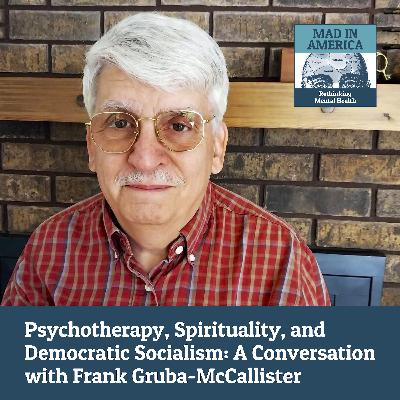
Frank Gruba-McCallister is a clinical psychologist, educator, and scholar whose career spans more than three decades of teaching and academic leadership. He served as Vice President of Academic Affairs at Adler University, where he helped to reorient the institution's mission toward training socially responsible practitioners. His leadership and curricular reforms contributed to Adler's doctoral program receiving the American Psychological Association's Board of Educational Affairs Award for Innovative Practices in Graduate Education in 2007. He has also taught at the Illinois School of Professional Psychology and The Chicago School of Professional Psychology, and worked as a clinician in both medical settings and private practice. Throughout his career, Dr. Gruba-McCallister has been a steady voice at the intersection of critical psychology, humanistic and existential thought, and spiritual inquiry. He is the author of Embracing Disillusionment: Achieving Liberation Through the Demystification of Suffering, a book that examines how internalized oppression and ideological mystification compound human suffering and how healing demands a deep and sometimes painful confrontation with illusions. His newest book, Radical Healing: No Wellness Without Justice, published by University Professors Press, draws from liberation theology, critical theory, existential psychology, and transpersonal thought to explore the structural and spiritual roots of suffering. At its core is a call to restore moral responsibility, to reclaim compassion and justice as central to any meaningful model of care, and to invite those who seek to heal others to do so with humility, courage, and radical honesty. In our conversation, we discuss the origins of this work, the crises that shape our current moment, and what it might mean to envision psychotherapy as both a spiritual and political act. *** Thank you for being with us to listen to the podcast and read our articles this year. MIA is funded entirely by reader donations. If you value MIA, please help us continue to survive and grow. https://www.madinamerica.com/donate/ To find the Mad in America podcast on your preferred podcast player, click here: https://pod.link/1212789850 © Mad in America 2025. Produced by James Moore https://www.jmaudio.org
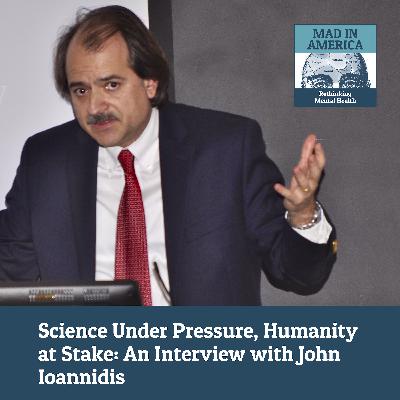
John Ioannidis is a Stanford professor, a physician, and one of the most eminent scholars in the world in the field of evidence-based medicine. Ioannidis has spent his career exposing the weak foundations of much of modern medicine. His 2005 paper, "Why Most Published Research Findings Are False," became the most-viewed article in the history of PLOS Medicine and helped spark a global reckoning with reproducibility. He has since warned about how evidence-based medicine can be hijackedby industry influence, how biased reward systems in academia favor quantity over quality, and how even systematic reviews can recycle flawed data. His critiques extend to psychiatry, where pharma-funded trials often tilt toward positive results, guidelines are shaped by insiders, and neuroscience findings are more fragile than they appear. He is a tenured professor at Stanford and has an extensive background in medicine, epidemiology, population health, and data sciences. As much as he is a champion of good science, Ioannidis is also a lover of the arts and humanities. He's a novelist, teaches poetry, loves operas, and has written libretti for four operas himself. In this interview, he discusses the extensive bias that pervades scientific research, the problematic practices and pressures that enable flawed science, and the significant issues with antidepressant research. At the same time, he reminds us why good science is a gift to humanity and something we must protect for our well-being and dignity. *** Thank you for being with us to listen to the podcast and read our articles this year. MIA is funded entirely by reader donations. If you value MIA, please help us continue to survive and grow. https://www.madinamerica.com/donate/ To find the Mad in America podcast on your preferred podcast player, click here: https://pod.link/1212789850 © Mad in America 2025. Produced by James Moore https://www.jmaudio.org
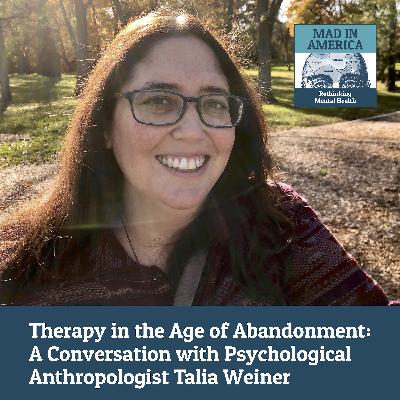
Talia Weiner is a psychological anthropologist, licensed professional counselor, and assistant professor of psychology at the University of West Georgia. As a medical and psychological anthropologist, her work focuses on the intersection of social-structural forces and how those forces show up in lived experience, particularly in relation to mental health care. Weiner studies these and other topics with students in the Clinical Ethnography Lab within the University of West Georgia's psychology program. Weiner has an upcoming book titled Therapeutic Inequalities: Mood Disorder Self-Management in Chicago, scheduled for release Jan. 6, 2026, through NYU Press's Anthropologies of American Medicine: Culture, Power, and Practice series. In this interview, Weiner discusses how conservative sociopolitical trends influence psychology and mental health care—how, for example, people with bipolar disorder are expected to monitor and manage themselves in ways that are not only unrealistic but also blur the lines between self and disease. *** Thank you for being with us to listen to the podcast and read our articles this year. MIA is funded entirely by reader donations. If you value MIA, please help us continue to survive and grow. https://www.madinamerica.com/donate/ To find the Mad in America podcast on your preferred podcast player, click here: https://pod.link/1212789850 © Mad in America 2025. Produced by James Moore https://www.jmaudio.org

On the Mad in America podcast this week, we explore the importance of raising awareness of psychological approaches that challenge mainstream perspectives. Joining us today are three people who are practising clinical psychologists and who have written for Mad in America. Zenobia Morrill is a critical-liberation psychologist and psychology professor who received her doctorate from the University of Massachusetts, Boston. Her research interests include critical and liberation psychology, the psychotherapy process, and wider conceptual and ethical issues in psychology and psychiatry. José Giovanni Luiggi-Hernández is a clinical psychologist in private practice, a qualitative researcher at the University of Pittsburgh, a writer for Mad in America and part of the recently launched Mad in Puerto Rico website. His interests include understanding the lived experiences of colonized people using phenomenological, psychoanalytic, and decolonial frameworks, LGBTQ issues and psychotherapy for physical health concerns. Also joining us is Mad in America's lead research news editor, Justin Karter. A graduate in both psychology and journalism, Justin's research and writing span topics in the philosophy of psychology, critical psychology, MAD studies, cross-cultural psychology, qualitative methods, and theories of counselling and psychotherapy. In this conversation, we discuss the possibilities opened up by adopting a critical mindset, identify some of the barriers to working in such a way, and share some key resources to help aspiring psychologists explore alternative approaches. Find a full transcript of this interview here: https://www.madinamerica.com/2025/08/how-to-be-a-critical-psychologist-without-losing-your-soul/ *** Thank you for being with us to listen to the podcast and read our articles this year. MIA is funded entirely by reader donations. If you value MIA, please help us continue to survive and grow. https://www.madinamerica.com/donate/ To find the Mad in America podcast on your preferred podcast player, click here: https://pod.link/1212789850 © Mad in America 2025. Produced by James Moore https://www.jmaudio.org

Welcome to MIA Radio. Today, we are pleased to have as our guest Jaakko Seikkula. Jaakko is a psychologist who helped develop the Open Dialogue practice at Keropudas Hospital in Tornio, Finland, in the 1990s, and he is the person who has conducted the research that told of remarkable longer-term outcomes with this form of care. For the past 15 years, he has developed and led training programs that have seen Open Dialogue practices adopted in 40 countries. He recently published a book titled, Why Dialogue Does Cure. In this interview, we discuss how Open Dialogue came to be, the research that shows its positive outcomes, how psychiatry has failed to learn from Open Dialogue practice and more. *** Thank you for being with us to listen to the podcast and read our articles this year. MIA is funded entirely by reader donations. If you value MIA, please help us continue to survive and grow. https://www.madinamerica.com/donate/ To find the Mad in America podcast on your preferred podcast player, click here: https://pod.link/1212789850 © Mad in America 2025. Produced by James Moore https://www.jmaudio.org
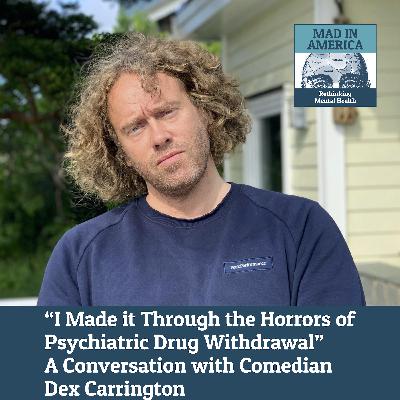
Jørgen Kjønø, whose stage name is Dex Carrington, is a Norwegian-American stand-up comedian based in Oslo, Norway. He is also an actor, host of the Truth Train podcast, and former travel show host who gained international recognition as the host of Dexpedition, which aired on MTV in over 30 countries. He joins us on the Mad In America podcast to talk about his experience with Lyrica and Zyprexa, including a five-and-a-half-year taper after 10 years on the drugs. *** Find a full transcript of the interview here: https://www.madinamerica.com/2025/07/horror-psychiatric-drug-withdrawal-dex-carrington/ Thank you for being with us to listen to the podcast and read our articles this year. MIA is funded entirely by reader donations. If you value MIA, please help us continue to survive and grow. https://www.madinamerica.com/donate/ To find the Mad in America podcast on your preferred podcast player, click here: https://pod.link/1212789850 © Mad in America 2025. Produced by James Moore https://www.jmaudio.org


Download from Google Play

Download from App Store
 United States
This is a very heartfelt and informative interview. Lindsay, I truly appreciate you sharing your story.
THANK U SOO MUCH FOR THE GREAT TIPS!
I agree! we cannot even get disability for mental health because the lack of proof is nill but, they can label us with a chemical imbalance with 0 evidence?
Episode 91 is the first of this significant collection that I listened to. I found the podcast based on personal research suggestions from my new psychiatrist who, along with my new psychotherapist coincidentally, seems to approach my psychiatric problems similar to what Episode 91 suggests. I am finally beginning to PROCESS my issues rather than just take meds to try and mute them while keeping me numb, unfocused, and confused. Thank you for this podcast.
THANK YOU for sharing your story! There are few real stories of tapering off SSRIs after long time use. I am starting to go off 200 mg and found this to be super helpful. Sending love and light ❤