


 Claim Ownership
DRIVE TIME DEBRIEF: A Physician Wellness Podcast with The Whole Physician
Subscribed: 16Played: 745
Subscribe

© 2026 WholeU, LLC
Description
🔥 Doctors Feeling the Burnout? We’ve Been There—and We’re Here to Help You Climb Out of the Fire. 🔥
Drive Time Debrief: A Physician Wellness Podcast
Welcome to Drive Time Debrief, the anti-burnout podcast built just for physicians and healthcare providers who are ready to reclaim their joy, purpose, and well-being.
Hosted by the physician-coaches of The Whole Physician, this podcast delivers honest conversations, evidence-based tools, and practical strategies to help you navigate burnout, set boundaries, and find fulfillment in and outside of medicine.
Whether you're heading into a shift, decompressing on your commute home, or sneaking in a sanity-saving moment during your day, you’ll get bite-sized insights that speak to the *real* challenges of medical life—with compassion, candor, and a dose of humor.
If you’re tired of white-knuckling your way through your career and ready to feel like yourself again, you’re in the right place.
Episodes include:
- Physician burnout recovery stories
- Coaching tools for stress, imposter syndrome, & difficult dynamics
- Self-compassion, mindset shifts, and boundary-setting
- Conversations on career pivots, family life, and rediscovering joy
Hit subscribe and join us for a weekly debrief—because your well-being deserves to be non-negotiable.
You wouldn’t head into battle without armor, so why are we sent into the chaotic Dumpster Fire of Medicine without the tools we need to protect ourselves?
Medicine was supposed to be your calling. Instead, it feels like it’s breaking you—turning altruistic, purpose-driven, bright minds into frustrated, disillusioned, and exhausted shadows of who we used to be.
How do we know? We’ve been there. We’ve lived the long shifts, the impossible expectations, and the emotional toll. And we’ve watched too many of our peers struggle silently.
We’re The Whole Physician—three Board-Certified Emergency Physicians (and physician burnout experts) on a mission to rewrite the story of medicine. Our podcast isn’t just another pep talk. It’s a lifeline—and a quick remedy for burnout you can take with you wherever you go.
Whether you’re driving to your next shift, heading home after a long day, or taking a rare moment to breathe, our episodes are packed with practical tools and mindset shifts that actually work:
- Find hope for the future and a renewed sense of purpose
- Rediscover joy in your work and life
- Repair and strengthen relationships (even the one with yourself)
- Quiet the mental chaos and ease emotional exhaustion
- Realize you are NOT alone.
This is your space. A space where doctors like you—who keep showing up no matter what—get the care, support, and tools you deserve. You are our people. It’s about time someone put YOU first.
🎧 Ready to reclaim your hope and joy? Listen now.
Learn more at www.thewholephysician.com.
Sound credit:
_________________________________
Fresh by MBB https://soundcloud.com/mbbofficial
Creative Commons — Attribution-ShareAlike 3.0 Unported — CC BY-SA 3.0
Free Download / Stream: http://bit.ly/2PK8m0A
Music promoted by Audio Library https://youtu.be/YqRO_qgBB1c
––––––––––––––––––––––––––––––
209 Episodes
Reverse
Drive Time Debrief – Episode 209
Emotional Intelligence Series: Motivation, Burnout, and the Physician Motivation Trap
In this episode of Drive Time Debrief, we continue our emotional intelligence series by exploring motivation—and why many high-achieving physicians feel stuck, depleted, or disconnected even after achieving their professional goals.
Motivation isn’t just about discipline or willpower. In medicine, physicians are often trained to rely on external motivators like grades, productivity, and achievement. Over time, however, these pressures can drain energy and contribute to burnout, demoralization, and nervous system shutdown.
Using insights from emotional intelligence and polyvagal theory, we discuss how chronic stress can impact motivation and why a loss of motivation is often a signal that your nervous system needs support—not criticism.
We also share practical ways to begin rebuilding motivation by reconnecting with personal values, energy, and choice.
In This Episode We Discuss
• Why motivation is about energy, not discipline • The physician motivation trap created by external pressure • Burnout vs. demoralization in medicine • How the nervous system affects motivation and engagement • Why loss of choice can shut down motivation • Simple ways to begin restoring energy and alignment
Reflection Question
What currently gives you energy, and what is quietly draining it?
Connect with Us
Email: podcast@thewholephysician.com Instagram: @thewholephysician
https://thewholephysician.com/weekly-well-check
Subscribe, rate, and review to help other physicians discover the podcast.
You are whole. You are a gift to medicine. And the work you do matters. ✨
Ever caught yourself thinking, “I shouldn’t react like that”… and then reacting exactly like that anyway? You’re not alone.
In Part 2 of our emotional intelligence series, we’re diving into self-regulation — the skill that helps you stay grounded when emotions run high and pressure is constant. For physicians trained to push through stress and “keep it together,” learning to regulate instead of suppress can be a game-changer.
In this episode, we explore: ✨ Why suppression isn’t the same as regulation ✨ How chronic activation shows up in physicians’ lives ✨ Simple tools to reset your nervous system in real time ✨ How to pause, recover faster, and show up more intentionally
Self-regulation isn’t about being calm all the time — it’s about choosing your response and recovering with intention.
Your nervous system deserves the same care you give your patients.
Take a breath. Reset. You’ve got this.
Until next time: You are whole. You are a gift to medicine. And the work you do matters. 💙
Links & Resources:
• Ari @ MedTreks International: ari@medtreksinternational.com• The Whole Physician & MedTreks International Costa Rica Retreat: https://medtreksinternational.com/trips/costaricaphysicianretreat/
🎙️ Emotional Intelligence Series, Part 1
Why High Performers Burn Out — and the Skill That Prevents It
In medicine and high-performance environments, we’re trained to push through discomfort, ignore our needs, and stay composed under pressure. Over time, that conditioning can disconnect us from what’s happening inside.
This episode introduces the foundation of emotional intelligence:
👉 Self-awareness — the ability to notice what’s happening inside you in real time.
Because the truth is:
You cannot regulate what you don’t notice.
If you’ve ever said “I’m fine” but later snapped at someone you love, this conversation is for you.
🧠 In This Episode:
✔ What emotional intelligence (EQ) really is ✔ Why high functioning ≠ emotional regulation ✔ How medical training conditions us to ignore internal signals ✔ Signs low self-awareness may be affecting you ✔ Early burnout signals doctors often miss ✔ Why naming emotions calms the nervous system ✔ Simple tools you can use immediately — even on shift
👀 Common Signs of Low Self-Awareness
• Calm at work but irritable at home • Saying yes automatically → resentment builds • Feeling emotionally flat or numb • Identity tied to performance • Growing cynicism or loss of curiosity
This isn’t a personality flaw — it’s unprocessed stress.
🛠️ Tools You Can Use Today
✔ Name It to Tame It
Replace vague words like stressed or fine with precise emotions like: resentful • discouraged • anxious • powerless
Naming emotions reduces stress and improves regulation.
✔ The SEW Technique
S — Sensation (what’s happening in your body) E — Emotion (what are you feeling) W — Want (what do you need right now)
✔ Daily Check-In
Ask: What am I feeling? What story am I telling about this?
💡 Why This Matters
Self-awareness helps you:
✔ prevent emotional spillover at home ✔ reduce burnout and resentment ✔ improve relationships and teamwork ✔ regulate stress in real time ✔ reconnect with meaning and purpose
📚 Resources Mentioned
• Daniel Goleman — Emotional Intelligence • Brené Brown — Atlas of the Heart • feelingswheel.com
https://www.thewholephysician.com/weekly-well-check
Subscribe & share to help more physicians find these conversations.
📧 podcast@thewholephysician.com 📱 @TheWholePhysician
You are whole. You are a gift to medicine. And the work you do matters.
🎧 Drive Time Debrief Episode 206
When the Helper Identity Fuels Burnout
We’re celebrating AND having a real conversation today.
The Drive Time Debrief was honored with the 2026 Doctor Podcast Award for Best Physician Wellness & Burnout Podcast — and we’re incredibly grateful to our listeners and community.
But today’s episode tackles something many physicians silently carry:
👉 the helper identity 👉 the pressure to always say yes 👉 and how over-helping quietly leads to burnout
🩺 What We Discuss in This Episode
Most physicians enter medicine because they genuinely want to help.
But when helping becomes automatic instead of intentional, it can lead to:
chronic exhaustion
resentment and emotional overload
self-abandonment
unsustainable work patterns
quiet burnout
Being a helper isn’t the problem.
Over-identifying as the helper is.
🧠 How the Helper Identity Forms
Medical training rewards:
✔ reliability ✔ endurance ✔ self-sacrifice ✔ saying yes ✔ putting personal needs last
Over time, physicians may learn to:
ignore basic needs
fear disappointing others
equate boundaries with being “difficult”
feel responsible for fixing everything
🚩 Signs the Helper Identity Is Hurtting You
Saying yes automatically without checking in with yourself
Covering gaps that aren’t yours to cover
Absorbing emotional chaos from patients, staff, and systems
Feeling responsible for everyone’s comfort
Quiet resentment building beneath constant giving
This isn’t generosity.
It’s conditioning.
🧬 The Hidden Cost of Over-Functioning
Over-functioning can:
✔ fuel burnout ✔ reinforce broken systems ✔ inhibit others’ growth ✔ create emotional exhaustion ✔ erode relationships at home
When helping becomes self-abandonment, your health and wellbeing pay the price.
🔄 From Obligation to Intentional Helping
You don’t need to stop caring.
You need to start choosing.
Instead of:
❌ “I must help.” Try: ✅ “I choose where I help.”
✅ A Values-Aligned Helper:
knows their limits
chooses where their energy goes
helps without abandoning themselves
sacrifices intentionally — not habitually
🔧 Micro-Shifts to Prevent Burnout
Before saying yes, ask:
• Do I want to do this? • Am I avoiding discomfort or disapproval? • Will this cost me my wellbeing?
Try:
✔ pausing before responding ✔ saying “Let me check and get back to you.” ✔ choosing intentional yeses ✔ allowing others to be disappointed
Discomfort is not danger.
💬 Reflection Questions
Where am I helping out of identity rather than values?
Where am I trying to avoid being disliked?
What is one small boundary I can practice this week?
🌿 Reminder
You can be a deeply caring physician without setting yourself on fire.
Helping is powerful — when it doesn’t cost you yourself.
🎉 Also in This Episode
✨ Celebrating our 2026 Doctor Podcast Award 🌴 Announcing our physician wellness retreat in Costa Rica
***Link to retreat: https://medtreksinternational.com/trips/costaricaphysicianretreat/ 💛 Tools for sustainable helping and long-term career longevity
⭐ If This Episode Helped You
Subscribe, rate, and review — it helps other physicians find support and sustainable wellness.
You matter. Your wellbeing matters. And the work you do matters.
Regret Isn’t the Enemy. Rumination Is.
Regret is part of being human. Rumination is optional.
In this episode, we’re diving into something physicians (and high-achievers in general) know all too well: replaying mistakes on loop.
Whether it’s:
A patient outcome you wish had gone differently
A diagnosis you missed
A moment you snapped at your child after a night shift
Or something you said years ago that still makes you cringe
Regret can quietly take up residence in your mind.
But here’s the truth: Regret’s job is growth. Not self-punishment.
We explore the difference between helpful reflection and harmful rumination — and why replaying the past over and over actually increases stress, burnout, anxiety, and defensive medicine.
You’ll learn:
✨ Why regret exists (and why it’s not a flaw) ✨ The psychological difference between useful regret and rumination ✨ How regret can subtly become tied to your identity ✨ Signs that regret has outlived its usefulness ✨ A powerful “Regulated Reflection Window” tool ✨ The 3 R’s for moving forward: Repair, Release, Refocus ✨ Why guilt is actually a healthy emotion ✨ How to stop letting imagined “better outcomes” steal your peace ✨ Why transparency after poor outcomes can be restorative
We also share personal stories from residency and clinical practice — including how regret shaped us into better physicians without becoming something we carried forever.
Remember:
Regret is a signal. It is not a sentence. It is not your identity.
Once the lesson is learned, you get to move forward.
And you are already a better physician because you care.
If this episode resonated with you, subscribe, rate, and leave a review so more physicians can find the show.
📩 Have a story or insight to share? Email us at podcast@thewholephysician.com 📱 Follow us @thewholephysician on Instagram, Facebook, LinkedIn, and TikTok
Until next time — You are whole. You are a gift to medicine. And the work you do matters.
Drive Time Debrief — Episode 204: Random Internet Advice (Part 3)
In this episode of The Drive Time Debrief, Amanda, Laura, and Kendra continue their three-part deep dive into “random internet advice” they found while scrolling TikTok — and how these bite-sized ideas actually play out in real life, relationships, and medicine.
The conversation blends humor, psychology, and hard-earned wisdom as the trio explores what advice is worth keeping, what needs nuance, and what might actually help us show up better at work and at home.
In this episode, you’ll hear about:
Why “focus on the good” actually changes what you see
The science of selective attention and the reticular activating system
The famous “black gorilla” experiment
How medicine trains our brains toward negativity — and how to shift that habit
Why gratitude is not gaslighting, but a way of “changing the channel” in your brain
Assuming good intentions — even when it’s hard
How small mindset shifts can reduce conflict in relationships
Why people often push others away (and what that really means)
Practical ways to pause before reacting
“If someone walks out of your life, let them” — true or false?
When this advice is protective vs. when it’s oversimplified
The idea of relationships as “seasons” rather than failures
Why some relationships come full circle — and others are meant to close
A powerful gratitude exercise
Write a list of what you want — but every other item must be something you already have
Why this rewires your brain away from scarcity
The right doors won’t open until you’re ready
Why missed opportunities often make sense in hindsight
How rejection can actually prepare you for what’s next
Why persistence matters more than timing
“You’ve survived everything so far.”
Resilience, humor, and hard seasons
A playful nod to Amanda’s Oklahoma Sooners (“hard to kill” energy 💪)
Why growth often comes from the challenges we wish we could skip
This wraps up Part 3 of their TikTok-inspired advice series — but don’t worry, more parts are likely coming.
Stay connected with The Whole Physician
Email your favorite internet advice to: podcast@thewholephysician.com
Follow on Instagram: @thewholephysician
Sign up for The Weekly Well Check (link below) — encouragement + updates on masterclasses and events.
https://www.thewholephysician.com/weekly-well-check
Thanks for listening — you are whole, you are a gift to medicine, and your work matters. 💙
Credit: @jesss.kr
jesskraww@gmail.com
Travel Beyond the Hospital: How Adventure & Purpose Restore Burned-Out Medical Professionals | MedTreks International Interview with Ari Rasori
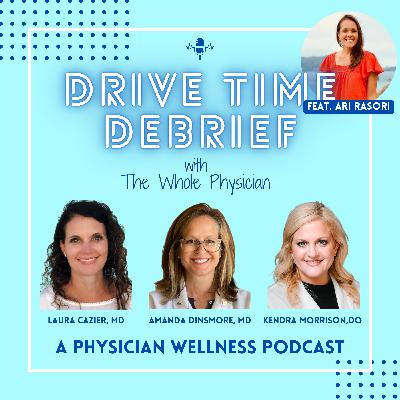
In this episode, we sit down with Ari Rasori, NP, founder of MedTreks International, to explore how global adventure, wellness, and community can help healthcare professionals recover from burnout and reconnect with their purpose.
Ari shares her journey from working in the emergency department to building a boutique travel and retreat company for physicians, NPs, PAs, and nurses—combining continuing medical education (CME), wilderness medicine, and restorative retreats across six continents.
We talk about: • Why burnout is so common in high-achieving healthcare professionals • How changing environments can reset the nervous system • The power of traveling with people who truly “get” medicine • Why purpose-driven adventure can reignite your spark • What MedTreks International offers and how their curated retreats work • A special announcement: The Whole Physician Retreat in Nosara, Costa Rica (Nov 7–14) • Early bird discount code: RESTORE26
If you love medicine but feel exhausted, disconnected, or in need of renewal, this conversation will help you remember who you are beyond the hospital walls—and how to restore the part of you that first fell in love with healing.
🎧 Listen now and learn how to travel the world instead of just the hospital.
Links & Resources: • Ari @ MedTreks International: ari@medtreksinternational.com • The Whole Physician & MedTreks International Costa Rica Retreat: https://medtreksinternational.com/trips/costaricaphysicianretreat/ • Early Bird Code (February only): RESTORE26
**Special going on for Feb: RESTORE26 is coupon code for $200 off
Drive Time Debrief – Episode 202 Random Internet Advice, Part 2: Protect Your Peace & Stop Worshiping the Problem
In Part Two of our “Random Internet Advice” series, the DTD crew dives into more thought-provoking (and surprisingly wise) wisdom pulled from the endless scroll—this time inspired by @JessKR on TikTok.
We unpack powerful ideas like:
✨ Why other people’s opinions of you are truly none of your business ✨ How protecting your peace is often more important than proving a point ✨ What boundaries really mean (and why they actually help relationships last) ✨ Letting go of the need for universal approval ✨ Taking responsibility for your own happiness instead of outsourcing it ✨ And the mic-drop truth: Worrying is like worshiping the problem.
Through stories from medicine, family life, relationships, and personal growth, we explore how to live from your values, honor your integrity, and stop letting conflict, criticism, or fear steal your emotional energy. From the wisdom of your 8-year-old and 80-year-old selves, to Terry Real’s insight on the “losing strategy” of being right, to the freedom that comes from setting loving boundaries—this episode is packed with perspective-shifting takeaways.
If you’ve ever felt drained by trying to manage others’ opinions, stuck in endless worry loops, or tempted to sacrifice your peace just to make a point… this conversation is for you.
Take a breath, protect your peace, and remember: where your attention goes, your energy flows.
🎧 Listen in, reflect, and let these “random” insights bring a little more clarity, calm, and courage into your week.
Credit: @jesss.kr jesskraww@gmail.com
Ever stumble across a piece of advice that makes you stop scrolling and think, “Whoa… that’s actually really good”? In this episode, Amanda, Laura, and Kendra dive into powerful mindset shifts inspired by viral wisdom—and put them through a coach's lens.
From walking through fear and embracing discomfort, to remembering that other people’s reactions say more about them than about you, this conversation is full of clarity, compassion, and courage. They explore why following your plan (not your mood) is a game-changer, how indecision is often a hidden choice, and why criticism almost always comes from the cheap seats—not the arena.
You’ll walk away feeling: 💡 More grounded in your own worth 💪 More willing to do the brave, uncomfortable thing 🧠 More equipped to stop over-thinking and start living ❤️ More connected to the truth that growth is the goal
If you’ve been stuck, second-guessing yourself, or needing a gentle push to trust your inner wisdom—this episode is for you.
FREE Physician Wellness Triage Session: www.thewholephysician.comPodcast Fast Track (handpicked episodes): www.thewholephysician.com/fast-track
You are whole. You are a gift to medicine. The work you do matters.
https://www.facebook.com/thewholephysician
https://www.instagram.com/thewholephysician
https://youtube.com/@thewholephysician6505
https://www.tiktok.com/@thewholephysician
https://www.linkedin.com/company/the-whole-physician/
https://x.com/WholePhysician
Credit: @jesss.kr jesskraww@gmail.com
We can’t believe we’re saying this… Episode 200 of the Drive Time Debrief is here!
What started as a few honest conversations has grown into a community of physicians who are re-imagining what it means to practice medicine without losing themselves in the process. Whether this is your very first episode or you’ve been with us since the beginning — welcome. We’re so glad you’re here. 🤍
To celebrate this milestone, we’re sharing some of the most important lessons we believe every physician should hear early — and revisit often — if they want true career longevity, emotional health, and fulfillment.
✨ In this special episode, we talk about: • Why burnout is often a boundaries problem, not a resilience problem • How to decide what you will not sacrifice — sleep, relationships, movement, joy • Why emotional processing is essential (and suppression is costly) • The power of deeply safe, connected relationships • How medicine will take everything you allow it to take — and why that matters • Learning to tolerate disappointing people (a core physician skill no one teaches) • Why coaching or therapy before crisis is a game-changer • How pivoting — in mindset or career — is wisdom, not failure • Letting go of the fantasy that happiness comes “later” • Learning to leave work at work mentally, not just physically
🌱 Plus two bonus truths we wish we’d learned sooner: • Build recovery into your week, not just your vacations • Stop outsourcing your internal compass — you already know what matters
Along the way, we explore ideas from voices like Brené Brown and Brianna Wiest, share personal stories, and remind you of something we never want you to forget:
💛 Physician wellness isn’t about finding the perfect job or mastering stress. It’s about learning how to live inside the system without letting the system live inside you.
✨ New here? Start with our Podcast Fast Track! We’ve curated our top must-listen episodes so you can jump in without feeling overwhelmed. 👉 Visit thewholephysician.com/fast-track
💬 Let’s stay connected: • Leave a review — it helps other physicians find the show • Email us at podcast@thewholephysician.com if one of these truths resonated • Follow us on social @TheWholePhysician • Sign up for our Weekly Well Check for encouragement, tools, and updates
Thank you for being part of this community — and for the work you do every day. Until next time, remember:
✨ You are whole. You are a gift to medicine. And the work you do matters. ✨
⏰ If You Had One Day, One Week, One Month Left to Live...
Amanda, Laura, and Kendra tackle the most clarifying question as we start 2026: What would you do differently if you had limited time left?
This isn't about panic—it's about calibration. Without intentionality, medicine will weave into every aspect of your life. This thought experiment reveals what actually matters.
💡 The Wake-Up Call
We don't know our time constraint. A friend—totally healthy, two little kids—went camping, got necrotizing fasciitis, dead within a week.
Limited time reduces noise. What remains? Relationships, meaning, and small joys.
🔍 Two Critical Questions
What relationship would you invest in if you had one day/week/month left?
What task would you STOP doing if it cost you the thing you love most?
📋 5 Categories + Micro Actions
1️⃣ RELATIONSHIPS & REPAIR
Repair grudges, prioritize people you love, forgive (you can forgive AND keep boundaries—it's about YOUR peace).
Micro action: Schedule a 20-minute call this week with someone you care about.
2️⃣ MEANING & LEGACY
Photo books, personal history, courses, books, volunteering, Swedish Death Cleaning.
Micro action: Block 30 minutes to outline one project you want to start.
3️⃣ HEALTH & PRESENCE
If you had one month unless you started taking care of yourself—what would change? Colonoscopy, PCP visit, walks, lifting weights.
Micro action: Book one preventative appointment OR set alarm for 10-minute morning walk.
4️⃣ CLEAN SLATE & PRACTICALITIES
Will, trust, advanced directives, password location. Save your family from ugly fallout.
Micro action: Identify the single most important document you lack and email your partner TODAY.
5️⃣ SMALL JOYS & PLAY
"Play is Vitamin P!" Learn ukulele, plan trips (always have one planned!), make a bucket list, try something novel.
Micro action: Block 2 hours this month for one small pleasure.
🪜 How to Begin
The ladder image: Start with easy, close-together rungs. Not giant leaps.
Micro experiments (2-4 weeks):
Pick ONE category
Make it low-effort
You're gathering scientific data
Your dysfunctional choices are always available if you want to go back 😂
Tools:
Gmail templates: "I'm full this quarter, let's revisit in 3 months"
Time blocking weekly
Accountability partner or daily journal
🎯 One-Minute Reflection
Close your eyes (when safe). Answer: What's the single thing I'd start doing if I only had one more month to live?
Pick ONE micro action for THIS WEEK. Say it aloud. Write it down.
💙 Your Challenge
What micro experiment will you try? Email us at podcast@thewholephysician.com—we'll be your accountability!
Stop putting off life and start living it.
You are whole. You are a gift to medicine. The work you do matters. ⏰
Connect: @thewholephysician | Newsletter + Fast Track in show notes ⭐⭐⭐⭐⭐
🎯 Make Two People Proud: Your 8-Year-Old & 80-Year-Old Self
As we close 2025 and start 2026, Amanda, Laura, and Kendra tackle the most important question: Who are you really trying to make proud?
The quote that changes everything: "Make two people proud. Your 8-year-old self and your 80-year-old self." — David Perell
This isn't about external validation. It's about living a life that honors your past curiosity and your future legacy.
🧒 The 8-Year-Old You
Remember that fearless kid who jumped on bikes, gathered the gang, and tried new things just because? That version was full of wonder, playful, and free from judgment.
The question: What's on your schedule this week that would honor that 8-year-old?
Ways to reconnect:
Watch something hilarious (laugh till you nearly wet your pants!)
Try something new (even if you're clumsy!)
Do one playful thing for no reason
Catch your inner critic—would you talk to an 8-year-old that way?
👵 The 80-Year-Old You
Future you cares about relationships, impact, legacy, and health. They don't care about 99% of what you worry about now.
What they CARE about:
Did you live bravely and do what you were called to do?
Did you have deep presence with people you loved?
Did you take care of yourself?
Did you NOT hold yourself back?
What they DON'T care about:
What people thought of you
Merit badges from others
What you look like (they think current you is hot and killing it!)
The biggest regret: Not retiring earlier. Time is your most valuable, non-renewable resource.
🎯 The Decision Filter
When making decisions, ask:
"Will this make my 8-year-old self smile?"
"Will this let my 80-year-old self rest easier?"
YES to both? High priority! YES to one? Goes on the list NO to both? Yeet it off!
💪 Actions You Can Take in 7 Days
For 8-year-old you:
Do one playful thing
Try something new
Tell someone you appreciate them
For 80-year-old you:
Protect ONE non-negotiable (dinner, sleep, time with loved ones)
Start ONE habit future you will thank you for (5-min walk, automate savings, lift weights)
Leave work on time ONE time—close those charts and GO HOME
Forgive yourself for past regrets (only do better from here)
🔥 Remember
"You often feel exhausted not because you've done too much, but you've done too little of what sparks a light in you." — Alexander Heyne
The balance: Most of us delay gratification indefinitely until we die. Find the sweet spot between living only for today and living only for tomorrow.
Important: This isn't about regret. Have compassion—if you did it "wrong," it made sense at the time. That's life: getting stuff wrong and fixing it.
🎯 Your Challenge
What's ONE tiny thing you'll do this week to honor both versions of yourself?
Email us at podcast@thewholephysician.com!
Podcast Fast Track (10 high-yield episodes): www.thewholephysician.com/fast-track
You are whole. You are a gift to medicine. The work you do matters. 💙
Connect: @thewholephysician | Leave a review! ⭐⭐⭐⭐⭐
https://www.facebook.com/thewholephysician
https://www.instagram.com/thewholephysician
https://youtube.com/@thewholephysician6505
https://www.tiktok.com/@thewholephysician
https://www.linkedin.com/company/the-whole-physician/
https://x.com/WholePhysician
🧵 The Invisible Threads: Understanding Family Systems in Medicine
Why does your parent's phone call instantly transport you to your limbic system? Welcome to Bowen Family Systems Theory—the framework that explains why relationships feel so complicated and what you can do to change the patterns keeping you stuck.
The Big Idea: "The more self you bring into a system, the more that system changes." — Murray Bowen
🔍 The Big Four Concepts
1. EMOTIONAL FUSION vs. DIFFERENTIATION
Fusion = Your identity blurs with someone else's emotions
Your kid's meltdown ruins your whole day
Your child fails a test and YOU feel like a failure
You rush to fix their problems to relieve YOUR anxiety
Differentiation = Stay connected AND stay yourself
The greatest gift you can give people you love is the ability to calm yourself down.
2. TRIANGULATION
When anxiety rises between two people, they pull in a third. Triangles soothe anxiety short-term but freeze growth long-term.
How to step out: "That sounds like something to bring up with them directly."
3. MULTI-GENERATIONAL PATTERNS
Patterns echo down generations: Grandfather's rage → Father over-controlled → Son explodes under pressure.
The power move: Sketch your family's emotional patterns, then decide: "This ends with me."
4. ANXIETY (The Fuel for Everything)
When ONE person stays calm, others can borrow that calm. That's emotional leadership.
🏥 In Healthcare Systems
Fusion at work: Your worth fuses with patient satisfaction scores
Triangulation: Venting to nurses about administrators instead of addressing directly
Anxiety cascade: Administrators → Physicians → Residents (YOU can ground this!)
Truth: One emotionally grounded clinician can shift the tone of an entire team.
🎯 Your Challenge
Notice when someone else's storm tugs at your sails. Pause. Breathe. Ask:
"What exactly is mine to carry?"
"What is not?"
Every time you answer with calm clarity, you elevate every system you touch.
💙 Resources
FREE Physician Wellness Triage Session: www.thewholephysician.com Podcast Fast Track (handpicked episodes): www.thewholephysician.com/fast-track
You are whole. You are a gift to medicine. The work you do matters.
https://www.facebook.com/thewholephysician
https://www.instagram.com/thewholephysician
https://youtube.com/@thewholephysician6505
https://www.tiktok.com/@thewholephysician
https://www.linkedin.com/company/the-whole-physician/
https://x.com/WholePhysician
🔥 Decide. Commit. Resolve. Become Unstoppable.
Fresh from Tony Robbins' Unleash the Power Within, Amanda, Laura, and Kendra break down the third step in the Science of Momentum. This isn't about motivation (you'll never feel ready). This is about decision, commitment, and resolve.
💥 The Big Truth
"The moment you decide is when your destiny changes." — Tony Robbins
You're NEVER gonna feel ready. Waiting to feel ready is what keeps you stuck.
🎯 DECIDE (Cut Off the Chaos)
Decision = Clarity
The word "decide" comes from Latin meaning "to cut off." When you decide, you eliminate all other options. No more "what ifs." You close the door on everything else.
The Data Trap: You can collect research forever, but at some point you have to decide and move forward.
What happens: Mental relief, clarity replaces chaos, you stop being in limbo.
⚡ COMMIT (Build the Momentum)
Commitment = Energy Shift
Here's the mistake: We rely on motivation to keep going.
Mel Robbins: "You're never gonna feel like it, so you have to decide you're going to do it anyway."
Your primitive brain only wants pleasure, to avoid pain, and to be efficient. When you wait for motivation in the moment, that brain takes over.
The Willpower Lie: Stop saying you don't have willpower. You're a physician—you've done harder things than most people on the planet. You don't steal fancy cars or randomly heavy pet attractive strangers. 😂 You HAVE willpower.
What happens: Your brain starts supporting your goal instead of sabotaging it. You parent your inner toddler: "I know you don't want to, but we're doing it anyway."
🔥 RESOLVE (Become Unstoppable)
Resolve = Your "No Matter What" Mindset
This is your unshakeable decision to follow through NO MATTER WHAT.
The Key: Tie actions to your IDENTITY.
Laura's Example: "I identify as a compassionate, present doctor. When I saved charting till the end, I couldn't remember patients from 2 hours ago. I tied charting contemporaneously with my identity—now I leave on time EVERY shift."
Where Do You Need Resolve?
Protecting your time from endless requests
Speaking up authentically
Creating sustainable health habits
Making changes you KNOW need to happen
🎯 The Framework
DECIDE → Creates Clarity COMMIT → Builds Momentum RESOLVE → Makes You Unstoppable
💡 Your Challenge
"What would change if I just decided ONE thing today?"
Then commit. Then resolve. Then watch what happens.
💙 Need Help?
FREE Physician Wellness Triage Sessions available at www.thewholephysician.com
Join our weekly newsletter for encouragement, masterclasses, and deals—link in show notes!
You are whole. You are a gift to medicine. The work you do matters. 🔥
https://www.facebook.com/thewholephysician
https://www.instagram.com/thewholephysician
https://youtube.com/@thewholephysician6505
https://www.tiktok.com/@thewholephysician
https://www.linkedin.com/company/the-whole-physician/
https://x.com/WholePhysician
12 Game-Changing Time Management Principles for Doctors
Time is the ONE resource you can't make more of—so let's make sure you're spending it on what actually matters! 🎯
Last week we tackled the top 10 time wasters. This week? We're giving you 12 powerful principles to take back control of your schedule and create the life you actually want to live.
⏰ What You'll Learn:
✨ The Eisenhower Matrix: How to tell the difference between urgent and important (game-changer!)
✨ Why successful people schedule FUN FIRST (yes, really!)
✨ The "powerful Ds" for handling email once and moving on
✨ How to use Parkinson's Law to your advantage
✨ Why single-tasking beats multitasking every single time
✨ The Pomodoro method for focus sprints that actually work
✨ How to design your environment for success (not willpower!)
✨ Smart delegation scripts that multiply your impact
🔥 Key Principles Covered:
Urgent vs. Important (Eisenhower Matrix)
Don't Overcommit
Time Blocking & Weekly Reviews
Build in Buffers for the Unexpected
Handle Things Once (Do, Delegate, Defer, Delete)
Create Realistic Deadlines
Set SMART Goals
Develop Routines & Habit Stack
Focus on One Thing at a Time
Eliminate Distractions
Outsource & Delegate
Schedule Fun & Play FIRST
💡 Our Favorite Quote:
"If he had six hours to cut down a tree, Abraham Lincoln said he would spend four hours sharpening the saw." Rest isn't optional—it's the fuel that makes everything else possible.
🎁 Important Reminder:
This is A LOT of information, and we forbid you to use any of it to shame yourself! Your number one job is to have more compassion for yourself. Pick ONE principle that resonates and start there.
These are tools to help you use your most valuable resource in alignment with what YOU actually want.
📌 Resources:
New Listener? Download our Podcast Fast Track at thewholephysician.com/fast-track
Share Your Wins: Email us your time hacks at podcast@thewholephysician.com
Connect With Us: Follow @TheWholePhysician on social media
Help Us Grow: Leave a review and help other physicians find this podcast!
Remember: You are WHOLE. You are a gift to medicine. And the work you do matters. Now go schedule that fun block! 🎉
❤️ Amanda, Laura & Kendra
P.S. What perfectionists do: over-schedule themselves and then rebel against their own schedule. The fix? Schedule fun and connection FIRST, then see how much time you actually have left. It's life-changing!
https://www.facebook.com/thewholephysician
https://www.instagram.com/thewholephysician
https://youtube.com/@thewholephysician6505
https://www.tiktok.com/@thewholephysician
https://www.linkedin.com/company/the-whole-physician/
https://x.com/WholePhysician
Top 10 Physician Time Wasters (& How to Get Your Life Back!)
Feeling like time is slipping through your fingers? You're not alone! In this game-changing episode, we're diving into the sneaky ways time leaks out of your day—and more importantly, how to patch those leaks and reclaim HOURS of your life.
Spoiler alert: Your charts don't need to be perfect, and you're allowed to say no to things. Revolutionary, right? 😉
🎯 What You'll Discover:
✨ Why US charts are 10x longer than European charts (and why that matters!)
✨ The single question that will transform how you handle mistakes and rumination
✨ Simple EMR hacks that will save you hours every week
✨ The "hell yes or no" approach to commitments that will change your life
✨ Why multitasking is actually making everything take LONGER
✨ How to stop catastrophizing and redirect that energy to what actually matters
💡 The Bottom Line:
Time doesn't disappear in big blocks—it leaks out in small moments of perfectionism, distraction, and overthinking. But here's the good news: small tweaks = BIG results. You don't have to overhaul your entire life this week. Just pick ONE thing that resonates and watch the magic happen!
🎁 Resources Mentioned:
📌 New to the podcast? Download our Podcast Fast Track at thewholephysician.com/fast-track - we've curated the best episodes to get you quick wins!
📧 Weekly Newsletter: Bits of encouragement + all our latest updates (including our 2026 retreat announcement!)
💬 Share Your Wins: Email us your favorite time-saving hack at podcast@thewholephysician.com
Remember: You are WHOLE. You are a gift to medicine. And the work you do matters. Now let's get you some of your time back so you can actually enjoy it!
❤️ Amanda, Laura & Kendra
P.S. If this episode helped you reclaim even 10 minutes of your day, we'd love it if you'd share it with a colleague who needs to hear this too!
Weekly Well Check
Podcast Fast Track
https://www.facebook.com/thewholephysician
https://www.instagram.com/thewholephysician
https://youtube.com/@thewholephysician6505
https://www.tiktok.com/@thewholephysician
https://www.linkedin.com/company/the-whole-physician/
https://x.com/WholePhysician
💙 Understanding Sadness & Grief in Medicine
Episode Overview
Part 2 of our emotional health series! Amanda, Laura, and Kendra continue the conversation about the harder feelings in medicine—this time focusing on sadness and grief. This isn't just about patient deaths; it's about the mounting, often invisible losses that accumulate over a career and silently fuel burnout.
🎯 Key Distinctions (Thanks, Brené Brown!)
Sadness ≠ Depression
Sadness is transient; depression is a cluster of symptoms over time
Depression can exist WITHOUT sadness (it's often just fog, fatigue, disconnection)
Sadness ≠ Grief
Sadness is ONE part of grief, but grief includes many emotions and experiences
Grief is not linear—it waxes and wanes, hits you when you least expect it
Positive Aspects of Sadness
Less judgmental errors, more empathy, greater generosity
Naming sadness is CRITICAL for compassion formation
Sad movies reconnect us with our humanity (and remind us emotions are temporary!)
💔 The 3 Elements of Grief
LOSS - Death, separation, identity, function, or things hard to describe
LONGING - Involuntary yearning for wholeness, understanding, meaning
FEELING LOST - Disorienting; requires reorienting your entire world
📋 Types of Grief in Medicine
Acute Grief: Tearfulness, insomnia, typically <1 year
Anticipatory Grief: Grieving before the loss (terminal diagnoses)
Complicated/Prolonged Grief: Intense, persistent, interferes with daily life
Ambiguous Grief: Loss without closure (hello, pandemic deaths we never processed!)
Disenfranchised Grief: Loss society doesn't acknowledge as legitimate
"Doctors, what do YOU have to be sad about? You've got it so good!"
Loss of autonomy, agency, the practice you thought you'd have
THIS is the sneaky one that intensifies burnout
🚨 How Grief Shows Up (And You Might Not Even Know It)
Emotional: Tearfulness, heaviness, numbness
Cognitive: "I could have done more," difficulty concentrating, rumination
Behavioral: Withdrawing from colleagues, reduced empathy, irritability
Physical: Fatigue, insomnia, appetite changes, unexplained aches
Clinical Spillover:
Overcompensating or avoiding complex cases
Declining call you used to handle fine
Emotional blunting during difficult conversations
Snapping at loved ones at home
📚 The Research That'll Make You Say "FINALLY!"
"Hidden in Plain Sight" Review (17 studies):
We're exposed to repeated death & bad outcomes with ZERO formal training
Healthcare workers feel unprepared because we have no bereavement training
Colleagues provide the MOST meaningful support (takes one to know one!)
What would help: paid time off after difficult cases, designated space to grieve, debriefing
JAMA Meta-Analysis (21,000+ physicians):
Depressive symptoms nearly DOUBLED the risk of medical errors
Mounting grief → emotional exhaustion → burnout → errors
We're setting ourselves up for disaster by not addressing this!
🌧️ The RAIN Method for Processing Emotions
R - RECOGNIZE: Name what you're experiencing
"I feel sad because this isn't what I wanted"
A - ALLOW: Accept it without judgment (just sit with it for 90 seconds!)
"I can sit with this sadness. I'm not gonna fix, avoid, or dismiss it"
I - INVESTIGATE: Get curious, not critical
"I wonder why this sadness is coming up? What am I believing?"
N - NURTURE: Self-compassion time!
What would you say to a colleague feeling this way? Say THAT to yourself
"It's okay to be sad. It's not your fault. You're not alone."
Why it works: Self-compassion activates your parasympathetic nervous system, decreases cortisol, improves sleep and wellbeing
🤝 The NURSE Framework (Helping Colleagues)
N - NAME/Mirror the emotion: "It sounds like you're feeling angry. I hear you."
U - UNDERSTAND: Seek to understand their feelings
R - RESPECT
S - SUPPORT
E - EXPLORE: "Tell me more" OR "Can I offer you a coach/therapist?"
💡 What We Can Do
For Ourselves:
Practice RAIN regularly
Journal after you understand it wasn't your fault
Go for walks (use your body to regulate big emotions)
Cry (it's an incredible release!)
Reach out for counseling (it's brave, not weak)
For Each Other:
Sit across the table: "Yeah, this is tough. I'm in this with you."
Group debriefs after difficult cases
Connection, connection, connection!
Meaning-Making:
Group coaching, rituals of closure, processing with those who GET IT
📖 Must-Read Resource
"Grief Healed: A Physician's Guide to Dealing With Grief and Thriving" by Dr. Shona Bhatnagar
Written by a full-time practicing physician who lost her husband unexpectedly AND her son to chronic illness in 10 months. Real, raw, doctor-to-doctor wisdom.
🎯 Your Challenge
Next time grief shows up, ask:
"What is this feeling telling me?"
"How can I connect with this experience and accept it?"
"How can I reach out from here?"
Remember: Isolation isn't the final answer. Community, compassion, and courage through connection—that's how we heal.
Need to talk? We're here. Email us at podcast@thewholephysician.com or book a free session at www.thewholephysician.com
You are whole. You are a gift to medicine. The work you do matters. 💙
Sources:
https://pmc.ncbi.nlm.nih.gov/articles/PMC12174799
https://www.aafp.org/pubs/fpm/issues/2023/0900/physician-grief
https://jamanetwork.com/journals/jamanetworkopen/fullarticle/2755851
Weekly Well Check
Podcast Fast Track
This one's heavy, but it's SO important. Recorded during National Physician Suicide Awareness Day, Amanda, Laura, and Kendra dive into the emotions we're taught to push down in medicine: anguish, hopelessness, despair, sadness, and grief. No toxic positivity here—just honest conversation about what it really means to be human while practicing medicine.
💔 The Reality We Face
The Compartmentalization Trap Medicine teaches us to "stay professional"—which often means push it down, don't cry, keep moving. But as Brené Brown reminds us: we can't selectively numb emotions. When we shut down grief and despair, we also lose access to joy, hope, and connection.
Understanding the Emotions:
Anguish: Almost unbearable pain that takes you to your knees—you feel it in your bones
Hopelessness: One of the strongest feelings related to suicidality—when you can't see a way out
Despair: The belief that suffering will never end ("tomorrow will be just like today")
Sadness & Grief: The whale of a mother, the empty chair at morning rounds, the bad news no one saw coming
🏥 How This Shows Up at Work
Real scenarios we all recognize:
Standing at the bedside knowing it won't be a good outcome
Running out of drips, out of options, feeling powerless
The 16-year-old trauma patient—just information until the parents arrive
The "routine checkup" that becomes devastating news
Tearing up in your car on the drive home
Snapping at your kids or shutting down with your partner
Here's the truth: If you're feeling grouchy and don't know why, you might actually be depressed or carrying unprocessed sadness. Many of us don't manifest it the "textbook" way.
🛠️ Micro-Resets at Work (Because We Don't Have Time for 30-Minute Yoga)
Quick grounding techniques:
Doorknob ritual: Feel the handle as you enter each room, set an intention
Deep breaths: Gets you out of fight-or-flight back into calm
Notice & name: "This is grief, and I'm glad I can feel it because it means I loved"
Noticing + naming = 50% reduction in emotional intensity
Remember: The visual memories won't go away. Process them as you go instead of creating a decades-long pile-up.
🏡 Processing After Work
When you have more time:
Talk it out with someone who gets it (friend, colleague, coach)
Journal about what you're feeling—especially after giving yourself compassion
Move your body (walks are magic for big emotions)
CRY (it's an incredible release!)
Self-compassion practice: "This is hard. Anyone in my shoes would feel this way."
Rituals of closure: Write their initials, light a candle, honor them
EMDR therapy: Especially if you have a visual memory
💡 The Antidote: Hope (Martin Seligman's 3 P's)
1. PERSONALIZATION (It's not all your fault) We're quick to self-blame. Reminder: You cannot take credit for good OR bad outcomes. There are factors outside your control. The universe/God has a plan—thank goodness we're not in charge of everything.
2. PERMANENCE (This won't last forever) Ask yourself: Will this be a big deal in 5 minutes? 5 hours? 5 days? 5 months? 5 years? This pulls your thinking brain back online.
3. PERVASIVENESS (It hasn't touched everything) "I'll never be competent again" vs. your daughter texting about her goggles for practice. See? It hasn't touched your whole life.
⚠️ Why This Matters
Unprocessed anguish, despair, and grief show up as:
Cynicism in daily practice
Accumulating burnout
Loss of meaning and connection
Self-criticism spirals
The good news? Even if you weren't taught emotional skills growing up, they can be learned. You can start TODAY.
🎯 Your Action Steps
Notice what's happening in your body (tight chest? nausea? heaviness?)
Name the feeling (use feelingswheel.com if needed)
Don't judge the emotion—just observe it
Practice self-compassion (Would you talk to your child this way?)
Create a ritual of closure for difficult cases
💙 You're Not Alone
This is heavy work. If you need to debrief, the team is here. Book a free session at www.thewholephysician.com or email podcast@thewholephysician.com.
You are whole. You are a gift to medicine. The work you do matters. ✨
Connect:
Instagram, Facebook, LinkedIn: @thewholephysician
www.thewholephysician.com
Please leave a review if this resonated—it helps other physicians find these important conversations. 🙏
Tired of the "not enough" story? This week we're exploring abundance mindset—NOT toxic positivity, but a practical shift that opens up creativity, generosity, and better decision-making.
What You'll Learn:
Why abundance isn't about denying real problems (looking at you, 80-patient schedules!)
How scarcity narrows your thinking while abundance broadens it
The science behind Barbara Fredrickson's "broaden and build" framework
Why that "stuck" feeling is a leading cause of burnout
5 Abundance Experiments to Try This Week:
Micro gratitude - Name 3 small wins daily
Micro generosity - Give one unexpected compliment or generous tip
Curiosity boost - Try 20 minutes of low-stakes exploration
Reframe constraints - Turn "I don't have time" into "What can I delegate?"
Build buffers - Create 10-minute margins in your schedule
Remember: Abundance always feels GOOD, never resentful. If you're feeling stuck, ask yourself: "What else is possible?"
🎁 Feeling overwhelmed by 200 episodes? Grab our Podcast Fast Track—handpicked high-yield episodes to jumpstart your burnout recovery: www.thewholephysician.com/fasttrack
You are whole. You are a gift to medicine. The work you do matters. ✨
Resources:
Stephen R. Covey — concept of “Abundance Mentality” (The 7 Habits). Sources of Insight
Fredrickson, B. — Broaden-and-Build theory of positive emotions (mechanism for how positive states widen options). PMC
Emmons, R. A., & McCullough, M. E. (2003) — gratitude intervention research (effects on wellbeing). emmons.faculty.ucdavis.edu
Practical summaries and evidence-based steps for shifting from scarcity to abundance (Psychological Science / practitioner resources). Association for Psychological Science+1
🚨 Ever Notice How One Thing Going Wrong Makes EVERYTHING Worse?
Late text + tight bank account + short night of sleep = The world is ending
That's scarcity taking over your brain.
🔍 What IS a Scarcity Mindset?
Definition: A pattern of thinking where you feel you have less of a resource than you need, and that perception dominates your attention, emotion, and choice.
The plot twist: It's not just about money. You can have scarcity around:
Time (the big one for physicians)
Sleep
Love
Status
Attention
Energy
Connection
Literally anything you value
📊 The Results of Living in Scarcity
Cognitive Costs
Reduced working memory
Poor planning
More mistakes on complex tasks
Present-biased choices
You're operating from your limbic system, not prefrontal cortex
Emotional/Relational Costs
Chronic anxiety, irritability
Less empathy (research confirms this)
More controlling behavior
Eroded trust and connection
Behavioral/Life Consequences
Shortsighted financial/health choices
Missing opportunities
Self-perpetuating loops (solving short-term worsens long-term)
🛠️ 3 Practical Moves to Loosen Scarcity's Grip
1. Name It Out Loud
Notice the body sensation first (anxiety, chest tightness)
"Right now I'm feeling short on time/sleep/money/support."
Why it works: Verbalizing shifts you from limbic to prefrontal cortex. Naming reduces rumination and opens space for choice.
2. Buy Small Bits of "Slack"
Create micro buffers:
10-minute pause between meetings
$20 emergency cash in phone case
$100 in glove box
Non-negotiable 15-minute nightly wind down
Why it works: Protects bandwidth so you're not constantly in panic/triage mode
3. Externalize Memory & Roles
Write it down (notebook by bedside)
Use checklists
Simple rituals
One-line plan tools
Why it works: Prevents errors, reroutes energy to higher-value thinking
Pro tip: Join the "We Do Not Care Club" (Melanie on Instagram) and start scratching stuff off your list
🎯 Your Challenge This Week
Pick ONE scarcity you notice (time, money, attention, connection)
Name ONE tiny buffer you can put in place
📍 Coming Next Episode
Abundance mindset—evidence-based practices (not fake optimism) that actually widen your bandwidth
💡 The Bottom Line
Scarcity is a fear-based mindset living in your limbic system.
It's predictable. It's fixable. And it's happening in small, human ways.
You don't have to stay on that cruise eating canned soup.
What are you decluttering? What don't you care about anymore? Email: podcast@thewholephysician.com
Stop living like you don't have enough. Next episode: How to live like you do.
Our new Podcast Fast Track Book a Session or Physician Wellness Triage (same link) Sign up for the Weekly Well Check
Mullainathan, S. & Shafir, E. Scarcity: Why Having Too Little Means So Much (overview of tunneling and bandwidth). FDIC+1
“The psychology of scarcity” — American Psychological Association summary (tunneling, attention). American Psychological Association
Mani, A., Mullainathan, S., Shafir, E., & Zhao, J. — studies on scarcity reducing cognitive performance. Harvard Scholar+1
Cleveland Clinic overview: what a scarcity mindset looks like and practical tips. Cleveland Clinic
PositivePsychology / practical resources on shifting scarcity thinking. PositivePsychology.com

Comments

Download from Google Play

Download from App Store
 United States