


 Claim Ownership
Discover + Heal + Grow🔭❤️🩹🌱 : A Taproot Therapy Collective Podcast
Subscribed: 13Played: 66
Subscribe

© Copyright 2022 All rights reserved - Taproot Therapy Collective - GetTherapyBirmingham.com
Description
We felt the world had enough whispery mental wellness podcasts asking you to eat healthy and breathe deeply. We aim to be more honest and sometimes irreverent and funny about the forces that affect us all. Some episodes feel like hanging out with professional therapists at the bar after work, while others might feel like you’re listening in on a university class with professional thought leaders.
We discuss creativity, intuition, trauma, and the overlap between the three in the spectrum of consciousness and the psyche. Approaching topics from a depth psychology and brain-based medicine perspective, we explore the archetypes inherent in arts, design, and mass media. We delve into neuroscience, cutting-edge trauma neurobiology, Jungian psychology, relationships, political psychology, and feature interviews with both amateurs and experts.
Discover + Heal + Grow is the podcast of Taproot Therapy Collective, a complex PTSD and trauma-focused therapy practice in Birmingham, Alabama. Hosted by Joel Blackstock and the other therapists at Taproot, it focuses on consciousness and all the cool and messy parts of being human.
Subscribe for new episodes where we unpack topics like:
The neurobiology behind new age and eastern medicine concepts
Psychology of artists and design
Cutting-edge trauma therapy approaches
Brain-based medicine
Archetypes in culture and media
Psychology of true crime
Therapy representation in entertainment
Burnout in helping professions
And much more!
Whether you’re a fellow trauma therapist or just a fellow seeker, we offer authentic conversations that challenge conventional thinking and explore the depths of consciousness and healing.
Based in Birmingham, Alabama, Taproot Therapy Collective is the premier provider of therapy for severe and complex trauma, PTSD, anxiety, and depression. We provide EMDR, Brainspotting, ETT, somatic and Jungian therapy, as well as QEEG brain mapping and neurostimulation.
Website: https://gettherapybirmingham.com/
#TraumaHealing #DepthPsychology #ConsciousnessExploration #MentalHealthPodcast #TherapyCollective #PTSD #EMDR #Neuroscience #JungianPsychology #BirminghamTherapy
The resources, videos, and podcasts on our site and social media are no substitute for mental health treatment. Please find a qualified mental health provider and contact emergency services in your area in the event of an emergency. Our number and email at Taproot Therapy Collective are only for scheduling, are not monitored consistently, and are not a reliable resource for emergency services.
We discuss creativity, intuition, trauma, and the overlap between the three in the spectrum of consciousness and the psyche. Approaching topics from a depth psychology and brain-based medicine perspective, we explore the archetypes inherent in arts, design, and mass media. We delve into neuroscience, cutting-edge trauma neurobiology, Jungian psychology, relationships, political psychology, and feature interviews with both amateurs and experts.
Discover + Heal + Grow is the podcast of Taproot Therapy Collective, a complex PTSD and trauma-focused therapy practice in Birmingham, Alabama. Hosted by Joel Blackstock and the other therapists at Taproot, it focuses on consciousness and all the cool and messy parts of being human.
Subscribe for new episodes where we unpack topics like:
The neurobiology behind new age and eastern medicine concepts
Psychology of artists and design
Cutting-edge trauma therapy approaches
Brain-based medicine
Archetypes in culture and media
Psychology of true crime
Therapy representation in entertainment
Burnout in helping professions
And much more!
Whether you’re a fellow trauma therapist or just a fellow seeker, we offer authentic conversations that challenge conventional thinking and explore the depths of consciousness and healing.
Based in Birmingham, Alabama, Taproot Therapy Collective is the premier provider of therapy for severe and complex trauma, PTSD, anxiety, and depression. We provide EMDR, Brainspotting, ETT, somatic and Jungian therapy, as well as QEEG brain mapping and neurostimulation.
Website: https://gettherapybirmingham.com/
#TraumaHealing #DepthPsychology #ConsciousnessExploration #MentalHealthPodcast #TherapyCollective #PTSD #EMDR #Neuroscience #JungianPsychology #BirminghamTherapy
The resources, videos, and podcasts on our site and social media are no substitute for mental health treatment. Please find a qualified mental health provider and contact emergency services in your area in the event of an emergency. Our number and email at Taproot Therapy Collective are only for scheduling, are not monitored consistently, and are not a reliable resource for emergency services.
120 Episodes
Reverse

In Part 3, we look at the strange psychological reality of post-World War II America. The new suburban "American Dream" offered unprecedented material wealth, but it also delivered crushing isolation, atomization, and the constant, buzzing terror of nuclear annihilation. Instead of addressing the structural failures of this new lifestyle, the medical establishment decided to just numb the pain. Enter Miltown and Valium: the first blockbuster tranquilizers designed to chemically manage the despair of the suburban housewife.
We break down the era of the "Comfortable Void." We explore how the metaphor for the human mind shifted from a steam engine to a computer, how the radical ideas of the 1960s Human Potential Movement (like Esalen) were stripped of their teeth and sold back to us as corporate mindfulness, and the dark, unforgivable reality of deinstitutionalization that turned American cities into open-air asylums for traumatized veterans. Finally, we look at how the desperate push to "re-scientify" therapy in the late 1970s threw out the body and the soul, leaving us with the cold, mechanical billing codes we deal with today.
psychology history, postwar america, mental health podcast, psychopharmacology, miltown, valium, the cold war, cybernetics, human potential movement, esalen, deinstitutionalization, cognitive behavioral therapy, sociology, american history, taproot therapy
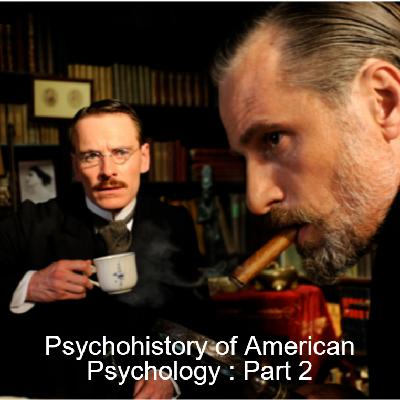
When the Great Depression wiped out the myth of the rugged, self-made American hero, the country was left with a massive psychological void. Right on cue, Sigmund Freud's psychoanalysis arrived in the U.S. with refugees fleeing Europe. Freud famously warned that he was bringing America a "plague," but America didn't catch it. Instead, we domesticated it.
In Part 2 of Psychotherapy on the Couch, Joel explores how the deep, messy, and uncomfortable theories of the human soul were repackaged to fit American consumerism. We look at how Edward Bernays weaponized his uncle Freud's ideas to invent modern PR and advertising, how a bizarre 1940s contest to find the mathematically "average" person gave birth to the suffocating myth of Normalcy, and how the brutal logistics of World War II forced the military to create a standardized checklist for human suffering—laying the exact groundwork for the modern DSM.
If you've ever wondered why we treat mental health like a checklist, the answer starts here.
psychology history, sigmund freud, psychoanalysis, edward bernays, the dsm, mental health podcast, history of therapy, sociology, american history, great depression, world war 2, taproot therapy, joel blackstock, cultural critique, mental illness
Why do we treat our minds like broken machines?
In The Psychohistory of American Psychology traces the birth of modern American psychology back to its dark, industrial roots. Before therapy, Americans processed suffering through community, religion, and the union hall. Then came the stopwatch and the assembly line.
This isn't a story about healing; it’s a story about optimization. We explore how engineers like Frederick Winslow Taylor and behaviorists like John B. Watson systematically stripped away the "messy" human soul to build a more compliant worker. We also unpack the era's defining paranoia—the "Money Trust" and the secret banker meeting at Jekyll Island—to reveal that the true conspiracy to steal human agency wasn't hiding in the shadows. It was walking right out in the open on the factory floor.
Psychology didn't emerge to cure the trauma of the 20th century. It emerged to make us function inside the machine.
Listen to discover:
What Americans used to make sense of suffering before therapy existed.
How the invention of standardized "machine time" literally rewired the human nervous system.
The dark truth behind John B. Watson’s Behaviorist Manifesto.
Why the paranoia over the Jekyll Island Federal Reserve meeting missed the real conspiracy of the Gilded Age.

In this episode, I’m thrilled to share a very special preview with you all! I recently had a short story published in The Running Wild Anthology Number One, a fantastic collection of unique and captivating tales.
Tune in as I read an exclusive excerpt from my story. If you enjoy this sneak peek and want to find out what happens next—as well as discover a whole bunch of other amazing short stories by talented authors—please consider grabbing a copy of the book!
Get your copy of The Running Wild Anthology Number One here: 👉 https://amzn.to/4sWlbDS (Note: This is an affiliate link. Using it helps support the show at no extra cost to you!)
Read this excerpt as a blog article:
Thank you so much for your support, and I can't wait to hear what you think of the full story!

How do you know the blue you see is the same blue I see? We use the same word, but do we share the same experience? This ancient philosophical puzzle has become the defining crisis of our time. We're living through a moment where people use identical words and mean completely different things—where the same sentence can be a factual claim, a tribal signal, a joke, and a weapon simultaneously.
In this episode of The Mirror World series, clinical director and psychotherapist Joel Blackstock, LICSW-S, explores the "collide-a-scope"—the moment when parallel realities can no longer stay separate through reflection and begin grinding against each other like gears that don't mesh.
Read the Article
THE FUSED BRAIN
What happens when you surgically connect multiple living brains? They synchronize. They reorganize. They form a collective organism. This thought experiment from qEEG brain mapping provides the perfect metaphor for what's happening to us now. The internet has wired us together into a vast neural network—and just like an individual brain can develop neuroses, this collective brain is experiencing profound cognitive dissonance.
THE DUAL LANGUAGE OF THE INTERNET
Media theorist Walter Ong predicted that electronic media would thrust us into "secondary orality"—combining the permanence of print with the participatory rhythms of oral culture. The internet meme is the ultimate artifact of this fusion: mythic archetypes paired with hyper-literal text, operating on two frequencies simultaneously. We have never before spoken different languages using the same words.
THOUGHT AS A SYSTEM
Quantum physicist David Bohm warned in 1994 that thought is not something we do—it's something that happens to us. Collective thought has become so automatic that our individual thoughts are increasingly controlled by the collective without our noticing. And that was before social media, before smartphones, before algorithmic amplification. The system has been turbocharged.
THE SOCIETY OF THE SPECTACLE
Guy Debord saw it coming: all that was directly lived has become mere representation. The spectacle isn't just entertainment—it's a social relationship between people mediated by images. It colonizes everyday life, structures our thought, captures even our resistance. You can know social media is manipulating you and still be manipulated, because the knowing happens within the spectacle.
THE COLLECTIVE PATIENT
Here's the radical claim: collective psychology now functions like individual psychology. Pathology, personality disorders, grandiosity, delusions, splitting from reality—they're happening at the collective level, in near real-time. Groups of humanity can now be analyzed almost the same way you'd analyze a patient in therapy. You can identify the defenses, trace the trauma, watch the collective do exactly what an individual does when confronted with something they can't face.
DIGITAL COLONIZATION
The Steve Bannon, Trump, 4chan, alt-right phenomenon wasn't just politics—it was networks of the collective brain expanding, sussing out weaker regions, finding wounds and grievances, colonizing them at the speed of thought. Traditional colonialism needed ships and armies and decades. Digital colonization happens before resistance can organize. The neural pathway is laid before anyone notices.
THE STAGES OF DEFLECTION
Watch humanity move through the same defense mechanisms as a therapy patient avoiding change:
It didn't happen
Okay it happened, but it's not real
Okay it's real, but it doesn't matter
Okay it matters, but we can't do anything about it
Okay maybe something could be done, but someone else will do it
Okay it's not getting solved, but it's someone else's fault
Okay it's going to take us all out, but we deserve it
Watch climate discourse. Watch inequality discourse. You'll see these exact stages playing out collectively in real time.
THE MIRROR WORLD
The parallel objectivities aren't just tribal disagreements—they're self-contained systems of representation that are coherent and reproducible but not valid. They don't point back to anything real. When official metrics say the economy is doing well while patients can't afford a $30 copay, those metrics are reliable but not valid. We feel this disconnect—but we've been convinced the solution lies inside the metrics. This is gaslighting at civilizational scale.
THE 1960s PARALLEL
"Turn on, tune in, drop out" recognized the system was sick. And they weren't wrong—the institutions were corrupt, the Vietnam War was built on lies, consumer society was producing alienation. But the counterculture won the cultural war and lost everything else. By 1980, rebellion had become a marketing strategy. Symbolic victory was captured and neutralized while material defeat was total. We're at risk of making the same mistake.
THE COLLISION
Peter Sloterdijk described modern life as "foam"—countless bubbles providing micro-environments, each its own immunological container. The bubbles worked for a while. But material crises don't care which reality you inhabit. Climate change crosses all boundaries. Pandemics don't check your epistemological commitments.
The bubbles are colliding now. Not reflecting—colliding. Grinding like gears that don't mesh. In a kaleidoscope, mirrors create beautiful patterns. In a collide-a-scope, the mirrors themselves are moving, crashing, shattering.
THE WAY THROUGH
The biggest step is recognizing that trauma treatment is self-evidently necessary—not as luxury, as foundation. Trauma fuels the blind spots. The parallel realities are trauma responses at collective scale.
Therapy itself has to change. We have to learn to actually live together—not manage or avoid each other. Western history is largely the story of managing avoidance: tolerance as sophisticated avoidance, transactions as connection without vulnerability, rights as protection from rather than relationship with.
Connection without internal avoidance. That's the task. The parts of yourself you can't face become the parts of others you can't tolerate. We need to see ourselves as multiplicities—communities of parts—and stop splitting thought from emotion. The Cartesian divide is part of what broke us.
The mirrors are shattering. The gears are grinding. The collision is here.
What we build from the fragments depends on whether we can finally stop avoiding—ourselves, each other, reality itself.
ABOUT THE SHOW:
www.GetTherapyBirmingham.com
TAGS:
metamodernism, collective psychology, trauma therapy, David Bohm, Guy Debord, Society of the Spectacle, Walter Ong, secondary orality, meme culture, digital colonization, parallel realities, post-truth, Peter Sloterdijk, collective trauma, IFS therapy, parts work, Internal Family Systems, depth psychology, cultural criticism, media theory, political psychology, social media psychology, consciousness, cognitive dissonance, polarization, tribalism, epistemology, philosophy of mind, psychotherapy, mental health, collective healing, systems theory, Jungian psychology, trauma-informed, neoliberalism critique, Frankfurt School, critical theory, internet culture, 4chan, alt-right, counterculture, 1960s, Timothy Leary, collective unconscious, mass psychology, social psychology, complexity theory, emergence, neural networks, brain science, qEEG, Birmingham therapy, Alabama therapist, complex trauma, PTSD, dissociation, emotional regulation, somatic therapy, body-based therapy, Brainspotting, ETT, integrative therapy, holistic psychology, transpersonal psychology, spiritual psychology, meaning crisis, nihilism, existential psychology, phenomenology, hermeneutics, postmodernism, sincerity and irony, authenticity, alienation, anomie, social fragmentation, culture war, political polarization, fake news, misinformation, disinformation, information warfare, attention economy, surveillance capitalism, algorithmic amplification, filter bubbles, echo chambers, radicalization, deradicalization, healing polarization, bridging divides, difficult conversations, conflict resolution, relational therapy, attachment theory, developmental trauma, adverse childhood experiences, ACEs, intergenerational trauma, collective memory, historical trauma, cultural trauma, social healing, community healing, collective resilience, post-traumatic growth, meaning-making, narrative therapy, constructivism, social constructionism, embodied cognition, 4E cognition, extended mind, distributed cognition, enactivism, phenomenological psychology
KEYWORDS
metamodernism explained, collective trauma therapy, why society feels broken, David Bohm thought as a system, Guy Debord society of the spectacle explained, understanding political polarization, trauma and politics, why we can't agree on facts, parallel realities psychology, meme culture analysis, internet psychology, collective psychology theory, therapy for our times, parts work IFS, internal family systems explained, depth psychology modern, cultural criticism podcast, media theory podcast, understanding the culture war, healing political division, trauma-informed society, systems thinking psychology, consciousness and society, meaning crisis solutions, why communication is impossible, post-truth psychology, collective healing trauma, Birmingham Alabama therapist, complex trauma treatment, Brainspotting therapy, somatic experiencing therapy, integrative psychotherapy, holistic mental health, transpersonal therapy, spiritual psychology podcast, existential therapy, phenomenological therapy, social psychology podcast, mass psychology explained, collective unconscious modern, Jung and politics, critical theory psychology, neoliberalism and mental health, capitalism and trauma, social media mental health, algorithm psychology, attention economy effects, filter bubble psychology, radicalization psychology, bridging political divides, healing polarization therapy, difficult conversations psychology, relational psychotherapy, attachment and society, developmental trauma soci
"We built institutions that were supposed to reflect reality. But the windows became mirrors."
In the second century, the Gnostics believed our world was a false reality created by a confused lesser god known as the Demiurge. Today, we are trapped in a modern equivalent: a labyrinth of metrics, models, and algorithms that dictate our lives while entirely missing our humanity.
In Part 7 of The Mirror World, we dissect the collapse of institutional sense-making and the profound psychological toll of living inside the "fake world." Drawing on the histories of standardized testing, the DSM, and economic modeling, we explore how disciplines retreated behind "mechanical objectivity" to defend against insecurity—and how the profit motive locked us inside these models.
Ultimately, we confront the modern pinnacle of this trap: Large Language Models (LLMs). We examine why AI is not the solution, but rather the ultimate simulacrum—the ghost of the human archive that performs the gesture of understanding while severing us from the real.
To escape the mirror, we turn to the late psychologist James Hillman. Reclaiming our soul’s calling—our daimon—requires more than just new metrics or better prompts. It requires us to do the one thing the algorithm cannot: grieve.
🔍 In This Episode, We Explore:
The Gnostic Metaphor: Why the ancient heresy of the Demiurge maps perfectly onto our modern crisis of professional legitimacy and institutional failure.
The Insecurity of Metrics: How fields like economics, education, and psychology replaced human judgment with mechanical numbers to shield themselves from criticism (featuring the work of Theodore Porter and Adam Curtis).
The LLM Revelation: Why AI language models are the ultimate "ghosts"—averaging out the wisdom of the dead without carrying forward their demands or soul.
Hillman’s Acorn Theory: Why modern systems reclassify our deepest callings and emotional truths as disorders, inefficiencies, or trauma.
The Necessity of Grief: Why breaking the cycle of the "metamodern oscillation" demands that we stop optimizing and start mourning what we've lost.
Get Therapy in Hoover, Alabama.
📚 References & Thinkers Discussed:
Theodore Porter: Trust in Numbers
Adam Curtis: The profit motive, the Nixon shock, and the "fake world"
James Hillman: Lament of the Dead and The Soul's Code * Jason Ananda Josephson Storm / Metamodernism: The oscillation between grand narratives and infinite complexity. Metamodernism, AI Philosophy, Large Language Models Critique, James Hillman Acorn Theory, Adam Curtis Fake World, Gnosticism and Tech, Meaning Crisis, Institutional Decay, Theodore Porter Trust in Numbers, Algorithmic Determinism, Depth Psychology, Simulacra, Sensemaking, 2026 Tech Culture, Societal Grief
Are we navigating reality, or just a highly optimized map of the past? In this episode, we dive into the architecture of our modern ghost story. We explore how the digital systems built to reflect our world have instead consumed it, replacing human experience with statistical prediction, algorithmic herding, and mechanical objectivity.
Drawing on a wide synthesis of philosophy, media theory, and history, we deconstruct how the "map ate the territory." From Jean Baudrillard’s simulacra to the predictive text of modern Large Language Models, we examine the uncanny reality of living inside a model that only knows what the dead have written. If the internet is a séance and your digital profile is a voodoo doll, what happens to the biological original?
In this episode, we unpack:
The Precession of Simulacra: How credit scores and algorithmic risk models generate the reality they claim to measure.
The Bureaucracy of the Dead: Why modern AI is less an artificial intelligence and more an industrialization of our ancestors, echoing the warnings of James Hillman.
Digiphrenia & The Voodoo Doll: Douglas Rushkoff’s narrative collapse and Jaron Lanier’s terrifying metaphor for the modern attention economy.
The Numbers Shield: Theodore Porter’s revelation that "mechanical objectivity" and rigid quantification are actually defense mechanisms used by fragile institutions.
Spheres & Foam: Peter Sloterdijk’s theory on why we retreat into fragile, toxic digital bubbles when our shared reality fractures.
We didn't just build tools; we built environments. And when the machine becomes the environment, its logic becomes our logic. Join us as we look for the gap in the code—the unquantifiable silence where true human agency still survives.
Concepts & Thinkers Discussed: Adam Curtis, Jean Baudrillard, Marshall McLuhan, Naomi Klein, Shoshana Zuboff, James Hillman, and Peter Sloterdijk.
Get Therapy in Hoover, Alabama.

Tania's advanced training program which is starting on February 25th:
https://deepmindpt.com/deep-mind-mastery
In this episode, I’m joined by Tania Kalkidis for a deep, evidence-based conversation on the growing gap between research, academic psychology, and real-world clinical practice — with a sharp focus on the DSM and its role in modern mental health care.
Together, we unpack the challenges of evidence-based practice in psychology, questioning how closely current diagnostic frameworks align with the latest scientific research. We explore where clinical practice diverges from academic psychology, why this matters for clients and clinicians alike, and how systemic pressures shape diagnostic decision-making.
A key focus of this conversation is the Australian mental health system, including how DSM-driven practice operates within local funding, training, and service delivery models — and how this compares to psychological practice in the United States. We examine similarities and differences in diagnosis, treatment pathways, professional accountability, and the influence of insurance and policy on clinical care.
This episode is essential listening for psychologists, therapists, mental health professionals, students, researchers, and anyone interested in how psychology is actually practiced versus how it’s taught and studied. If you care about scientific integrity, ethical practice, and the future of mental health diagnosis, this conversation offers clarity, critique, and nuance.
Topics covered include:
Evidence-based practice vs. diagnostic tradition
Limitations and controversies surrounding the DSM
Clinical psychology and academic research misalignment
Mental health systems in Australia vs. the United States
Implications for clinicians, clients, and policy
🔍 Keywords: evidence-based practice, DSM criticism, clinical psychology, academic psychology, Australian mental health system, US vs Australia psychology, psychological diagnosis, mental health research
more@ Get Therapy in Hoover, Alabama.
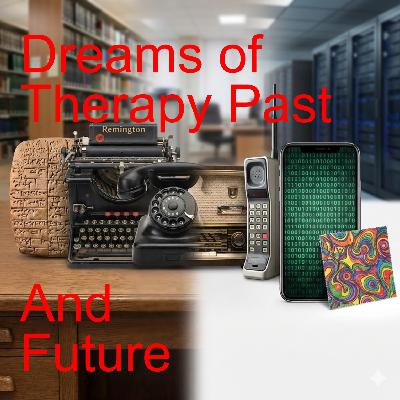
More @ https://gettherapybirmingham.com/
Why does modern mental health care often feel like a bureaucratic ritual rather than a healing encounter? In Part 5 of The Absence of Idols, we explore how psychiatry emptied the temple of meaning and replaced it with a checklist.
We begin with the ancient dream of Addudûri and the terror of an empty temple, using it as a map to understand our current crisis. Drawing on the work of historian Theodore Porter and physicist Richard Feynman, we dismantle the "Cargo Cult Science" of the mental health system—a system that builds perfect wooden control towers but cannot land the plane.
From the rigid authoritarianism of James Dobson’s Focus on the Family to the "mechanical objectivity" of the DSM, we examine how weak institutions use metrics to hide their lack of authority. We also look at the "lacuna"—the institutional blind spot that prevents experts from seeing the harm they cause—and why deconstructing religion without reconstructing meaning has left us vulnerable to the return of monsters.
In this episode, we cover:
The Cargo Cult of Psychiatry: Why "evidence-based" protocols often function like coconut headphones—mimicking science without the substance.
Mechanical vs. Disciplinary Objectivity: How the mental health system traded trained wisdom for insurance-friendly checklists.
The Lacuna Effect: Why institutions are literally blinded to their own biases (and how the brain fills in the gaps).
Deconstruction Dangers: Why stripping away context without offering new metaphors creates a vacuum filled by conspiracy theories and extremism.
Mentions & References:
Richard Feynman’s "Cargo Cult Science" address (Caltech, 1974)
Theodore Porter, Trust in Numbers
The Dream of Addudûri (Mesopotamian texts)
James Dobson & Focus on the Family critiques
The Rosenhan Experiment
Wilhelm Reich, Fritz Perls, and Somatic Experiencing
Mental Health, Psychiatry Critique, Cargo Cult Science, Psychology, Trauma, James Dobson, Philosophy of Science, Theodore Porter, Somatic Therapy, Institutional Trust.
Get Therapy in Hoover, Alabama.

https://gettherapybirmingham.com/the-dark-reflection-adam-curtiss-all-watched-over-by-machines-of-loving-grace/
Why is the most therapy-literate generation in history also the most depressed?
This episode traces the hidden history connecting Cold War game theory, a 1964 pop psychology bestseller, and the mental health crisis devastating Gen Z.
The thread starts with John Nash—the schizophrenic mathematician who built models assuming all humans are paranoid, self-interested calculators. It runs through Eric Berne's "Games People Play," which taught millions that relationships are just strategic transactions. It continues through Reagan, Thatcher, and the rise of CBT—a therapy model that treats your mind like buggy software. And it ends with a generation drowning in optimization, starving for meaning, and wondering why all their self-knowledge isn't helping.
Featuring the tragic story of George Price, the scientist who slit his own throat trying to disprove his equation proving love is just calculation. Plus: why therapists can't legally unionize, how a secret committee of surgeons sets the price of your mental healthcare, and why the "just do it yourself" wellness movement is the final victory of the worldview that broke us.
This isn't self-help. This is an autopsy of the assumptions we've been living inside.
Topics covered: Game theory and psychology, Eric Berne transactional analysis, Adam Curtis The Trap, John Nash Beautiful Mind, CBT criticism, Gen Z mental health crisis, Theodore Porter Trust in Numbers, neoliberalism and therapy, Rosenhan experiment, C. Thi Nguyen gamification, purpose vs point, George Price equation, Wilhelm Reich, depth psychology, mental health policy
More @ Get Therapy in Hoover, Alabama.
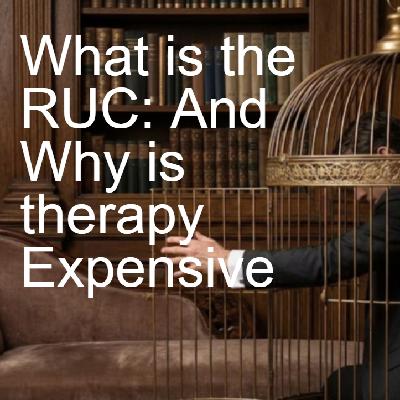
Can Therapists Start a Union? The Antitrust Trap, the Shadow Committee, and the Economic Strangulation of American Psychotherapy
Analyzing America’s Healthcare Regulations and Their Effect on Us: Why the Law Prevents Therapists from Organizing While Allowing a Private Committee to Fix Prices for the Entire Medical System
https://gettherapybirmingham.com/can-therapists-start-a-union-spoiler-alert-they-cant/
The Monthly Rage Thread
If you hang around therapist forums long enough, you will see it happen. It operates with the regularity of the tides. Someone posts a thread, usually after receiving a contract from an insurance company offering 1998 rates for 2025 work, and asks the obvious question:
“We are the ones providing the care. The system collapses without us. Why don’t we just all go on strike? Why don’t we form a union and demand fair pay?”
It is a logical question. In almost every other sector of the economy, workers who feel exploited band together to negotiate better terms. Screenwriters shut down Hollywood to get paid for streaming residuals. Auto workers walk off the line. Teachers fill the state capitol. Nurses at major hospital systems have successfully unionized and won significant concessions. So why, in the midst of a national mental health crisis, does the mental health workforce remain so politically impotent?
The answer is not that we lack will. It is not that we lack organization. The answer is that for private practice therapists, forming a union is a federal crime.
This is not a political manifesto. It is an analysis of the bizarre regulatory environment that governs American healthcare, a system of antitrust laws, shadow committees, and bureaucratic classifications that effectively strips clinicians of their bargaining power while empowering the corporations that pay them. If you want to understand why corporate tech monopolies are ruining therapy, or why the corporatization of healthcare feels so suffocating, you have to understand the legal straitjacket we are all wearing. And you have to understand the one group that is allowed to set prices, the one group exempt from the rules that bind the rest of us.
Part I: You Are Not a Worker, You Are a Standard Oil Tycoon
The primary reason therapists cannot unionize dates back to the era of oil barons and railroad tycoons. The Sherman Antitrust Act of 1890 was designed to prevent massive corporations like Standard Oil from colluding to fix prices and destroy the free market. It prohibits “every contract, combination… or conspiracy, in restraint of trade.” The law was a response to genuine abuses: companies buying up competitors, dividing territories, and coordinating prices to gouge consumers who had no alternatives.
Here is the catch: In the eyes of the federal government, a private practice therapist is not a “worker.” You are a business entity. Even if you are a solo practitioner struggling to pay rent in a subleased office, seeing clients between crying in your car and eating lunch at your desk, the law views you as the CEO of a micro-corporation. You are classified as a 1099 independent contractor, not a W-2 employee, and that distinction makes all the difference in the world.
If two workers at Starbucks talk about their wages and agree to ask for a raise, that is “collective bargaining,” which is protected by the National Labor Relations Act. But if two private practice therapists talk about their reimbursement rates and agree to ask Blue Cross for a raise, that is “price-fixing.” It is legally indistinguishable, in the eyes of the Federal Trade Commission, from gas stations conspiring to raise the price of unleaded.
It sounds absurd, but the FTC takes it deadly seriously. When independent contractors organize to demand higher rates, when they share information about what they are being paid and coordinate their responses, they are engaging in horizontal price-fixing, one of the most serious violations of antitrust law. The Sherman Act provides for criminal penalties, including fines and imprisonment. The law that was meant to break up monopolies is now used to prevent social workers from asking for a cost-of-living adjustment.
The irony is crushing. The same regulatory framework that prevents two therapists from discussing their rates allows massive insurance conglomerates to merge repeatedly, concentrating buyer power in fewer and fewer hands. UnitedHealth Group, for example, has acquired dozens of companies over the past two decades, becoming the largest healthcare company in the United States. When they offer a “take it or leave it” contract to providers, they do so with the full knowledge that fragmented, legally prohibited from organizing therapists have no counter-leverage. The antitrust laws, designed to prevent monopoly power, have created a system where sellers are atomized and buyers are consolidated. Economists call this “monopsony,” and it is precisely the market distortion the Sherman Act was supposed to prevent.
Part II: The Day the “Learned Profession” Died
For a long time, doctors and lawyers thought they were exempt from these laws. They argued that they were “learned professions,” not mere tradespeople, and therefore above the grubby laws of commerce. They believed that their ethical obligations to patients and clients set them apart from the rules that governed steel mills and meatpacking plants. Medicine was a calling, not a business, and surely the government would not regulate the sacred doctor-patient relationship as if it were a commercial transaction.
That illusion was shattered in 1975 by the Supreme Court case Goldfarb v. Virginia State Bar. The case involved lawyers, not doctors, but its implications cascaded through every licensed profession in America. The Goldfarbs were purchasing a home and needed a title examination. The Virginia State Bar had established a minimum fee schedule for such services, and every lawyer they contacted quoted the exact same price. They sued, arguing that this fee schedule was illegal price-fixing.
The Supreme Court agreed. In a unanimous decision, the Court ruled that professional services, including legal and medical advice, are “trade or commerce” subject to antitrust laws. The “learned profession” exemption, which had been assumed but never explicitly established in law, was declared a myth. “The nature of an occupation, standing alone,” the Court wrote, “does not provide sanctuary from the Sherman Act.”
This ruling was intended to lower prices for consumers by preventing lawyers from setting minimum fees, and in that narrow sense it was a good thing. But in healthcare, it had a catastrophic side effect: it made it illegal for doctors and therapists to band together to resist the pricing power of insurance companies. The “learned profession” exemption is dead. We are now just businesses, and businesses are not allowed to hold hands.
This creates the illusion of progress: we have “free market” competition among providers, but monopsony power among payers. It is a market where the sellers are forbidden from organizing, but the buyers are allowed to merge until they are too big to fail. The result is not a free market at all. It is a market designed to transfer wealth from one class (providers) to another (insurers and administrators), with the law itself serving as the enforcement mechanism.
Part III: The Cartel in the Basement
If therapists cannot collude to set prices, surely nobody else can, right? Wrong.
There is one group in American healthcare that is allowed to meet in a room, decide what every doctor’s time is worth, and set prices for the entire industry. It is called the RUC, the AMA/Specialty Society Relative Value Scale Update Committee. And understanding the RUC is the key to understanding why talk therapy is dying in the medical model, why psychiatrists abandoned the couch for the prescription pad, and why your insurance company offers you a ghost network of providers who never answer the phone.
The Birth of a Shadow Government
To comprehend the current crisis in mental health economics, one must excavate the foundations of the physician payment system. Prior to 1992, Medicare reimbursed physicians based on a system known as “Customary, Prevailing, and Reasonable” charges. Under this system, physicians were paid based on their historical billing charges. It was inherently inflationary; it rewarded those who raised their fees most aggressively and created wide geographic disparities for identical services.
In response to spiraling costs, Congress passed the Omnibus Budget Reconciliation Act of 1989, mandating a transition to a fee schedule based on the resources required to provide a service. This birthed the Resource-Based Relative Value Scale. The intellectual architecture for this system was developed by a team of economists at Harvard University, led by William Hsiao. Hsiao’s team sought to create a “unified theory” of medical value, attempting to quantify the “work” involved in disparate medical acts, comparing the cognitive intensity of a psychiatric evaluation with the technical skill of a hernia repair.
The Harvard study was revolutionary. It promised to level the playing field, suggesting that cognitive services, the thinking and talking that comprises primary care and mental health, were vastly undervalued relative to surgical procedures. Had Hsiao’s original recommendations been implemented purely, the income gap between generalists and specialists might have narrowed significantly. But the administrative complexity of assigning values to over 7,000 Current Procedural Terminology codes overwhelmed the Health Care Financing Administration.
Into this administrative vacuum stepped the American Medical Association. The AMA, fearing that the government would unilaterally set prices, proposed a “partnership.” They would convene a committee of experts to maintain and update the relative values, providing this labor-intensive service to the government at no cost
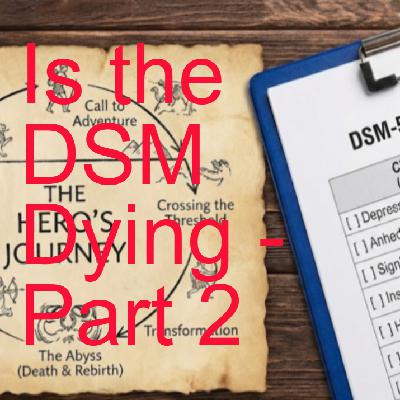
https://gettherapybirmingham.com/what-is-a-diagnosis-anyway-is-the-dsm-dying-part-2/
The Archaeology of a Label: What We Forgot About Diagnosis and Why It Matters Now
The book that decides if you're sane was written by the military to process soldiers. The committees that define your mental illness hold "typewriter parties" where they shout symptoms until someone wins. And the federal government declared the whole thing scientifically invalid—two weeks before the latest edition dropped.
In this episode, Joel Blackstock, LICSW-S, takes you inside the bizarre, hidden history of the DSM—the document that shapes every therapy session, every prescription, every insurance claim in American mental health. You'll learn:
Why the DSM started as an Army logistics manual, not a medical document
How a single awkward psychiatrist named Robert Spitzer staged a coup against Freud using checklists and political horse-trading
The "dopamine miracle" that saved psychiatry from total collapse—and the price we're still paying
Why the biggest research agency in mental health publicly divorced the DSM and nobody noticed
What Joseph Campbell and Star Wars have to do with the therapy your insurance won't cover
This isn't anti-psychiatry. This is pro-understanding. Because the system isn't broken by accident—it was built this way. And if we want to fix it, we have to see how we got here.
"The DSM was never a description of nature. It was a set of administrative protocols created by the military, adapted by the bureaucracy, defended by a profession fighting for legitimacy, and captured by industries seeking profit."
Get Therapy in Hoover, Alabama.
Subscribe. Share. And maybe question that diagnosis.
More @ https://gettherapybirmingham.com/

Get Therapy in Hoover, Alabama.

Is the DSM Dead? The "Bible" of Psychiatry, The Thud Experiment, and The Crisis of Diagnosis
Episode Description:
https://gettherapybirmingham.com/is-the-dsm-dying-rethinking-suffering/
It dictates every diagnosis you receive, every medication you’re prescribed, and every insurance dollar spent on your mental health. But what if the "Bible of Psychiatry" isn’t actually scientific?
Pull back the curtain on the Diagnostic and Statistical Manual of Mental Disorders (DSM) to reveal a document in crisis. From the secret backroom deals that voted diagnoses into existence to the "checklist revolution" that stripped therapy of its meaning, we investigate how American mental healthcare became a system of billing codes rather than healing.
We explore the infamous Rosenhan "Thud" Experiment that humiliated the psychiatric establishment, the accidental creation of "false epidemics" like ADHD and Bipolar II, and why the National Institute of Mental Health (NIMH) effectively abandoned the DSM years ago.
Most importantly, we ask the hard question: Why does the system demand you be "broken" to get help, yet deny you care if you are "functioning" enough to work?
If you have ever felt misunderstood by a diagnosis, frustrated by the medical system, or wondered why your "high-functioning" suffering doesn't seem to count, this episode is the validation you’ve been waiting for.
In This Episode, We Cover:
The "Thud" Experiment: How 8 sane people got committed to asylums and proved psychiatry couldn't tell the difference between madness and sanity.
Reliability vs. Validity: Why the DSM prioritized "agreeing on a label" over "finding the cure."
The Productivity Trap: How the "Clinical Significance Criterion" denies care to people who are suffering but still employed.
The "False Epidemics": A look at how diagnostic inflation created the modern ADHD and Autism boom.
The Divorce of Psychiatry & Therapy: Why your psychiatrist doesn’t do therapy anymore (and why that matters).
The Future: Moving beyond the checklist toward a model of narrative, systems, and human connection.
Quote from the Episode: "The DSM is not a description of nature. It is a description of what American healthcare requires nature to be."
Resources Mentioned:
The Myth of Mental Illness by Thomas Szasz
The Book of Woe by Gary Greenberg
The STAR*D Study’s true remission rates (2.7%)
Hierarchical Taxonomy of Psychopathology (HiTOP)
Connect & Listen: Subscribe to hear more critical investigations into the mental health system. If this episode resonated with you, please leave a review and share it with a friend who needs to hear that they are more than a billing code.
Keywords for SEO: Mental Health, DSM-5, Psychiatry, Psychology, Trauma, ADHD, Neurodivergence, Joel Blackstock, Taproot Therapy, Clinical Depression, Bipolar Disorder, Big Pharma, Medical History, Rosenhan Experiment.
More @ Get Therapy in Hoover, Alabama.
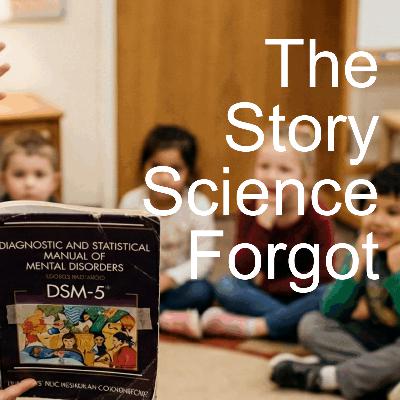
The Story Science Forgot: Why Psychotherapy Needs Narrative More Than Ever
by Joel Blackstock LICSW-S MSW PIP no. 4135C-S | Dec 15, 2025 | 0 comments
Joseph Campbell is arguably one of the most influential intellectuals of the twentieth century. If you have watched a Marvel movie or read a modern fantasy novel or sat in a screenwriter’s workshop you have encountered his fingerprints. George Lucas explicitly credited Campbell’s The Hero with a Thousand Faces as the structural backbone of Star Wars. Every major Hollywood studio has copies of his work floating around their development offices.
Even filmmakers who actively deconstruct his monomyth model still have to be in conversation with Campbell to do so. You cannot escape him if you are telling stories in the Western tradition.
But here is the thing about Joseph Campbell that we need to hold in our minds when we think about what psychology has become. He was a showman. He was a legitimate scholar but also someone who understood that the truth sometimes needs a little theatrical assistance.
The Showman and the Bear Bones
One of Campbell’s favorite presentation techniques involved showing an image of ancient bear bones that were perhaps two million years old and discovered in a cave. The bones had been arranged in a particular way with pieces shoved back into the bear’s mouth.
Campbell would present this with his characteristic gravitas and explain that the ancients understood that nature must eat of itself. They knew that to take life is to participate in a cyclical loop of giving and receiving. The bear consuming itself was a ritual recognition that we are all food for something else.
It is a beautiful interpretation. It is probably even partially true. We know through depth psychology and early anthropology that prehistoric humans were almost certainly trying to make meaning of existential realities. Ritual practices around death and consumption are well documented across cultures. Campbell was not fabricating this from nothing.
But also come on Campbell. These are two million year old bones shoved in a hole. Maybe the jaw just collapsed that way. Maybe soil shifted. Maybe an animal disturbed them centuries after burial. He did not know. He could not know. And yet he presented it with the confidence of revealed truth.
Here is why this matters. Campbell’s influence is incalculable despite his methodological looseness. He told a story that resonated so deeply with something in the human psyche that it became the invisible architecture of our entire entertainment industry. He was not objectively right about those bear bones but he was pointing at something real about how humans make meaning. The story he told about that meaning making was more powerful than any peer reviewed paper could have been.
We need to remember this when we think about psychotherapy and what it has become.
The Dream I Had and the World I Found
When I first entered the field of psychotherapy I had a fantasy. I thought I was going to be Joseph Campbell. I was going to find my way to someplace like Berkeley and immerse myself in the grand conversation between psychology and mythology and anthropology and philosophy. I imagined something like the Esalen Institute in the 1970s where Fritz Perls developed Gestalt therapy and where researchers and mystics and clinicians sat together in hot springs and argued about the nature of consciousness.
Those places barely exist anymore.
What I found instead was a competitive model built on H-indexes and impact factors. I found academic departments that had been siloed into increasingly narrow specializations. Each department defended its territorial boundaries against incursion from neighboring disciplines. The institute model where a psychologist might spend an afternoon talking to an anthropologist about ritual has been systematically dismantled.
What we have instead are specialists who do not read outside their sub specialty and researchers whose entire careers depend on defending one narrow hypothesis. We have an incentive structure that actively punishes the kind of cross pollination that leads to genuine discovery.
The Hollow Room: How the Biomedical Model Fails
This is not just an academic inconvenience. It is a catastrophe for the human sciences and for the actual treatment of patients.
There is a reason Freud stuck around. It is not because psychoanalysis was rigorously validated through randomized controlled trials. It is because as the science writer John Horgan observed old paradigms die only when better paradigms replace them. Freud lives on because science has not produced a theory of and therapy for the mind potent enough to render psychoanalysis obsolete once and for all.
The biomedical model promised us a better story. It told us that humans are biological machines and that suffering is just a mechanical malfunction. It promised that if we could just find the right neurotransmitter or the right gene we could fix the machine.
But look at what that looks like in practice.
It looks like the 15 minute medication management appointment. A person comes in with their life falling apart. They are grieving a divorce or wrestling with the trauma of their childhood or facing a crisis of meaning. And the doctor looks at a checklist. They ask about sleep. They ask about appetite. They ask about energy levels. They treat the symptoms like check engine lights on a dashboard. They prescribe a pill to dim the lights and they send the person away.
It looks like manualized Cognitive Behavioral Therapy. This is the gold standard of evidence based treatment. But in the vacuum of a manual it becomes absurd. A patient might be crying about the loss of a child and a therapist who is strictly adhering to the protocol has to redirect them to the agenda for Module 3 which is identifying cognitive distortions. The model has no room for the tragedy of the situation. It only has room for the erroneous thought that the patient is having about the tragedy.
The result is that by most measures we are not actually helping people more effectively than we were fifty years ago. To understand the depth of this failure, we must look at the “smoking gun” of the psychiatric establishment: the STAR*D study.
For nearly two decades, this massive, taxpayer-funded study was held up as the irrefutable proof that the “medication merry-go-round” worked. It cost $35 million and was cited thousands of times to justify the idea that if a patient didn’t get better on one antidepressant, you simply switched them to another, and then another. The study claimed a “cumulative remission rate” of 67%. It told us that two-thirds of people would be cured if they just complied with the protocol.
This was a lie built on methodological quicksand. A forensic re-analysis of the data (Pigott et al., 2023) revealed that the researchers had inflated their success rates through a series of stunning methodological sleights of hand. The original design called for the Hamilton Rating Scale for Depression (HRSD) to be the primary outcome measure. But when that scale wasn’t showing the numbers they wanted, investigators switched to a secondary, unblinded, self-report questionnaire (the QIDS-SR) which painted a rosier picture.
Furthermore, the re-analysis exposed that hundreds of patients who dropped out due to side effects were excluded from the failure count, effectively scrubbing the negative data. Even worse, over 900 patients who didn’t even meet the minimum severity for depression were included to boost the numbers. When the data was re-analyzed using the study’s original criteria and including all participants, the cumulative remission rate plummeted from 67% to 35%.
But the most damning statistic is the sustained recovery rate. Of the 4,041 patients who entered the trial, only a tiny fraction achieved remission and actually stayed well. When accounting for dropouts and relapses over the one-year follow-up period, a mere 108 patients achieved remission and stayed well without relapsing. That is a sustained recovery rate of 2.7%.
If a heart surgery or cancer treatment had a failure rate of 97.3%, it would be abandoned. Yet, this study was championed by investigators with deep financial ties to the pharmaceutical industry, and the results were codified into clinical guidelines that still rule the profession today. This is the indictment: we have built an entire system of care on a statistical fabrication, prioritizing the protection of the model over the healing of the human.
I have big problems with Freud. I have big problems with classical psychoanalysis. I am more of a Jungian. But here is what the depth psychologists understood that the biomedical model forgot. Humans are not just biological machines. We are meaning making creatures who navigate the world through story. When you take away our stories you do not make us more rational. You make us lost.
The Flock of Dodos
This separation of science from narrative has hurt the researchers too. In his book The Ghost Lab journalist Matt Hongoltz-Hetling uses the flock of dodos metaphor to describe this phenomenon. He argues that specialized creatures that are perfectly adapted to narrow environments become extinct when conditions change.
Academic science has become a flock of dodos. A neuroscientist studies one particular brain region. A psychologist studies one particular therapeutic intervention. An anthropologist studies one particular culture.
Nobody is allowed to step back and ask what all of this means together. When you silo information into separate academic disciplines instead of organizing it into a holistic understanding you kill the narratives that are already there. You cannot see the story until you step back far enough to recognize the pattern.
Heidegger and the AI Bubble
One of the primary functions of a subjective narrative in an objective field like psychotherapy is that it lets us start with things we consider self evident. These are th

Join Joel Blackstock for an extraordinary conversation with Dr. Steven Vazquez, the inventor of Emotional Transformation Therapy (ETT), as he reveals the 25-year scientific journey that led to one of the most innovative breakthroughs in trauma treatment. From skeptical experimentation to treating cancer with eye movements, discover how specific wavelengths of light directly impact the brain's emotional centers.
https://www.gettherapybirmingham.com/emotional-transformation-therapy-ett-dr-steven-vazquez/
In this illuminating episode, Dr. Vazquez shares the fascinating evolution of ETT's four core technologies, the neuroscience behind why colors disappear during dissociation, and remarkable case studies including elimination of Parkinson's symptoms, instant resolution of 15-year chronic pain, and complete remission of colorectal cancer through targeted eye movement protocols.
Key Topics Covered:
The accidental discovery: From syntonic optometry to emotional transformation
Building and testing 7 different light devices over 25 years
Why the optic nerve's path through the brain stem changes everything
The substantia nigra connection: Treating movement disorders without surgery
Temporal-parietal junction: Why trauma survivors are 4x more likely to be re-traumatized
Real-time dissociation detection through visual distortion
Converting EMDR practitioners: Why they switch and never go back
Breakthrough Cases Discussed:
Arthritic pain eliminated instantly with orange light
Colorectal cancer remission confirmed by oncologist next day
Father's visual trauma from discovering son's suicide - resolved in 10 minutes
Sciatica eliminated in 20 minutes (physician patient, still gone 1 year later)
Birth trauma causing adult osteoporosis - complete resolution
Resources:
ETT Training Programs (7 levels): www.etttraining.com
Research and publications on wavelength-specific brain activation
International training locations and certification pathways
Perfect for neuroscience enthusiasts, trauma therapists, EMDR/Brainspotting practitioners, and anyone seeking to understand the cutting-edge intersection of light, brain science, and emotional healing.
#EmotionalTransformationTherapy #ETT #DrStevenVazquez #Neuroscience #TraumaTherapy #LightTherapy #BrainScience #EMDR #Brainspotting #Innovation #PTSD #ChronicPain #Dissociation #TherapyResearch
More @ https://gettherapybirmingham.com/
https://mjdenis.com/whoismjdenis
Join Joel Blackstock as he sits down with MJ Denis, LPC, LMFT, and certified ETT trainer from Austin, Texas, for an eye-opening conversation about Emotional Transformation Therapy (ETT) - a groundbreaking approach that integrates light, color, and neuroscience to transform emotional healing.
Read the blog article: https://gettherapybirmingham.com/from-skepticism-to-science-how-emotional-transformation-therapy-is-revolutionizing-mental-health-treatment-a-deep-dive-with-mj-denis/
In this compelling episode, MJ shares her journey from skepticism to becoming one of the leading ETT trainers in the country, having conducted over 3,100 sessions. Discover how this evidence-based therapy goes beyond traditional talk therapy and EMDR to create rapid, lasting change for trauma, anxiety, depression, ADHD, OCD, and chronic pain.
Key Topics Covered:
The science behind using specific wavelengths of light for emotional regulation
Why ETT succeeds where EMDR and traditional therapies plateau
Real case studies: From lifelong phobias resolved in minutes to chronic pain relief
How therapists can integrate ETT with existing modalities (IFS, somatic experiencing, CBT)
The neurological basis of color perception and emotional processing
Virtual ETT sessions and expanding access to care globally
Resources Mentioned:
ETT Training Information: www.etttraining.com
Find an ETT Therapist Directory
Dr. Steven Vazquez's research and methodology
Perfect for mental health professionals, trauma survivors, and anyone interested in cutting-edge therapeutic approaches that bridge neuroscience and emotional healing.
#EmotionalTransformationTherapy #ETT #TraumaTherapy #EMDR #BrainSpotting #Neuroscience #MentalHealthInnovation #LightTherapy #ColorTherapy #PTSD #AnxietyTreatment #DepressionTherapy #TherapistTraining #HolisticHealing
More @ https://gettherapybirmingham.com/

In this eye-opening episode of the Discover Heal Grow podcast, host Joel Blackstock sits down with healthcare policy expert Timothy Faust to demystify America's complex healthcare system. They explore how Medicaid expansion actually saves states money, why cutting healthcare funding costs more in the long run, and the real economics behind healthcare policy.
Key topics covered:
The business case for Medicaid expansion
How preventative care saves millions in emergency costs
Why rural hospitals depend on Medicaid funding
The hidden costs of means-testing and bureaucracy
Real stories of how healthcare debt impacts economic mobility
Why healthcare spending creates 4x more economic activity than defense spending
Perfect for healthcare workers, policy enthusiasts, and anyone trying to understand why American healthcare costs so much and how we can fix it.
🎧 Listen now to understand the economics of healthcare that politicians don't want you to know.
Newsletter:
buttondown.com/error - His healthcare newsletter (mentioned in podcast)
Book:
"Health Justice Now: Single Payer and What Comes Next" - Available on Amazon and through Melville House Publishing
Amazon: https://www.amazon.com/Health-Justice-Now-Single-Payer/dp/1612197167
Penguin Random House: https://www.penguinrandomhouse.com/books/580342/health-justice-now-by-timothy-faust/
Social Media:
Twitter/X: @crulge - https://twitter.com/crulge or https://x.com/crulge
Bluesky: @crulge.urinal.club - https://bsky.app/profile/crulge.urinal.club
LinkedIn: 💀 T. - https://www.linkedin.com/in/faust/
medicaid expansion economics, healthcare policy alabama, rural hospital closures, medical debt crisis, healthcare cost savings, preventative care ROI, insurance industry reform, medicare for all economics, healthcare bureaucracy waste, medical bankruptcy prevention, assertive community treatment, healthcare market failure, single payer benefits, medicaid work requirements, healthcare economic multiplier
More @ https://gettherapybirmingham.com/

Walter Sorrells Blades (Japanese sword site): https://www.waltersorrellsblades.com/
Tactix Armory (production knives): https://www.tactixarmory.com/
Sorrells Tool (new tool website): https://sorrelstool.com/
Youtube: https://www.youtube.com/channel/UCkLxJCuQZ4hStBfs8TCnT9Q
From Novelist to Master Swordsmith: In this captivating episode of Chap Therapy Collective: Discover Here, Grow, host Joel Blackstock welcomes Walter Sorrells, a master bladesmith whose extraordinary journey from bestselling mystery novelist to renowned Japanese sword maker offers profound insights into creativity, craftsmanship, and personal transformation.
Walter Sorrells has spent over 25 years perfecting the ancient art of Japanese bladesmithing. After writing more than 30 mystery and suspense novels (including an Edgar Award winner), Walter made the bold decision to pursue his passion for sword making full-time. Today, he's one of America's most respected makers of Japanese-inspired blades and has built a massive following through his educational YouTube channel with hundreds of thousands of subscribers.
In This Episode, We Explore:
The fascinating technical world of Japanese sword construction, from traditional tamahagane steel smelting to the intricate process of clay tempering that creates the legendary hamon (temper line). Walter shares how he evolved from purely commission work to developing his Tactix Armory production line and incorporating modern CNC machining into his craft.
The psychological and philosophical dimensions of martial arts training, including how Walter's 20 years in karate and Japanese sword arts shaped his approach to both life and metalwork. We dive deep into the concept of "killing the opponent on the inside" and how constraints and limitations often drive the greatest innovations.
The business realities of being a working artist, from dealing with difficult custom clients to finding your authentic voice in the marketplace. Walter's insights on genre, focus, and the importance of making "chairs not art" offer valuable lessons for any creative professional.
The intersection of ancient techniques and modern technology, as Walter discusses his journey into CNC machining and how he balances traditional hand-forging with contemporary production methods.
About Walter Sorrells: Walter holds a 3rd degree black belt in karate and has trained extensively in Japanese sword arts including Shinendo. His blades are fully functional works of art, crafted using traditional clay hardening techniques and often featuring folded steel construction reminiscent of historical Japanese swords. Through his YouTube channel, instructional videos, and tools business, Walter has become one of the most influential educators in the modern bladesmithing community.
Key Takeaways:
How to navigate major career transitions while staying true to your core identity
The importance of embracing limitations as sources of creativity
Why focusing on craft over self-expression often leads to better art
How traditional skills can be enhanced (not replaced) by modern technology
The role of practice and discipline in both martial arts and creative work
Whether you're interested in metalworking, martial arts, Japanese culture, or the broader questions of artistic development and career transformation, this conversation offers something valuable. Walter's story demonstrates that it's never too late to completely reinvent yourself while honoring the skills and wisdom you've already developed.
Connect with Walter Sorrells: Website: waltersorrellsblades.com Production Knives: tactixarmory.com YouTube: Search "Walter Sorrells" for hundreds of knife-making tutorials Patreon: patreon.com/WalterSorrells
About Chap Therapy Collective: Hosted by therapist and writer Joel Blackstock, Chap Therapy Collective explores the intersection of creativity, psychology, and personal growth through conversations with artists, craftspeople, and innovators. The show's motto "Discover Here, Grow" reflects our belief that growth happens through engagement with meaningful work and authentic relationships.
Subscribe for new episodes every week, and visit our website for show notes, additional resources, and Joel's writing on creativity and personal development.
Episode Length: 59 minutes Release Date: [Insert Date] Season/Episode: [Insert Info]
#Bladesmithing #JapaneseSwords #KnifeMaking #MartialArts #Craftsmanship #CreativeJourney #ArtisanLife #Metallurgy #PersonalGrowth #ChapTherapyCollective
More @ https://gettherapybirmingham.com/

Buy the Book! https://hatandbeard.com/products/american-sugargristle-by-toby-huss
What if the secret to understanding America was hidden in gas station graffiti? Why does actor Toby Huss photograph truck stops instead of sunsets? And how did abstract painting help him process MDMA therapy sessions?
In this mind-expanding episode, beloved character actor Toby Huss (John Bosworth in "Halt and Catch Fire," Cotton Hill/Kahn in "King of the Hill") takes us on a journey through his photography book "American Sugargristle" and reveals how finding beauty in overlooked places can transform both art and consciousness.
You'll discover: ✓ The "connective tissue" that unites America beyond political divisions (hint: it's in plain sight) ✓ Why cynicism is the enemy of authentic art (and how to avoid it) ✓ The surprising connection between his abstract paintings and trauma processing ✓ How playing salesmen taught him that performance can be authentic ✓ Why he insisted on specific cowboy boots for Bosworth (and what that teaches about intuition) ✓ The profound humanity in truck stop graffiti and strip mall aesthetics ✓ His approach to voicing Dale Gribble after Johnny Hardwick's passing ✓ Why technical photography skills mean nothing without story ✓ How to train your eye to find beauty anywhere (even Palmdale) ✓ The unexpected spiritual dimensions of documenting mundane America
Toby drops wisdom bombs about:
Why every actor needs to trust their character intuition over directors The danger of the "safari mentality" when photographing America How different creative mediums access different truths Why he photographs the "impression" places leave, not just the places The democracy of anonymous expression (yes, including dick graffiti)
Plus: Learn about his upcoming films "Americana" and "Weapons," and why a Native American ghost shirt might be the perfect metaphor for his artistic vision.
Perfect for: Artists seeking authentic vision, photographers tired of Instagram aesthetics, actors wanting to deepen their craft, anyone processing trauma through creativity, fans of Halt and Catch Fire, King of the Hill enthusiasts, and people curious about the real America beyond media narratives.
⚠️ Content note: Frank discussion of trauma, therapeutic psychedelics, and the artistic process.
TIMESTAMPS: [00:00] Cold open - Testing audio with an actor who records everything [03:52] "American Sugargristle" - What the hell does that mean? [06:22] Visual DNA: Decoding America's aesthetic language [07:32] Lyn Shelton memories and creative cross-pollination [10:00] When your writing sounds like a fever dream (compliment) [11:39] The universal language of dick graffiti (seriously) [14:10] "Are you a pervert?" - Getting detained for photography [17:31] Photographing ghosts: Capturing a place's impression [18:19] "Where They Grow Headstones" - Perfect titles take time [20:09] Why cynicism kills art (and wonder) [22:32] Finding humanity across the political divide [24:03] Truck stops as temples: Spirituality in mundane places [27:37] From disgust to beauty: The Palmdale transformation [28:33] F*ck your expensive camera (story matters more) [29:19] That time he roasted sunset photography [31:46] Iowa barns and the death of cliché [33:29] Your book feels like a Wim Wenders film [35:02] The performative truth of John Bosworth [36:34] When the salesman mask IS the real face [40:19] Becoming Dale Gribble (with respect to Johnny) [45:37] Stage vs. film vs. voice: Different mediums, different magic [46:40] Plot twist: Those squiggly paintings were trauma all along [48:20] MDMA therapy meets abstract art [52:46] How trauma blocks intuition (and art unblocks it) [56:45] Brain spotting and carnival barkers [59:21] "Americana" and "Weapons" - Coming this August
Guest Bio: Toby Huss has built a career finding depth in seemingly simple characters. From Artie (The Strongest Man in the World) on Nickelodeon's "The Adventures of Pete & Pete" to Cotton Hill and Kahn on "King of the Hill" to the unforgettable John Bosworth on AMC's "Halt and Catch Fire," Huss brings authentic humanity to every role. His photography book "American Sugargristle" reveals the same gift for finding profound beauty in overlooked corners of American life. Born in Marshalltown, Iowa, Huss now voices Dale Gribble in the King of the Hill revival while continuing to act in films like "Copshop" and the upcoming "Americana" and "Weapons."
Resources Mentioned:
"American Sugargristle" photography book "Sword of Trust" directed by Lynn Shelton Upcoming film "Americana" (August 2024) Upcoming film "Weapons" from the director of "Barbarian" (August 2024) King of the Hill revival on Hulu Brain spotting therapy Emotional Transformation Therapy (ETT)
Related Episodes:
The Psychology of Place: How Environment Shapes Identity Artists and Trauma: Creative Expression as Healing Finding Beauty in the Broken: A Photographer's Journey
Connect: Website: GetTherapyBirmingham.com Instagram: @gettherapybirmingham Podcast: Discover + Heal + Grow
Subscribe for more conversations about consciousness, creativity, and what happens when we really start paying attention.
Keywords: Toby Huss, American Sugargristle, Halt and Catch Fire, John Bosworth, King of the Hill, Dale Gribble, Cotton Hill, voice acting, photography book, trauma and art, MDMA therapy, creative process, actor interview, The Adventures of Pete and Pete, Artie strongest man, vernacular photography, American identity, visual storytelling, Lyn Shelton, character acting, artistic intuition
#TobyHuss #AmericanSugargristle #HaltAndCatchFire #KingOfTheHill #Photography #TraumaHealing #MDMATherapy #ActorInterview #CreativeProcess #AmericanIdentity #VisualStorytelling #CharacterActing #ArtisticIntuition #VernacularPhotography #SomaticTherapy #BrainSpotting #TherapyPodcast #ConsciousnessAndCreativity #AuthenticArt #TraumaAndArt #VoiceActing #JohnBosworth #DaleGribble #CottonHill #LynShelton #Photography Book #CreativeHealing #TheAdventuresOfPeteAndPete #EmotionalTransformationTherapy #Mindfulness #ArtAsTherapy #StreetPhotography #Documentary Photography #AmericanaFilm #WeaponsFilm #GetTherapyBirmingham #DiscoverHealGrow
More @ https://gettherapybirmingham.com/

Comments

Download from Google Play

Download from App Store
 United States