


 Claim Ownership
Here's Why
Subscribed: 1,499Played: 38,989
Subscribe

2026 iHeartMedia, Inc. © Any use of this intellectual property for text and data mining or computational analysis including as training material for artificial intelligence systems is strictly prohibited without express written consent from iHeartMedia
Description
Here's Why: Where we explain one news story in just a few minutes with help from our experts at Bloomberg.
357 Episodes
Reverse

Investors tried to pull around $13 billion out of private credit funds in the first three months of 2026, forcing many big firms to enforce limits on withdrawals. Private credit firms have spent years courting retail investors, as the industry has grown into a $1.8 trillion market. So what's changed? Our Managing Editor for private companies' coverage Neil Callanan joins Stephen Carroll to discuss.See omnystudio.com/listener for privacy information.

After a blistering rally in 2025, the price of silver has seen major volatility so far in 2026. While investors are questioning the value of buying gold as a haven trade, silver's strengths and weaknesses are more complex. Our reporter Charlie Wells joins Stephen Carroll to discuss.See omnystudio.com/listener for privacy information.

The war in the Middle East has roiled oil and gas markets. The unrest and price spikes are another argument for why renewable energy like solar and wind — produced at home and insulated from external tensions — is a more secure bet. But experts warn that the picture is more complicated. Our senior climate reporter and host of the 'Zero' podcast, Akshat Rathi, joins Stephen Carroll to discuss.See omnystudio.com/listener for privacy information.

In times of geopolitical turmoil, investors look for somewhere safe to put their money. US President Donald Trump's trade war helped to fuel a record rally for gold in 2025, but the Iran war is pushing investors to shelter in different places. Joe Weisenthal from Bloomberg's Odd Lots podcast joins Stephen Carroll to discuss.See omnystudio.com/listener for privacy information.

After an initial shock, the Iran war is now moving into a more sustained campaign by the US, Israel and the Islamic Republic. The pace of strikes has raised questions about the firepower needed to continue the attacks, and maintain defenses across the Middle East. Becca Wasser, Defense Lead at Bloomberg Economics joins Stephen Carroll to discuss.See omnystudio.com/listener for privacy information.

The United Arab Emirates’ twin hubs of Dubai and Abu Dhabi have transformed themselves into global financial centres built on a bedrock of safety, stability and proximity to deep pools of capital. Bloomberg's Abeer Abu Omar joins Stephen to explain why Iran’s attacks, which saw missiles fired at the emirates, have come as a jarring reminder of their geography.See omnystudio.com/listener for privacy information.
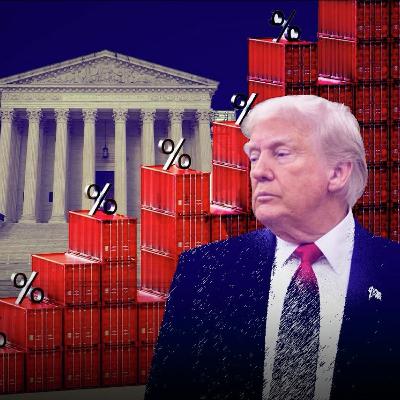
The US Supreme Court's decision to strike down much of President Trump's tariff agenda has left many questioning what happens next. Issues such as refunds, and the legal basis for the President's new tariffs will still need to be resolved. Our Supreme Court reporter Greg Stohr joins Stephen Carroll to discuss.See omnystudio.com/listener for privacy information.

The world's biggest technology companies are expected to spend $4 trillion on artificial intelligence by 2030. To pay for it, they're borrowing hundreds of billion of dollars a year. What does that mean for these companies, and for markets? Bloomberg's Markets Live Strategist Skylar Montgomery Koning joins Stephen Carroll to discuss.See omnystudio.com/listener for privacy information.
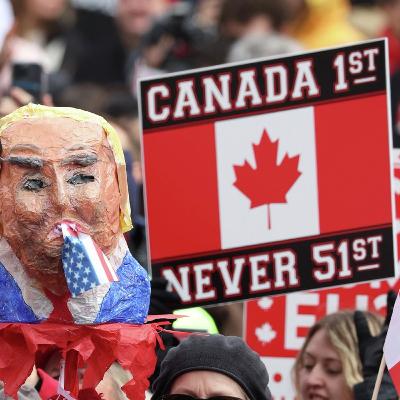
Since returning to the White House, Donald Trump has directed some of his harshest criticism at America’s closest neighbor: Canada. Tariff threats, talk of making it the 51st state and pointed barbs have prompted the country’s Prime Minister, Mark Carney, to argue for a new approach to global trade and diplomacy. David Gura, host of Bloomberg’s Big Take podcast, joins Stephen Carroll to discuss.See omnystudio.com/listener for privacy information.

The New START treaty served as a barrier against a renewed nuclear arms race between the US and Russia, who together possess almost 90% of the world’s atomic warheads. The accord was the only remaining arms control agreement between the two countries and expired on February 5. US President Donald Trump says he wants to negotiate a new treaty, but in the meantime, controls on these deadly weapons remain in limbo. Our global defense editor Gerry Doyle joins Stephen Carroll to discuss.See omnystudio.com/listener for privacy information.

The US currency has come under pressure on multiple fronts, recently falling to its weakest level in four years. Unpredictable Washington policy making, fears over Federal Reserve independence, as well as fiscal concerns have driven investors away from the dollar. Our Markets Live Executive Editor Mark Cudmore joins Stephen Carroll to discuss.See omnystudio.com/listener for privacy information.
Europe's far-right parties are reassessing their ties with US President Donald Trump following his threats to annex Greenland and use of military force against Venezuela. From the UK to Italy, politicians who have previously talked up their relationship with Trump are moderating their language. Our Managing Editor for European economy and government Ben Sills joins host Stephen Carroll to discuss.See omnystudio.com/listener for privacy information.

Data centers are a key part of the global artificial intelligence boom, but their rapid expansion requires land and energy. Rocket companies, from Elon Musk's SpaceX to Jeff Bezos's Blue Origin, have been looking at some new locations for these centers: putting them in space. Our space editor Bruce Einhorn joins Stephen Carroll to discuss.See omnystudio.com/listener for privacy information.

President Trump says the United States 'needs' Greenland. After American forces captured Venezuela's President, European leaders are now more worried about Trump's ambitions for the Arctic island, which is part of the Kingdom of Denmark. Danish Prime Minister Mette Frederiksen has said US action would threaten the NATO alliance. Our Copenhagen reporter Sanne Wass joins Stephen Carroll to discuss the state of play.See omnystudio.com/listener for privacy information.

Despite hitting repeated record highs, US stock indexes have actually underperformed markets elsewhere in 2025. Our Senior Equity Strategist Michael Msika joins Stephen Carroll to discuss what drove this trend, and the expectations for 2026.See omnystudio.com/listener for privacy information.

Prediction markets, platforms where people bet against one another on the outcomes of real-world events, are growing rapidly. The likes of Polymarket and Kalshi now collectively handle billions of dollars in bets every week. These markets have blurred the lines between gambling and trading, and their growth has been helped by a relaxed regulatory environment under US President Donald Trump. Our digital finance reporter Emily Nicolle joins Stephen Carroll to discuss.See omnystudio.com/listener for privacy information.

China is drawing lessons from the Trump administration’s still unfinished “peace plan” for Russia and Ukraine. President Xi Jinping is using the opportunity to sharpen the lines around his long-declared objective of unification with Taiwan. Bloomberg Opinion columnist Karishma Vaswani joins Stephen Carroll to discuss. You can read her latest piece on the topic here: Is China Preparing an Ukraine-Style Plan for Taiwan?See omnystudio.com/listener for privacy information.
Oil prices have been falling as this year looks set to end with the first supply glut since 2020. While lower prices benefit some, they're not good news for everyone. Bloomberg's Oil Strategist Julian Lee joins Caroline Hepker to explain.See omnystudio.com/listener for privacy information.
The world's biggest tech firms are pouring hundreds of billions of dollars into artificial intelligence. Those building AI technology are predicting massive growth. Despite all the bullish sentiment, some investors are still worried about future costs. Bloomberg Tech Europe anchor Tom Mackenzie joins Stephen Carroll to discuss.See omnystudio.com/listener for privacy information.
The US economy is growing, but Americans are feeling gloomy about it. Democratic candidates who campaigned on pocketbook issues won by big margins in Virginia and New Jersey governors’ races — so how will the parties play this issue ahead of the midterms? Our Managing Editor for US Economy and Government Mario Parker joins Stephen Carroll to discuss.See omnystudio.com/listener for privacy information.

Comments

Download from Google Play

Download from App Store
 United States