


 Claim Ownership
Life Science Marketing Radio
Subscribed: 27Played: 433
Subscribe

© Chris Conner
Description
I interview marketing leaders inside and outside the life sciences (and an occasional scientist) to share the best ideas for making your marketing more effective.
cclifescience.substack.com
cclifescience.substack.com
227 Episodes
Reverse
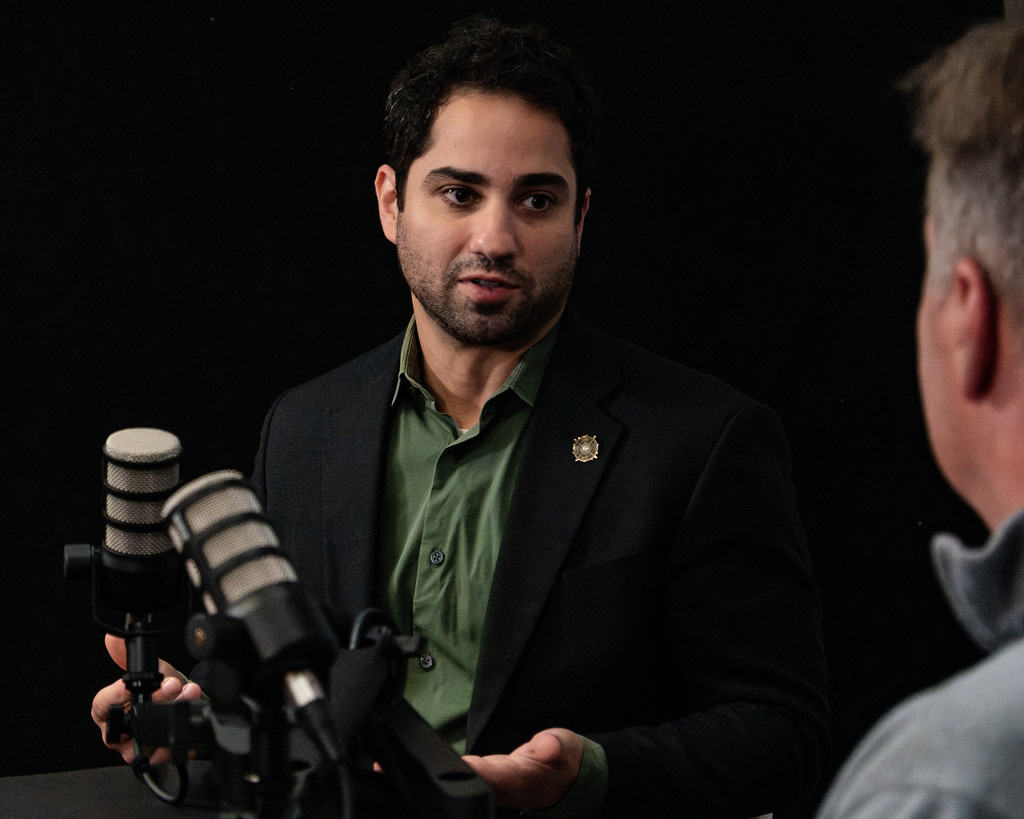
Kris Barnette is a creative powerhouse—the President of All Good Marketing and an adjunct professor at Kent State—who brings a level of “swagger” to life science branding.Kris is focused on turning Ontario, Canada, into a global commercial powerhouse in the life sciences.Ontario has everything a biotech hub needs: world-class infrastructure, elite academic institutions, and incredible talent. However, Kris points out a “commercialization chokehold” that prevents the region from reaching global dominance. The science is often buried under layers of academic jargon and conservative positioning.Kris is tackling this head-on with his upcoming project, The Ontario Life Science Founder Marketing Glow Up. It’s a guide designed to help PhD founders shift their mindset from “poster presentation” to “brand beast”.One of the biggest hurdles for scientist-founders is the “curse of knowledge”. In academia, you’re taught to be conservative with data and open to endless debate. But as Kris explained, once you move from research to a venture, you are no longer just doing science—you are running a business.Marketing isn’t just “mascara” or “bedazzle” you sprinkle on a product once it’s ready for the spotlight. It’s a muscle. It’s about charting a commercial path, building partnerships, and communicating value to three key audiences: investors, partners, and clinicians.We talked about “Demand Gen Without Desperation,” a chapter in his book inspired by his work with Lee Jay Lowenstein at Stellar Scientific. Kris and Lee decided to inject some levity into the brand by creating the “Lab Llamas”—a family of characters like Lana Llama (Customer Service) and Leon Llama (Shipping).While it might seem risky to use comic-book-style flyers in a conservative field, the data backed it up. Market research showed that 90% of customer sentiment was positive because people appreciated the friendliness and approachability. It proves that having a sense of humor doesn’t make you unprofessional; it makes you human.Even for a veteran like Kris, with 30 years of marketing experience, putting yourself out there is hard. He admitted to a “reverse curse of knowledge”—feeling like if he knows something, everyone else must know it too, so why bother posting it on LinkedIn?.But “invisible innovation” is a danger to any business. If your website is a “coming soon” page or your LinkedIn is silent, you’ve already lost. Kris had to overcome his own shyness to launch All Good Marketing in Canada, even navigating the hurdles of finding local talent to get his new site, allgoodmarketing.ca, live.For U.S. companies looking to move north, Kris warns against simply “importing loud marketing”. The Canadian market is more risk-averse and relationship-driven. In Canada, trust is the primary currency; it’s earned slower, but it lasts much longer. His approach combines “Substance, Savvy, and Swagger” to help these companies get noticed without losing that essential human connection.As a final surprise, Kris introduced his “aluminum shepherd,” Gizmo—a robot dog that will serve as his co-host for his upcoming 14-episode audio book podcast.It was a fittingly creative end to the show. While this is the last episode of Life Science Marketing Radio, I am so grateful to the 200+ guests and the thousands of listeners who have joined me on this journey over the last 11 years.Wishing you all the best.Chris This is a public episode. If you would like to discuss this with other subscribers or get access to bonus episodes, visit cclifescience.substack.com
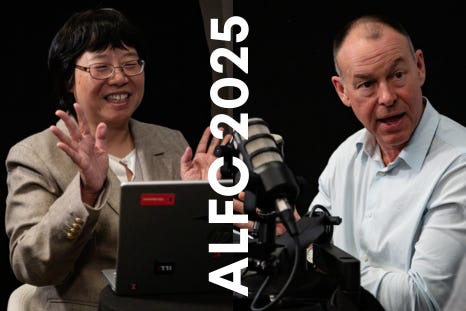
At the Advanced Lateral Flow Conference, I spoke with Jeremy Elser, Head of Science Operations at Palantir and founder of Ship of Theseus, a biotech company tackling longevity and regenerative medicine. The name refers to the Greek thought experiment about replacing every plank on a ship over time, similar to Jeremy’s vision to keep rebuilding the human body, replacing the cellular “planks” so it stays functional indefinitely.He’s focusing on restoring the body’s natural ability to regenerate using resident stem cells. Damage accumulates linearly throughout life, but aging accelerates when our capacity to replace that damage falters. His company aims to “re-up” that regenerative capacity, thus the metaphor of the Ship of Theseus .Jeremy also spoke at the conference about using AI and large language models (LLMs) to break down complex scientific questions into smaller, solvable ones. This conversation was fascinating to me in regards to both the biology and the LLMs, discovering what’s possible with both.Jeremy compared an LLM to an eager intern—smart, well-informed, but needing structure and direction. You can’t just hand it a huge problem like “design a new drug protocol” and expect perfection. But if you break that into smaller, ordered tasks like “find existing injury models,” “suggest positive controls,” “compare published protocols”, the system can produce remarkably intelligent, end-to-end workflows.That approach mirrors how good scientists think. Start with clear purpose, choose the right model for the goal, and use well-established methods when you need confidence or novel ones when you want to show something better. It’s part strategy, part rigor, driven by intention. Using an LLM to see where your FDA submission meets (or doesn’t) guidelines seems a relevant example.With respect to biology, Jeremy’s team applies that rigor to wound-healing research involving Hox genes, a class of master regulators that pattern the body during development. He explained how HoxA3, in particular, seems tailor-made for wound repair. It repolarizes macrophages from their inflammatory “angry” state to a regenerative one, promotes vascular growth, and helps skin cells migrate to close the wound. In his words, it “hits wounds in three different ways.” The same gene that once told your embryo where to put your head or feet can later tell adult cells how to heal. I find this phenomenon somewhat magical and hope to someday learn how that works at a molecular level.On the AI front, Jeremy’s biggest insight was about preserving scientific context. He’s using AI to capture and structure what scientists actually do in the lab so knowledge doesn’t walk out the door when people leave. Instead of asking scientists to fill endless forms, the AI reads what they write, asks clarifying questions, and turns messy notes into structured data. The AI will generate every possible graph or chart based on the data, something most scientists would rather avoid. They can then find the ones that are interesting and discard the rest. Jeremy says, Yeah, that’s my bribe to the scientists ‘cause we enforce a little bit of structure. They have to obey the LLM when it asks for more information. So we try to compensate for that time by doing some of the grunt work that they don’t enjoy doing, like producing a bunch of charts.Fair enough.Jeremy wants AI not just to help scientists think faster but to help us see how it thinks so we can decide what to trust. His view is that LLMs already resemble a kind of brain: opaque, pattern-driven, capable of reasoning, but not always able to explain why. It turns out humans are no different. Jeremy shared an interesting example. You’ll have to listen to the episode for that. Beyond the fascinating biology for me the takeaway (and in line with my own experience so far) is that the usefulness of LLMs goes way beyond answering questions or producing content. As I learned from Jeremy Utley of Stanford, using them as a teammate or collaborator is where the value lies. This is a public episode. If you would like to discuss this with other subscribers or get access to bonus episodes, visit cclifescience.substack.com
This episode is a double from my visit to the Advanced Lateral Flow Conference. Usability is Innovation: Atomo DiagnosticsAtomo Diagnostics set out more than a decade ago to solve a surprisingly human problem in diagnostics: complexity. Founder John Kelly describes how even the best rapid tests—validated in pristine lab environments—often fail when they reach the real world, where people have no training, and shaky instructions. That gap between laboratory precision and real-world usability has huge implications for reliability, trust, and ultimately regulatory approval.Atomo’s core insight is simple: most errors in point-of-care testing aren’t biological—they’re behavioral. The accessories people use in the field (cheap pipettes, dropper bottles, uncalibrated parts) invite mistakes, and the more steps required, the higher the failure rate. Kelly and his team approached the problem the way a designer might: observe how real users behave, then engineer around human nature instead of fighting it.To validate their approach, they went straight to the source—literally to the community—conducting studies in Africa with low-literacy users who received only picture-based instructions. “If it needs a lot of explanation, it’s probably not obvious,” Kelly notes. The goal: build a device that is self-explanatory and self-correcting.Their solution, the Pascal platform, integrates every accessory needed to run a test—lancet, blood collection, and buffer reagent—directly into one cartridge. Instead of multiple steps and parts, users simply collect, press, and go. Each step is interlocked to prevent mistakes; for instance, the reagent button won’t activate until blood is correctly loaded. It’s engineering that enforces proper sequence, eliminating user doubt and waste.Kelly describes how this design delivers the right volume, in the right order, every time—removing the “what if I did it wrong?” anxiety that undermines confidence in results. It’s the difference between a reliable diagnostic and a false sense of security.Atomo’s HIV self-test—registered with the World Health Organization and distributed across Australia, Europe, and the UK—has demonstrated greater than 99% concordance between trained and untrained users. The company also supports a blood-based pregnancy test (approved in Europe and Brazil) that detects earlier than urine tests, and they’re now developing the world’s first active syphilis test, capable of distinguishing between current and previously treated infections.What’s equally smart is their business model flexibility. Recognizing that many manufacturers already have validated lateral flow cassettes on the market, Atomo developed a “clip-on” usability upgrade that integrates their collection and buffer technology without requiring full retooling or revalidation—a bridge between old workflows and modern design.Beyond infectious disease, Kelly sees growth in at-home wellness and chronic condition monitoring—everything from testosterone and thyroid tests to celiac screening. The platform’s adaptability makes it attractive for home use and clinical trials alike. One example: a pharmaceutical partner using Atomo’s device to monitor liver toxicity in patients remotely, reducing clinic visits from three times a week to “only when needed.” It’s better for patients, cheaper for healthcare systems, and faster for research.The bigger story here is that usability is innovation. Kelly’s approach turns workflow design into a driver of impact. Instead of chasing exotic chemistry, Atomo focused on reliability and trust—two things that ultimately decide whether a test makes it into people’s hands.As diagnostics and healthcare move increasingly into the home, Atomo’s design philosophy feels ahead of its time. If the pandemic taught us anything, it’s that people can and will take responsibility for their health—if we give them tools that make sense.Pitch Competition Finalist: EAZEBIOI also sat down with Ying Chen, founder of EAZEBIO, one of the Innovation Award finalists. Her company’s portable strip-based diagnostic platform combines CRISPR and AI to bring precision health to everyone, especially in low-resource settings.The Problem: Reactive HealthcareYing opens by explaining the fundamental flaw she sees in today’s healthcare system—it’s reactive. We wait for symptoms to become severe before acting. EAZEBIO’s mission is to shift the paradigm toward proactive, precision healthcare, emphasizing early detection and personalized intervention. Her team focuses on diseases often overlooked at the root-cause level—metabolic, autoimmune, and cardiovascular conditions.Their aim is to bridge the gap between scientific breakthroughs and universal access, translating biomarker data into actionable health insights. As Ying puts it, “We hope proactive, personalized care can provide health equity for everyone, no matter where they live.”Ying’s background is a blend of pediatrics, research science, and business—she holds both a PhD and an MBA. Her experience inspired her to adapt the power of CRISPR from the lab to the home.In their prototype for sepsis detection, EAZYBIO’s system uses CRISPR to identify antimicrobial resistance genes—the genetic clues that reveal which pathogen is causing an infection. The test also detects human protein biomarkers, providing a two-layered view of infection and host response.Here’s how it works:* The CRISPR complex acts like a molecular “scissor,” recognizing and cutting specific DNA or RNA sequences associated with infection.* These sequences are tagged with a cortisol-based reporter. When the CRISPR cut happens, cortisol is released.* The released cortisol binds to split reporter proteins, generating a visible signal on a lateral flow strip.* An AI-powered app then reads and interprets the signal into a semi-quantitative result.This approach achieves roughly 300x signal amplification compared to conventional lateral flow assays—crucial for fast, reliable results.Sepsis is notoriously time-sensitive; treatment delays of more than three hours can dramatically increase mortality. Ying emphasizes that EAZEBIO’s platform could enable clinicians to identify pathogens and select the correct antibiotic within one hour—a potentially life-saving improvement.While sepsis is their initial target, the underlying platform is modular and scalable, enabling future multiplexing for 3–5 pathogens per test. Beyond acute disease, the same technology could support early cancer detection and wellness testing, making high-quality diagnostics as easy as a home pregnancy test.Ying speaks with humility about being a finalist at ALFC, but it’s clear the recognition validates EAZEBIO’s bold vision. The conference gave her valuable exposure to peers across R&D and manufacturing, as well as insights into where diagnostics are heading over the next decade.Her takeaway? Collaboration and accessibility matter just as much as innovation. “It’s not just technology—it’s about bringing care to everyone, whether they live in a big city or a rural village.” This is a public episode. If you would like to discuss this with other subscribers or get access to bonus episodes, visit cclifescience.substack.com
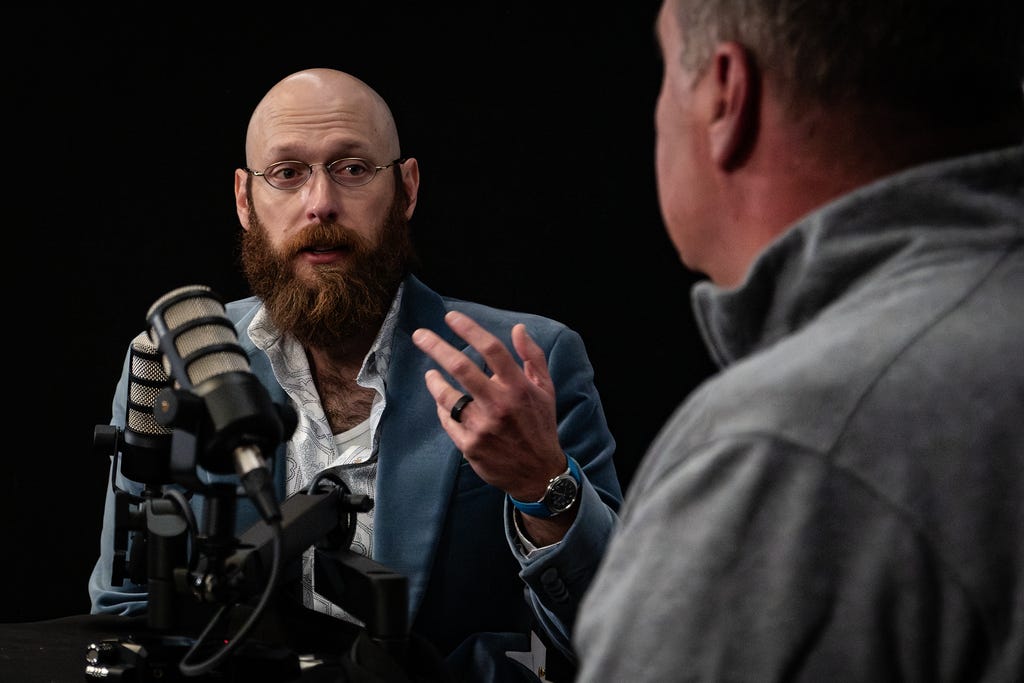
Carter Mitchell, Chief Scientific Officer at Kemp Proteins, brings scientific rigor and an artist’s imagination to the world of protein design and production. In this episode, recorded at the Advanced Lateral Flow Conference, we explore how his company is pushing the boundaries of protein expression, quality, and analysis using tools that merge machine learning, automation, and human creativity.A company reborn through precision and innovationKemp Proteins has deep roots in recombinant protein production, tracing back over 30 years to a company that began with insect-cell expression systems. After a rocky acquisition phase, the company was revived with renewed focus under CEO Mike Keefe, this time with a modern quality management system and new emphasis on antibodies and engineering solutions for diagnostics, therapeutics, and vaccines.Carter, a self described protein nerd, joined around that time, bringing expertise in structural biology, protein engineering, and quantitative analytics and a mission to integrate AI into the company’s core processes.Why insect cells still matterI knew that people used insect cells but I didn’t know why. Mitchell explains how insect cells, long used in protein production, still offer unique advantages. Unlike E. coli, insect cells can perform post-translational modifications, such as glycosylation—key for producing proteins that resemble their natural human counterparts. While mammalian systems like HEK293 have since made expression “paint-by-numbers” simple, Carter notes that insect systems still excel when complexity and authenticity matter. “It’s about having multiple expression capabilities,” he says, “so you can choose the right one for the problem at hand.”Four questions that guide every projectCarter’s approach to solving client challenges starts with four questions:* What is the protein?* What information is available?* What’s the intended use?* What’s the scale?From there, the team tailors both the process and the system to ensure reproducibility and regulatory readiness, whether the goal is a diagnostic reagent or a therapeutic protein. As an aside, manufacturing kilograms of protein still blows my mind.As Carter puts it: “Regulators don’t want to see a smear on an SDS page. We think like regulators, anticipate their questions, and design out variability before it becomes a problem.”From data lake to digital expert: ProtIQThe centerpiece of Carter’s innovation is ProtIQ, an internal expert system that combines structured data, AI models, and domain expertise into a 200–300-page report for every target protein. Initially, these reports were for experts, but Carter’s team is now transforming them into an interactive chatbot interface so anyone on the team can query the data conversationally.“If a technician can ask, ‘What’s the isoelectric point?’ or ‘Does it have a secretory tag?’ and get an immediate answer, they’re empowered,” he says.It’s part of a broader effort to turn technicians into scientists, helping them engage more deeply with data, notice anomalies early, and contribute to process improvement.Predicting protein liabilities before they happenUsing sequence analysis and AI-assisted visualization, Kemp Proteins can predict potential degradation sites or stability issues before production even begins. Carter’s team also models how viral variants like influenza strains might evolve over time, identifying changes in glycosylation patterns that could impact diagnostic binding. “We’re actually collaborating with the FDA on this,” he adds.When science meets artCarter looks at protein structure like art. A lifelong painter and flamenco guitarist, he traces his fascination with structure to his mother’s art studio and his childhood encounters with crystals in Texas soil. That visual mindset drives how he thinks about molecules: “Art flattens multi-dimensional space to describe motion. That’s what we do in AI and machine learning, flattening complexity into something interpretable.” This is a public episode. If you would like to discuss this with other subscribers or get access to bonus episodes, visit cclifescience.substack.com
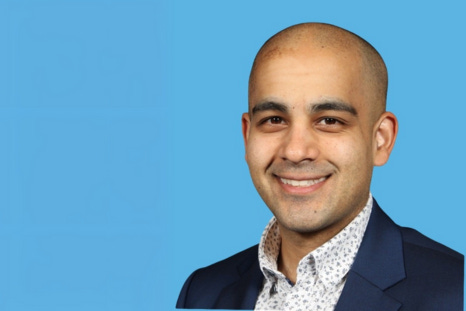
Anis Fahandej-Sadi is building two businesses. He is the founder of TLDR Biotech, a daily newsletter that condenses life science news into a quick, skimmable format, and creator of Science 2 Sales, a service designed to help biotech companies accelerate business development. In this conversation, Anis opens up about his career journey, the lessons he’s learned in building content-driven businesses, and his perspective on where life science marketing is heading.The Birth of TLDR BiotechAnis started TLDR Biotech with this idea: build the thing you wish existed. With his background in sales and BD, he saw how overwhelming it was to track 10+ news sources every day just to stay informed. So he created a newsletter that captures the good, the bad, and the ugly (those are literally the categories) in biotech news, sprinkled with memes and GIFs for personality.The format drove strong reactions. Some folks loved the humor, but hated the GIFs. However, strong reactions mean you’re creating something memorable. Strive to make a product where you can say, “It’s not for everybody.” Nevertheless, growth stalled early on, leading Anis to pause the newsletter and retool his approach. Anis shared his struggles around finding product-market fit, admitting he initially took the wrong approach by treating it as a full-time venture too early. He had to find the product that suited him. After a strategic pause in May, he restructured the backend to create content more efficiently while maintaining quality. Now he is focused on organic growth through LinkedIn and expanding into interview content to expand his reach.From Chemistry to Business DevelopmentAfter earning a master’s in chemistry, he taught English in Korea, then pivoted into sales roles for life science companies like Cytiva and OmniaBio. Business development roles are a great fit for scientists who crave variety and human interaction, but the transition isn’t easy. There’s often little formal training, so one has to learn prospecting, discovery calls, and pipeline management on the fly. His advice for scientists considering sales: leverage LinkedIn, embrace continuous learning, and be clear on why you want to leave the lab.Science to Sales: A New Kind of BD SupportHis current venture, Science to Sales, tackles the pain of BD reps spending too much time on cold outreach instead of moving real deals forward. His team takes on prospecting, cold emails, LinkedIn outreach, and calls, so client BD teams can focus on high-value work. The approach begins with deep research into the client’s ideal customer profile, growth goals, and messaging. But the most interesting angle is pairing outbound prospecting with executive-driven LinkedIn content. The platform is evolving beyond corporate messaging to more authentic, personal storytelling.Why LinkedIn Needs PersonalityThe old model of corporate-only content is dead. The future is personality-driven, with executives and BD reps building authentic, active profiles. He points to examples like Steve Harvey of Camena Biosciences and Philippe Baaske at NanoTemper as models for how thought leadership and “building in public” can humanize companies and create inbound traction. As a clear signal of where the market is going, even companies like PayPal are hiring full-time staff to manage CEO content.Short-form video and personality-driven LinkedIn posts are no longer optional. They’re becoming essential. And while it’s not easy (Anis admits to his own hesitations about video), the payoff is familiarity that turns cold calls into warm conversations.Your deepest insights are your best branding. I’d love to help you share them. Chat with me about custom content for your life science brand. Or visit my website. This is a public episode. If you would like to discuss this with other subscribers or get access to bonus episodes, visit cclifescience.substack.com
Tino Chow’s career spans three worlds—military operations in Singapore, industrial design at Rhode Island School of Design, and entrepreneurship. That mix has shaped his work at Giant Shoulders, where he helps challenger brands in medtech, venture capital, and startups bring innovations to market.It takes more than a great product and strong marketing. Without a sustainable business model, impact fades. For startups, the challenge is bigger. You’re new, unproven, and likely challenging the status quo. Your first hurdle isn’t your tech, it’s earning trust.Tino’s biggest lesson after coaching 350+ founders: in addition to selling your innovation, you’re selling yourself. Investors and partners must decide if they can trust you before they ever dig into the data. That’s where the “superhero origin story” comes in. Peter Parker didn’t become Spiderman when the spider bit him. He became a superhero only after he discovered how to use his new powers for good. He found his purpose. Founders who can share that moment connect on a human level and settle what Tino calls the “lizard brain”, the audience’s instinctive fight-or-flight filter. Purpose is what will convince an investor that you’ll stick with the business when things get tough. (And they will).It reminded me of a famous psychology study where people asked to cut in line at a copy machine. When they gave a reason — even something obvious like “because I need to make copies” — people were far more likely to let them in. The reason didn’t have to be good, it just had to exist. Now imagine what your origin story can do when it’s actually rooted in purpose. It gives people a reason to believe in you before they’ve even looked at your numbers. Superhero tip: Always use your powers for good.He draws on his military experience to explain why creativity and discipline aren’t opposites. In elite teams, strict process frees you to improvise under pressure—just like in music, where mastery of fundamentals enables jazz improvisation. For startups, that process-driven creativity is what builds lasting brands.Many technical founders resist storytelling, assuming data will speak for itself. But as Tino points out, ten people can look at the same numbers and draw ten conclusions. Without a clear narrative, your audience may misinterpret the story your data tells. Once founders see this, they start to value narrative control—and they often see fundraising improve.The episode is full of practical takeaways:* Lead with why you care, not how your tech works.* Control the narrative so your data supports your story.* Challenge yourself to ask “naïve” questions—they can lead to surprising insights.* Trust-building begins the moment you open your mouth. Make it count.Your deepest insights are your best branding. I’d love to help you share them. Chat with me about custom content for your life science brand. Or visit my website. This is a public episode. If you would like to discuss this with other subscribers or get access to bonus episodes, visit cclifescience.substack.com
Tiffany Payne recently attended the American Society of Mass Spectrometry meeting—just two weeks after being laid off—and received a badge with "NONE" printed in giant letters under “Company.”She could only laugh to keep from crying. It’s sometimes hard to separate our job from our identity. Tiffany turned it into a conversation starter: “I’m the CEO of None Industries—offering nothing to no one, anywhere.” Humor not only helped her deal with the sting of unemployment but also opened doors to conversations with peers at the event who had faced the same experience. Her badge was now a symbol of honesty and resilience.Here is Tiffany’s perspective: Layoffs are hard, but the fear of being laid off can be even worse. Once you’re on the other side of it, you have control again—you can decide what you value, what work means, and how you want to show up in the world. For Tiffany, this led to founding Veris Marketing, rooted in clarity about what marketing really is.Defining MarketingTiffany’s definition of marketing is far from the “Mad Men” clichés of catchy slogans and glossy brochures.“Marketing isn’t about convincing people to buy something they don’t need. It’s about understanding their real problems and matching them with the right solution.”She shared a story about working with a lab that developed a faster drug test. Instead of focusing on technical specs, she framed the story around the human stakes: the child protective services administrator choosing between a lab that returns results in weeks versus one that can respond in days. If you are a child in a home with someone abusing drugs, that matters. Good marketing starts with empathy and storytelling.On Being an UpstanderTiffany is also vocal about values. She celebrates companies that stay committed to diversity, equity, and inclusion (DEI), even when it’s not mandated or trendy, calling them “upstanders.” Inspired by her daughter’s experience at San Francisco Pride, she encourages companies to lead with integrity, not fear.“If you drop your DEI policy when the pressure is off, what does that say about what you really believe?”I tend to agree. You can choose to have a policy or not, but the companies that dropped their initiatives as soon as it became convenient revealed something about themselves.Advice for Job SeekersTiffany has heard some people advising some job seekers to “hide” their age, gender, or identity on resumes. While it’s certainly understandable in the current environment, she says:“If you have to hide who you are to get the job, is that the place you really want to work?”In addition, do we want to give more power to the companies that are doing that?I appreciate Tiffany’s vision for the world. She is passionate about building alternative paths—small, connected businesses that can thrive without relying on corporate gatekeepers.“Imagine creating a company where you get to pick all your coworkers. That’s the dream.”If you or someone you know has been dealing with the struggles of unemployment, this episode is worth listening to and sharing.Your deepest insights are your best branding. I’d love to help you share them. Chat with me about custom content for your life science brand. Or visit my website. This is a public episode. If you would like to discuss this with other subscribers or get access to bonus episodes, visit cclifescience.substack.com
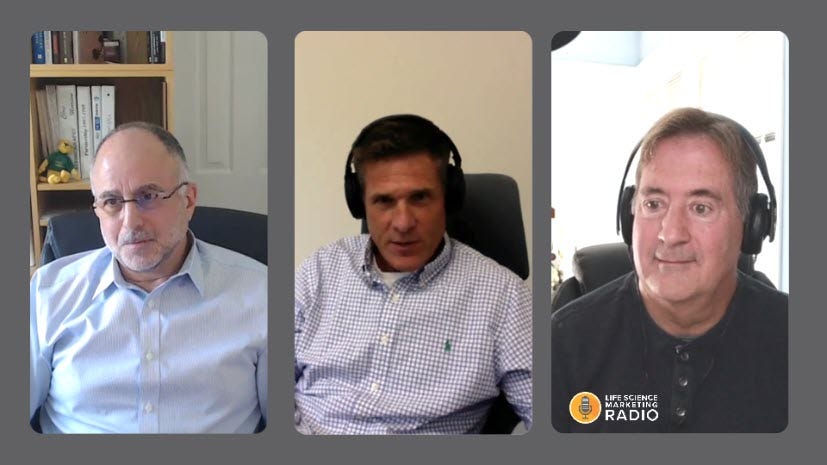
When you're selling something truly new, you're not just fighting for market share – you're fighting to create a market that doesn't exist yet. A big part of that battle is figuring out your sales process. Chris Morrison from ViaVerus and Brian Jamieson from Diagnostic Biochips shared their experience on this week’s episode.Chris Morrison introduced the "innovation death spiral." It goes like this: A startup gets early validation from one big customer. They get excited (who wouldn’t?) and build their entire go-to-market strategy around that single success. Then... silence. The market doesn't respond as expected, so they double down on their approach, burning through resources until there's nothing left.This pattern is particularly dangerous because that first success feels so validating. As Chris put it, finding one customer isn't a repeatable process, which is what is needed for long-term success.Diagnostic Biochips provides an example of navigating these treacherous waters. They've developed technology that can read the "ones and zeros" of brain activity. If you want to learn more about the science, make sure you listen to the full recording. It's cool stuff that could revolutionize how we understand and treat conditions like Alzheimer's, schizophrenia, and epilepsy.If you aren’t subscribed, now might be a good time…But here's the catch: When you're that innovative, your biggest challenge isn't competition – it's teaching the market what's even possible.The Discovery-Based Sales ProcessTraditional sales processes are execution-based: You have historical data, known customer needs, and established patterns to follow. But what do you do when none of that exists?Morrison and Jamieson's approach reveals a framework that any tech startup can learn from:Instead of assuming they knew their market, they tested their initial assumption about big pharma being their primary customer. When that didn't pan out, they pivoted quickly rather than forcing a fit.They discovered their sweet spot wasn't with big pharma or pure academic research, but with translational research organizations – the groups that bridge the gap between basic science and practical applications.Rather than trying to educate the market about their technology's potential, they focused on identifying existing problems their technology could solve today.One customer isn't validation – it's an anomaly. And two customers are just two different cases. According to Morrison, for complex B2B sales like Diagnostic Biochips, you need 10-20 customers before you can start seeing genuine patterns emerge in your sales process.Developing a repeatable sales process isn't a single task – it's a series of staged discoveries:* Market Entry Point: Identifying where your technology connects with immediate, funded problems* Messaging: Finding the language that resonates with early adopters* Lead Generation: Developing tactics that consistently bring qualified prospects* Sales Process: Building the steps that convert interest into purchase* Customer Success: Creating the bridge from purchase to satisfied customerYou can't skip steps. You need to complete each stage before moving to the next.Perhaps the most interesting tension revealed in our conversation was what Brian Jamieson called "the funny combination between urgency and patience." Revolutionary technology creates natural urgency – you're sitting on something that could change the world. But rushing the process of finding your market fit can kill even the most promising innovation.I actually thought there was an opportunity to educate the market on the gap between patch-clamp studies and animal behavior. Chris emphasized that startups don't have the luxury of educating markets. Instead, find where your innovation solves an existing, recognized problem.The goal is to find messaging that makes customers pull you toward their problems rather than pushing your solution onto them.As Chris noted, what typically takes three years can be compressed to 18 months with the right approach – but it can't be compressed to three months, no matter how hard you push.Diagnostic Biochips' technology could fundamentally change how we understand and treat brain disorders. But that potential can only be realized if they successfully navigate the path to market. I often wonder how many amazing technologies end up on the scrap heap, not because of science but because of poor timing or strategy.Launching truly disruptive technology is "probably one of, if not the hardest thing to do in business." But with a disciplined approach to discovering your repeatable sales process, it's not impossible. It's a matter of having the wisdom to be patient and the drive to stay urgent while you figure it out.Your deepest insights are your best branding. I’d love to help you share them. Chat with me about custom content for your life science brand. Or visit my website. This is a public episode. If you would like to discuss this with other subscribers or get access to bonus episodes, visit cclifescience.substack.com
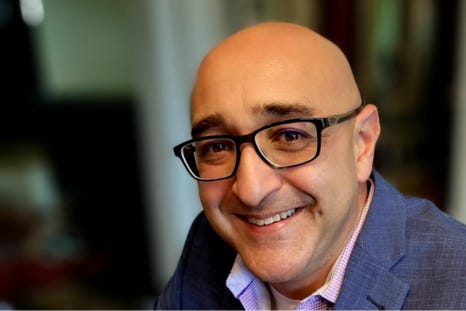
When Joachim Eeckhout says he started small, he’s not kidding. He and a friend began curating biotech news from a Paris dorm room, eventually launching LaBiotech.eu, a media brand that became a trusted voice in European biotech. What caught my attention is how they learned the landscape: by biking across France with a camera, interviewing CEOs, and turning it into a documentary. That’s how they built credibility and a network from scratch. As a fan of cycling, science and documentary filmmaking, that sounds like a dream job to me. Or me 40 years ago…That kind of storytelling, doing something unexpected and human, creates lasting connections. In our attention economy, Joachim’s approach stands out. He now runs The Science Marketer, helping life science companies do smarter marketing with a voice and personality.Content doesn’t need to be flashy. But it does need to be authentic, consistent, and personal. Joachim suggests starting with what you would actually want to see yourself. That’s how you find your edge or your angle. If you aren’t subscribed, now might be a good time…We dug into the mechanics of content-led growth: how podcasts and newsletters aren’t just media channels—they’re trust-building engines. When someone hears your voice regularly or reads your thoughts in their inbox each week, you go from being a company name to a known entity. Familiarity builds comfort, and comfort builds trust. And unlike a sales call, this kind of content scales. It creates what Joachim calls “a simple funnel”. You share your perspective, your expertise, and a bit of your personality, and over time, people move closer to working with you.Funnels have gotten a bad name lately. Nobody wants to feel like a lead. So how do you build one without turning people off? The goal is to show up with something valuable, consistently, and let the content do the work. This is especially important for founders and CEOs. The ones who are willing to show up, not just to talk about the science, but to let people see who they are, how they think, and what kind of culture they’re building, stand out. Customers don’t just pick a service; they pick a team. The value of good content is letting them get to know yours without pressure.Joachim shares my love of repurposing. Too many companies make a great webinar, record a brilliant interview, or write a strong article and it’s one and done. They move on. But that single piece of content can become the seed for a dozen others. Joachim talked about how he helps clients turn webinars into PDFs, transcripts into blog posts, clips into LinkedIn videos, even media pitches that include actual footage of someone making their point, instead of a generic quote in a press release.We both agree that posting content more than once on the same platform is a mental hurdle more than a real one. Most people won’t see your post the first time. And if they do, they probably won’t remember it. So why not reshare it? Especially if it was good. Posting the same content again weeks or months later isn’t lazy. It’s efficient and effective. Joachim brought up Plasmidsaurus, a company that markets seriously essential biotech services by being obsessed with dinosaurs. It works because it’s memorable, and it doesn’t compromise the quality of the science.The whole conversation was a reminder that in biotech, seriousness doesn’t have to mean boring. Passion, creativity, and a little risk-taking can go a long way in earning trust and growing your brand.Your deepest insights are your best branding. I’d love to help you share them. Chat with me about custom content for your life science brand. Or visit my website. This is a public episode. If you would like to discuss this with other subscribers or get access to bonus episodes, visit cclifescience.substack.com
Nick Clare is a co-founder of Succession Bio and co-host of the SalesDNA podcast. I recently spoke to Harrison Wade, the other co-founder here. Nick's journey into sales wasn't a planned career move. It was the result of "fear and desperation," as he put it.Nick was working as a scientist in the lab when his wife was 14 weeks pregnant with their third child. 20 days before Christmas, he was made redundant. Ouch. During his job search, he interviewed with a company where the CEO and CBO offered him two positions - field application scientist or lab manager. Nick, thinking about his growing family and financial needs, asked the most direct question possible: "Which one pays more?" The CBO immediately claimed him for the sales side, recognizing the money motivation that's so crucial in sales.Nick was honest about his initial resistance. He spent the first six months looking for another job because he was a scientist, not a salesperson. But eventually he realized he wasn’t finding anything he wanted because he actually loved what he was doing. Now he runs a company that teaches sales, selling sales itself. Men make plans and the universe laughs…I asked about the distinction between sales and business development, something it seems everyone describes differently. Nick's definition is pretty simple: sales is about selling something that already exists - a widget, service, or software - while BD is about selling partnerships to develop something new together. CROs are kind of a hybrid. He pointed out that BD professionals often lag behind in their processes compared to traditional salespeople. They rely heavily on networking but don't utilize the same systematic lead generation and pipeline management that sales teams do.That brought us into a discussion of cold email (Yikes), but Nick and Harrison's LinkedIn posts have been helping me get over that fear. Nick's perspective is liberating (and reflects the truth): he challenged me to think of a single email from the past two weeks that annoyed me enough to actually do something about it. I couldn't. His point was we only remember emails that resonate positively with us. Everything else just gets deleted and forgotten. We're so worried about negative consequences that we miss the fact that most people won't even notice our outreach, and when they do, it's usually positive.Nick has a "10 a day" rule from when he managed sales teams - spend five minutes researching each person and reach out to 10 people daily. That's less than an hour of work that results in 200 outreaches per month. That math should be sufficient when you think about pipeline impact.We have to talk about how Nick uses Notebook LM for sales research. I'm a huge fan of this Google AI tool myself, and Nick's applications are brilliant. He uploads company websites and generates mind maps to visualize all their products and propositions, perfect for visual learners like him, preparing for discovery calls. Even better, he creates AI-generated podcasts from the research materials that he can listen to while driving or multitasking. The fact that you can now interrupt these AI podcasts to ask questions makes it even more powerful.I shared how I've been using Notebook LM with 10 years of podcast transcripts, creating a searchable knowledge base where people can ask questions about life science marketing and get specific insights from past guests. Nick's using it to help his daughters with homework, having them listen to AI-generated podcasts about complex topics before tackling assignments.If you are AI resistant, I think you have to recognize what’s coming, whether you like it or not. You can be part of your own plan or part of someone else’s. Quick aside: When I was a kid, my dad had a gag where he had a telephone handset (with a spiral cord pinned inside his jacket. He had a ringer in his pocket that sounded like a phone. He’d pull out the handset and say, “It’s for you.” What used to be a laugh is now an indispensable reality. Fast forward and this morning I’m using advanced voice mode to have a conversation with ChatGPT about content creation while I’m on a walk. You get the picture.Nick talks to ChatGPT while driving to customer calls, essentially having a conversation with an AI teammate about strategy and approach. He even created a custom GPT called "Pocket Nick Nick" loaded with his company's public data, so he could access specific information during customer calls in real-time.What I appreciated most was his practical, no-nonsense approach to both sales and AI. He's not afraid to be direct about money (which served him well in that initial interview), he's systematic about prospecting, and he's embraced AI as a genuine productivity multiplier rather than viewing it as a threat. I’m not making or following predictions about AI making us dumber or smarter or taking our jobs. The only thing I’m sure of is that people will use it.Nick's story also highlights something I see frequently in our industry - scientists who discover they love the business side of science. There's something powerful about being able to share science broadly rather than going deep into one narrow research area. Nick used a great analogy about being on a boat viewing the horizon versus investigating the Mariana Trench.This conversation energized me around several things: being more systematic about outreach (those 10 people per day), using AI more creatively in my work, and thinking about BD versus sales more clearly. Nick's journey from reluctant scientist to sales leader shows that sometimes the best career moves come from necessity rather than planning, and that embracing change - even when it feels uncomfortable - can lead to unexpected fulfillment. This is a public episode. If you would like to discuss this with other subscribers or get access to bonus episodes, visit cclifescience.substack.com
I had a fantastic conversation with Abdul Rastagar, founder of Serona Marketing, about his mission to cut the b******t out of marketing. Abdul runs both a podcast and newsletter with that exact title. It’s pretty clear he feels strongly about this. I thought it would be fun to find out what’s been bugging him lately. I was not disappointed.Abdul's beef is that we're stuck using outdated marketing processes from a decade ago that don't match how customers buy today. There’s too much friction. Customers want to see pricing, but we force them through multiple calls with SDRs and demos before revealing whether they're even in the right ballpark. Meanwhile, they're already sharing pricing information in peer communities and researching vendors thoroughly before ever contacting sales. I’ll write more about this soon, but it seems like a missed opportunity to build some trust.While Amazon has systematically removed friction at every step, B2B companies have done the opposite - we've added barriers and complexity. I pushed back a bit about competitive concerns, but he made the case that if you're worried about competitors seeing your pricing, they'll find out anyway through those peer networks. More importantly, if you hide pricing while competitors don't, you're not even getting into the conversation. Better to reduce friction and actually engage with prospects than lose them before they ever reach out.One of his most painful observations is that marketing is the only function where everyone else in the company tells you how to do your job. I laughed at his story about the CEO's spouse not liking the logo colors, but it's not really funny - it's a genuine challenge marketers face daily. Operations, finance, sales, and even board members all have opinions about marketing decisions they'd never dream of weighing in on for other departments. Try telling the CFO about where they should invest all that cash you generated!Here is how he suggests you handle those suggestions: figure out which ones might have merit, prioritize them appropriately, and learn to say no constructively while maintaining collaborative relationships. We briefly discussed LinkedIn’s own flavor of BS: those trade show announcement posts. They're mostly checkbox exercises - the real value comes from personalized outreach using the event as a conversation starter.Given all of this, I asked about being more creative and effective. And I loved his answer. Stop selling your product and start selling your knowledge. Be generous with what you know. Don't focus on what your tool does; focus on sharing your perspective on industry challenges and different approaches.This philosophy of thought leadership before product pitching makes perfect sense, especially in life sciences where people are always eager to learn. Scientists want to understand the "why" behind solutions, not just the "what." When you establish credibility through knowledge sharing, product conversations happen naturally.Abdul shared an example: his client published an industry article, and at a recent conference, the CEO overheard two people discussing that very article. He joined the conversation, revealed he was the author, and one of those people turned out to be an ideal customer prospect. That's how thought leadership creates real business opportunities.On the other side of that, I asked about the common CEO dilemma: wanting to be thought leaders but not wanting to be the face of their companies. Abdul acknowledged the risk - invest in building someone into a thought leader and they might leave. People do move around. But you're better off benefiting from that voice while you have it than getting no benefit at all.Instead of getting caught up in the latest marketing technology or tactic, Abdul's focus on fundamentals understanding your customer's buying process, being transparent, and sharing knowledge generously feels more authentic and is likely more effective.These cold conversations have been a blast and educational for me beyond the content. I have more lined up. If you aren’t subscribed, now might be a good time…Your deepest insights are your best branding. I’d love to help you share them. Chat with me about custom content for your life science brand. Or visit my website. This is a public episode. If you would like to discuss this with other subscribers or get access to bonus episodes, visit cclifescience.substack.com

I had a great time speaking with Meg Schlabs, co-founder and creative director at Wizardly. While it may be difficult for early-stage life science companies to think about branding, Meg makes a clear case for why it matters, even before you go to market, especially when you are trying to raise capital and recruit talent.Meg’s LinkedIn profile mentions that she likes books and cheesy videos. So before we got into the branding discussion, we took a short detour. (This was our first ever conversation.) I mentioned that I had asked ChatGPT to make a few recommendations (three fiction and three non-fiction) based on what it knows about me. They could not be about life science. The jury is still out, but if you want to know what it suggested, the answers are at the bottom of this post.Then we got into the heart of it:Why should biotech startups think about branding early?Because it validates your science. When a company tells a cohesive, compelling story from the start, it’s easier for investors to get on board, for scientists to rally around a mission, and for future hires to say “yes.” That story, she argues, should express why the company needs to exist right now.…let's lay down, from the top down, from the CEO all the way, trickling all the way through the company, let's lay down who we are, why we exist, who we exist for, where we're going in five years, where we're going in 10 years, and let's memorize this story as a company so that we can make critical visual decisions or branding decisions that when they're validated or tested by an outside audience, they actually have some legs underneath them.We talked about her approach to uncovering that story. Wizardly’s process often starts with what might sound like a ridiculously simple question:“What does your company do?”It’s the kind of question that seems obvious until you realize no two people on the team are answering it the same way. Meg’s workshops build consensus and create a shared foundation before any logos or taglines come to life.Another thing that stood out to me was how she described designing for the long term. Unlike SaaS companies that can iterate daily, biotech teams are often playing a 10-year game. That means the brand you launch with has to scale with consistency and flexibility as you grow. This is an idea I had never heard before. Meg emphasized designing not just for today’s website or pitch deck, but for the brand library you’ll need 18 months from now.We also covered:* How design choices (like color) are driven by a 3-pronged strategy: story, user psychology, and competitor positioning* Why Figma is a game-changer for collaborative branding in biotech teams* The risk of too much feedback, and how a single point of contact can keep branding projects on track* Why consistency doesn’t mean rigidity—and how great brands evolveFinally, here is an idea I loved: rather than gatekeeping the assets, give your clients the tools and training to extend their brand. Her team hands over not just files, but Loom tutorials and templates in Figma, so internal teams can stay on-brand long after the agency engagement ends.Longtime listeners know the metric: how much do my cheeks hurt from smiling because of all the great insights? 5/5 Definitely recommend.These cold conversations have been a blast and educational for me beyond the content. I have more lined up. If you aren’t subscribed, now might be a good time…Your deepest insights are your best branding. I’d love to help you share them. Chat with me about custom content for your life science brand. Or visit my website.Books ChatGPT recommended for me. As I said, the jury is still out on these. Non-fiction seems more promising.Fiction The Overstory, The Master and Margarita, Stoner Non-fiction Antifragile, Amusing Ourselves to Death, The Art of NoticingWild Card The Peregrine by J.A. Baker This is a public episode. If you would like to discuss this with other subscribers or get access to bonus episodes, visit cclifescience.substack.com

Recently, I’ve enjoyed interviewing people I have never spoken to before. Harrison Waid, the co-founder of Succession, is one of those. Shout out to Teddy Lin for connecting us. I took this as an opportunity to learn about Harrison and his business as well as a personal challenge to interview someone “cold”. OK, I did some research, so maybe “room temperature”.First of course, I needed him to explain Succession, co-founded with Nick Clare (who I hope to have on another time). They noticed life science companies struggling to translate great technology into successful market entry and sales growth. Succession was founded to address this, offering specialized services exclusively for life science sales teams – everything from lead generation and sales training to recruitment and optimizing internal systems like CRMs with automation and AI. Harrison called it a "vertical service company" for life science sales.The idea for it wasn't a sudden flash of insight but more of a "slow burn." While at Synthego and after moving to the UK, he initially thought about general consulting. He quickly found that clients wanted concrete outcomes, not just advice. The real traction came when they packaged their expertise into specific, deliverable-focused services – that’s when things really took off.I’m always interested in people who come from other backgrounds outside of life science. He made his start was in software sales. A friend brought him into Synthego, a CRISPR company, initially for consulting. At that point, his knowledge of biology was that "the mitochondria is the powerhouse of the cell." But he was excited by the potential of the technology. He immersed himself in learning the science and business of biotech, leveraging online resources and learning from his colleagues. Once again, curiosity = superpower! Asking "dumb questions" is an underrated skill. Those outside perspectives can challenge assumptions and benefit both the business and the individual willing to learn.I'd prepped some questions, but the morning of our interview, I stumbled upon a recent LinkedIn post Harrison made contrasting "old" and "new" ways in biotech sales. I saw some insightful comments from people we both respect, like Owen Swift. I knew this would be worth digging into.Harrison framed the "new way" around leveraging technology to move beyond inefficient models like (old way) simply scaling headcount. I picked a few points from his post for discussion:Small, High-Output Teams + RevOps/Content/Automation: He explained how technology now allows high-performing reps to be supported by robust systems (managed by Revenue Operations) that automate much of the prospecting and research previously done by separate inside sales roles. This frees up skilled sellers to focus on closing.AI for Intent & Sequencing: We discussed how AI can go beyond basic alerts to analyze market signals, identify key opportunities, score leads, and even assist with outreach, providing reps with powerful, timely intelligence.Content & Personal Brand for Demand Gen: I strongly agree with this one. There is a compelling case for reps building their personal brands on platforms like LinkedIn. He argued, quite correctly in my view, that authentic content from individuals resonates far more than corporate posts and that companies restricting this are missing a huge opportunity.Video Outreach: I shared my own recent positive experience with video messaging, having secured a meeting from one just last week. Harrison pointed out how video cuts through the noise, humanizes interactions, and is effective for both prospecting and follow-ups. We agreed authenticity is more important than perfection.The Best Reps Get the Best Opportunities: This one may be controversial, as it goes against the idea of pure "fairness" in lead distribution. He would argue that for maximizing company revenue, it makes sense to give the highest potential leads to the reps most likely to convert them. He acknowledged territory assignments are inherently unfair anyway and suggested lower performers could develop on less critical leads. This leads to discussions about efficiency, long-term strategy, and even healthy team turnover.Compensation plans inevitably drive behavior and can always be gamed, so no system is perfect. It comes down to your goal and again, long-term strategy. As someone who hasn’t formally been in sales, I can see the attraction to developing skills on low risk opportunities.If these ideas got you thinking, you might check out the SalesDNA Podcast, Hosted by Harrison and Nick. These cold conversations have been a blast and educational for me beyond the content. I have more lined up. If you aren’t subscribed, now might be a good time…Your deepest insights are your best branding. I’d love to help you share them. Chat with me about custom content for your life science brand. Or visit my website.BTW, I hope you’ll consider joining me here: This is a public episode. If you would like to discuss this with other subscribers or get access to bonus episodes, visit cclifescience.substack.com

When I invited Max Gilbert on the podcast, I suspected the conversation might go beyond sales tactics. Max is the founder of Tiferet Consulting, but he’s also a sourdough baker, amateur rabbi, armchair philosopher, and like me, a pretty bad golfer. Our conversation covered everything from startup struggles to spiritual identity and the joys of sourdough. Helping Scientists Become SalespeopleMax works with founders selling into biotech or pharma that want to make sure their first sales hire works out. Spoiler: He has seen it go bad which gave him the idea.One can imagine a founder with a science or engineering background thinking, “I’m not a sales person. I need to offload this to someone who can make calls, pound the pavement and hit a number.” The early-stage sales role is fundamentally different. It’s about iteration and discovery, not just execution. So instead of trying to fit a traditional salesperson into a startup that was still finding its feet, Max found more success coaching fermentation scientists and bioprocess engineers to do the selling. They could speak their customers’ language and earn trust through technical credibility. Max helps them build the confidence and process to go with it.Here is some good, if scary, news for those folks. As a scientist, you have skills that are useful in sales. Once again, your curiosity is a superpower. Sales, according to Max, is asking questions, looking at a problem from a lot of angles and figuring out how it might be solved. The challenge, as I see it, is that having developed a product or service, a founder might feel they have the answer in hand and they can’t wait to tell everyone who might be interested. They end up filling the silence with features and benefits.Sales as a Scientific ProcessMaybe a better approach is to think about your product or service as a hypothesis. And every sales call tests that hypothesis by asking more questions of the prospect about what they do. What’s this person struggling with? How do they think about their problems? When you listen that way, your product becomes a natural extension of the conversation. Then you can frame your product as a possible solution and let the prospect decide if they want to have another call to talk about it some more.The process becomes a collaborative journey. Are we solving the right problem? Do we even understand the problem? Can we help? And if not, Max coaches his clients to say so and maybe even refer that prospect to someone who can.Why Scientists Should Own the Sales Process EarlyOn top of all that, for the first few sales, only the founder can have the context to ask all the right questions as well as see how the answers might help refine the product or its positioning.We like to say sales is about relationships, but that can mislead people. It’s not about charm or charisma. For early-stage companies, it’s about using structured conversations to gather data and test hypotheses. Max frames the process like an experiment: design, build, test, learn. When you stop seeing sales as persuasion and start seeing it as discovery and iteration, it becomes a lot more accessible, especially if you’ve been trained to think that way already.Not subscribed? Let’s fix that, shall we? Subscribe for free to receive new posts by email. (No spam. I promise.)Sales is a rollercoaster. Some calls go nowhere. Some start off promising and then you get ghosted. Founders have to keep showing up with curiosity and resilience even when they don’t feel like it. That’s where Max’s coaching comes in. (There is a theme here.)Max’s secret sauce is that he lived the resistance. Like many, he didn’t start out wanting to be a salesperson. In fact, when a mentor suggested he lead sales, his first reaction was visceral rejection. (I laughed out loud as Max mimicked throwing up.) But going through that discomfort gave him a blueprint for coaching others through it. It’s the classic hero’s journey.He told me his coaching isn’t about copying someone else’s process. It’s about helping each founder build their own. Picking the right structure, sticking to it, and having the mindset to carry it through especially when motivation disappears. More on that in a minute.Coaching the Whole PersonI asked Max about this quote on his website: “When we ground ourselves in the identity that transcends our own contradictions, we’re tapping into our authentic self.”Max named his consulting business Tiferet, concept of harmonizing seemingly opposite forces. In a sales context, that means acknowledging both the part of you that wants to help someone and the part of you that needs to hit a number. Instead of shutting one side down, you bring both to the table and accept the tension.Disconnecting from the emotional side of selling and getting comfortable between the extremes is helpful and projects confidence.Avoiding the Trap of the Shorter, Longer WayWe wrapped up with a story Max told from the Talmud about two roads: the short, longer way (full of obstacles and distractions like LinkedIn cheat sheets), and the longer, short way that actually gets you to your destination. TL;DR: You can’t hack your way to real progress. Shortcuts are tempting but costly. Where does success come from? Thoughtful, slow work. Daily practice. Making the process your own. About That Bread…Before we finished, we had to talk about sourdough. Max spends 10 hours a week baking bread. He grinds his own flour and employs some complicated fermentation processes (might be another episode), and thinks of bread as something primal and sustaining. Max’s plan: feed the world with his bread and his wisdom when AI takes all our jobs. Your deepest insights are your best branding. I’d love to help you share them. Chat with me about custom content for your life science brand. Or visit my website.I hope you’ll consider joining me here: This is a public episode. If you would like to discuss this with other subscribers or get access to bonus episodes, visit cclifescience.substack.com
I’ve never been great at conflict. Like a lot of people, I’ve leaned toward avoiding it—especially in the workplace. But I know that’s not a useful strategy in the long run, which is why I was excited to talk with Deb Nathan, a conflict navigation coach, on Life Science Marketing Radio.Right off the bat, Deb drew a distinction between conflict resolution and conflict navigation. Resolution implies there’s a clear “winner” and “loser” or at least a compromise everyone can agree on—but let’s be honest, that’s not always possible. Navigation, on the other hand, is about figuring out how to work with each other even when we disagree. It’s about forward momentum, not just agreement.Deb reminded me (and all of us, really) that conflict isn’t inherently bad. In fact, it’s often the spark for meaningful change—personally and organizationally. The issue isn’t the conflict itself but how we choose to engage with it.What Is Relational Resilience?Deb introduced a concept I hadn’t considered before: relational resilience. I’m used to hearing resilience in terms of the individual—bounce back, stay strong, push through. But relational resilience is about how teams manage conflict together. It’s rooted in the idea that we’re stronger and more creative when we work through challenges collaboratively rather than individually.She outlined several components that make up relational resilience:* Relational flexibility – being open to hearing and holding multiple perspectives, including conflicting ideas inside your own head.* Relational confidence – allowing yourself to be vulnerable, which is only possible if the team environment supports that.* Mutual empowerment – shifting from "self-empowerment" to a model where team members lift each other up.* Creativity and imagination – thinking beyond current possibilities and co-creating new solutions.* Appreciating complexity – resisting the urge to simplify when a nuanced approach is more useful. (This is probably my favorite.)* Tensionality – the ability to stay engaged with someone else’s perspective while still holding your own.* Comfort with uncertainty – resisting the rush to answers when patience could produce better outcomes.* Reasonable hope – a grounded belief that things can improve with effort, even if it’s not easy.It’s a powerful framework, and it aligns with how I like to think: long-term, with an eye on creating something that lasts.Vulnerability as a Leadership SkillWhen we got into the topic of vulnerability, Deb made a point I’ve seen play out in real life. The best managers I’ve had were the ones who gave me space to try things—even when those things didn’t work out. They made it safe to take risks. And when something failed it was a learning experience, not a career-ending mistake.Deb emphasized that leaders don’t need to have all the answers or even agree with every idea. What they do need is to create an environment where people feel safe to experiment and speak up. That’s where vulnerability comes in—not just for individuals, but systemically. Managers who can admit uncertainty, invite multiple viewpoints, and reflect on outcomes together build healthier, more resilient teams.Curiosity Is a SuperpowerIf you’ve listened to more than a few episodes of this podcast, you know I’m a big fan of curiosity. So is Deb. She described curiosity as the antidote to stagnation, a skill that allows us to continually learn, adapt, and better understand each other. Without it, we default to fixed positions, binary thinking, and conflict escalation.Curiosity means asking open-ended questions, exploring ideas we don’t initially agree with, and staying open to being surprised. For leaders, modeling curiosity invites that mindset across a team. It tells people their ideas matter—even if they’re different or incomplete.And while curiosity might sound like a soft skill, it has very real impacts on innovation, team cohesion, and ultimately, performance.Not subscribed? Let’s fix that, shall we? Subscribe for free to receive new posts by email. (No spam. I promise.)Time Pressure vs. Long-Term ThinkingWe also talked about time pressure. What happens when you're in conflict at work but feel like there's no time to sit down and work it out?Deb’s answer was clear: if you don’t make time for it now, you’ll pay for it later—probably with more time, stress, and friction. Trying to push through without dealing with the real issue often leads to bigger breakdowns down the line. On the flip side, making space for dialogue (even just a little) can result in more durable solutions.One of the ways to manage that time pressure, she said, is to get comfortable with not having immediate clarity. Sometimes the best thing a team can do is agree to keep talking, keep listening, and let the path forward emerge gradually.Culture, Communication, and Cross-Team CollaborationLater in the conversation, we got into cultural differences—across nationalities, disciplines, even departments. Deb’s background includes working with Israeli and Palestinian teens, and the lessons she learned there are surprisingly transferable to corporate teams.The core idea: everyone brings their own lens to every conversation. We all interpret language, data, and goals differently. That’s even true when we’re technically speaking the same language. (I learned this while teaching sailing to someone from the UK—turns out “quite good” doesn’t mean the same thing in both countries.)Within scientific companies, this plays out between technical teams and commercial teams, or between different functional areas. The solution? Again, it comes back to curiosity and creating space for people to explain their views before rushing to fix the “problem.”Deb made a powerful point: even when people don’t agree, they can still work together if they respect where the other is coming from. That opens up new ways forward.From Leads to Loyalty: Marketing with Relationship in MindFinally, I asked Deb to tie this all back to marketing. So many companies still operate with a “get me leads” mentality—but in reality, lasting impact comes from relationships, not transactions.She was clear: if you want lasting value, you need relational resilience. Short-term wins might feel good, but it’s long-term trust that gets you through hard times and keeps customers coming back. That mindset applies to internal culture, too. If you're only focused on extracting value from employees during their two-year tenure, you're missing the chance to build something better—something that retains talent and gets stronger over time.The Bottom LineThis conversation made me think more deeply about how we show up in teams—not just in crisis or disagreement, but every day. Deb’s framework of relational resilience gives us a better way to build cultures that support creativity, growth, and real collaboration.For marketers, for scientists, for managers, for anyone in business: this isn’t about being soft. It’s about being smart. It’s about recognizing that long-term thinking, curiosity, and vulnerability aren’t just nice-to-haves—they’re the foundation of meaningful progress.Your deepest insights are your best branding. I’d love to help you share them. Chat with me about custom content for your life science brand. Or visit my website. This is a public episode. If you would like to discuss this with other subscribers or get access to bonus episodes, visit cclifescience.substack.com

In this episode of Life Science Marketing Radio, I spoke with Oliver Pearce, VP and Head of Marketing at Epista Life Sciences. Oliver brings a unique perspective to life science marketing, having started his career in the nightlife and hospitality industry. Now leading marketing at Epista, a consultancy firm specializing in pharmaceutical quality, regulatory compliance, and commercialization, we talked about what he learned from working in the nightlife scene and events, the importance of strategic narrative and where he sees opportunities for companies to do better ( be less lazy).From Nightlife to Life SciencesOliver’s career took an unconventional path, beginning in nightlife and event promotion before transitioning into life sciences. This early experience taught him the fundamentals of building engaged communities, identifying the audience and who could amplify a message—an approach he has successfully applied to his work in the pharmaceutical industry.Building a Global Community Around Trial Master FilesOne of Oliver’s most impressive achievements has been the creation of TMF Week, a large-scale online event dedicated to Trial Master Files. Initially conceived as a webinar series, TMF Week evolved into a high-profile industry event with over 40 speakers and thousands of attendees.The idea emerged as a response to the need for frequent educational sessions on TMF. The COVID-19 pandemic accelerated its adoption by filling the gap left by canceled in-person events and industry professionals rallied behind the event, validating its importance. Here is the part I find most interesting (and valuable). TMF Week initially launched as an unbranded event and gained credibility before becoming synonymous with Oliver’s (previous) company.The event was organized with a small team and limited resources, using basic webinar tools and CRM integrations. Despite logistical challenges, it became a central platform for industry discussions and a key driver of business opportunities.The Power of Strategic Narrative in MarketingI appreciate how Oliver emphasizes the importance of crafting a strategic narrative rather than just relying on a standard value proposition. While value propositions focus on what a company offers, a strategic narrative provides a broader industry perspective and aligns messaging across sales, marketing, and leadership.Not subscribed? Let’s fix that, shall we? Subscribe for free to receive new posts by email. (No Spam. I promise.)Elements of a Strong Strategic NarrativeIf you’re familiar with The Hero’s Journey from Joseph Conrad, you‘ll recognize how it’s implemented here in a very succinct way:* Define a major shift in the industry and explain its significance.* Identify the challenges that come with that shift.* Offer a clear perspective on how businesses should adapt.* Demonstrating how your company helps customers navigate the change.This approach produces marketing that is not just about features and benefits, but about leading an industry conversation in a way that builds authority and trust. This is an approach that works regardless of where someone is in the buying cycle. It doesn’t mean throwing features and benefits away, but rather provides value in an interesting way that increases the likelihood of being considered when a customer has a problem you can solve.Common Pitfalls in Life Science MarketingI asked Oli to point out where life science marketing can come up short. * Lack of Business Alignment: Marketing is often viewed as a cost center rather than a revenue driver because it isn’t directly tied to sales and pipeline growth.* Overreliance on Vanity Metrics: Metrics like website traffic and lead volume don’t necessarily translate to business impact, leading to misaligned priorities.* Random Acts of Marketing: Without a strategic foundation, marketing teams often engage in disconnected activities that fail to build long-term engagement.Aligning Marketing with Business GoalsOliver advocates for tying marketing success to measurable business outcomes. LEad generation may be the easiest metric to track, but this doesn’t necessarily provide the best outcomes in the long run. Other metrics, while a little more challenging, can provide a better picture and improve overall results. Instead of focusing on lead generation alone, he recommends tracking:* The conversion of marketing-generated leads into pipeline and revenue.* Correlations between brand awareness efforts and increased inbound inquiries.* High-intent engagements, such as direct requests to speak with sales.By aligning marketing efforts with business goals, marketing teams can move beyond vanity metrics and demonstrate tangible value to the organization.Lessons from Nightlife Marketing Applied to Life SciencesCoincidentally, I have spoken to two people recently who have transferred their skills from an earlier time in the nightlife world to life science. Oliver’s background provided him with a unique skill set, including:* Community Building: Understanding how to attract and engage audiences for an event.* Adaptability: Testing different marketing approaches and adjusting strategies based on real-time feedback.* Focusing on Outcomes: Just as nightclubs measure success by attendance, marketing should measure success by business impact rather than surface-level engagement.Life science marketing can go beyond traditional tactics and focus on strategic storytelling, community engagement, and measurable business impact. His experience proves that even with limited resources, marketers can build high-value industry events and thought leadership platforms that drive long-term success.Your deepest insights are your best branding. I’d love to help you share them. Chat with me about custom content for your life science brand. Or visit my website. This is a public episode. If you would like to discuss this with other subscribers or get access to bonus episodes, visit cclifescience.substack.com

I had the pleasure of speaking with Heather Javier, a genomic sales specialist at Roche, sales coach, and host of the Transition to Sales podcast. Heather shared her journey from working in translational oncology and stem cell research to transitioning into sales, inspired by her desire to connect, problem-solve, and align her career with her values.Heather’s JourneyHeather’s career started with a biology degree and a role in translational oncology at Genentech. Her early work involved managing mice for efficacy studies, followed by years in stem cell research, where her hours were dictated by the cells she was culturing.Despite her scientific success, Heather felt a gap between her work and her passion. What energized Heather was networking, problem-solving, and collaboration. Inspired by her own interactions with sales reps, she realized she could make a bigger impact in sales by addressing customer needs more effectively. After a year of networking and revamping her resume, she made the leap into sales, which she describes as the best decision she made for her family and career.NetworkingHeather believes networking is simply about resourcefulness and taking a “heart-centered approach.” During her days at UCSF, she constantly collaborated with statisticians, vendors, and colleagues to troubleshoot experiments. This mindset carried into her sales career, where she emphasized the importance of building authentic connections.Networking isn’t just a means to an end; it’s about helping others while advancing shared goals. For those who feel intimidated by networking, she suggests shifting your mindset: recognize that people often want to help and are energized by being part of your journey. I couldn’t agree more. I have experienced this many times over many years.Transitioning from Science to SalesHeather knows scientists and technical professionals have the skills needed for sales roles—they often don’t realize it. Sales, at its core, is about problem-solving, asking the right questions, and connecting solutions to customer needs.Scientists are used to analyzing variables and troubleshooting experiments. In sales, this translates to understanding customer pain points, guiding discussions with targeted questions, and tailoring solutions. Heather highlighted the importance of being prepared, leveraging technical knowledge, and staying resourceful. These are things scientists do regularly.Overcoming Fear and Building Confidence One of the biggest hurdles for those transitioning into sales: building confidence. Her advice? Treat the learning process like you would in a lab. Just as scientists train to operate new equipment, aspiring sales professionals can prepare by studying their business, asking questions, and leaning on mentors.Heather shared her own experience of transitioning into sales at QIAGEN, where she won President’s Club in her first year. Her success came from applying her scientific mindset to sales—studying customer personas, analyzing data, and proactively creating business plans. Confidence, she emphasized, comes from preparation and a willingness to learn. In other words: be curious and do your homework. Isn’t that what we’ve been doing our whole life?Not subscribed? Let’s fix that, shall we? Subscribe for free to receive new posts by email. (No Spam. I promise.)Bridging the Gap Between Sales and MarketingHeather isn’t the first to point out that sales and marketing often operate in silos, which can lead to missed opportunities. She urged marketers to view sales teams as their “customers” and collaborate closely to create materials that resonate with what sales reps are hearing in the field.Here is an idea she shared that I can get behind. Cultivate a sense of culture and community at conferences. Instead of relying solely on product demonstrations, create experiences that reflect the company’s values and culture, helping to attract ideal clients and foster stronger connections.Connecting the Dots: Relationship Building in SalesHeather frequently mentions the idea of connecting the dots. She described her role as a connector—both within her company and with her customers. Building trust and relationships is essential, whether it’s with decision-makers at a customer’s organization or with internal teams like R&D and technical specialists.She stressed the importance of identifying “coaches” within customer organizations—people who advocate for your product or service and help you navigate the decision-making process. Heather’s approach to connecting the dots involves bringing people together, asking thoughtful questions, seeking feedback, and leveraging internal and external resources to solve problems collaboratively.Sales Coaching for StartupsIn addition to her sales role, Heather is developing a program to coach startups on building their own sales strategies. Hiring a dedicated sales team can be expensive. Heather’s vision is to help technical teams get comfortable with the fundamentals of sales. Her coaching focuses on skills like prospecting, navigating customer personas, and moving opportunities through the sales funnel, all while staying true to the company’s culture and mission.For startups with a strong sense of purpose, Heather’s coaching aims to channel that passion into effective customer connections.Empowering Women in SalesHeather’s podcast, Transition to Sales, is geared toward women—particularly mothers—looking to move into sales roles from technical backgrounds. She provides actionable advice, free resources like resume guides, and insights into building confidence in sales. Heather’s mission is to create representation in an industry that is still predominantly male, showing women that their skills and perspectives are invaluable in sales.Heather’s story is a testament to the power of aligning your career with your values and passions. Her journey from the lab to sales demonstrates how scientific skills can translate into successful sales strategies, and her heart-centered approach serves as an inspiring model for others considering a similar transition.For anyone interested in learning more, be sure to check out her podcast and connect with her on LinkedIn.Your deepest insights are your best branding. I’d love to help you share them. Chat with me about custom content for your life science brand. Or visit my website. This is a public episode. If you would like to discuss this with other subscribers or get access to bonus episodes, visit cclifescience.substack.com

If you’ve been following me on LinkedIn lately, you know I spent a lot of time thinking about the importance of company culture and how marketing content can both reflect and drive culture. Done well, I believe the same content can both motivate employees and attract customers.In this episode, we’ll take the impact of culture even further. Mykella Auld is the founder, Chief Culture Officer, and Executive Director of The Workwell Studio, and her work focuses on the intersection of organizational culture and societal well-being. Mykella’s vision is to help organizations see culture as a strategic asset—a mechanism that not only supports employee engagement and productivity but also shapes the societal landscape in meaningful ways.The relevant question, I believe is, “How can organizational culture best work to achieve the desired outcomes, whether in the public sector, the private sector, or in any community?”Culture’s Ripple EffectAfter getting a sociology degree, Mykella was working with a school district and the National Institute for Educational Leadership. A challenging legislative session on school reform opened her eyes to the impact of internal challenges. As is likely often the case, the culture within organizations and its impact often reaches as far as the services they provide (perhaps farther). The Genesis of The Workwell StudioBuilding on her experiences, Mykella pursued a master’s degree in leadership and later led a research team exploring the intersection of local government policies and community well-being. This work illuminated how public institutions—schools, nonprofits, and government agencies—impact not just their immediate stakeholders but society at large. Her findings reinforced the idea that organizational culture can be a powerful tool for driving positive change both internally and externally.Strategies for Building Healthy CulturesCulture doesn’t happen by accident—it must be strategically planned and invested in. Brian Thomson made the same point for life science companies in a previous episode. How does it happen. Mykella pointed out that HR departments, although essential, should not bear sole responsibility for culture. While initiatives around leadership and organizational development often fall to HR, they likely have enough to do and it might even be a conflict. Instead, she suggests organizations consider roles like a Director of Culture Initiatives to ensure dedicated focus on this critical area.Key strategies include:* Co-Creation: Building cultures that prioritize shared leadership and accountability. By involving employees in decision-making processes, organizations foster trust and inclusion.* Well-Being: Focusing on social and emotional development, trust-building, and systems of care. Health outcomes are just one facet of well-being—the broader goal is creating environments where people thrive emotionally and socially. It strikes me that this is the kind of environment where people would be most happy and productive.* Innovation: Encouraging a mindset that embraces trial and error, creativity, and exploration. Not subscribed? Let’s fix that, shall we? Subscribe for free to receive new posts and support my work.The Role of Public Sector OrganizationsMykella noted that public sector leaders often lack formal leadership training, perhaps due to budget constraints, which can hinder their ability to prioritize staff and culture. (I wonder if it’s significantly different in the private sector. It seems most often that people who are good at their job get promoted to management without additional leadership or management training.)Additionally, public institutions tend to focus outward on their mission to serve society, sometimes neglecting the internal health of their organizations. The behaviors and norms within these institutions often ripple into the communities they serve. It strikes me as a misalignment of values if an organization trying to serve the public isn’t modeling the world it hopes to create.Mykella mentioned an art piece from the 1950s illustrating how workplace dynamics influence home life. This insight remains relevant today, emphasizing the societal responsibility public institutions have to model healthy behaviors and norms. Am I naive to think we should need to be reminded to treat others, whether they are colleagues, co-workers, employees or service providers with respect?The Intersection of Public and Private SectorsHere is why the above matters. To no one’s surprise, private sector leaders are having a huge impact on society in their public roles. While this trend brings opportunities for innovation, it also raises questions about balancing business-oriented approaches with the unique purposes of public institutions. From my point of view, none of us should outsource our cultural initiatives to people who don’t share our values. While there are certainly successful workplaces that reflect lovely communities, I don’t think that it makes sense to govern a society in the same way one would run a business. The First StepA centerpiece of The Workwell Studio’s work is its cultural audit tool. This comprehensive approach gathers data and human stories to assess an organization’s culture across areas like HR policies, well-being, social intelligence, and innovation. The findings provide a roadmap for organizations to align their strategies with their cultural goals.Innovation, in particular, stands out as a critical component. Fostering an innovative mindset and new initiatives requires leaders to support risk-taking, value employee input, and view failures as learning opportunities. Without this openness, efforts to build a thriving culture may falter.My ThoughtsOne might ask if it’s the place of organizations, public or private to be the arbiters of culture. Fair enough. In a capitalist society, our workplaces often become our communities. For any organization, but especially large ones, there is the opportunity to shape societal culture - for better or worse I suppose. So if your mission is to make the world a better place, does your internal culture align with that?At the same time I was recording and editing this interview, I was reading a book by Matthew…. entitled Shop Class as Soulcraft. The thesis of the book is largely about the value of manual work. The author is a motorcycle mechanic with a PhD in Physics.The book explains how our educational system and workplaces are set up in some ways to devalue certain types of work.In the course of reading it, I contemplated whether I am closer to being a craftsperson or a cog in the machine. All of that got me thinking about how we justify making organizations centers of culture to some degree. That may overstate their impact.It strikes me that there are many legitimate ways of working, all of which have value, even though the satisfaction that comes from it may vary both in kind and degree. The motorcycle mechanic learns from experience and a hands-on approach. He or she is intimately connected to their work and the end product. For many organizations or businesses, however, this doesn’t make sense. It takes a lot of people to design, build, procure, and ship a mass spectrometer, for example. In that situation, leadership and teamwork are critical for success, which is why I believe that thinking about culture strategically is important.Your deepest insights are your best branding. I’d love to help you share them. Chat with me about custom content for your life science brand. Or visit my website. This is a public episode. If you would like to discuss this with other subscribers or get access to bonus episodes, visit cclifescience.substack.com

Shifting our approach to feedbackIn my recent conversation with mindset coach, Margaret Jennings (MJ), our conversation started with the emotional rollercoaster created by feedback—especially when you're early in your career. Feedback, both positive and negative, is useful but can also result in a wild ride. MJ once described herself as a “floundering high achiever” in her 20s. She is a more grounded and self-aware leader today. Her insights are both relatable and instructive.Like many of us I’m sure, she once heavily relied on external validation. She was on top of her game when feedback was positive, but when it turned critical, it felt like failure. This is something that likely resonates with a lot of high achievers. Her sense of self-worth was tied to what others thought about her accomplishments, whether in school or sports. In many ways, this made her successful in the short term, but it came at the cost of long-term fulfillment.She explained that it’s natural to want to please those around us—whether it’s parents, teachers, or coaches. After all, as babies, this is how we secure food, love, and safety. But the problem comes when we carry this strategy too far into adulthood, to the point where our identity is solely built around what others think of us. This approach eventually leads to burnout and can limit our potential for growth and happiness.Consider the mental gymnastics we all do when we receive feedback. It reminded me of the challenge of a good golf swing: You can’t perform well if you are overanalyzing every aspect of it all the time. Margaret agreed and said her turning point came when she started working with a mental performance coach. This coach helped her realize that her value didn’t have to come from others' opinions; instead, she could generate her own sense of worth internally. That shift in thinking transformed the way she performed, both in work and in life.Building a relationship with yourselfMJ brought up the concept of building a relationship with oneself: We’re constantly in a dialogue with ourselves, and it’s crucial to make that relationship a positive one. Through practices like journaling, meditation, and self-reflection, we can learn to identify and understand our own needs and desires, leading to a more balanced and sustainable approach to both work and life. Looking back at my own life, there was a time when I had a few ideas about a career path but was relying a lot on others’ expectations and evaluations of my abilities to show me the way. It took a long time to move past that. I asked Margaret about how she specifically changed the way she talked to herself, and her response was insightful. She noted that awareness is key—you need to recognize the quality of your self-talk. Is it positive and affirming, or is it critical and self-defeating? She likened this to any relationship, explaining that you need to invest time and energy into yourself just as you would with a friend or partner. You’d have a difficult time building a positive relationship with anyone else if you were constantly critical of them.It strikes me that adopting a growth mindset is your ticket off of the emotional rollercoaster. You no longer see constructive feedback as a personal attack but as an opportunity for growth. This mindset shift is vital, especially for high achievers who can often fall into the trap of seeing any criticism as a sign of failure. Not subscribed? Let’s fix that, shall we? Subscribe for free to receive new posts and support my work.Embracing uncertaintyMJ talked about the importance embracing uncertainty, something that has been on my mind lately, and her thoughts on it really hit home. Our constant search for certainty is often counterproductive because so much of life is inherently unpredictable. Instead, we should focus on what we can control and accept that not everything will go perfectly. It’s about shifting from an all-or-nothing mentality—where you're either a success or a failure—to a more nuanced view where growth and learning happen over time. (If you’ve been a listener for a while you know how much I love long-term thinking!)I think we waste a lot of time and energy trying to control things that are not in our power to control or trying to predict things that we do not have the capacity to predict.So, our focus is such a limited resource, that if we have the choice to allow it to be consumed by things we can't control, which is going to fuel anxiety and overwhelm, or we can choose to look at this situation and say, okay, realistically, what can I control here in terms of having impact and creating clarity? Then we're able to make more progress forward. We also touched on expectations and career transitions. This is where the growth mindset can make a huge difference for you. First of all, growth is about trying new things, stepping into new roles. It occurs to me that being ready for a new position and being good or great at it are two points on the curve. Our expectations for our performance at the beginning need to be realistic and not necessarily at the level of someone who did that job for 3-5 years. Being ready means you have the tools and are able to grow (there’s that word again) into the role. Of course you will get better at it over time. For example, MJ is a hockey player. She described the excitement of lacing up her skates and getting on the ice for the first time. She pointed out that if she didn’t expect to fall on her face before learning how to do crossovers and stop and start, it would have been difficult to achieve any success.You may have noticed I’ve been thinking and talking about culture within organizations a lot lately. It occurs to me that we each create a culture within ourselves that affects our ability to perform in any role we take on (leader, parent, contributor etc). MJ’s advice goes a long way toward helping us ensure that is a supportive and growth oriented one that will lead to our success.Your deepest insights are your best branding. I’d love to help you share them. Chat with me about custom content for your life science brand. Or visit my website. This is a public episode. If you would like to discuss this with other subscribers or get access to bonus episodes, visit cclifescience.substack.com
With the life science tools industry facing a 7% drop in revenues, innovation and fresh approaches are needed to hold on to your slice of the pie. I spoke with Marina Hop, Managing Director, and Gary Brooks, Creative Director at Viveo Consulting, to explore creativity in life science marketing. Our discussion focused on how creativity can be a powerful tool to not only optimize business operations but also generate new ideas to address these challenges.In a downturn, companies often retreat into operational efficiency, cutting costs and tightening the reins. However, real growth and differentiation come from creativity—an approach that not only applies to marketing but spans across the entire business strategy, product development, and even internal team dynamics.Creativity as a Key to PerformanceMarina pointed out that while companies are focused on optimizing their operations, there's a limit to how much optimization can drive growth. “The optimization side addresses the bottom line,” she said, “but creativity really addresses the top line.”I've seen the same pattern—companies cutting budgets and focusing on short-term savings. I once asked my VP of marketing why, instead of cutting back, we didn’t go full throttle to take market share when our competitors were pulling back. My guests agreed on the need to push forward with disciplined creativity, even when times are tough. As Marina pointed out, Bruker—a company that has excelled in this downturn—successfully combines operational excellence with what they call "disciplined entrepreneurialism."Balancing Operations and InnovationGary elaborated on how companies often live in two worlds: the operational world of structure, metrics, and routines, and the innovation world, driven by curiosity and experimentation. He emphasized the importance of maintaining a balance between these two worlds, especially during challenging times. “When companies struggle, they revert back to the operational side because it’s manageable,” he said, but added that without creativity and innovation, growth stalls.He pointed out, creativity is not just about artistic expression—it's about connecting insights to create something valuable, whether it’s a new marketing channel, product innovation, or strategy.Creative Thinking in Marketing and BeyondAround here of course, we’re focused on marketing creativity, and we discussed how companies could be creative not just in their messaging, but in the types of marketing they do. I suggested that creativity in marketing isn’t just about making clever ads, but about exploring new ways to engage with customers—new channels, content types, or interactions. Marina agreed, saying that creativity should permeate any generative business activity, from formulating a strategy to developing a new product.One key takeaway from this part of the conversation was that creativity shouldn’t be confined to one department. As Gary put it, “It’s not just marketing, it’s communication.” Every interaction a company has, whether with investors, customers, or even internally, is a chance to think creatively about how you present your brand.Thanks for reading! Subscribe for free to receive new posts and support my work.The Power of ObservationMarina introduced a concept that I found particularly interesting—phenomenology, the practice of observing and describing human experiences without immediately analyzing them. This practice helps stimulate creativity by encouraging people to step back, observe, and understand what’s really happening before jumping to conclusions. Viveo might send teams to observe a simple activity, like how people interact in the cafeteria, and then come back and write a narrative about it.Gary emphasized the importance of observation in creative thinking, noting that many people don't take the time to observe what’s happening around them. “People don’t really observe people doing stuff,” he said. By focusing on observation, companies can gather insights that lead to more informed, creative solutions.One powerful example Marina shared was when Viveo worked with a client that had developed an automated sample prep system for next-generation sequencing (NGS). The company had expected this product to be a hit because it saved time and effort. But by observing how scientists actually worked in the lab, they realized the product wasn’t solving the problem scientists cared most about—reproducibility. Scientists didn’t mind spending extra time on manual prep because they wanted to ensure the highest quality samples for the expensive sequencing process. By shifting the marketing message to focus on quality and reproducibility rather than time savings, the company could better align with its customers' needs.Creativity as a Learnable SkillOne of the most encouraging insights from Marina and Gary was that creativity can be learned. It’s not reserved for "artistic" types—it’s about curiosity and observation. As Gary put it, creativity doesn’t come from waiting for the “creative gods” to bless you with an idea. It’s a process of grinding through ideas, experimenting, and finding connections.This process-driven approach to creativity is similar to how scientists work, which should make it especially relevant for life science companies where many marketers used to be scientists. Whether it’s through exercises like observing people in the canteen or training teams to be more curious and observant in the lab, companies can cultivate creativity throughout their organization.Building a Culture of CreativityWhy not encourage creativity at every level of the organization. This includes fostering a culture of curiosity, where employees feel empowered to take risks and explore new ideas. “Safe adventures,” as Gary called them, allow teams to innovate within a structured environment where failure is a learning opportunity rather than a setback. My best boss was very good at this. I could call him with an idea and he’d say, “Let’s do it.” If it didn’t work as planned we just figured out why and tried something else.Establishing a culture of creativity will allow you to deliver results regardless of market conditions.Your deepest insights are your best branding. I’d love to help you share them. Chat with me about custom content for your life science brand. Or visit my website. This is a public episode. If you would like to discuss this with other subscribers or get access to bonus episodes, visit cclifescience.substack.com

Comments

Download from Google Play

Download from App Store
 United States