


 Claim Ownership
Citizen Science Show
Subscribed: 14Played: 119
Subscribe

© Citizen Science Show
Description
Welcome to the Citizen Science Show, a place to share stories of purpose about ecology.
We explore the diverse activities of passionate people who record observations, gather empirical evidence and use technology to uncover scientific proof for positive social, cultural and political change.
We hope that these stories will inspire and encourage you to take action and become a Citizen Scientist.
Hosted on Acast. See acast.com/privacy for more information.
153 Episodes
Reverse
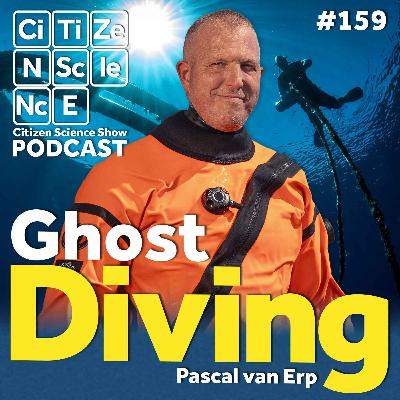
Pascal van Erp has spent years descending into waters most people will never see, uncovering a hidden layer of destruction far removed from the image of pristine marine environments. Beneath the surface, he regularly encounters lost fishing gear—nets, lines, and cages that continue to trap and kill marine life long after they have been abandoned. This reality led him to establish Ghost Diving, an organisation that has grown into a global network of seventeen chapters and more than five hundred volunteer divers.The organisation’s expansion has never been forced. Instead, technical diving teams from around the world approach Ghost Diving, motivated to apply their advanced skills to environmental work. This organic growth has led to strong chapters in countries such as Korea, Germany, the United States, and the Netherlands. Other regions, including Australia, remain without a chapter simply because no local team has yet stepped forward.The work itself demands a high level of expertise. Pascal emphasises that removing ghost nets is both complex and dangerous, requiring divers trained in deep diving, decompression, and managing multiple tasks simultaneously. In these operations, diving must become second nature so that the focus can remain entirely on the removal of hazardous debris.More Informationhttps://www.ghostdiving.org/https://www.ghostdiving.org/our-mission/https://www.ghostdiving.org/chapters/global/https://www.ghostdiving.org/chapters/https://www.ghostdiving.org/partners/https://www.ghostdiving.shop/ Hosted on Acast. See acast.com/privacy for more information.
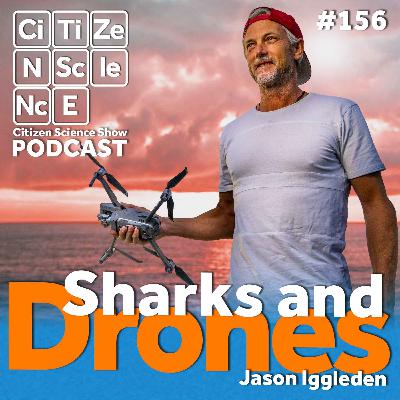
Eight years ago, Jason Iggleden was working as a builder, swinging tools and searching for something that would make him want to jump out of bed each morning. He still works in construction today, but back then he was looking for a shift in direction. Almost on impulse, he bought a drone and decided to create an app. There was no detailed business plan, just a desire to build something meaningful and help people along the way. That decision would end up reshaping his life.He launched what became known as the Drone Shark app. It was expensive to develop and eventually too costly to maintain, and it is no longer available in the App Store. In the early days, Jason flew drones each morning with a couple of his carpenters, trying to capture footage for the app. Progress was slow until someone suggested Instagram. He barely knew what the platform was at the time. Once he began posting there, momentum built quickly. Audiences connected with the footage, his live commentary evolved naturally, and a global community began forming around his aerial view of Bondi.What started as simple ocean filming soon became something more detailed. Jason began noticing individual animals and recurring behaviours. He gave them names—Alex the seal, Homer the hammerhead, Nelly the grey nurse shark with scoliosis, Sunny the sunfish, and Dolly the dolphins. Naming them helped audiences form emotional connections. Instead of seeing an anonymous shark, viewers saw a character. That shift, Jason believes, encourages people to care.More Informationhttps://www.youtube.com/@DroneSharkApphttps://www.facebook.com/dronesharkapp/https://www.instagram.com/stories/dronesharkapp/https://www.mdpi.com/about/journalshttps://sarahhatherley.com/portfolio_page/shark-bait-teaser/If you enjoy this podcast, please like and subscribe to our show wherever you get your podcasts.Leave us a review and share this show with your friends.It really helps us to reach more citizen scientists, like you.Contact the ShowWe are always looking for more guests to tell us about interesting citizen science projects, research and events.You can email us at: info@citizenscienceshow.com Hosted on Acast. See acast.com/privacy for more information.
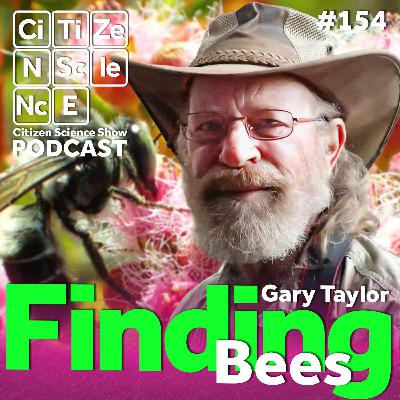
Gary Taylor has always felt most at home in the bush. Long before native bees became his focus, he was a child wandering through scrub and creek beds, watching everything that moved. His father shaped that way of seeing. He spoke about trees, spiders and insects as if they were old friends. Nothing was to be squashed or dismissed. Every creature simply wanted to get back to its companions. That quiet respect settled into Gary early and never left.In a patch of bush he calls his bee paradise, Gary noticed a large male Stenotritus with a reddish tuft at the end of its abdomen. Australia’s Stenotritidae are found nowhere else in the world, and with only a small number of known species, the difference stood out. After sharing photographs with Dr Megan Halcroft, he was connected with entomologist Terry Houston. The following season, specimens were collected and subjected to months of detailed measurement and description. The result was confirmation of a new species: Stenotritus taylori. Having an Australian native bee named in his honour remains one of Gary’s proudest achievements.More Informationhttps://ausemade.com.au/blog/If you enjoy this podcast, please like and subscribe to our show wherever you get your podcasts.Leave us a review and share this show with your friends.It really helps us to reach more citizen scientists, like you.Contact the ShowWe are always looking for more guests to tell us about interesting citizen science projects, research and events.You can email us at: info@citizenscienceshow.com Hosted on Acast. See acast.com/privacy for more information.
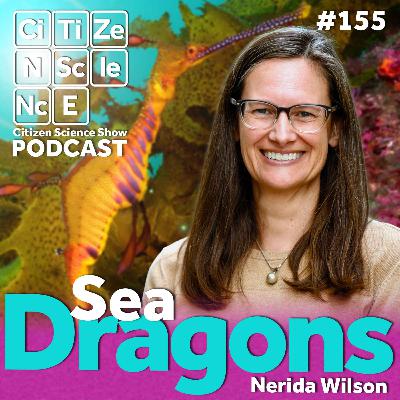
Dr Nerida Wilson has dedicated much of her career to understanding some of Australia’s most unusual marine life. As manager of Seadragon Search, she has brought together genetics, photography and citizen science to reveal new insights into one of the country’s most iconic underwater species.Although seadragons are displayed in aquariums around the world, they are found only in Australian waters. Nerida’s research even led to the extraordinary discovery of a new species, the ruby seadragon. The first evidence did not come from a diver’s sighting but from an unusual string of DNA letters that failed to align with known species. That anomaly proved to represent an entirely new seadragon.Seadragon Search emerged from genetic fieldwork. While collecting small tissue samples, Nerida and her team photographed each animal to ensure they did not resample the same individual. They realised that every seadragon carries unique markings. Weedy seadragons can be identified by their spot patterns, while leafy seadragons display distinctive bars and stripes. Today, artificial intelligence helps narrow down possible matches, but a human reviewer makes the final confirmation.More Informationhttps://seadragonsearch.org/If you enjoy this podcast, please like and subscribe to our show wherever you get your podcasts.Leave us a review and share this show with your friends.It really helps us to reach more citizen scientists, like you.Contact the ShowWe are always looking for more guests to tell us about interesting citizen science projects, research and events.You can email us at: info@citizenscienceshow.com Hosted on Acast. See acast.com/privacy for more information.
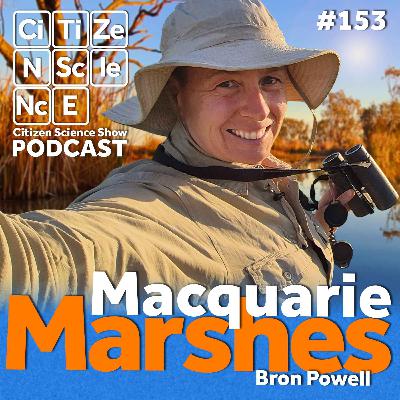
Each spring, Bron Powell returns to a vast inland wetland in north-west New South Wales, drawn by reeds taller than a person, restless bird colonies and the quiet pulse of water spreading across flat country. The Macquarie Marshes have become both her workplace and her teacher, a place where kayaking and conservation meet in practical and purposeful ways.Bron first discovered the Marshes nineteen years ago after moving from the Blue Mountains to Dubbo. She had only vaguely heard of them. With almost no public access, she could glimpse little more than reeds from the roadside, yet even that partial view was enough to spark something deeper. She had always considered herself an environmentalist. Once kayaking entered her life, the connection felt inevitable. Through volunteering and later working with National Parks, she began exploring further, building knowledge season by season until guiding others through the wetlands became the natural next step.The site was Ramsar-listed in 1986 for its international importance. In flood years, tens of thousands of Straw-necked Ibis nest shoulder to shoulder in extraordinary colonies. Spoonbills, egrets and herons join them. Migratory birds arrive from as far as Russia and Japan, while nomadic Australian species track water across the continent. Even outside major floods, Magpie Geese and Brolga breed here when conditions allow. It is a system that expands and contracts with rainfall, usually retaining a semi-permanent watery core, though the 2017 to 2019 drought pushed it to the brink.More Informationhttps://www.macquariemarsheskayaktours.com.au/https://www.nature.org.au/https://healthyriversdubbo.com/https://www.flow-mer.org.au/area-pages/macquarie-river-and-marshesIf you enjoy this podcast, please like and subscribe to our show wherever you get your podcasts.Leave us a review and share this show with your friends.It really helps us to reach more citizen scientists, like you.Contact the ShowWe are always looking for more guests to tell us about interesting citizen science projects, research and events.You can email us at: info@citizenscienceshow.com Hosted on Acast. See acast.com/privacy for more information.
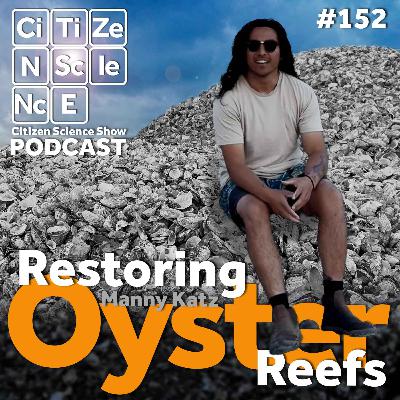
Two hundred years ago, South Australia’s coastline was edged not just by sandy beaches and rocky headlands, but by vast shellfish reefs stretching for thousands of kilometres. In South Australia alone, native oyster beds extended roughly 1,500 kilometres. Nationally, they spanned an estimated 8,000 kilometres—almost twice the length of the Great Barrier Reef. Today, less than one percent of those ecosystems remain intact.Manny Katz is working to bring them back.Manny serves as Director of EYRE Lab, an environmental charity focused on restoration ecology, and he runs a dive shop in Whyalla. Through tourism, diving, and the Reef Ramble podcast, he connects communities with marine science. At the centre of his work is a commitment to rebuilding reefs that once filtered the sea, sheltered marine life, and stabilised coastlines.More Informationhttps://www.eyrelab.org/https://www.facebook.com/eyrelabIf you enjoy this podcast, please like and subscribe to our show wherever you get your podcasts.Leave us a review and share this show with your friends.It really helps us to reach more citizen scientists, like you.Contact the ShowWe are always looking for more guests to tell us about interesting citizen science projects, research and events.You can email us at: info@citizenscienceshow.com Hosted on Acast. See acast.com/privacy for more information.
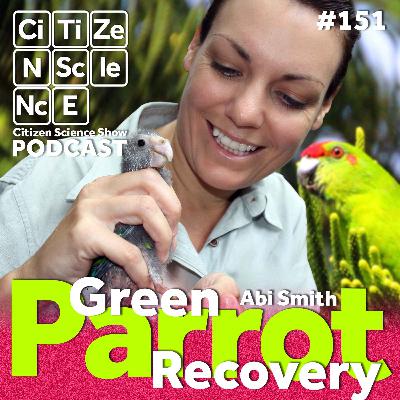
The green parrot is endemic to Norfolk Island, found nowhere else on Earth. It is a medium sized member of the Cyanoramphus group, with vivid green plumage and a red patch across its forehead. Two years ago, surveys estimated around eight hundred birds. That number dropped to six hundred the following year and now sits at roughly two hundred. Even more alarming, recent years have seen no successful nesting.One species particularly close to Abi’s heart is the Norfolk Island Green Parrot. She lived on Norfolk Island about a decade ago while serving as Natural Resource Manager in the national park. The island sits in the South Pacific between Australia and New Zealand and is home to around fifteen hundred residents deeply connected to their environment.Abi Smith has spent twenty five years working to protect Australia’s most threatened wildlife, and she remains steadfast in her belief that extinction is not inevitable. As founder and CEO of the Threatened Species Conservancy, her focus is clear: turn science into action and ensure no species is left behind.More Informationhttps://www.tsconservancy.org/https://proofsafe.com.au/https://www.facebook.com/ThreatenedSpeciesConservancyhttps://www.linkedin.com/company/threatened-species-conservancy-inc/https://www.instagram.com/threatenedspeciesconservancy/If you enjoy this podcast, please like and subscribe to our show wherever you get your podcasts.Leave us a comment and share this show with your friends.It really helps us to reach more citizen scientists, like you.Contact the ShowWe are always looking for more guests to tell us about interesting citizen science projects, research and events.You can email us at: info@citizenscienceshow.com Hosted on Acast. See acast.com/privacy for more information.

Jeremy Day began his career by moving from boat to boat, taking on dive work wherever he could, long before he envisioned specialising in sea urchins. Working as a diver skipper eventually led him to James Cook University in Townsville, where he completed his undergraduate degree and assisted researchers on the Great Barrier Reef. Early involvement in Crown of Thorns Starfish control programs prompted a question that would shape his scientific thinking: what distinguishes managing a native species from attempting to eradicate it? That distinction continues to inform his research on sea urchins today.Much of Jeremy’s recent work has focused on understanding what these urchins actually consume. For years, they have been portrayed primarily as kelp-destroying herbivores. By combining gut content analysis with stable isotope techniques using carbon, nitrogen and sulphur, he and his colleagues have examined both short-term and longer-term feeding patterns. Their findings show that Longspined Sea Urchins are true omnivores. They consume brown macroalgae when available, but also feed on invertebrates such as mussels and sponges, along with particulate organic matter drifting through the water column. Even in barrens, where macroalgae is scarce, they continue to feed and reproduce.More Informationhttps://www.instagram.com/urchin_ramsey/https://inaturalist.ala.org.au/https://www.redmap.org.au/https://reeflifesurvey.com/https://www.urgdiveclub.org.au/https://www.sarahdives.com/https://spotashark.com/If you enjoy this podcast, please like and subscribe to our show wherever you get your podcasts.Leave us a comment and share this show with your friends.It really helps us to reach more citizen scientists, like you.Contact the ShowWe are always looking for more guests to tell us about interesting citizen science projects, research and events.You can email us at: info@citizenscienceshow.com Hosted on Acast. See acast.com/privacy for more information.
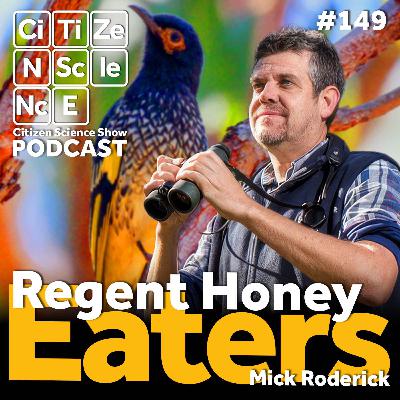
Saving birds was never supposed to be Mick Roderick’s career, but somewhere between university ecology fieldwork and friendly arguments over bird field guides, birdwatching stopped being a pastime and became an identity. Mick did not grow up as a birder. His family were bushwalkers, and birds were simply part of the landscape. It wasn’t until studying ecology at university that he began paying closer attention, and before long birding shifted from a social activity into something much deeper. Over time it became both his profession and his obsession, an unusual pairing that has worked remarkably well.Mick now works as the Regent Honeyeater Recovery Coordinator at BirdLife Australia, an organisation that has been protecting Australian birds for more than 125 years. Based in the Hunter region of New South Wales, he is also deeply involved with the Hunter Bird Observers Club, where long-term citizen science has played a crucial role in understanding population trends. For nearly three decades, volunteers have conducted monthly shorebird surveys in the Hunter Estuary, creating a dataset of immense value. Those records reveal an uncomfortable truth: migratory shorebirds, including the eastern curlew, continue to decline despite decades of monitoring and effort.More Informationhttps://birdlife.org.au/https://www.hboc.org.au/https://www.twitchathon.com.au/https://aussiebirdcount.org.au/Image Attribution Mick Roderick (Robert Virtue) ABCIf you enjoy this podcast, please like and subscribe to our show wherever you get your podcasts.Leave us a comment and share this show with your friends.It really helps us to reach more citizen scientists, like you.Contact the ShowWe are always looking for more guests to tell us about interesting citizen science projects, research and events.You can email us at: info@citizenscienceshow.com Hosted on Acast. See acast.com/privacy for more information.
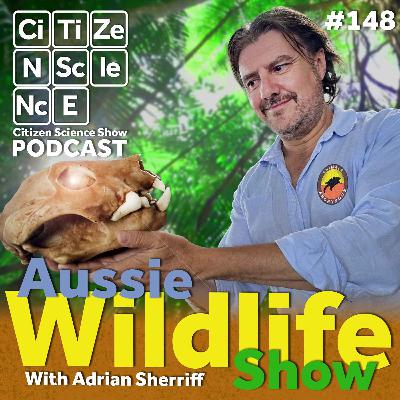
Adrian Sherriff has spent much of his life bringing people closer to Australian wildlife, not simply to admire animals, but to understand the systems that keep them alive. Animals Anonymous began as a straightforward idea: taking native animals into schools and community spaces to spark curiosity and connection. Over time, that idea grew into a broader mission encompassing education, inclusion, conservation, and a sense of belonging.Animals Anonymous now operates across several areas. The organisation delivers wildlife education programs, teaches animal handling to university students, and hosts private wildlife encounters at its property in Mylor in the Adelaide Hills. It also runs an NDIS program supporting people with disabilities, helping them develop confidence, social skills, and purpose through working with animals. Watching people find connection and belonging through shared care and curiosity has become one of the most meaningful outcomes of Adrian’s work.More Informationhttps://open.spotify.com/show/3hcErP3avhLkKVIK2LAIAd?si=75189ffee06847c6https://aussiewildlifeshow.podbean.com/https://www.reptilecreative.com.au/https://www.facebook.com/AussieWildlifeShow/If you enjoy this podcast, please like and subscribe to our show wherever you get your podcasts.Leave us a comment and share this show with your friends.It really helps us to reach more citizen scientists, like you.Contact the ShowWe are always looking for more guests to tell us about interesting citizen science projects, research and events.You can email us at: info@citizenscienceshow.com Hosted on Acast. See acast.com/privacy for more information.
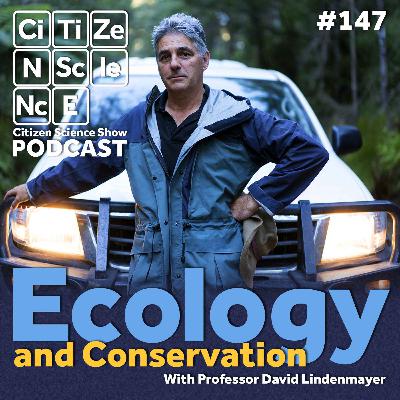
David Lindenmayer’s scientific life began in his mid-teens, shaped by birdwatching trips with his father and groups of volunteers who seemed able to hear and identify birds long before they were visible. Learning bird calls became like learning another language, one that opened his eyes to how landscapes function and how life is distributed across them. That connection to the environment has never left him, and decades later he still finds inspiration simply by spending time in the bush, where something new reveals itself every time careful attention is paid.The idea that nature is always resilient is, in his view, only partly true. Ecosystems can recover if given the chance, but resilience breaks down when multiple stressors occur too frequently and too intensely. Long-term data are essential for understanding these patterns, particularly in a country as variable as Australia. Maintaining those studies has required relentless effort, constant fundraising, and support from dedicated collaborators and volunteers, but without them there would be little understanding of what is really happening to biodiversity.Some of the hardest truths in conservation involve recognising the scale of human impact. Humans and their livestock now dominate global mammal biomass, leaving only a small fraction for wild species. Confronting that reality is uncomfortable, but it is necessary if damage is to be repaired and further loss prevented. At the same time, David emphasises that there are genuine reasons for hope. Successful feral animal eradication on places such as Macquarie Island shows how quickly ecosystems can recover when pressures are removed.Restoration projects have also demonstrated powerful outcomes. Renovating poorly managed farm dams can transform them from sources of greenhouse gases into carbon sinks, while improving water quality, boosting biodiversity, and increasing farm productivity. These results show that well-designed, science-based investments can benefit nature, climate, and people at the same time.Working alongside First Nations elders has deepened his understanding of land management, particularly fire. Indigenous knowledge and Western science offer different but complementary perspectives, and when brought together respectfully they reveal insights that neither system can achieve alone. Cultural burning, in particular, is highly localised, purposeful, and fundamentally different from broad-scale hazard reduction burning, a distinction that is often misunderstood.More Informationhttps://www.linkedin.com/in/david-lindenmayer-34b165223/https://researchportalplus.anu.edu.au/en/persons/david-lindenmayer/If you enjoy this podcast, please like and subscribe to our show wherever you get your podcasts.Leave us a comment and share this show with your friends.It really helps us to reach more citizen scientists, like you.Contact the ShowWe are always looking for more guests to tell us about interesting citizen science projects, research and events.You can email us at: info@citizenscienceshow.com Hosted on Acast. See acast.com/privacy for more information.
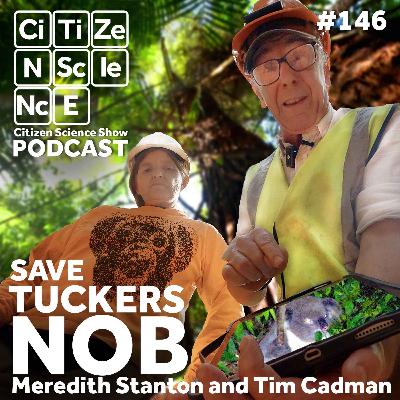
Tuckers Nob State Forest is prime koala habitat but sits outside the proposed Great Koala National Park because it is zoned as plantation. Under New South Wales regulations, plantation zoning allows clearfell logging, meaning entire areas can be logged without safeguards for wildlife. Although koalas live in these forests, they are effectively rendered invisible by planning frameworks that assume plantations are not suitable habitat. Without protecting core koala habitat, Tim Cadman argues, there is no future for koalas either in the region or more broadly.Tim works with Meredith Stanton and a team of around thirty citizen scientists, Tim has been mapping important habitat trees and documenting koala presence using drones, night vision equipment, and on-ground surveys. The aim of this community-driven science is to demonstrate that plantation forests are functioning ecosystems. Meredith reflected on her own experience living in Clouds Creek State Forest, once known for a high koala population that has steadily declined over decades of repeated logging. Long before the 2019 bushfires, she noticed fewer sightings, the absence of breeding females, and the disappearance of familiar seasonal calls.More Informationhttps://www.facebook.com/timothymarkcadmanIf you enjoy this podcast, please like and subscribe to our show wherever you get your podcasts.Leave us a comment and share this show with your friends.It really helps us to reach more citizen scientists, like you.Contact the ShowWe are always looking for more guests to tell us about interesting citizen science projects, research and events.You can email us at: info@citizenscienceshow.com Hosted on Acast. See acast.com/privacy for more information.
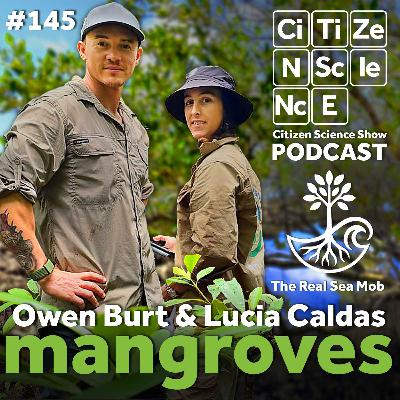
The name The Real Sea Mob reflects their belief in honesty, community, and connection. They aim to present science clearly, without exaggeration or despair, and to show both the challenges and the opportunities facing marine and coastal environments. Maintaining optimism, they said, comes from spending time in nature, working with engaged communities, and supporting each other through shared purpose.After moving to Australia three years ago, Lucia’s first local citizen science project involved mangrove monitoring with Positive Change for Marine Life in northern New South Wales. That work connected her with Jock Mackenzie, now her manager at Earthwatch Australia where she is the Program Manager for wetlands, coastal, and marine environments in Queensland. Based in Townsville, she now works closely with communities, Traditional Owners, and Indigenous rangers across large sections of the Queensland coast.Owen’s pathway into citizen science began during his undergraduate studies, when he travelled to Indonesia to conduct coral reef surveys under academic guidance. His interest in coastal ecosystems continued into his master’s research, which focused on mangroves and their role in buffering heat and supporting marine life. That research brought him to Mexico, where he and Lucia met while working on a citizen science project in Akumal. Lucia managed a dive centre and led scientific dives, while Owen carried out mangrove research, and their shared enthusiasm for coastal ecosystems grew from there.More Informationhttps://www.instagram.com/therealseamob/If you enjoy this podcast, please like and subscribe to our show wherever you get your podcasts.Leave us a comment and share this show with your friends.It really helps us to reach more citizen scientists, like you.Contact the ShowWe are always looking for more guests to tell us about interesting citizen science projects, research and events.You can email us at: info@citizenscienceshow.com Hosted on Acast. See acast.com/privacy for more information.
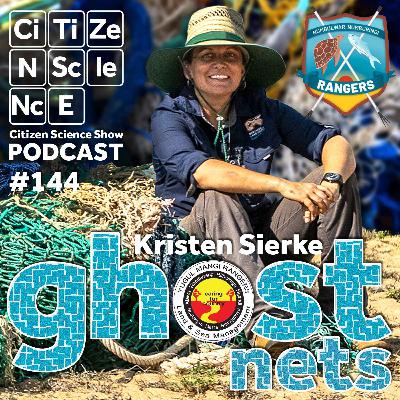
Ghost nets have become one of the most confronting environmental issues facing northern Australia, and hearing directly from those working on the ground makes it impossible to ignore the scale of the problem. Speaking with Kristen Sierke, the Ghost Net and Marine Debris Coordinator with the Northern Land Council, highlighted how deeply this issue is woven into both marine conservation and Indigenous ranger work across the Northern Territory.Kristen’s path into this work began with a long-standing connection to the ocean, from studying marine biology in South Australia to working in tourism on the Great Barrier Reef, and later as a ranger and in biosecurity roles in the Northern Territory.That progression led her to work closely with Indigenous rangers, and eventually into a role dedicated entirely to tackling ghost nets and marine debris in Southeast Arnhem Land.Ghost nets are abandoned, lost, or discarded fishing gear that continue to trap wildlife long after they are no longer under human control. Designed to catch fish, they do exactly that without discrimination, drifting for years or even decades.An aerial survey in the Gulf of Carpentaria alone identified more than 2,500 ghost nets on beaches, with estimates suggesting that across northern Australia there is roughly one ghost net for every kilometre of coastline.More Informationhttps://www.facebook.com/kristen.sierke/If you enjoy this podcast, please like and subscribe to our show wherever you get your podcasts.Leave us a comment and share this show with your friends.It really helps us to reach more citizen scientists, like you.Contact the ShowWe are always looking for more guests to tell us about interesting citizen science projects, research and events.You can email us at: info@citizenscienceshow.com Hosted on Acast. See acast.com/privacy for more information.
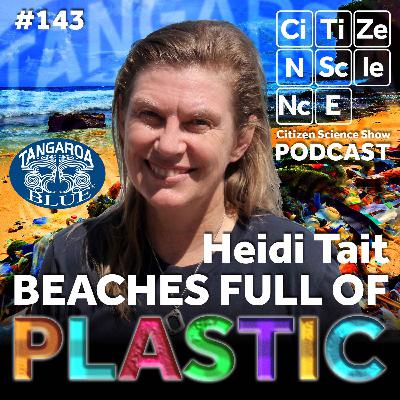
Heidi first recognised the scale of marine debris while working as a diving instructor, a career that placed her in the water almost daily and offered close encounters with marine wildlife.Over time she began noticing increasing amounts of rubbish appearing in some of the world’s most treasured dive sites.Later, while exploring the southwest coast of Western Australia, she saw debris washing onto remote beaches and began questioning its origins and how the flow could be stopped.These observations planted the seeds of what would become Tangaroa Blue and the Australian Marine Debris Initiative.People can get involved in many ways: participating in beach clean-ups, establishing monitoring sites, supporting data analysis, contributing to awareness campaigns or using the AMDI Data Collection App.The value of sustained volunteer data cannot be overstated; it would be impossible to fund an equivalent program using paid staff alone.More Information https://tangaroablue.org/If you enjoy this podcast, please like and subscribe to our show wherever you get your podcasts.Leave us a comment and share this show with your friends.It really helps us to reach more citizen scientists, like you.Contact the ShowWe are always looking for more guests to tell us about interesting citizen science projects, research and events.You can email us at: info@citizenscienceshow.com Hosted on Acast. See acast.com/privacy for more information.

Tonight on the show we gather the team and revisit some of the Citizen Science Show highlights for 2025. If you enjoy this podcast, please like and subscribe to our show wherever you get your podcasts.Leave us a comment and share this show with your friends.It really helps us to reach more citizen scientists, like you.Contact the ShowWe are always looking for more guests to tell us about interesting citizen science projects, research and events.You can email us at: info@citizenscienceshow.com Hosted on Acast. See acast.com/privacy for more information.
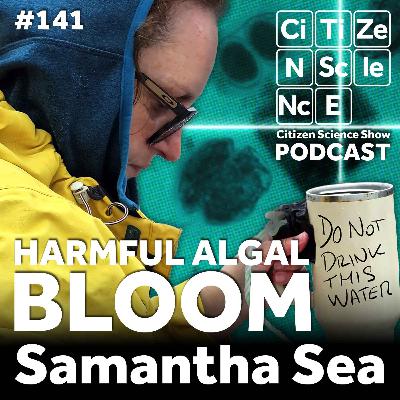
During one calm day in March 2025, Samantha noticed something unusual: thick, persistent sea foam spread across the water near West Island. It was far more extensive than anything seen before, and instinctively it seemed wrong. With guidance from Faith and Peri Coleman, Samantha learned how to use the equipment, how to prepare samples, and how to identify phytoplankton. What stood out most was the absence of historical baseline data. There was no clear record of what “normal” looked like for these coastal waters. The only option was to document what was present now and to keep watching.From that need, Samantha created an open Facebook group, Phytoplankton of South Australia, making all findings public and transparent.More informationhttps://www.facebook.com/groups/1315762396637652https://inaturalist.ala.org.au/observations?project_id=249644Photo CreditLynlee JohnsonIf you enjoy this podcast, please like and subscribe to our show wherever you get your podcasts.Leave us a comment and share this show with your friends.It really helps us to reach more citizen scientists, like you.Contact the ShowWe are always looking for more guests to tell us about interesting citizen science projects, research and events.You can email us at: info@citizenscienceshow.com Hosted on Acast. See acast.com/privacy for more information.
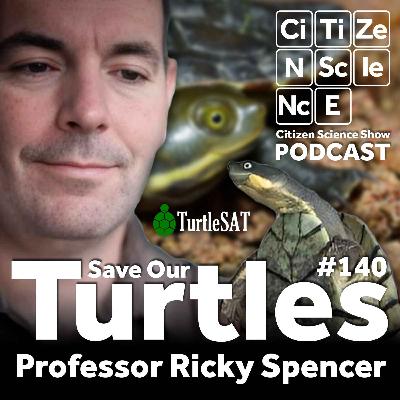
Australia has roughly 25 to 30 freshwater turtle species, depending on the day’s taxonomy debates, and Ricky Spencer's work centres on these inland species found in almost every river, dam and creek.Among the most fragile is the Bellinger River turtle, which came close to disappearing ten years ago when a virus reduced a population of more than four thousand to just sixteen survivors.Those rescued turtles continue to breed under human care, yet the road to recovery is long.Meanwhile, species that are still widespread are also declining.Long-neck turtles, familiar to many Australians, have dropped by around ninety per cent over three decades despite their apparent abundance.More Informationhttps://www.turtlesat.org.au/turtlesat/https://1millionturtles.com/Photo CreditDr Donald McKnightIf you enjoy this podcast, please like and subscribe to our show wherever you get your podcasts.Leave us a comment and share this show with your friends.It really helps us to reach more citizen scientists, like you.Contact the ShowWe are always looking for more guests to tell us about interesting citizen science projects, research and events.You can email us at: info@citizenscienceshow.com Hosted on Acast. See acast.com/privacy for more information.
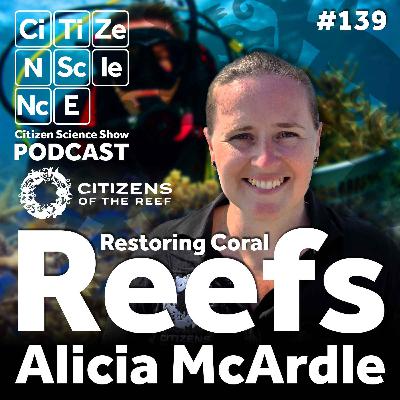
Alicia McArdle’s work in conservation has been shaped by community from the beginning.Early in her career, not long after university, she was employed by Save Our Waterways in Brisbane, helping coordinate a project to restore an entire creek system. Local residents carried deep knowledge of their waterways, and working alongside them showed her how powerful citizen-driven stewardship can be.That experience stayed with her, just as her first sight of the Great Barrier Reef at age twelve on Green Island did.The colours, marine life and the fleeting shock of spotting a moray eel set her on a path toward marine biology.More Informationhttps://citizensgbr.org/If you enjoy this content, please like and subscribe to our show wherever you get your podcasts.Leave us a comment and share this show with your friends.It really helps us to reach more citizen scientists, like you.Contact the ShowWe are always looking for more guests to tell us about interesting citizen science projects, research and events.You can email us at: info@citizenscienceshow.com Hosted on Acast. See acast.com/privacy for more information.
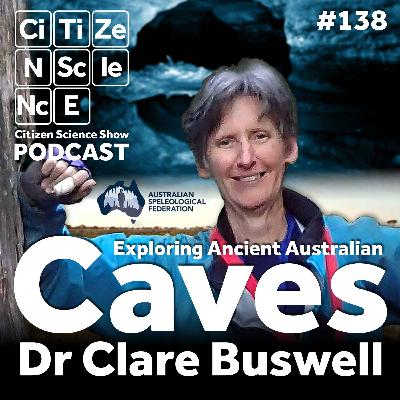
Clare Buswell’s career weaves together political science, cultural history, and speleology in a way that makes perfect sense once she begins to explain it.Her early academic work on colonial gender dynamics in Kenya led her to examine cultural interpretations, dreamings and social relationships—perspectives that later helped her understand the significance of Australia’s karst landscapes and the First Nations stories etched into them.For Clare, the subterranean world reflects the same human and environmental connections found above ground, only preserved in stone, charcoal and silence.More Informationhttps://caves.org.au/If you enjoy this content, please like and subscribe to our show wherever you get your podcasts.Leave us a comment and share this show with your friends.It really helps us to reach more citizen scientists, like you.Thumbnail Photo Credits:Mr Neville SkinerClare BuswellContact the ShowWe are always looking for more guests to tell us about interesting citizen science projects, research and events.You can email us at: info@citizenscienceshow.com Hosted on Acast. See acast.com/privacy for more information.

Comments

Download from Google Play

Download from App Store
 United States