


 Claim Ownership
In Your Opinion
Subscribed: 9Played: 34
Subscribe

© 2026 The Straits Times
Description
Synopsis: On Wednesdays, The Straits Times takes a hard look at Singapore's social issues of the day with guests.
Produced and edited by: Hadyu Rahim
Executive producers: Ernest Luis & Lynda Hong
A podcast by The Straits Times, SPH Media.
78 Episodes
Reverse

If Singapore has fuel reserves, why are electricity tariffs surging? Synopsis: On Wednesdays, The Straits Times takes a hard look at Singapore's social issues of the day with newsmakers. From April to June 2026, electricity and household tariffs will be higher. And we’ve been warned to brace for even higher utility bills after this quarter, as the ongoing war in the Middle East squeezes global fuel supplies. But this always leads to a very common question from Singaporeans. To counter these exact types of supply shocks, does Singapore actually have enough national fuel reserves to last for months? So if we have our own stockpiles, why do we still have to pay more? In this episode, assistant podcast editor Lynda Hong unpacks the impact of the war on inflation with Dr David Broadstock, partner at energy consultancy The Lantau Group. He explains the stockpile paradox when global conflicts hit the cost of living at home. Apart from cost of living issues related to the rise in energy prices, the episode also discusses whether it’s more cost-effective to buy an Electric Vehicle (EV) and the challenges to transition to decarbonised energy like nuclear and renewables. Highlights (click/tap above): 4:54 Survival vs. hedging: The two types of fuel reserves Singapore uses 14:10 Will Open Electricity Market (OEM) retailers collapse again? 20:35 When will energy inflation hit food and transport? 25:52 Why the war, even if short-lived, would have long-term impact on high prices 27:58 EV vs. petrol: Does switching to an electric vehicle actually save you money right now? 30:59 Is nuclear energy the ultimate solution to Singapore's price shocks? Read ST’s Opinion section: https://str.sg/w7sH Follow Lynda Hong on LinkedIn: https://str.sg/Gm2v Host: Lynda Hong (lyndahong@sph.com.sg) Produced and edited by: Hadyu Rahim Executive producers: Ernest Luis & Lynda Hong Follow In Your Opinion Podcast here and get notified for new episode drops: Channel: https://str.sg/w7Qt Apple Podcasts: https://str.sg/wukb Spotify: https://str.sg/w7sV Feedback to: podcast@sph.com.sg SPH Awedio app: https://www.awedio.sg --- Follow more ST podcast channels: All-in-one ST Podcasts channel: https://str.sg/wvz7 Get more updates: http://str.sg/stpodcasts The Usual Place Podcast YouTube: https://str.sg/theusualplacepodcast --- Get The Straits Times app, which has a dedicated podcast player section: The App Store: https://str.sg/icyB Google Play: https://str.sg/icyX --- #inyouropinionSee omnystudio.com/listener for privacy information.

The first woman to lead a university in Singapore discusses how SMU is adapting to AI and different forms of employment. Synopsis: On Wednesdays, The Straits Times takes a hard look at Singapore's social issues of the day with newsmakers. Facing a softer job market, fresh challenges wrought by artificial intelligence (AI) and growing scrutiny over the industry relevance of degrees, universities are coming under pressure to show degrees lead to good jobs, not just academic credentials. That requires stronger career services, more industry-linked learning and closer alignment between education and the job market. How are universities adapting to improve graduate employability? How do they ensure students gain practical, industry-relevant skills alongside academic knowledge? What yardsticks should universities use to judge if a degree is still delivering good value? In this episode, ST's opinion editor Lin Suling speaks with SMU President Prof Lily Kong. Highlights (click/tap above): 7:07 Can a student realistically juggle multiple competing demands of a holistic education? 9:33 Overseas exchange programmes: Leveller or a flex? 15:34 What responsibilities do universities bear for graduate employment outcomes? 20:58 The impact of internships and cross-disciplinary programmes on employment outcomes 28:54 How AI is changing teaching at SMU 32:50 More gig, temp and part-time roles: Do universities have a role in preparing students for this career reality? Read ST’s Opinion section: https://str.sg/w7sH Follow Lin Suling on LinkedIn: https://str.sg/hiLQ Host: Lin Suling (linsuling@sph.com.sg) Produced and edited by: Hadyu Rahim Executive producers: Ernest Luis & Lynda Hong Follow In Your Opinion Podcast here and get notified for new episode drops: Channel: https://str.sg/w7Qt Apple Podcasts: https://str.sg/wukb Spotify: https://str.sg/w7sV Feedback to: podcast@sph.com.sg SPH Awedio app: https://www.awedio.sg --- Follow more ST podcast channels: All-in-one ST Podcasts channel: https://str.sg/wvz7 Get more updates: http://str.sg/stpodcasts The Usual Place Podcast YouTube: https://str.sg/theusualplacepodcast --- Get The Straits Times app, which has a dedicated podcast player section: The App Store: https://str.sg/icyB Google Play: https://str.sg/icyX --- #inyouropinionSee omnystudio.com/listener for privacy information.
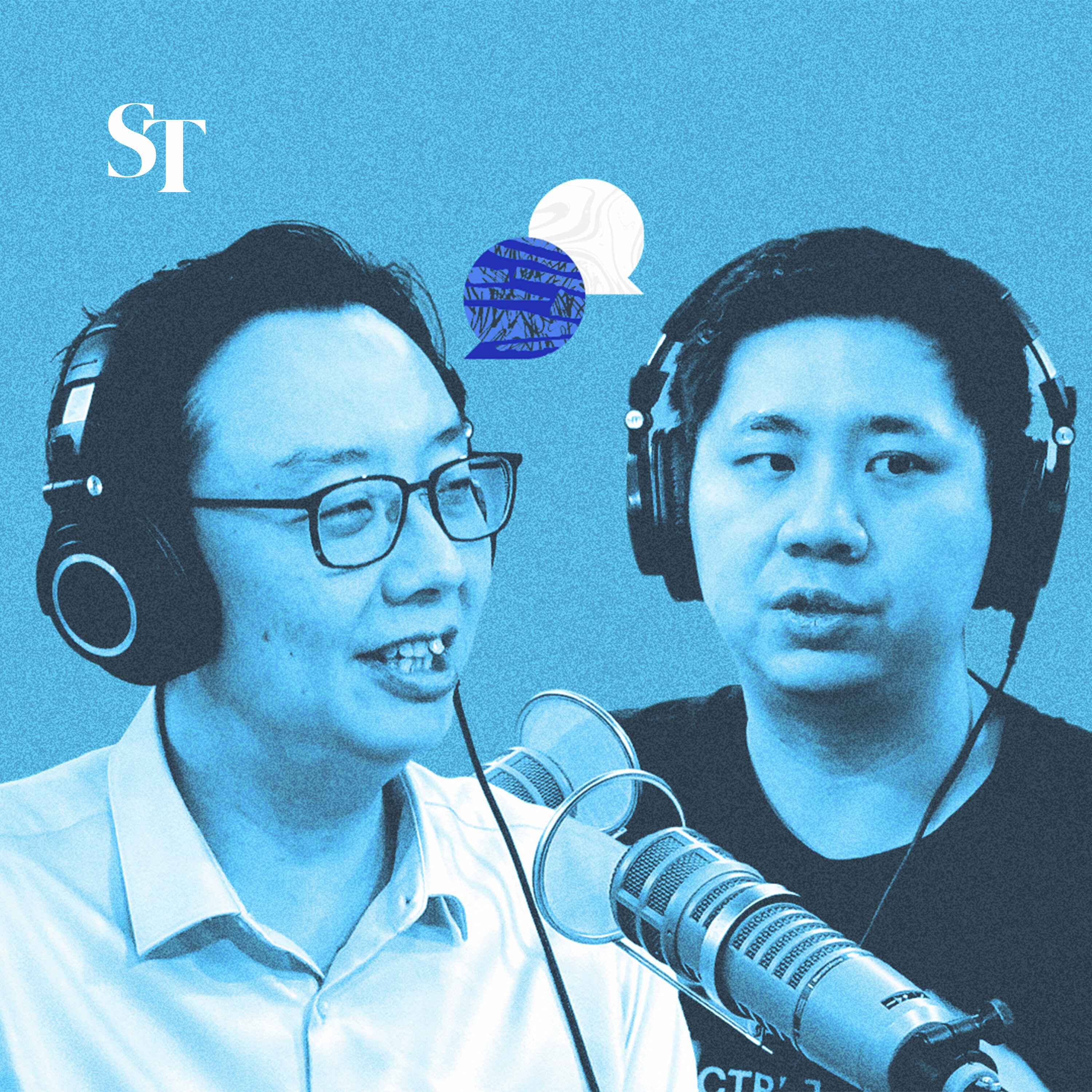
Are these cards really that bad? Could playing with them lead to gambling? Synopsis: On Wednesdays, The Straits Times takes a hard look at Singapore's social issues of the day with guests. Pokemon. One Piece. Magic: The Gathering. These trading card games bring back nostalgic childhood memories. But the government's plans to regulate them raise questions. In this episode, assistant opinion editor Lianne Chia speaks to psychiatrist Lim Boon Leng from Gleneagles Medical Centre, and Chew Zhan Lun, co-founder of card marketplace CTRL Collectibles, who recently made headlines for rejecting a $1.3 million offer for one of his Pokemon cards. They delve into the nature of the trading card scene and how such cards - initially meant for children to play with - have turned into a hyped-up investment asset. But with social media and livestreaming fuelling this boom, there are practices that could cross the line into gambling. Could regulations, therefore, be a good thing for the scene? And what could they look like? Highlights (click/tap above): 7:28 When a hobby becomes lucrative, what do we lose? 13:08 What makes people spend thousands of dollars on a single card? 17:29 Is there something inherently wrong with trading cards that could cause one to be addicted to gambling? 20:31 Are we exposing our children to gambling? 26:41 Is regulation going to take the fun out of the hobby? Read ST’s Opinion section: https://str.sg/w7sH Follow Lianne Chia on LinkedIn: https://str.sg/gTta Host: Lianne Chia (liannechia@sph.com.sg) Produced and edited by: Hadyu Rahim Executive producers: Ernest Luis & Lynda Hong Follow In Your Opinion Podcast here and get notified for new episode drops: Channel: https://str.sg/w7Qt Apple Podcasts: https://str.sg/wukb Spotify: https://str.sg/w7sV Feedback to: podcast@sph.com.sg SPH Awedio app: https://www.awedio.sg --- Follow more ST podcast channels: All-in-one ST Podcasts channel: https://str.sg/wvz7 Get more updates: http://str.sg/stpodcasts The Usual Place Podcast YouTube: https://str.sg/theusualplacepodcast --- Get The Straits Times app, which has a dedicated podcast player section: The App Store: https://str.sg/icyB Google Play: https://str.sg/icyX --- #inyouropinionSee omnystudio.com/listener for privacy information.

Why older workers with deep domain expertise have a unique advantage in the AI era, how companies can fix the "broken rung" for fresh graduates. Synopsis: On Wednesdays, The Straits Times takes a hard look at Singapore's social issues of the day with guests.Ten years ago, the message to the workforce was: "Learn to code." Today, the mandate has shifted to learning AI and prompting chatbots. But as the goalposts move again toward autonomous AI agents that can take over complex workflows, is the Singaporean workforce ready?In this episode, assistant podcast editor Lynda Hong explores the realities of the AI transition with her guests: Laurence Liew, director of AI innovation at AI Singapore, and Koh Chee Kiong, deputy CEO of WizVision. The 66-year-old recently took up a course in Gen AI and uses AI agents at work.They also discuss why older workers with deep domain experience have a unique advantage, how to fix the broken rung for fresh graduates entering an AI-assisted corporate world, and why adopting AI is much less daunting, and much more conversational, than you might think.Highlights (click/tap above): 2:04 Why workers have a bigger advantage over fresh graduates with Gen AI8:05 Gen AI understands broken English9:53 How young professionals can build industry judgment if AI automates entry-level work17:39 AI has been implemented decades ago, and will continue to be deeply integrated in work flows by 2035 21:12 Debunking the plumber myth: Why blue-collar jobs aren't AI-proof Read ST’s Opinion section: https://str.sg/w7sH Follow Lynda Hong on LinkedIn: https://str.sg/Gm2v Host: Lynda Hong (lyndahong@sph.com.sg) Produced and edited by: Hadyu Rahim Executive producers: Ernest Luis & Lynda Hong Follow In Your Opinion Podcast here and get notified for new episode drops: Channel: https://str.sg/w7Qt Apple Podcasts: https://str.sg/wukb Spotify: https://str.sg/w7sV Feedback to: podcast@sph.com.sg SPH Awedio app: https://www.awedio.sg --- Follow more ST podcast channels: All-in-one ST Podcasts channel: https://str.sg/wvz7 Get more updates: http://str.sg/stpodcasts The Usual Place Podcast YouTube: https://str.sg/theusualplacepodcast --- Get The Straits Times app, which has a dedicated podcast player section: The App Store: https://str.sg/icyB Google Play: https://str.sg/icyX --- #inyouropinionSee omnystudio.com/listener for privacy information.

Booming arrivals, stubborn humidity – but dull and overpriced? Synopsis: On Wednesdays, The Straits Times takes a hard look at Singapore's social issues of the day with guests. Singapore’s tourism pitch is not just about selling its picture-perfect skyline; it’s also about showcasing its rich multiculturalism, leaning into its talent in hosting world-class events, and taking visitors on a journey to discover how a young nation is defining its own identity. In this episode, senior columnist Tan Dawn Wei speaks with Ms Jean Ng, assistant chief executive of Experience Development at the Singapore Tourism Board, and Mr Matin Mohdari, head of Public Policy for Southeast and South Asia at online travel company Expedia Group about Chinese traveller sentiment, events as demand drivers, cooling the city, and how AI could reshape tourism by 2040. They unpack Singapore's 2025 performance, why “hot, boring, expensive” perceptions among some Chinese travellers matter, and how STB is adjusting for younger, social-media-led free-and-easy visitors through partnerships, IP, and precinct storytelling. The conversation also looks at practical ways to soften the tropical heat, what Singapore offers versus rival Asian cities, and the balance between premium experiences and everyday affordability. Finally, they explore Tourism 2040 – the roadmap to hitting between $47 and $50 billion in tourism receipts by then – and how AI can boost productivity behind the scenes, while keeping the human stories that make a place emotionally resonant. Highlights (click/tap above): 2:54 “Too hot, too boring, too expensive” 13:14 Singapore can’t change its climate, but it can make the outdoor experience more enjoyable 16:54 Singapore’s edge over other Asian cities 24:48 Going after “quality tourism” in Singapore’s Tourism 2040 roadmap 38:10 What Singapore needs to loosen control over, to be emotionally resonant Read more: https://str.sg/okfhy Read ST’s Opinion section: https://str.sg/w7sH Read Dawn's columns: https://str.sg/3xR7 Host: Tan Dawn Wei (dawntan@sph.com.sg) Produced and edited by: Hadyu Rahim Executive producers: Ernest Luis & Lynda Hong Follow In Your Opinion Podcast here and get notified for new episode drops: Channel: https://str.sg/w7Qt Apple Podcasts: https://str.sg/wukb Spotify: https://str.sg/w7sV Feedback to: podcast@sph.com.sg SPH Awedio app: https://www.awedio.sg --- Follow more ST podcast channels: All-in-one ST Podcasts channel: https://str.sg/wvz7 Get more updates: http://str.sg/stpodcasts The Usual Place Podcast YouTube: https://str.sg/theusualplacepodcast --- Get The Straits Times app, which has a dedicated podcast player section: The App Store: https://str.sg/icyB Google Play: https://str.sg/icyX --- #inyouropinionSee omnystudio.com/listener for privacy information.

Government support measures such as CDC vouchers were meant to cushion soaring inflation. But are they fiscally sustainable? Synopsis: On Wednesdays, The Straits Times takes a hard look at Singapore's social issues of the day with guests.Temporary government handouts like the CDC vouchers were meant to cushion the impact of Covid-19 and soaring inflation due to supply shocks that were caused by global events like the war in Ukraine. But with inflation cooling to trend levels, can Singaporeans wean off the ‘free money’ reliance from CDC vouchers that were meant to be temporary? In this episode - which comes out a day ahead of Budget 2026 - ST assistant podcast editor Lynda Hong speaks to independent economist Song Seng Wun; and sociologist Clara Lee, research fellow at Lee Kuan Yew School of Public Policy’s Institute of Policy Studies. Apart from how the CDC voucher scheme has since become a staple of the government’s support package, they delve into different forms of welfare Singaporeans now receive, and the impact on small businesses should the scheme be withdrawn. Highlights (click/tap above): 4:11 Impact on heartland merchants should CDC vouchers be withdrawn 9:42 Why are we using 'emergency' vouchers in a recovering economy? 15:49 Exiting from the policy of handing out CDC vouchers 20:43 Digital infrastructure to distribute CDC vouchers are now well-established: Clara 22:45 Redefining welfare state? Read ST’s Opinion section: https://str.sg/w7sH Host: Lynda Hong (lyndahong@sph.com.sg) Produced and edited by: Hadyu Rahim Executive producers: Ernest Luis & Lynda Hong Follow In Your Opinion Podcast here and get notified for new episode drops: Channel: https://str.sg/w7Qt Apple Podcasts: https://str.sg/wukb Spotify: https://str.sg/w7sV Feedback to: podcast@sph.com.sg SPH Awedio app: https://www.awedio.sg --- Follow more ST podcast channels: All-in-one ST Podcasts channel: https://str.sg/wvz7 Get more updates: http://str.sg/stpodcasts The Usual Place Podcast YouTube: https://str.sg/theusualplacepodcast --- Get The Straits Times app, which has a dedicated podcast player section: The App Store: https://str.sg/icyB Google Play: https://str.sg/icyX --- #inyouropinion See omnystudio.com/listener for privacy information.

Are we using phones constructively to help kids to learn or assist adults in coping? Synopsis: On Wednesdays, The Straits Times takes a hard look at Singapore's social issues of the day with guests. One of the most fraught challenges of modern parenting is our love-hate relationship with screen time. From school bans on phones in school, to the everyday reality of dual-income working parents who just need their child to eat dinner in peace, how much is too much screentime and who should be responsible? Are we using phones constructively to help kids to learn or assist adults in coping? And in a dopamine fuelled always-on world where we are expected to be 24/7 ready for work, are we asking our offspring to do something we ourselves fail at? Opinion editor Lin Suling gets answers from Dr Becky, who’s been called the millennial parent whisperer by Time Magazine, on the sidelines of the 2026 World Economic Forum in Davos in January. With millions of followers on Instagram tuning into her snappy videos, Dr Rebecca Kennedy is also a bestselling author, a clinical psychologist, the CEO of Good Inside, and mother of three. Highlights (click/tap above): 1:59 Is there a place for phone bans in schools? 3:45 What’s wrong with kids watching videos during mealtimes? 5:10 Parents are always on their phones for work so why should kids listen? 8:06 Is society intolerant towards misbehaviour in restaurants, airplanes and public areas? 9:58 Might we be over-parenting? 11:23 Is there a minimum age when kids can sit by themselves? 12:40 Dr Becky’s message to people unsure about having kids Read ST’s Opinion section: https://str.sg/w7sH Host: Lin Suling (linsuling@sph.com.sg) Produced and edited by: Hadyu Rahim Executive producers: Ernest Luis & Lynda Hong Follow In Your Opinion Podcast here and get notified for new episode drops: Channel: https://str.sg/w7Qt Apple Podcasts: https://str.sg/wukb Spotify: https://str.sg/w7sV Feedback to: podcast@sph.com.sg SPH Awedio app: https://www.awedio.sg --- Follow more ST podcast channels: All-in-one ST Podcasts channel: https://str.sg/wvz7 Get more updates: http://str.sg/stpodcasts The Usual Place Podcast YouTube: https://str.sg/theusualplacepodcast --- Get The Straits Times app, which has a dedicated podcast player section: The App Store: https://str.sg/icyB Google Play: https://str.sg/icyX --- #inyouropinionSee omnystudio.com/listener for privacy information.

A counsellor of a support group reveals why some men choose to tolerate physical, emotional and psychological abuse in their marriages. Synopsis: On Wednesdays, The Straits Times takes a hard look at Singapore's social issues of the day with guests. Spousal abuse cases in Singapore rose significantly in 2024 to 2,136, up from 2,008 such cases in 2023, according to the Ministry of Social and Family Development (MSF). While official figures did not give a breakdown of these cases by gender, the defamation case of Johnny Depp against his ex-wife Amber Heard and post-Covid-19 awareness have encouraged more men to step forward, said a counsellor who runs a specialised support group for battered husbands. To find out more in this episode, assistant podcast editor Lynda Hong speaks with Josiah Yeo, a counsellor at Lutheran Community Care Services (LCCS), who started its support group for abused husbands in 2022. Mr Yeo details how one of the abused husbands in the support group was beaten with golf clubs and made to slap himself in public. He was even locked out of the house and made to kowtow in front of the door 30 times, before he could get into his home. Apart from abusive marriages, Mr Yeo also gives some pre-marital advice on what are some red flags to look out for, especially in the dating stage. Highlights (click/tap above): 1:49 Impact of Johnny Depp’s defamation suit on men in Singapore 9:31 When do abused husbands finally walk away from a marriage? 14:05 Why men don’t confide in their friends 18:40 Three reasons men stay in abusive marriage 19:11 Breaking the "bro code": How to check on a friend without making it awkward 32:39 Dating red flags - how to spot a potential abusive spouse Read more on abused spouses: https://str.sg/aqjX Helplines Family violence National Anti-Violence & Sexual Harassment Helpline: 1800-777-0000 (24 hours) AWARE Helpline: 1800-777-5555 (weekdays, 10am to 6pm) Care Corner Project StART: 6476-1482 (weekdays 10am-1pm, 2pm-5pm; except public holidays) TOUCH Family Support: 6317-9998 Lutheran Community Care Services: 6441-3906 / connect@lccs.org.sg Mental well-being National Mindline: 1771 (24 hours) / 6669-1771 (via WhatsApp) Samaritans of Singapore: 1-767 (24 hours) / 9151-1767 (24 hours CareText via WhatsApp) Singapore Association for Mental Health: 1800-283-7019 Silver Ribbon Singapore: 6386-1928 Chat, Centre of Excellence for Youth Mental Health: 6493-6500/1 Women’s Helpline (Aware): 1800-777-5555 (weekdays, 10am to 6pm) The Seniors Helpline: 1800-555-5555 (weekdays, 9am to 5pm) Tinkle Friend (for primary school-age children): 1800-2744-788 Counselling Touchline (Counselling): 1800-377-2252 Touch Care Line (for caregivers): 6804-6555 Counselling and Care Centre: 6536-6366 We Care Community Services: 3165-8017 Shan You Counselling Centre: 6741-9293 Clarity Singapore: 6757-7990 Online resources mindline.sg/fsmh eC2.sg chat.mentalhealth.sg carey.carecorner.org.sg (for those aged 13 to 25) limitless.sg/talk (for those aged 12 to 25) Read ST’s Opinion section: https://str.sg/w7sH Host: Lynda Hong (lyndahong@sph.com.sg) Produced and edited by: Hadyu Rahim Executive producers: Ernest Luis & Lynda Hong Follow In Your Opinion Podcast here and get notified for new episode drops: Channel: https://str.sg/w7Qt Apple Podcasts: https://str.sg/wukb Spotify: https://str.sg/w7sV Feedback to: podcast@sph.com.sg SPH Awedio app: https://www.awedio.sg --- Follow more ST podcast channels: All-in-one ST Podcasts channel: https://str.sg/wvz7 Get more updates: http://str.sg/stpodcasts The Usual Place Podcast YouTube: https://str.sg/theusualplacepodcast --- Get The Straits Times app, which has a dedicated podcast player section: The App Store: https://str.sg/icyB Google Play: https://str.sg/icyX --- #inyouropinionSee omnystudio.com/listener for privacy information.

As AI reshapes work and life, schools are changing too. But before we redesign education, should we ask what it’s really for? Synopsis: On Wednesdays, The Straits Times takes a hard look at Singapore's social issues of the day with guests. Education is one of the few institutions almost every Singaporean passes through - and one of the most contested. From debates about declining attention spans to rising anxiety, we now wonder about the role of artificial intelligence in classrooms. Questions about standards, equity, excellence and inclusion continue to surface. Schools are expected to prepare students not just for jobs, but for citizenship and for lives that feel meaningful. Sometimes these expectations are in tension with one another as we grapple with the AI revolution that’s underway. In this episode, we ask a more fundamental question: What purpose does education serve in a world increasingly driven by technology and AI? And how should our answers change when the world students are entering - shaped by AI and rapid technological change - may look radically different from the one schools were designed for? Joining the discussion with Deputy Opinion Editor Mubin Saadat are Ms Elisha Tushara, The Straits Times education correspondent who spent a decade teaching before moving into journalism, and Dr Liu Woon Chia, Director and researcher at the National Institute of Education and co-founder of its Motivation in Educational Research Laboratory. Highlights (click/tap above): 1:30 AI impact on education 11:55 What do PISA and OECD studies tell us? 15: 03 Friction in learning 19:35 A focus on human qualities in learning 26:35 AI as a teacher’s tool Read ST’s Opinion section: https://str.sg/w7sH Follow Mubin Saadat on LinkedIn: https://str.sg/4KZYq Host: Mubin Saadat (mubin@sph.com.sg) Produced and edited by: Hadyu Rahim Executive producers: Ernest Luis & Lynda Hong Follow In Your Opinion Podcast here and get notified for new episode drops: Channel: https://str.sg/w7Qt Apple Podcasts: https://str.sg/wukb Spotify: https://str.sg/w7sV Feedback to: podcast@sph.com.sg SPH Awedio app: https://www.awedio.sg --- Follow more ST podcast channels: All-in-one ST Podcasts channel: https://str.sg/wvz7 Get more updates: http://str.sg/stpodcasts The Usual Place Podcast YouTube: https://str.sg/4Vwsa --- Get The Straits Times app, which has a dedicated podcast player section: The App Store: https://str.sg/icyB Google Play: https://str.sg/icyX --- #inyouropinionSee omnystudio.com/listener for privacy information.

New laws were passed to penalise littering, eating and drinking, as well as playing loud music or videos on public transport. Is legislation effective in regulating inconsiderate behaviour? Synopsis: Every second Wednesday of the month, The Straits Times takes a hard look at Singapore's social issues of the day with guests. Behaviours of inconsiderate commuters on public transport and interchanges are set to be regulated under new laws passed in Parliament in Oct 2025. Examples of inconsiderate behaviour include littering, eating and drinking, as well as playing loud music and videos on mobile phones. The latest legislation follows a slew of laws that regulate behaviours in Singapore, raising the question if we can ever shake off Singapore’s reputation of being a ‘fine’ city. To find out more, ST assistant podcast editor Lynda Hong speaks to two sociologists. They are Assistant Professor of Sociology (Education) at the School of Social Sciences at the Singapore Management University, George Wong; and Research Assistant Professor and head of the Urban Psychology Lab in the Lee Kuan Yew Centre for Innovative Cities at the Singapore University of Technology and Design, Samuel Chng. Highlights (click/tap above): 11:24 How people demonstrated civic behaviour during the Covid pandemic 18:25 The technological reason for seniors blasting videos and music 22:28 Empowering bus drivers to deal with inconsiderate commuters 26:10 How other countries regulate civil behaviours in public transport 29:46 The lady commuter that ‘broke’ the system Read ST’s Opinion section: https://str.sg/w7sH Host: Lynda Hong (lyndahong@sph.com.sg) Produced and edited by: Chen Junyi Executive producers: Ernest Luis & Lynda Hong Follow In Your Opinion Podcast here and get notified for new episode drops: Channel: https://str.sg/w7Qt Apple Podcasts: https://str.sg/wukb Spotify: https://str.sg/w7sV Feedback to: podcast@sph.com.sg SPH Awedio app: https://www.awedio.sg --- Follow more ST podcast channels: All-in-one ST Podcasts channel: https://str.sg/wvz7 Get more updates: http://str.sg/stpodcasts The Usual Place Podcast YouTube: https://str.sg/theusualplacepodcast --- Get The Straits Times app, which has a dedicated podcast player section: The App Store: https://str.sg/icyB Google Play: https://str.sg/icyX --- #inyouropinionSee omnystudio.com/listener for privacy information.

Apart from their vocation, teachers also handle administrative work and counselling. Synopsis: Every second Wednesday of the month, The Straits Times takes a hard look at Singapore's social issues of the day with guests. Teachers in Singapore work longer than their peers in other advanced economies. They spend less time teaching but more on planning, counselling and communicating with students’ parents, according to the Teaching and Learning International Survey (Talis) released on Oct 7, 2025. In total, the Talis survey polled 194,000 teachers in 55 education systems across Organisation for Economic Cooperation and Development (OECD) countries. Teachers in Singapore work an average of 47.3 hours a week, higher than the overall average of 41 hours. Approximately 3,500 teachers and respective school principals across all 145 public secondary schools and 10 randomly selected private secondary schools participated in the survey from April to August 2024. In this episode, ST assistant podcast editor Lynda Hong examines why this is happening, and whether there is any way their workload and stress can be reduced. In the studio with her is Ms Sarah Tan, a former secondary school teacher with 17 years of experience and taught till 2020, but now gives tuition. She is also a mother of two children aged 13 and 15. Mr Manogaran Suppiah was formerly the principal of Anderson Serangoon Junior College. He first started out teaching for 16 years, before moving to different departments within the Ministry of Education, including becoming the founding executive director of Academy of Singapore Teachers (AST). In 2022, he retired from his career spanning over 40 years. Highlights (click/tap above): 7:23 Teacher workload: Why it has gone up 11:08 How technology adds to and can also lighten workload 14:10 Learning to use AI tools? 18:18 Administrative duties, parents' expectations 23:20 On teachers having to 'parent' students? 28:43 Mid-career switches from other professions to teaching: Different perspectives 30:00 Why education leaders must find out from teachers what is meaningless 33:08 School leaders, heads of departments and teachers: What's lacking? Read ST’s Opinion section: https://str.sg/w7sH Host: Lynda Hong (lyndahong@sph.com.sg) Produced and edited by: Hadyu Rahim Executive producers: Ernest Luis & Lynda Hong Follow In Your Opinion Podcast here and get notified for new episode drops: Channel: https://str.sg/w7Qt Apple Podcasts: https://str.sg/wukb Spotify: https://str.sg/w7sV Feedback to: podcast@sph.com.sg SPH Awedio app: https://www.awedio.sg --- Follow more ST podcast channels: All-in-one ST Podcasts channel: https://str.sg/wvz7 Get more updates: http://str.sg/stpodcasts The Usual Place Podcast YouTube: https://str.sg/theusualplacepodcast --- Get The Straits Times app, which has a dedicated podcast player section: The App Store: https://str.sg/icyB Google Play: https://str.sg/icyX --- #inyouropinionSee omnystudio.com/listener for privacy information.

Buying new iPhones, wardrobe makeovers and single-use products have become social norms. But what happens to the old, replaced items? Synopsis: Every second Wednesday of the month, The Straits Times takes a hard look at Singapore's social issues of the day with guests. Annual launches like Apple’s iPhone have spurred the desire to own the latest piece of technology, as consumers face up to marketing tactics from smartphones to fast fashion. Usually, older items that are replaced are being tossed away to make way for the new. What else can be done to the replaced items apart from sending them to the landfill? In this episode, ST assistant podcast editor Lynda Hong examines whether we have a throwaway culture that’s grown despite years of public education and outreach and whether we are too quick to chuck stuff to make way for new ones. She also explores if the iPhone 17 is worth the upgrade from the iPhone 16. Her guests are Mr Tan Ching Hwee, founder of myhalo, a platform allowing users to trade-in, repair, sell, and buy used digital devices; and Mr Lionel Dorai, executive director of Zerowaste SG, an NGO that advocates for Singapore to go zero waste through public education. Highlights (click/tap above): 9:03 Upgrading from iPhone 16 to 17 12:53 Batteries in phones can be replaced 17:03 Pairing earbuds from different sets - does it work? 23:44 The repairing culture in curbing throwaways in fast fashion 31:46 How to decipher green washing tactics 35:34 Would CDC vouchers to subsidise repair costs encourage more to repair? Read ST’s Opinion section: https://str.sg/w7sH Host: Lynda Hong (lyndahong@sph.com.sg) Produced and edited by: Hadyu Rahim Executive producers: Ernest Luis & Lynda Hong Follow In Your Opinion Podcast here and get notified for new episode drops: Channel: https://str.sg/w7Qt Apple Podcasts: https://str.sg/wukb Spotify: https://str.sg/w7sV Feedback to: podcast@sph.com.sg SPH Awedio app: https://www.awedio.sg --- Follow more ST podcast channels: All-in-one ST Podcasts channel: https://str.sg/wvz7 Get more updates: http://str.sg/stpodcasts The Usual Place Podcast YouTube: https://str.sg/theusualplacepodcast --- Get The Straits Times app, which has a dedicated podcast player section: The App Store: https://str.sg/icyB Google Play: https://str.sg/icyX --- #inyouropinionSee omnystudio.com/listener for privacy information.

Could less waiting time reduce stress on a marriage and how can couples strengthen their relationships in the face of life challenges? Synopsis: Every second Wednesday of the month, The Straits Times takes a hard look at Singapore's social issues of the day with guests. With HDB planning to introduce more Shorter Waiting Time (SWT) Build-To-Order (BTO) flats, buyers can expect to collect keys in under three years, reducing the amount of stress on the couple relationship, say an economist and a counsellor. How can young couples decide if they have found the right life partners to take on the wait for a BTO flat? In this episode, ST assistant podcast editor Lynda Hong hosts two guests. Thr first is National University of Singapore's Professor of Real Estate and Economics Sumit Agarwal. He penned a study on the correlation between early marriages, a higher propensity for divorce and waiting times for a BTO, that was featured in the third book in a series - Kiasunomics 3: Economic Insights For Everyday Life. The book overall, analyses the influence and consequences of economic decisions in Singapore. The second is Mr Neo Eng Chuan, Psychologist and founder of CaperSpring. He has 20 years of experience in helping couples. Highlights (click/tap above): 2:10 Post-Covid: BTO one of the few affordable options for young couples 4:00 The effect of BTO-waiting on marriage 14:11 Is it good to have 'effective fighting' between couples? 18:07 When is it time to cut short your losses? 24:15 Money matters in a marriage Read ST’s Opinion section: https://str.sg/w7sH Host: Lynda Hong (lyndahong@sph.com.sg) Produced and edited by: Natasha Liew and Hadyu Rahim Executive producers: Ernest Luis & Lynda Hong Follow In Your Opinion Podcast here and get notified for new episode drops: Channel: https://str.sg/w7Qt Apple Podcasts: https://str.sg/wukb Spotify: https://str.sg/w7sV Feedback to: podcast@sph.com.sg SPH Awedio app: https://www.awedio.sg --- Follow more ST podcast channels: All-in-one ST Podcasts channel: https://str.sg/wvz7 Get more updates: http://str.sg/stpodcasts The Usual Place Podcast YouTube: https://str.sg/theusualplacepodcast --- Get The Straits Times app, which has a dedicated podcast player section: The App Store: https://str.sg/icyB Google Play: https://str.sg/icyX --- #inyouropinionSee omnystudio.com/listener for privacy information.

We even invite ChatGPT to be a 'guest' in this episode with our host and two human guests. Synopsis: Every second Wednesday of the month, The Straits Times takes a hard look at Singapore's social issues of the day with guests. Preliminary findings from a recent MIT study in June in the US, concluded that people using just generative AI (Gen AI) tools such as ChatGPT, became lazier with each subsequent essay they wrote. The study, conducted in Boston, categorised three groups of test subjects aged 18 to 39 according to the tools that they used: ChatGPT, Google or no tools. The brain activity of these writers were scanned across 32 regions of their brain. The result found that ChatGPT users had the lowest brain activity, and “consistently underperformed at neural, linguistic, and behavioural levels,” according to the study. But the way ChatGPT is used was critical, as the study found that test subjects who used ChatGPT only after writing the essays on their own, had significant increases in brain connectivity. Just how can ChatGPT be used to enhance productivity without making us lazy? In this episode, ST assistant podcast editor Lynda Hong unpacks the issues and looks at how her human guests maintain the balance between optimising the use of ChatGPT and becoming over-reliant on it. Her guests are Shahrman Nayan, creative director of OneDash22, a local video production company and an avid user of Gen AI for his work; and Cheryl Chia, founder of BrainFit, an education centre for children and young adults, building their cognitive, thinking, and study skills through programmes grounded in scientific approaches. We also invite ChatGPT to be a 'guest' in this podcast discussion. Highlights (click/tap above): 6:00 How can youths use ChatGPT without becoming lazy 13:14 "I can make people lazier if they use me to avoid thinking critically": ChatGPT 15:21 Cognitive functions like memory and concentration have been going down: Cheryl 29:04 How young people can use Gen AI to improve critical thinking 37:03 How Shahrman uses Gen AI like ChatGPT to get his colleagues to produce creative work Host: Lynda Hong (lyndahong@sph.com.sg) Produced and edited by: Hadyu Rahim, Rebekah Chia and Natasha Liew Executive producers: Ernest Luis & Lynda Hong Follow In Your Opinion Podcast here and get notified for new episode drops: Channel: https://str.sg/w7Qt Apple Podcasts: https://str.sg/wukb Spotify: https://str.sg/w7sV Feedback to: podcast@sph.com.sg SPH Awedio app: https://www.awedio.sg --- Follow more ST podcast channels: All-in-one ST Podcasts channel: https://str.sg/wvz7 Get more updates: http://str.sg/stpodcasts The Usual Place Podcast YouTube: https://str.sg/4Vwsa --- Get The Straits Times app, which has a dedicated podcast player section: The App Store: https://str.sg/icyB Google Play: https://str.sg/icyX --- #inyouropinionSee omnystudio.com/listener for privacy information.
Gender stereotypes and toxic masculinity may point to body image issues in men. Synopsis: Every second Wednesday of the month, The Straits Times takes a hard look at Singapore's social issues of the day with guests. Outdated stereotypes of what a man should be like continue to exist today, with a new generation of social media influencers like Andrew Tate and Adin Ross producing content that posits to teach men how to be men. But does it make someone any less of a man if they decide to speak up about the issues they face? For years, ST journalist Aqil Hamzah, 28, has grappled with body image issues, but was too afraid to seek help, thinking it wouldn’t be the manly thing to do. Years of skipping meals took a toll on his health, and it was only after losing clumps of hair that he decided to seek help for it. In this episode, ST assistant podcast editor Lynda Hong unpacks the issues that have plagued her co-host Aqil alongside psychiatrist Adrian Loh, who specialises in child and adolescent psychiatry. The trio then discuss if toxic masculinity has a role to play in men’s unwillingness to speak up about their issues. Highlights (click/tap above): 00:56 Why Aqil chose to open up about his issues 03:27 Is BMI an accurate indication for weight management? 08:50 Obsessing over the scales 21:21 What is toxic masculinity and how should people deal with it? 24:51 How role models repeat a vicious cycle & the different reactions to therapy 33:35 The importance of feeling things Read Aqil’s article on body image here: https://str.sg/kuf8 Read ST’s Opinion section: https://str.sg/w7sH Follow Aqil Hamzah on LinkedIn: https://str.sg/ttUo Read his articles: https://str.sg/i5gS Host: Lynda Hong (lyndahong@sph.com.sg) Produced and edited by: Natasha Liew Executive producers: Ernest Luis & Lynda Hong Follow In Your Opinion Podcast here and get notified for new episode drops: Channel: https://str.sg/w7Qt Apple Podcasts: https://str.sg/wukb Spotify: https://str.sg/w7sV Feedback to: podcast@sph.com.sg SPH Awedio app: https://www.awedio.sg --- Follow more ST podcast channels: All-in-one ST Podcasts channel: https://str.sg/wvz7 Get more updates: http://str.sg/stpodcasts The Usual Place Podcast YouTube: https://str.sg/4Vwsa --- Get The Straits Times app, which has a dedicated podcast player section: The App Store: https://str.sg/icyB Google Play: https://str.sg/icyX --- #inyouropinionSee omnystudio.com/listener for privacy information.

Listen to our news commentary podcasts on the go every week. Podcasts have become part of the global media landscape these days. The audio-on-demand format allows many listeners to often do other chores or hobbies, while hearing the shows in the background over headphones or bluetooth speakers Almost every weekday, check out our discussions on Singapore current affairs and social issues, geopolitics through an Asian lens, health, climate change, personal finance and career. Follow our shows on your favourite audio apps Apple Podcasts, Spotify or even ST’s app, which has a dedicated podcast player section. Trailer narrated by: Podcast editor Ernest Luis (ernest@sph.com.sg); edited by: Elsa Goh --- Discover more ST podcast channels: 'All-in-one' ST Podcasts channel: https://str.sg/wvz7 The Usual Place: https://str.sg/wEr7u Asian Insider: https://str.sg/JWa7 Headstart On Record: https://str.sg/wB2m Green Pulse: https://str.sg/JWaf Health Check: https://str.sg/JWaN In Your Opinion: https://str.sg/w7Qt Wheel Insights: https://str.sg/iTtE ST Podcasts website: https://www.straitstimes.com/st-podcasts (*New) The Usual Place Podcast YouTube: https://str.sg/theusualplacepodcast Feedback to: podcast@sph.com.sg SPH Awedio app: https://www.awedio.sg --- Special edition series: Green Trails (4 eps): https://str.sg/bMyx This series clinched the gold award for Best Podcast at the Digital Media Awards Asia 2025 on April 23, organised by the World Association of News Publishers (Wan-Ifra). True Crimes Of Asia (6 eps): https://str.sg/i44T This series clinched the gold award for Best Podcast at the Digital Media Awards Asia 2024 in April, and third place for Best Podcast at the Digital Media Awards Worldwide 2024, both organised by Wan-Ifra. The Unsolved Mysteries of South-east Asia (5 eps): https://str.sg/wuZ2 This series also won The Best Podcast/Digital Audio Project category at the 2022 Digital Media Awards Asia, organised by Wan-Ifra. Music Lab: https://str.sg/w9TX --- Get The Straits Times' app, which has a dedicated podcast player section: The App Store: https://str.sg/icyB Google Play: https://str.sg/icyX #stpodcasttrSee omnystudio.com/listener for privacy information.

Four cat deaths recently have re-ignited calls for tougher enforcement against animal abusers. Synopsis: Every second Wednesday of the month, The Straits Times takes a hard look at Singapore's social issues of the day with guests. Just before the crack of dawn in early May, the mutilated carcass of a community cat was discovered on a road in Yishun. In the days that followed, three more cats were reported to have been seriously injured or found dead in housing estates around Singapore, stoking fears of animal abusers at large. While three of the cases have since been attributed to road traffic accidents rather than deliberate acts of cruelty, they have re-ignited calls for tougher enforcement against animal abusers. In this episode, correspondent Ang Qing unpacks the psyche of an animal abuser in Singapore with psychiatrist Lim Boon Leng and criminal lawyer Josephus Tan. They discuss the gaps in Singapore’s animal protection system, how to fix them, as well as why society’s failure to protect vulnerable creatures can have worrying consequences for the nation as a whole. Highlights (click/tap above): 1:45 Inside an animal abuser’s mind 5:29 Understanding psychopathy and spotting red flags 10:19 Gaps in enforcement and how criminals exploit them 15:30 Do some abusers have a sadistic desire to get caught? 18:58 What animal abuse says about Singapore and its people 24:06 Can tougher laws and caning make a difference 32:59 What the ordinary citizen should or shouldn’t do Read ST’s Opinion section: https://str.sg/w7sH Host: Ang Qing (aqing@sph.com.sg) Produced and edited by: Hadyu Rahim Executive producers: Ernest Luis & Lynda Hong Follow In Your Opinion Podcast here and get notified for new episode drops: Channel: https://str.sg/w7Qt Apple Podcasts: https://str.sg/wukb Spotify: https://str.sg/w7sV Feedback to: podcast@sph.com.sg --- Follow more ST podcast channels: All-in-one ST Podcasts channel: https://str.sg/wvz7 Get more updates: http://str.sg/stpodcasts The Usual Place Podcast YouTube: https://str.sg/4Vwsa --- Get The Straits Times app, which has a dedicated podcast player section: The App Store: https://str.sg/icyB Google Play: https://str.sg/icyX --- #inyouropinionSee omnystudio.com/listener for privacy information.
A recent ST-Milieu survey has found some striking similarities Gen Zs and their parents have, in the way they view their life priorities and challenges. Synopsis: Every second Wednesday of the month, The Straits Times takes a hard look at Singapore's social issues of the day with guests. In this episode, we’ll revisit the old stereotype that the younger generation has it all too good, that they’ve gone soft and are not resilient enough to withstand hardships or even hard work. Young adults on the other hand, often lament that their parents don’t understand them enough. But how true are any of these often-held views? A recent survey commissioned by The Straits Times found that Gen Zs, like their parents before them, feel disheartened and frustrated when they cannot find work. This generational gap is also reflected in the findings of an online survey, conducted by Milieu Insight for ST. In October and November 2024, the poll of 800 Gen Zs between ages 16 and 27, and 600 parents of Gen Zs explored the two generations’ views on goals, stress, money, self-esteem and joblessness. The parents were asked to answer based on recollections of their views when they were in their 20s. But there are slight differences between how they approach work and gain wealth, and we discuss this with a father-son pair in this episode. Lawyer Michael Han, 55, is an occasional columnist. He is joined by his son Jazer Han, 22, now an economics undergraduate at the Singapore Management University (SMU). Highlights (click/tap above): 5:22 Mr Han on sacrificing work-life balance for career growth? 10:35 Mr Han: Not about generational gaps; more like different seasons in life 14:05 Jazer on time outside of 'school and work', extra commitments, fulfilment 16:15 Jazer's view on urgency to complete tasks 26:20 How Jezer got scammed $15,000 from his savings? 38:29 Is the younger generation really 'strawberry' or 'snowflake'? Read ST’s article on how Gen Zs and their parents approach work and life differently: https://str.sg/FCkq Read ST’s Opinion section: https://str.sg/w7sH Host: Lynda Hong (lyndahong@sph.com.sg) Produced and edited by: Hadyu Rahim Executive producer: Ernest Luis Follow In Your Opinion Podcast here and get notified for new episode drops: Channel: https://str.sg/w7Qt Apple Podcasts: https://str.sg/wukb Spotify: https://str.sg/w7sV Feedback to: podcast@sph.com.sg --- Follow more ST podcast channels: All-in-one ST Podcasts channel: https://str.sg/wvz7 ST Podcasts website: http://str.sg/stpodcasts The Usual Place Podcast YouTube: https://str.sg/4Vwsa --- Get The Straits Times app, which has a dedicated podcast player section: The App Store: https://str.sg/icyB Google Play: https://str.sg/icyX --- #inyouropinionSee omnystudio.com/listener for privacy information.

Success used to mean good grades, and then landing a good job. But is this changing? Synopsis: Every month, The Straits Times takes a hard look at Singapore's social issues of the day with guests. In this special edition of In Your Opinion - filmed in front of a live audience - two youths share their experiences in starting up a business, and whether school grades would determine success at the workplace. About 100 people attended two recordings at indie cinema The Projector at Golden Mile Tower on the evening of April 15. The special live recording was organised in partnership with the National Youth Council (NYC), in support of the SG Youth Plan – an action blueprint created by youths, for youths and the world that they will lead. Hosted by ST assistant podcast editor Lynda Hong, this episode features two young entrepreneurs - Ms Adella Yeo and Mr Nabill Shukry. Currently an account manager at a software company, Ms Adella Yeo Rae-Nyse had co-founded MatcHub, a startup that matched fellow NUS students to find suitable job roles based on their personality. A part-time student with SUSS studying marketing, Nabill Shukry Johary juggles school with a business he started up in 2021 with his father - Cheekies, a home-based delivery service of healthy meals for the Muslim market - in a bid to help his family move out of their one-room rental apartment in Tampines. Is Singapore ready for diverse pathways to success so that young people can feel accomplished in their own ways? Highlights (click/tap above): 2:00 Journey to entrepreneurship 7:39 The point of going to university is not just for the paper qualifications 10:32 How academic grades play a part post-school 16:19 Challenge the conventions of success 27:14 Advice for youths to forge their own success Every voice matters, and if you want to share ideas and have your voice heard, you can do your bit in the SG Youth Plan Quest at: https://go.gov.sg/sgyp-mc Find out more about NYC’s upcoming engagement sessions: https://www.YouthPlan.gov.sg Read ST’s Opinion section: https://str.sg/w7sH Host: Lynda Hong (lyndahong@sph.com.sg) Produced by: ST Podcast Team & ST Outreach & Engagement Team Edited by: Hadyu Rahim Executive producers: Ernest Luis & Lynda Hong Follow In Your Opinion Podcast here and get notified for new episode drops: Channel: https://str.sg/w7Qt Apple Podcasts: https://str.sg/wukb Spotify: https://str.sg/w7sV Feedback to: podcast@sph.com.sg --- Follow more ST podcast channels: All-in-one ST Podcasts channel: https://str.sg/wvz7 ST Podcasts website: http://str.sg/stpodcasts ST Podcasts YouTube: https://str.sg/4Vwsa --- Get The Straits Times app, which has a dedicated podcast player section: The App Store: https://str.sg/icyB Google Play: https://str.sg/icyX --- #inyouropinionSee omnystudio.com/listener for privacy information.
How younger social workers and social service entrepreneurs are exploring the use of music in the eldercare space. Synopsis: Every second Wednesday of the month, The Straits Times takes a hard look at social issues of the day with guests. In this special edition of In Your Opinion - filmed in front of a live audience at The Foundry - a social service entrepreneur and social worker share how music can transform the eldercare space. Be it for their loved ones or as part of their advocacy, youths can now find more avenues to reach out to seniors, using the powerful tool in music. When it comes to engaging the elderly, music can reinvigorate and empower them - all while closing the gap between different generations. Studies have shown that music can amplify connections between the brain’s auditory and emotional regions, encouraging memory encoding and recall. In this episode, ST assistant podcast editor Lynda Hong and her co-host - STNow reporter Christie Chiu - speak with two guests who are harnessing the power of music to transform eldercare in Singapore. The two guests are: SanCare Asia founder Johnson Soh, who uses music-based technologies and services to help dementia patients; and Fei Yue Community Services programme executive Amanda Soon, who taps on music to get seniors more involved in their communities. Having studied in the UK and worked in the film industry there before returning to Singapore, Amanda now uses her creative skills to empower seniors and youths. At Fei Yue, she uses music to pilot various programmes and workshops with youth volunteers, youths and seniors. After working in the music industry for almost 30 years, Johnson founded SanCare Asia in 2016. The first elder-care service in Asia to offer person-centered reminiscence music programmes came about when Johnson's father developed dementia. "I actually used my dad as a guinea pig," he said, adding that he put together a playlist of songs which would resonate with him, songs which he grew up with during his formative years. "And yeah, it worked wonders, you know, to see him light up, to see him in a different mood just gave me the impetus to start the company." Over the years, Johnson has used reminiscence music to develop various programs as well. With his extensive research and deep music expertise, Johnson developed many programmes including Strike A Note©, a proprietary personalised music playlist programme for seniors. He also launched Return To The Tea Dance©, a silent disco-inspired music and movement programme, which became a finalist at the 2020 Asia Pacific Eldercare Innovation Awards. Highlights (click/tap above): 6:41 How Fei Yue creates community for seniors by reviving lost dreams 7:20 How Fei Yue youth volunteers bring energy and ideas to do community work with seniors 9:03 Bridging inter-generational gaps through SanCare Asia’s person-centred care, creating a personalised music playlist for each senior 12:06 When music can also elicit adverse reactions; a delicate task for youth volunteers with seniors 15:50 Return to the Tea Dance, a silent disco programme for dementia seniors 22:41 Youth volunteers, social services and social enterprises empowering each other 25:20 How the Crdl can help the less-functioning dementia seniors Find out more about: SanCare Asia: https://str.sg/kEvE Fei Yue Community Services: https://str.sg/sAxH Listen to the other filmed live podcast at The Foundry: Saving our old buildings from obscurity: What can young people do? - https://str.sg/FKRb Read ST’s Opinion section: https://str.sg/w7sH Read Christie Chiu’s articles: https://str.sg/3ESxU Hosts: Lynda Hong (lyndahong@sph.com.sg) and Christie Chiu (christiec@sph.com.sg) Produced by: ST Podcast Team & ST Outreach & Engagement Team Edited by: Hadyu Rahim Executive producers: Ernest Luis & Lynda Hong Follow In Your Opinion Podcast here and get notified for new episode drops: Channel: https://str.sg/w7Qt Apple Podcasts: https://str.sg/wukb Spotify: https://str.sg/w7sV Feedback to: podcast@sph.com.sg --- Follow more ST podcast channels: All-in-one ST Podcasts channel: https://str.sg/wvz7 ST Podcast website: http://str.sg/stpodcasts ST Podcasts YouTube: https://str.sg/4Vwsa --- Get The Straits Times’ app, which has a dedicated podcast player section: The App Store: https://str.sg/icyB Google Play: https://str.sg/icyX --- #inyouropinionSee omnystudio.com/listener for privacy information.

Comments

Download from Google Play

Download from App Store
 United States