DiscoverPoetry Pea - haiku and other English Language Japanese short forms
Poetry Pea - haiku and other English Language Japanese short forms

Poetry Pea - haiku and other English Language Japanese short forms

Author: Poetry Pea

Subscribed: 55Played: 1,744
Share

Description

Poetry Pea is a poetry podcast from www.poetrypea.com. It features haiku and senryu and other Japanese short form poetry. There are lots of free writing resources, workshops from experts, readings of original poetry, haiku and senryu, as well as prompts and writing exercises. You can submit your haiku or senryu to Patricia and be featured on the podcast and in the Poetry Pea Journal. Let’s write together.

300 Episodes
Reverse
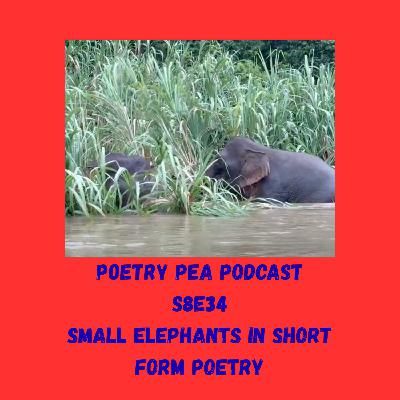
Travel to Borneo through poetry in this episode of the Poetry Pea Podcast. Discover haiku and senryu inspired by elephants, including the rare and endangered Borneo pygmy elephant. Featuring poems from Linda Ludwig’s final video prompt editorship, past Poetry Pea Journals, and other writers, plus five fascinating facts about Borneo. Perfect for fans of nature poetry, wildlife haiku, and short-form verse. Submit your own haiku or senryu and join the global Poetry Pea community. 1. Elephants in Haiku and Senryu 2. Borneo Pygmy Elephants 3. Poetry Pea Podcast 4. Nature Haiku / Wildlife Haiku 5. Haiku and Senryu about Animals
poetrypea.com presents splendid haiku & senryu using contrast in their juxtaposition. Patricia reads a selection, more will be in the Poetry pea Journal. Listen to them here on the podcast or on our YouTube page. Roger Watson and Ronald K Craig, who received 1st place in The Tenth Annual Peggy Willis Lyles Haiku Awards – 2022 in the Heron’s Nest, are here to give their nominations for the Judges' choice and this time I'll make a nomination too. Will you agree with us, I wonder? Let me know.
This time on Haiku Pea from poetrypea.com our community of poets, inspired by Jack Kerouac, write original haiku & senryu. A great place for poets to listen to original work and perhaps find a group of poets they would like to write with. I hope you enjoy it and next time if you haven't already submitted you can join us as one of our lovely poets.
Step into a listening space shaped by small poems and quiet attention.This weekly podcast brings together contemporary haiku from voices around the world. Each of our episodes features carefully selected poems, and thoughtful readings.From murmuration skies to winter dusk, from the hush of birdsong to the swell of the everyday, we explore the moments that might otherwise pass unnoticed — and give them room to resonate.✨ How to take part:Respond to our video prompts on YouTube, submit your haibun via our website, and join a growing international community of poets and listeners.🎧 New episodes released weekly.Subscribe, listen, and let the words take flight.
Settle in for another episode of the Poetry Pea Podcast, where this time there’s no set theme—yes, maybe it 's a bit trickier for you… but as they say, if it were easy, it wouldn’t be worth doing.In this episode, you’ll hear a wonderful selection of contemporary haiku and senryu , all submitted without the safety net of a prompt. Our judges—one familiar voice and two brand-new to the podcast—have read the poems anonymously and selected their nominations, decided on a Judges’ Choice and Honourable Mention. You’ll hear their thoughts during the show, with the final results revealed soon in the Poetry Pea Journal.We also share a few notices from Pea Towers, including details of upcoming submissions for our annual haibun journal, Tendrils, and how you can nominate poems for the Golden Pea Award anthology.Whether you’re an experienced poet or just discovering English language shortforms there’s something here for you.Subscribe, join our mailing list, and consider supporting the podcast to help keep the poetry flowing.And as always—keep writing.Episode notes
In this episode of the Poetry Peacast, we bring our current exploration of one-line haiku to a halt for now.After three episodes and a number of thoughtful questions, I reflect on what the form offers, where it challenges us, and where I find myself—at least for now. There is, of course, more to be said, and the conversation remains open, particularly as listeners continue to share their own insights and experiences.I’ll also be following this series with a short essay drawing together ideas from all three episodes.Over the coming weeks, the Peacast will turn to your work, featuring original poetry written by listeners, followed by poems inspired by the Poetry Pea video prompt—continuing our focus on poetry out loud and shared creative practice.If you’d like to take part, you’re warmly invited to submit your work, respond to the prompts, or share your thoughts.Thank you for listening, and for being part of the Poetry Pea community.Until next time—keep writingshow notes
This week on the Poetry Pea Podcast there’s a slight change of plan.Part three of the one-line haiku series isn’t quite ready yet. After posing several questions at the end of part two, I realised I needed a little more time to sit with them. My head is currently full of ideas, possibilities and half-formed thoughts, and rather than rush things, I want to give those questions the attention they deserve.So, while I continue wrestling with the mysteries of the one-line haiku, I thought I’d share something special with you.In this episode you’ll hear part one of a conversation with renowned haiku poet Kala Ramesh, originally recorded for our sister podcast, Poetry Pea Readings. Kala’s insights into haiku, creativity and poetic practice are always inspiring, and it felt like the perfect conversation to revisit while we pause the one-line haiku series for a week.If you enjoy this discussion, you’ll find the link to part two in the show notes.Next week I’ll be back with part three of the one-line haiku extravaganza — and while I may not have answered every question swirling around in my head, I promise I’ll have given it a very good try.Check out the show notes for more detail...
In this episode of the Poetry Pea Podcast, we continue our deep dive into the art of the one line haiku and explore five powerful techniques for writing compelling haiku and senryū in English.If you’ve been experimenting with one line poems and wondering how they work — or whether they work at all — this episode is for you.We explore five essential techniques for writing strong one line haiku:• Speed – creating breathless momentum • Circular structure – poems that can be read in multiple directions • Truncated form – leaving deliberate space for the reader’s imagination • Shape and horizontal movement – how visual and directional flow affect meaning • Multiple cuts – discovering layered readings within a single lineHave we answered our won questions?Have we appropriated the Japanese short form?Do one line haiku conform to traditional three line expectations?Is a poem a one line haiku simply because the poet says it is?Why did the one line become so popular — and why have they endured?Whether you are new to writing haiku or already publishing in journals, this episode offers accessible, practical techniques you can try immediately in your own notebook.If you enjoy learning about haiku craft, senryū techniques, poetry prompts, and contemporary short form poetry, make sure to follow the podcast and check the show notes for cited poems and further reading.And don’t forget:Submit your poems via the YouTube video comments for the Monthly Prompt or try the 3-Word Challenge in our Shorts.
In this episode of The Poetry Pea Podcast, we begin an in-depth exploration of one line haiku and senryū in English. What makes a one line haiku work? Is it simply a haiku written without line breaks, or is there something more subtle happening with rhythm, pause and flow?Through close readings of poems by Michael Segers, John Wills, Alvin Cruz, Elizabeth Searle Lamb, Kala Ramesh, Tess Sherman, Scott Wiggerman, martin gottlieb cohen and even Allen Ginsberg, we examine how the single line changes pacing, meaning and impact.We also begin asking some bigger questions about English-language haiku:Have Western poets reshaped the short form into something unrecognisable in Japan?Are English one line haiku a natural evolution — or a reinvention?Is a one line poem a haiku simply because the poet says it is?This is Part 1 of a short series. Next week we’ll turn to techniques for writing one line haiku, looking at structure, rhythm and craft.If you’re interested in:one line haikusenryūEnglish-language haiku techniquehaiku form and structurepoetry craft discussionsmodern haiku debatethen this episode is for you.Show notes and links are here.If you’d like to read along, a slideshow version is available on YouTube.Keep writing.
Monster trucks meet haiku.In this adrenaline-charged episode of Poetry Pea,I share original haiku and senryu inspired by a thrilling monster truck video, captured by Renee Schaffer and curated by Allyson Whipple. Huge thanks to both for fuelling this creative ride.Expect short-form poetry that explores power, spectacle, humour and the poetry of roaring engines and flying mud — all in just three lines.Every poem featured will appear in the first Poetry Pea Journal of the year, celebrating contemporary haiku and senryu from our international poetry community.Love modern haiku? Enjoy writing prompts and award-winning poems? Don’t miss the Golden Pea Award Winners Podcast and the accompanying anthology.Subscribe, follow, and sign up to the newsletter so you don’t miss the next Poetry Pea release.Check out the show notes.Small poems. Full throttle.Poets Featured todayBisshieAlicia SamsonAngiola IngleseChristopher SeepDavid CoxHifsa AshrafJonathan BlakesleeJoshua GageLakshman BulusuMelissa DennisonMims SullyNeena SinghMona BediRalph MatthewsRichard BaillyRichard TiceRob McKinnonRohan BuettelTracy DavidsonRupa AnandSheikha A.Kimberly Kuchar 
A podcast about haiku and short poetry from around the world, particularly early Spanish haikuesque poetry of José Juan Tablada, but I'll also explore Japanese haiku, early Western haiku, translation, poetic form, and contemporary practice.This episode offers close readings, literary context, and thoughts, uncovering forgotten poems, global influences, and the ways haiku has travelled across languages and cultures. Topics include imagist poetry, one-line poems, haiku history, and writing practice.Ideal for poets, writers, readers, and anyone interested in haiku, poetry podcasts, short poems, and creative writing.New episodes released regularly.Keep writing.For today's show notes, click here
In this special episode of the Poetry Pea Podcast, host Patricia announces the winners of the Golden Pea Awards 2025, celebrating the very best haiku, senryū, tanka and haibun published by Poetry Pea this year.Recorded from her studio in Switzerland, Patricia shares a carefully curated selection of award-winning poems, chosen for their craft, originality and emotional impact. These standout pieces appear in The Golden Pea Anthology, the first collection to bring Poetry Pea’s finest poems together.Featuring luminous haiku, sharp-eyed senryū, resonant tanka and ambitious haibun, this episode is both a celebration of outstanding poets and a masterclass for lovers of short-form poetry.If you enjoy contemporary poetry podcasts and award-winning short poems, this episode is not to be missed.Want to see who the talented poets are... go to the episode.
Urban Haiku Podcast | More City Life in Short PoetryStep into the streets, gyms, roads, and temples of contemporary poetry with this episode of the Poetry Pea Podcast, dedicated to urban haiku and senryū. In this instalment of the Urban Haiku series, we continue to explore how modern city life finds expression through short-form poetry—capturing fleeting moments, human interactions, and everyday urban scenes in just a few carefully chosen words.Featuring unpublished and published urban haiku and senryū submitted by members of the Poetry Pea community, this episode offers listeners the chance to hear fresh work while also engaging with questions of form, and categorisation. What makes a poem haiku rather than senryū? How does urban experience shape contemporary haiku writing? And how do poets adapt traditional forms to modern settings?Perfect for haiku poets, short-form poetry lovers, and writers interested in contemporary haiku, this episode aims to inspire you to try writing urban poetry yourself—especially if you’re considering submitting to a current or future Poetry Pea haiku call-out.You’ll also hear updates on Poetry Pea opportunities, including YouTube writing prompts, three-word challenges, and upcoming features such as the Golden Pea Awards.🎧 Listen, reflect, and be inspired to write your own urban haiku.📺 Don’t forget to explore the Poetry Pea YouTube channel and membership options for more ways to write, submit, and publish short poetry.Show notes
Welcome to The Poetry Peacast, where small poems loom large and every word earns its keep.In this episode, you’ll hear poetry from the long list of Poetry Pea’s brand-new awards — the Golden Pea Awards. These are poems that came tantalisingly close to the top: work that impressed, delighted, and lingered, but ultimately didn’t quite make it into the final, glittering handful of Golden Peas. Expect exceptional haiku, senryū, tanka and haibun from across the Poetry Pea community, read with care and accompanied by an appreciation of effort, craft, and understatement. This is a celebration of poems that were almost 24-carat gold — and in many cases, arguably are.Thoughtful, witty, and refreshingly free of fuss, The Poetry Peacast honours the breadth and brilliance of contemporary short poetry and their brilliant writing community — and reminds us that sometimes, nearly is still rather magnificent.Want to see a list of te poets on the loong list, head over to the episode webpage.
Urban haiku and senryū inspired by modern city life, with poems, and submission calls.Show notespoets featured today:m shane pruett, Haiku Pea Podcast, S3E22Eric W Amann[i] William J Higgenson with Penny Harter,”The Haiku Handbook.” Kodansha International, 1985, p87Barbara Tate, THF City Sidewalk, tasteMichael Dylan Welch, from GracegutsMizuho, Urban Ginko V – Nakazaki-cho, Osaka July 10th 2023Akihiko, Urban Ginko V – Nakazaki-cho, Osaka July 10th 2023Richard Wright, Haiku: This Other World, Arcade Publishing, New York, NY, 1998Lakshmi Iyer, Poetry Pea Journal, 3.22Bob Whitmire, THF City Sidewalk, hearingTracy Davidson, Poetry Pea Journal 2.23Wendy Cobourne, Prune Juice, issue 46Arvinder Kaur, Poetry Pea Journal, Summer 2021Rupa Anand, failed haiku issue111
The Poetry Pea Podcast is a contemporary poetry podcast featuring original poetry, poetry prompts, video poetry prompts, and poetry readings from poets around the world.In this episode of the Poetry Pea Podcast, we open Season Nine with original contemporary poetry written in response to our final video poetry prompt of 2025, curated by poet Kathleen Tice. This poetry podcast showcases a wide range of poetic voices and styles, demonstrating how a single poetry prompt can inspire many different poems.You’ll also hear updates about the Poetry Pea community, the latest poetry prompt on YouTube, and how poets can submit poetry correctly by leaving poems in the YouTube comments. Submitting poetry through the YouTube comments is the only way to take part in the Poetry Pea video poetry prompt.The Poetry Pea Podcast is ideal for poets, writers, poetry readers, and anyone looking for writing prompts, poetry inspiration, or contemporary poetry podcasts. Each episode features poetry readings, poetry prompts, and creative encouragement for poets at all stages.Check out the poets featured today on the Episode webpage
In this special episode of the Poetry Pea Podcast, host Patricia welcomes celebrated Canadian poet Reid Hepworth for a stunning reading from her collection Loss Is a River. Praised for its emotional depth and lyrical power, Hepworth’s work explores love, loss, memory, and the quiet moments that shape our lives.Patricia also shares an important correction and heartfelt apology to poets Mona Bedi and Marylyn Burridge, plus news about the upcoming Christmas break, the bumper Season Nine, and teases Poetry Pea Press developments planned for 2026.Listeners will find links to Reid Hepworth’s books, Poetry Pea membership, the mailing list, and submission guidelines in the show notes.A perfect listen for fans of contemporary poetry, haiku, senryu, haibun, one line poems, and tanka.Subscribe, stay connected, and enjoy this beautiful end-of-year reading.
show notes
Join Patricia for a special episode of the Poetry Pea Podcast, featuring original tanka poetry from contemporary writers around the world. In this episode, she shares the judges’ nominations for the best tanka selected for the forthcoming Poetry Pea Journal. If you enjoy tanka, haiku, short-form poetry, or modern Japanese-inspired verse, this episode offers fresh poems, thoughtful commentary, and an inside look at the judging process. Perfect listening for poets, readers, and anyone passionate about tanka and micropoetry.If you enjoy this podcast do think about supporting our work, thank you.Buy us a coffeeTake out a membership Or simply share this episode with your poetry pals and leave us a comment or review. It really does help the show grow.
This week on the Poetry Peacast, we welcome Scottish poet Claire Thom, joining us from Andalusia, Spain. Claire, founder of Wee Sparrow Press, shares haiku and haibun from her beautiful collection Wildflowers in Oyster Stone. It's always enjoyable to hear a poet read their work, don't you think?Discover how travel, nature, and poetic craft intertwine as we talk about the art of haiku editing and the inspiration behind her work.If you love contemporary haiku, haibun, and international poetry, this episode will enchant you.✨ Don’t forget to sign up for the Poetry Pea mailing list for news on our upcoming anthology, amongst other things — a little gem in itself!show notes.
loading
Comments (1)

Michal Smith

Poetry Pea is a podcast dedicated to haiku, senryu, and other Japanese short-form poetry, offering workshops, readings, and writing prompts that help both beginners and experienced poets refine their craft. These concise forms focus on imagery, emotion, and observation, making every word carry significant weight, similar to the essence of expressive poetry across cultures. Adding a heartfelt shayari english can bridge cultural styles, blending the precision of short-form poetry with emotional depth to connect with readers worldwide https://shayarienglish.org/2-line-shayari-in-english/

Apr 3rd
Reply