


 Claim Ownership
Zooming In at The UnPopulist
Subscribed: 43Played: 1,104
Subscribe

© The UnPopulist
Description
Exploring the ideas, and interviewing the writers, featured at The UnPopulist.
www.theunpopulist.net
www.theunpopulist.net
67 Episodes
Reverse

Welcome back to Zooming In at The UnPopulist.The Trumpist right has a very specific vision of masculinity—one built on violence, domination, and a kind of romanticized manual labor. It’s a vision they promote loudly, and just as loudly resent when many men don’t find it compelling.In this episode, host Aaron Ross Powell is joined by Toby Buckle, host of the Political Philosophy Podcast and contributor to The UnPopulist, to talk about what this vision leaves out—and what it reveals. They explore the gap between the cultural script being pushed by reactionary politics and the actual lives many men are choosing to lead. They discuss the adolescent nature of far-right masculinity, the politics of resentment that animate it, and how liberalism can do more than just oppose it—it can offer a richer, freer, and more pluralistic account of what a good life looks like.We hope you enjoy.Follow us on Bluesky, Threads, YouTube, TikTok, Facebook, Instagram, and X. Get full access to The UnPopulist at www.theunpopulist.net/subscribe

Listen to Zooming In at The UnPopulist in your favorite podcast app: Apple Podcasts | Spotify | Google Podcasts | RSS | YouTubeNew Yorker staff writer and economist John Cassidy joins The UnPopulist's Berny Belvedere to discuss his latest book, Capitalism and Its Critics: A History from the Industrial Revolution to AI—a sweeping account of capitalism's resilience told through the eyes of its most formidable challengers.© The UnPopulist, 2026Follow us on Bluesky, Threads, YouTube, TikTok, Facebook, Instagram, and X. Get full access to The UnPopulist at www.theunpopulist.net/subscribe

The first year of Donald J. Trump’s second term as the president of the United States has been not only tumultuous for America but also the rest of the world. Just as at home, he has disregarded existing international institutions and standing alliances to chart a very different foreign policy course. Trump has threatened long-standing European with steep tariffs and military action—and traditional adversaries such as Russia with relative warmth and friendliness. Are there any broader theories guiding Trump’s actions? What are the aims of his MAGA advisors? And what does the Trump presidency portend for America’s standing as the champion of the liberal international order? If that order permanently collapses, what will replace it and how would that affect American interests?The UnPopulist’s editor-in-chief, Shikha Dalmia, discusses with Pulitzer Prize winning author Anne Applebaum, a historian. Anne, who writes for The Atlantic, has penned the most incisive —and prescient—analysis about the emerging alliance of global authoritarians, Russian disinformation campaign, the Ukrainian war and more.We hope you enjoy.***Thanks for checking out The UnPopulist! Subscribe to support our project.Follow us on Bluesky, Threads, YouTube, TikTok, Facebook, Instagram, and X.© The UnPopulist, 2026 Get full access to The UnPopulist at www.theunpopulist.net/subscribe

Today, we have Editor-in-Chief Shikha Dalmia in conversation with two of the foremost thinkers of our time, Frank Fukuyama, an American political theorist and public intellectual best known for The End of History and the Last Man who is now a senior fellow at Stanford University’s Freeman Spogli Institute, where his work focuses on political order, governance, and democratic backsliding. And Tyler Cowen, an economist, author, and public intellectual who has written books on innovation, talent and cultural change. A professor at George Mason University and director of the Mercatus Center, he writes the highly influential blog Marginal Revolution and hosts the long-running podcast Conversations with Tyler.One reason for the populist revolt in America is the notion of the “deep state”—that an unaccountable bureaucracy is secretly ruling the country. Frank and Tyler come from very different intellectual traditions. Frank, a centrist, is a student of Max Weber and Tyler is a limited government libertarian. Yet they have both argued that liberal states in complex modern societies need a functional bureaucracy— aka state capacity—to deliver public goods and solve collective action problems. But they also have a ton of disagreements, especially on just how broken American governance is—and they duke it out in a spirited discussion.We hope you enjoy.***Thanks for checking out The UnPopulist! Subscribe to support our project.Follow us on Bluesky, Threads, YouTube, TikTok, Facebook, Instagram, and X.© The UnPopulist, 2026 Get full access to The UnPopulist at www.theunpopulist.net/subscribe

Immigration enforcement is the dominant focus of Donald Trump’s second term. He promised to get tough, and he has. Many who voted for him because this issue was important to them believed he would mainly crack down on criminal aliens.On today’s episode, host Shikha Dalmia and guest David Bier of the Cato Institute dismantle that illusion. They discuss how in his second term, Trump has launched an all-out assault on all immigrants: Illegal and legal. Undocumented and documented. Criminals and law-abiding ones.Moreover, Trump is going about immigration enforcement in an unimaginably cruel and indiscriminate way. He is engaging in mass arrests without due process, sweeping in citizens as well as immigrants.They point out how things are only going to get worse going forward as an agency that has no respect for life and a vast contempt for the rule law has been granted expanded funding by Congress.This episode was recorded just before Christmas. As if to prove their point, this week an ICE agent killed Renee Good, a peaceful, natural born American citizen, in Minneapolis. Good was a 37-year-old mother of three and, according to her family, a devout Christian with not an unkind bone in her body. She was driving home after dropping her toddle, when she encountered an ICE raid in progress. She was shot at point blank range as she tried to get away.Mass deportation cannot happen without mass collateral damage. Good’s death was not a freak accident. It was the foreseeable outcome of a system that treats visibility as provocation and accountability as an obstacle.This episode of Zooming In is about immigration policy, yes. But it’s also about the deeper logic of unchecked state power. As immigrants are targeted and lose their rights, Americans will not be spared. Freedom is not divisible.A transcript of today’s podcast appears below. It has been edited for flow and clarity.***Thanks for checking out The UnPopulist! Subscribe to support our project.Follow us on Bluesky, Threads, YouTube, TikTok, Facebook, Instagram, and X.© The UnPopulist, 2025 Get full access to The UnPopulist at www.theunpopulist.net/subscribe

America’s religious landscape has always been complicated, but something striking is happening inside conservative Christianity today. A movement that once spoke the language of scripture and personal faith is now increasingly shaped by grievance, politics, and an embattled sense of cultural siege.To explore how we got here—and what this shift means for both Christianity and American liberalism—senior editor at The UnPopulist Berny Belvedere sits down with Tyler Huckabee of Sojourners to trace the long arc from the pilgrims to the rise of MAGA Christianity. They examine how persecution narratives, culture-war identity, and a growing rejection of liberal norms have reshaped much of the modern evangelical imagination, and look to whether a more open, justice-oriented expression of Christian faith can still thrive.We hope you enjoy.***Thanks for checking out The UnPopulist! Subscribe for free to support our project.Follow us on Bluesky, Threads, YouTube, TikTok, Facebook, Instagram, and X.© The UnPopulist, 2025 Get full access to The UnPopulist at www.theunpopulist.net/subscribe

A post-Trump America may feel distant right now, but the work of imagining what a liberal reconstruction could look like has already begun. After years of executive overreach, collapsing guardrails, and an unprecedented centralization of presidential power, the question facing the country isn’t only how to limit further damage—it’s how to rebuild a constitutional order that’s stronger, fairer, and resistant to the next would-be strongman.In this episode, host Aaron Ross Powell sits down with The UnPopulist’s Shikha Dalmia and Andy Craig to introduce The Reconstruction Agenda, our ambitious new project dedicated to answering that question. They explore how civic resistance, institutional memory, and America’s own constitutional traditions can fuel a genuine renewal, and which reforms—big and small—might be ready the moment the political window opens.We hope you enjoy.***Thanks for checking out The UnPopulist! Subscribe for free to support our project.Follow us on Bluesky, Threads, YouTube, TikTok, Facebook, Instagram, and X.© The UnPopulist, 2025 Get full access to The UnPopulist at www.theunpopulist.net/subscribe

For decades, American universities have been seen as bastions of free inquiry, attracting students and scholars from around the world. But what happens when this openness creates vulnerabilities? How do authoritarian regimes leverage financial ties and international student populations to stifle criticism and export censorship onto American campuses? And more urgently, are we now seeing these same tactics of intimidation and financial pressure being used by our own government to bring higher education to heel?To explore these questions, host Aaron Ross Powell is joined by guest Sarah McLaughlin, a senior scholar of global expression at the Foundation for Individual Rights and Expression, and author of Authoritarians in the Academy: How the Internationalization of Higher Education and Borderless Censorship Threaten Free Speech.They discuss the levers of power that governments like that of China use to pressure universities, from threatening the flow of tuition-paying students to direct transnational oppression of students on U.S. soil. They also examine why so many academic institutions—in the face of these threats from both foreign and domestic actors—have chosen silence and capitulation over courage.We hope you enjoy.***© The UnPopulist, 2025Follow us on Bluesky, Threads, YouTube, TikTok, Facebook, Instagram, and X. Get full access to The UnPopulist at www.theunpopulist.net/subscribe

The MAGA movement was once an insurgency within the Republican Party. Now, it is the party. But more than just a political takeover; this shift is the result of the consolidation of a movement defined by hostility toward its opponents and a vision of America based on a largely imagined past. Its intellectual and political leaders have a clear, authoritarian blueprint for reshaping the country.In this episode, The UnPopulist's senior editor Berny Belvedere is joined by journalist Jason Wilson, who recently covered the fifth National Conservatism conference for The Guardian.Through the lens of the conference, they map the entire MAGA ecosystem—from committed Trump loyalists to the ideologues pushing Christian Nationalism and other anti-democratic visions.A transcript of today’s podcast appears below. It has been edited for flow and clarity.***Follow us on Bluesky, Threads, YouTube, TikTok, Facebook, Instagram, and X.© The UnPopulist, 2025 Get full access to The UnPopulist at www.theunpopulist.net/subscribe
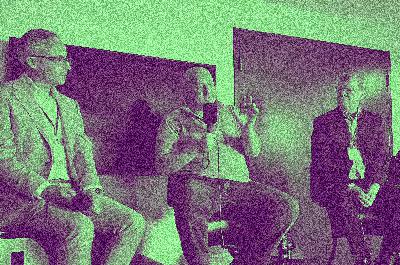
Listen to Zooming In at The UnPopulist in your favorite podcast app: Apple Podcasts | Spotify | Google Podcasts | RSS | YouTubeLandry Ayres: Welcome back to Zooming In at The UnPopulist. I’m Landry Ayres.We find ourselves in a deeply troubling moment for American democracy, grappling with the stark realities of a political landscape increasingly defined by fear, performative cruelty, and a conscious assault on established norms and institutions.This special live recording from ISMA’s “Liberalism for the 21st Century” conference features host Aaron Ross Powell, as well as longtime observer of the militarization of police and author of the Substack, The Watch, Radley Balko, and co-founder and former contributor of The Bulwark, Charlie Sykes, author now of the Substack To the Contrary. They explore the mechanisms of this assault, how a manufactured crisis of fear is being weaponized by law enforcement, and the profound implications for civil liberties and the rule of law in America.The discussion is insightful, if unsettling.A transcript of today’s podcast appears below. It has been edited for flow and clarity.Aaron Ross Powell: Welcome to a special live recording of The UnPopulist’s Zooming In podcast here at the “Liberalism for the 21st Century” conference in Washington, D.C. I am Aaron Powell and I’m delighted to be joined by Radley Balko and Charlie Sykes to talk about the situation we find ourselves in.To me, the most striking image of Trump’s campaign, months before he was reelected, was from the RNC. Before that, there was the weird one of him in the construction vest. But the most terrifying image was the one depicting the “Mass Deportation Now!” signs and the sneering and cruel faces celebrating the culture that they were wallowing in. Those faces made me think, as I was looking at them, of the faces in photographs during the Civil Rights Movement of police officers about to inflict violence, turn on firehoses, let dogs loose, and so on. And it felt like what we are seeing now.The “Mass Deportation Now!” images characterize not just the policies of Trump 2.0, but the attitude that they’re trying to inflict upon the country. It feels like a rolling back of what we achieved in the 1960s from the Civil Rights Movement—it feels like we’re in a retreat from that. This is a conscious attempt to roll that back. So I wanted to talk about that.Radley, I’ll start with you. We’re sitting in D.C. right now as National Guard troops and members of all sorts of agencies are patrolling the streets. Is this surprising to you—the pace at which these nominally public servants, who are supposed to serve and protect, have embraced this role of violence and fear and chaos?Radley Balko: I’m surprised at how quickly it’s happened. I’ve been talking to people about this day for the last 20 years. I’ve been warning about the gradual militarization of our police, which is something that has happened in conjunction with the drug war and then the war on terror over 40 or 50 years.That debate was always about, “How militarized should our police be? How do we balance safety, and giving police officers what they need to protect public safety, with civil liberties and constitutional rights?” The fear was always that another Sept. 11 type event would cause what we’re seeing now—that there would be a threat, a threat that everybody acknowledges as a threat, that would cause an administration, states, mayors, to crack down on civil liberties. But it would at least be a threat that everyone recognizes as a threat. We would be debating about how to react to it.When it comes to what’s playing out today, there’s no threat. This is all manufactured. This is all made up.Your juxtaposition of those two images—the clownish image of Trump in the construction vest and the other one depicting this genuinely terrifying anger and glee a lot of his followers get from watching grandmothers be raided and handcuffed and dragged out of their homes—show the clownishness and incompetence of this administration juxtaposed with the actual threat and danger, the hate and vitriol, that we see from his followers.We always hear that story about Ben Franklin after the Constitutional Convention: a woman comes up to him and says, “So, what is it, Mr. Franklin, do we have a republic or a monarchy?” And he says, “A republic, if you can keep it.” That phrase, of course, has been echoed throughout the ages. If Franklin were alive today, he would say, “You know, when I said that, I was worried about a Caracalla or a Sulla or a Caesar.” Instead it’s like, this guy, the guy that has to win every handshake, that’s who you’re going to roll over for?I saw a lot of libertarian-ish people making this point before the election—that Trump’s not a threat, he’s a clown, he’s incompetent, he’s not dangerous. And you know what? He may be incompetent, but he’s put people around him this time who do know what they’re doing and who are genuinely evil.So, on some level, this was the worst case scenario that I never really articulated over the years when I’ve talked about police militarization. This is actual military acting as police, not police acting as the military. But here we are and they’re threatening to spread it around the country to every blue city they can find.Powell: He’s a clown, he’s rightfully an object of ridicule, he doesn’t know anything, he’s riddled with pathologies that are obvious to everyone except him. And yet it’s not just that he won, but that he effectively turned, not all of the American right, but certainly a large chunk of it into a personality cult. Charlie, given that he seems to be a singularly uninspiring personality, what happened?Charlie Sykes: Well, he’s inspiring to his followers.Let me break down the question into two parts.I was in Milwaukee during the Republican Convention, when they were holding up the “Mass Deportation” signs—which was rather extraordinary, if you think about it, that they would actually put that in writing and cheer it. It’s something that they’d been talking about for 10 years, but you could see that they were ramping it up.But you put your finger on this culture of performative cruelty and brutality that they have embraced. Trump has made no secret of that. It’s one of the aspects of his appeal. For many, many years he’s been saying that his idea of law and order is to have cops who will break heads and inflict harm. He’s talked about putting razor blades on the top of the wall that Mexico was going to pay for. He’s told stories about atrocities. One of his standard stories—that I think the media just stopped even quoting—was about Gen. “Black Jack” Pershing in World War I taking Muslim terrorists and shooting them with bullets that had been dipped in pig’s blood. Totally b******t—he made the whole thing up. But it was an indication of a kind of bloodlust. He’s talked about extrajudicial killings. He has expressed his admiration for strongmen like Duterte in the Philippines who have done this. He’s talked about having drug courts that would have trials and executions the same day. So this is not a secret.What is really remarkable is the extent to which he’s communicated that to his base. I mean, there are Americans who legitimately have concerns about immigration and about the border. But what he’s also tapped into is this really visceral hatred of the other and the desire to inflict pain and suffering on them. I think that that is one of the ugliest aspects of his presence in our politics, and we saw that with the “Mass Deportation Now!” signs.Now, the second part is how he is implementing all of this with his raw police state, his masked brute squads sent into the city streets. And, again, he’s made no secret of wanting to put active military troops into the streets of American cities. He was blocked from doing that in Trump 1.0, but obviously this is something that he’s thought about and wants to do. And one of the most disturbing parts about this is the embrace of these kinds of tactics and this culture by law enforcement itself. Radley’s written a lot about this. Donald Trump has gone out of his way, not only to defend war criminals, but also to defend police officers who’ve been accused of brutality. So he’s basically put up a bat signal to law enforcement that: The gloves are off. We’re coming in. There’s a new sheriff in town.What’s happening in Washington, D.C. is just a trial run. He’s going to do this in New York. He’s going to do this in Chicago. He’s going to do this in one blue city after another. And the question is, “Will Americans just accept armed troops in their streets as normal?”Now, let me give a cautionary note here: Let’s not gaslight Americans that there’s not actually a crime problem. I think Democrats are falling into a kind of trap because there are legitimate concerns about public safety. So the argument shouldn’t be: There’s no crime problem. The argument should be: This is exactly the wrong way to go about dealing with it. Having mass, brute squads on the street is one step toward really running roughshod over a lot of different rights—due process rights and other constitutional rights—that most Americans are going to be reluctant to give up. But we’re going to find out, because all of this is being tested right now.Balko: I’d like to jump in on the crime point. I mean, crime is down in D.C. D.C. does have a comparatively high crime rate for a city of its size. There’s no question. It’s always been that way here. But the idea that there’s something happening right now that merits this response is what I meant when I called it a manufactured crisis.I think it’s important to point out that, like you said, he’s always wanted to do this. This is just the reason that he’s managed to put his finger on and thinks is going to resonate.“I’ve been talking to people about this day for the last 20 years. I’ve been warning about the gradual militarization of our police, which is something that has happened i

At a recent conference at the Heterodox Academy, an organization founded in 2016 to promote viewpoint diversity on college campuses and defend academic freedom from the “woke threat,” attendees grappled with the new threat to academic freedom, this time coming from the White House. There was real disagreement about how much attention each threat deserved and we explored these tensions in a podacast episode with writer Cathy Young, who attended the conference. This week, we take a look at that topic from a different perspective, as Berny Belvedere sits down with another guest at the conference; Michael Roth, the president of Wesleyan University. Roth advocates forcefully pivoting to take on the authoritarian threat that Donald Trump poses.They discuss how concepts like "safe spaces" and "DEI" have evolved, often serving as convenient scapegoats for political ends and the Trump administration's efforts to strong-arm universities through funding threats and legal action. They also discuss whether the failure to appropriately prioritize the relative threats coming from right and the left would risk undermining liberal democracy itself.We hope you find the discussion valuable.***Thanks for checking out The UnPopulist! Subscribe for free to support our project.Follow us on Bluesky, Threads, YouTube, TikTok, Facebook, Instagram, and X.© The UnPopulist, 2025 Get full access to The UnPopulist at www.theunpopulist.net/subscribe

For decades, many observers held onto an optimism that, despite occasional setbacks, the arc of history inevitably bent towards a richer, freer, and better-governed world. However, the political turbulence witnessed across established democracies in the past decade has shattered this optimism and exposed deeper problems.Today, The UnPopulist’s Editor-in-Chief Shikha Dalmia is joined by Brink Lindsey, senior vice president at the Niskanen Center and writer behind the Substack The Permanent Problem.Shikha and Brink explore Brink’s central concept: the permanent problem, or how mass affluence has radically transformed human expectations, leading people to seek not just basic needs, but also fulfillment, meaning, and belonging, and how paradoxically, this success has led to a crisis of legitimacy for liberal democracy, as the institutions that delivered such prosperity are now struggling to meet these new, elevated expectations.We hope you enjoy.***Thanks for checking out The UnPopulist! Subscribe for free to support our project.Follow us on Bluesky, Threads, YouTube, TikTok, Facebook, Instagram, and X.© The UnPopulist, 2025 Get full access to The UnPopulist at www.theunpopulist.net/subscribe

 1
1Academia finds itself at a critical juncture, navigating internal debates over the lack of intellectual diversity and too much in the thrall of prevailing orthodoxies, while simultaneously facing unprecedented external pressures from political forces intent on reshaping higher education. How can institutions uphold their mission of truth-seeking and open inquiry amidst such formidable challenges?Today, senior editor Berny Belvedere sits down with distinguished journalist Cathy Young, who recently covered the Heterodox Academy’s annual conference for The Bulwark. Together, they examine how internal criticisms of “woke” excesses and progressive orthodoxy intersect with the Trump administration’s aggressive assault on academic freedom and civil society. They explore the critical question of whether focusing on internal academic illiberalism inadvertently aligns with broader authoritarian aims, and what it means for a heterodox movement to truly champion intellectual diversity against threats from both the left and the right.We hope you enjoy. Thanks for checking out The UnPopulist! Subscribe for free to support our project.© The UnPopulist, 2025Follow us on Bluesky, Threads, YouTube, TikTok, Facebook, Instagram, and X. Get full access to The UnPopulist at www.theunpopulist.net/subscribe

For generations, the idea of American liberty has been synonymous with limited government and individual freedoms. Yet, since the Founding, the reach of state surveillance has grown exponentially, often shrouded in secrecy and justified by the need to fight threats to safety and security.To explore the historic choices and institutional dynamics that paved the way for the modern surveillance apparatus, Aaron Ross Powell sits down with Patrick Eddington, senior fellow at the Cato Institute and author of the new book, The Triumph of Fear: Domestic Surveillance and Political Repression from McKinley to Eisenhower.They discuss the long and often unsettling story of state surveillance in America, how it has led to a system susceptible to profound rights violations and political repression, and how actions—or inaction—by all three branches of government have allowed these capabilities to grow.You will finding it interesting if deeply troubling.© The UnPopulist, 2025Follow us on Bluesky, Threads, YouTube, TikTok, Facebook, Instagram, and X. Get full access to The UnPopulist at www.theunpopulist.net/subscribe
When President Trump launched his so-called Liberation Day tariffs, he didn’t just ignite a global trade war—he may have also triggered yet another constitutional crisis. This week, first an international trade court and then a federal court ruled those tariffs unlawful, striking at the heart of Trump’s sweeping claims of executive power under the International Emergency Economic Powers Act. But almost immediately, an appeals court hit pause.To help us unpack what these rapid developments mean—not just for trade policy, but for the separation of powers and the future of emergency authority in America—director of Executive Watch, Rob Tracinski, talked to George Mason University law professor, Ilya Somin. Somin is co-counsel in the case and the legal brains behind the lawsuit. They explore whether emergency powers have become a blank check for presidential overreach, and what this case could mean for rebalancing power between Congress and the White House.© The UnPopulist, 2025Follow us on Bluesky, Threads, YouTube, TikTok, Facebook, Instagram, and X. Get full access to The UnPopulist at www.theunpopulist.net/subscribe

America’s Founders believed religion and liberty could not only coexist but be mutually reinforcing. Today, some influential intellectuals on the right are flatly denying that idea of alignment and arguing for society to be reordered around their vision of Christian orthodoxy.In this episode, Berny Belvedere, The UnPopulist’s senior editor, sits down with Jerome Copulsky, research fellow at the Berkley Center for Religion, Peace & World Affairs and, from 2016 to 2017, senior advisor at the U.S. Department of State’s Office of Religion and Global Affairs. The two discuss Copulsky’s book, American Heretics: Religious Adversaries of Liberal Order, paying special attention to its chapter on the the current right-wing revolt—from groups such as postliberal Catholics and national conservatives—against America’s founding liberal ideals.We hope you enjoy. © The UnPopulist, 2025Follow us on Bluesky, Threads, YouTube, TikTok, Facebook, Instagram, and X. Get full access to The UnPopulist at www.theunpopulist.net/subscribe

The executive branch is currently being run by an aspiring autocrat who neither respects institutional safeguards nor accepts the separation of powers. As part of his project to subsume all governmental authority under his control, he has empowered a tech billionaire to reshape and repurpose government agencies—through what they’ve called the U.S. Department of Government Efficiency, or DOGE—so that those agencies and their information can be weaponized for his purposes.To explain how all this is unfolding, Zooming In host Aaron Ross Powell sits down with Julian Sanchez and Noah Kunin, the co-hosts of Watch Cats, a new podcast dedicated to critically covering DOGE. They discuss what DOGE actually is and what it is doing, and assess what its impact is likely to be on future attempts to pursue government reforms.We hope you enjoy. © The UnPopulist, 2025Follow us on Bluesky, Threads, YouTube, TikTok, Facebook, Instagram, and X.We welcome your reactions and replies. Please adhere to our comments policy. Get full access to The UnPopulist at www.theunpopulist.net/subscribe
In a post on Truth Social on May 2, President Trump promised to “[take] away Harvard's Tax Exempt Status,” because, “it's what they deserve!" While Trump may succeed in initiating such an action, our guest today doubts it will last, due to a long history of Supreme Court precedence regarding the tax code’s application to private institutions.Speaking with the director of Executive Watch, Rob Tracinski is New York Times columnist David French. They discuss the Trump administration’s hypocritical implementation of viewpoint diversity, the rushed and indiscriminate defunding of scientific research, and whether to consider if the social compact of government is based on the honors system of mutually assured destruction.We hope you enjoy.© The UnPopulist, 2025Follow us on Bluesky, Threads, YouTube, TikTok, Facebook, Instagram, and X. Get full access to The UnPopulist at www.theunpopulist.net/subscribe

Immigration policy has long been a battlefield for ideological disputes. But what we’re witnessing during Trump’s second term isn't just a debate over border security or visa policy. It’s an attempt to reconfigure the U.S. immigration system into a tool for authoritarian governance—an assault not only on due process, but on the foundational belief that laws must constrain power.Joining Shikha Dalmia is immigration expert and senior fellow at the American Immigration Council Dara Lind. Together, they explore how Trump’s second term has differed from his first in his weaponization of obscure legal tools and administrative procedures—many of them relics from the Cold War and even the John Adams era—to strip people of legal status, bypass the courts, and normalize practices once considered unthinkable.Tune in for an informative but chilling discussion.© The UnPopulist, 2025Follow us on Bluesky, Threads, YouTube, TikTok, Facebook, Instagram, and X. Get full access to The UnPopulist at www.theunpopulist.net/subscribe
In a piece for our new project Executive Watch, Walter Olson, senior fellow at the Cato Institute’s Robert A. Levy Center for Constitutional Studies, clarified the dangers of a recent presidential memo from the Trump administration, which accuses prominent law firms of “grossly unethical misconduct” and threatens them with severe penalties—such as revoking security clearances and cutting off federal contractsSpeaking with the director of Executive Watch, Rob Tracinski, Olson explains how, under the guise of promoting “accountability” for “frivolous, unreasonable, and vexatious litigation,” this move threatens the current means of accountability relied on by judges and undermines the independence of the entire legal profession.We hope you enjoy.© The UnPopulist, 2025Follow us on Bluesky, Threads, YouTube, TikTok, Facebook, Instagram, and X. Get full access to The UnPopulist at www.theunpopulist.net/subscribe


Download from Google Play

Download from App Store
 United States
Another race racketeer aiming to rip off the tax payers.